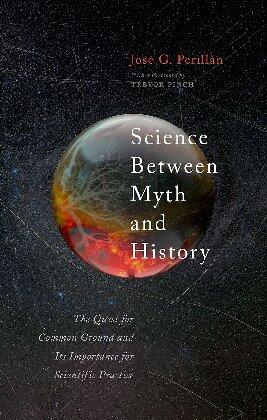
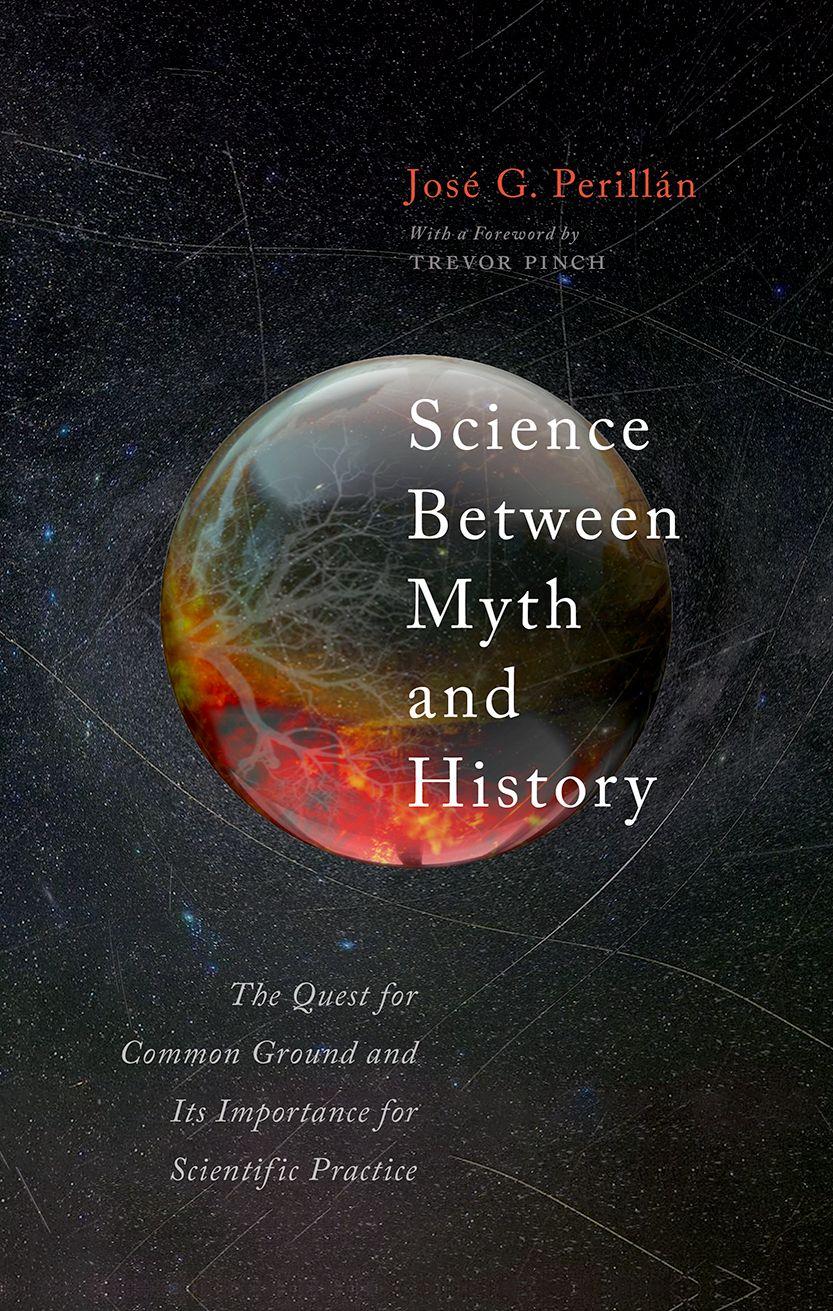
ScienceBetweenMythandHistory:TheQuestfor CommonGroundandItsImportanceforScientific Practice1.EditionJoséG.Perillán
https://ebookmass.com/product/science-between-myth-andhistory-the-quest-for-common-ground-and-its-importance-forscientific-practice-1-edition-jose-g-perillan/
Instant digital products (PDF, ePub, MOBI) ready for you
Download now and discover formats that fit your needs...
Scientific Testimony: Its roles in science and society Mikkel Gerken
https://ebookmass.com/product/scientific-testimony-its-roles-inscience-and-society-mikkel-gerken/ ebookmass.com
The Quest for Human Nature: What Philosophy and Science Have Learned Nathan
https://ebookmass.com/product/the-quest-for-human-nature-whatphilosophy-and-science-have-learned-nathan/
ebookmass.com
Science Journalism in the Arab World: The Quest for ‘Ilm’ and Truth 1st Edition Abdullah Alhuntushi
https://ebookmass.com/product/science-journalism-in-the-arab-worldthe-quest-for-ilm-and-truth-1st-edition-abdullah-alhuntushi/ ebookmass.com
Acute Care for Nurses (Student Survival Skills) (Jan 17, 2023)_(1119882451)_(Wiley-Blackwell) 1st Edition Boyd
https://ebookmass.com/product/acute-care-for-nurses-student-survivalskills-jan-17-2023_1119882451_wiley-blackwell-1st-edition-boyd/ ebookmass.com
Hazzard’s Geriatric Medicine and Gerontology, Eighth Edition Jeffrey B. Halter
https://ebookmass.com/product/hazzards-geriatric-medicine-andgerontology-eighth-edition-jeffrey-b-halter/
ebookmass.com
Saunders Nursing Drug Handbook Kizior Robert J.
https://ebookmass.com/product/saunders-nursing-drug-handbook-kiziorrobert-j/
ebookmass.com
Pentecostal Politics in a Secular World: The Life and Leadership of Lewi Pethrus 1st ed. Edition Joel Halldorf
https://ebookmass.com/product/pentecostal-politics-in-a-secular-worldthe-life-and-leadership-of-lewi-pethrus-1st-ed-edition-joel-halldorf/
ebookmass.com
Relationship Between Microbes and the Environment for Sustainable Ecosystem Services, Volume 3: Microbial Tools for Sustainable Ecosystem Services Jastin Samuel
https://ebookmass.com/product/relationship-between-microbes-and-theenvironment-for-sustainable-ecosystem-services-volume-3-microbialtools-for-sustainable-ecosystem-services-jastin-samuel/
ebookmass.com
Fundamentals of Semiconductor Devices (2nd Edition) Betty Anderson
https://ebookmass.com/product/fundamentals-of-semiconductordevices-2nd-edition-betty-anderson/
ebookmass.com
1st Edition Duong
https://ebookmass.com/product/bonded-joints-and-repairs-to-compositeairframe-structures-1st-edition-duong/
ebookmass.com
Scientists regularly employ historical narrative as a rhetorical tool in their communication of science, yet there’s been little reflection on its effects within scientific communities and beyond. Science Between Myth and History begins to unravel these threads of influence. The stories scientists tell are not just poorly researched scholarly histories, they are myth-histories, a chimeric genre that bridges distinct narrative modes. This study goes beyond polarizing questions about who owns the history of science and establishes a common ground from which to better understand the messy and lasting legacy of the stories scientists tell. It aims to stimulate vigorous conversation among science practitioners, scholars, and communicators.
Scientific myth-histories undoubtedly deliver value, coherence, and inspiration to their communities. They are tools used to broker scientific consensus, resolve controversies, and navigate power dynamics. Yet beyond the explicit intent and rationale behind their use, these narratives tend to have great rhetorical power and social agency that bear unintended consequences. This book unpacks the concept of myth-history and explores four case studies in which scientist storytellers use their narratives to teach, build consensus, and inform the broader public. From geo-politically informed quantum interpretation debates to high-stakes gene-editing patent disputes, these case studies illustrate the implications of storytelling in science.
Science Between Myth and History calls on scientists not to eschew writing about their history, but to take more account of the stories they tell and the image of science they project. In this time of eroding common ground, when many find themselves dependent on, yet distrustful of scientific research, this book interrogates the effects of mismatched, dissonant portraits of science.
1
Great Clarendon Street, Oxford, OX2 6DP, United Kingdom
Oxford University Press is a department of the University of Oxford. It furthers the University’s objective of excellence in research, scholarship, and education by publishing worldwide. Oxford is a registered trade mark of Oxford University Press in the UK and in certain other countries © José G. Perillán 2021
The moral rights of the author have been asserted
First Edition published in 2021
Impression: 1
All rights reserved. No part of this publication may be reproduced, stored in a retrieval system, or transmitted, in any form or by any means, without the prior permission in writing of Oxford University Press, or as expressly permitted by law, by licence or under terms agreed with the appropriate reprographics rights organization. Enquiries concerning reproduction outside the scope of the above should be sent to the Rights Department, Oxford University Press, at the address above
You must not circulate this work in any other form and you must impose this same condition on any acquirer
Published in the United States of America by Oxford University Press 198 Madison Avenue, New York, NY 10016, United States of America
British Library Cataloguing in Publication Data
Data available
Library of Congress Control Number: 2021938909
ISBN 978–0–19–886496–7
Printed and bound by CPI Group (UK) Ltd, Croydon, CR0 4YY
Links to third party websites are provided by Oxford in good faith and for information only. Oxford disclaims any responsibility for the materials contained in any third party website referenced in this work.
For my nucleus – Rebecca, Quino, and Eleni.
Foreword
By Trevor Pinch
Science is in trouble. This is not news. But what is news is that the trouble runs deep and that scientists have partly brought it upon themselves. With this timely book, an elegant series of case studies of controversies in modern science that returns science studies to some of its core concerns, the source of the trouble is firmly located. It lies in the myths science has inevitably created.
Science of course has delivered: whether seemingly miraculous cures to diseases or weapons to annihilate the world. And it has over and over again been shown to be grounded in human culture and history: it has its fads, foibles and fallacies; its power elites; its dalliance with eugenics; its ability to crush a Rosalind Franklin and to elevate to genius level, a Richard Feynman. It may profess to follow Robert Merton’s norm of universalism but we know it is still all too often run by cabals of mainly white men. It is often no better than other professions on ethical grounds. From Kuhn to Oreskes scholars in history of science and now the new field of “science studies” have shown that science is less special than we once imagined.
But science is different in one crucial respect—it gets to write its own history. Sure bankers can write their own history but they don’t need to as part of the process of lending you money. Science deals in something bankers cannot deliver: truth. Truth is not an exchangeable commodity—once you have it everything else becomes worthless or merely a primrose path. Scientists, as Thomas Kuhn first stressed, tell their history from the present viewpoint of the truth in science. Everything progresses towards today’s truth. This is known as whig history. Aristotelian physics is not judged by the standards of its time but from what we know today. Slaying the dragon of error is the stuff of myth. José Perillán calls this process the writing of “myth-history”.
But it is not just the content of the science which is mythologized—the process of getting there becomes part of the myth.
The story is well known. All it needs are a few heroic experiments; a brilliant breakthrough theory; a genius here a genius there; and all enshrined in Nobel prizes. A genius may need to stand on the shoulders of giants, as Newton proclaimed, but they are giants. The process is presented in a way such that human interests, in short anything to do with the stamp of humans, are merely accessories to the inevitable emergence of the truth. Why does science need to be anesthetized in this way? What is the purpose of what we in science studies call “boundary work”? It is because in a deep way in this telling of science, humans are necessarily effaced. As Peter Medawar showed years ago, it begins with the scientific paper and its peculiar literary construction. Rather than say what actually happened, science is cast in terms of disinterested language. Students are taught to write “observations were made” rather than a real human at a real time actually observed with her own eyes what was going on. In scientific controversies as Nigel Gilbert and Michael Mulkay showed a long time ago the truth is held to emerge, independent of humans, or as scientists will tell you: “the truth will out”. To account for error all you have to do is point to the extraneous human intervention. The literary conventions surrounding science are all part of the myth. One of the surefire ways to discredit a scientist is to point to illicit human desires governing their work, whether seeking Nobel prizes, patent riches, or daring to adhere to a viewpoint after the rest of science has moved on. Humor will often help do the job. As the late Martin Gardner, who was a master at debunking pseudoscience, once said, “a joke is worth a thousand syllogisms” It is also part of how elite male physicists are trained to present themselves, as Sharon Traweek showed in her ethnography: think Jewish and act British but not the other way around.
Scientists themselves are of course aware of the myths. The greatest genius of them all, Albert Einstein, made the distinction between existing science, “the most objective thing known to man” and “science in the making” where all human foibles are exposed. Einstein himself, as recent historical accounts have
shown, was far from the math-illiterate genius who could conjure up discoveries by pure thought alone. Scientists know that when professional historians tell the histories of their field it often aint pretty. But once the science is settled and dusted off everything falls neatly into place and the winners and losers can be adjudicated. Sure the winner may have been a little unsavory—recall the story of The Double Helix and James Watson the pushy yank at Cambridge pulling the wool over the eyes of the over polite Brits; his disparaging of the “blue stocking” Rosalind Franklin, his sneaking off with her X-ray diffraction results. But the Double Helix was the truth waiting to be discovered—nothing can stop Watson from being the hero of this narrative. And as Perillán notes, scientists need and feed off these discovery myths. Ironically one of the woman scientists he writes about, Jennifer Doudna, was a victim of myth history in an outrageous retelling of the discovery of CRISPR by Eric Lander, but was herself inspired to enter the field of biology by reading Watson’s mythical account in The Double Helix.
Myth history, despite its appeal, does serious damage to science because it prevents us seeing science as it really is, warts and all. If we invest too much in it, we will inevitably be disappointed, especially as the public in the global pandemic comes up close to science perhaps for the first time. Like any good stories, myth histories enshrine power. The stories as Perillán nicely puts it: “curate and amplify a preferred historical signal. They filter out and further marginalize people and ideas that don’t align with the status quo” (p. 69). The question the book sets out to answer is whether these powerful stories protect science and its social capital, or whether they in fact erode trust in science.
The dilemmas are evident in his case study of the fate of physicist, Joseph Weber, and the detection of gravity waves. It’s a story of unbelievable scientific triumph. In 2016 physicists announced to the world the detection of a movement on the order of one ten-thousandth the diameter of a proton—the remaining ripple produced from two black holes colliding 1.3 billion years ago. The
story is mythologized by evoking Einstein as the solitary genius, the giant shoulders upon which today’s physicists stand, and invoking a back-of-the-envelope calculation where Einstein supposedly predicted such waves existed (other scientists had predicted them earlier and Einstein didn’t believe the waves he predicted were detectable). But the triumphalist narrative takes a darker turn with the story of Weber.
A maverick second-world war veteran trained in microwaves, Weber just missed out on the discovery of masers and lasers. But, after inspiration from the physicist John Wheeler, Weber showed that gravity waves might be detectable on Earth and, in the 1960s, developed a program at the University of Maryland constructing what were in effect two huge aluminum bar “tuning forks”, which would “ring” together when a gravity wave resonated through them. These massive bar detectors at two locations in America were shielded from terrestrial noise. With Weber reporting positive results, other groups rushed to build different sorts of gravity wave detectors. By and large they failed to find the signals Weber claimed (the full story is told in the book Perillán draws upon by sociologist, Harry Collins, Gravity’s Shadow). Weber kept improving his techniques and apparatus but, as the consensus turned against him, he slowly lost support. He was ostracized and eventually lost his funding. One famous physicist, Richard Garwin, went after Weber and publicly humiliated him. The room-temperature bar detectors Weber favored were discredited as the wrong way to detect gravity waves. The right way was thought to be through a technique known as laser interferometry (LIGO), which of course eventually is how the discovery was made. Weber with his over-blown claims was seen as a danger to the promise of the new detectors. Things turned ugly when Weber in turn attacked the pretensions of LIGO. Weber died in ignominy—a forgotten trailblazer like so many on the losing end of scientific controversies.
That was until 2016. With the new discovery assured, Weber was rehabilitated as a hero—a pioneer in the field. His original
apparatus is now proudly displayed alongside the new detectors. As Perillán notes, not all the physicists turned against Weber, Cal Tech theorist Kip Thorne, kept his respect for Weber’s achievements during the darkest days of Weber’s demise. Thorne was not alone. When I interviewed solar-neutrino pioneer Raymond Davis in the late 1970s, at the height of the campaign against Weber, Davis steadfastly told me that he regarded Weber as a hero—someone who, like himself, knew what it was like to detect something of extraordinary difficulty that flew in the face of theoretical physicists cherished beliefs. But publicly towards the end of his career, there is no doubt Weber was at best a marginal figure and worst a pariah. Once the credibility of a scientist is shot it is almost impossible to recover.
There is no doubt that the eventual detection of gravity waves is a monumental achievement rightly celebrated and one can argue that in the realpolitik world of funding there is no room for a maverick who bucks the consensus—but was the demonization necessary? Even if it was, scientists could be honest about it, and say that this is the way it has to be—an all too human struggle over limited resources. They could even be a little shame-faced about what happened. Why buttress the story as one big happy family on the rocky road to truth, with the hero Weber providing some of the needed foundational rocks?
Perillán shows that even the greatest theories in physics are not immune to the dangers of myth histories—indeed they depend upon them. A notorious muddle conceptually, but indisputable in its ability to enable calculation and prediction, quantum theory was born out of a series of disputes and compromises as to its completeness, how it corresponded to reality, and the very language used to describe that reality. Only recently through the work of scholars such as James Cushing and Mara Beller has the full story been told about how the giants of physics maneuvered to keep together the almost mystical reigning view known after its progenitor, the Danish scientist, Niels Bohr, as the “Copenhagen Interpretation”. The well-known particle wave
duality was enshrined in the principle of “complementarity”, whereby there was no contradiction as long as wave descriptions and particle descriptions of experimental set-ups were kept separate. A consistent account of quantum mechanics was offered by theories such as Louis de Broglie’s pilot wave theory which, although requiring complex calculations, kept the theory deterministic. The history that dominant scientists associated with Bohr and Heisenberg told, effaced the controversies over alternative points of view, and de Broglie’s theory, like that of many other dissenters, vanished from the mainstream. The aristocratic de Broglie had won a Nobel prize for discovering the wave-like features of electrons but his pilot-wave theory, which he himself ultimately abandoned, is all but forgotten. When new generations of physicists such as David Bohm and John Bell started to probe what had gone before they met unexpected opposition. Mathematical impossibility proofs were trotted out against Bohm and his theories by the quantum elite. Myth-histories is the broad brush name Perillán uses to discuss what ensued. It is arguable that in practice these myth-histories encapsulate a more fine-grained series of moves and issues which science studies scholars have discussed in detail over the last decades. The strength of this book is that it returns us to the big issues at the core of the sociology of scientific knowledge, how credibility is made and unmade in science and at what cost to the overall enterprise. With the “science wars” of the 1990s behind us, this book is a laudable attempt to be consistent with the goals of science studies and also defend science from its own excesses.
It is in the last most extraordinary case study in the book that we see the full dangers of myth histories for the engagement of democratic societies with science. Known as the “L’Aquilla Seven”, seven Italian seismologists stand trial for failing to warn their local community about a pending devastating Earthquake. On the face of it such a criminal case seems ludicrous. We all know earthquake science is uncertain. But by excavating this trial Perillán shows there is more to be said. It seems that these scientists did indeed partly bring the law down upon their own heads. They were so in love with the myth of scientific method that they thought local traditions of
sleeping outside during the preceding tremors (known as swarms) were not needed. They stressed that seismologists could never make predictions, that the swarms could be releasing pent up seismic energy (a claim that was much disputed)—also their energy at the time was spent attacking a local expert who indeed predicted a massive event but based his prediction upon a buildup of local radon, which they took to be a pseudoscientific claim. In bashing pseudoscience the seismologists arguably took their eyes off the ball. The wider scientific community of course rallied around the scientists in court (shades of Galileo) and the case was eventually dismissed. As with science studies scholar Brian Wynne’s famous analysis of how scientists lost the trust of local Cumbrian sheep farmers during the Chernobyl fallout, this case too is a missed opportunity for the scientists to learn a lesson in what science studies scholar, Sheila Jasanoff calls, civic epistemology.
A science without myths may not be possible but surely having identified the problem we can create new myths and stories about a democratic science? The entanglement of these myths with real courtroom drama leaves me with one nightmare. Imagine the unimaginable. Donald Trump and his like are in power for a very long time. The courts turn against science. Our favorite scientists are on trial—the CDC, Dr. Fauci, yes even that friendly epidemiologist from Harvard who is always on the PBS News Hour. Yes, they have made mistakes: no masks then masks, CDC tests that didn’t work, varying epidemiological predictions. Yes they were right to bash the Trump pseudoscience of bleach. We rush to defend the scientists—they have done their best against a deadly enemy, they may have been too optimistic, too pessimistic, science is uncertain, knowledge is full of holes. And we all know if left only to the politicians we would be far worse off. But could it just be that the scientists themselves have some blame to shoulder? This nightmare now seems unlikely with a new democratic President and with the values of science once more being reaffirmed. But the danger is still present - science may over reach in response. The myths the scientists have created and live by may come back to haunt them after all.
Acknowledgments
A project like this has deep, sprawling roots. It slowly germinated over years before coming together in its current form. Countless people, seen and unseen, have touched and influenced this book. It is impossible to list every debt of gratitude I incurred along the way, but I have done my best to acknowledge people who have left their mark on my process. If I miss anyone, please accept my apologies, and know that your unheralded efforts are greatly appreciated. Many eyes have read through iterations of this manuscript, but I alone take responsibility for any mistakes that remain.
Although this is not the typical first monograph adapted from a doctoral dissertation, my interest in scientific myth-histories grew directly out of my interdisciplinary study of the de BroglieBohm pilot wave interpretation of quantum theory. This book would not have been written without the formative guidance and support of my graduate mentors in both history and physics at the University of Rochester: Theodore Brown, Dorinda Outram, Joseph Eberly, and Nicholas Bigelow. In addition to their early efforts, they have continued to track and support my career, and this project. Professors Brown, Outram and Eberly all read multiple drafts and gave me incisive feedback right up to final submission.
Bumping into Matthew Stanley while crossing a busy West Village street, in 2008, was a moment with real mythological power in my life. Although heroes don’t exist, Matt comes closer than anyone I’ve ever met to embodying that trope. He has been in my corner since summitting Jabal Musa in 1997, long before this book began to take shape--giving selflessly of his time and expertise and being an exceptional mentor and friend. That serendipitous moment on the streets of NYC led to my first academic appointment at NYU’s Gallatin School of Individualized
Study, a place that deeply values interdisciplinary discourse. Gallatin was the first place I felt intellectually whole. There, I began to formulate my ideas and discuss my work with colleagues. Conversations with historians of science such as Matt, Myles Jackson, David Kaiser, and Silvan Schweber were particularly formative. The NYC History of Science Workshop hosted by Gallatin is where I presented my first rough sketch, using myth-history as a theoretical framework. Living in NYC also allowed me to connect with the brilliant physicist Pierre Hohenberg, who was profoundly generous with his time and support and whose quip launched my quest for common ground.
At Vassar College I have found my intellectual family and home. Colleagues in the Physics and Astronomy Department and the Science, Technology, and Society Program have adapted seamlessly to having me in constant superposition. They have unflinchingly supported my interests and found the right moments to inject catalytic reflections that moved and shaped this project. In particular, I thank Janet Gray and James Challey for their support, mentorship, and friendship. They have read several drafts of chapters, and generously hosted me in their home on numerous occasions, enduring endless conversations about the project’s ebbs and flows. Bob McAulay, too, has been stalwart in his support. His last pass at the manuscript was especially incisive, finding instances of unintended bias and keeping the analysis focused. Christopher White gave his time and expertise generously throughout the writing. His unfailing confidence that this book project would see the light of day was surprisingly contagious.
Chris joined Matt and Nancy Pokrywka for an all-day manuscript review workshop funded by Vassar that was critical to the book’s development. A second informal workshop with Bob, Nancy, David Esteban, Jamie Kelly, Christopher Raymond, Abigail Coplin, Wayne Soon, and M Mark, helped prepare the manuscript to present to publishers. As an institution, Vassar has been heavily invested in my success and extremely supportive of
my work. Katherine Hite has been an exceptional Faculty Director of Research Development, consistently and creatively marshaling institutional resources to fund academic publishing seminars, manuscript review workshops, and professional editing services for faculty. Thanks to Katie’s initiatives, and a helpful push by Carlos Alamo-Pastrana, I’ve become deeply indebted to Judith Dollenmayer’s editorial wizardry; she has helped iron out countless tics and errata and helped me become a more effective writer. I add deep thanks to Joseph Nevins, Debra Elmegreen, and Brian Daly for taking time to read portions of the manuscript and provide invaluable feedback and support during the final stretch.
Since I chose to teach at Vassar because of its students, complete acknowledgments must not fail to credit their role in this project. From the outset, Vassar students have been true collaborators on this book. They have allowed me the space and time to refine ideas through iterative pedagogical revision. Each case study in this book has grown out of coursework in STS and physics classes. All my analyses have been deeply informed by class discussions and student perspectives. It’s difficult to express how fortunate I am to teach and learn from Vassar students each day. Working with STS majors on their theses has taught me to wade into new intellectual territory with courage, curiosity, and humility. In particular, I highlight the wonderful work of my research assistants: Mikayla O’Bryan, Annie Xu, Hannah Martin, Joshua Yannix, and Zeyu Liu (Margaret). Working tirelessly under difficult and remote circumstances, Margaret was instrumental in crafting the book’s illustrations.
Outside Vassar, I have benefited from a rich network of scholars from various fields. The book has evolved as a result of insightful feedback from countless colleagues at many conferences over the years. It testifies to the power of interdisciplinary discourse in a search for common ground. In one form or another, the case studies in these chapters were presented at the American Institute of Physics (AIP), the History of Science Society (HSS), Society for Social Studies of Science (4S), the British Society for the History
of Science (BSHS), and the European Society for the History of Science (ESHS). Chapter 2 appeared as a journal article in Historical Studies in the Natural Sciences (HSNS), and I am profoundly grateful to the referees and the editors at that journal, especially David Kaiser and Olival Freire Junior, for thoughtfully shepherding me through the process. Trevor Pinch read an early version of the HSNS paper and has been a generous mentor and advocate since. I’m honored to have him contribute his reflections in the Foreword to this book. In addition, Spencer Weart gave invaluable feedback during the final stretch, and Dennis Delgado generously contributed the richly haunting cover art. The editorial team at Oxford University Press has been outstanding. This book was an unconventional project, but Senior Editor for the Physical Sciences, Sonke Adlung, was able to hear its resonance and became a champion of the project.
Closer to home, I can’t say enough about the support of my family and friends. Although listing all of them here is impractical, they know this project would have been impossible without them. They have stood on the frontlines of my vulnerability and obsession over the years, bearing the brunt of consequences a project like this inevitably entails. I owe them everything. My siblings Julio, Lucia, and Pablo Perillán all read portions of the manuscript at various stages, and I would be remiss not to mention that my mother, Dolores Gandarias Perillán, managed to read the manuscript and send me a long list of errata. Madre, some things never change! Although my father was not here to proofread the manuscript, my memory of him is imprinted all over this book. A telecommunications engineer, Luis B. Perillán taught me early and invaluable lessons about signals and noise, sowing this project’s first seeds.
Speaking of seeds, one of the most important courses I took as an undergraduate was “Theories of Religion” taught by William Scott Green. Bill’s course introduced me to foundational concepts such as the notion of common ground, the power of mythology, Mircea Eliade’s unpacking of the sacred and profane,
William James’ varieties of religious experience, and Émile Durkheim’s exploration of collective effervescence. Beyond these latent seeds planted decades ago, Bill generously gave of his expertise and piercing intellect by closely reading the entire final manuscript and offering critically insightful feedback in the home stretch. The two TAs from that formative course also left their marks on this book project. Matt Stanley (mentioned earlier) and Jorge Rodriguez who read through early drafts of Chapter 2 and has been an invaluable sounding board and friend throughout this whole process.
As it happens, the most important gift from that “Theories of Religion” course was meeting my media naranja Rebecca Thomas. Over the years Rebecca has taught me many, many things about myself and about life, but in order to finish this book, I was inspired daily by her courageous perseverance. Words are entirely insufficient to express my love, gratitude, and debt. Rebecca and our two wonderful children, Quino and Eleni, have suffered through too many working weekends, too much exhaustion, and occasional outbursts of frustration. This book is dedicated to them. I can’t thank them enough for their love, patience, and unconditional support. Quino and Eleni, get ready, I now have the time and energy to get you that dog I promised!