Oxford University Press is a department of the University of Oxford. It furthers the University’s objective of excellence in research, scholarship, and education by publishing worldwide. Oxford is a registered trade mark of Oxford University Press in the UK and certain other countries.
Published in the United States of America by Oxford University Press 198 Madison Avenue, New York, NY 10016, United States of America.
All rights reserved. No part of this publication may be reproduced, stored in a retrieval system, or transmitted, in any form or by any means, without the prior permission in writing of Oxford University Press, or as expressly permitted by law, by license, or under terms agreed with the appropriate reproduction rights organization. Inquiries concerning reproduction outside the scope of the above should be sent to the Rights Department, Oxford University Press, at the address above.
You must not circulate this work in any other form and you must impose this same condition on any acquirer.
Library of Congress Cataloging-in-Publication Data
Names: Wilk, Stephen R., author.
Title: Sandbows and black lights : reflections on optics / Stephen R. Wilk.
Description: New York, NY : Oxford University Press, 2021. | Includes bibliographical references and index.
Identifiers: LCCN 2020040997 (print) | LCCN 2020040998 (ebook) | ISBN 9780197518571 (hardback) | ISBN 9780197518595 (online) | ISBN 9780197518588 (updf) | ISBN 9780197518601 (epub)
LC record available at https://lccn.loc.gov/2020040997
LC ebook record available at https://lccn.loc.gov/2020040998
DOI: 10.1093/oso/9780197518571.001.0001
1 3 5 7 9 8 6 4 2
Printed by Sheridan Books, Inc., United States of America
All of the following essays originally appeared in different form between 2011 and 2020 in Optics & Photonics News, and are adapted and expanded here with permission of The Optical Society, with the exception of the following:
Chapter 18: Deck Prisms and Vault Lights
Chapter 40: How the Ray Gun Got Its Zap! II
Zap! II: Introduction
In the almost twenty years since I began writing essays on strange and quirky optics, I have been through several employers, but in all that time I have stayed a contributing editor for the Optical Society of America. No matter where I was during the day, I always worked on producing these nuggets of infotainment with some regularity. I have always had a backlog of tentative pieces to write, but new topics arose just as rapidly, so I have never been at a loss with a new piece.
The newsletter of MIT’s Spectroscopy Lab has, in that time, disappeared, so the essays in this volume are either ones that originally appeared in Optics & Photonics News or else have not previously been published in any magazine.
As I stated in the introduction to How the Ray Gun Got Its Zap!, my goal was to produce quirky, interesting, and somewhat humorous essays that had a slyly pedagogical edge. “Education by stealth,” as the BBC said. In reality, I often start off writing one of these to satisfy myself about some minor mystery of optical science or engineering. I said in Zap! that my models were Stephen Jay Gould, Will Ley, L. Sprague de Camp, Isaac Asimov, and James Burke. But I realize now that, in setting the reader a question at the start of the essay—if common wisdom tells us this, then why is the given phenomenon doing this?—I am following in the lead of two other writers I had encountered. David Webster wrote a book of science and engineering questions, puzzles, and competitions entitled Brain Boosters in 1966. It was filled with little experiments and challenges intended to encourage grade-school children to consider things from a different point of view. No math was required, but the problems were challenging enough without it. He wrote a sequel about a decade later. Throughout, he questioned expectations and encouraged what we would now call outside-the-box thinking.
The other writer is Jearl D. Walker. While still a graduate student at the University of Maryland, he put together his book The Flying Circus of Physics, in which he challenged the reader to explain various apparently anomalous physical phenomena. In the original edition of his book, he didn’t explain these phenomena (although he often taunted the reader with why, based on a simple physical interpretation, the phenomena ought not to occur). Instead, at the end of each entry he had a set of reference numbers, which were cross-referenced at the back of the book to a series of books and journal articles. I developed a mental picture of Walker sitting at his desk, going through volume after volume of The American Journal of Physics or other relevant magazine. At any rate, I know that I used to do this while supervising my own experiments that required long running periods. They eventually put out a second edition of the book with brief answers at the back, so that students could get a little instant gratification, although Walker encouraged them to seek out the original references for a much fuller understanding.
Walker went on to become a professor at Cleveland State University. He edited the Amateur Scientist column in Scientific American for a decade, and he appeared
numerous times on television. I still have my copy of Flying Circus (which has since been republished and has taken up a position on the Internet), occasionally adding notes to new references as I stumble across them.
The point is that both writers encouraged their readers to look at a situation or a phenomenon that appeared to be unusual, or to violate expectations, and to try to explain it or find a solution. I frequently do the same with the topics that are the subjects of the essays in this volume. Why did people opt to use a monocle to correct their vision, if it could clearly only fix the vision in one eye? Why is the flame of a candle yellow? If you say that it’s because of blackbody radiation from the carbon particles in the bright part of the flame (since, as we all know, carbon black has almost perfect emissivity), then you should know that you can’t really fit the emission spectrum of a candle to a blackbody curve. If the peak intensity were to fall where the candle’s intensity peaks, the flame would be hot enough to melt metal.
What color is brown? If all colors are contained in the chromaticity diagram, then brown ought to be in there somewhere. What determines the values of gray used in a standard illumination chart? They’re not steps of equal difference in reflection, and they’re not steps of equal difference in optical density—they’re equal steps in difference of perceived values of gray. But how do you measure that?
If the public has little interest in the spectrum and spectroscopy (as I wrote about in Chapter 44 of How the Ray Gun Got Its Zap!), then how did the notion of susceptibility of vampires to ultraviolet light ever enter the domain of pop culture?
Other articles challenge the reader’s engineering sense. Anyone with a little imageforming optics under his or her belt can suggest a way to make a person dressed as a mermaid appear reduced in a fishbowl. But if you’re in charge of an attraction like that at a carnival, with no optics training and no access to high-quality spherical mirrors or large lenses, how do you come up with a workable system? More to the point, how do you come up with an optical system that can be built from very inexpensive parts, and which can stand up to repeated disassembly and reassembly as your carnival moves from place to place? Consider it a problem in practical low-budget optics. Similarly, an optics student can probably come up with the dodge that Ted Serios almost certainly used to create his “thought-o-graphs” in the 1960s. These were so convincing that Life magazine ran a multiple-page spread on it. But how did Serios come up with it? He wasn’t trained in optics, and the solution isn’t obvious. What course of thinking could have led him to design his “gizmo”?
Other essays result from forgotten bits of optical history. Jean-Paul Marat wasn’t just a French revolutionary—he was a researcher in optics. The widespread use of searchlights as a dramatic, futuristic icon owes much to the head of research at General Electric, who came up with the display as a publicity stunt. The person the Internet says invented the black light (at least as of this writing) did not do so, and never claimed to. The black light dates back to decades before its supposed invention in 1935. Similarly, there was fluorescent paint long before the Day Glo corporation was formed. And 3D movies go back a lot farther than most people know—even before 1915, and even before William Friese-Greene’s 1890s patent.
Throughout the writing of these, I was helped, as before, by my wife, Jill Silvester, my first reader and critic. I also owe a large debt to the people at Optics & Photonics News editors Stewart Wills and Molly Moser, and creative director Alessia Kirkland.
I thank Susan Denham and Michael Griefe and Laurie Luckreitz regarding William Byler. I’d like to thank Professor Jamie Day of Transylvania University in Kentucky, Deborah Warner of the Smithsonian Institution, and artist Alex McCay for their information on the Claude Lorraine mirror. Brian Rollason and Paul J. O’Pecko gave me useful information on deck prisms. Don Nicholson looked into some questions for “I Was a Teenage Optical Engineer.” Tom Kelleher of Old Sturbridge Village and Dick Whitney of the Optical Heritage Museum looked into the background of monocles for me. The late Anthony Siegman suggested the article on acoustic mirrors. Professor Hiromasa Oku of Gunma University not only cited my paper on edible optics, but actually constructed some, and sent me his papers on them.
To these people, and to all the others I am indebted to, as well as the librarians at MIT, Saugus, and elsewhere, my deep thanks.
1
Who Invented the Black Light?
If you use any search engine to identify the inventor of the black light, and when he did it, you will only find one answer.1 Dr. William H. Byler invented it in 1935. This factoid is repeated on literally dozens of websites and has even made it into print in a few places. But if you look for a citation, you won’t find it. Most places don’t even acknowledge that they don’t have a cite. Some, like Wikipedia, honestly leave the notation in parentheses—citation needed. I could understand some of the websites not knowing where the information came from. It’s the normal result of websites copying from each other. But if none of them can pin a fact down to reality, that is a cause for concern.
I had come to ask this question through researching another point that I had hoped would lead to a Light Touch article for Optics & Photonics News. The question was: “Why did it take a century from the understanding of the nature of fluorescence until the invention of fluorescent paint?” The query had similarities to the one about the invention of the black light—virtually all websites, and many paper book references, agreed that fluorescent paint was invented by the Switzer bothers in the 1920s–1930s. The Switzers would go on to found the Day-Glo company, which continues to manufacture fluorescent paint. They were honored with a plaque for this work by an engineering society recently. Yet I was able to show that the Switzers were not, in fact, the first to conceive of or to concoct fluorescent paint.2 Many others had done so, from the late 19th century on. There were even a couple of patents for fluorescent paint before the Switzers did their work. But what the Switzers did was to make a great effort to commercialize fluorescent paints and dyes and to actively search for more of them.
When I started researching the Switzers, I wondered why anyone started this effort to commercialize because an ultraviolet light had just become available. If it was true that the black light was introduced in 1935, then that might explain the Switzers’ fluorescent paint. But their efforts began well before 1935, so that couldn’t be it.
The fact that the Switzers were developing fluorescent paint before 1935, before the supposed invention of the black light, shows that there must have been easily available commercial sources of ultraviolet light (without visible light) before then. Certainly I knew of laboratory sources—that’s how those other people before the Switzers activated their fluorescent paint. It seemed likely that here was another case of the commonly accepted inventor not being the original inventor at all. But if that was the case, then who did invent the black light? And how did Byler become the universal choice for inventing it? Did he, like the Switzers, actively promote and commercialize it, this taking a scientific device into the realm of common use?
Most of the Internet references weren’t of much help—they didn’t tell where the notion had come from. But I began to notice that many of the references seemed to come from the University of Missouri and the University of Central Missouri, and that they seemed to frequently involve the fraternity Sigma Tau Gamma. Byler had
been a member of the fraternity, and they listed his invention of the black light as his signal achievement.
Finally I found an article on Byler in the alumni magazine for the University of Central Missouri that referred to Byler as the inventor of the black light, which stated that he obtained a patent on it.3 Here, finally, was a pin stuck into something solid—a dateable reference asserting Byler’s status, and the observation that he had gotten a patent. It would be a simple matter to look through the US Patent Database and find his patent or patents. This would give a fixed date. It would also show how it was constructed. Patents also generally list prior art, so if there had been any previous patents on ultraviolet lights, I would find them listed. Or there might be citations of journal articles.
The Patent Office database is searchable in a number of ways, but the most obvious way is to search for “inventor” and give the name as “William H. Byler.” I did this, and found no patents from him in 1935. There were no patents in 1935 for ultraviolet lights, either. Perhaps the year was wrong. Or perhaps he had filed the application in 1935. It often took years for an application to make it through the system and be granted. I broadened the search to any year.
Byler’s first patent was dated 1940, and it wasn’t for an ultraviolet light. Neither were any of his others. Most of these were granted years later, certainly after black lights were in common use. Looking before 1935, I did find patents for ultraviolet lights, but none of them were granted to Byler.4 Clearly, he did not invent the ultraviolet light.
Perhaps it wasn’t a patent, but a journal article. I used Google Scholar to look for papers by William H. Byler (and W. H. Byler, and William Byler, and other variations). I found several papers, but only one from 1935.5 None of them were for ultraviolet lights. In fact, two of the papers from the 1940s explicitly stated that in researching fluorescence Byler had made use of an off-the-shelf Sylvania P7 “Blacklite.”6 That, again, seemed odd. If Byler had invented the black light, you’d think that he would be using the one he made. His 1938 paper “Inorganic Phosphors without Metallic Activator”7 describes excitation with light in the range 330–390 nm, for which a highpressure mercury lamp with Wood’s glass “Blacklight” would have been ideal, but the source he used was a low-pressure mercury capillary lamp using a Corning 586 filter. Again, if he had a black light, why not use it?
I searched through other databases and by arcane methods, and found more papers by Byler, but none on ultraviolet lights. (Google Scholar, though a good and quick and free reference tool, is by no means complete. It certainly doesn’t list all of my papers. Not by a long shot.) There were a few on fluorescence, and he contributed a chapter to a book on fluorescent paint, but nothing of the sort I was looking for. He was evidently director of the research lab at US Radium in New Jersey for many years, and he was more interested in x-rays and radiation-fueled fluorescence. Not only was there no reference to his working on new ultraviolet sources, he didn’t seem to be a particularly likely candidate for inventing such a source. So where did the notion come from?
The article from the magazine had no references, but it did have an author—Michael Griefe. I decided to call the magazine and ask if they could send me Griefe’s contact information. It turned out that I was lucky—Griefe was the editor, and he was right there. I spoke with him and learned that he had no recollection of where the information had come from. But, now that I asked, he was curious to find corroboration. He
said that he would go to his sources and find which one told of Byler’s invention of the black light.
Unfortunately, although his sources—articles from earlier fraternity magazines— do give biographical information about Byler, none of them says a thing about his having invented the black light. At last, Griefe is unable to say where he got the idea.
After looking further myself, I have a theory. Sigma Tau Gamma since 1970 has been giving out distinguished alumni awards. In the year 1988, the award was granted to Byler and specifically listed his accomplishments as “U.S. Radium Corp. Executive Vice President, Leading Luminescent Chemicals Researchers, Inventor of Black Light.”8 One of the fraternity references dates from before Griefe’s article, so they can’t have copied the idea from Griefe.9 I suspect that the original award to Byler stated this among his achievements, and people probably seized upon it as the most recognizable thing he had done. Most likely Griefe obtained it from one such listing of alumni achievements, and simply put it into his article, assuming that it must be true, and further assuming that Byler must surely have been granted a patent for important a device. Between the multiple listings on websites of Sigma Tau Gamma chapters, and Griefe’s article, the word leaked out into the public sphere, and now his invention of the black light in 1935 has become a meme. People on discussion boards use it as evidence that movies asserting the use of ultraviolet lights before 1935 are clearly in error, because there were no ultraviolet lights then
It still isn’t clear exactly how Byler was associated with the invention of the black light. Certainly he did work in fluorescence, and that alone may be enough. It’s possible that Sigma Tau Gamma paperwork from the time of Byler’s distinguished alumnus award might clear it up, but I haven’t been able to obtain that information.
This leaves two questions to be answered: Who did invent the fluorescent mercury tube with ultraviolet-transmitting glass surrounding it that has long been the standard “blacklite,” used for illuminating blacklite posters, producing fluorescent effects in museums, and other purposes? And what is the biography of William H. Byler, and what did he accomplish?
There are, and have been, many sources of ultraviolet light. Certainly sources of ultraviolet light, separated from visible light, existed in the 19th century. Ritter could not have discovered and demonstrated the existence of “chemical rays”—ultraviolet— in 1801 unless he could isolate it from visible light. He did this using a prism, and using the sun as a source. Later, people produced ultraviolet light using arc lamps, discharge lamps, and burning metal (such as magnesium), and separated the ultraviolet wavelengths using prisms (ideally made of salt or some similar material with low ultraviolet absorption) or diffraction gratings. Clearly, all of this predated Byler, and he had no claim to these.
There are two types of source that throughout most of my life were called “black light,” or the hipper “blacklite.” These are a fluorescent tube, similar to those used in office lighting, but without the internal phosphor coating that absorbs ultraviolet light and fluoresces in a broad band in the visible. In addition, the glass envelope is made of a glass type that blocks visible wavelengths, only letting the ultraviolet and short-wave visible through. The other type is an incandescent bulb with an envelope made of visible-blocking glass. The latter is far less efficient, since the incandescent filament puts out the bulk of its photons in the visible and infrared, and only a small
fraction of them in the ultraviolet. But this type can be use in an ordinary household socket. It seems likely that when it is claimed that Byler invented the black light, the fluorescent type is likely one. I suspect, however, that most people making the claim or repeating it really don’t know about the existence of other types of ultraviolet light sources.
Although there were discharge lamps in the 19th century, the beginnings of the modern fluorescent lamp can be traced to the work of Peter Cooper Hewitt, who invented the low-pressure mercury vapor lamp in 1901.10 This lamp produced a bluishgreen light, and it was in many ways clumsier than a modern fluorescent lamp, but it was still more efficient than incandescent lamps of the time, which were still not using tungsten filaments. When they tried to run the Cooper Hewitt lamp at higher currents, it began to get hot enough to soften the glass. They substituted a fused silica quartz envelope for the glass one, but this material let through more ultraviolet light, and people using the lamp began to feel pain in their eyes. The cause was not known, at first.11 But Professor Schott of Jena began selling such a quartz-jacketed mercury lamp under the name “uviol” in 1905.
Someone who was interested in producing pure ultraviolet light was, ironically, active at about the same time. Robert W. Wood was a professor of physics at Johns Hopkins in Baltimore, and he was an indefatigable investigator of all things optical. He found in 1903 that sending light through a container of nitrosodimethylaniline solution would block the visible components but transmit the ultraviolet. He also found that, optically, cobalt glass combined with a thin sheet of gelatin containing the nitrosodimethylaniline could block most visible light and transmit ultraviolet light, but it wasn’t as efficient.12 At first he used these filters for ultraviolet photography, taking pictures because the human eye wasn’t sensitive to those wavelengths. Later he used the filters to filter the visible light out of sources that produced much ultraviolet light, such as arc lamps.
He continued his work, apparently in secret during World War I, coming up with what came to be called “Wood’s glass”—a barium-sodium-silicate glass containing 9% nickel oxide. Among other things, a light constructed of a ultraviolet-heavy source screened by Wood’s glass would produce ultraviolet light, invisible to the human eye, but which could be detected by selenium photocells or by the fluorescence of substances such as barium platinocyanide. It could be used to transmit secret signals between ships, or between airplanes and airfields, but undetectable to ships not equipped with appropriate detection systems.
After the war, the system continued to be used for signaling but also for demonstrations. Wood used to demonstrate how different things looked under ultraviolet light. One of his favorite demonstrations was to ask audience members to open their mouths. He played the ultraviolet light over their teeth, making them fluoresce. Then he pointed out that caps and dentures were easily detectable, since they did not fluoresce, which made everyone instantly shut their mouths.
A similar sort of glass was made by the British optical firm of Chance Brothers, under the name “ultraviolet glass.” The early Wood’s glass tended to deteriorate over time and exposure to moist air, and it has since been supplanted by other formulations. Corning, Schott, and Kopp today produce similar filter glasses that block visible light while transmitting ultraviolet and infrared light.
Wood’s glass got a big boost in 1925 when French dermatologists J. Margot and P. Deveze discovered that they could diagnose several conditions—vitiligo, porphyria, melisma, and others—by observing skin under ultraviolet light. They coupled a light source with Wood’s glass, and the result was called a “Wood’s lamp,” and it is still used under that name to his day.13
Combining Wood’s glass with a Cooper Hewitt fluorescent lamp was an obvious combination, having a large amount of ultraviolet output.14The combination of fluorescent light with ultraviolet filter glass, the combination necessary for a “black light,” thus existed by the 1920s. R. W. Wood was the one who appears to have first used a light source with an ultraviolet transmitting/visible blocking filter and even invented a glass for that purpose. If anyone should have the credit for inventing the black light, it’s probably him.
Further developments were on the way, however. The Cooper Hewitt lamp used large amounts of mercury, and the light it produced differed significantly from the warm sun-like glow of an incandescent bulb. Work undertaken in Germany and elsewhere in the 1920s resulted in the high-pressure mercury lamp, which used less mercury to produce a brighter glow. And people began using fluorescent compounds to convert the output into something that produced more visible light. French engineer Jacques Risler constructed and patented such a lamp in 1926. Edmund Germer, along with Friedrich Meyer and Hans Spanner, patented a high-pressure mercury lamp with a fluorescent coating in 1927.15 This led large companies such as General Electric, Sylvania, and Westinghouse to pursue similar devices, improving all parts of the lamp, and particularly finding better fluorescent materials to produce a whiter light. These were successfully made and began to be marketed in the late 1930s. The combination of a new, lower mercury, higher efficiency fluorescent tube without fluorescent material but with a Wood’s glass-type jacket was the last step required to produce the modern, high-efficiency black light, such as are sold in Spencer’s gift stores. I don’t know who first put these together, but by 1938 there were experiments done using a high-pressure mercury lamp screened by Wood’s glass.16 By the 1940s, Sylvania was selling them under the name “BlackLight.” (The use of the term “blacklight” for “ultraviolet light” long predates the bulb. I have found reference to its use from as early as 1916, and I suspect it’s even older.)
William H. Byler was born in Prairie Home, Missouri, on December 16, 1904, one of nine children. He was in the first class to graduate from Prairie Home High School, and he then went on to Central Missouri State Teachers College (now the University of Central Missouri) in Warrensburg, where he obtained a B.A. and A.B. in chemistry and physics in 1927. While there, he pledged Sigma Tau Gamma fraternity and was inducted in 1925. He became a teacher in Ironwood, Michigan, where he met his wife, another teacher. They married in 1929 and returned to Missouri, where Byler enrolled in the University of Missouri graduate school, earning a master’s degree in 1931 He then taught chemistry and physics at Hannibal-LaGrange Junior College (Now Hannibal-LaGrange University) in Hannibal, Missouri. He continued his own courses at University of Missouri during the summer and then returned full-time in 1935, having obtained a graduate student assistantship in luminescence research. He obtained his doctorate in 1937, then joined the General Electric Corporation in Schenectady, New York. Two years later he accepted a position as director of research
for U.S. Radium Corporation in New Jersey, where he stayed for the rest of his career. He became vice president for Chemical Research and Operations in 1951, and senior vice president in 1967 until his retirement in 1971. He nevertheless stayed on as a director (a position he’d held since 1956) and consultant until 1978, when he moved to Sarasota, Florida. While living there in retirement, he obtained several patents for the relief of conditions associated with aging.
Byler and his wife Thelma had contributed to education at their alma maters. In particular, Byler endowed the Byler Administrative Award at the University of Missouri, which sponsors the Chancellor’s Leadership Class, granting scholarship money to incoming freshmen who were leaders in their classes. He also endowed the Byler Distinguished Professor award there, the W. H. Byler Sr. and A.L. Meredith Scholarship Fund, and the Herman Schlundt Distinguished Professorship in Chemistry. At the University of Central Missouri, he endowed the Byler Distinguished Faculty Award, presented annually (it is considered the university’s highest honor), and the Byler Faculty Achievement Award. He also endowed a scholarship for students from Prairie Home High School attending University of Central Missouri. He received the Distinguished Service Alumni Award from the University of Missouri in 1972 and the Distinguished Alumni Award from the University of Central Missouri in 1978. In 1983, he received the Sigma Tau Gamma Distinguished Achievement Award, which is the one that mentioned his invention of the black light. He died on December 11, 1985.17
Byler worked on the development of new phosphors for radar screens and oscilloscopes, on infrared phosphors that led to the snooperscope, and for x-ray equipment. After World War II, he worked on phosphors for televisions.
As I observed earlier, when Byler had to use ultraviolet light to excite fluorescence, he used a low-pressure capillary mercury lamp with a commercial Corning filter, or else used a complete Sylvania off-the-shelf “Blacklite” source. At no time did he use a source he built himself.
It occurred to me that it was possible for Byler to have constructed a high-pressure mercury fluorescent lamp with Wood’s glass. He was in a particularly good situation to do so, pursuing a doctorate in physics while on a scholarship to study fluorescent materials, and at the very time that the high-pressure mercury lamp was being developed and pursued for use as a fluorescent light source.
If we accept the year 1935 as canonical, then Byler was still a graduate student at the University of Missouri at the time. He had only submitted one paper for publication, “Use of the Photoelectric Cell in the Study of Phosphorescence,” written in collaboration with Albert C. Krueger and submitted to The Journal of Physical Chemistry in 1934, but not published until 1935. The phosphorescence studied was excited with a radioactive source, not ultraviolet light, so you would not expect anything about building an ultraviolet source to be there. All his other publications were later.
He was working on his PhD thesis at the time, “Studies on Phosphorescent Zinc Sulfide,” which seems to build on his master’s thesis, “The Preparation of Phosphorescent Zinc Sulfide,” published in 1931. His doctoral thesis was published in 1937, but we would expect it to cover what he was working on in 1935. I haven’t obtained copies of these theses, but it appears that the material from both was used
to create Byler’s 1938 paper “Studies on Phosphorescent Zinc Sulfide 1,” published in the Journal of Chemical Physics. That “1” seems to be a typo or a mistake of some other sort, for there was no follow-up paper, and it seems to be self-contained. Not all references include it in the title. For a light source for excitation, he used a carbon arc filtered through a Corning 587 glass filter. This, like the one described earlier, peaks at 365 nm. Again, if Byler had assembled a high-pressure mercury lamp with a visible blocking/ultraviolet transmitting filter, this would be the time to use it. That he did not is significant.
In addition, Byler joined General Electric Research Labs in Schenectady just at the time they were feverishly concentrating on producing a high-pressure mercury lamp with an interior visible phosphor coating. It would be a good opportunity to divert material to create a high-pressure mercury fluorescent lamp. But his only paper published while he was at General Electric (aside from the one detailing his thesis work) was “Inorganic Phosphors without Metallic Activator.” In this, as noted, he used a capillary mercury lamp and a Corning 586 filter to isolate mostly the 365 nm mercury line, not a “black light.”
By 1938, others had produced a high-pressure mercury lamp with Wood’s glass, and Sylvania was selling it as the “Blacklite.” Byler appears to have had nothing to do with it.
Notes
1. At any rate, at least as of this date I first wrote this—June 2, 2017. Like the original interpretation of the Heisenberg Uncertainty Principle, however, my observation of this phenomenon may perturb it.
2. See Chapter 36 in this volume.
3. The article was “Remembering Blacklight Inventor William Byler” by Mike Greife in Today Magazine 9, no. 1 (Summer 2009): 5. The magazine is now called UCM Magazine
4. The patents with “ultraviolet light” in the title were 1,750,024 granted to F. W. Robinson on March 11, 1930; 1,783,643 granted to M. W. Garrett on December 2, 1930; 1,907,294 granted to W. F. Hendry on May 2, 1933; and 1,970,192 granted to H. Lems on February 5, 1935. There were others for lamps emitting ultraviolet light, such as Cooper Hewitt’s 1901 patent, that don’t explicitly mention ultraviolet light.
5. William H. Byler and Albert C. Kruger, “Use of the Photoelectric Cell in the Study of Phosphorescence,” Journal of Physical Chemistry 39, no. 5 (1935): 695–700.
6. The articles are W. H. Byler and C. C. Carroll, “A Method for Determining the Chromaticity of Fluorescent Material,” Journal of the Optical Society of America 35, no. 4 (April 1945): 258–260; and W. H. Byler “Emission Spectra of Some Zinc Sulfide and Zinc-Cadmium Sulfide Phosphors,” Journal of the Optical Society of America 37, no. 11 (November 1947): 920–922.
7. William H. Byler, “Inorganic Phosphors without Metallic Activator,” Journal of the American Chemical Society 60, no. 5 (1938): 1247–1252.
9. That reference is from 2007—http://www.statemaster.com/encyclopedia/Sigma-TauGamma
10. U.S. Patent 682,692, “Method of Manufacturing Electric Lamps,” September 17, 1901.
11. W. E. Forsythe, B. T. Barnes, and M. A. Easley, “Characteristics of a New Ultraviolet Lamp,” Journal of the Optical Society of America 21, no. 1 (January 1931): 30–46.
12. R. W. Wood, “On Screens Transparent Only to Ultra-Violet Light and Their Use in Spectrum Photography,” The Astrophysics Journal 17 (1903): 133–140. It also appeared in Philosophical Magazine 5, Suppl. 6 (1903): 257–263. Wood’s paper annoyingly does not mention that the nitrosodimethylaniline is in solution, nor what it is dissolved in. I was initially under the impression that he had somehow cast a screen from this material, which is normally described as a greenish-yellow powder. It is considered a hazardous chemical and a possible carcinogen. It’s insoluble in water, but soluble in alcohol and ether.
13. A good reference is Shruti Sharma and Amit Sharma, “Robert Williams Wood: Pioneer of Invisible Light,” Photodermatology, Photoimmunology & Photomedicine 32 (2016): 60–65. The original dermatologist paper is J. Margot and P. Deveze, “Aspect de quelques dermatoes en Lumiere ultra-paraviolet,” Bull. Soc. Sci. Med. Et Biol. De Montpellier 6 (1925): 375–376.
14. One such lamp is mentioned as being used in A. C. Roxburgh, “Demonstration of the Detection of Ringworm Hairs on the Scalp by Their Fluorescence under Ultra-violet Light,” Proceedings of the Royal Society of Medicine 20, no. 8 (1927): 1200; and in A. C. Roxburgh, “The Detection of Ringworm Hairs on the Scalp by Their Fluorescence under Ultra‐Violet Light,” British Journal of Dermatology 39, no. 8–9 (1927): 351–352.
15. US Patent 2,1827,32.
16. Proceedings of the Rubber Technology Conference, Institute of the Rubber Industry (1938), 665. https://books.google.com/books?id=j5M5AQAAIAAJ&q=high+pressure+mercury+ lamp+woods+glass&dq=high+pressure+mercury+lamp+woods+glass&hl=en&sa=X&ve d=0ahUKEwjfgvnk35_UAhUGziYKHWHbBmY4FBDoAQgmMAE
17. Adapted from William P. Bernier (CEO of Sigma Tau Gamma), “Dr. William H. Byler: A Tribute to Our Brother Who Died December 11, 1985,” The Saga of Sigma Tau Gamma (Winter 1986), 5–6; and from “Two CMSU Graduates Named Recipients of New Distinguished Alumni Awards,” Your University Alumni News—Central Missouri State University 5, no. 3 (November 1978): 2 and Mike Greife, “Remembering Blacklight Inventor William Byler,” Today (Alumni magazine of UCM) 9, no. 1 (Summer 2009): 5. https://www.ucmo.edu/today/archives/09/summer/article6_last.cfm. Also material from “Byler Awards Recognize Outstanding Faculty Members,” CMSU News 2, no. 34 (May 25, 1982): 1.
References
Dissertations
Byler, William Henry. The Preparation of Phosphorescent Zinc Sulfide. Master’s thesis, University of Missouri—Columbia, 1931.
Byler, William Henry. Studies on Phosphorescent Zinc Sulfide. PhD diss., University of Missouri—Columbia, 1937.
Journal Articles
Byler, W. H. “Emission Spectra of Some Zinc Sulfide and Zinc-Cadmium Sulfide Phosphors.” Journal of the Optical Society of America 37, no. 11 (1949): 920–922. Published while he worked at US Radium.
Byler, W. H. “Methods of Evaluating X-ray Screen Quality and Performance.” Cathode Press 17, no. 27 (1949): 18–20. Published while he worked at US Radium.
Byler, W. H. “Multibanded Emission Spectra of Zinc-Cadmium Sulfide Phosphors.” Journal of the Optical Society of America 39, no. 1(1949): 91–92. Published while he worked at US Radium.
Byler, William H. “Inorganic Phosphors without Metallic Activator.” Journal of the American Chemical Society 60, no. 5 (1938): 1247–1252. Published when he worked at General Electric.
Byler, William H. “Luminescent Pigments, Inorganic.” In Pigment Handbook: Properties and Economics, edited by Temple C. Paton, 905–923. New York: Wiley and Sons, 1973, 1977, and 1988. Published while he worked at US Radium.
Byler, William H. “Measurement of the Brightness of Luminous Paint with the Blocking‐Layer Photo‐Cell Used as Photoconductor.” Review of Scientific Instruments 8, no. 1 (1937): 16–20. Sent in 1936 when he was in the Department of Chemistry at the University of Missouri.
Byler, William H. “Studies on Phosphorescent Zinc Sulfide 1.” Journal of the American Chemical Society 60, no. 3 (1938): 632–639. Published when he worked at General Electric.
Byler, W. H., and C. C. Carroll. “A Method for Determining the Chromaticity of Fluorescent Material.” Journal of the Optical Society of America 35 (1945): 259. Published while he worked at US Radium.
Byler, W. H., and F. R. Hays. “Fluorescence Thermography.” Nondestructive Testing 19 (1961): 177. Published while he worked at US Radium.
Byler, W. H., and H. M. Rozendaal. “The Electrophoretic Mobility of Human Erythrocytes—Whole Cells, Ghosts, and Fragments.” Journal of General Physiology 22, no. 1 (1938): 1–5. Published when he worked at General Electric.
Byler, William H., and George P. Kirkpatrick. “On the Decay of Phosphorescence and the Mechanism of Luminescence of Zinc Sulfide Phosphors.” Journal of The Electrochemical Society 95, no. 4 (1949): 194–204. Published while he worked at US Radium.
Byler, William H., and Albert C. Krueger. “Use of the Photoelectric Cell in the Study of Phosphorescence.” The Journal of Physical Chemistry 39, no. 5 (1935): 695–700. Sent in 1934 when he was at the Department of Chemistry at University of Missouri.
Patents
US 2,266,738. Radio-Active Film. William H. Byler and Clarence W. Wallhausen. December 23, 1941. US Radium.
US 2,454,499. X-ray Screen. William H. Byler and Clayton C. Carroll. November 23, 1948. US Radium.
US 2,487,097. X-ray Screen. William H. Byler. November 8, 1949. US Radium.
US 2,525,860. Phosphors and X-ray Screens Prepared Therefrom. William H. Byler and John W. Wilson. October 17, 1950. US Radium.
US 3,121,232. Color Radiographic Film. William H. Byler, Johanna S. Schwerin, and Frederick R. Hays. February 11, 1964. US Radium.
US 3,224, 978. Tritium-Activated Self-Luminous Compositions. John G. McHutchin, Donald B. Cowan, Ivor W. Allam, and William H. Byler. December 21, 1965. US Radium.
US 3,515,675. Method for Making Luminescent Materials. William H. Byler. June 2, 1970. US Radium.
US 3,631,243. X-ray Film Marking Means Including a Fluorescent Tongue Overlaid with Opaque Indicia. William H. Byler, Halsey L. Raffman, and Frank Masi. December 28, 1971. US Radium.
US 3,717,584. Method for Preparing Rare Earth Oxide Phosphors. William H. Byler and James J. Mattis. February 20, 1973. US Radium.
US 3,845,314. X-Ray Film Identification Means. William H. Byler, Halsey L. Raffman, and Frank Mast. October 29, 1974. US Radium.
US 3,875,449. Coated Phosphors. William H. Byler and James J. Mattis. April 1, 1975. US Radium.
U.S. 3,967,885. Optical Device for Post-operative Cataract Patients. William H. Byler. July 6, 1976. In Retirement, but granted to US Radium.
U.S. 4,012,129. Optical Device for Pre-operative Cataract Patients. William H. Byler. March 15, 1977. In Retirement.
U.S. 4,186,746. Body Warming Device. William H. Byler. February 5, 1980. In Retirement.
U.S.4,214,588. Foot Warming Device. William H. Byler. July 29, 1980. In Retirement.
US 4,249,803. Optical Device for Pre-operative Cataract Patients. William H. Byler. February 10, 1981. In Retirement.
U.S.4,454,869. Arthritis Relief Support Pad. William H. Byler. June 19, 1984. In Retirement.
Final Thoughts
This is as complete a listing of publications as can be made. I checked the publications I found by various means against the Web of Science (formerly the Science Citation Index), and I actually found two more references than they list. I have gone through the papers and the patents and found no references to the innovation of a “black light” source or ultraviolet source in any of them.
2
Revolutionary Optics—Jean-Paul Marat
The Academy has received from a certain Marat
Some theories concerning fire, light, and electricity
This Marat seems entirely certain
That he knows a great deal better than the Academy
Light, he proceeds to say, is not light
But a path of vibratorating rays
Left behind by light
Certainly an extraordinary scientist
He goes further
Heat according to him is not of course heat
But simply more vibratoratory rays
Which become heat only
When they collide with a body and set in motionability
Its minuscule molecules.
Lavoisier, section 26, lines 138–141, 145–154, in Marat/Sade by Peter Weiss1
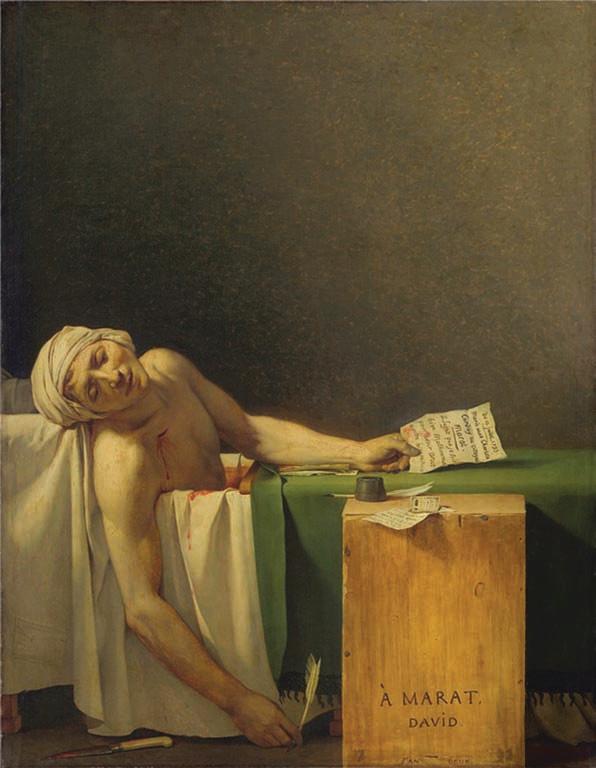
I suspect that most people in America who know anything about Jean-Paul Marat mainly have that knowledge from a few bare mentions in their high school or college Western Civilization class, a reading or viewing of Peter Weiss’s play The Persecution and Assassination of Jean-Paul Marat as Performed by the Inmates of the Asylum of Charenton under the Direction of the Marquis de Sade (usually mercifully abbreviated to Marat/Sade, and from which the opening lines of this chapter were drawn), and from Jean-Louis David’s painting The Death of Marat.2 He was one of the intellectual leaders of the French Revolution, publisher of l’Ami du people (“The Friend of the People”). He suffered from a skin infection that forced him to sit in a medicated bath most of the time. He was visited by Charlotte Corday, who came to visit on the pretext of giving him the names of some wanted Girondists. “Their heads will fall within a fortnight,” Marat supposedly remarked. And perhaps they would have, but Corday, a Girondist herself, produced a large kitchen knife and stabbed Marat in the breast, severing his carotid artery and killing him almost instantly. David, a friend and associate, not only arranged the funeral but produced his hagiographic portrait of the slain Marat, which has become an icon (Figure 2.1).
Marat was born in Switzerland. He studied medicine, became a doctor, and developed a following among the aristocracy. In view of his later revolutionary activities, this may seem ironic, but Marat worked through the advantages and restrictions of his
The Death of Jean-Paul Marat by Jacques-Louis David (1793). The artist was a close friend, who painted this image within months of Marat’s assassination. Although painted realistically (and with legitimate details—David had visited Marat the day before his death), this is nonetheless an idealization and a propaganda piece.
Art Resource N.Y.
milieu. Later it was his aristocratic sponsor, the Comte de Maillebois, who arranged for his hearings at the Academy of Sciences. His experimental apparatus was built by the Royal Optician.
In April 1786, he effectively quit medicine and devoted himself to experimental research. He was particularly interested in the hot topics of his day—the nature of fire (the theory of Phlogiston was still a viable one at this time), of optics, and of electricity. To investigate the nature of fire, he employed a device called the solar microscope,
Figure 2.1
which had been in use for some time. It used rays of sunlight, sent in a collimated bundle, to illuminate an object and cast shadows. When Marat used this to look at a candle flame, he was astonished and delighted with what he saw:3
How surprised I was at seeing the image of the candle’s flame in the form of a whitish cylinder, bordered by a white halo and crowned with a tuft of swirling jets that were less white.
Marat’s drawings illustrating what he saw were published later, and they are almost photographic in quality. It is clear that his solar microscope was acting much like a modern Schlieren system, making variations in refractive index visible. He was seeing what we now know to be the convection of the heated air rising from the candle flame. Marat thought that he was seeing the “igneous fluid,” an essential component of both flame and of heat, and that he had made it visible. To confirm that what he saw was not simply due to flame, he immediately substituted a heat piece of iron and saw the same thing. To convince himself that he was, in fact, not seeing some sort of atmospheric effect, Marat observed heated objects within an evacuated bell jar and still saw the rising apparent igneous fluid.
This is one of those issues in the history of science that is rarely covered but really deserves to be. Marat was correctly using the scientific method, eliminating the possibility that he was seeing an atmospheric effect by excluding the atmosphere. The problem was with his apparatus—vacuum pumps at the time were not good enough to achieve really good vacuums. They would not improve for another century, when the diffusion pump was invented. But Marat had no way of knowing this, of course. He requested that the Academy of Sciences review his work. They visited his laboratory and took the measure of his experiments. One of the visitors was the noted American scientist Benjamin Franklin, who volunteered his own baldhead as a subject for the solar microscope. True to form, they saw plumes rising from his head. The Academy issued a very positive report on April 17, 1779. Marat published the report, saying that the Academy supported his work. Unfortunately, this was a misstep—they certainly did not endorse Marat’s opinions about igneous fluid—and several members, Lavoisier, Laplace, and Condorcet among them, turned against Marat as a result. The was the beginning of Marat’s problems with the Academy.
It didn’t help that his next work was a criticism of the work of the highly regarded Isaac Newton. Marat became interested in the phenomenon we today call diffraction. He observed that Newton, while aware of the effect and of Francesco Grimaldi’s experiments on the effect, had downplayed the importance of the effect. Marat became convinced that light passing by an edge was somehow being attracted to that edge. He sought to increase the effect by increasing the number of edges, and so he cut multiple slits into cards, passing light through them and onto a screen. These have been called the first manufactured diffraction gratings by some, although they were much coarser than modern diffraction gratings. Marat’s efforts preceded those of David Rittenhouse by over five years, but he doesn’t seem to have tried to make his slits regularly spaced as Rittenhouse had.4 Call Marat’s constructions proto-diffraction gratings.
Among other things, Marat suggested that Newton’s interpretation of his own experiment of the breakdown of sunlight into its component colors was incorrect. It
wasn’t the dispersion of the prism that did so, he claimed, but the effect of diffraction from passing through the narrow slit he used to isolate a band of sunlight.
His work impressed his visitors, and he again asked for a review of his work by the Academy. This time the Academy was more hostile. They took a very long time to issue its report, which consisted of three brief paragraphs. This time they explicitly stated that they did not endorse his conclusions, and that his assertions were “generally contrary to what is best known in the field of optics.” It wasn’t quite a condemnation. Marat printed the report as a preface to his book on optics and put the best spin he could on it. Wolfgang von Goethe was highly critical of the Academy, accusing it of not being sufficiently critical of Newton.
It’s not only with the knowledge of hindsight that we can say that Marat’s interpretation had errors—these could have been demonstrated in his own laboratory (in the way, for instance, that slits disperse light on both sides, but the prism only on one side). But Marat had certainly raised interesting points and issues worthy of further examination that the Academy chose not to look into.
Marat himself continued to work in optics, investigating the optics of soap bubbles and translating Newton’s Opticks into French. But Marat was writing and publishing politics as well, and with the coming of the Revolution in France he started his own newspaper and became a significant and influential voice for the lowest classes and the most radical of policies. Peter Weiss, in Marat/Sade, tried to weld Marat’s interests together, likening his work with light and heat to his revolutionary activities.
He wants to pronounce the whole of firm and fixed creation invalid And instead he wants to introduce a universe of unbridled activation in which electrified magnetic forces whizz about and rub against each other.
Lavoisier, section 32, lines 155–160 in Weiss’s Marat/Sade
Notes
1. The original German title is Die Verfolgung und Ermordung Jean Paul Marats Dargestellt Durch Die Shauspielgruppe des Hospizes zu Charenton Unter Anleitung des Herrn de Sade (1964). The version I quote from was translated by Geoffrey Skelton and adapted to verse by Adrian Mitchell (1965).
2. The painting is now at the Royal Museums of the Fine Arts of Belgium. David had visited Marat on the day before his assassination, and so, aside from the idealizations, the picture is unusually accurate.
3. This translation is from Clifford D. Connor, Jean-Paul Marat: Scientist and Revolutionary (Humanities Press, 1997; 2nd ed., 2012), upon which I relied heavily for this piece.
4. See my article “Diffraction, the Silk Handkerchief, and a Forgotten Founder,” Optics & Photonics News 21, no. 10 (October 2010): 16–17; and chapter 9 in my book, How the Ray Gun Got Its Zap! (Oxford University Press, 2013).
3
Globulism
Globulism? What’s that?
According to some historians of science, it was a mistaken belief in the early 19th century that living matter was composed of spherical “globules” of the same size, acting as building blocks of living matter. But it was all a mistake, due to the aberrations of those early microscopes, and as soon as better microscopes were invented, the higher resolution allowed researchers to see the true and more complex nature of biological tissue. But that’s not true, say others. Why would such a theory have taken hold over an entire community? There were underlying philosophical assumptions that made fertile ground for such hypotheses. No, says another—the early researchers were not in error, and this “explanation” in terms of better optical instruments is mere “technological determinism.”
So what is the truth? As with everything in the history of science, it’s complicated.
To begin with, there isn’t really a complete and self-contained movement of “globulism.” The term wasn’t even applied to this aspect of the history of microscopes until about a century after its supposed heyday. (At the time, “globulism” was a term used in the pseudoscience of homeopathy, with a completely different meaning.) A lot of people looking through microscopes at biological tissues saw globules because, well, here were a lot of globular things to see. Droplets of oil and other immiscible liquids in the water that perhaps suspended the samples. Little bits of matter that had become detached from the main mass. Spherical structures and organs. Cells, possibly. And, undoubtedly, spherical artifacts due to chromatic and spherical aberration. Historians of science are in a difficult position trying to perform a postmortem on centuries-old observations quite simply because there are so many things that the “globules” could be. But let’s back up even further.
The microscope was probably invented in the 16th century.1 Hooke, Leewenhoek, and others reported seeing globules, and undoubtedly they saw a great many spherical items. But no “globulist” theory of biological tissue resulted from their work. Indeed, for more than a century after their time, the use of the microscope seemed to go into a hiatus.
This began to change around the beginning of the 19th century, as several European researchers began to take a deep interest in the structure of tissue. The conquest of chromatic aberration in the 18th century by Chester Moore Hall and John Dollond has been frequently told.2 Correcting chromatic aberration in microscopes took longer because of the smaller size and tighter radii of curvature of the lenses, but by the beginning of the 19th century there were several achromatic microscopes around. But even chromatically corrected microscopes could—and generally did—have spherical aberration.
George (Jiri) Prochaska (1749–1820) claimed to see globular structure in nerve tissue. Both because there is no such structure in nerve tissue, and because of the
description of the appearance that Prochaska gave, medical historian John R. Baker says that what Prochaska was seeing were artifacts due to spherical aberration. In 1823, Henri Milne-Edwards (1800–1885), who would go on to a distinguished career as a zoologist, was a medical student studying animal tissue. He observed globules in many different kinds of human tissue and, remarkably, found them all to be of the same size—1/300 of a millimeter in diameter. To the modern optical scientist, this uniformity of size strongly suggests that the cause was in the apparatus, not in the structures. Over the next three years, according to medical historian J. V. Pickstone, his colleagues Henri Dutrochet and François-Vincent Raspail (who shared his belief in the globular nature of tissues) persuaded him that there were, in fact, variations in the sizes of these globules.3
But the idea of uniform globules comprising animal tissues had taken hold, and after 1825 the French biologists Hippolyte Cloquet and Etienne Geoffrey Saint-Hilaire seemed to corroborate Milne-Edwards’s observations. The physiologist François Magendie made this uniformity the centerpiece of his theories. On the British side of the Channel, the medic Thomas Southwood Smith and the military surgeon Samuel Brougham agreed. “Every thing susceptible of life may derive all its parts from one constant and primitive molecule, of an uniform character, spherical and colourless,” he wrote.4
Joseph Jacob Lister was a wine merchant whose hobby was microscopy. His son became the surgeon Sir Joseph Lister, who introduced the use of carbonic acid as a disinfectant in operating rooms, and after whom the mouthwash ListerineTM and the genus of bacteria Listeria is named. To say that the elder Lister had microscopy as a “hobby” doesn’t really do him justice—he made significant contributions to the field. In 1823, he observed that the problem of spherical aberration in compound microscopes could be overcome by placing the subject at the aplanatic point of the objective lens and then placing the eyepiece so that its aplanatic point coincided with the second aplanatic point of the objective. In this way all spherical and chromatic aberration could be avoided. Lister had a microscope constructed on this principle in 1823, and he and physician Thomas Hodgkins (after whom Hodgkins disease is named) embarked on a systematic study of tissues.5 They got into paper skirmishes with defenders of the uniform globule hypothesis.
At first, this appears to be a straight case of superior technology giving greater resolution and revealing the errors of prior work. This was the argument of John Baker.6 But others, writing about the controversy, were not so sure. Science historian J. V. Pickstone, writing in 1973, commented that “the microscope will not serve to explain the globular theory; artefacts [sic] were not new discoveries, nor was spherical aberration.” Pickstone suggests that, while some aberration-dominated observations might have suggested the globular hypothesis, its persistence can only be explained by examining the philosophies of the time, into which such a globular hypothesis fulfilled some expectations.
Another writer, Tom Quick, in his 2011 PhD thesis, sees the British supporters of globule theory, who published in radical journals founded by thinker Jeremy Bentham, as conforming to the ideals of egalitarianism and the democratic ideals of organization.7
It seems to me that there might be a simpler explanation. It was only twenty years earlier that John Dalton had proposed his atomic theory, wherein substances were composed of a limited number of atoms, of roughly the same size. What could be more natural than to assume that biological material was composed and organized along the same lines?
Jutta Schickhore, more recently, suggests that the “globular” theorists were not in error at all, and that we are not considering their own work correctly. He acknowledges that Baker shows some fairness to early workers, but is too eager to attribute all problems with the globular theory to the “technological determinism” of the invention of Lister’s microscope, and even finds Pickthorn’s attribution of the tenacity of globulism to the attractions of different theories to be incorrect.8
But Schikhore paints with too broad a brush—Baker always gives good reasons for attributing erroneous observations to spherical or chromatic aberration. And, despite anyone’s philosophy, there is the iron fact that one simply cannot meaningfully write or theorize about observations that lie below the resolution of one’s instruments. Milne-Edwards and those who followed steadfastly in his 1/300 mm footsteps (even after Milner-Edwards himself retreated from that viewpoint) simply could not say anything about biological structures smaller than that if they could not see them.
Notes
1. Masud Mansuripur, “The Van Leeuwenhoek Microscope,” Optics & Photonics News 10, no. 10 (October 1999): 39–42.
2. Including in the pages of Optics & Photonics News. See Bob Guenther, “Chromatic Aberrations,” Optics & Photonics News 10, no. 10 (October 1999): 15–18.
3. John G. Pickstone, “Globules and Coagula: Tissue Formation in the Early Nineteenth Century,” Journal of the History of Medicine and Allied Sciences 28, no. 4 (1973): 336–356.
4. Cited in Tom Quick, “Techniques of Life: Zoology, Psychology and Technical Subjectivity (c.1820–1890),” PhD dissertation, University College London (2011).
5. J. J. Lister, “On Some Properties in Achromatic Object-Glasses Applicable to the Improvement of the Microscope,” Philosophical Transactions of the Royal Society of London 1230 (1830): 187–200.
6. John R. Baker, “The Cell-Theory: A Restatement, History, and Critique Part I,” Quarterly Journal of Microscopical Science 3, no. 5 (1948): 103–125.
7. Quick, “Techniques of Life.”
8. “Error as Historiographical Challenge: The Infamous Globule Hypothesis,” in Going Amiss in Experimental Research, ed. Glora Hon, Jutta Schickore, and Friedrich Steinle, 27–45. Boston Studies in the Philosophy of Science 267 (2009).
4
Acoustic Mirrors
Along the southern coast of England there are several odd structures, almost all of them inverse hemispheres 10 meters or more in diameter, made of reinforced concrete, most of them slowly crumbling away. They look like giant clumsy television dishes, and there are over a dozen of them. Aside from another in Malta (also built by the British), these are unique devices, constructed between World War I and the early 1930s. They weren’t meant as optical devices, but to concentrate sound.
There are many “whispering galleries” in the world. Most of them, like the giant inverted Mapparium Globe in Boston, were not intended for this purpose, and their function is fortuitous. Some ellipsoidal or paired parabolic whispering galleries have been built for museums, such as the Museum of Science and Industry in Chicago, or the Ontario Science Center near Toronto. But the British acoustic mirrors are different from these—they were deliberately built for a practical purpose.
The salient feature of British military history is that it benefits from its isolation from the continent of Europe, with the English Channel serving as a wide and effective moat that severely hampers any invasion. Because of this and a strong commitment to naval power, Britain was able to resist the Spanish Armada in 1588, Napoleon’s efforts circa 1805, and the Germans in the two world wars. First Lord of the Admiralty John Jervis, Lord St. Vincent, is supposed to have remarked of Napoleon’s troops, “I do not say that the French cannot come; I only say that they cannot come by sea.” This implied an image of the French army attempting to invade using Montgolfier-style balloons, and a popular political cartoon of the day shows just that.
A century later, it wasn’t so unlikely. In May 1915, German zeppelins and ShutteLanz airships crossed the English Channel and dropped bombs on targets on the Humber and the Thames, and later attacked London itself. Within months, German biplanes were crossing as well. During the war they dropped an estimated 300 tons of bombs, producing 5,000 casualties.
Britain couldn’t erect an aerial blockade. The solution to dealing with such attacks was anti-aircraft artillery, which had to be brought to bear where and when needed. The earlier the warning could be sounded and the enemy located, the better. The problem is that visual sighting, especially of an intruder whose approximate location is not known, is notoriously difficult. A RAND study from 1965 found that success could be materially improved if the observers knew approximately where to look, but even on a bright and clear day, the probability of sighting fell dramatically after a distance of only five miles. On hazy or foggy days, or at night, such invaders were effectively invisible. Some method of locating enemy aircraft at greater ranges, and in all sighting conditions, was desperately needed.
Radar was years away. Despite the fact that the basic concept had been around for decades, and patents on the idea had been taken out (in Germany, no less), no one really knew or appreciated the capability of using reflected radio waves for ranging. The
first observation of moving aircraft with what was essentially a radar system did not take place until 1930, and then it was a fortuitous accident.
Within two months of the German air attacks, the British were pursuing a solution, under the direction of a Professor Mather. They cut a semispherical depression into a horizontal chalk wall at Binbury Manor. A listening trumpet was placed on an adjustable mount near the focus, and an operator listened to the concentrated sound using rubber tubes connected to the trumpet, stethoscope style. The operator moved the trumpet around to maximize the sound, and the azimuth and elevation could be read off grid marks. This explains why the depression wasn’t parabolized—the mirror itself wasn’t movable, so “aiming” had to be done by moving the detector around, and it was best to keep the depression symmetric.
Professor Mather claimed that this device would detect audible sounds from as far away as 20 miles, and aircraft engines were certainly noisy enough. The Army did their own tests, disagreed, and threatened to cancel the program. (Mather thought the testers were incompetent.)
In any event, the program was continued, possibly because no one had anything else to suggest. More mirrors were built, larger ones, and the surfaces were lined with concrete for better sound reflection. Later, the mirrors were built free-standing entirely out of reinforced concrete. In 1917 and 1918, the mirrors near Dover proved their worth, detecting airplanes at a distance of 12 to 15 miles. In October 1917, airplanes headed for London were detected in time to give several minutes’ warning.
After the war ended, the experiments continued. There was still no other solution to the problem of long-range aircraft detection. Larger acoustic mirrors were constructed, and microphones were tried, although stethoscopes were preferred. In 1925, Dr. W. S. Tucjer was put in charge of the program, and he started building 20-foot mirrors and then 30-foot ones along the south coast, along with structures for personnel and equipment. Booths were built for operators, who controlled the detector position with hand wheels and foot pedals. Eventually mirrors as long as 200 feet were built to detect long wavelengths (although these were not complete hemispheres). With practice, they could detect aircraft at a range of 30 miles.
The operation was not without considerable difficulties. The concentration required of the operators meant that shifts could be no longer than 40 minutes. Wind blowing across the mirror could mask faint sounds, and curtains were hung across the ends to decrease the effect. Ambient noises in front of the acoustic mirrors could be picked up, interfering with aircraft detection (the mirrors were not all built at the edge of land, looking out over the water), although the story that a passing milk truck ruined an inspection of a listening facility is apparently apocryphal.
Plans to build an extensive series of mirrors were proposed in 1935, but they were derailed by the coming of radar. In July 1935, a radar installation that had been set up at Orford Ness was detecting aircraft at a range of 40 miles, and without strain on the operators. The construction of further acoustic mirrors was cancelled, although operation of the existing ones continued. The last ones were not phased out until 1939.
Even so, their career was not over. Into World War II their operation provided a useful “cover” for British use of the still-secret radar systems. When German scientists began jamming radar signals later in the war, it was thought that the acoustic stations might be used until a solution to the jamming could be found.