Oxford University Press is a department of the University of Oxford. It furthers the University’s objective of excellence in research, scholarship, and education by publishing worldwide. Oxford is a registered trade mark of Oxford University Press in the UK and certain other countries.
Published in the United States of America by Oxford University Press 198 Madison Avenue, New York, NY 10016, United States of America.
All rights reserved. No part of this publication may be reproduced, stored in a retrieval system, or transmitted, in any form or by any means, without the prior permission in writing of Oxford University Press, or as expressly permitted by law, by license, or under terms agreed with the appropriate reproduction rights organization. Inquiries concerning reproduction outside the scope of the above should be sent to the Rights Department, Oxford University Press, at the address above.
You must not circulate this work in any other form and you must impose this same condition on any acquirer.
CIP data is on file at the Library of Congress ISBN 978–0–19–093294–7 1 3 5 7 9 8 6 4 2
Printed by Sheridan Books, Inc., United States of America
To my wife, Yuko Kojima Wert
CONTENTS
Introduction | 1
1. Becoming Those Who Served | 4
2. Early Warrior Authority | 12
3. War and Culture | 33
4. Warriors in an Age of Peace | 64
5. Inventing the Samurai | 84
NOTES | 111
FURTHER READING | 113
INDEX | 117
Introduction
In the climactic battle scene at the end of the movie The Last Samurai (2003), the protagonist, a samurai rebel, leads his army of warriors as they charge to certain death against the newly formed, modern government army. Wearing only their traditional clothing and armed with bows, swords, and spears, they are mowed down by Gatling guns and howitzers as the government’s general, himself an ex-samurai, looks on anxiously. This scene has all the familiar tropes in the global fantasy about samurai: tradition versus modernity, hand-to-hand fighting versus guns, and a celebration of honorable death. The event depicted in the film is a historical one, the War of the Southwest in Japan in 1877, when ex-samurai refused to follow a series of laws that stripped all samurai of their privileged status and accompanying symbols; no more wearing swords in public or maintaining topknot hairstyles. A more accurate description of the battle scene flips the cinematic one—the modernized government army took shelter in a castle, the most traditional of defenses, while ex-samurai rebels bombarded them with cannon from outside. As with anything else, the historical depiction is more interesting than the popularized one.
Samurai seem ubiquitous in popular culture; from the novel and television show Shogun (1980) to The Last Samurai and the animated series Samurai Champloo (2004–2005), audiences never seem to tire of them. They even appear in the most unlikely places; the corporate name of a local coffee shop chain in Milwaukee, Wisconsin, is Giri, which the founder claims “comes from the Samurai code of honor, Bushido, and can be translated to mean ‘social obligation.’ ” It sounds nice, but “obligation” was simply a way to convince samurai to obey their lords no matter the danger or, more likely, the drudgery. There is no shortage of websites on samurai, and one can hardly throw a rock without hitting some martial art instructor with a distinctive view on the samurai. There are plenty of glossy books that give an overview of some aspect of samurai battles, warfare, castles, and the like, but sifting through what is reliable and what is not can be a chore. On the other hand, scholarly books tend to require too much background information, familiarity with not only Japanese but also Chinese history, religion, and art, disciplinary jargon, and, for some older history books, significant language commitment.
I will describe how samurai changed from, roughly, the eighth to the mid-nineteenth centuries, impart a sense of warrior diversity, and dispel common myths, such as the so-called bushido samurai code, swords as the “soul of the samurai,” and supposed fighting prowess. Not all periods of warrior history are covered equally; there are more details of samurai life from the seventeenth through nineteenth centuries (the early modern period) because most depictions of samurai in the West coincide with warriors from that period, and scholars know more about early modern Japan than about the medieval period (ninth through fifteenth centuries). There are so many documents from the eighteenth and nineteenth centuries that one can buy them on internet auction sites for tens of dollars. A recent auction for a collection of hundreds of documents from the eighteenth and nineteenth centuries, belonging to a single family, sold on Yahoo Auction for 73,000 yen, about $660. Some texts from early modern Japan even end up in the trash. After the earthquake,
tsunami, and Fukushima nuclear disaster on March 11, 2011, local historians scrambled to photograph historical documents found in dilapidated storehouses slated for destruction and rebuilding. There were so many documents that local museums and universities did not have room to keep those deemed unimportant, and hence they risked being thrown out. Documents from before the seventeenth century are occasionally discovered but in ever fewer numbers, and they are treated with greater care.
A final word about conventions. In Japanese, the surname precedes the given name. I use the term warrior for the ninth through sixteenth centuries, and samurai for the seventeenth through nineteenth centuries, when they existed as a narrowly defined social status group. Warlord and lord both refer to daimyo, military leaders who held territory and engaged in warfare during the fifteenth and sixteenth centuries, but by the early seventeenth century, they had become decidedly un-warlike governors. In other words, I split warrior history into two imperfect halves, the medieval and early modern periods, with the early seventeenth century as the dividing line. That is when the category of warrior narrowed, fundamentally changing for this group their culture and relationship to the rest of the Japanese population.
Chapter 1
Becoming Those Who Served
Colloquially, even in Japan, the term samurai is used as a synonym for “warrior,” but this is incorrect. Samurai originally had a very narrow meaning, referring to anyone who served a noble, even in a nonmilitary capacity. Gradually it became a title for military servants of warrior families—in fact, a warrior of elite stature in preseventeenth-century Japan would have been insulted to be called a “samurai.” There were other more common terms for warriors in classical and medieval Japan that reflected their various duties to the state, nobility, and other superiors. Most specialists in Japan and in the West use the generic term bushi, which means “warrior.”
Warrior is a usefully ambiguous term for referring to a broad group of people, before the seventeenth century, with some military function. This includes anyone expected to provide military service to the state when needed and who received official recognition from a ruling authority to do so, such as the nobility and court in Kyoto or religious institutions. Even the term warrior is imprecise because it incorrectly suggests that warfare was this group’s sole occupation. Depending on the time period and status, warriors alternatively governed, traded, farmed, painted, wrote, tutored, and engaged in shady activities.
Another caution when using the term warrior is the moral value that modern people attach to the concept. The US military uses “warrior” in its various training programs, such as “Warrior Mind Training,” a meditation program created for soldiers to help them cope with posttraumatic stress disorder (PTSD) and to prepare them for the rigors of combat. The developer used the image of the samurai to sell the program, “rooting it in the ancient Samurai code of self-discipline.”1 No such code existed. Even phrases used ironically assume the existence of an authentic admirable warrior image—for example, “weekend warrior,” suggesting that one is a normal boring person during the week but becomes some other, more primal person on the weekend. In this usage, a warrior is something one is, not an occupation one does.
But throughout Japanese history, people often despised warriors. Artists and writers portrayed warriors as beasts, no better than dogs, uncouth and murderous. Warriors pillaged, looted, and sometimes murdered their way through villages. They found no love among peasants, who feared warriors because peasants suffered the most from their looting, pillaging, and collateral damage. Ironically, it was only during an age of relative peace, in early modern Japan (1600–1868), that common people began to admire and imitate samurai.
Of course, warriors fought in combat, but in reality they spent most of their time doing something else. That could mean trying to improve their family’s position in an elite society dominated by nobility, managing farmers on their estates, or, for the lowliest warriors, even engaging in occasional grift. The limit of samurai activities was determined by the definition of “warrior” as it changed over time. A samurai traveling back in time from the nineteenth century to the ninth might hardly be recognized as belonging to the same category of people.
Warriors of the distant past became a source of entertainment, anxiety, and inspiration for samurai living in later times. One samurai commentator in the early eighteenth century, an era of peace, complained of his contemporaries, “So many men now seem to have
the pulse of a woman,” nothing like the real warrior men of the previous century, a time of war.2 In the thirteenth century, a Buddhist nun, Hōjō Masako, invoked the legacy of her late husband Minamoto Yoritomo as a warrior founding father of sorts who fought against a threat from an emperor in Kyoto. And let’s not forget the material appeal of the past; samurai of higher status delighted in purchasing a sword or tea bowl once owned by famous warriors.
Warriors used military skills as a means of advancing their careers. Politically, they were outsiders, used as tools by powerful nobles who needed them as muscle to police their lands or to act as a check on other noble families intent on taking land by force. Much of Japan technically belonged to the emperor (tennō, literally “heavenly sovereign”), who, according to ancient mythology, was descended from gods, and warriors protected the interests of the emperor’s regime based in the ancient capital cities of Nara, Nagaoka, and from 794, Kyoto. They guarded against outbreaks of violence close to the capital, attacked anyone in the provinces far from Kyoto who might threaten the regime, and campaigned against the many “barbaric” tribes located on the outskirts of Japan in the northeast or southwest.
The term warrior typically does not include others who lived by violence—namely, mercenaries, bandits, and pirates. But before the seventeenth century, a person’s status was not so neatly defined. Some people temporarily connected to a ruling institution could legally participate in warfare, governance, and commerce. For example, though most warrior and royal authorities depicted pirates as violent bandits operating at sea, they sometimes engaged in warfare on behalf of a warrior regime called a shogunate, a religious institution such as a Buddhist temple, or a noble ensconced in the capital, Kyoto. They monopolized sea-based trade, established rules of conduct and expectations from people living along waterways, and wielded authority like a warlord or warrior bureaucracy.
A debate about warrior origins has raged in both the Japanese and English language scholarship on premodern Japan due, in part,
to how one defines samurai. Were they simply a carryover from ancient soldiers? The earliest evidence for warrior- soldiers predates written history and Japan itself. Terracotta figures (haniwa) depicting soldiers, servants, and animals were placed outside tombs that dotted the ancient burial landscape between the third and sixth centuries. The soldiers’ arms and armor reflect the influence of contemporary warriors in China and the Korean kingdoms and share a common style that shows the existence of some primitive regime that influenced mostly central and southwest Japan. Hunters and landholders from the eastern provinces? Or professional warriors hired by the Kyoto court? For the sake of argument, it is safe to say that private military specialists emerged as a permanent feature in Japanese history around the ninth century when some of them began wielding authority over others rather than serving as mere soldiers.
Written evidence for warrior history can be traced to the late eighth and early ninth centuries, when the early Japanese state adopted the administrative structure of Tang dynasty China (618–907), the dominant cultural and political power in East Asia. In addition to adapting the various court titles, noble ranks, bureaucratic structures, and culture, the early Japanese sovereigns copied Tang military organization. The court required men to serve in provincial units in times of need. Though a conscript army existed on paper, most showed up only for occasional shortterm assignments of up to thirty days or so—for example, to serve in the frontier guard. Most of the year they pursued their own livelihoods. Conscripts were supposed to supply their own weapons and equipment and did not spend much time training. Only officers worked in the military for long periods of time, and some historians have argued that those men were engaged in managerial work rather than intense military training or warfare. Much of the Tang administrative model was abandoned in Japan in the late eighth century and was gradually replaced over the next century and a half with specialist warriors.
In the broadest terms, several different types of warriors existed beginning in the early eighth century. Most warriors did not “own” land, per se, but received a portion of an estate’s produce and the rights to collect—and skim—taxes from estates owned by absentee proprietors living in Kyoto. Some enjoyed relative freedom from interference by authorities in Kyoto or their representatives in the provinces. Some possessed land themselves and consigned some of that land to a non-warrior noble family in Kyoto in exchange for patronage—that is, for guarantees that others would not stake a claim on a warrior’s land. Still other warriors were themselves members of noble families, albeit of a lower rank than most of the powerful nobles who controlled the top bureaucratic positions in Kyoto. Of those, some had established local connections and alliances during a tenure as provincial governor and remained there permanently. They became warrior-lords and relied on minor warrior families while maintaining connections to allies and resources in Kyoto. As the center of rule and the largest city at the time, Kyoto wielded a centripetal force on elite clans throughout Japan. People with aristocratic Kyoto lineage occupied the top social strata in provincial society. Prominent families in the countryside worried about Kyoto-appointed governors sent to monitor them, and politics in Kyoto could threaten local access to wealth.
There was no single model for how these warriors organized themselves. Men might cooperate in bands of warriors connected by kinship, personal loyalty, or common enemies. Others worked together for noble families located in the capital city, provincial officials, or local strongmen. It is no surprise that the ability to fight and organize resources for a military campaign was more efficient among these specialized groups than among conscripts whose livelihoods were interrupted, not enhanced, by warfare. Eventually the state depended on these professionalized warrior groups for police and military functions. Dependency did not mean that warriors took authority away from the state nor was it the beginning of the end for the royalty, as was once taught; the court and nobility were still in charge.
Most powerful warriors in classical and medieval Japan tended to be those who were themselves nobles and thus had little incentive to challenge the status quo of their community. Although they never achieved the upper echelons of noble ranking, many large, interconnected families that dominated Japan, such as the Taira and the Minamoto, were descended from sons of emperors cast aside because they were no longer in the running for the throne. An emperor bestowed a surname upon these sons who started clans of their own and followed careers common to noble families: serving as functionaries at court, working as important and influential Buddhist clergy, or becoming professional warriors. But not all families within a single surname, such as Minamoto, pursued the same career trajectory.
One might wonder, though, did any warrior try to overthrow the emperor in Kyoto or otherwise carve out a territory of his own, independent from the center? Taira Masakado was the first would-be rebel against the court. He lived in eastern Japan, not far from presentday Tokyo, surrounded by other Taira families who controlled land in the east. Some of them served as the imperial court’s representatives. Masakado had once lived in Kyoto under the court’s employment, but he was largely a man of the east, a land distant from the center of political and cultural power. What began as a conflict over land among different Taira families and Masakado’s own relatives— fighting that the nobility in Kyoto largely ignored—turned into an act of rebellion in 935 when Masakado retaliated against Taira men who were the emperor’s representatives. Masakado might not have intended to rebel against the emperor, nor did he have a force large enough to threaten Kyoto directly, but he declared himself the “new emperor” in the east, a career that did not last long—he was killed by a cousin in 940.
Another challenger to imperial and noble authority was Taira Kiyomori. He, too, was descended from an emperor and was raised in Kyoto like other aristocrats. When a succession dispute broke out within the imperial family over who would become the next
emperor, Kiyomori led the forces of the victor; the losers, mostly under the control of Minamoto Yoshitomo, were sent into exiled or killed. What began as a clash against forces representing noble patrons turned into a rivalry between Kiyomori and Yoshitomo. Kiyomori beat Yoshitomo and began accumulating aristocratic titles, bureaucratic posts, and provincial landholdings. By the late 1170s, he had become a real threat to imperial power. In Kyoto, he placed allies in important positions not already under his direct control and tried, unsuccessfully, to move the capital to what is now Kobe. There he embarked on massive building projects, including his own headquarters and ports for trade with China. He was the first warriornoble who attempted to dominate all warriors in Japan. He even put his own grandson, the child emperor Antoku, on the throne. The prince who had been passed up for succession when young Antoku was enthroned asked warriors to overthrow Kiyomori. That challenge started the so-called Gempei War (1180–85) which lasted longer, and was geographically broader, than any previous battle in Japanese history. It even outlasted Kiyomori, who died of natural causes in 1181.
No broadly conceived warrior identity existed before the Gempei War. At the top of warrior society, the most powerful families were themselves part of the aristocracy; the terms warrior and nobility were not mutually exclusive. For the most part, warriors with noble surnames such as Minamoto and Taira, who resided largely in the countryside, had no incentive to fight against the imperial institution that their ancestors had helped build. Many acted as bridges between Kyoto and the countryside; they feared relatives and neighbors and were hardly in a position to rise up against the imperial institution. At the other end of the social spectrum, the lowly nonaristocratic soldiers and mercenaries often engaged in nonmilitary work. Even midranking warriors shared little in common with their royal betters.
This situation changed to a degree after Minamoto Yoritomo emerged as the victor at the end of the Gempei War. He remained at
his headquarters in Kamakura and is credited with creating the first warrior-centered regime, the Kamakura shogunate (1185–1333).
Textbooks portray him as the originator of Japan’s warrior identity, but that shared identity extended only to the warriors who gathered around him in Kamakura. This beginning of so-called warrior order was not orderly nor did it involve only warriors. But it represented a first step toward a broader notion of warrior culture and identity that would develop over the subsequent centuries.
Chapter 2
Early Warrior Authority
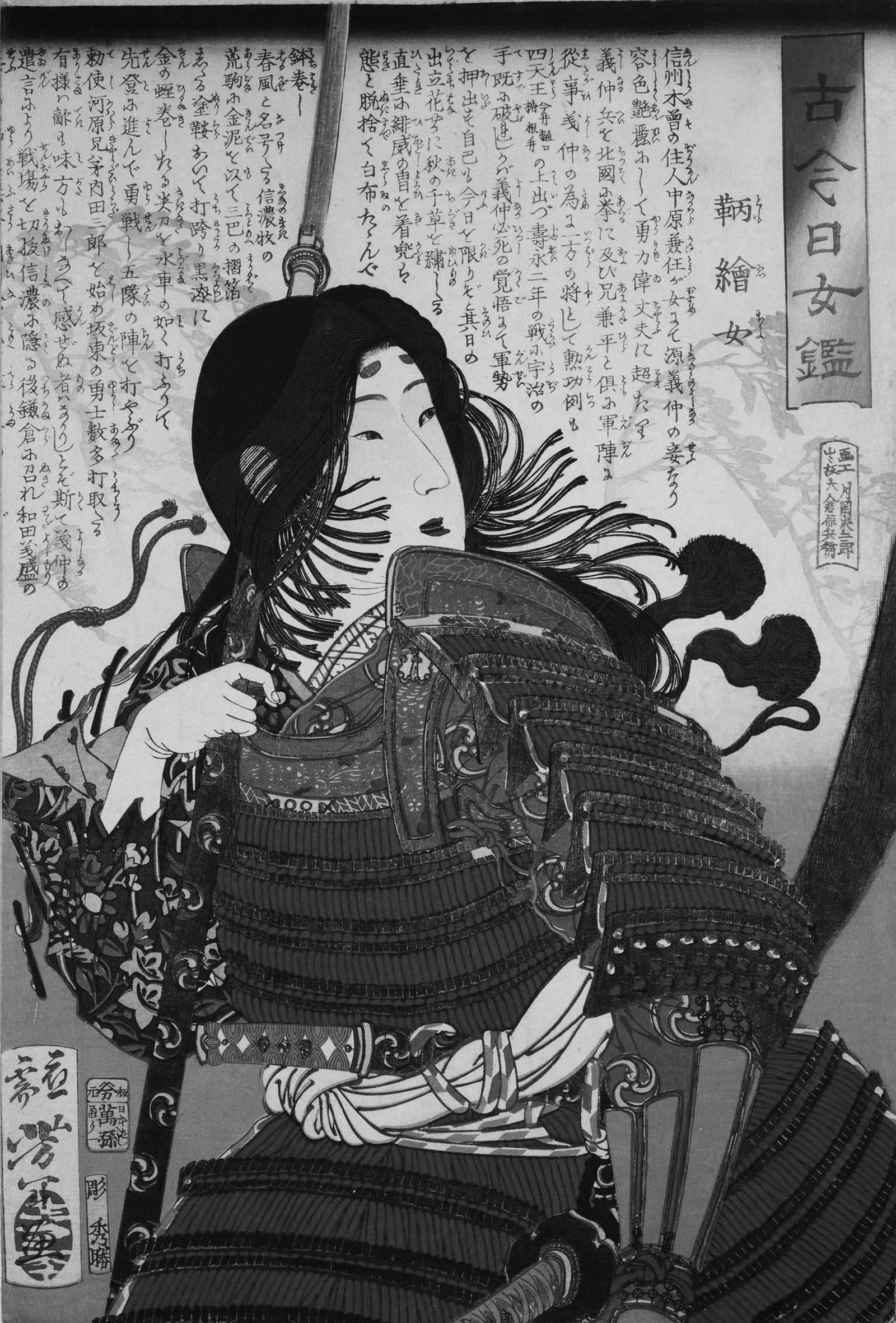
Minamoto Yoritomo’s forces swept from eastern Japan to the west, defeating the Taira armies in 1185. With the help of Kyoto-born nobility and warrior allies, Yoritomo created a warrior regime that lasted until 1333, at which time several prominent warrior clans destroyed the Kamakura regime in the name of the emperor. The shogunate’s leading men, first Yoritomo and then a series of regents ruling on behalf of weak titular leaders called shoguns, consolidated their control over Japan at the expense of the nobility. Thus, the typical story about Japan’s first warrior regime centers on the institution of the shogunate and how it became the center of a putative “warrior order.” It focuses on men who managed estates, created a primitive legal court, and interacted with noblemen as either employers, allies, or foes. In popular culture, these men tend to be in armor on a battlefield constantly engaged in combat. In reality, they spent less time fighting than movies and manga (Japanese graphic novels) would have us believe. The fullness of early warrior history is best captured through its women. All warrior households had military obligations, but those obligations were organized by family units in the broadest sense: large clans comprising women, retainers, and servants who fulfilled menial and complex duties. Military obligation included
Tomoe Gozen is shown dressed in armor—depicted as a combatant rather than as a docile wife. The artist describes her “wielding her halberd like a water wheel.” British Museum, AN433673001
supplying food, clothing, and labor; it was not simply engaging in combat on the battlefield.
Moreover, the survival of any warrior family depended on the efficient management of its wealth, smooth relations among allies, and, especially for elite warrior families, connections with nonwarrior aristocrats. Men dominated this process but could not do so without women. In one sense, women were used as objects, through marriage, to solidify an alliance between elite families. But a woman retained any possessions given to her during her marriage, and she continued to live on her parents’ estate or in her own residence, often separately from her husband, making her far more independent than her samurai counterparts during later periods. Warrior wives also wielded tremendous influence on their family’s position in society. For example, they acted on behalf of either dead or absent husbands; a widow could carry out her clan’s military obligations.
Indeed, there might not have been a Kamakura shogunate without women. The Kyoto aristocratic custom of entrusting the future of one’s child to female caretakers and their families provided Yoritomo with a stable of warrior and nonwarrior connections vital to his success. Since many of Yoritomo’s male relatives were killed, he depended on the women who helped raise him as a child. They supplied him with wealth, male allies in his youth, and information from Kyoto. His mother was born into the Fujiwara clan, the most powerful noble family before the thirteenth century. Her status guaranteed Yoritomo’s high position within the Minamoto clan because his father’s other consorts were of lower noble blood. And when Kiyomori defeated the Minamoto clan, he spared Yoritomo, it is said, because Kiyomori’s stepmother intervened on his behalf. Instead, he exiled Yoritomo to the Izu province in the east, far from Kyoto’s center of wealth and power. There Yoritomo grew up under the watch of Hōjō Tokimasa, the twenty-two-year-old head of a minor, obscure family distantly related to the Taira. Like other Kyoto noblemen, Yoritomo was born into a pampered life and must have been shocked by his move to a very rural area as an adolescent.
Elite warrior families like the Minamoto followed the courtier model of marriage and child-rearing in which women were at the center. In Kyoto noble culture, nannies and wet nurses came from minor noble families, and the boys placed in their care played and learned alongside these women’s own children. Since the boys essentially grew up together, they often became trusted allies as adults despite differences in social status within the noble hierarchy. The noblewomen who knew Yoritomo as a child ensured that he would continue to maintain a decent life in Izu well into adulthood.
For example, one of Yoritomo’s wet nurses, the nun Hiki, consistently sent him rice, a form of wealth. She controlled her family after her husband’s death, and the heir that she adopted, Hiki Yoshikazu, became one of Yoritomo’s closest allies and a top advisor in the shogunate after Yoritomo died. Likewise, her son-in-law, Adachi Morinaga, became a trusted advisor to Yoritomo, and his clan provided much-needed economic support to Yoritomo. Hiki’s daughter even served as the wet nurse to Yoritomo’s son, the second shogun Minamoto Yoriie. A third wet nurse mediated the connection between Yoritomo and her grandson, Miyoshi Yasunobu, who served Yoritomo in a bureaucratic rather than a military function. Indeed, the only older male relative Yoritomo could count on while in Izu was his maternal uncle, the Buddhist monk Yūhan, who sent a servant to Izu once a month to bring Yoritomo news from Kyoto.
Yoritomo was not destined for greatness even though warriors in later centuries would glorify him. He spent most of his adult life in obscurity. It was not until he reached his early thirties, fully middleaged for the time period, that he attacked the Taira clan and began to create the Kamakura shogunate, an institution left incomplete during his lifetime. His background, supporters, and the political and economic environment for families in the east contributed to his success in elevating warrior authority, a process that continued long after his death.
Yoritomo gathered allies around him by taking advantage of their economic anxieties. Warrior families did not own land per se but
could access land and its resources, human and material, through various managerial and policing duties granted to them by absentee landholders. Warriors did not control the appointment or transferring of those duties, nor could a warrior hope to rise into the upper echelons of nobility that would make him a proprietor. Taira Kiyomori, for example, could not be a landowner and merely appointed himself as protector and governor of lands. He had to imitate noble precedent by copying the Fujiwara family’s practice of placing a grandson on the imperial throne.
Adding to economic insecurity were regional threats from neighboring rivals or family members who might take land or titles by force. It might seem counterintuitive, but the greatest threats came from within one’s own clan. With no concept of primogeniture (the oldest son inheriting everything), the death of a clan leader might result in immediate infighting among cousins, uncles, and sons from different women who lived separately from their husbands. For lower-ranking warrior aristocrats or clans not based in and around Kyoto, sons were raised by the mother’s family, and the wife’s family vied for control over wealth and influence.
Thus, when an imperial prince, Mochihito, put out the call for people to oust Kiyomori from his position, those who responded took into consideration intra-clan politics, connections to Kyoto nobility, and local rivalries when deciding if, and how, they would act. Yoritomo spent much of his time fighting relatives and clans traditionally allied to the Minamoto in the early stages of the Gempei War. From the beginning, other Minamoto men such as Yorimasa, who was defeated in 1180, and Yoritomo’s cousin, Yoshinaka, also mobilized against Kiyomori, rivaling Yoritomo’s efforts. Yoritomo gathered around him warriors whose loyalty he secured by promising them titles, access to land, and a pretext to attack local rivals. He provided an alternative to Kyoto-based authority for people living in the east. In fact, once the Taira troops captured and killed Prince Mochihito, the royal court, under Taira influence, declared Yoritomo a rebel. Thus, unlike Kiyomori, whose career was made
within the bounds of the imperial government, Yoritomo could confiscate lands from his enemies instead of forfeiting them to the emperor.
The Gempei War did not unfold as one might expect. The initial protagonist, Mochihito, and antagonist, Kiyomori, died in 1180 and 1181, respectively. Mochihito and his Minamoto supporters were cornered and killed, while Kiyomori died of a fever so high, the literary version of the events in the Tale of Heike tells us, that it was caused by the guardians and flames of hell coming to claim him.
Yoritomo was busy fighting local enemies and rivals, building a headquarters and bureaucracy in Kamakura until 1184, when he marched on Kyoto. In 1185, his half-brother Yoshitsune pursued the Taira as they retreated south from Kyoto. Yoshitsune, not Yoritomo, led the more spectacular battles, including the final one along the coast by the sea of Dan-no-Ura, far southwest from Kyoto and Kamakura. The Minamoto forces destroyed the remnants of the Taira clan, while the Taira noblewomen, one of them still holding onto the child emperor Antoku, Kiyomori’s grandson, dived into the seas of Dan-no-Ura, and drowned. So tragic was the defeat of Taira warriors, noblewomen, and servants that local legend claims the spirits of the Taira warriors imprinted themselves onto the carapace of small crabs.
The significance of the Gempei War in Japanese warrior history cannot be reduced to a neat list of losers and winners, nor of gains and losses. The emperor had no choice but to recognize Yoritomo’s emergence as Japan’s dominant warrior, making him the “constable” (shugo) of all of Japan’s provinces. He restored Yoritomo’s court rank, eliminating his status as a rebel, and recognized his right to assign warriors as managers to estates throughout Japan. But warriors did not control Japan; even Yoritomo coveted noble court rank and recognition from Kyoto. In his portrait he is dressed as an aristocrat, not as a warrior in battle dress. The war engendered a sense of unease for all elites, including Kyoto nobles, members of religious institutions, warriors, Yoritomo and his allies, and prominent local