“Cross Road Blues” as recorded by Robert Johnson (1936) 8
“Lost Your Head Blues” as recorded by Bessie Smith, Joe Smith, and Fletcher Henderson (1926) 9
chapter four
“Shake, Rattle and Roll” as recorded by Joe Turner (1954) 46
“Shake, Rattle and Roll” as recorded by Bill Haley and the Comets (1954) 46
“Hound Dog” as recorded by Willie Mae “Big Mama” Thornton (1952) 50
“Hound Dog” as recorded by Elvis Presley (1956) 50
“Three O’Clock Blues” as recorded by B. B. King (1951) 19
“(I’m Your) Hoochie Coochie Man” as recorded by Muddy Waters (1954) 22
“Bo Diddley” as recorded by Bo Diddley (1955) 26
chapter three
“How Far Am I from Canaan?” as recorded by the Soul Stirrers with Sam Cooke (1952) 31
“Oh Happy Day” as recorded by the Edwin Hawkins Singers (1969) 32
“Crying in the Chapel” by the Orioles (August 1953) 34
“Sh-Boom” as recorded by the Chords (1954) 35
“Sh-Boom” as recorded by the Crew-Cuts (1954) 35
“There Goes My Baby” as recorded by the Drifters (1959) 37
“I’ll Never Get Out of This World Alive” as recorded by Hank Williams (1952) 41
“I Walk the Line” as recorded by Johnny Cash (1956) 42
“Burning Love” as recorded by Elvis Presley (1972) 51
“Blue Suede Shoes” as recorded by Carl Perkins (1956) 52
“Summertime Blues” as recorded by Eddie Cochran (1958) 53
“Peggy Sue” as recorded by Buddy Holly (1957) 55
“I’m Walkin’” as recorded by Fats Domino (1956) 57
“School Day” as recorded by Chuck Berry (1957) 59
“Long Tall Sally” as recorded by Little Richard (1956) 61
chapter five
“Tutti-Frutti” as recorded by Little Richard (1955) 72
“Tutti-Frutti” as recorded by Pat Boone (1956) 72
“Venus” as recorded by Frankie Avalon (1959) 73
“Will You Love Me Tomorrow?” as recorded by the Shirelles (1960) 75
“Be My Baby” as recorded by the Ronettes (1963) 77
“Misirlou” as recorded by Dick Dale and The Del-Tones (1961) 79
“Sweet Little Sixteen” as recorded by Chuck Berry (1958) 80
“Surfin’ U.S.A.” as recorded by the Beach Boys (1963) 80
chapter
six
“What’d I Say (Part Two)” as recorded by Ray Charles (1959) 86
“Please, Please, Please” as recorded by James Brown and the Famous Flames (1956) 87
“In the Midnight Hour” as recorded by Wilson Pickett (1965) 88
“Respect” as recorded by Aretha Franklin (recorded in 1966, released in 1967) 90
“My Girl” as recorded by the Temptations (1965) 93
“What’s Going On” as recorded by Marvin Gaye (1971) 95
chapter seven
“I Want to Hold Your Hand” by the Beatles (1964) 101
“Norwegian Wood” as recorded by the Beatles (1965) 103
“A Day in the Life” by the Beatles (1967) 105
“Not Fade Away” by Buddy Holly (1957) 108
“Not Fade Away” by the Rolling Stones (1964) 108
“(I Can’t Get No) Satisfaction” as recorded by the Rolling Stones (1965) 109
“Miss You” as recorded by the Rolling Stones (1978) 112
chapter eight
“You Really Got Me” as recorded by the Kinks (1964) 115
“My Generation” as recorded by the Who (1965) 117
“Crossroads” as recorded by Cream (1968) 122
“Louie Louie” as recorded by the Kingsmen (1963) 124
“Kicks” as recorded by Paul Revere and the Raiders (1966) 126
“Red House” as recorded by the Jimi Hendrix Experience (1967) 127
chapter
nine
“Tom Dooley” as recorded by The Kingston Trio (1958) 133
“Blowin’ in the Wind” as recorded by Peter, Paul, and Mary (1963) 134
“Mr. Tambourine Man” as recorded by Bob Dylan (1965) 138
“Mr. Tambourine Man” as recorded by the Byrds (1965) 138
“Sounds of Silence” as recorded by Simon and Garfunkel (1965) 139
“Eve of Destruction” as recorded by Barry McGuire (1965) 140
“Ohio” as recorded by Crosby, Stills, Nash and Young (1970) 141
“Fire and Rain” as recorded by James Taylor 143
“Help Me” as recorded by Joni Mitchell (1974) 144
chapter ten
“Dark Star” as recorded by the Grateful Dead (1970) 150
“Uncle John’s Band” as recorded by the Grateful Dead (1970) 151
“White Rabbit” as recorded by Jefferson Airplane (1967) 153
“Light My Fire” as recorded by the Doors (1967) 155
“All Along the Watchtower” as recorded by Bob Dylan (1968) 156
“All Along the Watchtower” as recorded by Jimi Hendrix (1968) 156
chapter eleven
“Lyin’ Eyes” as recorded by the Eagles (1975) 168
“Ramblin’ Man” as recorded by the Allman Brothers Band (1973) 171
“The South’s Gonna Do It (Again)” as recorded by the Charlie Daniels Band (1975) 172
Table of Contents: Listening Guides
“Sweet Home Alabama” as recorded by Lynyrd Skynyrd (1974) 174
“Spinning Wheel” as recorded by Blood, Sweat and Tears (1968) 177
chapter twelve chapter thirteen
“Sunshine of Your Love” as recorded by Cream (1967) 182
“Magic Man” as recorded by Heart (1976) 183
“Whole Lotta Love” as recorded by Led Zeppelin (1969) 185
“Paranoid” as recorded by Black Sabbath (1970, released in 1971) 186
“Victim of Changes” as recorded by Judas Priest (1976) 189
“School’s Out” as recorded by Alice Cooper (1972) 192
“You Really Got Me” as recorded by Van Halen (1978) 194
“Rock and Roll All Nite (live)” as recorded by Kiss (1975) 196
“Nights in White Satin” as recorded by the Moody Blues (1967) 200
“Roundabout” as recorded by Yes (1971) 203
“Money” as recorded by Pink Floyd (1973) 206
“Don’t Eat the Yellow Snow” (single version) as recorded by Frank Zappa (1974) 208
“New World Man” as recorded by Rush (1982) 211
“Space Oddity” as recorded by David Bowie (1968) 212
“Bohemian Rhapsody” as recorded by Queen (1975) 214
chapter fourteen
“007 (Shanty Town)” as recorded by Desmond Dekker and the Aces (1967) 219
“I Shot the Sheriff ” as recorded by Bob Marley and the Wailers (1973) 221
“Concrete Jungle” as recorded by the Specials (1979) 223
chapter fifteen chapter sixteen
“Heroin” as recorded by the Velvet Underground (1966) 227
“Personality Crisis” as recorded by the New York Dolls (1973) 229
“Sheena Is a Punk Rocker” as recorded by The Ramones (1977) 231
“God Save the Queen” as recorded by the Sex Pistols (1977) 233
“Kill the Poor” as recorded by the Dead Kennedys (1980) 236
“Jocko Homo” as recorded by Devo (1976) 238
“Radio Radio” as recorded by Elvis Costello and the Attractions (1978) 240
“Papa’s Got a Brand New Bag” as recorded by James Brown (1965) 244
“Thank You (Falettinme Be Mice Elf Agin)” as recorded by Sly and the Family Stone (1970) 245
“Freddie’s Dead” as recorded by Curtis Mayfield (1972) 247
“Flash Light” as recorded by Parliament (1978) 249
“Hot Stuff” as recorded by Donna Summer (1979) 251
“Stayin’ Alive” as recorded by the Bee Gees (1977) 252
“Good Times” as recorded by Chic (1979) 253
chapter seventeen
“Rapper’s Delight” as recorded by the Sugarhill Gang (1979) 265
“The Message” as recorded by Grandmaster Flash and the Furious Five, featuring Melle Mel and Duke Bootee (1982) 266
“It’s Like That” as recorded by Run-DMC (1983) 267
“911 Is a Joke” as recorded by Public Enemy (1990) 269
“Straight Outta Compton” as recorded by N.W.A. (1988) 271
“La Raza (La Raza Mix)” as recorded by Kid Frost (1990) 272
chapter nineteen chapter eighteen
“Billie Jean” as recorded by Michael Jackson (1983) 277
“Little Red Corvette” as recorded by Prince (1982) 279
“Papa Don’t Preach” as recorded by Madonna (1986) 281
“Karma Chameleon” as recorded by Boy
George and the Culture Club (1983) 282
“Nothin’ But a Good Time” as recorded by Poison (1988) 283
“With or Without You” as recorded by U2 (1987) 285
“Everyday Is Like Sunday” as recorded by Morrissey (1988) 286
“Bela Lugosi’s Dead” as recorded by Bauhaus (1979) 290
“Straight Edge” as recorded by Minor Threat (1981) 291
“Stigmata” as recorded by Ministry (1988) 293
“Master of Puppets” as recorded by Metallica (1986) 295
“Angel of Death” as recorded by Slayer (1986) 296
“Born in the U.S.A.” as recorded by Bruce Springsteen (1984) 298
“Smells Like Teen Spirit” as recorded by Nirvana (1991) 309
“When I Come Around” as recorded by Green Day (1994) 310
“Don’t Speak” as recorded by No Doubt (1995) 312
“What Would You Say” as recorded by the Dave Matthews Band (1994) 314
“Karma Police” as recorded by Radiohead (1997) 316
“Bulls on Parade” as recorded by Rage Against the Machine (1996) 317
“Freak on a Leash” as recorded by Korn (1998) 319
chapter twenty chapter twenty-one
“Yellow” as recorded by Coldplay (2000) 330
“Girlfriend” as recorded by Avril Lavigne (2007) 331
“The Middle” as recorded by Jimmy Eat World (2001) 333
“Schism” as recorded by Tool (2001) 334
“B.Y.O.B.” as recorded by System of a Down (2006) 335
“Use Somebody” as recorded by Kings of Leon (2008) 336
This page intentionally left blank
Rock Music Styles: A History is intended to be used as the text for a college-level course on the history of rock music. As a teacher and a writer, my primary concern has been to help students develop an understanding of both the musical and cultural roots of rock music and the ability to hear a direct relationship between those roots and currently popular music. To that end, I identify the various styles of music that influenced the development of rock and discuss the elements of those styles along with the rock music to which they relate. Careful listening is necessary in order to hear and identify those basic elements of music and then understand how they help define the characteristics of individual styles. The kind of listening I am asking students to do is not about deciding whether the music is pleasing or not, but is analytical so the student can separate one musical element from another.
Organization of the Text
This book is organized in chronological order by decade, rather than year by year. The decade approach helps to meet the overall goal of keeping general musical styles together even though there is a break from one decade to another. Each decade is introduced with some general information about events and trends important during that decade, most of which had significant influence on the music that was popular during that decade. A Chronology Chart that includes Historical Events and Musical Events of the decade follows the general discussion. Of course, one can use the book in ways other than its obvious historical survey. A reader who is interested in one particular style, the blues for example, could read about early blues styles in Chapter 1, then blues styles from the fifties discussed in Chapter 2, and then skip up to the blues revival in Chapter 8.
Reading Listening Guides
The listening guides to individual recordings in this book are intended to aid students in analytical listening. Each guide begins with the tempo of the recording. To identify that basic beat in the recording all one has to do, in many cases, is look at the second hand on a clock while listening to the recording. We know that there are sixty seconds in a minute, so if the tempo is 120, the beats are the pulses in the music that are heard at the rate of two per second. Even if the tempo is 72, one can listen for pulses that are just a bit faster than the seconds to pick out the basic beat. Listening to the music is the most important part of this process, but many nonmusicians will need to force themselves to avoid the “tone bath” type of listening they may be used to so they can actually describe what they are hearing.
After discussing the tempo, the listening guides turn to the form of the recordings. Form in music is the overall structure as defined by repetition and contrast. A song like “Hound Dog,” for example, has lyrics in an AAB form. That is, we hear one line of lyrics, A (the first letter of the alphabet is used for the first section of music), and then we hear that line repeated. Those two A lines are followed by new lyrics, so we identify those new lyrics by a new letter, B. When we get into music analysis we will be outlining when melodies repeat or are contrasted with new melodies. With either lyrics or melody, when we listen for form we listen for a given musical element to repeat, or for a new and contrasting element to be introduced.
“Features” in the listening guides vary with the recording and are my way of describing other musical elements or characteristics that are special in a particular recording that help to define the general style of music. This presentation does not allow
for the type of detail that a musician who notates and analyzes music note-by-note or chord-by-chord uses, but that type of analysis is not the subject of this book. As I said earlier, what I have tried to do here is teach interested students about the musical characteristics of many different types of rock music and help these students learn to listen critically so that they can make stylistic connections on their own.
Lyrics are very important in most rock music, and for that reason, each listening guide includes a simple explanation of the song’s lyrics. In some light pop songs that explanation may say as much as do the lyrics themselves, but in most cases lyrics contain complexities that are open to different interpretations that would go beyond the scope of this book. I hope that my summaries of lyrics will be used as a point of departure for further thought and discussion about the meaning(s) conveyed in each song.
For this edition, McGraw-Hill Education has partnered with Spotify® to make songs from listening guides available online for FREE. Spotify is a digital music-streaming service that offers on-demand access to millions of songs on a variety of devices. Readers can access songs from listening examples by using Spotify directly and searching for the “Rock Music Styles” playlist, or by clicking on the Spotify play button on the Online Learning Center (more information about the OLC below). The icon at the side of this paragraph will appear next to listening guides throughout the text to remind readers that they can listen to the featured song in Spotify.
In the few cases where the original recordings are not available through Spotify, the site does have some newly recorded versions. In most cases, the original recordings are best to use with the listening guides if they are available. Songs that are unavailable within Spotify can be accessed through YouTube.com.
Suggestions for Class Discussions
Each chapter ends with Discussion Questions to be used as starting points for students and teachers to add their own ideas about the music and put them in historical context. Additionally, most rock listeners are well aware of the controversial aspects of some rock music, particular the lyrics. In these cases, I have mentioned some of the issues, but avoided imposing personal judgments in the text. My goal is to be as objective as possible and provide the reader with an understanding of what the music means to the performers and his or her fans.
Discussions about any possible negative impact of the music or lyrics may have on some listeners can, and I expect will, take place in individual classrooms without any biased opinions from the textbook.
Updates in the Seventh Edition
Based on reviewer comments, a substantial effort has been made to improve the quality of the photographs and update the content of Rock Music Styles: A History for the seventh edition. Updates include the addition of new career information for performers who are still active; removing less-used background, performers, and career material; adding styles and performers that were not included in the previous edition; replacing and adding new listening guides; and replacing some photos. This edition contains 15 new listening guides. Specific genres that have been given more attention include new romanticism, alienated and back to the roots rock, ska punk, and music from the later 2000s. Much of the other content in the text has been reorganized for greater clarity.
Supplementary Material
This text is accompanied by a wealth of resources to aid students and instructors. The Online Learning Center at mhhe.com/charltonrock7e offers an Instructor’s Manual, PowerPoint Presentations, and Test Bank. For the first time, the site also includes a Spotify play button for each Listening Guide song. For more about Spotify, see the “Listening Guides” section above.
Additionally, this text can be found on McGraw-Hill’s custom publishing program, Create. With McGraw-Hill Create™, instructors can easily arrange and rearrange material from a variety of sources, including their own. They can then build a Create book for use in their own classes.
About the Author
Katherine Charlton is a classically trained musician who has always loved rock music. She holds degrees in classical guitar performance and music history. As a music historian teaching at Mt. San Antonio College in Walnut, California, she proposed and developed a course in the history of rock music in the early 1980s. Not happy with books available as texts at that time, she decided to write Rock Music Styles: A History, the first edition of which was published in 1990. During a sabbatical in 1990, she
taught music history and history of rock music at the American Institute for Foreign Study at the University of London. During that teaching experience, she researched many places in London that were important in rock music and took her students on various different tours to see places bands formed, recorded, and other parts of the city of interest to rock music lovers. Katherine Charlton also wrote a book on general music appreciation, Experience Music, published by McGraw-Hill Education and currently in its third edition.
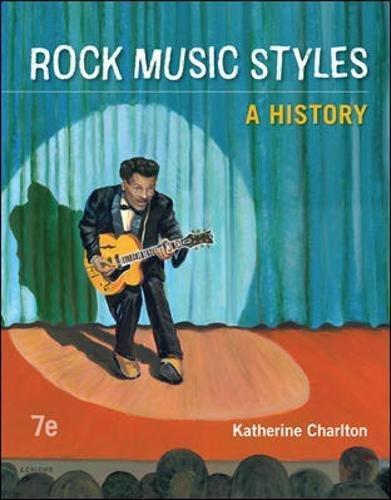
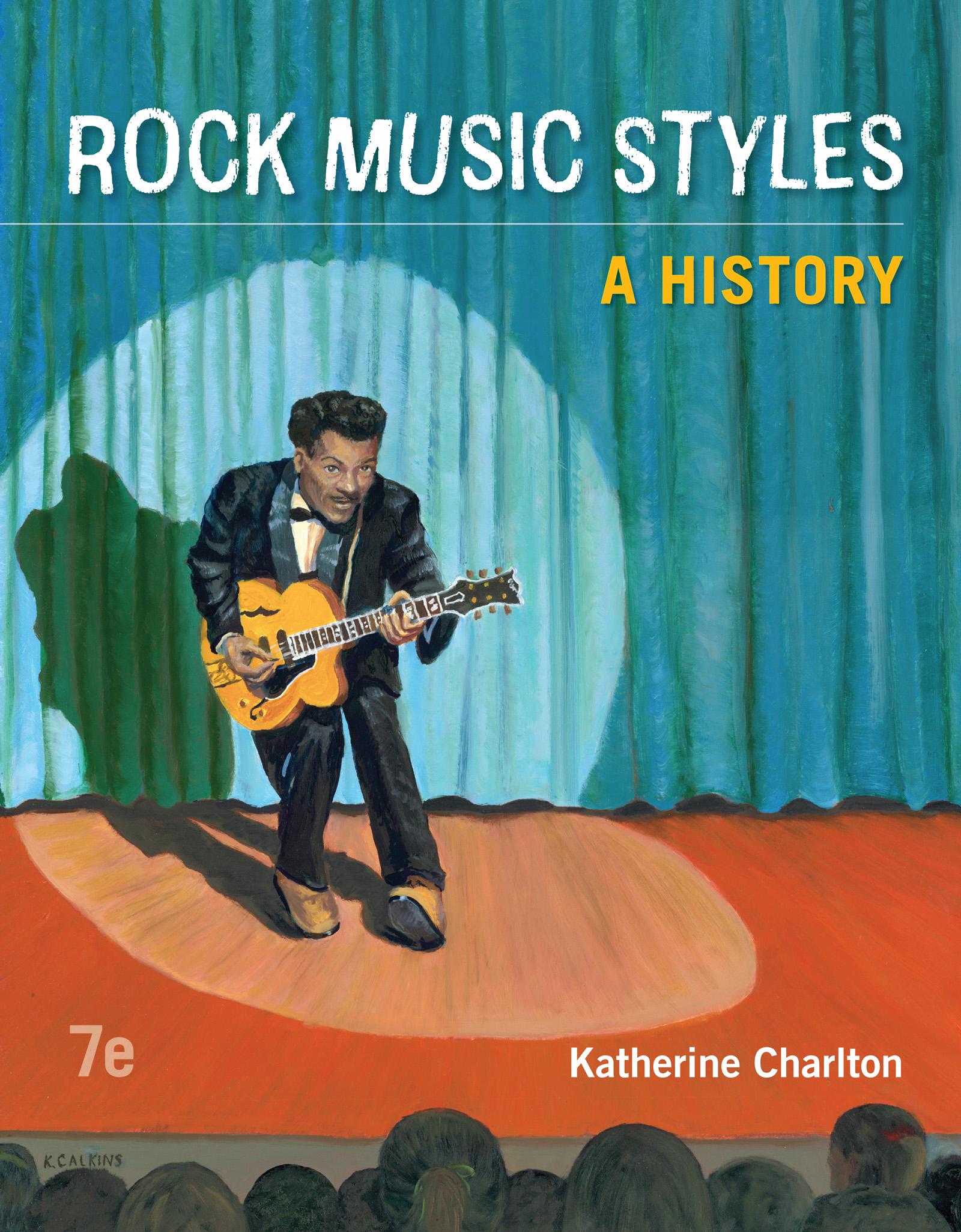
Art has always been Katherine’s second great love, and she has recently been studying drawing and painting with a wonderful artist, Phil Journeay, in Lake Forest, California. As an avid art student, she could not resist the opportunity to paint a tribute to such an important rock artist as Chuck Berry, and that painting has been reproduced on the cover of this book.
Acknowledgments
This book is dedicated to my first husband, Andrew Charlton, for many reasons, not the least of which is that it was only with his support and encouragement that I wrote the first three editions. Having lost him to cancer in 1997, I spent several years a grieving zombie. I finally met and married another wonderful man, Jeffrey Calkins, and it is with his patience and support that I have been able to dedicate myself to writing later editions. Jeff is an attorney with a master’s degree in political science, and his advice has been a tremendous help in writing the political and social background sections for this book.
Rock historians whose advice was a great help to me include:
Jim Albert, Eastern Washington University
Gerald Aloisio, Minnesota State University
Robert Bonara, College of Southern Nevada
Robert Bozina, Santa Clara University
Stan Breckenridge, California State University, Fullerton
Scott Brickman, University of Maine–Fort Kent
Shane Cadman, Santiago Canyon College
Don Carroll, Mt. San Antonio College
Jason Chevalier, Mt. San Antonio College
Paul Feehan, University of Miami–Coral Gables
Mark Forty, University of California at Santa Cruz
John R. Harding, University of North Carolina–Charlotte
Thomas Harrison, Jacksonville University
Kirk Higgins, Yavapai Community College
Cindy Ison, Indiana University Kokomo
Jeff Jones, Mt. San Antonio College
Janet Kopp, Cambridge Community College
Morton Kristiansen, Xavier College
Albert LeBranc, Michigan State University
Robert Lehmann, Bunker Hill Community College
John Limeberry, Jefferson Community and Technical College
Ron Pen, University of Kentucky
Gary Pritchard, Cerritos College
Darhyl S. Ramsey, University of North Texas
Donald Brad Sherman, Western Washington University
Janis Stevenson, Foothill College
David H. Stuart, Iowa State University
Joseph Taylor, James Madison University
John Webb, University of Wisconsin at Whitewater
Richard Weissman, University of Colorado–Denver
Peter Winkler, SUNY–Stony Brook
Carl Woideck, University of Oregon
Randy Wright, Chandler-Gilbert Community College
Stephen Yound, University of Tennessee
I thank the many McGraw-Hill editors and staff members who greatly helped with the development and production of this book, including Managing Director Bill Glass, Executive Director of Development Lisa Pinto, Brand Manager Sarah Remington, Managing Editor Penina Braffman, Development Editor Adina Lonn, Associate Marketing Manager Alex Schultz, Project Manager Melissa Leick, and reviews editor Nadia Bidwell.
Of course, I must remember that it has been the students in my own classes who have asked questions requiring me to look at rock music from many different perspectives who are really the only reason this book exists. I thank them all and hope that they continue to enjoy rock music all of their lives, as do I.
Katherine Charlton Calkins kcalkins@mtsac.edu
This page intentionally left blank
chapter
Roots of Rock Music
“The way to write American music is simple. All you have to do is be an American and then write any kind of music you wish.”
–VIRGIL THOMSON, COMPOSER
Was there life before rock and roll? Dyed-in-the-wool rock fans might think not, or at least think that whatever life there was was not worth living, but that, of course, was not the case for those who lived before the emergence of rock and roll. People have always entertained themselves and one another with songs, dances, and types of music. Music that is simple and catchy enough to immediately appeal to large numbers of people is generally dubbed “popular,” and a large body of popular music existed before rock and roll and alongside rock music through to the present time.
Much popular music today is rather complex and would be beyond the ability of an average person to perform. Before the existence of such twentieth-century inventions as radio, television, and good-quality record, tape, or CD players, the only way most people could hear music was to perform it themselves, hire performers to play for them, or go to a public performance. Because of this, popular music of past times was often either relatively simple or composed to be part of large-scale public extravaganzas. Through the years popular music has become very big business and is usually produced primarily to generate financial gain for the writer, publisher, and performer.
The earliest popular songs in America were brought to the colonies by British and other European settlers. The business of producing, publishing, and selling music in America was aided by the passage of the first American National Copyright Act in 1790. A copyright protects the composer’s credit and allows him or her and the publisher to receive payment for the sale of published songs and maintain control of their distribution. With many people willing to pay for printed music, the popular music industry in the United States grew rapidly during the nineteenth century. It exploded in the twentieth century with the availability of phonograph recordings in the first decade of the century, radio beginning in the twenties, and television in the forties. Rock music developed into a large-scale industry of its own in the fifties, but that happened only after and because of the popular music that preceded it.
Of the many types of music popular in various different parts of the United States during the late nineteenth century, ragtime, Tin Pan Alley, the blues, and jazz all directly influenced the development of rock music. By the 1890s, all four styles were well established and independent of one another and yet all also influenced one another. The one distinguishing factor that separates the blues and jazz from the other two is that the blues and jazz were improvised music. Unfortunately, the late nineteenth-century versions of improvised music are unknown to us today because they were not recorded and improvisation is not written down. Improvisation happens when a musician decides what to play while he or she is playing it. It wasn’t until the first jazz recording was made in 1917, and the blues somewhat later, that we can really tell what they sounded like. Ragtime and Tin Pan Alley music was composed
and published as sheet music, and performances were, for the most part, played and/or sung directly from that notation. Once recordings came into common use, that changed for many people and popular music became more of a thing to listen to than to perform.
Ragtime
Ragtime was primarily, although not exclusively, an African American style. It might well have been first performed on the banjo in the mid-nineteenth century, but piano rags became more common. It was named for the “ragged” or syncopated rhythms played by the pianist’s right hand, or the main melody played by the banjo or the band. The ragged lines were generally accompanied by a steady alternation between a single note and a
chord (three or more notes played together) in the bass or lower band parts. The music had existed for some time before any of it was published. Scott Joplin (1868–1917) is the best-known ragtime composer. The sheet music to Joplin’s “Maple Leaf Rag” (1899) had sold more than a million copies while he was still alive to receive royalties from the sales.
The spread of ragtime and other popular music was aided by the invention of new sound devices such as the player piano, the phonograph, and jukebox-time players. Ragtime’s direct influence on rock music had to do with its energy and fun, syncopated rhythms, and its influence on the development of stride piano, which became an element of many rhythm and blues piano styles used in rock music.
Tin Pan Alley
Tin Pan Alley was the section of New York’s West Twenty-Eighth Street between Fifth Avenue and Broadway in which many music publishers had offices during the late nineteenth and early twentieth centuries. The name “tin pan” referred to the thin, tinny tone sound quality of cheap upright pianos used by the music publishers at that time. The increasing popularity of vaudeville shows and the tremendous amount of new music they required helped the New York publishers gain much control of the popular music publishing industry because of the concentration of vaudeville houses and numbers of shows that began there before traveling to other parts of the country. Generally, the songs were sentimental ballads or songs that portrayed the “gay nineties” as full of fun and as an escape from life’s realities. Many songs were based on popular dance rhythms. The most common feature of the songs was that they were simple and easy to remember. “Take Me Out to the Ball Game” is one such song that is still known to many baseball fans.
The clever, catchy, and easy-to-remember types of pop melodies in much Tin Pan Alley music created an important model for many of the more poporiented rock songs, ballads, and dance music. The biggest difference between Tin Pan Alley music and rock music was that rock music was usually sold as records whereas Tin Pan Alley music was sold as sheet music for the consumers to play themselves.
The Beginnings of Jazz in New Orleans
New Orleans has always been a very musical city. By the late nineteenth century, the main emphasis of musical interest in New Orleans had shifted from opera and classical music to popular band music and
then gradually to jazz. As early as 1840, band music had become an important part of New Orleans’s musical traditions. Sunday parades where bands vied with each other for audience acclaim became common. The more popular groups found themselves in demand to play for funeral processions, park concerts, picnics, and other social events, as well as for dancing in many of the halls, taverns, and clubs that abounded in the city. The music that they played would range from marches to popular dances of the day. Bands in New Orleans were usually small and made up of African American musicians or those of mixed (Creole) blood, although there were a few allwhite bands in the city as well.
The African American and Creole musicians who played in the bands in New Orleans, for the most part, had some formal training on their instruments and could read music. They were playing a large variety of types of music, and the musicians began to add improvisations to the written lines. The African American musicians, in particular, added energy to their performances with syncopated African rhythms and other influences of the blues and black gospel music with which they were familiar. Gradually this transformed music began to be referred to as “hot” music.
Early hot bands generally included one trumpet (or cornet), one clarinet, and one trombone as the principal solo instruments (called the front line); and a rhythm section composed of banjo, guitar, or piano, or some combination of them; string bass or tuba; and drums. (Rhythm section is a general term for the instruments in any band that keep the beat and play the chords.)
Jazz did not remain confined to New Orleans or even the South for long. African American touring groups traveled to various parts of the country as early as 1908 to perform in vaudeville and minstrel shows. The popularity of social dancing was one element that contributed to the spread of jazz. The energetic and “raggy” rhythms of jazz were perfect for dances such as the Charleston, which became popular during the twenties. Jazz remained a dancer’s music through the swing era of the late thirties and early forties. Both Chicago and New York were important centers for the development of the next important jazz style, swing.
“ If it hadn’t been for him, there wouldn’t have been none of us. I want to thank Mr. Louis Armstrong for my livelihood.”
–Dizzy Gillespie
Swing Dance Bands
Beginning around 1934 and lasting through the end of World War II eleven years later, a couple’s idea of a perfect night out would be one spent dancing to the music of a big band. Swing bands played jazz-related music, and individual musicians were allowed to improvise solos in a jazz style, but the bands themselves were bigger than earlier jazz bands, and improvisation time was limited. Most of the time the bands played music from written arrangements that were carefully planned for playing swing dance rhythms rather than the types of complex music of other jazz styles. Where earlier New Orleans jazz bands used one trumpet (or cornet), one clarinet, and one trombone as the principal solo instruments, swing bands were much larger, comprised of numbers of trumpets, trombones, and saxophones in addition to the rhythm instruments. A typical rhythm section in the New Orleans bands was composed of banjo or guitar, string bass or tuba, and drums. The smoother style of swing dance music used string bass, piano, and drums.
Swing music not only increased the number of band instruments used but also brought about new ways of playing them. The old bass lines played on tuba were usually single notes pumping back and forth between the first and third beats of a bar of four beats. Swing bassists created a much smoother effect by “walking” from note to note by playing a new note on every beat and occasionally between the beats to decorate the rhythmic flow. This bass style became known as walking bass and was later used in rhythm and blues and rock and roll.
Swing bands often backed male singers who sang in a style known as crooning. Crooning was different from earlier popular singing styles in that it was developed as a way of using a new invention, the microphone. Sound engineers were better able to control and amplify a soft and gentle voice than a loud, resonant one. In the crooning style men softened their natural voices into a smooth, gentle tone, sliding from one note to another to create the effect of warm sentimentality. Popular crooners of the swing era included Bing Crosby (1903–1977) and Perry Como (1912–2001). These crooners all had an influence on the pop rock singers of the fifties and early sixties known as teen idols.
The Blues
The very earliest roots of the blues lie not only in Africa but also in music from parts of Arabia, the Middle East, and even Spain during the Moorish
occupation (eighth through fifteenth centuries). Because that early music originated centuries before the advent of recorded sound and had not been notated, one can only listen to modern-day music from those parts of the world to hear similarities and assume intercultural exchanges among those peoples and Africans in the past. Musical devices, such as Arabic scale structures and melodic sequences, melodic and rhythmic patterns in Turkish ceremonial music, and the sense of rhythmic freedom used by Spanish singers, all share similarities with some types of African music and, ultimately, the blues.
To find the nearest direct predecessor of the blues, the ancestral music of African Americans must be examined. A potential problem in undertaking such a study is that Africa is a very large continent and the people who were brought to the New World as slaves came from many widely separated areas. Understanding this, we believe that the easiest single place to find preblues African musical traditions is Freetown, Sierra Leone. Freetown was given its name when it was established as a colony of Africans who were to be shipped to the New World as slaves but were freed by an antislavery authority. It is interesting to note that although the people of Freetown represented nearly the same mixture of Africans as those who came to the New World, the blues as we know it did not develop in Freetown. The music there continued to be performed according to African traditions and ceremonies that were of and by the dominant culture of that part of the world. However, some of those musical practices clearly point the way to the blues.
Accompanied songs sung by griots (pronounced gree-oˉ s) from Sierra Leone share characteristics with early American blues songs. In Sierra Leone, as in many parts of Africa, griots have functioned for centuries as oral poets who tell the history of the people and their leaders. Before their society had a system of writing, griots maintained a social standing that was high and respectable, and the oral tradition continued on even after many Africans were able to write down their own history and poetry.
Although African griot songs heard today and the American blues have enough similarities to assume that they developed out of a similar source, American blues is not merely a transplanted version of the griot song. Part of the reason the blues had to be different from the griot song was that the blues functioned as a personal expression of an individual who suffered from a lack of human respectability, where the griot song was central to the dominant social structure in Africa.
African Americans also had been exposed to music from white European traditions, particularly the hymns sung in churches, and that music influenced their use of a three-chord harmonic progression and short verses that were equal to one another in length. From all of this one can see that the blues developed out of ancient musical traditions from many parts of the world, traditions that were synthesized by African Americans in the southern United States.
Some of the musical traditions that influenced the development of the blues come from the experience of slavery. During very hard group work, such as chopping wood to clear a field or digging dirt for planting a crop, slaves would often fall into the old African tradition of singing in a call-andresponse style. Call-and-response means that a leader sings out a phrase and the group then sings a copy version, or “response,” to that phrase. Calland-response was done in Africa when a group was dancing or otherwise celebrating, but it also worked for New World slaves as a way of keeping the work motion going. This type of singing during slave work is called work songs. When we study the blues, we will hear much use of call-and-response, particularly when we hear instruments respond to singers at the end of each vocal phrase.
Another type of singing done by working slaves is called the fi eld holler. The fi eld holler is different from the work song in that it was done by an individual worker who often sang laments about the tasks required of him or her. Field hollers had a less regular rhythm than work songs; they were also usually slower and included much improvisation. We will hear such individual improvisation in solos by blues and jazz singers and instrumentalists.
Both work songs and field hollers sometimes referred to a “captain” as the person who oversaw their work. Sometimes these references fell into what we call signifying, or having double meanings in a text. To the slaves the song might really be about their discontent, but to the ears of the overseer it seemed respectful. We will also see this kind of double meaning in a text when we study spirituals as a root of black gospel music. The spoken word with multiple meanings attached to it has long been important in African traditions, going back to the tribal importance of the griot singers. That vocal tradition will also be an element of the later style of rap.
Because of their origins in rural areas of the United States, particularly the South, the earliestknown blues styles were called country blues. The composers and performers of country blues were,
for the most part, people for whom the blues was an integral part of life. They usually accompanied themselves on battered guitars (if they were accompanied at all) and the texts they sang were often rough yet highly expressive.
The blues developed its form and style some time in the late nineteenth or early twentieth century, but the earliest recordings were not made until the twenties. Exactly how the blues sounded at the beginning of the century can only be inferred from these later recordings. Even putting the performers in front of a microphone to record them must have affected the musical results to some degree.
Although much variation existed in the country blues styles that developed in various parts of the South, the style that had the most direct influence on the development of rock music came from the Mississippi delta and was called delta blues. The lyrics were very expressive about the lives the singers really led. It was highly emotional and rough when compared to country blues styles from such places as the Carolinas, but its expressiveness and rhythmic vitality caused its popularity to spread. Delta blues musicians such as Robert Johnson, Charley Patton, and Son House accompanied their singing with guitars, strumming chords that they interspersed with melodic fills.
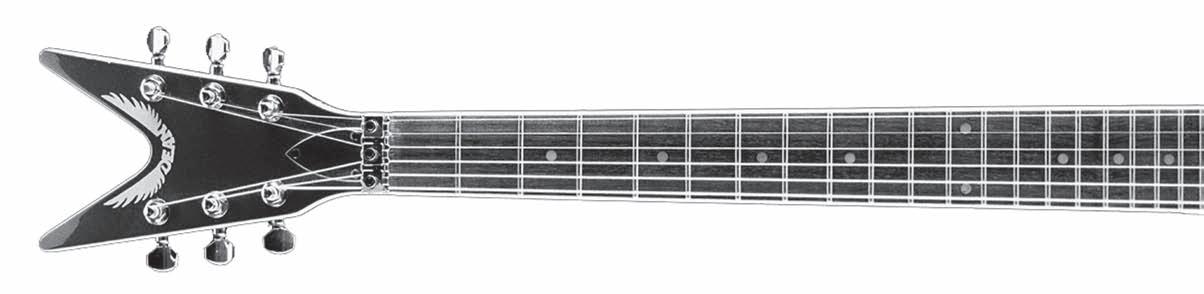
Delta blues guitarists would often break off the neck of a bottle, file down the rough edges, put it on the third or fourth finger of the hand controlling the fingerboard of the instrument (usually the left hand), and slide it from note to note on
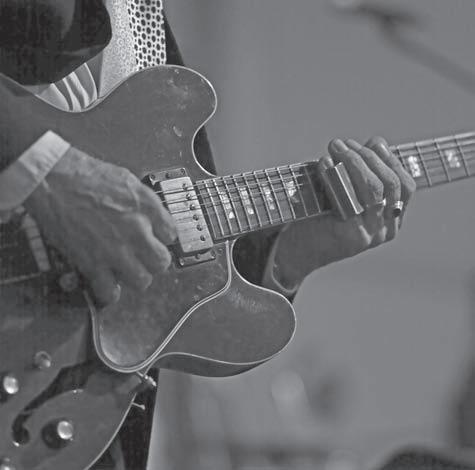
A guitar being played with a bottleneck on the player’s little finger
the upper strings of the guitar, leaving the other three fingers of that hand to play simple chords or bass lines. Breaking bottles soon became unnecessary as tubes (called bottlenecks) of glass or steel were made commercially available. Other guitarists, Leadbelly (Huddie Ledbetter, 1885–1949) for one, achieved a similar effect by sliding a knife along the guitar strings. Blues players like Big Joe Williams, who recorded for Vocalion as early as 1929, and Muddy Waters, who began to record for Aristocrat Records in 1945 (renamed Chess Records in 1948), were later musicians who retained the essence of the delta blues bottleneck guitar style, while also updating it by using amplification and adding other instrumentalists.
Part of the general character of the blues was created by bending the pitches of notes to what were called blue notes. The exact origin of blue notes may never be known for certain, but they came either from pentatonic (five-tone) scales used in much world music or perhaps even from Islamic influences on African music. In the blues as it was played by early blues artists, the commonly lowered blue notes were the third and seventh degrees of a major scale. In the key of C, for example, one of the blue notes was somewhere between E and E and the other was between B and B . To perform these notes with the voice and on some musical instruments, an E or a B could be bent down in pitch to produce the blue note. On many instruments, the piano for one, a note could not be bent to produce a blue tone, so the player simply lowered the tone a full half step. The following example shows the C scale with the blue notes a piano would play in parentheses:
the blue note. This technique was called string bending.
The blues developed into a fairly consistent formal structure, infl uenced by European song forms, that was made up of repeated and contrasting lines of specifi c length. The form used in most blues could be outlined by the letters AAB. In that outline, the fi rst letter A referred to the fi rst line of melody (four measures) and the first phrase of words. The second A represented a repetition of the same words and a melody that was exactly or nearly the same as the first. The letter B stood for a contrasting line of text (often rhyming with line A) and a contrasting melody that functioned as a response to the words and melody of the A sections. In other words, blues lyrics usually had two lines of text, the fi rst of which was repeated. Songs can still be the blues when this lyric structure is not followed, but it is common in traditional blues.
The rhythm of the blues form was organized into four-beat patterns, each of which was called a bar (or measure), and each section of the melody was made up of four bars. As the three phrases had four bars each, the complete structure for each AAB blues verse, chorus, or stanza (these terms are used interchangeably) had a total of twelve bars. For that reason, it was often referred to as the twelve-bar blues. Following is an example of a stanza of blues showing how the poetic (lyric) form was structured:
I love my man when he treats me fine (The first A section)
I love my man when he treats me fine (The second A section)
I just wish he wouldn’t drink so much wine (The B section)
Although pianists were limited to either lowering the pitch of a blue note a full half step or hitting two adjacent notes simultaneously to suggest the one in between, the pitch level of blue notes was much less exact on instruments that could bend notes. One reason for the popularity of playing the guitar with a bottleneck was that the bottleneck could be used to slide through the blue notes that fell between the frets (metal bars across the fingerboard behind which the strings were stopped). Another technique for playing blue notes on a guitar without a bottleneck was to play the fret just below a blue note and then push or pull the string, causing it to tighten and then loosen gradually, raising and lowering the pitch within the area of
A practice not always followed in blues-based rock music, but typical of traditional blues styles, involved the use of the West African practice of call-and-response, in which a leader would call out to a group and the group would respond to the call. The blues singer usually played the part of the caller by singing from the first beat of each section of melody through the first beat of the third bar, and the remainder of the four-bar section was filled by an instrumental response. The response could be played by one or more players on a variety of instruments, by the singer on the guitar or piano, or by the singer repeating one or more of the words at the end of each line of text.
The following diagram shows the placement of the text, the instrumental or vocal fill (response to the singer’s call), and the chord progression as it became standardized in the twelve-bar blues. In the key of C the tonic chord is C, the subdominant chord is F, and the dominant chord is G. All three are often seventh chords. (Early blues musicians often kept playing the G7 chord through the first two bars of the B section instead of playing the F chord in the second bar.) Each repetition of the chord name represents a beat on which the chord would be played, and the vertical lines divide those beats into four-beat bars.
Twelve-Bar Blues Form
A Lyric Sung text____________Instrumental fill
C C C C | C C C C | C C C C | C C C C |
A Lyric Sung text____________Instrumental fill
|
B Lyric Sung text____________Instrumental fill
As was also true of most jazz styles, the beats were usually subdivided unevenly, creating a smooth flow of long-short-long-short in which each long note was twice the length of each short note, as shown by the following notation:
distribution of those recordings in his own time was extremely limited because large record companies simply were not interested in his kind of music. The recordings were reissued in later years, and consequently many blues-loving rock musicians have been influenced by them.
Johnson did not perform in formal situations for large groups, so relatively few people heard him in person. Those who did spread stories about the expressiveness of his music, and from those stories arose the Faustian myth that he had sold his soul in order to play so well. That myth was dramatized in the 1986 movie Crossroads.
Johnson’s songs did follow the traditional AAB lyrical scheme and the chords of the basic blues progression as it was described earlier (with only two chords in the B section), but he was not confined by the rhythmic strictness observed by later blues musicians. He added extra beats to bars and extra bars to phrases seemingly at random, and sometimes even sang in a rhythmic pattern that differed from what he was playing on his guitar. The simultaneous use of more than one rhythm ( polyrhythm ) was known in some African musical traditions, and he may have been familiar with music based in such practices. The essentials of Johnson’s musical style can best be discussed with reference to one of his recordings. A listening guide for his “Cross Road Blues” is below.
The uneven rhythm pattern was called a shuffle beat when the bass was played on the beat and the chord was played on the last part of the beat. When performed slowly, the uneven beat subdivisions created a relaxed feeling that was well suited to and became a characteristic of the blues. Even beat subdivisions are common in folk and country music.
One of the most influential country blues singer/ guitarists who recorded during the thirties was Robert Johnson (1911–1938). Not much is known about his life other than that he was poor, grew up on a plantation in Mississippi, and was reputedly either husband or lover to just about any woman who would have him. The lyrics of most of Johnson’s songs expressed his insatiable desire for wine, women, and song. He recorded only twentynine songs, although when one includes alternate takes of some of those songs his recordings total forty-one. His recordings were done in makeshift studios in hotel rooms or office buildings, and the
Two years after the recording of “Cross Road Blues” was made, Johnson’s wild and free lifestyle was responsible for his death. Only twenty-seven years old, he was poisoned either by a woman with whom he had been involved or by the husband of such a woman. Johnson’s songs have been recorded by many rock groups, including the Rolling Stones, who recorded “Love in Vain” and “Stop Breaking Down”; Cream, who recorded “Cross Road Blues” (although they called it “Crossroads”); and Fleetwood Mac, who recorded “Hellhound on My Trail.”
Although most of the country blues singers who attracted the attention of record companies were men, women also sang and played the blues, and some had fairly successful careers. One such musician was Lizzie “Kid” Douglas, who recorded under the name Memphis Minnie (1897–1973). Her recordings can be found on several labels including Columbia, Victor, Vocalion, OKeh, Decca, and JOB.
Female singers in the classic blues style did not accompany themselves as did Memphis Minnie. Most were from the South and had grown up hearing country blues, but they developed
Listening Guide
“Cross Road Blues” as recorded by Robert Johnson (1936)
Tempo: The speed of the basic beat is approximately 88 beats per minute, but Johnson speeds up and slows down at will.
Form: Johnson plays slightly less than a four-bar introduction on the guitar using a bottleneck. (The introduction has been cut short, perhaps because the recording machine was turned on just after he had begun playing.)
After the introduction, the twelvebar blues form is followed throughout. As was common in delta blues, the B section has two bars of a dominant chord (the G7 in the outline of the blues form) followed by two bars of the tonic chord (the C chord in the outline).
Features: Johnson sings four stanzas of blues lyrics, providing his own responses on the guitar without any backup by other musicians.
The influence of polyrhythms can be heard in two ways:
Lyrics:
1. Johnson’s beat is usually subdivided into uneven parts, as is typical of the blues, but he occasionally breaks the pattern and uses sections of even beat subdivisions.
2. His singing often departs from the beat played by the guitar, following a different rhythm pattern, producing a polyrhythmic effect.
The main image is a lonely black man in the American South of the 1930s who cannot “flag a ride” out of his environment, yet must leave the crossroads before dark (an allusion to curfews that were imposed on blacks in the South at the time). But the imagery suggests a deeper loneliness that transcends the singer’s place and time: He falls to his knees seeking a way out of his existential predicament, yet no one stops to help him out, which parallels his failure to connect with a “lovin’ sweet woman.”
Check out the Spotify playlist to hear this Listening Example!
powerful and gutsy vocal styles needed to be heard over the sound level of their accompanying jazz bands. Their style was called classic blues. Two classic blues singers who served as inspiration for such later rock singers as Etta James, La Vern Baker, and Janis Joplin were Ma Rainey and Bessie Smith.
Bessie Smith (1894–1937) eventually earned the title the Empress of the Blues. Smith was featured in the 1929 film St. Louis Blues. She was on a theater tour with a group called Broadway Rastus Review when she was in a car accident and
died from her injuries. A listening guide to Bessie Smith’s classic recording of “Lost Your Head Blues” is on page 9.
Other classic blues singers included Alberta Hunter, Mamie Smith, and Ida Cox. Billie Holiday is sometimes referred to as a blues singer, but she recorded few songs that were technically the blues. She is better known as one of the greatest of the female jazz singers who recorded during the thirties through the fifties. One of the best examples of her blues recordings was her own composition, “Fine and Mellow” (1939).
The Beginnings of Rock and Roll
Instrumental, vocal, and dance styles that were popular during the forties had a certain amount of influence on the development of rock music. It is important, however, to understand that rock music also had its roots in styles of music that had not yet gained the nationwide popularity of the Tin Pan Alley songs or the swing bands. For example, delta blues and rhythm and blues, which served as the basis of much early rock music, were mostly played and sold in African American neighborhoods and neither heard nor understood by the general American public. Similarly, some country music styles that influenced early rock music had their own particular regions of popularity and, therefore, rather limited numbers of fans. Racism and the forced segregation of African Americans was one of the reasons for this division of musical tastes.
In addition to the types of popular music previously discussed, which aided the development of rock music, several technological innovations in the late forties and early fifties were also very important for rock. Magnetic tape recorders not only provided a dramatic improvement in the sound quality of musical recordings but also were handy in the recording studio. Fifties pop and rock musicians made much
Listening Guide
“Lost Your Head Blues” as recorded by Bessie Smith, Joe Smith, and Fletcher Henderson (1926)
Tempo: The speed of the beat is about 84 beats a minute, with four beats in each bar.
Form: After a four-bar introduction played by the cornet and piano, the music and the text follow the classic twelve-bar blues form.
Features: Bessie Smith sings five choruses of the blues.
All of the fills are played by the cornet.
The piano’s main function is in providing the necessary harmonic and rhythmic background to the vocal. There are no piano solo sections.
Lyrics: The basic theme is how money has corrupted the relationship between the singer and her lover—the implication is that now that he has money, he has forgotten the one person who really stood by him when he was poor and is in the process of deserting her for someone he considers more desirable. This desertion has only left her more acutely aware of her own loneliness and the good efforts she has lavished on a bad man.
Check out the Spotify playlist to hear this Listening Example!
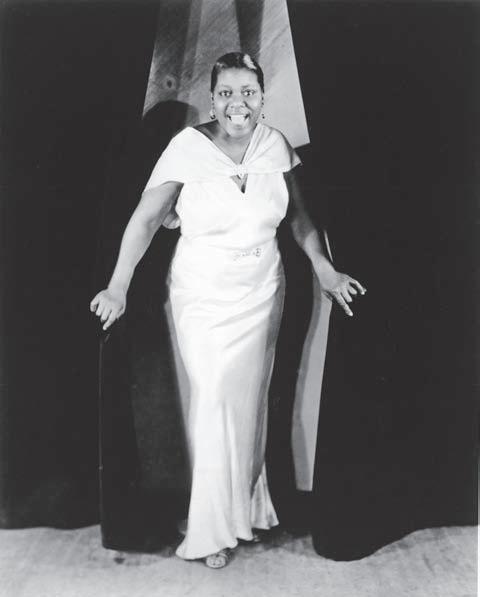
Bessie Smith on stage in 1928
use of their ability to create echo effects and use overdubbing to enhance music already recorded. Some famous examples include Elvis Presley’s recording of “Heartbreak Hotel” (1956), which used echo, and Eddie Cochran’s “Summertime Blues” (1958), which was made by overdubbing his own playing several times to create an effect that he could never achieve live without the help of other musicians. Recordings became so important in rock music that many performers would lip sync to the recordings of their songs on television rather than try to perform them live.
Three technological developments in 1948 were especially important. Transistor radios, 33 1⁄3 rpm long-playing (LP) records, and 45 rpm single records became commercially available. Transistor radios were lighter and easier to move around than the old vacuum tube radios, and by the early sixties they were made small enough to carry around all day long. It was not until 1954 that the new 331⁄3 and 45 single records replaced older types, so many early rock recordings were originally released on the old 78s. The new 45 singles were particularly popular because they allowed for the inexpensive purchase of an individual song with another on the reverse (or “B”) side. They were also used in jukeboxes, which were becoming common in soda fountains, restaurants, bars, and other public gathering places. Jukeboxes played songs from their list of available 45 records when coins were dropped in them. Because they could be heard by everyone in the place, not just the person who chose and paid for the song, they helped many people hear popular songs even without the radio.
Racial barriers slowly eroded when white teenagers began to listen and dance to the rhythm and blues of such jump bands as Louis Jordan and his Tympany Five in the late forties.
Also in the late forties, a big change occurred in what music could be heard on radio stations. Previously, only four national stations were available, all of which played music and programs geared to a largely white middle-class audience. Now small, independent stations sprang up all over the country playing music geared to local tastes. These new independent stations used disc jockeys as entertainers and were not afraid to play rock recordings. They also played black rhythm and blues, another important type of music in which rock music was rooted. It was primarily through the radio that white teenagers became acquainted with rhythm and blues because rhythm and blues records were generally only available in black neighborhoods.
Radio and television were both very important in popularizing rock music from its very beginnings. As hard as it is to imagine, it was not until 1951 that televisions were inexpensive enough to be purchased by average middle-class family consumers. Even so, TVs soon became important vehicles for rock performers, and they allowed for dance shows such as American Bandstand to be viewed nationwide. At first, many white radio-station and record-company owners resisted making music by African American performers widely available. Certainly, airtime on radio during the thirties and forties was crowded with programs by white entertainers. The increased availability of televisions and the subsequent movement of many former white radio programs from radio to television left room for broader radio programming. By 1951, the smooth rhythmic sounds of African American vocal groups like the Platters and the Moonglows were reaching white teens through radio programs hosted by maverick disc jockeys who refused to perpetuate racial exclusion, the most famous of whom was Cleveland’s Alan Freed. The increased availability of radios, especially car radios during the early fifties and portable transistor radios several years later, was important in bringing both rhythm and blues and rock music to the teen audience. Bands and audiences were still segregated for the most part, but early rock music did help bridge some of the gap.
In 1954, the Supreme Court decided that equality could not exist when people remained separated by race. After deciding the case known as Brown v. Board of Education, the court demanded that public schools be integrated. It still took years before integration became more common, but attitudes gradually changed from the extreme racist attitudes of the past. The popularity of rock music that developed directly from both African American and white styles of music can be given a part of the credit for helping to relax racist attitudes. Of course, rock music did not replace other types of popular music when it finally came into being, and many other types of popular music still maintain a large following. For the purposes of this book, however, it is rock and roll and its development that will be discussed further.
Summary
America’s earliest popular music was brought to the New World by British and other European settlers. Eventually, American-born composers began to compose and publish their own music, providing
popular songs that expressed more purely American interests and lifestyles. By the 1890s ragtime music was heard up and down the Mississippi River and had become popular in many big cities.
New York was an important center for several styles of popular music originating in Tin Pan Alley. Swing dance bands and the crooners who sang with these bands helped keep American optimism and spirit alive through World War II. The blues was performed by African Americans living in the rural areas of the southern United States around the beginning of the twentieth century. In its earliest form, country blues music was used to express the longings of people whose lives were generally very difficult. West African influences on the development of the blues included the use of polyrhythms and blue notes and the practice of call-and-response between a leader and a group. European musical traditions such as a regular four-beat pattern in each bar, a repeating and contrasting AAB lyrical scheme, and a twelve-bar chord progression also became elements of the blues.
During the early years of the development of recording technology, blues musicians began
moving to larger cities and working with organized jazz bands or at least instruments from them in smaller groups. Rock music developed out of a number of different styles of music that existed in the forties and became a style of its own in the early fifties. More than any of the prerock styles we discussed, rock music depended on recording technology that came into common use in the late forties. In many ways, the popularity of rock music among both black and white musicians and fans aided the movement toward racial integration and mutual respect of people of any ethnic background.
discussion questions
To what degree did early rock music depend on sociological changes as distinct from technological developments? What were some of those sociological changes and how did they help create and popularize rock music? How might the blues be different if slavery had never existed and African Americans had been welcomed immigrants in the United States?
“Radioactive poisoning of the atmosphere and hence annihilation of any life on earth has been brought within the range of technical possibilities. . . . In the end, there beckons more and more clearly general annihilation.”
–Albert Einstein (1950)
“We will bury you!”
–Soviet Premier Nikita Khrushchev (1956)
“Rock and roll is a means of pulling down the white man to the level of the Negro. It is part of a plot to undermine the morals of the youth of our nation.”
–Asa Carter, North Alabama White Citizens’ Council (1956)
The Decade of the Fifties
With memories of World War II still fresh in the minds of most Americans, a new threat was dawning on the horizon in 1950: the communist states of the Soviet Union and the People’s Republic of China. In the years immediately following World War II, the Soviet Union occupied much of Eastern Europe; at the other end of the continent, the People’s Republic of China had aided the North Korean government against Western allies in the Korean War. The Soviet Union had more planes, tanks, and troops than did the United States and had even already tested its own atomic bomb. Americans were scared. Some who could afford to do so dug into their backyards and installed heavily shielded bomb shelters to save their families from the destruction of the “bomb.” Drop drills were practiced in schools to teach kids to drop to the floor, get under their desks, and cover their heads and necks to protect them from window glass that would shatter if a bomb were dropped in the vicinity of the school. Along with fear of a war with the Soviet Union was fear of the influence that Russian communism might have in the United States. Julius and Ethel Rosenberg were executed (1953) for selling secrets to the Russians. Senator Joseph McCarthy was one of many who were obsessed by the thought that we could be overtaken by oppressive communism. He started his investigations in the early fifties by accusing members of the State Department of having communist ties. His televised questioning of members of the U.S. Army in 1953 gained national attention, but it was ended by the Senate for his obviously having overstated the case. Even so, McCarthy had drawn widespread attention to the communist threat. At the same time, the House Un-American Activities Committee investigated the entertainment industry in search of communists. Its “blacklist,” or list of people it determined might be communists, was successful in curtailing or destroying the careers of many people in Hollywood. It also had unknown effects on the work being produced by people who managed to stay in the industry because controversial subjects in television, movies, or other modes of entertainment might lead to the writer’s questioning, blacklisting, and subsequent job loss or jail stay. The average American citizen saw this tremendous amount of investigating at home and also saw that the Soviet Union was overtaking more and more countries around its borders, a move that was reminiscent of what Hitler had done. All of those news items added together to create a fear in many Americans that lasted through the cold war (1950–1990). U.S. involvement in the Korean War was in many ways a reaction to perceived communist expansion into the Korean peninsula.
Despite this pressure to avoid communism and the bomb, the fifties was a decade of relative prosperity for most white middle-class Americans. With the exception of a recession in 1958, unemployment and inflation remained low. During this time fertility rates increased and most of the members of what became known as the baby boom generation were born. Women were also working outside the home in greater numbers than they had before, even during the war. Where families had suffered wartime rationing of food and other supplies, they finally had a fairly decent chance to buy their own homes and live comfortably. Some of these new parents had had to work to contribute to the family income during their own teenage years and responded by giving their kids more freedom and money to enjoy. When preteen or teenaged young people had their own money to spend on the things that appealed to them, their tastes began to dictate what was popular.
In part, the emerging youth culture had a dark, albeit exciting, side in the popular image of the rebellious antihero. Movies such as The Wild One (1954), in which a young Marlon Brando played the leader of a tough motorcycle gang, helped to popularize that image of rebellion for its own sake. That movie was followed by others, including Blackboard Jungle (1955), about juvenile delinquency in an all-male high school, and James Dean’s Rebel without a Cause (1955). Some rockabilly singers such as Gene Vincent and Eddie Cochran wore the black leather jackets associated with that image and sang songs about young people needing to break free of adult authority figures, but the rock artists did not create that image. The movies did.
Rebellion was not limited to teenagers in the fifties. Writers and poets of the Beat movement questioned the values of American society and found it to be hypocritical and oppressive compared to the popular belief that America was a place that gave freedom to all. Statements made by the Beats became central to the thinking of many young people during the sixties and later. Their influence aided the development of several styles of rock music of later decades, including folk-rock, psychedelic, glitter, punk, and industrial.
Televisions got less and less expensive, and by the end of the decade most middle-class households had one. Ironically, the image popularized by television contradicted that of the rebellious teenager portrayed in the cinema. Despite the seriousness of the statements made by the Beat writers, the beatnik (follower of the Beat writers) Maynard G. Krebs on Dobie Gillis was a comic character. The parents in Ozzie and Harriet, Father Knows Best, and Leave It to Beaver had no problems of their own and were always available to see to their children’s every need. Lucille Ball did sometimes buck the image of the obedient housewife with her many efforts to gain control of her life in I Love Lucy, but she was only able to sell that effectively because she was such a brilliant comedian. The idea of a wife really having equality with her husband was not popular. Overall, the fifties can be seen as a time when many people of the large white middle class were enjoying the fruits of a lifestyle that was clean and comfortable and were anxious to avoid the bomb, communism, and almost anything foreign.
For African Americans it was a time of serious recognition of their unequal status and for their gradual and finally unified decision to change it. For the most part, segregation had given them lower-quality lifestyles than whites had. Even such issues as the right to vote were in dispute. African Americans had previously been given that right by the Fifteenth Amendment to the Constitution, but it was not practiced fairly in parts of the South. In such places, African Americans were given tests that were impossible for anyone to pass, and their failure kept them from being allowed to vote. Sometimes they were charged fees called poll taxes, so they could not afford to vote. Whites did not have either restriction on their voting rights. The images of African Americans on television were also extremely unequal. The actors on all of the popular shows were white, with African Americans and other minorities only cast in the roles of servants in such comedies as Make Room for Daddy and the Jack Benny Show.
In the Brown v. Board of Education (1954) decision, the Supreme Court forced schools that had previously been segregated by race to integrate. The new law took some years to become common practice and be accepted by
the majority of the U.S. population. More than two thousand school districts had still not integrated by 1960.
It was in Montgomery, Alabama, in 1955 that the weary Rosa Parks refused to give up her seat on a bus to a white man and was arrested and tried for it. Dr. Martin Luther King Jr. led a 381-day bus boycott following the incident. The legal battles that ensued took time, but the Supreme Court did finally outlaw the segregation of seats on vehicles for public transportation. The civil rights movement had gotten well under way.
Most entertainment venues had always been racially segregated. In cases such as New York’s famous Cotton Club, where Duke Ellington and
other jazz greats of the thirties often performed to white audiences, African Americans were not allowed to mix with the white patrons. By the fifties, some clubs would have “black” nights for African American patrons and “white” nights for whites. At times the groups could be at the same club at the same time, but there was a rope across the floor segregating the crowd. As rhythm and blues and blues-based rock music began to be popular with more and more white teenagers, that segregation was unacceptable to them. The separate nights gradually became one and the ropes came down. As Chuck Berry said at the time, “Well, look what’s happening, salt and pepper all mixed together.” Rock music was, in many ways, a music of integration.
Chronology Chart
Historical Events
1945 Truman becomes president. U.S. drops first atomic bomb. End of WWII, beginning of postwar prosperity. Beginning of baby boom.
1947 Truman orders all federal government buildings to be racially integrated. The Marshall Plan aids Europe.
1948 Apartheid policy becomes official in South Africa. U.S.S.R. blockade of Allied sectors of Berlin. Goldmark invents microgroove system, making LP albums possible.
1949 U.S. troops withdraw from Korea. Berlin blockade is lifted. NATO established.
1950 Truman authorizes production of H-bomb. U.S. military advisers agree to aid South Vietnam against communist North. Senator Joseph McCarthy’s search for communists begins.
1951 U.S. involvement in Korean War. First transcontinental TV and first color TV marketed in U.S.
1952 Immigration and Naturalization Act passes. U.S. explodes first hydrogen bomb.
Happenings in Rock Music
Louis Jordan’s “jumpin’ jive” style becomes popular with white teens. The Delmore Brothers record “Hillbilly Boogie.”
Country musicians begin to cover African American blues recordings. Atlantic Record Co. formed.
Pete Seeger and Lee Hays form the Weavers. 331⁄3 and 45 rpm records first marketed.
Race music begins to be called rhythm and blues.
Chess Brothers change label name from Aristocrat to Chess. Cool jazz develops from bebop jazz. “On Top of Old Smoky” and “Good Night Irene” hit for the Weavers.
Car radios become common. Bill Haley and the Saddlemen record “Rocket 88.” Popularity of rhythm and blues among white teens increases. Alan Freed’s debut on Cleveland radio.
Bill Haley’s Saddlemen become the Comets. Riot at Alan Freed’s Moondog Coronation Ball in Cleveland. Bandstand on television.