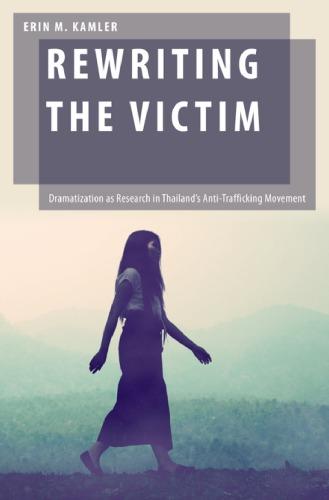
Rewriting the Victim
Dramatization as Research in Thailand’s Anti-Trafficking Movement
Erin M. Kamler
Oxford University Press is a department of the University of Oxford. It furthers the University’s objective of excellence in research, scholarship, and education by publishing worldwide. Oxford is a registered trade mark of Oxford University Press in the UK and certain other countries.
Published in the United States of America by Oxford University Press 198 Madison Avenue, New York, NY 10016, United States of America.
© Oxford University Press 2019
All rights reserved. No part of this publication may be reproduced, stored in a retrieval system, or transmitted, in any form or by any means, without the prior permission in writing of Oxford University Press, or as expressly permitted by law, by license, or under terms agreed with the appropriate reproduction rights organization. Inquiries concerning reproduction outside the scope of the above should be sent to the Rights Department, Oxford University Press, at the address above.
You must not circulate this work in any other form and you must impose this same condition on any acquirer.
Library of Congress Cataloging-in-Publication Data
Names: Kamler, Erin (Erin M.), author.
Title: Rewriting the victim : dramatization as research in Thailand’s anti-trafficking movement / Erin M. Kamler.
Description: New York, NY : Oxford University Press, [2019] | Includes bibliographical references and index.
Identifiers: LCCN 2018031075 (print) | LCCN 2018046593 (ebook) | ISBN 9780190840105 (Updf) | ISBN 9780190840112 (Epub) | ISBN 9780190840099 (hardcover : alk. paper)
Subjects: LCSH: Social work with prostitutes—Thailand. | Human trafficking—Thailand—Prevention. | Musicals— Social aspects—Thailand. | Feminist theory. | Non-governmental organizations—Thailand. | United States—Relations—Thailand. | Thailand—Relations—United States.
Classification: LCC HQ412.55.A5 (ebook) | LCC HQ412.55.A5 K36 2019 (print) | DDC 306.3/6209593—dc23
LC record available at https://lccn.loc.gov/2018031075
9 8 7 6 5 4 3 2 1
Printed by Sheridan Books, Inc., United States of America
This book is dedicated to the migrant women of Burma, and to every artist who envisions a better world.
CONTENTS
Acknowledgments ix
Prologue xi
Introduction 1
1. Theorizing Dramatization as Research 19
PART ONE: The Field Research Phase
2. Setting the Stage: National Identity and the Trafficking of Women in Thailand 43
3. “Smart Raids” and the Victim- versus- Criminal Narrative 69
4. NGOs and the Rescue Narrative 84
5. Community-Based Organizations and the Narrative of Resistance 101
PART TWO: The Creative Phase
6. Building the Characters 117
7. Finding the Story 132
8. Embodiment 147
PART THREE: The Production Phase
9. Articulating NGO Narratives 161
10. Restorative Justice and Reconciliation: NGO Subjectivities 180
11. Articulating Migrant Narratives 189
12. Recollection, Mourning, and Witness: Migrant Subjectivities 202
13. Articulating Artist Narratives 210
14. Rupture and Hospitality: Artist Subjectivities 225
Conclusion: Dramatization as Research: A Feminist Communication Intervention 236
Appendix A: Phase One Methodology 247
Appendix B: Phase Two Methodology 250
Appendix C: Phase Three Methodology 252
Appendix D: Phase One Interviewee Identification Chart 256
Appendix E: Focus Group Demographics 258
Notes 261
References 267
Index 279
[ viii ] Contents
ACKNOWLEDGMENTS
The research for this book was made possible with the support of a fellowship from the University of Southern California Graduate School’s Office of the Provost, as well as support from the USC Wallis Annenberg Chair in Communication Technology and Society, the USC Annenberg School for Communication & Journalism Doctoral Program, the USC Center for Feminist Research, the USC Annenberg Center on Communication Leadership & Policy, the USC Annenberg Center on Public Diplomacy, the USC Dornsife Department of Sociology, the USC School of Cinematic Arts, and the USC Diploma in Innovation Program. I wish to thank, foremost, my PhD advisers Manuel Castells and Larry Gross for their ceaseless support and belief in my work, as well as committee members Ted Braun, Rhacel Parreñas, Patricia Riley, and J. Ann Tickner for walking through this journey with me and cheering me on at every step. Additionally, I thank Gwendolyn Alker, Sarah Banet-Weiser, Geoffrey Cowan, Nicolas Cull, Meredith Drake Reitan, Sofia Gruskin, Helene Lorenz, Arlene Luck, Duncan McCargo, Philip Seib, and Mina Yang for their guidance; as well as Zhaleh Boyd, Samantha Sahl, and Prawit Thainiyom for their research assistance; and Ann Marie Campian, and Christine Lloreda for their administrative support. I also thank the outstanding, brave artists who lent their talents to this project, in particular: Joan Almedilla, Melody Butiu, Ann Fink, Amanda Kruger, Jennie Kwan, KerriAnne Lavin, Marisa Mour, Yardpirun Poolun, Katy Tang, Lowe Taylor Cunningham, and Kimiko Warner-Turner. And I extend my deepest gratitude to those in Thailand, Burma, and the United States who played supportive roles, including the Kachin Women’s Association of Thailand, Shirley Seng, Moon Nay Li, Mai Nhkum, Ban Sengbu, N. Seng Nu, Hkaw Myaw, Apoh, Ursula Cats, Cindy Wilkenson, We Women Foundation, Stephan Turner, Wan Muangjun, The Gate Theater Group, Eleonore Chaban Delmas, Christy Humphry, Jeff Lynn, Ben en Vadrouille Berimbau, Sydney Holofcener, Mike Griffiths, Chalermpon Poungpeth, Kevin McLeod, Kate StaymanLondon, Gregory Franklin, Franklin Theatrical Group, Kirk Solomon, John Wall, Lester Cohen, Scott Liggett, Kay Alden, Vern Nelson, Sue Cleereman, Rick Sparks, Rosalba Messina, Nancie March, Robert Loza, Rebecca Loza, Michael Holbrook, Eli Villanueva, David O, Leslie Stevens, Ren Hanami, Kerry K. Carnahan, Jamie Drutman, Marjorie Poe, Meg Irwin-Brandon, Adrienne Geffen, Ellen Monocroussos, Fringe Management, Michael Blaha, Nigel Miles-Thomas, Thomas Turner, Thomas Ruiter, Matt Garrett, C. Raul Espinoza, Lynn Marks, Meg Miller, Terry Kamler McManus,
I could not have written this book without the generosity of the migrant laborers, NGO employees, community activists, U.S. government and U.N. officials, Thai authorities, and others who participated in my research. I thank them for giving me their time and their truth. I also owe an enormous debt of gratitude to the anonymous reviewers whose feedback helped strengthen the manuscript, and to the invaluable contributions made by readers Howard Kamler and Min J. Kim. To Sahra Sulaiman, my preeminent intellectual ally who combed through these pages with laser- sharp precision, thank you for always pushing me to be a better writer. To OUP series editors Laura Sjoberg and J. Ann Tickner, copyeditor Brooke Smith, and my editor, Angela Chnapko, thank you for your enduring support, patience, and insight, and for guiding this manuscript through to the finish line.
I wrote this book in Thailand, revised it in Burma, and am, at long last, seeing it published in the United States. A tribe of friends and colleagues came and went along the way, helping keep my spirits lifted and my sanity intact. Thank you Nicolas De Zamaroczy, Meryl Alper, Ritesh Mehta, Cynthia Wang, Laurel Felt, Katrina Pariera, Alexandrina Agloro, Yasuhito Abe, the ASCJ Doctoral Student Cohort of 2010, Naomi Leight-Giveon, Mike and Kathryn Sweeney, Stephanie Winters, Adam Dedman, Matthew Walton, Guy Horton, Brian Eyler, Tracy Ravelli, Stella Naw, Don Linder, Wannida Jiratha, Alex Soulsby, Jennie and Peter McGuire, Stuart Land, Jennifer Leehey, Feliz Solomon, Fiona MacGregor, Rob and Meriem Gray, Kyoko Yokosuka, Gry Hjeltnes, Kaori Ishikawa, Maria Suokko, Cate Buchanan, Jenny Vaughan, Heather Barr, and Khinyadanar Oo.
Finally, I thank Rick Culbertson for our transformative years of partnership, and for being my unwavering champion.
] Acknowledgments x the Wisconsin Chapter of the P.E.O. International Sisterhood, the Edinburgh Fringe Festival production crew, Ajan Chayan Vaddhanaphuti, and Chiang Mai University.
PROLOGUE
When we—members of the privileged West— see her picture, we pity her. We can’t help it. Her dark skin, her obvious youth, her fragile frame. Her eyes are turned downward, in the direction of her fallen face. Rather than hearing her voice, we focus on her image, static and subdued. Rather than listening to her story, we imagine the worst.
It was never supposed to be like this, we think. She couldn’t have believed such a thing would ever happen to her. Or if she had seen it coming— well then, that’s another trauma altogether. The burden she wears on her face has been caused, we think, by something that happened to her long before we were invited to gaze at her. Something downright sinister. She’s consumed by the knowledge that she was tricked. Consumed by her past—a past in which sex and slavery were bound together; a past we imagine as a blur of relentless violence, something we can hardly comprehend because it will never touch us the way it touched her.
We don’t see ourselves watching her. Or if we do, we quickly rationalize that in fact, it’s our obligation to watch her in order for her to heal. Our witnessing, we reason, is the first step to her recovery. Not only that— we believe that without us, she may never be able to go on.
But we are not the saviors we imagine ourselves to be. And this girl— this woman, from an origin so unknown to us it must mean she is not known by anyone— she is not the victim we imagine her to be.
We can’t know that, of course. Because to know that would mean admitting too much about ourselves, and the things we want to believe we see.
Who is this girl then, this supposed victim? More important, who are we to look at her at all?
Introduction
We need new words to speak to each other, words that describe our similarities and our differences in much more complicated ways, words that will allow us to account for the inevitability that what we say will only partly be heard
—Jill Dolan (1993: 417)
Inthis book I bring together two seemingly disparate—but actually very interconnected—realms: the realm of international human rights research and the realm of the dramatic arts. In doing so, I illuminate the processes by which both research and musical dramatization— that is, the unearthing of knowledge about the social world and the creative process of developing a theatrical musical— work together to inform new modalities of discovery and heal wounds within the psyche and the community.
The richness and complexity of our lived experience defies our ability to communicate it. Yet communication demands that we do exactly that. Theater, and particularly musical theater, as a “higher octave” of communication, can radically interrupt the limitations and divisions that are inherent in this struggle. Characters sing “what cannot be spoken” (Krywotz, 2011); “liveness” connects audience members somatically, engaging our bodies, as well as our minds. In the theater, individuals come together in a room—our lives simultaneously and deliberately interrupted— to listen, feel, and grapple with the meaning of our collective experience. In the process, we become present, awake, willing to undergo rupture and transformation—if only for an evening or an afternoon.
Knowing the power of this medium, playwrights, composers, actors, and other theater artists have long searched for ways to use our crafts to unearth, navigate, and heal social justice concerns. We’ve done this in local as well as international contexts—on stages, in streets and other found environments. We’ve wondered whether our work will move people— whether the stories we tell, stories that have been buried or silenced or for whatever reason have gone unheard will invoke empathy, and maybe even social change. Theater, in its various forms, has always
wrestled with these questions; artists have always tried to answer them. My project, and this book, follows that long tradition.
But I won’t spend too much time talking about that tradition here. Because though artists have always moved between creative and social justice spaces, international researchers have not. In fact, looking at these questions of engagement through the lens of social science casts them in a wholly different light. As an artist who is also a feminist scholar working in the developing world,1 my inquiries sit at the nexus of these realms. They are questions dealing with what it means to uncover, recover, and articulate lived experience. Questions dealing with the positionalities of Western researchers and the “subjects” of our studies. They are epistemological and methodological quandaries that bind together the seemingly inexplicable but ultimately intimately connected realms of performance and feminist international research.
Feminists conducting international and intercultural research have critiqued the application of positivist methodologies to these contexts, arguing that such approaches rely on neocolonial tropes and incomplete frameworks for “knowing” (Alcoff, 1991–1992; Harding, 1998; Mohanty, 1991; Tickner, 2001; Tuhiwai Smith, 1999). Positivism, as an epistemological approach to research, is rooted in a traditional masculinist social science framework that relies on detached, supposedly quantifiable observation, rather than subjective—or what we may call more “human”—experience. One of the problems with this objectifying, positivist approach to research is that it stems from liberal assumptions that homogenize the potentiality of the individual. Liberalism—a construct that pits the “rational” (read: male) human against the “subjective” (read: female) “other”—is premised on the notion that human experience can actually be measured according to abstract assumptions. Some feminists see this paradigm as being oppressive to women, as it can “flatten” the lived realities of women in the developing world (Parreñas, 2011), while reifying the value systems of the enlightened West (Hesford, 2011).
In contrast, as Donna Haraway (1988) explained,
Feminists have stakes in a successor science project that offers a more adequate, richer, better account of a world, in order to live in it well and in critical, reflexive relation to our own as well as others’ practices of domination and the unequal parts of privilege and oppression that make up all positions (p. 579).
So in order to responsibly advance feminist international research, those of us working in these contexts need to engage alternative methodological and epistemological frameworks that refute the limitations of positivism. This way, we can become attentive to cultivating more equitable—or, “horizontal”—relationships with the subjects of our studies.
Feminist epistemologies help us intervene in what scholars in the field of liberation psychology have called “social catastrophe.” Social catastrophe is the breakdown of the ability of a community to respond collectively to its own trauma. Such breakdowns create a kind of rift in our sense of self-identity. Martin-Baro, speaking about these kinds of breakdowns, suggested that they augment systemic social inequalities, as we are no longer able to recognize the conditions of oppression that
bind us (1994). Rather than coming together as “witnesses” who collectively identify with the trauma and seek to restore the community’s health by claiming our own part in it, we instead remain “bystanders,” watching the trauma unfold from a distance without taking ownership of our own role within it (Watkins & Shulman, 2008).
Social catastrophe takes many forms. It appears in spaces where we feel powerless to change the conditions around us. This sense of powerlessness can create divisions between communities and individuals—divisions that permeate even the most seemingly socially conscious sites— for example, human rights movements themselves. To respond to these breakdowns, creative interventions are needed—interventions that force us to recognize the roles played by all community members in a given human rights crisis; interventions that engage feminist ways of comprehending the richness and complexity of lived experience, and shed light on alternative ways of “knowing.” Interventions that are what we might call “liberatory” (Watkins & Shulman, 2008).
In this book, I draw from a wide array of philosophies and literatures to show how theater, and in particular, musical theater can unearth the lived experiences of those who have been marginalized and subjected to a given human rights crisis, and bring their experiences into the consciousness of those who—often unknowingly— are complicit in their marginalization. Specifically, in this book I look at the issue of human trafficking in Thailand, and show how musical theater can be a vehicle for articulating the experiences of those caught in a social catastrophe in new and meaningful ways. In doing this, I illuminate a “praxis”— that is, a theoretical model that is then applied and realized, designed to unearth and convey lived experience through feminist, liberatory means. I call this praxis Dramatization as Research, or DAR.
DAR is a feminist, liberatory praxis that combines creative dramatization with feminist international research, and engages reflexive, co- constitutive approaches to each of these modalities. DAR is dedicated to the uncovering, recovering, and articulation of lived experience through the powerful medium of musical theater. It relies, at its foundation, on feminist epistemologies in research— that is, feminist ways of knowing lived experience; participatory methodologies— that is, methods that involve the reorientation of the researcher- subject relationship; and evaluative measures that emerge from a liberatory ontological framework—that is, a framework dedicated to restoring the health of the entire community involved in the given social catastrophe. In the context of international development practice, DAR responds to a need for more creative, innovative types of interventions— ways of responding to a social catastrophe that are more meaningful for people who have been marginalized, and for their advocates. DAR thus draws on the intersections between the process of making dramatic work and the process of uncovering meaning in the social world, and interrogates the learning that is achieved at their nexus.
I approach this endeavor through my work as both a scholar and an artist. Having embarked on this project as a mid- career playwright and composer with over 20 years of experience and achievements already behind me, my goal was to push my artistic abilities even further, and unite them with my work as a social scientist. I wanted to understand how musical dramatization could disrupt a dominant discourse and, in the process, reorient the agenda and the outcome of social science research.
Moreover, I wanted to show the importance of lived experience as a framework for knowing and understanding social catastrophe, and the power of musical theater in conveying that understanding through the feminist, liberatory praxis of DAR.
To explicate this praxis, in the chapters that follow I bring together a theoretical approach to engaged international research with a three-phase methodological process of research, creative dramatization, and performance. On a practical level, these phases include conducting international field research, writing, and performing an original musical. But they also include something much richer: a roadmap for uncovering, recovering, and articulating the voice of a “subject”—in this case, the female migrant sex worker, whom the anti-trafficking movement in Thailand has labeled a “victim,” and subsequently silenced through its rhetoric—as well as the voices of the nongovernmental organization (NGO) employees who are implicated in the social catastrophe of trafficking and the discourse that surrounds it, and the artists who have stepped into this discourse as performers, and thus also inform it. Together, these actors form a “community,” as they all engaged with the intervention, albeit from different vantage points. It is through understanding their engagement that we may see a new type of “knowing” emerge about the issues surrounding trafficking. While this knowing is not necessarily unified—that is, we cannot say that all of the participants involved in this project came to the exact same understanding—it is clear that the types of narratives— that is, the discourse—that emerged from the artistic intervention, when compared to those that emerged prior to its taking place, were transformed.
Musical theater thus takes on a prominent role in this book. Not only is it a powerful vehicle for communicating experience, it is also the site for understanding how, what, and why we communicate, and the discoveries we make about ourselves along the way. As an embodied way of communicating the “situated” knowledge described by Haraway, theater—and in particular musical theater—has the ability to interrupt binary categorizations that have been cemented into a discourse, and to trouble the epistemological claims that inform that discourse. Musicals can also serve the sometimes subversive purpose of deflecting an audience’s attention away from overly political messages through song, dance, and spectacle. These spectacles can take us by surprise by providing a much-needed social critique. When this happens, musicals can become profound tools for political engagement.
The musical at the heart of this project is Land of Smiles, a fictional, full-length piece that I wrote and composed about the trafficking of women from Burma2 into Thailand. Inspired by field research that includes 54 interviews with female migrant laborers (including sex workers), community-based activists, NGO employees, members of government, and other development actors working to combat trafficking, Land of Smiles dramatizes what I call the “dominant trafficking narrative”: a story told by the anti- trafficking advocacy community that reinforces Western moralisms about intimacy, rights, and gender norms, as well as notions of individualism and a modernization framework that underscores contemporary development thinking. As such, Land of Smiles presents a dramatic look at how the story about trafficking is told, and shows that finding a solution to this problem is even more complicated than it seems.
The story focuses on the aftermath of a brothel raid in Northern Thailand. Lipoh, a young Kachin (ethnic minority) 3 migrant from Burma, seems to be underage, making her an automatic trafficking victim in the eyes of the law. Emma Gable, a young, white, American human rights attorney working for an international NGO, is sent to prepare Lipoh to be a witness in a trial to prosecute her supposed trafficker. Emma must convince Lipoh to be the person everyone sees: a trafficking victim. But Lipoh is unwilling to cooperate. She insists that she is 18 years old and was working in the brothel willingly. Not only that— she wants to go back.
What transpires is a journey into Thailand’s anti- trafficking movement—a world burdened with politics, morality, and the rhetoric of human rights. Through hearing Lipoh’s story, Emma discovers that human rights violations—including the burning of villages, torture, forced conscription of child soldiers, portering, and the use of sexual violence as a weapon of war—are being committed against Kachin civilians at the Burmese government’s behest. But these atrocities are being overshadowed by a narrative about trafficking that puts the ideology of the anti-trafficking movement before the needs of the women it is trying to help.
Land of Smiles responds to the crippled policies, practices, and moralisms underlying the anti- trafficking movement by zooming in on Thailand—a country known, over the past two decades, for being an “infamous” trafficking hub. The story explores the way a U.S.- funded NGO responds to Lipoh, a young Kachin sex worker caught in the wrong brothel at the wrong time. Trying in earnest to rescue this exploited “victim,” the NGO is relying on Lipoh’s acknowledgment of her victim status to secure the prosecution of her supposed “traffickers.” But as the narrative unfolds, we discover that Lipoh does not view herself as a disempowered trafficking victim. Rather, she shares emotional, social, financial, and political bonds with both her auntie the woman who helped her cross the border from Burma into Thailand—and her mama san the owner of the brothel where she worked. In contrast to seeing her situation as being akin to conditions of slavery, Lipoh finds a clear, albeit complex sense of strength in her relationships with her supposed “traffickers,” and stands united with them.
Such a contradictory understanding of experience represents what Scott (1991) described as a “corrective” to the problem of dismissing women’s perspectives that is so prevalent in traditional (positivist) research. The musical sheds light on the story currently being told about human trafficking—a story used by advocates to reinforce ideas of Western superiority on the global stage and moralisms about sex work in the developing world. It also deals with the quintessentially American desire to “rescue” suffering “victims” in a distant, “third world” environment, and thus prove America exceptional on the world stage.
Above all, Land of Smiles pushes back against—or, rewrites— the normative tropes of victimhood, rescue, and morality that are commonly used by development actors working within this movement. These tropes, as I will show, are discursive acts—rhetorical moves that reinforce a highly politicized, contested discourse on trafficking.
Over the past two decades, human trafficking has emerged on the international stage as one of the most disturbing, complex, and, many claim, pervasive issues of our time. Often dubbed “modern day slavery” (U.S. Department of State, Office to Monitor and Combat Trafficking in Persons, 2016), this issue, which many believe is growing due to globalization and increasing migration across sovereign borders, became the focus of the 2000 United Nations Convention to Prevent, Suppress and Punish Trafficking in Persons, Especially Women and Children, also known as the “Palermo Protocol.” While it was the hope of those attending Palermo that a consensus as to an appropriate definition and subsequent policy response to trafficking would result, the Convention failed to achieve this outcome (Chuang, 2006). Instead, the Palermo Protocol managed to cement the ongoing, contested debate in the West between neo-abolitionist feminists who see prostitution as inherently linked with trafficking, and therefore seek its abolishment (see, for example, Barry, 1995; Farley, 2003; Farr, 2005; Jeffreys, 1997; MacKinnon, 1993; Raymond, 2003), and pro-rights feminists who argue that trafficking and prostitution are not necessarily synonymous, that sex work is a legitimate profession, and that implementing improved working conditions for sex workers would alleviate the dangers associated with this work (see Bindman & Doezema, 1997; Doezema, 2000; Empower Foundation, 2012; Ham, 2011; Kempadoo & Doezema, 1998). This debate, and its critiques, has become the subject of a highly politically charged discourse.
The roots of this discourse can be seen in earlier historical moments in U.S. history—most notably in the culture wars of the 1980s, in which fierce debates about prostitution and the relationship between women’s sexuality and labor dominated white, “first world” feminist thought. Radical feminists argued that prostitution was a manifestation of male sexual violence against women, while sex radical feminists saw sex work as a terrain of struggle, and a site for resistance (Chapkis, 1996). The subsequent discourse that was produced during this time represented a cultural shift in the perception of women’s sexuality and labor. “Sex work” became a term used by sex radical feminists to suggest that sexual acts can be considered legitimate forms of labor, and as such, should be compensated fairly (Nussbaum, 1998). Conversations about sex work began to incorporate discussions of pleasure (Vance, 1993), creativity, difference, self-expression, and women’s roles in the public sphere (Thomas, 1996). Much like the response to the AIDS epidemic of the 1980s, however, the cultural response to this new way of viewing women’s sexuality and labor generated backlash. This backlash stemmed from an ongoing and, indeed, age-old panic around the “polluted body” of the prostitute—a fear of promiscuity and the breaking of social convention that sex workers represent. While sex workers viewed the claiming of their sexual labor as an act of empowerment, they were nevertheless still seen by the larger culture as “symbols of suffering and need, of the mythic malevolence of women, of ‘criminals and deviants’ ” (Leigh, 1996), and faced ongoing stigmatization, scapegoating, and legalized abuse (Alexander, 1996; Leigh, 1996; O’Connell Davidson, 1998; Rubin, 1993). Thus, during this era, the meaning and discursive use of the term “sex work” became a terrain of struggle.
The heightened debate about whether a woman should—or even can—exercise agency in selling her sexuality, in tandem with the increasing expression, organization, empowerment, and radicalization achieved by pro-rights feminists around this issue, underscores a larger tension within the culture. This tension is over the way women’s sexuality and labor is produced and maintained. It echoes broader cultural conflicts about the social roles of women in society, and the way these social roles are performed.
Discussing the symbolic aspect of these debates, Gayle Rubin (1993) explained:
Contemporary conflicts over sexual values and erotic conduct . . . acquire immense symbolic weight. Disputes over sexual behavior often become the vehicles for displacing social anxieties, and discharging their attendant emotional intensity (p. 267).
In the 1990s, the American culture wars came to a certain (albeit impermanent) resolution, with the more liberal, progressive values of the Left “winning” the debates on pornography, in particular (Gross, 1991). But the debates about the relationship between women’s sexuality and labor raged on. These debates became displaced, finding their way into what was soon to become the U.S.-based antitrafficking movement. This movement drew its philosophical tenets from the various camps of feminism— from pro- sex positive feminists such as Gloria Steinem who believed that sexual relations should be based on love and mutual respect (Chapkis, 1996), to radical feminists who, like Catherine MacKinnon (1989, 1993) suggested that all sex acts between men and women are inherently violating to women. Both camps conflated prostitution with trafficking, arguing that “commercial” sex was, for women, inherently devoid of emotional intimacy and, thus, inauthentic and even violating to women who engaged in it. Abolitionist feminists such as Kathleen Barry then took this argument further, suggesting that there are no differences between sex work, sexual slavery, incest, and rape (Chapkis, 1996: 46–47). It was these abolitionists who sought—and ultimately received— the bulk of U.S. government funding (benchmarked primarily by USAID) to combat trafficking. Thus, these abolitionist-oriented anti- trafficking organizations quickly began to wield the strongest voices on the international stage.
This move marked the beginning of a decisive foreign policy stance taken by the U.S. government to eradicate prostitution in the developing world—a stance that I will later refer to as the “U.S. Abolitionist Project.” This project, which is maintained to the present day, encourages the U.S. foreign-policy funding apparatus to support anti-prostitution advocates and initiatives in environments that would be prone to their influence—places such as preindustrialized, conflict-affected countries and regions in which humanitarian aid and “development” work often comes at the cost of geopolitical influence (if not dominance) on the part of the U.S. government. In essence, what was once a “cultural” conversation focusing on domestic feminist politics had now become “exported” abroad through the U.S. foreign-policy funding apparatus.
This shift began in the 1990s, when radical feminists turned their focus away from the domestic realm and toward the international sphere. Shortly thereafter, the 2000 U.N. conference at Palermo cemented the debate about sex work into the moral crusade that is now the anti-trafficking movement. The echo of the culture wars can be heard in the abolitionist concerns over women’s purity, the victimization of what, in Doezema’s (2010) conception was a white feminist preoccupation with the “wounded third world prostitute,” and the ongoing criminalization and stigmatization of prostitutes who dare to call their work consensual. Having lost these “wars” at home, abolitionist feminists embarked on a new mission: to impose their own morality on women in the developing world.
Exporting moral dominance into the international arena via a “panic” over trafficking is, in fact, an old move of the West. We see this panic foreshadowed in an earlier discourse that appeared in nineteenth- century England around migration, prostitution, and tensions around women’s role in the public sphere. This Victorian discourse, unpacked perhaps most notably by Agustin (2007) and Doezema (2010), was marked by racism and xenophobia. It centered around a juxtaposition between the “good” (i.e., non-immigrant) woman and an equal and opposing “bad” harlot— the criminal, immigrant prostitute who, through consenting to dirty and dangerous acts, negates the possibility of evoking empathy or good will in the social arena. This juxtaposition thus advances a myth about the virtues of middle class society— a myth that privileges and normalizes the status of white, middle- class British women (Doezema, 2010). Thus, the racism, classism, and sexism that were bound together in the historical discourse on trafficking have re-manifested themselves in contemporary form.
Land of Smiles and the broader DAR praxis I explore in this book respond to this complexity by offering a critical reading of the discourse on trafficking. Specifically, the musical tackles the issue of visibility of the discursive subject in anti- trafficking discourse: that is, the so- called “trafficking victim.” As others have pointed out, the trafficking victim is a problematic subject position in this discourse, as the victim identity has, in essence, been “constructed” by Western anti- trafficking advocates in order to promote their abolitionist narratives (see Doezema, 2000; Empower Foundation, 2012; Parreñas, 2011). In Thailand, the result is that many female migrant laborers who do not see themselves as victims are nevertheless construed as such by anti- trafficking advocates seeking to work on their behalf. This is done in a variety of ways, and results in the advocates’ effective negation of the voices, and thus also the agency, of female migrant laborers. This, in turn, renders their complex lived experiences invisible within the discourse. As a result, it is often more common for trafficking issues to be narrated by the advocates who are trying to stop it than by the women these advocates are trying to help.
Part of the anti- trafficking movement’s stated concern about human trafficking is the invisibility of women who are supposedly victimized. Ironically, however, it is often actually the visibility of these women that reduces their agency in the discourse, as the only way they are allowed to be visible is through the lens of their victimhood. Responding to this conundrum, I sought to use musical theater as a means of rewriting the discursive subject position of the supposed trafficking victim,
disentangle the social catastrophe that has been created around trafficking, and understand how the creative practice of dramatization can carve inroads into—and inform our understanding of— the trafficking discourse itself.
RESEARCH SITE
The empirical site for this research was Northern and Central Thailand, with primary attention paid to anti- trafficking NGOs, government actors, communitybased organizations (CBOs), and female migrant laborers (including domestic service workers, factory laborers, and sex workers) in Chiang Rai, Chiang Mai, Samut Sakhon, and Bangkok. I chose Thailand for this study—and this study for Thailand— for personal, as well as intellectual reasons. Having lived there myself as a young exchange student, and having returned there on numerous occasions after that, I had learned to navigate the country culturally as well as linguistically. This allowed me to engage with the project from a unique perspective. Being able to communicate helped me negotiate my way through the research process, read the social interactions I was having with Thai authorities and others, and more readily grasp the perspectives of Western development actors who had made Thailand their home. I was well-positioned to understand the cultural, political, and emotional landscape in which I was operating, and my personal experience proved to be a tremendous asset throughout each phase of the research process.
In addition, Thailand was a logical site for exploring the contested issue of sex trafficking and its intersection with Western development practice. Having been labeled a “source, destination, and transit country for men, women, and children subjected to forced labor and sex trafficking” by the U.S. State Department’s Trafficking in Persons (TIP) Report (U.S. Department of State, Office to Monitor and Combat Trafficking in Persons, 2015), Thailand has gained a reputation for sex tourism, prostitution, and, more recently, what has come to be thought of as an underground criminal network of transnational organized crime. Thailand’s reputation for supporting the sex industry is as old as its diplomatic ties to the United States, dating back to the “Green Harvest” period on the heels of World War II, in which impoverished families from the northeast would send their daughters to work as prostitutes in Bangkok. A generation later, Bangkok’s Pat Pong district—a now famous commercial sex destination— was created to service American GIs in Vietnam visiting Thailand on R&R (Tagliacozza, 2008).
More recently, neoliberal economic policies and a burgeoning tourist industry have kept Thailand a regional economic hegemon, not coincidentally in tandem with its reputation as a prostitution hub. The abolitionist anti- trafficking movement has responded to this by attempting to “clean up” Thailand’s sex industry by rescuing victims of human trafficking and policing cross-border migration, thought to be the new force driving the problem (Segrave, 2009). Thus, Thailand remains a site of ongoing attention and concern over its reputation as a hub for commercial sex.
I argue, though, that this anti- trafficking agenda is being supported and upheld by a stronger agenda: namely, the Western neoliberal incentive to keep conditions of
women’s migration and labor unsupported, unstable, and exploitative. It is no coincidence that the face of the anti- trafficking movement works to save the “victims” of Thailand’s sex trade, while all the while, the race to the bottom that has been created through Western-driven capitalist practices in Thailand grows stronger. Employing a rhetorical frame that utilizes paternalistic moralisms (Cheng, 2011; Parreñas, 2011), the Western anti- trafficking movement benefits from—and functions best—by focusing on spectacles of suffering that distract its audiences away from the “everyday” rights violations of poverty and other abuses faced by the women who it claims to be rescuing. In the chapters that follow, I show how the performance of culture, visà- vis anti- trafficking policies, practices, and rhetoric, constitutes the anti- trafficking movement, while the movement co-opts (or “traffics”) culture to normalize the destructive reality it perpetuates.
One of my primary arguments is that sex trafficking in Thailand, as it is currently framed by Western advocates, is largely a construction of what Said (1979) described as the “Orientalist” imagination. The Orientalist conception of Asian women as infantilized, exotic “others” can be seen in the imagined victimized sex worker in need of rescue. By projecting and reinforcing this stereotype, Western actors position themselves as heroes, while inadvertently dismissing the grave realities of dominance that are being imposed on communities in the developing world by neoliberal practices and processes. The trafficking narrative, as it is currently being told by members of the Western-driven anti- trafficking movement, is largely based on Western subjectivities, and the actual experiences that get expressed quite clearly in interviews with women labeled as “trafficking victims” are often incongruent with the idiom of “modern slavery” that the movement uses to gain political traction. Furthermore, the women this movement purports to save are often treated as objects by Western and Thai NGOs and governments, with little attention paid to their expressed experiences and needs. Thailand, as I will show, offered a clear and compelling site on which to interrogate these pressing concerns.
These processes are undoubtedly reflected in other development contexts where sex trafficking is a stated concern of the U.S. government. Many other nonWestern countries receive American foreign aid benchmarked for the rehabilitation of trafficking victims, and for strengthening legal frameworks in order to curb trafficking. Given its complicated history, though, Thailand proved to be a natural site for this book’s interrogation of how the dominant trafficking narrative has manifested, the conditions to which migrant women have been subjected as a result, and the possibilities for engaging with the narratives that have come to define this environment.
DEFINITION OF TERMS
Much of my research represents an attempt to get underneath the rhetorical frameworks used to discuss trafficking—particularly those used to frame women in certain subject positions that may not accurately represent their experiences. The State Department, relying on data almost solely generated by NGOs with strong
abolitionist framing agendas, utilizes the term “victim” to characterize female laborers thought to be caught in trafficking situations. Other NGOs, attempting more sensitivity and nuance, use the term “survivor.” Here, I problematize both labels, as each responds rhetorically to a framework constructed by the anti- trafficking movement, rather than by the women themselves. Rather than reinforcing the movement’s rhetoric, I wanted to find a more neutral way of referring to women to whom the movement responds: female workers. NGOs working in other sectors sometimes call this population (or, more accurately, this set of overlapping populations) “vocational migrants,” or “sex workers.” These terms, however, sometimes exclude nuances of exploitation that are, in fact, vital to our understanding of what the anti- trafficking movement is attempting to identify. Therefore, I use the term “female migrant laborers” to refer to women who have been, are, or could potentially be perceived and labeled as trafficking victims/survivors. As I will show, this group represents women from various populations with diverse interests, goals, and needs. However, since what is common is their labor, their migration status, and their gender, I refer to them by what I hope is a more neutral term.
Other terms describing migrant women are used throughout the book. “Survivors” refer to women who have endured labor exploitation while migrating from Burma into Thailand in search of work, or who have been coerced into prostitution unwillingly. These victims identify with having experienced exploitation and, in some cases, call this exploitation trafficking. I use this term when discussing individuals who have been assisted by an organization in a way they found meaningful. Conversely, “consensual sex workers” are women who consent to providing sexual labor in exchange for money. Often they are stigmatized, and are rarely assisted by organizations in ways they find meaningful. “Female migrants” are women who have traveled from Burma to Thailand in search of work. Often they are tasked with providing for families in home villages and communities who rely on their labor as a means of survival. Finally, “potential trafficking victims” are women in precarious situations whose experiences of coercion, exploitation, or abuse within their migratory journeys could be viewed (but has not necessarily been deemed) as trafficking under the definition of the 2000 Palermo Protocol. While acknowledging that they have experienced some form of exploitation, these individuals did not necessarily regard themselves as victims.
STRUCTURE OF THE BOOK
As I unpack the DAR praxis throughout this book, I invite the reader along on my own journey through the field research, creative writing, and production phases of the project. The intention here is to provide a roadmap of my own process, so that it can be replicable by other artist-researchers who are undertaking similar efforts to unite international research and dramatic work. My goal is to make the praxis of DAR clear, continuously refining its contours as the book goes on. I want to not only shine light on what makes DAR unique, and to not only showcase an example of a successful DAR project—I also want to reflect on how this process came to be; how it
crystallized from something made of many disparate parts into a whole. My own location in the research process, my self-interrogation about the questions, problems, and issues that came up along the way, is therefore essential to include.
In mapping this process, I lay out three moves that inform and are essential to the DAR praxis. They are: (1) Field research, in the classical Feminist International Relations (IR) tradition, which seeks to uncover the voices of subjects, and, by doing this, transform a dominant narrative based on distanced abstraction into a counternarrative told from lived experience; (2) Creative writing, which recovers those voices by situating them in an alternative form of expression that unearths new layers of somatic and emotional meaning; and (3) Performance, which articulates these lived experiences and draws on liberatory criteria to guide a forum in which dialogue between community members can take place. Along the way, I illuminate the methodological, epistemological, and ontological challenges that I faced in each phase of the research— challenges that helped advance my own understanding of what DAR is, and how it can best be used as a tool for intervening in social catastrophe in the developing world. The book thus takes the reader through three chronological phases that comprise the DAR approach.
The Field Research Phase (Phase One)
Phase One focused on uncovering the lived experience of the subject— the rhetorical “victim” whom many anti- trafficking advocates see as being in need of reform—as well as the lived experience of NGO employees who are the well-meaning advocates that steer the anti- trafficking movement, and the lived experience of members of CBOs who resist the “top-down” strategies employed by the movement. This phase, conducted in 2011 and 2012, focused on understanding how, together, Thailand’s “Smart Raid” policy and the work of NGOs have the unfortunate consequence of creating problems for female migrants who have been construed as trafficking victims. It explicates my own journey of discovering the “dominant trafficking narrative,” and the need for its creative interrogation.
During this phase, I undertook three studies looking at the role that normative values play in shaping the anti- trafficking movement’s narratives and corresponding policies to combat trafficking. These studies incorporated 54 interviews with policymakers, NGO employees, government officials, activist CBO members, immigration officers, members of the Royal Thai police, and, most critically, female migrant laborers from Burma—a population known for being vulnerable to human trafficking in Thailand. Some of these migrant women identified themselves as consensual sex workers, while others saw themselves as trafficking survivors. These studies are thus separated into three chapters focusing on three prominent narratives that emerge within different sites and are implemented by different actors. Together, these narratives lay the foundation for developing the dramatic story of Land of Smiles
Guided by the tenets of feminist research and liberation psychology, the overriding questions of this part of the book are, “In what ways and with what
consequences are the contradictory approaches taken by anti- trafficking actors in Thailand influenced by normative values, and how are such values used as a source of power for Western actors working in the anti-trafficking movement?” A framework of “moral performance” is used to answer this question, as I look at the way normative values of Western anti-trafficking advocates shape what Hesford (2011) has called “spectacularized rhetoric”— that is, rhetoric focused on spectacles of suffering that reinforces differences between the West and the developing world, and thus also reinforces Western dominance.
Before going into a discussion of the Phase One field research findings, I first lay out a theoretical framework to guide our understanding of the philosophies that inform DAR. In Chapter 1, “Theorizing Dramatization as Research,” I discuss the epistemological, methodological, and ontological foundations that make up the praxis. I do this by first interrogating the need for this type of intervention, explaining how social catastrophe— the inability of a community to respond to collective trauma—renders the need for new techniques that creatively spark the consciousness of all those implicated in a given human rights abuse. I look at other models of arts-based interventions, including Entertainment-Education (E-E) and Theatre of the Oppressed (TO), explaining that while these approaches offer important contributions of their own, they also have significant limitations, which prevent them from being forms of DAR. I then describe the epistemological, methodological, and ontological foundations that form the contours of DAR, drawing on feminist theory— specifically: the feminist research ethic and feminist notions of positionality and situated knowledge, which comprise an epistemological frame; Participatory Action Research (PAR); and Practice-Based Research (PBR) as a methodological frame; and the tenets of liberation that make up DAR’s ontological frame. I then offer five criteria that can be used to evaluate the success of a given DAR project. I suggest that in order to be “liberatory,” a DAR project must be:
1) Proactive (i.e., engaging ways of building shared understanding of history and social context in a community environment that will witness past events in order to prevent future violence and exclusion);
2) Rupturing (i.e., disrupting dominant, hegemonic narratives);
3) Dialogical (i.e., inspiring communication between individuals or groups);
4) Consciousness-raising (i.e., generating new insights about one’s personal and social role in society); and,
5) Performative (i.e., communicating through a performance medium such as theater, dance, music, film, etc.).
Finally, I turn to the work of Paolo Freire and Augusto Boal, explaining how Freire’s idea of “conscientization” and Boal’s “poetics of the oppressed” can guide our understanding of liberation.
Following this, in Chapter 2, “Setting the Stage: National Identity and the Trafficking of Women in Thailand,” I ask the reader to “zoom out” to see a fuller picture of the anti- trafficking movement in Thailand. Here is where I offer a critical analysis of the movement, situating it in the context of two dominant national identity