Refuge beyond Reach
How Rich Democracies Repel Asylum Seekers
Davi D Scott FitzGeral D
Oxford University Press is a department of the University of Oxford. It furthers the University’s objective of excellence in research, scholarship, and education by publishing worldwide. Oxford is a registered trade mark of Oxford University Press in the UK and certain other countries.
Published in the United States of America by Oxford University Press 198 Madison Avenue, New York, NY 10016, United States of America.
© Oxford University Press 2019
All rights reserved. No part of this publication may be reproduced, stored in a retrieval system, or transmitted, in any form or by any means, without the prior permission in writing of Oxford University Press, or as expressly permitted by law, by license, or under terms agreed with the appropriate reproduction rights organization. Inquiries concerning reproduction outside the scope of the above should be sent to the Rights Department, Oxford University Press, at the address above.
You must not circulate this work in any other form and you must impose this same condition on any acquirer.
Library of Congress Cataloging-in-Publication Data
Names: FitzGerald, David, 1972– author.
Title: Refuge beyond reach : how rich democracies repel asylum seekers / David Scott FitzGerald.
Description: New York, NY : Oxford University Press, [2019] | Includes bibliographical references and index.
Identifiers: LCCN 2018035437 | ISBN 9780190874155 (hc : alk. paper)
Subjects: LCSH: Refugees—Government policy—United States. | Refugees—Government policy—Canada. | Refugees—Government policy—Europe. | Refugees—Government policy—Australia. | Asylum, Right of—United States. | Asylum, Right of—Canada. | Asylum, Right of—Europe. | Asylum, Right of—Australia. | United States—Emigration and immigration—Government policy. | Canada—Emigration and immigration—Government policy. | Europe—Emigration and immigration—Government policy. | Australia—Emigration and immigration—Government policy. | International law and human rights.
Classification: LCC JV6346 .F57 2019 | DDC 323.6/31—dc23
LC record available at https://lccn.loc.gov/2018035437
9 8 7 6 5 4 3 2 1
Printed by Sheridan Books, Inc., United States of America
For my parents, Dean and Dona
CONTENTS
Acknowledgments ix
List of Abbreviations xi
CHAPTER 1 The Catch-22 of Asylum Policy 1
CHAPTER 2 Never Again? 21
CHAPTER 3 Origins and Limits of Remote Control 41
CHAPTER 4 The Dome over the Golden Door 58
CHAPTER 5 The North American Moat 71
CHAPTER 6 Raising the Drawbridge to Cuba 101
CHAPTER 7 Buffering North America 123
CHAPTER 8 Building Fortress Europe 160
CHAPTER 9 The Euro-Moat 192
CHAPTER 10 Stopping the Refugee Boats 219
CHAPTER 11 Protecting Access to Sanctuary 253
Notes 267
Index 345
ACKNOWLEDGMENTS
Thefirst people called “refugees” in English were French Protestants who fled religious persecution in France in the seventeenth and early eighteenth centuries. Some of them found refuge in Britain’s colonies in North America, including my 10th great-grandmother, Hester Mahieu Cooke, and the paternal ancestors of my wife. Today Marian pushes me to share the ideas and evidence from my scholarly work beyond the confines of the academy. Gabriela, our daughter, inspires me with her sharp instinct for what is just and what is unjust. My debts grow each year to them and the many other talented, generous, and energetic people who made this book possible.
The University of California, San Diego, has been my intellectual home for this project. I’m grateful for the support of the Center for Comparative Immigration Studies (CCIS), the Department of Sociology, and the Academic Senate. Ana Minvielle keeps CCIS running with her intense work ethic. Graduate students Angela Y. McClean, Michael Nicholson, Areli PalomoContreras, Henriette Ruhrman, and Yesenia Sánchez helped excavate the mountains of evidence for this book and read drafts. I have learned much from Rawan Arar’s dissertation work on Syrian refugees in Jordan, our collaborative publications, and her archival research for this project in Canberra. Thanks also to participants in talks at the Center for U.S.-Mexican Studies, Department of Sociology, and the American Academy of Arts and Sciences San Diego Program.
On the road, colleagues have given feedback at talks or conferences hosted by the Centre for Refugee Studies at York University, International Association for the Study of Forced Migration, University of Connecticut School of Law, Columbia Population Research Center, El Colegio de la Frontera Norte, University of Zagreb Faculty of Law, Social Science History
Association, Canadian Association for Refugee and Forced Migration Studies, Monash University Faculty of Law, Sydney Ideas at the University of Sydney, Kaldor Centre at the University of New South Wales, American Historical Association, Loyola Marymount University, UCLA International Institute, Brooklyn Law School, Tel Aviv University Department of Sociology, Weatherhead Center for International Affairs at Harvard University, and NYU Abu Dhabi. I’m especially grateful to the Melbourne Law School and Susan Kneebone for hosting me as an academic visitor in April 2017.
Many people have shared their expertise and reactions over the years. In Australia, I thank Tamara Wood, Maria O’Sullivan, Madeline Gleeson, Amy Nethery, and Claire Higgins. At UC San Diego, Isaac Martin, Kevin Lewis, Akos Rona-Tas, and Kwai Ng shared their reactions to early pieces of the project. Several colleagues read chapters or the entire manuscript, including Asher Hirsch, Daniel Ghezelbash, Gabriela Díaz, Azadeh Dastyari, David Cook-Martín, Anita Casavantes Bradford, Maris Williams, and Maurizio Albahari.
I am fortunate never to have been a refugee. As a boy living in Jordan, the Gaza Strip, and Israel in the 1970s and 1980s, and later in Central America as a young journalist covering the waning days of the civil wars, I was reminded every day of the difference between being an expatriate and an exile. In 1970, my American parents and three older siblings were forced to flee Jordan as it descended into the civil war of Black September. Driving north through army and guerrilla checkpoints as machine guns chattered and mortar shells fell in the distance, they reached the Deraa border crossing. The Syrian guards opened the gates and waved them through. My family went on to live for six months in a peaceful Beirut. My final thanks are to the Syrian and Lebanese people who gave sanctuary to the FitzGeralds. Four decades later, Deraa became ground zero for the Syrian civil war that displaced 13 million people. To our new Syrian neighbors in San Diego, ahlan wasahlan. Welcome.
San Diego, California July 2018
ABBREVIATIONS
ASICs aliens from special interest countries
CA-4 Central America-4; El Salvador, Guatemala, Honduras, and Nicaragua
CAT Convention Against Torture
CBP Customs and Border Protection
CIA Central Intelligence Agency
COMAR Mexican Commission for Refugee Assistance
DHS Department of Homeland Security
ECHR European Convention on Human Rights
ECJ European Court of Justice
ECtHR European Court of Human Rights
EU European Union
ICE Immigration and Customs Enforcement
INA Immigration and Nationality Act
INAMI National Institute of Migration
INS Immigration and Naturalization Service
IOM International Organization for Migration
NGO nongovernmental organization
OAS Organization of American States
OECD Organisation for Economic Co-operation and Development
PNG Papua New Guinea
UNHCR UN High Commissioner for Refugees
USINT U.S. Interests Section in Havana
Refuge beyond Reach
CHAPTER 1 The Catch-22 of Asylum Policy
the Greek iSlanD oF Kos lies just five kilometers off the coast of Asia Minor. The Roman historian Tacitus records that Roman citizens fleeing from a massacre on the mainland found shelter in Kos’s temple in 88 bce. As in other Greek communities, its religious sanctuary was considered an inviolable haven (asylon hieron) for victims of war and political persecution—a concept that gave birth to “asylum.” Those seeking sanctuary had to appear and explain why they deserved protection through a formal rite. They sat on the altar and identified themselves by raising a freshly broken twig or strand of wool. Stepping outside the safe space of the temple was risky. Paintings depict pursuers armed with swords ready to attack rejected supplicants. Even in ancient Greece, asylum was restricted to delineated spaces. Athenian authorities in the fifth century bce built a police station at the entrance to the Acropolis to prevent unwanted asylum seekers from entering the sanctuaries.1 Measures to keep people from reaching sanctuary are as old as the asylum tradition itself.
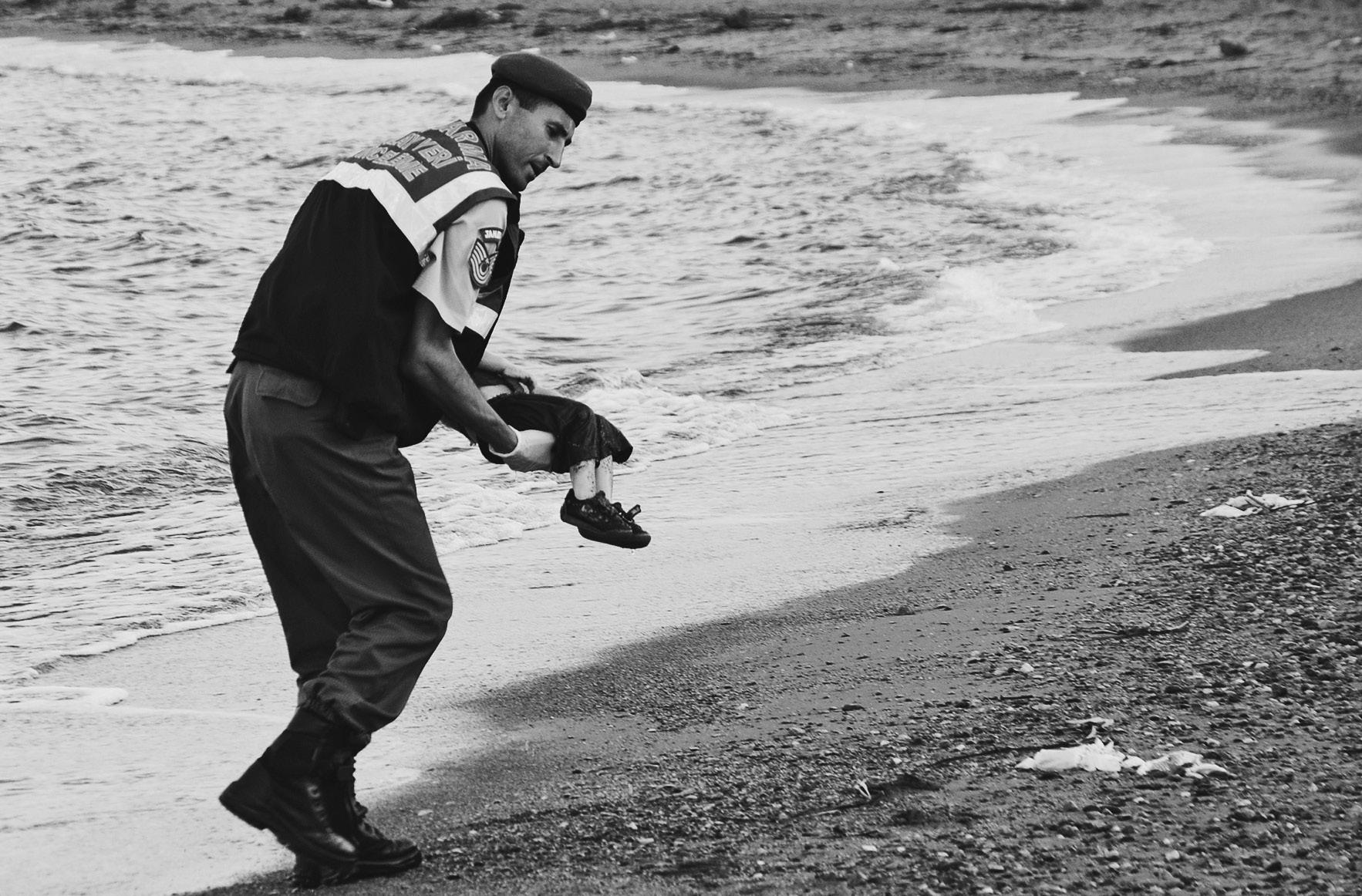
In 2015 Kos became a major gateway for refugees from the Syrian civil war trying to evade policies that kept them out of the European Union (EU). Early on September 2, three-year-old Alan Kurdi and his family scrambled into an inflatable boat to make the short crossing from the Turkish town of Bodrum. The crowded dinghy capsized in minutes. Alan drowned along with his four-year-old brother, Ghalib, and mother, Rehana. At first light, a journalist photographed Alan’s body lying face down in the wet sand with his palms turned toward the sky. He was still dressed in his red T-shirt, blue shorts, and black sneakers. Turkish gendarme Mehmet Çıplak cradled the body as he carried it away. Within hours, the images shone from screens around the world. Alan Kurdi became the drowned human face of the Syrian
refugee crisis and the European response that tried to keep most refugees away from EU territory.
After the boat sank, journalists learned that Alan and his family belonged to Syria’s oppressed Kurdish minority. Why did the Kurdis expose their family to such terrible risks? Why didn’t they take a legal path to safety? Most countries do not allow asylum at their embassies, and it is not routine practice anywhere.2 There are very few “humanitarian corridors” providing a legal way for refugees to travel to a safe country and ask for asylum. The programs that do exist are limited to a few hundred slots a year, while the need is in the millions.3 The Kurdis were hoping to resettle in Canada, but the international refugee regime does not guarantee refugees protection in any particular country. Governments have discretion to choose whether to resettle refugees processed abroad. In 2017, thirty-five countries had some form of overseas refugee resettlement program. Together, they resettled 103,000 refugees, including 33,000 who moved to the United States, 27,000 to Canada, and 15,000 to Australia. Resettlements in Europe ranged from 6,202 in the United Kingdom to just 4 in Slovakia.4
The Kurdis had hoped to join their relatives in Vancouver. Canadian authorities said they had no record of receiving a refugee resettlement
Fi G ure 1.1 Turkish gendarme Mehmet Çıplak carries the body of three-year-old Alan Kurdi on a beach in southern Turkey after a boat carrying Syrian refugees sank while trying to reach the Greek island of Kos in September 2015. Photo by Nilufer Demir/AFP/Getty Images.
application from Alan’s father, but that Alan’s uncle, Mohammad, had submitted an application that was rejected as incomplete. According to Alan’s aunt, the Kurdis decided to head for Greece after receiving the news that Mohammad’s application was rejected. Amid the publicity surrounding the deaths, the Canadian government offered to resettle Mohammad, his wife, and five children.5 The gesture came too late for Alan, his brother, and mother.
The grim truth for almost all people fleeing violence is that overseas resettlement programs are not an option. There is no legal line where they can register and wait as their number advances. Resettlement is like winning the lottery. At least since 1994, annual refugee resettlement flows as a percentage of the global refugee population have never exceeded 1%. Eighty-four percent of refugees live in poor and middle-income countries, mostly in countries such as Turkey and Kenya that neighbor the conflict. An even larger number of people, 40.3 million, are “internally displaced” by conflict and are not legally considered refugees for the single reason that they did not cross an international border.6
For 99% of refugees, the only way to find safety in a country in the prosperous democracies of the Global North is to reach its territory and then ask for asylum.7 If an individual investigation or group designation finds that they meet the statutory definition of someone who is fleeing persecution “for reasons of race, religion, nationality, membership of a particular social group or political opinion,”8 they are granted asylum.
The core principle of the asylum regime is “non-refoulement,” established by the 1951 UN Refugee Convention, which prohibits governments from sending refugees back to their persecutors. Of the world’s 195 countries, 148 have signed the 1951 Convention and/or its 1967 Protocol. An even stronger version of non-refoulement in the 1984 UN Convention against Torture, to which 162 countries are party, prohibits the forced return of anyone facing torture.9
In 2016, the EU, United States, Canada, and Australia recognized asylum or a similar protected status for 734,961 people. Asylum recognition rates of applicants whose cases were adjudicated in 2016 ranged from 23.2% in the United States to 48% in the EU, 32.8% in Australia, and 62.2% in Canada. Increasingly, governments are granting some form of subsidiary protection that gives temporary refuge without the full rights of asylum, such as permanent protection and the right to sponsor the admission of close family members.10 However, the widespread acceptance of the principle of nonrefoulement and the acknowledgment in the Convention that refugees may be forced to travel illegally are subverted by governments that try to keep
asylum seekers at arm’s length and penalize those who travel without official approval. Had Alan Kurdi and his family reached Kos, they stood a good chance of being granted asylum in Europe. Unfortunately for them, a system created to keep most refugees from reaching safety in the rich democracies of the Global North worked as designed.
Remote Control
Many border control measures are highly visible. My home city of San Diego is separated from neighboring Tijuana by fences made of steel plates, concrete barriers, barbed wire, and towers bristling with cameras and sensors— all patrolled by armed Border Patrol agents in pickup trucks and helicopters. When I fly over the border region at night in a commercial airliner, floodlights along the fence draw a shining yellow line across the desert that is obvious from cruising altitude. Donald Trump was elected president in 2016 largely on a platform of extending a wall the entire length of the border with Mexico. Governments have also built barriers to keep Africans out of Israel, Yemenis out of Saudi Arabia, Zimbabweans out of South Africa, Bangladeshis out of India, and Pakistanis out of Iran, to name but a few of the fortifications around the world.11
As important as these obvious barriers are for restricting mobility, most control of access by land, air, and sea takes place out of sight and far away from the national territory. Political scientist Aristide Zolberg coined the term “remote control” to describe the system of passports, visas, and passenger ship checks developed in the early twentieth century that kept people from leaving European ports for the New World unless they had passed an initial screening.12 Since that time, border control has become even more distant from a state’s territory—such that passengers flying halfway around the planet from Abu Dhabi to Los Angeles clear U.S. customs and passport control in Abu Dhabi. The notion of border has also become more diffuse. Asylum seekers trying to reach Sweden from Eritrea encounter a long series of hurdles put in their way by the Swedish government and the European Union working in concert with transit countries, rather than a single line drawn by the Swedish government.
Concepts similar to remote control further highlight the spatial characteristics of efforts to deter people from moving across international borders. Legal scholar James Hathaway described emerging policies of “non-entrée” to the territories of rich democratic countries in 1992.13 Political scientists Virginie Guiraudon and Gallya Lahav influentially described how states shift
migration policy “out” from their borders. Other researchers have described “non-arrival measures,” “deterritorialized” control, “policing at a distance,” and “externalization.”14 Government agencies portray their policies in catchphrases that echo academic terms. “Off-shoring our border control is the keystone of our border defence,” the UK Home Office declares.15 The EU conducts “pre-frontier” operations in third states, and its border control agency Frontex routinely acts “beyond the border.”16 The United States calls its long-range maritime interceptions in the Pacific a strategy of “pushing our borders out.”17 Citizenship and Immigration Canada touts the idea that “border control begins overseas.”18 The Australian Border Force considers “the border not to be a purely physical barrier separating nation States, but a complex continuum stretching offshore and onshore.”19 Governments and scholars alike agree that borders are being pushed out to keep the unwanted at arm’s length.
The concept of “remote control” could be misleading if taken too literally. States do not have the capacity to turn migration flows on and off with the push of a button. Once a movement is channeled by social networks or a developed people-smuggling industry, it is especially resistant to government intervention. Neither are the rich governments of the Global North always the ones with the power to decide the composition and size of flows. As the case of Cuban movement to the United States in chapter 6 illustrates, the state of origin can exercise as much control as the state of destination.
Many remote control policies sweep up all kinds of people on the move, from tourists to terrorists, families reunifying with their loved ones, migrant laborers, and refugees.20 Some remote controls specifically target people seeking asylum. Even when the policies were not intended to deter asylum seekers, the policies make it more difficult for persecuted people to find refuge. The UN High Commissioner for Refugees (UNHCR) and some advocacy organizations insist, for understandable political reasons, that “refugees are not migrants.”21 These organizations want to protect the special obligations that states have toward refugees and to defend those obligations against demands to restrict refugees based on the claim that they are merely “economic migrants” who do not deserve protection. This book uses “migrants” as an umbrella term for people who move across an international border regardless of the reasons or whether they have legitimate legal claims to protection. A “refugee” is a subcategory of migrant who moves across an international border to avoid violence or persecution.22
Non-refoulement of asylum seekers is a deeply institutionalized, international human rights norm that collides with governments’ sovereign interests in controlling who can access their territory. All of these countries
evade the spirit of the international refugee regime while variably complying with its letter. Their policies are marked by what legal scholar Claire Inder calls “hyper-legalism”—“a formalistic approach towards international law and international legality that allows States and other agents to benefit from the rhetoric of compliance with international law, without any constraint on their actions in practice, in order to both legitimize and depoliticize state policies.”23 Governments have developed increasingly elaborate techniques to keep asylum seekers away from spaces where they can ask for sanctuary. This architecture of repulsion is the parallel structure to what scholars of forced migration call an “architecture of protection”—a system in which humanitarians and legal advocates protect vulnerable people like refugees.24 I use the medieval metaphors of cages, domes, buffers, moats, and barbicans to make visible a system of remote control that does much more to keep out refugees than the more obvious border walls.
A Medieval Architecture of Repulsion
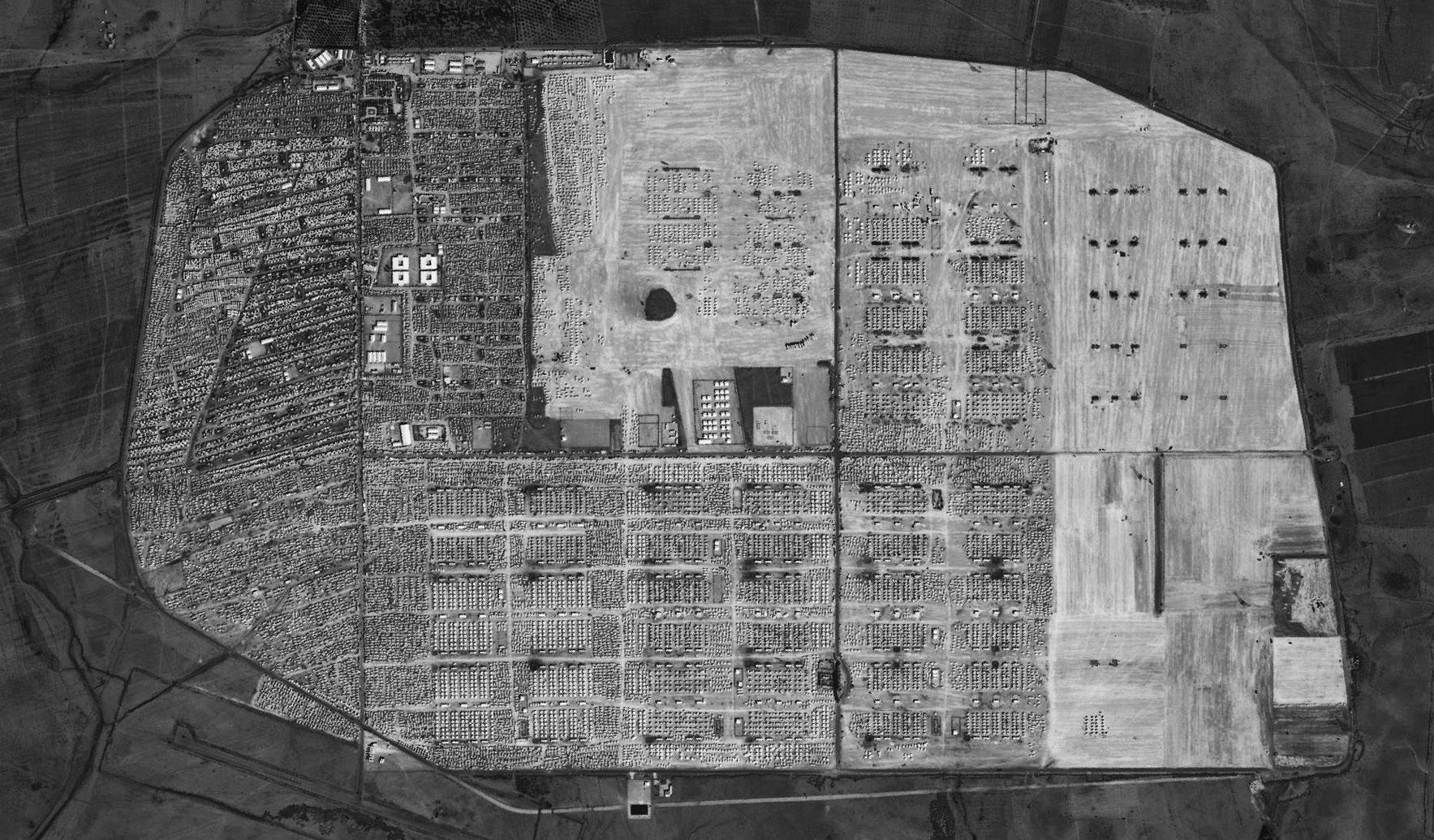
Caging keeps refugees in their countries of origin or camps in other countries. Governments in the Global North work with the UNHCR and the International Organization for Migration (IOM) to fund refugee camps and centers for asylum seekers, usually in countries neighboring conflict zones, and to repatriate refugees who are willing or can be made to return home. Refugee camps are core elements in the architecture of protection as well as repulsion. They combine logics of humanitarianism, to provide basic services such as shelter and food, as well as logics of surveillance and control, to keep refugees from moving to the Global North.25 Most caging takes place in the Global South in a “grand compromise” in which the Global North pays southern neighbors to keep refugees away from the North in return for limited resettlements and financial aid.26 Eighty-eight percent of the UNHCR’s $3.9 billion in voluntary contributions in 2017 came from government sources, led by the United States (37.2%), Germany (12.2%), EU (11.2%), Japan (3.9%), and UK (3.5%).27
Caging involves techniques that fall along a continuum of coercion. The softest tool is publicity campaigns to convince potential asylum seekers to stay home. Designating a country of origin as “safe” is a legal tool that governments use to create a rebuttable presumption that asylum seekers of particular nationalities are not refugees. The hardest tool of caging is military intervention. Since the 1990s, governments have established several “safe havens” with an explicit goal of preventing refugees from fleeing to
Fi G ure 1.2 The Zaatari refugee camp in Jordan, seen in this 2013 satellite image, grew to host nearly 80,000 Syrian refugees by 2018. Camps funded by the rich countries of the Global North are key building blocks in both the architecture of protection, which provides shelter for refugees, and the architecture of repulsion, which cages them far from the Global North. Photo by DigitalGlobe via Getty Images.
neighboring countries and eventually the Global North. These caging efforts typically mix goals of migration control, humanitarian protection, and other foreign policy aims.28 Following the 1990–1991 Gulf War, the UN Security Council passed Resolution 688 to create a safe haven that would protect hundreds of thousands of Iraqi Kurds fleeing the forces of President Saddam Hussein. Washington, London, and Paris used the resolution to justify two no-fly zones in Iraq to protect, and bottle up, Kurds in the North and Shiites in the South. Operation Provide Comfort air-dropped aid along the IraqiTurkish border and gave military cover to humanitarian operations on the ground.29 Military interventions with similar rationales continued in Bosnia (1993), Haiti (1994), Kosovo (1998–1999), East Timor (1999), Sierra Leone (1999–2000), and Libya (2011).30
A virtual dome over national territories has become a primary technique of mobility control that restricts access via airspace.31 The anchors of the dome are consulates across the planet where diplomats or their deputies decide whether to issue visas allowing travel to particular destinations. The global visa regime quietly keeps asylum seekers away from the Global North. Most member countries of the Organisation for Economic Co-operation and Development (OECD) have visa restrictions on most Asian and African
nationalities. The restriction of African nationalities increased from 74% of all bilateral dyads (such as Canada-Somalia) between OECD countries and African countries in 1973 to 93% by the early 1990s.32 In 2018 the thirty most restricted nationalities in the world could access forty-nine or fewer countries without visas. All the most restricted nationalities were in Asia or Africa, with the exception of Kosovo, which became a major source of refugees during the 1998–1999 war. All of the top-ten source countries of refugees were among these most restricted nationalities. At the extremes, Afghans could access only 30 countries without a visa, while Japanese could access 189 countries.33 Visa requirements often have a “domino effect” as governments race to prevent the entrance of asylum seekers barred from other countries.
Smiling airline staff enforce visa controls. Sanctions against airlines that allow passengers to board without visas, and provisions that make the airlines responsible for transporting rejected passengers back to the point of embarkation, in effect deputize airline check-in agents to prevent asylum seekers from ever getting on an aircraft. Liaison officers from rich countries are stationed abroad to advise the airlines whom to prohibit from boarding. The United States has even established pre-clearance operations in fifteen foreign airports where passengers must clear U.S. passport control as far as 11,000 kilometers from U.S. borders. The 1944 Convention on International Civil Aviation, which predates the international asylum regime, required airlines to ensure that passengers have proper documentation. Revisions of the Convention imposed increasingly higher penalties for and stricter conditions on airlines to check passenger documents in a series of regulations beginning in 1990. The 2000 UN Anti-Smuggling Protocol required commercial carriers to ensure that passengers have the travel documents required for entry and impose sanctions if they do not.34
Governments of destination countries use their neighbors as buffers to repel unauthorized migrants, including asylum seekers. Common techniques include joint paramilitary patrols and funding and training to enhance control capacity. Legal tools include readmission agreements, in which the buffer states agree to take back rejected asylum seekers who passed through their territory, “safe third country” designations that deny asylum to applicants who passed through a named buffer country where they will not be persecuted, and pressure on buffer states to criminalize irregular migration.
Countries with maritime borders use the sea as a moat to keep out the unwanted by intercepting boats carrying passengers without visas. The U.S., Australian, and European governments have all used the high seas as a zone
to intercept asylum seekers and keep them away from their coasts. Maritime interceptions sometimes take place thousands of kilometers from the home territory, such as when U.S. ships deploy in the Western Pacific and European ships patrol the coast of West Africa.35 When the U.S. Coast Guard intercepts people on boats sailing from Caribbean islands, it engages in the most extreme form of the externalization of borders. These interceptions control both entry—to the United States—and exit—from Cuba or Haiti to any other country. Such policies turn an island into a cage.
Finally, governments design fortifications at the entrance to their territory where special rules apply. In medieval times, castle builders often constructed a barbican outside the main walls as an outer defense that was not part of the castle proper. In modern times, governments have created “anomalous zones” at the entrances to their territory that function as barbicans. For example, in 2001 Australia designated Christmas Island, the destination of many asylum seekers, as part of an “excised” zone with special restrictive rules. Many governments have experimented with designating international transit zones in their airports. These zones create the fiction that asylum seekers are not physically present in the state’s territory, or at least not fully within its walls, where they would have greater rights like access to lawyers and independent review of their appeals. In Israel, a “hot return” policy elaborated in 2007 allowed the military to return asylum seekers caught within fifty kilometers of the Egyptian border under various conditions, employing the logic that they were being rejected at the border even if they were inside Israeli territory.36 This medieval landscape of domes, buffers, moats, cages, and barbicans prevents the unwanted from finding refuge.
Catch-22
Governments jealously guard their discretion to select refugees from camps abroad and to admit mostly symbolic numbers through legal channels. The same governments put all kinds of remote controls in place to keep refugees from traveling legally. These controls vary, from visa policies that quietly repel most of those who have a legitimate claim to “safe third country” agreements that often suffer from serious humanitarian and rights problems in practice, but which in theory are a means of control that would not send refugees back into the hands of their persecutors, as discussed in detail in chapters 7, 8, and 10. The worst caging and buffering policies cynically use persecuting governments and even gangs as tools to close paths to sanctuary. Refugees who somehow evade these controls to reach a country in the Global North in theory should be
protected by the principle of non-refoulement. The catch-22 for refugees is that rich democracies are essentially telling them, “We will not kick you out if you come here. But we will not let you come here.”
Governments attempt to avoid the legal obligations of non-refoulement, to which they have explicitly agreed, by manipulating territoriality. A strategy of “extra-territorialization” pushes the control function of borders hundreds or even thousands of kilometers beyond the state’s territory. Simultaneously, states restrict access to asylum and other rights enjoyed by virtue of presence on a state’s territory, by making micro-distinctions down to the meter at the borderline in a process of “hyper-territorialization.” The procedural rights to ask for asylum have varied a great deal depending whether one is inside or outside the door of an international transit lounge,37 standing on the beach or dry land,38 and climbing the first of several concentric border fences or stuck in the middle.39
For example, the U.S. Supreme Court heard a case in 2017 to decide whether Sergio Hernández, a Mexican citizen who was standing on the Mexican side of the border when he was killed by shots fired from a U.S. Border Patrol agent standing on U.S. territory, had rights under the U.S. Constitution that were violated by the shooting.40 A similar issue lay at the heart of a 2011 case in which a U.S. agent shot dead a Mexican citizen, José Alfredo Yañez Reyes, during an altercation along the border. A surveyor hired by the U.S. Attorney’s Office to determine where the body fell, and thus whether Yañez had U.S. constitutional rights, prepared a photographic exhibit with a yellow line drawn through his waist showing the bloody head in Mexico and the feet in the United States. “The majority of his body was in Mexico upon death,” the U.S. government claimed, and thus his family had no right to sue.41 Governments directly or indirectly project their control far beyond their territories at the same time they make micro-distinctions in space to circumscribe rights.
This book explains the catch-22 deliberately created by manipulating territoriality. It describes the origins of each building block in the architecture of repulsion, how they work together as a system of converging policies, and the conditions that enable or constrain their practice.
Cases and Methods
After establishing the historical origins of asylum and remote control, I examine four major contemporary cases—Australia, Canada, the United States, and the European Union.42 These four cases fit two major selection
criteria. First, they are signatory to international conventions establishing the principle of non-refoulement and in practice accept significant numbers of asylum seekers who make it past the obstacle course. Thus, they are “hard cases” for explaining the paradox of strict policies of remote control that subvert the spirit of international asylum law by manipulating territoriality.43 Second, the cases vary over time in the type and intensity of remote control policies. While the overall trajectory is toward convergence to a similar package of policies, there is still important variation, which in turn suggests the conditions for constraints on particular strategies.
The book draws on multiple sources of evidence in each case, including the texts of asylum laws, formal policy statements around each type of remote control, landmark court cases, reports by government agencies and nongovernmental organizations, and academic studies that have primarily been elaborated by legal scholars. In a few instances my research assistant and I conducted interviews to fill in gaps, particularly in the discussion of Mexico as a buffer state, for which we conducted interviews with shelter directors on both the northern and southern borders and twenty-two asylum seekers at those shelters. I use policy process–tracing techniques based on a close reading of the documents,44 as well as statistical evidence of asylum applications of particular nationalities, to determine whether asylum seekers were the targets of these policies and whether they were affected by them regardless of their primary intent. I also gather evidence of failed strategies, such as the UK’s efforts within the EU in 2003 to promote offshore processing of asylum seekers. Unsuccessful efforts are important to analyze because they show the limits of remote control.
One shortcoming of official sources is that they do not provide information about hidden policies. Much remote control takes place in secret. A list of policies in each country cannot simply be tallied and compared because governments are unevenly successful at obscuring their activities. American diplomatic cables from the 2000s released by WikiLeaks and declassified CIA documents from the 1960s through the early 1980s provide an unprecedented window into policymaking behind the scenes. For example, preliminary analysis of electronically searchable diplomatic cables between the U.S. embassy in Mexico City and Washington, DC reveal previously unknown details of efforts to make Mexico a buffer state between the United States and third-country nationals. These documents also shed light on the remote control activities of Australia, the EU, and Canada, whose policies are monitored by the U.S. government. Internal government correspondence from the National Archives in Australia shows how Canberra modeled some of its policies on Canadian practices with the goal of promoting an equally