Parasitoses et mycoses des re■gions tempe■re■es et tropicales 5e édition. Edition Association Française Des Enseignants De Parasitologie Médicales Anofel
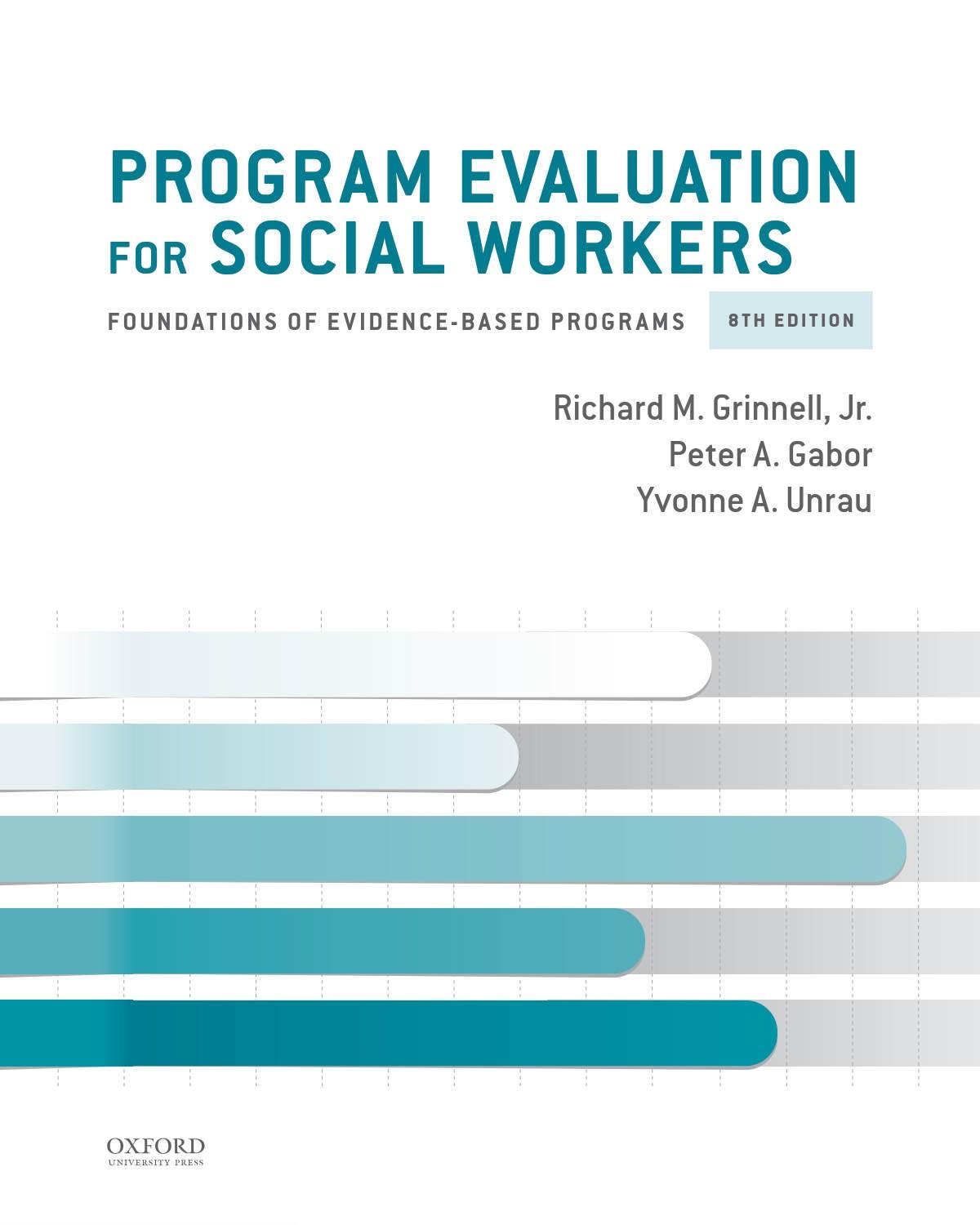
The first edition of our book appeared on the scene nearly three decades ago As with the previous editions, this one is also for graduate-level social work students as their first introduction to program evaluation. We haveselectedandarrangedourbook’scontentsoitcanbemainlyusedinanintroductorysocialworkprogram evaluationcourse Tooursurprise,ourbookhasalsobeenadoptedinmanagementcourses,leadershipcourses, program design courses, program planning courses, social policy courses, as a supplementary text in research methodscourses,inadditiontofieldintegrationseminars.
TOWARDACCOUNTABILITY
Pressures for accountability have never been greater Organizations and practitioners of all types are increasingly required to document the impacts of their services not only at the program level but at the case level as well. Continually, they are challenged to improve the quality of their services and are required to do this with scant resources, at best This text provides a straightforward view of evaluation while taking into account three issues: (1) the current pressures for accountability within the social services, (2) currently available evaluation technologies and approaches, and (3) the present evaluation needs of students as well as theirneedsinthefirstfewyearsoftheircareers
JUSTTHEBASICS
The three of us have been teaching program evaluation courses for decades Given our teaching experience and with the changing demographics of our ever-increasing first-generation university student population we asked ourselves a simple question: “What program evaluation content can realistically be absorbed, appreciated,andcompletelyunderstoodbyourstudentsinatypicalone-semesterprogramevaluationcourse?” Theanswertoourquestioniscontainedwithinthechaptersthatfollow
We have avoided information overload at all costs. Nevertheless, as with all introductory program evaluation books, ours too needed to include relevant and basic “evaluation-type” content Our problem was notsomuchwhatcontenttoincludeaswhattoleaveout
In a nutshell, our book prepares students to become beginning critical consumers of the professional evaluation literature It also provides them with an opportunity to see how program evaluations are actually carriedout
TOWARDEVIDENCE-BASEDPRACTICESANDPROGRAMS
In our opinion, no matter how you slice it, dice it, peel it, cut it, chop it, break it, split it, squeeze it, crush it, orsquashit,socialworkstudentsneedtoknowthefundamentalsofhowsocialworkprogramsarecreatedand evaluated if they are to become successful evidence-based practitioners, evidence-informed practitioners, or practitionerswhoareimplementingevidence-basedprograms
Where does all of this fundamental “evidence-based” content come from? The answer is that it’s mostly obtained from social work research and evaluation courses, journal articles, the internet, and books. We stronglybelievethatthis“evidence-based”modelofpracticewe’rehearingsomuchaboutnowadaysshouldbe reinforced in all the courses throughout the entire social work curriculum, not just in research and evaluation courses. It all boils down to the simple fact that all social work students must thoroughly comprehend and appreciate regardless of their specialization how social work programs are eventually evaluated if they’re to becomeeffectivesocialworkpractitioners
GOALANDOBJECTIVES
As previously mentioned, our main goal is to present only the core material that students realistically need to know so they can appreciate and understand the role that evaluation has within professional social work practice.Toaccomplishthismodestgoal,westrivedtomeetthreehighlyoverlappingobjectives:
Withtheprecedinggoalandthreeobjectivesinmind,wepresentauniqueapproachindescribingtheplaceof evaluation in the social services Over the years, little has changed in the way in which most evaluation textbooks present their material; that is, a majority of texts focus on program-level evaluation and describe project-type, one-shot approaches, implemented by specialized evaluation departments or external consultants
On the other hand, a few recent books deal with case-level evaluation but place a great deal of emphasis on inferentially powerful but difficult-to-implement experimental and multiple baseline designs Our experiences have convinced us that neither one of these two distinct approaches adequately reflects the realitiesinourprofession ortheneedsofstudentsandbeginningpractitionersforthatmatter.
Thus, we describe how data obtained through case-level evaluations can be aggregated to provide timely and relevant data for program-level evaluations Such information, in turn, provides a basic foundation to implementagoodquality-improvementprocesswithintheentiresocialserviceorganization.We’reconvinced thatthisintegrationwillplayanincreasinglyprominentroleinthefuture
We have omitted more advanced methodological and statistical material such as a discussion of celebration lines, autocorrelation, effect sizes, and two standard-deviation bands for case-level evaluations, as well as advancedmethodologicalandstatisticaltechniquesforprogram-levelevaluations
Some readers with a strict methodological orientation may find our approach to evaluation as modest We’re well aware of the limitations of the approach we present, but we firmly believe that this approach is more likely to be implemented by beginning practitioners than are other more complicated, technically demandingapproaches
We believe that the aggregation of case-level data can provide valuable feedback about services and programsandcanbethebasisofaneffectivequality-improvementprocesswithinasocialserviceorganization We think it’s preferable to have such data, even if they are not methodologically “airtight,” than to have no aggregated data at all. Simply put, our approach is realistic, practical, applied, functional, and, most importantly,student-friendly
THEME
Wemaintainthatprofessionalsocialworkpracticerestsuponthefoundationthataworker’spracticeactivities must be directly relevant to obtaining the client’s practice objectives, which are linked to the program ’ s objectives, which are linked to the program ’ s goal, which represents the reason why the program exists in the firstplace Theevaluationprocesspresentedinourbookheavilyreflectstheseconnections
WHAT’SNEW?
Producinganeightheditionmayindicatethatwe’veattractedloyalfollowersovertheyears Conversely,italso means that making significant changes from one edition to the next can be hazardous to the book’s longstanding appeal. New content has been added to this edition in an effort to keep information current, while retaining material that has stood the test of time With the guidance of many program evaluation instructors and students alike, we have clarified material that needed clarification, deleted material that needed deletion, and simplified material that needed simplification. We have done the customary updating and rearranging of material in an effort to make our book more practical and “student-friendly” than ever before Wehaveincorporatedsuggestionsbynumerousreviewersandstudentsovertheyearswhilestayingtruetoour main goal providing students with a useful and practical evaluation book that they can actually understand andappreciate
Our book is divided into six parts: PartI: Toward Accountability, Part II: Evaluation Standards, Ethics, and Culture, Part III: The Social Work Program, Part IV: Doing Evaluations, Part V: Gathering Credible Evidence,andPartVI:MakingDecisionswithData.
PartI discusses how evaluations help make our profession more accountable (Chapter1) and how all types of evaluations (Chapter2) use a common process that involves the program ’ s stakeholders right from the getgo(Chapter3).
PartIIdiscusseshoweveryevaluationisinfluencedbyevaluationstandards(Chapter4),ethics(Chapter5), and culture (Chapter 6) After reading the first two parts, students will be aware of the various contextual issuesthatareinvolvedinalltypesofevaluations.Theyarenowreadytoactuallyunderstandwhatsocialwork programsareallabout thepurposeofPartIII
PartIIIcontainschaptersthatdiscusshowsocialworkprogramsareorganized(Chapter7)andhowtheory of change and program logic models are used not only to create new programs, to refine the delivery services of existing ones, and to guide practitioners in developing practice and program objectives, but to help in the formulation of evaluation questions as well (Chapter 8) Chapter 9 discusses how to find, select, and implementanevidence-basedprogram.
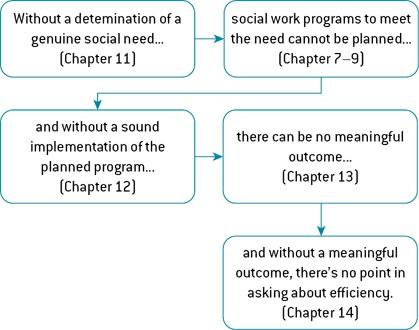
The first chapter in Part IV, Chapter 10, describes in detail what students can expect when doing an evaluation before it’s actually started We feel that they will do more meaningful evaluations if they are prepared in advance to address the various issues that will arise when an evaluation actually gets under way and trust us, issues always arise When it comes to preparing students to do an evaluation, we have appropriated the British Army’s official military adage of “the 7 Ps ” : Proper Planning and Preparation Prevents Piss-Poor Performance. Not eloquently stated but what the heck, it’s official, so it must be right. The remaining four chapters in Part IV (Chapters 11–14) illustrate the four basic types of program evaluations students can do with all of their “planning skills” in hand Chapter 11 describes how to do basic needs assessments and explains how they are used in developing new social service programs and refining the serviceswithinexistingones Ithighlightsthefourtypesofsocialneedswithinthecontextofsocialproblems Chapter 12 presents how we can do a process evaluation once a program is up and running in an effort to refine the services that clients receive and to maintain the program ’ s fidelity. It highlights the purposes of processevaluationsandthequestionstheprocessevaluationwillanswer Chapter13providestherationalefor doing outcome evaluations within social service programs It focuses on the need to develop a solid monitoring system for the evaluation process. Once an outcome evaluation is done, programs can use efficiencyevaluationstomonitortheircost-effectiveness,thetopicofChapter14. This chapter highlights the cost–benefit approach to efficiency evaluation and also describes the cost-effectiveness approach Part IV acknowledges that evaluations can take many forms and presents four of the most common ones. The four types of evaluation discussed in our book are linked in an ordered sequence, as outlined in the following figure:
Part V is all about collecting reliable and valid data from various data sources (e.g., clients, workers, administrators, funders, existing client files, community members, police, clergy) using various data-collection methods (eg, individual and group interviews, mailed and telephone surveys, observations) Chapter 15 discusseshowtomeasureclientandprogramobjectivesusingmeasuringinstrumentslikejournalsanddiaries, oral histories, logs, inventories, checklists, and summative scales. Chapter 16 presents the various one- and two-groupresearchdesignsthatcanbeusedinbasicprogramevaluations Chapter17discusseshowtocollect dataforevaluationsfromasampleofresearchparticipants.Chapter18explainshowtotrainandsupervisethe folkswhoarecollectingdataforevaluations.
After an evaluation is completed, decisions need to be made from the data collected the purpose of Part VI. Chapter 19 describes how to develop a data-information system and Chapter 20 discusses how to make decisions from the data that have been collected. Chapter 21 outlines how to effectively communicate the findingsderivedfromaprogramevaluation
INSTRUCTORRESOURCES
Instructors have a password-protected tab (Instructor Resources) on the book’s website that contains links
The field of program evaluation in our profession is continuing to grow and develop We believe this edition will contribute to that growth A ninth edition is anticipated, and suggestions for it are more than welcome Pleaseemailyourcommentsdirectlytorick.grinnell@wmich.edu.
If our book helps students to acquire basic evaluation knowledge and skills and assists them in more advanced evaluation and practice courses, our efforts will have been more than justified If it also assists them toincorporateevaluationtechniquesintotheirday-to-daypractices,ourtaskwillbefullyrewarded.
RichardM Grinnell,Jr
PeterA Gabor
YvonneA.Unrau
CHAPTER1
CHAPTER2
CHAPTER3
PARTI TowardAccountability
Introduction
ApproachesandTypesofEvaluations
TheEvaluationProcess
CHAPTEROUTLINE
THEQUALITYIMPROVEMENTPROCESS
Case-LevelEvaluations
Program-LevelEvaluations
MYTH
PhilosophicalBiases
PerceptionsoftheNatureofEvaluation
PerceptionsoftheNatureofArt
EvaluationandArtUnite!
FearandAnxiety(EvaluationPhobia)
WHYEVALUATIONSAREGOODFOROURPROFESSION
IncreaseOurKnowledgeBase
OneClientandOneProgramataTime
UsingaKnowledgeBase
GuideDecision-MakingatAllLevels
Policymakers
TheGeneralPublic
ProgramFunders
ProgramAdministrators
SocialWorkPractitioners
Clients
EnsurethatClientObjectivesAreBeingMet
COLLABORATIONAMONGSTAKEHOLDERGROUPS
ACCOUNTABILITYCANTAKEMANYFORMS
SCOPEOFEVALUATIONS
RESEARCH≠EVALUATION
DATA≠INFORMATION(OREVIDENCE≠INFORMATION)
CHARACTERISTICSOFEVALUATORS
ValueAwareness
SkepticalCuriosity
Sharing
Honesty
DEFINITION
SUMMARY
STUDYQUESTIONS
Theprofessionyouhavechosentopursuehasneverbeenundergreaterpressure.Publicconfidenceiseroding, our funding is diminishing at astonishing rates, and folks at all levels are demanding for us to increase our accountability; the very rationale for our professional existence is being called into question We’ve entered a brand-newerainwhichonlyourbestsocialworkprograms thosethatcandemonstratetheyprovideneeded, useful,andcompetentclient-centeredservices willsurvive