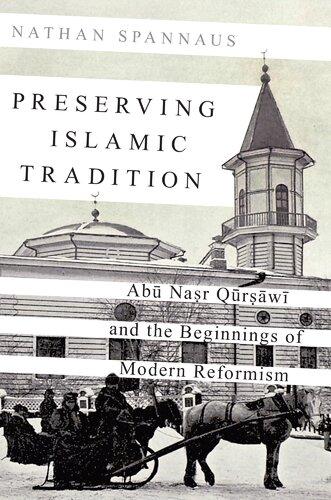
Abu Nasr Qursawı and the Beginnings of Modern Reformism
z
NATHAN SPANNAUS
Oxford University Press is a department of the University of Oxford. It furthers the University’s objective of excellence in research, scholarship, and education by publishing worldwide. Oxford is a registered trade mark of Oxford University Press in the UK and certain other countries.
Published in the United States of America by Oxford University Press 198 Madison Avenue, New York, NY 10016, United States of America.
All rights reserved. No part of this publication may be reproduced, stored in a retrieval system, or transmitted, in any form or by any means, without the prior permission in writing of Oxford University Press, or as expressly permitted by law, by license, or under terms agreed with the appropriate reproduction rights organization. Inquiries concerning reproduction outside the scope of the above should be sent to the Rights Department, Oxford University Press, at the address above.
You must not circulate this work in any other form and you must impose this same condition on any acquirer.
CIP data is on file at the Library of Congress
ISBN 978–0–19–025178–9
1 3 5 7 9 8 6 4 2
Printed by Sheridan Books, Inc., United States of America
To Alex, [add heartfelt and witty comment here]
Contents
Preface ix
Acknowledgments xi
Transliteration, Dates, Ethnonyms xiii
Timeline of Volga-Ural History xv
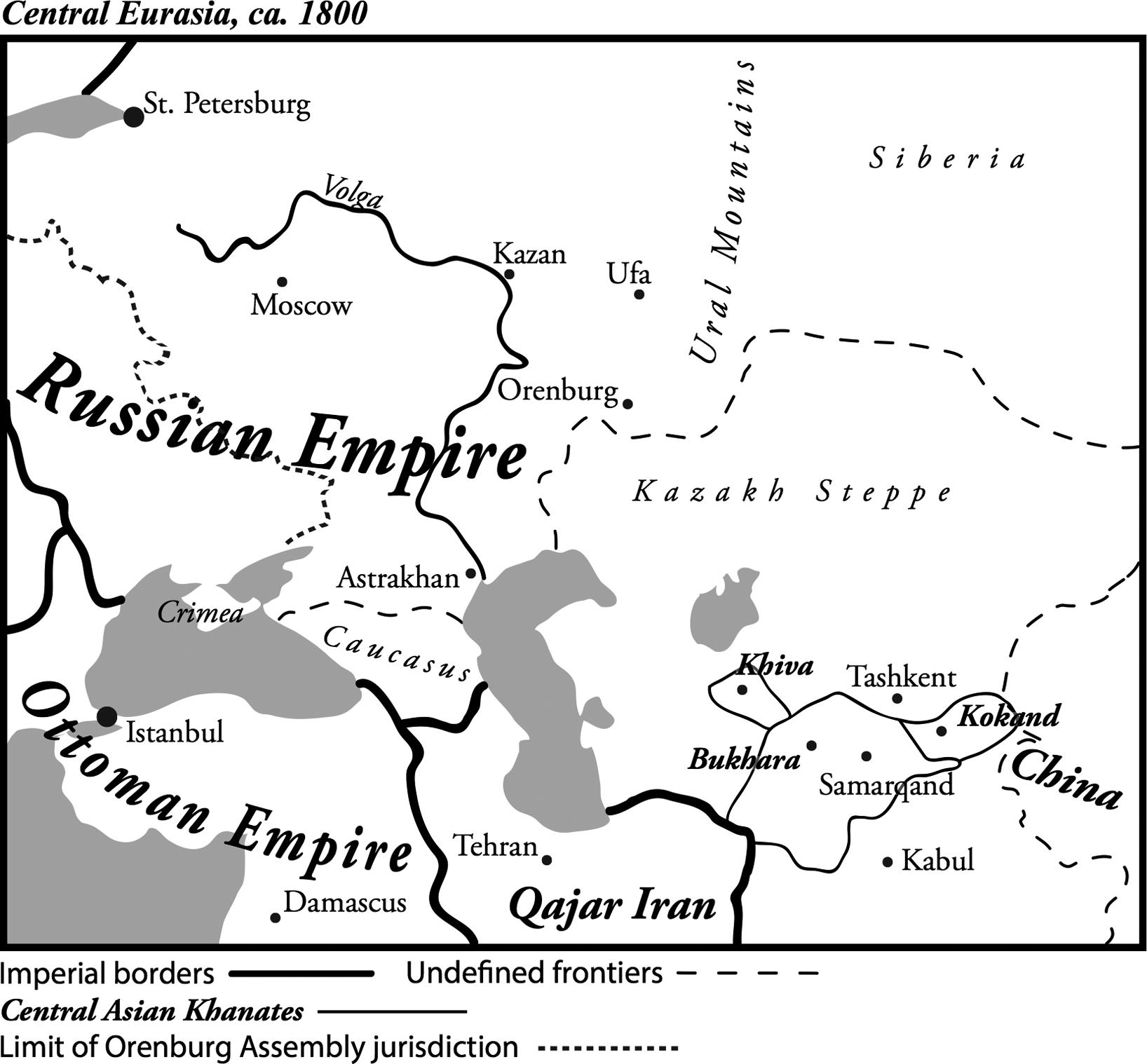
Map: Central Eurasia, ca. 1800 xvii
1. Introduction—Historiography of Reform and Tradition 1
Jadidism and Historiography 3
Eighteenth-Century Reformism 7
Tradition and Institutions 16
The Current Study 21
2. An ʿĀlim in the Russian Empire 29
Sharīʿa and the ʿUlamāʾ 34
Tsarist Rule, Persecution, and Tolerance 38
Sanction and Scholarship 46
Bukhara 52
The Spiritual Assembly 68
Conflicts in Bulghar Islam 82
3. An Epistemological Critique 91
Postclassical Scholarship 93
Reforming the Scholarly Tradition 108
4. Ijtihād and the Function of Legal Theory 112
Qūrṣāwī’s Conception of Ijtihād 113
The Prevalence of Taqlīd 128
The Social Function of Ijtihād 135
5. The Question of the Divine Attributes 144
Qūrṣāwī’s Critique 145
Divine Transcendence 162
Orthodoxy and Condemnation 169
6. Postclassical Kalām 175
Wujūdī Influence 176
Approaching Sirhindī 187
Qūrṣāwī as Mutakallim 193
7. Reform Within the Scholarly Tradition 201
Eighteenth-Century Reformism 204
A Response to Tsarist Rule 214
8. Modernity 219
Disembedding and Individualism 221
Secularity 227
Modern Reformism 232
9. The Transformation of the Religious Environment 237
Reforming Muslim Education 238
Printing 247
The Fragmentation of Authority 261
Jadidism and the Post-1905 Religious Environment 273
10. Conclusion—Separating Qūrṣāwī and Jadidism 288
299
321
Preface
This projec T began as idle browsing in the DK section of the library in my first semester of graduate school, where I first became aware of Qūrṣāwī, and it eventually settled on two questions: What is Qūrṣāwī’s reformism about? And why is it remembered so differently in most historical sources?
Answering these questions required wading into Volga-Ural history and postclassical Islamic studies, two fields that have long been overlooked and underinvestigated, but also rarely brought together. While both have seen significant advancements since the 1990s, the study of Volga-Ural Muslims remains hindered by the ideological influence of the Soviet academy and flawed, outdated ideas about Islam and Islamic history.
The field itself is divided among experts in social sciences, Soviet nationalities, security studies, and varied historiographical trends, as well as between researchers with facility in different languages—too many, I would argue, in only Russian, and too few in Arabic and Persian. It also has suffered from reliance on a narrow range of primary sources, interpreted with a sparse methodological toolbox.1
In all, the field has been left ill-equipped to analyze and contextualize the religious, social, and cultural developments that mark Volga-Ural history, particularly in the imperial period. (The Soviet period, too, though that is beyond the scope of this study.) Much of the work has overwhelmingly focused on Jadidism, the early 20th-century modernist movement in the region, leaving other topics alternately ignored and disregarded, such that any picture of the broader context remains incomplete, and persistent methodological shortcomings mean that even Jadidism remains poorly understood.
1. See Devin DeWeese’s insightful diagnosis of the problems facing the study of Islam in the former Soviet Union: Devin DeWeese. “Islam and the Legacy of Sovietology: A Review Essay on Yaacov Ro’i’s Islam in the Soviet Union.” Journal of Islamic Studies, vol. 13, no. 3, 2002. 298–330.
Research into this history in all periods is at a relatively early stage, especially in terms of religious issues. Nevertheless, the immense strides made in recent years are encouraging, and our understanding will doubtless improve into the foreseeable future, necessitating revisions and emendations to the present literature. (Also true for postclassical Islamic studies, if for different reasons, to be addressed in the Introduction.)
This is my intended contribution—to expand and deepen our understanding of the forms and currents of Islamic thought in the Volga-Ural region in the 19th century and its religious and intellectual environment through the analysis of one important figure’s thought. But rather than an attempt to engage equally with the fields of Volga-Ural history and Islamic studies, addressing the conventions and conversations of both, this monograph is squarely aimed at the latter. It is a work of Islamic intellectual history, which I believe is the field that offers the best approach for investigating and analyzing the subject matter. It is this literature and its contours that I engage with, and this audience that I am speaking to. (Accordingly, I err toward explaining for the reader aspects of Russian history or governance more than Islam or Islamic history.)
This field, to be sure, is far from perfect. There are critical gaps in its periodization, primarily the separation between premodern and modern Islamic studies, as well as in the related issue of dealing with European influence on Islamic thought (discussed in the Introduction). In addition, the Volga-Ural region is a periphery of the Islamic world, and such areas are not always given their due in scholarship, to the detriment of the field. Indeed, the region not only sits on the edge of both the Islamic world and Europe but is a part of the former long under the rule of the latter, and the chronological focus of the book—the turn of the 19th century—falls at the very transition from the premodern to the modern. As such, this topic is peripheral multiple times over, with all attendant complexities.
This monograph is an effort to move beyond these gaps, but also to advance the extant literature in new directions. This will certainly involve choices, interpretations, and conclusions that some readers may not agree with. That’s okay. This book should be seen as an essai, a sincere attempt to make sense of the historical, religious, social, and intellectual phenomena under study, in a still-developing area of inquiry. It is a worthwhile task, but not a straightforward one.
Acknowledgments
This book represen T s several years of study, research, and contemplation that would not have been possible without the generous help and support of many people. Every teacher (especially language instructors), classmate, librarian, secretary, bookstore, and friend along the way, from Ann Arbor to St. Petersburg, St. Louis, Cambridge, Montreal, Tempe, Kazan, Damascus, Princeton, Knoxville, Oxford, and all places in between, has made this book what it is. I don’t really do effusive (and will soon run out of synonyms for “supportive”), but know that although I cannot list all of you here, nor possibly repay your kindness, I am forever grateful.
The project that eventually became this book first took shape at Harvard under the invaluable guidance of the late Shahab Ahmed, Khaled El-Rouayheb, Roy Mottahedeh, and John Schoeberlein. At McGill, I benefited immensely from working and studying with Malek Abisaab, Wael Hallaq, Laila Parsons, and Uner Turgay. Special mention is due to Robert Wisnovsky, who has been an unfailing source of guidance, support, and productive disagreement. I couldn’t ask for a better supervisor and mentor. And thanks to everyone at the Institute of Islamic Studies, which provided both an unparalleled intellectual environment and funding for language study, writing time, and manuscript research.
My work at Tennessee and Oxford allowed me to think seriously about the relevant theoretical and comparative issues arising from my research, particularly my time with the European Research Council–funded project “Changing Structures of Islamic Authority,” under the supervision of Masooda Bano, who offered motivation and probing questions in equal measure. And special thanks to Christopher Pooya Razavian for his support, friendship, and constant mentions of philosophers whom I may or may not have eventually looked into.
Acknowledgments
(And I must of course acknowledge the collegiality and feedback from Jari Kaukua and Davlat Dadikhoda, Yusuf Daşdemir, Hadel Jarada, Kutlu Okan, and everyone in Jyväskylä.)
I also would like to thank the librarians, archivists, interlibrary loan staff, and assistants who made the research for this book possible, including those at Harvard, McGill, the New York Public Library, and Oxford, and particularly the respective staffs at the Institute of Oriental Manuscripts in St. Petersburg, the Department of Manuscripts and Rare Books at Kazan Federal University, the Tiumen State Museum, and the Sinor Research Institute for Inner Asian Studies at Indiana University.
Over the years, I have received immeasurable help from friends, colleagues, peers, conference attendees, co-presenters, and correspondents, who have generously and studiously read drafts, asked questions, made suggestions, and offered feedback and insights. Thanks (in alphabetical order) to Rainer Brunner, Alfrid Bustanov, Alireza Doostdar, Allen Frank, Rozaliya Garipova, Robert Gleave, Frank Griffel, Bilal Ibrahim, Kamran Karimullah, Edward Lazzerini, Reza Pourjavady, Junaid Quadri, Danielle Ross, Paolo Sartori, and Uli Schamiloglu. The two anonymous reviewers of the manuscript made critical comments and suggestions that only improved the final product, and Cynthia Read and everyone at Oxford University Press have shown great enthusiasm, patience, and skill in shepherding the book to publication. Of course, all errors are my own.
Finally, to my brother, parents, grandparents, aunts, uncles, cousins, nieces, nephews, and friends, without whom none of this would have been possible: thank you for supporting and inspiring me, distracting me when necessary, letting me talk at you, and smiling along politely. I apologize for any untoward reactions when asked what exactly my book is about or when it’ll be done. Here it is. And Alex, who’s shown more patience, interest, and support during this process than could reasonably be expected of anyone: thank you for everything.
Transliteration, Dates, Ethnonyms
For all quo T a T ions and references in Arabic script, the transliteration scheme from the International Journal of Middle East Studies for Arabiclanguage materials will be used. While a significant proportion of the primary sources used here are not in Arabic, the prevalence of Arabic terminology and vocabulary and the intermixing of Arabic, Persian, and Turkic elements in the sources complicate the process of transliteration. In the interest of avoiding a situation where a term such as ijtihād would also, depending on the language, be rendered as ejtehād, ictihâd, or izhtikhad, despite the fact it would be written in exactly the same way across the original sources, I’ve chosen to use one scheme for all writing in Arabic script, regardless of language.
For Cyrillic script, Russian-language materials will be transliterated according to the Library of Congress system. Other transliteration from Cyrillic will follow the conventions for each language.
All references and citations will be made to the original language and script of the source, while mentions of figures within the text will use the most common spelling of their name. The same applies in the bibliography, where works by the same author are grouped together, regardless of spelling. (For instance, the 20th-century Tatar historian Gaziz Gubaidullin, whose name is most widely known in this Cyrillic form, will be indicated as such, while citations for his Arabic-script writings will be attributed to ʿAzīz ʿUbaydullīn but listed under “Gubaidullin.”)
Technical terms and uncommon proper nouns will always be transliterated with diacritics, and the former italicized (e.g., kalām, Qūrṣā), but common proper nouns will not carry diacritics (e.g., Sufi, Hanafi, Prophet Muhammad). For well-known geographical terms, English versions will be used (Cairo, Moscow, steppe).
Both hijrī and Christian dates were employed during the period under study here. However, for the sake of simplicity, hijrī dates will be given only infrequently, when called for by primary source documents.
Until 1900, “Bulghar” (bulghārī) was the main identifier used by Volga-Ural Muslim peoples for themselves, in reference to the ancient city of Bulghār, to which they trace their origins as Muslims. Current ethnonyms such as “Tatar” or “Bashkir” did not become common for self-identification until the 20th century, though they had long been used by the tsarist government as administrative categories. In the interest of avoiding anachronism, and to identify these people as they identified themselves, “Bulghar” will be the term predominantly used here. (This usage, it should be noted, is unconnected with the debate in post-Soviet Tatarstan—on which I take no position—between “Tatarism” and “Bulgharism” as the focal point of Tatars’ national identity.)
Timeline of Volga-Ural History
e arly 10 T h cen T ury
First conversion to Islam of the kingdom of Bulghār, solicitation of religious and military assistance from the Abbasid caliphate in Baghdad
921–922 Embassy of Aḥmad ibn Faḍlān from Baghdad to Bulghār
988 Conversion of the Rus to Orthodox Christianity by St. Vladimir, Grand Prince of Kiev (r. 980–1015)
1223–1240 Mongol invasions across Eurasian steppe into Eastern Europe; sack of Kiev; establishment of Chinggisid rule in the Golden Horde, centered on the lower Volga
1313 Establishment of Islam in the Golden Horde by Ūzbak Khān (r. 1313–1341)
1328 Appointment by Ūzbak Khān of Ivan I of Moscow (1288–1340) as Grand Prince; beginning of Muscovite predominance among the Rus
1394–1396 Invasion of the Golden Horde by Timur; sack of Bulghār
1431 Destruction of Bulghār by Muscovite armies
Mid-15th century Disintegration of Golden Horde into Chinggisid khanates— Kazan, Astrakhan, Crimea, Siberia, Kazakh
1460s–1540s Constant warfare and intrigue between Moscow and Kazan; end of Chinggisid suzerainty over Moscow
1475 Ottoman suzerainty established over khanate of Crimea
1547 Grand Prince of Moscow Ivan the Terrible (r. 1533–1584) declares himself Tsar of All Russia
1552 Conquest of khanate of Kazan by Moscow; Russian entrance into the Urals
1556 Conquest of khanate of Astrakhan by Moscow
1586 Conquest of khanate of Siberia by Moscow
1598–1613 The interregnum, famine, and invasion of Russia by Poland, known as the Time of Troubles, ending with establishment of Romanov dynasty
1703 Founding of St. Petersburg by Tsar Peter the Great (r. 1682–1725) as new capital
1721 Peter declares himself Emperor of All Russia, establishing Russian Empire Mid-18th century–1840s Russian absorption of nomadic hordes and settlement of the steppe
1743 Founding of Orenburg fortress as center for trans-steppe trade and stage for Russian invasion of Central Asia
1773 Act of religious tolerance by Empress Catherine the Great (r. 1762–1796)
1783 Russian annexation of khanate of Crimea
1788 Foundation of Spiritual Assembly of Mohammedan Law in Ufa 1860s–1870s “Great Reform” era of Russian government; end of serfdom
1864–1873 Russian conquest and colonization of Central Asian khanates
1905–1907 First Russian Revolution; promulgation of civil rights and constitutional reforms by Tsar Nicholas II (r. 1894–1917)
1917 February Revolution ends Romanov dynasty and inaugurates nonmonarchical Provisional Government; October Revolution dissolves Provisional Government and institutes Marxist Bolshevik government, beginning Russian Civil War
Preserving Islamic Tradition
Introduction
Historiography of Reform and Tradition
a bū na ṣ r q ūr ṣ āwī (1776–1812) is a seminal figure in the history of the Muslim communities of the Russian Empire. One of the greatest scholars of the Volga-Ural region, he was an active and influential participant in the scholarly debates of the beginning of the 19th century. He wrote extensively, engaging with significant questions of religious authority and the role of scripture, and his works on law (fiqh) and theology (kalām) stand as notable contributions to Islamic intellectual history in the postclassical period (13th–19th centuries).
In these writings, he articulated ideas that ran counter to conventional views among the ʿulamāʾ that he considered not only flawed and incorrect but also religiously detrimental; he criticized overreliance on taqlīd and widespread limitation on the exercise of legal reasoning (ijtihād), and he called for renewed scrutiny toward theological issues. In doing so, he articulated a broad reformist stance that sought to maintain the moral foundations of the community and emend or exclude practices and beliefs that he saw as scripturally unjustified.
This reformist project was undoubtedly controversial, drawing the ire of many of Qūrṣāwī’s fellow scholars. The controversy reached its apex in 1808, when the ʿulamāʾ of Bukhara condemned him for heresy and he was nearly executed by the ruling amir, who exiled him from the amirate. But Qūrṣāwī’s reformism had importance that extended beyond ʿulamāʾ. His lifetime fell within a transitional historical era, one that saw the relationship between the Russian state and its Muslim subjects irrevocably altered. The role of the
ʿulamāʾ, who had previously been the foremost authorities within their communities, was transformed in the process. Muslims, scholars and laypeople alike, were grappling with these changes, which were unprecedented within their society. It was within this context that Qūrṣāwī developed his reformist project, which was aimed at the Muslim community as a whole.
Qūrṣāwī’s significance continued long after his death, and his ideas and the controversy surrounding them shaped the discourse among the Muslims of the Russian Empire into the 20th century. He attracted a number of ʿulamāʾ to his views, none more important than Shihāb al-Dīn Marjānī (1818–1889), the single most prominent scholar of the region, who put forward his own project of religious reform, based in large part on Qūrṣāwī’s.
There are broad implications to research into Qūr ṣ āwī’s reformism. Questions of the interaction between European imperialism and Islamic thought and how the latter is shaped by Western political domination are significant historiographical issues within Islamic studies. The Russian Empire was one of the very earliest European states to implement direct rule over large Muslim populations, and an analysis of how Volga-Ural Muslims, particularly the ʿ ulamā ʾ , responded to tsarist rule has much to contribute to these discussions of the transformation of Islamic tradition and its adaptation in the modern period. These issues are of marked relevance for the relationship between Islamic discourses and institutions and the modern state. The study of Qūr ṣ āwī can help expand our understanding of the intersection of postclassical thought, religious reformism, and early modernist movements.
The Islamic scholarly tradition—described in detail in this chapter— represents an essential lens for understanding Qūrṣāwī’s reformist project, and it is accordingly a main focus of the present study. The postclassical scholarly tradition formed the intellectual repertoire for his views and also the framework in which he developed and articulated his ideas and arguments. As an ʿālim, he argued his positions from within; he was deeply enmeshed in the tradition, and his reformism cannot be properly understood removed from this framework. My primary goal is to locate Qūrṣāwī’s thought within its proper intellectual and historical context in an effort to formulate an in-depth analysis of the content and contributions of his reformist project. This analysis relies on Qūrṣāwī’s own writings, along with those of his contemporaries, and it is connected to, and compared with, relevant trends within the broader Islamic world. Posthumous developments and treatments of his thought, while certainly relevant, are addressed separately.
Jadidism and Historiography
Such an approach to Qūrṣāwī is at odds with the extant literature on him and his contributions. The prevailing historical image not only ignores the role of Islamic tradition in his thought, but in fact positions him against it. He is presented as calling for Muslims to reject the Islamic scholarly establishment and instead adopt ijtihād as an individualistic, open-minded approach to the Qurʾan and Sunna, an idea that flew in the face of the ʿulamāʾ’s insistence upon taqlīd, understood here as the blind acceptance of centuries-old dogmas, the inflexibility of which allowed for no engagement with the foundational texts of the religion. This portrayal is part of a larger narrative of the history of Russia’s Muslims, which has viewed them as irrationally clinging to Islamic doctrine. Qūrṣāwī’s criticism of the ʿulamāʾ and taqlīd is considered a turning point in this history, as it showed Muslims that they did not have to accept scholars’ teachings, which were based on medieval ways of thinking no longer suited to contemporary circumstances. Qūrṣāwī’s rejection of the ʿulamāʾ’s authority thus allowed these communities to move away from scholars’ influence and develop a new modus vivendi that was modern, rational, and secular.1
Such is the picture of Qūrṣāwī presented in the historiography of Jadidism, the Muslim modernist movement that flourished in the Russian Empire at the beginning of the 20th century, and it has since become established in the broader historiography of Russian/Soviet Islam.2 (Indeed, it has taken on remarkable political significance in the post-Soviet period, particularly among Tatars, who consider Qūrṣāwī one of their national heroes.)3 This narrative views Qūrṣāwī’s call for reform as initiating the process of Muslims’
1. Serge A. Zenkovsky. Pan-Turkism and Islam in Russia. Cambridge, MA: Harvard UP, 1960; Hélène Carrère d’Encausse. Islam and the Russian Empire: Reform and Revolution in Central Asia. 1966. London: I. B. Tauris, 1988; Ia. G. Abdullin. Tatarskaia prosvetitel’skaia mysl’. Kazan: Tatarskoe knizhnoe izd-vo, 1976; A. N. Khairullin. “Mesto G. Kursavi v istorii obschestvennoi mysli.” Iz istorii tatarskoi obschestvennoi mysli. Ed. Iakh’’ia Abdullin. Kazan: IIaLI AN SSSR, 1979. 72–78; Azade-Ayşe Rorlich. The Volga Tatars: A Profile in National Resilience. Stanford, CA: Hoover Institution P, 1986.
2. Dzhamaliutdin Validov. Ocherk istorii obrazovannosti i literatury Tatar. 1923. Oxford: Society for Central Asian Studies, 1986; ʿAbdraḥmān [sic] Saʿdī. Tātār adabiyātī tārīkhī. Kazan: Tātārstān dawlat nashriyātī bāsmāsī, 1926; G. Gubaidullin. “K Voprosu ob ideologii Gasprinskogo.” 1929. Gasırlar awazı/Ekho vekov, vol. 4, nos. 3–4; 1998. 98–118; A. M. Arsharuni and Kh. Gabidullin. Ocherki panislamizma i pantiurkizma. Moscow: izd-vo Bezobozhnik, 1931.
3. E.g., A. Iu. Khabutdinov. Lidery natsii. Kazan: Tatarskoe knizhnoe izd-vo, 2003, pp. 11–15; Gul’nara Idiiatullina. “Gabdennasir Kursavi, 1776–1812.” Tatarskii mir/Tatar dön’yası, no. 9; 2009. 4. This historical image of Jadidism plays a central role in the formulation of “EuroIslam,” a secularized form of Muslim identity put forward by Rafael Khakimov, a prominent
“enlightenment” (prosvetitel’stvo), wherein great reformist intellectuals who were labeled, accordingly, as “enlighteners”—namely, Qūrṣāwī, Marjānī, and Ismail Gasprinskii (see Chapter 9)—led Muslims out of their benighted past dominated by the reactionary ʿulamāʾ into a modern, progressive, westernized future. Jadidism stands as the culmination of this process, presented as a popular movement devoted to Muslims’ social, economic, and cultural development.4
Soviet Marxist historiography has deeply shaped this narrative (as evinced by much of the terminology employed). Many Jadids were themselves Marxists or influenced by Marxism, and the ideological impact only became stronger as the narrative was reified in Soviet academia. Within this historiographical framework, Muslims’ enlightenment was a necessary part of their society’s passing from a feudal to a capitalist stage of development, which culminated in the formation of a national bourgeoisie.5 Jadidism as a cultural and political movement was understood as an expression of this new social class.6 It was no longer, however, a part of Muslims’ enlightenment, but rather part of Tatars’ distinctive national enlightenment (alongside Bashkirs’, Kazakhs’, Uzbeks’, Tajiks’, etc.). The development from a feudal to a capitalist society was understood explicitly as a process of secularization, wherein religious identity and affiliation were to be abandoned in favor of national identity. Religious adherence was a sign of feudalism, while modern capitalist society was inevitably secular. Therefore, Qūrṣāwī’s putative break with the ʿulamāʾ takes on greater significance than a mere intra-religious debate. Instead, it serves as the beginning of the secularization of this society and the historical emergence of the modern Tatar nation.
Despite its prominence, this narrative is deeply flawed, and it suffers from a number of historiographical and analytical shortcomings. As Adeeb Khalid points out, it is unavoidably teleological, viewing every development through the lens of Jadidism, such that Qūrṣāwī’s significance is reduced to his
academic and political figure in contemporary Tatarstan; see, e.g., Rafael Khakimov. “Islam’s Modernization: How Plausible Is It?” Russia in Global Affairs, vol. 2, no. 3; Dec. 2003. 126–139.
4. The broad outlines of this narrative (i.e., a break with tradition leads to secular enlightenment) is not unique to Qūrṣāwī or the Tatars, but is found in the historiography of all former Soviet Muslim peoples; see Franz Wennberg. On the Edge: The Concept of Progress in Bukhara During the Rule of the Later Manghits. Uppsala: Acta Universitatis Upsaliensis, 2013, pp. 15–17.
5. Wennberg notes that a uniform historical trajectory was sought for all Soviet national groups; ibid., pp. 13–15.
6. L. I. Klimovich. Islam v tsarskoi Rossii. Moscow: Gosudarstvennoe antireligioznoe izd-vo, 1936; S. G. Batyev. “Tatarskii dzhadidizm i ego èvoliutsiia.” Istoriia SSSR, no. 4; 1964. 53–63.
supposed contribution to the movement.7 This misappropriation of Qūrṣāwī’s ideas, as Alfrid Bustanov and Michael Kemper argue, is made possible only by stripping them of their original religious meaning and context and employing them for entirely separate ideological purposes.8 Whole aspects of his thought have thus been elided and/or ignored in order to fit this portrayal, which, critically, is not based on his own writings: virtually none of the secondary literature has made use of his works, instead relying on 20th-century Jadidist texts written by authors engaged in their own social and ideological struggles.9
In the post-Soviet period, new research into Volga-Ural Islam has shed some of the shortcomings of this earlier literature, particularly reemphasizing the religious component of these reform movements and utilizing a wider range of primary sources. Most important is Michael Kemper’s 1998 monograph on the religious history of Volga-Ural Muslims in the 18th and 19th centuries.10 An analysis of changes in the “Islamic discourse” of the region (a concept adopted from the work of Reinhard Schulze11), Kemper’s study of fifteen prominent Muslim authors—Qūrṣāwī among them—has contributed greatly to our understanding of the issues, debates, and controversies that were most socially and culturally salient during this period. Accordingly, it is overwhelmingly a local history, its analysis focusing only on issues that had broad significance among Volga-Ural Muslims. In this way, Kemper is one of the very first scholars to meaningfully engage with specifically religious matters within Volga-Ural Muslim society, and he makes extensive use of previously
7. Adeeb Khalid. “What Jadidism Was, and What It Wasn’t: The Historiographical Adventures of a Term.” Central Eurasian Studies Review, vol. 5, no. 2; 2006. 3–7.
8. Alfrid Bustanov and Michael Kemper. “From Mirasism to Euro-Islam: The Translation of Islamic Legal Debates into Tatar Secular Cultural Heritage.” Islamic Authority and the Russian Language: Studies on Texts from European Russia, the North Caucasus and West Siberia Eds. Alfrid Bustanov and Michael Kemper. Amsterdam: Pegasus, 2012. 29–54; also Michael Kemper. “Šihabaddin al-Marğani als Religionsgelehrter.” Muslim Culture in Russia and Central Asia from the 18th to the Early 19th Centuries. Eds. Michael Kemper et al. Berlin: Klaus Schwarz Verlag, 1996. 129–166.
9. On these ideological struggles and their influence on the reception of Jadidism, see Allen J. Frank. Muslim Religious Institutions in Imperial Russia: The Islamic World of Novouzensk District and the Kazakh Inner Horde, 1780–1910. Leiden: Brill, 2001, pp. 5–16, also 218. Notably, two of the major Soviet-era works on Jadidism (those by Arsharuni and Gabidullin and Klimovich, respectively) were published by official anti-religious presses.
10. Michael Kemper. Sufis und Gelehrte in Tatarien und Baschkirien, 1789–1889: Der islamische Diskurs unter russischer Herrschaft. Berlin: Klaus Schwarz Verlag, 1998.
11. Reinhard Schulze. A Modern History of the Islamic World. 1994. Trans. Azizeh Azodi. New York: I. B. Tauris, 2000.