A Publication Series of The American Academy of Religion and Oxford University Press
THE STUDY OF STOLEN LOVE
Translated by David C. Buck and K. Paramasivam
THE DAOIST MONASTIC MANUAL
A Translation of the Fengdao Kejie
Livia Kohn
SACRED AND PROFANE BEAUTY
The Holy in Art Garardus van der Leeuw
PREFACE BY MIRCEA ELIADE
Translated by David E. Green
With a new introduction and bibliography by Diane Apostolos-Cappadona
THE HISTORY OF THE BUDDHA’S RELIC SHRINE
A Translation of the Sinhala Thūpavaṃsa
Stephen C. Berkwitz
DAMASCIUS’ PROBLEMS & SOLUTIONS
CONCERNING FIRST PRINCIPLES
Translated with Introduction and Notes by Sara Ahbel-Rappe
THE SECRET GARLAND
Āṇṭāḷ's Tiruppāvai and Nācciyār Tirumoḻi
Translated with Introduction and Commentary by Archana Venkatesan
PRELUDE TO THE MODERNIST CRISIS
The “Firmin” Articles of Alfred Loisy
Edited, with an Introduction by C. J. T. Talar
Translated by Christine Thirlway
DEBATING THE DASAM GRANTH
Robin Rinehart
THE FADING LIGHT OF ADVAITA ĀCĀRYA
Three Hagiographies
Rebecca J. Manring
THE UBIQUITOUS ŚIVA
Somānanda’s Śivadṛṣṭi and His Tantric Interlocutors
John Nemec
PLACE AND DIALECTIC
Two Essays by Nishida Kitarō
Translated by John W. M. Krummel and Shigenori Nagatomo
THE PRISON NARRATIVES OF JEANNE GUYON
Ronney Mourad and Dianne Guenin-Lelle
DISORIENTING DHARMA
Ethics and the Aesthetics of Suffering in the Mahābhārata
Emily T. Hudson
THE TRANSMISSION OF SIN
Augustine and the Pre-Augustinian Sources
Pier Franco Beatrice
Translated by Adam Kamesar
FROM MOTHER TO SON
The Selected Letters of Marie de l’Incarnation to Claude Martin
Translated and with Introduction and Notes by Mary Dunn
DRINKING FROM LOVE’S CUP
Surrender and Sacrifice in the Vārs of Bhai Gurdas
Selections and Translations with Introduction and Commentary by Rahuldeep Singh Gill
THE AMERICAS’ FIRST THEOLOGIES
Early Sources of Post-Contact Indigenous
Religion
Edited and translated by Garry Sparks, with Sergio Romero and Frauke Sachse
GODS, HEROES, AND ANCESTORS
An Interreligious Encounter in EighteenthCentury Vietnam
Anh Q. Tran
Poetry as Prayer in the Sanskrit Hymns of Kashmir
HAMSA STAINTON
1
Oxford University Press is a department of the University of Oxford. It furthers the University’s objective of excellence in research, scholarship, and education by publishing worldwide. Oxford is a registered trade mark of Oxford University Press in the UK and certain other countries.
Published in the United States of America by Oxford University Press 198 Madison Avenue, New York, NY 10016, United States of America.
All rights reserved. No part of this publication may be reproduced, stored in a retrieval system, or transmitted, in any form or by any means, without the prior permission in writing of Oxford University Press, or as expressly permitted by law, by license, or under terms agreed with the appropriate reproduction rights organization. Inquiries concerning reproduction outside the scope of the above should be sent to the Rights Department, Oxford University Press, at the address above.
You must not circulate this work in any other form and you must impose this same condition on any acquirer.
Library of Congress Cataloging-in-Publication Data
Names: Stainton, Hamsa, author.
Title: Poetry as prayer in the Sanskrit hymns of Kashmir / Hamsa Stainton. Description: Oxford ; New York : Oxford University Press, [2019] Identifiers: LCCN 2018045677 (print) | LCCN 2019012669 (ebook) | ISBN 9780190889821 (updf) | ISBN 9780190889838 (epub) | ISBN 9780190889814 (hardcover)
Subjects: LCSH: Religious poetry, Kashmiri—History and criticism. | Religious poetry, Sanskrit—History and criticism. Classification: LCC PK7031 (ebook) | LCC PK7031. S73 2019 (print) | DDC 891/.21009382945—dc23
LC record available at https://lccn.loc.gov/2018045677
1 3 5 7 9 8 6 4 2
Printed by Sheridan Books, Inc., United States of America
For my mother Sheela, and my daughters Ellora and Mirabel
Acknowledgments
It takes a community and network of colleagues, friends, and family to produce a book like this. Truly, it is a pleasure to be able to acknowledge and thank the many individuals and institutions that have supported this project. Needless to say, any faults and infelicities that remain are mine alone.
Everyone involved in the editing and publication of this book has been helpful and a model of professionalism. I thank everyone at Oxford University Press and its partners, and particularly Salma Ismaiel, Tharani Ramachandran, and Cynthia Read. It’s an honor to be published in the Religion in Translation Series of the American Academy of Religion, and I thank Anne Monius for her initial interest in the project when she was its editor. I am especially grateful to John Nemec for his outstanding work as the current Series Editor. He managed the critical stages of this project with efficiency, clarity, and understanding—may every writer find an editor like John! The two anonymous reviewers of the book were also ideal readers. Their feedback has improved this book immeasurably, from its argumentation to its translations to the details of its transliterations. I cannot thank them enough for the care they took in reviewing the book. Happily, they both identified themselves later in the process, so I can extend my full gratitude to David Buchta and Whitney Cox.
The first draft of this book emerged from my doctoral work at Columbia University. I was fortunate to have exceptional advisors and members of my dissertation committee: Sheldon Pollock, John S. Hawley, Rachel McDermott, Elizabeth Castelli, and Yigal Bronner. I offer them my gratitude again and again. I can only aspire to the same generosity and wisdom in my professional life that they shared with me. Shelly served as the chair of my committee, and his guidance over the years has been invaluable. He has challenged me to think broadly and read deeply. Jack remains a tireless mentor and advisor, and I learn something new in every interaction I have with him. Rachel has supported this project every step of the way with critical feedback and enthusiastic insight. I’m grateful to Elizabeth for her wide-ranging guidance and advice over the years. Finally, my thanks go to Yigal, who contributed his time and expertise to this project despite geographical and institutional distance.
Acknowledgments
I also want to offer special thanks to Somadeva Vasudeva. For several years I studied a wide variety of Sanskrit texts with him, including many that I discuss in this book. I am grateful for the time, energy, resources, and stunning range of knowledge that he has shared with me.
Many other mentors and teachers have supported my scholarship over the years. In particular, I thank Gudrun Bühnemann, Daniel Gold, Dominic Goodall, Jane Marie Law, William Mahony, Lawrence McCrea, Anne Monius, and Parimal Patil. Other scholars have helped in specific ways. Jürgen Hanneder generously shared some of his unpublished work on Sāhib Kaul and Ratnakaṇṭha with me. Both David Smith and Mark Dyczkowski sent me e-texts of the Stutikusumāñjali I never studied directly with Alexis Sanderson, but I am indebted to his work throughout this book and I benefitted from speaking with him on several occasions. Many other colleagues and friends—too many to name—have contributed to this book with their support, advice, and challenging questions. For specific feedback on parts of the book, I want to thank especially Dean Accardi, Emilia Bachrach, Joel Bordeaux, Jo Brill, Patton Burchett, Lynna Dhanani, Alberta Ferrario, Elaine Fisher, Borayin Larios, Timothy Lorndale, Simone Barretta McCarter, Mark McLaughlin, Luther Obrock, Andrew Ollett, Charles Preston, James Reich, Allen Roda, Jason Schwartz, Sarah Pierce Taylor, Audrey Truschke, Anand Venkatkrishnan, Steven Vose, Christopher Wallis, and Ben Williams. Special thanks to Caley Smith for comments on the complete manuscript, and to my doctoral student, Anna Lee White, for drafting the index.
This book has benefitted from comments on papers and lectures I have delivered at conferences and other events over the years. For specific conversations in these contexts, I thank John Cort, Don Davis, Finnian Gerety, Anya Golovkova, Kashi Gomez, Aleksandra Gordeeva, Shaman Hatley, Xi He, Barbara Holdrege, Stephen Hopkins, Knut Jacobsen, Whitney Kelting, Jon Keune, Hannah Kim, Andrew Nicholson, Christian Novetzke, Laurie Patton, Gary Tubb, Christian Wedermeyer, the participants in the American Institute of Indian Studies Dissertation-to-Book Workshop, the participants in the Religion in South Asia Conference at Missouri State University, especially Stephen Berkwitz, Jack Llewellyn, and Deonnie Moodie, the participants in The University of Iowa South Asian Studies seminar, especially Philip Lutgendorf, Fred Smith, and Pranav Prakash, and the academic community at The College of William & Mary, especially Patton Burchett, Mark McLaughlin, Oludamini Ogunnaike, and Chitralekha Zutshi.
The work for this book was done while I was affiliated with three different institutions in North America. My thanks go to the faculty and former graduate students in the Religion Departments at Columbia and Barnard who contributed to my research. Much of the work on this book was completed while I was teaching in the Department of Religious Studies at the University of Kansas from 2012 to 2017. I am grateful to all of my former colleagues there for many lively conversations that benefitted this book, and particularly Dan Stevenson, Geeta Tiwari, and
Acknowledgments
Molly Zahn. I also thank my Sanskrit students Matt Leville and Aniket Sengupta for reviewing parts of the book with me. Finally, the critical stages of this project were completed at McGill University. This has been a wonderful academic home for me. I thank all my colleagues here in Montreal for their support, especially Andrea Marion Pinkney for her advice and thoughtful comments on sections of the book.
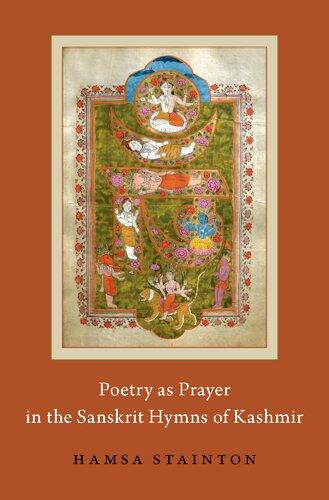
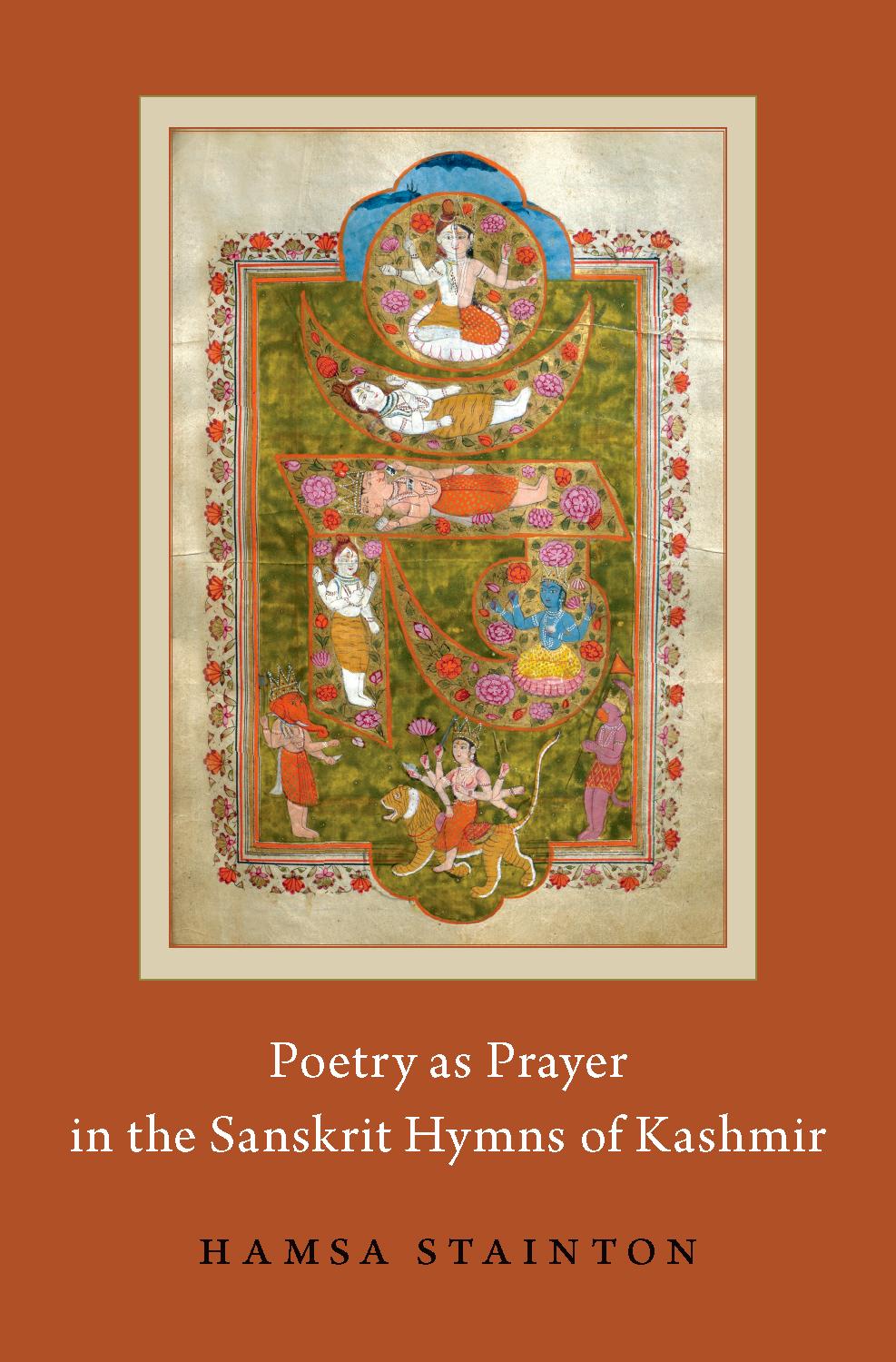
I am also grateful to the many institutions and programs that have supported this project. The Religion Department at Columbia University sponsored a summer research trip in India in 2008 that laid the groundwork. Like many scholars studying India, my research would not have been possible without the support of the American Institute of Indian Studies. In addition to studying in the AIIS Sanskrit program in Pune in 2005, I conducted research in India from August 2010 to June 2011 on an AIIS Junior Research Fellowship. I offer my gratitude to everyone in the AIIS community, and especially to Madhura Godbole, Meenal Kulkarni, Purnima Mehta, Purushottama Bilimale, and Philip Lutgendorf. I also thank the Muktabodha Indological Research Institute for the many resources it makes available to scholars worldwide. At the University of Kansas, this project was supported by a New Faculty General Research Fund Award in 2013, as well as other internal grants for conferences and a pre-tenure research-intensive semester in 2016. This book has also been supported in a variety of ways by McGill University. It is particularly serendipitous that the image on the cover of this book comes from a Kashmirian manuscript of Sanskrit stotras and other devotional works contained in the Indic Manuscript Collection of the Rare Books and Special Collections of the McGill University Library. I thank all the librarians and staff members who helped make this possible. Finally, I thank Brill for permission to reproduce some material from “Stotras, Sanskrit Hymns” in Brill’s Encyclopedia of Hinduism. Volume Two: Sacred Texts, Ritual Traditions, Arts, Concepts (Leiden: Brill Academic Publishers, 2010) here in Chapter 2, and Springer for permission to reproduce some parts of “Poetry as Prayer: The Śaiva Hymns of Jagaddhara Bhaṭṭa of Kashmir” in the International Journal of Hindu Studies 20, no. 3 (December 2016) here in Chapter 5.
While conducting research in India, I visited a number of libraries and manuscript archives, including the Bhandarkar Oriental Research Institute (Pune), the Shri Ranbir Sanskrit Research Institute (Jammu), the Rajasthan Oriental Research Institute (Jodhpur), Adyar Library and Research Centre (Chennai), Sarasvati Bhavan Library at Sampurnanand Sanskrit University (Varanasi), the Oriental Research Library (Srinagar), the Library of the Asiatic Society (Kolkata), and the library and digital archives at the Indira Gandhi National Centre for the Arts (Delhi). I am grateful to the knowledgeable staff at each of these institutions for their valuable assistance. My time in Delhi was much improved by working at the India International Centre and the American Institute of Indian Studies Library in Gurgaon. In Varanasi it was wonderful to be able to work at the Samvidalaya
Acknowledgments
Abhinavagupta Research Library. I also benefitted greatly from workshops sponsored in 2011 by the Indian Institute of Advanced Studies in Shimla and the Indian Council for Philosophical Research in Lucknow.
Many scholars and friends in India have shared their time, knowledge, and hospitality with me and my wife over the years. Meenu, Sudha, and Deepankar were our second family in Delhi. Radhavallabh Tripathi, Vice-Chancellor of the Rashtriya Sanskrit Sansthan, gave freely of his time and expertise to me, both in India and during his trip to Columbia University in 2011. He also introduced me to other scholars relevant to my work, including Ramakantha Shukla, who sang verses from the Stutikusumāñjali for me in Delhi. I thank Advaitavadini
Kaul at the Indira Gandhi National Centre for the Arts for many conversations, e-mails, and collaborations. Despite his busy schedule, Karan Singh took time to meet with me and discuss his experiences and thoughts on Kashmir. I also thank everyone at Swami Lakshman Joo’s Ishwar Ashrams in Delhi and Srinagar.
Navjivan Rastogi led a brilliant workshop in Lucknow, and I am grateful for all of his encouragement. In Pondicherry, Dominic Goodall and everyone at the Institut Français de Pondichéry and the École française d’Extrême-Orient created an exceptional scholastic community, and I have learned much from them not only about Indology but also about productive collaborative research. In Varanasi, the Purohits have always welcomed us like family, and Nihar first introduced me to a number of Indian scholars there. On several occasions I received insightful advice from K. D. Tripathi. I thank Mark Dyczkowski for many enlightening conversations over the years. Bettina Bäumer has been a great friend and mentor, and I also owe her special thanks for introducing me to the Stutikusumāñjali. While in Varanasi, I was often aided in my work by Dilip K. Jaiswal and everyone at Indica Books. Finally, I offer special thanks to Pandit H. N. Chakrabarty. I read Śaiva stotras with him regularly in 2008. He passed away in 2011, but his wisdom and commitment to teaching live on in the many students he mentored so selflessly.
I also offer my gratitude to Gurumayi Chidvilasananda, who taught me to love the music of stotras, explore the meaning of bhakti, and treasure the pursuit of knowledge.
In the years that I have worked on this project, my family and friends have supported me with remarkable patience, confidence, and love. I would not be where I am today without them, and I am grateful to them every day. My sister, Satya, deserves special thanks—not just for being such a supportive sister, but also for being a brilliant and inspiring editor and writer herself. My mother- and father-inlaw have also been special supporters of this book, especially through their help with our children; thank you, Tara and Warren. Most of all, my deepest gratitude goes to my wife Danika. This book has been with us since before we were married. Throughout the years and across multiple continents she has been the embodiment of wisdom, compassion, and love. When I think of how grateful I am to her,
Acknowledgments
I lose my breath. Danika, thank you for sharing this life with me. It is a wonder and a joy.
Finally, my heart overflows as I acknowledge three special people brought together, in some ways, by this book. My mother was the first and biggest supporter of my writing and academic career. She died suddenly in June 2012. She was an extraordinary woman who inspired everyone who met her with her enthusiasm, strength, wisdom, and so much more. I can see what her face would have looked like if she had been able to meet her grandchildren, and it makes me smile. My extraordinary daughters, Ellora and Mirabel, were born in 2013 and 2015. I dedicate this book, with all my love and all my gratitude, to these three beloved beings.
Abbreviations
ANĪSt Ardhanārīśvarastotra of Kalhaṇa
BhASt Bhairavānukaraṇastotra of Kṣemarāja
BhSt Bhairavastotra (=Bhairavastava) of Abhinavagupta
CŚ Caṇḍīśataka of Bāṇa
CSSA Citsphārasārādvaya of Sāhib Kaul
CST Cittasaṃtoṣatriṃśikā of Nāga
DNV Devīnāmavilāsa of Sāhib Kaul
DŚ Devīśataka of Ānandavardhana
HaVi Haravijaya of Ratnākara
ĪPK Īśvarapratyabhijñākārikā of Utpaladeva
KāSt Kālikāstotra of Jñānanetra
KrSt Kramastotra of Abhinavagupta
RT Rājataraṅgiṇī of Kalhaṇa
SĀB Svātmabodha of Sāhib Kaul
SAṢ Sahajārcanaṣaṣṭikā of Sāhib Kaul
ŚāSt Śārikāstava of Sāhib Kaul
SCĀK Saccidānandakandalī of Sāhib Kaul
ŚJD Śivajīvadaśaka of Sāhib Kaul
SKA Stutikusumāñjali of Jagaddhara Bhaṭṭa
SP Sāmbapañcāśikā of Sāmba
ŚSĀ Śivastotrāvalī of Utpaladeva
ŚŚV Śivaśaktivilāsa of Sāhib Kaul
StC Stavacintāmaṇi of Bhaṭṭa Nārāyaṇa
SūŚ Sūryaśataka of Mayūra
VP Vakroktipañcāśikā of Ratnākara
Poetry as Prayer
in the Sanskrit Hymns of Kashmir
Introduction
In India it is not true that all poetry is religious, nor that all religious expression takes the form of poetry; yet the relationship between the two is an especially close one.
Norma N Cutler 1
t he C lose relat I o N sh I p between poetic and religious expression has been a widespread phenomenon across religious traditions, regions, and time periods in South Asia. There is a special appeal to making prayer poetic, and using poetry for prayer. Norman Cutler makes this observation in his work on the poetics of Tamil devotion, but it is just as true in the case of Sanskrit and other languages.
The Sanskrit hymns of praise known as stotras are some of the best examples of this compelling connection. These flexible compositions generally praise and appeal to a divinity with direct, devotional, and poetic language. Stotra literature ranges from simple, formulaic eulogies to sophisticated poetry, from strings of names and epithets to elaborate theological compositions. Some of the most famous authors of premodern South Asia composed their own hymns (or have had multiple hymns attributed to them), while countless other authors remain anonymous or obscure. To this day, stotras remain one of the most prominent ways that Sanskrit enters the religious life of modern Hindus (as well as Buddhists and Jains). Stotras are found in archives and libraries, in personal collections and on temple walls. Often they are memorized. They are recited and sung in both personal and public worship, including during private devotional practice, communal liturgies, temple rituals, and festivals. Stotras have received numerous commentaries and they continue to be composed today. The great versatility of this literary form is one of the main reasons for its enduring popularity. Yet perhaps because of this perception of stotras as “popular” texts, they have not received the serious scholarly attention they deserve.
The present study analyzes the history of literary hymns in Kashmir from the eighth century to the present. It focuses on literary compositions across this
1. Songs of Experience: The Poetics of Tamil Devotion (Bloomington: Indiana University Press, 1987), 111.
timespan that offer insights into the history and nature of the stotra genre itself. Six key elements weave throughout this study and can be disaggregated here at the start.2 First and foremost is the stotra form itself, with its flexible and unique combination of features. As a genre, the stotra raises questions about poetry, poetics, and prayer. Also critical to any interpretation of stotra literature is the category of bhakti, with all its nuances, from devotion and love to sharing and participation. Finally, we must consider the special features of the Kashmir region, for its religious and literary history are the primary contexts for this study.
Stotra
The title of a major collection of stotras published in the twentieth century describes its contents as a “great ocean of hymns.”3 Anyone who embarks on a study of Sanskrit stotras quickly realizes the truth of this assessment, for the quantity and variety of stotra literature seem endless (and for the scholar, perhaps, even treacherous). While focusing on a specific region or tradition, as I do in this book, provides an anchor for interpretation, it will still be valuable to review some general features of the genre.
There is no standard definition of a stotra, despite the common assumption of its stability as a genre. In Chapter 2, I consider several ways of defining and classifying stotras, and I offer my own working definition. Central to any description of stotras is praise; the Sanskrit root for the word stotra, along with its synonyms stuti and stava, is √stu-, “to praise” or “to eulogize in song.” Because stotras are generally offered or sung in praise of a deity or other addressee, they are usually glossed as “hymns of praise.” In other cases, their poetic qualities are emphasized and they are described as “praise-poems.” Such glosses are convenient, and their ambiguity actually mirrors this quality of the term stotra itself, which can be used just as easily to refer to highly personal and refined poetry as to impersonal lists of names; to lengthy, complex compositions or to short, formulaic texts.
Historically, stotras are closely linked to a number of other genres and literary developments. Many stotras share important continuities with Vedic hymns, and they also share features with other lyrical poetry, such as gītās, and specifically with other eulogistic poetry, such as māhātmyas that praise particular places and sites. Stotras have been popular across traditions and communities, and there are shared patterns between hymns composed by Buddhists, Jains, Śaivas, Vaiṣṇavas, and so on. Many stotras are found within larger compositions, including various
2. Additional concepts, like theology and tradition, are central to the arguments of specific chapters and are considered therein.
3. N. R. Ācārya, ed., Bṛhatstotraratnākaraḥ, Vols. 1–2 (Varanasi: Chaukhambha, 1983); see also Rāmateja Pāṇḍeya, ed., Bṛhatstotraratnākaraḥ (Varanasi: Chaukhambā Vidyābhavan, 2005).
recensions of the Mahābhārata and Rāmāyaṇa, most Purāṇas, Tantras, and Āgamas, and many of the “great poems” (mahākāvya) of classical Sanskrit. The concerns and strategies of Sanskrit stotras also overlap considerably with forms of vernacular poetry generally analyzed in terms of devotion (bhakti).
The formal features and functions of stotra literature vary widely. Some, like the majority of those discussed in this study, aspire to the same poetic standards as elite Sanskrit literature (kāvya) and are replete with literary ornaments (alaṅkāras). Other stotras, of varying poetic quality, seem to function as expanded verses for the visualization of and meditation on a deity (dhyāna) found in many Sanskrit scriptures. The concluding or postscript verses of some stotras, which generally describe the manner and benefits of reciting that hymn, sometimes suggest that a particular hymn should also be interpreted like a mantra, in which the style and number of repetitions is critical to the efficacy of that hymn. This is true, for example, for many nāmastotras, hymns that consist almost exclusively of names of a deity. Other hymns present themselves as verbal amulets or armor that protect the reciter from various types of harm. A far cry from these protective hymns are those often designated as vedāntastotras that prioritize the didactic explication of theological positions. Some stotras seem designed specifically for liturgical worship, including as key components of the daily worship schedule of a temple or the periodic worship activities of a community, such as a weekly service. Sometimes stotras are linked explicitly with icons at particular temples, while more often it is difficult to locate where and how they were recited over the centuries. In each of these cases, the addressees can vary widely. Most hymns praise specific deities, either directly or indirectly, but some isolate individual features to address (such as a deity’s foot as a metonym for divine grace), or even aim to turn the reciter’s devotional gaze inward at his or her own mind or consciousness (as Nāga does in his Cittasaṃtoṣatriṃśikā, discussed in Chapter 4).
In recent years, scholars have begun to adopt approaches to stotra literature that reflect the complexity and creativity of their subjects. Some have focused on how stotras make interventions in religious contexts as theological texts;4 others have considered the pedagogical potential of the stotra form.5 In some regions authors composed Sanskrit stotras alongside devotional poetry in other languages,
4. Most notably: Friedhelm Hardy, “The Philosopher as Poet: A Study of Vedāntadeśika’s Dehalīśastuti,” Journal of Indian Philosophy 7 (1979): 277–325; Nancy Ann Nayar, Poetry as Theology: The Śrīvaiṣṇava Stotra in the Age of Rāmānuja (Wiesbaden: Otto Harrassowitz, 1992); and David Buchta, “Pedagogical Poetry: Didactics and Devotion in Rūpa Gosvāmin’s Stavamālā” (Ph.D. diss., University of Pennsylvania, 2014).
5. See Yigal Bronner, “Singing to God, Educating the People: Appayya Dīkṣita and the Function of Stotras,” Journal of the American Oriental Society 127, no. 2 (2007): 113–130; Christian K. Wedemeyer, “Appraising Praises: Buston’s ‘Praise Entitled “All Wishes Fulfilled” ’ and its Genre in South Asian Buddhist Literature,” in In Vimalakīrti’s House: A Festschrift in Honor of Robert A.F. Thurman on the Occasion of his 70th Birthday, ed. Christian K. Wedemeyer, John D. Dunne, and Thomas F. Yarnall (New York: The American Institute of Buddhist Studies at Columbia University in New York, 2015); and Buchta, “Pedagogical Poetry.”
such as Tamil, and in close relationship to other types of texts.6 By moving beyond general surveys and translations of individual texts (though these have certainly been valuable), recent scholarship on stotras has begun making new strides in appreciating both continuities across stotra literature in South Asia and the distinctive features of such compositions in specific regions.
The general corpus of Sanskrit stotras may be like a great ocean, but the stotras that were composed and circulated in Kashmir would form their own inland sea. Hundreds of unpublished stotras sit in various archives that may have been composed or popular in Kashmir. Most of these have no known author and are said to belong to larger scriptures, such as the Bhṛṅgīśasaṃhitā. Moreover, the literary quality of these stotras varies significantly, and their dates of composition remain difficult to determine. In general, there is a divide between most of these anonymous, unpublished hymns and those composed by various religious and literary luminaries in Kashmir over the centuries. Throughout this book I focus on those stotras, mostly from the latter of these two categories, whose authors show commitment to the literary quality of their hymns. In part, this is because my primary concern is the stotra genre itself and its unique combination of literary and religious features. But creative engagement with literary conventions and a dynamic literary culture is also one of the distinguishing features of the most well-known and popular Kashmirian stotras. There are many such hymns from Kashmir, and usually their authors are identified; occasionally they are attributed to a semi-mythical figure. The hymns that I study in detail are often self-consciously poetic and ambitious. Their authors are familiar with literary conventions and often engage with them in innovative ways. Studying these hymns both raises and allows us to address the questions about the relationship between literary and religious expression at the heart of this book—questions about poetry as prayer.
Poetry and Poetics
Poetry has been well represented within religious traditions in South Asia. In general, such heightened use of language is set apart from normal speech. As Frank Burch Brown observes, “in a variety of ways poetry estranges itself from the familiar and creates a measure of creative disorientation.”7 Poetry highlights a dichotomy that has been discussed in varying terms—the dichotomy of imagination
6. E.g., Steven Paul Hopkins, Singing the Body of God: The Hymns of Vedāntadeśika in Their South Indian Tradition (Oxford: Oxford University Press, 2002).
7. Frank Burch Brown, “Poetry: Poetry and Religion,” in The Encyclopedia of Religion, Vol. 11 (2nd ed.), ed. Lindsay Jones (Detroit: Macmillan Reference, 2005), 7204.
and information, the “workly” and the documentary, expression and content, and so on.8
In India, poetry (kāvya) has been theorized from its beginnings as a special, distinct kind of composition. Kāvya too distinguishes itself from the ordinary usage of language. In a discussion of innovations within Indian aesthetics and literary theory, Sheldon Pollock notes:
With its figures of sense and sound and intentionally patterned sound qualities differentiating it from all other forms of usage, literary language, we might say, defamiliarizes the discourse so as to differentiate it from the everyday world and its real referentiality [ . . ]9
It is not surprising that religious traditions have harnessed the power of literary language to “defamiliarize” or “estrange.” This disorientation allows for new kinds of orientation, giving poetic language the potential to facilitate personal transformations, theological reflection, the formation of communities, and a variety of other functions within specific contexts.
While the earliest hymns of the Ṛgveda are metrical and poetic, both the Sanskrit literary tradition and modern scholarship recognize the beginnings of a new type of literature called kāvya around the time of the composition of Vālmīki’s Rāmāyaṇa. According to the Sanskrit literary tradition, Vālmīki was the first poet (ādikavi), and his epic poem describes the origins of literature and its paired emphasis on sound and sense in one of its most famous passages.10 In his analysis of the beginnings of Sanskrit literature, Pollock argues for a remarkable expansion of the Sanskrit literary world around the beginning of the Common Era, when Sanskrit shifted from the language of liturgy to the language of literature, and particularly to being a literary language closely related to political self-presentation.11
Kāvya itself is a complex category. There is no single canonical definition, and the first evidence we have for the theorization of kāvya comes surprisingly late,
8. See Sheldon Pollock, The Language of the Gods in the World of Men: Sanskrit: Culture, and Power in Premodern India (Berkeley: University of California Press, 2006), 3.
9. “What Was Bhaṭṭa Nāyaka Saying? The Hermeneutical Transformation of Indian Aesthetics,” in Epic and Argument in Sanskrit Literary History: Essays in Honor of Robert P. Goldman, ed. Sheldon Pollock (Delhi: Manohar, 2010), 147.
10. See the discussion and relevant citations in Chapter 6.
11. Language of the Gods in the World of Men, 75. According to Pollock, until that time Sanskrit had been socially bounded through “ritualization (the restriction of Sanskrit to liturgical and related scholastic practices) and monopolization (the restriction of the language community, by and large, to the ritual community)” (ibid., 12).
in the seventh century CE.12 Most definitions and descriptions of kāvya focus on the special relationship between word and meaning in such compositions. What is important in poetry is not just what one says, but how one says it. Discussions of kāvya use various classifications to map a complex literary landscape. Kāvya is often used to mean literature in a broad sense, but sometimes it is used specifically to mean literature that is read or recited but not staged. Kāvya in this narrower sense—literature as opposed to drama—is generally subdivided into prose, verse, and mixed forms, which are further subdivided. Verse poetry includes both the lengthy narratives with internal divisions known as “great poetry” (mahākāvya or sargabandha) and some category of shorter poetry (e.g., laghukāvya, khaṇḍakāvya, muktaka). “Great poems” like the Raghuvaṃśa and Kumārasaṃbhava of Kālidāsa have long been celebrated as exemplars of Sanskrit literature, but short poetic works also have been very popular since the early days of kāvya. As an umbrella category, kāvya includes a variety of compositions that adhere to conventional literary standards, such as the use of poetic figures, careful construction of poetic structure, and attention to both words and their meaning (such as speaking indirectly, avoiding redundancies, and so on).
As one would expect (but scholarship often ignores), the capacities and resources of Sanskrit as a literary language evolved over the course of its history. As Yigal Bronner has argued persuasively, Sanskrit was not simply equipped with a natural potential for certain kinds of complex literary expression. Rather, its capacities were actively developed and cultivated by a variety of literary and hermeneutic practices, from the creation of lexicons to the composition of commentaries. Developments like the “movement of simultaneous narration” (śleṣa) that Bronner has charted represent the accumulation of linguistic and conceptual resources for Sanskrit as a literary language.13 Thus, the history of kāvya is closely tied to developments within a number of other discourses in South Asia, including grammar, prosody, etymology, lexicography, hermeneutics, and the philosophy of language.
But it is the discipline of poetics and literary theory (alaṅkāraśāstra) that is most closely associated with the history and reception of kāvya. The earliest formal analysis of aesthetics anywhere in South Asia is found in Bharata’s Nāṭyaśāstra (c. 300 CE?), which presents a systematic theory of drama (nāṭya) and introduces many of the ideas and terms that have continued to be debated within Indian
12. This evidence is the works of Bhāmaha and Daṇḍin. For a list of prominent definitions of kāvya, see Sigfried Lienhard, History of Classical Poetry: Sanskrit, Pali, Prakrit (Wiesbaden: Harrassowitz, 1984), 11n30.
13. Yigal Bronner, Extreme Poetry: The South Asian Movement of Simultaneous Narration (New York: Columbia University Press, 2010), especially 13–16. By the second millennium of the Common Era, the aesthetic power of Sanskrit had been greatly expanded. The growing popularity of simultaneously narrating the Rāmāyaṇa and the Mahābhārata that Bronner studies is one example; others include experiments with citrakāvya and transformations in the field of literary theory and criticism.
aesthetics down to the present day, especially rasa (“taste”) and its related aesthetic factors. The discourse on poetics and literary theory (alaṅkāraśāstra) assimilated components of the theories of drama in the Nāṭyaśāstra several centuries later.14 This collective tradition of aesthetic discourse focused on the formal features of the work of art. For poetics, this meant the focus was primarily on classifying, defining, and illustrating individual “ornaments” of speech (alaṅkāras) as comprehensively as possible.
A number of developments within Sanskrit poetics advanced by authors in Kashmir from the end of the eighth century onward had dramatic consequences on the trajectory of aesthetics in South Asia. These included a push for systemization, the incorporation of semantic theories, and a new focus on the audience’s subjective reception of a poem or play.15 One of the most influential examples of new directions in Sanskrit poetics is the ninth-century Dhvanyāloka16 of Ānandavardhana. Here, Ānandavardhana applies theories about the teleological analysis of texts from Vedic hermeneutics (Mīmāṃsā) to the interpretation of poetry. In particular, he argues that the key to understanding poetry is the analysis of how a unique semantic process called suggestion (dhvani) is used to communicate one overarching aesthetic taste (rasa) for a given work.17 For Ānandavardhana, poetic ornaments (alaṅkāras) are important but ultimately secondary to the emotional content of a poem.
Ānandavardhana is just one of the impressive collection of authors who pursued important literary agendas in Kashmir. Some of them expanded and revised Ānandavardhana’s groundbreaking ideas, and some rejected them or went in altogether different directions. Bhaṭṭa Nāyaka (c. 90018), who criticized Ānandavardhana, brought about a lasting transformation in aesthetic discourse by shifting the focus of analysis from the characters of the play or work of
14. Sheldon Pollock, A Rasa Reader: Classical Indian Aesthetics (New York: Columbia University Press, 2016), 6–7.
15. See Yigal Bronner, “Sanskrit Poetics,” in The Princeton Encyclopedia of Poetry and Poetics (4th ed.), ed. Roland Greene and Stephen Cushman (Princeton, NJ: Princeton University Press, 2012), for an overview of the history of Sanskrit poetics, and pp. 1245–1248 for the discussion of these developments in Kashmir.
16. Though this is how the text is commonly known, Daniel H. H. Ingalls has argued persuasively that its original title was most likely Sahṛdayāloka (Daniel H. H. Ingalls et al., trans., The Dhvanyāloka of Ānandavardhana, with the Locana of Abhinavagupta [Cambridge, MA: Harvard University Press, 1990], 12–13).
17. Lawrence McCrea, The Teleology of Poetics in Medieval Kashmir, Harvard Oriental Series 71 (Cambridge, MA: Published by the Dept. of Sanskrit and Indian Studies, Harvard University; Distributed by Harvard University Press, 2008), 442.
18. Bhaṭṭa Nāyaka’s specific dates are uncertain; he wrote sometime between 875 and 975 CE, but most likely around 900 CE (Pollock, “What Was Bhaṭṭa Nāyaka Saying?,” 138, and Rasa Reader, 144–145).