Great Clarendon Street, Oxford, ox2 6dp, United Kingdom
Oxford University Press is a department of the University of Oxford. It furthers the University’s objective of excellence in research, scholarship, and education by publishing worldwide. Oxford is a registered trade mark of Oxford University Press in the UK and in certain other countries
All rights reserved. No part of this publication may be reproduced, stored in a retrieval system, or transmitted, in any form or by any means, without the prior permission in writing of Oxford University Press, or as expressly permitted by law, by licence or under terms agreed with the appropriate reprographics rights organization. Enquiries concerning reproduction outside the scope of the above should be sent to the Rights Department, Oxford University Press, at the address above
You must not circulate this work in any other form and you must impose this same condition on any acquirer
Published in the United States of America by Oxford University Press 198 Madison Avenue, New York, NY 10016, United States of America
British Library Cataloguing in Publication Data
Data available
Library of Congress Control Number: 2021930514
ISBN 978–0–19–886832–3
DOI: 10.1093/oso/9780198868323.001.0001
Printed and bound by CPI Group (UK) Ltd, Croydon, cr0 4yy
Links to third party websites are provided by Oxford in good faith and for information only. Oxford disclaims any responsibility for the materials contained in any third party website referenced in this work.
In memory of Jon Stallworthy, with gratitude for his caring intellect, his warmth, and his deeply enriching friendship
PREFACE
My father, his jailer, and I, a fine triangle. Time on my side, I fling this stone of (rescued?) memory, Into the river where you cannot step twice.1
Thetask before me concerns the experience and the energies of three words which have shaped the content and the form of my writing, the private and the public aspects of my work, the precision and the imprecision of language. The words are: ‘repression’, ‘oppression’, and ‘expression’. They meet in an equilateral triangle, with ‘expression’ at the base, the ‘oppression’ and ‘repression’ coming together at the top. The Oxford English Dictionary defines ‘repression’ (noun) as derivative of the verb ‘repress’ which means to ‘subdue (someone or something) by force; restrain or prevent (the expression of a feeling); suppress (a thought, feeling, or desire) in oneself so that it becomes or remains unconscious; inhibit the natural development of self-expression (of someone or something)’; ‘oppression’ (noun) as ‘prolonged, cruel, or unjust treatment or exercise of control or authority; the state of being subject to such treatment and exercise of authority; mental pressure or distress’; and ‘expression’ (noun) as 1. ‘the process of making known one’s thoughts or feelings; the look on someone’s
1 Carmen Bugan, from ‘ “Butnaru” at the visit with his daughter’, in Releasing the Porcelain Birds: Poems After Surveillance (Swindon: Shearsman, 2016), p. 23.
face seen as conveying a particular emotion; a word or phrase, especially an idiomatic one, used to convey an idea; the conveying of feeling in a work of art or in the performance of a piece of music’; and 2. ‘the production of something especially by pressing or squeezing it out’.
Repression, oppression, and expression are conditions of our existence that involve provocation and response, a constant movement and change which have to do with outer and inner pressure, with a fight between acceptance and resistance, and with having or lacking a sense of agency. By coincidence, these words are morphologically and etymologically related (they all have a sense of pressure) and they are a part of my life, as great forces, in the same way the lines of the triangle touch each other. My own experience of growing up under oppression serves as a starting point from which I can ask specific questions about several aspects of the language of poetry, especially concerning the creative process. Writing from life experience presents one with the task best expressed by Antoine de Saint-Exupéry in his memoir Wind, Sand, and Stars, where he faced the struggle of locating the appropriate language that would convey how he survived being blown to sea by a cyclone off the coast of Argentina: ‘That is my story. And it is not a story.’ The confines of language are very tight: one writes a story (which is commonly understood as a construction of language) about something that is not imagined, but lived through. The story is written from the perspective of being transformed both by the life experience and the experience of working with language, which is slippery and imprecise. SaintExupéry explains: ‘You cannot convey things to people by piling up adjectives, by stammering.’ In narrating the experience for others, something more is needed: ‘[T]he man who fought tooth
and nail against that cyclone had nothing in common with the fortunate man alive the next day. . . . The physical drama itself cannot touch us until someone points out its spiritual sense.’2 How one places and resuscitates the actual lived experience (whatever that is) in literary language is, to my mind, every writer’s most difficult undertaking.
The question at hand is how to break the triangle that has shaped my own life so that meaningful expression can be fully achieved. Each line has two sides, an internal one (private—dealing with the effects of oppression/repression and writing for the family) and the external side (the public—dealing with published writing, the larger historical context, and literary tradition). No work of literature ever brought injustice to an end even when it stood in direct confrontation to it. But one can extend the base of the triangle (the ‘lyric I’ in the poem above) until the sides collapse entirely and an awareness of injustice enters literary language without corrupting it. Thus, the experience of oppression becomes part of one’s work without suffocating it, part of the freedom one achieves, without impinging on it.
The current undertaking strives to locate specific resources in the lyric language which can be used to press against the language of oppression so that they can help ‘to realize a greater good or avoid a greater evil’, as Aristotle said in his note on ‘The Representation of Evil’.3 Though the most urgent desire is selfliberation, the most ardent ambition is to find in language the tools with which to counteract injustice. Such desires and ambitions may
2 Antoine de Saint-Exupéry, Wind, Sand, and Stars, trans. Lewis Galantière (New York: Harcourt, 1967), pp. 61–2.
3 Aristotle, On Poetry and Style, trans. G.M.A. Grube (Indianapolis: Hackett, 1958), p. 56.
remain elusive but the question must be asked: ‘What does one want from language?’ As I write this, I am reminded of Czeslaw Milosz’s honesty: ‘When I wrote in the introduction to Rescue that I accepted the salvational goal of poetry, that was exactly what I had in mind, and I still believe that poetry can either save or destroy nations.’4 I wonder who wouldn’t live for a reward such as this, especially when one knows intimately what it feels like to visit a father in chains, to lose a country, to abandon the mother tongue because it has become suffocating? And who wouldn’t want to save nations, when the world suffers in so many ways, when one has children for whom she dreams a gentler life?
But what does it take, I wonder, to maintain such a belief in poetry? And if one doesn’t wholeheartedly hold a strong belief about language, whatever that belief is, is it worth writing at all? I am guided by Matthew Arnold’s definition of poetry as ‘a criticism of life’ and his sense that the poet is to be judged by the ‘powerful and beautiful application of ideas to life—to the question: How to live’. Arnold sees the need for a moral dimension of poetry, which I find indispensable in my own writing:
the best cure for our delusion is to let our minds rest upon that great and inexhaustible word life, until we learn to enter into its meaning. A poetry of revolt against moral ideas is a poetry of revolt against life; a poetry of indifference towards moral ideas is a poetry of indifference towards life.
Equally forceful is his observation on the job of the poet: ‘You have an object, which is this: to get home, to do your duty to your
4 Czeslaw Milosz, To Begin Where I Am, ed., Bogdana Carpenter, trans., Madeline G. Levine (New York: Farrar, Straus and Giroux, 2002), pp. 350–1.
family, friends and fellow-countrymen, to attain inward-freedom, serenity, happiness, contentment.’5
Poetry and the Language of Oppression will raise more questions than offer answers; and new questions will surface as part of a continuous search into the creative process inspired by the hope that poetry is of real help in providing an illumination of life. Oppression, repression, expression, as well as their tools (prison, surveillance, gestures in language) have been with us in various forms throughout history, so what I am about to say in this book is nothing new. Milosz’s belief is lofty, I know, but every step towards the healing resources of language will be a way forward. What I have to say here represents a particular aspect of these conditions of our humanity as they play out in our time, so it provides another instance of the communion, and sometimes confrontation, with the language that makes us human.
C.B., Stony Brook, 9 July 2020
5 Matthew Arnold, ‘Wordsworth’, in The Norton Anthology of English Literature, Sixth Edition, Vol. 2, ed. M.H. Abrams (New York: W. W. Norton, 1193), p. 1413.
ACKNOWLEDGEMENTS
I thank Germina Nagât at Consiliul Nat ional Pentru Studierea Arhivelor Securitat ii (CNSAS) in Bucharest for giving me access to the archive of surveillance documents on my family and for reassuring me that I can publish the entirety of the archive, without the need to redact the names of people in the files. The document cited by CNSAS is OUG24/2008 approved by Law 293/2008 available in ‘Monitorul Oficial’. The CNSAS does not provide individuals with written permission to publish family surveillance archives: the rights belong to families who were subjected to surveillance and have obtained the documents. I thank my family for allowing me to publish the excerpts from our archive that appear in the current book in my literal translation. The language of the translations reflects the secret police-speak in the original files: I made no effort to correct the grammar or improve the flow of the transcripts.
I am grateful to the University of Michigan, LSA Honors Department, for the invitation to Ann Arbor as the 2018 Helen DeRoy Professor in Honors, where I delivered a series of public lectures on Poetry and the Language of Oppression: I enjoyed a warm welcome from Lisa Broome and Mika LaVaque-Manty and had several very lovely conversations with Donna Wessel Walker over coffee. I thank Carl Schmidt for editing the lectures, and then editing the final draft of the book: he has remained a stalwart reader of my work, giving not only advice but also the love and support which have nourished my writing over many years.
I thank Gerard Lally at the St. Edmund’s Hall Writers’ Forum at Oxford University for helping me bring the Michigan lectures from their spoken register to the page. Thanks are due to Lucy Newlyn for her wonderful insights on several issues raised in the early versions of these lectures. Many thanks to Christopher Ricks, who has sustained me in so many ways since I have returned to America: I am grateful for the formative conversations about this book as I set out to write it.
I am grateful to Elleke Boehmer at the Oxford Centre for LifeWriting (OCLW), to the Association of Literary Scholars, Critics and Writers (ALCSW), and to The Power of Storytelling (Bucharest, Romania) for inviting me to talk about aspects of writing in the context of politics, oppression, and exile.
I wish to express heartfelt gratitude to Oxford University Press and especially the two anonymous readers who supported this proposal. No book would have been possible without my editor, Jacqueline Norton, who has made the dream of bringing this book to the readers a reality. I am deeply grateful for her enthusiasm and her encouraging words. It was a pleasure to work with Aimee Wright, Patrick Wright, and S. Kabilan during the various stages of the book production.
And finally, my husband and children have provided the cheering on, the ‘Is it finished, yet?’ daily questioning, and lots of fun to keep me going.
Permissions
Thanks are due to the following publications: Shearsman Books https://www.shearsman.com/has granted kind permission to reprint poems from my collections as follows: ‘Visiting the country of my birth’, ‘The names of things’, ‘The
The following poems from Crossing the Carpathians (Manchester: Carcanet/Oxford Poets, 2004): ‘The demonstration’, ‘In the silent country’, ‘Fertile ground’, ‘Portrait of a family’, and ‘The divorce’ are reproduced by kind permission of Carcanet Press Ltd. https:// www.carcanet.co.uk/cgi-bin/indexer?product=9781903039687
Harvard Review Online https://www.harvardreview.org/has granted kind permission to use the text of my reviews of the following books: George Szirtes, New and Collected Poems (Hexam: Bloodaxe Books, 2009); Carolyn Forché, What You Have Heard Is True (New York: Penguin Press, 2019); Hisham Matar, The Return (New York: Radom House, 2016), Rebecca Loncraine, Skybound (London: Picador, 2018); and Meena Alexander, Atmospheric Embroidery (Evanston, IL: Northwestern University Press, 2018). Amendments to the texts have been made.
An earlier version of my discussion of Wole Soyinka’s poetry was first published in June 2015 in PEN Transmissions https://pentransmissions.com/(formerly PEN Atlas), English
acknowledgements xv house of straw’, ‘From the beginning’, from The House of Straw (Swindon: Shearsman, 2014); ‘“Butnaru” at the visit with his daughter’, ‘The prisoner’s scribe allowance’, ‘We are museums’, ‘The house founded on elsewhere’, ‘A birthday letter’, ‘A walk with my father on the Iron Curtain’, from Releasing the Porcelain Birds (Swindon: Shearsman, 2016); ‘Rings’ and ‘Penn Station, NY’, from Lilies from America (Swindon: Shearsman, 2019).
PEN’s magazine of international and translated writing as ‘Wole Soyinka’s poetry: the insistence of liberty’. Grateful thanks to the editors for the kind permission to reprint.
The Manhattan Review https://themanhattanreview.com/reviewssummary published my review of George Szirtes’ memoir The Photographer at Sixteen (London: Quercus, 2019), a slightly modified version of which appears in this book.
‘Lumina Mea’ was originally commissioned and printed by MONK magazine, the new platform for exploring consciousness, spirituality and the arts/www.monk.gallery Grateful thanks for the permission to reprint are due to the editors.
Excerpts from George Szirtes’ work are printed with kind permission from the author: grateful thanks.
Excerpts from Meena Alexander’s poetry are printed with kind permission from David Lelyveld and Northwestern University Press: grateful thanks.
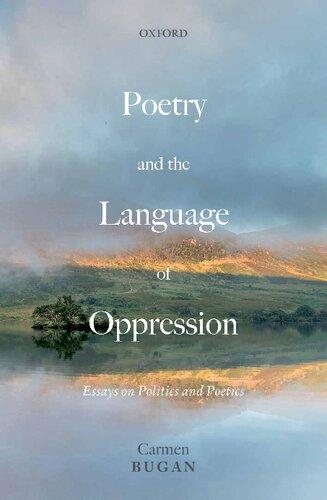
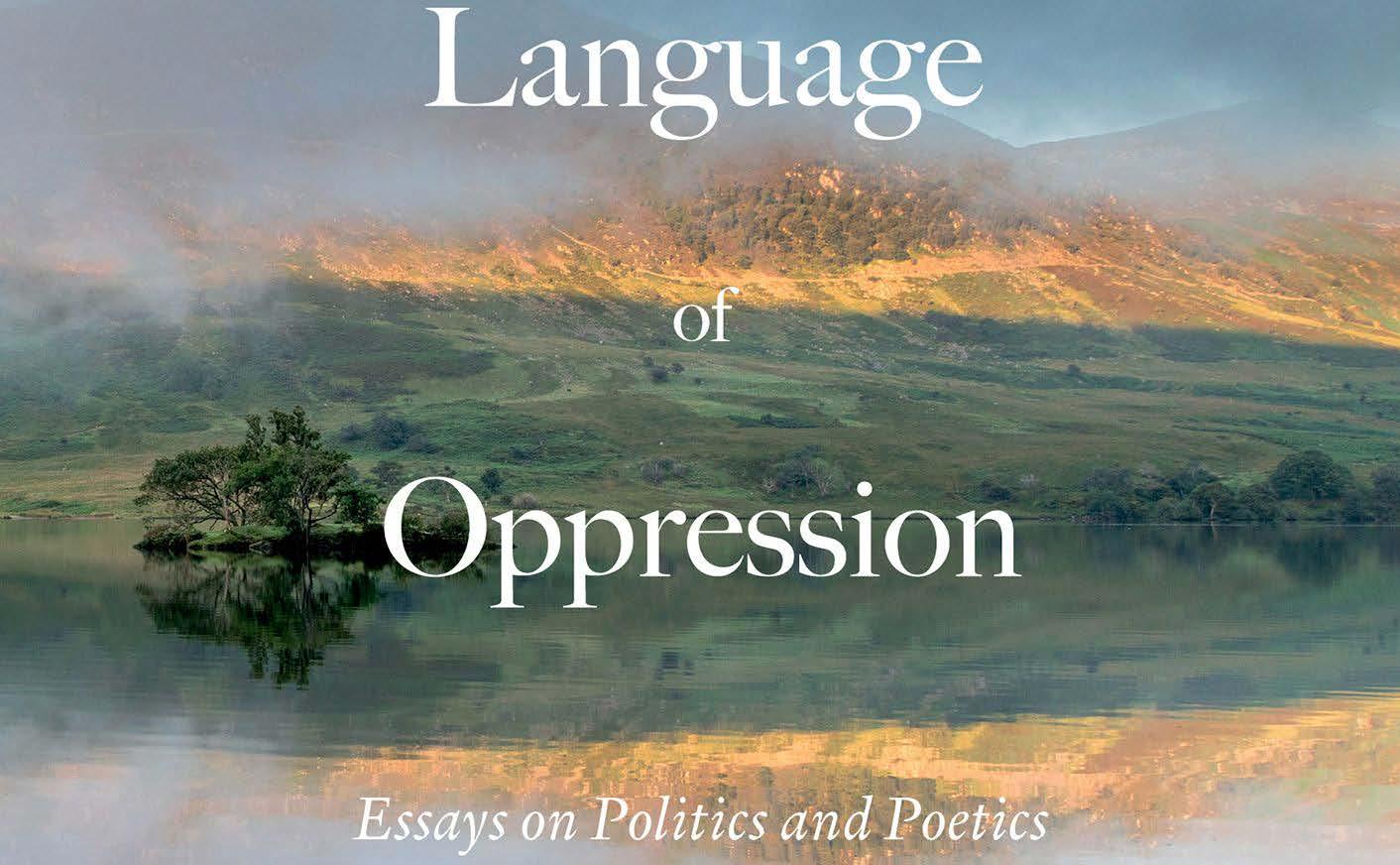
Excerpts from Wole Soyinka’s poems are printed with kind permission from Methuen: grateful thanks. Finally, special thanks to Andrew Locking for his kind permission to use the stunning cover image. https://www.andrewswalks.co.uk/
INTRODUCTION
‘Visiting
the country of my birth’
Visiting the country of my birth
The tyrant and his wife were exhumed For proper burial; it is twenty years since They were shot against a wall in Christmas snow.
*
The fish in the Black Sea are dead. Waves roll them To the beach. Tractors comb the sand. We stand at water’s edge Whispering, glassy-eyed, throats parched from heat.
Stray dogs howl through nights like choirs Of mutilated angels, circle around us on hill paths, Outside gas stations, shops, streets, in parking lots.
Farther, into wilderness, we slow down where horse And foal walk home to the clay hut by themselves, Cows cross roads in evenings alone, bells clinking.
People sit on wooden benches in front of their houses, Counting hours until darkness, while Shadows of mountains caress their heads.
On through hot dust of open plain, to my village: A toothless man from twenty years ago Asks for money, says he used to work for us.
I am searching for prints of mare’s hooves in our yard Between stable and kitchen window, now gone With the time my two feet used to fit inside one hoof.
We sit down to eat on the porch when two sparrows Come flying in circles over the table, low and fast, happily!
‘My grandparents’ souls’, I think aloud, but my cousin says:
‘No, the sparrows have nested under eaves, look Past the grapevine.’ Nests big as cupped hands, twigs And straw. Bird song skids in the air above us.
Into still-remaining rooms no sewing machine, Or old furniture with sculpted flowers on walnut wood.
No rose bushes climbing window sills, outside.
And here, our water well, a vase of cracked cement. Past Ghosts of lilac, pear, and quince in the sun-bitten yard, I step On re-imagined hooves, pull the chain, smell wet rust.
Unblemished sky ripples inside the tin bucket, Cradled in my arms the way I used to hold Warm goose eggs close to skin so not to break them:
‘The earth will remember you’, my grandparents once said. Here, where such dreams do not come true, I have come To find hoof-prints as well as signs from sparrows.1
Tomy knowledge, no poet ever changed the course of history, but many dictators did. Poets and dictators, however, have had a long relationship: sometimes they cooperated, especially when poets enjoyed being held in high regard by the powerful; often they clashed, because poets have protested against injustice. Both poets and dictators have an exceptional facility with the language of feelings, valour, and aspirations. They also know that freedom is the soul of humanity and that people are willing to die
1 Carmen Bugan, The House of Straw (Swindon: Shearsman, 2014), pp. 72–3.
and kill for ideas held with the strength of convictions. And they know that the battle for the soul begins and ends in language, in particular words, often with the same word that serves the oppressor and the oppressed alike: for example, ‘heroism’, or ‘power’, or ‘freedom’, or ‘patriotism’. As the editors of Tyrants
Writing Poetry, Konstantin Kaminskij and Albrecht Koschorke show, ‘Political authority and literary auctoritas’ enjoyed a ‘symbiosis’ in antiquity, in which the political sovereign created ‘a world from deeds’ and the poet created ‘a world from words’, setting a precedent for more recent times.2 Indeed, Virgil acknowledges and praises linguistic authority in The Aeneid, explaining the power of words to govern people. He gives us an indication of the speaker’s character, which informs the public role of poetry:
As when disorder arises among the people of a great city and the common mob runs riot, wild passion finds weapons for men’s hands and torches and rocks start flying; at such a time if people chance to see a man who has some weight among them for his goodness and his services to the state, they fall silent, standing and listening with all their attention while his words command their passions and soothe their hearts.3
The tyrant-poets are many, from Nero to Stalin and the contemporary Bosnian Serb war criminal Radovan Karadžic (born 1945) who saw himself as a poet-warrior, re-casting his brutality in lofty language. The tyrant-poets like to see themselves as originators of ideals and as makers and enforcers of social order. They find the eloquent language of poetry conducive to their self-image as
2 Konstantin Kaminskij and Albrecht Koschorke, eds., Tyrants Writing Poetry: The Art of Language and Violence (Budapest, Hungary: Central European University Press, 2017), pp. IX–X.
3 Virgil, The Aeneid, Book I: 148–153, revised edition, trans., David West (London: Penguin, 2003), p. 7.
people of elusively untouchable social authority. For their own part, poets, even though they traditionally set themselves in opposition to tyrants, vie for the same language of patriotism, nobility, and liberty, which places their work on the public stage, where it receives scrutiny for its political tendencies and values. This book is not about poetic freedom in the sense of claiming freedom for poetry, freeing poetry from internal or state censorship, though much will be said about that aspect of the subject. Furthermore, it is not about what becomes of lyrical poetry when it is placed under external or internal political pressure, or about the deep commitment to art for art’s sake that has led many poets into exile, though much will be said about this also. And it is not about poet-heroes who endured hardship because they wrote to oppose tyranny. Rather, the following chapters are about the nature of poetry as a form of salvation—from political oppression. By salvation, I mean a sense of recovering aspects of life and freedom which are linked to political persecution embedded in language. What the chapters are intended to convey is a sense of poetry as deeply linked to personal biography, where commitment to the lyric language—the language of feelings, of emotions from the ‘deep self’,4 expressed through various poetic devices and figures—is a direct response to the language of political oppression and has become something to be relied upon in order to write oneself into freedom. The aim of this book, therefore, is to talk about politics as a provocation to write oneself free; my concern is not with an attempt to free poetry from oppression, or
4 ‘From the depths of the self we rise to a concurrence with that which is notself.’ I will return to this idea of writing that achieves harmony between the inner world and the outer world of language and experience. See Geoffrey Hill, ‘Poetry as “Menace” and “Atonement” ’, in Collected Critical Writings, ed., Kenneth Haines (New York: Oxford University Press, 2008), p. 4.
Poetry, politics, freedom, and oppression will be considered through their manifestations in language that governs our private and public lives. We are born into language and words shape how we understand the world and our place in it. Here I meditate on language in our time, and on how, in the words of George Steiner, we ‘can use human speech both to love, to build, to forgive, and also to torture, to hate, to destroy and to annihilate’.5 Language, in this sense, is itself a manifestation of our human condition. Geoffrey Hill expressed this inherent sense of language as containing both menace and atonement in his essay ‘Poetry as “Menace” and “Atonement” ’. He wrote, ‘It is one thing to talk of literature as a medium through which we convey our awareness, or indeed our conviction, of an inveterate human condition of guilt or anxiety; it is another to be possessed by a sense of language itself as a manifestation of empirical guilt.’6 Language is imbued with a history of experience, and poetry is not autotelic. In this context, I treat writing as a process by which one achieves freedom and clarity through a hard-won simplicity. As T.S. Eliot said in his poem, ‘East Coker V’, about writing, one attempts to ‘recover what has been lost’ and gains mastery over language, ‘By strength or submission’. To my mind, the craft of writing, like all other crafts, is a process of invention and discovery, where, in the words of Antoine de
5 D.J.R. Bruckner, ‘Talk with George Steiner’, The New York Times, May 2, 1982, Section 7, p. 13. Accessed online, 5 May 2020. https://www.nytimes.com/1982/ 05/02/books/talk-with-george-steiner.html.
6 Hill, ‘Poetry as “Menace” and “Atonement” ’, pp. 8–9.
5 with freeing poetry from political language, or indeed with arguing for one political system as against another. It is in this specific sense of ‘writing oneself free’ that I want to think about the relationship between poetry and politics.
Saint-Exupéry, ‘the perfection of invention touches hands with absence of invention, as if that line which the human eye will follow with effortless delight were a line that had not been invented but simply discovered.’7
‘Home is where one starts from’,8 says Eliot in the same poem, and there is where I shall start. The considerations of language in these chapters unfold through the story of visiting the country of my birth, the Romania of communist repression of the 1960s through the 1980s, which occasions a revisiting of my sense of personal and poetic identity. I say ‘visiting’ because I am an exile, and because the return concerns time and language. This visit to my country was first effected by reading the secret police (or Securitate) transcripts of my childhood. The transformation that the reality of the files, and their language, enact on the poetic language is profound. I acknowledge the anxiety in the way I write, to show how the language of the files drowns the voice in the poems, for the truth is that the files draw me out of a carefully built sense of who I have become after leaving Romania and immerse me in their content and non-emotional, yet devastating, language. I write against dictatorship, using the words of the dictator.
7 Antoine de Saint-Exupéry, Wind, Sand, and Stars, trans. Lewis Galantière (New York: Harcourt, 1967), p. 42. Antoine de Saint-Exupéry talks about the craft of building an airplane. The more perfect the machine is and the better it functions, he says, the less we are aware of it, shifting our focus to the places in nature it allows us to discover. Thus, he argues, the machine (and in my analogy, the poem, which is a crafted artefact of language) ‘does not isolate’ us from ‘the great problems of nature’ but instead ‘plunges’ us ‘more deeply into them’ (p. 43). My argument (not new) is that excellence in poetic language rests in its ability to call attention to human nature rather than to itself. It takes a certain humility, not only skill, to achieve this.
8 T.S. Eliot, ‘East Coker V’, in Collected Poems, 1909–1962 (New York: Harcourt Brace, 1963), p. 189.
Writing occupies the uncertain place between the memories I have kept as sacred, as a foundation of my identity, and the memor ies brought on, or implanted by the records, which re- orient me towards my native country, the people I thought I knew, and my own earlier self. In other words, the new ‘place’ of writing reflects a fractured identity precariously built with information that sometimes corroborates memories but more often contradicts or supplements them: I have termed this an ‘archival identity’, which is a public record, after all.9 My native country and my native language have been transformed into ‘places’ before and after the records. The Romania of personal memory is simultaneously a lost paradise and a place of suffering, which I nevertheless left reluctantly. The poems which revisit the Romania of the files are conceived through ‘a poetics of quotation marks’ that allows me to bring the secret police narrative within the language of poetry: not only to expose it as language of oppression but to reveal it as a narrative that is unerasable, unexcisable, and historical, in that it represents the common memory of my people under totalitarianism.
Implicit in this undertaking is the assumption that these Securitate dossiers are necessary material for poetry, not only because of their testimonial value but as a clear example of complex linguistic constructions used for systematic control of people that bureaucratize the maintenance of fear, dispense with compassion, blunt the soul. These are all part of my past experience, and now part of the voice in many of my poems. Although literature about secret police surveillance in communist Eastern Europe is
9 I first wrote about the files in ‘An Archival Identity’, published in PEN Atlas, 29 August 2013. https://pentransmissions.com/2013/08/29/my-archival-identity-2/.