
https://ebookmass.com/product/pirating-and-publishing-the-
Instant digital products (PDF, ePub, MOBI) ready for you
Download now and discover formats that fit your needs...
Thomas Paine: Britain, America, and France in the Age of Enlightenment and Revolution J. C. D. Clark
https://ebookmass.com/product/thomas-paine-britain-america-and-francein-the-age-of-enlightenment-and-revolution-j-c-d-clark/
ebookmass.com
The Genius of their Age: Ibn Sina, Biruni, and the Lost Enlightenment S. Frederick Starr
https://ebookmass.com/product/the-genius-of-their-age-ibn-sina-biruniand-the-lost-enlightenment-s-frederick-starr/
ebookmass.com
Enlightenment in an Age of Destruction: Intellectuals, World Disorder, and the Politics of Empire 1st Edition Christopher Britt
https://ebookmass.com/product/enlightenment-in-an-age-of-destructionintellectuals-world-disorder-and-the-politics-of-empire-1st-editionchristopher-britt/
ebookmass.com
Normalizing an American Right to Health Christina S. Ho



https://ebookmass.com/product/normalizing-an-american-right-to-healthchristina-s-ho/
ebookmass.com

Assembling life : how can life begin on earth and other habitable planets? David W. Deamer
https://ebookmass.com/product/assembling-life-how-can-life-begin-onearth-and-other-habitable-planets-david-w-deamer/
ebookmass.com
Integrative Medicine; Fourth Edition David Rakel

https://ebookmass.com/product/integrative-medicine-fourth-editiondavid-rakel/
ebookmass.com
Teaching Students Who are Exceptional, Diverse, and At Risk in the General – Ebook PDF Version
https://ebookmass.com/product/teaching-students-who-are-exceptionaldiverse-and-at-risk-in-the-general-ebook-pdf-version/
ebookmass.com
Business Law: Text & Exercises (MindTap Course List) 10th Edition Roger Leroy Miller
https://ebookmass.com/product/business-law-text-exercises-mindtapcourse-list-10th-edition-roger-leroy-miller/
ebookmass.com
Rekindled (Brothers of Fire Book 5) Kathryn Shay



https://ebookmass.com/product/rekindled-brothers-of-firebook-5-kathryn-shay/
ebookmass.com

Jansonu2019s Basic History of Western Art (History of Art)
9th Edition – Ebook PDF Version
https://ebookmass.com/product/jansons-basic-history-of-western-arthistory-of-art-9th-edition-ebook-pdf-version/
ebookmass.com
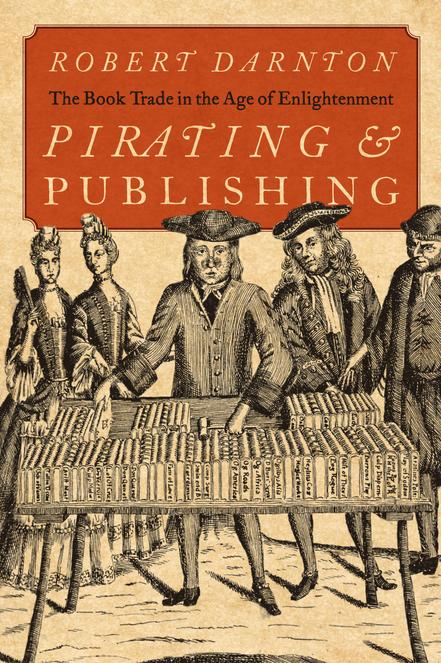
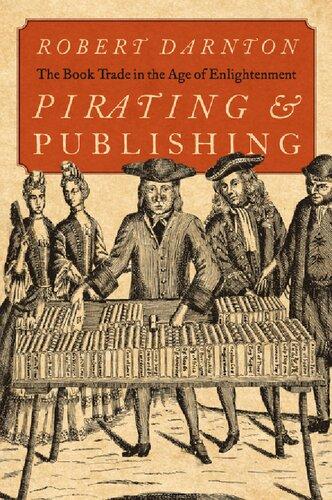
Pirating and Publishing
Pirating and Publishing
The Book Trade in the Age of Enlightenment
ROBERT DARNTON
Oxford University Press is a department of the University of Oxford. It furthers the University’s objective of excellence in research, scholarship, and education by publishing worldwide. Oxford is a registered trade mark of Oxford University Press in the UK and certain other countries.
Published in the United States of America by Oxford University Press 198 Madison Avenue, New York, NY 10016, United States of America.
© Oxford Univesity Press 2021
All rights reserved. No part of this publication may be reproduced, stored in a retrieval system, or transmitted, in any form or by any means, without the prior permission in writing of Oxford University Press, or as expressly permitted by law, by license, or under terms agreed with the appropriate reproduction rights organization. Inquiries concerning reproduction outside the scope of the above should be sent to the Rights Department, Oxford University Press, at the address above.
You must not circulate this work in any other form and you must impose this same condition on any acquirer.
Library of Congress Cataloging-in-Publication Data
Names: Darnton, Robert, author.
Title: Pirating and publishing : the book trade in the age of Enlightenment / by Robert Darnton.
Description: New York, NY : Oxford University Press, [2021] | Includes bibliographical references and index.
Identifiers: LCCN 2020022939 (print) | LCCN 2020022940 (ebook) | ISBN 9780195144529 (hardback) | ISBN 9780197529737 (epub)
Subjects: LCSH: Book industries and trade—France—History—18th century. | Publishers and publishing—Government policy—France—History— 18th century. | Literature publishing—France—History—18th century. | Authors and publishing—France—History—18th century. | French imprints—Publishing—Foreign countries—History—18th century. | Société typographique de Neuchâtel—History—18th century. | Book industries and trade—Europe—History—18th century. | Enlightenment—France.
Classification: LCC Z305 .D344 2021 (print) | LCC Z305 (ebook) | DDC 381/.45002094409033—dc23 LC record available at https://lccn.loc.gov/2020022939
LC ebook record available at https://lccn.loc.gov/2020022940
DOI: 10.1093/oso/9780195144529.001.0001
1 3 5 7 9 8 6 4 2
Printed by Sheridan Books, Inc., United States of America
Introduction
“All of the known universe is governed solely by books,” Voltaire asserted, looking back at the end of his life on the battles he had fought against prejudice, ignorance, and injustice.1 The Enlightenment as a whole was driven by the power of books. Yet under the Ancien Régime, the book trade was encumbered by conditions that would seem impossible today. There was no liberty of the press or copyright; there were no royalties or returns; and there was no limited liability. There were virtually no authors who lived from their pens and very few banks. There was also very little money—none, in fact, that took the form of paper bills guaranteed as legal specie by the state. How could books become such a force under such conditions?
This book is meant to explain their power by showing how the publishing industry operated.2 It explores the ways that publishers behaved—their modes of thought and their strategies for translating intellectual capital into commercial value. Of course, the power of books lay primarily in their contents: the crack of Voltaire’s wit, the grip of Rousseau’s passion, the audacity of Diderot’s thought experiments have rightly won recognition at the heart of literary history. But that history has not taken adequate account of the middlemen who brought literature to readers. Publishers played a decisive role at the juncture where literary, political, and economic history flowed into one another.
Historians generally date the emergence of the publisher as distinct from the bookseller and printer to some time in the first half of the nineteenth century.3 In fact, publishers proliferated during the last years of the Ancien Régime in France and in much of Western Europe. Yet the concept of publisher and related ideas, such as intellectual property and piracy, remained ambiguous.
According to its most basic meaning, “to publish” is “to make public.”4 It could be argued, therefore, that publishers have existed ever since anyone spread the word about anything. Yet the term “publisher” (éditeur in French) did not come into general use until the nineteenth century.5 Although, as will be shown, professionals within the book trade began to use the word in the 1770s, “bookseller” (libraire) generally prevailed.6 The entry for “éditeur” in Diderot’s Encyclopédie referred to the older notion of someone who prepared copy for printing—a usage that is closer to “editor” than to “publisher” in English.
When it came to pirating (contrefaçon), the Encyclopédie entered contested territory.7 It explained that the noun referred to the reprinting of a book “to the prejudice of the person who possesses it by virtue of the property ceded to him by the author, a property made public and authentic by the privilege of the king or equivalent letters from the [royal] Seal.” Pirating therefore raised the issue of intellectual property, and the Encyclopédie adopted a position taken by the booksellers’ guild of Paris—namely, that the author had an absolute right of ownership to his text, a right of property equivalent to the ownership of land, and that he could transfer it unimpaired to a bookseller who produced it for sale.8 A privilege for a book merely confirmed a preexisting right that was a matter of justice, not of the king’s will—an assertion that the Crown rejected. The Encyclopédie entry on the verb “contrefaire” conveyed the same notion of absolute property, but then discussed the activity of pirates in a way that undermined it: “But . . . there is a real dishonor attached to this illicit commerce, because it breaks the most respectable connections in society, the confidence and good will in commerce. This damage and dishonor take place only within a country subjected to a common authority, because in relations between one foreigner and another usage seems to have authorized this injustice.” In practice, therefore, piracy appeared to be a matter of social convention rather than normative standards; it conveyed dishonor. And although it violated a general principle of justice, it “seemed” to be legitimate if it took place outside the jurisdiction of a state where the original publication had occurred. Tied up in contradictions and inconsistencies, the uncertain, innovative concept of intellectual property did not provide an effective weapon against the practice of piracy.
Kant dealt with this knotty problem when he discussed the rights of authors in The Metaphysics of Morals (1797). Four years earlier, he had published the famous essay that began with a question, “What is Enlightenment?” This time, he asked a related question, “What is a book?” The answer led directly
to the issue of piracy. Kant did not consider the composition of a book as the creation of property. Instead, he understood a book to be the expression of an author’s thoughts as he exercised them in writing through the power of free speech. By giving a bookseller a “mandate” to sell a book that he had created, an author made the bookseller an agent who could speak to the public on his behalf, not a property owner. A pirate violated that right of agency. He stole the publisher’s profits and therefore committed an action “forbidden as a matter of right,” but he did not infringe a natural right of property.9 This argument did not become absorbed in debates about copyright, but it illustrates the ambiguity inherent in the way books were understood at a time when piracy played a key part in the exchange of ideas.
Although pirates weren’t philosophers and most likely did not read Kant, they could make use of the concept of a book as an expression of ideas rather than an item of property. By multiplying the number of books, they could argue, they contributed to the circulation of ideas; and by diffusing the works of the philosophes, they promoted Enlightenment. One pro-Enlightenment pirate, Fortuné Barthélemy de Félice, who churned out contrefaçons from Yverdon, Switzerland, made precisely that argument: “But I envisage books from a more noble viewpoint [than the view of them as articles of commerce], because I believe that good books do not belong to booksellers but rather to humanity, which needs to be enlightened and developed according to virtue. . . . Any bookseller or printer who by means of contrefaçons spreads good books more abundantly and rapidly, deserves well of humanity.”10
Everyone understood that in practice literary property did not extend beyond the borders of individual countries, but no one could do anything to resolve that difficulty. In an attempt to solve the problem of piracy, a proposal to ban contrefaçons on an international scale had been submitted during the diplomatic deliberations connected with the Peace of Aix-la-Chapelle of 1748.11 It got nowhere. The problem went beyond the lack of a universal copyright agreement. Books, authorship, publishing, pirating—all such concepts remained fluid and unfixed in early modern Europe.
The general ambiguity did not prevent a vast pirating industry from developing alongside the legal trade in publishing. On the contrary, while authorized publishers produced high-quality books for a wealthy elite, the pirates flourished, pursuing profits in the downscale sector of the market where a growing public clamored for inexpensive books. The opposition between the two modes of publishing resulted in large part from a conflict between Parisian and provincial booksellers. Thanks to the centralizing policies of
the state, the Parisian Guild of booksellers and printers gained a dominant position in the trade by the end of the seventeenth century. Guild members monopolized book privilèges (the functional equivalent of copyrights; see the section “Technical Note: Terminology, Institutions, and Practices” for an explanation of this term and related others) and nearly destroyed publishing in the provinces, except in the case of certain genres such as local works, liturgical tracts, and popular chapbooks. By 1777, when it issued a set of largely ineffectual reforms, the state showed more sympathy for provincial publishers and booksellers. But the provincials remained hostile to the Parisians, and throughout the eighteenth century they increasingly drew supplies from publishing houses that produced French books from strategic locations outside France’s borders in what I have called a Fertile Crescent. From Amsterdam to Brussels, through the Rhineland, across Switzerland, and down to Avignon, which was papal territory in the eighteenth century, publishers pirated everything that could be sold with any success in France.
The foreign houses also produced everything that could not get past censors employed by the French government. With notable exceptions such as the Encyclopédie, nearly all the works of the French Enlightenment were printed abroad, smuggled across the border, and distributed through an underground trade that extended everywhere in the kingdom. The Enlightenment was in large part a campaign to spread light—that is, to diffuse ideas, not merely to create them. French books produced in publishing houses outside France embodied the Enlightenment. By conveying its ideas across borders, they made it a force that pervaded the Ancien Régime. Yet the books of the philosophes occupied only a small portion of the market. Thanks to inexpensive paper and labor, as well as the avoidance of payment to authors, pirated books were much cheaper than works produced with privilèges in Paris. Therefore, a natural alliance grew between the foreign publishers and the provincial booksellers. It functioned so effectively that at least half the trade books—as opposed to chapbooks, devotional tracts, and ephemera—sold in France between 1750 and 1789 were pirated. That estimate is based on long study of all the available documents, and I admit I cannot prove it; but I doubt that anyone would question the importance of investigating the pirating industry, both in itself, because little is known about it, and for what it reveals about the opening up of literary culture to a broad public.
Far from being a peripheral aspect of sociocultural history, therefore, piracy deserves a place at its center.12 By 1750 a boom in piracy was
undermining the traditional mode of publishing in France. Pirates operated outside the law, or at least the French law. In a few provincial centers like Lyon and Rouen, booksellers secretly produced and marketed pirated books, but for the most part, they imported them from the numerous publishing houses beyond France’s borders. The foreign publishers sometimes ran into trouble with local authorities, who could be as tough as the French when they discovered atheistic and seditious tracts, even those intended exclusively for export. But the sovereigns of city states, principalities, and autonomous municipalities like Geneva, Neuchâtel, Bouillon, Maastricht, and Amsterdam welcomed the economic benefit from pirate publishing, and in an age without international copyright there was nothing illegal about reprinting a French book outside France.
On the whole, the foreign publishers operated under few constraints other than the marketplace. They sought to satisfy demand with a willingness to take risks that made the publishers living off privilèges in Paris look like rentiers. Of course, as will be shown, some Parisians speculated on risky enterprises, and some foreign publishers avoided the most hazardous sectors of the trade. But most pirates raided markets with a spirit of audacious entrepreneurship. Although they were often solid bourgeois in their hometowns, they pursued profits with an uninhibited appetite for what Max Weber identified as booty capitalism,13 whose character has not been fully understood, because its operations have not been studied up close, owing to a lack of source materials. This book tells the inside story of pirate publishing and takes its inspiration from Balzac as well as Weber. Balzac’s Illusions perdues captures the scramble for prestige and profit among people in the book trade in the early nineteenth century. Publishers, booksellers, and authors inhabited an equally vivid world in the Age of Enlightenment, and their lives are worth recounting, not only for what they reveal about eighteenth-century culture, but also in themselves. They have a fascination of their own as stories within a comédie humaine peculiar to the Ancien Régime.
Although limited to the trade in France and neighboring regions, this book refers occasionally to England and Germany, where the same issues were handled in different ways.14 The first chapters survey the history of publishing and the nature of the book trade in Paris, complex subjects that involve a great deal more than state power and corporatism. The human element added to the complexity, especially among the pirates, who appeared as patricians in some places and as rogues in others. Later chapters describe their biographies and businesses, following trails that lead from one dossier
to another in the manuscript sources. Because the trails frequently crossed, it is possible to follow the formation of networks and to detect patterns in a general system of production and distribution.
The last chapters concentrate on the activities of one publisher, the Société typographique de Neuchâtel (STN), because it offers the richest material. The archives of the STN are the only papers of an eighteenth-century publishing house that have survived almost intact and are vast enough (about 50,000 letters) to reveal the inside story of pirate publishing and of publishing in general. Of course, they have a built-in bias, and I have tried to make allowances for the STN’s particular character. Fortunately, many persons with intriguing dossiers in Neuchâtel also appear in the archives of the Bastille, the papers of the Parisian Guild, reports of the Parisian police, bankruptcy records, and various archives of the French administration.
Having worked through this material for more than fifty years, I hope to do justice to its richness. Although this book brings my research to an end, it does not pretend to reach anything comparable to a bottom line, for history is bottomless, and in this work I only hope to sound its depths.
Technical Note: Terminology, Institutions, and Practices
If any word can convey the richness and complexity of France’s social order under the Ancien Régime, it is privilege. The term comes from the Latin meaning “private law.” It characterized rights restricted to one person or group and denied to others. Although the nobility and clergy were known as privileged orders, they were not the only ones to enjoy privileges. Virtually everyone, including artisans in guilds and peasants in “pays de franc-salé” (areas that paid relatively low salt taxes), participated in the system of privileges. The notion of a general law, which fell equally on everyone, was alien to the nature of the Ancien Régime, a hierarchical society in which it was assumed that people were unequal and that inequality was ordained by God and built into the order of nature. Enlightenment philosophers, Rousseau in particular, contested the legitimacy of privileges, and the French Revolution destroyed them; but privilege was the cement that held institutions together in what the revolutionaries recognized in retrospect to have constituted a regime.
Privilege existed in three distinct ways in the book trade. First and above all, it inhered in books themselves, at least in the legal sector of the trade. Book
privilèges were granted by the king, announced on the title pages of books, and printed in full length in their texts. To obtain a privilege, an author— or, more often, the bookseller to whom he had sold the manuscript—had to submit the text to the director of the book trade, who would assign it to a censor. If the censor approved it, he would notify the director, who would also approve it and pass the dossier on for a final approval by the Keeper of the Seals in the Royal Chancellery. Once it had cleared this last hurdle, a privilege would be issued in the name of the king. Its text, the privilège in the strict sense of the term, was addressed by the king to the officials in his courts and took the form of a decree, ending with the standard phrase “for such is our pleasure.” To take legal effect, it had to be registered—that is, copied into a register kept by the Parisian booksellers’ Guild. It was granted to a bookseller, who then enjoyed the exclusive right to produce and sell the book, usually for a certain number of years, although the right could be extended as a continuation, and booksellers frequently claimed that they owned it indefinitely.
In making this claim, they treated the privilège as a form of property. They often sold shares in it and willed it, as if it were a physical object, to their heirs. However, the Crown maintained that book privilèges derived from the grace of the king and could be limited or revoked according to the king’s will. This concept of privilège differed considerably from the notion of copyright. To be sure, the first copyright law, the Statute of Anne passed by Parliament in 1710, was contested throughout the eighteenth century in English courts, but it belonged to a different conceptual universe from that of the French edicts on privilèges as did the Danish copyright act of 1741, the first on the Continent. In order to emphasize its peculiar character, the French version of privilège will appear in italics throughout this book.
Second, the booksellers were privileged individuals. In conformity with royal regulations, they had to undergo an apprenticeship to a master, to fulfill various requirements, including an examination, and to be received in a guild. The system allowed for a few exceptions. It permitted a limited number of peddlers to hawk books; it tolerated bouquinistes who operated stalls in privileged areas (lieux privilégiés) such as the Palais-Royal in Paris; and it sold licenses (brevets de libraire) to some dealers in the provinces. In principle, however, no one could sell books who had not been admitted as a master in a guild. In 1781 there were 148 master booksellers and printers in the Parisian Guild. They included thirty-six widows who inherited masterships after the deaths of their husbands and often were tough and canny businesswomen.
Third, the guilds were privileged corporations. Not only did they have the exclusive right to engage in the book trade, but they also enjoyed certain tax exemptions and ran their own affairs by electing officers (syndics and adjoints) and holding meetings in the manner of other corporate bodies. They also had police powers such as the right to inspect book imports, bookshops, and printing shops. These responsibilities were executed by their governing body known as a chambre syndicale, a term that was also used to designate the physical setting in which book inspections and other business took place. In 1777 the Crown established twenty chambres syndicales, which covered all of France, each with its own area of jurisdiction. As explained in Chapters 1 and 2, the Parisian Guild, or Communauté des libraires et des imprimeurs de Paris, dominated the book trade throughout the kingdom and frequently came into conflict with the provincial guilds. To make its identity clear, it will be referred to in the following pages as the Guild with an uppercase “G.”
The book trade was administered by a division of the chancellery known as the Direction de la librarie (referred to henceforth as the Direction). Under the guidance of a directeur général, it oversaw censorship and the granting of privilèges, the activities of chambres syndicales, and all conflicts within the trade. It also cooperated with book-trade inspectors attached to the municipal police. One of its main responsibilities was to repress the trade in pirated books, which were usually known as contrefaçons. But the Direction was understaffed, and it frequently had little idea of what was going on outside Paris.
The Direction cooperated with the police in the attempt to repress books that were forbidden because they offended religion, the state, morality, or the reputation of high-ranking individuals. In the jargon of the book trade, these extremely illegal works were known as livres philosophiques, although the police usually called them mauvais livres or, occasionally, marrons. French terms of these sorts will be retained and printed in italics (even when they are quotations) in order to get across the specificity of eighteenth-century practices, but I have tried to keep the use of French to a minimum and have done all the translating myself. The original quotations, given at greater length along with fuller descriptions of some technical aspects of the book trade, can be consulted in the French version of this book, published by Gallimard in a translation by Jean-François Sené.
One technicality that should be mentioned at the outset is the practice among publishers of swapping books. When they completed an edition, they frequently exchanged a large part of it, sometimes as much as half, for the
equivalent value in books taken from the stock of an allied publisher. In this way, they reduced the risk of not selling all of their own edition and they increased the variety of their own stock. Exchanges were usually measured in sheets (feuilles) and recorded in special accounts. The sheet was the basic unit of production. Publishers calculated costs and profits in terms of sheets, and they normally shipped books in bales made up of unbound sheets. Binding was generally handled by consumers or retail booksellers. Finally, it is important to have a clear idea of money and its value under the Ancien Régime. As explained in the final chapter, the working classes commonly dealt in coins made of copper such as oboles and liards. At the level of merchants, business was conducted in “account money” (monnaie de compte) consisting of livres, sous, and deniers: 12 deniers to the sou, 20 sous to the livre. The effective value of money can be calculated in different ways. Although its price varied, an ordinary, four-pound loaf of bread, which was the mainstay of a worker’s daily diet, usually cost 8 sous. A skilled artisan generally made 30–50 sous a day, a semiskilled worker 20 sous, and an indigent laborer as little as 10 sous. Book prices varied enormously, but they often came to about 30 sous for an octavo volume of 200 pages. Payment from the retailer to the publisher took the form of bills of exchange (lettres de change or, more loosely, effets), which became due at the date specified on the bill. They could be negotiated at any time, although at a discount rate that could be very unfavorable to the holder. The key unit to keep in mind while following transactions is the livre, which as a rule of thumb can be thought of as the equivalent of a day’s work for most urban laborers. It will be abbreviated as L. following a sum of money—e.g., “Rigaud of Montpellier paid 200 L. for a bale of books”—in order to avoid confusion with the French livre for book.