Instant digital products (PDF, ePub, MOBI) ready for you
Download now and discover formats that fit your needs...
Think on your feet: tips and tricks to improve your impromptu communication skills on the job Brown
https://ebookmass.com/product/think-on-your-feet-tips-and-tricks-toimprove-your-impromptu-communication-skills-on-the-job-brown/
ebookmass.com
Your Money or Your Life: Debt Collection in American Medicine Luke Messac
https://ebookmass.com/product/your-money-or-your-life-debt-collectionin-american-medicine-luke-messac/
ebookmass.com
The Time of Your Life Sandra Kitt
https://ebookmass.com/product/the-time-of-your-life-sandra-kitt/ ebookmass.com
The Urban Political: Ambivalent Spaces of Late Neoliberalism 1st Edition Theresa Enright
https://ebookmass.com/product/the-urban-political-ambivalent-spacesof-late-neoliberalism-1st-edition-theresa-enright/
ebookmass.com
The Rebel Wears Plaid Eliza Knight https://ebookmass.com/product/the-rebel-wears-plaid-eliza-knight-3/
ebookmass.com
Debating the Sacraments: Print and Authority in the Early Reformation Amy Nelson Burnett
https://ebookmass.com/product/debating-the-sacraments-print-andauthority-in-the-early-reformation-amy-nelson-burnett/
ebookmass.com
Cybercrime Investigations: A Comprehensive Resource for Everyone 1st Edition John Bandler
https://ebookmass.com/product/cybercrime-investigations-acomprehensive-resource-for-everyone-1st-edition-john-bandler/
ebookmass.com
Education for Sustaining Peace through Historical Memory Markus Schultze-Kraft
https://ebookmass.com/product/education-for-sustaining-peace-throughhistorical-memory-markus-schultze-kraft/
ebookmass.com
Exam Success in Mathematics for Cambridge IGCSE (Core & Extended) Ian Bettison
https://ebookmass.com/product/exam-success-in-mathematics-forcambridge-igcse-core-extended-ian-bettison/
ebookmass.com
John Silence: casos psíquicos do doutor extraordinário 1st Edition Algernon Blackwood
https://ebookmass.com/product/john-silence-casos-psiquicos-do-doutorextraordinario-1st-edition-algernon-blackwood/
ebookmass.com
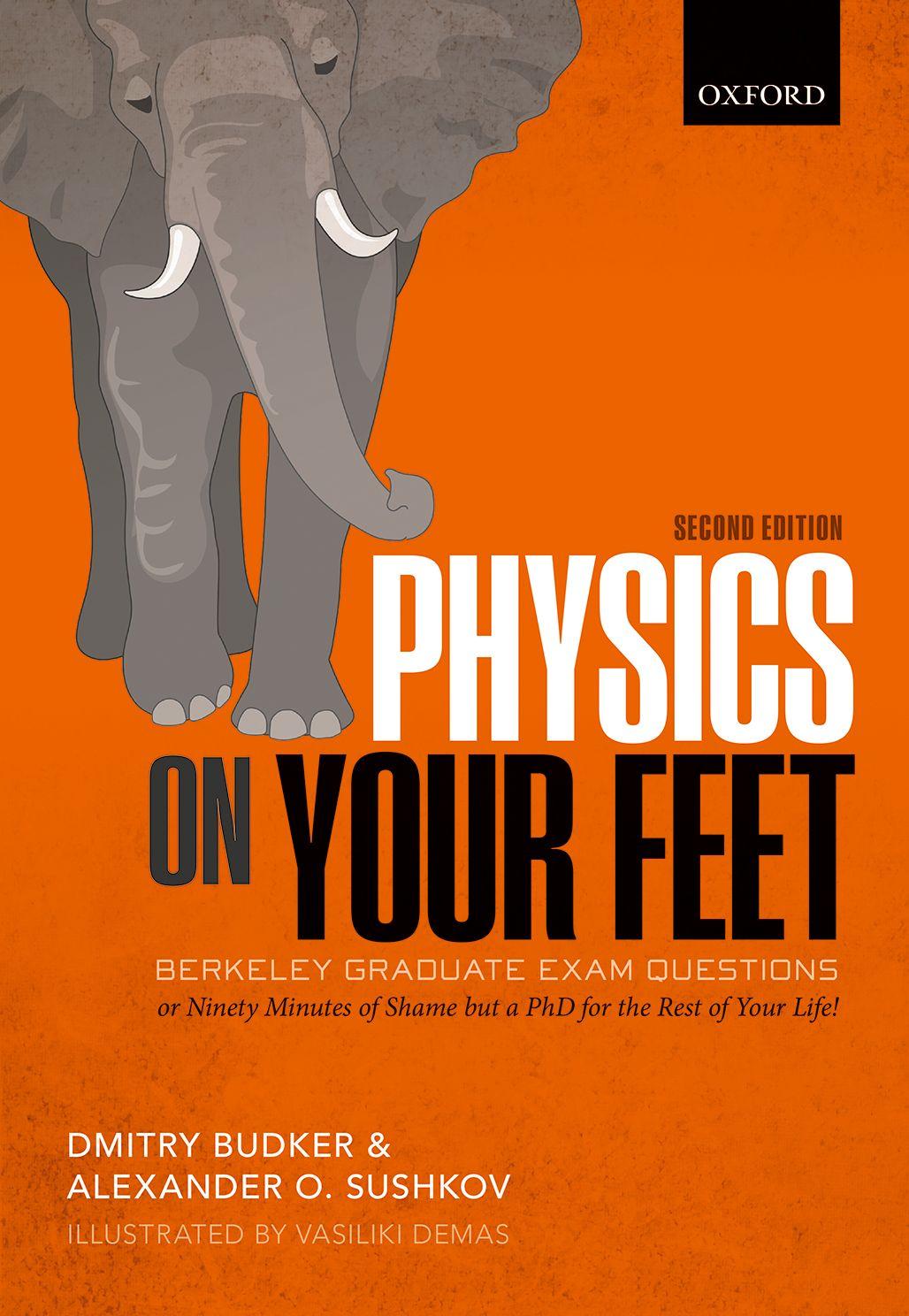
PhysicsonYourFeet: BerkeleyGraduateExamQuestions SecondEdition DmitryBudker UniversityofCalifornia,Berkeley,USAandJohannesGutenbergUniversity,Mainz, Germany
AlexanderO.Sushkov
BostonUniversity,Boston,MA,USA
IllustratedbyVasilikiDemas
GreatClarendonStreet,Oxford,OX26DP, UnitedKingdom
OxfordUniversityPressisadepartmentoftheUniversityofOxford. ItfurtherstheUniversity’sobjectiveofexcellenceinresearch,scholarship, andeducationbypublishingworldwide.Oxfordisaregisteredtrademarkof OxfordUniversityPressintheUKandincertainothercountries
c DmitryBudker,AlexanderO.Sushkov,VasilikiDemas2015,2021 Themoralrightsoftheauthorshavebeenasserted
FirstEditionpublishedin2015
Impression:1
Allrightsreserved.Nopartofthispublicationmaybereproduced,storedin aretrievalsystem,ortransmitted,inanyformorbyanymeans,withoutthe priorpermissioninwritingofOxfordUniversityPress,orasexpresslypermitted bylaw,bylicenceorundertermsagreedwiththeappropriatereprographics rightsorganization.Enquiriesconcerningreproductionoutsidethescopeofthe aboveshouldbesenttotheRightsDepartment,OxfordUniversityPress,atthe addressabove
Youmustnotcirculatethisworkinanyotherform andyoumustimposethissameconditiononanyacquirer
PublishedintheUnitedStatesofAmericabyOxfordUniversityPress 198MadisonAvenue,NewYork,NY10016,UnitedStatesofAmerica BritishLibraryCataloguinginPublicationData Dataavailable
LibraryofCongressControlNumber:2021934833
ISBN978–0–19–884236–1(hbk.) ISBN978–0–19–884237–8(pbk.) DOI:10.1093/oso/9780198842361.001.0001 Printedandboundby CPIGroup(UK)Ltd,Croydon,CR04YY
LinkstothirdpartywebsitesareprovidedbyOxfordingoodfaithand forinformationonly.Oxforddisclaimsanyresponsibilityforthematerials containedinanythirdpartywebsitereferencedinthiswork.
Tothememoryofourteacheranddearfriend,MaxZolotorev(1941-2020)
PrefacetotheSecondEdition InthefewyearsthatpassedfromthepublicationoftheFirstEditionofthebook,we receivedalotofpositivefeedbackandencouragementfromourreadersandcolleagues, whichhasmotivatedustocontinuekeepinganeyeoutforgoodquestionssuitable fororalPhDexams,nowalsoattheJohannesGutenbergUniversityatMainzand BostonUniversity,therespectiveschoolswherethetwoofuscurrentlyteach(andgive examinations).Somecolleagueshaveofferedussuchquestions,and,asbefore,wehave comeupwithanumberof“exam-style”questionsourselves.
TheSecondEditionextendsthebookrathersignificantly,withnewproblemsfound towardstheendsofthesectionsandnewcartoonsskillfullydrawnbyDr.Vasiliki Demasaddedthroughoutthebook.Wehavealsotakentheopportunitytocorrectthe (surprisinglyfew)misprintsandminorerrorsnoticedintheFirstEdition.
WehopethereaderscontinuetofindPhysicsonYourFeetusefulandperhaps entertaining!
DmitryBudker AlexSushkov
MainzandBoston July2020
PrefacetotheFirstEdition Howthisbookcameabout InMay2010,thePhysicsDepartmentoftheUniversityofCaliforniaatBerkeley wherethetwoofus,atdifferenttimes,hadbeenPh.D.students,abandonedthe PreliminaryOralExaminations,a.k.aoralprelims,forthefirst-yeargraduatestudents, thusbreakinga60-year-longtradition.
Infact,oralexaminationswereofferedattheBerkeleyPhysicsDepartmentmuch earlier,however,theirmostrecentformatandscopemoreorlesssettledby1950,as describedbyA.C.Helmholzinhis HistoryofthePhysicsDepartment.1950–1968 (Helmholz,2004).
TheBerkeleyprelimwasascaryexperienceforthoseofusonthe“receivingend (A.S.),”andahalf-daysemi-annualchoreforthoseadministeringthetest(D.B.did thisfromFallof1995throughSpringof2010;he“missed”takingtheoralprelimsas heenteredtheBerkeleyPhysicsgraduateprogramin1989asacontinuingstudent,but hashadhisshareoforalexaminationselsewhere).Nevertheless,thetwoofusstrongly feelthatthishasbeenextremelyusefulforthestudents,providingthem,perhaps,the first“real-life”scientific-communicationexperience,andgivinganopportunitytolook atthebeautifulworldofphysicsinsomeapproximationofcompleteness.
Ithasalsobeenatrulyrewardingexperienceforthefacultymember(D.B.).One learnedalotfromthebrilliantstudents,andfromthewisecolleaguesaskingtruly interestingandprofoundquestions.Someofthematerialofthisbookisdrawnfromthe notestakenbyD.B.attheexamsovertheyears,aswellasfromthequestionscollected bythestudentsandpassedasanexam-preparationaid“generationtogeneration.”
Theoriginofthecontentofthebook,therefore,hascollectivenature,andweare extremelygratefultothemembersoftheBerkeleyphysicsfacultywhohavegenerously allowedustousetheirideas.Unfortunately,manyofoursourcesarenolongeralive toaskforpermission.WeremainindeepgratitudetoProfsDavidJudd,GilShapiro, RonaldRoss,and,indirectly,manyothers.
Sowhat’sthepointofthebooknowthattheBerkeleyoralsarenomore?We hopethiscollectionwillbeusefultostudents(ofallagesandeverywhere)whowishto refreshand/ortesttheirknowledgeofphysics,andalsotostudentsattheuniversities thatstilladministerorals.Andtherearealwayswrittenprelims,qualifyingexams, evenatBerkeley(atleast,fornow)...Thelevelofthereadersweprimarilyaimat isupper-divisionundergraduatesandfirst-yeargraduatestudents,althoughsomeof theseproblemswillcertainlybeenjoyedbypostdocsanddistinguishedphysicsfaculty, lookingforafunbreakfromoranunexpectedcontributiontotheirresearch.
Wehavehadalotoffunwritinguptheproblemsforthisbook,andwewouldlike ourreaderstosharethisjoy(ratherthanstressoutabouttheupcomingexam,which isunproductive).Wearegreatlyassistedinthisbytheeye-pleasingdrawingsprepared byourskillfulillustrator,Dr.Vasiliki(Vicky)Demas.
Otherbooks Thereareseveralothercollectionsofproblemswiththescopeandgoalspartially overlappingwithours.Amongthesearethefollowing.
• ScatteringandStructures by(PovhandRosina,2005),whichisalovelycollection ofproblemsfortheGermanoralDiplomaandPh.D.examswithemphasison quantumphenomena.
• AGuidetoPhysicsProblems byCahn,Mahan,andNadgorny(Cahn,Mahan,and Nadgorny,1994),whichisawonderfulcollectionofwrittenexaminationproblem, alsosuppliedwithmanydelightfulcartoons(nottomentionthemostinsightful physics).
• Animpressivemulti-volume ProblemsandSolutions setbyagroupofChinese authors(Zhang,Zhou,Zhang,andLim,1995;Lim,1998;Bai,Guo,Lim,1991; Lim,2000)compiledbythePhysicsCoachingclassattheUniversityofScience andTechnologyinChinaasaguideforpreparationtoPh.D.examsatmajor Americanuniversities.Whilethiscollectionappearstobeveryuseful,wefindthe choiceofquestionsandstyleofsolutionstobesubstantiallydifferentfromour own.
Howtousethisbook
• UniversityofChicagoGraduateProblemsinPhysics,withSolutions by(Cronin, Greenberg,andTelegdi,1967)isanothergreatcollection,althoughitgenerally appearstobemoremathematicalthanthisbook(andhasnocartoons!).
• UniversityofCalifornia,Berkeley,PhysicsProblems,withSolutions by(Chen, 1974)isafortyyear-oldcollectionofproblemsbasedontheBerkeleywritten Ph.D.exams.
Howtousethisbook Wedecidedtopresentthesolutionsrightaftertheproblems,insteadofseparating themintoadifferentpartofthebook.Nevertheless,aswithallrespectableproblem books,itisrecommendedthatthereaderbeginsbysuppressingthetemptationtoread orpeepintothesolutionrightaway,andgivestheproblemanhonest“collegetry” beforeconsultingwiththesolution(whichmaybewrongand/orinelegant,anyway).
Someofthematerialinthesolutionsclearlygoesbeyondofwhatmaybeexpectedatan oralexamination.Weprovidethesediscussionsforthosereaderswhomaybeinterestedin morein-depthdetailsaboutthesubjectandmarkthecorrespondingpassagesthatcanbe omittedwithoutsacrificingthequalityofexampreparationbyplacingtheminthe“aside” environmentasthisparagraph.
Havefunandgoodluck!
DmitryBudker AlexanderO.Sushkov
BerkeleyandHarvard March2014
Acknowledgements Theoriginaltitleofthisbookwithwhichwe“lived”foralongtimewas NinetyMinutes ofShame(butaPhDinPhysicsfortherestofyourlife),however,ourOUPEditor, SonkeAdlungwarnedusthatthistitleputsbookinseriousdangeroflandingina wrongsectionofabookstore...WearedeeplygratefultoSonkeforhispatienthelp andguidanceovertheyearsittooktocompletethisproject.
Thisbookwouldnothavebeenpossiblewithoutourmentors,colleagues,and studentswhoseideasinspiredmanyoftheproblemsandsolutionsfoundinthisbook. Theirsuggestions,guidance,andreadingsofcountlessdraftswereinvaluable,andwe sincerelyappreciatetheircontributions.
Inthesemesterprecedingthecompletionofthebook(Fall2013),D.B.taughtan undergraduateseniorelectivecourseatBerkeleycalled“PhysicsforFuturePhysicist” largelybasedontheproblemsinthebook.Thefeedbackfromthestudents(severalof whomactuallynon-physicists)wasenormouslyhelpful.
SomepeoplewewouldliketoacknowledgespecificallyareDerekJacksonKimball, MarcisAuzinsh,Byung-KyuPark,SeanCarroll,EugeneD.Commins,MikhailKozlov, OlegSushkov,VictorAcosta,AngomDilipKumarSingh,VladimirG.Zelevinsky, DmitriD.Ryutov,RichardA.Muller,NathanLeefer,RonWalsworth,MaxZolotorev,SteveLamoreaux,GregoryFalkovich,PauliKehayias,KonstantinTsigutkin, BrianPatton,MichaelSolarz,RonFolman,SzymonPustelny,OriGanor,MichaelHohensee,MikhailLukin,RanFischer,D.ChrisHovde,YehudaB.Band,JoelFajans, PeterMilonni,SifanWang,SeanLourette,MariaSimanovskaia,SimonRochester,and TamaraSushkova.DamonEnglishhelpedtosetthisprojectinmotionandprovided invaluableinputatitsearlystages.
InconjunctionwiththeSecondEdition,wewouldliketoacknowledge,inadditiontotheindividualslistedpreviousley,ArneWickenbrock,ValeriiZapasskii,Masha Baryakhtar,LykourgosBougas,andDianaSaville.
Theauthorsacknowledgethesupportoftheirresearch,thatmotivatedmanyof theproblemsinthisbook.
1.4SpinningEarth9
1.5Mechanicaloscillatorasaforcesensor11
1.6Hot-dogphysics15
1.7Ostrichegg19
1.8Joker’spendulum21
1.9Slinkymagic23
1.10Lightbulbandcoal25
1.11Comfortablewalkingspeed27
1.12Rotatingdumbbell29
2.3Holeybucket39
2.4Surprisesinmeltingandsolidification43
2.5Shallow-wateranddeep-watergravitywaves47
2.6Tides51
2.7Boatspeedlimit(hullspeed)53
2.8Floatingincircles55
2.9Boatdisplacement57
2.10Temperaturelapseintheatmosphere59
2.11Angler’sdilemma63
3.1Olber’sparadox:whyistheskydark?67
3.2Gravitationalshiftofclockrates69
3.3Photonfallout73
3.4Planckmassandlengthscale75
3.5Rotationofstarsaroundthecenterofagalaxy77
3.6Ultralightdarkmatter79
3.7Detectinggravitationalwaves83
3.8DarkmattertrappedintheEarth87
4.1Currentsandmagneticfields91 4.2Electromagnetdesign95
xii Contents
4.3Fieldinashield(withacoil)97
4.4Multipoleexpansion101
4.5Energyinawire105
4.6Earth’smagneticfieldangle109
4.7Refrigerator-magnetscience111
4.8Spherical-cellmagnetometer115
4.9Magneticforceonasuperconductingmagnet117
4.10Circuitviewofatomsandspace121
4.11Magneticmonopole125
5Optics
128
5.1Rotatingliquidmirror129
5.2Stackinglenses131
5.3Nanoparticleoptics137
5.4Diffractionangle139
5.5Diffractiononanedge141
5.6Black-bodyradiation143
5.7Laservs.thermallightsource145
5.8CorrelationfunctionsforlightandBosecondensates149
5.9Pulsedlaserrepetitionrate153
5.10Beamsplitter157
5.11Rotatinglinearpolarization159
6Quantum,Atomic,andMolecularPhysics
162
6.1Magneticdecouplingofspins163
6.2Levelanticrossing167
6.3Boundstatesinapotentialwell169
6.4Hypotheticalanomaloushydrogen177
6.5Time-reversalinquantummechanics181
6.6Superconductivityvs.atomicdiamagnetism183
6.7Atomicdesorption187
6.8Lambshift189
6.9VanderWaalsinteraction193
6.10Vacuumbirefringence197
6.11Nonmagneticmolecule199
6.12Quantummechanicsofangularmomentum201
6.13Lightshifts203
6.14Opticalpumping205
7NuclearandElementary-ParticlePhysics 208
7.1Thenumberofelementsintheperiodictable209
7.2Neutronanatomy211
7.3Nonexistenceofthedineutron213
7.4Deuteriumfusion215
7.5Lifetimeoftheground-statepara-positronium217
7.6Schwingerfields221
7.7Cherenkovradiation223
1 Mechanics,Heat,andGeneral Physics 1.1Bouncingbrick Abrickfallsflatontoatennisballrestingontheground(Fig.1.1)andbouncesback totheheightof h =1m.Whatheightwilltheballbounceto?Makereasonable assumptions,forexample,neglectthesizeoftheballcomparedtothebounceheight.1
Fig.1.1 Abrickfallsontoandbouncesoffofatennisball.Asaresult,theballalsobounces vertically.
1 ThisproblemwassuggestedbyProf.G.L.Kotkin.
Solution Whenthebrickhitstheball,itcompresses(squashes)it,andtherestoringforce,which ismostlyduetotheairpressureintheball,iswhatpushesonthebrickfirstmaking ittostop,andthenturnaroundandbounceback.
Letusconsiderthemomentintimewhenthebrickisonthewayup,andthe ballisbacktoitsnon-deformedstate.Assumingthattheballisatalltimesina quasi-equilibriumstate,atthismoment,theballisnolongerpushingonthebrick.
Atthismoment,thebrickbeginsitsfree-fallverticalmotionwithinitialvelocity v0 thatcanbefoundfrom
Letusnowconsiderthemotionofthedifferentpartsoftheball.Thebottomof theballisontheground,andisnotmoving.Ontheotherhand,thetopoftheballis movingatthevelocityofthebrick v0 (Fig.1.1).Itisclear,then,thatthecenterofmass oftheballismovingwith v0/2.Correspondingly,theballwillbounceto h/4=25cm.
Notethattennisplayersusearelatedeffecttoliftatennisballatrestonthe court–thetechniqueinvolveshittingtheballverticallytowardsthegroundwitha racket,uponwhichtheballbouncesup.
1.2Slipperycone Aclimberistryingtoclimbaslipperymountainwitharoundconicalshape.Hehas withhimapieceofropewiththeendstiedtogetherinaknottoformaloop.He throwstheloopoverthetopoftheconeandpullsonittopullhimselfup,asshown inFig.1.2.Thereisnofrictionbetweentheropeandtheconesurface.Iftheopening angleoftheconeissmall(sharpcone),theloopshouldcatch,butiftheopeningangle oftheconeislarge(flatcone),theloopshouldslipoffoverthetopofthecone,asthe climberpullsonit.
Whatisthecriticalopeningangleoftheconesothattheropeloopjustcatches?2
2 ThisproblemwassuggestedtousbyEvgenyKashmensky.
Fig.1.2 Aclimberpullinghimselfupwitharope.
Solution Supposetheclimberhasthrowntheropeoverthetopofthecone,buthasnotpulledit tightyet.Letuscuttheconefromitsvertextoitsbasealongthestraightlinepassing throughtheknotintheropeloop.Wethenunrolltheconeintoasectorofacircleon aplane(drawingapictureisveryhelpfulatthispoint,seeFig.1.3).Theknotappears astwopointsontheradiiboundingthesector,thesepointsareequidistantfromthe vertex,whichisthecenterofthecircle.Theropejoinsthesetwopoints,tracingout somecurvedlinecontainedwithinthesector.
Now,astheclimberpullsontherope,heputstensiononit.Whentheropeis tight,ittracesoutthecurveoflocallyminimallengthonthesurfaceofthecone,or a geodesic.Onthesurfaceofthe“unrolled”sector,thisisjustastraightlinebetween thetwopointscorrespondingtothelocationoftheknot.Ifthesectorislessthanhalf ofacircle,thisstraightlineisentirelywithinthesector,andthereforetheropecatches somewhereonthesurfaceofthecone[Fig.1.3(a)].Ifthesectorismorethanhalfthe circle,thestraightlineisoutsidethesector,meaningthat,astheropeistightened,it atsomepointmustcrossthecenterofthecircle,thusslippingoffthetopofthecone [Fig.1.3(b)].
Thecriticalconeanglecorrespondstothecasewhenthe“unrolled”coneformsa half-circle[Fig.1.3(c)].Toworkoutwhattheopeningangleofsuchaconeis,letus denotetheradiusoftheconebaseby r andthelengthoftheconeslantby L.The “unrolled”sectorhasradius L andarclengthof2πr.Whenthesectorisasemi-circle, πL =2πr,and r = L/2.Thismeansthatthecriticalhalf-coneangleis θ =30◦ . (a)(b)(c)
Fig.1.3 Anunrolledconewiththeropeonitssurface.
Roachrace 7
1.3Roachrace Fourcockroachesareinitiallylocatedatthecornersofasquarewithside a asshown inFig.1.4.Theystartmovingatthesametimewiththesamespeed(notnecessarily constant),insuchawaythateachroachisalwaysmovingintheinstantaneousdirectionofitscounter-clockwiseneighbor.Assumethatthesizeofaroachisnegligibly smallcomparedto a Whatisthedistancetraveledbyaroachuntilitcollideswithanother?3
Fig.1.4 Fourroachesstarttheirjourneyatthecornersofasquareandeachroachmoves intheinstantaneousdirectionofitsnearestcounter-clockwiseneighbor.
3 ThisproblemwassuggestedtousbyElenaZhivun.
Solution Bysymmetry,theroachesremaininthecornersofa(shrinkingandrotating)square atalltimestilltheycollide.
Relative-motionproblemsareoftensolvedmosteasilybyaconvenientchoiceof thereferenceframe.Inthiscase,suchaframehastheoriginononeoftheroaches,and hasanaxispointinginthedirectionofitsneighbor.Inthisframe,ourchosenroach isstationary,whileitsneighborsapproachitalongstraightlines,coveringadistance a tilltheencounter.Sincethemotionoftheneighborsisalwaysinstantaneouslyperpendicular,onecanseethat,indeed,thedistancecoveredbyaroachtilltheencounter is a,bothinthe“convenient”andthestationaryframes.
Wefoundthatmanyofourcolleagues,somewhatsurprisingly,havetroublesolving thisproblem“onthefly.”
1.4SpinningEarth Thisproblemillustratessometypicalandratherinstructiveestimatesthatworking physicistscovertheirlunch-timenapkinswith.
(a) EstimatethenumberofatomscontainedintheEarth.
(b) Theangularmomentumofanatomoramolecule,ifitisnonzero,isontheorder of .EstimatetheangularmomentumoftheEarth’srotationperatomintheunits of
Solution
(a) TheradiusoftheEarthis R ≈ 6400km=6 4 × 108 cm,sothevolumeoftheEarth is
TheaveragedensityoftheEarthisroughly ρ =5.5g/cm3,andthemostabundant (andtypical)elementintheEarthisoxygenwithanatomicweightof16.Fromthis, wecanroughlyestimatethenumberofatomsintheEarthas
where NA ≈ 6 × 10²³ particlespermoleisthe Avogadronumber
(b) Theangularmomentumisgivenby
where I =2MR2/5isthe momentofinertia ofasphererotatingaboutitsdiameter, wehaveapproximatedtheEarthasauniformsphere,and τ ≈ 24hoursistheperiodof theEarth’srotation.WecannowjustsubstitutethemassoftheEarthasessentially calculatedpreviously,however,itisbettertofirstdividebytheexpressionofthe numberoftheatomsintheEarthbecausethemasscancelsintheratio.Wehavefor theangularmomentumperatom(inunitsof ):
(1.5)
Wefindthattheintrinsicangularmomentumofatomsgivesnegligiblecontributionto theangularmomentumoftheEarth,evenifallatomswithnonzerointernalangular momentumwerepolarizedinthesamedirection.
Mechanicaloscillatorasaforcesensor 11
1.5Mechanicaloscillatorasaforcesensor
(a) Considera dampedmechanicaloscillator ofmass m, naturalfrequency ω0,and qualityfactor Q,drivenbyaforce F (t)= F0eiωt (theforceiscomplexforcomputationalconvenience,wetaketherealpartwheneverweconsideraphysicalquantity). Calculatetheresponseamplitude x0 andthephaselag φ betweentheforceandthe oscillatormotion.
(b) Theoscillatorisinequilibriumwithathermalbathattemperature T .Calculate the root-mean-squared (r.m.s.)thermalexcitation xT .
(c) Supposetheoscillatoriscooledtoabsolutezero.Calculatether.m.s.excitation xq oftheoscillatordueto quantumzero-pointenergy
(d) Theoscillatorcanbeusedtodetectsmalloscillatingforcesbytuningitsresonance frequency ω0 closetotheforcefrequency ω andmeasuringtheresponse.Giventhe thermalnoisecalculatedinpart(b),estimatetheforcesensitivity Fe oftheoscillator aftermeasurementtime t.Assume t Q/ω0.