1Great Clarendon Street, Oxford, OX2 6DP, United Kingdom
Oxford University Press is a department of the University of Oxford. It furthers the University’s objective of excellence in research, scholarship, and education by publishing worldwide. Oxford is a registered trade mark of Oxford University Press in the UK and in certain other countries
The moral rights of the authors have been asserted
First Edition published in 2021
Impression: 1
All rights reserved. No part of this publication may be reproduced, stored in a retrieval system, or transmitted, in any form or by any means, without the prior permission in writing of Oxford University Press, or as expressly permitted by law, by licence or under terms agreed with the appropriate reprographics rights organization. Enquiries concerning reproduction outside the scope of the above should be sent to the Rights Department, Oxford University Press, at the address above
You must not circulate this work in any other form and you must impose this same condition on any acquirer
Published in the United States of America by Oxford University Press 198 Madison Avenue, New York, NY 10016, United States of America
British Library Cataloguing in Publication Data Data available
Library of Congress Control Number: 2020952113
ISBN 978–0–19–960202–5
DOI: 10.1093/oso/9780199602025.001.0001
Printed and bound by CPI Group (UK) Ltd, Croydon, CR0 4YY
Links to third party websites are provided by Oxford in good faith and for information only. Oxford disclaims any responsibility for the materials contained in any third party website referenced in this work.
Gang Cao dedicates this book to his mother, Xiaomei Xiao, who has shaped his life
Preface
Transition metal oxides are constantly surprising us with exotic phenomena and challenging existing theoretical models. The advancement of condensed matter and materials physics has been largely dependent on the arduous path toward understanding these materials. The surprising insulating behavior inherent in binary transition metal oxides such as NiO reported in 1937 by De Boer and Verwey led to the realization of the importance of electron-electron correlations first proposed by Peierls and Mott; the high-temperature superconductivity in ternary transition metal oxides (La1-xBax)2CuO4 discovered in 1986 by Bednorz and Muller violates the Bardeen-Cooper-Schrieffer theory that otherwise perfectly describes conventional superconductivity. Establishing an adequate mechanism driving the high-temperature superconductivity in the cuprates has remained a profound intellectual challenge to this day. Prior to 2010, the overwhelming balance of interest was justifiably devoted to the superconducting cuprates, colossal magnetoresistive manganites and other 3d-transition metal oxides. In 1994, the discovery of an exotic superconducting state in Sr2RuO4 shifted some interest toward ruthenates, and in 2008, the realization that a novel variant of the Mott state was at play in Sr2IrO4 provided impetus for a burgeoning group of studies of the influence of strong spin-orbit interactions in “heavy” (4d- and 5d-) transition metal oxides. These materials are now among the most current and intriguing topics in contemporary condensed matter and materials physics.
In the early 1990s, one of us (GC) became interested in new materials, particularly those containing no 3d-transition metals, and started exploring ruthenates, rhodates, and iridates in search of novel materials and phenomena. This research effort has been intensified and extended over the last two decades. We, the authors, have closely collaborated since 2007. This book is in part based on our work; it focuses on recent experimental and, to a lesser extent, theoretical evidence that the physical and structural properties of these oxides are decisively influenced by strong spin-orbit interactions that compete or collaborate with comparable Coulomb interactions. A hallmark of these materials is the extreme susceptibility to lattice distortions or disorder because of the strong spin-orbit interactions, which lead to unusual ground states and other exotic phenomena unique to this class of materials.
This book consists of six chapters. Chapter 1 reviews underlying electronic interactions and structural or orbital effects that are most relevant to unusual behaviors of 4d- and 5d-transition metal oxides. Chapters 2–5 form the central part of the book, in which the distinct physical properties of the 4d- and 5d-transition metal oxides that have been discovered or studied in recent years are discussed. These chapters describe basic structural, transport, thermodynamic and magnetic properties of ruthenates and iridates as functions of temperature, pressure, magnetic field and electrical current, with a focus on experimental results and empirical trends. Chapter 6 introduces a few methods of singlecrystal synthesis techniques, including a newly developed field-altering technology, that are most suitable for the 4d- and 5d-transition metal oxides. This chapter is intended to
help fill an existing hiatus in the literature describing relevant synthesis techniques for 4d- and 5d-transition metal oxides.
The aim of this book is to provide an introduction to those who are interested in this class of materials and wish to have an accessible survey of the field. The reader is cautioned that this book reflects the interests of the authors. We do not intend a complete review because that is nearly impossible given the rapidly developing field and its diverse nature. There are a number of excellent reviews and books, which are listed as Further Reading at the end of each chapter.
I (GC) would like to thank my coauthor, Lance DeLong, for his critical reading and revisions of the book draft.
I am very grateful to the National Science Foundation for its support over the last two decades, which has made this book possible.
We both would like to extend our deep gratitude to Sonke Adlung and his colleagues at Oxford University Press for the continued encouragement and support during the long course of writing this book.
I am profoundly indebted to the then Director of the National High Magnetic Field Laboratory, Jack E. Crow, who was both my PhD advisor and postdoc mentor; during the heyday of the cuprates and mangnites in the 1990s, it was his strong support and encouragement that made the early exploratory studies of 4d- and 5d-transition metal oxides possible. I am grateful to Pedro Schlottmann for his theoretical guidance and our longstanding collaboration over the last two decades, which has proven to be crucial to the investigations of these materials. I also wish to express my gratitude to Feng Ye. Over the last ten years of our productive collaboration, his expertise in neutron diffraction has helped deepen the understanding of an array of new materials with unusual structural and magnetic behaviors. I am also grateful to Lance Cooper for our longtime, productive collaboration; his expertise in Raman scattering has helped gain much-needed insights into the physics of these materials. I have immensely enjoyed conversations and collaborations with Peter Riseborough whose insights into physics are always intellectually stimulating. I thank my colleague friends Peter Baker, Stephen Blundell, Yue Cao, Songxue Chi, Mark Dean, Daniel Dessau, Yang Ding, Vladimir Dobrosavljevic, Nuh Gedik, John Goodenough, Daniel Haskel, Michael Hermele, David Hsieh, Changqing Jin, Jiangping Hu, Ribhu Kaul, Daniel Khomskii, Young-June Kim, Itamar Kimchi, Minhyea Lee, Ganpathy Murthy, Tae-Won Noh, Natalia Perkins, Dmitry Reznik, Thorsten Schmitt, Ambrose Seo, Sergey Streltsov, Wenhai Song, Yuping Sun, Mingliang Tian, Darius Torkinsky, Maxim Tsoi, Xiangang Wan, Yan Xin, Zhaorong Yang, Liuyan Zhao, Jianshi Zhou and Yonghui Zhou. Collaborations with them have led to important results presented here. I would also like to express my deep gratitude to my former and current students and postdocs, particularly Hengdi Zhao, Jasminka Terzic, Hao Zheng, Vinobalan Durairaj, Shalinee Chikara, Shujuan Yuan, Saicharan Aswartham, Bing Hu, Jinchen Wang, Tongfei Qi and Oleksandr Korneta whose contributions constitute the most recent and important experimental results presented in the book. I am especially thankful to Hengdi Zhao and Bing Hu for their critical reading of the book proof, which has greatly improved the book. I am indebted to Leon Balents, Bernd Buchner, Gang Chen, viii Preface
Preface ix
Sang-Wook Cheong, Elbio Dagotto, Xi Dai, Xia Hong, George Jackeli, Rongying Jin, Hae Young Kee, Yong Bin Kim, Giniyat Khaliullin, Junming Liu, David Mandrus, Igor Mazin, John Mitchell, Janice Musfeldt, Ward Plummer, Charles Rogers, Tanusri SahaDasgupta, Hide Takagi, Nandini Trivedi, Roser Valenti, Jeroen van den Brink, Nanling Wang, William Witczak-Krempa and Jiandi Zhang for stimulating discussions in recent years.
Most of all, my heartfelt thanks go to my parents, Baigui Cao and Xiaomei Xiao, my wife, Qi Zhou, and my sons, Eric, Vincent, and Tristan, and my sister, Yang Cao, for their support, inspiration, patience, and love.
Gang Cao Boulder, Colorado September 2020
Chapter 1 Introduction
1.1 Overview
Transition metal oxides are of great significance and importance both fundamentally and technologically. The emergence of novel quantum states stemming from a delicate interplay between fundamental energies, such as the on-site Coulomb repulsion, spinorbit interactions (SOI), crystal fields, and Hund’s rule coupling, is a key, unique characteristic of these materials.
The transition metals comprise the majority of stable, useful elements in the Periodic Table. Their physical and chemical properties are dominated by their outermost d-electrons, and they readily form compounds with oxygen and sulfur, selenium and tellurium. However, oxides are more abundant than sulfides, selenides or tellurides, in part because oxygen is the most abundant element on Earth, making up 46.6% of the mass of the Earth’s crust. It is more than 1000 times as abundant as sulfur, and still more abundant than selenium or tellurium. For example, there are more than 10,000 ternary oxides, and the corresponding number for sulfides, selenides and tellurides is at least one order of magnitude smaller [1]. The most common crystal structures for ternary oxides are the perovskites and pyrochlores. Moreover, oxygen has the strongest electronegativity among the four VIA elements, and therefore transition metal oxides tend to be generally more magnetic, more ionic and thus less conductive, compared to their sulfide, selenide and telluride counterparts.
Transition metal oxides have been the focus of enormous activity within both the applied and basic science communities over the last four decades. However, between the 19th and the late 20th Centuries, the overwhelming balance of interest was devoted to 3d-elements and their binary compounds, chiefly because these materials are more accessible, and their strong magnetic, electronic and elastic properties found many important applications in the Industrial Revolution and the modern “High Tech” era. In particular, John Goodenough pioneered studies of transition metal oxides such as manganites and cobaltates in the 1950s and 1960s; his studies emphasized metalinsulator transitions and magnetic properties of these 3d-materials. Certain semiempirical rules developed at that time form the basis of the concept of superexchange interactions, which are at the heart of cooperative magnetic phenomena in transition metal oxides [2,3].
Table 1.1 Transition Metals with Common Oxidation States and Ionic Radii
From the 1950s to the 1980s, the robust superconducting properties of several 4d-based Nb intermetallic compounds such as Nb3Sn and NbTi shifted some attention toward the 4d-elements and compounds. Remarkably, Nb3Sn remains the most widely used superconductor to this day, despite thousands of known superconducting materials. A sea change occurred with the discovery of “high-temperature” superconductivity in (La1-xBax)2CuO4 in the late 1986 [4] and the discovery and study of many more complex copper oxides (“high-TC cuprates”) that immediately followed.
The ongoing explosion of interest in 3d-transition metal oxides has produced further breakthroughs, especially the discovery of “colossal magnetoresistance” (CMR) in ternary manganites in the 1990’s. These advances have been accompanied by an unprecedented shortening of the time lag between the initial discoveries of novel materials with surprising fundamental properties, and the development of derivative materials and hybrid structures for the marketplace. Furthermore, an intensified interplay between basic research and information technologies has led to the creation of whole new fields of investigation and commercial development, including “spintronics”, “magnonics”, “multiferroics”, “nano-science”, “quantum computing”, etc. These remarkable developments have been accompanied by an explosion of technical publications, which has completely outstripped the steady increases in journal publications on condensed matter physics and physical chemistry which took place in the 1960s and 1970s.
It is now apparent that novel quantum materials that exhibit surprising or even revolutionary physical properties are often the basis for technical breakthroughs that decisively influence the everyday lives of average people. Materials scientists, confronted with ever-increasing pace and competition in research, are beginning to examine the remaining “unknown territories” located in the lower rows of the periodic table of the elements. Although the rare earth and light actinide elements have been aggressively studied for many decades, the 4d- and 5d-elements and their oxides were largely ignored until recently (see Table 1.1, which gives common oxidation states and their corresponding ionic radii). The reduced abundance and increased production costs for many of these elements have certainly discouraged basic and applied research into their properties. Indeed, eight of the nine least-abundant stable elements in the Earth’s crust are 4d- and 5d-transition metal elements (i.e., Ru, Rh, Pd, Re, Os, Ir, Pt, and Au; tellurium is the ninth).
Only since the late 1990s and the early 2000s has it become apparent that 4d- and 5d-transition metal oxides host unique competitions between fundamental interactions; these circumstances have yielded peculiar quantum states and empirical trends that markedly differ from conventional wisdom in general and those of their 3d counterparts in particular. It is not surprising that the 4d- and 5d-transition metal oxides exhibit not only every cooperative phase known in solids, but also feature novel quantum states seldom or never seen in other materials.
1.2 Outline of the Book
This book is intended for graduate students and other materials scientists who have a background in condensed matter or materials physics. There are distinct structural and
chemical characteristics of 4d- and 5d-transition metal oxides; these are lucidly and thoroughly discussed in the monograph Transition Metal Oxides by P.A. Cox (1995) [5]. The book describes a wide range of phenomena displayed by transition metal oxides, particularly the 3d-transition metal oxides. The book also discusses various theoretical models proposed to interpret their physical properties. It is an accessible, resourceful reference for materials research. The present book focuses on the distinct, or even unique, physical properties of the 4d- and 5d-transition metal oxides that have been discovered and/or studied since the publication of Cox’s monograph. The reader is cautioned that this book is by no means an exhaustive account of such a diverse, rapidly developing field, and reflects the interests of the authors.
This book is divided into three parts: Fundamental Principles, Novel Phenomena in 4d- and 5d-Transition Metal Oxides, and Single-Crystal Synthesis.
1.2.1 Chapter 1: Fundamental Principles
Chapter 1 focuses on underlying electronic interactions and structural or orbital effects that are important in determining the physical properties of 4d- and 5d-transition metal oxides. Many of these aspects are thoroughly discussed in Transition Metal Oxides [5], Transition Metal Compounds by Daniel Khomskii [6], and a review article on metalinsulator transitions [7]. Therefore, Chapter 1 emphasizes topics identified as most relevant to particularly unusual behaviors of 4d- and 5d-transition metal oxides.
1.2.2 Chapters 2–5: Novel Phenomena in 4d- and 5d-Transition Metal Oxides
Chapters 2–5 form the central part of this book, in which various physical behaviors unique to these materials are presented and discussed in detail. In particular, the SOIdriven Mott state constitutes a new quantum state that occurs within a class of correlated insulators that occupy the strong SOI limit [8–10]. Various topological and quantum spinliquid states are proposed in view of the strong SOI extant in these materials, especially in 5d-electron iridates [11–21]. Unlike in the 3d-transition metal oxides, superconductivity is not a common occurrence in the 4d- and 5d-transition metal oxides, but when it occurs, it is extraordinary. For example, the pair symmetry of superconducting Sr2RuO4 [22] was initially thought to have a p-wave symmetry [23], but this characterization has been challenged in recent years [24–26], and the true nature of this superconductor is still open to debate after more than a quarter century has passed since its discovery in 1994.
The extended nature of 4d- and 5d-orbitals and SOI lead to physical properties that tend to be strong functions of lattice degrees of freedom. Virtually any external stimuli that readily couple to the lattice can easily induce novel phenomena, such as electricalcurrent-controlled states in Ca2RuO4 and Sr2IrO4 [27–30].
The critical, unique role the lattice plays in 4d- and 5d-transition metal oxides is also illustrated in the response to application of pressure. It is commonly anticipated that an
Fundamental Characteristics of 4d- and 5d-Electron Transition Metal Oxides 7
insulating state will collapse in favor of an emergent metallic state at high pressures since the average electron density must increase with pressure, while the electronic bandwidth is expected to broaden and fill the insulating energy band gap. This is true for 3d-transition metal oxides and other materials where SOI is negligible or relatively weak. However, most iridates avoid metallization under high pressure; the most notable example is a persistent insulating state up to 185 GPa in Sr2IrO4 [31]. Pressure-induced structural distortions prevent the expected onset of metallization, despite the sizable volume compression attained at the highest pressure. More often than not, the ground states of these materials are on the verge of a phase transition or show borderline behavior. Consequently, contradictory physical phenomena can occur in the same material. For example, Ca3Ru2O7 exhibits conflicting hallmarks of both insulating and metallic states that include unusual colossal magnetoresistivity and quantum oscillations periodic in both 1/B and B (B is magnetic induction). More recently, a quantum liquid in an unfrustrated square lattice Ba4Ir3O10 readily transforms into a robust antiferromagnet with a slight lattice modification [32,33]. Magnetotransport properties of the 4d- and 5d-transition metal oxides tend to be dictated by the lattice and/or orbital degrees of freedom because the spins are coupled to the lattice via strong SOI [34,35]. This contrasts with the 3d-transition metal oxides, which are dominated by the spin degree of freedom alone.
1.2.3 Chapter 6: Single-Crystal Synthesis
One challenge that experimentalists confront in studying 4d- and 5d-transition metal oxides is materials synthesis, especially single-crystal growth, because of the high vapor pressure and high melting points exhibited by these materials. The challenge becomes even more daunting because most of these materials are inherently distorted, to which their physical properties are extremely susceptible. Chapter 6 focuses on a few singlecrystal techniques that are most suitable for the 4d- and 5d-transition metal oxides. This chapter also introduces a promising “field-altering technology” applied to improve sample quality during crystal growth at high temperatures [33]. This technology knowingly takes advantage of strong SOI to address a major challenge to today’s research community: a great deal of theoretical work predicts novel quantum states that have thus far met very limited experimental confirmation. We believe this is chiefly due to the extreme susceptibility of spin-orbit-coupled materials to structural distortions/disorder [36]. This chapter is also intended to help fill an existing void in the literature describing relevant synthesis techniques for 4d- and 5d-materials.
1.3 Fundamental Characteristics of 4d- and 5d-Electron Transition Metal Oxides
One key characteristic of the 4d- and 5d-electron transition elements is that their d-orbitals are more extended compared to those of their 3d-electron counterparts, as shown in Fig. 1.1 [37]. Consequently, strong p-d hybridization and electron-lattice coupling,
Fig. 1.1 Radial distribution function as a function of spatial extent for 3d-, 4d-, and 5d-orbitals; Z is the effective atomic number and r is the distance from the nucleus [37].
Table 1.2 Comparison between 3d- and 4d/5d-Electrons
Key Interactions Phenomena
HTSC/CMR 4d 0.5-3 0.1-0.3 0.5-0.6 U > JH > λ so Orbital Order
5d 0.4-2 0.1-1 ~0.5 U ~ JH ~ λ so Jeff = 1/2 State
along with a reduced (with respect to 3d-transition metals) intra-atomic Coulomb interaction U, the Hund’s rule coupling JH and enhanced crystalline electric fields, are expected in these systems. Furthermore, materials containing these elements with highatomic number Z exhibit scalar relativistic effects [38, 39] and strong SOI, which affect the total energy and thermodynamic stability of 4d- and 5d-materials. The SOI is known to exert only negligible effects on total energy and stability in 3d-materials (see Table 1.2). The strength of the SOI is expected to increase significantly in 4d- and 5d-transition metal compounds, since the SOI scales with Z2 [40] (not the Z4-dependence that is often cited in the literature). This is because the screening of the nuclear charge by the core electrons yields the effective Z2-dependence of the SOI for the outer-shell electrons; the Z4-dependence of SOI is appropriate only for unscreened hydrogenic
Crystal Fields and Chemical Aspects 9 wavefunctions. In any case, the phenomenology of the SOI and its fundamental consequences for material properties have been neglected until recently, due to the pervasive emphasis that has been placed upon the 3d-elements. It is therefore appropriate to emphasize an unusual interplay between the competing interactions present in the 4dand 5d-oxides, as it offers wide-ranging opportunities for the discovery of new physics and, ultimately, new device paradigms. The unique opportunities offered by the 4d- and 5d-transition elements are exemplified by novel phenomena only recently observed in 4d-based ruthenates and 5d-based iridates, which are the central focus of this book.
1.4 Crystal Fields and Chemical Aspects
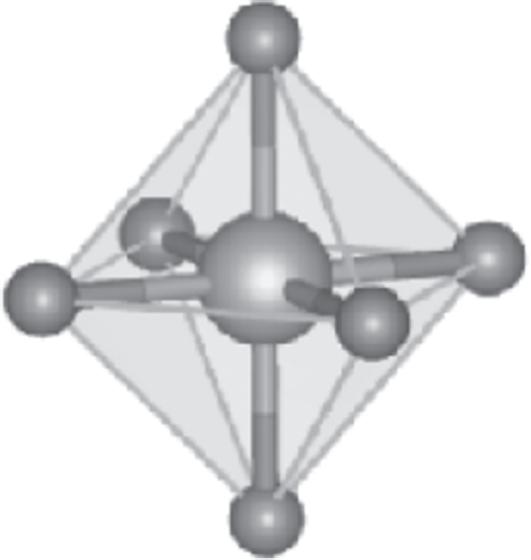
The crystalline electric field is an electric field originating from neighboring ions in a crystal lattice; therefore the strength and symmetry of the crystal field sensitively depends on the symmetry of the local environment. Octahedral and tetrahedral environments are two common cases in which the former arrangement is more common than the latter. This is because most oxides have either perovskite or pyrochlore structures in which octahedra are the building blocks. Note that perovskites include various structural types, including hexagonal perovskites, e.g., BaRuO3 and BaIrO3 [41]. The crystal field generated by the near-neighbors at the M-site in MO6 octahedra lifts the energy degeneracy of a free M-ion, splitting d-orbitals into two groups, namely, t2g orbitals (dxy, dyz, and d xz) and e g orbitals (d z 2 and d x 2 -y 2)[42]. The e g orbitals directly point toward the p-orbitals of the oxygen anions and experience a strong repulsion, thus shifting them to a higher energy with respect to that of the free ion. In contrast, the t2g orbitals point between the p-orbitals of the oxygen anions and undergo a weaker repulsion, shifting them to a lower energy with respect to that of the free ion, as illustrated in Fig. 1.2. In a tetrahedral environment, the t2g orbitals shift to higher energy than the e g orbitals due to differences in orbital overlap between d- and p-electrons. Naturally, any structural distortions of either MO6 octahedra or MO4 tetrahedra further lifts the degeneracy of the t2g and e g orbitals. Perturbation theory of the Stark effect dictates the crystal field splitting (or energy shift), ∆, of the 6-fold t2g orbitals and 4-fold e g orbitals that will be - 4Dq and + 6Dq, respectively, totaling 10 Dq (Fig. 1.2). The parameter D is proportional to the nuclear electric charge Ze, where Z is the atomic number and e is the charge of an electron. The parameter q scales with r4, in which r is the mean value of the radial distance between a d-electron and the nucleus. As a result, the strength of the crystal field increases with Z, and obeys the following order for 3d-, 4d-, and 5d-electrons:
∆(3d) < ∆(4d) ~ ∆(5d).
Therefore, the orbital splitting between t2g and e g bands is greater in 4d- and 5d-oxides (∆ ~ 2–5 eV) than 3d-oxides (∆ ~ 1–2 eV). Consequently, complete filling of the lowestenergy d-orbitals, rather than single occupation of the d-orbitals from the lowest energy and upward, is energetically favored. As such, the first Hund’s rule, which requires an
Fig. 1.2 The crystal field in an octahedral field. The crystal field splitting ∆ arises when d-orbitals are placed in the octahedral field, and vanishes in a spherical symmetry.
electronic wavefunction arrangement to maximize the spin S in order to minimize the on-site Coulomb interaction, often breaks down, leading to low-spin states. A low-spin state is also favored because of the reduced on-site Coulomb interaction U in 4d- and 5d-transition metal oxides compared to their 3d-counterparts.
A trend to higher oxidation states in 4d- and 5d-elements is more obvious than in 3d-elements. The ionic radius is a strong function of oxidation state, decreasing as the oxidation state increases or d-electrons are removed. In addition, the increase in the ionic radius from 3d- to 4d-elements is significant, but this increase is less noticeable when moving from 4d- to 5d-elements of the periodic table, primarily due to the screening provided by a full 4f-shell at the beginning of the 5d-row of the periodic table; for example, the ionic radii for tetravalent Co4+, Rh4+, and Ir4+ ions are 53, 60, and 62.5 pm, respectively (see Table 1.1). Table 1.1 lists common oxidation states observed in transition metal oxides and their corresponding ionic radii.
1.5
Electron-Lattice Coupling
The extended nature of 4d- and 5d-electron orbitals generates strong electron-lattice couplings and crystalline electric field strengths in the “heavy” transition metal oxides. For example, the local environment of the Ru-ions determines the strong crystalline electric field splitting of the 4d-levels and, hence, the band structure of a given compound. As a result, structurally driven phenomena are commonplace in 4d- and
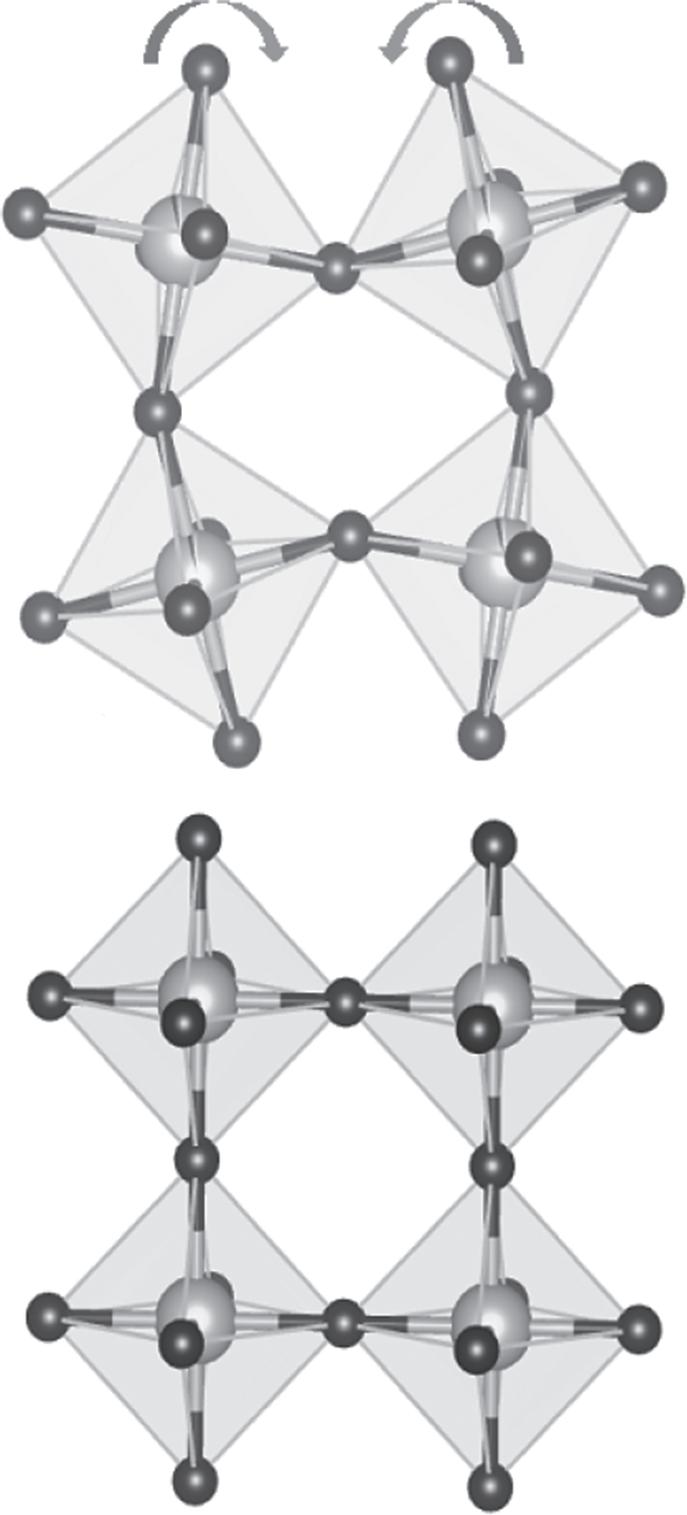
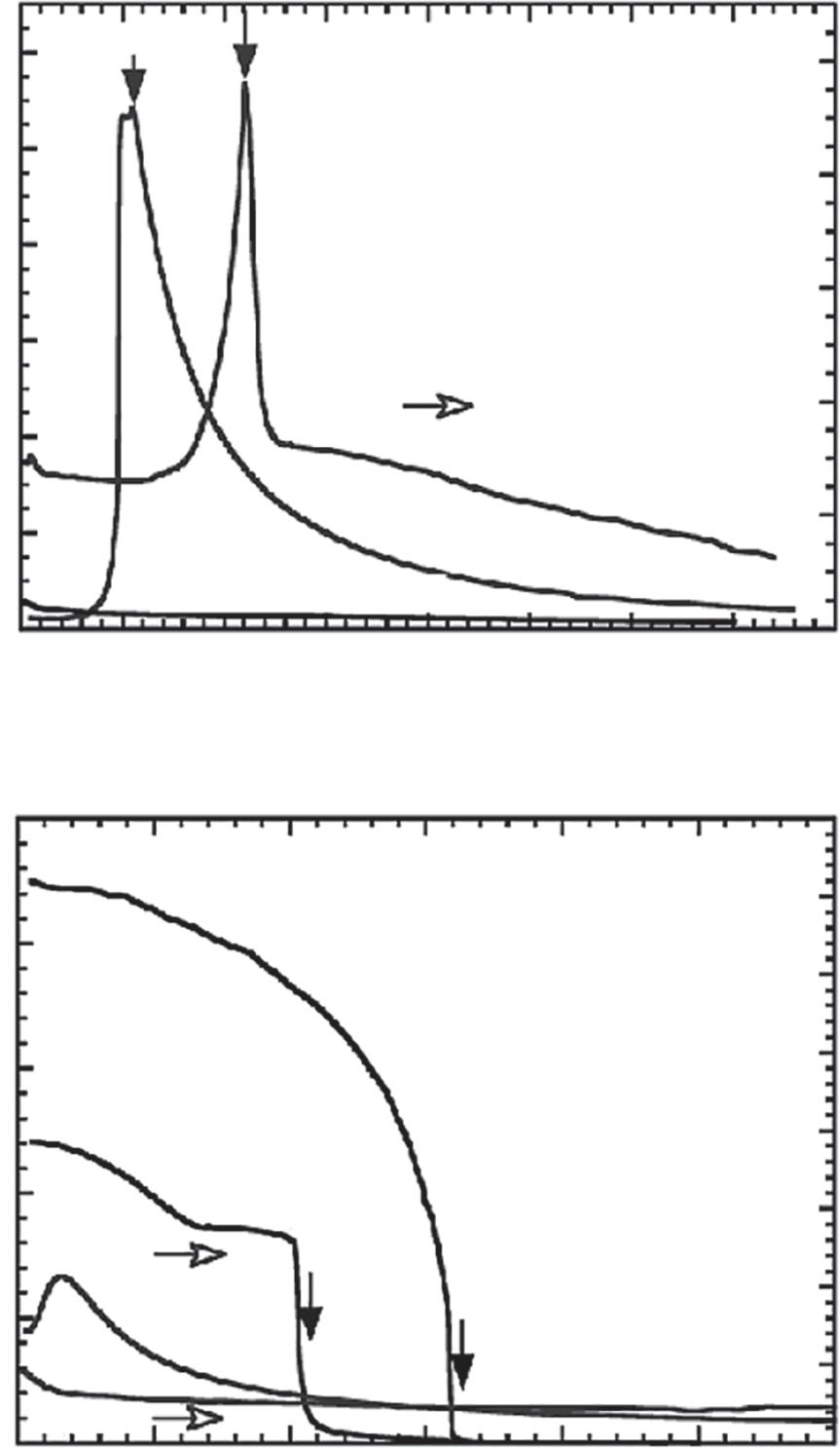
Fig. 1.3 The comparison of the basal plane of RuO6 octahedra between (a) Can+1Ru n O3n+1 and (b) Srn+1Ru n O3n+1. Note that RuO6 octahedra of Can+1Ru n O3n+1 are severely rotated and tilted. Top panels: The temperature dependence of (c) the magnetic susceptibility χ and (d) the resistivity ρ for Can+1Ru n O3n+1 with n = 1, 2, and ∞. Lower panels: The temperature dependence of (e) the magnetization M and ( f) the resistivity ρ for Srn+1Ru n O3n+1 with n = 1, 2, 3, and ∞. Note the sharp differences in the ground state between the RP series of Ca- and Sr-compounds and n-dependence of χ, M, and ρ. TMI = metal-insulator transition; TN = Néel temperature; TC = Curie temperature.
5d-oxides, and slight structural alterations may cause drastic changes in physical properties. A good example is the Ruddlesden-Popper (RP) series, Can+1Ru n O3n+1 and Srn+1Ru n O3n+1, where n is the number of Ru-O layers per unit cell. The physical properties of this class of materials are very sensitive to the distortions and relative orientations of corner-shared RuO6 octahedra. Effects of the ionic radius of the alkaline earth cation, which is 100 pm and 118 pm for Ca and Sr, respectively, must also be considered: the significantly smaller ionic radius of Ca causes severe structural distortions and rotations/ tilts of RuO6 octahedra in Can+1Ru n O3n+1 (Figs. 1.3a and 1.3b), which produces ground states that are fundamentally different from those in Srn+1Ru n O3n+1. Due to the larger structural distortions for the Can+1Ru n O3n+1 compounds, they are all proximate to a metal-insulator transition and prone to antiferromagnetic (AFM) order (see Figs. 1.3c and 1.3d), whereas the less-distorted Srn+1Ru n O3n+1 compounds are metallic and tend to be ferromagnetic (FM) (see Figs. 1.3e and 1.3f )
The observed trends for the magnetic ordering temperature with respect to the number of directly coupled Ru-O layers n is surprisingly different between these two isostructural and isoelectronic systems. The Curie temperature TC increases with n for Srn+1Ru n O3n+1, whereas the Néel temperature TN decreases with n for Can+1Ru n O3n+1, as shown in Fig. 1.4 A semiquantitative ranking of W/U ratios can be created for these compounds according
Fig. 1.4 Phase diagram (T vs. W/U) qualitatively describing Can+1Ru n O3n+1 and Srn+1Ru n O3n+1. Note the ground state can be readily changed by changing the cation, and physical properties can be systematically tuned by altering the number of Ru-O layers, n. SC = superconductor; FM-M = ferromagnetic metal; AFM-I = antiferromagnetic insulator; PM-M = paramagnetic metal [43].
to their properties such that the two RP series can be placed into one phase diagram. Note that W stands for electronic bandwidth. Such a stark dependence of the ground state on the cation species (alternatively, the ionic radius) has not been observed in the 3d-RP systems. Clearly, the lattice and orbital degrees of freedom play critical roles in the behavior of the 4d- and 5d-materials, which is corroborated by the wide array of intriguing phenomena and numerous novel phases (e.g., orbital ordering, orbitally driven colossal magnetoresistance, structurally driven Mott transition, lattice-driven magnetoresistance, etc.) that have been revealed under external stimuli coupling to the lattice [43].
1.6 Spin-Orbit Interactions
Besides the strong electron-lattice coupling, a strong SOI also drives the physical properties of 4d- and 5d-transition metal oxides. The SOI is a relativistic phenomenon arising from an interaction between the spin and orbital parts of an electron’s wave function in an atom and is particularly strong in the 5d-transition metal oxides, due to their relatively high 5d-electron velocities. If we consider a comoving inertial frame in which the nucleus orbits an electron at rest, the orbiting nucleus generates a current, and thus a magnetic field that interacts with the spin of the electron. This interaction gives rise to a term in Hamiltonian proportional to S L, where S is the spin angular momentum and L is the orbital angular momentum. The SOI scales with Z4 in a hydrogenic atom but with Z2 in a solid because of the screening of the nuclear charge by the core electrons, as discussed
earlier [38–40]. Indeed, the SOI of d- and f-electrons scales much better with Z2 than with Z4, as illustrated in Fig. 1.5.
One important consequence of the SOI is that the wave functions of 5d-electrons become a coherent superposition of different orbital and spin states, leading to a peculiar distribution of spin densities in real space, as illustrated in Fig. 1.6 [12]. A key result of the SOI is that the exchange Hamiltonian sensitively depends on structural details such as bond angles and bond lengths, one of central points of this book.
Traditional arguments suggest that 5d-transition metal oxides should be more metallic and less magnetic than materials based upon 3d-, 4f-, or even 4d-elements, because 5d-electron orbitals are more extended in space, which leads to increased electronic bandwidth. It is traditionally anticipated that the orbital interaction that generates electronic bandwidth W should follow the order of W(5d) > W(4d) > W(3d) > W(4f) [5]. Studies in the later 1990s found that this expectation conflicts with two trends observed in RP iridates such as Srn+1Ir n O3n+1 (n = 1 and 2) and the hexagonal perovskite BaIrO3 [36]. First, complex magnetic states occur with relatively high critical
Fig. 1.5 The dependence of the SOI on the atomic number Z. The outmost electrons of 3d, 4d, 5d, 4f and 5f are marked in the shaded area. The SOI scales better with Z2 than Z4. The upper dashed line is calculated results of Herman and Skillman for comparison for 3d electrons [39]; the lower dashed line is based on the Landau and Lifshitz scaling of SOI ~ Z2 [40].
isospin up spin up, Iz = 0 + = spin down, Iz = 1
Fig. 1.6 An exemplary spin-density profile resulting from a hole in the isospin up state. It is a superposition of a different orbital and spin states [12].
Table 1.3 Exemplary Iridates
System Néel Temperature (K) Ground State
Sr2IrO4 (n = 1)
Canted AFM insulator
Sr3Ir2O7 (n = 2) 285 AFM insulator
BaIrO3
183 Canted AFM insulator
Fig. 1.7 Iridates: Temperature dependence of (a) the a-axis magnetization Ma, (b) the c-axis resistivity ρc for Sr2IrO4 (black) and Sr3Ir2O7 (gray), (c) the c-axis magnetization Mc and (d) the c-axis resistivity ρc for BaIrO3.
temperatures (up to 285 K), but with unusually low ordered moments. Second, “exotic insulating states” are observed rather than metallic states, as shown in Fig. 1.7 and Table 1.3 [44–48]. These anomalies did not draw much attention until 2008, when it was recognized that the critical underpinning of these unanticipated states is a strong SOI that vigorously competes with Coulomb interactions, crystalline electric fields, and Hund’s rule coupling.
In general, the energy splitting depends on the ratio of the crystal field ∆ to λ so or ∆/λ so. For a free ion or a spherical symmetry with ∆ = 0, the SOI splits the degenerate d-orbitals into a low-energy J = 3/2 quartet and a high-energy J = 5/2 multiplet. With a finite tetragonal crystal field ∆, a combined effect of ∆ and λ so further rearranges the orbitals, leading to Jeff = 1/2 and Jeff = 3/2 bands when ∆/λ so > 1 [8,37].
The so- called J eff = 1/2 Mott state is a novel quantum state that served as an early example of the unique consequences of the strong SOI in iridates [8–10]. The SOI
wide t2g–band metal S = 1/2 Mott g round state t2g band
eff = 1/2 band
eff = 3/2 band
eff band split due to SOI
eff = 1/2 UHB
eff = 1/2 LHB
eff = 3/2 band
eff = 1/2 Mott g round state
Fig. 1.8 Traditional Mott insulator (b) originating from t2g band (a). New type of Jeff = 1/2 insulator (d) originating from a split-off Jeff = 1/2 state (c) due to a combined effect of strong SOI and U [8].
has an approximate strength of 0.4 eV in 5 d- iridates (compared to around 20 meV in 3 d -materials), which is strong enough to split the t 2g 5 d- bands into states with J eff = 1/2 and J eff = 3/2, the latter having lower energy (see Table 1.2 ). Since Ir 4+ (5 d 5) ions usually accommodate five 5 d- electrons in bonding states, we expect four to completely fill the lower J eff = 3/2 bands, and one to partially fill the Jeff = 1/2 band in which the Fermi level E F resides. The J eff = 1/2 band is so narrow that even a reduced on- site Coulomb repulsion (U ~ 0.5 eV, due to the extended nature of 5 d -electron orbitals) is sufficient to open a small energy gap ∆ c that stabilizes an insulating state, as shown in Fig. 1.8 .
The splitting between the Jeff = 1/2 and Jeff = 3/2 bands narrows as the dimensionality (i.e., n) increases in Srn+1Ir n O3n+1, and the two bands progressively broaden and build up a finite density of states near the Fermi surface, a trend that also characterizes the RP ruthenates discussed earlier. In particular, the bandwidth W of the Jeff = 1/2 band increases from 0.48 eV for n = 1, to 0.56 eV for n = 2, and 1.01 eV for n → ∞ (see Fig. 1.9) [9]. The ground state evolves, with decreasing ∆ c, from a robust insulating state for Sr2IrO4 (n = 1) to a metallic state for SrIrO3 (n → ∞). A well-defined, but “marginal” insulating state for Sr3Ir2O7 lies between them at n = 2 and at the border between a collinear AFM insulator and a spin-orbit-coupled Mott insulator.
The SOI can be modified by correlations among band electrons, that is, interatomic Coulomb interactions can be screened by itinerant band electrons. It has been suggested that Coulomb correlations can actually enhance the SOI in 4d-electron systems such as Sr2RhO4 [49].
(a) Mott insulator Sr2IrO4
eff = 3/2
(b) Barely insulator Sr3Ir2O7
= 1/2
= 3/2
(c) Cor related metal SrIrO3
= 3/2
of W
Fig. 1.9 Schematic band diagrams of Srn+1Ir n O3n+1: (a) Sr2 IrO4 (n = 1), (b) Sr3 Ir2 O7 (n = 2), and (c) SrIrO3 (n → ∞). EF = Fermi level; the arrow indicates a trend of the bandwidth W widening with increasing n [9].
It is worth mentioning that Sr2RhO4 is similar to Sr2RuO4 and Sr2IrO4, both electronically and structurally, but its ground state is fundamentally different from those of the other two compounds. Sr2RhO4 hosts an Rh4+ ion with five 4d-electrons (compared to four 4d-electrons of the Ru4+ ion in Sr2RuO4). It shares a crystal structure remarkably similar to that of Sr2IrO4; in particular, the RhO6 octahedron rotates about the c axis by 10o; this value is zero for Sr2RuO4 and 12o for Sr2IrO4. It is argued that this octahedral rotation facilitates a correlation-induced enhancement of the SOI by about 20%, that is, the SOI increases from a “bare value” of 0.16 eV to 0.19 eV [49]. Despite its similarities to insulating Sr2IrO4, Sr2RhO4 is a paramagnetic metal because the SOI is still not strong enough to conspire with the Coulomb interaction to open an energy gap [50]. On the other hand, Sr2RhO4 is indeed near to an insulating state because of the octahedral rotation and the enhanced SOI: slight Ir doping for Rh induces an insulating state [51]. The metallic state is less robust because the t2g bands near the Fermi surface are less dispersive in Sr2RhO4 than in Sr2RuO4, and therefore more susceptible to SOI-induced band shifts near the Fermi surface than in Sr2RuO4 [52].
A great deal of theoretical and experimental work has appeared in response to early predictions of a large number of novel effects in spin-orbit-coupled systems: superconductivity, Weyl semimetals with Fermi arcs, axion insulators with strong magnetoelectric coupling, topological insulators, correlated topological insulators with large gaps enhanced by Mott physics, Kitaev modes, 3-D spin liquids with Fermionic spinons, topological semimetals, and Kitaev spin liquids [11–21]. However, most of these novel
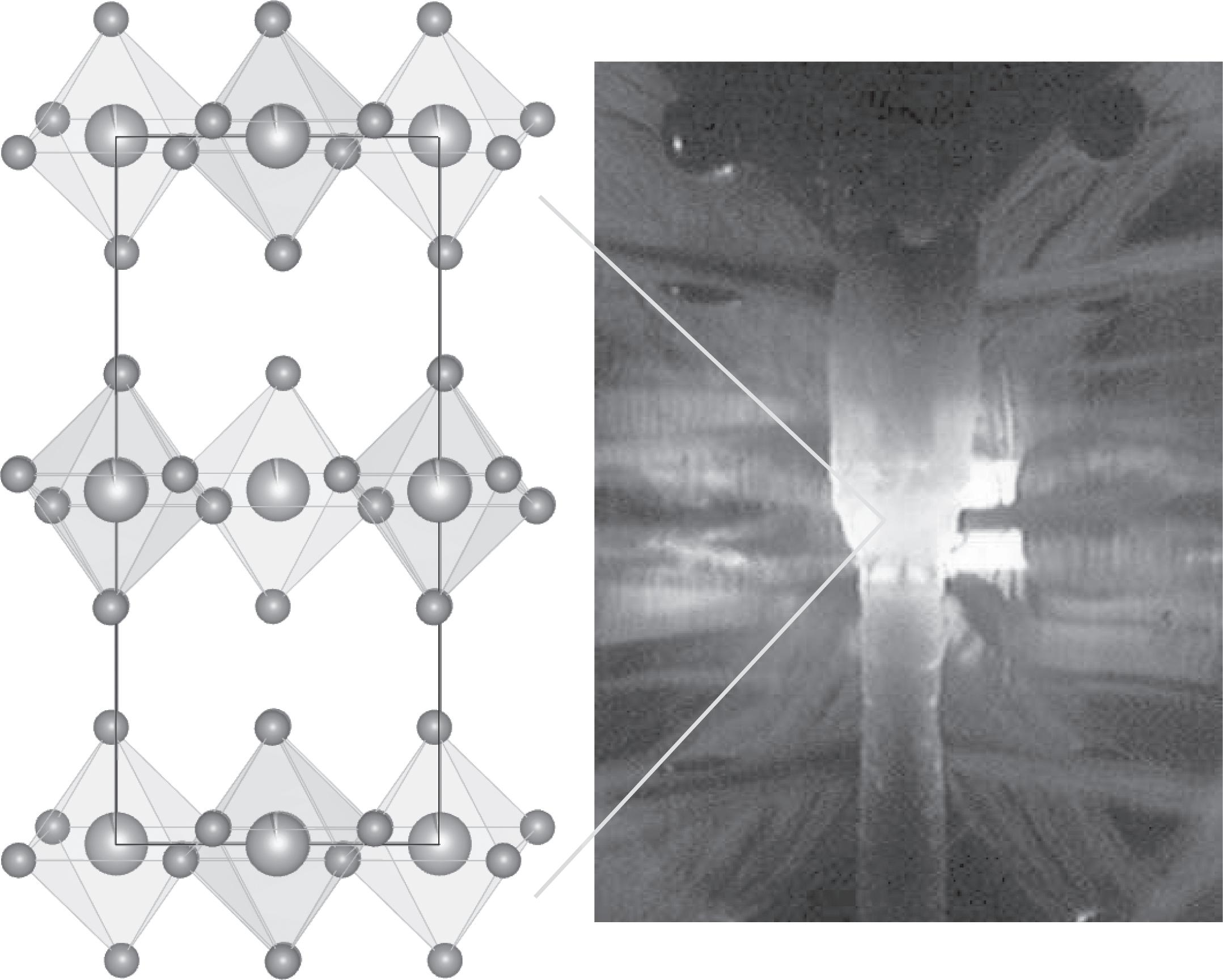
Fig. 1.10 Field-altering technology: A schematic for field-altering a crystal structure (left) during crystal growth in the molten zone (right).
states exist only in theoretical models and have thus far met very limited experimental confirmation. It is now recognized that the absence of the theoretically predicted states is due in part to the extreme susceptibility of relevant 4d- and 5d-materials to structural distortions and disorder [36,53,54]. The ground states of these materials are dictated by a delicate interplay between spin-orbit and Coulomb interactions, and slight perturbations, such as distortions/disorder, can provoke what appear to be disproportionate responses in physical properties, which is in sharp contrast to the situation in 3d-transition metal oxides.
Considerations of the vulnerability of 4d- and 5d-materials to structural nuances must be extended to the synthetic processes needed to fabricate single-crystal sample materials. To fundamentally address this challenge, a “field-altering technology” is proposed to “correct” distortions and disorder by applying a strong magnetic field during crystal growth. A schematic of this technology is illustrated in Fig. 1.10. This technology is found to be extremely effective for spin-orbit-coupled materials [33] and is discussed in detail in Chapter 6.
1.7 The Dzyaloshinsky-Moriya Interaction
Spin canting is a common occurrence, and therefore an important consideration in understanding the physics of 4d- and 5d-transition metal oxides. The DzyaloshinskyMoriya (DM) interaction, or antisymmetric exchange, provides a simple model