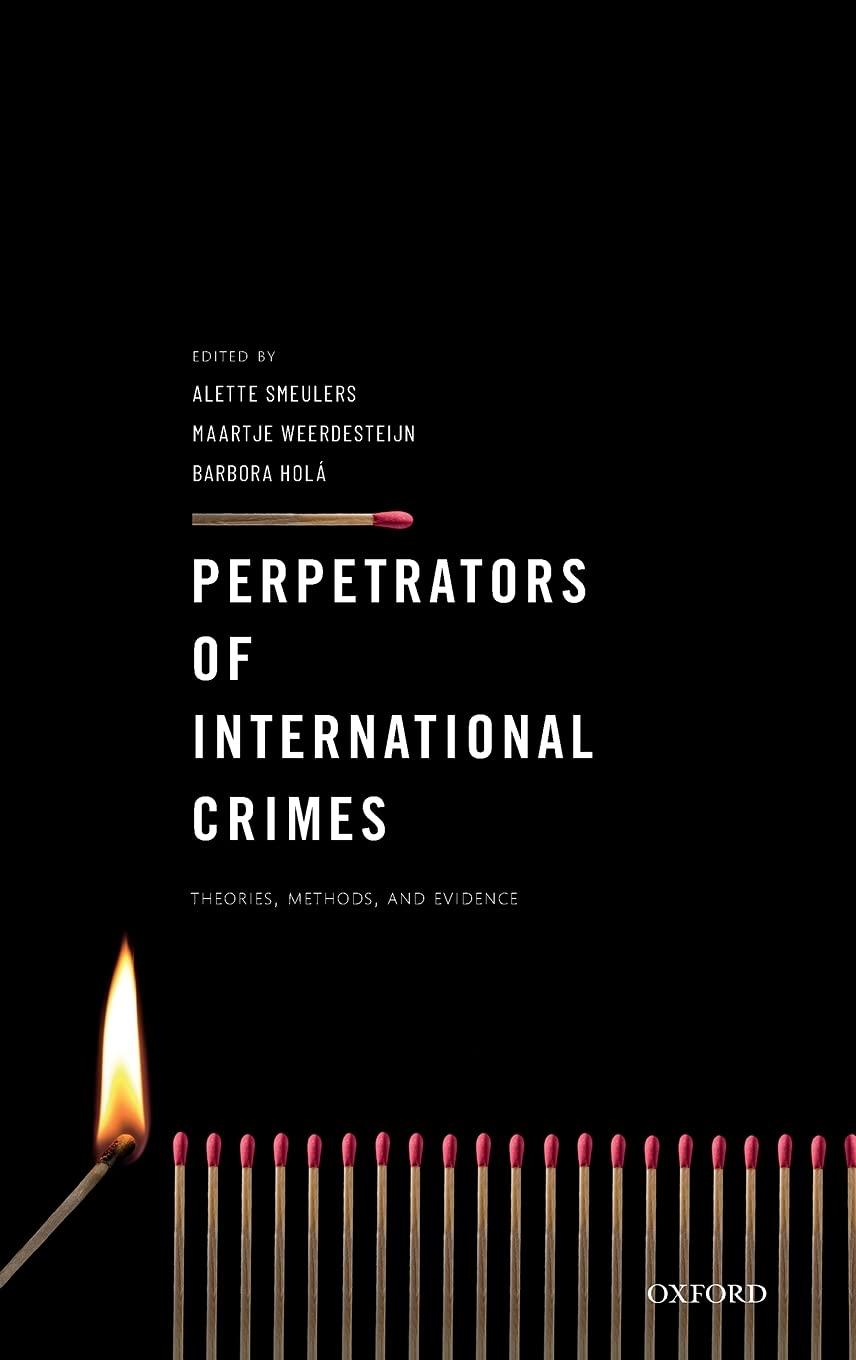
The moral rights of the authors have been asserted First Edition published in 2019
Impression: 1
All rights reserved. No part of this publication may be reproduced, stored in a retrieval system, or transmitted, in any form or by any means, without the prior permission in writing of Oxford University Press, or as expressly permitted by law, by licence or under terms agreed with the appropriate reprographics rights organization. Enquiries concerning reproduction outside the scope of the above should be sent to the Rights Department, Oxford University Press, at the address above
You must not circulate this work in any other form and you must impose this same condition on any acquirer Crown copyright material is reproduced under Class Licence Number C01P0000148 with the permission of OPSI and the Queen’s Printer for Scotland
Published in the United States of America by Oxford University Press 198 Madison Avenue, New York, NY 10016, United States of America
British Library Cataloguing in Publication Data Data available
Library of Congress Control Number: 2018956527
ISBN 978–0–19–882999–7
Printed and bound by CPI Group (UK) Ltd, Croydon, CR0 4YY
Links to third party websites are provided by Oxford in good faith and for information only. Oxford disclaims any responsibility for the materials contained in any third party website referenced in this work.
Preface
Benjamin B. Ferencz
If international atrocity crimes are to be deterred, it is vital to understand the minds of the perpetrators. Professor Alette Smeulers and colleagues have undertaken a long-overdue study by learned scholars seeking to find solutions to problems on which the security of humankind may depend. As the sole surviving Nuremberg war crimes prosecutor, I have been invited to share my views on the topic.
I came to America as an infant in 1921. My parents were fleeing persecution and poverty in Europe. I was a student on a scholarship at the Harvard Law School when Japan attacked the United States in 1941. I enlisted as a combat soldier in the US army in 1943 and fought in every major battle in Europe. When General George Patton’s troops reached Germany, I was given a special assignment to gather evidence for future war crimes prosecutions. I joined in the liberation of several Nazi concentration camps. I had peered into hell. I could not understand how human beings could treat other human beings in such an inhumane way. The trauma has never left me.
Shortly after the war in Europe had ended, I was recruited by the Pentagon to return to Germany. The famous International Military Tribunal (IMT) trial against Goering and cohorts was nearing completion. The US planned subsequent proceedings to reveal the full extent of Nazi atrocities. I was soon appointed Chief Prosecutor of the Einsatzgruppen (EG) case in what became known as ‘the biggest murder trial in history’. It was my first case.
Three thousand Nazi Storm Troopers (SS) were directed to follow behind the German army as it advanced and to exterminate, as vermin, every man, woman, and child of Jewish lineage. The same fate awaited ‘Gypsies’ and similar ‘undesirables’. Daily top secret reports from the Eastern front gave us the names of the planners and perpetrators and the number of victims murdered. In the face of such incontrovertible documentary evidence, every defendant was convicted, and thirteen were sentenced to ‘death by hanging’.
My primary responsibility had been to select those who would be put on trial. A rather absurd handicap was the fact that the Nuremberg courtroom had seats for only about twenty-two defendants. My choice was to select from SS officers in captivity those of the highest rank and education. I was very mindful that the scales of justice could not balance a million murders against the lives of a handful of unrepentant killers. The innocent victims had been slaughtered because they did not share the race or ideology of their intolerant and arrogant executioners. Instead of calling for the death penalty for every defendant, I asked the court to affirm a rule of law that would protect the right of all people to live in peace and dignity, regardless of race or creed. It was my ‘plea of humanity to law’. I was then twenty-seven years old. I repeated the same plea when I was invited to make the closing remarks at the first trial held at the new International Criminal Court in the Hague—at the age of ninety-two.
To understand the criminal mind, it is necessary to consider the context in which horrible crimes can be committed and even hailed as heroic by the perpetrator. I learned that war can make mass murderers out of otherwise decent people— regardless of nationality. It can be anticipated that those accused of capital offenses will seek every excuse that might save them from the gallows. Therefore, it was no surprise to hear defendants plead that they were only obeying superior orders, or that they were not present when crimes occurred, or similar phony alibis designed to obscure the truth. Perhaps the most interesting of such excuses was the argument put forth by SS General Dr. Otto Ohlendorf, a legally trained father of five children who admitted that his unit had ‘eliminated’ about 90,000 Jews.
Ohlendorf’s argument was that the killings were all done in self-defence. The Jews were known, he said, to be sympathetic to the Bolsheviks. Hitler knew that Russia planned to attack Germany. It was therefore necessary to launch a pre-emptive first strike by the Nazis to protect the German fatherland. He assured the tribunal that he would do it again under similar circumstances. His analysis was buttressed by the views of bushels of ‘expert opinions’ from German professors.
The presiding judge, Michael Musmanno of the Superior Court of Pennsylvania, backed by the concurrence of the other two American judges, concluded that assumed self-defence ‘cannot by the widest stretch of the imagination be justified as an act of self-defence on behalf of Germany’ (US Government Printing Office 1946–1949, Vol IV, 464). The argument that Jews were an aggressive menace which justified their liquidation as self-defence was dismissed as ‘untenable as being opposed to all fact, all logic and all law’ (US Government Printing Office, Vol. IV, 470). Unfortunately, similar arguments still resonate in the halls of the United Nations. In the new cyberspace age, the threat of warfare as a means for settling disputes threatens all of humanity.
No one knows for sure how many people were killed in the Second World War. It was the dream of the Nuremberg prosecutions to deter future war-making by holding leading perpetrators accountable for aggression, war crimes, and crimes against humanity. War-making, which had been glorified for centuries as an international right of sovereign states, was condemned as an international crime for which the main malefactors could be held accountable in a criminal court. The law would apply equally to all, including those who sat in judgment. A Security Council of the new United Nations was entrusted to enforce the peace and to ‘save succeeding generations from the scourge of war’ (Preamble, UN Charter). Unfortunately, the permanent members of the Council who had been allies in war returned to the old practice of promoting their own interests above all else. Nations went back to killing as usual. The most hazardous differences often hinged on questions of religion, nationality, or economic circumstances. Determined fanatics from many lands were willing to kill or die for their particular goals. Inadequate recognition was given to the fact that you cannot kill an ideology with a gun. Genocide, which I had condemned in my opening statement of the EG case, still occurs in many lands—to the everlasting shame of the world community. The current volume by Professor Smeulers and colleagues may offer new insights.
Preface vii
This is not to suggest that there has been no progress in the movement toward a more humane world governed by law. The elimination of slavery, the emancipation of women, the recognition that basic human rights deserve universal protection, the establishment of the International Criminal Court in the Hague, as well as many supportive national tribunals, all point to progress in the right direction. None of them is perfect and all must be regarded as prototypes that will be developed and improved with time. The new means of communication throughout the planet also hold forth the hope that educational and economic disparities may be diminished in the not too distant future. It will be up to young people to seize the reins and lead the way to a more equitable and peaceful existence for everyone. My slogans remain: ‘Law not war’ and ‘Never give up!’
Acknowledgements
This book is the outcome of an expert meeting organized by the editors of the book at Tilburg University on 24 June 2016. We thank the Faculty Board of Tilburg University and, in particular, the Dean at the time, Corien Prins, for financing this meeting. We also kindly thank Marga Verdonschot for helping us organize the meeting.
We furthermore thank all contributors to the book as well as all scholars present at the expert meeting. Some of them could not write a chapter, but their comments and contributions at the expert meeting were nevertheless important to us and to all attendees. Many thanks to: Anne-Marie de Brouwer, Ditte Marie Munch-Jurisic, and Annete Bringedal Hough.
Special thanks to Benjamin Ferencz and his son Don Ferencz for being such a great source of inspiration and for having written the preface to this book.
We also thank Merel Alstein and Natasha Flemming of Oxford University Press for supporting the project and facilitating the peer review process. We also express our gratitude to the anonymous peer reviewers who helped us to improve the book with their valuable comments. Last, but not least, we thank Kimberley Marsh and Jack McNichol of Oxford University Press, as well as Afrose, project manager from Newgen Knowledge Works, for helping us through the publication process. Thanks also to Michele Marietta of DeMarco Media for her copy edit and language review, as well as Monique Vanderheyden from the University of Groningen, who helped us with the list of contents and index.
Lastly, we thank our colleagues who continue to inspire us, our students for continuously asking probing questions, and our families for their love and support. Thanks for putting up with us while we were working all the extra hours to get the book to the publisher on time.
ECCC, Prosecutor v. Kaing Guek Eav alias Duch, Case No. 001/18-07-2007, Trial Chamber, Judgment, 26 July 2010 104, 105
ICC, Prosecutor v. Mathieu Ngudjolo Chui, Case No. ICC-01/04-02/12, Judgment, 18 December 2012 110–11
ICC, Prosecutor v. Thomas Lubanga Dyilo, Case No. ICC-01/04-01/06, Judgment, 14 March 2012 67–68, 69
ICJ, Application of the Convention on the Prevention and Punishment of the Crime of Genocide (Bosnia and Herzegovina v. Serbia and Montenegro), Judgment, 26 February 2007 266
ICJ, Application of the Convention on the Prevention and Punishment of the Crime of Genocide (Croatia v. Serbia), Judgment, 3 February 2015 .......................... 266
ICTR, Prosecutor v. Akayesu, Case No. ICTR-96-4-T, Judgment, 2 September 1998.................................................... 244, 245, 250–51
ICTR, Prosecutor v. Kajelijeli, Case No. ICTR-98-44A-T, Judgment and Sentence, 1 December 2003 ......................................................... 251
ICTR, Prosecutor v. Niyitegeka, Case No. ICTR-96-14-T, Judgment and Sentence, 16 May 2003 251
ICTY, Prosecutor v Babić, Case No. IT-03-72-T, Sentencing Judgment 29 June 2004 270
ICTY, Prosecutor v. Blagojević and Jokić, Case No. IT-02-60-T, Judgment, 17 January 2005 245–46
ICTY, Prosecutor v. Ðjorđević, Case No. IT-05-87/1, Judgment, 23 February 2011 268
ICTY, Prosecutor v. Erdemović, Case No. IT-96-22-A, Appeals Judgment, 7 October 1997 110–11
ICTY, Prosecutor v. Karadžić, Case No. IT-95-5/18-T, Judgment, 24 March 2016 244, 247, 252, 258, 261, 268
ICTY, Prosecutor v. Krajišnik, Case No. IT-00-39, Appeals Judgment, 17 March 2009 268
ICTY, Prosecutor v. Lukić and Lukić , Case No. IT-98-32/1-T, Judgment, 20 July 2009 ............................................... 244–45, 264–65, 267
ICTY, Prosecutor v. Martić, Case No. IT-95-11, Appeals Judgment, 8 October 2000 ........... 268
ICTY, Prosecutor v. Lukić and Lukić, Case No. IT-98-32/1, Appeals Judgment, 4 December 2012 ...................................................... 264–65
ICTY, Prosecutor v. Mladić, Case No. IT-09-92-T, Judgment, 22 November, 2017 245–48, 249, 252, 265–66
ICTY, Prosecutor v. Perišić, Case No. IT-04-81, Appeals Judgment, 28 February 2013 265, 266–67
ICTY, Prosecutor v. Plavšić, Case No. IT-00-39 40/1, Judgment, 27 February 2003 268
ICTY, Prosecutor v. Popović et al, Case No. IT-05-88-T, Decision on Defence Rule 94 bis Notice Regarding Prosecution Expert Witness Richard Butler, 19 September 2007 245–46
ICTY, Prosecutor v. Šešelj, Case No. IT-03-67, Indictment, 7 December 2007 101, 262
ICTY, Prosecutor v. Šešelj, Case No. IT-03-67, Judgment, 31 March 2016 267, 271–72
ICTY, Prosecutor v. Stanišić and Simatović, Case No. IT-03-69, Appeals Judgment, 9 December 2015 258–59, 265, 266–67, 268–70, 272, 277
ICTY, Prosecutor v. Stanišić and Župljanin, Case No. IT-08-91 265–66, 268
ICTY, Prosecutor v. Tolimir, Case No. IT-05-88/2 ..................................... 268
MICT, Prosecutor v. Šešelj, Case No. MICT-16-99. Appeals Judgment, 11 April 2018 .......... 267
MICT, Prosecutor v. Stanišić and Simatović, Case No. MICT-15-96, Judgment, 30 May 2013 ......................................................... 268–69
MICT, Prosecutor v. Stanišić and Simatović, Case No. MICT-15-96, Appeals Judgment, 15 December 2015 ................................................. 259, 268–69
SCSL, Prosecutor v. Sesay, Kallon & Gbao, Case No. SCSL-04-15-T, Judgment, 25 February 2009 .......................................................... 89
SCSL, Prosecutor v. Taylor, Case No. SCSL-03-01-T, Judgment, 18 May 2012 ............ 106, 108 Tribunal Oral en lo Criminal Federal N°5 Buenos Aires, Unified ESMA case, Judgment, 29 November 2017 ..................................................... 244–45
United States Court of Appeals for the Eleventh Circuit, United States of America versus ROY M. BELFAST, JR., a.k.a. Chuckie Taylor, a.k.a. Charles McArthur Emmanuel, a.k.a. Charles Taylor, Jr. a.k.a. Charles Taylor, II: Appeal from the United States District Court for the Southern District of Florida (09-10461; 15 July 2010) 106
List of Abbreviations
AFRC Armed Forces Revolutionary Council (Sierra Leone)
APWB Autonomous Province of Western Bosnia
ARBiH Army of the Republic of Bosnia and Herzegovina
B&H Bosnia and Herzegovina
BCS Bosnian/Croatian/Serbian
BIRN Balkan Investigative Reporting Network
CB&H Court of Bosnia and Herzegovina
CDR Coalition pour la Défense de la République (Rwanda)
CPA Comprehensive Peace Agreement (Sudan)
CPK Communist Party Kampuchea (Cambodia)
CUP Committee of Union and Progress (Ottoman Turkey)
DRC Democratic Republic of the Congo
EAC Extraordinary African Chambers
ECCC Extraordinary Chambers in the Courts of Cambodia
EG Einsatzgruppen (Nazi Germany)
ELN Ejército de Liberación Nacional (Colombia)
EPLF Eritrean People’s Liberation Front
EPLRF Eelam People’s Revolutionary Liberation Front (Sri Lanka)
EROS Eelam Revolutionary Organisation of Students (Sri Lanka)
ETEE Eelam Tamil Youth Movement (Sri Lanka)
FARC Fuerzas Revolucionarias de Colombia (Colombia)
FB&H Federation of Bosnia and Herzegovina
FMLN Frente Farabundo Martí para la Liberación Nacional (El Salvador)
FMNL Farabundo Martí National Liberation Front (El Salvador)
FP Federal Party (Sri Lanka)
FRG Federal Republic of Germany
FRY Federal Republic of Yugoslavia
GESTAPO Geheime Staatspolizei (Nazi Germany)
HIAG Hilfsgemeinschaft auf Gegenseitigkeit (Nazi Germany)
HOS Croatian Defence Forces (former Yugoslavia)
HVO Croatian Defence Council (former Yugoslavia)
ICC International Criminal Court
ICJ International Court of Justice
ICTR International Criminal Tribunal for Rwanda
ICTY International Criminal Tribunal for the former Yugoslavia
IMT International Military Tribunal in Nuremberg
IMTFE International Military Tribunal for the Far East (Tokyo Tribunal)
IPKF Indian Peace Keeping Force
JNA Yugoslav National Army/Yugoslav’s People’s Army
JSO Special Operations Unit (Serbia)
KZ Konzentrationslager (concentration camp in Nazi Germany)
MICT United Nations International Residual Mechanism for Criminal Tribunals
MRND Mouvement Républicain National pour la Démocratie et le Développement (Rwanda)
MUP Ministry of Internal Affairs Serbia (former Yugoslavia)
NGO Non-governmental organization
NKVD Naródny komissariát vnútryennykh dyél (former Soviet Union)
OSCE Organization for Security and Cooperation in Europe
PGM Pro-government Militias
PGMD Pro-government Militias Database
PLO Palestinian Liberation Organization
PTSD Post Traumatic Stress Disorder
RAW Research and Analysis Wing (India)
RPA Rwandan Patriotic Army
RPF Rwandan Patriotic Front
RS Republika Srpska (former Yugoslavia; Bosnia & Herzegovina)
RSK Republika Srpska Krajina (former Yugoslavia)
RTLM Radio Télévision Libre des Mille Collines (Rwanda)
RUF Revolutionary United Front (Sierra Leone)
SA Sturm Abteiling (Nazi Germany)
SCSL Special Court of Sierra Leone
SD Sicherheitsdienst (Nazi Germany)
SDB Serbia State Security Administration (former Yugoslavia)
SFRY Socialist Federal Republic of Yugoslavia
SPLA/M Sudanese People’s Liberation Army/Movement
SS Schutzstaffel (Nazi Germany)
SVK Army of the Krajina Serbs (former Yugoslavia)
TELO Tamil Eelam Liberation Organization (Sri Lanka)
TNT Tamil New Tigers (Sri Lanka)
TULF Tamil United Liberation Front (Sri Lanka)
UN United Nations
UNSC United Nations Security Council
US United States
VRS Army of Republika Srpska—Bosnian Serb army (former Yugoslavia)
Note from the Editors
During the final stages of the publication process we were shocked and saddened to find out that one of the contributors to this edited volume, Chandra Lekha Sriram, suddenly passed away. Chandra was Professor of International Law and International Relations and Director of the Centre of Human Rights in Conflict at the University of East London. She wrote extensively on human rights, transitional and international criminal justice, conflict resolution, conflict prevention, and peacebuilding, and had extensive experience with conducting field work in conflict areas. One of her best and most important edited volumes, Surviving Field Research: Working in Violent and Difficult Situations (Routledge: 2009), relates to the topic of perpetrator studies. We remember Chandra as a dedicated and passionate scholar and a kind and great colleague to work with. She was happy with the chapter she submitted and when we told the contributors that the book would be published by OUP she instantly and enthusiastically replied: ‘Fantastic news’. It is sad that she cannot see the final publication of the book. We honour her memory by dedicating this book to her.
Alette, Maartje, and Barbora Groningen, Amsterdam—10 October 2018
Kjell Anderson is an instructor in peace and conflict studies and criminology at the University of the Fraser Valley and affiliated research fellow at the Centre for International Criminal Justice at VU University Amsterdam. He is an interdisciplinary scholar specialized in the study of mass violence and mass atrocities and the former Vice President of the International Association of Genocide Scholars. Anderson is the author of Perpetrating Genocide: A Criminological Account (Routledge 2018) and numerous scholarly articles on genocide, mass atrocities, conflict, and transitional justice. He holds PhD and LLM degrees in International Human Rights Law (from the National University of Ireland and Utrecht University, respectively), as well as MA and BA degrees in Conflict Studies (from Carleton University and the University of Saskatchewan).
Thijs B. Bouwknegt is a researcher at the NIOD, the Institute for War, Holocaust, and Genocide Studies, and Assistant Professor at the University of Amsterdam. His work focuses on African History, Genocide Studies, and Transitional Justice. Since 2003, Thijs attended, monitored, and reported on the trials at the international tribunals for the former Yugoslavia (ICTY), Rwanda (ICTR), the Special Court for Sierra Leone (SCSL), the Extraordinary Chambers in the Courts of Cambodia (ECCC), the Special Tribunal for Lebanon (STL), the International Criminal Court (ICC), and a range of national courts in Europe and Africa.
Mirza Buljubašić is Assistant of Criminology at the Faculty of Criminal Justice, Criminology, and Security Studies at the University of Sarajevo. He received his MSc and BA in Criminology , MA in Criminal Law, and MA in Security Studies (all with honours) at the University of Sarajevo, Bosnia and Herzegovina. He worked as a research consultant, researcher, and analyst at Transitional Justice, Reconciliation, and Remembrance, an organization documenting, profiling, and mapping war crimes, detention facilities, and camps in Bosnia and Herzegovina. His scholarly work was published in Criminal Justice Issues and Criminal Justice Studies: A Critical Journal of Crime, Law and Society.
Benjamin B. Ferencz served as a combat soldier in the Second World War and was the Chief Prosecutor for the United States in the Einsatzgruppen case in Nuremberg in 1947–1948. Since his return to the United States, he has devoted his life to deterring illegal war by holding the responsible leaders to account in national or international criminal courts. He wrote several books and actively promoted the establishment of the International Criminal Court. He was awarded several prestigious prizes for his work on international law and global peace. In 2015 a first film was made on his life called: A Man Can Make a Difference. In 2018 a second film on his life was made called Prosecuting Evil
Caroline Fournet, PhD, LLM, is Professor of Comparative Criminal Law and International Justice at the University of Groningen. She is Editor-in-Chief of the International Criminal Law Review (Brill) and one of the co-editors of the academic journal Human Remains and Violence: An Interdisciplinary Journal (Manchester University Press). As of 2017, she is also Associate Researcher in the forensic team at Aix-Marseille Université. Her current interests focus on the legal status and evidentiary value of mass graves and corpses of victims of international crimes. In 2016, she took up a Visiting Professional position in Chambers at
the ICC. From 2012–2016, she was co-investigator on the ERC-funded multidisciplinar y research programme ‘Corpses of Genocide and Mass Violence’.
Georg Frerks holds a chair in Conflict Prevention and Conflict Management at Utrecht University and a chair in International Security Studies at the Netherlands Defence Academy. Until 2013 he also held a chair in Disaster Studies at Wageningen University. As a sociologist and policy analyst, he focuses on conflict and disaster-induced vulnerabilities and local responses, as well as on policies and interventions implemented at international and national levels. Frerks has paid attention to gender aspects of conflict since early 2000. He has (co-)authored or (co-)edited eighteen academic books, over eighty journal articles and book chapters, and seventy policy reports and monographs on conflict and disasterrelated topics.
Barbora Holá is Associate Professor at VU University Amsterdam and Senior Researcher at the Netherlands Institute for the Study of Crime and Law Enforcement (NSCR). She is co-director of the Center for International Criminal Justice and co-chair of the European Society of Criminology Group on Atrocity Crimes and Transitional Justice. She has an interdisciplinary focus and studies transitional justice after atrocities, in particular (international) criminal trials, sentencing of international crimes, enforcement of international sentences, rehabilitation of war criminals, and life after trial at international criminal tribunals. She has published extensively on these subjects and presented at international conferences and universities in Europe, Africa, Australia, and the Americas.
Erin Jessee is Lord Kelvin Adam Smith Research Fellow specializing in armed conflict and trauma in History at the University of Glasgow, Scotland, UK. She has a decade of experience conducting oral historical fieldwork in conflict and post-conflict settings, most notably Rwanda, Bosnia-Herzegovina, and Uganda. She teaches courses on Genocide in the Twentieth Century and Rwandan history, and has published several peer-reviewed articles with notable journals such as Memory Studies, Conflict and Society, Oral History Review, Forensic Science International, History in Africa, and Forum: Qualitative Social Research. She is also the author of Negotiating Genocide in Rwanda: The Politics of History, published in 2017 in Palgrave Macmillan’s Studies in Oral History series.
Susanne Karstedt is Professor in the School of Criminology and Criminal Justice at Griffith University since 2015. She previously held chairs in Criminology at the School of Law, University of Leeds, and Keele University, UK and positions at the Universities of Bielefeld and Hamburg, Germany. Her field of research is comparative and international criminology, in particular, mass atrocities and state crime, in the context of ‘extremely violent societies’. She has researched and written widely on transitional justice. Susanne Karstedt’s work has been recognized by several awards, including the European Criminology Award of the European Society of Criminology in 2018, the International Award of the Law and Society Association in 2016, and the 2007 Thorsten Sellin and Eleanor and Sheldon Glueck Award of the American Society of Criminology.
Jonathan Leader Maynard is Departmental Lecturer in the Department of Politics and International Relations, University of Oxford, and a Research Associate of the Oxford Institute for Ethics, Law, and Armed Conflict. His research focuses on the role of ideology in political violence and armed conflict, and he is currently working on a book on this topic, Ideology and Mass Killing, for Oxford University Press. He has published in scholarly journals, including the British Journal of Political Science and Terrorism and Political Violence, as well as for news media including The Independent and The New Statesman.
List of Contributors
Pieter Nanninga is Assistant Professor of Middle Eastern Studies at the University of Groningen, the Netherlands. He graduated in History and Religious Studies and earned his PhD in 2014 with a thesis on al-Qaeda’s suicide attacks. His current research focuses on global jihadism, and particularly on jihadist violence and the representations thereof in jihadist media releases and on social media. His main research interest is in the relationship between religion and violence, on which he has published a number of articles and chapters, including two chapters in the Cambridge Companion to Religion and Terrorism (2017).
Adina-Loredana Nistor is a PhD candidate at the University of Groningen and focuses on cultural differences in international criminal trials. She holds a master’s degree in International Crimes and Criminology from VU University Amsterdam. Her thesis Banality of Evil and the Ordinary Perpetrators of International Crimes was among three nominated for the ‘Best Criminological thesis 2016/2017’ at VU University Amsterdam. Adina also holds a master’s degree in American Cultural studies, with a focus on cultural anthropology (University of Warsaw) and a bachelor’s degree in PR and Communication Sciences (University of Bucharest).
Mina Rauschenbach is a lecturer at the Institute of Social Sciences of the University of Lausanne and Research Associate at the Leuven Institute of Criminology, KU Leuven. Holding a PhD in Social Sciences (University of Lausanne), her research focuses on the role of social-psychological processes in shaping justice perceptions of victims, perpetrators, or diaspora communities in transitional justice contexts. Recent publications include ‘Accused for involvement in collective violence: The discursive reconstruction of agency and identity by perpetrators of international crimes’ (Political Psychology, 2015) and ‘Individuals accused of international crimes as delegitimized agents of truth’ (International Criminal Justice Review, 2018).
Alette Smeulers is Professor of Criminal Law and Criminology of International Crimes at the University of Groningen. She is a political scientist by training but specialized in the psychology of perpetrators and did her PhD in international criminal law. Her research focuses on international crimes, causes of these types of crimes, and perpetrators of these crimes as well as the international criminal justice system. In her research she takes an inter- and multidisciplinary approach. She has published extensively on these subjects and has presented numerous papers at international conferences and at a wide range of universities in Europe and the United States. See for more info: www.alettesmeulers.org
Chandra Lekha Sriram was Professor of International Law and International Relations at the University of East London, where she founded and was the Director of the Centre on Human Rights in Conflict (www.uel.ac.uk/chrc/). She was, with Sally Holt, the principal investigator of a project funded by the Folke Bernadotte Academy on rule of law and accountability, gender, land, and property rights in Colombia. She recently, as the principal investigator, completed an Economic and Social Research Council-funded research project on The Impact of Transitional Justice Mechanisms on Democratic Institution-Building (www.tjdi.org) in partnership with Dr. Anja Mihr of the University of Utrecht.
Uğur Ümit Üngör is Associate Professor at the Department of History at Utrecht University and Research Fellow at the Institute for War, Holocaust, and Genocide Studies in Amsterdam. His main areas of interest are state formation and nation formation, with a particular focus on mass violence. His most recent publications include Genocide: New Perspectives on its Causes, Courses and Consequences (Amsterdam: Amsterdam University Press, 2016) and the awardwinning The Making of Modern Turkey: Nation and State in Eastern Anatolia, 1913–1950
List of Contributors
(Oxford University Press, 2011). He is currently leading an NWO-funded research project on paramilitarism and co-ordinating the Syrian Oral History project.
Iva Vukušić is a PhD candidate within the project titled ‘Paramilitarism, Organized Crime and the State’ at the History Department of Utrecht University. Her research focuses on paramilitaries in the former Yugoslavia during the 1990s. She is an Affiliated Researcher at the Institute for War, Holocaust, and Genocide Studies (NIOD) in Amsterdam and a visiting research fellow at King’s College London, War Studies Department. Her other work includes research on judicial responses to mass violence, and more broadly in the field of transitional justice. Lately, much of her work has been focused on justice options for Syria.
Maartje Weerdesteijn is Assistant Professor at VU University, Amsterdam and a Researcher at the Center for International Criminal Justice. She obtained a PhD from Tilburg University, Department of Criminal Law, a master’s degree in International Crimes and Criminology from VU University, Amsterdam (Cum Laude), and a bachelor’s degree in European Studies from Maastricht University (Cum Laude). In 2014 she was a visiting scholar at Griffith University, Australia at the Griffith Asia Institute. Her book The Rationality of Dictators: Towards a More Effective Implementation of the Responsibility to Protect was published by Intersentia.
Introduction
Alette Smeulers, Barbora Holá, and Maartje Weerdesteijn
1. The Field: Perpetrator Studies
The gruesome pictures from the Holocaust, the genocides in Cambodia and Rwanda, the atrocities committed during the wars in the former Yugoslavia, Sudan, Syria, and Iraq, the 9/11 terrorist attacks in the United States and the ones in London, Paris, Brussels, and Nice (to name just a few of many), shock us and leave us watching the images in horror. They also raise the question of how anyone can come to commit such atrocities: Why do they torture and kill? Why do they destroy the innocent lives of men, women, and children? The violence used is often so extreme, cruel, and senseless that it is difficult to understand the perpetrators and their motives. It seems beyond comprehension and yet we want to understand. Moreover, if we want to fight this type of violence effectively we need to understand. This is what perpetrator studies, as a newly emerging field, seeks to explore and study.
Research on perpetrators of mass atrocities such as genocide, crimes against humanity, and war crimes started after the Second World War when some of the highranking Nazi perpetrators were put in the dock and tried at Nuremberg. Initially, this research was mainly conducted by historians and psychologists. In more recent years, other conflicts and crimes have been studied and greater numbers of scholars from a variety of disciplinary backgrounds became interested. The genocides in Rwanda and Cambodia, as well as the atrocities committed during the wars in Vietnam and the former Yugoslavia, the Apartheids regime in South Africa, and the military dictatorships in Chile, Argentina, and Brazil, have all been relatively well documented and form the central focus of many scholarly works. Newer conflicts are also gradually gaining the interest of the academic community. Increasingly, contemporary conflicts, such as those in the Democratic Republic of the Congo, Uganda, Sudan, Iraq, and Syria are being investigated. Although some scholars tried to cross disciplines, research has remained mostly scattered and divided by disciplinary boundaries. Especially since the terrorist attacks on 9/11, research on terrorism has gained momentum. Terrorism studies is by now an important field of expertise in which scholars from many different disciplines work together. So far, however, there has been little cross-fertilization with scholars studying international crimes. This is particularly unfortunate because ever since the proclamation of the
Islamic State on the territories of Iraq and Syria in 2014, terrorism and the commission of international crimes have become even more intertwined. The Islamic State is responsible for genocide and massive sexual violence against the Yazidis as well as crimes against humanity, and war crimes against the general population in Syria and Iraq. In addition, it has inspired and orchestrated several terrorist attacks in other countries and regions, including Europe. It is thus important that the scholars working within the fields of genocide studies and terrorism work together and learn from each other.
In order to achieve this and to ensure a truly inter- and multidisciplinar y debate a new sub- discipline of academic inquir y is gradually emerging: perpetrator studies. In this new field scholars who study perpetrators of international crimes and terrorism get together to examine the background, typical characteristics, roles, and motives of perpetrators. Next to the individuals— the perpetrators— the complex processes of perpetration are examined and analysed within the specific contexts in which these crimes are committed. Perpetrator studies builds upon existing knowledge and aims to develop new understandings, to study perpetrators from different and new perspectives, and to promote a dialogue between the different disciplines that investigate perpetrators. In this manner it serves as a bridge for researchers engaged in the study of perpetrators that use (extreme) violence (no matter how we label the violence). Consequently, and importantly, perpetrator studies constitutes a separate field of expertise, by definition multi- and inter- disciplinar y, which centres on the figure of the perpetrator of international crimes (often labelled as mass atrocity crimes, political violence, and/ or terrorism) and aims to cross disciplinary, historical, geographic, and cultural boundaries.
2. The Topic: Perpetrators of International Crimes
With the emergence of this new field of study, one of the most important and difficult questions to answer is who the perpetrators of international crimes are; or rather, how do we as scholars conceptualize the perpetrator and demarcate our field of study? This book focuses on international crimes, such as genocide, crimes against humanity, and war crimes, as well as other types of political violence, such as terrorism. As an umbrella term, we sometimes refer to this type of violence as mass atrocities or mass atrocity crimes. We define perpetrators broadly, namely, all individuals who are in one way or another involved in the perpetration and commission of mass atrocities. We thus go beyond the study of merely those directly and physically involved in the perpetration of these crimes, as we include the planners, organizers, instigators, and those involved in a bureaucracy of death, the so-called armchair perpetrators. In those instances, we may go beyond the legal definition of perpetration and complicity. As discussed briefly later on, we, however, realize conceptual difficulties of focusing on the perpetrator as an actor, as individual roles during mass atrocity crimes can be fluid and dynamic. Therefore, we also deliberately extend the debate beyond the perpetrator as such, whenever appropriate, to include the broader
concept of perpetration. This allows us to shift the focus away from the actor to the wrongful act and to the processes of perpetration.
Even though labelling someone as ‘perpetrator’ is common, if someone is convicted of a crime in a court of law, in particular, the label can be problematic. The label ‘perpetrator’ carries with it a particular condemnation both of the acts and of the individual. It constitutes a label that signals that the individual carried out acts that are wrong, immoral, and/or illegal (Critchell et al. 2017). Mass atrocities are often politically and ideologically motivated violence, which is justified by those who orchestrate and perpetrate it as a means towards attaining higher goals. In addition to being politically and ideologically motivated, mass atrocities are also collective, and systematic. Individuals use violence on behalf of larger collectives, groups, or states against other collectives, groups, or states. At the time and place where the violence is employed many perpetrators are considered protectors of their fatherland and patriots. Their ‘heroic’ deeds, however, can simultaneously, or subsequently, be re-evaluated in a negative light, and condemned as crimes by others, such as the international community, their adversaries, or subsequent governments. In such cases, labelling an individual as perpetrator, in particular if he/she occupied higher positions of authority, can sometimes be perceived as a condemnation of the whole collectives, groups, or states on whose behalf they acted. This may particularly be so in the societies from which they stem. Even when perpetrators were found guilty in a court of law, the community from which they come might not necessarily be willing to accept the negative associations that are tied to the word. The label perpetrator, therefore, hardly ever remains uncontested. As the example of the International Criminal Tribunal for the former Yugoslavia (ICTY) shows, sometimes even perpetrators convicted of the most serious crimes, such as genocidal massacres of thousands of civilians, are still considered war heroes and celebrities in their home countries and local communities (see special issue Holá & Simić 2018).
Perpetrators, however, are certainly not always celebrated. Depending on the resolution of the conflict, post-conflict distribution of power, and other socio-political conditions, there are also situations where individuals (even when they were only allegedly involved in mass violence or acquitted by a court of law) are considered perpetrators by default, excluded from society, and ostracized with no place to return to—a problem faced by, for example, those acquitted, or convicted and released, at the International Criminal Tribunal for Rwanda (ICTR). Consequently, the aftermath of mass atrocities and the way in which people, societies, and communities look back at the violence can also be politically and ideologically charged, and contested. The ways in which the violence and those who committed it are labelled is, to a large extent, socially constructed and politically contingent.
Another problematic aspect of the concept is the fact that it signals a rather onedimensional and simplistic picture of an individual’s behaviour. It presupposes that we, and the world around us, can be neatly categorized—that one can clearly distinguish between the bad and the good, between the perpetrators and the victims. However, international crimes are often committed in periods of social and political turmoil, during long-term armed conflicts, or by repressive regimes. In these contexts, the reality is complex and ever changing. The actions and roles of many
Holá, and Weerdesteijn
individuals are hardly ever static, consistent, and coherent over time. More often than not, it is difficult to categorize into neat boxes the individuals and their behaviour during the periods of mass atrocities. As most recent research shows, many individuals do not only and exclusively perpetrate crimes. At times, they can commit brutal crimes, at other times they may choose to help victims, or just stand by, and they may also be victimized themselves. Their roles can change, fluctuate, permeate, and overlap during the same period of mass violence. Therefore, it is often quite challenging to classify and categorize ex post facto whether one should be seen as a perpetrator, a victim, a rescuer, or a bystander. Increasingly, therefore, scholars shift away from classifying the actor or the individual, and instead analyse his/her acts and the ways these evolve and vary across time and place.
3. The Book: Theories, Methods, and Evidence
This book is one of the very first within the newly emerging field of perpetrator studies and provides scholars and students with a volume that introduces readers to research on perpetrators of mass atrocity crimes by addressing three essential themes: theories, methods, and evidence. The main aim of the book is to facilitate debate among scholars from different disciplines and spark interest among those contemplating studying or researching the topic. The present contributions push the envelope of perpetrator studies within one of the three central themes of the book by including innovative perspectives, comparative research, or under-studied cases.
The book takes an inter- and multidisciplinary approach which is reflected in our own background as editors as well as in the disciplinary background of the invited authors. Among the authors we have lawyers, criminologists, sociologists, psychologists, historians, political scientists, an anthropologist, and a religious studies and Middle Eastern studies expert. Together, the invited authors have a rich and extensive experience with conducting research on perpetrators of atrocity crimes. Some have interviewed perpetrators during field work or engaged with them through the internet and social media; others analysed ego documents such as diaries, letters, and autobiographies, or studied the perpetrators during their trials. By bringing these scholars together we have gathered a wealth of information and knowledge on perpetrators. Many of the contributors focused on the genocide in Rwanda, which is, next to the Holocaust, probably the best documented genocide in history. Other cases reflected upon in this book are Nazi Germany, Cambodia, El Salvador, Sri Lanka, Colombia, Sudan, Sierra Leone, Uganda, former Yugoslavia, Burundi, Argentina, Bangladesh, the former Soviet Union, Iraq, and the Islamic State.
The book is divided into five parts. Part I, called perpetrator studies, is written by the editors. The first chapter, by Alette Smeulers, provides a historical overview of the study of perpetrators, and focuses on the main debates and the historical development of our thinking on perpetrators. Chapter 2 is written jointly by the three editors, Alette Smeulers, Barbora Holá, and Maartje Weerdesteijn. It presents the most important theories and methods used in perpetrator studies. It also provides an overview of the existing evidence. The theories, methods, and evidence are then
critically evaluated to reflect on the question of what we actually know about the perpetrators of mass atrocity crimes. This first part of the book thus aims to present the current state of the art in the emerging field of perpetrator studies.
Part II focuses on methodology and addresses a broad range of methodological challenges. Central questions in part II include what methods and data can be used in studying perpetrators; what ethical issues are involved; and what can we learn from past experiences? Since greater numbers of studies employ interviews with perpetrators and use trial observations or trial sources to analyse perpetrators, the chapters included in this part of the book focus on these two important methods of studying perpetrators. In Chapter 3 Chandra Lekha Sriram draws from her rich experience as a field researcher in El Salvador, Sri Lanka, Colombia, Sudan, and Sierra Leone. Sriram has been doing field research for twenty years and shares her experiences of how to conduct methodologically sound and ethical research on perpetrators of international crimes. She discusses some of the difficulties she encountered when conducting field research in challenging (post-) conflict contexts and in approaching (alleged) perpetrators.
In Chapter 4 Mina Rauschenbach draws from her personal experience in a research project in which she interviewed eighteen individuals who have been tried by the ICTY. She describes how during the interviews, she and her colleagues struggled with the moral taboos and ethical issues they were confronted with. Furthermore, she notes that she realized that she and her team had to be very aware of their own sensitivities, personal motives, and beliefs while collecting and analysing data. Consequently, these two contributions are particularly useful for all those who want to go in the field to interview perpetrators. Both contributions show that such an approach is not always easy. Interviewing perpetrators can lead scholars to experience emotional pain and distress, especially when it gives them a grim insight into the cold, ruthless mind-set with which some perpetrated their crimes.
In Chapter 5 Thijs Bouwknegt and Adina-Loredana Nistor study the extent to which atrocity crime trials are a useful source in perpetrator studies. During criminal trials the accused is exposed and put in the dock for the world to see. Studying both the trial and the accused has a long tradition in perpetrator studies, with Hannah Arendt’s analysis of Eichmann as the most prominent example. Bouwknegt and Nistor question to what extent the criminal trial can give us insight in the perpetrators’ personality, motive, and rationale. They critically reflect on relevance, importance, and limitations of criminal trials in studying perpetrators of mass atrocities.
In line with the above-discussed shift in perpetrator studies from the perpetrator as an actor to the acts and processes of perpetration, Part III of the book turns our attention to such processes. The chapters included in this part of the book demonstrate complexities of understanding and categorizing individuals involved in mass violence. In Chapter 6, Ugur Ümit Üngör uses a historical-sociological model containing three different analytical levels: macro (top-level architects), meso (mid-level organizers), and micro (low-level killers). Üngör analyses the interaction between these levels over time to highlight the temporal dimension of perpetration. The author identifies three different phases and a number of key variables and factors to provide a useful theoretical framework for studying processes of perpetration.
Smeulers, Holá, and Weerdesteijn
In Chapters 7 and 8 both, Kjell Anderson and Erin Jessee note that within scholarship we usually distinguish between victims, perpetrators, and bystanders, but that this division fails to acknowledge that people can shift from one role into the other, and thus these role assignments do not sufficiently reflect the complexity of mass atrocities. They both conclude that the aforementioned categories are not always mutually exclusive and that people’s roles can change. Anderson draws from his extensive research in a number of different countries, such as Cambodia, Bangladesh and Rwanda, while Jessee focuses entirely on Rwanda and presents personal stories of three convicted génocidaires who defy the clear categorization into victim, bystander, and perpetrator.
In Part IV the focus shifts to potential drivers and motivations of mass atrocities. It asks what can possibly drive individuals to perpetrate violence, and discusses the role of ideology, religion, and rationality. The focus of Chapter 9 by Jonathan Leader Maynard is on the role of ideologies in atrocity crimes. Leader Maynard concludes that there is an ideological dimension to all atrocities. In many cases ideologies promote the participation in violence and provide a justification of the violence. This does not mean, however, that ideology necessarily incites violence: there can also be restraining mechanisms within an ideology, which may encourage people not to engage in atrocities, or do so selectively.
In Chapter 10, Pieter Nanninga discusses the relationship between religion and violence. Nanninga notes that while perpetrators might perceive the violence as a religious practice, this does not necessarily imply that religion as a concept is a useful analytical tool to analyse the perpetration of mass atrocity crimes. Nanninga concludes that religions and ideologies, which motivate and justify international crimes and terrorism, share many characteristics and that it is, therefore, better not to uphold an artificial boundary between religious and secular violence.
In Chapter 11, Georg Frerks draws from his extensive field research on female Tamil Tigers in Sri Lanka. In recent years, perpetrator scholars showed increased interest in gender perspectives and female perpetrators. Frerks, therefore, focuses on female warriors and presents findings of one of the largely under-studied conflicts. Although war is generally perceived as a male business, Frerks notes that many women have been involved in this particular struggle. The reasons for their involvement were not only ideological, and ways of recruitment, as well as motives to join, differ. Frerks concludes that some qualify the involvement of women as a form of victimization, while others see it as a means of empowerment.
The next chapter shifts the focus from hands-on perpetrators to those who orchestrate atrocities. In Chapter 12 Maartje Weerdesteijn analyses the rationality of Paul Kagame. Kagame was the leader of the Rwandan Patriotic Front (RPF) who managed to stop the genocide in Rwanda in 1994. While Rwanda has economically prospered in the years thereafter, Kagame’s rule has been controversial because of the many atrocities that have been perpetrated under his command during and after the genocide, and because of the increasingly authoritarian nature of his regime. Weerdesteijn discusses Kagame’s role and concludes that he does not seem to fit within the dominant academic discourse on dictators, which is centred around traditional cost-benefit rational choice theor y. She argues that a better way
of approaching dictators like Kagame is by reconceptualizing rationality by using Weber’s concept of value rationality. In this sense, Weerdesteijn highlights the importance of belief systems and ideology when studying perpetrators of international crimes.
Part V aims to further our knowledge of perpetrators on trial. Over the past decades, individual criminal accountability has become one of the most prominent ways to deal with perpetrators of atrocity crimes. Many international criminal courts and tribunals, as well as domestic courts, have prosecuted the perpetrators. This part of the book therefore not only discusses who ends up in the limited net of criminal justice, but also what the challenges are of prosecuting perpetrators of international crimes and the strategies perpetrators use to evade or shape prosecutions. In Chapter 13 Caroline Fournet notes that mass atrocities inevitably lead to the mass production of human corpses and discusses what perpetrators do with the dead bodies, sometimes in order to hinder possible future prosecutions. Fournet draws from her research in former Yugoslavia, Argentina, and Rwanda, and discusses relevant case law from the ad hoc tribunals for Rwanda and former Yugoslavia. She argues that the modalities of treatment of these corpses is seldom a random choice and that they ‘may be highly symptomatic of the criminal mind, not only revealing the criminal modus operandi and intent of the perpetrators, but also reflecting their practical organisation and their ideology as well as, possibly in a few cases, their anticipation of defence arguments before courts of law’.
Chapter 14 is written by Iva Vukušić and focuses on paramilitary groups and their involvement in violence during the war in the former Yugoslavia. She highlights the difficulties in prosecuting state officials for crimes committed by such paramilitary groups, which are often organized in such a way that state officials can claim ‘plausible deniability’ regarding their role in violence. Vukušić contends that during the wars in former Yugoslavia some of the worst massacres were committed by paramilitary groups, orchestrated from the highest offices of the state. Many of these groups, furthermore, were also involved in organized crime. Following the end of the conflict, state authorities try hard to deny responsibility for the crimes instigated by them but physically committed by the paramilitary groups. Vukušić discusses what challenges this phenomenon can pose for prosecutors, using cases adjudicated at the ICTY.
In Chapter 15, Mirza Buljubašić and Barbora Holá also rely on the prosecutions of perpetrators from former Yugoslavia and focus on Bosnia and Herzegovina. This chapter stands out as it provides ‘a descriptive, empirical overview of all the defendants tried’ at the ICTY and at Bosnian domestic courts, and thus introduces original empirical data collected from courts archives. The authors gathered socio-demographic data of the defendants such as sex, age, education, ethnic backgrounds, criminal record, and crime-related characteristics, including the unit, their role, and the category of crimes of which a defendant was convicted. By gathering and comparing the data from different courts, at different levels, the chapter provides an empirical basis to analyse the individuals that were put on trial by criminal courts following the wars in Bosnia and Herzegovina, and by extension, the people that were actually involved in international crimes during the conflict.
Smeulers, Holá, and Weerdesteijn
In the last chapter (Chapter 16), Susanne Karstedt turns the attention to posttrial challenges perpetrators might pose to transitioning societies and analyses the ways in which post-conflict socio-political realities shape the ways in which perpetrators are treated and perceived. She focuses on post-war Germany and the social support Nazi war criminals obtained. For quite some time in Germany following the Second World War, the prosecution of the perpetrators was seen as unjust and unfair, and as an imposed victor’s justice. Those convicted of war crimes could rely on a narrative, which described them as victims of wrongful convictions and deserving of social support. Karstedt presents the lessons learned from this historical case study.
The book thus comprises a collection of wide-ranging case studies, disciplinar y approaches, and methodologies by a wide selection of experienced scholars. It also zooms in on different types of perpetrators from the top leaders to the hands-on perpetrators and everyone in between. The overall aim of the book is to further promote sound academic research and discussions in perpetrator studies by paying attention to three core themes: theories, methods, and evidence. We aim to provide fellow scholars, students, and professionals working within the field of transitional justice, international criminal justice, and human rights with one of the very first overviews of this newly developing field. The concluding thoughts section provides some practical guidance and advice to scholars as well as some suggestions for future research. We thus hope that this book will be an inspiration and source of information for all scholars and practitioners dealing with perpetrators of international crimes and terrorism, and will deepen and broaden our understanding of this abhorrent, yet unfortunately still widespread, phenomenon.
1 Historical Overview of Perpetrator Studies
Alette Smeulers
1. Introduction
Ever since people have committed terrible atrocities, questions have been raised as to why they do so. Serious scholarly research on perpetrators of international crimes, however, only started after the Second World War. The terrible atrocities that were perpetrated by the Nazis during the Holocaust were the direct cause. The crimes were committed in a modern and civilized country and could thus no longer be attributed to the mere backwardness and lack of civilization of the perpetrators. Instead, it turned out that the crimes were so well organized that some scholars even suggested that the Holocaust was an inevitable and logical outcome of modernity (Bauman 1989). Millions of people were in one way or another involved in the atrocities, either directly or more indirectly by working within the state apparatus that had turned into a killing machine. The involvement of so many people should have indicated beyond a doubt that the crimes could not be explained by suggesting that only mentally disturbed people were involved. Nevertheless, after the Second World War, many scholars still tried to do exactly that. They tried to blame the crimes on individuals who were mentally disturbed and insane (Waller 2007).1 Raul Hilberg’s The Destruction of the European Jews and Hannah Arendt’s Eichmann in Jerusalem— A Report on the Banality of Evil were a turning point as they caused a change in the way people thought about perpetrators of international crimes. Both Hilberg (1985 first published 1961) and Arendt (1964) seemed to suggest that most perpetrators were ordinary people in extra-ordinary circumstances.
Since then, scholars from many different disciplines such as history, philosophy, psychology, psychiatry, political science, sociology, anthropology, law, and criminology have studied perpetrators. Some have done so with the clear intention to prove especially Arendt wrong2 others with a more open mind towards her conclusions.
1 Waller (2007, 59) has dubbed this the Mad Nazi theory.
2 Arendt much more than Hilberg was heavily criticized for her conclusions. Probably because Arendt’s main conclusion was that even a man like Eichmann who committed such evil acts was just an ordinary man (hence the phrase: banality of evil), while Hilberg gave a historic overview of the Holocaust and his claim that most perpetrators were very ordinary people, was just one of many conclusions. Scholars who disagreed with Arendt were a.o. Lozowick (2000) and Cesarani (2004).
This chapter describes the historical development in our thinking about perpetrators of mass atrocities, which I define as including both international crimes and terrorism. Chapter 2 provides a more detailed description of the various theories and methods used within perpetrator studies.
Section 2 of this chapter focuses on the psychologists and psychiatrists who studied the defendants at Nuremberg. Section 3 discusses and analyses the autobiography of Hoess, who was a camp commander in Auschwitz, and other ego documents, which show the world through the eyes of the perpetrators. Section 4 presents Eichmann’s trial and Arendt’s thesis of the banality of evil. Psychological experiments, such as Milgram’s obedience experiments, are the central focus of Section 5. Section 6 discusses the debate between Browning and Goldhagen, and Section 7 features biographies and other case studies. The last section before the conclusion outlines new developments in perpetrator studies.
2. Nuremberg and the Face of Evil: Mentally Disturbed Criminals or Ordinary Men?
The trial of the most prominent Nazi war criminals at Nuremberg in the mid-1940s was the first of its kind. There, perpetrators of mass atrocities were put in front of an international criminal tribunal and were held responsible for their crimes. The Nuremberg Trials can be seen as the birth of the international criminal justice system, which many years later culminated in the establishment of the two ad hoc international criminal tribunals for the former Yugoslavia and Rwanda (ICTY and ICTR) and later the permanent International Criminal Court (ICC). But apart from the legal innovation, this trial was also the first time in history that perpetrators of international crimes were put in the dock for everyone to see. From a legal perspective, they were still suspects and innocent until proven guilty, but few people seemed to doubt that the accused were guilty and represented the face of evil.3 The Nuremberg Trials, therefore, can also be considered as the starting point of the academic interest in perpetrators of mass atrocities. Many onlookers started to ask who these people were and why they had committed such atrocious crimes.
At the time, most still believed that perpetrators of mass atrocities must be mentally disturbed sadists (Waller 2007; Burger 2014). It is therefore not remarkable that especially psychologists and psychiatrists showed an interest in studying the Nuremberg defendants. Many were keen to get a position at the Nuremberg prison, which would give them free access to the imprisoned suspects. The American psychiatrist Douglas Kelley was the first to be appointed as a prison psychologist and assigned the task to look after the men on trial. Not much later, psychologist Gustave Gilbert joined him, initially as an interpreter but he soon began to conduct his own research. When Kelley left after five months, he was replaced by American psychiatrist Leon Goldensohn. All three men had free access to the prisoners, had
3 See Baumeister (1997) more generally on the myth of pure evil.