Oxford University Press is a department of the University of Oxford. It furthers the University’s objective of excellence in research, scholarship, and education by publishing worldwide. Oxford is a registered trade mark of Oxford University Press in the UK and certain other countries.
Published in the United States of America by Oxford University Press 198 Madison Avenue, New York, NY 10016, United States of America.
All rights reserved. No part of this publication may be reproduced, stored in a retrieval system, or transmitted, in any form or by any means, without the prior permission in writing of Oxford University Press, or as expressly permitted by law, by license, or under terms agreed with the appropriate reproduction rights organization. Inquiries concerning reproduction outside the scope of the above should be sent to the Rights Department, Oxford University Press, at the address above.
You must not circulate this work in any other form and you must impose this same condition on any acquirer.
Library of Congress Cataloging-in-Publication Data
Names: Richman, Paula, editor. | Bharucha, Rustom, 1953– editor. Title: Performing the Ramayana tradition : enactments, interpretations, and arguments / edited by Paula Richman and Rustom Bharucha. Description: New York : Oxford University Press, 2021. | Includes bibliographical references and index.
Identifiers: LCCN 2020043366 (print) | LCCN 2020043367 (ebook) | ISBN 9780197552506 (hardback) | ISBN 9780197552513 (paperback) | ISBN 9780197552537 (epub)
LC record available at https://lccn.loc.gov/2020043366
LC ebook record available at https://lccn.loc.gov/2020043367
DOI: 10.1093/oso/9780197552506.001.0001
1 3 5 7 9 8 6 4 2
Paperback printed by Marquis, Canada
Hardback printed by Bridgeport National Bindery, Inc., United States of America
In memory
of Sri Narayan Chandra Goswami and Veenapani Chawla
Preface and Acknowledgments: The Journey of the Book xi
Note on Transliteration xvii
PART I: ORIENTATIONS AND BEGINNINGS
1. The Ramayana Narrative Tradition as a Resource for Performance 3
Paula Richman
2. Thinking the Ramayana Tradition through Performance 29 Rustom Bharucha
3. Where Narrative and Performance Meet: Nepathya’s Rāmāyaṇa Saṃkṣēpam
50 Rizio Yohannan
PART II: THE POLITICS OF CASTE
4. Shambuk’s Severed Head
Omprakash Valmiki
Translation by Aaron Sherraden
63
5. Recasting Shambuk in Three Hindi Anti-Caste Dramas 65
Aaron Sherraden
6. The Killing of Shambuk: A Retelling from a Director’s Perspective 83
Sudhanva Deshpande
PART III: INTERROGATING THE ANTI- HERO
7. Ravana Center Stage: Origins of Ravana and King of Lanka 97
Paula Richman
8. Ravana as Dissident Artist: The Tenth Head and Ravanama 123 Rustom Bharucha
8a. Script of The Tenth Head 129
Vinay Kumar
8b. Script of Ravanama 142
Maya Krishna Rao
PART IV: PERFORMING GENDER
9. The Making of RāmaRāvaṇā: Reflections on Gender, Music, and Staging 161
Hanne M. de Bruin
10. Writing Her “Self”: The Politics of Gender in Nangyarkuttu 186
Mundoli Narayanan
PART V: CONVERSATIONS AND ARGUMENTS
11. Reflections on Ramayana in Kutiyattam 213
David Shulman, Margi Madhu Chakyar, and Dr. Indu G., in conversation with Rustom Bharucha
12. Questions around Rām Vijay: Sattriya in a Monastic Tradition 238
Sri Narayan Chandra Goswami with Parasmoni Dutta, Paula Richman, and Rustom Bharucha
13. Performing the Argument: Ramayana in Talamaddale 257 Akshara K.V.
PART VI: BEYOND ENACTMENT
14. Revisiting “Being Ram”: Playing a God in Changing Times 281
Urmimala Sarkar Munsi
15. The Night before Bhor Ārti: Play and Banarasipan in the Ramnagar Ramlila 298
Bhargav Rani
Preface and Acknowledgments: The Journey of the Book
The idea of this volume emerged during the third Ramayana festival held at the Adishakti Laboratory for Theater Arts and Research in Puducherry (Pondicherry) in February 2011. For many years, Adishakti has experimented with traditional narratives, performance techniques, and psychophysical disciplines, adapting them in contemporary productions, many of which have dealt with mythological figures from Indian epics. In 2009, Veenapani Chawla, the Artistic Director and Managing Trustee of Adishakti, asked Bharucha to serve as a coordinator of discussions with artists, gurus, and audiences at the first festival. He continued to play this role for the remaining two festivals while collaborating with Chawla as the co-Artistic Director between 2010 and 2011. Richman gave an illustrated talk about representations of Ravana at the third festival.
The festivals’ format featured a performance each evening and an openended discussion the following day. Each performance drew from the Ramayana narrative tradition, testifying to the diverse ways in which parts of the narrative have been staged through specific modes of enactment, dramaturgy, music, costume and makeup, actor training processes, and histories of interpreting the Ramayana in particular social contexts. Richman, who has published three earlier volumes which analyzed many narratives and retellings around the Ramayana story, found herself elated and intrigued by the performances. Bharucha’s experience at the festivals, as well as his training in theater and research in the field of performance studies, compelled him to study the performance registers of what happens to Ramayana texts when they become embodied through diverse enactments in different Indian performance traditions.
Ours was never a purely text-based exploration of Ramayana performances in India. Much less has been written about the performance traditions than the narrative traditions: the actual modalities, processual dynamics, and, above all, context-sensitive individual histories of diverse performance traditions of Ramayana have been relatively less studied. As co-editors, our goal was not to produce a synoptic, panoramic overview of the field; such an
Preface and Acknowledgments: The Journey of the Book
overview results in generalizations and the perpetuation of stereotypes, with little attention to the nuances and complexities of individual performances. Therefore, we focused on more regional and local renderings of the Ramayana performance tradition in India within the material, aesthetic, and social contexts of different groups and individual artists, located in specific regions, cities, and villages. This book does not, therefore, provide a monolithic perspective on the Ramayana tradition in performance. Instead, the case studies that appear in this book affirm only too clearly that this tradition is as varied and densely textured in performance as its texts in their written languages and literary genres.
The key question that this volume explores is: what happens to the textual traditions of the Ramayana when its diverse retellings are interpreted and embodied through a spectrum of performances? The three primary rubrics that we have selected for the overall editing of the volume are enactment, interpretation, and argument. Our contributors deal with each of these categories as they allow research questions to emerge through context-specific inquiries and patterns across different essays and interviews to bring them into conversation with each other and readers of this volume.
Three of the productions addressed in this book—Usha Nangiar’s performance of Mandodari in the Nangyarkuttu tradition, Maya Krishna Rao’s Ravanama, and Kattaikkuttu Gurukulam’s RāmaRāvaṇā were staged at the Adishakti Ramayana Festival. But the essays written about them, as indeed all the other essays and interviews in this volume, were specially commissioned, written, critiqued, and revised over an eight-year period. During this time, ours has been for the most part a long-distance collaboration, with Richman having taught at Oberlin College in Ohio, followed by her retirement in Wellfleet, in the United States. Bharucha was based at Jawaharlal Nehru University in New Delhi, followed by his retirement in his home-city of Kolkata (Calcutta) in India. The volume took eight years to complete because, as editors, we knew that we had to investigate for ourselves how diverse Ramayana traditions are performed and received in their respective locations. Conversations and direct engagements with performers were crucial to our research. So, while Adishakti stimulated our decision to work on the volume together, there was a long journey ahead.
Our journey took us to multiple sites to meet many of the practitioners and scholars represented in this volume. For instance, we traveled to Majuli island in Assam to interview Sri Narayan Chandra Goswami, a respected authority on the medieval saint, social reformer, and playwright Sankaradeva
Preface and Acknowledgments: The Journey of the Book xiii (1449–1568), whose one play relating to the Ramayana story, Rām Vijay, stimulated the interview published in this book. We visited the Ninasam Theatre Institute located in the village of Heggodu in Karnataka, where we engaged with the verbal performance tradition of Talamaddale. Here we were in a better position to understand its subtleties in relation to the robust physical and musical tradition of Yakshagana, which we had experienced at the Idagunji Mahaganapati Yakshagana Mandali in the village of Gunavante, Karnataka.
We also spent time watching the Sanskrit performance tradition of Kutiyattam at Moozhikkulam, Kerala, along with many other aficionados of Ramayana, at an annual festival organized by Nepathya. On an earlier trip to Kerala, we had interacted with some of the most creative exponents of Nangyarkuttu, the “sister tradition” to Kutiyattam, at Natana Kairali in Irinjalakuda, and Chathakutam Krishnan Nambiar Mizhavu Kalari in Chathakutam, both located in the state of Kerala. We also spent time at the Kattaikkuttu Gurukulam based in the village of Punjarasanthankal near Kanchipuram, Tamil Nadu, where students from underprivileged backgrounds received regular schooling along with professional training in Kattaikkuttu (also called Terukkuttu by some practitioners in the field). We also found ourselves returning to two bases: the Kiralur Retreat for Arts Research in Kerala, where we were able to analyze our fieldwork, and the campus of Adishakti, where we could consult the videography from the three Ramayana festivals and converse with Vinay Kumar, Nimmy Raphel, and other members of the Adishakti team, on the experimental dimensions of the Ramayana tradition.
Despite such travel, we were not able to cover all regions of India. We were keen to include an essay and transcription of a special musical rendering of the Ramayana as interpreted by a group of Mewati Jogis. But, sadly, the untimely death of the leader of the group, Umar Farukh Mewati, prevented us from doing so, even though the sheer virtuosity and humor of his storytelling enhanced our understanding of verbal art in performance. We also acknowledge that many of our experiences and interviews with different artists, gurus, and theater organizers do not appear in the volume due to limitations of space. Nonetheless, they have influenced the shape of this volume immensely. Further, our experiences with performers doing Ramayana in different ways enlivened our experience as editors. We attempted to balance the scholarly research in the essays with insights gained from conversations with performers in the field. Therefore, this volume features a variety of voices, in
xiv Preface and Acknowledgments: The Journey of the Book
different modes of commentary, supplemented by play texts, interviews, and photographs. This multivocality of the diverse analyses and interventions in this volume testify to our belief as editors in the Ramayana’s ceaseless capacity to retell itself in different media and languages. We hope that your journey through this volume will compel you to arrive at your own conclusions about the performative iterations of the Ramayana tradition.
We would like to acknowledge the active collaboration of our numerous contributors to the volume, who have been gracious and patient in making the complex journey of this book so dialogic and cogent. Although some of them may have somewhat different perspectives on the Ramayana from our own (and the two of us did not always agree in our analyses), the conversation generated around these differences has proved to be mutually productive and illuminating. More conversations in academic forums were held with the faculty and students of the Department of Theatre and Performance Studies at Jawaharlal Nehru University (JNU); with Molly Kaushal and her staff at the Indira Gandhi National Centre for the Arts; with participants attending a conference on orality at the Institute of Advanced Studies at Shimla; and with Sundar Sarukkai and his colleagues at the Manipal Centre for Philosophy and Humanities at Manipal University. Some funding for the project at various stages was provided by the Dean’s Office of the College of Arts and Sciences at Oberlin College, the Oberlin Shansi Memorial Association, the UGC–UPE grant awarded to Jawaharlal Nehru University, and the India Foundation for the Arts (IFA), for which we are grateful. Arundhati Ghosh and Sumana Chandrashekar of IFA have been well-wishers of the project from its inception.
At a more personal level, we would like to thank Michael Fisher for his help with formatting and preparing the manuscript for publication, including the index; Jazmin Guerrero for her recording work in Kerala, Tamil Nadu, and Karnataka; Samik Dasgupta for his help with the transcription of some interviews and the preparation of the glossary; Aaron Sherraden for his expert guidance in matters relating to the use of diacritical marks in three languages; Kavita Singh and Sourav Roy for alerting us to sections of the visual archives of the Ramayana; Courtney Kain and Nepathya Srihari Chakyar for their assistance in recording interviews at Nepathya; Prathish Narayanan for his photography of the Rāmāyaṇa Saṃkṣēpam; Kesavan Nambudiri for his overall management of our stay in Kerala and for his lively conversation and insights into matters relating to performance; and the students of Oberlin College in seminars on the Ramayana tradition, as well as the students of the
Preface and Acknowledgments: The Journey of the Book xv
School of Arts and Aesthetics at JNU attending the seminar on regional performance traditions.
As editors, we would like to express our deepest gratitude to Cynthia Read, Executive Editor of Oxford University Press, New York, for her unfailing support of the book through the final stages of the manuscript into production. We also benefited greatly from the generous reports of two anonymous readers of our manuscript, which helped us to inflect the narrative of the volume in productive ways. In addition, we thank Drew Anderla, Brent Matheny, Leslie Johnson, Aishwarya Krishnamoorthy, Dorothy Bauhoff, Archanaa Rajapandian, and other members of the OUP team, for answering myriad questions about preparing the manuscript for publication at a particularly tense point in time when the COVID-19 pandemic presented enormous difficulties in sustaining the production process of the book.
Finally, we dedicate this book to the memory of two major contributors to the volume: Sri Narayan Chandra Goswami, who shared his deep knowledge of Sattriya with extraordinary generosity, and Veenapani Chawla, whose inspiration and close engagement with the Ramayana story helped us to begin our journey.
PAULA RICHMAN RUSTOM BHARUCHA
Wellfleet, United States Kolkata, India
Note on Transliteration
We have designed this volume for general readers, Ramayana scholars, and performance theorists and practitioners. To ensure maximum accessibility for general readers, terms in Indian languages with italics and diacritical marks are used sparingly. Therefore, we employ widespread anglicized spellings for familiar words that appear often in the volume: characters (e.g., Sita, Mandodari, Ahalya), places (e.g., Ayodhya, Lanka, Panchavati), and authors of texts (e.g., Valmiki, Kamban, Chandravati, Tulsidas). Indian terms found in English dictionaries (e.g., veena, raga, avatar) appear without diacritical marks or italicization.
Diacritical marks and italics are used for the first mention of any performance term in each chapter—for example, attaprakaram (āṭṭaprakāram; actor’s manual). Subsequent use of the word in that chapter appears only in its anglicized form without italics (e.g., attaprakaram). No diacritical marks are used for the names of performance traditions (e.g., Kathakali, Ramlila, Sattriya) but we include these names with diacritical marks in the “List of Performance Traditions” for reference at the back of the volume. Following this list is a glossary with conceptual terms and categories in different Indian languages, most of which are represented with both anglicized and diacritical marks.
Titles of texts in Indian languages appear in italics with diacritical marks each time they occur (e.g., Āścaryacūḍāmaṇi, Nāṭyaśāstra). In productions where an act or episode is a stand-alone performance, we treat an individual act’s name as a title (with diacritics and italics). Also, quotations from Indianlanguage texts or dialogue from plays appear in italics with diacritical marks where needed.
We have followed the exact spellings of production titles used by practitioners in their publicity material, such as RāmaRāvaṇā (with diacritical marks) and Ravanama (without diacritical marks). Seeta Swayambara’s title includes a regional pronunciation; in Bengali, “v” and “w” are pronounced “b.”
While being aware of local and regional variations in spelling characters’ names within the Ramayana narrative, our practical concern to enhance the
reader’s ability to identify continuities across regions has led us to minimize variations in characters’ names. Therefore, the major distinction we have maintained is between “Rama,” used in Sanskrit (including verses and songs) and in South Indian languages, and “Ram,” used in regions such as North and East India (in Chapters 12, 14, 15). Moreover, since Chapters 4–6 all deal with Hindi productions, the Hindi “Shambuk,” not “Shambuka,” is used here.
A more minute differentiation in the use of diacritics appears in Chapters 10 and 11, where two somewhat different transliteration systems for Malayalam have been used by scholars. For those drawing on regional usages and pronunciation in Kerala, the word nirvahanam from Kutiyattam is rendered as niṟvahaṇaṃ, as opposed to nirvahaṇam, which draws more directly from the Indo-European Sanskrit tradition. Wherever necessary, we have inserted multiple spellings of a particular category in the glossary (e.g., abhinaya/abhiṉaya/abhiṉayaṃ).
“Ramayana,” when italicized with diacritical marks, refers to the Rāmāyaṇa of Valmiki. Without diacritical marks, it refers to the core story, so in “the Ramayana tradition” or “the Ramayana narrative,” no diacritics are used. Where helpful, some compounds have been broken into their constituent parts. For example, a dash before “kāṇḍa” enables non-specialists to readily identify the section of the narrative under discussion (e.g., Bālakāṇḍa, Uttara-kāṇḍa).
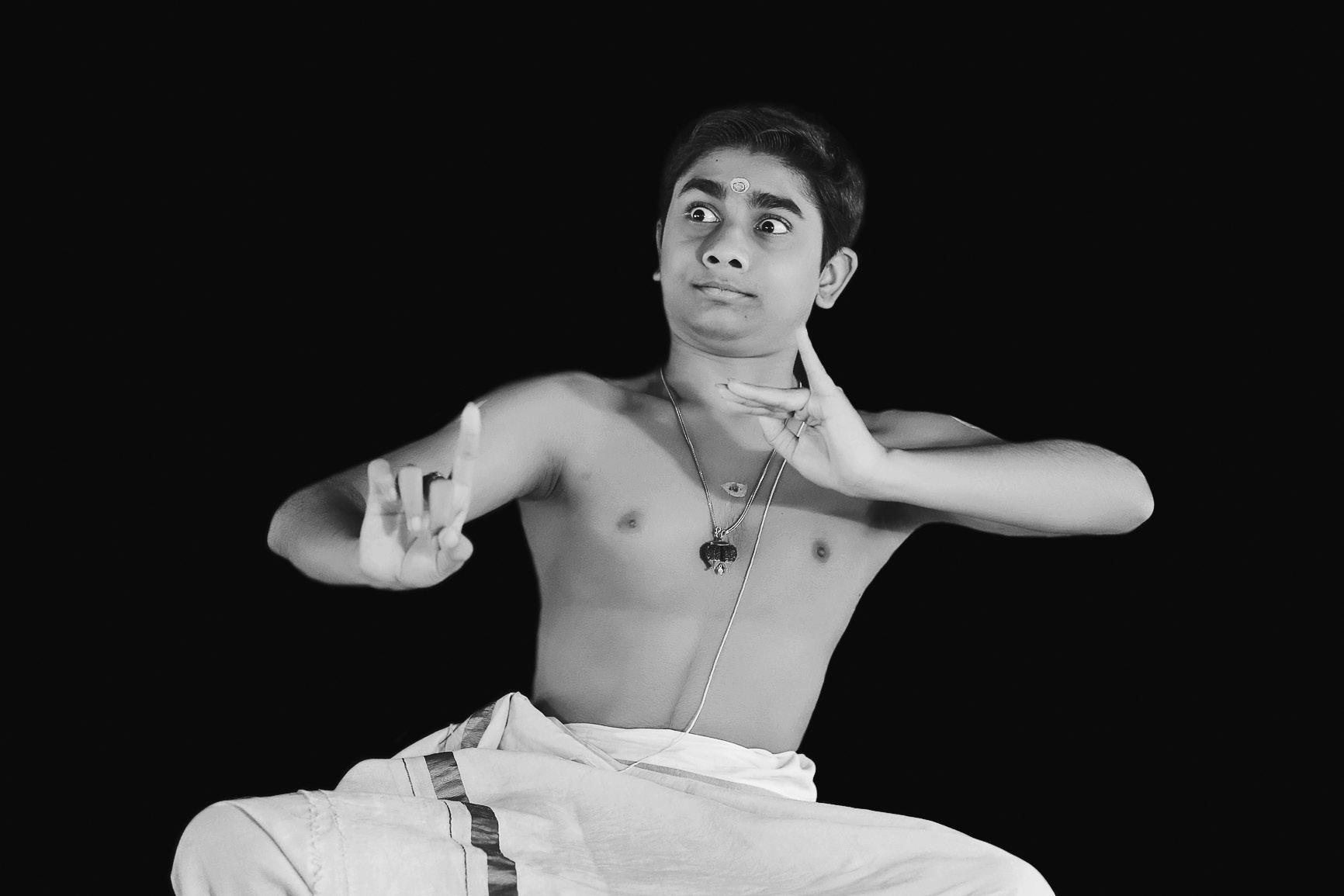
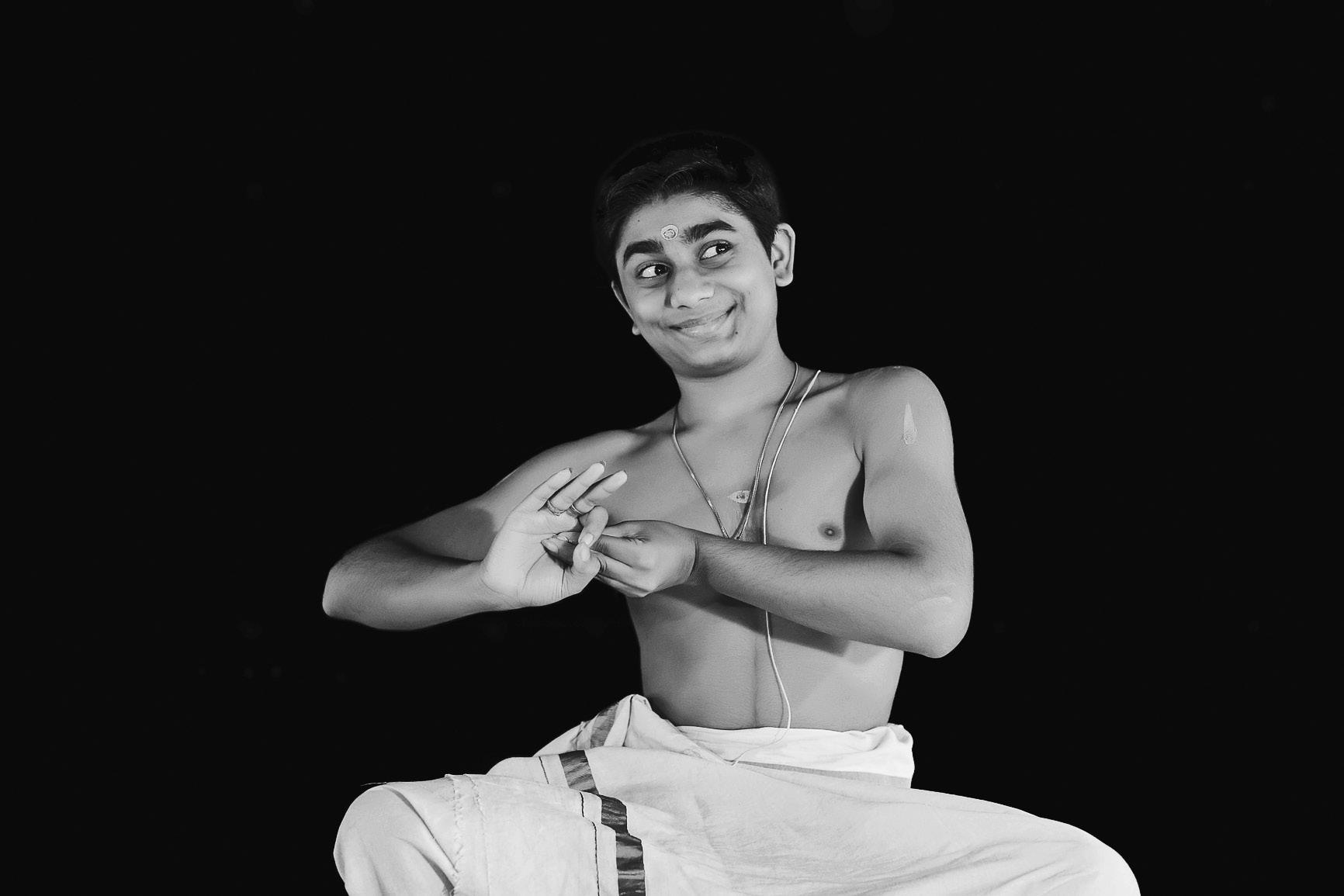
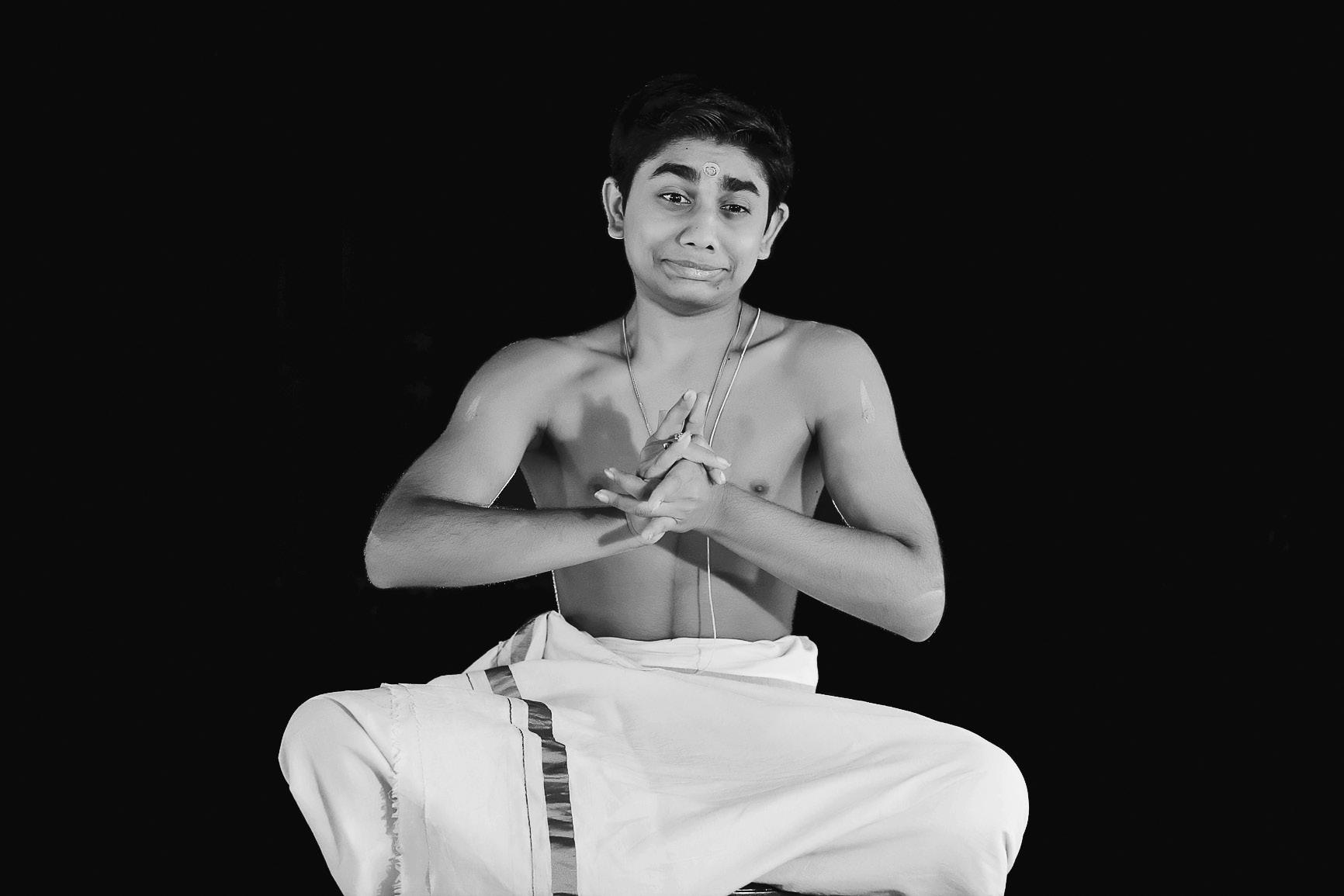
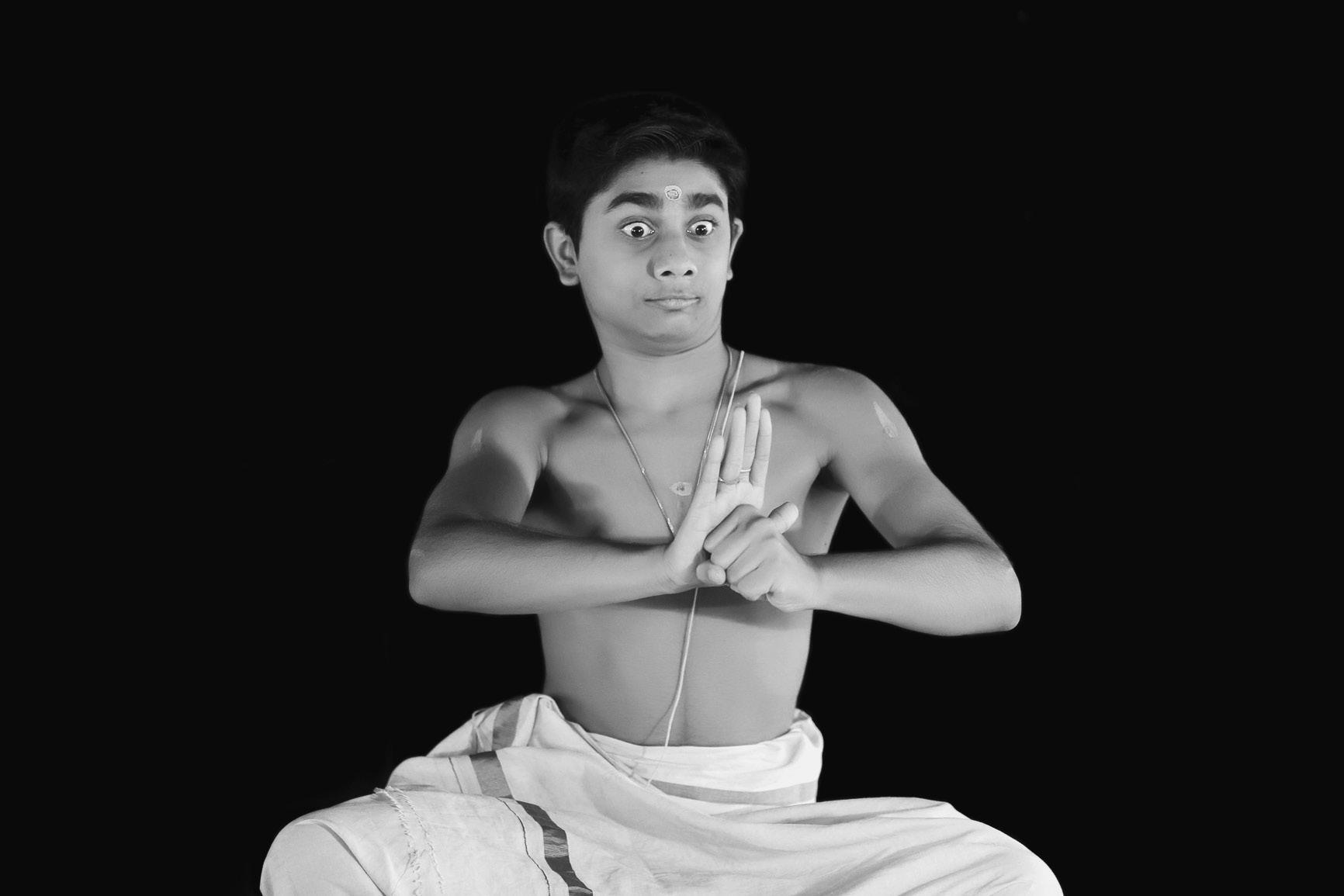
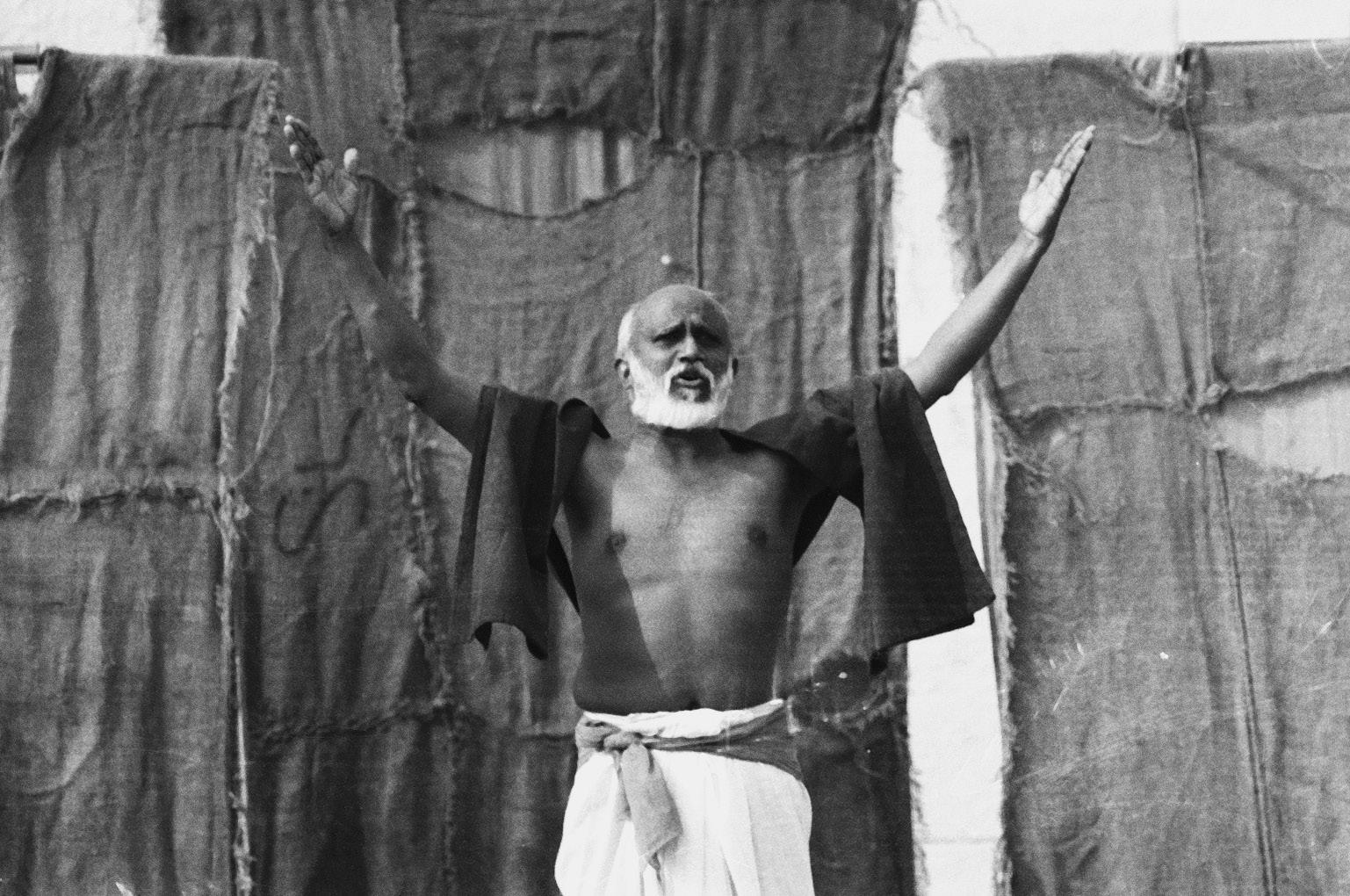
Figure 1. Nepathya Srihari Chakyar demonstrating mudras (hand gestures) while narrating the story of Rāmāyaṇa Saṃkṣēpam at the Nepathya institute, Moozhikkulam, Kerala.
Photo credit: Prathish Narayanan, courtesy of Rustom Bharucha.
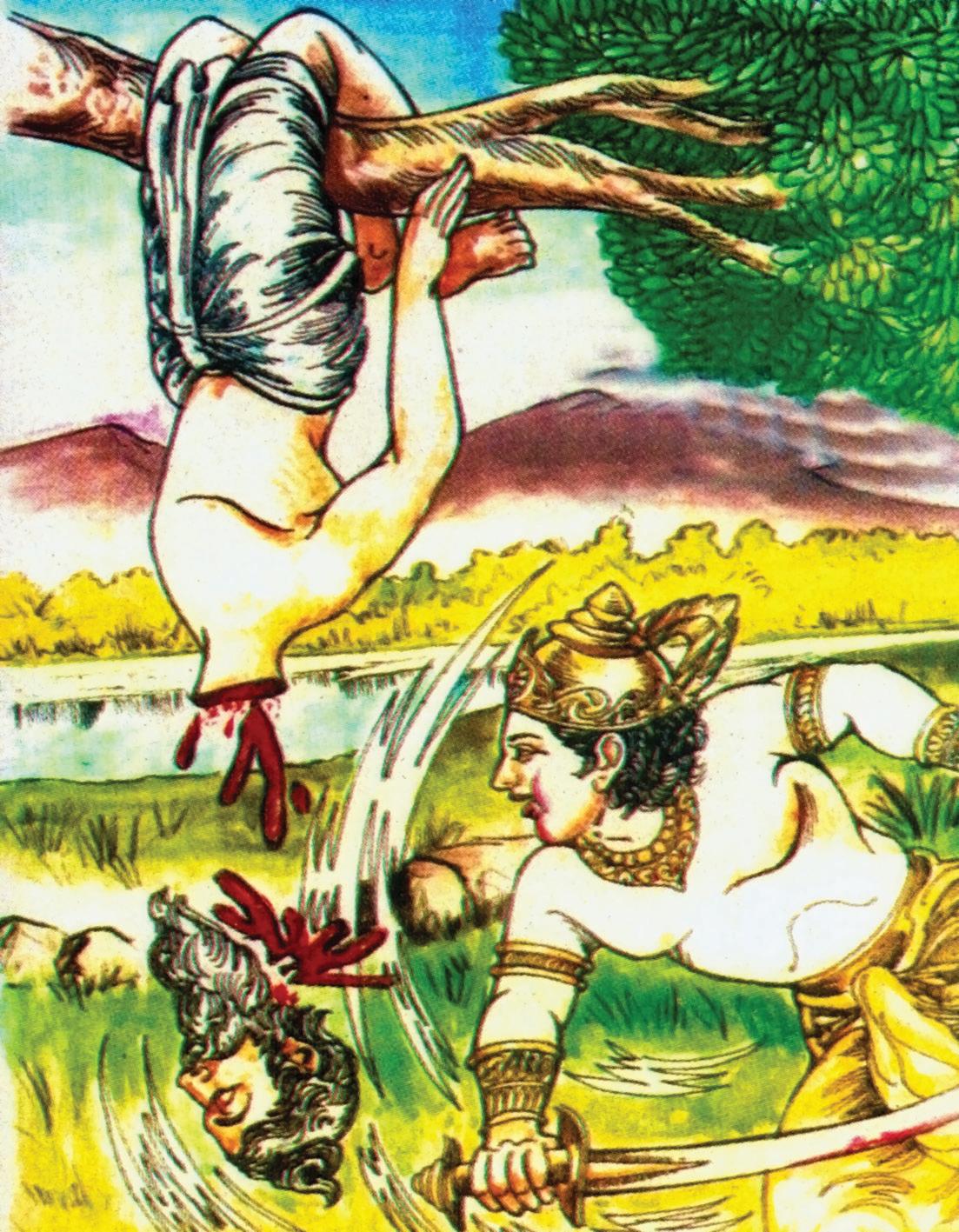
Figure 2. Featured in several Shambuk-related publications by Samyak Prakashan, New Delhi, notably Niraparādh kī Hatyā (2016) with cover design by Shant Kala Niketan.
Photo credit: Samyak Prakashan, courtesy of author.
Figure 3. T. K. Soman as Shambuk in Janam’s production of Śambūk-Vadh performed in September 2005 at Jamia Millia Islamia, New Delhi.
Photo credit: Janam, courtesy of author.
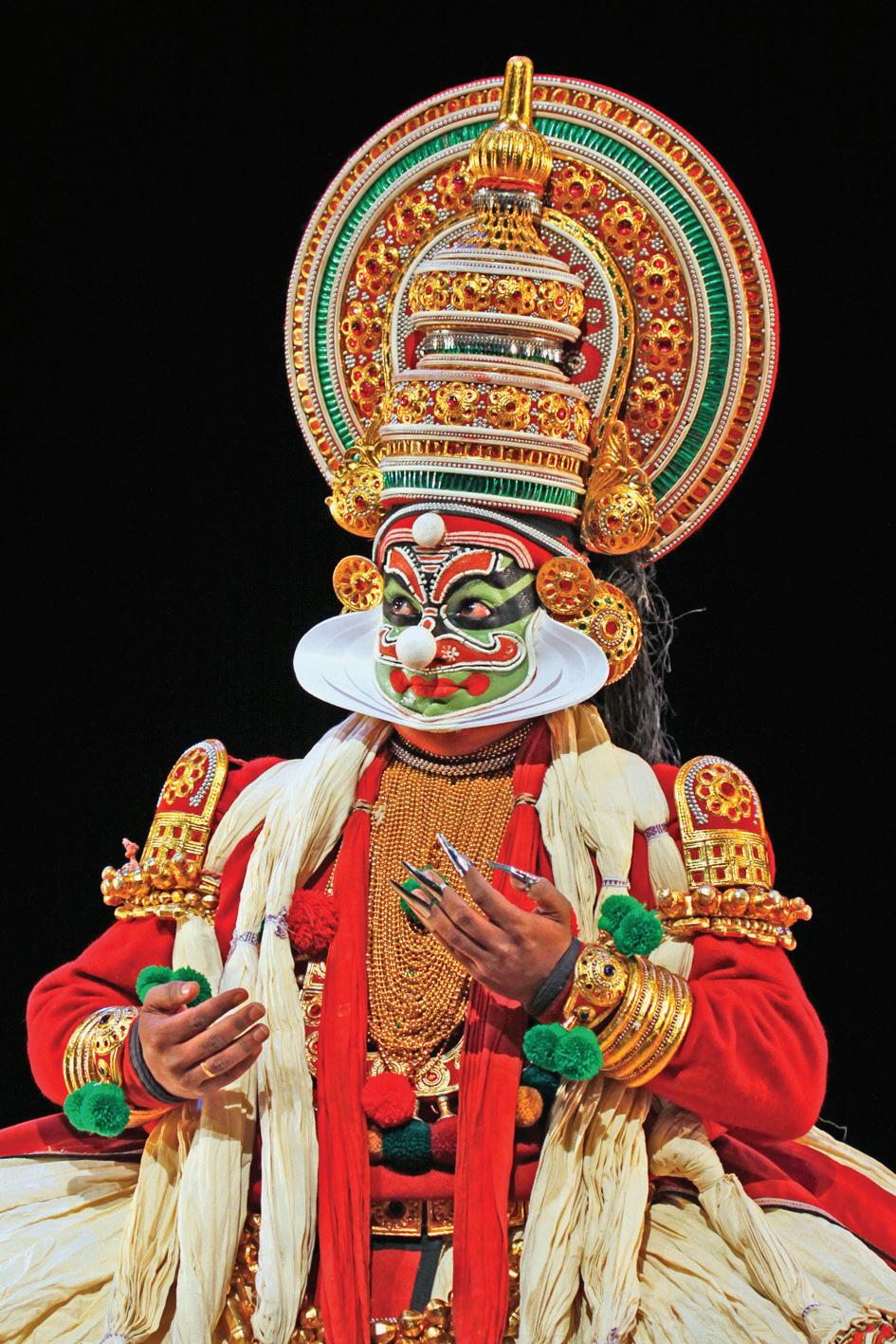
Figure 4. Kalamandalam Shanmukhan [C. Shanmukhadas] as Ravana enacting Tapassāṭṭam at Oberlin College, Ohio, in October 2010.
Photo credit: Shankar Ramachandran, courtesy of author.
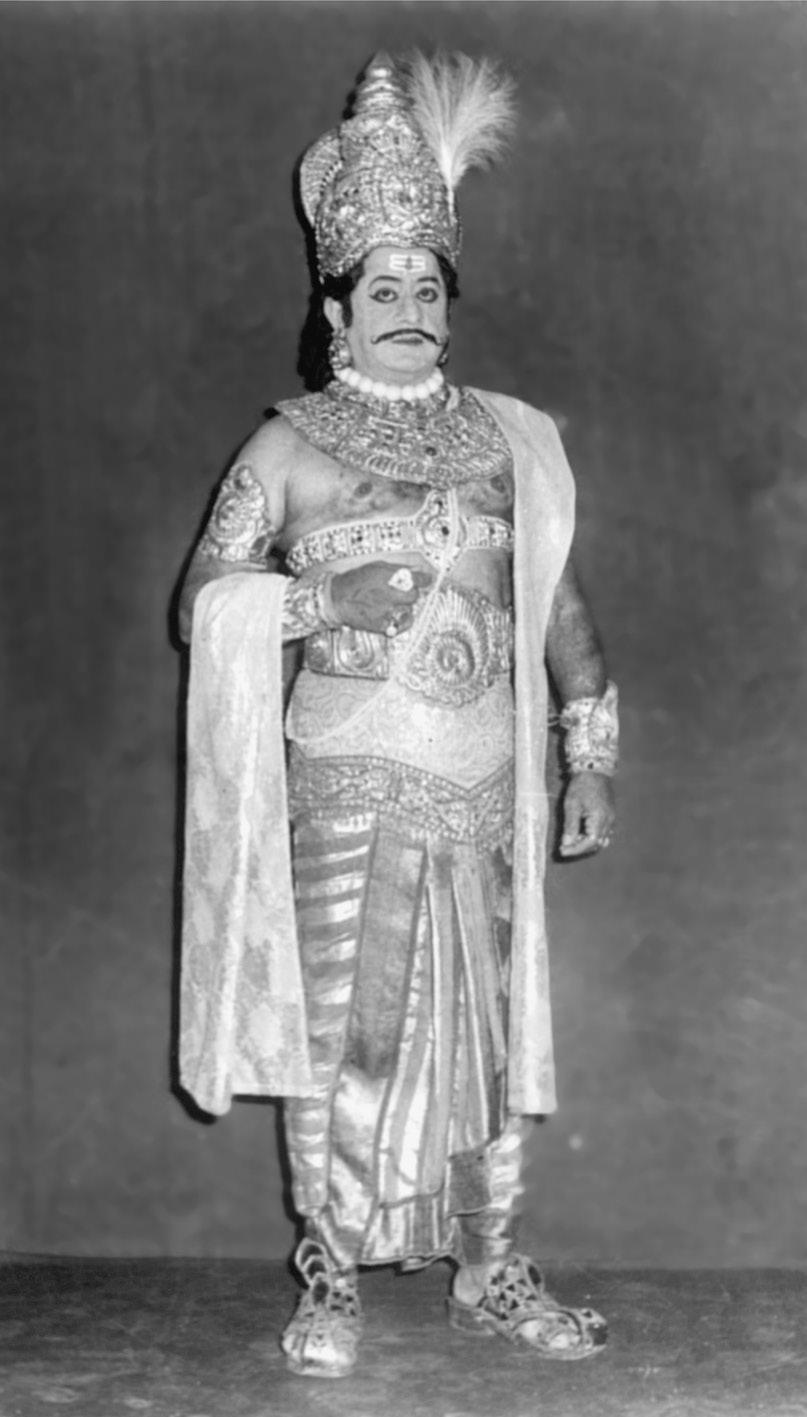
R. S.
: Natya
Figure 5.
Manohar [Lakshmi Narasimhan] as Ravana in Ilaṅkēswaraṉ (King of Lanka) in Madras in 1956.
Photo credit
Shodh Sansthan, theatre archives, Kolkata, included in entry on Manohar in The Oxford Companion to Indian Theatre, ed. Ananda Lal (2004), courtesy of author.
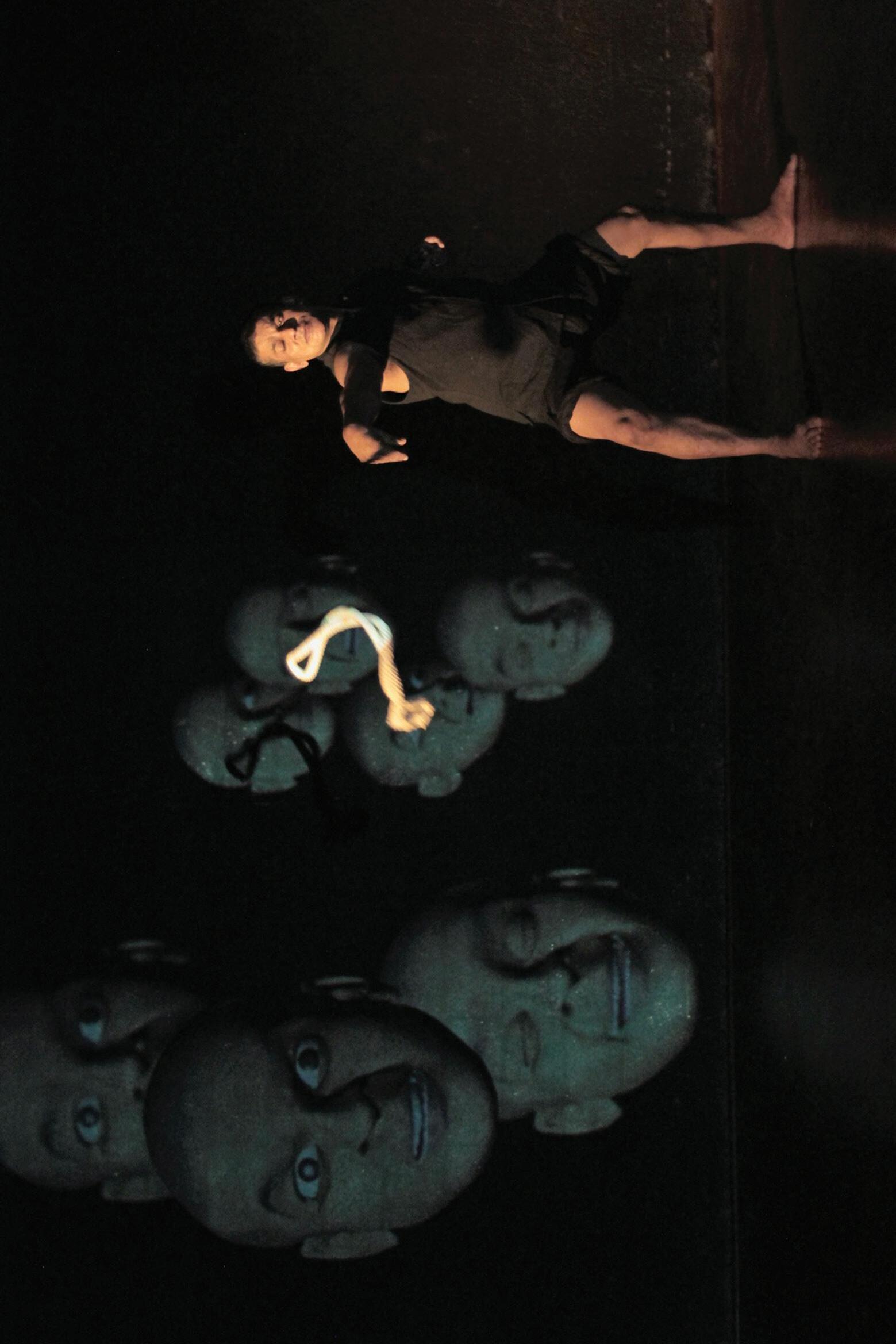
Figure 6. Vinay Kumar as Tenth Head in Adishakti’s production of The Tenth Head reflecting on Icarus and notions of flight.
Photo credit : Anoop Davis, courtesy of author.
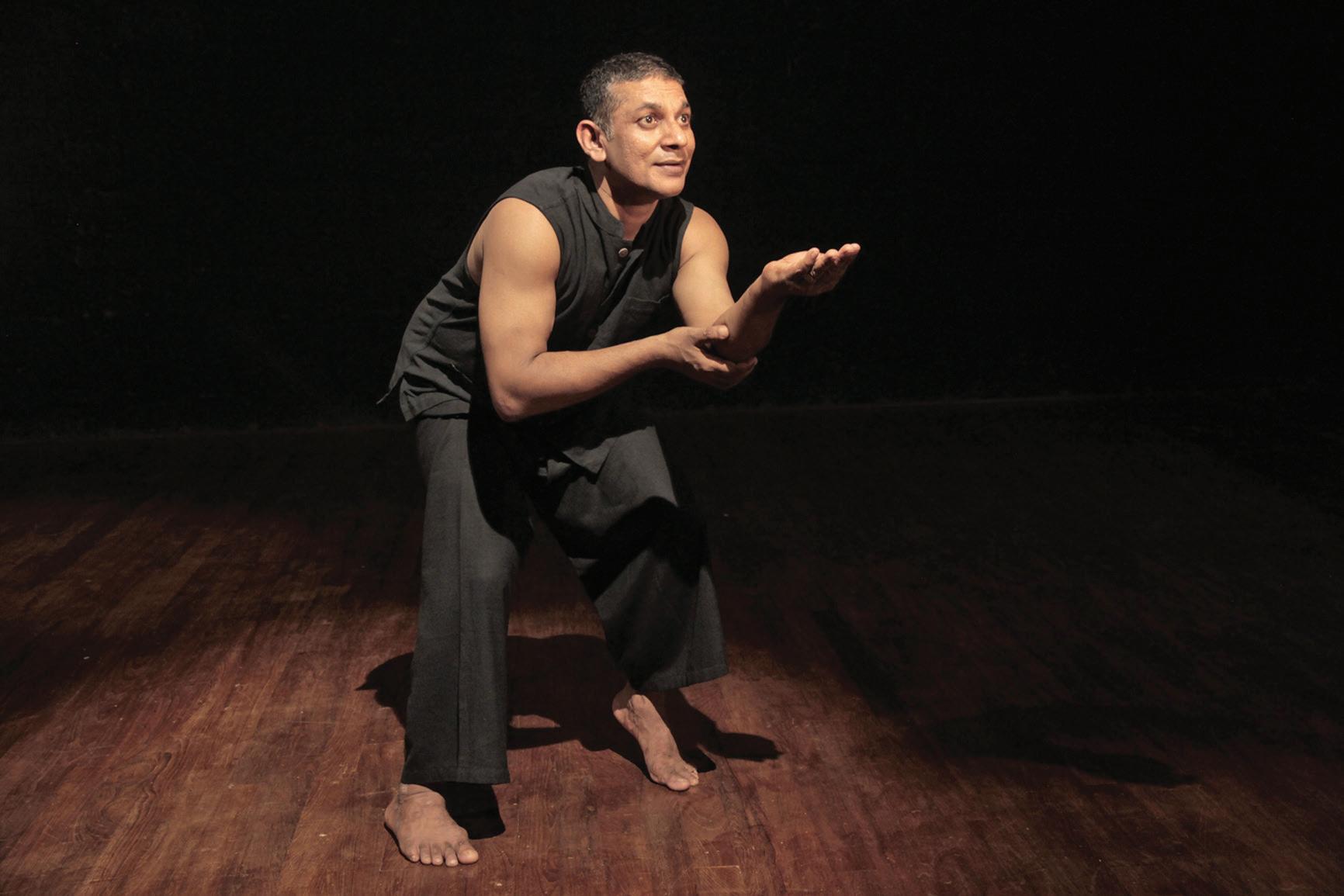
Figure 7. Tenth Head meeting Sita for the first time.
Photo credit: Anoop Davis, courtesy of author.
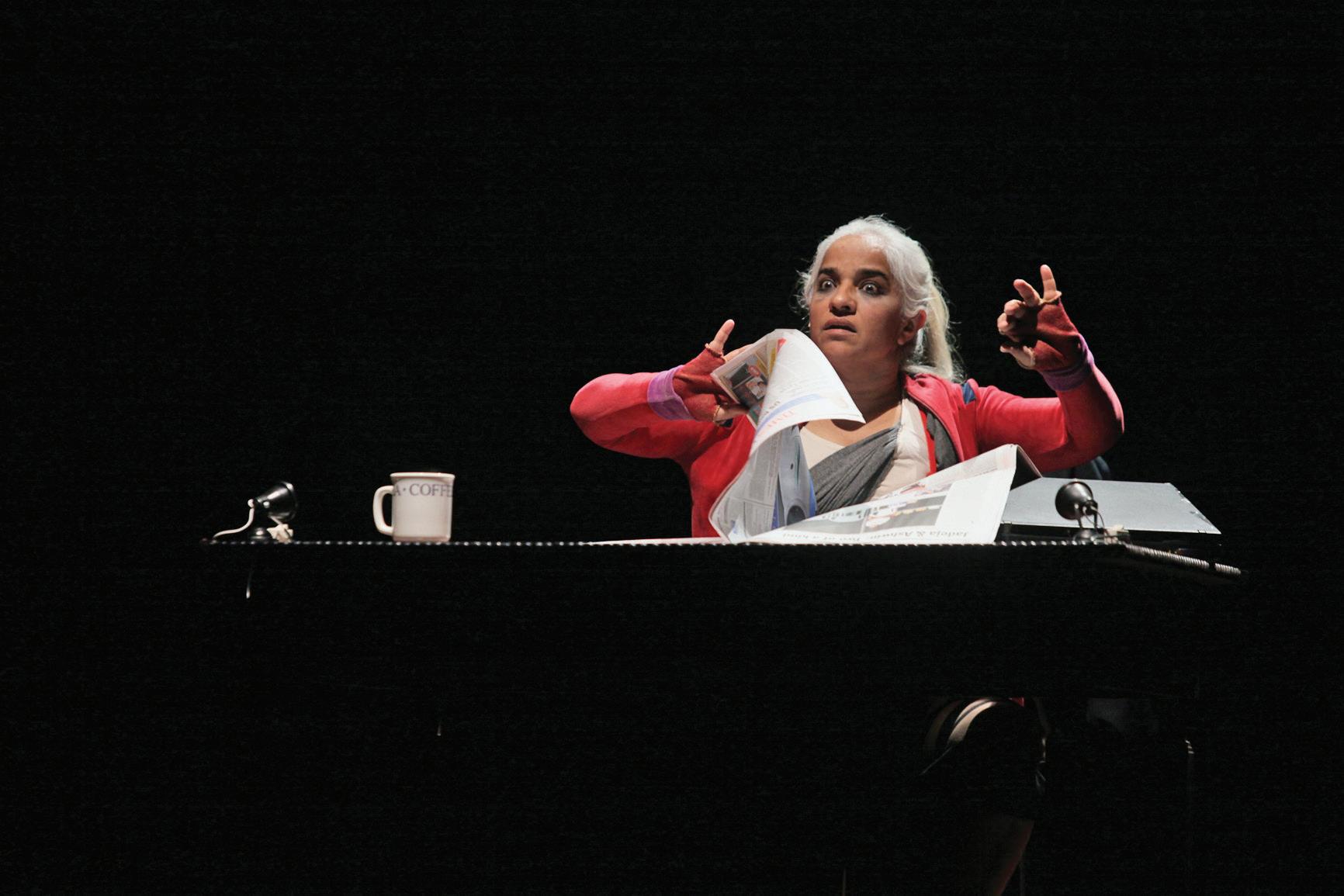
Figure 8. The Actor (Maya Krishna Rao) discovers Ravana while reading the morning newspaper.
Photo credit: S. Thyagarajan, courtesy of author.
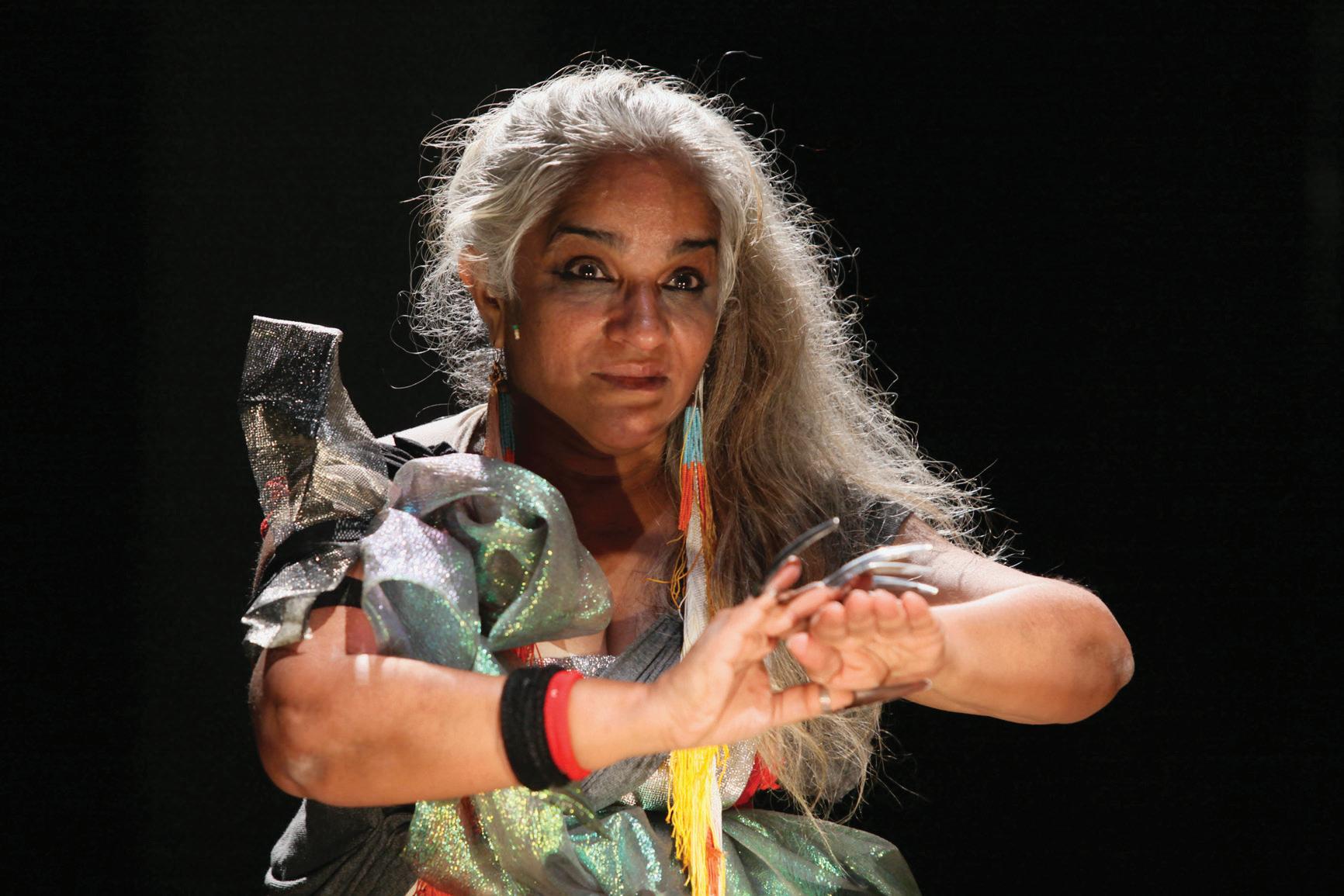
Figure 9. The Actor creates Sita, the character.
Photo credit: S. Thyagarajan, courtesy of author.
Figure 10. “Disgust” in the “Michael Jackson” sequence.