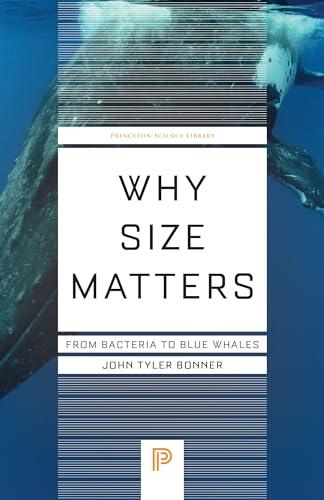
WhySizeMatters:FromBacteriatoBlueWhales (PrincetonScienceLibrary,145)Bonner
https://ebookmass.com/product/why-size-matters-frombacteria-to-blue-whales-princeton-sciencelibrary-145-bonner/
Instant digital products (PDF, ePub, MOBI) ready for you
Download now and discover formats that fit your needs...
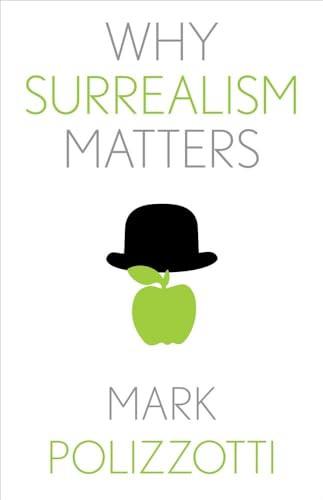
Why Surrealism Matters (Why X Matters Series) Polizzotti
https://ebookmass.com/product/why-surrealism-matters-why-x-mattersseries-polizzotti/
ebookmass.com
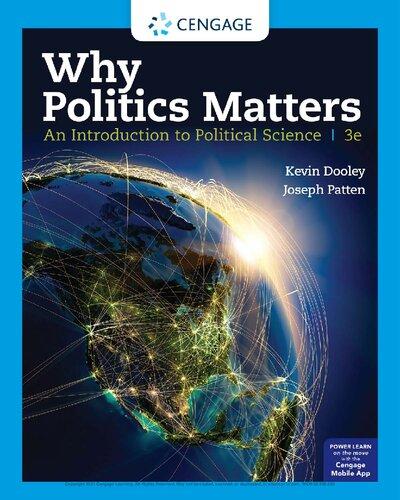
Why Politics Matters: An Introduction to Political Science 3rd Edition Kevin L. Dooley
https://ebookmass.com/product/why-politics-matters-an-introduction-topolitical-science-3rd-edition-kevin-l-dooley/
ebookmass.com
Why Public Space Matters Setha Low
https://ebookmass.com/product/why-public-space-matters-setha-low/
ebookmass.com
Art, History, and Postwar Fiction Kevin Brazil
https://ebookmass.com/product/art-history-and-postwar-fiction-kevinbrazil/
ebookmass.com
Hacked: A SciFi Cyborg Romance (The Krae Chronicles Book 2) Natasha Woods
https://ebookmass.com/product/hacked-a-scifi-cyborg-romance-the-kraechronicles-book-2-natasha-woods/
ebookmass.com
Post-Conflict Power-Sharing Agreements: Options for Syria 1st Edition Imad Salamey
https://ebookmass.com/product/post-conflict-power-sharing-agreementsoptions-for-syria-1st-edition-imad-salamey/
ebookmass.com
Introduction to Social Entrepreneurship – Ebook PDF Version
https://ebookmass.com/product/introduction-to-social-entrepreneurshipebook-pdf-version/
ebookmass.com
Bipolar Disorder For Dummies. 4th Edition Candida Fink
https://ebookmass.com/product/bipolar-disorder-for-dummies-4thedition-candida-fink/
ebookmass.com
The Alien's Pregnant Omega (The Alien's Omega Book 2.5) Sienna Sway
https://ebookmass.com/product/the-aliens-pregnant-omega-the-aliensomega-book-2-5-sienna-sway/
ebookmass.com
The Midnight Realm: A Stone Veil Novel (Chronicles of the Stone Veil Book 7) Sawyer Bennett
https://ebookmass.com/product/the-midnight-realm-a-stone-veil-novelchronicles-of-the-stone-veil-book-7-sawyer-bennett/
ebookmass.com
WHY SIZE MATTERS
FROM BACTERIA TO BLUE WHALES
John Tyler Bonner
Princeton University Press
Princeton & Oxford
Copyright © 2006 by Princeton University Press
Princeton University Press is committed to the protection of copyright and the intellectual property our authors entrust to us. Copyright promotes the progress and integrity of knowledge. Thank you for supporting free speech and the global exchange of ideas by purchasing an authorized edition of this book. If you wish to reproduce or distribute any part of it in any form, please obtain permission.
Published by Princeton University Press, 41 William Street, Princeton, New Jersey 08540
In the United Kingdom: Princeton University Press, 99 Banbury Road, Oxford OX2 6JX press.princeton.edu
All Rights Reserved
First paperback printing, 2012 New paperback printing, 2024 Paper ISBN 978-0-691-25440-1
ISBN (e-book) 978-0-691-25442-5
The Library of Congress has cataloged the cloth edition of this book as follows Bonner, John Tyler
Why size matters : from bacteria to blue whales / John Tyler Bonner. p. cm.
Includes bibliographical references and index.
ISBN-13: 978-0-691-12850-4 (hardcover : alk. paper) ISBN-10: 0-691-12850-2 (hardcover : alk. paper)
1. Body size. I.Title.
QL799.B66 2006 578.4'1—dc22 2006004945
Cover design by Michael Boland for TheBolandDesignCo.com Cover image: Wirestock / iStock
British Library Cataloging-in-Publication Data is available This book has been composed in Bembo and Helvetica Neue Printed in the United States of America
for Slawa
One can live in the shadow of an idea without grasping it.
Elizabeth Bowen
PREFACE
Our interest in the size of things is entrenched in the human psyche. It reveals itself in literature from Gulliver’s Travels, to the Grimms’ fairy tales, to Alice in Wonderland. We see it in our daily thoughts of our growing children, of the people who are around us, of our pets, of the fish we catch, of the portions of the food we are served, of the clothes we buy—are you small, medium, or large?—and one could go on and on. There is hardly anything we observe in daily life that we, either consciously or unconsciously, do not take measure of its size. We love to measure everything with rulers and scales and clocks. I began to think of the matter of biological size years ago when I first read that glorious chapter in D’Arcy Wentworth Thompson’s On Growth and Form called “On Magnitude.” It is a model of insight, erudition, and beautiful prose. He showed me that size and shape are indeed interrelated and that the reason that this is so is a matter of physics that underlies the biology. From this initial inspiration there slowly grew inside me the feeling that there was a hidden other dimension of the
subject that was eluding me. That inner feeling persisted for many years, and slowly something began to take shape. I am finally putting it all together in this book—I feel as though those shadowy thoughts have erupted through the surface.
This book is a summary of those thoughts. It is an enormous subject that I try to bring down to reasonable dimensions so that I can include it all. As will be clear, I am interested in painting the big picture on a small canvas.
If we are a bacterium, or an elephant, or a human being, we have our own size worlds, and for each of us there are things smaller and larger than ourselves. But no one can escape the universal rules imposed by size.
In looking at the subject of biological size in its entirety, from large to small, from plant to animal to microbe, it will be evident that everything is interconnected. An examination of the effects of size is a way of bringing all life together.
� f c
Just as the content of this book has almost taken a lifetime to mature, the actual writing has been an equally painful and slow process with innumerable adjustments and corrections in my course as I proceeded.These were greatly helped by the kindness and wisdom of numerous individuals to whom I am deeply indebted. Before I even began the book, my colleague Henry Horn was enormously helpful (as he has always been
over the years) in purifying my thoughts about size. At a very early stage of writing I had the help of my friend Jonathan Weiner, who urged on me the need for a sense of direction. The first complete draft of this book (still in its underwear!) was prematurely sent to two anonymous readers, and while the comments of one of them were highly critical, they gave me the needed jolt at just the right moment. Later drafts were greatly improved due to the comments of Sam Elworthy, Brian Hall, Slawa Lamont, Mary Jane West-Eberhard, and another anonymous reviewer. Also I want to thank David Kirk for his help with the section on Volvox and its relatives, and my colleague Ted Cox on some matters of physics. I almost feel as though they all ought to be listed as co-authors. My special thanks to Alice Calaprice and Deborah Tegarden for their skill and great help in seeing the book through its final stages of preparation. Finally I would like to thank Hannah Bonner for applying her superb illustrator skills to produce seven of the original drawings.
Margaree Harbour
Cape Breton, Nova Scotia
WHY SIZE MATTERS
INTRODUCTION
In the seventeenth century it was held by some that inside a human sperm there was a minute human being—a homunculus—that was planted inside the womb. Development consisted of the miniature homunculus enlarging and passing through birth and on to maturity—just like inflating a balloon. There were others, going back to the early ideas of Aristotle and the many who followed him, who took the view that vast changes in shape occurred between egg and adult, for it could be plainly seen that the early stages of development of any animal bore no resemblance to what came later. These two views frame the point I want to make in this book. In the case of the homunculus, shape is totally unconnected to size; as size increases shape remains unaltered. In the other case—now totally accepted—as size increases from egg to adult, the shape must change; there is no alternative.
Let me put the matter in another way. If an engineer is commissioned to build two bridges, one across the Hudson River and the other across a brook no more than 30 feet wide,
it is quite obvious that the two bridges will be very different in their appearance. Even more importantly, they will differ in their construction and materials. These differences will have nothing to do with the artistic whims of the engineer, at least for the larger bridge: they are absolute requirements. Any attempt to build the Hudson River bridge with wooden planks would collapse into the water long before it was finished. The elaborate steel trusses and the carefully designed architecture of the huge bridge are demanded by the width of the Hudson—it is dictated by its large size. As we shall see, this perfectly mirrors what happens in living organisms; they too cannot escape the conditions set by size; they have no choice.
With these thoughts in mind, let me state the main argument of this book. Changes in size are not a consequence of changes in shape, but the reverse: changes in size often require changes in shape. To put it another way, size is a supreme regulator of all matters biological. No living entity can evolve or develop without taking size into consideration. Much more than that, size is a prime mover in evolution. There is abundant evidence for the natural selection of size, for both increases and decreases. Those size changes have the remarkable effect that they guide and encourage novelties in the structure of all organisms. Size is not just a by-product of evolution, but a major player. Size increase requires changes in structure, in function, and, as we will see, in other familiar evolutionary innovations. It requires them because they are 2 / CHAPTER 1
needed for the individual to exist. Life would be impossible without the appropriate size-related modifications.
The subject of size has not been ignored in the past. Quite to the contrary, and as will be clear in the pages to come, there is a great literature on matters of size, beginning with the Greeks and bursting into flower with Galileo. This is true for the West, and no doubt there are similar traditions in other cultures.
However, the subject is always to some degree fragmented because it is generally introduced as an adjunct to some other biological phenomenon or property. For instance, the topic might be running speed, or rate of metabolism, or one of many other possibilities, and in the discussion of each of these phenomena the crucial role of size would be included. Many of the themes treated in this book can be found elsewhere. Here I wish to look at them from a different point of view—from the other end of the telescope—and show that the biological world revolves around size.
The mindset that size is not a central issue is quite understandable. To say an elephant is big says nothing about all the things that make an elephant: its anatomy, its physiology, and even its behavior.These are the aspects that draw our attention and the matters we want to study. Yet size is an overarching issue. Its effect is something that no organism, from the smallest bacteria to the largest whale, can escape. It governs their shape and all their activities in a way that is of fundamental significance. Size dictates the characteristics of all living
forms. It is the supreme and universal determinant of what any organism can be and can do. Therefore, why is it a subject that always resides in the wings rather than center stage?
The main reason is that organisms are material objects while size is a bloodless geometric construct. Any object, whether animate or inanimate, will have a size. Airplanes, boats, or musical string instruments vary in size just like animals and plants, and in all cases their size and their material construction are totally different matters even though they affect one another.
That the role of size has been to some degree neglected in biology may lie in its simplicity. Size may be a property that affects all of life, but it seems pallid compared to the matter which makes up life. Yet size is an aspect of the living that plays a remarkable, overreaching role that affects life’s matter in all its aspects. It is a universal frame from which nothing escapes. There are many things one wants to know about size, in particular those that concern its evolution. For instance, what is the evidence for my contention that size differences are a prime object of natural selection and are followed by changes in construction? What is the relation between size and internal complexity—that is, the division of labor—and, again, what is the evidence for which came first? What is the relation between size and the timing of all living activities such as the speed of movement of animals, or life span; and does size impose the timing, or the reverse? As we shall see, it
is generally true that size is the prime mover: if size changes occur through the agency of natural selection, all those other matters must follow.
SIZE RULES
In the pages to come we will see many examples of where size rules life. They are supported by correlations in which various properties of organisms vary with size. It is these correlations that provide the foundation, the underpinning, for my contention that size rules life. The correlations can be stated in the form of five rules that will be briefly mentioned here and expanded and explained later.The rules are as follows:
RULE 1 Strength varies with size.
RULE 2 Surfaces that permit diffusion of oxygen, of food, and of heat in and out of the body, vary with size.
RULE 3 The division of labor (complexity) varies with size.
RULE 4 The rate of various living processes varies with size, such as metabolism, generation time, longevity, and the speed of locomotion.
RULE 5 The abundance of organisms in nature varies with their size.
6 / CHAPTER 1
Each of these rules will be put in its proper context. Some are physical or engineering principles; rules that apply for size differences occur in the inanimate as well as the animate. A central issue is the role of size in evolution, and this can be seen in numerous manifestations. Size also affects in many fundamental ways the physiology of animals, plants, and other organisms; in fact, this is true for all aspects of living things that involve time or rates of activity. And the human interest in the matter of size (including my own) will not be neglected.
THE HUMAN VIEW OF SIZE
It is only natural that we should measure everything in the world around us in terms of our own size. An elephant is bigger than we are, and a mouse is smaller. Some years ago,TimeLife was publishing a series of illustrated books on various subjects, and they called me up to ask for advice on a book they were doing on the general subject of growth—would I please come in to New York to discuss the matter with their editors, for they had numerous questions they wanted to ask an interested biologist. I no longer remember what those questions were, but at the end of our conference they said they were having difficulty thinking of a suitable photograph for the cover of the book. I thought about it as they were talking, and suggested they should have the large open hand of a man and in his palm have the hand of an infant. They did not seem very enthusiastic about the idea, but when they sent me the finished book, that was exactly what they had on the cover. We see and are conscious of the size of everything that surrounds us, whether it is smaller or larger,
and nothing makes the point more clearly than the growth of children. Who has not remarked upon seeing—after an absence—the child of a friend or family, “My, you are so much taller than when I saw you last.” Once I visited Louis Pasteur’s house outside of Paris, and one of the doorways still had pencil marks recording the annual growth of his children, something that will sound familiar to everyone. Either consciously or, because it is so much part of our natures, unconsciously, we are forever taking note of the size of things and gauging any increase or decrease.
Our world is the world we see with our naked eyes, and that is what we use for our everyday measuring stick. We are also aware that there are worlds that are larger and smaller than we can see in our normal existence—in fact, how to see the things above and below our vision was among the great discoveries in our history. The telescope was one of the profound technical advances in our civilization. The first to see huge, distant bodies was Galileo, who in the seventeenth century devised an improved way to put lenses together to greatly magnify the heavenly planets and stars (fig. 1). Following this discovery of great importance and consequence, there has been a continuous improvement in telescopes to explore the sky. Today we have the Hubble (and similar) telescopes carried by a satellite orbiting the earth which not only has an enormously powerful telescope, but it can operate free of the optical disturbances created by the earth’s atmosphere. The universe is unimaginably large, yet with this tool we are
learning things about it that are totally beyond the reach of unaided human eyes.
The microworld is too small for us to see without help. That help first came in the seventeenth century when Anton van Leeuwenhoek ground very small lenses to greatly magnify objects (fig. 2). He not only invented the microscope, but he went on to illuminate a whole world that had never before been known to exist. He described for the first time all sorts of microscopic animals and plants that live in ponds and rain barrels: he even, for the first time, described bacteria, which are exceedingly small. He was the discoverer of spermatozoa in human semen, although it was not until much later that their nature was correctly understood. The technical advances in microscopes over the years has been no less remarkable than those of telescopes; their complexity and their power bears little resemblance to the tiny lenses ground out by van Leeuwenhoek many years ago.
THE HUMAN VIEW OF SIZE / 9
Figure 1. Galileo’s telescope. (Drawing by Hannah Bonner)
It has often struck me that, conscious as we are of our own size and of those around us, we do not ordinarily think that once we were microscopic. It is possible to believe that at one time we were infants, and there are all those old family photographs to prove it. It is even possible to imagine that earlier we were a foetus, but the idea that we were once a microscopic, single cell—a fertilized egg—is not something that ordinarily crosses our mind. In our own growth we go from the world of van Leeuwenhoek to the world we see
Figure 2. Van Leeuwenhoek’s microscope. (Drawing by Hannah Bonner)
around us every day. Perhaps if we were to have eyes and senses and a memory at that single cell stage of our life—an absurd possibility—we would look at the world differently, for our sense of size does not come to us until we are a small child. (In any event, an egg does not have much to look at in the darkness of a Fallopian tube.) One of my early recollections is being so small that I could not reach a light switch on the wall and had to get help from some giant adult. I had a psychologist friend who wanted to apply for a grant to build a huge room with gigantic furniture exactly as a small child would see it, and study the effect it might have on an adult who reenters his childhood world. The university committee that had to pass on research done on human subjects turned the request down: the effect might be too dangerous for the human psyche!
Clearly children are especially conscious of their size as they are surrounded by huge adults. This is reflected in fairy stories and children’s tales. A good example is Lewis Carroll’s Alice in Wonderland, where Alice keeps changing her size to go down rabbit burrows and back to her normal large self. She begins with the bottle which says “Drink Me” and shrivels to a size that allows her to join the underground world. Later, the hookah-smoking caterpillar puts her on to a magic mushroom: a bite from one side makes her larger, and a bite from the other smaller. What a perfect child’s dream to go back and forth from one size world to another. At one point