Oxford University Press is a department of the University of Oxford. It furthers the University’s objective of excellence in research, scholarship, and education by publishing worldwide. Oxford is a registered trade mark of Oxford University Press in the UK and certain other countries.
Published in the United States of America by Oxford University Press 198 Madison Avenue, New York, NY 10016, United States of America.
All rights reserved. No part of this publication may be reproduced, stored in a retrieval system, or transmitted, in any form or by any means, without the prior permission in writing of Oxford University Press, or as expressly permitted by law, by license, or under terms agreed with the appropriate reproduction rights organization. Inquiries concerning reproduction outside the scope of the above should be sent to the Rights Department, Oxford University Press, at the address above.
You must not circulate this work in any other form and you must impose this same condition on any acquirer.
Library of Congress Cataloging-in-Publication Data
LC record available at https://lccn.loc.gov/2022037326
LC ebook record available at https://lccn.loc.gov/2022037327
DOI: 10.1093/oso/9780197638514.001.0001
1 3 5 7 9 8 6 4 2
Printed by Integrated Books International, United States of America
Dr. Marilyn Weaver Lewis dedicates this text to her children, Kathryn and Hilary, and her grandchildren, Haley and Marshall, as well as her students in the master’s social work program at Norfolk State University. Remember, you can do anything you put your mind to.
Dr. Liyun Wu dedicates this book to her parents, uncle, siblings, and her only child for their encouragement and support.
Dr. Zachary Allan Hagen dedicates this book to his patients in Baltimore for the endless lessons in community and resilience.
8.
Foreword
Written by Dr. E. Delores Dungee-Anderson STEM-H for Mental Health Clinicians (Lewis, M.W, Wu, L., & Hagen, Z.)
As widely understood in academic areas of study, STEM is the commonly recognized abbreviation for four intricately connected felds of academic study: science, technology, engineering, and mathematics. Tese felds are frequently associated because they share similarities in both theory and practice. Each feld is dependent on sensical conceptual inputs for positive and logical outcomes in all areas of discipline practices.
Tis text, STEM-H forMental Health Clinicians, is both a relevant and exciting work. It is a long-awaited, clearly written, and signifcantly informative resource, primarily designed for clinical practitioners in the social sciences, clinical students, and faculty who teach and train students in the social science disciplines of social work, psychology, and counseling. However, the clarity of the content readily serves as an invitation to all who are seeking to enhance their understanding of cellular level and systems functioning and the related health and disease processes that frequently are identifed as underlying factors of health and mental health concerns.
Te authors include an intricate, detailed, and broad overview of STEMHealth content. Teir treatment of STEM and identifcation of the important relationship of STEM to overall health provide salient connections to the understanding and identifcation of disease processes and related conditions for social science faculty who teach, train, and supervise students in each discipline—and for students enrolled in graduate programs and required internships. Te focus of the authors on STEM and STEM connections to health suggests that primary audiences for this text are (1) graduate students who elect social science majors and train as clinical counselors and psychotherapists for professional roles in the employment marketplace and (2) social science majors previously employed in positions in other areas of their disciplines but who desire to further study and train as clinical practitioners. Te health content provided in this text ofers both a formal and an informal opportunity to study STEM and health for its relevance to clinical practice and successful outcomes.
Although the disciplines of social work, psychology, and counseling each ofer multiple theories of human development and behavior and environmental and/
or social determinants of health and mental health that frequently include diferential and diagnostic assessments of sociobehavioral challenges, this book very clearly provides a broader scope of requisite clinical and neuroclinical content in its detailed treatment of STEM and health and related disease processes. It serves to fulfll a missing emphasis in clinical curricula in the social sciences. Te text is a well-positioned and essential work that clearly highlights the importance of genetics and its major contributions to the identifed aspects of the social and environmental determinants of health and mental health!
Te authors include basic and requisite neuroscience content, such as a comprehensive treatment of neuroanatomy (e.g., the structure and functioning of the brain and body systems). Tey identify and describe related disease processes and include technological interventions that address physical health treatments for these disease processes, which ultimately and signifcantly impact health and mental health. Importantly, this work serves as a necessary bridge between the biological sciences and the social sciences for clinical practitioners. Such explicated health content is important for all counseling disciplines but is especially useful and necessary for social science academic curricula, which may not include a STEM health focus that extends to sociobehavioral and mental health concerns in the social science counseling professions.
Te authors also add important clarifying features in the text, such as glossaries, detailed illustrations and illustrative defnitions, chapter summary content, and chapter integration so that the chapter material is clearly afliated. Each chapter builds on and/or relates to the previous chapter. Additionally, individual chapters are rich with references and connect to research-based content and relevant data, including website addresses that lead the reader to additional information and/or original sources of support.
In conclusion, this text is an exciting contribution and a welcome addition to the social sciences literature and disciplines! It is an especially exciting work for the connected social sciences and health-related disciplines. Te authors bring together, and highlight in depth, the ofen unexplored and unexpressed intricate connections between STEM and health and the signifcance such connections occupy in the everyday work of clinical practitioners in the social sciences. Te addition of such extensive discipline content provided by this text is both energizing and timely and deserves a place in social sciences literature, curricula, and the libraries of all social science clinicians!
E. Delores Dungee-Anderson, PhD, LCSW, Certifed Trauma Specialist Trainer Professor
Ethelyn R. Strong School of Social Work
Norfolk State University
Norfolk, Virginia
Acknowledgments
We would like to acknowledge David Follmer, president of the Follmer Group, who has provided encouragement and advice for the life of this text; Dana Bliss, executive editor, Oxford University Press; Sarah Ebel, project editor, Social and Behavioral Sciences, Oxford University Press; and Sujitha Logaganesan (She/ her), production editor, Newgen KnowledgeWorks Pvt Ltd. Without them, this book would never have seen the light of day.
2.6
3.1
3.2
3.3
5.2
7.1 Te respiratory system, including magnifcation of the alveoli and bronchiole
7.3
7.4 Total confrmed new cases of COVID-19, United States, March 2020 to March 2021
7.5 Total deaths from COVID-19, United States, March 2020 to March 2021
8.1 Layers of skin
8.2 Degrees of burn: First through fourth degree
8.3 Number of burn injuries receiving medical treatment at emergency department visits, United States, 2011–2018
8.4 New cases of skin cancer melanomas, United States, 2000–2018
8.5 New cases of skin cancer melanomas, United States, annually from 2000 to 2018
9.1
9.2
9.3 B
9.4
and skeletal systems
9.5 Prevalence of osteoporosis among adults aged 50+, United States, 2017 to 2018
9.6
of
10.5 Prevalence of Type 1 and Type 2 diabetes by age group, Canada, 2015–2019
11.9 Prevalence of chronic kidney disease by stage and year, 1988–1994 to 2015–2016 189
11.10 Prevalence of treated end-stage renal disease (ESRD), United States, 2000–2018 190
11.11 Contraceptive status among women aged 15–49 by age group, United States, 2017–2019 192
11.12 Contraceptive status among women aged 15–49 by race/ethnicity, United States, 2017–2019 193
1 How Understanding Genetics Can Beneft Mental Health Clinicians
Introduction
Research-informed practice and its counterpart practice-informed research are critical to clinical work and are mandated by the accrediting bodies of social work (Council of Social Work Education [CSWE], 2015), psychology (American Psychological Association [APA], 2017), and counseling (American Counseling Association [ACA], 2014). Tis text is designed to teach clinicians who aim to enter a medically oriented feld, or who have private or community practice clients who sufer from illnesses, how to apply concepts of science, technology, engineering, and mathematics to health (STEM-H).
STEM-H Principles Underlying Genetics
(S) Mental health clinicians can beneft from understanding the science underlying genetics
For STEM-H (STEM principles as applied to health), explaining the genetic contribution may be the frst place to start when working with an individual or family because many diseases have a genetic component that causes a person to have, carry, or express a trait. Explaining how genetic infuences can interact with the environment and thereby exacerbate or ameliorate the illness is an important function. Understanding is the frst step to changing variables that contribute to social determinants of health.
Structure
Beginning in 1990 and lasting until 2003, the Human Genome Project (HGP) mapped each of the three billion chemical base pairs of deoxyribonucleic acid (DNA) in the human body. Tis was an incredible feat and a critically important contribution to science because the human genome contains all of the individual’s approximately 20,500 genes in human DNA and is responsible for the structure and function of all bodily systems (U.S. Department of Energy,
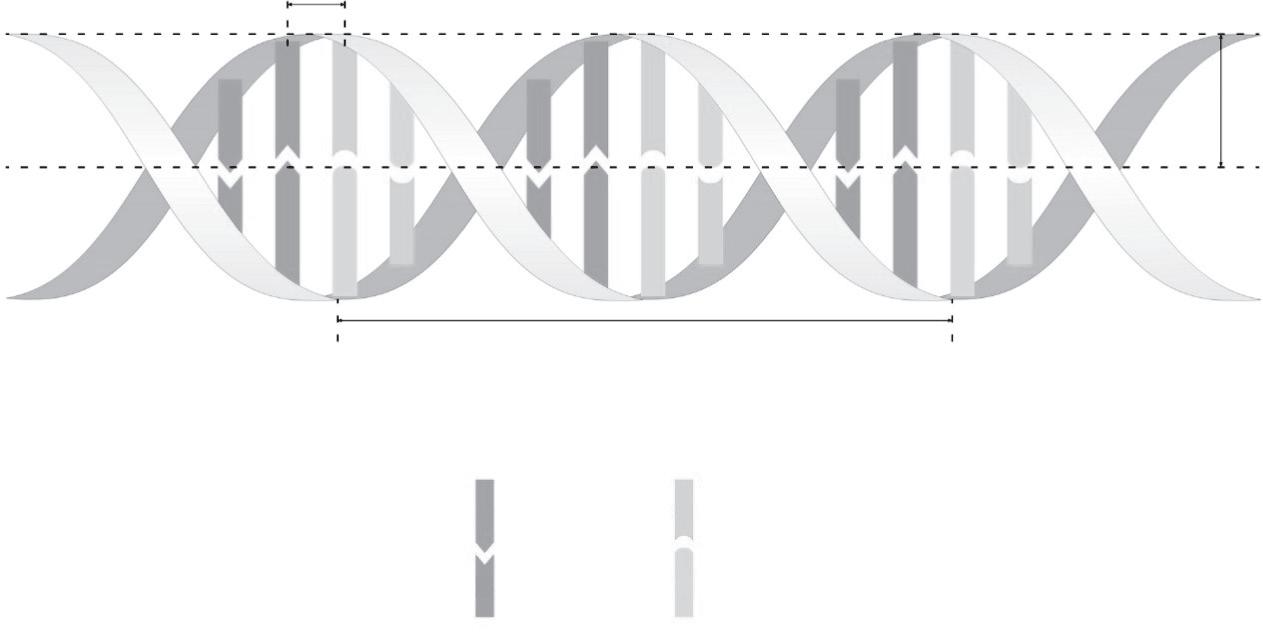
From https://www.istockphoto.com/vector/structure-of-dna-double-helix-deoxyribonucleic-acidsnitrogenous-base-and-sugar-gm1385627024-444281529?clarity=false#.
2019). As can be seen in Figure 1.1, each chromosome is a ladder-like structure with rungs made from base pairs of amino acids that are always adenine (A), thymine (T), cytosine (C), and guanine (G) and are normally arranged with the A pairing with T, and the C pairing with G (National Human Genome Research Institute [NHGRI], 2020). DNA itself is actually millions of these base pairs connected in long strands, which then form the characteristic double helix of DNA. Tese DNA strands are then tightly packaged by many proteins and cellular machinery to form chromosomes.
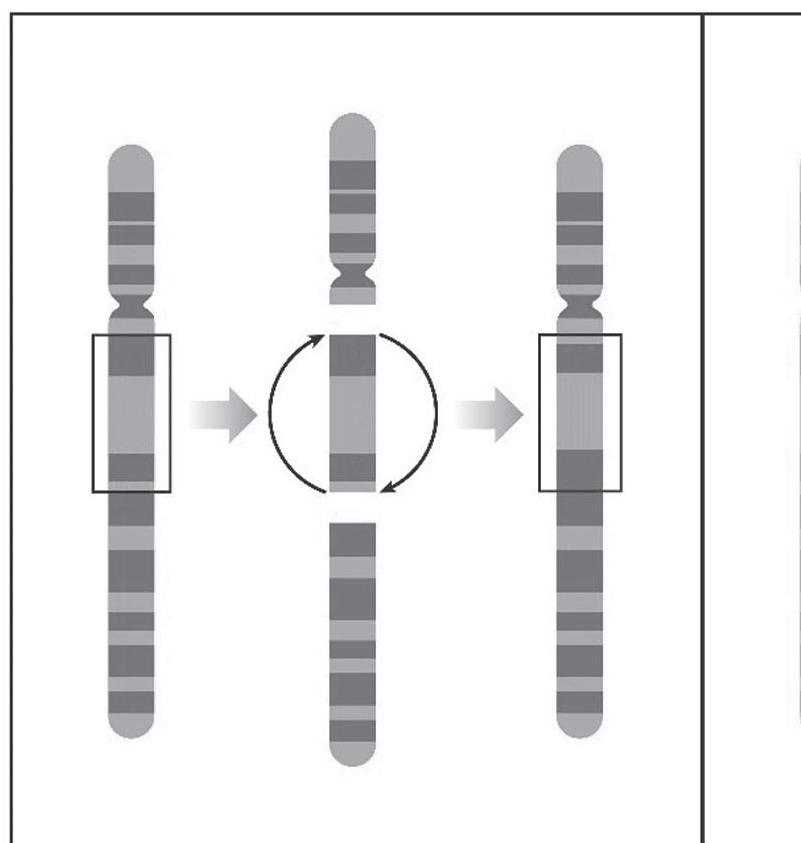
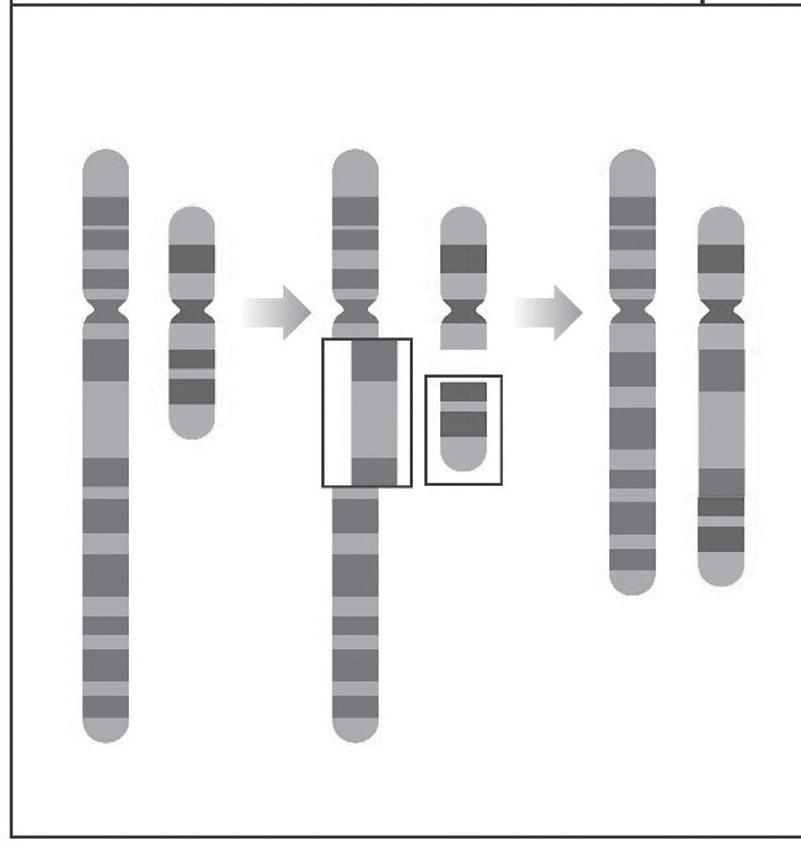
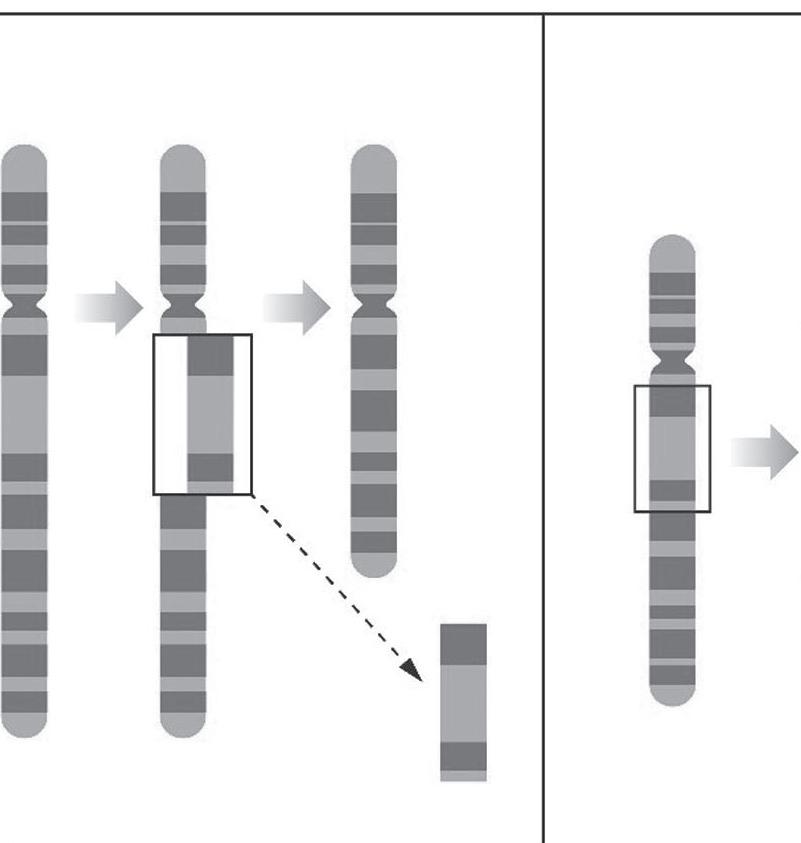
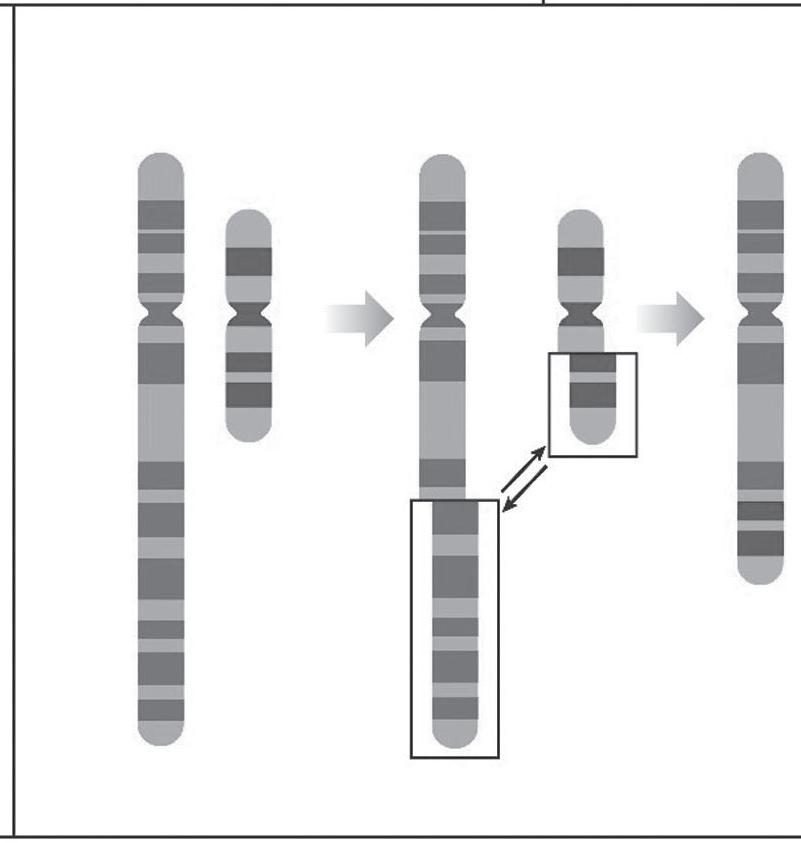
Chromosomes are the form of DNA that may be replicated and passed on to newly formed cells or, in the case of sexual reproduction, zygotes (embryo precursors). Te frst aim of the HGP was to identify the order, or sequence, of all the base pairs that constitute the DNA of each gene (NHGRI, 2020) because knowing the sequencing of genes allows researchers to identify mutations in the pairings. As is shown in Figure 1.2, abnormalities can take several forms, including chromosomal deletions, or translocations, where part of one chromosome migrates to another chromosome.
Te importance of identifying sections on the chromosomes is important because where one gene is located in relation to the others infuences which genes will be inherited together when cells divide during replication (NHGRI, 2019). For example, let us say that we are interested in Gene A, which is close to Gene B on the chromosome. During reproduction, when the cells divide, the individual may inherit two genes that are close together, in this case, both A and B. Tis
DNA double helix
Figure 1.2 Chromosomal abnormalities.
From https://www.istockphoto.com/vector/chromosome-mutation-is-the-process-of-change-thatresults-in-rearranged-chromosome-gm1334659652-416698904?clarity=false#.
is called gene linkage because two neighboring genes are ofen “linked” and inherited together. But let us suppose that we are also interested in Gene Z, which is far away from Gene A. When the cells divide, A and Z probably will not be inherited together because they are “unlinked.” Te third objective of the project was to create linkage maps to show where genes interact over several generations by mapping the position of the genome from an identifed patient (proband) with the disease to that individual’s genome with family members without the disease.
Function
Tere have been two types of classic studies that looked at the impact of genes on drinking behavior. To test the infuence of genetic makeup on drinking problems, identical (monozygotic, MZ) twins were compared to fraternal (dizygotic, DZ) twins. Whether the rate of alcoholism was higher among the
identical twins was examined. Teoretically, identical twins should be more likely to both have similar alcohol use compared to fraternal twins because they share 100% of their genetic material. However, Hrubec and Omenn (1981) found that while genetics did contribute to alcoholism, something else was going on to predict the twins’ drinking rates—more than likely, environment.
In another classic study, Goodwin and colleagues (1974) compared drinking among grown children of alcoholic parents. One group remained in the alcoholic home as children versus the other group that had been adopted as infants and reared in non-alcoholic, non-kin, homes. Goodwin and colleagues found that the odds of developing drinking problems occurred among the male children of alcoholic parents, whether they were reared in non-alcoholic homes or in the original alcoholic home (OR = 3.6 vs. 3.4). Tus, the stronger predictor of whether the child developed an alcohol use disorder was “nature” (their genetic pedigree), not “nurture” (the environment).
Illness. Te Collaborative Study on the Genetics of Alcoholism (COGA) project examined the genetic component of alcoholism (National Institute on Alcohol Abuse and Alcoholism [NIAAA], 2016) and has explored the gene–environment relationship of frst-, second-, and third-degree biological relatives of over 2,255 families (17,702 individuals) (Begleiter et al., 1995). Te project has identifed genes that protect a family member from alcoholism, diferences in symptoms of alcohol use disorders, and identifed which specifc chromosomal regions certain psychiatric symptoms are located (Agrawal et al., 2008). Tese fndings can identify an individual’s genetic susceptibility or predisposition (Turnpenny et al., 2022). Te COGA project’s fndings are that complex behaviors like alcoholism and psychiatric symptoms are infuenced by multiple genes as well as the environment (Lewis, 2016).
Injuries. A mutated gene is a gene that has experienced damage to its genetic material. According to Campbell (2011), embryos are especially at risk for injury if they are subjected to radiation during early gestation when the cells are rapidly dividing. Ozasa (2016) found that efects from radiation exposure from the explosion of the atomic bomb were related to cancer risk depending on distance from the epicenter of the explosions plus shielding conditions.
Chromosomal breakage may also occur during radiation treatment (Bryant et al., 2010), which is correlated to onset of leukemia (Tys et al., 2015). Carcinogens from smoking (Jin et al., 2017) and other environmental hazards (Barnes et al., 2018) cause cancer by randomly damaging DNA within normal cells. Some inhaled carcinogens have been more strongly linked to lung disease.
(T) Mental health clinicians can beneft from understanding the technology used to treat genetic anomalies
Tere are three types of telemedicine methods: “store and forward,” “remote monitoring,” and “real-time interactive services,” which difer in several ways, one of which is the length of time it takes information to get from the patient to the clinician. Te physician may use all three types of technologies when working with patients. Te frst is store and forward, an example of asynchronous communication that does not happen in real time and is achieved using imaging, such as a mammogram or sonogram. For example, a woman who is being evaluated for breast cancer will meet with a radiology technician who will send images from a procedure to the physician, who will determine if there are tumors or other abnormalities in the area of concern. Tis store-and-forward process can take hours or days.
A second type of telemedicine, remote patient monitoring, is used if the physician needs more detailed information on an ongoing basis. Te patient wears a monitor that sends information to their physician from a variety of biomeasures, including their heart rate, glucose level, and sleep apnea scores. Tis type of telemedicine is correlated with fewer high-risk pregnancy visits and fewer exposures to potential viral infection. Cardiology also heavily utilizes remote monitoring to evaluate patients for irregularities in the patient’s heartbeats over the course of days to months.
Te third type of telemedicine is the real-time interactive service, an example of synchronous communication that transmits information in real time using video chats with social media apps (e.g., Zoom, FaceTime, Skype). Dialogue with the patient will allow the clinician to assess and treat the client when the client cannot come to the ofce. Video chats can also provide opportunities for clinicians to interact with interdisciplinary team members who will follow the patient. While each method of telemedicine is important, video chats provide direct contact between the patient and the team members and are popular methods during periods of time when face-to-face sessions are risky because the patient’s immunity is compromised.
Another area where telehealth is used is “contact tracing,” where public health ofcials seek to identify acquaintances of an individual who has become infected with a disease. For many years, contact tracing has been employed when an individual tests positive for syphilis; more recently, this involved the novel SARS-CoV-2 (severe acute respiratory syndrome coronavirus 2) (COVID-19; 2019-nCoV) (Centers for Disease Control and Prevention [CDC], 2021). In contact tracing, the public health technician identifes immediate persons with whom the patient has come in contact and then identifes secondary persons
with whom the contacts have come in contact, resulting in an extensive network map of potentially infected persons.
(E) Mental health clinicians can beneft from understanding the biomedical engineering of medications
As the name implies, biomedical engineering is the development of products, including medicines that were developed using engineering methods. Side efects, along with the therapeutic dosage and efcacy of a drug, are all discovered during the multistage engineering of the medication. For example, afer a drug used in chemotherapy is constructed or discovered in a laboratory, it may undergo testing on laboratory systems or animals. If these tests are promising, the medication will move to a multiphase human trial pathway. Tese trials start by testing for adverse outcomes on healthy participants without cancer, followed by testing to determine if the drug works as a proposed treatment for a small number of patients with cancer. Ten the trial may move on to large-scale testing to discover the efcacy of treatment outcomes among a population and to fnd rare side efects. Finally, the new drug will be tested against the current drugs being used to treat the same disease to ensure that it ofers an improvement over currently available treatments.
Adhering to the research protocol protects the public from unanticipated side efects and inefective outcomes. Today, because of the current pandemic and expected pandemics in the future, manufacturing vaccine’s safety is paramount. Ensuring the public’s confdence is necessary for there to be enough buyin among members of society for an adequate number of individuals to take the medication in order to result in widespread immunity. Clinicians will be called on to process patients’ fears and reluctance to become inoculated.
(M) Mental health clinicians can beneft from understanding the mathematics underlying heritability
Mathematics explain epidemiological concepts, such as heritability, which is the proportion of the way a person looks or behaves (phenotype) that can be explained by the person’s genetic makeup, or DNA (Hesselbrock et al., 2013). Understanding the concepts of epidemiology is important because they address the distribution of health conditions in society. To understand these health conditions, epidemiologists examine the following: who contracts or does not contract the illness; what variant they contract; why they contract the illness or are immune to it; when they contract the illness; and where they contract it
(Carneiro, 2017). One branch of epidemiology is genetic epidemiology, which is the study of how persons inherit diseases. It includes examining how risks for the disease were inherited and how the environment contributed to the expression of the disease. To understand the person-in-environment, we can beneft from determining the gene–environment interaction.
An example of a genetic contribution to alcohol use can be found among the Asian population. Normally when someone drinks alcohol, the liver enzyme breaks it down and it is excreted from the body (Suddendorf, 1989). Many individuals of East Asian descent have a mutated gene that decreases the amount of the hormone that breaks alcohol down (Chen et al., 2021) and the Asian fushing reaction (AFR) occurs. AFR is an uncomfortable fushing on the chest and up the neck that can be accompanied by nausea, sweating, headache, racing heart, and dizziness (Oh et al., 2019). While this is a common phenomenon, other individuals of Asian descent have the enzyme that allows alcohol to be metabolized, and they do not report the unpleasant side efects of drinking. Te population estimate of individuals of East Asian descent with the mutated gene is estimated to be 36% (Brooks et al., 2009). Because the accumulation of non-metabolized alcohol among people who do not have the enzyme is noxious, a medication that blocks the enzyme that breaks down alcohol has been used to medically treat alcoholics who are having a difcult time becoming abstinent; therefore, drinking alcohol afer taking the medication Antabuse causes unpleasant reactions.
(H) Mental health clinicians can beneft from applying principles of STEM to health
Dr. Michie Hesselbrock maintained that clinicians should contribute their expertise to interdisciplinary research because they are trained to evaluate the impact of the environment using a person-in-environment model (Lewis, 2016) and stated that contemporary clinicians are poised to engage in translational science, which is known as the “bench-side to bedside” practice, to evaluate phenotypes (behaviors) and their concordance with the genotype (Hesselbrock et al., 2013). When applying the STEM model to health, Waites suggested that the abbreviation STEM-H may be more appropriate than merely STEM (Lewis, 2016).
Learning that the fetus is carrying a mutated gene can result in the grief reaction called “ambiguous loss” (Boss, 1999). For example, Down syndrome is associated with the baby inheriting an extra chromosome 21 (Trisomy 21) in addition to the two inherited from the parents. On learning this news, the family may grieve the loss of their ideal child and their aspirations for it. Tis ambiguous loss can result in what Boss called a loss characterized by a “Goodbye, without