CROSS-CULTURAL AND ETHICAL ISSUES IN ORGANIZATIONAL CHANGE 335
ORGANIZATIONAL BEHAVIOR: THE JOURNEY CONTINUES 335
Organization Index 341
Name Index 343
Glossary/Subject Index 356
What’s New in the Fourth Edition
M: Organizational Behavior, Fourth Edition, has been significantly revised, guided by useful feedback from reviewers and our active monitoring of evidence-based literature. All chapters have new examples and either new or revised factoids; most chapters have new conceptual content or literature foundation. The most substantial changes have occurred in Chapter 1 (introduction to OB), Chapter 4 (workplace emotions, attitudes, and stress), Chapter 6 (decision making and creativity), Chapter 8 (communication), and Chapter 10 (conflict and negotiation). The authors personally researched, selected, and wrote all of this content, thereby providing superior integration of knowledge and ensuring that the examples are relevant and recent. Here are the key changes we’ve made to this fourth edition, broken out by chapter:
Chapter 1: Introduction to the Field of Organizational Behavior
Technological change has been added in the section on contemporary developments facing organizations. The section on perspectives of organizational effectiveness has been streamlined. Most topics have updated content, particularly the text on the four contemporary developments, why study OB, and several aspects of organizational effectiveness.
Chapter 2: Individual Behavior, Personality, and Values
Several topics in this chapter have been updated, particularly coverage of the five-factor model of personality and work performance, values and individual behavior, and moral sensitivity.
Chapter 3: Perceiving Ourselves and Others in Organizations
This book pioneered the full model of self-concept and its relevance to organizational behavior. This edition further develops this important topic and provides new information on the opposing motives for distinctiveness and inclusion. The section on stereotyping also incorporates the concept of stereotype threat.
Chapter 4: Workplace Emotions, Attitudes, and Stress
This edition significantly revises and updates discussion on four key workplace stressors, with new writing about organizational constraints and interpersonal conflict as stressors. In addition, there is new content on attitude–behavior contingencies.
Chapter 5: Employee Motivation
New to this edition is the topic of intrinsic and extrinsic motivation, as well as the question of whether introducing extrinsic sources of motivation reduces intrinsic motivation. We also have reorganized and refined the writing on drives and needs, Maslow’s needs hierarchy, and four-drive theory. The previous edition introduced the social and information processing characteristics of jobs. This edition further refines that emerging topic.
Chapter 6: Decision Making and Creativity
This chapter has been substantially revised and updated in several ways. Design thinking now receives more attention as a concept and practice to improve workplace creativity. The topic of problems with information processing when choosing alternatives also has been substantially updated. Additional updates have been made to solution-focused problems, problems with goals, implicit favorite bias, and satisficing (problems with maximization).
Chapter 7: Team Dynamics
This edition refines discussion introduced in the previous edition on the three characteristics that distinguish types of teams. It also offers more detail about social loafing, team mental models (as part of team development), and team development through team building.
Chapter 8: Communicating in Teams and Organizations
This edition substantially revises and updates the important topic of choosing the best communication medium. Specifically, this topic
discusses four key factors (synchronicity, social presence, social acceptance, and media richness) as well as associated contingencies to consider when choosing a communication channel. This edition continues to shift the focus toward various forms of digital communication (less focus on email alone). Another noticeable change is the updated discussion on the characteristics and benefits of enterprise social media.
Chapter 9: Power and Influence in the Workplace
This chapter contains updates on topics including legitimate power, visibility, and organizational politics.
Chapter 10: Conflict and Negotiation in the Workplace
This edition substantially reorganizes and updates the entire section on resolving conflict through negotiation. The new or revised topics include distributive and integrative approaches to bargaining, understanding needs, bargaining zone dynamics, how BATNA increases bargaining power, the importance of listening, and strategies for making concessions. This edition also introduces recent evidence about gender differences in negotiation. Elsewhere in this chapter, we update the topics of task and relationship conflict and problems resulting from relationship conflict. We also revised portions on the topic of whether conflict is good or bad.
Chapter 11: Leadership in Organizational Settings
This chapter, substantially revised in the previous edition, includes updates on the topics of transformational leadership, comparing transformational with managerial leadership, and evaluating path–goal theory.
Chapter 12: Designing Organizational Structures
This chapter has been revised to include updates on span of control, problems with flatter structures, and types of divisional structure. It also includes numerous new in-text examples of companies that apply various forms of departmentalization.
Chapter 13: Organizational Culture
In addition to replacing most examples and updating references, this chapter has revised content on the topics of espoused versus enacted values, content of organizational culture, types of organizational culture artifacts, adaptive cultures, the integration strategy for merging cultures, and how founders and leaders shape and strengthen culture.
Chapter 14: Organizational Change
This edition includes updates on understanding resistance to change, social networks and viral change, and appreciative inquiry. As with other chapters, it also has several new real-world examples.
Organizational Behavior
1 PART 1 Introduction to the Field of Organizational Behavior
Learning Objectives
LO1-1 Define organizational behavior and organizations, and discuss the importance of this field of inquiry.
After you read this chapter, you should be able to:
LO1-2 Debate the organizational opportunities and challenges of technological change, globalization, emerging employment relationships, and workforce diversity.
LO1-3 Discuss the anchors on which organizational behavior knowledge is based.
LO1-4 Compare and contrast the four perspectives of organizational effectiveness.
Apple and Amazon are the two most admired companies in the world, according to Fortune magazine’s annual list. Yet neither of these firms was on anyone’s radar screen two decades ago. Apple was on life support in the late 1990s, barely clinging to a few percentage points of market share in the computer industry. Amazon started selling books online in 1995, a few months after its founder, Jeff Bezos, took a course from the American Booksellers Association on how to start a bookstore!1
The dramatic growth of Apple and Amazon illustrates the many workplace activities that contribute to success in today’s turbulent economic environment. In every sector of the economy, organizations need skilled and motivated people who can realize their potential, work in teams, and maintain a healthy lifestyle. They need leaders with foresight and vision, who support innovative work practices and make decisions that consider the interests of multiple stakeholders. In other words, the best companies succeed through the concepts and practices that we discuss in this organizational behavior book.
Our purpose is to help you understand what goes on in organizations. We examine the factors that make companies effective, improve employee well-being, and drive successful collaboration among co-workers. We look at organizations from numerous and diverse perspectives, from the deepest foundations of employee thoughts and behavior (personality,
The World’s Most Admired Companies2
self-concept, attitudes, etc.) to the complex interplay between the organization’s structure and culture and its external environment. Along this journey, we emphasize why things happen and what you can do to predict and guide organizational events.
organizational behavior (OB) the study of what people think, feel, and do in and around organizations
organizations groups of people who work interdependently toward some purpose
We begin this chapter by introducing you to the field of organizational behavior and why it is important to your career and to organizations. This is followed by an overview of four major societal developments facing organizations: technological change, globalization, emerging employment relationships, and increasing workforce diversity. We then describe four anchors that guide the development of organizational behavior knowledge. The latter part of this chapter describes the “ultimate dependent variable” in organizational behavior by presenting the four main perspectives of organizational effectiveness. The chapter closes with an integrative model of organizational behavior, which serves as a road map to guide you through the topics in this book.
LO1-1 Define organizational behavior and organizations, and discuss the importance of this field of inquiry.
THE FIELD OF ORGANIZATIONAL BEHAVIOR
Organizational behavior (OB) is the study of what people think, feel, and do in and around organizations. It looks at employee behavior, decisions, perceptions, and emotional responses. It examines how individuals and teams in organizations relate to each other and to their counterparts in other organizations. OB also encompasses the study of how organizations interact with their external environments, particularly in the context of employee behavior and decisions. OB researchers systematically study these topics at multiple levels of analysis, namely, the individual, team (including interpersonal), and organization.3
The definition of organizational behavior begs the question: What are organizations? Organizations are groups of people who work interdependently toward some purpose.4 Notice that organizations are not buildings or government-registered entities. In fact, many organizations exist with neither physical walls nor government documentation to confer their legal status. Organizations have existed for as long as people have worked together. Massive temples dating back to 3500 bc were constructed through the
organized actions of multitudes of people. Craftspeople and merchants in ancient Rome formed guilds, complete with elected managers. More than 1,000 years ago, Chinese factories were producing 125,000 tons of iron each year.5
One key feature of all organizations throughout history is that they are collective entities.6 They consist of human beings—typically, but not necessarily, employees— who interact with each other in an organized way. This organized relationship requires communication, coordination, and collaboration to achieve organizational objectives. As such, all organizational members have degrees of interdependence; they accomplish goals by sharing materials, information, or expertise with coworkers.
A second key feature of organizations is that their members have a collective sense of purpose. This collective purpose isn’t always well defined or agreed on. Most companies have vision and mission statements, but they are sometimes out of date or don’t describe what employees actually try to achieve. Still, imagine an organization without a collective sense of purpose. It would be an assemblage of
had changed the name of its MBA human relations course to “Organizational Behavior.”
Although the field of OB is recent, experts in other fields have been studying organizations for many centuries. The Greek philosopher Plato (400 bc ) wrote about the essence of
A company is one of humanity’s most amazing inventions. . . . [It’s] this abstract construct we’ve invented, and it’s incredibly powerful.7
—Steve Jobs, Apple and Pixar Animation cofounder
people without direction or unifying force. So, whether they are designing and marketing the latest communication technology at Apple or selling almost anything on the Internet at Amazon, people working in organizations do have some sense of collective purpose.
Historical Foundations of Organizational Behavior
Organizational behavior emerged as a distinct field sometime around the early 1940s.8 During that decade, a few researchers began describing their research as organizational (rather than sociological or psychological). And by the late 1940s, Harvard
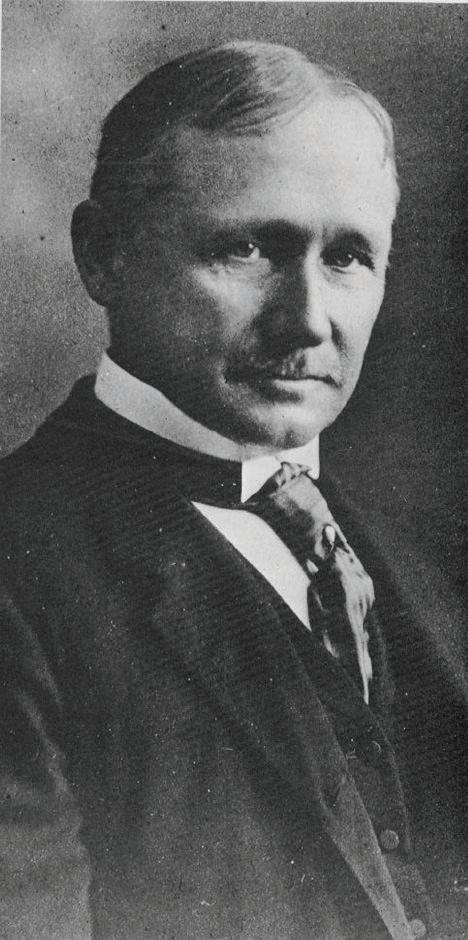
leadership, and the Chinese philosopher Confucius (500 bc) extolled the virtues of ethics and leadership. Economist Adam Smith (late 1700s) discussed the benefits of job specialization and division of labor. German sociologist Max Weber (early 1900s) wrote about rational organizations, the work ethic, and charismatic leadership. Around the same time, industrial engineer Frederick Winslow Taylor proposed systematic ways to organize work processes and motivate employees through goal setting and rewards.9
Political scientist Mary Parker Follett (1920s) offered new ways of thinking about constructive conflict, team dynamics, power, and leadership. Harvard professor Elton Mayo and his colleagues (1930s and 1940s) established the “human relations”
school of management, which pioneered research on employee attitudes, formal team dynamics, informal groups, and supervisor leadership style. American executive and Harvard associate Chester Barnard (1930s) wrote insightful views regarding organizational communication, coordination, leadership and authority, organizations as open systems, and team dynamics.10 This brief historical tour indicates that OB has been around for a long time; it just wasn’t organized into a unified discipline until around World War II.
Why Study Organizational Behavior?
In all likelihood, you are reading this book as part of a required course in organizational behavior. Apart from degree or diploma requirements, why should you learn the ideas and practices discussed in this book? After all, who ever heard of a career path leading to a “vice president of OB” or a “chief OB officer”? Our answer to this question begins with survey findings that students who have been in the workforce for some time typically point to OB as one of their most valuable courses. Why? Because they have learned through experience that OB does make a difference to one’s career success.11 There are three main reasons why OB theories and practices are personally important to you (see Exhibit 1.1).
Comprehend and Predict Workplace Events
Everyone has an inherent drive to make sense of what is going on around him or her.12 This need is particularly strong in organizations because they are highly complex and ambiguous contexts that have a profound effect on our lives. The field of organizational behavior uses scientific research to discover systematic relationships, which give us a valuable foundation for comprehending organizational life.13 This knowledge satisfies our curiosity about why events occur and reduces our anxiety about circumstances that would otherwise be unexpected and unexplained. Furthermore, OB knowledge improves our ability to predict and anticipate future events so we can get along with others, achieve our goals, and minimize unnecessary career risks.
Adopt More Accurate Personal Theories
Exhibit 1.1 Importance of Organizational Behavior
• Accomplish personal and organizational goals Influence organizational events
• Satisfy curiosity
• Work well with others
• Predict future events Comprehend and predict work events
• Reduce anxiety
Why Study Organizational Behavior?
Adopt more accurate personal theories
• Confirm and refine personal theories
• Correct false common sense
A frequent misunderstanding is that OB is common sense. Of course, some OB knowledge is very similar to the theories you have developed through personal experience. But personal theories are usually not quite as precise as they need to be. Perhaps they explain and predict some situations, but not others. For example, one study found that when liberal arts students and chief executive officers were asked to choose the preferred organizational structure in various situations, their commonsense answers were typically wrong because they oversimplified well-known theory and evidence on that topic.14 (We discuss organizational structures in Chapter 12.) Throughout this book you also will discover that OB research has debunked some ideas that people thought were “common sense.” Overall, we believe the OB knowledge you will gain by reading this book will help you challenge and refine your personal theories, and give you more accurate and complete perspectives of organizational events.
Influence Organizational Events
Probably the greatest value of OB knowledge is that it helps us get things done in the workplace by influencing organizational events. 15 By definition, organizations are people who work together to accomplish things, so we need a toolkit of knowledge and skills to work successfully with others. Studies consistently observe that the most important knowledge and skills that employers desire in employees relate to the topics we discuss in this book, such as building teams, motivating coworkers, handling workplace conflicts, making decisions, and changing employee behavior. No matter what career path you choose, you’ll find that
OB concepts play an important role in performing your job and working more effectively within organizations.
Organizational Behavior Is for Everyone Organizational behavior is discussed by some writers as a topic for managers. Effective management does depend on OB concepts and practices, but this book pioneered the broader view that OB is valuable for everyone who works in and around organizations. Whether you are a software engineer, customer service representative, foreign exchange analyst, or chief executive officer, you need to understand and apply the many organizational behavior topics that are discussed in this book. In fact, OB knowledge is probably more valuable than ever before because employees increasingly need to be proactive, self-motivated, and able to work effectively with coworkers without management intervention. In the words of one forward-thinking OB writer more than four decades ago: Everyone is a manager.16
OB and the Bottom Line Up to this point, our answer to the question “Why study OB?” has focused on how organizational behavior knowledge benefits you as an individual. However, OB is also vital to the organization’s survival and success. 17 For instance, the best 100 companies to work for in America (i.e., companies with the highest levels of employee satisfaction) enjoy significantly higher financial performance than other businesses within the same industry. Companies with higher levels of employee engagement have higher sales and profitability (see Chapter 5). OB practices also are associated with various indicators of hospital performance, such as lower patient mortality rates and higher patient satisfaction. Other studies have consistently found a positive relationship between the quality of leadership and the company’s financial performance.
The bottom-line value of organizational behavior is supported by research into the best predictors of investment portfolio performance. These investigations suggest that leadership, performance-based rewards, employee development, employee attitudes, and other specific OB characteristics are important “positive screens” for selecting companies with the highest and most consistent long-term investment gains. 18 Overall, the organizational behavior concepts, theories, and practices presented throughout this book make a positive difference to you personally, to the organization, and ultimately to society.
LO1-2 Debate the organizational opportunities and challenges of technological change, globalization, emerging employment relationships, and workforce diversity.
CONTEMPORARY DEVELOPMENTS FACING ORGANIZATIONS
Organizations are experiencing unprecedented change. Technological developments, consumer expectations, global competition, and many other factors have substantially altered business strategy and everyday workplace activities. The field of organizational behavior plays a vital role in guiding organizations through this continuous turbulence. As we will explain in more detail later in this chapter, organizations are deeply affected by the external environment. Consequently, they need to maintain a good organization–environment fit by anticipating and adjusting to changes in society. Over the next few pages, we introduce four major environmental developments facing organizations: technological change, globalization, emerging employment relationships, and increasing workforce diversity.
Technological Change
Technological change has always been a disruptive force in organizations, as well as in society.19 Waterwheels, cotton gins, steam engines, microprocessors (such as in automated systems and artificial intelligence), and many other innovations dramatically boost productivity, but also usually displace employees and render obsolete entire occupational groups. Other technologies,
Probably the greatest value of OB knowledge is that it helps us get things done in the workplace by influencing organizational events.
such as the telegraph, smartphone, and the Internet, have increased productivity but also altered work relationships and patterns of behavior with coworkers, clients, and suppliers. Still other technologies aim to improve health and well-being, such as the development of better medicines and medical equipment, new leisure apparatus, and environmentally safer materials.
Information technology is one of the most significant forms of technological change in recent times.20 As we discuss in Chapter 8, communication patterns and power dynamics have substantially changed due to the introduction of email and other forms of digital messaging. Social media and other collaboration technologies are slowly replacing email, and will further reshape how people associate and coordinate with each other. Some OB experts argue that information technology gives employees a stronger voice through direct communication with executives and broader distribution of their opinions to coworkers and beyond.
Information technology also has created challenges, such as tethering people to their jobs for longer hours, reducing their attention spans at work, and increasing techno-stress. We discuss these concerns below and in Chapter 4 (workplace stress).
At a macro-level, information technology has reconfigured entire organizations by integrating suppliers and other external entities into the transformation process. Eventually, technology may render organizations less of a place where people work and more of a process or network where people collaborate across space and time (see Chapter 12).
Globalization
Globalization refers to economic, social, and cultural connectivity with people in other parts of the world. Organizations
globalization economic, social, and cultural connectivity with people in other parts of the world
work–life balance the degree to which a person minimizes conflict between work and nonwork demands
globalize when they actively participate in other countries and cultures. Although businesses have traded goods across borders for centuries, the degree of globalization today is unprecedented because information technology and transportation systems allow a much more intense level of connectivity and interdependence around the planet.22
Globalization offers numerous benefits to organizations in terms of larger markets, lower costs, and greater access to knowledge and innovation. At the same time, there is considerable debate about whether globalization benefits developing nations and the extent to which it is responsible for increasing work intensification, reduced job security, and poor work–life balance in developed countries.23
The field of organizational behavior focuses on the effects of globalization on organizations and how to lead and work effectively in this emerging reality. Throughout this book, we will refer to the effects of globalization on teamwork, diversity, cultural values, organizational structure, leadership, and other themes. Globalization has brought more complexity and new ways of working to the workplace. It also requires additional knowledge and skills that we will discuss in this book, such as emotional intelligence, a global mindset, nonverbal communication, and conflict handling.
Emerging Employment Relationships
Social Media Technology Reshapes the Workplace21
21% of 2,027 employed American adults say they spend between 1 and 6 hours using social media tools or mobile applications to help get their jo done
46% of 9,908 information workers polled across 32 countries say that social media tools have somewha or greatly increased their productivity
% of 1,000 American polled say they would prefer to work at a company that uses internal (enterprise) social
Technology, globalization, and several other developments have substantially altered the employment relationship in most countries. Before the digital age, most employees would finish work after eight or nine hours and could separate their personal time from their employment. Today, they are more likely to be connected to work on a 24/7 schedule. Globalization increases competitive pressure to work longer and creates a 24-hour schedule because coworkers, suppliers, and clients work in different time zones. Information technology enables employers and others to easily and quickly communicate with employees beyond their traditional workday.
42% of 9,908 information workers polled across 32 countries say that social media tools have resulted in more workplace collaboration.
managers say they use social media sites to research job candidates (up from 52% the previous year and 11% in 2006).
Little wonder that one of the most important employment issues over the past decade has been work–life balance . Work–life balance occurs when people are able to minimize conflict between their work and nonwork demands. 24 Most employees lack this balance because they spend too many hours each week performing or thinking about their job, whether at the workplace, at home,
telecommuting an arrangement whereby, supported by information technology, employees work from home one or more work days per month rather than commute to the office
or on vacation. This focus on work leaves too little time to fulfill nonwork needs and obligations. Our discussion of work-related stress (Chapter 4) will examine work–life balance issues in more detail. Another employment relationship trend is for employees to work away from the organization’s traditional common work site.25 One form of this remote work arrangement involves performing most job duties at client sites throughout the day. Repair technicians and management consultants regularly work at client sites, for example. Longer-term remote work occurs where employees are assigned to partner organizations. For instance, biotechnology firm Anteo Diagnostics dispatches its scientists for several weeks or months to partner companies around the world, where they jointly investigate the effectiveness of Anteo’s patented nano glue products on the partner firm’s point-of-care technology.
Telecommuting The best-known form of remote work is telecommuting (also called teleworking) whereby information technology enables employees to work from home one or more workdays per month rather than commute to the office. An estimated 37 percent of U.S. workers telecommute, with almost one-third of them working from home at least six days each month. The U.S. government reports that 23 percent of employees perform some or all of their work at home (but that includes taking work home after attending the office, not just telecommuting).26
Is telecommuting good for employees and organizations? This question continues to be debated because it produces
Most employees lack work–life balance because they spend too many hours each week performing or thinking about their job, whether at the workplace, at home, or on vacation.
Exhibit 1.2 Potential Benefits and Risks of Telecommuting
Potential Benefits Potential Risks
• Better employee work–life balance
• Attractive benefit for job applicants
• Low employee turnover
• Higher employee productivity
• Reduced greenhouse gas emissions
• Reduced corporate real estate and office costs
• More social isolation
• Lower team cohesion
• Weaker organizational culture
• More stressful due to home space and roles
several potential benefits and risks (see Exhibit 1.2).27 One advantage is that telecommuters usually experience better work–life balance because they have more time and somewhat more control to juggle work with family obligations. For example, a study of 25,000 IBM employees found that female telecommuters with children were able to work 40 hours per week, whereas female employees with children who work solely at the office could manage only 30 hours before feeling work–life balance tension. Work–life balance is less likely to improve when telecommuters lack sufficient workspace and privacy at home and have increased family responsibilities on telecommuting days.
Job applicants—particularly millennials—identify telecommuting as an attractive job feature, and turnover is usually lower among telecommuting employees. Research also indicates that telecommuters have higher productivity than nontelecommuters, likely because they experience less stress and tend to transfer some former commuting time to work time. Telecommuting also improves productivity by enabling employees to work at times when the weather or natural disasters block access to the office. Several companies report that telecommuting has reduced greenhouse gas emissions and office expenses. For instance, health insurer Aetna estimates that its telecommuting employees (31 percent of the workforce) annually avoid using two million gallons of gas, thereby reducing carbon dioxide emissions by more than 23,000 metric tons. With many employees working from home, Aetna also has been able to reduce its real estate and related costs by between 15 and 25 percent.28
Telecommuting also has several disadvantages.29 Telecommuters frequently report more social isolation. They also receive less word-of-mouth information, which may have implications for promotional opportunities and workplace relations. Telecommuting also tends to weaken relationships among coworkers, resulting in lower team cohesion. Organizational culture is also potentially weaker when most employees work from home for a significant part of their workweek.
Telecommuting success depends on several characteristics of the employee, job, and organization. 30 Employees who work effectively from home typically have higher self-motivation, selforganization, need for autonomy, and information technology skills. Those who telecommute most of the time also fulfill their social needs more from sources outside the workplace. Jobs are better suited to telecommuting when the tasks do not require resources at the workplace, the work is performed independently from coworkers, and task performance is measurable. Organizations improve telecommuting success by rewarding and promoting employees based on their performance rather than their presence in the office (face time). Effective companies also help telecommuters maintain sufficient cohesion with their team and psychological connectedness with the organization. This occurs by limiting the number of telecommuting days, having special meetings or events where all employees assemble at the workplace, and regularly using video communication and other technology that improves personal relatedness.
(currently 18 percent), 14 percent will be of Asian descent (currently 6 percent), and 13 percent will be African American (currently 14 percent).32
surface-level diversity the observable demographic or physiological differences in people, such as their race, ethnicity, gender, age, and physical disabilities
deep-level diversity differences in the psychological characteristics of employees, including personalities, beliefs, values, and attitudes
Diversity also includes differences in personalities, beliefs, values, and attitudes. 33 We can’t directly see this deeplevel diversity, but it is evident in a person’s choices, words, and actions. Deep-level diversity is revealed when employees have different perceptions and attitudes about the same situation (see Chapter 10) and when they form like-minded informal social groups (see Chapter 7). Some deep-level diversity is associated with surfacelevel attributes. For example, studies report significant differences between men and women regarding their preference of
Employees who work effectively from home typically have higher self-motivation, self-organization, need for autonomy, and information technology skills.
SELF-ASSESSMENT 1.1: Are You a Good Telecommuter?
Telecommuting is an increasingly popular workplace relationship, and it potentially offers benefits for both companies and telecommuters. However, some people are better suited than others to telecommuting and other forms of remote work. You can discover how well you adjust to telecommuting and remote work by locating this self-assessment in Connect if it is assigned by your instructor.
Increasing Workforce Diversity
Immigrants to the United States and many other countries have much more multicultural origins than a few decades ago, resulting in a much more diverse workforce in most organizations. In addition, globalization has increased the diversity of people employees interact with in partner organizations (suppliers, clients, etc.) located elsewhere in the world. When discussing workforce diversity, we usually think about surface-level diversity—the observable demographic and other overt differences among members of a group, such as their race, ethnicity, gender, age, and physical capabilities.31 Surface-level diversity in the United States and many other countries has increased substantially over the past few decades. For instance, people with non-Caucasian or Hispanic origin currently represent almost 40 percent of the American population. Within the next 50 years, an estimated one-quarter of Americans will be Hispanic
conflict-handling styles, ethical principles, and approaches to communicating with other people in various situations.34
An example of deep-level diversity is the variations in beliefs and expectations across generations.35 Exhibit 1.3 illustrates the distribution of the American workforce by major generational cohorts: Baby Boomers (born from 1946 to 1964), Generation Xers (born from 1965 to 1980), and Millennials (also called Generation Yers, born between 1981 and 1997).
Generational deep-level diversity does exist to some extent, but it tends to be subtler than the popular press would suggest. Also, some generational differences are actually due to age, not cohort.37 For instance, Millennials have a stronger motivation for personal development, advancement, and recognition, whereas Baby Boomers are more motivated by interesting and meaningful work. Research indicates that as Millennials age, their motivation for learning and advancement will wane and their motivation for interesting and meaningful work will increase.
Consequences of Diversity
Workforce diversity offers numerous advantages to organizations.38 Teams with high informational diversity—members have different knowledge and skills—tend to be more creative and
Note: Percentage of U.S. workforce by age group, based on data from the U.S. Bureau of Labor Statistics. “Silents” represent the generation of employees born before 1946. Generation Zers (also called Linksters) were born after 1997.
make better decisions in complex situations compared to teams with less informational diversity. A workforce with surface- and deep-level diversity is also more representative of most communities, so companies are better able to recognize and address community needs. These and other benefits may explain why companies that win diversity awards have higher financial returns, at least in the short run.39
Diversity also poses challenges in the workplace.40 One problem is that employees with diverse backgrounds usually take longer to perform effectively together because they experience numerous communication problems and create “faultlines” in informal group dynamics (see Chapter 7). Some forms of diversity also increase the risk of dysfunctional conflict, which reduces information sharing and satisfaction with coworkers (see Chapter 10). Research suggests that these problems can offset the advantages of diversity in some situations.
But even with these challenges, companies need to make diversity a priority because surface-level diversity and some forms of deep-level diversity are moral and legal imperatives. Companies that offer an inclusive workplace are, in essence, fulfilling the ethical standard of fairness in their decisions regarding employment and the allocation of rewards. Inclusive workplace practices improve the quality of hiring and promotion, and increase employee satisfaction and loyalty. Companies that create an inclusive workplace also nurture a culture of respect, which, in turn, improves cooperation and coordination among employees.
OB THEORY TO PRACTICE
Diversity as Competitive Advantage at MasterCard
Supporting workforce diversity is the right thing to do as well as a source of competitive advantage at MasterCard Incorporated. “Our culture of inclusion has established us as a global company of empowered employees who use their diversity of thought, experience and background to advance innovation and MasterCard’s contributions to society,” says MasterCard president and CEO Ajay Banga (shown in this photo). Banga personally chairs MasterCard’s Global Diversity and Inclusion Council and meets several times each year with its eight Business Resource Groups. More than half of MasterCard’s employees participate in these diversity-based groups, which serve as internal business consultants to guide the company on consumer preferences, cultural insights, and access to networks. “By valuing a culture of inclusion, we gain additional insights and perspectives that allow us to make the best decisions for our business and customers,” explains Donna Johnson, MasterCard’s chief diversity officer.41
ANCHORS OF ORGANIZATIONAL BEHAVIOR KNOWLEDGE
Technological change, globalization, emerging employment relationships, and increasing workforce diversity are just a few of the societal changes that make organizational behavior knowledge more useful than ever before. To understand these and other topics, the field of organizational behavior relies on a set of basic beliefs or knowledge structures (see Exhibit 1.4). These conceptual anchors represent the principles on which OB knowledge is developed and refined.42
LO1-3 Discuss the anchors on which organizational behavior knowledge is based.
The Systematic Research Anchor
A key feature of OB knowledge is that it should be based on systematic research, which typically in volves forming research questions, systematically collecting data, and testing hypotheses against those data.43 Systematic research investigation is the ba sis for evidence-based management, which involves making decisions and taking ac tions guided by research evidence. It makes perfect sense that management practice should be founded on the best available systematic knowledge. Yet many of us who study organizations using systematic methods are amazed at how often corporate leaders and other staff embrace fads, untested consulting models, and their own pet beliefs without bothering to find out if they actually work!44
Why don’t decision makers consistently apply evidence-based management? One reason is that they are bombarded with ideas from consultant reports, popular business books, newspaper articles, and other sources, which makes it difficult to figure out which ones are based on good evidence. A second reason is that good OB research is necessarily generic; it is rarely described in the context of a specific problem in a specific organization. Decision makers therefore have the difficult task of figuring out which theories are relevant to their unique situation.
evidence-based management the practice of making decisions and taking actions based on research evidence
see if they actually work. Indeed, some management concepts have become popular (some have even found their way into OB textbooks!) because of heavy marketing, not because of any evidence that they are valid. A fourth reason is that human beings are affected by several perceptual errors and decisionmaking biases, as we will learn in Chapter 3 and Chapter 6. For instance, decision makers have a natural tendency to look for evidence that supports their pet beliefs and ignore evidence that opposes those beliefs.
A key feature of OB knowledge is that it should be based on systematic research, which becomes the foundation for evidence-based management.
A third reason why organizational leaders follow popular management fads that lack research evidence is because the sources of these fads are rewarded for marketing their ideas, not for testing to
OB experts have identified several ways to create a more evidence-based organization.45 First, be skeptical of hype, which is apparent when so-called experts say the idea is “new,” “revolutionary,” and “proven.” In reality, most management ideas are adaptations, evolutionary, and never proven (science can disprove but never prove; it can only find evidence to support a practice). Second, the company should embrace collective expertise rather than rely on charismatic stars and management gurus. Third, stories provide useful illustrations and possibly preliminary evidence of a useful practice, but they should never become the main foundation to support management action. Instead, rely on more systematic investigation with a larger sample. Finally, take a neutral stance toward popular trends and ideologies. Executives tend to get caught up in what their counterparts at other companies are doing without determining the validity of those trendy practices or their relevance to their own organizations.
Contingency anchor
Multiple levels of analysis anchor
Recognize that the e ectiveness of an action may depend on the situation
The Multidisciplinary Anchor
Another organizational behavior anchor is that the field should welcome theories and knowledge from other disciplines, not just from its own isolated research base. For instance, psychological research has aided our understanding of individual and interpersonal behavior. Sociologists have contributed to our knowledge of team dynamics, organizational socialization, organizational power, and other aspects of the social system. OB knowledge also has benefited from knowledge in emerging fields such as communications, marketing, and information systems.
Exhibit 1.4 Anchors of Organizational Behavior Knowledge
OB THEORY TO PRACTICE
Creating an Evidence-Based Management Organization
1. Be skeptical of hyped management practices (“new,” “revolutionary,” “proven”).
2. Embrace collective expertise, not charismatic stars or management gurus.
3. Use stories as examples and ideas, not conclusive evidence.
4. Take a neutral stance to popular trends and ideologies.
This practice of borrowing theory from other disciplines is inevitable. Organizations have central roles in society, so they are studied in many social sciences. Furthermore, organizations consist of people who interact with each other, so there is an inherent intersection between OB and most disciplines that study human beings. However, by relying too much on theories developed in other fields, OB faces the risk of lagging rather than leading in knowledge production. In contrast, OB-bred theories allow researchers to concentrate on the quality and usefulness of the theory, and be the first to understand and apply that knowledge.46
The Contingency Anchor
People and their work environments are complex, and the field of organizational behavior recognizes this by stating that the effect of one variable on another variable often depends on the characteristics of the situation or people involved. In practice, this means that we can’t count on having the same result in every situation when we apply an intervention. Instead, a particular action may have different consequences under different conditions.47 For example, earlier in this chapter we said that the success of telecommuting depends on specific characteristics of the employee, job, and organization. Contingencies are identified in many OB theories, such as the best leadership style, the best conflict-handling style, and the best organizational structure. Of course, it would be so much simpler if we could rely on “one best way” theories, in which a particular concept or practice has the same results in every situation. OB experts do try to keep theories as simple as possible, but the contingency anchor is always on their mind.48
The Multiple Levels of Analysis Anchor
Organizational behavior recognizes that what goes on in organizations can be placed into three levels of analysis: individual, team (including interpersonal), and organization. In fact, advanced empirical research currently being conducted carefully identifies the appropriate level of analysis for each variable in the study and then measures at that level of analysis. For example, team norms and cohesion are measured as team variables, not as characteristics of individuals within each team.
Although OB research and writing peg each variable within one of these levels of analysis, most variables are understood best by thinking of them from all three levels of analysis.49 Communication is located in this book as a team (interpersonal) process, for instance, but it also includes individual and organizational processes. Therefore, you should try to think about each OB topic at the individual, team, and organizational levels, not just at one of these levels.
LO1-4
Compare and contrast the four perspectives of organizational effectiveness.
PERSPECTIVES OF ORGANIZATIONAL EFFECTIVENESS
Almost all organizational behavior theories have the implicit or explicit objective of making organizations more effective. 50 In fact, organizational effectiveness is considered the “ultimate dependent variable” in organizational behavior. 51 This means that organizational effectiveness is the outcome that most OB theories are ultimately trying to achieve. Many theories use different labels—organizational performance, success, goodness, health, competitiveness, excellence—but they are basically presenting models and recommendations that help organizations to be more effective.
Many years ago, OB experts thought the best indicator of a company’s effectiveness was how well it achieved its stated objectives. According to this definition, Delta Air Lines would be an effective organization if it met or exceeded its annual sales and profit targets. Today, we know that this goal perspective might not indicate organizational effectiveness at all. Any leadership team could set corporate goals that are easy to achieve, yet the company would be left in the dust by competitors’ more aggressive objectives. Worse still, some goals might ultimately put the company out of business. For example, they may focus employees on reducing costs whereas success may require more focus on product or service quality.
The best yardstick of organizational effectiveness is a composite of four perspectives: open systems, organizational learning, high-performance work practices, and stakeholders. 52 Organizations are effective when they have a good fit with their external environment, are learning organizations, have efficient and adaptive internal subsystems (i.e., high-performance work practices), and satisfy the needs of key stakeholders. Over the next few pages, we examine each of these perspectives in more detail.
Open Systems Perspective
The open systems perspective of organizational effectiveness is one of the earliest and most-entrenched ways of thinking about
organizations.53 Indeed, the other major organizational effectiveness perspectives mainly provide more detail to specific sections of the open systems model. This perspective views organizations as complex organisms that “live” within an external environment, as Exhibit 1.5 illustrates. The word open describes this permeable relationship, whereas closed systems operate without dependence on or interaction with an external environment.
As open systems, organizations depend on the external environment for resources, including raw materials, job applicants, financial resources, information, and equipment. The external environment also consists of rules and expectations, such as laws and cultural norms, that place demands on how organizations should operate. Some resources (e.g., raw materials) are imported from the external environment, are transformed into product or services, and then become outputs exported to the external environment. Other resources (e.g., job applicants, equipment) become subsystems in the transformation process.
Inside the organization are numerous subsystems, such as departments, teams, informal groups, information systems, work processes, and technological processes.54 These subsystems are dependent on each other as they transform inputs into outputs. Some outputs (e.g., products and services) may be valued by the external environment, whereas other outputs (e.g., employee layoffs, pollution) are undesirable by-products that may have adverse effects on the environment and the organization’s relationship with that environment. Throughout this process, organizations receive feedback from the external environment regarding the value of their outputs, the
availability of future inputs, and the appropriateness of the transformation process.
Organization–Environment
Fit
The open systems perspective states that organizations are effective when they maintain a good “fit” with their external environment. 55 Good fit exists when the organization’s inputs, processes, and outputs are aligned with the external environment’s needs, expectations, and resources. Organizations maintain a good environmental fit in three ways:
organizational effectiveness a broad concept represented by several perspectives, including the organization’s fit with the external environment, internal subsystems’ configuration for high performance, emphasis on organizational learning, and ability to satisfy the needs of key stakeholders open systems a perspective that holds that organizations depend on the external environment for resources, affect that environment through their output, and consist of internal subsystems that transform inputs to outputs
• Adapt to the environment: Effective organizations closely and continuously monitor the environment for emerging conditions that pose a threat or opportunity. Then they reconfigure their internal subsystems to align more closely with that shifting environment. There are many ways that companies are adaptive (called their dynamic capability ), such as by changing the type or volume of products produced, shifting to different input resources that are more plentiful or reliable, and designing better production (transformation) processes.
• Influence the environment: Effective organizations don’t merely respond to emerging conditions; they actively try to influence their
Exhibit 1.5 Open Systems Perspective of Organizations
The open systems perspective states that organizations are effective when they maintain a good “fit” with their external environment.
energy. Another indicator is their adaptability. Organizations need to adapt to their external environment, and this usually includes a transformation process that adapts to new products and sometimes new ways of making those products. A third indicator of an effective transformation process is innovativeness. Innovation involves the discovery, design, and creation of products and work processes that are superior to what competitors can offer.
An important feature of an effective transformation process is how well the internal subsystems coordinate with each other.58 Coordination is one of the most important OB concepts because organizations consist of people working together to achieve collective goals. As companies grow, they develop increasingly complex subsystems, which makes coordination more and more difficult. Complexity increases the risk that information gets lost, ideas and resources are hoarded, messages are misinterpreted, and rewards are distributed unfairly. Subsystems are interconnected, so small work practice changes in one subsystem may ripple through the organization and undermine the effectiveness of other subsystems. Consequently, organizations rely on
An important feature of an effective transformation process is how well the internal subsystems coordinate with each other.
environment. For instance, businesses rely on marketing to increase demand for their products or services. Some firms gain exclusive rights to particular resources (e.g., sole provider of a popular brand) or restrict competitor access to valued resources. Still others lobby for legislation that strengthens their position in the marketplace or try to delay legislation that would disrupt their business activities.
• Move to a more favorable environment: Sometimes the current environment becomes so challenging that organizations cannot adapt or influence it enough to survive. For instance, the current environment might have extreme resource scarcity, too many competitors, too little demand for the firm’s products, or onerous rules that make the transformation process too expensive. Under these circumstances, organizations often move to a more benevolent environment that can support their future. For example, Target closed its Canadian business after a few years because it underestimated the competition, stumbled on the transformation process (distribution and inventory challenges), and mismatched consumer expectations (location, pricing).56
Effective Transformation Process In addition to maintaining a good fit with the external environment, effective organizations have a transformation process that does well at converting inputs to outputs.57 The most common indicator of effective internal subsystems is their efficiency. Efficient organizations produce more goods or services with less labor, materials, and
coordinating mechanisms to maintain an efficient, adaptive, and innovative transformation process (see Chapter 12).
Organizational Learning Perspective
The open systems perspective has traditionally focused on physical resources that enter the organization and are processed into physical goods (outputs). But whether their outputs are physical or cognitive, successful companies rely on knowledge as a key ingredient to success. This second perspective of organizational effectiveness, called organizational learning, states that the best organizations find ways to acquire, share, use, and store knowledge. Knowledge is a resource or asset, called intellectual capital, that exists in three forms: human capital, structural capital, and relationship capital.59
• Human capital: Human capital refers to the knowledge, skills, and abilities that employees carry around in their heads. It is a competitive advantage because employees are essential for the organization’s survival and success, and their talents are difficult to find, to copy, and to replace with technology.61 Human capital is also a huge risk for most organizations because it literally leaves the organization every day when employees go home!62
• Structural capital: Even if every employee left the organization, some intellectual capital remains as structural capital. It includes the
organizational learning a perspective that holds that organizational effectiveness depends on the organization’s capacity to acquire, share, use, and store valuable knowledge
intellectual capital a company’s stock of knowledge, including human capital, structural capital, and relationship capital
human capital the stock of knowledge, skills, and abilities among employees that provide economic value to the organization
knowledge captured and retained in an organization’s systems and structures, such as the documented work procedures, physical layout of production and office space, and the finished products (which can be reverse engineered to discover how they were made).63
• Relationship capital: Relationship capital is the value derived from an organization’s relationships with customers, suppliers, and others who provide added mutual value for the organization. It includes the organization’s goodwill, brand image, and combination of relationships that organizational members have with people outside the organization.64
structural capital knowledge embedded in an organization’s systems and structures
relationship capital the value derived from an organization’s relationships with customers, suppliers, and others
An organization’s intellectual capital develops and is maintained through the four organizational learning processes shown in Exhibit 1.6: acquiring, sharing, using, and storing knowledge.65
Acquiring Knowledge Acquiring knowledge refers to bringing in knowledge from the external environment as well as through discovery. It occurs daily when employees casually observe changes in the external environment as well as when they receive formal training from sources outside the organization. Knowledge acquisition also occurs through environmental
An organization’s ability to learn, and translate that learning into action rapidly, is the ultimate competitive advantage.60
—Jack Welch, former CEO of General Electric
1.6 Four Organizational Learning Processes
Acquiring Knowledge
• Individual learning (external)
⊲ Training
⊲ Observing
• Environment scanning
• Grafting
• Experimentation
Storing Knowledge
• Human memory
• Documents/databases
• Knowledge transfer
• Systems/practices/habits
Sharing Knowledge
• Communication
• Individual learning (internal)
⊲ Training
⊲ Observing
• Information systems
• Sensemaking
• Requisite skills
• Autonomy
• Learning orientation Using Knowledge
scanning, such as actively monitoring consumer trends, proposed government legislation, and competitor activities. A third method is to hire skilled staff and buy complementary businesses (called grafting ). Finally, knowledge acquisition occurs through experimentation— generating new ideas and products through creative discovery and testing.
Sharing Knowledge
Sharing knowledge refers to distributing knowledge throughout the organization. This mainly occurs through formal and informal communication with coworkers, as well as through various forms of in-house learning (training, observation, etc.). Companies encourage informal communication through
Exhibit
OB THEORY TO PRACTICE
Having a Hoot with Organizational Learning
Hootsuite relies on organizational learning practices to retain its leadership in social media technology. The leading provider of social media management and analytics acquires knowledge by actively hiring new employees and buying entire companies (grafting). “Maybe the only person we can find is already within a startup. We want to get that person over, so we have to buy the company,” says Hootsuite CEO Ryan Holmes. Hootsuite encourages experimentation through Hoot-Hackathons, intensive two-day events during which employees work together to build new products. The company encourages knowledge sharing through open-space offices and a supportive culture. It also holds a monthly “parliament”—a social gathering hosted by two departments. “The real point [of parliament] is that team members from different departments collaborate in the creative process, building ties that carry over to more serious stuff,” says Holmes.67
their organizational structure, workspace design, corporate culture, and social activities.66 Company intranets and digital information repositories also support knowledge sharing.
Using Knowledge Knowledge is a competitive advantage only when it is applied to improve organizational processes. To use knowledge, employees need a mental map (sense making) so they are aware the knowledge exists and know where to find it in the organization. Knowledge use also requires employees with sufficient prerequisite knowledge and skills. For example, financial analysts need foundation knowledge in mathematics and financial products to use new knowledge on asset valuation methods. Autonomy is another important condition for knowledge use; employees must have enough freedom to try out new ideas. Knowledge use also flourishes where workplace norms strongly support organizational learning. These beliefs and norms represent a learning orientation, which we discuss further on the topics of creativity (Chapter 6) and organizational culture (Chapter 13).68
Storing Knowledge Storing knowledge is the process of retaining knowledge for later retrieval. Stored knowledge, often called organizational memory, includes knowledge that employees recall as well as knowledge embedded in the organization’s systems and structures.69 Effective organizations also retain knowledge in human capital by motivating employees to stay with the company. Furthermore, organizations encourage employees to share what they know so valuable knowledge is held by coworkers when an employee does quit or retire. Another strategy is to actively document knowledge when it is created by debriefing teams on details of their knowledge of clients or product development.
One last point about the organizational learning perspective: effective organizations not only learn; they also unlearn routines
and patterns of behavior that are no longer appropriate. 70 Unlearning removes knowledge that no longer adds value and, in fact, may undermine the organization’s effectiveness. Some forms of unlearning involve replacing dysfunctional policies, procedures, and routines. Other forms of unlearning erase attitudes, beliefs, and assumptions that are no longer valid. Organizational unlearning is particularly important for organizational change, which we discuss in Chapter 14.
High-Performance Work Practices Perspective
The open systems perspective states that successful companies are efficient and adaptive at transforming inputs into outputs. However, it does not offer guidance about specific subsystem characteristics or organizational practices that make the transformation process more effective. These details are addressed by another perspective of organizational effectiveness, called highperformance work practices (HPWPs). The HPWP perspective is founded on the belief that human capital—the knowledge, skills, and abilities that employees possess—is an important source of competitive advantage for organizations.71 Motivated and skilled employees offer competitive advantage by transforming inputs to outputs better, by being more sensitive to the external environment, and by having better relations with key stakeholders.
The HPWP perspective identifies specific ways to generate the most value from human capital. The four most frequently identified HPWP practices are employee involvement, job autonomy, competency development, and rewards for performance and competency development.72 Each of these four work practices alone improves organizational effectiveness, but studies suggest that they have a stronger effect when bundled together.73
learning orientation beliefs and norms that support the acquisition, sharing, and use of knowledge as well as work conditions that nurture these learning processes
high-performance work practices (HPWPs) a perspective that holds that effective organizations incorporate several workplace practices that leverage the potential of human capital
The first two factors— involving employees in decision making and giving them more autonomy over their work activities—strengthen employee motivation as well as improve decisions, organizational responsiveness, and commitment to change. In high-performance workplaces, employee involvement and job autonomy often take the form of self-directed teams (see Chapter 7). The third factor, employee competency development, refers to recruiting, selecting, and training so employees are equipped with the relevant knowledge and skills. The fourth high-performance work practice is linking performance and skill development to various financial and nonfinancial rewards valued by employees.
High-performance work practices improve an organization’s effectiveness in three ways. 75 First, as we mentioned earlier,
High Performance Work Practices in Selected OECD and Partner Countries74
Average composite score on high-performance work practices reported by employees in selected countries. Higher scores indicate higher HPWP practices in that country. This scale represents “work organization” HPWP practices, which exclude rewards but include work flexibility/autonomy, planning one’s own work, cooperating and sharing information with coworkers, and training others. Data were collected from more than 215,000 adults in OECD and partner countries with a minimum 4,000 respondents per country. This chart shows a selection of the 34 countries measured in the study.