PatternsofEastAsianHistory
CHARLESA.DESNOYERS
La Salle University
OxfordUniversityPressisadepartmentoftheUniversityofOxford.ItfurtherstheUniversity’sobjectiveofexcellenceinresearch, scholarship,andeducationbypublishingworldwide.OxfordisaregisteredtrademarkofOxfordUniversityPressintheUKand certainothercountries.
PublishedintheUnitedStatesofAmericabyOxfordUniversityPress 198MadisonAvenue,NewYork,NY10016,UnitedStatesofAmerica.
©2020byOxfordUniversityPress
FortitlescoveredbySection112oftheUSHigherEducationOpportunityAct,pleasevisitwww.oup.com/us/heforthelatest informationaboutpricingandalternateformats.
Allrightsreserved.Nopartofthispublicationmaybereproduced,storedinaretrievalsystem,ortransmitted,inanyformorbyany means,withoutthepriorpermissioninwritingofOxfordUniversityPress,orasexpresslypermittedbylaw,bylicense,orunder termsagreedwiththeappropriatereproductionrightsorganization.Inquiriesconcerningreproductionoutsidethescopeofthe aboveshouldbesenttotheRightsDepartment,OxfordUniversityPress,attheaddressabove.
Youmustnotcirculatethisworkinanyotherform andyoumustimposethissameconditiononanyacquirer.
LibraryofCongressCataloging-in-PublicationData
Names:Desnoyers,Charles,1952-author.
Title:PatternsofEastAsianhistory/CharlesA.Desnoyers.
Description:Firstedition.|OxfordUniversityPress:NewYork,[2019]|Includesbibliographicalreferencesandindex.
Identifiers:LCCN2018044956|ISBN9780199946464(pbk.)|ISBN9780199946488(ebook)
Subjects:LCSH:EastAsia—History.
Classification:LCCDS511.D472019|DDC950—dc23LCrecordavailableathttps://lccn.loc.gov/2018044956
987654321
PrintedbyLSCCommunications,UnitedStatesofAmerica
BRIEFCONTENTS
LISTOF MAPS
PREFACE
ACKNOWLEDGMENTS
NOTESON DATESAND SPELLING
ABOUTTHE AUTHOR
PARTI CREATINGEASTASIA
Chapter 1
Chapter 2
Chapter 3
Chapter 4
TheRegionandPeople
TheMiddleKingdom:Chinato1280
InteractionandAdaptationontheSiniticRim:Korea, Japan,andVietnamtotheMongolEra
TheMongolSuper-Empire
PARTII RECASTINGEASTASIATOTHEPRESENT
Chapter 5
Chapter 6
Chapter 7
Chapter 8
Chapter 9
FromSuper-PowertoSemi-Colony:ChinafromtheMing to1895
Becoming“TheHermitKingdom”:KoreafromtheMongol Invasionsto1895
From“LesserDragon”to“Indochina”:Vietnamto1885
BecomingImperial:Japanto1895
FromReformtoRevolution:Chinafrom1895tothe Present,PartI
Chapter 10
Chapter 11
Chapter 12
Chapter 13
Epilogue
FromContinuousRevolutiontoAuthoritarianModernity: Chinafrom1895tothePresent,PartII
AHouseDivided:KoreatothePresent
Colonized,Divided,andReunited:VietnamtothePresent
BecomingtheModelofModernity:JapantothePresent BreakneckChangeandtheChallengeofTradition
GLOSSARY
CREDITS
INDEX
CONTENTS
LISTOF MAPS
PREFACE
ACKNOWLEDGMENTS
NOTESON DATESAND SPELLING
ABOUTTHE AUTHOR
PARTI CREATINGEASTASIA
Chapter 1
TheRegionandPeople
VariedGeographies
The Chinese Landscape
The Great Regulator: The Monsoon
Mountains and Deserts
Eurasia’s Eastern Branch: Korea
The Island Perimeter: Japan
The Southern Branch: Vietnam
EastAsianEthnicitiesandLanguages
China and Taiwan
Tibet
Mongolia
Korea
Japan
Conclusion
Chapter 2
TheMiddleKingdom:Chinato ChinaandtheNeolithicRevolution
Neolithic Origins
TheFoundationsoftheDynasticSystem
The Three Dynasties: The Xia
The Three Dynasties: The Shang
The Three Dynasties: The Zhou
Economy and Society
New Classes: Merchants and Shi
Family and Gender in Ancient China
Religion, Culture, and Intellectual Life
Chinese Writing
Ritual and Religion
TheHundredSchools:ConfucianismandDaoism
Self-Cultivation and Ritual: Confucius
Mencius and the Politics of Human Nature
Paradox and Transcendence: Laozi and Daoism
TheStructuresofEmpire
The First Empire, 221 to 206 BCE
Qin Shi Huangdi
The Imperial Model: The Han Dynasty, 202 BCE to 220 CE
Expanding the Empire
Downturn of the Dynastic Cycle
The Centuries of Fragmentation, 220 to 589 ce
China’s Cosmopolitan Age: The Tang Dynasty, 618 to 907
Buddhism in China
PatternsUp-Close:CreatinganEastAsianBuddhistCulture
The Period of Expansion: Emperor Taizong
“Emperor” Wu
Cosmopolitan Autumn
An Early Modern Period? The Song
The Southern Song Remnant
The Mongol Conquest
Economics,Society,andGenderinEarlyImperialChina
Industry and Commerce
Agricultural Productivity
Gender and Family
Thought,Science,andTechnology
The Legacy of the Han Historians
Neo-Confucianism
Poetry, Painting, and Calligraphy
Technological Leadership
Conclusion
Chapter 3
Chapter 4
InteractionandAdaptationontheSiniticRim:Korea, Japan,andVietnamtotheMongolEra
FromThreeKingdomstoOne:Koreato1231
The “Three Kingdoms”
Korea to the Mongol Invasion
Economy and Society
Religion, Culture, and Intellectual Life
Isolation,Interaction,andAdaptation:Japanto1281
Jomon and Yayoi
Early State Building
Imperial Rule
Economy and Society
Family Structure
Religion, Culture, and Intellectual Life
Buddhism in Japan
PatternsUp-Close:FromPeripherytoCenter:Nichiren,Buddhism,and Japan
Forging a New Japanese Culture
BordersofInfluenceandAgency:Vietnam
Neolithic Cultures
Village Society and Buddhism
The “Far South”
Independence and State Building
Economy and Society
Officials, Peasants, and Merchants
Women and Family
Religion, Culture, and Intellectual Life
Chu Nom
Conclusion
TheMongolSuper-Empire
GenghisKhanandtheMongolConquest
Strategies of the Steppes
Clashing Codes of Combat
Assimilating Military Technologies
The Mongol Conquest: The Initial Phase
The Drive to the West
PatternsUp-Close:PaxMongolica
Subduing China
From Victory to Disunity
Overthrow and Retreat
TheMongolCommercialRevolution
Rebuilding Agriculture and Infrastructure
Role Reversal: Artisans and Merchants
Family,Gender,Religion,andCulture
Egalitarian Patriarchy?
Religion: Toleration and Support
Conclusion
PARTII RECASTINGEASTASIATOTHEPRESENT
Chapter 5
FromSuper-PowertoSemi-Colony:ChinafromtheMing to1895
RemakingtheEmpire:TheMing
Centralizing Government and Projecting Power
Toward a Regulated Society: Foreign Relations
The End of the Ming
TheEraofDominance:TheQingto1795
The Banner System
Universal Empire
Pacification and Expansion
Encounters with Europeans
Regulating Maritime Trade
TheStruggleforAgencyin“TheCenturyofHumiliation”
The Horizon of Decline: The White Lotus Rebellion
Interactions with Maritime Powers
The Coming of the Unequal Treaties
TheTaipingandNianEras
The Origins of Taiping Ideology
Defeating the Taipings
The Nian Rebellion, 1853–1868
ReformthroughSelf-Strengthening,1860–1895
PatternsUp-Close:TheCooperativeEraandModernization
Chapter 6
Nineteenth-Century Qing Expansion
The Limits of Self-Strengthening, 1860–1895
The Sino–Japanese War of 1894–1895
SocietyandEconomicsinMingandQingTimes
Rural Elites
Organizing the Countryside
Population and Sustainability
The “High-Level Equilibrium Trap” Debate
TechnologyandIntellectualLife
Philosophy and Literature
Poetry, Travel Accounts, and Newspapers
Conclusion
Becoming“TheHermitKingdom”:KoreafromtheMongol Invasionsto1895
TowardSemi-Seclusion
The Mongol Era and the Founding of the Yi Dynasty
The Japanese Invasion
Recovery and the Drive for Stability
The Shadow of the Qing Strangers at the Gates
The Hermit Kingdom
Korea and the Sino-Japanese War
Economy,Society,andFamily
Land Reform
Social Organization
The New Economy
Family and Gender Roles
CultureandIntellectualLife
PatternsUp-Close:TheDevelopmentof Han’Gul
Neo-Confucianism and Pragmatic Studies
Conclusion
Chapter 7
From“LesserDragon”to“Indochina”:Vietnamto1885
TheLesserDragon
Southward Expansion
Perils of Growth
Chapter 8 Rebellion and Consolidation
PatternsUp-Close:TheFrenchasAlliesoftheImperialCourt
CreatingIndochina
First Footholds
Colonization by Protectorate
The Sino-French War
ConflictandCompromise:EconomyandSociety
The New Commercial Development
Neo-Confucianism in Imperial Vietnam
Toward“Modernity”?Culture,Science,andIntellectualLife
Asserting Incipient Nationalism
Struggles of Modernization
Conclusion
BecomingImperial:Japanto1895
TheEraoftheShoguns,1192–1867
Kamakura and Ashikaga Shogunates, and Mongol Attacks
Dissolution and Reunification
TheTokugawa Bakufu
“Tent Government”
Freezing Society
Securing the Place of the Samurai
Tokugawa Seclusion
ReunifyingRule
The Coming of the “Black Ships”
Restoring the Emperor
From Feudalism to Nationalism
The Meiji Constitution and Political Life
Becoming an Imperial Power
Economy,Society,andFamily
Agriculture, Population, and Commerce
Late Tokugawa and Early Meiji Society and Economics
PatternsUp-Close:Japan’sTransformationthroughEastAsianEyes
Railroads and Telegraphs
Family Structure
“Civilization and Enlightenment”
Chapter 9
Religion,Culture,andIntellectualLife
Zen, Tea, and Aesthetics
The Arts and Literature
Bunraku, Noh, Kabuki, and Ukiyo-e
Intellectual Developments
Science, Culture, and the Arts in the Meiji Period
Conclusion
FromReformtoRevolution:Chinafrom1895tothe Present,PartI
TheRepublicanRevolution
The Last Stand of the Old Order: The Boxer Rebellion and War
The Twilight of Reform
Sun Yat-sen and the Ideology of Revolution
The New Warring States Era (1916–1926)
Creating Nationalism
The First United Front
CivilWar,WorldWar,andPeople’sRepublic
The Nationalist Interval
The Long March and Xi’an Incident
East Asia at War
From Coalition Government to the Gate of Heavenly Peace
ANewSocietyandCulture
The New Culture Movement
City and Country
Conclusion
Chapter 10
FromContinuousRevolutiontoAuthoritarianModernity: Chinafrom1895tothePresent,PartII
TheMaoistYears,1949to1976
Early Mass Mobilization Campaigns
Land Reform
The Great Leap Forward
The Hundred Flowers and Anti-Rightist Campaigns
Taking a Breath in the Revolution
Becoming Proletarian: The Cultural Revolution
The End of the Maoist Era
AU-TurnontheSocialistRoad
China’s Four Modernizations
Chapter 11
Modernizing National Defense
The “Fifth Modernization”
TiananmenSquareandtheNewAuthoritarianism
Ending the Colonial Era
Tiananmen Square
“Confucian Capitalism”
Growth and Its Discontents
Tibet and Minorities
Toward Harmony and Stability?
The Olympic Moment
Xi Jinping and “The Four Comprehensives”
PatternsUp-Close:ConfuciusInstitutesandChina’sSoftPower
Society,Science,andCulture
Recasting Urban Life
Modernization and Society
The New Technology
Art and Literature
The Media
Conclusion
AHouseDivided:KoreatothePresent
TheEbbandFlowofColonialism
Military Rule
Relative Restraint: The Cultural Policy
Militarism, Colonialism, and War
PatternsUp-Close:Nationalism,Empire,andAthletics
ColdWar,HotWar,andColdWar
A Korean Civil War?
From Seesaw to Stalemate
PoliticalandEconomicDevelopmentsSouthandNorth Republics and Coups
Land Reform and the Export Economy
From Authoritarian Rule to Democracy
The Democratic Era, 1993 to the Present
TheNewHermitKingdomoftheNorth War by Other Means
Chapter 12
Juche and the Cult of Personality
The Kim Dynasty
Conclusion
Colonized,Divided,andReunited:VietnamtothePresent
TheFirstColonialEra,1885–1945
“The Civilizing Mission” and Rebellion
Reform and Republicanism
Ho Chi Minh and Revolution
PatternsUp-Close:ParsingtheLanguageofIndependence
The War for Independence
TheAmericanWar
Tearing Two Nations Apart
“Peace with Honor” and National Unification
FromReunificationtoRegionalPower
Building the New Socialist State
Politics and Genocide: Fighting the Khmer Rouge
Recovery and Prosperity
Conclusion
Chapter 13
BecomingtheModelofModernity:JapantothePresent
“AWonderfullyCleverandProgressivePeople”
The Russo-Japanese War
The Limits of Power Politics
The Great War and the Five Requests
Intervention and Versailles
Taisho Democracy
MilitarismandCo-Prosperity:TheWarYears
Creating Manchukuo
State Shinto and Militarism
The “China Incident”
World War II in the Pacific
Allied Counterattack
Co-Prosperity and Conditional Independence
Endgame
TheModelofModernity:FromOccupationtothePresent
The New Order: Reform and Constitution
The Reverse Course: Japan and the Cold War
Moving Toward the Twenty-First Century
PatternsUp-Close:Japan’sHistoryProblem
Economy,Society,andCulture
From “Made in Japan” to Total Quality Management
The Dominance of the Middle Class
Women and Family: “A Half-Step Behind”?
Godzilla and Sailor Moon: Postwar Culture
Conclusion
Epilogue
BreakneckChangeandtheChallengeofTradition
OneRegion,ThreeSystems?
Colonialism and Imperialism
Twentieth-Century Conflict and Political Configuration
The“ChineseDream”astheEastAsianDream?
GLOSSARY
CREDITS
INDEX
LISTOFMAPS
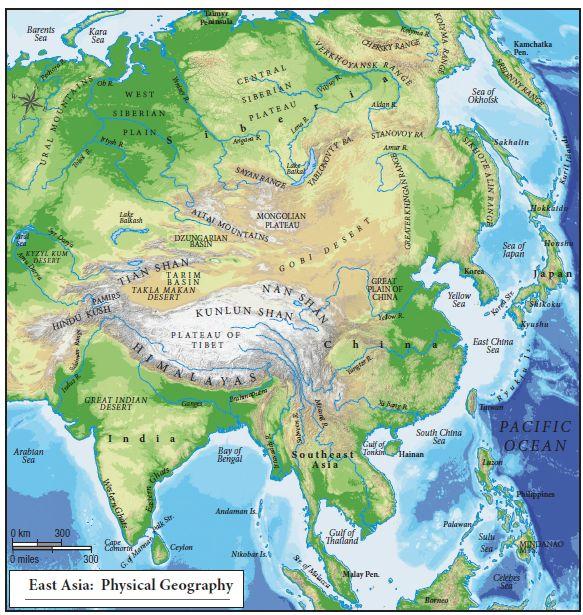
InsideFrontCoverMap.EastAsia:PhysicalGeography
Map1.1.
Map1.2.
Map1.3.
Map1.4.
Map2.1.
Map2.2.
Map2.3.
Map2.4.
Map2.5.
Map2.6.
Map2.7.
Map2.8.
Map3.1.
Map3.2.
Map3.3.
Map3.4.
Map3.5.
Map4.1.
Map4.2.
Map5.1.
Map5.2.
Map5.3.
Map5.4.
Map5.5.
Map5.6.
Map5.7.
Map6.1.
Map6.2.
Map6.3.
China,Mongolia,andTibet:PhysicalGeography
KoreaandJapan:GeographyandClimate
SoutheastAsia:ThePhysicalSetting
MajorLanguageandEthnicGroupsofEastAsia
TheSpreadofFarminginEastAsia
NeolithicChina
TheShangandZhouDynasties
LateWarringStatesandQinUnification
TheHanEmpire
Chinain500 CE
EastandCentralAsiaduringtheTang
TheSpreadofBuddhismto600 CE
Korea,ca.500 CE
KoreaundertheKoryo,936–1392 CE
HeianJapan
MainlandSoutheastAsia,150 BCE–500 CE
DaiViet,ca.1100 CE
TheMongolEmpire
TheMongolHeartland
TheMingEmpireandtheVoyagesofZhengHe
ChinaundertheQing CampaignsofQianlong
TheWhiteLotusMovement,1796–1805
TheTaipingMovement,1850–1864
DunganHuiRebellionandYuqubBeg’sRebellion,1862–1878
TheSino-JapaneseWar,1894–1895
EastandCentralAsia,ca.1200 CE
Hideyoshi’sInvasionsofKorea,1592–1597
ManchuInvasionsofChosonKorea
Map7.1.
Map7.2.
Map7.3.
Map8.1.
Map8.2.
Map8.3.
Map8.4.
Map8.5. Map9.1. Map9.2.
Map9.3. Map9.4. Map9.5.
Map10.1.
Map10.2.
Map10.3.
Map11.1.
Map11.2.
Map11.3.
Map12.1.
Map12.2.
Map12.3.
Map12.4.
Map13.1.
Map13.2.
Map13.3.
Map13.4.
Map13.5.
Map14.1.
MainlandSoutheastAsia,ca.1428
DaiNamandSurroundingRegions,ca.1820
FrenchIndochina
FeudalJapan
MajorDomainsandRegionsintheTokugawaPeriod
ThePacificintheNineteenthCentury
TheSino-JapaneseWar
IndustrializingJapan,ca.1870–1906
TreatyPortsandForeignSpheresofInfluenceinChina,1842–1907
WarlordTerritoriesandtheNorthernExpedition,1926–1928
TheJiangxiSovietandtheLongMarch,1934–1935
JapaninChina,1931–1945
TheChineseCivilWar,1946–1949
ThePeople’sRepublicofChinaandtheRepublicofChina,1950
BorderClashesandTerritorialDisputesbetweenChinaandIndia,1962–1967
OpenCities,SpecialEconomicZones,AutonomousRegions,andSpecial
AdministrativeRegionsinChina,1980–2000319
JapaneseExpansioninNortheastAsia,1870–1910338
KoreaattheEndofWorldWarII348
TheKoreanWar351
FrenchIndochinaandMainlandSoutheastAsia376
VietnamduringtheAmericanWar
ReunifiedVietnam
TheThirdIndochineseWar
TheRusso-JapaneseWar,1904–1905
TheJapaneseEmpirein1920
JapaninChina,1931–1945
WorldWarIIinthePacific
TerritorialClausesoftheTreatyofSanFrancisco,1951
China’sBeltandRoadInitiative
InsideBackCoverMap.ContemporaryEastAsia
PREFACE
Patterns of East Asian History marks the third volume in Oxford University Press’s highly successful Patterns series, which currently includes Patterns of World History in its third edition and Patterns of Modern Chinese History. These offerings are college-level introductory texts whose purpose is to provide beginning students with an entree into complex fields of history with which American students have generally had little or no exposure. The approach of all the volumes revolves around the idea of using recognizable and widely accepted patterns of historical developmentasalooseframeworkaroundwhichtostructurethematerialbothasanorganizational aid to the instructor and as a tool to make complex material more comprehensible to the student. As we have stressed in previous volumes in the series, this approach is not intended to be reductionist or deterministic, or to privilege a particular ideological perspective, but rather to enhance pedagogical flexibility while providing a subtly recursive format that allows abundant opportunities for contrast and comparison among and within the societies under consideration. As with the other volumes in the series, the overall aim is to simplify the immense complexities of historyforthebeginningstudentwithoutmakingthemsimplistic.
All the historical fields covered in these volumes (world history, Chinese history, East Asian history) now face lively internal debates concerning various topics, and one of the goals of the series is to introduce students to these discussions in order to stress the idea that historians are not monolithic in their ideas or approaches, but more often than not disagree with each other, sometimes vigorously. Thus, all the books employ certain pedagogical features designed to enhance the sense that “the past,” as William Faulkner put it so memorably, “is not dead; it isn’t even past.” Chapters begin with a vignette designed to crystallize a particular situation or idea emphasized within that chapter or section and include a feature, “Patterns Up-Close,” designed to examine a particular concept or event at a deeper level to enhance the material in question. Because chapters 9 and 10 constitute essentially one long chapter on China from 1895 to the present, the vignette for both chapters opens Chapter 9 and the Patterns Up-Close feature for both isinChapter10
In the case of East Asia, one problem that immediately presents itself is how to define the area as a specific region. Geography offers some clues but nothing hard and fast and instantly identifiable, such as the Indian subcontinent. China, of course, is at the heart of East Asia geographically, but how far should one define the region beyond its historical borders? Should Mongolia be considered part of East Asia? Should Southeast Asia? In many respects, the cultural connections offer more coherent boundaries, but even these are contested. Some would include what is often called the “Sinitic Frontier” that includes the states and societies on the Chinese periphery that have been touched by Chinese culture in one form or another. This is fairly safe ground for the three states most commonly included in regional histories and sourcebooks: China,
Korea, and Japan. But even these are not always taken together: for example, the Association for Asian Studies organizes its regional councils on the model of “China and Inner Asia,” “Northeast Asia”(includingJapanandKorea),and“SoutheastAsia”(includingVietnam).TheUnitedNations Statistics Division includes Mongolia along with China, Japan, and Korea, although Mongolia shares much less culturally with these three nations than Vietnam, which is listed separately in Southeast Asia. Some regional political spokespeople from countries generally designated as “Southeast Asian” have advocated including the members of their regional Association of South East Asian Nations (ASEAN) along with China, Japan, Korea, and Taiwan, as comprising a greater“EastAsia.”
One can also find ready opposition to what might be called the “Chinese impact-indigenous response” model. Certainly, much of the history of Vietnam and Korea consists of attempts to break free of Chinese political influence; Mongolians and Manchus have long struggled—even when their empires included China—to not be assimilated culturally by China, and Tibetans and various Central Asian peoples today, as in the past, resist the tide of what they term “cultural genocide”emanatingfromthePeople’sRepublic.
Yet in the case of all these places, contact with China marked vital turning points in their societies. Korean and Vietnamese states for short periods held territory within what ultimately constituted China. More generally, however, both places underwent long periods of invasion and occupation by various Chinese dynasties that left their written language, systems of government, and cultural, philosophical, and religious traditions as their legacies. Japan actively borrowed Chinese systems to make the clan-based central kingdom of Yamato into a self-designated empire. Mongolia existed only as part of a large territorial expanse inhabited by a multitude of nomadic groups who periodically raided and clashed with the Chinese states to the south until the time of Genghis Khan. While remaining culturally distinct from China—even devising their own written language and adopting a variety of religious beliefs—the high point of their imperial ambitions came with the conquest of Song Dynasty China and the creation of their own Chinese regime: the Yuan Dynasty (1280–1368). Tibet, whose language springs from the same family (Sino-Tibetan) as the Chinese dialects, maintained its cultural distinctiveness even when incorporated into the Qing Empire by Manchu rulers—themselves struggling to maintain their own cultural distinctiveness—whosevisionwasauniversalmulticulturalstate.
The often fraught relationship of these states with China raises another conceptual problem in studying the area: the question of modernity. How should we define it, and when can we say it began for the region as a whole? Can we even designate a period for the majority of these states when we might say that their modern periods were under way? In the case of China, scholars have over the years suggested beginning the modern era as late as 1840 and as early as the Song Dynasty (960–1279). For Japan, key dates include the wholesale adoption of Chinese political and cultural systems during the Taika (Great Reform) of 645; the beginnings of imperial Heian Japan (after 794); the creation of the shogunate (1185); the Tokugawa period (1603–1867); the “opening”ofJapanbyPerryin1853;andtheMeijiRestoration(1868–1912).InthecaseofKorea, the coming of Buddhism and Chinese culture (fourth and fifth centuries); the creation of the han’gul writing system (fifteenth century); and the first treaty with Meiji Japan (1876) might all plausibly be used. Similar problems surface with Vietnam. The creation of the Mongol superempire in the twelfth and thirteenth centuries seems a fairly logical and convenient place to situate thestartofthatcountry’smodernperiod.
The Mongol interval, although brief, does provide a kind of jumping off point for the organization of this volume. Recent scholarship has suggested that in controlling such a vast area, encouraging trade, setting up a number of proto-capitalist institutions such as the widespread use of checks, paper money, even insurance, and practicing a considerable degree of religious toleration, the Mongols played a direct role in ushering in the early modern period throughout Eurasia. Moreover, their rule touched every region with which we are concerned, except for Japan—though they made two attempts to invade the island empire. Thus, this volume, like Patterns of Modern Chinese History,beginswithchaptersthatprovideaprologuetowhatwehave designated as the modern period, whereas the greater part of the book covers material after the MongolEmpireacquiredChinain1280.
As noted above, the central approach to this book, as with the others in the series, is that of patterns. Within this overall rubric, a considerable amount of attention is given to three elements: origins, interactions, and adaptations. For example, one noticeable pattern, given the widespread effects of the monsoon, is the dominance of rice production throughout much of the area. This is not to adopt a Marxian “Asiatic mode of production” approach or to point to Karl A. Wittfogel’s insistenceonthedeterminismof“hydraulicsociety,”buttonotethatthetechniquesofwetanddry rice production were widely diffused, widely practiced, and allowed for and demanded substantial populations for production. The exact origins of wet rice cultivation are unknown, but interactions among innumerable persons and groups over the centuries spread and continually revitalized its techniquesandplantstrains,withlocalandregionaladaptationsoverthecourseofmillennia.
More directly traceable are the patterns of cultural diffusion and incorporation—involving origins, interactions, and adaptations from core to periphery—that have continually played out across the region. China’s Shang Dynasty, for example, diffused its culture widely across the YellowRiverbasin.WhentheformerShangclientstateofZhouconqueredtheShang,theyspread much of the Shang culture they had adopted over most of North China. We have noted above the profound cultural exchanges that marked China’s relations with Vietnam and Korea, and from Korea to Japan. Sometimes the periphery becomes the new core: Japan, transformed in the late nineteenth and early twentieth centuries into an aggressively expansive industrial power through contact with the West, became for a time a model for Chinese and other East Asian reformers to emulate. Indeed, it provided an important model for China’s present economic power. Moreover, Japan’scolonialoccupationofKorea,Manchuria,andTaiwanforhalfacenturyleftaconsiderable culturalandindustriallegacyinthoseregions—althoughonesownwithpainandbitterness.Asthe world’s second-largest economy, China has emerged as the dominant Asian core—with Japan and India close behind—and is daily accelerating its cultural and economic influence on the world stage.
A related pattern is one rather like the relationship between ancient Greece and Rome: the latter, it was said, conquered militarily, but the former conquered the conquerors culturally. From the time of the Shang and Zhou down to the present, China’s immense cultural gravity has pulled those outsiders who have militarily subdued it or sought to subdue it into a graduated process of Sinification. Some, like the nomadic groups of the northern tier, sensing opportunity during dynastic upheavals, have conquered regions, settled down, and intermarried with the locals. For example, the Toba of the Northern Wei kingdom ultimately begat the Sui and China’s most cosmopolitan dynasty, the Tang. Although they conquered the world’s largest empire, the Mongol Yuan Dynasty in China found itself forced to adapt in many ways to Chinese norms of
government, and constantly strove to maintain its own culture in the face of immense pressures to assimilate. This was even more pronounced in the case of China’s last imperial dynasty, the Manchu Qing. Having already adapted to Confucian norms before their conquest of China, the Manchus struggled to keep from being ethnically, physically, and culturally subsumed by their subjectsuntilthedynastytoppledin1912.
This book is organized into thirteen chapters plus a brief epilogue, a number that allows instructors to move at a comfortable pace within a standard semester. The chapters are relatively short, enabling instructors at institutions using a trimester or quarter system to utilize the book as well. This volume is laid out in two parts: Part I, “Creating East Asia,” includes Chapters 1 through 4, from Neolithic times through the Mongol interval. Part II, “Recasting East Asia to the Present,” follows the histories of individual countries from the fifteenth century onward. As in the other Patterns volumes, chapters generally follow a format of political history, followed by economic, social, cultural, and scientific/technological issues, as well as the opening vignette and “Patterns Up-Close” feature mentioned above. Thus, courses employing this book can also use it thematicallyintermsoftheinternalstructureofthechaptersandtherecurrentemphasisonvarious historicalpatterns.
CharlesA.Desnoyers,November24,2018
ACKNOWLEDGMENTS
As was the case with the other books of the Patterns series—Patterns of World History and Patterns of Modern Chinese History—the conception and creation of this volume have been an exciting and wonderfully collegial enterprise. In all three books, I have had the singular good fortune to have benefited from the guidance, insight, and inspired eyes and hands of the talented and dedicated people at Oxford University Press. Hence, I wish to thank them all collectively for theircontinualenthusiasmandhardworkinbringingthisvolumetopublication.Ofparticularnote is editorial assistant Katie Tunkavige, who took what had been all too many vague directions regarding illustrations and turned them into vibrant and often stunning embodiments of the material described in the text. I would like to thank Claudia Dukeshire, who handled the editorial production,andPattiBrecht,whocopyeditedthetext.
I have also received considerable help and support from a number of valued colleagues. As theywere with Patterns of Chinese History, my HistoryDepartment chair, Stuart Leibiger, andthe members of the Sabbatical Committee at La Salle University deserve great thanks for allowing me the time needed to work on this manuscript. Needless to say, those dear friends and colleagues who taught and traveled with me have my special thanks in making this project possible. To my students in the classroom over the years, you have given me far more than I can say in inspiring thewritingofthisbook.
I would like to offer a special kind of thanks to my friend and editor, Charles Cavaliere. More than anyone, Charles has made these three volumes possible: in conceiving them, keeping us on task in writing them, in providing an endless stream of suggestions with regard to the design, format, and illustrations of the books, and in supervising every phase of their production. He has indeedbeentheprimemoverofthePatternsseries.
No note of thanks would be complete without acknowledging those readers and reviewers whose comments have added so much to this volume: Clayton D. Brown of Utah State University; Desmond Cheung, Portland State University; Margaret B. Denning, Slippery Rock University; David Kenley, Elizabethtown College; Charles V. Reed, Elizabeth City State University; Walter Skyra, University of Alaska Fairbanks; John Stanley, Kutztown University; and Peter Worthing, Texas Christian University. They all have my heartfelt gratitude for their advice and criticism, and I hope I have done them justice in incorporating their suggestions. Any errors of fact or interpretationthatremainarestrictlymyown.
Finally,IwishtothankmywifeJackiforherimmensepatience,fortitude,andsupport—tosay nothing of her faith, hope, and love—throughout all these projects. None of this would have been possiblewithoutyou.
NOTESONDATESANDSPELLING
The dating system used in this book is the current standard for historians, in which Before Common Era (BCE) and Common Era (CE) have supplanted the older and more Western-centered BC and AD. Events in the remote past are sometimes given as “years ago” (YA) or “before present” (BP). The spellings of names, places, objects, etc., that have long remained standard have been retained for the convenience of the reader. In most cases, these will also include current academic romanizations. Thus, the city of Guangzhou will also be referenced as Canton, and Jiang JieshiwillbeidentifiedbythemorewidelyrecognizedspellingofhisnameasChiangKai-shek.
The system used in rendering the sounds of Mandarin Chinese—the northern dialect that has become, in effect, the national spoken language in the People’s Republic of China and in the Republic of China on Taiwan—into English in this book is hanyu pinyin, usually given as simply pinyin. Most syllables are pronounced as they would be in English, with the exception of the letter q, which has an aspirated “ch” sound. Zh carries a hard “j,” while j itself has the familiar soft Englishsound.Somesyllablesarealsopronounced(particularlyintheregionaroundBeijing)with aretroflex“r.”Thus,theword shi insomeinstancessoundsmorelike“shir.”Finally,theletter r in thepinyinsystemhasnodirectEnglishequivalent,butmaybeapproximatedbythecombiningthe soundsof“r”and“j.”
Japanese terms have been romanized according to a modification of the Hepburn system. The letter g is always hard; vowels are handled as they are in Italian—e, for example, carries a sound like“ay.”Diacriticalmarkstoindicatelongvowelsounds,however,havebeenomitted.
For Korean words, this book uses a variation of the McCune–Reischauer system, which remains the standard used in English-language academic writing, again eliminating diacritical marks.Hereagain,thevowelsoundsarepronouncedmoreorlesslikethoseinItalian.
For Vietnamese, the standard renditions are based on the modern Quoc Ngu (“national language”) system in current use in Vietnam. The system was developed in part by Jesuit missionaries and based on the Portuguese alphabet. As in the other romanizations of East Asian languages,thediacriticalmarkshavebeenomitted.
Because of the several competing systems of romanizing Mongolian terms, such as Mongolian Cyrillic (BGN/PCGN), the closest Latin equivalents have been used in this book. Famous names, such as Genghis Khan (more properly transliterated as “Chinggis), have been given according to standard,widelyrecognizedspellings.