Oxford Handbook of Clinical and Healthcare Research
Oxford Handbook of Clinical and Laboratory Investigation 4e
Oxford Handbook of Clinical Dentistry 6e
Oxford Handbook of Clinical Diagnosis 3e
Oxford Handbook of Clinical Examination and Practical Skills 2e
Oxford Handbook of Clinical Haematology 4e
Oxford Handbook of Clinical Immunology and Allergy 3e
Oxford Handbook of Clinical Medicine— Mini Edition 9e
Oxford Handbook of Clinical Medicine 10e
Oxford Handbook of Clinical Pathology
Oxford Handbook of Clinical Pharmacy 3e
Oxford Handbook of Clinical Specialties 10e
Oxford Handbook of Clinical Surgery 4e
Oxford Handbook of Complementary Medicine
Oxford Handbook of Critical Care 3e
Oxford Handbook of Dental Patient Care
Oxford Handbook of Dialysis 4e
Oxford Handbook of Emergency Medicine 4e
Oxford Handbook of Endocrinology and Diabetes 3e
Oxford Handbook of ENT and Head and Neck Surgery 2e
Oxford Handbook of Epidemiology for Clinicians
Oxford Handbook of Expedition and Wilderness Medicine 2e
Oxford Handbook of Forensic Medicine
Oxford Handbook of Gastroenterology & Hepatology 2e
Oxford Handbook of General Practice 4e
Oxford Handbook of Genetics
Oxford Handbook of Genitourinary Medicine, HIV, and Sexual Health 2e
Oxford Handbook of Geriatric Medicine 3e
Oxford Handbook of Infectious Diseases and Microbiology 2e
Oxford Handbook of Integrated Dental Biosciences 2e
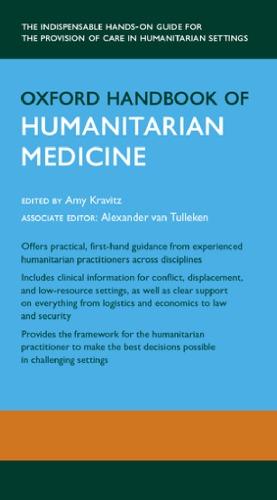
Oxford Handbook of Humanitarian Medicine
Oxford Handbook of Key Clinical Evidence 2e
Oxford Handbook of Medical Dermatology 2e
Oxford Handbook of Medical Imaging
Oxford Handbook of Medical Sciences 2e
Oxford Handbook for Medical School
Oxford Handbook of Medical Statistics
Oxford Handbook of Neonatology 2e
Oxford Handbook of Nephrology and Hypertension 2e
Oxford Handbook of Neurology 2e
Oxford Handbook of Nutrition and Dietetics 2e
Oxford Handbook of Obstetrics and Gynaecology 3e
Oxford Handbook of Occupational Health 2e
Oxford Handbook of Oncology 3e
Oxford Handbook of Operative Surgery 3e
Oxford Handbook of Ophthalmology 4e
Oxford Handbook of Oral and Maxillofacial Surgery 2e
Oxford Handbook of Orthopaedics and Trauma
Oxford Handbook of Paediatrics 2e
Oxford Handbook of Pain Management
Oxford Handbook of Palliative Care 3e
Oxford Handbook of Practical Drug Therapy 2e
Oxford Handbook of Pre-Hospital Care
Oxford Handbook of Psychiatry 3e
Oxford Handbook of Public Health Practice 3e
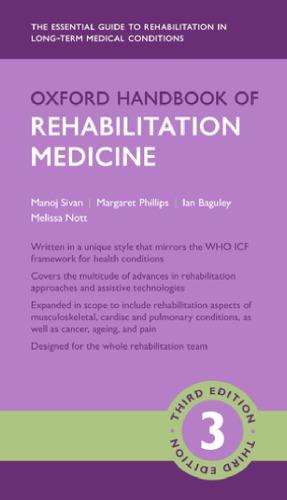
Oxford Handbook of Rehabilitation Medicine 3e
Oxford Handbook of Reproductive Medicine & Family Planning 2e
Oxford Handbook of Respiratory Medicine 3e
Oxford Handbook of Rheumatology 4e
Oxford Handbook of Sport and Exercise Medicine 2e
Handbook of Surgical Consent
Oxford Handbook of Tropical Medicine 4e
Oxford Handbook of Urology 4e
Oxford Handbook of Rehabilitation Medicine
THIRD EDITION
Manoj Sivan
Associate Clinical Professor in Rehabilitation Medicine, University of Leeds; Honorary Consultant Leeds Teaching Hospitals and Community NHS Trusts; Honorary Senior Lecturer, University of Manchester, UK
Margaret Phillips
Consultant in Rehabilitation Medicine, University Hospitals of Derby and Burton Foundation NHS Trust, Derby, UK
Ian Baguley
Clinical Associate Professor, Macquarie University; Clinical Senior Lecturer in Rehabilitation Medicine, Westmead Clinical School, The University of Sydney, Sydney, Australia
Melissa Nott
Senior Lecturer in Occupational Therapy, Charles Stuart University, Albury-Wodonga, Australia
1
Great Clarendon Street, Oxford, OX2 6DP, United Kingdom
Oxford University Press is a department of the University of Oxford. It furthers the University’s objective of excellence in research, scholarship, and education by publishing worldwide. Oxford is a registered trade mark of Oxford University Press in the UK and in certain other countries
The moral rights of the authors have been asserted
First Edition published in 2005
Second Edition published in 2009
Third Edition published in 2019
Impression: 1
All rights reserved. No part of this publication may be reproduced, stored in a retrieval system, or transmitted, in any form or by any means, without the prior permission in writing of Oxford University Press, or as expressly permitted by law, by licence or under terms agreed with the appropriate reprographics rights organization. Enquiries concerning reproduction outside the scope of the above should be sent to the Rights Department, Oxford University Press, at the address above
You must not circulate this work in any other form and you must impose this same condition on any acquirer
Published in the United States of America by Oxford University Press 198 Madison Avenue, New York, NY 10016, United States of America
British Library Cataloguing in Publication Data
Data available
Library of Congress Control Number: 2019944686
ISBN 978–0–19–878547–7
Printed and bound in China by C&C Offset Printing Co., Ltd.
Oxford University Press makes no representation, express or implied, that the drug dosages in this book are correct. Readers must therefore always check the product information and clinical procedures with the most up-to-date published product information and data sheets provided by the manufacturers and the most recent codes of conduct and safety regulations. The authors and the publishers do not accept responsibility or legal liability for any errors in the text or for the misuse or misapplication of material in this work. Except where otherwise stated, drug dosages and recommendations are for the non-pregnant adult who is not breast-feeding
Links to third party websites are provided by Oxford in good faith and for information only. Oxford disclaims any responsibility for the materials contained in any third party website referenced in this work.
Foreword
Many clinicians in practice today will remember their first Oxford Handbook. The familiar cover and easily accessible layout was ground-breaking in its day, providing valuable clinical information in emergencies before the electronic resources that we take for granted today existed. Many of us learnt our medicine from carrying it about in a white-coat pocket where it could be accessed soon after seeing a patient. My abiding memory of my own first handbook is the exhortation in the early chapters ‘not to blame the sick for being sick’. This is a very powerful concept that resonated with me deeply and confirmed my choice of career in rehabilitation medicine where we can do so much with medical interventions to alleviate the impact of disabling conditions and where the cause of the disability cannot be cured. Over the years, the Oxford Handbook stable has increased, encompassing many clinical areas, and I was delighted when the first edition of the rehabilitation medicine handbook was published.
Rehabilitation is an educational and problem-solving clinical intervention that aims to reduce the impact of disabling conditions on people’s functioning. This is achieved through three main strategies—restoration of the function of impaired structures, reorganization of impaired pathways to deliver improved abilities, and reducing the discrepancy between the limited ability of disabled people and the demands of their environment.
Manoj, Margaret, Ian, and Melissa in editing this handbook have brought together a distinguished group of contributors who comprehensively cover the widest possible syllabus of topics in rehabilitation medicine—the medical management of disabling conditions. The topics included in the handbook encompass a broader spectrum of conditions than most of the rehabilitation medicine curricula across Europe and North America, providing an invaluable insight into the rehabilitation of these conditions.
Rehabilitation starts with a thorough understanding of the impact of the condition on people and their families. The early chapters of the handbook in Section 1 take us through the inclusive evaluation of the needs of the person with a disability. Each topic-specific chapter includes further information on assessment in that clinical area. The chapters in Section 2 provide valuable overviews of the management strategies of specific impairments that cut across a range of disabling conditions. The condition-specific chapters provide a succinct, yet comprehensive, overview of the impact of each diagnosis on the person and how to limit its impact.
This edition has reviewed the state-of-the-art in rehabilitation medicine once more and provides an update to all clinicians interested in the field of rehabilitation from medical students through to senior consultants—we all have something to learn from the knowledge in this useful volume.
Professor Rory J. O’Connor Charterhouse Professor and Head of the Academic Department of Rehabilitation Medicine, University of Leeds, and Lead Clinician in Rehabilitation, the National Demonstration Centre in Rehabilitation, Leeds Teaching Hospitals NHS Trust, Leeds, UK
Preface
The Oxford Handbook of Rehabilitation Medicine is designed to provide concise information on rehabilitation aspects of care for adults with long-term medical conditions. The second edition was published in 2009, and since then, there have been advances in the management of medical conditions and new rehabilitation approaches and technologies have emerged. New guidelines and treatment protocols have been agreed based on emerging evidence and consensus. An updated edition of the handbook was therefore much needed to cover all these aspects.
Rehabilitation medicine is an expanding medical specialty, and worldwide, there is a wide scope of practice in the specialty, particularly in the fields of pain, musculoskeletal medicine, trauma, cancer, cardiopulmonary rehabilitation, and rehabilitation technology. We have made a sincere effort to include all the relevant areas by adding 14 new chapters in this new edition. Colour pictures, diagrams, and management flowcharts/algorithms have been introduced to make the information easily accessible. The handbook luckily manages to retain its pocket size in spite of our enthusiasm to cover everything new and novel in rehabilitation.
The book has two sections: Section 1 on common clinical approaches and Section 2 on condition-specific approaches. The clinical approach section outlines the management of common symptoms encountered in rehabilitation settings. The subsequent section on specific conditions provides information that will enable the reader to put the symptoms in context with the condition and provide direct management in a comprehensive and holistic manner. Every chapter has list of further reading resources that includes journal articles, textbooks, and online material.
This handbook, although aimed at medical doctors, will prove useful to other members of the multidisciplinary rehabilitation team such as physiotherapists, occupational therapists, nurses, psychologists, speech and language therapists, dieticians, support workers, and other allied healthcare professionals. The handbook will also appeal to doctors in the related specialties such as neurology, orthopaedics and trauma, palliative medicine, geriatrics, and pain medicine.
The new editorial team have enjoyed bringing together British and Australian perspectives on various aspects of rehabilitation and it is hard to believe we never had any disagreement during the years of preparing this new edition. The four of us have worked extremely hard in ensuring that every chapter is reviewed meticulously by each of us and meets the standards we had set for this handbook. We hope our readers find the new edition up to date and useful in their everyday practice of improving the lives of individuals with long-term conditions.
Acknowledgements
We would like to dedicate this work to our patients and their families who keep us motivated and inspired by their resilience and determination to improve their abilities even when the odds are all stacked against them. The material presented in this handbook has been written by experts in their areas and we would like to express our gratitude to all the contributing authors for their time and efforts. We are grateful to our reviewers who provided valuable insights and suggestions to improve the quality and scope of the chapters. This work would not have been possible without the support and encouragement from our families and friends who did not mind us working over the years in the small hours after busy clinical commitments. We would like to particularly thank the Oxford University Press team for their help, guidance, and patience throughout the process as this edition has been an ambitious revamp of the previous edition and needed energies and efforts of essentially writing a new book.
Symbols and abbreviations
Ecross reference
M website
ABI acquired brain injury
ACE angiotensin-converting enzyme
ACS acute coronary syndrome
ADLS activities of daily living
ADRT advance decision to refuse treatment
AED antiepileptic drug
AFO ankle–foot orthosis
ARDS acute respiratory distress syndrome
ASIA American Spinal Injury Association
AT assistive technology
ATA Assistive Technology Assessment
BMI body mass index
BONT botulinum toxin
CABG coronary artery bypass surgery
CBR community-based rehabilitation
CBT cognitive behaviour therapy
CFS chronic fatigue syndrome
CGA Comprehensive Geriatric Assessment
CGRP calcitonin gene-related peptide
CHD coronary heart disease
CHF chronic heart failure
CK creatine kinase
CNS central nervous system
COPD chronic obstructive pulmonary disease
CP cerebral palsy
CRP C-reactive protein
CRPS complex regional pain syndrome
CSF cerebrospinal fluid
CT computed tomography
DAI diffuse axonal injury
DALY disability-adjusted life year
DFLE disability-free life expectancy
DM1 myotonic dystrophy type 1
DM2 myotonic dystrophy type 2
DMARD disease-modifying antirheumatic drug
DMT disease-modifying treatment
DOLS Deprivation of Liberty Safeguards
DVT deep venous thrombosis
DXA dual energy X-ray absorptiometry
ECG electrocardiogram
EEG electroencephalography
EMG electromyography/ electromyogram
ES electrical stimulation
ESD early supported discharge
ESR erythrocyte sedimentation rate
FSH facioscapulohumeral muscular dystrophy
GABA gamma-aminobutyric acid
GBS Guillain–Barré syndrome
GCS Glasgow Coma Scale
GI gastrointestinal
GMFCS Gross Motor Function Classification System
GP general practitioner
GS grip strength
HD Huntington’s disease
HKAFO hip–knee–ankle–foot orthosis
HLA human leucocyte antigen
IADLS instrumental activities of daily living
ICF International Classification of Functioning, Disability and Health
ICU intensive care unit
INR international normalized ratio
ITB intrathecal baclofen
IV intravenous
KAFO knee–ankle–foot orthosis
KO knee orthosis
LIS locked-in syndrome
LL lower limb
LMN lower motor neuron
LOS length of stay
LRTI lower respiratory tract infection
MCP metacarpophalangeal
MCS minimally conscious state
MDT multidisciplinary team
MFS Miller Fisher syndrome
MI myocardial infarction
MMSE Mini-Mental State Examination
MND motor neuron disease
MODS multiple organ dysfunction syndrome
MRC Medical Research Council
MS multiple sclerosis
MSK musculoskeletal
NDGC neurodegenerative condition
NG nasogastric
NHS National Health Service
NICE National Institute for Health and Care Excellence
NIV non-invasive ventilation
NSAID non-steroidal anti-inflammatory drug
OA osteoarthritis
PA physical activity
PCI percutaneous coronary intervention
PCS post-concussive syndrome
PD Parkinson’s disease
PDOC prolonged disorder of consciousness
PE pulmonary embolus
PEG percutaneous gastrostomy
PSH paroxysmal sympathetic hyperactivity
PTA post-traumatic amnesia
PTSD post-traumatic stress disorder
QALY quality-adjusted life year
QOL quality of life
RA rheumatoid arthritis
REM rapid eye movement
ROM range of motion
SCI spinal cord injury
SCPE Surveillance of Cerebral Palsy in Europe
SMART Sensory Modality and Assessment Rehabilitation Technique
SSRI selective serotonin reuptake inhibitor
TBI traumatic brain injury
TENS transcutaneous electrical nerve stimulation
TIA transient ischaemic attack
TN trigeminal neuralgia
TUG Timed Up and Go
UL upper limb
UMN upper motor neuron
UTI urinary tract infection
VO2 MAX maximal oxygen uptake
VR vocational rehabilitation
VS vegetative state
WHO World Health Organization
WS walking speed
Contributors
Dr Stephen Ashford
NIHR Clinical Lecturer and Consultant Physiotherapist and Regional Hyper-acute Rehabilitation Unit, Northwick Park Hospital, Harrow, UK
10: Spasticity and contractures
Dr Hannah Barden
Adjunct Researcher, Charles Stuart University, AlburyWodonga; Occupational Therapist, Westmead Hospital, Westmead, New South Wales, Australia
10: Spasticity and contractures; 40: Burns rehabilitation
Dr Angela Clough
Clinical Lead, Musculoskeletal Physiotherapist, Hull & East Yorkshire NHS Trust, and CoChair, Yorkshire & Humber Regional Network of Chartered Society of Physiotherapists, UK
35: Musculoskeletal problems of upper limb; 36: Musculoskeletal problems of lower limb
Dr Catherine D’Souza
Palliative Care Lead, South Canterbury District Health Board, New Zealand
31: Neurodegenerative conditions
Dr Hanain Dalal
Honorary Clinical Associate Professor, University of Exeter Medical School, Truro Campus, and Knowledge Spa, Royal Cornwall Hospital, Truro, UK
16: Cardiac Rehabilitation
Dr Laura Edwards
Clinical Associate Professor in Rehabilitation Medicine, University of Nottingham and Honorary Consultant, University Hospitals of Derby and Burton Foundation NHS Trust, Derby, UK
31: Neurodegenerative conditions
Dr Helen Evans
Highly Specialist Physiotherapist, Gait and FES Service, University Hospitals of Derby and Burton Foundation NHS Trust, Derby, UK
18: Mobility and Gait
Mr Jonathan Flynn
Programme leader for Physiotherapy, University of Huddersfield, Huddersfield, UK
35: Musculoskeletal problems of upper limb; 36: Musculoskeletal problems of lower limb
Dr Lorraine Graham
Lead Consultant in Amputee Rehabilitation Medicine, Musgrave Park Hospital, Belfast, Northern Ireland, UK
41: Amputee rehabilitation
Ms Alison Howle
Speech and Language Therapist, Westmead Hospital, Westmead, New South Wales, Australia
8: Speech and language; 9: Swallowing
Ms Trina Phuah
Lecturer in Occupational Therapy, School of Community Health, Charles Sturt University, Albury, New South Wales, Australia
23: Technical aids and assistive technology
Dr Ng Yee Sien
Senior Consultant in Rehabilitation Medicine, Singapore General Hospital, Singapore
39: Geriatric rehabilitation
Mrs Alison Smith Rehabilitation Nurse Specialist, University Hospitals of Derby and Burton Foundation NHS Trust, Derby, UK
29: Multiple sclerosis
Dr Matthew Smith Consultant in Rehabilitation Medicine, Leeds General Infirmary, Leeds, UK
28: Stroke
Mr Matthew Sproats Head of Department, Occupational Therapy, Westmead & Auburn Hospitals, Western Sydney Local Health District, New South Wales, Australia
21: Orthotics and prosthesis
Professor Rod Taylor Chair of Health Services Research and Academic Lead, Exeter Clinical Trials Support Network; and NIHR Senior Investigator, University of Exeter Medical School, Exeter, UK
16: Cardiac rehabilitation
Concepts of rehabilitation
Introduction 4
Models of disability 5
Terminology 9
Approaches to rehabilitation 10
Goals and habits 12
Outcome measurement 14
Benefits of rehabilitation 16
Summary 18
References 19
Further reading 19
Concepts of rehabilitation
Introduction
There is a lot of variation in what people understand by ‘rehabilitation’. This is probably due to the perspective they are coming from and the system or setting in which rehabilitation might occur. The origins of the word are thought to be from the Latin noun ‘habilitas’, meaning ability, skill, or aptitude, adjective ‘habilis’ meaning skilful, capable, and verb ‘habilitare’, meaning to enable. This chapter focuses on the concepts behind rehabilitation and rehabilitation medicine, and how these concepts are operationalized.
In healthcare, rehabilitation has been defined as ‘a general health strategy with the aim of enabling persons with health conditions experiencing, or likely to experience, disability to achieve and maintain optimal functioning’1. This means that an understanding of the concepts of disability and of optimal functioning are central to understanding the concept of rehabilitation, and are described later in this chapter. In addition, several models of disability exist and will also be described. ‘Optimal functioning’ is a less welldefined phrase—for the purposes of this handbook, it is taken to mean not just a utilitarian concept of functioning but an engagement of the individual in life in an autonomous way. Importantly, this differentiates a person’s ability to perform activities useful to self or society from their ability to meaningfully engage in life in their chosen way. This difference can become crucially important in those who have lost physical and cognitive abilities. The World health Organization (WhO) International Classification of Functioning, Disability and health (ICF), described later in this chapter, a concept that serves as a theoretical underpinning for rehabilitation, makes this apparent through the description of ‘participation’.
Rehabilitation, specialist rehabilitation, and rehabilitation medicine are different, but related, concepts that are relevant to the content of this handbook. Rehabilitation, as an overall term, covers aspects of healthcare that any healthcare practitioner can and should engage in, as it leads to intervention being made with a purpose in mind that includes optimal functioning in its widest sense, and not just the management of a specific impairment. For example, it is the difference between optimum control of a person’s asthma enabling them to work and participate in sport, rather than merely maximizing peak flow readings. Specialist rehabilitation often describes a more complex situation, where multiple factors impact rehabilitation across simultaneous and diverse rehabilitation goals. Of necessity, this ‘complex’ rehabilitation requires different healthcare professionals working as a team to achieve optimum outcomes. Rehabilitation medicine describes the medical specialty driven by this more sophisticated rehabilitation philosophy, rather than using an organ-based, medical model. Rehabilitation medicine works across the whole spectrum, from specialist rehabilitation through to having a basic rehabilitation role and possibly an educational role in enabling any type of rehabilitation to occur. Rehabilitation medicine has similarities to specialities which cover a specific phase of life or disease trajectory, such as palliative care, but differs in that rehabilitation can be part of condition management at any time.
Models of disability
Traditional biomedical model
The biomedical model of disability is focused on pathology and impairment. It assumes several unhelpful notions about the nature of disability (Box 1.1).2
The philosophy of Western medicine has traditionally been to treat and to cure, but in rehabilitation these outcomes are unlikely and the aim has often been to ‘normalize’. This philosophy was reinforced by the initial WhO classification that produced a distinction between impairment, disability, and handicap. The biomedical model of disability usually implies that the physician takes a leading role in the entire rehabilitation process—being team leader, organizing programmes of care, and generally directing the delivery of services for the person with disabilities. The doctor/patient relationship was the senior relationship in the medical model. Rehabilitation was born around the time of the First World War when there was a strong philosophy of the doctor telling injured servicemen how to behave, how to get better, and how to get back as quickly as possible to active duty. Such a model may have been appropriate in that cultural context but not in wider society today.
Social model of disability
The social model of disability understands disability as secondary to the social, legislative, and attitudinal environment in which the person lives and not any underlying medical condition. Although a person’s abilities may be different, the disability is because society either actively discriminates against the person with a disability or it fails to account for their different needs. The key features of the social model are listed in Box 1.2.2
Biopsychosocial model of disability
The biopsychosocial model of disability is an attempt to account for both the social and biomedical models of disability. The WhO ICF3 uses the biopsychosocial model. There is controversy over this approach, and some who use the social model of disability disagree with approaches that include
Box 1.1 Unhelpful assumptions of the medical model of disability
• Disability is regarded as a disease state that is located within an individual: the problem and solution are found solely within that person.
• Disability is a deviation from the norm that inherently necessitates some form of treatment or cure.
• Being disabled, a person is regarded as biologically or psychologically inferior to those who are able-bodied and ‘normal’.
• Disability is viewed as a personal tragedy. It assumes the presence of a victim. The objective normality state that is assumed by professionals gives them a dominant decision-making role often noted in a typical doctor/patient relationship.
Box 1.2 Assumptions of the social model of disability
• A person’s impairment is not the cause of restriction of activity.
• The cause of restriction is the organization of society.
• Society discriminates against people with disabilities.
• Attitudinal, sensory, architectural, and economic barriers are of equal, if not greater, importance than health barriers.
• Less emphasis is placed on the involvement of health professionals in the life of the person with disabilities.
aspects of health within a model of disability, as they would define disability as being solely due to a lack of response in changing the environment to accommodate the needs of the person. There are weaknesses in the ICF model, principally around personal context and well-being, and philosophies around the biopsychosocial model are still developing.4,5
The definitions used in the ICF are shown in Box 1.33 and described in the following paragraphs.
Impairment is a medically descriptive term that says nothing about consequence. For example, a right hemiparesis, a left-sided sensory loss, and a homonymous hemianopia are all impairments but the consequences of each of these will depend on many other factors, such as the person’s environment, their job, family role, lifestyle, and expectations.
Activity describes the everyday tasks that any person, wherever they live, would be expected to do as a basic part of life, for instance, walking or eating. There is an overlap with participation and there is a judgement involved in relation to societal norms as to what these everyday tasks are. participation is defined as involvement in a life situation. It will vary considerably between people, for instance, having a mild right hemiparesis may have profound implications for a young person wanting to join the armed forces, as such occupations may be closed to him/her or an existing job may be lost. however, for a retired person with comorbidities, a similar
Box 1.3 International Classification of Functioning, Disability and Health
• Impairment: loss or abnormality of a body structure or of a physiological or psychological function.
• Activity: the execution of a task or action by an individual. Thus, activity limitations are difficulties an individual may have in executing activities.
• participation: involvement in a life situation and thus participation restrictions are problems an individual may experience in such involvement.
• Contextual factors: includes the features, aspects, and attributes of, or objects, structures, human-made organizations, service provision, and agencies in, the physical, social, and attitudinal environment in which the people live and conduct their lives. Contextual factors include both environmental and personal factors.
impairment may have no perceptible impact on lifestyle. participation is often optimized by changing environmental factors, for example, a receptionist with a hemiparesis remains capable of undertaking the job and being a valuable member of the workforce if appropriate modifications are made to IT equipment. Another example is a person who needs to use a wheelchair but cannot move around the office because it is not wheelchair accessible. In both cases, the employer’s attitude may cause the person to be moved elsewhere or even lose their job. The change necessary here is attitudinal, legislative, or both. Therefore, rehabilitation includes addressing aspects such as societal attitudes and the physical environment, which are traditionally outside the realm of medicine. A rehabilitation medicine doctor would not undertake that change themselves, as that is not where their skills lie. however, part of their duty is to identify the issue, give appropriate information, and send appropriate referrals to advocate on the patient’s behalf.
The full ICF is a detailed and lengthy document. The ICF recognizes the importance not only of describing the functioning of an individual but also placing such functioning into its social context. Fig. 1.1 is reproduced from the WhO website and provides a useful summary.
Rehabilitation medicine focuses not on the impairments and pathologies, but rather on activity and participation, attempting to optimize these according to what is felt to be important by the individual involved. This is operationalized by identifying the aims or goals the person may have (E see ‘Goals and habits’). This may include addressing aspects of pathology and impairment, but the overall aim or goal is at the level of activity
Health condition (disorder or disease)
Body functions and structures
Activities
Participation
Environmental factors Personal factors
Fig. 1.1 Interactions between the components of the ICF.
Reproduced with permission from World health Organization (WhO). International Classification of Functioning, Disability and Health (ICF). Geneva, Switzerland: World health Organization.
or participation. Changing aspects of the environment or the ways in which a person performs an activity are often the key changes that lead to that person achieving their goal. Rehabilitation medicine does not minimize the importance of diagnosis and impairment but sees addressing these as part of a whole spectrum of ways to achieve a person’s goals. As the primary skills of a doctor are often in the area of pathology and impairment whereas those of allied health professionals are more in activity and participation, it often falls to the doctors within the multidisciplinary team to be the professionals who are most involved with pathology and impairment, and this can cause a tendency to revert to the medical model. The skill of a rehabilitation doctor is dependent on being able to take an informed overview of the whole ICF spectrum.
At times, a sense of antagonism has existed between health professionals involved in disability and activists in the disability movement. These two extreme positions have softened over time: people with disabilities realize that health professionals have a clear and important role in helping to optimise abilities, while health professionals realize the rights of the person with disabilities to make decisions about their rehabilitation. Nevertheless, it can be difficult to maintain these ideals in practice. Multidisciplinary rehabilitation is often based within a healthcare system predominantly using the biomedical model; coupled with resource constraints, this can lead to focusing on very narrow aspects of a person’s health.
Terminology
In the disability literature and in clinical practice it is vital to use the correct terminology. This is not mere political correctness. Incorrect terminology can not only be demeaning but can indicate an unhelpful philosophy or attitude from the individual concerned or from the multidisciplinary team.
It is important to avoid terminology that implies dependency or terminology which just categorizes all people with disabilities. The word ‘patient’, for example, may be entirely appropriate for someone who is acutely ill and is dependent upon medical and health professionals or where interventions affecting pathology are made. however, in rehabilitation, using the philosophy underlying the social model of disability, people with disabilities are not ill and thus the term ‘patient’ is inappropriate. When the rehabilitation process is striving to give that person independence and develop new skills, terminology that implies the opposite should be avoided. There are a number of other group classifications to be avoided including:
• epileptics
• stroke sufferers
• multiple sclerosis (MS) sufferers
• spastics
• young chronic sick
• the handicapped
• the disabled.
Although there is no universally accepted terminology, it does seem reasonable to use the term ‘person with a disability’. Correct terminology simply means that the person is being treated as an individual and not just labelled as an example of a particular group.
As with many sections of society, it does seem acceptable for the group members themselves to use self-labelling terms, for instance, people with spinal cord injuries will often refer to themselves as ‘paras’ or ‘tetras’ or even ‘crips’.
Disability terminology is a minefield waiting to trap the unwary. The strength of feeling on these issues should not be underestimated. A useful approach in clinical practice may be to ask the clients you are working with if they have a preferred term to use when collectively referring to people with that specific condition.