1
Great Clarendon Street, Oxford, ox2 6dp, United Kingdom
Oxford University Press is a department of the University of Oxford. It furthers the University’s objective of excellence in research, scholarship, and education by publishing worldwide. Oxford is a registered trade mark of Oxford University Press in the UK and in certain other countries © Oxford University Press 2019
The moral rights of the authors have been asserted
First Edition published in 2019
Impression: 1
All rights reserved. No part of this publication may be reproduced, stored in a retrieval system, or transmitted, in any form or by any means, without the prior permission in writing of Oxford University Press, or as expressly permitted by law, by licence or under terms agreed with the appropriate reprographics rights organization. Enquiries concerning reproduction outside the scope of the above should be sent to the Rights Department, Oxford University Press, at the address above
You must not circulate this work in any other form and you must impose this same condition on any acquirer
Published in the United States of America by Oxford University Press 198 Madison Avenue, New York, NY 10016, United States of America
British Library Cataloguing in Publication Data Data available
Library of Congress Control Number: 2018944186
ISBN 978–0–19–878966–6
Printed and bound by CPI Group (UK) Ltd, Croydon, cr0 4yy
Links to third party websites are provided by Oxford in good faith and for information only. Oxford disclaims any responsibility for the materials contained in any third party website referenced in this work.
Foreword
When Charles Robert Darwin published, at long last, his ground-breaking theory of adaptation and natural selection—On the Origin of Species—he was clearly afflicted by doubts and qualms. These are evident in the full title ‘On the Origin of Species by Means of Natural Selection, or the Preservation of Favoured Races in the Struggle for Life’. Thus an explicit part of the mechanisms he described, and what we now call evolution, referred to the process of selection, by which the best-adapted individuals survive and reproduce whereas others are deselected. Darwin actually disliked the term ‘evolution’ and was also unhappy with Herbert Spencer’s coinage, ‘survival of the fittest’. Still, Darwin’s achievement is all the more remarkable for he did not know the actual logistics of selection—Mendel’s genetical research still lay intellectually fallow and, indeed, would for some decades. Darwin was, however, greatly influenced by the theory of population growth propounded by Thomas Malthus: geometric increases in populations run off cliffs of resources which grow only arithmetically. With this, he was also distraught to realise that what happened to the less well adapted was enfeeblement, debility, and even death (not only of the self, but also of the lineage) by deselection.
Put another way, from the very beginning of evolutionary theory, links to the realm of medicine were manifest though long ignored and, when attended to, often misconstrued. Such led to the dangerous blind alleys of Social Darwinism as well as even more awful social policies. It is beyond the present scope and aims to summarise, much less analyse, the tremendous, incalculable pain brought about by atrocious perversions of Darwin’s masterful work, but all this is otherwise well chronicled. Here it is important to underscore that none of these was ever endorsed by Darwin. One hundred and fifty years or so later, the medical profession now well knows these misapplications were wrong—both scientifically and morally. So for what now can the theory of evolution be ‘good’ in contemporary medicine and health science? Evolution is usually construed as a slow and gradual process whereas medicine has a different mode and tempo, that is, to expeditiously diagnose and treat health conditions. Yet, might there be things evolutionary to which medicine may look to leverage for therapeutic progress or, at least, palliation and greater heuristic understanding? Yes, there are.
For one, the microbial world surrounding us is rapidly evolving: Escherichia coli bacteria can divide every 20 minutes. Our skin and gut are populated by ‘aliens’ in numbers that come close to the number of cells that carry our own genome. Most microbiota are commensal, that is, they help us keep alive and healthy, but a few are not. Indeed, the rapidity of bacterial reproduction drives equally rapid evolutionary dynamics by which pathogenic traits can newly arise. Thus, some bacteria cause severe medical problems under special conditions we cannot understand without a deep knowledge about how our bodies and ‘they’ interact, as well as the mechanisms of such interactions, both physiological and pathological.
Second, there is of course more than a kernel of truth in the notion that evolution is slow, at least with regard to species bauplans. For instance, for some millions of years, our ancestors and all members of our own species have walked on two legs. Verbal communications have been around for at least 500,000 years; our forebears started to domesticate animals some 30,000 years ago; and selection has endowed us (or, at least, some of us) with the means to digest milk beyond infancy. However, our body is, in other ways, a living fossil. Our vertebral column, for example, is not suited to bipedalism, much less more modern sedentary postures such as sitting at a desk or to watch TV. Nor, for that matter, is our brain. The consequences of exposing our young for extended periods of time to computer games and other technical gadgets has only begun to be recognised as a matter of medical concern. Likewise, the vast overshoot of calories that our bodies ingest can wreak havoc with our metabolism. In other words, our biological heritage is, to some degree, mismatched with our modern way of living.
Third, humans continue to evolve, for reasons and in ways that have only recently begun to be explored. Changing environments to which humans may adapt include exposure to pathogens, old and new, social contingencies, and the impact of modern medicine, which some posit as a ‘relaxation’ of natural selection.
All this needs to be better understood than is currently the case. Thus, medical curricula need the yeasts of evolutionary science to leaven dough often turgid with science not risen with phylogenetic perspectives. Indeed, virtually every organ system is involved in an ongoing ‘arms race’ between our bodies and our environments—gestational, developmental, social, cultural, microbial, nutritional, et al. The sooner the better evolutionary science is put into practice: future generations of physicians in all specialties, indeed, all health practitioners and scientists must understand the pertinence of evolution for medical research and practice.
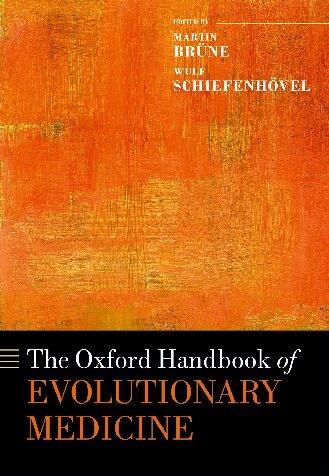
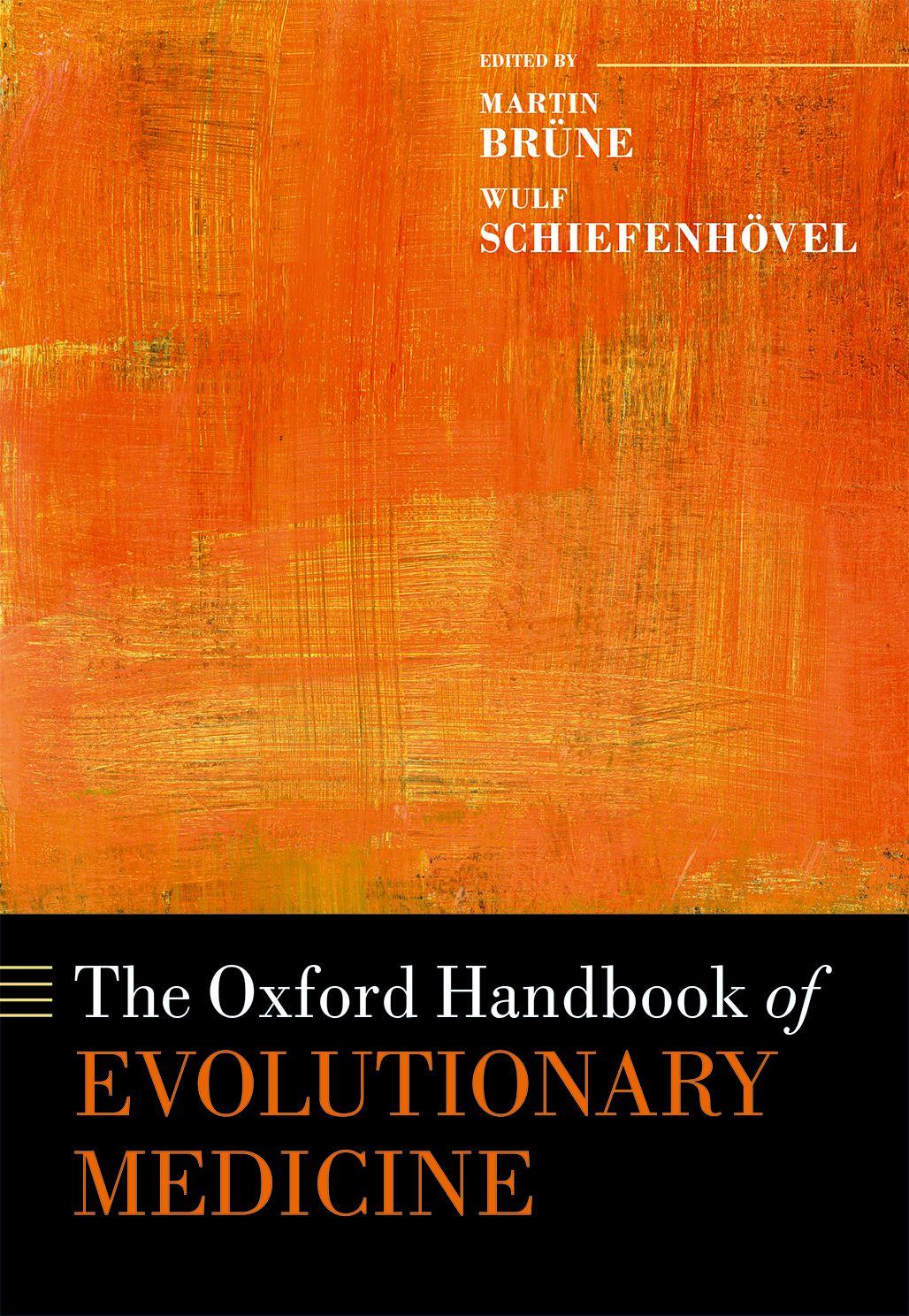
The Oxford Handbook of Evolutionary Medicine is a fine example in the medical literature of ‘punctuated evolution’, that is, unusually rapid progress in form and function. As the first textbook to tackle the mammoth task of integrating evolutionary knowledge comprehensively into a format familiar to health science students and professionals, it is arranged by organ systems akin to a traditional text of medical physiology or pathophysiology. An incredible number of cross-references link chapters to one another and serve to underscore how organic beings are more than the sum of parts. Likewise, the evolutionary background knowledge so essential to this work is accessible and straightforward. Moreover, this is a well-edited book written by experts in their medical fields, such that the volume offers a state-of-the-art compilation of evolutionary insights into health and disease.
Much of this success is attributable to the editors, Professors Martin Brüne and Wulf Schiefenhövel, who bring a commanding range of expertise to this gargantuan task. Dr. Brüne graduated in medicine from the Westphalian Wilhelms University in Münster in 1988 and completed training first in neurology, then psychiatry in 1995, as well as a Visiting Research Scientist fellowship at the Centre for the Mind of the Australian National University and University of Sydney. These timelines are important since his deep interest in evolutionary neuropsychiatry evolved even as the field itself was emerging. He is currently Professor of Psychiatry at the LWL University-Hospital, Ruhr University Bochum, Germany, and has authored more than 250 articles and book chapters, including a rare profound monograph Textbook of Evolutionary Psychiatry and Psychosomatic Medicine: The Origins of Psychopathology (2nd edition, Oxford University Press, 2016). For his part,
Professor Schiefenhövel is Head of the Human Ethology Group at the Max-Planck-Institute for Ornithology. He studied medicine at the universities of Munich and ErlangenNuremberg and has long been Professor for Medical Psychology and Ethnomedicine at Munich. He has carried out fieldwork in ethnomedicine, evolutionary medicine, social anthropology, human ethology, linguistics, and population genetics in Mainland and Island New Guinea since 1965—notably among the Eipo, a then (1974) Neolithic Highland Papuan group in the Province of Papua/Indonesia. Among his many, many contributions sustained over decades, he is a founding member of the Human Sciences Centre, University of Munich, and former Professor of Medical Psychology at that university. For several decades, Professor Schiefenhövel has been a regular guest professor in Human Ethology at both the University of Innsbruck and the Institute for Behavioral Biology of the Royal University Groningen.
Above and beyond their compendious erudition and expertise in the subject, Professors Brüne and Schiefenhövel have assembled an exceptional team of chapter authors who write with considerable authority and a good degree of convergent substance and style.
I strongly commend The Oxford Handbook of Evolutionary Medicine to students of medicine, anthropology, biology, and psychology, as well as to scholars and clinicians. Regardless of where you are in your journey through medicine—pupil, teacher, specialist, perhaps patient, or even an interested layperson—The Oxford Textbook of Evolutionary Medicine is a wonderful new ‘ecosystem’ to which medicine can better adapt even as you can explore it in marvellous detail.
Daniel R. Wilson, MD, PhD President, Western University of Health Sciences, USA
Preface
Our idea to edit a volume about evolutionary medicine dates back several years, when both of us agreed that evolutionary theory has much to contribute to the understanding, diagnosis, and treatment of medical conditions, while at the same time evolutionary theory was almost absent or negligibly dealt with in medical textbooks, let alone the curricula of medical schools. There were a few textbooks in special areas of medicine, though, like Wenda Trevathan’s Human Birth: An Evolutionary Perspective (1987), and another by one of us (WS) published in German about Birth-Giving Behaviour and Reproductive Strategies (original title: Geburtsverhalten und Reproduktive Strategien, 1988). Even though these volumes and the ingenious classic book entitled Why We Get Sick. The New Science of Darwinian Medicine by Randolph Nesse and George C. Williams (1994) were well received in some academic communities, their main lessons went unheard at both bench and bedside. However, for the understanding of health and disease, it is tremendously important to acknowledge that bodies are not like machines, but compositions of adaptations to a vast complexity of environmental challenges that coined our evolutionary past, and that selection operates on human phenotypes to the present day.
The relevance of these messages resides in the fact that nature has produced design compromises and trade-offs between sometimes diametrically opposite biological requirements germane to survival and reproduction. Together with the observation that many ancient adaptations barely fulfil their biological purposes in modern environments, these insights have advanced the intellectual endeavour to come to grips with the question why body functions can go wrong, in spite of the long history of biological adaptation that should have selected against any kind of ‘weakness’ or ‘design failure’. In fact, we now get to understand that human bodies, like other living things, are ‘ecosystems’ which coevolved with other organisms like viruses, bacteria, fungi, and helminths, most frequently to the benefit of both host and commensal guest, but sometimes detrimental to the human organism. Environmental changes, often in association with cultural evolution, have brought about new challenges to the conditio humana, many of which occurred so rapidly that biological adaptation could not keep pace—in evolutionary medicine, referred to as ‘mismatch’. For example, the agricultural transition has produced not only new ways of food acquisition, but also new problems germane to physical and mental health, including ones that are commonly well known such as lactose intolerance (as the ancestral condition), and new infectious agents, which crossed species borders when domesticated animals came to live in close proximity with humans. Along similar lines, evolutionarily ancient germs like Plasmodium falciparum became more problematic for cattle herders, because Anopheles evolution led to the emergence of strains that preferably fed on human, not animal, blood. Similar processes have occurred more recently, including bird flu and swine flu epidemics in East Asia, as well as Ebola endemics.
So, in our recent history, new infectious diseases, new cancers, and other medical conditions have appeared, which can only be fully understood by adopting an evolutionary perspective. This view, we strongly believe, needs also to be taken to the medical classroom and to the clinics. It is not just an academic endeavour to explore how we can better deal with bacteria that have developed antibiotic resistance. This is clinical reality in almost every intensive care unit, and we need to find new approaches to deal with life-threatening conditions that arise from resistant microbes. The list of practical issues could easily be expanded, but this is not the right place to do so. The reader is referred to the individual chapters of this volume.
Interestingly, the link between evolutionary theory and medicine is not new. With regard to Charles Darwin’s life, it is known that he suffered, throughout his life, from waxing and waning, often debilitating clinical symptoms, which in retrospect could have been signs of Crohn’s disease, lactose intolerance, MELAS syndrome (a mitochondrial gene defect causing encephalomyopathy, lactic acidosis, and stroke-like episodes, passed on in the female line), or Chagas disease caused by Trypanosoma cruzi, which he might have caught during the long and strenuous horse-back travels in South America during his voyage around the world on board the Beagle. Charles Darwin’s father, Robert Darwin, was a well-established medical doctor in Shrewsbury, England, and wanted his two sons to become doctors themselves; his younger son Charles, however, was appalled by the bloodiness of that profession and stopped his medical career at Edinburgh University. The marriage with his cousin Emma Wedgewood caused great concern in Darwin: he very much worried that this union on the fringe of incest would produce disease in his offspring, especially as he himself had carried out experiments on the effects of inbreeding in plants.
Given the degree of suffering (one corner of his study at his home Down House was separated off as a toilet, as vomiting and flatulence were, among other signs of disease, a life-long burden), it is interesting that Darwin did not extend, with one exception, the evolutionary principles he discovered to the field of medicine. The exception is his important contribution to psychology and psychiatry in the book The Expression of Emotions in Man and Animals, published in 1872, in which he convincingly showed that mammals and humans are connected through common descent, which explains the manifold similarities in perception and communication of emotions through non-verbal language. In this book, he used photographs of psychiatric patients who displayed, as Darwin writes, facial expressions in a more extreme, less-controlled way than non-patients.
We are well aware of the fact that Darwin’s ideas were taken up by researchers and policy makers who believed that the idea of natural selection could be applied to large-scale societal issues—‘Social Darwinism’ paved the way for the most dreadful medical maltreatments of minorities, including compulsory sterilisation; on a broader scale, it also served as a basis for the holocaust. Darwin as a person and scientist actually advocated the opposite of what Social Darwinism stands for.
Since his ground-breaking work, a number of new scientific discoveries, including the double-helix structure of DNA by Watson and Crick, Hamilton’s rules of kin selection, and life history theory described by Stearns, have greatly advanced the field of evolutionary biology. Moreover, Nikolaas Tinbergen, Nobel Laureate in Physiology and Medicine, gave a precise account of which questions need to be addressed (namely causation, ontogeny, evolution, and survival value) to fully understand any anatomical feature or biological process. These concepts are now reflected in several excellent textbooks about evolutionary medicine. A selection includes Diseases and Human Evolution by
Ethne Barnes (2005), Evolution in Health and Disease edited by Stephen C. Stearns and Jacob C. Koella, Evolutionary Medicine and Health edited by Wenda Trevathan, E.O. Smith, and James J. McKenna (2008), Principles of Evolutionary Medicine by Peter Gluckman, Allan Beedle, and Mark Hanson (2009), Evolution and Medicine by Robert Perlman (2013), Evolutionary Thinking in Medicine edited by Alexandra Alvergne, Crispin Jenkinson, and Charlotte Faurie (2016), and Evolutionary Medicine by Stephen C. Stearns and Ruslan Medzhitov (2016), all of which are extraordinarily useful and scholarly written for students of medicine, biology, psychology, anthropology, and related sciences. So why edit another one?
The approach taken in this volume differs in some ways from how the existing textbooks are organised. We believe it is particularly helpful for medical students and clinicians, as well as students and scholars from other life sciences, if evolutionary medicine is dealt with according to the systematic logic of a textbook of medical physiology and pathophysiology; that is, categorising the textbook according to organic systems may make it easier to capture the relevance of evolutionary concepts for human medicine as a whole, including ideas of how different organic systems interact with one another. It is our hope that this structure will facilitate a way for evolutionary medicine to gain an inroad into classrooms and curricula.
Following this thread, we divided The Oxford Handbook of Evolutionary Medicine into two larger parts. Part I deals with the general principles of evolutionary science and their relevance to the understanding of medical problems. That is, in Chapter 1, Randolph Nesse outlines the Core Principles for Evolutionary Medicine, including the widely acknowledged concept (in biology) of analysing both proximate and evolutionary dimensions of biological traits, which was first put forward by Nobel laureate Nicolaas Tinbergen in a seminal article published (in 1963) on the occasion of the 60th birthday of his fellow ethologist, Konrad Lorenz. Chapter 2, written by Diana Le Duc and Torsten Schöneberg, deals with Cellular Signalling Systems. Evolutionary principles of Genetics and Epigenetics are outlined in Chapter 3 by Paul Ewald and Holly Swain Ewald, exemplifying gene–environment interactions in relation to common diseases. In Chapter 4 on Growth and Development, Robin Bernstein and Barry Bogin describe human ontogeny and growth patterns from an evolutionary perspective. One particular life-stage, characterised by the deterioration of body functions, is the topic of Chapter 5 on Senescence and Ageing written by Xiaqing Zhao and Daniel Promislow. Part I is then completed by Chapter 6 about Nutrition, Energy Expenditure, Physical Activity, and Body Composition by Ann Caldwell, Stanley Boyd Eaton, and Melvin Konner.
Part II entitled ‘Specific Systems’ focuses on clinical theory and practice; in contrast to classic textbooks of human physiology and pathophysiology, specific emphasis is placed on the conceptualisation of disease pathology in an evolutionary framework. Chapter 7 by Martin Häusler, Nicole Bender, Lafi Aldakak, Francesco Galassi, Patrick Eppenberger, Maciej Henneberg, and Frank Rühli deals with the Musculoskeletal System. In Chapter 8, Mark Hill describes the Skin and Integument, including its embryological development and relevance for the understanding of skin diseases. Chapter 9 about the Haematopoetic System, by Eric Pietras and James DeGregori, concerns the evolution of the blood system and vulnerabilities of this system to diseases like leukaemia. In Chapter 10, Graham Rook takes us through the complicated matter of the Immune System and explains how early developmental exposure to germs impacts on the maturation of immunological function, and why dysfunction may occur much more often in our contemporary environments than it probably did in the past. In Chapter 11, Kevin Shah, Kalyanam Shivkumar, Mehdi Nojoumi,
and Barbara Natterson-Horowitz deal with some of the most frequent diseases of our modern world affecting the Cardiovascular System. Chapter 12, written by Olga Carvalho and John Maina, describes the evolution of the Respiratory System and how lung diseases may occur in relation to specific adaptations of the mammalian respiratory tract. In Chapter 13, John Furness, Eve Boyle, Josiane Fakhry, Joanna Gajewski, and Linda Fothergill portray the evolution of the human Digestive System, including the manifold and only recently researched ways the gut microbiome interacts with other organ systems. Chapter 14 about the Excretory System, by Paola Romagnani and Hans-Joachim Anders, teaches us that an evolutionary point of view, looking at the individual nephron rather than the kidney as a whole, opens new avenues to the understanding of diseases of the Excretory System. In Chapter 15, Richard Bribiescas provides us with new insights about Endocrinology, particularly differences between male and female bodies in regard to sex hormones, and how this helps our understanding of endocrinological diseases. Chapter 16: Sexuality, Reproduction, and Birth by Wulf Schiefenhövel and Wenda Trevathan delves into human sexual behaviour, parturition, and mother–infant interaction, how and why these spheres of life are shaped by strong evolutionary forces, and governed by biological principles and cultural traditions, and what evolutionary insights can contribute to modern obstetrics and paediatrics. In Chapter 17 about the Brain, Spinal Cord, and Sensory Systems, Martin Brüne describes why such an incredibly complex organ evolved, how it interacts with other organ systems, and how it deals with challenges from ‘stressful’ environments, sometimes in less than optimal ways which may give rise to neuropsychiatric disease.
Chapter 18, The Future of Medicine, stands for itself. Here, we explore how evolutionary medicine can contribute to the prevention, diagnosis, and treatment of human medical conditions. We also try to envisage or speculate how medicine may look in a hundred years from now.
We are proud that we were able to win over internationally highly regarded scholars and clinicians as authors for this Handbook. Without their outstanding dedication, commitment, and support, this book would have never been realised. A multi-author volume has many advantages, but also some disadvantages. Having experts from different disciplines on board is invaluable with regard to efforts to include the latest and most up-to-date views on evolutionary medicine. On the other hand, a few redundancies are unavoidable; even slightly different slants and opinions on specific topics may occur here and there—however, science is the evolution of concepts and ideas based on empirical evidence, and it essentially lives on controversies and debate. So we encourage our readers to read the book from its first to the last page. To facilitate this venture, we have put great emphasis on linking and cross referencing the chapters wherever possible.
One feature readers should not expect to appear in this Handbook concerns the inclusion of exhaustive graphical material and figures. That is, we sacrificed the goal of depicting anatomically detailed images in favour of illustrative line drawings showing conceptually relevant elements of organ systems, because it has not been our aim to copy the work of the great master anatomists who so skilfully drew images of anatomical sections; nor is it the purpose of this volume to feature anatomical details which can better be found in modern anatomy textbooks based on modern imaging technology.
Finally, we would like to acknowledge several persons and institutions for their generous support. The Thyssen Foundation provided us with a generous grant to organise a conference about evolutionary medicine, which took place at the Hanse-Wissenschaftskolleg
(HWK), Institute for Advanced Studies, in Delmenhorst in October 2016. This enabled us to invite our contributors, the majority of whom were able to follow our invitation to present and discuss their fabulous work in an atmosphere of reverence, encouragement, and scholarship, which is not always found in academic meetings. Our special thanks go to Dr. Dorothe Poggel and Professor Reto Weiler who additionally invited us to a fellowship at the HWK in October 2017, which gave us the opportunity to discuss and work on relevant editorial issues. We are also grateful to Martin Baum, Commissioning Editor at Oxford University Press, Charlotte Holloway, Senior Assistant Commissioning Editor, Kumar Anbazhagan, Project Manager, and to Julie Musk, Copyeditor, for their wonderful support in getting The Oxford Handbook of Evolutionary Medicine published.
Martin Brüne and Wulf Schiefenhövel
List of Contributors xvii
PART I GENERAL PRINCIPLES
1. Core Principles for Evolutionary Medicine 3 Randolph M. Nesse
2. Cellular Signalling Systems 45
Diana Le Duc and Torsten Schöneberg
3. Genetics and Epigenetics 77
Paul W. Ewald and Holly A. Swain Ewald
4. Growth and Development 131
Robin M. Bernstein and Barry Bogin
5. Senescence and Ageing 167
Xiaqing Zhao and Daniel E. L. Promislow
6. Nutrition, Energy Expenditure, Physical Activity, and Body Composition 209
Ann E. Caldwell, Stanley Boyd Eaton, and Melvin Konner
PART II SPECIFIC SYSTEMS
7. Musculoskeletal System 269
Martin Häusler, Nicole Bender, Lafi Aldakak, Francesco M. Galassi, Patrick Eppenberger, Maciej Henneberg, and Frank Rühli
8. Skin and Integument 301
Mark A. Hill
9. Haematopoietic System
Eric M. Pietras and James DeGregori
10. Immune System 411
Graham A. W. Rook
11. Cardiovascular System 463
Kevin S. Shah, Kalyanam Shivkumar, Mehdi Nojoumi, and Barbara Natterson-Horowitz
12. Respiratory System 487
Olga Carvalho and John N. Maina
13. Digestive System 531
John B. Furness, Josiane Fakhry, Joanna Gajewski, Eve K. Boyle, and Linda J. Fothergill
14. Excretory System 563
Paola Romagnani and Hans-Joachim Anders
15. Endocrinology 613
Richard G. Bribiescas
16. Sexuality, Reproduction, and Birth 673
Wulf Schiefenhövel and Wenda Trevathan
17. Brain, Spinal Cord, and Sensory Systems 739
Martin Brüne
PART III FUTURE DIRECTIONS
18.
List of Contributors
Lafi Aldakak Evolutionary Morphology and Adaptation Group, Institute of Evolutionary Medicine, Faculty of Medicine, University of Zurich, Switzerland
Hans-Joachim Anders Professor of Internal Medicine, Division of Nephrology, University Hospital, Ludwig Maximilians University, Munich, Germany
Nicole Bender Evolutionary Morphology and Adaptation Group, Institute of Evolutionary Medicine, Faculty of Medicine, University of Zurich, Switzerland
Robin M. Bernstein Associate Professor of Anthropology, Health and Society Program, Institute of Behavioral Science, University of Colorado, Boulder, United States of America
Barry Bogin Professor of Biological Anthropology, School of Sport, Exercise and Health Sciences, Loughborough University, United Kingdom
Eve K. Boyle Graduate Student, Center for the Advanced Study of Human Paleobiology, George Washington University, Washington, DC, United States of America
Richard G. Bribiescas Professor of Anthropology and Ecology and Evolutionary Biology, Deputy Provost for Faculty Development and Diversity, Yale University, New Haven, CT, United States of America
Martin Brüne Professor of Psychiatry, LWL University Hospital Bochum, Department of Psychiatry, Psychotherapy and Preventive Medicine, Division of Cognitive Neuropsychiatry, Ruhr University Bochum, Germany
Ann E. Caldwell Instructor/Fellow, Division of Endocrinology, Metabolism, and Diabetes, Anschutz Health and Wellness Center, University of Colorado Denver, Anschutz Medical Campus, Aurora, CO, United States of America
Olga Carvalho Invited Assistant Professor, Institute of Histology and Embryology, Faculty of Medicine, University of Coimbra, Portugal
James DeGregori Professor, Department of Biochemistry and Molecular Genetics, University of Colorado Denver, Anschutz Medical Campus, Aurora, CO, United States of America
Stanley Boyd Eaton Associate Professor of Anthropology and Radiology (Emeritus), Emory University and Emory School of Medicine, Emory University, Atlanta, GA, United States of America
Patrick Eppenberger Paleopathology and Mummy Studies Group, Institute of Evolutionary Medicine, Faculty of Medicine, University of Zurich, Switzerland
Paul W. Ewald Professor and Director of the Program in Evolutionary Medicine, Department of Biology, University of Louisville, KN, United States of America
Josiane Fakhry Graduate Student, Department of Anatomy and Neuroscience, University of Melbourne, Australia
Linda J. Fothergill Graduate Student, Department of Anatomy and Neuroscience, University of Melbourne, Australia
John B. Furness Professor, Digestive Physiology and Nutrition Laboratories, Florey Institute of Neuroscience and Mental Health, University of Melbourne, Australia
Joanna Gajewski Digestive Physiology and Nutrition Laboratories, Florey Institute of Neuroscience and Mental Health, Parkville, Australia
Francesco M. Galassi Paleopathology and Mummy Studies Group, Institute of Evolutionary Medicine, Faculty of Medicine, University of Zurich, Switzerland
Martin Häusler Evolutionary Morphology and Adaptation Group, Institute of Evolutionary Medicine, Faculty of Medicine, University of Zurich, Switzerland
Maciej Henneberg Wood Jones Professor of Anthropological and Comparative Anatomy, University of Adelaide, Adelaide Medical School, Australia
Mark A. Hill Department of Anatomy, School of Medical Sciences, University of New South Wales, Sydney, Australia
Melvin Konner Samuel Candler Dobbs Professor, Department of Anthropology, Program in Neuroscience and Behavioral Biology, Emory University, Atlanta, GA, United States of America
Diana Le Duc Human Genetics Fellow, Institute of Human Genetics, University Medical Center Leipzig; Max Planck Institute for Evolutionary Anthropology, Department of Evolutionary Genetics, Leipzig, Germany
John N. Maina Research Professor, Department of Zoology, Auckland Park Campus, University of Johannesburg, Johannesburg 2006, South Africa
Barbara Natterson-Horowitz Visiting Professor, Department of Human Evolutionary Biology, Harvard University, Cambridge, MA; David Geffen School of Medicine at UCLA; Adjunct Professor, UCLA Department of Ecology and Evolutionary Biology, Los Angeles, CA, United States of America
Randolph M. Nesse Foundation Professor of Life Sciences and Founding Director, Center for Evolution and Medicine, Arizona State University, Tempe, AZ, United States of America
Mehdi Nojoumi Medical Student, UC San Diego School of Medicine, San Diego, CA, United States of America
Eric M. Pietras Assistant Professor, Division of Hematology, Department of Medicine, University of Colorado Denver, Anschutz Medical Campus, Aurora, CO, United States of America
Daniel E. L. Promislow Professor, Department of Pathology and Department of Biology, University of Washington, Seattle, WA, United States of America
Paola Romagnani Professor of Nephrology, Department of Biomedical and Experimental Sciences ‘Mario Serio’, Excellence Centre for Research, Transfer and High Education for the Development of DE NOVO Therapies (DENOTHE), Paediatric Nephrology Unit, Meyer Children’s Hospital, University of Florence, Italy
Graham A. W. Rook Professor of Medical Microbiology, Centre for Clinical Microbiology, Department of Infection, University College London, United Kingdom
Frank Rühli Founding Chair and Director, Institute of Evolutionary Medicine, Faculty of Medicine, University of Zurich, Switzerland
Wulf Schiefenhövel Professor of Medical Psychology and Ethnomedicine (Emeritus), MaxPlanck-Institute for Ornithology, Human Ethology Group, Seewiesen, Germany
Torsten Schöneberg Professor of Molecular Biochemistry, Institute of Biochemistry, Faculty of Medicine, University of Leipzig, Germany
Kevin S. Shah Cardiology Fellow, University of California, Los Angeles, CA, United States of America
Kalyanam Shivkumar Professor of Medicine and Radiology, UCLA Cardiac Arrhythmia Center and EP Programs, Adult Cardiac Catheterization Laboratories, RR UCLA Medical Center, UCLA Health System, Los Angeles, CA, United States of America
Holly A. Swain Ewald Department of Biology, University of Louisville, Kentucky, United States of America
Wenda Trevathan Regents Professor of Anthropology (Emerita), New Mexico State University, United States of America
Xiaqing Zhao Post-doctoral Fellow, Department of Pathology, University of Washington, Seattle, WA, United States of America