Advance Praise for the Second Edition of Overcoming Secondary Stress in Medical and Nursing Practice . . .
“Dr Robert Wicks and Dr Gloria Donnelly’s updated book provides timely guidance and invaluable, concrete strategies to better understand and prevent stress and the cycle of burnout. This book should be on all healthcare providers’ list of required readings as they prepare to face the rewards and challenges of our everchanging healthcare environment.”
Patrick C. Auth, PhD, PA-C, DFAAPA 2017 Physician Assistant Education Association, Leadership Development Awardee
“I prescribe this go-to resource for healing professionals in Medicine and Nursing who entered into practice psychologically healthy and now feel damaged. It’s a life jacket for all who are drowning in unrelenting stress wrought by COVID-19, the current machinery of corporate healthcare delivery, and individual life circumstances. Wicks and Donnelly expertly help readers to gain perspective into their unique situations and start their personal healing journey. If your passion for healthcare is fading fast, reach for this book to become revitalized.”
Linda Laskowski-Jones, MS, APRN, ACNS-BC, CEN, NEA-BC, FAWM, FAAN Editor in Chief, Nursing2020 Journal: The Peer-Reviewed Journal of Clinical
Excellence Health, Learning, Research & Practice
“Burnout” of healthcare professionals preceded the COVID-19 pandemic. The pandemic has brought the problem “front and center”. Overcoming Secondary Stress in Medical and Nursing Practice is a beautifully written book; a must read not only for all healthcare providers and their employers, but their relatives. This compassionate, concise text provides a clear blueprint for understanding why stress is a pervasive problem for medical and nursing professionals along with strategic solutions for prevention, endurance, and resilience.
Julie H. Levison, MD, MPhil, MPH, FACP Assistant Professor in Medicine, Harvard Medical School Division of General Internal Medicine and the Morgan
Institute Massachusetts General Hospital
“We are living in unprecedented times. Living through a pandemic, health providers have had to radically alter how they practice, for example, learning how to do telehealth overnight. This power-packed book should be read by all health care providers, whether they are administrators, educators, researchers or front-line staff. Secondary stress confronts us all and this book assists health providers to manage such stress.”
Al Rundio, PhD, DNP, RN, APRN, NEA-BC, FAArN Vice President for Scholarly Advancement/ Co-Editor-In-Chief for Practice
Journal of Interprofessional Education & Practice National Academies of Practice
Reviews of First Edition of Overcoming Secondary Stress in Medical and Nursing Practice .
. .
“…brief, to the point, and practical…a very valuable resource for any health professional working in today’s healthcare arena.”
(5 Stars—Highest Rating)—Doody’s
“Reading Dr. Robert Wicks’ Overcoming Secondary Stress in Medical and Nursing Practice is both a personal and professional pleasure I particularly enjoyed completing the Medical-Nursing Secondary Stress Questionnaire and using my answers as a ‘springboard’ for further self-reflection and as the basis for developing my own self-care protocol. I would urge physicians, nurses, and other health care professionals to keep a copy of this wonderful resource with them at all times; I certainly intend to do so!”
Anne Belcher, PhD, RN, AOCN, FAAN Senior Associate Dean for Academic Affairs
The Johns Hopkins University School of Nursing
“The technical and organizational pressures on those providing medical care today are often overwhelming. This book is a muchneeded practical aid which can equip the caregiver with the insights for coping successfully with caregiver stresses.”
Edmund D Pellegrino, MD Professor Emeritus of Medicine and Medical Ethics
Georgetown University
“This power-packed book is a must-read for all professionals who are responsible for the health care of others . . . [it] provides insightful and practical self-care strategies to help us take better care of ourselves so we can be better at what we do and sustain our abilities to do so.”
Ruth McCorkle, PhD, FAAN
The Florence S. Wald Professor of Nursing Director, Center for Excellence in Chronic Illness Care
Yale University School of Nursing
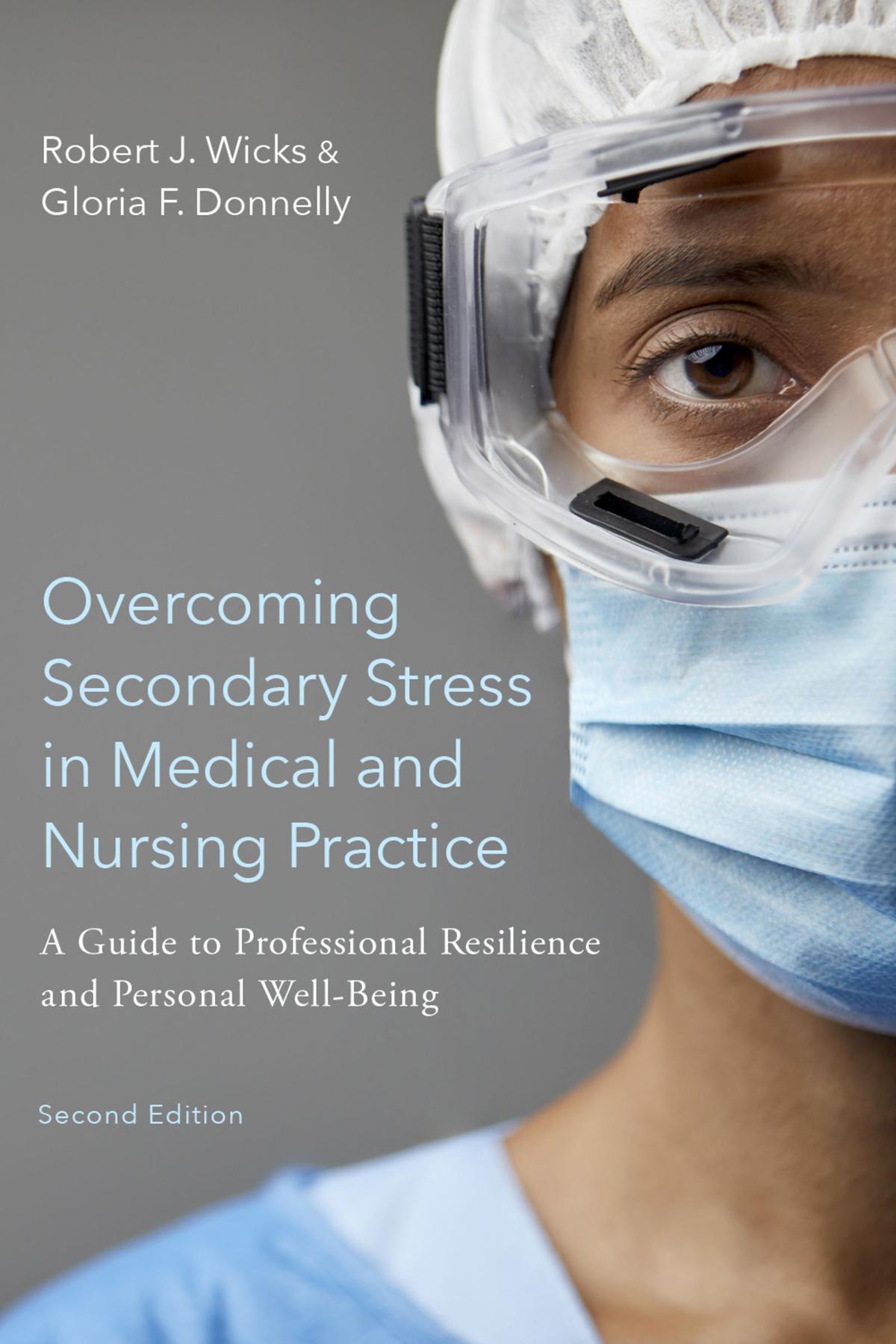
Overcoming Secondary Stress in Medical and Nursing Practice
Overcoming Secondary Stress
IN MEDICAL AND NURSING PRACTICE
A Guide to Professional Resilience and Personal Well-Being
SECOND EDITION
ROBERT J. WICKS AND GLORIA F. DONNELLY
Oxford University Press is a department of the University of Oxford. It furthers the University’s objective of excellence in research, scholarship, and education by publishing worldwide. Oxford is a registered trade mark of Oxford University Press in the UK and certain other countries.
Published in the United States of America by Oxford University Press 198 Madison Avenue, New York, NY 10016, United States of America.
First Edition published in 2005 Second Edition published in 2021
All rights reserved. No part of this publication may be reproduced, stored in a retrieval system, or transmitted, in any form or by any means, without the prior permission in writing of Oxford University Press, or as expressly permitted by law, by license, or under terms agreed with the appropriate reproduction rights organization. Inquiries concerning reproduction outside the scope of the above should be sent to the Rights Department, Oxford University Press, at the address above.
You must not circulate this work in any other form and you must impose this same condition on any acquirer
Library of Congress Cataloging-in-Publication Data
Names: Wicks, Robert J., author. | Donnelly, Gloria F. author
Title: Overcoming secondary stress in medical and nursing practice : a guide to professional resilience and personal well-being / by Robert J. Wicks and Gloria F. Donnelly.
Description: Second edition. | New York : Oxford University Press, [2021] | Includes bibliographical references and index.
Identifiers: LCCN 2020036332 (print) | LCCN 2020036333 (ebook) | ISBN 9780197547243 (paperback) | ISBN 9780197547267 (epub)
LC record available at https://lccn.loc.gov/2020036332
LC ebook record available at https://lccn.loc.gov/2020036333
My mother-in-law, Dorothy Barry, believed that as a profession nursing is both honorable and dedicated to what is good in this world. Two of her daughters, my wife, Michaele, and my sister-in-law, Deborah Kibble, took their mother’s beliefs to heart and became nurses. And so, it is to the three of them that I dedicate this book.
Robert J.
Wicks
I dedicate this book to those practicing medicine and nursing who have worked heroically and tirelessly to care for patients throughout the COVID-19 pandemic.
Gloria F. Donnelly
Contents
Foreword
Arnold R. Eiser, MD, MACP
Introduction .
Reaching Out . . . Without Being Pulled Down: Remaining Passionate in the Fields of Medicine and Nursing, a Guide to Personal and Professional WellBeing for Physicians, Physician Assistants, and Nurses
Chapter 1. Chapter 2.
Chapter 3. Chapter 4.
Tacking on Dangerous Psychological Waters: Appreciating the Factors Involved in Chronic and Acute Secondary Stress
Wicked Problems in Health Care: Identifying, Reframing, Sufficing, and Forgiving Oneself
“Riding the Dragon”: Enhancing Self-Knowledge and Self-Talk in the Health Care Professional
Drawing from the Well of Wisdom: Three Core Spiritual Approaches to Maintaining Perspective and Strengthening the Inner Life of the Medical and Nursing Professionals
Chapter 5.
Epilogue.
Bibliography
The Simple Care of a Hopeful Heart: Developing a Personally Designed Self-Care Protocol
Passionate Journeys: Returning to the Wonders of Medical and Nursing Practice
About the Authors Index
Foreword
It is through humor that I first become acquainted with then Dean Gloria Donnelly when she was performing standup comedy to benefit her college at Drexel University where I also taught. I immediately concluded it was a good idea to get to know this academic leader and scholar who had a way with humor. It was a meeting of the minds, so to speak, as I am continually impressed with her practical insights. Her collaboration with Robert Wicks, the renowned psychologist and author working at the intersection of psychology and spirituality and the prevention of secondary stress, was bound to yield an invaluable contribution to the health care professional wellbeing literature. Forgiving oneself, greater self-awareness of secondary stress, exercises that reduce angst, and enhance wellbeing are integral parts of this important book. Read it thoroughly, apply its lessons, and keep it on a shelf nearby so you can refer to it in those emotional emergencies that are likely to crop up in the busy life of a health care professional. Primary and secondary stressors are sure to come to the health professional; be prepared to handle them effectively and take the preventive measures to make sure they do not turn into something worse. I know that there are several times in my career in medical practice, medical research, and academic executive leadership roles spanning more than four decades when I would have found this book a handy guide for weathering the vicissitudes of a medical career in challenging times.
Wicks and Donnelly make use of vignettes, provide instructive tables and personalized self-care protocols that by altering perspectives away from the reflexive ones, health care practitioners can reduce reactivity, anger, moral, and emotional distress. The authors provide techniques for accomplishing this including mindfulness practices that are associated with Buddhism or Christianity as well as making use of humor, participating in a
weekend spiritual retreat, engaging with loved ones, exercise, journaling, and many more techniques. Such features as the Secondary Stress Self-Awareness Questionnaire help personalize the material for the reader and make the recommendations all that more useful.
Overcoming Secondary Stress in Medical and Nursing Practice is an extraordinarily timely and highly practical book addressing health care professional burnout, its prevention and effective management in the time of COVID-19. It should be a crucial addition to the library of every medical professional because it provides important advice on how to avoid the secondary stress of being a health professional, its emotional and moral distress. Burnout in the medical professions was a substantial hazard before the pandemic because of the corporate takeover of health care as well as the computerization of medical practice and the changing roles of the medical professions in society. (I described the cultural and social foundational factors for these changes in Ethos of Medicine in Postmodern America: Philosophical, Cultural and Social Considerations [Lexington Books, Rowman and Littlefield, 2015]).
Today in the wake of the pandemic, close to half of health care professionals are reporting symptoms of depression. A metaanalysis published just before the pandemic began indicated that physicians have an increased risk of suicide compared to other professionals (RR 1.44) and female physicians (RR1.9) had the greatest risk.1 Nurses have an increased risk of suicide as well (RR1.39).2 So the stakes for reducing and overcoming secondary stress are very high indeed. Wicks and Donnelly show that a great deal can be done to counter the harmful effects of secondary stress in medical and nursing practice. Dealing effectively with secondary stress can be literally a matter of life or death. Of course, there can be much suffering well short of suicide that needs to be reduced or prevented so that these professions can be practiced and enjoyed in our times.
We do not get to choose the era we live in, so these pressing issues on the nature of health care practice today must be addressed effectively The well-being of those practicing these important professions including physicians, nurses, physician
assistants, respiratory therapists, social workers, and many other types of health care practitioners is of paramount importance as the effectiveness of health care is dependent on well-adjusted practitioners. This volume will help its readers accomplish that adjustment to the new normal and help them thrive in our challenging health care environment.
Arnold R. Eiser, MD, MACP
Adjunct Senior Fellow, Leonard Davis Institute
Perelman School of Medicine
University of Pennsylvania
Professor Emeritus, Drexel University College of Medicine
References
1.
2.
Dutheil F, Aubert C, Pereira B, et al. Suicide among physicians and healthcare workers: A systematic review and meta-analysis. PLoS One. 2019;14(12):e0226361
Davidson JE, Proudfoot J, Lee K, Terterian G, Zisook S. A longitudinal analysis of nurse suicide in the United States (2005–2016) with recommendations for action Worldviews on Evidence-Based Nursing 2020;17(1):6–15
INTRODUCTION
Reaching Out . . . Without Being Pulled Down
Remaining Passionate in the Fields of Medicine and Nursing, a Guide to Personal and Professional Well-Being for Physicians, Physician Assistants, and Nurses
Objectives of the Introduction
Understand the meaning and effects of secondary stress. Recognize how culture, environment, and the demands of modern healthcare lead to secondary stress in health professionals. Appreciate that no matter how healthy you are, stress is part and parcel of involvement in the practice of medicine and nursing. Explore strategies for preventing, limiting, and learning from the occurrences of secondary stress such as (a) heightened awareness of personal, interpersonal, and environmental stressors; (b) the necessity of developing a self-care protocol; (c) ways to strengthen one’s inner life; and (d) strategies to increase self-knowledge as a way of enhancing personal and professional well-being.
These mountains that you are carrying, you were only supposed to climb
Najwa Zebian
The end of the inner-city emergency department 12-hour shift approaches. Several staff gravitate to the lounge to gather themselves and to have a cup of coffee to fuel the drive home. Karen, an emergency room (ER) staff nurse and Kevin, a physician assistant share a small table. The COVID-19 pandemic has been raging for the past several weeks. To keep her husband and two young children safe, Karen convinced them to live with the in-laws until the crisis passes In addition to working as an ER staff nurse, Karen is attending an online program to earn her master’s in nursing degree The pace of work during the epidemic has taken its toll
on her schoolwork, on relationships, on everything. Kevin completed his physician assistant program six months ago and never imagined this work intensity. He is living temporarily in a motel near the hospital to conserve his energy and protect his family Jack, a veteran ER resident physician, enters the lounge, plops in a chair, and stares into space “Mrs Alverez just died I just got off the phone with her family They begged to visit, but the rule is the rule It was gut wrenching for me to say ‘no ’”
Tears stream down Karen’s face, “I am just numb, pretty much running on automatic pilot, which is how I get through the shift I do not remember half the patients that I care for or what I do for them. In one sense I am grateful that family cannot visit and that you are making those calls, and I feel so guilty about that but I cannot imagine the added pressure of dealing with family when so many patients are so critically ill and close to death. I love taking care of patients especially in the ER but never imagined this like being at war.” Jack and Kevin nod in agreement. Kevin questions his career choice, “I did not sign on for war!” They sit in silence staring at the table.
This book is written for those who practice medicine (physicians and physician assistants) and those who practice nursing. There is no more compelling time for physicians, physician assistants, and nurses to examine the experience of secondary stress than on the heels of the COVID-19 pandemic. This second edition of Overcoming Secondary Stress in Medical and Nursing Practice is designed to alert those who practice medicine and nursing to the sources, acuity, and chronicity of secondary stress (the pressures experienced in reaching out to others) in the clinical environment; to the context in which secondary stressors are most likely to occur; to environmental conditions that provoke secondary stress; and to ways that strengthen the inner lives and overall health of those in the healing professions. This book is also written for leaders and administrators who can initiate the changes in health care systems needed to manage stress and prevent burnout among direct care clinicians. Overcoming secondary stress is a collective effort by individual practitioners and those who create the environmental conditions of health care delivery. In the modern health care setting, the information in this book is not simply desirable; it is essential for one’s personal and professional well-being. The demands of modern health care on those who practice medicine and nursing are cumulatively extreme and include
heavy clinical caseloads with rising inpatient acuity as procedural care continues to revert to same day or outpatient services. demands to learn new technologies including what seems like endless documentation of care processes. demanding patients and families now called consumers who do not understand the complexity of clinical care.
patient satisfaction measurement systems that can be indicting to practitioners and that can affect reimbursement and compensation. unreasonable expectations of employers who continue to deal with a “more with less” reimbursement system. unreasonable or uncivil colleagues who catalyze hostile work environments.
self-doubt and grief that often accompanies a review of ones’ decisions on behalf of patients.
If there is an apt proverb for the articulated and unspoken demands many people make of medical and nursing professionals today, it surely must be the Yiddish one: “Sleep faster. . . . We need the pillows!”
Christina Maslach, the social psychologist and noted authority on burnout, recounts her invitation by the government of Sweden to examine the effects of stress segments of the workforce. Government leaders were concerned with what they termed crises in workplaces leading to resignations and shortages in some fields. As Maslach1 recounts,
it turned out that there’s a social insurance system for everybody who works in Sweden. If you are going out on sick leave or some sort of disability, and you leave your job, they’ll pay your salary for up to a year and a half They put you in treatment for whatever it is you need, and after the year and a half, you go back to your original job
What they were seeing was this sharp increase in the number of people going out on sick leave from the healthcare field and from IT They were particularly concerned because when they looked at the diagnosis, it was severe clinical depression work-related only They’d say, “It sounds like burnout, that it’s depression but only work-related.” As my colleagues and I, looked at the data and we saw that “Well, actually, we think maybe burnout happened upstream, before this. You now have a problem with severe clinical depression, and that’s what you’ve got to treat, but there was probably a warning sign that people weren’t paying attention to, or didn’t know about, earlier on.”
Maslach’s insights and Sweden’s concerns ring true in different ways for all health care professionals today. Professional organizations such as the American Medical Association, the American Academy of Physician Assistants, and the American Nurses’ Association are addressing the same phenomenon observed in Sweden in 2019 by developing standards and programs that will contain the effects of secondary stress on their members. The American Medical Association features continuing education modules for physicians to prevent burnout and address well-being through its Stepsforward program.2 The Accreditation Review Commission on Education for the Physician Assistant has added a criterion to their national standards addressing work stress and selfcare that all physician assistant programs must address in educational programs. Standard B2.20 for physician assistant programs is, “The curriculum must include instruction about provider personal wellness including prevention of: a) impairment and b) burnout.”3 The American Nurses Association is working to ensure Healthy Work Environments for nurses focusing on reasonable staffing, nurse health and safety, and prevention of nurse abuse including incivility, bullying, and violence.4 These professional organizations are working to change the culture of modern health care, which is, at least, partially responsible for secondary stress and burnout among direct care providers.
The Culture of Health Care
The COVID-19 pandemic has exposed many stress-inducing shortcomings of the health care system such as lack of preparedness, limited clinical capacity and protective equipment for clinical staff, and an ethic of doing more with less, highlighting the risks incurred in everyday practice. And there is more. Surveys of physicians, physician assistants, and nurses continue to highlight the negative impact of work culture and conditions on physical and mental health. The culture of health care is multileveled, including national trends such as the corporatization of health care, for-profit health care systems, the computerization of practice, and the maldistribution of services that lead to health disparities. There are also the cultures of specific work environments, framed by national trends, that create either healthy or toxic work environments. A 2015 Medscape survey5 of U.S. physicians reported that the top four leading causes of burnout were (a) too many bureaucratic tasks leading to loss of autonomy, (b) too many hours at work leading to extreme work life balance issues, (c) insufficient income related to declining reimbursements, and (d) an increasing computerization of health care leading to less facetime with patients, a phenomenon that Eiser6 terms “the silicon cage.”
Coplan et al.’s 2018 study of burnout, job satisfaction, and stress levels of physician assistants reported similar findings to the Medscape survey of physicians.7 The highest rated factors contributing to stress included (a) too many work hours, (b) income not high enough, (c) too many bureaucratic and administrative tasks, and (d) feeling like a cog in a wheel.
In 2013, the American Nurses Association launched a Health Risk Appraisal as part of its Healthy Nurse–Healthy Nation initiative.8 Three years of data from the survey reports of 13,500 registered nurses revealed that (a) 82 percent reported experiencing workplace stress including bullying and aggression particularly from peers rather than supervisors; (b) 25 percent had been physically attacked by patients or visitors; (c) more than 40 percent cited physical stressors such as lifting, prolonged standing, needlesticks, and exposure to blood borne pathogens; and (d) respondents also
reported a drop in sleep hours and failure to eat a reasonably healthy diet.
The results of these surveys provide incontrovertible evidence that many health professionals are at risk. In their contact with patients, not only may healing professionals contract a physical disease, they are in even greater danger of being “infected” psychologically. Secondary stress, the pressure that results from reaching out to others in need, is a constant and continuous reality for physicians, physician assistants, and nurses. And, considering the culture of health care and disruptions such as the pandemic, it is a situation to be reckoned with in new ways.
The stakes are now so high for health care professionals that the potential for developing such psychological problems as emotional blunting on the one hand or extreme affectivity on the other is quite great. Many deny their own emotional needs as a survival mechanism or keep silent in environments of turmoil. However, physicians, physician assistants, and nurses often follow the implicit advice to protect themselves by not allowing themselves to feel too much emotion.
Professionals, who have committed their lives to caring for others, are overwhelmed by frustrations and loss of perspective as stressors of the health care environment and its multiple cultures and demands bear down. Changes in practice driven by unreasonable quests for efficiency and profit, inequity that produces health disparities, societal and world instability as in pandemics, physical demands, and self-induced pressures fueled by unhealthy work environments make up only part of a psychological and physical combustible mixture. Therefore, not addressing these conditions is not only foolish; it is also dangerous to the well-being of talented, caring, and hitherto emotionally healthy persons working in the healing professions—the audience for whom this book is written.
This Book’s Framework
Overcoming Secondary Stress in Medical and Nursing Practice is a book designed to sit prominently on your desk for quick access. Randomly opening to any page in the book will convey the message
that you are not alone and that you have and can reinvigorate internal resources to improve your situation or change your environment including moving on. This book distills current clinical papers and research; provides assessment tools and guidelines to pinpoint, avoid, and/or limit unnecessary distress and strengthen one’s inner life. It also offers recommendations for further exploration on the topic. If nothing else, its goal is to raise awareness that secondary stress is a danger. The denial and avoidance of dealing with the immense stress present in modern health care are alarming. Professionals seem so discouraged at times that they do not even consider—given the culture and their own personal resources—that there are possible practical approaches to deal with environmental and intrapersonal sources of stress in health care settings. Instead, unfortunately, they just sleepwalk, march on, or march out.
In a session with a very competent professional who was starting to manifest early symptoms of chronic secondary stress such as hypersensitivity, increased daily use of alcohol, and sleep disturbance, the therapist asked how he would characterize his own problem. He said, “I may not be burned out yet.” Then, after a brief pause, he smiled slightly and added, “But I think I’m experiencing at least a ‘brown out!’ ” Acknowledging his insight, the therapist asked that given the precarious situation in which he recognized himself, what type of self-care protocol had he designed for himself and used to prevent further deterioration of his emotional well-being? In response, after sighing, he said, “I only wish I had the time for something like that!”
Time, of course, is especially precious for those in clinical practice. To keep afloat, they need to schedule their priorities and ensure that what is done is accomplished in the most effective way possible. And in this sorting process, oneself is often at the bottom of the priority list. Overcoming Secondary Stress in Medical and Nursing Practice is designed with these realities and practices in mind. Without a clear awareness of the challenges of professional health care and the simple, yet powerful, ways to remain a passionate, psychologically healthy physician, physician’s assistant, or nurse and appreciate the need to strengthen one’s “inner life,” one’s career may become derailed and one’s personal life unduly suffer.
This book is presented in a way that fosters an appreciation of the essential elements of the problem of secondary stress. It will help you to answer the question, “Why am I feeling so stressed or so numb?” Most of these elements will be obvious; some may prove quite surprising. This book will suggest guidelines for the development of a personally designed self-care protocol as well as information on maintaining perspective, reframing perceptions, and increasing self-knowledge as a way of learning and benefiting from, rather than just being pulled down by, stressful encounters. The authors have reviewed major portions of the stress-related research and clinical papers published over the past 10 years. The bibliography in this volume is extensive and includes both classical and recent major works on the topic and websites that might be helpful, including links to online videos of prominent clinicians and researchers working on issues of secondary stress and burnout. Beyond what is written in the five chapters and epilogue, all sources provide helpful follow-up reading for those wishing to do so.
The brevity of the book is also intentional, because of our awareness of the time constraints of clinicians. The goal then is to provide a concise, practical, and engaging book that incorporates current clinical work and research that will be of specific interest to physicians, physician assistants, and nurses who are committed to caring for others while caring for self. In short, this clinical guide is written primarily for those psychologically healthy clinicians who want to understand, avoid, and limit, as much as is possible, the secondary stress in their own lives and at the same time remain passionate about their work.
Direct care providers realize that “for every poisoned worker there are a dozen with sub-clinical toxicity.”9 Using this as a metaphor for secondary stress, for every case of serious impairment, there are many nurses, physician assistants, and physicians who are beginning to manifest symptoms of chronic or acute secondary stress but may not even realize it until well after the fact and until well after they have made a decision to exit their current position or the profession. Consider the experience of a graduate nursing student who confided to her nursing instructor.
In a surprise phone call, three weeks before the end of the term, the nursing professor learned that one of her most outstanding graduate nursing students had decided to leave nursing The instructor shared her surprise with the student but did not directly discourage her Instead, she asked the student to share her reasons for this decision and her plans going forward The student described her work environment, a fast-paced, clinical unit where she had hardly any time to spend with patients and families and where the nurse manager was more like an unforgiving “drill sergeant” barking orders and publicly calling out the staff Most staff worked in fear and silence, but the stress was taking its toll—lack of sleep, ruminating thoughts, and hypersensitivity. “The only thing that has been holding me back is my tuition reimbursement benefit, but my decision is made, I am resigning and opening my own business.” The instructor listened supportively and encouraged the student to postpone her exit at least until she finished her coursework for this term. The student agreed to this plan, and the instructor gave the student the name of a counselor who might help her sort out her “options” in nursing or otherwise. “And if after careful consideration you decide to pursue that business,” the instructor offered, “let me know and I will be one of your first customers.”
As the academic year progressed, the instructor often thought of this student wondering if she had been lost to the nursing profession Shortly before the end of the next academic year, there was another call from student to instructor “I will see you at graduation,” the student exclaimed, “and I hope you will be there I got into counseling and looked at my options I have a new nursing position taking care of breast cancer patients The staff and the setting are great I cannot wait to get to work every day and I am so happy I made the decision to stay in nursing.”
This story highlights the need for a clinically sound book that can be useful in helping health professionals and everyone in a field in which significant impairment is a constant possibility when care is not taken to understand, to carefully confront and prevent personal and systemic sources of secondary stress. To reiterate, the most insidious danger to physicians, physician assistants, and nurses is denial Fortunately, this factor atrophies of its own accord once we accept the following simple reality: The seeds of secondary stress and the seeds of true passionate involvement in the fields of medicine and nursing are actually the same seeds.
The question is not whether stress will appear and take a toll on those working in health care; it is rather to what extent professionals take essential steps to appreciate, minimize, and learn from this
stress to continue—and even deepen—their roles as helpers and healers. Understanding stress unique to health care work and developing a personal self-care protocol can help immeasurably in this regard, and that is what Overcoming Secondary Stress in Medical and Nursing Practice is designed to encourage.
To foster this understanding and concomitant action, the chapters of this book are as follows. Chapter 1 (“Tacking on Dangerous Psychological Waters: Appreciating the Factors Involved in Chronic and Acute Secondary Stress”) includes models of chronic secondary stress (often referred to as burnout, compassion fatigue, or moral distress) and its acute counterpart, vicarious posttraumatic stress. Chapter 1 identifies behaviors and tools to increase awareness of bodily and cognitive responses to stressors and to differentiate between reactions and planned responses in stressful situations. It also focuses on the role that toxic parts of the health care system, including clinical environments, play in exacerbating personal stress and on the role of the individual in contributing to healthy work environments.
Chapter 2 (“Wicked Problems in Health Care: Identifying, Reframing, Sufficing, and Forgiving Oneself”) is new to this edition and explores the concept of “wicked problems” as contrasted with “tame problems” in the health care environment. Wicked problems are never-ending, morphing problems that serve as a major source of secondary stress for physicians, physician assistants, and nurses. This chapter also features a new section Guilt and Facing the Coronavirus: A Guide for Professional Helpers and Healers Experiencing Traumatic Countertransference by Robert Wicks.
Chapter 3 ( “ ‘Riding the Dragon’: Enhancing Self-Knowledge and Self-Talk in the Health Care Professional”) distills essential information on approaches to increasing self-awareness by summarizing findings on increasing emotional resilience that is available in a variety of literatures and databases including psychology, psychiatry, medicine, physician assistant, and nursing. Chapter 3 emphasizes the importance of reflection and developing perspective as well as how professional stereotypes can interfere in effective communication often fueling conflict in professional practice roles. Included also is an exploration of the relationship between
anger and health; the concept of stupidity and moving beyond it; the role of humor in health, healing, and the creation of healthy work environments. Chapter 3 also offers a specially designed Medical/Nursing Professional Secondary Stress Self-Awareness Questionnaire, which assists readers in creating their own profile with respect to vulnerability, strength, and the pressures of life in clinical fields. By using it alone, with a mentor, or in a small group, it can aid in providing information that will enhance self-awareness and stress prevention.
Chapter 4 (“Drawing from the Well of Wisdom: Three Core Spiritual Approaches to Maintaining Perspective and Strengthening the Inner Life of Medical and Nursing Professionals”) explores the intertwined roles of mind, body, and spirit and how core spiritual wisdom from a world religion perspective—and the applied psychology that evolves from this—can be used in one’s life as a way of developing and maintaining perspective, balance, and a renewed sense of meaning. This chapter distills the core of some of Wicks’s writing on these topics in past decades with an eye to what would be practical and essential for those practicing medicine and nursing—whether they are religious or not—to consider, given the intensity of their work, the richness of their lives and their sense of mission with regard to caring. Chapter 4 also includes a review of meditative techniques, how to listen to others, and how to combat perfectionistic tendencies. A realistic exploration of work–life balance is also included and contrasted with body–mind–spirit balance, which can contribute to work–life balance.
Chapter 5 (“The Simple Care of a Hopeful Heart: Developing a Personally Designed Self-Care Protocol”) builds on and evolves from the previous four chapters. It explores the concepts of happiness and career satisfaction, self-respect, and the ability to discern the differences between toxic and healthy work environments. It presents practical guidelines on developing a personally designed self-care protocol to decrease vulnerability to the natural pressures of being a professional in the health care setting. As in preceding chapters, there are exercises that can be completed to improve selfawareness as a systematic way to enhance one’s approach to selfcare and to strengthening one’s inner life.
Finally, as the brief epilogue’s title (“Passionate Journeys: Returning to the Wonders of Medical and Nursing Practice”) indicates, this book is also about rekindling the passion that led to a professional role in the healing arts. A caution—pondering some of these recommended time-consuming stress-reduction steps may seem stressful! On the other hand, denying the dangers posed by secondary stress and resisting a reasonable process of selfknowledge and self-care under the guise that it too is impractical must be circumvented. Given this contrasting view, the premise of this book is tied to a significantly different question: Who in their right mind would not take the time to ponder the essentials of selfknowledge, self-care, and secondary stress?
Everything that initially attracted people to these fascinating, meaningful, and rewarding professions are still present in some form. However, care must be taken to preserve and enhance a sense of personal and professional well-being and perspective so that the passion for caring and healing is not lost. By using knowledge and humility (the two key elements of wisdom) when faced with the stress of the work, one’s passion and commitment can deepen and mature. The goal of this brief work is based squarely on this belief and hope.
Recommended Material
It is not always possible to hear and see one of the authors of the book that you are reading. Robert Wicks’s brief talks on the following subjects can be found on YouTube at the following sites. These talks can provide some direction for your own work on overcoming secondary stress.
On Living Authentically https://www.youtube.com/watch?
v=Db9VW_Je0Lk
On Dealing With Failure https://www.youtube.com/watch?
v=KLGRNJU0BF4
References
DevOps Enterprise Summit. Christina Maslach: Understanding job burnout. https://itrevolution.com/understanding-job-burnout-christina-maslach/ Published February 2019 Accessed April 29, 2020
American Medical Association Stepsforward: burnout and well being modules https://edhub ama-assn org/steps-forward/module/2702510 Published 2020 Accessed April 29, 2020
Accreditation Review Commission on Education for the Physician Assistant, Inc Accreditation Standards for Physician Assistant Education 5th ed Johns Creek, GA: ARC:PA; 2020
American Nurses Association. Healthy work environment. https://www.nursingworld.org/practice-policy/work-environment/. Accessed April 29, 2020.
Peckham C. Physician burnout: it just keeps getting worse. https://www.medscape.com/viewarticle/838437 1. Published April 30, 2015, April 30. Accessed February 29, 2020.
Eiser A. The Ethos of Medicine in Post Modern America. Lanham, MD: Lexington Books; 2014.
Coplan B, McCall TC, Smith M, Gellert VL, Essary AC. Burnout, job satisfaction and stress levels of physician assistants. Journal of the American Academy of Physician Assistants 2018;31(9):42–46
Carpenter H American Nurses Association health risk appraisal: Three years later American Nurse Today Pp 1–43
https://www cdc gov/niosh/topics/workschedules/pdfs/CARPENTER ANAfinalPresentation pdf Published January 2017 Accessed February 29, 2020
Block D Foreword In: Scott CD, Hawk J, eds , Heal thyself: The health of healthcare professionals New York, NY: Brunner Mazel; 1986: 1–13