The moral rights of the authors have been asserted
Impression: 1
All rights reserved. No part of this publication may be reproduced, stored in a retrieval system, or transmitted, in any form or by any means, without the prior permission in writing of Oxford University Press, or as expressly permitted by law, by licence or under terms agreed with the appropriate reprographics rights organization. Enquiries concerning reproduction outside the scope of the above should be sent to the Rights Department, Oxford University Press, at the address above
You must not circulate this work in any other form and you must impose this same condition on any acquirer
Published in the United States of America by Oxford University Press 198 Madison Avenue, New York, NY 10016, United States of America
British Library Cataloguing in Publication Data Data available
Library of Congress Control Number: 2019934135
ISBN 978–0–19–107263–5
Printed in Great Britain by Bell & Bain Ltd., Glasgow
Links to third party websites are provided by Oxford in good faith and for information only. Oxford disclaims any responsibility for the materials contained in any third party website referenced in this work.
For Beverley & Barry Bromham and Annemarie & Tom Cardillo for their steadfast support and endless encouragement.
Preface
New ways of answering old questions
Macroevolution and macroecology aim to describe large-scale evolutionary and ecological patterns, and to understand the processes that produced them. For as long as people have been able to travel far afield, they have been interested in biological patterns at large scales. Indeed, these are some of the most fascinating puzzles of the natural world. But for many people, it is not obvious how we can do science at the macro-scale. How can we devise experiments or test hypotheses for events that happened millions of years ago, for patterns that emerge at global spatial scales, or processes that affect thousands of different species?
This is a challenging field because it often concerns processes and patterns that cannot be directly witnessed. We can’t go back in time to witness the diversification of the animal kingdom, or make direct observations on the causes of dinosaur extinctions, nor can we do direct experiments on the latitudinal diversity gradient of species richness, or manipulate species traits to test their effect on speciation or extinction rates. But there is a wealth of scientific resources we can draw on to generate hypotheses, design elegant tests, and provide satisfying answers to many intriguing questions. The tools used to test hypotheses for patterns of biodiversity include experiments, models, and statistical analyses, but often the most important tool we have is the ability to frame a clear question, from which we can make simple predictions that can be put to robust tests.
Although macroevolution and macroecology are often taught separately, they share an intellectual framework, rest on many common concepts, and share many analytical tools. The development of macroevolution and macroecology as fields of scientific enquiry have been driven by new ways of compiling and analysing data that have allowed big-picture questions about biodiversity to be tackled. For example, the massive growth of DNA sequence databases has led to a proliferation of methods for using molecular phylogenies to understand the origins of lineages and their patterns of diversification. Molecular data have been combined with global databases of species distributions and environmental features and with large palaeontological databases to analyse patterns across large spatial and temporal scales. Most of this ‘big data’ is now freely available for anyone to explore.
Although many of the new methods are technically complex and analytically sophisticated, the basic principles of sound scientific reasoning and inductive inference are as important in macroevolution and macroecology as in any other area of science. Our aim in this book is to introduce you to some of the useful approaches to asking questions and solving problems in macroevolution and macroecology. The underlying logic of these techniques does not require you to be competent in mathematics, statistics, or computing (although these intellectual tools may help you frame and answer questions).
What is in this book?
This book is not meant to be an exhaustive treatment of all problems, questions, and methods associated with macroevolution and macroecology. Rather, the idea is to give you an introduction to some of the key issues, a taste of the research that is being done in these fields, and a glimpse of some of the approaches that researchers are currently using to make progress in these areas. There is no clear distinction between macro- and microlevels of evolution and ecology, and there is no definitive list of patterns or processes that should be included in an introductory book on macroevolution and macroecology.
This book takes a case study led approach. Each chapter focuses on one particular question as a way of introducing some core concepts in macroevolution and macroecology, and as a way of exploring some useful sources of data and modes of analysis. This does not mean that we think these are the only important questions to be asked in macroevolution and macroecology. We have chosen these particular issues because each serves as a useful focus for thinking about important concepts that run through macroevolution and macroecology (such as levels of selection or diversification rates), or important analytical techniques (such as null models or phylogenetic comparative methods). The book emphasizes the critical appraisal of evidence, techniques, and assumptions in testing macroevolutionary and macroecological hypotheses, and encourages you to form your own opinions on important debates.
Each chapter has a number of features designed to help you get the most from your reading.
Roadmap
Why study macroevolution and macro Most textbooks on evolution and ecology largel operating within populations. But many of the que about patterns of biodiversity are not easily answ on the population level, such as: How does nove mass extinctions? Does selection act at the level of g
• Roadmap sets out the path we will navigate in each chapter, giving a brief introduction to the examples we will use to illustrate the topic, the key concepts we will cover, some of the analytical techniques we will consider, and the case study included at the end of the chapter.
• Key points boxes act as waymarkers, highlighting the main take-home messages of the section.
Key points
Macroevolution and macroecology focus on patterns of biodiversity that are shaped by processes operating over large timescales, across wide spatial scales, and af fecting a wide-varie ty of lineages. Most researchersa ssumethatprocesses
What do you think?
The disagreement between selectionist s and mutationists par tly reflected different at titudes to science: mutations could be generated and observed in the laboratory, wherea s the role of natural selection in the formation of new species is inferred rather than direc tly
• What do you think? boxes encourage you to stop and think about the broader implications of what you are reading. They prompt you to take a moment to think critically about the core concepts you have just learned, and invite you to extend your intellectual reach beyond the material and form your own ideas.
Points for discussion
1. Some people have proposed that life may have evolved and then colonized earth, an idea sometimes referred Does this provide a plausible answer to questions surr of life? How would you test the panspermia hypothes 2. Should increases in the coding capacity of replicator crease in genome size) slow the rate of evolution in ord
References
1. Darwin C (1859) On the origin of species by means o or the preservation of favoured races in the struggle for Murray, London.
2. Nilsson D-E, Pelger S (1994) A pessimistic estimate o for an eye to evolve. Proceedings of the Royal Society o cal Sciences 256(1345): 53–8.
Case Study 1
Testing hypotheses about past e v uncovering the evolutionary ori g a new virus
While scienti c training might involve the acqui cal skills, such as those associated with laboratory analysis, or eld studies, the most important sets tist needs are those associated with asking good qu
Questions to ponder
1. We have seen how a range of corroborating evid to support or refute hypotheses. What if a new and we only have DNA sequences, no other histo records. Can we trust phylogenetic estimates of own?
2. How can we test whether viral genomes evolve w rate of change?
3. Are there limits to reconstructing past events?
Further investigation
Ancient DNA derived from human remains is increa to trace the origins of major epidemics, such as plagu sis. What are the advantages of using these ‘molecu might be the dangers? Can these old sequences be same way as the modern sequences? How can res their samples are not contaminated with modern vi zles might we be able to solve if we could nd appr Which diseases will be most likely to bene t from th
References
1. Bromham L (2016) Testing hypotheses in macroe in History and Philosophy of Science Part A 55: 47–59
2. Sharp PM, Hahn BH (2010) The evolution of HIV-1 AIDS Philosophical Transactions of the Royal Society
3. Hahn BH, Shaw GM, De Cock KM, Sharp PM (2000 osis: scienti c and public health implications. S 607–14.
• Points for discussion, at the end of each chapter, provide a focus for more in-depth discussion. These can be used for self-study, to prompt discussion in the classroom, or as a focus for a group investigation about the key issues presented in the chapter.
• References include the details of studies cited in the chapter. This isn’t a comprehensive guide to literature on the topic, or a list of must-read classics. But if you want to look further into the details of studies we mention, this is the place to find their publication details.
• Each chapter also includes a Case Study in which we explore in a bit more depth one or more examples of research in macroevolution and macroecology. Each case study includes the following features.
• Questions to ponder encourage you to think deeply and critically about some of the issues raised by the research.
• Further investigation invites you to extend your investigation beyond the case study to a related topic. This section could serve as a starting point for further independent study or group discussion on the topic.
• References provide publication details of studies mentioned in the Case Study.
online resources
www.oup.com/uk/bromham-biodiversity/
Online resources provide lecturers with outlines for discussion-based tutorials and computer workshops to run in conjunction with a lecture course as well as downloadable figures from the textbook to use in lecture presentations and teaching materials. Find these at www.oup.com/uk/bromham-biodiversity/
Who is this book for?
This book is aimed primarily at budding biologists who want to apply what they have learned about evolution and ecology to investigating and understanding the world around them. The reader we have in mind has already taken some introductory courses in evolution and ecology, so will be familiar with core processes of evolution, such as mutation, selection, drift, and speciation, and will understand basic concepts in ecology, such as competition, population growth, and the way that environmental conditions shape species distributions. This book builds on these basic concepts to explore and explain patterns in biodiversity over space and time. We will revise some of these core concepts along the way—for example, considering the operation of natural selection in Chapter 2—but if you want to brush up on these background concepts, it might be a good idea to have a look at a general evolution or ecology text first.
Many case studies in this book utilize analyses of molecular phylogenies. To be an intelligent user of phylogenetic analyses, you need to understand the nature of molecular data, how phylogenies are produced, and the way that phylogenetic inference is affected by data selection, methods used, and assumptions made. Although we touch on these areas in many chapters, we cannot cover phylogenetics in detail in this book. However, there is a companion text that provides a ‘from the ground up’ description of molecular phylogenetics, from data generation to phylogenetic inference and analysis. You may find An Introduction to Molecular Evolution and Phylogenetics (Lindell Bromham, Oxford University Press, 2016) a useful base from which to gain an understanding of the role of molecular phylogenies in evolution and ecology.
Acknowledgements
Our greatest thanks are to Gulliver, Alexey, Arkady, and Asha for their patience, curiosity and fortitude, and for making life interesting and exciting while this book was being written, with never a dull moment along the way.
We are grateful to our colleagues for generously giving their time and expertise to read and comment on chapters, including Tim Barraclough, Graham Budd, Brett Calcott, Adrian Currie, Peter Godfrey Smith, Simon Ho, Bill Martin, John Matthewson, Arne Mooers, Matthew Phillips, Ant Poole, Michael Jennions, and Kim Sterelny. Thanks are due to the MacroEvoEco group at ANU—especially Xia Hua, Zoe Reynolds, Alex Skeels, and Russell Dinnage—for their encouragement and support. Thanks also to Rampal Etienne for supplying data, and Rod Peakall, Robin Eckerman, and Russell Dinnage for providing beautiful photos and figures.
We owe much to Jonathan Crowe for his undaunted enthusiasm and cheerful refusal to give up on this project, to Lucy Wells for deftly keeping the book on track, against the odds, and to Sal Moore for her patience and good humour in the production stage. We could not be more surprised to see this book finally become a reality, thanks to their persistence.
1
2
3
4
5
What is macroevolution? What is macroecology?
Roadmap
Why study macroevolution and macroecology?
Most textbooks on evolution and ecology largely focus on processes operating within populations. But many of the questions we want to ask about patterns of biodiversity are not easily answered by only focusing on the population level, such as: How does novelty arise? What causes mass extinctions? Does selection act at the level of genes, individuals, species, or lineages? Why is biodiversity distributed so unevenly in space? Questions like these require us to build upon our knowledge of microlevel processes, but consider them over large spatial scales, long periods of evolutionary history, and many different evolutionary lineages. Studying the intellectual development of the fields of macroevolution and macroecology is important for several reasons. Scientific ideas evolve over time, building on what has come before, so we can’t fully understand what people think today without appreciating how that point of view has been constructed by research and contemplation over long periods. Many of the same areas of debate come up again and again, so a familiarity with history helps us to recognize and evaluate different hypotheses. This chapter will also show how the individual case studies covered in the rest of the chapters connect to the bigger picture of evolutionary and ecological ideas.
What are the main points?
● Macroevolution focuses on changing patterns of biological diversity across time, space, and lineages.
● Macroecology concerns broad-scale patterns in the abundance and distribution of species.
● Key debates resurface again and again, such as whether change happens gradually by accumulation of small changes or quickly by larger ‘leaps’, and the relative roles of chance, selection, and history in shaping biodiversity.
What techniques are covered?
● Development of ideas: what we think now builds upon what scientists have thought in the past, so we need to understand past debates as well as current questions.
● Hypothesis testing: framing testable questions, experimental design, and statistical analysis are critical in macroevolution and macroecology.
What case studies will be included?
● Testing hypotheses in time and space: reconstructing the origins of HIV.
“General views lead us habitually to regard each organic form as a definite part of the entire creation, and to recognise, in the particular plant or animal, not an isolated species, but a form linked in the chain of being to other forms living or extinct. They assist us in comprehending the relations which exist between the most recent discoveries, and those which have prepared the way for them. They enlarge the bounds of our intellectual existence, and . . . they place us in communication with the whole globe.”
Alexander von Humboldt (1847). Cosmos: Sketch of a Physical Description of the Universe, Vol. I. Trans: E. Sabine. John Murray, London.
Why study macroevolution and macroecology?
Evolution and ecology are central to the study of biology, and the key to understanding the world around you. If you look out of the window, most of what you see is the product of evolution. Not only the species themselves—such as animals, plants, and fungi—but also the soil and atmosphere, even the buildings, roads, and cars, are ultimately products of the biological world. So the fundamental principle we need to bear in mind if we want to understand the world around us is that all biological phenomena are the product of a long evolutionary history, shaped by interactions between organisms and their environment, and subject to both chance events and selection. Not surprisingly, evolution and ecology are taking an increasingly prominent role in biological education.
Introductory courses in evolution and ecology typically focus on population-level processes, such as selection, drift, migration, and competition. Most biologists assume that these population-level processes underlie all evolutionary phenomena, and that any patterns in biodiversity in space and time can ultimately be traced back to changes in the genetic composition of lineages over time. But it may not be obvious to everyone how we get from changes in gene frequencies in populations to the grand patterns of biodiversity across space and time. There are many interesting questions that we cannot adequately answer using only our knowledge of population-level processes. Consider the following questions:
• Why did the dinosaurs go extinct?
• Why are there so many different kinds of beetles?
• Why are the tropics more biodiverse than the temperate zones?
These questions involve observation of patterns in the numbers and kinds of organisms (which we will refer to as species richness), whether over time, or space, or among lineages. When we look for answers to questions like these, we will find our focus is not always on what is happening to
individuals, or changes in gene frequencies within populations. Instead, we might find ourselves considering lineage-level processes like diversification rates and geographical distribution. In doing so, we are confronted by a dilemma. Does a focus on ‘higher-level’ observations, made by comparing different lineages over long time periods, imply that there are special ‘higher-level’ processes that cannot be explained simply in terms of the ‘lowerlevel’ processes occurring in populations over generations? Or does it simply reflect that sometimes we need to take the long view in order to appreciate the way that simple underlying processes can play out over long timescales and large areas? Many of the discussions in this book will explore this interaction between levels of observation and the scaling up of evolutionary and ecological processes to large-scale and long-term patterns.
Progress in macroevolution and macroecology is becoming increasingly relevant to conservation efforts, owing to recognition of the importance of large-scale processes. For example, current patterns of species diversity and extinction risk are the product not only of population-scale processes, such as genetic isolation, but also the product of time (evolutionary history), space (regional-scale ecological factors), and lineage-level processes (different rates of change, speciation, and extinction). Biodiversity is increasingly being viewed as a dynamic phenomenon rather than a static pattern. We need macroevolutionary and macroecological ideas and tools to develop and enrich this new perspective.
So what is meant by the word ‘macroevolution’? We can compare ‘microevolution’, which typically is used to describe heritable changes within a population, with ‘macroevolution’, which is broadly concerned with variation in patterns of species over space, time, and lineages. These simple definitions are descriptive; they refer to patterns we can observe. But what causes macroevolutionary patterns? Do they emerge only from the
1 What is macroevolution? What is macroecology?
microevolutionary processes that occur in every population? Or are there mechanisms that operate in addition to population processes? Are there any special macroevolutionary processes that operate only occasionally in particular lineages? We won’t attempt to provide a definitive answer to these questions, because opinions differ quite widely, as we will discover throughout this book. While most scientists consider that macroevolution and macroecology describe broad-scale patterns generated by the population-level processes of microevolution and ecology, some scientists think that there are special macroevolutionary processes that shape biodiversity. Fundamental disagreements such as these make the field of macroevolution exciting and intellectually stimulating.
The field of macroecology is closely associated with macroevolution, to the extent that there is substantial overlap between the two. That is why the two fields are presented together in this book. We have just defined macroevolution (patterns in the distribution of species across space, time, and lineages) by contrasting it with microevolution (change in gene frequencies in populations over generations). Can we do the same for macroecology? You probably won’t hear people using the term ‘microecology’ (unless they are referring to the ecology of microbial organisms). However, we might contrast local-scale ecology, which is concerned with interactions among species and their environments within small areas, with broad-scale ecology which considers how species diversity is distributed at regional, continental, or global scales.
While macroecology as a scientific discipline is relatively young, many of the core questions about the processes governing the distribution and abundance of species have been asked for centuries. Most macroecological studies focus on explaining current (or recent) patterns in abundance, distribution, and diversity of species. However, we can’t understand current species distributions without an appreciation of both evolutionary and environmental history, and we will expect current patterns of biodiversity to have been shaped by processes that operate over long timescales. So macroecology can be thought of as the study of present-day
patterns in the distribution of biodiversity that are (at least partly) the product of macroevolutionary processes.
Macroevolution and macroecology are dynamic fields in a constant state of flux. Ideas change, new evidence emerges, novel analyses are devised. This makes them exciting fields to study, but it also means that we cannot always offer undisputed facts or universally agreed explanations. If you want to study macroevolution and macroecology, you will need to become accustomed to seeing both sides of a debate, weighing up competing explanations, and seeking data to test different ideas. That is why the chapters of this book have been presented as a set of questions rather than answers. Learning to ask good questions is the most important skill a scientist can have. The second most important skill is designing creative and effective tests to compare the plausibility of different explanations (see Case Study 1). That is why this book emphasizes research tools rather than a catalogue of ‘facts’. Our focus is on the process of scientific enquiry, not just its outcomes. We hope that this book will help give you the confidence you need to tackle big ideas, the background you need to ask interesting questions, and the tools you need to seek answers.
Key points
• Macroevolution and macroecology focus on patterns of biodiversity that are shaped by processes operating over large timescales, across wide spatial scales, and affecting a wide variety of lineages.
• Most researchers assume that processes operating at the population level (microevolution, population ecology) can be scaled up to explain long-term and large-scale macroevolutionary and macroecological patterns. But some scientists invoke additional mechanisms that operate at the lineage or ecosystem level to explain these phenomena.
Research tools for big questions
One of the strengths of scientific enquiry is that it can progress with any mixture of empiricism, intuition and formal theory that suits the convenience of the investigators.
George C. Williams (1966). Adaptation and Natural Selection: A Critique of Some Current Evolutionary Thought. Princeton University Press, Princeton, NJ.
Framing and testing hypotheses in large-scale patterns of biodiversity over space, time, and lineages presents some challenges. To demonstrate this, first consider some examples of research tools used to study population-level processes. Research into evolutionary processes can involve manipulative experiments, where replicate lines are subjected to different treatments and the effects monitored. For example, experimental populations of bacteria exposed to different concentrations of antibiotics can be used to test the genetic basis of the evolution of resistance. Not all experiments take place in a laboratory. For example, plots sown with different combinations of grass species can be used to measure the relationship between diversity and biomass production over many years. Many studies in evolution and ecology don’t involve any manipulation, but instead rely on close observation of nature. For example, taking blood samples from wild individuals and sequencing their DNA can reveal high levels of extra-pair mating in socially monogamous birds, and can be used to estimate fitness by tracking descendants over several generations.
Can we use the same kinds of research tools to ask questions about the patterns of species diversity among lineages, over time, or across the earth? The answer to this question is ‘yes and no’. We can use the results of studies like these to infer mechanisms underlying macroevolutionary change or macroecological patterns, but we could not use them to study those processes directly. For example, we can breed populations of fruit flies under different temperature regimes, and then examine the changes in genes underlying thermal tolerance, and compare the survival and reproduction
of the experimental and control lines at different temperatures. We might use those observations to infer that this process of genetic change in the experimental population would, if left for a very, very long time, result in the formation of distinct species with specific adaptations to particular thermal niches. But, in general, we cannot directly observe the evolution of lineages characterized by major new adaptations, or families with different numbers of genera, or communities with different numbers of co-adapted species, because these phenomena occur over vast timescales. For the same reason, we can’t directly observe the geological process of mountain building or the astronomical phenomena underlying the formation of stars, which occur on timescales much longer than a human lifetime. But we can make inferences about how mountains are built or stars born, for example by studying uplift along geological fault lines or comparing existing stars at different stages of formation. Evolutionary biology, like geology or astronomy, is sometimes referred to as a ‘historical science’, because we often wish to explain past events that we cannot directly witness.
Because the subjects of analysis in macroevolution and macroecology cannot be experimentally manipulated, researchers must infer past events and processes through observations of the outcomes of those events and processes. These observations might involve comparing the number or type of organisms present in different time periods (see Chapter 3), comparing variation in current species richness between lineages (see Chapter 9), or asking why species richness varies so dramatically between different geographical regions (see Chapter 10). However, it is important to note that principles of sound experimental design, and a clear understanding of statistical analysis, are as fundamental to research in macroevolution and macroecology as in experimental and field studies of population-level processes. This is a point we will be emphasizing throughout this book: to weigh hypotheses about the origins and patterns of biodiversity, we need very carefully designed scientific tests and clearly formulated statistical analyses.
A long history of ideas
It is better that a truth, once perceived, fight a long time without obtaining the attention it deserves, than that everything produced by men’s keen imaginations be easily accepted.
Jean-Baptiste Lamarck (1809). Philosophie Zoologique (Translation by Ian Johnston, 1999)
Large-scale evolutionary change and broadscale patterns of species distribution and diversity have long been on the intellectual agenda of people interested in the natural world. It is important that we consider the history of these ideas for two reasons. Firstly, scientific fields of enquiry, like biological lineages, build upon what has come before. Theodosius Dobzhansky famously said that nothing in biology makes sense except in the light of evolution, because to understand the current features of organisms, or how species are distributed in time and space, we have to understand their evolutionary history. To make sense of ideas in evolutionary biology we need to understand where those ideas have come from and what has shaped them. Secondly, many of the central ideas surface again and again throughout the history of the field, albeit framed by different debates. So one of the best ways to get a grip on the key ideas in macroevolution is to see how the ideas have been reshaped throughout history, as new data are gathered and hypotheses are reconsidered.
What follows is not a comprehensive timeline for the development of evolutionary biology. Instead, it is a brief, selective account that highlights some key ideas relevant to contemporary research in macroevolution and macroecology. For example, throughout the history of evolutionary biology, there has been a tension between two alternative ideas—one, that evolutionary change happens gradually by small increments; the other, large changes can happen suddenly by big leaps—but the terms under which this debate has been conducted have changed with the times and with the available data.
The evolved world
The possibility that species change over time had been discussed for centuries before Darwin. Many philosophers recognized evidence for biological change, such as the modification of domestic varieties and the occasional occurrence of ‘monstrosities’ or ‘sports’ (individuals born with distinct differences such as extra digits). For example, Pierre Louis Maupertuis (1698–1759) developed ideas about heredity and variation, and gave a rough sketch of the mechanism of natural selection. Erasmus Darwin (Charles’s grandfather, 1731–1802) also considered the descent of species from a common ancestor, including the influence of mate choice and competition.
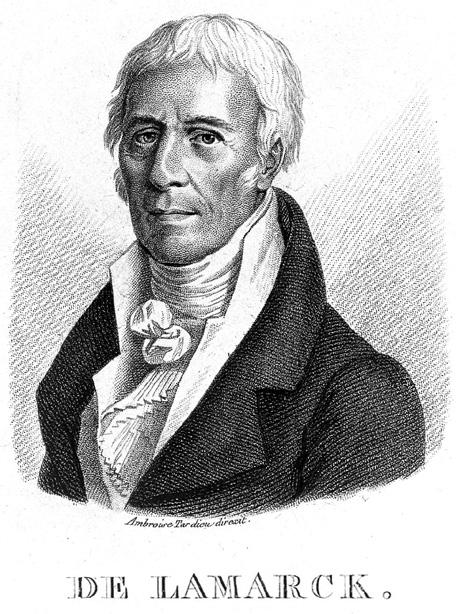
But how did new species arise, and how did they become adapted to diverse ways of life? The great French naturalist Jean-Baptiste Lamarck (1744–1829) (Figure 1.1) attempted to answer these questions by developing a theory of species transformation. His experience in classifying plants and animals led him to declare that the more you examined the natural world in detail, the harder it was to draw clear boundaries between varieties and species. He explained this continuum of biodiversity as the result of ongoing transformation of species: organisms had an innate drive towards increasing perfection and complexity, developing new habits and novel traits in response to their environment. Lamarck’s evolutionary theory was one of continuous, incremental change.
Lamarck’s theory of continuous improvement of species was rejected by many naturalists as speculative and unsupported by evidence. The rejection of this particular evolutionary theory cast a pall over other attempts to develop a theory of species transmutation. Two key reasons for the rejection of Lamarck’s hypothesis of evolutionary change were the perceived lack of evidence of intermediate states between species, and the absence of a plausible mechanism for consistent change over generations. The answers to both these criticisms
A long history of ideas
Figure 1.1 Jean-Baptiste Pierre Antoine de Monet, Chevalier de la Marck (better known as Lamarck).
Lamarck was a talented naturalist who published on botany and invertebrate classification, and was praised by Thomas Henry Huxley as having ‘possessed a greater acquaintance with the lower forms of life than any man of his day, Cuvier not excepted, and was a good botanist to boot’.12 Lamarck’s theory of evolution, published in his Philosophie Zoologique in 1809, was not translated into English until 1914, so many English-speaking biologists only knew his work through Sir Charles Lyell’s less than complimentary description of the theory. Lyell was deeply troubled by Lamarck’s inclusion of humans in his theory of species transformation, and he ridiculed Lamarck’s concept of humans evolving gradually from orang-utans. After the publication of The Origin of Species, Lyell wrote to Darwin that ‘When I came to the conclusion that after all Lamarck was going to be shown to be right, that we must “go the whole orang”, I re-read his book, and remembering when it was written, I felt I had done him an injustice’.13 Today many people associate Lamarck’s name with the idea of inheritance of acquired characteristics, but this idea was common among naturalists (including Charles Darwin) up until the early 1900s.
Photo from Wellcome Library, London via Wikimedia Commons (CC4.0 license). Wellcome Images http://wellcomeimages.org
Jean Baptiste Pierre Antoine de Monet Lamarck. Stipple engraving by A. Tardieu, 1821, after J. Boilly.
would come largely from the study of geology. Lamarck had studied geology and described fossil diversity, yet he made very little use of fossil evidence in expounding his evolutionary ideas. But, in the century following the publication of Lamarck’s ideas, the development of geology as a scientific discipline not only provided evidence of change in biodiversity over time, but also laid the groundwork for a mechanistic explanation of that biotic change.
Fossils reveal the history of the living world
Fossils had been unearthed throughout history, in many different parts of the world, but the interpretation of these objects varied widely. Although it seems obvious to us now that fossils are the remains of long disappeared species from past eras, the antiquity of fossils might not be apparent to someone who doesn’t already know that the natural world has a long history of change. Instead, fossils were sometimes interpreted as ‘sports’ of nature, formed as the result of some unknown geological process, such as a petrifying fluid that turned living matter into stone.
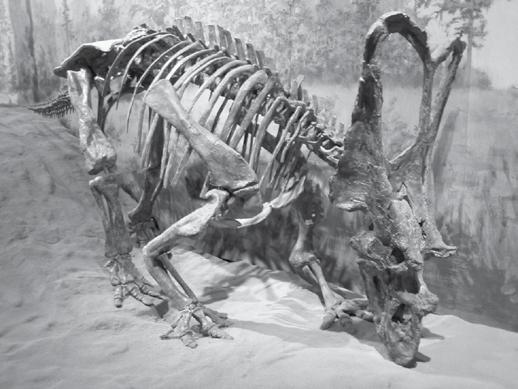
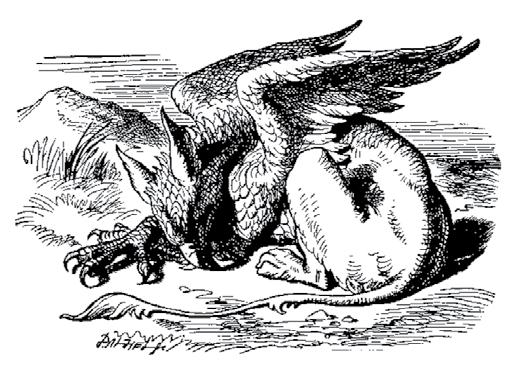
However, fossils were sometimes interpreted as revealing a change in the biological composition of an area over time. For example, Shen Kuo (沈括, 1031–95) used his study of fossilized forms to suggest that species distributions had changed in response to a gradual change in environment. He realized that the presence of fossilized bamboo in a region far removed from its contemporary distribution might indicate a change in climate over time, and that marine shells found in deposits high in the mountains were evidence that the sea had changed position over time. Fossilized creatures distinctly different from known species were sometimes taken as evidence of the existence of wonderful beasts not yet observed alive; for example, the exposed remains of ceratopsid dinosaurs in the Gobi desert may have led to tales of gryphons (eagle-headed winged lions) guarding the goldfields (Figure 1.2).1
Figure 1.2 Dinosaurs in disguise? In her book The First Fossil Hunters, Adrienne Mayor (2000) suggests that fossilized remains of extinct animals may have been uncovered by ancient Greeks and interpreted in light of unknown beasts or mythical beings. For example, she suggests that remains of ceratopsid dinosaurs (a) could have given rise to the legendary gryphon (b) as large quadrupeds with beaks. She also suggested that revered relics of heroes, such as Pelops’ shoulder, may have been remains of ice age beasts. Similarly, in other parts of the world, dinosaur bones have sometimes been interpreted as the remains of dragons.
In the closing decades of the eighteenth century, the fossil record became increasingly well studied. The development of geology as a systematic discipline was at least partly driven by economic development. A systematic approach to the study of geological strata was needed to make the exploitation of mineral resources less haphazard. The digging of roads and canals revealed consistent strata that could be correlated across different areas. Not only could the various rock layers be recognized and correlated over the landscape, but each layer was characterized by particular fossil forms, and the older the stratum, the more the fossils within it differed from today’s species. Rapid expansion of fossil collections in the 1800s, and the growing number of professional geologists and fossil enthusiasts, gave rise to the new field of palaeontology.
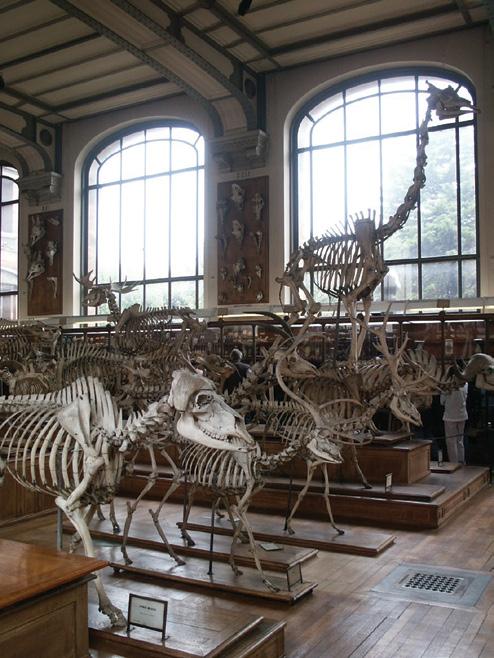
One of the most influential naturalists in this field was the French zoologist Georges Cuvier (1769–1832). Cuvier studied the growing collections of specimens of animals at the Paris Natural History Museum, garnered from around the globe
by exploration, trade, and conquest (Figure 1.3). He developed the principles of comparative anatomy, correlating body parts between different species, to show how related species were essentially modifications of the same basic forms. His skills were such that he could describe a species given a single bone, even predicting its mode of life. This allowed him to reconstruct previously unknown species, such as giant sloths and mastodons, from fossil bones.
Cuvier argued that these animals represented extinct species, since such conspicuously large animals had never been seen alive. Thus Cuvier was one of the first scientists to argue strongly for the process of extinction. Furthermore, Cuvier showed that the fauna he studied from the rocks around Paris was entirely different from the living species of the region, demonstrating that whole faunas had become extinct. This convincing evidence for extinction showed that the biological world was not static, but had changed dramatically over time, such that the species of the past were of a different kind than those found alive today.
the nature of biological change in the past was entirely different from the present. Although Cuvier saw no evidence that the species themselves changed over time, he used comparative anatomy to demonstrate a pattern of progression in the fossil record, with fossils in younger strata being more similar to species alive today. Both of these ideas—catastrophic extinctions and biological progression—were initially rejected by one of the most influential geologists of all time, Sir Charles Lyell (1797–1875).
We will consider the role of fossil evidence, and catastrophes in evolution, when we look at dinosaur extinctions in Chapter 5
Using the present to explain the past
No unnecessary intervention of unknown or hypothetical agent
Charles Lyell in a letter to Charles Darwin, 29 June 1856.
Chapter 11 will look at extinction, and compare rates of species loss now with those in the past.
Cuvier explained the dramatic changes in the world’s biota as the result of occasional revolutions. He proposed that catastrophic changes in the natural environment, such as floods or sudden changes in climate, wiped out whole faunas. Local species were extirpated and then replaced by migration of species from elsewhere, producing a sudden change in the regional fauna. Cuvier considered that these past catastrophes were of a magnitude or type not witnessed today; therefore
Lyell aimed to put the study of geology on a firm scientific footing. Following in the footsteps of the pioneering geologist James Hutton (1726–1797), Lyell argued that geologists should strive to explain phenomena using only those processes they could witness in operation. He applied three basic rules of reasoning to explain geological phenomena: one, assume basic laws of nature have not changed over time; two, explanations should invoke only mechanisms we can witness today; and three, assume that these forces were of the same strength in the past as they are today. Lyell’s doctrine is best summarized by the aphorism ‘the present is the key to the past’.
Lyell rejected explanations of the changing earth based on past catastrophes of unknown cause. Instead, he insisted that the processes we can witness today were sufficient to explain the formation of all geographic features. The rain that erodes sediment into rivers will gradually wear down mountains. The water flowing down the river
1 What is macroevolution? What is macroecology?
will eventually carve out a valley. The uplift that raises the earth by a metre could ultimately raise a mountain by degrees. To contrast it with ‘catastrophism’, where past changes were attributed to rare extraordinary events of devastating effect, this doctrine of continuous change was referred to as ‘uniformitarianism’, because it assumed uniformity of processes operating over time. However, uniformitarianism does not require rejection of changes of large magnitude or rapidity. For example, the gradual process of erosion of a natural barrier over time could lead to a catastrophic flood occurring in one single terrible moment when the barrier is finally breached.2
Uniformitarianism can be considered as both a statement of natural process and a guideline for scientific endeavour. We can’t go back in time, so we cannot make direct observations on past events and processes. Scientists who wish to explain the earth’s history can only use observations made in the present day, such as documenting the current distribution of species, discovering the remains of long-dead creatures in exposed rocks, or sequencing the genomes of living organisms. From observations made today, we construct explanations of past events. Given that we cannot directly observe processes operating in the past, we need a way of identifying plausible explanations for present diversity. How should we direct our imagination? And how do we distinguish a scientific explanation from a fantasy? The uniformitarian solution to this dilemma is to restrict our explanations to those that assume that the same basic laws of operation applied in the past as they do today. If we can observe mechanisms today, then we can regard them as plausible contributors to past events.
Lyell was initially reluctant to accept that species were also subject to change over geological time (see Figure 1.1). But through his insistence that the present is the key to the past, Charles Lyell aided the development of modern evolutionary biology by his profound influence on Charles Darwin (1809–1882). Darwin read Lyell’s three-volume masterpiece Principles of Geology on his five-year voyage around the world on the Beagle. Just as Lyell had wished to put geology on a scientific footing,
so Darwin created the science of evolutionary biology by applying Lyell’s approach to the living world. Darwinian gradualism is uniformitarianism applied to the biological world. By drawing on the variation observable in living populations, and the evident possibilities for differential survival and reproduction, Darwin invoked everyday processes to gradually build large-scale evolutionary change. He suggested that long periods of accumulation of small heritable changes, each of which may be nearly insubstantial, could generate evolutionary novelty and diversity. In doing so, he did what noone had done before—he gave a plausible mechanism for evolutionary change.
Evolution by natural selection
By the middle of the nineteenth century the idea that the biological world was not fixed but had changed over time was a matter of much discussion, both amongst scientists and by interested members of the public. Indeed, a best-selling popular science book, Vestiges of the Natural History of Creation, written and published anonymously in 1844 by the journalist Robert Chambers (1802–1871), described the history of the biosphere as one shaped by transformation and extinction, and claimed that all species were the product of evolution. The Vestiges was scorned by many respectable scientists of the time as sensationalist and uncritical of questionable claims (such as spontaneous generation of animals from inanimate matter), though it inspired others to seriously consider species transformation (notably Alfred Russel Wallace). Although he amassed much evidence for evolution, the author of the Vestiges offered no tangible mechanism for the transformation of species over time. Instead, he invoked the constant action of unspecified universal laws that promoted the transformation of species.
The idea of transformation of species over geological time had been discussed for decades, but the first observable mechanism for evolutionary change was provided by two gifted naturalists who independently described how the differential reproductive success of individuals with heritable
variations could lead to the generation of new species. Like Darwin, Alfred Russel Wallace (1823–1913) drew on comparisons with artificial selection, in addition to observations of the natural world conducted over many years of fieldwork in South America and South East Asia. Wallace, too, was inspired by Lyell’s uniformitarian approach, and he saw the potential for ‘progression, by minute steps, in various directions, but always checked and balanced by the necessary conditions’, and that the gradual accumulation of those variations that increased chances of survival in the struggle for existence could ultimately explain ‘all the phenomena presented by organized beings, their extinction and succession in past ages, and all the extraordinary modifications of form, instinct and habits which they exhibit’.3
Wallace wrote a manuscript outlining his theory of evolution while collecting natural history specimens in the Malay Archipelago, and then sent it by mail steamer to the respected naturalist Charles Darwin. Unbeknownst to Wallace, Darwin had arrived at a similar conclusion from his own long-standing studies of the natural world and domesticated varieties. Their two papers were presented together to the Linnean Society of London in July 1858. Both Darwin and Wallace emphasized that many more individuals were born than could survive and reproduce, so any individual having a slight advantage would have a greater chance of contributing to the next generation. Both also considered that this change in the characteristics of a population over generations would, over time, lead to divergence between populations, such that naturally occurring species were descended, like varieties, from other species. Like Lamarck, Darwin and Wallace both suggested that there was often no clear dividing line between species, but a continuous gradation of differences between varieties, races, sub-species, and species. But, as Wallace pointed out in his 1858 paper, the principle of natural selection made Lamarck’s attempts to explain the pattern in terms of some vital force unnecessary: change would happen simply as a result of variation between individuals influencing their chances of success in the ‘struggle for existence’.
The Origin of Species
The following year, Charles Darwin published an outline of the theory he had been working on for over two decades, under the title On the origin of species by means of natural selection, or the preservation of favoured races in the struggle for life. Darwin used patterns from the distribution of species in time (palaeontology) and space (biogeography) to suggest that species were modified gradually and continuously over long time periods. Similar species tended to be clustered in space; neighbouring areas often contained related species; and species suited to particular habitats are not always found in the same habitats on other continents. Similar species also tend to be clustered in time; fossil species tend to be more similar to those found in adjoining strata than they are to those in more widely separated strata. Darwin claimed that the fossil record bears witness to the continuous appearance and disappearance of species, such that biodiversity turnover was not confined to occasional catastrophes in which whole faunas were removed and replaced.
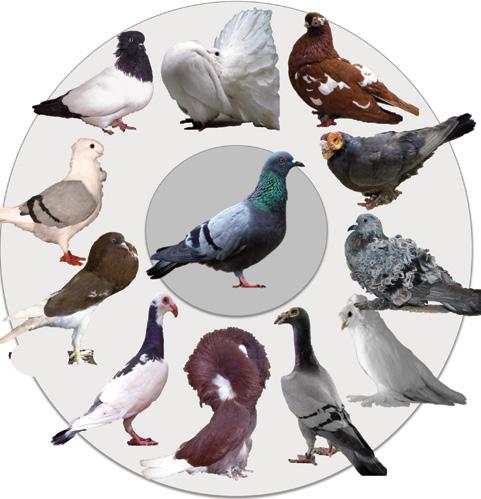
Unlike earlier works on evolution, such as Lamarck’s Philosophical Zoology and the Vestiges, Darwin’s Origin did not rely on unseen forces to drive the transformation of species over time. He argued that we could see the potential for change in species over time all around us. For example, a naturalist seeing two breeds of fancy pigeons for the first time would probably call them different species, yet they were clearly descended from a single ancestral type (Figure 1.4). Darwin gave examples of naturally occurring varieties of plants and animals, and showed that in many cases there was no clear distinction between varieties, races, and species. This pattern could be explained if natural varieties were, like domestic varieties, the products of descent. If such large differences in appearance and behaviour could be produced in a few centuries, might not a much longer period of time produce distinctly different species? But, in the natural world, what would take the place of the breeder selecting the breeding stock?
Darwin considered the consequences of naturally occurring variation between individuals in wild
Figure 1.4 ‘Believing that it is always best to study some special group, I have, after deliberation taken up domestic pigeons’.5 Darwin used pigeon breeding to illustrate the important principles of his theory of descent with modification. He presented evidence that the hugely varied modern breeds were all descended from the wild rock pigeon (centre). From conversations with pigeon breeders, he concluded that the breeders selected, knowingly or unconsciously, breeding stock which carried slight variations that distinguished them from others. Over generations of selective breeding, the differences between breeds became more and more pronounced until forms with distinct forms and behaviours were produced, such as (from top, clockwise) the fantail, shortfaced tumbler, bar, frillback, trumpeter, English carrier, Jacobin, scandaroon, pouter, turbit, and nun. These are all breeds that Darwin himself kept at Down House.
populations. Through exhaustive study, he was able to provide evidence that most traits varied to some extent within natural populations, and no individuals were exactly alike. He proposed that, as a result of these naturally occurring differences, some would be more likely to survive and reproduce than others. The offspring of the successful individuals might inherit their parents’ favourable traits, and thus also have an advantage over other members of the population. By this
means, heritable traits that enhanced survival and reproduction would increase in frequency in the population. In this way, Darwin illustrated how a population could potentially undergo change driven by no other force than a naturally occurring variation between individuals which affects their chances of reproduction.
We will look closely at natural selection in Chapter 2 when we consider the origin of life.
Key points
• Evolutionary change in the biosphere over time has been discussed for centuries.
• Darwin and Wallace provided the first plausible mechanism for evolutionary change, using observations of both wild and domesticated varieties, combined with information on biogeography and fossil evidence, to argue for continuous gradual change through increased representation of favourable heritable variations.
The case for Darwinian gradualism
Darwin turned the tide of scientific opinion in favour of evolution. By the time the sixth edition of the Origin was published in 1872, Darwin could state that ‘almost every naturalist admits the great principle of evolution’. But his argument for the application of Lyell’s uniformitarian principles to explaining evolutionary change was not as widely accepted. Just like Lyell, Darwin proposed that processes we can witness today (the continuous production of heritable variation in populations, and the ‘struggle for existence’ in which some variants are more successful than others) were sufficient to explain the great changes of the past (the divergence of distinct species from ancestral stock). His revolutionary idea was that the modest changes we can observe at the population level could gradually accumulate over vast time spans to
produce substantial differences between species, genera, classes, and even kingdoms. It is important to recognize that ‘gradualism’ refers to cumulative change by many steps, and does not necessarily imply a constant rate of change.
Darwin’s uniformitarian explanation—that observable population-level processes (microevolution) were all that were needed to explain the types and distributions of species over space and time (macroevolution)—failed to convince even some of his staunchest supporters. Some objections arose from contemporary limitations on knowledge of key concepts such as the principles of heredity. For example, some critics questioned the efficacy of natural selection to produce permanent changes in populations by suggesting that newly arisen variants would be diluted away through interbreeding. But other criticisms were more substantive, particularly those that highlighted the difficulties in proving that the processes we can witness today are responsible for all changes in the past, without needing to invoke any additional mechanisms. For example, Thomas Henry Huxley (1825–1895), known as ‘Darwin’s bulldog’ for his pugnacious defence of Darwin’s theory of evolution, remained agnostic on the power of natural selection on the grounds that no-one had yet proved that Darwin’s mechanism of gradual accumulation of variation within populations could indeed produce all of the features of the natural world:
There is no fault to be found with Mr. Darwin’s method, then; but it is another question whether he has fulfilled all the conditions imposed by that method. Is it satisfactorily proved, in fact, that species may be originated by selection? that there is such a thing as natural selection? that none of the phenomena exhibited by species is inconsistent with the origin of species in this way? If these questions can be answered in the affirmative, Mr. Darwin’s view steps out of the rank of hypotheses into those of proved theories; but, so long as the evidence at present adduced falls short of enforcing that affirmation, so long, to our minds, must the new doctrine be content to remain among the former—an extremely valuable, and in the
A long history of ideas
highest degree probable, doctrine, indeed the only extant hypothesis which is worth anything in a scientific point of view; but still a hypothesis, and not yet the theory of species.4
Can nature make jumps?
Much of the controversy over Darwin’s hypothesis, then and now, concerned his insistence on the cumulative effect of small changes. Darwin proposed that natural selection was the main engine of evolutionary change, but he did not claim that it was the only mechanism, and he acknowledged the potential for population-level changes due to chance (now referred to as genetic drift). But Darwin argued firmly that all of the characteristic inherited features of organisms, without exception, were the product of the gradual accumulation of small changes over many, many generations. Darwin’s insistence that natura non facit saltum (nature does not make jumps) arose from his commitment to the Lyellian approach to scientific explanation.
Just as it was for Lyell, it was important to Darwin that he did not need to invoke any unknown mechanisms to explain natural features: ‘If it could be demonstrated that any complex organ existed, which could not possibly have been formed by numerous, successive, slight modifications, my theory would absolutely break down. But I can find out no such case.’5 Darwin demonstrated that individuals within populations varied in many ways, and provided evidence that there was a ‘struggle for existence’ because more individuals were born than survived to adulthood or reproduced. By basing his theory of evolutionary change on the differential propagation of these ever-present variations, Darwin provided a hypothesis for descent with modification that relied only on observable phenomena.
Since Darwin’s hypothesis of gradual evolutionary change relied on the constant presence of heritable variation in populations, it rested critically on the frequency and type of mutations that arose in natural populations. Therefore the development of genetics in the early 1900s was of critical importance to the maturation of evolutionary biology. However, while the early geneticists were largely convinced