Enhance your learning with Evolve Student Resources.
These online study tools and exercises can help deepen your understanding of textbook content so you can be more prepared for class, perform better on exams, and succeed in your course.
Activate the complete learning experience that comes with each NEW textbook purchase by registering with your scratch-o access code at http://evolve.elsevier.com/Zerwekh/nsgtoday/
If your school uses its own Learning Management System, your resources may be delivered on that platform. Consult with your instructor.
If you rented or purchased a used book and the scratch-o code at right has already been revealed, the code may have been used and cannot be re-used for registration. To purchase a new code to access these valuable study resources, simply follow the link above.
You can now purchase Elsevier products on Evolve! Go to evolve.elsevier.com/shop to search and browse for products. Place Sticker Here
No part of this publication may be reproduced or transmitted in any form or by any means, electronic or mechanical, including photocopying, recording, or any information storage and retrieval system, without permission in writing from the publisher. Details on how to seek permission, further information about the Publisher’s permissions policies and our arrangements with organizations such as the Copyright Clearance Center and the Copyright Licensing Agency, can be found at our website: www.elsevier.com/permissions.
This book and the individual contributions contained in it are protected under copyright by the Publisher (other than as may be noted herein).
Notice
Practitioners and researchers must always rely on their own experience and knowledge in evaluating and using any information, methods, compounds or experiments described herein. Because of rapid advances in the medical sciences, in particular, independent verification of diagnoses and drug dosages should be made. To the fullest extent of the law, no responsibility is assumed by Elsevier, authors, editors, or contributors for any injury and/or damage to persons or property as a matter of products liability, negligence or otherwise, or from any use or operation of any methods, products, instructions, or ideas contained in the material herein.
Assistant Professor Caldwell University Caldwell, New Jersey
Melissa A. Layne, RN, MSN
BSN Clinical Coordinator/Assistant Professor of Nursing University of Charleston Charleston, WV
Eleonor A. Pusey-Reid, DNP, RN, M.Ed
Associate Professor; School of Nursing
MGH Institute of Health Professions Boston, MA
Patricia Vasquez, MSN, RN Professor
Trinity Valley Community College Athens, Texas
Nursing Today: Transitions and Trends evolved out of the authors’ experiences with nursing students in their final semester and the students’ transition into the realities of nursing practice. With the changes in health care and the practice of nursing, there is even more emphasis on the importance of assisting new graduates through the transition from education to practice. Nursing education and the transition process are experiencing a tremendous impact from changes in the health care delivery system.
In this 11th edition, we provide several new features that we believe are vital to the professional development and success of our future generation of nurses. For soon-to-be nurses, we have clarified the differences among critical thinking, clinical judgment, and decision making in Chapter 1, Role Transitions. We have also added a new feature throughout selected chapters to build clinical judgment and decision-making skills by including Next Generation NCLEX® (NGN) test items, which are a “call” for nursing students to use clinical judgment. We have updated information about incorporating mindfulness and building resiliency into nursing practice as well as offered mindfulness and resiliency exercises that students can begin practicing right now! We have also provided tips for studying effectively in groups, strategies for maximizing time effectively, online resources for improving time-management skills, and popular apps for organizing documents in Chapter 2, Personal Management: Time and Self-Care Strategies. We have updated information on dedicated education units as a clinical teaching model for assisting nursing students’ transition to practice, along with helpful tips for transitioning from mentee to mentor, in Chapter 3, Mentorship, Preceptorship, and Nurse Residency Programs. We have also updated information on how the delivery of transition programs have changed since the coronavirus 2019 (COVID-19) pandemic. In Chapter 4, Employment Considerations: Opportunities, Resumes, and Interviewing, we have updated data on the latest employment projections for the nursing profession and have added tips for responding to questions during an in-person, phone, or virtual job interview. We kept the same easy reading style to present timely information, along with updated information on the 2019 NCLEX-RN® Detailed Test Plan and samples of the alternate-item format test items appearing on the NCLEX-RN® Exam in Chapter 5, NCLEX-RN® Exam and the New Graduate. We have also added effective test-taking strategies that students can employ on the NCLEX exam. We are pleased to offer a new section in Chapter 5 outlining the NGN Project, along with an explanation of the different types of NGN test items that will be on the NGN exam beginning in 2023. We have also included an NGN NCLEX examination–style unfolding case study in Chapter 5 to showcase the six cognitive skills (recognize cues, analyze cues, prioritize hypotheses, generate solutions, take action, and evaluate outcomes) in the NCSBN Clinical Judgment Measurement Model (NCJMM). In Chapter 6, Historical Perspectives: Influences on the Present, we have included a brand-new NGN test item on client advocacy. In Chapter 7, Nursing Education, we have updated statistics on the current nursing demographic profile and nursing shortage, and in Chapter 8, Nursing Theories, we have provided an updated practice issue that looks at the influence of nursing theory on nurses’ practice during a global pandemic. We have also provided updated content as it relates to factors impacting the image of nursing in Chapter 9, Professional Image of Nursing.
Recognizing the need for new graduate nurses to develop effective leadership and management skills to navigate and practice in the rapidly changing health care setting, we have included an overview of the clinical nurse leader role in the practice setting as well as offered strategies for adapting to change in Chapter 10, Challenges of Nursing Management and Leadership. Updated information on TeamSTEPPS as a tool for improving interprofessional communication has also been added to Chapter 11, Building Nursing Management Skills. Content on interprofessional collaborative practice, group dynamics and group member roles, and strategies for communicating in the workplace has been updated and can be found in Chapter 12, Effective Communication, Team Building, and Interprofessional Practice. Strategies for resolving conflict professionally and personally are offered in Chapter 13, Conflict Management.
The results of initiatives based on the recommendations from the Future of Nursing (2010) report have been expanded in Chapter 15, The Health Care Organization and Patterns of Nursing Care Delivery. Health equity initiatives focusing on providing culturally and linguistically appropriate services to diverse populations and improving the health needs of the lesbian, gay, bisexual, and transgender community are explored in Chapter 21, Cultural and Spiritual Awareness. Methods for evaluating patient care, patient satisfaction, and quality outcome measures in today’s redesigned health care system have been highlighted in Chapter 22, Quality Patient Care. Issues in emergency preparedness education, and training, including the global (COVID-19) pandemic, have been included in Chapter 26, Emergency Preparedness
We have continued to provide the graduate nurse with information on nursing informatics and management and have continued to increase the focus on the use of information technology for transitioning graduates by including content on cybersecurity, patient engagement through online technologies, and the use of robotics and artificial intelligence in patient care delivery. We have updated information on how technology such as cloud computing, clinical decision support systems, and point-of-care electronic documentation can provide data tracking and analysis for improving workflow processes and patient care in Chapter 23, Nursing Informatics. The enhanced nurse licensure compact program’s influence on telehealth services provided by nurses is elaborated on in Chapter 17, Political Action in Nursing
Chapters related to current issues in health care, such as Chapter 14, Delegation in the Clinical Setting; Chapter 15, The Health Care Organization and Patterns of Nursing Care Delivery; Chapter 16, Economics of the Health Care Delivery System; Chapter 18, Collective Bargaining: Traditional (Union) and Nontraditional Approaches; Chapter 19, Ethical Issues; Chapter 20, Legal Issues; Chapter 21, Cultural and Spiritual Awareness; Chapter 22, Quality Patient Care; Chapter 25, Workplace Issues; and Chapter 26, Emergency Preparedness, have been expanded. One of our goals with this book is to provide graduating nurses with practical guidelines that can be implemented in their transition from nursing students to effective entry-level nursing practice. Additionally, we have provided foundational content that will serve as a resource for graduating nurses continuing their nursing education. For these reasons, we have included key differences among evidence-based practice, research utilization, and nursing research using relevant patient case scenarios to highlight the steps involved in each process in Chapter 24, Using Evidence-Based Practice and Nursing Research.
The classic findings and experience of Marlene Kramer and her research on reality shock and Patricia Benner’s work on performance characteristics of beginning and expert nurses continue to affect the need for transition courses in nursing education programs. These
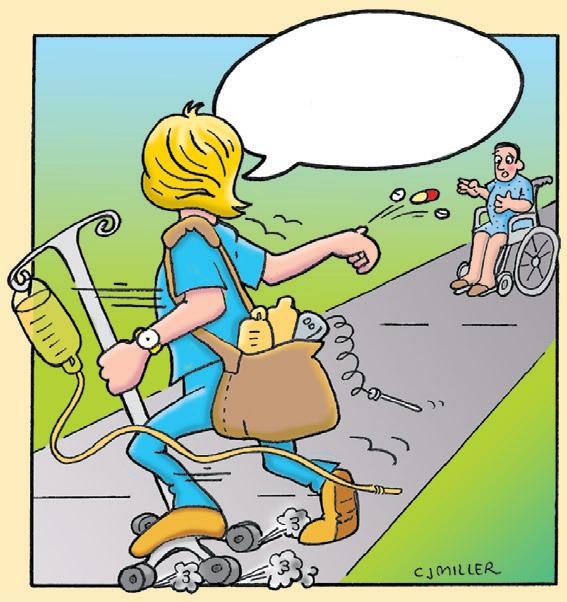
courses focus on trends and issues to assist new graduates to be better prepared to practice nursing in today’s world. With the increased demands and realities of the health care system, it is necessary for new graduates to make the transition rapidly to an independent role. We have written this book for use in these transition courses and to assist individual students in anticipating encounters in a rapidly changing, technologically oriented work environment. Some of the lengthy tables and figures have been moved to Evolve Resources to keep the material intact and to make the reading easier. We have maintained and added additional cartoons drawn by C.J. Miller, BSN, RN. We think they add a smile and perhaps make the difficult information a little easier to comprehend. Each chapter begins with Learning Objectives and a quote as an introduction to the content. Within each chapter, there is a practical application of the concepts discussed. Critical Thinking boxes in the text highlight information to facilitate the critical thinking process. Using a question approach, material is presented in a logical, easy-to-read manner. There are also opportunities to respond to thought-provoking questions and student exercises to facilitate self-evaluation of learning. Research for Best Practice boxes have been incorporated to provide implications for nursing practice and opportunities for discussion on how to incorporate the information into the practice setting. We have also continued to provide online resources and relevant websites for each chapter. Readers receive an overall view of the nursing profession from historical events that influenced nursing to the present-day image as well as the legal, ethical, political, and onthe-job issues confronting today’s professional nurses. Communication and delegation in the workplace, time management, instructions on writing an effective resume, interviewing tips, guidelines for using social media as a professional, employee benefits, attaining certification in a nursing specialty, and self-care strategies are among the sound career advancement tools provided.
FOR NURSING FACULTY
Our key goal in developing this book has been to provide timely information that is applicable to current practice and is fun to read. An Instructor’s TEACH for Nurses lesson plan manual, which is internet based, is available from the publisher on the Evolve website to assist faculty in planning and promoting a positive transition experience. This valuable website contains suggestions for classroom and clinically based student activities. We have included accompanying textbook appendices and have expanded the content within Evolve, which supports the textbook. It includes PowerPoint presentations with audience-response questions; sample NCLEX-style questions, including alternate-format items; case studies; and NGN test items. The Evolve website will continue to provide updated information as new trends and issues affect the practice of nursing. For a detailed description of the Evolve resources that accompany this textbook, please take a look at the Teaching and Learning Resources listed next. Please consult your local Elsevier representative for more details.
TEACHING AND LEARNING RESOURCES
For Instructors
Instructor Resources on Evolve, available at http://evolve.elsevier.com/Zerwekh, provide a wealth of material to help you make your nursing instruction a success. In addition to all of the Student Resources, the following are provided for instructors:
n TEACH for Nurses Lesson Plans, based on the chapter Learning Objectives in the textbook, serve as ready-made, modifiable lesson plans and a complete roadmap to link all parts of the educational package. These concise and straightforward lesson plans can be modified or combined to meet your particular scheduling and teaching needs.
n PowerPoint Presentations are organized by chapter with approximately 700 slides for in-class lectures. These are detailed and include customizable text and image lecture slides to enhance learning in the classroom or in internet-based course modules. If you share them with students, they can use the note feature to help them with your lectures.
n Audience Response Questions for i > clicker and other systems are provided with one to three multiple-answer questions per chapter to stimulate class discussion and assess student understanding of key concepts.
n New Next-Generation NCLEX® (NGN)–Style Case Studies are six NGN-style case studies focused on issues and trends in nursing.
n The Test Bank has more than 275 test items, complete with the correct answer, rationale, cognitive level of each question, corresponding step of the nursing process, appropriate NCLEX format, and Client Needs label.
n Case Studies, including answers, engage students with the opportunity to apply the knowledge they have learned in real-life situations.
For Students
Student Resources on Evolve, available at http://evolve.elsevier.com/Zerwekh, provides a wealth of valuable learning resources for students.
n An updated Evolve website for students includes Answer Key to Textbook Next-Generation NCLEX® (NGN)–Style Case Studies, Student Review Questions, Case Studies, Resume Templates, Lists of Nursing Organizations, and Sample NCLEX-RN®–Style Questions, including Alternate Item Format and sample Memory Notecard images.
JoAnn Zerwekh Ashley Zerwekh Garneau
ACKNOWLEDGMENTS
The success of previous editions of this book is a result of the contributions and efforts of our chapter contributors, who provided their expertise and knowledge, and our book reviewers, who provided their insights and suggestions on pertinent issues in nursing practice. This new edition is no exception. We thank the staff at Elsevier for their assistance and guidance during the revision of the 11th edition: Sandy Clark, senior content strategist, and Lisa Newton, senior content development manager. We also extend our gratitude to Abigail Bradberry, senior project manager, for monitoring the production of this book to ensure its delivery on schedule; a special thank you goes to Patrick Ferguson, designer, for the overall book layout and design.
I would like to thank my children, Tyler and Ashley (my coauthor!), and my grandchildren, Ben Garneau, Maddie, and Harper Zerwekh, for putting a smile on my face and coaxing me to step away from the computer during challenging times in the revision process. I would like to thank Bob Dillon (the real Bob Dillon ☺) for his kindness, love, and unwavering support during this revision process. I am so grateful to have a wonderful friend who loves to golf, take me out to dinner, and travel.
JoAnn I would like to express sincere gratitude to my family for their unwavering support, unconditional love, and patience during the manuscript revision. I would also like to thank my dear friend and colleague, Peter Melenovich, for helping me through life’s challenges amidst a global pandemic. Thank you, Peter, for your positive affirmations that gave me the perseverance to complete the manuscript revision. Last, I would like to thank my mom, JoAnn, for her kindred spirit and for inspiring me to pursue the profession of nursing. You are my confidant and mentor and the nurse I aspire to be.
Ashley
CONTENTS
UNIT I: PROFESSIONAL GROWTH AND TRANSITION
1. Role Transitions, 2
JoAnn Zerwekh and Ashley Zerwekh Garneau Transitions, 3
What Are Transitions? 3
What Are Important Factors Influencing Transitions? 3
Transitions in Nursing, 4
Reality Shock, 5
What Is Reality Shock? 5
What Are the Phases of Reality Shock? 7
What Is Transition Shock? 11
Role Transformation, 11
When Does the Role Transition to Graduate Nurse Begin? 13
How Can I Prepare Myself for This Transition Process? 15 Conclusion, 21 Rules of the Road, 22 Bibliography, 23
2. Personal Management: Time and Self-Care Strategies, 25
JoAnn Zerwekh
Managing Your Time, 26
Balance Is the Key, 26
What Are Your Biological Rhythms, and How Do You Use Them? 26
What Is Meant by Right and Left Brain Dominance, and Where Is My Brain? 26
Which Are You? 28
How Can I Manage My Physical Environment? 28
What About Managing the Telephone? 30
What About All That E-Mail, Texting, or Social Media? 31
How Can I Manage My Time? 31
Managing Tasks, 32
How Do I Deal With Procrastination? 32
Consider the Consequences, 33
The Earlier, the Better, 33
Managing Others, 34
What About Delegation and Time Management? 35
Managing Your Goals, 35
Begin by Listing, 36
Prioritize With the ABCD System, 36 Keep It Going, 38
Self-Care Strategies, 38 Is Burnout Inevitable for Nurses? 39
What Are the Ethical Issues Regarding Transplantation? 457
What Is the Ethical Issue Regarding the Use of Fetal Tissue? 457
What Are the Ethical Issues Regarding In Vitro Fertilization? 458
What Are Genetics and Genomics? 458
Allocation of Scarce Resources, 459
Impact of a Pandemic, 460
What Are Some of the Possible Solutions Being Debated? 460
What Are the Ethical Issues Around Involuntary Commitment? 461
Professional Boundaries, 461
What Is the Impact of Social Media and Social Networking on Nursing Practice? 461
Emerging Ethical Issues in Health Care, 461
Conclusion, 463
Bibliography, 464
20. Legal Issues, 466
Alice E. Dupler
Sources of Law, 467
Where Does Law Come from? 467
Civil Actions—Torts, 470
Invasion of Privacy and Breaches of Privacy and Confidentiality, 472
Miscellaneous Intentional Torts and Employment Civil Rights Claims, 473
Court Actions Based on Legal Principles, 474
Nursing Licensure, 475
Disciplinary Actions, 476
Scope of Practice, 476
Multistate Licensure, 477
What About Substance Use Disorder in Nursing? 477
Negligence, 478
Basic Elements of Negligence, 478
Do You Have a Professional Duty? 479
Falling Below the Standard of Care: Was There a Breach of the Professional Duty? 479
What Are Established Policies and Procedures? 480
Applying “Causation” to Case Study 3, 482
Who Might have Liability (Responsibility) in a Claim? 483
Personal Liability, 483
Supervisory Liability, 484
Institutional Liability, 485
Student Liability, 485
What Defenses Might Be Available in Malpractice Claims? 485
Common Categories of Negligence, 486
Medication Errors, 486
Provide a Safe Environment, 487
Patient Falls, 488
Equipment Failure, 489
Failure to Assess Adequately, Monitor, and Obtain Assistance, 490
Failure to Communicate Adequately, 490
Failure to Report, 491
Failure to Document, 492
Related Legal Concepts, 494
Informed Consent, 494
Advance Directives, 495
Criminal Actions, 496
What Criminal Acts Pose a Risk to the Nurse? 496
Risk Management and Quality Improvement, 497
How Do I Protect Myself and My Patient From Risks? 497
Malpractice Insurance, 499
What About Individual Malpractice Insurance? 499
What Is Institutional Coverage? 500
What Should I Ask About Institutional Coverage? 500
What Is Professional Licensure Defense Insurance? 500
What Happens When I Go to Court? 500
Legal Issues Affecting Nursing, 501
Health Care Costs and Payment Issues, 501
Health Care Delivery Issues, 502
Issues About Life-and-Death Decisions, 503 Conclusion, 504 Bibliography, 505
UNIT V: CONTEMPORARY NURSING PRACTICE
21. Cultural and Spiritual Awareness, 509
Ashley Zerwekh Garneau
Culture and Spirituality, 510
What Is Meant by Cultural and Linguistic Competence? 510
What Practice Issues Are Related to Cultural and Linguistic Competence? 512
Social Determinants of Health and Health Care Disparities, 513
Strategies for Providing Culturally Competent Care, 514
A Culturally Diverse Workforce, 515
What Is the Meaning of Spirituality? 515
Cultural and Spiritual Assessment, 516
What Are Cultural and Spiritual Beliefs Regarding Illness and Cures? 516
How Do You Assess Spiritual Need? 520
Conclusion, 520 Bibliography, 521
22. Quality Patient Care, 524
Stephanie Tippin
Standards of High-Quality Health Care
Management, 525
What Is Root-Cause Analysis? 526
History and Evolution of Quality in Health Care, 527
What Are Core Measures? 529
What Is HCAHPS? 530
Just What Is the Joint Commission? 530
What Are National Patient Safety Goals? 530
Monitoring the Quality of Health Care, 531
What Is Quality Improvement? 531
How Do We Monitor Quality? 531
What Are an Indicator and a Metric? 531
What Is Performance Improvement? 534
What Are the Barriers to Quality Improvement? 534
What Are Some Other Agencies Influencing Patient Safety? 535
Quality Improvement Methods, 539
Tools and Processes for Continuous Quality Improvement, 539
What Is Six Sigma? 539
How Do We Use DMAIC, 542
The Define Phase, 543
The Measure Phase, 545
The Analyze Phase, 546
The Improve Phase, 546
The Control Phase, 547
Health Care Provider Credentialing for Quality Improvement, 549
Health Literacy, 550
Conclusion, 550
Bibliography, 552
23. Nursing Informatics, 554
Cheryl D. Parker
Nursing Informatics, 555
Nursing Informatics: Why Do I Care? 555
What Is Nursing Informatics? 556
Experience and Education, 557
Role of the Informatics Nurse and Informatics
Nurse Specialist, 557
Barriers to Success, 558
The Certification Process, 558
Professional Practice, Trends, and Issues, 558
What Are Regulatory and Accreditation Requirements? 558
Electronic Health Records, 561
The e-World Is Coming Wait, It’s Here, 562
Electronic Medical Record and Electronic Health Record, 562
Personal Health Record, 564
Technology Changing Workflow for the Better—Medication Fulfillment, 565
Computerized Provider Order Entry and Clinical Decision Support, 565
Barriers to Health Information Technology Still Remain, 566
Trends, 567
The Next Generation of Health Care Delivery, 567
Patient Engagement, 568
Telemedicine, Telehealth, and Health Monitoring, 569
Cloud Computing, 570
Big Data, 570
Robotics in Patient Care, 570
Artificial Intelligence in Health Care: The Time Is Almost Here, 571
Patients and the Internet, 572
What Do I (and Patients) Need to Know to Evaluate an Internet Resource? 572
Patient Portals, 574
Data Access at the Point of Care, 574
Computers in the Nurses’ Station, 574
Mobility in the Clinical World, 574
Smartphones, 575
Using Data to Improve Care at the Bedside, 577
Nursing Informatics and You, 577
Conclusion, 579
Bibliography, 580
24. Using Evidence-Based Practice and Nursing Research, 582
Peter G. Melenovich
What Is Evidence-Based Practice? 582
Step 1: Define the Problem, 584
Step 2: Identify, Review, and Evaluate the Data Applicable to the Problem, 584
Step 3: Design a Practice Change Based on the Data While Incorporating the Clinical Expertise of the Nurse and Patient Preferences, 585
Step 4: Implement the Change in Nursing Practice, 585
The Need for Nursing Practice Based on Research, 586
What Is Nursing Research Utilization? 586
What Are the Steps for Nursing Research Utilization? 586
Research Utilization: What Is It Not? 590
Research Utilization Compared with Nursing Research and the Conduct of Research, 591
How Is the Use of Research in Practice Different From Conducting Research? 591
What Is the Relationship Between Nursing Theory and Research Utilization? 594
Defining Your Practice Context, 595
What Are the Health, Social, and Cultural Characteristics of the Patient Population Being Served? 595
What Are the Health Care Delivery Characteristics of Your Setting? 595
What Are the Motivators and Barriers for Incorporating Nursing Research into Your Practice? 596
The National Institute of Nursing Research, 596
What Is Its Function? 596
The Agency for Healthcare Research and Quality, 597
What Is Its Function? 597
Conclusion, 597
Bibliography, 598
25. Workplace Issues, 599
Mary Boyce
Questions to Ask When Starting a New Position, 600
Ergonomic Hazards for Health Care Workers, 601
Back Injury, 601
Safe Patient Handling and Mobility, 602
Ergonomic Workstations, 603
Repetitive Motion Disorders, 604
Workplace Violence: A Growing Concern in Health care, 604
Lateral Violence (Bullying) and Other Forms of Workplace Harassment, 605
Other Workplace Issues, 608
Needlestick and Sharps Safety, 608
Handling Staffing Shortages, 610
Mandatory Overtime, 612
Assigned to a Unit That Is Unfamiliar (Floating)—What Do I Do Now? 614
Making a Mistake—What Do I Do Now? 615
Conclusion, 617
Bibliography, 618
26. Emergency Preparedness, 620
Tyler Zerwekh and JoAnn Zerwekh
What Is Public Health Preparedness? 621
Clinical Preparedness, 621
What Are Biologic Agents? 621
What Are Chemical Agents? 621
What Are Radiologic or Radioactive Agents? 624
What Is a Pandemic? 625
What Is Personal Protective Equipment in Disaster Response? 628
What Is Disaster Nursing? 628
What Is Triage? 630
Public Health Preparedness and Administrative Efforts, 632
Community Health Nurse Issues and Public Health Preparedness, 633
Epidemiologic Aspects, 633
What Is the Strategic National Stockpile? 635
What Is a CHEMPACK? 635
What Is ESAR-VHP? 635
Medical Reserve Corps, 636
Disaster Medical Assistance Teams, 636
What Do I Need to Know About Community Preparedness Issues? 636
What Do I Need to Know About Disaster Mental Health? 636
Individual and Family Preparedness Issues, 639
Emerging Trends and Issues in Emergency Preparedness, 642
The 2010 Institute of Medicine Report, 644
Conclusion, 644
Bibliography, 645
Index, 647
Answers to NGN Text Questions
UNIT I
Professional Growth and Transition
1
Role Transitions
JoAnn Zerwekh, EdD, RN, and Ashley Zerwekh Garneau, PhD, RN
Additional resources are available at http://evolve.elsevier.com/Zerwekh/nsgtoday/
When you’re finished changing, you’re finished. Benjamin Franklin
Role transition can be a complex experience.
After completing this chapter, you should be able to:
• Discuss the concept of transitions.
• Identify the characteristics of reality shock.
• Compare and contrast the phases of reality shock.
• Identify the stages of transition shock.
• Identify times in your life when you have experienced a reality shock or role transition.
• Describe methods to promote a successful transition.
Welcome to the profession of nursing! This book is written for nursing students who are in the midst of transitions in their lives. As a new student, you are beginning the transition to becoming indoctrinated into nursing, and sometimes it is not an easy transition. For those of you who are in the middle of nursing school, do you wonder if life even exists outside of nursing school? To students who will soon graduate, hang on; you are almost there! For whatever transition period you are encountering, our goal is to help make your life easier during this period of personal and professional adjustment into nursing. We have designed this book to help you keep your feet on the ground and your head out of the clouds, as well as to boost your spirits when the going gets rough.