Ashley Tellis (Carnegie Endowment for International Peace)
Steven Wilkinson (Yale)
The Other One Percent
Sanjoy Chakravorty, Devesh Kapur, and Nirvikar Singh
Social Justice through Inclusion
Francesca R. Jensenius
Dispossession without Development
Michael Levien
The Man Who Remade India
Vinay Sitapati
Business and Politics in India
Edited by Christophe Jaffrelot, Atul Kohli, and Kanta Murali
Clients and Constituents
Jennifer Bussell
Gambling with Violence
Yelena Biberman
Mobilizing the Marginalized
Amit Ahuja
The Absent Dialogue
Anit Mukherjee
When Nehru Looked East
Francine Frankel
Capable Women, Incapable States
Poulami Roychowdhury
Farewell to Arms
Rumela Sen
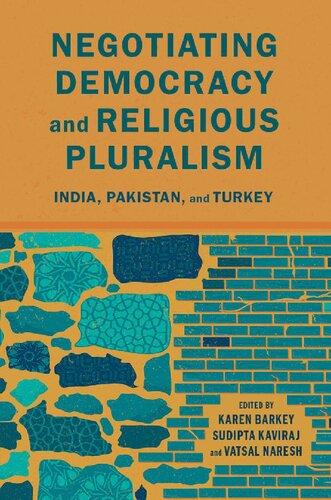
Negotiating Democracy and Religious Pluralism
India, Pakistan, and Turkey
Edited by KAREN BARKEY, SUDIPTA KAVIRAJ, AND VATSAL NARESH
Oxford University Press is a department of the University of Oxford. It furthers the University’s objective of excellence in research, scholarship, and education by publishing worldwide. Oxford is a registered trade mark of Oxford University Press in the UK and certain other countries.
Published in the United States of America by Oxford University Press 198 Madison Avenue, New York, NY 10016, United States of America.
All rights reserved. No part of this publication may be reproduced, stored in a retrieval system, or transmitted, in any form or by any means, without the prior permission in writing of Oxford University Press, or as expressly permitted by law, by license, or under terms agreed with the appropriate reproduction rights organization. Inquiries concerning reproduction outside the scope of the above should be sent to the Rights Department, Oxford University Press, at the address above.
You must not circulate this work in any other form and you must impose this same condition on any acquirer.
Library of Congress Control Number: 2021904812
ISBN 978–0–19–753002–3 (pbk.)
ISBN 978–0–19–753001–6 (hbk.)
DOI: 10.1093/oso/9780197530016.001.0001
1 3 5 7 9 8 6 4 2
Paperback printed by Marquis, Canada
Hardback printed by Bridgeport National Bindery, Inc., United States of America
To the late Alfred C. Stepan, mentor, colleague, friend, and preeminent scholar of democracy, toleration, and authoritarianism. May his ceaseless advocacy for democracy and his infinite wisdom guide our path.
Acknowledgments
Contributors
Itineraries of Democracy and Religious Plurality 1 Karen Barkey, Sudipta Kaviraj, and Vatsal Naresh
I. HISTORICAL PERSPECTIVES
1. Islam, Modernity, and the Question of Religious Heterodoxy: From Early Modern Empires to Modern Nation-States 31 Sadia Saeed
2. Liberalism and the Path to Treason in the Ottoman Empire, 1908–1923 59
Christine Philliou
3. Fatal Love: Intimacy and Interest in Indian Political Thought 75 Faisal Devji
4. Conflict, Secularism, and Toleration 95 Uday S. Mehta
5. Representative Democracy and Religious Thought in South Asia: Abul A‘la Maududi and Vinayak Damodar Savarkar 114 Humeira Iqtidar
II. GENEALOGIES OF STATE AND RELIGION
6. Religious Pluralism and the State in India: Toward a Typology 139 Rochana Bajpai
7. Is Turkey a Postsecular Society? Secular Differentiation, Committed Pluralism, and Complementary Learning in Contemporary Turkey 157 Ateş Altınordu
8. The Meaning of Religious Freedom: From Ireland and India to the Islamic Republic of Pakistan 178 Matthew J. Nelson
9. The Limits of Pluralism: A Perspective on Religious Freedom in Indian Constitutional Law 203 Mathew John
10. Plurality and Pluralism: Democracy, Religious Difference, and Political Imagination 221
Sudipta Kaviraj
III. VIOLENCE AND DOMINATION
11. Pakistan’s Blasphemy Laws versus Religious pluralism 251
Fatima Y. Bokhari
12. Changing Modalities of Violence: Lessons from Hindu Nationalist India 277
Amrita Basu
13. Legal Contention and Minorities in Turkey: The Case of the Kurds and Alevis 301
Senem Aslan
14. “Stranger, Enemy”: Anti-Shia Hostility and Annihilatory Politics in Pakistan 322
Nosheen Ali
15. Thinking through Majoritarian Domination in Turkey and India 342
Karen Barkey and Vatsal Naresh
Acknowledgments
This project began with a generous grant from the Henry Luce Foundation. Alfred C. Stepan inspired and supported it from inception. Toby Volkman watched over this project with attentive care throughout.
Our first meeting was held at Columbia University, under the auspices of the Center for Democracy, Toleration and Religion (CDTR), in 2016. Some of our wonderful collaborators participants there and at our second meeting at Berkeley indelibly shaped this volume for the better, and we gratefully acknowledge their contribution: Asad Q. Ahmed, Manan Ahmed, Yesim Arat, Koray Çaliskan, Thomas Blom Hansen, Mehdi Hasan, Suat Kiniklioglu, Ravish Kumar, Basharat Peer, Raka Ray, Senator Sherry Rehman, Yasmin Saikia, Tolga Tanis, Mark Taylor, and Ozan Varol.
The team at CDTR made the laborious task of conference-organising a genuinely enjoyable exercise. Without Jessica Lilien’s ingenuity and meticulous attention to detail, this project would never have taken off. Mariam Elnozahy and Menna El-Sayed’s crucial assistance, academic and logistical, brought cheer when it was most needed. We also thank the department of Middle Eastern, South Asian and African Studies at Columbia University for their financial support.
We continued the project under the auspices of Social Science Matrix at University of California-Berkeley. There, Erica Browne and Dasom Nah provided stellar logistical and editorial assistance. The collaboration would not have continued without the financial and intellectual backing of the Haas Institute for a Fair and Inclusive Society (now the Othering and Belonging Institute). We thank John Powell, Taeku Lee, Raka Ray, and Eva Seto.
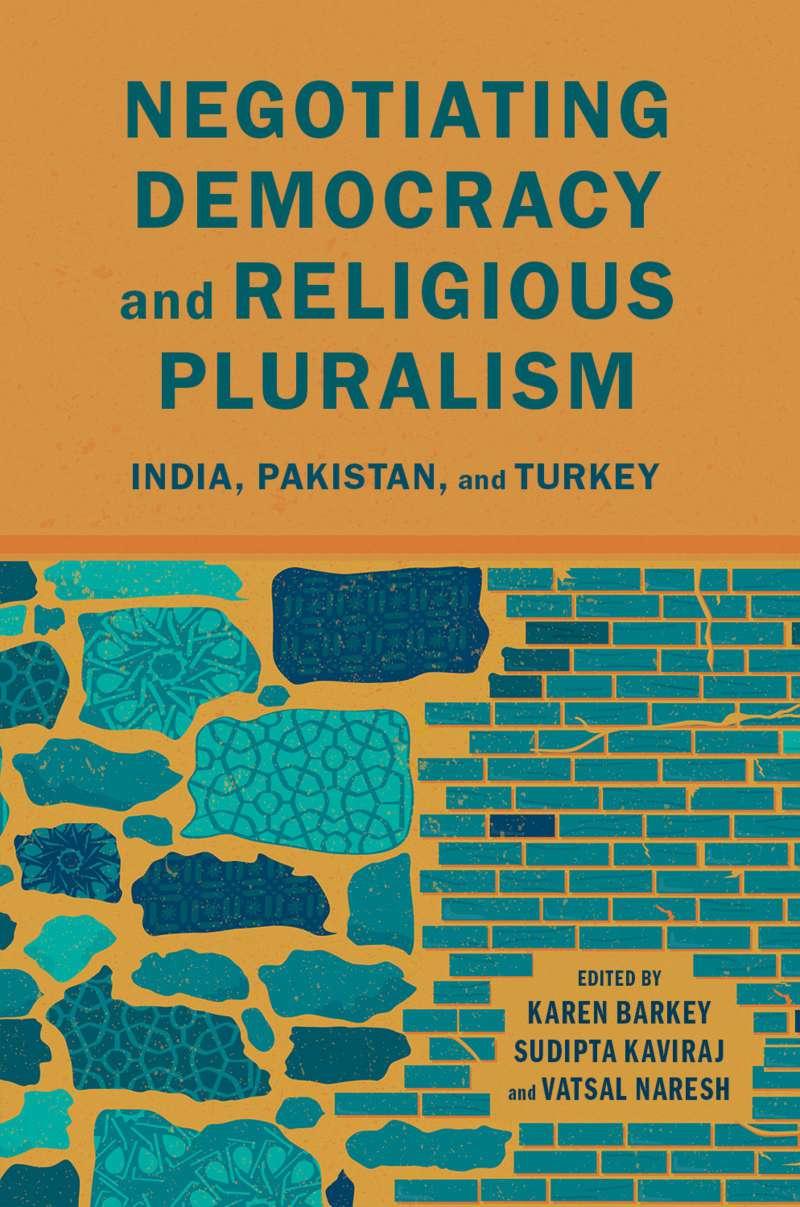
Bhawna Parmar worked with us patiently to illustrate a thoughtful book cover. Holly Mitchell at OUP was the epitome of forbearance in seeing us through. We thank her and David McBride, as well as the team at Newgen.
Contributors
Nosheen Ali is a sociologist serving as Global Faculty-in-Residence at the Gallatin School, New York University. Ali works on state-making, ecology and Muslim cultural politics with a focus on Pakistan and Kashmir. Her book Delusional States: Feeling Rule and Development in Pakistan's Northern Frontier (Cambridge University Press, 2019) examines state power and social struggle in Gilgit-Baltistan, a contested border zone that forms part of disputed Kashmir. Ali is the founder of Umangpoetry, a digital humanities endeavor for documenting contemporary poetic knowledges in South Asia, and Karti Dharti, an alternative space for ecological inquiry.
Ateş Altınordu is Assistant Professor of Sociology at Sabancı University, Istanbul. His work focuses on religion and politics, secularization and secularism, and the cultural sociology of contemporary Turkish politics. His articles have been published in the Annual Review of Sociology, Politics and Society, Kölner Zeitschrift für Soziologie und Sozialpyschologie, and Qualitative Sociology.
Senem Aslan is Associate Professor of Politics at Bates College. She was previously a postdoctoral fellow in the Department of Near Eastern Studies at Princeton University between 2008 and 2010. Dr. Aslan’s book Nation-Building in Turkey and Morocco: Governing Kurdish and Berber Dissent, was published by Cambridge University Press in 2014. Her other works have been published in the International Journal of Middle East Studies, Nationalism and Ethnic Politics, Nationalities Papers, Oxford Handbook of Turkish Politics, and the European Journal of Turkish Studies. At Bates, she teaches courses on Middle East politics, state-building, and nationalism. Her recent research focuses on the different governments’ politics of symbolism and imagery in Turkey.
Rochana Bajpai is Associate Professor of Politics at SOAS University of London. She is the author of Debating Difference: Group Rights and Liberal Democracy in India (Oxford University Press 2011, sixth impression). Dr Bajpai has published widely on the Indian Constituent Assembly debates; conceptions of secularism and minority rights; debates on social justice and affirmative action in India and Malaysia. Her current project focusses on the theory and practice of political representation, with reference to minority representation in Indian Parliament. Dr Bajpai is a founding member of the SOAS Centre for Comparative Political Thought and a co-convenor of the London Comparative Political Thought Group.
Karen Barkey is the Haas Distinguished Chair of Religious Diversity at the Othering & Belonging Institute and Professor of Sociology at the University of California, Berkeley. She is also the Director of the Center for the Study of Democracy, Toleration, and Religion (CDTR). Barkey’s books include Shared Sacred Sites: A Contemporary Pilgrimage (2018, with Dionigi Albera and Manoël Pénicaud), Choreographies of Shared Sacred
Sites: Religion, Politics, and Conflict Resolution (2014, co-edited with Elazar Barkan), Empire of Diversity (2008), and Bandits and Bureaucrats (1996).
Amrita Basu is Domenic J. Paino 1955 Professor of Political Science, and Sexuality, Women’s and Gender Studies at Amherst College. Her scholarship explores women’s activism, feminist movements, and religious nationalism in South Asia. Her most recent book, Violent Conjunctures in Democratic India (Cambridge University Press, 2015), explores when and why Hindu nationalists engage in violence against religious minorities. She is also the author of Two Faces of Protest: Contrasting Modes of Women’s Activism in India (1992) and has edited several anthologies which focus on women’s activism and movements across the globe.
Fatima Y. Bokhari is a legal practitioner and researcher with over a decade of experience working on criminal justice reform, focusing on gender rights and legal empowerment of marginalized groups. At present, she leads Musawi – an independent research organization in Pakistan, which works to support government and non-government stakeholders to affect evidence-based legal and policy reforms.
Faisal Devji is a Professor in History and Fellow of St Antony’s College at the University of Oxford, where he is also the Director of the Asian Studies Centre. Dr. Devji is the author of four books, Muslim Zion: Pakistan as a Political Idea (2013), The Impossible Indian: Gandhi and the Temptation of Violence (2012), The Terrorist in Search of Humanity: Militant Islam and Global Politics (2009), and Landscapes of the Jihad: Militancy, Morality, Modernity (2005).
Humeira Iqtidar is a Reader in Politics at King’s College London. She is a co-convenor of the London Comparative Political Theory Workshop and editor of the McGill-Queens Studies in Modern Islamic Thought. She is the author of include Secularising Islamists? (2011), and Tolerance, Secularisation and Democratic Politics in South Asia (2018, coedited with Tanika Sarkar). Iqtidar is currently working on two projects. The first focuses on non-liberal conceptions of tolerance through an engagement with 20th century Islamic thought. The second, titled Justice Beyond Rights, builds on her research with refugees and migrants from the tribal areas of Pakistan.
Mathew John is Professor and Executive Director at the Centre on Public Law and Jurisprudence at Jindal Global Law School. He has graduate degrees in law from the National Law School, Bangalore and the University of Warwick, and completed his doctoral work at the London School of Economics on the impact of secularism on Indian constitutional practice. He has previously worked at the Alternative Law Forum, Bangalore on social justice lawyering; he was a law and culture fellow at the Centre for the Study of Culture and Society, Bangalore; and has been a visiting fellow at the Centre for the Study of Law and Governance, Jawaharlal Nehru University.
Sudipta Kaviraj is Professor of Indian Politics and Intellectual History at Columbia University in the City of New York. Kaviraj’s books include The Imaginary Institution
of India (2010), Civil Society: History and Possibilities co-edited with Sunil Khilnani (2001), Politics in India (edited, 1999), and The Unhappy Consciousness: Bankimchandra Chattopadhyay and the Formation of Nationalist Discourse in India (1995).
Uday S. Mehta is Distinguished Professor of Political Science at the Graduate Center – City University of New York. He is the author of two books, The Anxiety of Freedom: Imagination and Individuality in the Political Thought of John Locke (1992) and Liberalism and Empire: Nineteenth Century British Liberal Thought (2000), and is currently completing a book on M. K. Gandhi’s critique of political rationality.
Vatsal Naresh is a PhD student in Political Science at Yale University. His research focuses on democratic theory, political violence, constitutionalism, and South Asian politics. Naresh co-edited Constituent Assemblies (Cambridge University Press 2018, with Jon Elster, Roberto Gargarella, and Bjorn-Erik Rasch).
Matthew J. Nelson is Professor of Politics at SOAS University of London. His first book In the Shadow of Shari‘ah: Islam, Islamic Law, and Democracy in Pakistan was published in 2011 (Columbia University Press). Dr Nelson is a founding member of the Centre for Comparative Political Thought and the Centre for the International Politics of Conflict, Rights, and Justice at SOAS. His current research focuses on comparative constitutional politics and the politics of sectarian and doctrinal diversity in Islamic law and education.
Christine Philliou is Associate Professor of History at the University of California, Berkeley. She is the author of Biography of an Empire: Governing Ottomans in an Age of Revolution (University of California Press, 2011) and Turkey: A Past Against History (University of California Press, 2021). Philliou’s next book, "The Post-Ottoman World," looks at the death of the Ottoman Empire through the lens of Greek and Turkish nationstate formation in the nineteenth and twentieth centuries.
Sadia Saeed is an Assistant Professor of Sociology at the University of San Francisco. She is the author of Politics of Desecularization: Law and the Minority Question in Pakistan (Cambridge, 2017). Saeed is currently working on a book manuscript on the triangular relationship between sovereignty, law and religious difference in pre-modern Muslim societies.
Itineraries of Democracy and Religious Plurality
Karen Barkey, Sudipta Kaviraj, and Vatsal Naresh
I.1 Introduction
This volume focuses on the relation between the functioning of democracy and the prior existence of religious plurality in three societies outside the West: India, Pakistan, and Turkey. The existing literature on “the spread of democracy” relies primarily on the power or the example of the West for democratic government to spread to other societies. The intellectual and sociocultural traditions of specific societies are rarely analyzed in detail. Often discussions of democracy examine how individual religious traditions relate to the demands of democratic politics: is Islam or Hinduism conducive to or compatible with democracy? The central question we seek to address in this volume is different. Democracy is centrally concerned with political pluralism in many ways. Democratic procedures of collective decision-making presuppose a social condition in which different, often conflicting social interests press a plurality of demands on the state. Constitutional features of democracy—like freedom of expression and association—contribute to a situation where the those who exercise power lack the capacity to stamp out different points of view. It is only recently that Western European countries have had to recognize and rethink the role of religious and ethnic pluralism in the unfolding of democratic decision-making. In many non-Western countries, adaptation to democratic politics has meant struggling with the legacy of historical religious pluralism since before modern states were established.
Early scholars of democracy primarily examined divergences of constitutional legal design—presidential or parliamentary forms, or federal or unitary structures—across a range of countries in the modern West that were similar in the sociological composition of their electorates, and had similar historical traditions drawn from the settlement of Westphalia. In sociological terms, these states were relatively homogeneous: some were so as a result of the powerful, coercive, violent processes following the rise of the modern state system. This settlement encouraged the creation of religiously unified polities. In the nineteenth
century, these states developed strong nationalist sentiments around a single language, religion, culture, and history—all included in the standard definitions of the nation-state. As modernization theory became dominant after the Second World War, the non-Western world was deemed both more backward and bound to follow in the footsteps of the West through sheer cultural imitation (see, for example, Apter 1965; Geertz 1963; Lerner 1958; Rudolph and Rudolph 1967). As a project, the study of democracy now has to deal with a much wider and consequently more diverse world; the present challenge of democratic government is far more complex. Academic research in the past decades has gradually formed a picture of democratic systems that is more critical and has expanded its study to a larger variety of cases. Consequently, explaining variations in democratic experience requires close attention to the sociological structure of each society in which democratic politics operates, and to the historical traditions of political life. This volume contributes to this new line of enquiry into comparative politics with a deeper critical historical understanding.
In parallel, scholars of religious history and intellectual historians have also questioned the Enlightenment conception of religious traditions as merely superstitious and uniformly exclusivist. The concisely simple philosophy of history that underpinned traditional studies of politics saw the rise of European modernity as the emergence of a uniquely rationalistic civilization that spread intellectual enlightenment and introduced ideas of human dignity against other religious cultures that were discriminatory and intolerant. Comparative historical sociology today is obliged to reopen these assumptions and re-examine questions about the historical trajectories of politics in different parts of the world. As it has embarked on this analysis of varieties of historical trajectories and conceptions of religious history, comparative historical sociology has pioneered a richer and more capacious field of study. This collection of chapter represents the extension of such an expansion of the fields of study linking religious traditions to political outcomes.
In the countries of interest, Turkey, India, and Pakistan, religious pluralism was part of successful accommodation in the past. Under new political arrangements, religious pluralism has come under severe threat. With the rise of majoritarian domination, the future of pluralism, tolerance, and democratic norms is in peril. It is this particular theoretical and comparative concern, from the transition to modern statehood to the present day, that has directed the work of this volume. In this introduction, we begin by discussing critical theoretical and methodological issues that such comparative historical work should address. We then present the historical arcs of Pakistan, India, and Turkey before their transition to modern statehood to serve as a framing tool for the chapters in the volume. Finally, we speak to a series of contemporary questions that present themselves through the analysis of the three cases.
I.2 Concepts
Social science analysis of historical processes like the establishment of democratic government or religious change and secularization—the two processes this volume is concerned with—must use a preformed language of social science theory. Its central concepts, such as calling economic changes “capitalist industrialization,” or labeling religious transformations “secularization,” are predominantly drawn from analytical reflections on nineteenth-century European history—the only theater of serious social science discussion at that time. One of the major problems of modern social science is the way such theoretical constructs are used for comparative historical analysis. In the first stage of the development of social science, historical disciplines engaged in two kinds of cognitive and epistemic activities: first, empirical descriptions of social processes, followed by the production of theoretical constructs as such empirical information accumulated and became more elaborate. Theoretical concepts like secularization, disenchantment, and the rise of capitalism were all products of this second intellectual practice. In the next century and beyond, social scientific inquiry expanded exponentially across the globe incorporating historical knowledge about cultures, societies, states, and institutions outside Western Europe.
A central shortcoming of this process of the cognitive expansion of social science was the asymmetry of the two levels. While empirical historical research became increasingly expansive, the corpus of theoretical concepts remained restricted to the original cluster devised mainly in the classical phase of theoretical development. Social science thinking developed a strange “triangular” structure. The theoretical constructs used were invariably drawn from European theoretical models of development of capitalism, the modern state, secularization, and urbanism. Instead of looking for new constructs of theory, rich empirical material and historical evidence were sought to be forced into the theoretical constructs drawn from early modern social theory. This theoretical problem works sometimes at an even deeper level, as empirical descriptions of social reality cannot use a theory-independent language; and the obligatory use of the conventional language obstructs a clearer apprehension of reality or obfuscates understandings of real patterns in historical events. Studies in our collection illustrate the necessity of greater awareness of these questions for social theory. In this section, we examine the conceptual foundations that initiated the collaborative project: the internal heterogeneity of democracy; pluralism; and identity; and a particular consequence of their mixture, “majorities” and “minorities.”
An interesting feature of scholarly literature on democracy is that democracy itself is rarely historicized. The standard procedure for the analysis of democracy and its historical tribulations is to focus on a constitution that is viewed as democratic and to record occasional decline and the rise of authoritarian rule in its
place. However, a closer reading of the internal records of all democratic societies should promote a more intrinsically historical approach to the existence of democracy itself. Society does not become uniformly democratic for all its citizens simply by the adoption of a universal franchise or competitive elections, even on a procedural account. It is a historical fact that legal frames engage citizens in self-rule and protect groups from arbitrary power to quite different degrees. Democracy is an internally uneven system in practically all its real incarnations. Democracy—if it indicates a political experience of procedural equality, the secure enjoyment of rights, and protection from avoidable, arbitrary power—is internally heterogeneous in all instances across various criteria—in terms of class, caste, region, and historical period. Democracy in Britain in the 1950s and 1960s incorporated the government of Northern Ireland, where Catholics suffered forms of legalized exclusion. That Black Americans in the United States were widely disenfranchised, could not enter restaurants, or ride in front seats of buses in the postwar decades did not lead political scientists to declare America a non-democratic polity. Northern Ireland—like Kashmir in South Asia—is an example of regional unevenness in the enjoyment of democratic rights. The treatment of African Americans—like Dalits in India or Ahmadis in Pakistan— is illustrative of the domination of persons along the lines of race, caste, and religion. The case of Dalits in India reveals further that even when there is legal equality, the practical enjoyment of democratic rights can be uneven. Similarly, for Alevis and Kurds in Turkey, democratic rights are unevenly distributed and enjoyed. While some scholars, especially in comparative politics, view the process of democratization to be complete upon the institution of competitive elections, we posit that it continues as a process thereafter as well.
The institutional requirement in a democratic constitution of abstractly equal rights can work against domination. Excluded groups can use the declared principles of democratic constitutions to protest against domination, often allowing them to achieve actual improvement in their political condition. Democracy remains an ideal: a political system can slide toward lesser or greater enjoyment of actual democratic rights by ordinary people across a scale. A realistic picture of democracy can only arise if this internal unevenness and heterogeneity is acknowledged and recorded in our political analyses. This collection tries to understand how the internal heterogeneity of democracy affects the prospects of pluralism and vice versa in Pakistan, India, and Turkey.
Pluralism, the other central concept of this volume, also requires definition. Pluralism does not inevitably follow from plurality. Sudipta Kaviraj (in his chapter) defines religious plurality as “the brute fact of existing differences between religious groups,” whereas religious pluralism refers to a “cognitive and ethical attitude . . . allowing all faith-groups to practice their religious life without hindrance from other faiths or from the state.” Where diversity and difference
are endemic, pluralism, as a politically accommodative recognition of difference, can reduce the possibility of domination.
The term “identity” itself—which plays such an essential role in all our chapters—requires a clearer and more refined definition. In our analysis, the idea of identity always has at least two meanings: the identity of the individual, and the identity of the collectivity. Under modern conditions, identity becomes vital in both senses, because modernity transforms both types of identity and gives them a new intensity. Modern individuals are incited to choose their identities by the constant interpellation of intellectual forces and modern institutions, acting most powerfully through their peers. Even if individualism is not widely embraced as a moral-philosophical ideal, waves of influence of liberalism, socialism, and other modernist political ideologies usually encourage a strong emphasis on the individual’s selection of positions. Yet many of these modern ideologies urge modern assertive individuals to view themselves as members of a large, agentive collective identity—like the nation, or the people, or the religious community, or regional culture. Political modernity might contribute to the intensification of both senses of community—individual and collective. This is particularly true because in many cases, the politically assertive individual chooses a collective identity—like the nation, people, or religious community— to mark herself. Identification with a larger collective identity—which a person considers imperiled, or from which a person draws sustenance—is often folded into the making of individual identity itself.
A persistent difficulty with identity is that self-identification is usually inextricably linked to other-identification as well. The self—especially collective ones—tends to be identified by attributes that are marked off against others. In this sense, identities are relational. Consider the demands to define “Muslim” in a restrictive fashion in Pakistan, which pushed Ahmadis outside its boundaries. The Ahmadis—when they defined themselves—did not see the boundaries falling that way. But modern identities are ordinarily political—in the sense that our identity is constituted by what we think we are, but also by what others think we are. Moreover, since their thinking is reflected in their acting toward us in a particular way, it forces us to take that view of ourselves into account, and act back toward it. Conceptions of identities are, in this sense, generally agentive. The complex interactions between different religious communities—through their self-definition and other-definition—chronicled in the studies included in this volume raise the question of reviewing the conceptual grids that social scientists employ.
When situated in the discourse of modern government, the distinction between majorities and minorities emerges as a prism for understanding political conflict. Varying ideas of popular sovereignty and nationalism encourage the belief that the state “belongs” to its people. If the people have internal divisions,
there is a drift toward the idea that the “majority” has a prior claim. Remarkably, this is a quintessentially modern claim made on the state; premodern states did not have to contend with an equivalent political-moral notion for two reasons. First, as boundaries of empires tended to fluctuate constantly, it was difficult to set up a relation of this kind between the state and its people, besides the fact of the concentration of sacralized authority in a single person. Second, premodern states often worked based on various levels of allocation of political authority that were subordinate to the higher level, but which also had substantial power— an arrangement of political power quite different from modern notions of sovereignty. Although the terms “sovereign” and “sovereignty” were used widely to refer to the highest imperial authorities and the ultimacy of their power, neither word carried the legal connotation of modern sovereignty.
There are two different uses of the language of majority and minority that need to be differentiated. In the idealized account of democratic theory, legitimate decisions have to be taken by the majority principle. Majorities are abstract collectives created in the moment of a political decision constituted by the aggregation of individual wills. They are episodic and random in the sense that an individual falling into a majority in case of a vote on one issue can be in the minority on another. Being part of a decisional minority does not give rise to resentment against being outside of the decision-making process altogether. This is different from when the language of majority/minority tracks identity divisions, which are stickier. Falling into a minority as an identity category can mean systematic exclusion from citizenship status and from major decisional processes of a society. In such cases, the possibility of being in the decisional majority is significantly lower. However, as we saw earlier, even such designations of majority/ minority status depend crucially on the way a state and its people, or its “nation,” are defined. With an internally pluralistic definition of Islam, sects like the Ahmadiyya would be counted as part of the political community. A more restrictive notion would, by contrast, not merely extrude the Ahmadiyya outside the Muslim community, but tend to restrict itself further to exclude groups like the Shia. Comparably, a pluralist notion of the nation in India can view Muslims as equal citizens. In contrast, a restrictive conception of the nation around a Hindu nationalist self-conception would tend to reduce them to a condition of domination before turning on itself and narrowing the definition of Hindus. Once the identitarian language of majority/minority enters the political life of a society, its effects have proved irreversible.
In Pakistan, India, and Turkey, majority and minority communities are constituted by inheritances of imperial pasts that, while subjugating these groups, created some frameworks for the management and regulation of difference. In Turkey, republican leaders sought a rupture from the Ottoman Empire across domains, including an inversion of a spirit of toleration into a secularized state
based upon the primacy of ethnically Turkish Sunni Muslims. India’s elites committed themselves to institutionalized pluralism in a negotiated settlement that balanced the imperatives of modern, individuated, liberal democracy and longstanding religious traditions and caste inequities. Pakistan’s elite settlement was less definitive and more protracted. The result, however, was an explicit endorsement of an Islamic state and the institutionalized domination of Bengalis, and Ahmadis and other minorities. The contemporary trajectories of all three cases highlight deepening domination and perilously poised democratization. In Turkey, “political Islam” under Recep Tayyip Erdoğan has encouraged greater religiosity among Sunni, and thereby, displaced the prevailing republican secularism. While India’s constitutionally entrenched principles of equality and secularism always remained somewhat aspirational, the rise of Hindu nationalism threatens even its symbolic dominance. Pakistan’s nascent democratization has had little observable effect on minority domination, and the future of democracy and of pluralism there remains uncertain.
I.3 Histories
I.3.1. The Transition in Turkey
Turkey’s transition from empire to nation-state marks a transformation from imperial to national rule, with particular implications for religious and other forms of diversity. The Young Turks tried initially to save the empire and, after failing to do so, to build a new entity. The Ottoman Empire was a multireligious and multiethnic imperial society with a long tradition of state-managed diversity. In the transition, non-Muslim communities moved from being autonomous, tolerated, and protected “millets” to equal citizens exposed to the vagaries of transitional violence. From the empire’s violent dissolution emerged a Turkey that was somewhat easily demarcated and territorially sound.
Ottoman society might be one of the better cases of imperial accommodation of religion with a state carefully attending to religious differences and defining the role religion played in the imperial polity (Barkey 2008). Starting in the late thirteenth century, the Ottomans conceived a polity that was open to diversity. This accommodation was largely due to the particular regional and demographic conditions of conquest, the Turkic experience in the steppes of Central Asia and in the Seljuk empire that had preceded the Ottomans. Mixing this experience with a particular understanding of Islam that guided Muslim rulers to accept Christians and Jews as People of the Book, they established a tolerant imperial society that refrained from large-scale persecution of diversity. This difference, which Ottomans realized had to be managed rather than eliminated, became one
of the most important aspects of the relationship between state and religious communities. Mostly, the imperial recognition of the value of diversity trumped the possibility of religious exclusion, especially as the Ottoman state remained vigilant about its control over religious extremes. The tightly supervised supremacy of the state over the predominant religion also helped contain the deleterious effects of Islamic orthodoxy. Despite such imperial jurisdiction, the forces that controlled religion also contributed to its entrenchment. The ulema built tremendous institutional competence and continuity through Ottoman history, most clearly visible at critical moments of the transition from empire to nation-state and thereafter. That is to say, the institutional representatives of an Orthodox version of Islam remained steadfast in their preferences on societal oversight even as the secular state insisted on “laic secularism.” Such institutional continuity—and complexity—remains part of the contemporary rise of political Islam.
In the Ottoman Empire, ethnic and religious communities had different structural and cultural profiles. After the conquest of Constantinople in 1453, Mehmed II established particular compacts with each religious community (millets), marking a relationship of governance through dependency and autonomy. The Ottomans adopted the Greek Orthodox system of centralized, hierarchical governance for all Orthodox Christians. The compact with the Jews established a decentralized organizational framework around multiple lay leaders, and an intermediate form governed Armenians. Imperial rulers reconfigured these relations in the era of reforms between 1839 and 1856. From quasi-contracts renewed time and again, millets became formally structured and bounded entities, simultaneously endowed with equality and freedom. The citizenship law of 1869 declared full equality under the law. However, the language of “millet” was still used, and communities continued to think of themselves as millets. The contradictions were vast, signaling equality and yet assuming difference through formal “millet” boundaries; wanting to construct a loyal citizenry with Ottomanism as a central concept, while tampering with the internal autonomy of communities by introducing new structures of millet governance. Affording non-Muslims equality under Western European pressure also angered Muslim populations, who perceived Jews and Christians as having too many privileges. This became especially challenging as Muslim refugees poured into the shrinking empire.
The reform era mobilized religious communities qua communities and accelerated the process of individual identity formation, which culminated in the post-1908 revolutionary celebrations as well as in the elections that followed. After the unraveling of the revolution and the subsequent counterrevolution, these communities’ “dreams were shattered” to different degrees, as Bedross der Matossian (2014) demonstrates. Through the European powers’ interwar
occupation of the Ottoman territories, each of the millets confronted different challenges. The Armenians, who had experienced pogroms following Russian intervention in eastern provinces, lived through the Ottoman massacres of 1895–96, which escalated into the genocide of 1915. Greeks faced various iterations of war and the flight of western Anatolian populations for Greece that culminated in the formal population exchanges of 1923. Jews, among the least politicized by the transformations, suffered the consequences of rising anti-millet sentiment through the wars. As the Balkans fell apart despite the zealous Young Turks’ increasingly desperate and violent attempts to save the empire, the millets lost their privileges and autonomy and faced imminent extermination and expulsion. Those who escaped that fate became minorities.
In the denouement of this transition from empire to the nation-state, millets became minorities, a new vocabulary with negative implications for understandings of belonging in the new polity. The Treaty of Lausanne formally inaugurated the shift from millet to minority in 1923. Turkish nationalists came to view the politics of “minority rights” with contempt partly because the discourse emerged while the empire was being dismembered. They saw it as a concession to contemporary Western discourses on religious freedom and minority rights. The appellation of minority was applied to non-Muslim communities and underscored a potential unwillingness to accept them as part of the Turkish nation (Rodrigue 2013). The ethnic and religious groups within Islam, the Kurds and Alevis respectively, were subjected to forcible assimilation. In other words, non-Muslims, precluded from full belonging, became minorities, while the “Turkish” label veiled difference internal to Islam. The Turkish state did not demand loyalty by conversion (especially since the rhetoric of the state was strictly secular). However, the elite institutionalized distinctions between Muslims/Turks and non-Muslims in everyday life. Campaigns such as “Citizens Speak Turkish!” clearly discriminated against minorities who spoke various languages and were uncomfortable with the new Turkish language. In the absence of the millet’s institutionalized protections, minorities felt unmoored. Finally, while the millet was perceived positively in imperial idiom, “minority” was and still is a vilified label.
Most scholars of Turkish secularization accept the conventional description of Turkish secularism: the ruling elite prohibited the public display of Muslim religiosity, while controlling religious life through a dedicated bureaucracy. We suggest that secularization proceeded at two levels, one restricting the formal and informal representations of Islam, the other allowing for continuity in clerical institutions under the aegis of the state. First and foremost, secularization modeled on the French experience affected the public display of religion. In the Anatolian countryside, away from the gaze of the state, conservative Islamic practice endured. The policies of the new republican state most adversely impacted
Sufi orders and heterodox groups on the margins of Ottoman religiosity, most of which were eliminated or went underground.
Second, even though the state strictly controlled it, religion continued to have an institutional existence. In the nineteenth and twentieth centuries, the religious bureaucracy had remained integrated into the state of Abdülhamit but also through the centralization policies of the Young Turks, and in the particular secular politics of Kemalist Turkey. Religious mobilization in the name of Islam was instrumental in rallying troops to fight the War of Independence. With the establishment of the Republic, control over Sunni practice remained with the Directorate of Religious Affairs (an organization similar to the Ottoman Seyh-ül-Islam). Even though the directorate’s initial mandate was restricted, its role expanded, especially following the 1980 parchment-barrier constitution, whence it became the institution tasked with promoting Sunni Islamic religiosity. Although laicity eliminated public symbols of religion, Sunni Islam was privileged, and the directorate promoted institutionalized religiosity. Turkish secularism was not position-neutral; it favored Sunni Islam, just as Turkishness privileged ethnic Turks over other ethnic and religious groups.
Unlike the Jewish and Orthodox millets, the Kurdish and Alevi populations identify as Muslim. The new state’s Turkification program subjected them to forced assimilation. This entailed the abandonment of the Kurdish language and Alevi religious traditions and disavowing all displays of Kurdish and Alevi cultural difference. The Sunni Muslim masses and their ulema were also disappointed, for they saw their sacrifices for nation-building abandoned in favor of a secular ideal. The new modern, westernized Turkey jettisoned pluralism and rendered both minorities and majorities uneasy, albeit asymmetrically. Today, under the leadership of Erdoğan and the Adalet ve Kalkınma Partisi (AKP), nationalism has become entwined with Sunni Islam much more forcefully, with the state backing the rejection of all other forms of Islamic belonging.
In sum, during the transition from empire to national state Turkey refashioned its relations with diversity, turning the three millets into minorities, subduing the Sunni Islamic population’s religiosity while defining the nation through their identity, and repressing Muslim others into submission. Even though nonMuslim minorities have been affected by this transformation, their numerical insignificance (Jews, Armenians, and Greeks comprise less than 1 percent of the population) has mitigated their fate. They have remained on the margins of political life. Kurds and Alevis, however, have organized at different historical moments, with varying success. The significant institutional continuity bolstered the ascendancy and dominance of Sunni Muslims that their faith enjoyed, while observers mistakenly fixated on the formal and informal structures of secularism.
I.3.2. Unmaking British India
In the subcontinent, too, the arrival of political modernity spelt a profound transformation of state institutions and the historical transference from an empire-state to something like a nation-state. However, the imagination of the “nation-state” was both complex and fragmented. Unlike Turkey, the territorial space now called India was rarely securely unified under a single political regime, except short periods when a great line of empires—the Mauryas (first century bc), the Guptas (fourth century ad), the Delhi Sultanate (twelfth–sixteenth centuries ad) and the Mughal Empire (sixteenth–eighteenth centuries ad)— touched the highest point of their expansion. Even during these interregnums, the territorial expanse contained a variety of kingdoms and political authorities and different models of rulership. However, social history shows the existence of several large religious communities from ancient times. Political rulers were faced from the time of the Mauryas with a choice between aligning the state exclusively with a single religious group, and subordinating or extruding the others, or following a policy of accommodation toward a diversity of religious communities. At least since the time of Asoka, the general response of imperial rulers to religious diversity or plurality was accommodation in some form rather than exclusion. Mughal rulers followed this pragmatic tradition. Although they were formally adherents of Sunni Islam, they maintained close ties with the neighboring Persian empire and fostered the practice of Shia Islam among their subjects. More significantly, the dominant sections of their subject population consisted of Hindu sects. Despite evidence of sporadic incidents of temple destruction, the Mughals pursued a policy of accommodation toward differing strands of Islamic and Hindu sects. If we use the conceptual distinction between plurality—the brute fact of diversity of faiths—and pluralism—an ethical acknowledgment of the value of differing religious paths, and in some cases, even a celebration of the ethical, philosophical, cultural multiplicity this produced—the Mughal state was certainly animated by a pluralist political and cultural principle. Besides this political doctrine, religious life in everyday practice was dominated on the Islamic side by Sufi doctrines, on the Hindu side by followers of bhakti saints—like Vaishnavas, and by nascent syncretic traditions like those of the Sikhs. These sects followed a principle of mutual everyday toleration, giving rise to syncretic devotion at the popular level, and in some cases to innovative forms that combined and transcended the two primary faiths.
The initial stages of British expansion in India were accompanied by the arrival of Protestant missionaries who saw an immense opportunity for proselytization assisted by a Christian colonial power. However, pragmatic considerations of colonization and imperial expansion soon dispelled such trends. The colonial administration mostly refused the missionary temptation of expanding