Mayo clinic cases in neuroimmunology (mayo clinic scientific press) andrew mckeon - The ebook in PDF

Page 1


https://ebookmass.com/product/mayo-clinic-cases-inneuroimmunology-mayo-clinic-scientific-press-andrew-mckeon/

Instant digital products (PDF, ePub, MOBI) ready for you

Download now and discover formats that fit your needs...

Mayo Clinic Neurology Board Review (Mayo Clinic Scientific Press) Kelly D. Flemming

https://ebookmass.com/product/mayo-clinic-neurology-board-review-mayoclinic-scientific-press-kelly-d-flemming/

ebookmass.com

Mayo Clinic Critical and Neurocritical Care Board Review Eelco F.M. Wijdicks Md

https://ebookmass.com/product/mayo-clinic-critical-and-neurocriticalcare-board-review-eelco-f-m-wijdicks-md/

ebookmass.com

Mayo Clinic Critical and Neurocritical Care Board Review 1st Edition Eelco F.M. Wijdicks

https://ebookmass.com/product/mayo-clinic-critical-and-neurocriticalcare-board-review-1st-edition-eelco-f-m-wijdicks/ ebookmass.com

Communications Toolkit Jane Grellier

https://ebookmass.com/product/communications-toolkit-jane-grellier/

ebookmass.com

Mirror for Humanity: A Concise Introduction to Cultural Anthropology (B&b Anthropology) 10th Edition, (Ebook PDF)

https://ebookmass.com/product/mirror-for-humanity-a-conciseintroduction-to-cultural-anthropology-bb-anthropology-10th-editionebook-pdf/ ebookmass.com

Publication Manual of the American Psychological Association, Sixth Edition 6th Edition, (Ebook PDF)

https://ebookmass.com/product/publication-manual-of-the-americanpsychological-association-sixth-edition-6th-edition-ebook-pdf/

ebookmass.com

Exiles of ColSec Douglas Hill

https://ebookmass.com/product/exiles-of-colsec-douglas-hill/

ebookmass.com

Meteorology Today: An Introduction to Weather, Climate and the Environment (Twelfth Edition) C. Donald Ahrens

https://ebookmass.com/product/meteorology-today-an-introduction-toweather-climate-and-the-environment-twelfth-edition-c-donald-ahrens/ ebookmass.com

Chemistry

in

the World 3rd ed. Edition

https://ebookmass.com/product/chemistry-in-the-world-3rd-ed-edition/

ebookmass.com

Cheese, Fourth Edition: Chemistry, Physics and Microbiology Paul L. H. Mcsweeney

https://ebookmass.com/product/cheese-fourth-edition-chemistry-physicsand-microbiology-paul-l-h-mcsweeney/

ebookmass.com

MAYO CLINIC Cases in Neuroimmunology

Andrew McKeon

B. Mark Keegan

W. Oliver Tobin

EDITORS

ADVANCE PRAISE FOR MAYO CLINIC CASES IN NEUROIMMUNOLOGY

“Over the last thirty years, the field of neuroimmunology has exploded. We understand how to diagnose and treat an array of neuroimmunological diseases from inflammatory muscle disease to multiple sclerosis. We also can diagnose and treat disorders that were previously unrecognized, such as anti-MOG antibody demyelinating disease, or poorly understood, such as neuromyelitis optica. Dr. McKeon and his colleagues at the Mayo Clinic have been at the forefront of the expansion of our knowledge about neuroimmunology. Mayo Clinic Cases in Neuroimmunology is a highly engaging presentation of cases that reveal the current status of this important area of neurology. All neurologists need to keep up-to-date on this burgeoning field and there is no better way than learning from the cases presented by Dr. McKeon and colleagues.”

Bourdette, MD, FANA, FAAN, Chair and Professor Emeritus, Department of Neurology, Oregon Health & Science University

“Mayo Clinic Cases in Neuroimmunology is a fantastic way to learn how to approach patients with suspected autoimmune neurologic and neuroimmunoliogic conditions. The succinct, case-based format aides the readers in retention of the pertinent information to identify these diagnoses in their own clinical practice. Each case is unique mystery that keeps the readers engaged and eager for the next — I highly recommend this book to clinicians seeking a ‘page-turner’ style of learning to get up to speed on Neuroimmunology and Autoimmune Neurology.”

Stacey L. Clardy MD PhD, University of Utah and Salt Lake City VA, Salt Lake City, UT

Mayo Clinic Atlas of Regional Anesthesia and Ultrasound-Guided Nerve Blockade

Edited by James R. Hebl, MD, and Robert L. Lennon, DO

Mayo Clinic Preventive Medicine and Public Health Board Review

Edited by Prathibha Varkey, MBBS, MPH, MHPE

Mayo Clinic Infectious Diseases Board Review

Edited by Zelalem Temesgen, MD

Just Enough Physiology

By James R. Munis, MD, PhD

Mayo Clinic Cardiology: Concise Textbook, Fourth Edition

Edited by Joseph G. Murphy, MD, and Margaret A. Lloyd, MD

Mayo Clinic Electrophysiology Manual

Edited by Samuel J. Asirvatham, MD

Mayo Clinic Gastrointestinal Imaging Review, Second Edition

By C. Daniel Johnson, MD

Arrhythmias in Women: Diagnosis and Management

Edited by Yong-Mei Cha, MD, Margaret A. Lloyd, MD, and Ulrika M. Birgersdotter-Green, MD

Mayo Clinic Body MRI Case Review

By Christine U. Lee, MD, PhD, and James F. Glockner, MD, PhD

Mayo Clinic Gastroenterology and Hepatology Board Review, Fifth Edition

Edited by Stephen C. Hauser, MD

Mayo Clinic Guide to Cardiac Magnetic Resonance Imaging, Second Edition

Edited by Kiaran P. McGee, PhD, Eric E. Williamson, MD, and Matthew W. Martinez, MD

Mayo Clinic Critical Care Case Review

Edited by Rahul Kashyap, MBBS, J. Christopher Farmer, MD, and John C. O’Horo, MD

Mayo Clinic Medical Neurosciences, Sixth Edition

Edited by Eduardo E. Benarroch, MD, Jeremy K. Cutsforth-Gregory, MD, and Kelly D. Flemming, MD

Mayo Clinic Principles of Shoulder Surgery

By Joaquin Sanchez-Sotelo, MD

Mayo Clinic Essential Neurology, Second Edition

By Andrea C. Adams, MD

Mayo Clinic Antimicrobial Handbook: Quick Guide, Third Edition

Edited by John W. Wilson, MD, and Lynn L. Estes, PharmD

Mayo Clinic Critical and Neurocritical Care Board Review

Edited by Eelco F. M. Wijdicks, MD, PhD, James Y. Findlay, MB, ChB, William D. Freeman, MD, and Ayan Sen, MD

Mayo Clinic Internal Medicine Board Review, Twelfth Edition

Edited by Christopher M. Wittich, MD, PharmD, Thomas J. Beckman, MD, Sara L. Bonnes, MD, Nerissa M. Collins, MD, Nina M. Schwenk, MD, Christopher R. Stephenson, MD, and Jason H. Szostek, MD

Mayo Clinic Strategies for Reducing Burnout and Promoting Engagement

By Stephen J. Swensen, MD, and Tait D. Shanafelt, MD

Mayo Clinic General Surgery

By Jad M. Abdelsattar, MBBS, Moustafa M. El Khatib, MB, BCh, T. K. Pandian, MD, Samuel J. Allen, and David R. Farley, MD

Mayo Clinic Neurology Board Review, Second Edition

Edited by Kelly D. Flemming, MD

Mayo Clinic Illustrated Textbook of Neurogastroenterology

By Michael Camilleri, MD

MAYO CLINIC CASES IN NEUROIMMUNOLOGY

EDITORS

Andrew McKeon, MB, BCh, MD

Consultant,

Departments of Laboratory Medicine & Pathology, and Neurology Mayo Clinic, Rochester, Minnesota; Professor of Laboratory Medicine & Pathology and of Neurology Mayo Clinic College of Medicine and Science

B. Mark Keegan, MD

Chair, Division of Multiple Sclerosis & Autoimmune Neurology Mayo Clinic, Rochester, Minnesota; Professor of Neurology Mayo Clinic College of Medicine and Science

W. Oliver Tobin, MB, BCh, BAO, PhD

Consultant, Department of Neurology Mayo Clinic, Rochester, Minnesota; Associate Professor of Neurology Mayo Clinic College of Medicine and Science

The triple-shield Mayo logo and the words MAYO, MAYO CLINIC, and MAYO CLINIC SCIENTIFIC PRESS are marks of Mayo Foundation for Medical Education and Research.

1

Oxford University Press is a department of the University of Oxford. It furthers the University’s objective of excellence in research, scholarship, and education by publishing worldwide. Oxford is a registered trade mark of Oxford University Press in the UK and certain other countries.

Published in the United States of America by Oxford University Press 198 Madison Avenue, New York, NY 10016, United States of America.

Copyright © 2022 by Mayo Foundation for Medical Education and Research

All rights reserved. No part of this publication may be reproduced, stored in a retrieval system, or transmitted, in any form or by any means, without the prior permission in writing of Oxford University Press, or as expressly permitted by law, by license, or under terms agreed with the appropriate reproduction rights organization. Inquiries concerning reproduction outside the scope of the above should be sent to the Rights Department, Oxford University Press, at the address above.

You must not circulate this work in any other form and you must impose this same condition on any acquirer.

Library of Congress Cataloging-in-Publication Data

Names: McKeon, Andrew (Neurologist) editor. | Keegan, Mark B., editor. | Tobin, Oliver W., editor.

Title: Mayo Clinic cases in neuroimmunology / [edited by] Andrew McKeon, B. Mark Keegan, W. Oliver Tobin

Other titles: Cases in neuroimmunology | Mayo Clinic scientific press (Series) Description: New York, NY : Oxford University Press, [2022] | Series: Mayo clinic scientific press series | Includes bibliographical references and index. Identifiers: LCCN 2021033760 (print) | LCCN 2021033761 (ebook) | ISBN 9780197583425 (paperback) | ISBN 9780197583449 (epub) | ISBN 9780197583456

Subjects: MESH: Autoimmune Diseases of the Nervous System—iagnosis | Autoimmune Diseases of the Nervous System—therapy | Case Reports Classification: LCC RC600 (print) | LCC RC600 (ebook) | NLM WL 140 | DDC 616.97/8—dc23

LC record available at https://lccn.loc.gov/2021033760

LC ebook record available at https://lccn.loc.gov/2021033761

DOI: 10.1093/med/9780197583425.001.0001

Mayo Foundation does not endorse any particular products or services, and the reference to any products or services in this book is for informational purposes only and should not be taken as an endorsement by the authors or Mayo Foundation. The incidental appearance of brand names on any equipment or the mention of brand names in the narration in the accompanying videos has been avoided when at all possible; any occurrences were left to preserve the educational integrity of the videos and should not be taken as endorsement by the authors or Mayo Foundation. Care has been taken to confirm the accuracy of the information presented and to describe generally accepted practices. However, the authors, editors, and publisher are not responsible for errors or omissions or for any consequences from application of the information in this book and make no warranty, express or implied, with respect to the contents of the publication. This book should not be relied on apart from the advice of a qualified health care provider.

The authors, editors, and publisher have exerted efforts to ensure that drug selection and dosage set forth in this text are in accordance with current recommendations and practice at the time of publication. However, in view of ongoing research, changes in government regulations, and the constant flow of information relating to drug therapy and drug reactions, readers are urged to check the package insert for each drug for any change in indications and dosage and for added wordings and precautions. This is particularly important when the recommended agent is a new or infrequently employed drug.

Some drugs and medical devices presented in this publication have US Food and Drug Administration (FDA) clearance for limited use in restricted research settings. It is the responsibility of the health care providers to ascertain the FDA status of each drug or device planned for use in their clinical practice.

1 3 5 7 9 8 6 4 2

Printed by Integrated Books International, United States of America

In remembrance of our late Mayo Clinic neuroimmunology colleague and friend, Istvan Pirko, MD

FOREWORD

Investigators at Mayo Clinic have been at the forefront of the field of neuroimmunology for several decades. Researchers at Mayo Clinic discovered that neuromyelitis optica (NMO) is characterized by autoantibodies to the aquaporin- 4 water channel, proving NMO to be distinct from multiple sclerosis. Subsequently, Mayo Clinic neurologists devised the diagnostic criteria for NMO spectrum disorder, fully defined its clinical course and neuroimaging characteristics, and identified eculizumab as an effective treatment for NMO. Investigators from Mayo Clinic also have been leaders in the identification of paraneoplastic disorders affecting the nervous system and have provided the clinical community with diagnostic tests for these diseases.

Building on the vast expertise available at Mayo Clinic, coeditors Andrew McKeon, B. Mark Keegan, and W. Oliver Tobin have assembled a stellar group of neurologists and neuroimmunologists to document 83 highly instructive, casebased scenarios drawn from actual cases seen by the authors. Despite the many different authors, all of the case histories have been written and formatted uniformly, which makes them easier to read. The senior authors for each case are wellknown and respected clinician-investigators in the fields relevant to those cases. Most are recognized as the authors of some of the key papers on the corresponding topics.

The book is divided into 3 sections with the general topics of central nervous system (CNS) demyelinating disease, autoimmune neurologic disorders, and other inflammatory CNS disorders and neuroimmunologic mimics. Reading these case histories provides a truly enjoyable way to learn about the clinical

diagnosis and treatment of a multitude of disorders in a rapidly expanding field. This collection of case studies, some with a frequently encountered diagnosis and others quite esoteric, was fun to read. Each case can be viewed as a mystery to be solved. Each case starts with a typical history and examination, then provides a diagnostic workup, including pertinent negative tests, and concludes with the correct diagnosis and best current treatment. The format allows the reader to follow each case as it unfolds and attempt to determine the diagnosis as would be done in practice. Associated suggested reading and a short quiz on each topic are also included to emphasize key educational points.

This compilation of instructional neuroimmunologic and neuroimmunologic-mimic case histories will surely be appreciated by general neurologists, midlevel neurology providers, and resident and fellow trainees interested in multiple sclerosis and related diseases and CNS autoimmunity. In addition, the Questions and Answers section makes this book a valuable adjunct for clinicians preparing for board examinations.

Congratulations to Doctors Andrew McKeon, B. Mark Keegan, and W. Oliver Tobin for assembling an outstanding group of contributing authors to provide up-to-date instruction on a wide range of neurologic diseases in such an enjoyable format.

Anne H. Cross, MD Professor of Neurology and Section Head, Neuroimmunology/Multiple Sclerosis Washington University School of Medicine St. Louis, Missouri USA

PREFACE

In the past 2 decades, diagnostics and therapeutics in neuroimmunology have rapidly evolved and increased in complexity. Diagnosis is assisted by various laboratory and advanced imaging techniques. Randomized clinical trials in multiple sclerosis (MS) and neuromyelitis optica (NMO), and smaller studies for rarer autoimmune diseases, have led to distinct immune molecule–targeted and mechanism-specific therapies. The fields of cerebrovascular medicine, neurooncology, and neuroinfectious diseases have not remained static either. All of these gains present a challenge, however, in that early and accurate neurologic diagnosis is more important than ever. In our experience, some diagnostic pitfalls lie in the interpretation of test results and images without reference to the nuances of the clinical history and examination. Although some things change (eg, technology), other things never change (eg, clinical common sense).

The 83 case-based chapters of Mayo Clinic Cases in Neuroimmunology are intended to provide a sampling of our clinical experiences across our Division of Multiple Sclerosis and Autoimmune Neurology at Mayo Clinic in Minnesota, Arizona, and Florida. These cases focus on key components of the history, examination and test findings, and differential diagnosis, although we also reference treatment approaches extensively throughout. To bring some form to this extensive repertoire of cases, we have divided the book into 3 sections covering central nervous system (CNS) demyelinating disease (MS, NMO, and limited forms of

those disorders), autoimmune neurologic disorders (usually defined by immunoglobulin G antibody biomarkers), and others (CNS inflammatory disorders not fitting into the first 2 categories, along with neuroimmunologic mimics). We have illustrated the cases extensively with imaging and, where relevant, pathologic images and video material. The book will be useful to all clinicians who evaluate patients with neurologic disorders, both generalists and neuroimmunology subspecialists. The book will also be useful to medical students and resident and fellow trainees in neurology, medicine, and psychiatry. Board review–style questions are also provided.

We wish to thank Kenna Atherton, LeAnn Stee, Jane Craig, Ann Ihrke, and Alyssa B. Quiggle, PhD, for their conscientious help in editing and preparing the manuscript for publication. We also thank Collette Justin for her expert help in preparing the figures. We are indebted to our patients and also to our Department of Neurology colleagues outside our subspecialty division (several of whom have authored chapters herein), without whom we never would have encountered many of the patients described. Finally, we wish to express our humble gratitude to our respective partners, Jen, Jenny, and Mairead, and our children, for their enduring patience and love.

Andrew McKeon, MB, BCh, MD

B. Mark Keegan, MD

W. Oliver Tobin, MB, BCh, BAO, PhD

CONTENTS

Contributors xv

SECTION I

CNS DEMYELINATING DISEASE

Case 1 A Woman With Subacute Painful Vision Loss 3

Jiraporn Jitprapaikulsan, MD, M. Tariq Bhatti, MD, Eric R. Eggenberger, DO, Marie D. Acierno, MD, and John J. Chen, MD, PhD

Case 2 Rapidly Progressive Numbness and Weakness After Soft-Tissue Abscess 7

Elia Sechi, MD, and Dean M. Wingerchuk, MD

Case 3 Weakness With Neck Flexion 10

Brian G. Weinshenker, MD

Case 4 New-Onset Right-Sided Numbness and Double Vision 14

W. Oliver Tobin, MB, BCh, BAO, PhD

Case 5 Progressive Left Lower Extremity Weakness and Thoracic Spinal Cord Lesion 17

B. Mark Keegan, MD

Case 6 Progressive Spasticity With a Single Magnetic Resonance Imaging Lesion 20

Samantha A. Banks, MD, and Eoin P. Flanagan, MB, BCh

Case 7 Fluctuating Vision Loss, Seizures, and Left Parieto-Occipital Mass 22

Alicja Kalinowska-Lyszczarz, MD, PhD, W. Oliver Tobin, MB, BCh, BAO, PhD, Yong Guo, MD, PhD, and Claudia F. Lucchinetti, MD

Case 8 Diffuse Pain and Abnormal Brain MRI Findings 26

Andrew McKeon, MB, BCh, MD

Case 9 Lesions Found by Chance 29

Dean M. Wingerchuk, MD

Case 10 Encephalopathy and Quadriparesis After an Upper Respiratory Tract Infection 32

A. Sebastian Lopez Chiriboga, MD

Case 11 Severe Monocular Vision Loss Followed by Gait Difficulty 35

Brian G. Weinshenker, MD

Case 12 Multiple Sclerosis and Cognitive Impairment 39

Cristina Valencia-Sanchez, MD, PhD, and Jonathan L. Carter, MD

Case 13 New-Onset Gait Difficulty With Kappa Free Light Chains in Cerebrospinal Fluid 42

Maria Alice V. Willrich, PhD, and Ruba S. Saadeh

Case 14 A Girl With Back Pain, Paresthesias, and Painful Vision Loss 44

Cecilia Zivelonghi, MD, and Andrew McKeon, MB, BCh, MD

Case 15 A Septuagenarian With Progressive Hemiparesis 48

Roman Kassa, MD, and B. Mark Keegan, MD

Case 16 Recurrent Demyelinating Episodes 51

I. Vanessa Marin Collazo, MD

Case 17 Breakthrough Disease While on Multiple Sclerosis Immunomodulatory Therapy 55

Jonathan L. Carter, MD

Case 18 Highly Active Multiple Sclerosis 57

Roman Kassa, MD, and W. Oliver Tobin, MB, BCh, BAO, PhD

Case 19 Progressive Gait Difficulties 62

I. Vanessa Marin Collazo, MD

Case 20 Progressive Cerebellar Ataxia After Natalizumab Treatment 65

Michel Toledano, MD

Case 21 Weakness and Dysarthria After Radiosurgery 69

Andrew McKeon, MB, BCh, MD

SECTION II AUTOIMMUNE NEUROLOGIC DISORDERS

Case 22 Fatigue, Blurry Vision, and Swollen Optic Nerves 75

Marie D. Acierno, MD, M. Tariq Bhatti, MD,

John J. Chen, MD, PhD, and Eric R. Eggenberger, DO

Case 23 Progressive, Symmetrical, Painless Visual Loss 77

Eric R. Eggenberger, DO, Marie D. Acierno, MD, M. Tariq Bhatti, MD, and John J. Chen, MD, PhD

Case 24 Personality Changes, Cognitive Decline, and Jerking Movements 80

A. Sebastian Lopez Chiriboga, MD

Case 25 Rapidly Progressive Memory Loss, Mood Change, Mutism, and Abnormal Movements 83

Shailee S. Shah, MD, and Marie F. Grill, MD

Case 26 Behavioral and Cognitive Changes Followed by Coma 86

Anastasia Zekeridou, MD, PhD

Case 27 Episodic Hemiparesis, Cognitive Decline, and Seizures in a Woman With Pernicious Anemia 90

Cristina Valencia-Sanchez, MD, PhD, and Andrew McKeon, MB, BCh, MD

Case 28 Rapidly Progressive Dementia and Thyroid Antibodies 93

Amy C. Kunchok, MBBS, and Eoin P. Flanagan, MB, BCh

Case 29 Goose Bumps and Memory Loss 96

Jeffrey W. Britton, MD, Bhavya Narapureddy, MBBS, and Divyanshu Dubey, MBBS

Case 30 A Patient With Headache and Progressive Tremor 98

Anastasia Zekeridou, MD

Case 31 A Man With Flulike Symptoms and Hemorrhagic Brain Lesions 101

Michel Toledano, MD

Case 32 Hearing Loss, Imbalance, and Diplopia in a 44-Year-Old Man 105

Michelle F. Devine, MD, Divyanshu Dubey, MBBS, and Sean J. Pittock, MD

Case 33 Chorea, Ataxia, and Disturbed Sleep 108

John C. Feemster, and Erik K. St. Louis, MD, MS

Case 34 Rapidly Progressive Gait and Coordination Difficulties 111

Andrew McKeon, MB, BCh, MD

Case 35 Dancelike Movements in a Patient With a History of Rash 113

Andrew McKeon, MB, BCh, MD

Case 36 Body Spasms in a Woman With Thyroid Disease 116

Andrew McKeon, MB, BCh, MD

Case 37 Stiffness, Spasms, and Frequent Falls in a 41-Year-Old Man 118

Michelle F. Devine, MD, and A. Sebastian Lopez Chiriboga, MD

Case 38 Rapid-Onset Weakness and Numbness in a Patient With Systemic Lupus Erythematosus 120

Floranne C. Ernste, MD

Case 39 Progressive Quadriparesis and Cancer 122

Elia Sechi, MD, and Eoin P. Flanagan, MB, BCh

Case 40 Progressive Numbness, Burning Pain, Imbalance, and Dryness 125

Shahar Shelly, MD, and Divyanshu Dubey, MBBS

Case 41 Ascending Painful Paresthesias, Progressive Ataxia, and Bilateral Foot Drop 128

Rocio Vazquez Do Campo, MD, and Divyanshu Dubey, MBBS

Case 42 Painless, Symmetric, Ascending Weakness and Sensory Loss 131

Christopher J. Klein, MD

Case 43 Difficult-to-Treat Polyradiculoneuropathy 135

Marcus V. R. Pinto, MD, MS, and P. James B. Dyck, MD

Case 44 Autoimmune Peripheral Nervous System Hyperexcitability 138

Christopher J. Klein, MD

Case 45 Orthostatism, Constipation, and Early Satiety 140

Kamal Shouman, MD, and Eduardo E. Benarroch, MD

Case 46 Constipation and Syncope 143

Michelle F. Devine, MD, and Sean J. Pittock, MD

Case 47 Bulbar-Predominant Weakness 146

Jennifer A. Tracy, MD, and Vanda A. Lennon, MD, PhD

Case 48 Difficulty Climbing the Stairs 149

Anastasia Zekeridou, MD, PhD, and Vanda A. Lennon, MD, PhD

Case 49 Rapidly Progressive Proximal Weakness 152

Teerin Liewluck, MD, and Margherita Milone, MD, PhD

Case 50 Progressive Weakness and Rash 154

Margherita Milone, MD, PhD, and Teerin Liewluck, MD

Case 51 “Restlessness” After Cancer Diagnosis and Treatment 157

Anastasia Zekeridou, MD, PhD

Case 52 Sudden Onset of Diplopia and a Skeletal Muscle Antibody 160

John R. Mills, PhD

SECTION III

OTHER INFLAMMATORY CNS DISORDERS AND NEUROIMMUNOLOGIC MIMICS

Case 53 Diplopia, Orbital Pain, and Vision Loss in a Middle-Aged Woman 165

Lauren M. Webb, and Eoin P. Flanagan, MB, BCh

Case 54 A Young Man With Visual Field Loss, Decreased Hearing, and Confusion 168

M. Tariq Bhatti, MD, Eric R. Eggenberger, DO, Marie D. Acierno, MD, and John J. Chen, MD, PhD

Case 55 A Woman With Progressive Gait Difficulty and White Matter Abnormalities 171

Adrian Budhram, MD, and Ralitza H. Gavrilova, MD

Case 56 Progressive Asymmetrical Limb Impairment and Cognitive Decline With Leukoencephalopathy 174

B. Mark Keegan, MD

Case 57 A Woman With Fever, Confusion, and Seizures 177

Michel Toledano, MD

Case 58 Encephalopathy With Alternating Hemispheric MRI Abnormalities 181

Andrew McKeon, MB, BCh, MD

Case 59 Rapid-Onset Hemibody Sensory Loss, Incoordination, and Muscle Jerking 184

Andrew McKeon, MB, BCh, MD, and Nicholas L. Zalewski, MD

Case 60 A History of Sarcoidosis and a New Brain Lesion 187

Andrew McKeon, MB, BCh, MD, and Julie E. Hammack, MD

Case 61 Headache and Hemiparesis in Middle Age 189

Catalina Sanchez Alvarez, MD, and Kenneth J. Warrington, MD

Case 62 Subacute Cognitive Decline in an 86-Year-Old Woman With Prior Lobar Intracerebral Hemorrhage 192

Stephen W. English Jr, MD, MBA, and James P. Klaas, MD

Case 63 A 75-Year-Old Man With 5 Days of Progressive Gait Difficulties and Confusion 195

Julie E. Hammack, MD

Case 64 Night Sweats and Paraparesis 199

David N. Abarbanel, MD, and Ivan D. Carabenciov, MD

Case 65 A Woman With Headaches and a Tumefactive Brain Lesion 202

Andrew McKeon, MB, BCh, MD

Case 66 Behavioral Change, Seizures, and Temporal Lobe Lesion 204

Stuart J. McCarter, MD, and Andrew McKeon, MB, BCh, MD

Case 67 A Young Woman With Vessel Dissection and Brainstem Lesions 207

Burcu Zeydan, MD, and Orhun H. Kantarci, MD

Case 68 Headache, Uveitis, and Leptomeningeal Enhancement 210

Orhun H. Kantarci, MD

Case 69 Weakness and Punctate Enhancement 213

W. Oliver Tobin, MB, BCh, BAO, PhD

Case 70 Bilateral Paresthesias in Crohn Disease 216

Amy C. Kunchok, MBBS, and Andrew McKeon, MB, BCh, MD

Case 71 Seizures and Enhancing Brain Lesions 219

Josephe Archie Honorat, MD, PhD, and Andrew McKeon, MB, BCh, MD

Case 72 A Man With Recurrent Headache and Focal Neurologic Deficits 222

Jaclyn R. Duvall, MD, and Jerry W. Swanson, MD, MHPE

Case 73 Headache, Radicular Pain, and Enhancing Lesions 225

W. Oliver Tobin, MB, BCh, BAO, PhD

Case 74 Seizures 3 Months After Endarterectomy 228

Andrew McKeon, MB, BCh, MD, and

Robert D. Brown Jr, MD, MPH

Case 75 Progressive Bilateral Arm Pain, Gait Disturbance, Constipation, and Urinary Retention 231

Ivan D. Carabenciov, MD, and Michael W. Ruff, MD

Case 76 A Woman With Subacute Numbness of the Trunk, Arms, and Legs 233

Eoin P. Flanagan, MB, BCh

Case 77 A Septuagenarian With Progressive Lower Extremity Weakness and Pain 235

Nicholas L. Zalewski, MD

Case 78 Acute Quadriparesis in a Smoker 238

Nicholas L. Zalewski, MD

Case 79 A 25-Year-Old Man With Recurrent Back Pain and Rapid-Onset Paraplegia 242

Nicholas L. Zalewski, MD

Case 80 Progressive Myelopathy After Neck Pain 246

Eoin P. Flanagan, MB, BCh

Case 81 Progressive Imbalance and Visual Impairment in a Patient With Diabetes 248

Neeraj Kumar, MD

Case 82 Progressive Myelopathy After Spine Surgery 251

Andrew McKeon, MB, BCh, MD, and Nicholas L. Zalewski, MD

Case 83 Altered Mental Status During the COVID-19 Pandemic 254

Sara Mariotto, MD, Silvia Bozzetti, MD, Maria Elena De Rui, MD, Fulvia Mazzaferri, MD, PhD, Andrew McKeon, MB, BCh, MD, and Sergio Ferrari, MD

SECTION IV

QUESTIONS AND ANSWERS

Section I: CNS Demyelinating Disease Questions and Answers 259

Section II: Autoimmune Neurologic Disorders Questions and Answers 269

Section III: Other Inflammatory CNS Disorders and Neuroimmunologic Mimics Questions and Answers 285

Index 299

CONTRIBUTORS

David N. Abarbanel, MD

Resident in Neurology, Mayo Clinic School of Graduate Medical Education, Mayo Clinic College of Medicine and Science, Rochester, Minnesota

Marie D. Acierno, MD

Senior Associate Consultant, Department of Ophthalmology, Mayo Clinic, Scottsdale, Arizona; Assistant Professor of Ophthalmology, Mayo Clinic College of Medicine and Science

Samantha A. Banks, MD

Resident in Neurology, Mayo Clinic School of Graduate Medical Education, Mayo Clinic College of Medicine and Science, Rochester, Minnesota

Eduardo E. Benarroch, MD

Consultant, Department of Neurology, Mayo Clinic, Rochester, Minnesota; Professor of Neurology, Mayo Clinic College of Medicine and Science

M. Tariq Bhatti, MD

Senior Associate Consultant, Department of Ophthalmology, Mayo Clinic, Rochester, Minnesota; Professor of Neurology and of Ophthalmology, Mayo Clinic College of Medicine and Science

Silvia Bozzetti, MD

Department of Neuroscience, Biomedicine, and Movement Sciences, University of Verona, Verona, Italy

Jeffrey W. Britton, MD

Chair, Division of Epilepsy, Mayo Clinic, Rochester, Minnesota; Professor of Neurology, Mayo Clinic College of Medicine and Science, Rochester, Minnesota

Robert D. Brown Jr, MD, MPH

Chair, Division of Stroke and Cerebrovascular Diseases, Mayo Clinic, Rochester, Minnesota; Professor of Neurology, Mayo Clinic College of Medicine and Science, Rochester, Minnesota

Adrian Budhram, MD

Research Collaborator in Neurology, Mayo Clinic School of Graduate Medical Education, Mayo Clinic College of Medicine and Science, Rochester, Minnesota

Ivan D. Carabenciov, MD

Senior Associate Consultant, Department of Neurology, Mayo Clinic, Rochester, Minnesota

Jonathan L. Carter, MD

Consultant, Department of Neurology, Mayo Clinic, Scottsdale, Arizona; Associate Professor of Neurology, Mayo Clinic College of Medicine and Science

John J. Chen, MD, PhD

Consultant, Department of Ophthalmology, Mayo Clinic, Rochester, Minnesota; Associate Professor of Neurology and of Ophthalmology, Mayo Clinic College of Medicine and Science, Rochester, Minnesota

Maria Elena De Rui, MD

Infectious Diseases Section, Department of Diagnostic and Public Health, University of Verona, Verona, Italy

Michelle F. Devine, MD

Research Collaborator in Neurology, Mayo Clinic School of Graduate Medical Education, Mayo Clinic College of Medicine and Science, Rochester, Minnesota

Divyanshu Dubey, MBBS

Senior Associate Consultant, Department of Laboratory Medicine & Pathology, Mayo Clinic, Rochester, Minnesota; Assistant Professor of Laboratory Medicine & Pathology and of Neurology, Mayo Clinic College of Medicine and Science, Rochester, Minnesota

Jaclyn R. Duvall, MD

Fellow in Neurology, Mayo Clinic School of Graduate Medical Education, Mayo Clinic College of Medicine and Science, Rochester, Minnesota; now with Utica Park Headache Clinic, Tulsa, Oklahoma

P. James B. Dyck, MD

Consultant, Department of Neurology, Mayo Clinic, Rochester, Minnesota; Professor of Neurology, Mayo Clinic College of Medicine and Science

Eric R. Eggenberger, DO

Consultant, Department of Ophthalmology, Mayo Clinic, Jacksonville, Florida; Professor of Neurology and of Ophthalmology, Mayo Clinic College of Medicine and Science

Stephen W. English Jr, MD, MBA

Senior Associate Consultant, Department of Neurology, Mayo Clinic, Jacksonville, Florida

Floranne C. Ernste, MD

Consultant, Division of Rheumatology, Mayo Clinic, Rochester, Minnesota; Associate Professor of Medicine, Mayo Clinic College of Medicine and Science

John C. Feemster

Graduate Research Employment Program, Center for Sleep Medicine, Mayo Clinic, Rochester, Minnesota; Medical College of Wisconsin, Central-Wisconsin, Wausau, Wisconsin

Sergio Ferrari, MD

Department of Neuroscience, Biomedicine, and Movement Sciences, University of Verona, Verona, Italy

Eoin P. Flanagan, MB, BCh

Consultant, Department of Neurology, Mayo Clinic, Rochester, Minnesota; Associate Professor of Neurology, Mayo Clinic College of Medicine and Science

Ralitza H. Gavrilova, MD

Consultant, Departments of Clinical Genomics and Neurology, Mayo Clinic, Rochester, Minnesota; Associate Professor of Medical Genetics and of Neurology, Mayo Clinic College of Medicine and Science

Marie F. Grill, MD

Consultant, Department of Neurology, Mayo Clinic Hospital, Phoenix, Arizona; Assistant Professor of Neurology, Mayo Clinic College of Medicine and Science

Yong Guo, MD, PhD

Research Associate, Department of Neurology, Mayo Clinic, Rochester, Minnesota

Julie E. Hammack, MD

Consultant, Department of Neurology, Mayo Clinic, Jacksonville, Florida; Associate Professor of Neurology, Mayo Clinic College of Medicine and Science

Josephe Archie Honorat, MD, PhD

Research Fellow in Neurology, Mayo Clinic School of Graduate Medical Education, Mayo Clinic College of Medicine and Science, Rochester, Minnesota; now with SUNY Downstate Health Sciences University, Brooklyn, New York

Jiraporn Jitprapaikulsan, MD

Research Collaborator, Mayo Clinic School of Graduate Medical Education, Mayo Clinic College of Medicine and Science, Rochester, Minnesota; now with Siriraj Hospital, Bangkok Noi, Thailand

Alicja Kalinowska-Lyszczarz, MD, PhD

Research Collaborator in Neurology, Mayo Clinic School of Graduate Medical Education, Mayo Clinic College of Medicine and Science, Rochester, Minnesota

Orhun H. Kantarci, MD

Consultant, Department of Neurology, Mayo Clinic, Rochester, Minnesota; Professor of Neurology, Mayo Clinic College of Medicine and Science

Roman Kassa, MD, PhD

Fellow in Neurology, Mayo Clinic School of Graduate Medical Education, Mayo Clinic College of Medicine and Science, Rochester, Minnesota; now with University of Cincinnati College of Medicine, Cincinnati, Ohio

B. Mark Keegan, MD

Chair, Division of Multiple Sclerosis & Autoimmune Neurology, Mayo Clinic, Rochester, Minnesota; Professor of Neurology, Mayo Clinic College of Medicine and Science

James P. Klaas, MD

Consultant, Department of Neurology, Mayo Clinic, Rochester, Minnesota; Assistant Professor of Neurology, Mayo Clinic College of Medicine and Science

Christopher J. Klein, MD

Consultant, Department of Neurology, Mayo Clinic, Rochester, Minnesota; Professor of Neurology, Mayo Clinic College of Medicine and Science

Neeraj Kumar, MD

Consultant, Department of Neurology, Mayo Clinic, Rochester, Minnesota; Professor of Neurology, Mayo Clinic College of Medicine and Science

Amy C. Kunchok, MBBS

Research Collaborator, Mayo Clinic School of Graduate Medical Education and Assistant Professor of Neurology, Mayo Clinic College of Medicine and Science, Rochester, Minnesota

Vanda A. Lennon, MD, PhD

Consultant, Department of Laboratory Medicine & Pathology, Mayo Clinic, Rochester, Minnesota; Professor of Immunology and of Neurology, Mayo Clinic College of Medicine and Science

Teerin Liewluck, MD

Consultant, Department of Neurology, Mayo Clinic, Rochester, Minnesota; Associate Professor of Neurology, Mayo Clinic College of Medicine and Science

A. Sebastian Lopez Chiriboga, MD

Senior Associate Consultant, Department of Neurology, Mayo Clinic, Jacksonville, Florida; Assistant Professor of Neurology, Mayo Clinic College of Medicine and Science, Jacksonville, Florida

Claudia F. Lucchinetti, MD

Chair, Department of Neurology, Mayo Clinic, Rochester, Minnesota; Professor of Neurology, Mayo Clinic College of Medicine and Science

I. Vanessa Marin Collazo, MD

Consultant, Department of Neurology, Mayo Clinic, Jacksonville, Florida; Instructor in Neurology, Mayo Clinic College of Medicine and Science

Sara Mariotto, MD

Department of Neuroscience, Biomedicine, and Movement Sciences, University of Verona, Verona, Italy

Fulvia Mazzaferri, MD, PhD

Infectious Diseases Section, Department of Diagnostic and Public Health, University of Verona, Verona, Italy

Stuart J. McCarter, MD

Fellow in Neurology, Mayo Clinic School of Graduate Medical Education and Instructor in Neurology, Mayo Clinic College of Medicine and Science, Rochester, Minnesota

Andrew McKeon, MB, BCh, MD

Consultant, Departments of Laboratory Medicine & Pathology, and Neurology, Mayo Clinic, Rochester, Minnesota; Professor of Laboratory Medicine & Pathology and of Neurology, Mayo Clinic College of Medicine and Science

John R. Mills, PhD

Consultant, Department of Laboratory Medicine & Pathology, Mayo Clinic, Rochester, Minnesota; Assistant Professor of Laboratory Medicine & Pathology, Mayo Clinic College of Medicine and Science

Margherita Milone, MD, PhD

Consultant, Department of Neurology, Mayo Clinic, Rochester, Minnesota; Professor of Neurology, Mayo Clinic College of Medicine and Science

Bhavya Narapureddy, MBBS

Research Assistant, Department of Neurology, Mayo Clinic, Rochester, Minnesota; now with Upstate Medical University, Syracuse, New York

Marcus V. R. Pinto, MD, MS

Fellow in Neurology, Mayo Clinic School of Graduate Medical Education and Assistant Professor of Neurology, Mayo Clinic College of Medicine and Science, Rochester, Minnesota

Sean J. Pittock, MD

Consultant, Department of Neurology, Mayo Clinic, Rochester, Minnesota; Professor of Neurology, Mayo Clinic College of Medicine and Science

Michael W. Ruff, MD

Senior Associate Consultant, Department of Neurology, Mayo Clinic, Rochester, Minnesota; Assistant Professor of Neurology, Mayo Clinic College of Medicine and Science

Ruba S. Saadeh

Clinical Research Assistant, Department of Neurology, Mayo Clinic, Rochester, Minnesota

Catalina Sanchez Alvarez, MD

Fellow in Rheumatology, Mayo Clinic School of Graduate Medical Education, Mayo Clinic College of Medicine and Science, Jacksonville, Florida; now with University of Florida Health, Gainesville, Florida

Elia Sechi, MD

Senior Research Fellow in Neurology, Mayo Clinic School of Graduate Medical Education and Assistant Professor of Neurology, Mayo Clinic College of Medicine and Science, Rochester, Minnesota; now with the University of Sassari, Sassari, Italy

Shailee S. Shah, MD

Fellow in Neurology, Mayo Clinic School of Graduate Medical Education, Mayo Clinic College of Medicine and Science, Rochester, Minnesota

Shahar Shelly, MD

Fellow in Neurology, Mayo Clinic School of Graduate Medical Education, Mayo Clinic College of Medicine and Science, Rochester, Minnesota

Kamal Shouman, MD

Senior Associate Consultant, Department of Neurology, Mayo Clinic, Rochester, Minnesota; Assistant Professor of Neurology, Mayo Clinic College of Medicine and Science

Erik K. St. Louis, MD, MS

Chair, Division of Sleep Neurology and Consultant, Division of Pulmonary and Critical Care Medicine, Mayo Clinic, Rochester, Minnesota; Associate Professor of Neurology, Mayo Clinic College of Medicine and Science

Jerry W. Swanson, MD, MHPE

Consultant, Department of Neurology, Mayo Clinic, Rochester, Minnesota; Professor of Neurology, Mayo Clinic College of Medicine and Science

W. Oliver Tobin, MB, BCh, BAO, PhD

Consultant, Department of Neurology, Mayo Clinic, Rochester, Minnesota; Associate Professor of Neurology, Mayo Clinic College of Medicine and Science

Michel Toledano, MD

Consultant, Department of Neurology, Mayo Clinic, Rochester, Minnesota; Assistant Professor of Neurology, Mayo Clinic College of Medicine and Science

Jennifer A. Tracy, MD

Consultant, Department of Neurology, Mayo Clinic, Rochester, Minnesota; Assistant Professor of Neurology, Mayo Clinic College of Medicine and Science

Cristina Valencia-Sanchez, MD, PhD

Resident in Neurology, Mayo Clinic School of Graduate Medical Education, Mayo Clinic College of Medicine and Science, Rochester, Minnesota

Rocio Vazquez Do Campo, MD

Fellow in Neurology, Mayo Clinic School of Graduate Medical Education, Mayo Clinic College of Medicine and Science, Rochester, Minnesota; now with UAB Medicine, Birmingham, Alabama

Kenneth J. Warrington, MD

Chair, Division of Rheumatology, Mayo Clinic, Rochester, Minnesota; Professor of Medicine, Mayo Clinic College of Medicine and Science

Lauren M. Webb

Medical Student, Mayo Clinic Alix School of Medicine, Mayo Clinic College of Medicine and Science, Rochester, Minnesota

Brian G. Weinshenker, MD

Consultant, Department of Neurology, Mayo Clinic, Rochester, Minnesota; Professor of Neurology, Mayo Clinic College of Medicine and Science

Maria Alice V. Willrich, PhD

Consultant, Department of Laboratory Medicine & Pathology, Mayo Clinic, Rochester, Minnesota; Associate Professor of Laboratory Medicine & Pathology, Mayo Clinic College of Medicine and Science

Dean M. Wingerchuk, MD

Chair, Department of Neurology, Mayo Clinic, Scottsdale, Arizona; Professor of Neurology, Mayo Clinic College of Medicine and Science

Nicholas L. Zalewski, MD

Senior Associate Consultant, Department of Neurology, Mayo Clinic, Scottsdale, Arizona; Assistant Professor of Neurology, Mayo Clinic College of Medicine and Science

Anastasia Zekeridou, MD, PhD

Associate Consultant, Departments of Laboratory Medicine & Pathology and Neurology, Mayo Clinic, Rochester, Minnesota; Assistant Professor of Laboratory Medicine & Pathology and of Neurology, Mayo Clinic College of Medicine and Science

Burcu Zeydan, MD

Associate Consultant, Department of Radiology, Mayo Clinic, Rochester, Minnesota; Assistant Professor of Neurology and of Radiology, Mayo Clinic College of Medicine and Science

Cecilia Zivelonghi, MD

Research Fellow in Neuroimmunology, Mayo Clinic School of Graduate Medical Education, Mayo Clinic College of Medicine and Science, Rochester, Minnesota; now with University of Verona, Verona, Italy


SECTION I

CNS DEMYELINATING DISEASE

A WOMAN WITH SUBACUTE PAINFUL VISION LOSS

CASE PRESENTATION

HISTORY AND EXAMINATION

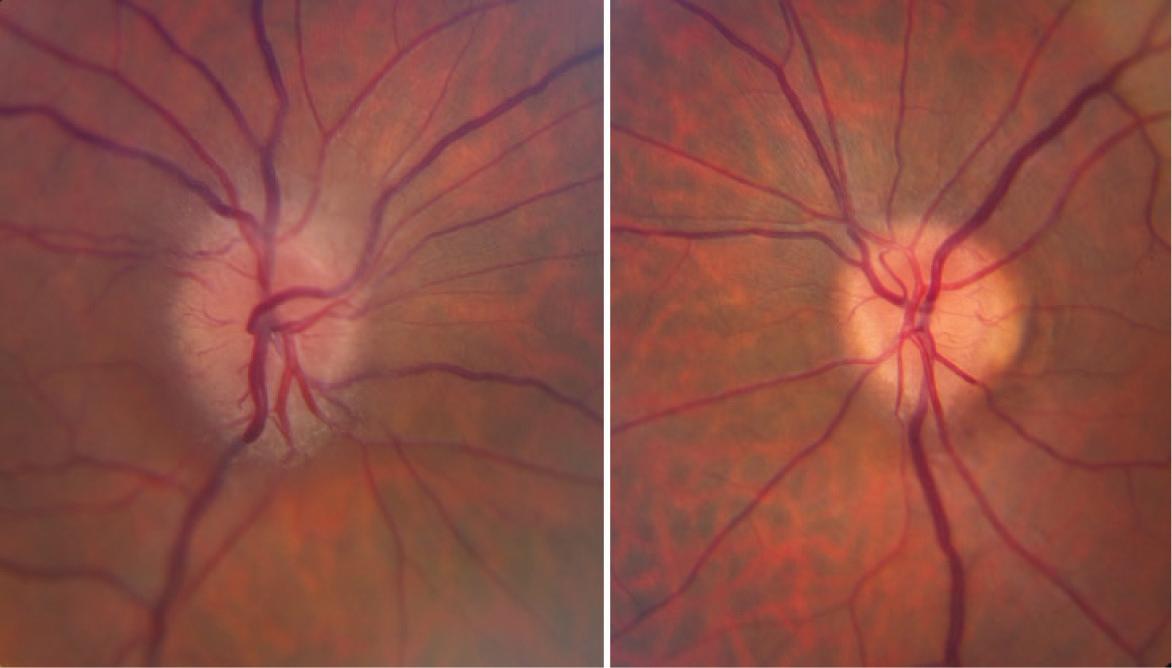
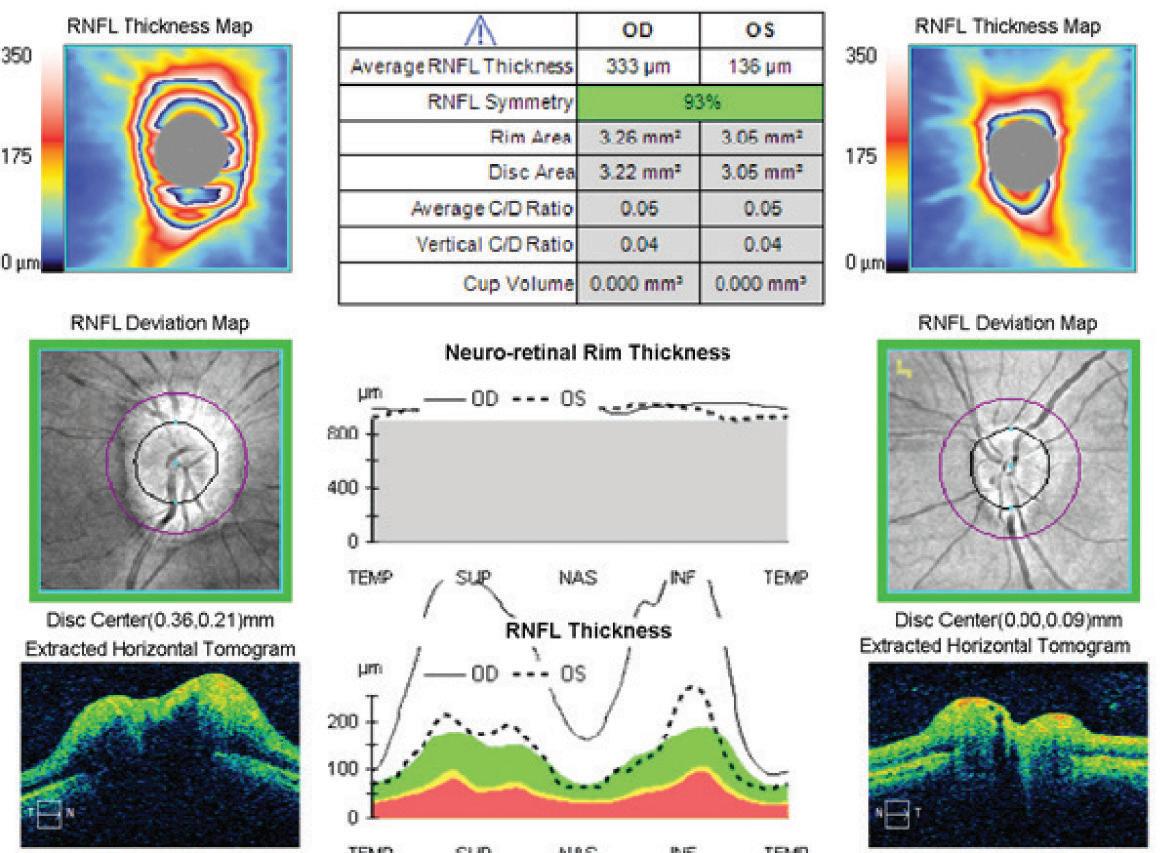
A 51-year-old White woman sought care for vision loss 1 week after a nonspecific upper respiratory tract infection. She reported pain in both eyes exacerbated by eye movement, which lasted for several days, followed by bilateral vision loss to the level of counting fingers–only vision. Optic neuritis (ON) was diagnosed, and she was treated with 1 g intravenous methylprednisolone (IVMP) for 3 days. Her vision improved substantially, and the pain resolved during the corticosteroid treatment. However, 1 week later, she woke up with right eye pain and vision loss. She was again treated with 5 days of IVMP, with vision improvement nearly back to baseline. Two weeks later, she had recurrence of painful vision loss in both eyes. Visual acuity was hand motion in the right eye and 20/50 in the left eye, with a right relative afferent pupillary defect. Fundus photography showed bilateral optic disc edema (Figure 1.1A). Optical coherence tomography showed bilateral retinal nerve fiber layer thickening (Figure 1.1B). Extraocular eye movements were intact. Neurologic examination findings were normal. Possible causes of ON are compared in Table 1.1. A diagnosis of chronic relapsing inflammatory optic neuropathy (CRION) was made.

TESTING

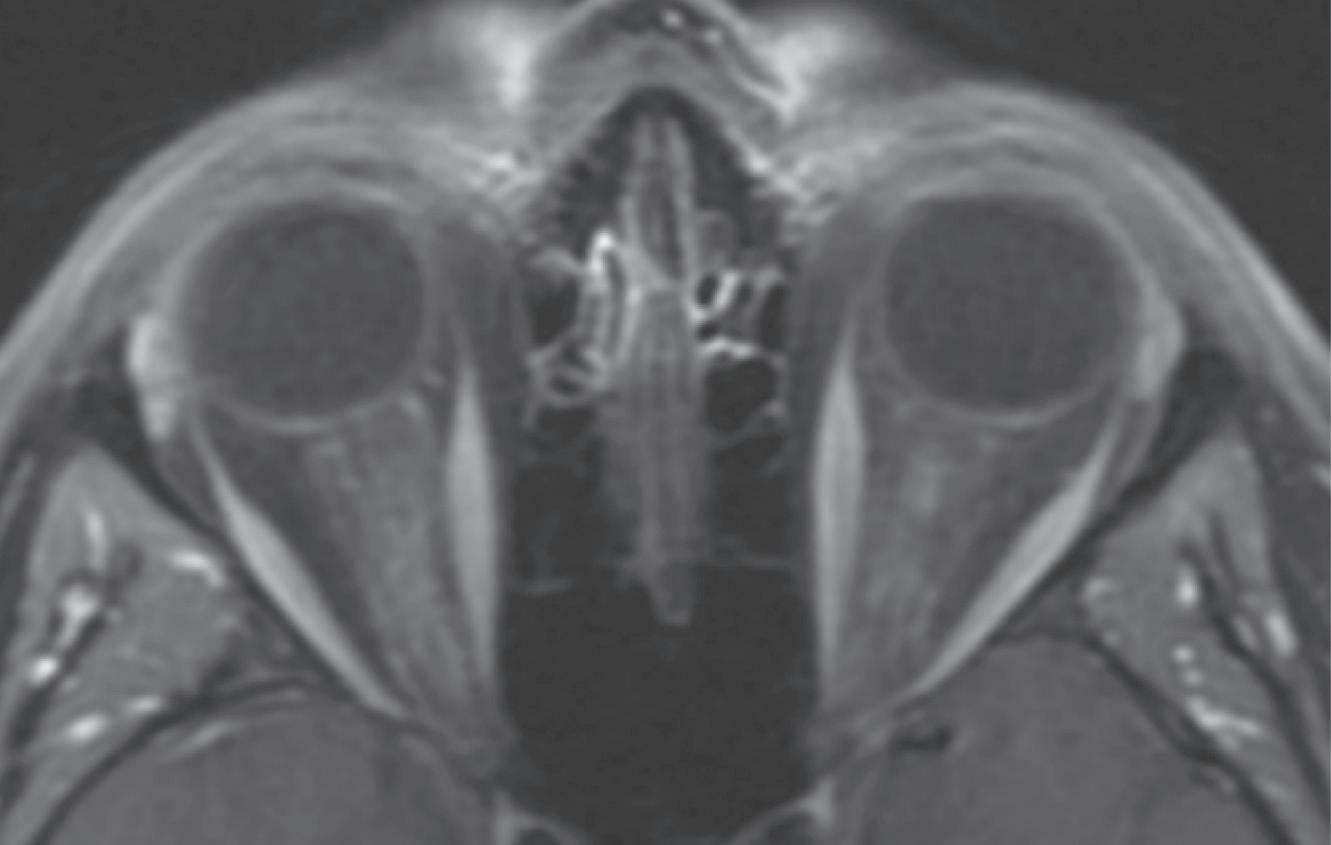
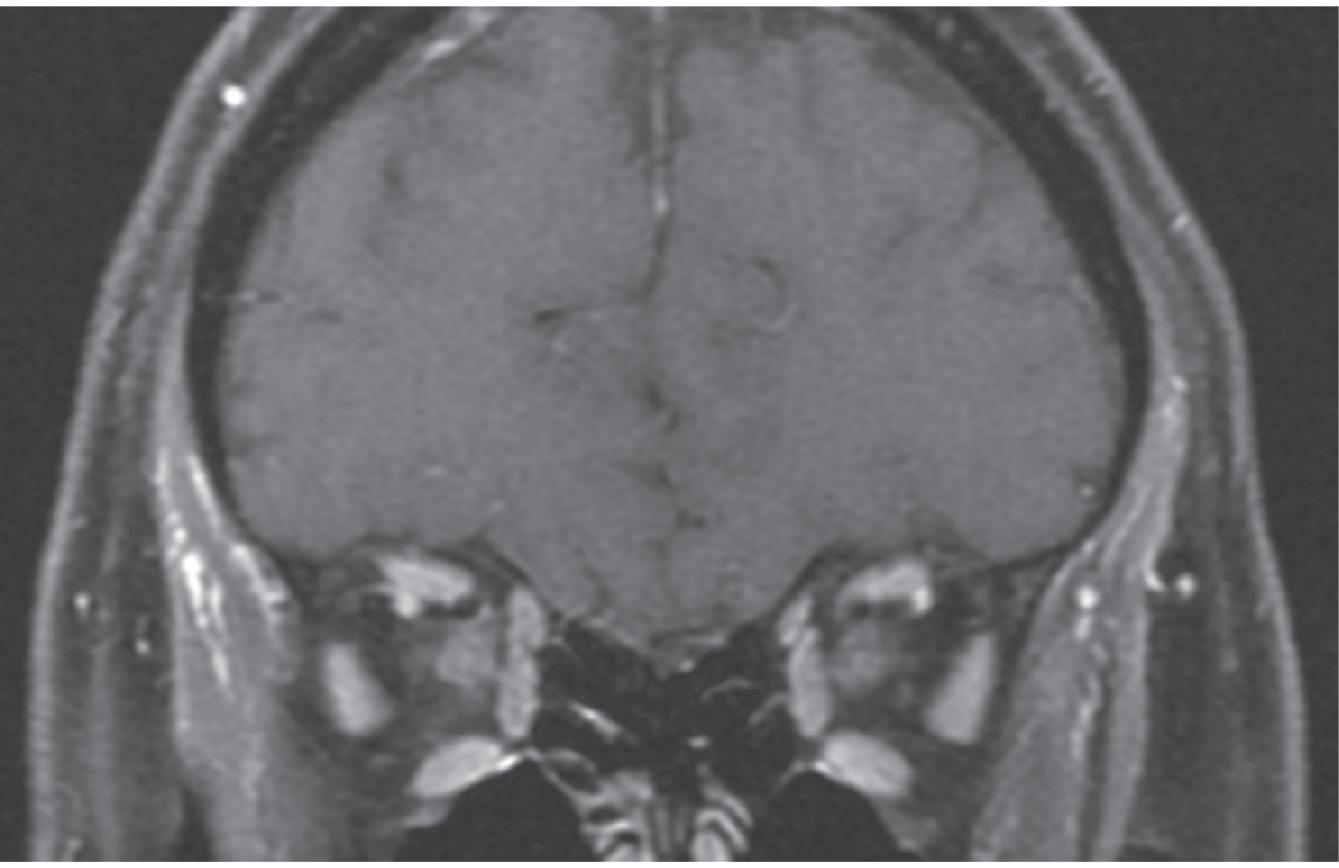
Orbital magnetic resonance imaging (MRI) performed as part of her workup showed bilateral (right greater than left) optic nerve and perineural enhancement (Figures 1.1C and 1.1D). Findings of MRI of the brain and cervical and thoracic spine were unremarkable. Cerebrospinal fluid analysis showed 2 white blood cells/μL (87% lymphocytes); protein, 31 mg/ dL; glucose, 63 mg/dL; no oligoclonal bands; normal immunoglobulin G (IgG) index; and negative paraneoplastic panel.

Tests for serum angiotensin-converting enzyme, antineutrophil cytoplasmic antibody, antinuclear antibody, Lyme disease, syphilis, tuberculosis, and aquaporin- 4 (AQP4)-IgG antibodies were negative. Serum was definitively positive for

myelin oligodendrocyte glycoprotein (MOG)-IgG antibodies at a titer of 1:1,000.

DIAGNOSIS

MOG-IgG–associated recurrent ON was diagnosed.

MANAGEMENT

After her diagnosis of recurrent corticosteroid-dependent ON associated with MOG-IgG positivity, the patient was treated with 5 days of IVMP. The eye pain resolved, and her vision returned to normal. Oral prednisone at a dosage of 50 mg/d and azathioprine 100 mg/d (divided dose) were started after infusion. The azathioprine dosage was increased to 150 mg/d (divided dose) after 1 week, and the prednisone dosage was gradually tapered over 6 months. At follow-up evaluation, the patient’s visual acuity, color vision, and visual fields were normal in both eyes, but there was mild bilateral optic disc pallor. She has not had recurrent demyelinating episodes while on chronic immunotherapy.

DISCUSSION

ON is an inflammatory demyelination of the optic nerve manifesting as acute to subacute vision loss, classically associated with pain with eye movement. The nadir of visual impairment typically occurs within 1 week of onset. ON symptoms range from mild dyschromatopsia to no light perception. Physical examination typically reveals a relative afferent pupillary defect. Optic disc edema is present in one-third of patients. Treatment of typical acute ON consists of IVMP 1 g/d for 3 to 5 days, possibly with a short oral prednisone taper. Plasma exchange can be used in severe corticosteroidrefractory cases. The long-term prevention and prognosis depend on the cause of the ON.

The most common causes of ON in the developed world are idiopathic and multiple sclerosis (MS). Recently, serologic markers have been identified for ON and inflammatory central nervous system disorders such as neuromyelitis optica

spectrum disorders (NMOSD) and MOG-IgG–associated disorders. ON associated with MS (MS-ON), AQP4-IgG (AQP4-ON), and MOG-IgG (MOG-ON) are compared in Table 1.2. ON is the initial presentation of disease in onefourth of patients with MS and occurs in up to three-fourths of patients during the disease course. The vision loss at nadir is often milder for MS-ON than MOG-ON and AQP4-ON. MRI of the orbits typically shows short segments of optic nerve enhancement. Cerebrospinal fluid oligoclonal bands and MS-like brain lesions on MRI are helpful for establishing the diagnosis of MS-ON. After an episode of ON, 50% of patients will have development of MS within 15 years— 25% if no MS-like lesions are present on baseline brain MRI and 72% if MS-like lesions are present. Numerous diseasemodifying therapies are available for MS. Overall, MS-ON is usually associated with a good visual outcome, with 92% of patients achieving 20/40 acuity or better.

The antibody responsible for NMOSD, AQP4-IgG, was discovered in 2004; this has not only improved diagnosis but also revolutionized our understanding of NMOSD. The phenotype of NMOSD has expanded beyond ON and transverse myelitis and now includes other demyelinating manifestations, such as area postrema syndrome (hiccups, nausea, or vomiting), acute brainstem syndrome, symptomatic narcolepsy or acute diencephalic clinical syndrome, and symptomatic cerebral syndrome with NMOSD-typical brain lesions. Patients with AQP4-ON typically have more severe vision loss than do patients with MS-ON. Orbital MRI typically shows a long segment of optic nerve enhancement that more often involves the optic chiasm than other forms of ON. AQP4-IgG positivity is associated with a high risk of relapse and poor visual outcomes, with a median visual acuity outcome of counting fingers. Because of the severity of episodes and poor recovery, early plasma exchange should be used for AQP4-ON in addition to corticosteroid therapy. All patients should also receive chronic immunotherapy. Rituximab, mycophenolate mofetil, and azathioprine have been used off-label to prevent symptomatic episodes in NMOSD. Eculizumab, satralizumab, and inebilizumab are US Food and Drug Administrationapproved treatments for NMOSD.

This case highlights a classic presentation of MOG- ON, the newest biomarker of ON. The phenotype for MOGIgG– associated disorder is diverse, but patients often have severe ON, which is corticosteroid responsive and often has a favorable outcome. Optic disc edema is present in up to 86% of patients, and up to 50% of cases can be bilateral. Patients with MOG-IgG– associated disorder can also have concurrent transverse myelitis and meet the criteria for seronegative NMOSD, or they can have development of brain lesions on MRI and encephalopathy consistent with acute disseminated encephalomyelitis. MOG-IgG is positive in 25% to 50% of cases that were previously designated idiopathic CRION. MRI of the orbits typically shows gadolinium enhancement involving more than half the optic nerve. Perineural enhancement is observed in half of patients with MOG- ON, which is a fairly specific sign of the disease. Recurrent demyelinating symptoms from

Figure 1.1 Imaging Findings for Case Patient.
A, Fundus photography shows bilateral optic disc edema. B, Optical coherence tomography indicates a peripapillary retinal nerve fiber layer thickness of 333 µ m in the right eye and 136 µ m in the left eye.
C and D, Magnetic resonance imaging of the orbit in the axial (C) and coronal planes (D) shows bilateral optic nerve enhancement (white arrows) with extension to the optic nerve sheath and periorbital fat (arrowheads). C/ D indicates cup-disc; RNF l , retinal nerve fiber layer.

Table 1.1

| CAUSES OF OPTIC NEURITIS AND DIAGNOSTIC CLUES

CAUSE CLUES

Multiple sclerosis–associated ON

AQP4-IgG–positive ON

Optic neuropathy associated with systemic inflammatory disease or infection

Idiopathic intracranial hypertension

l eber hereditary optic neuropathy

Not corticosteroid dependent

Commonly, abnormal brain and/or spinal cord MRI findings

Not corticosteroid dependent

Often poor vision recovery

Optic disc edema uncommon

Systemic symptoms often present

Typically, abnormal imaging or laboratory findings, such as abnormal chest CT for sarcoidosis

Absence of optic nerve enhancement on MRI

Presence of headache and other increased ICP features, but not eye pain

Unlikely to cause profound vision loss unless severe or chronic papilledema

Pseudo-optic disc edema

Painless

Rarely causes optic nerve enhancement on MRI

Usually affects young males

Not corticosteroid responsive or dependent

Abbreviations: AQP4-IgG, aquaporin- 4–immunoglobulin G; CT, computed tomography; ICP, intracranial pressure; MRI, magnetic resonance imaging; ON, optic neuritis.

MOG-IgG– associated disorder tend to be ON rather than other central nervous system symptoms. The average visual acuity at nadir of MOG- ON is counting fingers, similar to AQP4- ON, but MOG- ON typically is associated with better recovery and, thus, better visual outcomes. After a MOG- ON episode, slow tapering of corticosteroids is recommended because many cases will demonstrate corticosteroid dependence. Chronic immunotherapy is recommended for relapsing disease, especially if permanent deficits are present. Off-label maintenance therapies include azathioprine, mycophenolate mofetil, rituximab, and intravenous immunoglobulin.

Table 1.2 | COMPARISON OF AQP4- ON, MOG- ON, AND MS- ON

CHARACTERISTIC

ON

ON

simultaneous

acuity defect at nadir

of recurrent

Other symptoms/findings

ADEM

Brainstem effects

Diencephalic symptoms l ETM

Conus medullaris

Other autoimmune conditions

MRI optic nerve lesions

MRI perineural enhancement

Optic chiasm involvement l esions on brain MRI

CSF OCB

Spontaneous

Corticosteroid

and

Abbreviations: +, infrequent; ++, frequent; +++, very frequent; ADEM, acute disseminated encephalomyelitis; AQP4- ON; aquaporin- 4-IgG–positive ON; CRION, chronic relapsing inflammatory optic neuropathy; CSF, cerebrospinal fluid; IgG, immunoglobulin G; LETM, longitudinally extensive transverse myelitis; MOG- ON, myelin oligodendrocyte glycoprotein-IgG–positive ON; MRI, magnetic resonance imaging; MS- ON, multiple sclerosis–associated ON; OCB, oligoclonal bands; ON, optic neuritis.

KEY POINTS

• ON is an inflammatory condition of various causes, including MS, AQP4-IgG, and MOG-IgG.

• Serologic and radiologic tests are helpful for establishing the diagnosis.

• MOG-IgG–associated disorders can present with severe bilateral painful ON, which is corticosteroid

responsive and has a favorable outcome compared with AQP4-IgG.

• High-dose corticosteroids are the mainstay of treatment of most episodes of ON. Plasma exchange is recommended for AQP4-ON and can be considered in cases of severe ON with poor recovery despite corticosteroid treatment.

• The type of long-term preventive medications used depends on the cause of ON.

2

RAPIDLY PROGRESSIVE NUMBNESS AND WEAKNESS AFTER SOFT- TISSUE ABSCESS

CASE PRESENTATION

HISTORY AND EXAMINATION

A previously healthy 45-year-old man had development of neck pain and swelling, followed 1 week later by fevers, chills, and night sweats. Cervical computed tomography showed a left-sided cervical soft-tissue abscess. The patient was initially treated with oral cephalexin for 10 days, without benefit. Fineneedle aspiration biopsy of the mass showed granulomatous inflammation and a heterogeneous lymphocyte population without evidence of malignancy. Cultures grew Bordetella hinzii, and his antibiotics were switched to amoxicillin/clavulanate and azithromycin. Follow-up aspiration and culture 2 weeks later again showed Bordetella species and pan-sensitive, coagulase-negative staphylococci. Meropenem and gentamicin were started. Ten days later, he had development of acute urinary retention requiring catheterization, numbness and weakness in the lower extremities, and numbness in the upper extremities. At symptom nadir 2 days later, he required the aid of a walker to ambulate. Lhermitte sign and erectile dysfunction were also present. The patient was admitted to the hospital.

TESTING

Spinal cord magnetic resonance imaging (MRI) showed a longitudinally extensive, nonenhancing, T2-hyperintense lesion predominantly affecting the ventral and lateral parenchyma of the cervical and thoracic spinal cord (Figure 2.1A, B, E, and F). Findings of brain MRI were unremarkable. Cerebrospinal fluid (CSF) examination showed a white blood cell count of 581 cells/µL (reference range, <5 cells/µL) with 42% neutrophils, 35% lymphocytes, and 22% monocytes, increased protein concentration (109 mg/dL; reference range, <45 mg/dL), and normal glucose concentration. No CSF-specific oligoclonal bands were detected, and the immunoglobulin G (IgG) index was normal. Extensive CSF investigations for infection were negative. Results of serum testing for aquaporin- 4 (AQP4)-IgG antibodies, myelin

oligodendrocyte glycoprotein (MOG)-IgG antibodies, comprehensive autoimmune serologic studies, and paraneoplastic antibody panel were negative.

DIAGNOSIS

A diagnosis of postinfectious idiopathic transverse myelitis (ITM) was made.

MANAGEMENT

The patient was treated with intravenous (IV) immunoglobulin, IV methylprednisolone (500 mg/d for 5 days), and broadspectrum antibiotics, with improvement of both the abscess and his neurologic symptoms. After discharge, he was able to walk unassisted. At follow-up evaluation 6 months after the initial evaluation, neurologic examination showed only mild weakness of the left iliopsoas muscle and brisk reflexes in the lower extremities. Repeated spinal cord MRI showed marked improvement of the previously identified abnormalities (Figure 2.1C, D, G, and H). Findings of whole-body 18F-fludeoxyglucose–positron emission tomography (FDGPET), performed to exclude subclinical inflammatory activity, were unremarkable.

DISCUSSION

Acute transverse myelopathies are a heterogeneous group of spinal cord disorders characterized by acute or subacute signs and symptoms of spinal cord dysfunction, typically a combination of sensory, motor, and autonomic manifestations. Underlying causes include vascular (eg, spinal cord infarction), infectious (eg, syphilis), neoplastic, postirradiation, traumatic, and inherited/metabolic (eg, vitamin B12 deficiency), and inflammatory processes.

Inflammatory myelopathies (myelitis) may affect any age or sex, although young women (aged 20-50 years) are overall more commonly affected. Multiple sclerosis (MS) is the most common cause of myelitis and generally manifests with short myelitis lesions (≤3 contiguous vertebral segments) on

spinal cord MRI, which result in incomplete spinal cord dysfunction ( partial transverse myelitis), and, rarely, paraplegia.

Characteristic MS demyelinating lesions on brain MRI and CSF oligoclonal bands (approximately 90% of cases) are frequent accompaniments.

Other causes of myelitis include acute disseminated encephalomyelitis (typically accompanied by brain involvement), systemic inflammatory disorders (eg, sarcoidosis), and myelitis associated with specific central nervous system (CNS) autoantibodies. Among the latter, AQP4-IgG and MOG-IgG are typically associated with acute transverse

myelitis. In contrast with MS, both AQP4-IgG– and MOGIgG–associated myelitis are generally longitudinally extensive (>3 contiguous vertebral segments), and CSF oligoclonal bands are usually not detected.

Predominant involvement of the ventral spinal cord parenchyma on MRI is also seen with anterior spinal artery–related cord infarction and some viral infections. In the case patient, however, extensive evaluation for infections was unrevealing, and the subacute presentation and marked CSF pleocytosis argued against cord infarction. Spinal cord sarcoidosis may also manifest with longitudinally extensive

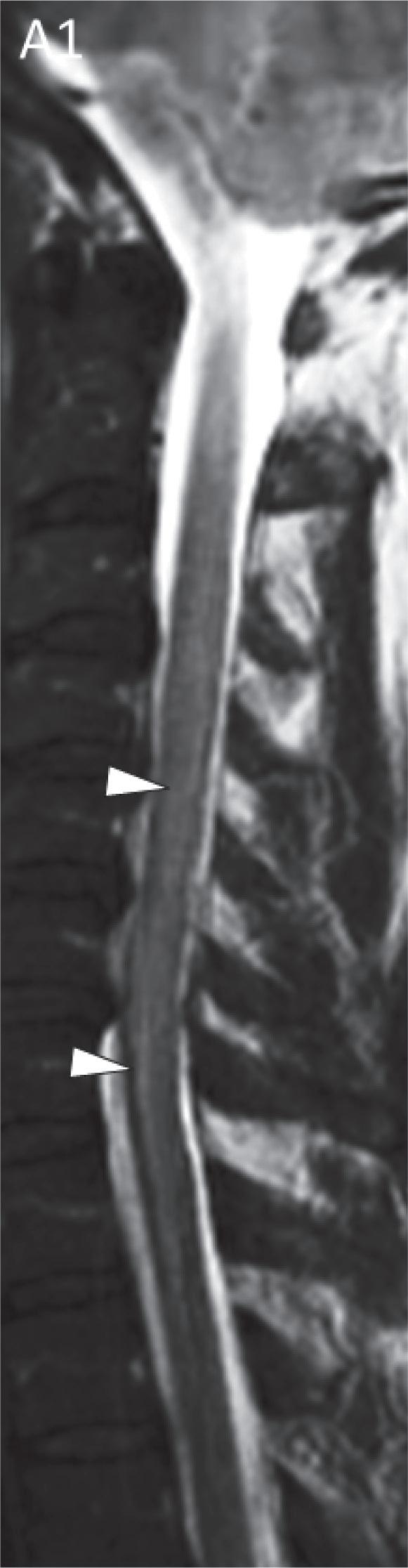
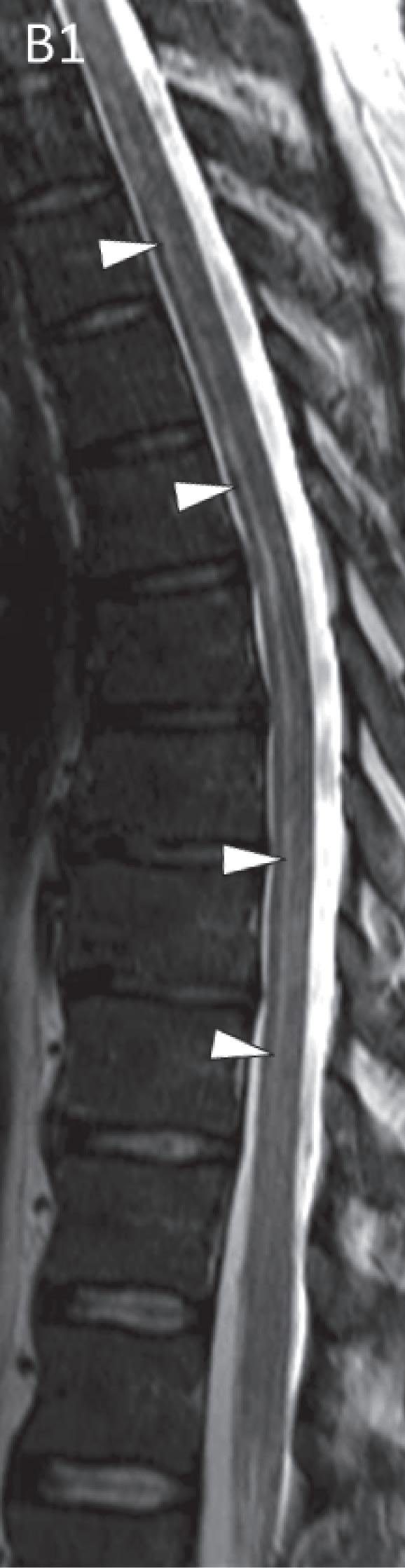
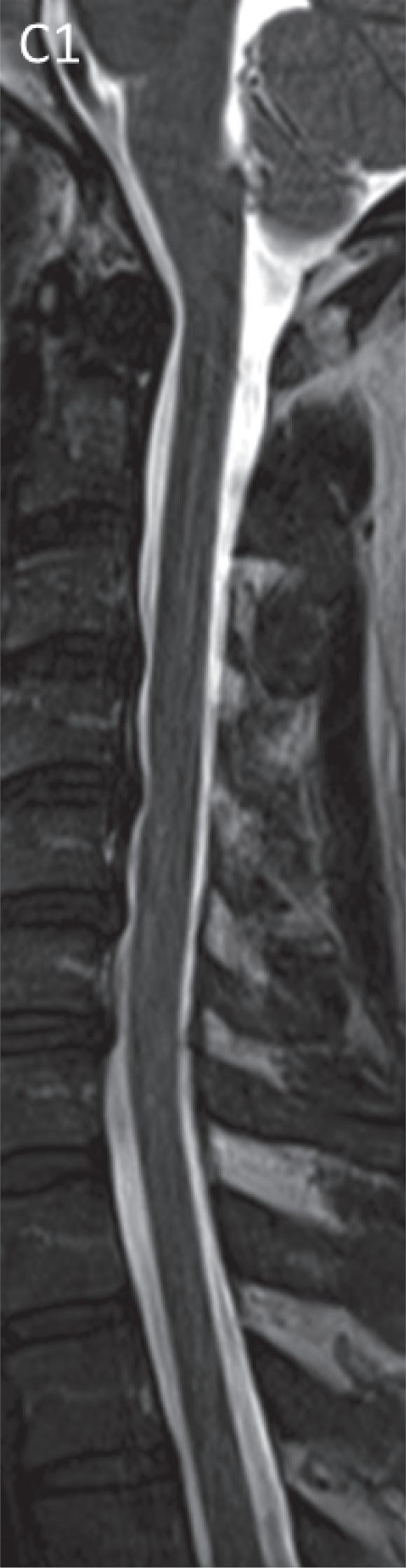
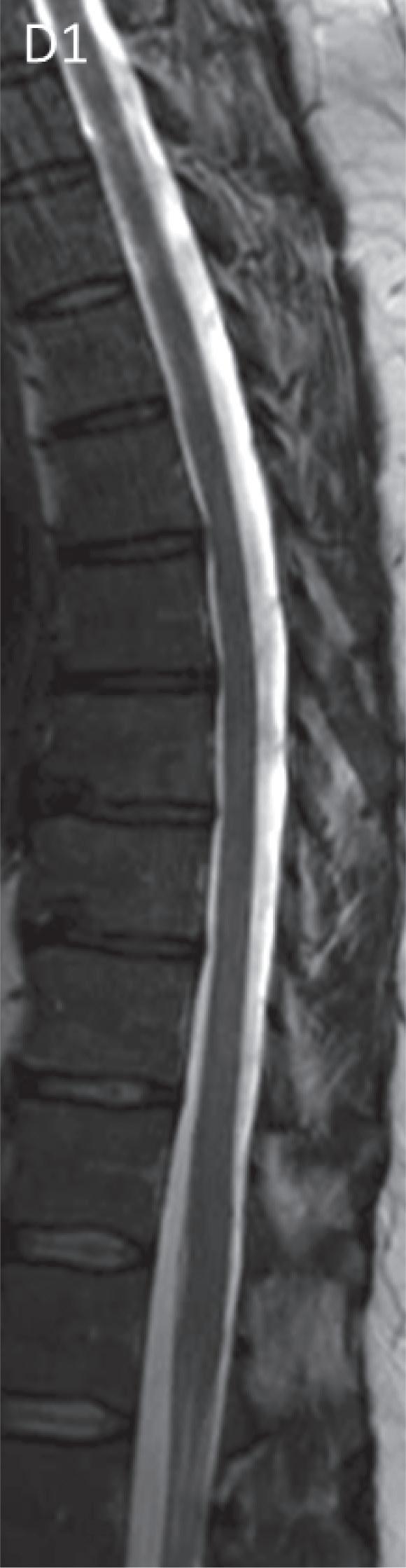
Figure 2.1 Spinal Cord Magnetic Resonance Imaging Findings for the Case Patient. Sagittal (A-D) and axial (E-H) images. A,B,E,F, Acute T2-weighted sequences show a longitudinally extensive lesion (arrowheads), predominantly involving the ventrolateral regions of the cervical (A and E) and thoracic (B and F) spinal cord; the thoracic abnormalities are less clearly contiguous. This lesion did not demonstrate enhancement after gadolinium administration (not shown). C,D,G,H, At 6-month follow-up, images demonstrate nearly complete resolution of the cervical (C and G) and thoracic (D and H) cord abnormalities.

myelitis, but this is typically accompanied by dorsal subpial gadolinium enhancement on MRI, the clinical evolution is usually more gradual (weeks to months), and symptoms tend to recur after corticosteroid discontinuation. If neurosarcoidosis is suspected, whole-body FDG-PET (which was negative in this patient) may help identify occult foci of systemic inflammation to biopsy for diagnostic confirmation. The case patient also had no risk factors (eg, smoking history) for a paraneoplastic myelopathy, which is generally associated with symmetric involvement of the dorsal and/or lateral spinal cord column.

Despite extensive investigations, a substantial proportion of myelopathies are eventually labeled as idiopathic. The term ITM identifies a subgroup of acute transverse myelopathies of presumed inflammatory origin but for which a definite cause cannot be identified. Proposed diagnostic criteria aim to distinguish ITM from disease-associated myelopathies. According to these criteria, a definite ITM diagnosis requires 1) onset between 4 hours and 21 days (to distinguish from the hyperacute spinal cord infarction and more insidious inflammatory or metabolic myelopathies); 2) bilateral (although not necessarily symmetric) signs/symptoms of spinal cord dysfunction; 3) a clear sensory level on the trunk; 4) evidence suggestive of inflammation on MRI (eg, gadolinium enhancement of a spinal cord lesion) or in CSF (pleocytosis); and 5) exclusion of other candidate causes. The incidence and prevalence of ITM using these criteria are 8.6/1,000,000 and 7.9/100,000 person-years, respectively. However, these criteria are not 100% specific, and about 15% of patients initially diagnosed with ITM subsequently fulfill MS diagnostic criteria. Moreover, the clinical and MRI features of ITM are often heterogeneous (ranging from milder MS-like myelitis to severely disabling longitudinally extensive myelitis), suggesting different underlying causes.

ITM can be preceded by infections or vaccinations (postinfectious/postvaccination ITM). The infectious agent,

often viral but sometimes bacterial, is thought to trigger an autoimmune CNS reaction in cases for which there is no evidence to support direct CNS infection. Although the mechanisms are not fully understood, it is postulated that antibodies targeting an antigen on the infecting agent or vaccine cross-react with a CNS antigen that has a similar conformation (“molecular mimicry”), which results in autoimmune CNS injury. However, infections may also trigger an acute clinical episode in a patient with an underlying disorder such as MS or who harbor AQP4-IgG or MOG-IgG antibodies; therefore, testing for these disorders is required even if there is a documented infection.

No clinical trials have established the optimal treatment strategies for ITM. A therapeutic trial with high-dose corticosteroids is usually initiated after diagnosis; rescue plasma exchange, IV immunoglobulin, and cyclophosphamide may also be used in severe or corticosteroid-refractory cases.

KEY POINTS

• Despite extensive investigations, a substantial proportion of acute inflammatory myelopathies remain idiopathic.

• Given the absence of specific biomarkers, ITM remains a diagnosis of exclusion. Gadolinium enhancement on spinal cord MRI or CSF pleocytosis supports an inflammatory cause but can be seen with other noninflammatory myelopathies.

• The clinical and MRI characteristics of ITM are heterogeneous and frequently overlap with those of other types of disease-associated myelitis (eg, MS myelitis, AQP4-IgG–and MOG-IgG–associated myelitis).

• Treatment with high-dose corticosteroids is standard; plasma exchange or IV immunoglobulin should be considered in severe or corticosteroid-refractory cases.

3

WEAKNESS WITH NECK FLEXION

CASE PRESENTATION

HISTORY AND EXAMINATION

A 51-year-old woman sought care for difficulty “picking up” her right foot after walking for 30 minutes; with rest, the symptoms would subside. A few months later, she reported a “zinging” sensation in her right 4th and 5th fingers and down her right side with neck flexion. By the end of each day, she would have paresthesias of her feet, especially when exposed to heat. She had no symptoms referable to her bladder.

Her medical history was pertinent for type 2 diabetes that was treated with diet and oral agents, well-controlled hypertension, and long-standing asthma.

Examination showed mild bilateral finger extensor and interossei weakness, which increased substantially with neck flexion. Both legs were mildly spastic and had brisk deep tendon reflexes. The right plantar response was equivocal, whereas the left was flexor. Gait was normal, and she could walk heel-to-toe with minimal difficulty.

TESTING

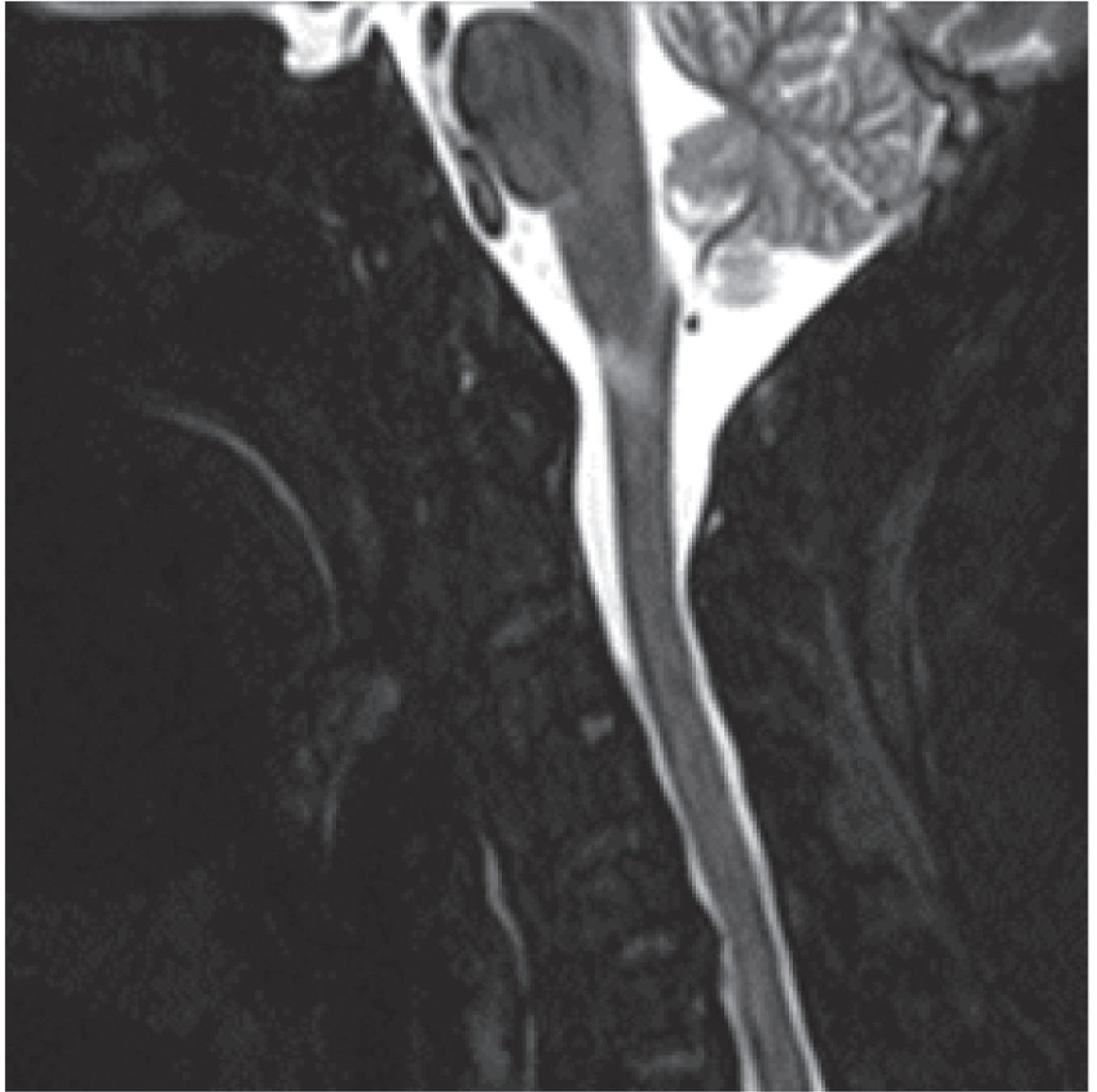
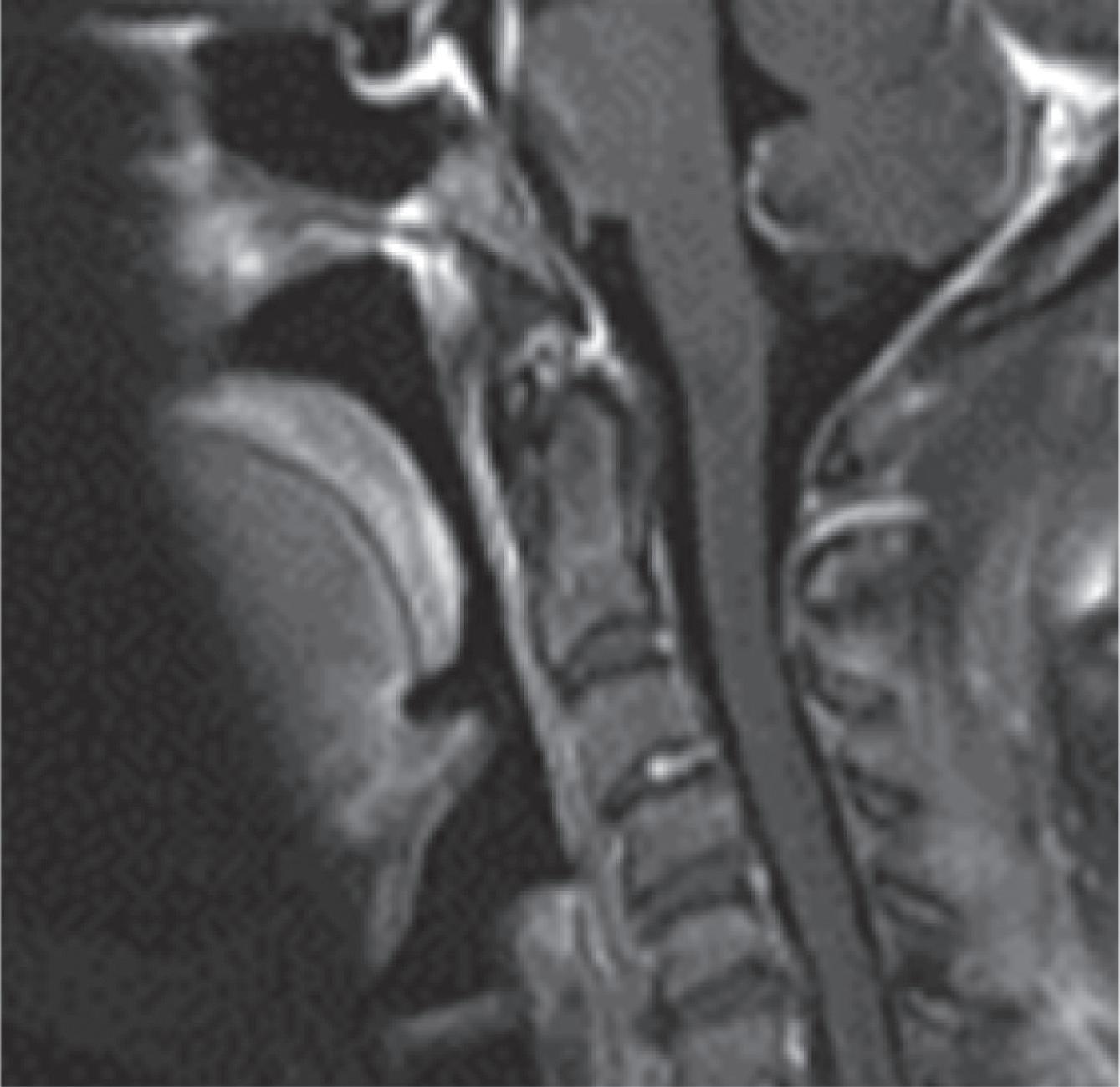
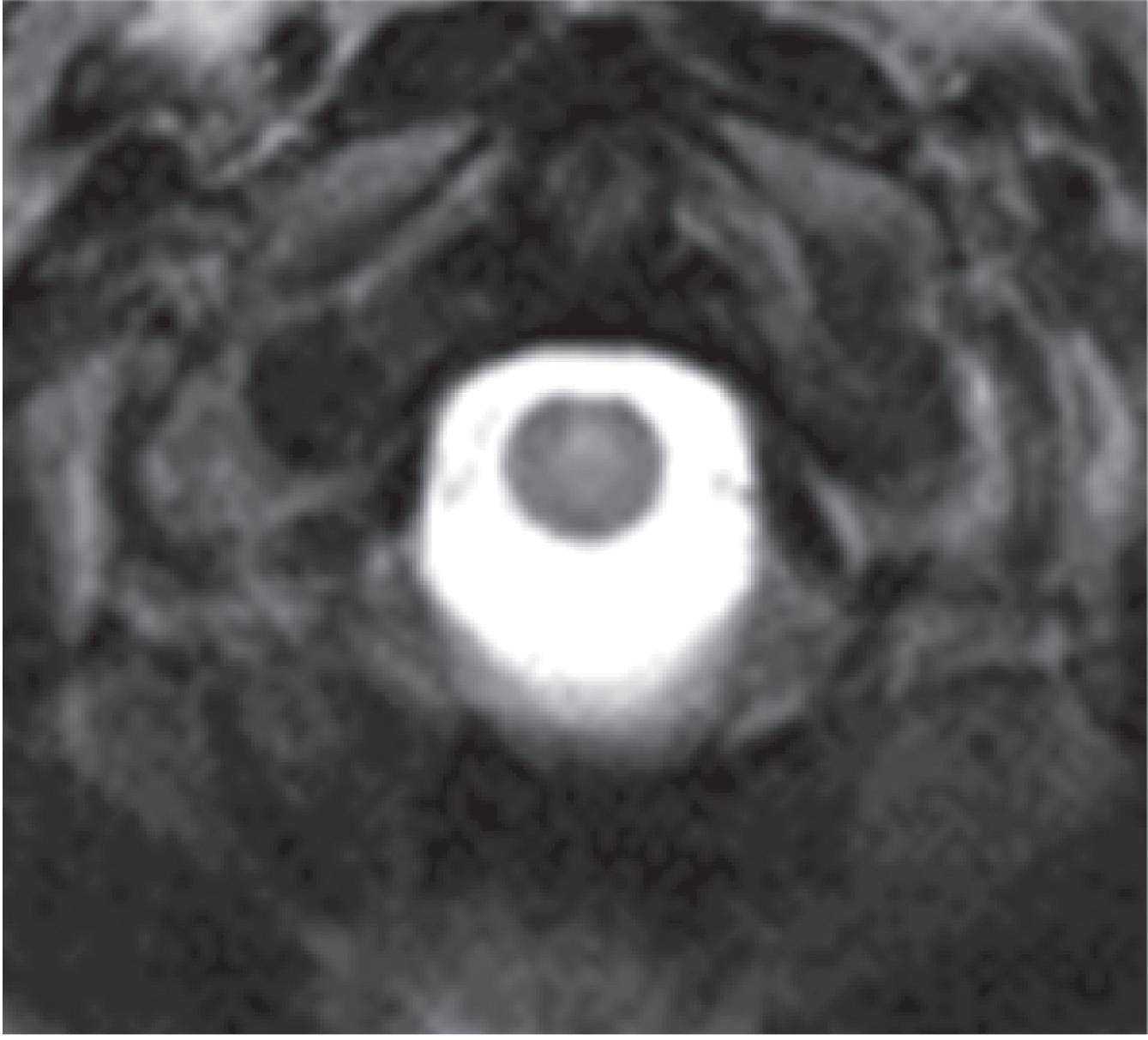
Brain magnetic resonance imaging showed tiny nonspecific lesions not suggestive of demyelinating disease and a single T2 hyperintensity at the cervicomedullary junction that did not enhance with gadolinium administration (Figure 3.1). Cerebrospinal fluid analysis showed 10 oligoclonal bands on isoelectric focusing electrophoresis and a mildly increased immunoglobulin G index of 0.73. Electromyography was negative for indicators of chronic denervation or reinnervation.

The differential diagnosis for progressive myelopathy is extensive and beyond the scope of this description. However, the key items on the differential diagnosis in this case, especially considering her change in strength with neck flexion, are shown in Table 3.1.

Next, her change in finger strength during neck flexion was assessed with a device constructed to evaluate strength in this muscle group with a torque measurement cell. By this method, a 14% decrease in finger extension strength (averaged

over 4 trials) was observed during neck flexion compared with neck extension (Figure 3.2).

DIAGNOSIS

The patient was diagnosed with solitary sclerosis, an entity of still uncertain and unclassified nosology but suspected to be a form of central nervous system (CNS) demyelinating disease strongly related to multiple sclerosis (MS).

MANAGEMENT

Treatment was based on a diagnosis of “primary progressive MS,” although the patient did not satisfy the criterion of dissemination in space. The patient was being treated with glatiramer acetate 40 mg 3 times weekly for a presumptive diagnosis of MS before evaluation at Mayo Clinic. After our evaluation, she was advised that no treatments at that time were efficacious to prevent deterioration in patients with primary progressive MS. Ocrelizumab has recently been approved for primary progressive MS and would have been discussed as a treatment option had it been approved for this indication at the time. However, the efficacy of ocrelizumab for this indication is relatively modest. The mainstay of treatment is physical medicine modalities, including principles of energy conservation and, when necessary, mobility aids, such as braces and canes.

DISCUSSION

The presentation of disease in this patient suggested a chronic myelopathy. Her symptoms did not develop acutely and manifested only after she walked a distance. Symptoms involving the upper and lower extremities and precipitation of Lhermitte sign with neck flexion also suggested a spinal cord lesion, typically a demyelinating lesion. However, a single spinal cord lesion present at the cervicomedullary junction, and lack of a history of prior events or other lesions in the spinal cord or brain that credibly supported evidence of “dissemination in space,” precluded a convincing diagnosis of MS. Oligoclonal bands, however, are rarely detectable in

healthy persons. Occasionally, oligoclonal bands are detected in patients with CNS infections or paraneoplastic disorders that might be associated with myelopathy, such as HIV infection and tractopathies associated with amphiphysin or collapsin-response mediator protein 5 autoantibodies, which are in the differential diagnosis.

McArdle sign is a transient increase in upper motor neuron pattern weakness in patients with cervical cord demyelinating lesions. Dynamic weakness with neck flexion had been reported once before, in 1987, in a patient with advanced MS who was unable to walk down stairs with his neck flexed because this aggravated his impairment. Exaggerated weakness with neck flexion seems to be present in most patients

with MS who have myelopathy and is commonly present even in those without symptoms of myelopathy when demyelinating lesions are present in the spinal cord. Exaggerated weakness with neck flexion has even been detected in a patient with solitary sclerosis, as illustrated by this patient. McArdle sign, which is generally reliably evaluated at the bedside, may be a useful clinical clue to the cause of cryptogenic spinal cord lesions because of its high specificity for demyelinating disease. When the presence of this sign was evaluated quantitatively in a blinded study of patients at Mayo Clinic with various causes of myelopathy—including cord compression due to spondylosis, amyotrophic lateral sclerosis, or spinal cord tumors, among others—it was highly specific and

Figure 3.1 Magnetic Resonance Imaging Findings for Case Patient.
Images show sagittal short tau inversion recovery (A), sagittal T1 (B), and axial T2 sequences (C) at the level of the cervicomedullary junction. A focal area of T2 hyperintense, T1 hypointense, but nonenhancing signal abnormality is present in the ventral medulla, corresponding to the decussation of the medullary pyramids.

Turn static files into dynamic content formats.

Create a flipbook