Facile fabrication of SnO2 modified TiO2 nanorods film for efficient photocathodic protection of 304 stainless steel under simulated solar light Juantao Zhang & Hualong Yang & Yuan Wang & Xiaohu Cui & Zhang Wen & Yunpeng Liu & Lei Fan & Jiangtao Feng
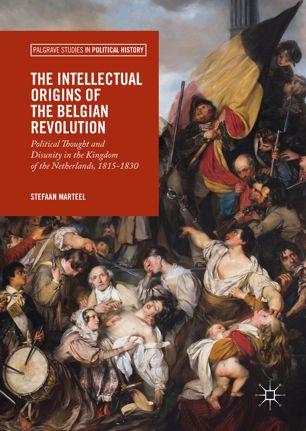
The Intellectual Origins of the Belgian Revolution: Political Thought and Disunity in the Kingdom of the Netherlands, 1815-1830 1st ed. Edition Stefaan Marteel
Launch Your Inner Entrepreneur: 10 Mindset Shifts for Women to Take Action, Unleash Creativity, and Achieve Financial Success Charlene Walters [Charlene Walters]
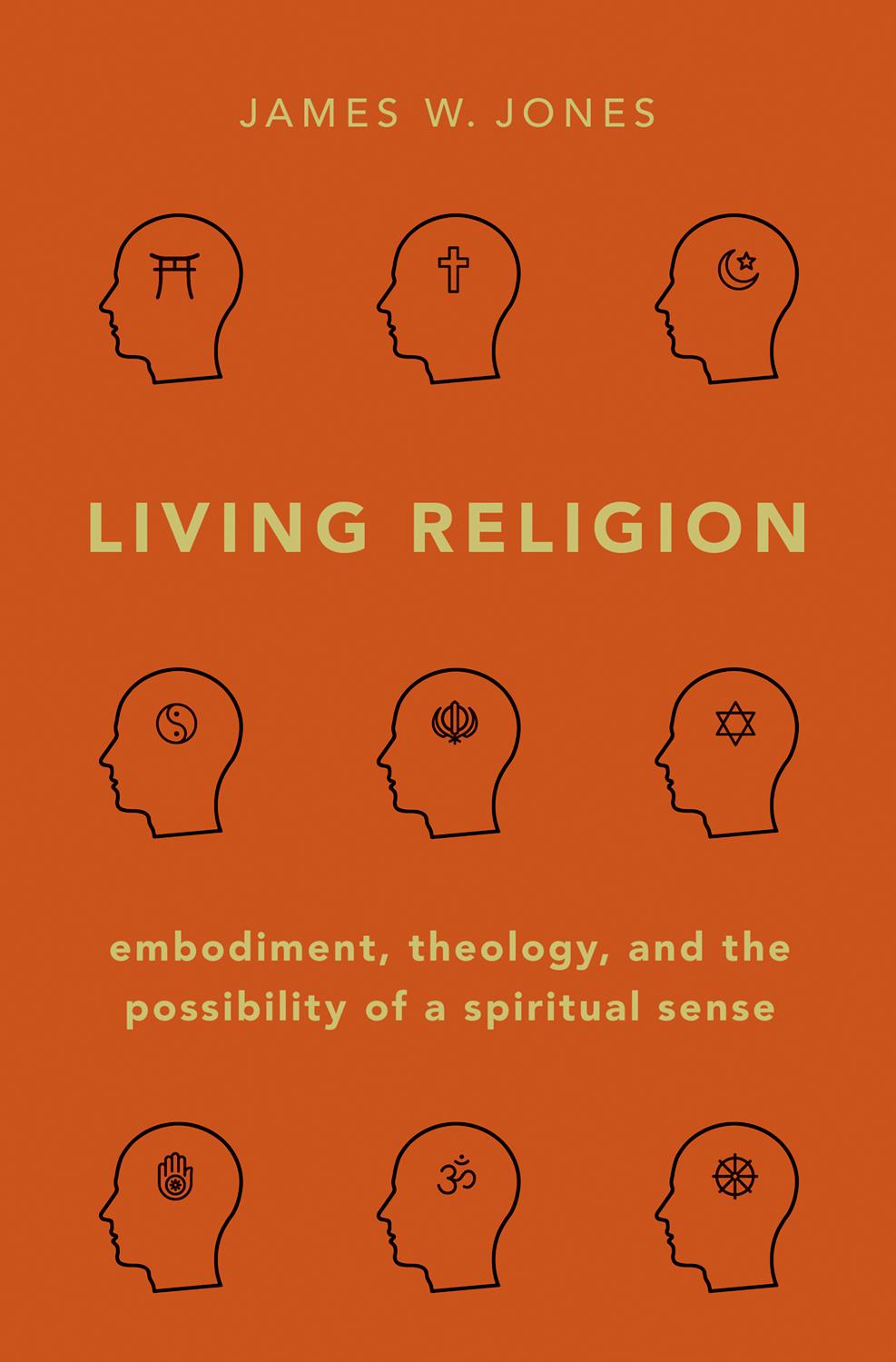
Embodiment, Theology, and the Possibility of a Spiritual Sense
z
JAMES W. JONES
Oxford University Press is a department of the University of Oxford. It furthers the University’s objective of excellence in research, scholarship, and education by publishing worldwide. Oxford is a registered trade mark of Oxford University Press in the UK and certain other countries.
Published in the United States of America by Oxford University Press 198 Madison Avenue, New York, NY 10016, United States of America.
All rights reserved. No part of this publication may be reproduced, stored in a retrieval system, or transmitted, in any form or by any means, without the prior permission in writing of Oxford University Press, or as expressly permitted by law, by license, or under terms agreed with the appropriate reproduction rights organization. Inquiries concerning reproduction outside the scope of the above should be sent to the Rights Department, Oxford University Press, at the address above.
You must not circulate this work in any other form and you must impose this same condition on any acquirer.
CIP data is on file at the Library of Congress
ISBN 978–0–19–092738–7
Printed by Sheridan Books, Inc., United States of America
This book is dedicated with gratitude to the Faculty of Divinity of Cambridge University, its faculty, post-docs, graduate students, and administrators, and to the members of the Faraday Institute for Science and Religion, and to the Master and Fellows of St. Edmunds’s College, and to the various Deans of Chapel and local clergy, all of whom made my year in Cambridge a marvelous time of intellectual and spiritual flourishing.
Prologue
throughout history humans have reported an awareness of transcendental, spiritual realities. What might this claim to sense a transcendental, spiritual reality mean? There are at least two ways to answer such a question. We might give a formal definition on the order of “a square is a shape with four equal sides.” Armed with that definition a person could examine a variety of shapes and decide whether or not they were squares. Likewise, we might try to construct a formal definition of such a “spiritual sense.”
Or if asked to define a flower, instead of a formal definition from a botany book, we might take a person into a garden and point out plants that were flowers (roses and morning glories, for example) and plants that were not (shrubs and grass, for example). Gradually, after enough examples, a person would learn to recognize flowers and then might list some features they have in common. But that list of features would be something other than a formal definition. A more subtle example: someone says this is a glass of fine wine. If asked what that means, a formal definition would probably not help the uninitiated recognize a fine wine. The person calling it “fine” might describe it as “full bodied,” containing “hints of pear and peach,” and being “oaky.” But obviously such words are not being used in a literal way. Again, the only way to know what they mean is by tasting several bottles of wine, some of which are “fine” and some of which are not. Hopefully over time one learns which to call “fine” and which not to. Here nothing even resembling a formal definition would come into play.
Definitions of terms like “spiritual,” “religious,” even “experience” or “awareness” are notoriously difficult to arrive at or deploy. Instead let us look at several accounts of experiences that are generally recognized as displaying a sense or awareness of something transcendental or spiritual.
Prologue
I beheld the plenitude of God, wherein I did comprehend the whole world, both here and beyond the sea, and the abyss and ocean and all things. In all these I beheld naught save the divine power. . . . [T]he soul cried out with a loud voice “the whole world is full of God.” (Alston, 1991: 25–26)
A veil seemed to be lifted from my eyes. I found the world wrapt in an inexpressible glory with its waves of joy and beauty bursting and breaking on all sides. (Happold, 1970: 140)
After this my sense of divine things gradually increased and became more and more lively and had more of that inward sweetness. The appearance of everything was altered; there seemed to be, as it were, a calm, sweet cast, or appearance of divine glory, in almost everything. God’s excellency, his wisdom, his purity and love seemed to appear in everything; in the sun, moon, stars; on the clouds and blue sky; in the grass, flowers, trees; in water and all nature; which used to greatly fix my mind. I often used to sit and view the moon for continuance; and in the day spent much time in viewing the clouds and sky, to behold the sweet glory of God in these things. (Jonathan Edwards, Personal Narrative, in Jones, 1972: 445)
One day when I was at prayer . . . I saw Christ at my side—or, to put it better I was conscious of Him, for I saw nothing with the eyes of the body or the eyes of the soul [the imagination]. He seemed quite close to me and I saw it was He. As I thought, He was speaking to me. . . . All the time Jesus Christ seemed to be at my side, but as this was not an imaginary vision I could not see in what form. (St. Teresa, in Alston, 1991: 13)
Christ himself came down and took possession of me. In my arguments about the insolubility of the problem of God I had never foreseen the possibility of that, of a real contact, person to person, here below, between a human being and God. I had vaguely heard tell of things of this kind, but I had never believed in them . . . in this sudden possession of me by Christ, neither my senses nor my imagination played any part; I only felt in the midst of my suffering the presence of a love, like that which one can read in the smile of a beloved face. (Simone Weil, in Happold, 1970: 141)
I had come through the darkness into a world of light. That eternal truth and beauty which the sights and sounds of London threatened to banish from my sight was here the universal law. I heard its voice sounding in my ears. The very stones of the house seemed to be the living stones of a temple in which this song ascended. It was as though I had been given a new power of vision. Everything seemed to lose its hardness and rigidity and become alive. When I looked at the crucifix on the wall, it seemed to be a living person; I felt that I was in the house of God. When I went outside I found that the world about me no longer oppressed me as it had done. The hard casing of exterior reality seemed to have been broken through, and everything disclosed its inner being. The buses in the street seemed to have lost their solidity and to be glowing with light. I hardly felt the ground as I trod, and I think I must have been in some danger of being run over. I was like a bird which has broken the shell of its egg and finds itself in a new world. (Bede Griffiths, in Vardey, 1995: 88)
Such experiences are extraordinary, unlike our regular sensations and perceptions. They compel our attention. This means that their connection to our more ordinary sense experiences is filled with ambiguity. On the one hand, they are described by using the language of ordinary sensing: something is seen, felt, sensed. On the other hand, in many cases, reliance on our regular senses is qualified or completely denied. So rather than offering a definition, what we have here is the recognition that to speak about a spiritual sense is to speak in a profoundly paradoxical way. It is to use the language of sensation and perception and to negate it at the same time.
I write this at the end of my teaching career. I now look back over more than half a century of standing at the intersection of many disciplines. Not raised in any religious tradition, I came to think about religion seriously for the first time as an adult. For me, that was a blessing. I had few childish religious ideas to overcome in order to entertain the religiously lived life as a serious option for me. I had been a student activist in the ’60s and was already well versed in philosophy and history before discussions with friends and my own curiosity led me into thinking seriously about religion. That, in turn, led to graduate school. First a master’s in theology and then a PhD in philosophy of religion with an emphasis on “epistemology,” which led into the philosophy of science and a lifetime of thinking and writing about the similarities and differences between scientific and religious knowledge. That enabled me
to spend over forty-five years teaching religious studies (especially psychology of religion and religion and science) in the fiercely secular and totally pluralistic milieu of a large, American, public research university. Then came a second doctorate in clinical psychology, involving training in both psychoanalytic psychotherapy and cognitive psychology (I did my thesis on cognition and emotion in depression) as well as neuropsychology. That was followed by many years of clinical practice that included psychodynamic psychotherapy, family systems work, and later what is now popularly called “mind-body medicine” or psychophysiology, biofeedback, and hypnosis.
Alongside teaching religious studies and doing some clinical training and supervision, there has been the practice of religion as well as the study of it: as an active priest in the Episcopal Church (which required a graduate degree in theology); a long time, if rather intermittent, meditative discipline in both the Christian and Buddhist traditions; conducting retreats with my wife; training in martial arts at a fairly high level; and affiliation with an Anglican Benedictine monastic community. All of this has gone into my teaching graduate courses in contemplative studies and strengthened the conviction on which the argument of this book is premised: that a religious tradition is primarily a set of practices and that the subject of study and debate should be the religiously lived life and not isolated beliefs torn out of context.
In addition to whatever education and experience I brought to this project, this book would simply not have been possible without the year I spent as a Fellow at the Center for Advanced Religious and Theological Studies in Cambridge University. Thanks are due to Fraser Watts who first invited me to come to Cambridge and to join his Psychology of Religion Research Group and who directed the research group on embodied cognition and religion and provided me thoughtful analysis and insight about that and many other subjects throughout the year. And I am happy to give special thanks to Leon Turner, the other member of our “two-man seminar” on embodied cognition, whose reflections and commentary provided a depth of knowledge and reflection that were invaluable to the writing of this book. Leon also shared with me his many papers and his own book manuscript on these topics—texts without which my own book could not have been written.
During my year in Cambridge I also had the privilege of attending Sarah Coakley’s lectures on philosophical theology after Kant as well as being welcomed by her into the theology society’s seminars, and given the opportunity of reading and commenting on her recently delivered Gifford Lectures. In addition, she was available for tough discussions of the difficult philosophical and theological issues connected with this project. All of this gave me
tools that deepened and focused my current rethinking about religious epistemology for which I am very grateful. Also during that year, Fred Aquino came to Cambridge and gave a series of presentations on “virtue epistemology” after which he and I did our best to keep the United Kingdom’s Scotch distillers in business. I am grateful to Fred for his thoughtful and thought-provoking lectures and conversations, and especially for introducing me to the topic of virtue epistemology.
Fraser Watts, Leon Turner, Sarah Coakley, Tom Simpson, Ryan Williams, and Annalena Schriever all read the manuscript (sometimes more than once) and graciously produced extensive critical commentaries and encouragement, but not necessarily agreement.
Papers by John Teske and Mark Williams on embodied cognition research were invaluable to me as I worked through some of this material, as well as papers by Fraser Watts and Leon Turner on its theological implications.
This work was supported in part by a grant from the John Templeton Foundation; the opinions expressed here are those of the author and do not necessarily reflect the views of the John Templeton Foundation. Rutgers University provided a sabbatical leave for the time I spent in Cambridge and the University Research Council provided an additional grant.
In 2016 I published a book entitled Can Science Explain Religion? The Cognitive Science Debate. That previous book argued that the popular attempt to use findings from cognitive science to undermine or debunk religious beliefs is neither logically nor empirically successful. In that sense, that book was primarily negative in tone. It refuted arguments deployed against religion but offered little in the way of discussion or evidence supportive of religion. It cleared away opposing points, but, except for a few suggestions in the final chapter, it offered little in the way of constructive alternatives. This present book offers a positive position, giving logical and empirical reasons in support of the claim that the religiously lived life is a rational and reasonable life.
My moving to the United Kingdom for a year required a sacrifice on the part of my wife, Kathleen Bishop. That she was so supportive slightly mitigated the pain of separation and made it possible for me to carry out this project. As always, she is the source and object of my deepest gratitude.
Living Religion
Introduction
Living Religion
An ambiguous title. Is this a book about living religion? How to study it? Understand it? Undermine it? Justify it? Or is it a book on how to live life religiously? A book of practical tips for conducting such a life? These days those two possibilities represent two very different (some would say opposed) projects. Most books seeking to study or understand religion by scholars, philosophers, or social scientists often contain little mention of the implications for the lived dimensions of what they discuss. On the other hand, “how to” books by clergy, spiritual directors, and other practical teachers often contain little reflective analysis of what they are suggesting people do. It was not always so. The first theologians of the Christian faith, the socalled church fathers, were often monks or others deeply rooted in the liturgical or contemplative life. The same is true of the great Buddhist philosophers of Tibet, Japan, or China. All were men (occasionally women) of extensive and disciplined meditative and intellectual training. The current tendency to separate theory and practice, reflection and contemplation, has done inestimable mischief to the life of religion in the modern world. Religion’s claims about God or the world or the nature and destiny of the human spirit have been ripped from their context in religious practice and treated as discrete doctrinal abstractions to be justified or refuted in isolation from the living religious life that is their natural home. Many of the intellectual dilemmas faced by those who think seriously about religion today arise from or are intensified by this separation of theory and practice. Here some trends in contemporary psychology might help the theologian, partly by returning theory to practice and thereby opening up new avenues of religious knowing and new ways of
justifying the commitment to a religiously lived life. Such, at least, is the claim of this book.
This text is a dialogue between psychology and theology: two disciplines often concerned with the life of lived religion. In different ways, they both deal with understanding the religiously lived life and with the question of whether there is any validity to living that kind of life. Those two topics are the major themes interwoven in this text. The central question that this text seeks to answer is whether it is meaningful and reasonable to speak of a “spiritual sense,” whether there are ways we can “sense” or perceive the reality of God. But we do not get to that question until the final chapter; it will take several chapters to lay the groundwork for the answer that is offered here.
The first chapter develops an “embodied-relational” approach to human understanding. To do this, the chapter draws upon two very different psychological paradigms: clinical psychoanalysis and laboratory research into the role embodiment plays in human understanding. On the surface these can appear completely discontinuous and unrelated, if not actually opposed to each other. I will suggest that despite their different foci (clinical treatment and laboratory research) they might also complement and enrich each others’ implicit epistemologies. Some forms of psychoanalysis and some laboratory models contain both themes of embodiment and of relationality. Contemporary psychoanalysis provides a richer understanding of the relational nature of human understanding than is found in most laboratory-based models. And laboratory research demonstrates a more complex and central role for embodiment than does much post-Freudian psychoanalysis. This chapter reviews some of the major themes and findings in research on the ways our embodiment influences the processes by which we understand ourselves and the world. Since extensive information on both fields is available in many other places, these models and discoveries are not discussed in any great depth or detail here. Readers wanting more detail or to follow up on any of these studies should consult some of the literature mentioned in the notes at the end of the book.
The second chapter builds on and goes beyond this review of the empirical findings to discuss some of their implications for the traditional and virtually universal theological topic of human nature. All the religions of the world have, in different ways, insisted that there is more to human nature than what can be easily described by contemporary natural science. This chapter defends that claim by arguing that any purely physical account is necessarily incomplete and so is not as compelling as it is often assumed to be in currently popular discussions of neuroscience. This chapter also describes the impact
of our embodiment on our theorizing about our bodies and their sensory capabilities. This then lays the basis for the possibility of a spiritual sense and for another approach to the “mind-body” dilemma.
An increasingly popular approach to thinking about religion from a psychological perspective is to treat religions as “meaning systems.” A lot of research in the psychology of religion has been conducted within this “meaning systems” paradigm. The research cited in this book suggests that our embodiment directly impacts our understanding of how we arrive at meanings. This, in turn, affects the ways in which we understand religious meaning-making. That is the subject of chapter 3.
The fourth chapter looks at the impact of our embodiment on studying and understanding religion. I argue that taking our embodiment seriously impacts (and perhaps alters) the way religion is defined and theorized in the discipline of cognitive psychology and in other religious studies disciplines, including theology. I also suggest some avenues of research that would follow from adopting an embodied perspective. I also argue that an embodied perspective transforms the way we think about traditional topics concerning religious knowledge that have bedeviled theology for decades. In particular, I analyze the often argued parallel between ordinary perceptual experience and certain religious experiences commonly described as religious perceptions. Along the way I offer an appreciative critique of William Alston’s 1991 book Perceiving God. His arguments for conceiving of religious experience as a form of perception are strong but the way the argument is framed is seriously flawed psychologically. I offer a reframing of the argument in terms of an embodied-relational model that I think strengthens it and also broadens and strengthens my argument in this book that reason is on the side of those who choose a religiously lived life.
That exploration of the argument from perception leads naturally to the fifth chapter. This directly theological chapter explores a case for a “spiritual sense” grounded in an embodied approach to human understanding. There is a long tradition, going back to at least the earliest days of Christian theology, of conceptualizing religious knowledge as a form of perception—a tradition of the existence of a spiritual sense. This tradition has continued right to the present. What would that traditional claim look like if articulated in ways that foreground our experience of embodiment? Beginning to answer that question is part of the burden of this book.
The reader should be forewarned that some unusual moves and juxtapositions occur in the coming pages. First, most discussions of perception in Western science and philosophy are limited to the Aristotelian “Five
senses.” I argue for the epistemological (and not just neurological) importance of additional senses, especially proprioception: the way we are directly aware of where our bodies are, what they are doing, and what is going on in them. Such psychophysiosensory input is crucial for medical diagnosis and psychophysiological treatments (such as biofeedback and hypnosis) of the kind I rely on in my clinical work. But I also argue that it is epistemologically important and may provide another way to think about the possibility of a spiritual sense.
Second, commonly in the literature (e.g., Varela et al., 1993) when embodiment is discussed in connection with religion, Buddhism is the religion in play. This is usually because some authors see a connection between the tendency of such embodied approaches to reject Cartesian dualism and the rejection of a substantial spiritual self in Buddhism’s so-called doctrine of “no self.” Many also claim that Buddhism too sees the self as embodied. While the popular notion of the Cartesian substantial spiritual self, disconnected from the body (which is probably not a completely accurate presentation of Descartes’s position), bears some relationship to the Hindu notion of atman, which Buddhism does reject (anatman “no atman”—is the term translated into English as “no self”), such generalizations about Buddhism and embodiment are something less than convincing to me. First, there is no unitary understanding of how “no self” is to be understood within the many schools of Buddhism. And second, most schools of Buddhism rely on a transcendental notion of consciousness (often associated with the dharmakyia or tathagatagarba or “Buddha nature”) that is vigorously denied in most embodied psychological paradigms. And that teaching, which is central to much Buddhist philosophical anthropology, is much more complex than simply the denial of a “self.” In addition, any Buddhist notion of embodiment is going to be radically different from the rather mechanistic and physicalist model of the body found in most discussions of embodiment in cognitive science (for a critical discussion of these points, see Federman, 2011). All this is far beyond the scope of this brief book except to forewarn the reader that Western theism, not Buddhism, forms the religious foundation of this text, although references will be made to other traditions to underscore the fact that the topics discussed here are shared by many of the world’s religions. Third, psychological paradigms that stress embodiment are universally seen as anti- Cartesian and therefore as inevitably radically anti-dualistic. I do not dispute the anti- Cartesianism, although I wonder if the Descartes that is dismissed in these discussions is not a bit of a straw man. But, no doubt surprisingly, I do argue in the coming pages that an emphasis on embodiment
does not necessarily deny dualism and may even support certain types of dualism. Dualism is usually automatically and reflexively dismissed in a sentence or simply assumed to be long gone from off the seminar table. But there are many forms of dualism besides Descartes’s supposed dualism of two incompatible substances. And as long as a purely physicalist position remains unconvincing (we’ll get to that in a coming chapter) and no coherent conception (let alone explanation) is forthcoming of how consciousness might arise directly from the brain, some form of dualism will still be on the table. I will suggest one model that I call (in an apparently oxymoronic phrase) “embodied dualism.”
Fourth, both implicitly and explicitly this book argues that the research on specific ways that embodiment impacts our processes of understanding could profoundly influence and even transform the way we can (should?) think about religious knowledge.
Much, but not all, of the laboratory research drawn on in this book was conducted under the rubric of what is commonly called “embodied cognition.” And for a while I thought about this as a book on “embodied cognition” and religion. However, the embodied cognition paradigm is extremely controversial in the field of cognitive science. Inevitably some of that controversy must be discussed in the coming pages. But the points I want to make about how embodiment impacts understanding depend on specific research findings that are widely recognized by those on all sides of the debate about “embodied cognition.” I will argue that much on this controversy is not about the actual research results (which form the basis of my argument here) but rather on how those results are located and interpreted within different psychological paradigms. I have argued in many places that this distinction between actual scientific findings and their interpretation is a common theme in the philosophy of science and is one that plays a central role in many controversies between science and religion (Jones, 1981, 2016). My argument here is based on certain empirical findings that are widely accepted, not on their interpretation by those who hold to a position called “embodied cognition.” And while the embodied cognition position is well supported in the research literature, research supports alternative interpretations as well. Relying on such research here does not imply that I think the embodied cognition view has been proven correct in all areas of controversy. I am only saying that the research it cites has important things to say to those interested in thinking about religion in new ways. This book is not written to convince the specialist skeptic about the truth of the claims that pass under the title of “embodied
cognition.” That is not my goal and to do that would require an extensive and detailed review of a wide range of research literature. That would take the text far, far beyond its original intention. Rather, this book is written to introduce the religiously interested non- specialist to some research that could have important and far-ranging implications for theology and religious thought in general.
These points converge on the claim that how we see the role of embodiment transforms not only the way we theorize human understanding, including religious understanding, but also the way we conceive of the body, at least our own body. Such a more nuanced and complex view of the body might legitimately be referred to as a “spiritual body.” And if a “spiritual body,” then perhaps also a “spiritual sense.”
Understanding as Living
Religious understanding is the topic of this chapter. What does that mean? Does it mean how to understand life from a religious perspective? Or how to understand a phenomenon called “religion”? Or a little bit of both? Here it probably mainly means the latter. For reasons that will become clearer as the chapter proceeds, I have chosen to use the broadest term I could think of—“understanding”—and to stay away from narrower terms like “thought,” and especially the term “cognition.” For me “understanding” is more than only “cognition” as defined by contemporary cognitive science. As cognitive scientists Bradford Mahon and Alfonso Caramazza (2008) have written, “conceptual information that is represented at an ‘abstract’ or ‘symbolic’ level does not exhaust what we know about the world” (68). While drawing upon psychological research about cognition and philosophical reflection about knowledge and thought, when it comes to religion, my concern here is much broader.
The Real Is the Relational
My first epistemological foray, during the 1960s and ’70s, into the domain of religion involved the intersection of the philosophy of religion and the philosophy of science. The philosophy of science I gravitated toward at that time was heavily influenced by the work of Ludwig Wittgenstein. The emphasis was on the constructed nature of scientific models and their pragmatic function. Works by Paul Feyerabend, Thomas Kuhn, N. R. Hanson, and especially Stephen Toulmin, as well as Michael Polanyi, were my primary influences. Out of this came a series of papers and books on religious knowledge in relation to science for both scholars (The Texture of Knowledge [1981] and The Redemption of Matter [1984]) and a more general audience (Waking from
Newton’s Sleep [2006]). The deep influence of this Wittgensteinian philosophy of science will be evident in the coming pages.
This was the understanding of science that I took with me when I earned a second doctorate in psychology in the 1980s in a department that was committed to the role of psychological science for clinical practice. This was a time of intense controversy about whether clinical psychology, and especially psychoanalytic psychology, could be considered a science. And if so, in what sense? With my background in the philosophy of science, I was well prepared to participate in those discussions. As a veteran of many epistemological debates, I recognized that psychoanalysis was an epistemological, as well as a clinical, project and that contemporary psychoanalysis contained an implicitly relational epistemology as well as an explicitly relational clinical method (Jones, 1991a). That relational emphasis, in a variety of domains, will be central to the argument in the coming pages.
Freud had cast his discoveries in the materialistic and mechanistic language of Newtonian science. A central pillar of Freud’s intellectual edifice was the “reality principle”—metaphysical theory now become a diagnostic category. The “reality” behind the reality principle was the physical world as described by nineteenth-century physics. Armed with this clear and concise definition of what could be true and what had to be false, what could be real and what had to be imaginary, Freud could easily attack religion and philosophy as the products of faulty thinking and imagination (Jones, 1991a).
In a book entitled Playing and Reality (1971), the twentieth-century British psychoanalyst D. W. Winnicott (one of the founders of the so-called object relations school of psychoanalysis) sought to move beyond Freud’s dichotomous thinking by proposing “a third area of human living, one neither inside the individual nor outside in the world of shared reality” (110). Between inner and outer lies interaction. Neither the objective environment nor the isolated individual but, rather, the interaction between them defines this third domain, for it “is a product of the experiences of the individual . . . in the environment” (107, emphasis in the original). This intermediate reality is interpersonal from its inception. Beginning in the interactional space between mother and infant, it remains an interpersonal experience as it gradually spreads out from the relation to the mother to encompass “the whole cultural field” for “the place where cultural experience is located is in the potential space between the individual and the environment (originally the object)” (100).
Winnicott was a pediatrician before he trained as a psychoanalyst and one of the things he noticed was that at a certain developmental period, children become inordinately attached to certain objects—teddy bears, blankets, odd
bits of clothing. Key to the infant’s move from the infant-parent bond into the outside world is the use of these “transitional objects” which “is not inside . . . [n]or is it outside” (41); rather, it occupies that intermediate space that is interactional and thus carries for the infant the security of that first interpersonal experience. Children play with transitional objects, and thus play is an essential part of the transitional process. Playing stands at the interface of the physical world and the world of inner psychological process, for
into this play area the child gathers objects or phenomena from external reality and uses these in the service of some sample derived from inner or personal reality. . . . In playing, the child manipulates external phenomena in the service of the dream and invests chosen external phenomena with dream meaning and feeling. (51)
In play, the child gives physical things an imaginative significance and occupies a psychological space resonating with the earliest experiences of intimacy. Even when the baby plays alone, he or she is still operating interpersonally; the very experience of play (even by oneself) carries echoes of those first interactions: “the playground is a potential space between the mother and the baby or joining mother and baby” (47). Thus, Winnicott’s is not primarily a theory about certain kinds of objects—teddy bears and blankets—but is rather a theory about certain kinds of interpersonal experiences.
Encompassing inner and outer reality, the transitional experience overcomes the dichotomy of objectivity and subjectivity for it is “an intermediate area of experiencing, to which inner reality and external life both contribute” (2). From the modern perspective, which rigidly dichotomizes objectivity and subjectivity, the transitional process appears paradoxical for it is neither subjective nor objective but contains elements of both. Winnicott expresses this paradox when he writes:
In health the infant creates what is in fact lying around waiting to be found. . . . Yet the object must be found in order to be created. This has to be accepted as a paradox and not solved by a restatement that by its cleverness seems to eliminate the paradox. (Winnicott, 1965: 181)
The world of the infant’s experience (and our own adult world as well) is both created and found, constructed and discovered. We are neither the passive recipients of brute facts imposed on us from outside nor (in health) do we make our own realities out of nothing.