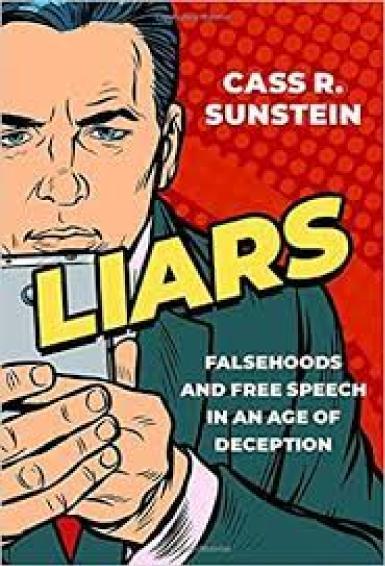
Liars.FalsehoodsandFreeSpeechinanAgeof DeceptionFirstEditionCassR.Sunstein
https://ebookmass.com/product/liars-falsehoods-and-freespeech-in-an-age-of-deception-first-edition-cass-r-sunstein/
Instant digital products (PDF, ePub, MOBI) ready for you
Download now and discover formats that fit your needs...
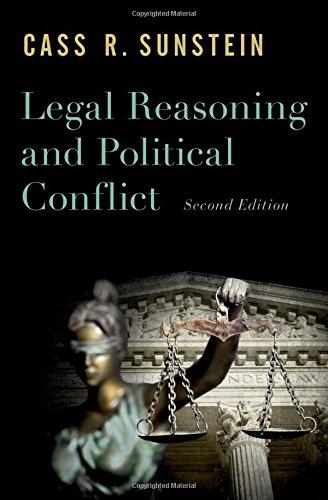
Legal Reasoning and Political Conflict 2nd Edition Cass R. Sunstein
https://ebookmass.com/product/legal-reasoning-and-politicalconflict-2nd-edition-cass-r-sunstein/
ebookmass.com
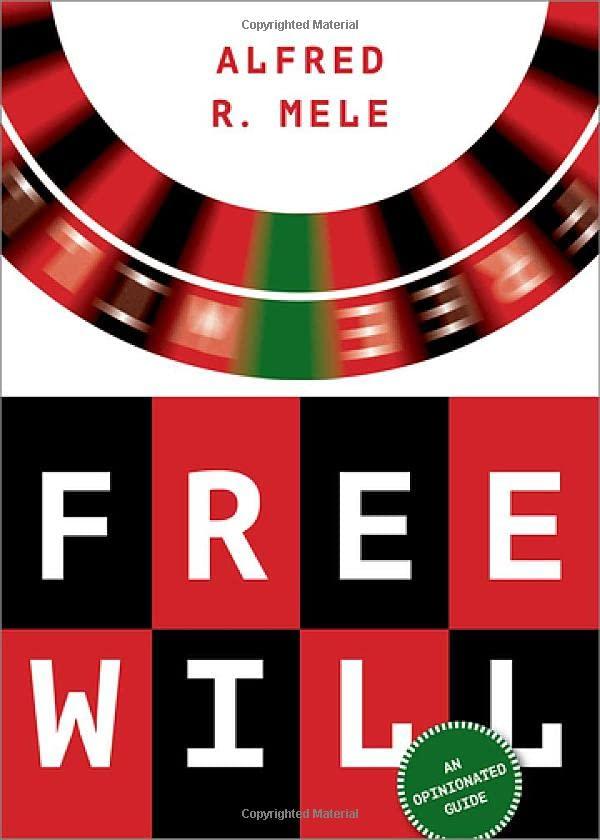
Free Will: An Opinionated Guide Alfred R. Mele
https://ebookmass.com/product/free-will-an-opinionated-guide-alfred-rmele/
ebookmass.com
Ontology and Phenomenology of Speech: An Existential Theory of Speech Marklen E. Konurbaev
https://ebookmass.com/product/ontology-and-phenomenology-of-speech-anexistential-theory-of-speech-marklen-e-konurbaev/
ebookmass.com
Terrestrial Depositional Systems. Deciphering Complexities Through Multiple Stratigraphic Methods 1st Edition Edition Kate E. Zeigler And William G. Parker (Eds.)
https://ebookmass.com/product/terrestrial-depositional-systemsdeciphering-complexities-through-multiple-stratigraphic-methods-1stedition-edition-kate-e-zeigler-and-william-g-parker-eds/ ebookmass.com
Getting Started with Microsoft Viva: An End User Guide to Business Transformation 1st Edition D'Arce Hess
https://ebookmass.com/product/getting-started-with-microsoft-viva-anend-user-guide-to-business-transformation-1st-edition-darce-hess/
ebookmass.com
Losing
Our
Minds: The Challenge of Defining Mental Illness
Dr. Lucy Foulkes
https://ebookmass.com/product/losing-our-minds-the-challenge-ofdefining-mental-illness-dr-lucy-foulkes/
ebookmass.com
Why Study Religion? Richard B. Miller
https://ebookmass.com/product/why-study-religion-richard-b-miller/
ebookmass.com
Thomas Aquinas’ Mathematical Realism Jean W. Rioux
https://ebookmass.com/product/thomas-aquinas-mathematical-realismjean-w-rioux/
ebookmass.com
978-0073375854 Microeconomics (McGraw-Hill Economics)
https://ebookmass.com/product/978-0073375854-microeconomics-mcgrawhill-economics/
ebookmass.com
Windy Lake: Sweet Small-Town Romance Collection Ruby Hill
https://ebookmass.com/product/windy-lake-sweet-small-town-romancecollection-ruby-hill/
ebookmass.com
Other books in the series:
Not a Suicide Pact
The Constitution in a Time of
National Emergency
Richard A. Posner
Out of Range
Why the Constitution Can’t End the Battle over Guns
Mark V. Tushnet
Unfinished Business
Racial Equality in American History
Michael J. Klarman
Supreme Neglect How to Revive Constitutional Protection for Private Property
Richard A. Epstein
Is There a Right to Remain Silent?
Coercive Interrogation and the Fifth Amendment after 9/11
Alan M. Dershowitz
The Invisible Constitution
Laurence H. Tribe
Uninhibited, Robust, and Wide- Open A Free Press for a New Century
Lee C. Bollinger
From Disgust to Humanity
Sexual Orientation and Constitutional Law
Martha C. Nussbaum
The Living Constitution
David A. Strauss
Keeping Faith with the Constitution
Goodwin Liu, Pamela S. Karlan, and Christopher H. Schroeder
Cosmic Constitutional Theory
Why Americans Are Losing Their Inalienable Right to Self- Governance
J. Harvie Wilkinson III
More Essential Than Ever
The Fourth Amendment in the Twenty-First Century
Stephen J. Schulhofer
On Constitutional Disobedience
Louis Michael Seidman
The Twilight of Human Rights Law
Eric A. Posner
Constitutional Personae
Heroes, Soldiers, Minimalists, and Mutes
Cass R. Sunstein
The Future of Foreign Intelligence
Privacy and Surveillance in a Digital Age
Laura K. Donohue
HATE
Why We Should Resist It with Free Speech, Not Censorship
Nadine Strossen
Democracy and Equality
The Enduring Constitutional Vision of the Warren Court
Geoffrey R. Stone and David A. Strauss
Beyond Belief, Beyond Conscience
The Radical Significance of the Free Exercise of Religion
Jack N. Rakove
The Religion Clauses
The Case for Separating Church and State
Erwin Chemerinsky and Howard Gilman
1
Oxford University Press is a department of the University of Oxford. It furthers the University’s objective of excellence in research, scholarship, and education by publishing worldwide. Oxford is a registered trade mark of Oxford University Press in the UK and certain other countries.
Published in the United States of America by Oxford University Press 198 Madison Avenue, New York, NY 10016, United States of America.
© Cass R. Sunstein 2021
All rights reserved. No part of this publication may be reproduced, stored in a retrieval system, or transmitted, in any form or by any means, without the prior permission in writing of Oxford University Press, or as expressly permitted by law, by license, or under terms agreed with the appropriate reproduction rights organization. Inquiries concerning reproduction outside the scope of the above should be sent to the Rights Department, Oxford University Press, at the address above.
You must not circulate this work in any other form and you must impose this same condition on any acquirer.
Library of Congress Cataloging-in- Publication Data Names: Sunstein, Cass R., author.
Title: Liars : falsehoods and free speech in an age of deception / Cass R. Sunstein. Description: New York, NY : Oxford University Press, [2021] | Series: Inalienable rights | Includes index.
Identifiers: LCCN 2020030364 (print) | LCCN 2020030365 (ebook) | ISBN 9780197545119 (hardback) | ISBN 9780197545133 (epub) | ISBN 9780197548455
Subjects: LCSH: Truthfulness and falsehood. | Deception. | Freedom of speech— Criminal provisions. | Social media— Corrupt practices. Classification: LCC K934 .S86 2021 (print) | LCC K934 (ebook) | DDC 342.08/53— dc23
LC record available at https:// lccn.loc.gov/2020030364
LC ebook record available at https:// lccn.loc.gov/2020030365
DOI: 10.1093/oso/9780197545119.001.0001
1 3 5 7 9 8 6 4 2
Printed by LSC Communications, United States of America
To the Truth-Tellers, Amidst the Pandemic of 2020
Some lies are selfish. Some inflate or conflate or mitigate or simply omit. Some are told for good reason. People lie because they think it doesn’t matter. They lie because telling the truth would mean giving up control, or the truth is inconvenient, or they don’t want to disappoint, or they desperately want it to be true. I’ve heard them all. I’ve told them all
Michael Rowbotam, Good Girl, Bad Girl
Seen from the viewpoint of politics, truth has a despotic character. It is therefore hated by tyrants, who rightly fear the competition of a coercive force they cannot monopolize, and it enjoys a rather precarious status in the eyes of governments that rest on consent and abhor coercion. Facts are beyond agreement and consent, and all talk about them— all exchanges of opinion based on correct information— will contribute nothing to their establishment. Unwelcome opinion can be argued with, rejected, or compromised upon, but unwelcome facts possess an infuriating stubbornness that nothing can move except plain lies
Hannah Arendt
When my love swears that she is made of truth, I do believe her, though I know she lies, That she might think me some untutored youth, Unlearnèd in the world’s false subtleties. Thus vainly thinking that she thinks me young , Although she knows my days are past the best , Simply I credit her false- speaking tongue: On both sides thus is simple truth suppressed. But wherefore says she not she is unjust ? And wherefore say not I that I am old?
Oh, love’s best habit is in seeming trust , And age in love loves not to have years told. Therefore I lie with her and she with me, And in our faults by lies we flattered be.
William Shakespeare
Series Editor’s Foreword
. . .
We hold these truths to be self- evident, that all men are created equal, that they are endowed by their Creator with certain unalienable Rights. . . .
The Declaration of Independence
In this work, Cass Sunstein, the most- cited legal scholar in the United States today, takes on the increasingly vexing issue of how we should think about false speech in the modern era. The Supreme Court has taken a rather straightforward approach to this question. It acknowledges that false speech is generally of only “low” First Amendment value, but nonetheless holds that it cannot constitutionally be restricted except in those situations in which it has traditionally been limited and in which it causes substantial harm.
The Court assumes that there is no reason to encourage false speech, but because restrictions on such speech can chill the willingness of individuals to engage in true speech, we should be careful about being too aggressive in limiting false speech. Moreover, at least in the political arena, there is a danger in allowing government too much authority to punish false speech, because those
in positions of authority will be tempted to punish only the false speech that harms their own political interests. For these reasons, and others, even though the Court insists that false speech in itself is not something to be encouraged, it has given substantial protection to such speech under the First Amendment.
In Liars: Falsehoods and Free Speech in an Age of Deception, Sunstein takes on these issues with a creative and rich set of perspectives. Drawing on a broad range of insights, including those drawn not only from law, but also from philosophy, ethics, and economics, Sunstein explores in detail the pros and cons of the Court’s approach and offers a challenging, innovative, and sophisticated series of observations about how we should think about false speech in the modern era. At a time when we are inundated with claims of “fake news” and when the ever-more distorting influence of falsehood on social media affects our politics and our personal understandings and interactions, this work is essential to our ability to think through these fundamental issues in a manner that respects individual decency and protects our democracy. It is, in short, brilliant, original, and deeply insightful.
Geoffrey R. Stone
February 2020
Acknowledgments
I am most grateful to Caylan Ford, Eric Posner, Lucia Reisch, Geoffrey Stone, David Strauss, and Tara Westover for valuable discussions and comments and to Lia Cattaneo, Dustin Fire, and Ethan Lowens for superb research assistance. Special thanks to Stone for two rounds of comments, which greatly improved the book. On several occasions, I have been a consultant for Facebook, including on some of the questions discussed here, and I am most grateful for those conversations; I have learned a great deal about current and coming challenges. David McBride, my editor, offered terrific suggestions on matters large and small. Special thanks to Sarah Chalfant, my agent, for wise advice throughout. This book grows out of an academic essay, Falsehoods and the First Amendment, 33 Harv. J. Law & Technology 387 (2020), and I am grateful to the editors for valuable editorial help and for permission to draw on that material here. This book was started in 2018, but it was completed during the coronavirus pandemic of 2020, with much of the final work done at home, during a near-lockdown in Massachusetts. During that time, the importance of telling the truth and avoiding falsehoods became, very visibly, a matter of life and death. My thanks to truth-tellers everywhere, who have saved a lot of lives.
Lies and Falsehoods
What is the role of truth and falsehood in human life? In business? In health care? In politics?
Consider three problems. All of them are hypothetical, but they are based directly on real events, happening all over the world.
• Thomas Susskind, falsely claiming to be a doctor, writes on his Facebook page that COVID-19 does not create a serious health problem. Purporting to analyze the data with care, Susskind insists that unless you’re at least eighty years old, you really don’t have to worry about it. Susskind knows that the statement is false; for reasons of his own, he is trying to create problems in Europe and the United States. Should Facebook take the statement down, or accompany it with some kind of correction? Should public officials order Facebook to do so?
• A political candidate, named John Jones, buys an advertisement on the website of a prominent television network. The advertisement falsely states that Jones’s opponent, a politician named Eric Munston, sexually assaulted a female employee ten years
ago. Jones knows that the statement is false. Should Munston be allowed to sue the network or Jones? Should he be allowed to force the network to take the advertisement down?
• Mary Winston runs a column in the local newspaper, stating that vaccinations are responsible for autism. Winston believes that the statement is true. But it isn’t. Even so, the column is convincing many parents not to vaccinate their children and is thus creating serious health risks. Can the local authorities order the newspaper to remove the column? Can they fine Winston? Can they mandate some kind of disclaimer, at least online?
Is there a right to lie? About a pandemic? About health and safety? About a public official? About an actor or musician? About a neighbor? About science? If we are committed to freedom of speech, must we tolerate lies? What about falsehoods in general? How important is truth, and what should governments do to protect it?
Intimate relationships are defined by trust. (“I trust you,” one person might declare to another, at a defining moment.) So are close friendships. Truth-telling is central to trust. Something similar can be said about relationships between employers and employees, or among people who work together (at, say, a restaurant, a hospital, or a school). None of these relationships is likely to be entirely free from lies, but in some cases, deception turns out to be shattering. In politics, truth-telling is not exactly universal. But in politics, some lies can also be shattering. They are beyond the pale. What can be done about them?
In a famous opinion, Supreme Court Justice Oliver Wendell Holmes Jr. wrote: “The most stringent protection of free speech would not protect a man in falsely shouting fire in a theatre and causing a panic.”1 Right now, a lot of people are falsely shouting fire in a crowded theater. They are causing panics. At the very least, what they are doing is pretty close to that. They are certainly
shouting, and what they are shouting is false. In some cases, their lies lead to illnesses and deaths. In other cases, their lies cut at the heart of democratic self-government. Some of those lies come from foreign governments, such as Russia. Some of them are home-grown. They come from public officials and from politicians or those who support them.
Importantly, many false statements are not lies; people who make or spread them sincerely believe them to be true. Falsehoods are a broad category of which lies are a mere part. Some people say what they know to be false. Others are reckless; it should be obvious that they are spouting falsehoods, but they do not know that that is what they are doing. Still other people are simply mistaken; they had reason to say what they did, but they turned out to be wrong.
These differences matter. When we are deciding whether a falsehood can or should be punished or regulated, it might be crucial to know whether the speaker was a liar, or reckless, or merely mistaken. But even the most innocent mistakes can be damaging and dangerous. Consider the case of Mary Winston, who was not a liar. People make mistakes about health or safety, and their mistakes cost lives.
Two Goals
Notwithstanding these points, my first goal here is to deepen the foundations of what many people find to be a jarring idea: In general, falsehoods ought not to be censored or regulated, even if they are lies. Free societies protect them. Public officials should not be allowed to act as the truth police. A key reason is that we cannot trust officials to separate truth from falsehood; their own judgments are unreliable, and their own biases get in the way. If officials are licensed to punish falsehoods, they will end up punishing dissent.
As Justice Robert Jackson wrote in the greatest opinion in the long history of the US Supreme Court, “Those who begin coercive elimination of dissent soon find themselves exterminating dissenters. Compulsory unification of opinion achieves only the unanimity of the graveyard.”2
The best response to falsehoods is usually to correct them rather than to punish or censor them. Punishment or censorship can fuel falsehoods. In some contexts, they operate like oxygen. These are time-honored ideas, but in some ways, they are now on the defensive. We need to understand them better. We need to appreciate them more. We need to do that above all to protect against government overreach— but also to allow freedom of flourish on television and in magazines and newspapers, and also online and on social media platforms such as Facebook and Twitter.
My second goal is to qualify these conclusions— and to take some of them back. As William Blake wrote, commenting on lectures by Sir Joshua Reynolds, who praised generalization: “To Generalize is to be an Idiot. To Particularize is the Alone Distinction of True Merit.” Blake added, “I thank God I am not like Reynolds.”3 Aiming not to be like Reynolds, I will contend that governments should have the power to regulate certain lies and falsehoods, at least if they can be shown to be genuinely harmful by any objective measure. In brief: False statements are not constitutionally protected if the government can show that they threaten to cause serious harm that cannot be avoided through a more speech- protective route. I will also suggest that when actual lies are involved, the government may impose regulation on the basis of a weaker demonstration of harm than is required for unintentional falsehoods.
These are narrow exceptions. But they are important. Under the US Constitution, government can already do a great deal to control defamation. It can already regulate false advertising. It should be allowed to do more. It should be able to restrict and punish certain
kinds of lies and falsehoods that pose serious threats to public health and safety. To protect the democratic process, it should be able to regulate other kinds of lies and falsehoods, even if they are not defamatory. It should be able to regulate doctored videos, certainly when they are defamatory, and even when they are not, to ensure that people who see them know that they are doctored. In defending these conclusions, one of my main purposes is to draw attention to the sheer diversity of tools. Government need not censor or punish; it might (for example) require disclosure, or some form of choice architecture that reduces the likelihood that falsehoods will spread.
I will also suggest that private institutions, including television networks, magazines, and newspapers, and social media platforms (such as Facebook, YouTube, and Twitter) have considerable room to slow or stop the spread of lies and falsehoods. To their credit, some of them are doing a great deal already, and their creativity offers a host of lessons for public officials. But they should be doing more. Real people are being badly hurt by their inaction. So are institutions, both public and private.
If you want to ban each and every lie, or to excise lies and falsehoods from human life, you’re probably not a lot of fun.
People boast; they exaggerate their achievements. Some of us flatter; we tell people things that they want to hear. People protect themselves; they lie to those who threaten them. (Do the ends justify the means? Not never; but sometimes.) Some of us joke; we tell tall tales. Journalists spread falsehoods, even when they are trying very hard to tell the truth. No one should have to live in a nation that makes it a crime not to tell the truth, or even to lie. Such a nation would crush freedom.
But some lies, and some falsehoods, are beyond the pale. Suppose that Barton Medical, a (hypothetical) company that sells medicines, markets a new product, promising, “If you take this daily, you will never get cancer!” If the product does nothing to prevent cancer, the company will almost certainly get into trouble with the authorities. This is so even in the freest of free societies. But it is not simple to come up with principles to distinguish between what is intolerable and what must be allowed. To do that, we have to explore the foundations of a system of free expression. We need to understand what such a system is for—what it is designed to do.
These issues are always important, but in the modern era, they have new urgency. One reason, of course, is the rise of modern technologies, which allow falsehoods to be spread in an instant. If you want to circulate a lie about safety or health, or about a prominent person, you can do that with ease. If you want to sell a product by lying about it, you can try, starting today. If you are a public official and you want to lie about what you are doing, you can get a large audience in essentially an instant. You might be able to do the same thing if you want to attack a public official, a former lover, a neighbor, or someone you hate or just don’t like. Or consider the focus on “fake news,” disseminated by both foreign and domestic agents in an effort to generate traffic, to sow social divisions, or to drive political outcomes in North America, Europe, and elsewhere in particular directions. Much news is indeed fake, and that is a major problem. Ironically, however, charges of “fake news” are often themselves fake— making it quite destabilizing to figure out what is true. Prominent national leaders cry “fake news!” when they are subject to criticism, even when nothing fake has been said and when the factual claims are true. The real fake news is the cry of fake news. The result is that with respect to many questions, people now find themselves in a state of vertigo. As St. Augustine said: “When regard for truth has been broken down or even slightly weakened, all things
will remain doubtful.”4 Or consider the contestation of science and established facts by prominent figures, including national leaders in many nations. Highly influential lies by public officials and in political campaigns are nothing new, but there are certainly a lot of them these days.
Some things are true. Dropped objects fall. The earth goes around the sun. The Holocaust happened. Barack Obama was born in the United States. Elvis Presley is dead. Cigarette smoking causes cancer. Officially approved vaccines do not cause autism.
Many falsehoods are innocuous. They are a joke, a satire, an exaggeration, a product of exuberance, a matter of “puffing,” an excusable effort to impress (say, on an interview or a first date). Other falsehoods are harmful. They ruin lives. They distort people’s understanding of fundamental questions. They endanger health. They lead people to take unnecessary risks. They encourage people to fail to protect themselves against serious dangers. They undermine self-government. They lead people to think, quite falsely, that good people did terrible things, or that terrible people did good things.
Suppose that in response, Congress or a state enacts a new law: The Democracy Protection Act. The law makes it a civil wrong (not a crime) to circulate or to publish false information about candidates for public office. It applies not only to newspapers and television stations but also to social media platforms, such as Facebook and Twitter. The penalty is $1, alongside an order to cease and desist. Would the Democracy Protection Act violate the First Amendment?
The answer is clearly yes.5 But it is not clear why.6 One of my main goals here is to offer an account of why nations protect both innocent and deliberate falsehoods. With that account, I will offer
something like two cheers for current constitutional understandings in the United States. But the absence of that third cheer is important. Actually it is more like a howl of disapproval.
One of my concerns is people’s ability to protect their reputations. Your reputation can be seen as part of your property and as one of your liberties. It is no light thing to take someone’s property or to diminish their liberty. Among other things, I shall argue that public figures should be able to obtain redress for defamatory statements that do not meet the standards of the defining case of New York Times Co. v. Sullivan. 7 That decision, giving broad protection to defamation, looks increasingly anachronistic, a dinosaur in light of what is happening online and improved understandings about how information spreads.
But the damage done by false statements goes far beyond reputational injury. A foreign government might run falsehoods on social media in order to swing public opinion, to intensify social antagonisms, to promote a cause, or to weaken an adversary. A candidate for public office might lie about his achievements. A doctored video might not be libelous; it might portray someone as doing heroic deeds, when he did nothing of the kind. Deepfakes make it very difficult or even impossible to distinguish between a false depiction of events and the real thing. I shall argue that officials should have the authority to regulate (some) false statements, deepfakes, and doctored videos.
Even more clearly, television networks, newspapers, magazines, Facebook, Twitter, YouTube, and other social media platforms should be doing more than they are now doing to control the spread of falsehoods. Of course they should prize freedom of speech and the values that it carries with it. But they should also work to protect public health and safety, democratic processes, the reputations of individuals and institutions, and most broadly, the social norm
in favor of respect for, and recognition of, what is true— a matter of uncontestable fact.
As Hannah Arendt warned:
The chances of factual truth surviving the onslaught of power are very slim indeed; it is always in danger of being maneuvered out of the world not only for a time but, potentially, forever. Facts and events are infinitely more fragile things than axioms, discoveries, theories— even the most wildly speculative ones— produced by the human mind; they occur in the field of the ever- changing affairs of men, in whose flux there is nothing more permanent than the admittedly relative permanence of the human mind’s structure.8
A Roadmap
This is a short book, but it covers a lot of ground. Chapter 2 offers a brief sketch of the moving parts, producing a framework to help orient analysis. The speaker’s state of mind matters; so does the magnitude of the harm that a falsehood produces. We also need to attend to the tools that government is using. As we will see, the toolbox contains many items, and some are more intrusive than others.
Chapter 3 focuses principally on ethics. What is so bad about lying? In the process of answering that question, it provides an account of why lies can have large and devastatingly bad effects. It also has some things to say about falsehoods in general. A primary goal is to distinguish between utilitarian and Kantian accounts of why lying is wrong and to suggest that in many ways, the two accounts turn out to converge.
Chapter 4 briefly discusses the current state of American constitutional law, exploring the leading Supreme Court ruling on the subject of lies and falsehoods. It addresses the relatively recent proposition that there is, in a sense, a constitutional right to lie. One of my main purposes is to suggest that the proposition has a number of problems. In so suggesting, I aim to make space for alternative understandings. If someone running for political office says, “I am a war hero,” or, “My opponent is a rapist,” and if the speaker is lying, it is a fair question whether the free speech principle should provide protection.
Chapter 5, in some ways the heart of the book, turns to a large question: Why should we protect falsehoods at all? To answer that question, it investigates some time-honored arguments on behalf of freedom of speech in general. As we shall see, those arguments have a great deal of power, even in the context of falsehoods, and public officials all over the world should be alert to them. But they are awfully abstract. They do not survive an encounter with some concrete questions.
Chapter 6 shifts from theoretical questions to empirical ones. The main issue is why falsehoods are often so powerful. Why do people believe them? Why do they move so rapidly from one person to another? One reason is that human beings tend to show “truth bias”: We remember statements as true, even if we have been explicitly and credibly informed that they are false. Another reason is that many falsehoods get a kind of grip on our minds, precisely because they are so vivid, surprising, and arresting. Social influences also play a crucial role in spreading falsehoods. We learn from people we trust, even if they are liars. And if we want to believe a falsehood, we might well believe it, even if we really should not.
Chapters 7 and 8 investigate the limits of free speech in the particular context of falsehoods. Chapter 7 begins with the problem of defamation. Why can’t people protect their good name? As we shall
see, the free speech tradition in the United States has not given an adequate answer to the question.
Chapter 8 turns more broadly to harmful speech, whether it involves false claims of achievement, false claims about health, false accusations against others, or the use of modern technology to create false images. I contend that public officials should have considerable room to protect health, safety, and democracy itself. I also contend that private institutions, such as television networks, newspapers, magazines, and social media platforms like Facebook and Twitter, should be doing more than they are now doing to control harmful falsehoods. Whether we are speaking of public or private institutions, the availability of speech-protective tools, such as labels and warnings, is essential to keep in mind.
Chapter 9 is a brief manifesto.