https://ebookmass.com/product/iranian-syntax-in-classical-
Instant digital products (PDF, ePub, MOBI) ready for you
Download now and discover formats that fit your needs...
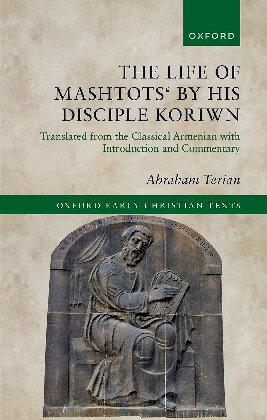
The Life of Mashtots' by His Disciple Koriwn: Translated from the Classical Armenian with Introduction and Commentary Abraham Terian
https://ebookmass.com/product/the-life-of-mashtots-by-his-disciplekoriwn-translated-from-the-classical-armenian-with-introduction-andcommentary-abraham-terian/ ebookmass.com
Women and the Politics of Resistance in the Iranian Constitutional Revolution Maryam Dezhamkhooy
https://ebookmass.com/product/women-and-the-politics-of-resistance-inthe-iranian-constitutional-revolution-maryam-dezhamkhooy/ ebookmass.com
Psychopharmacology (Fourth Edition) Jerry Meyer
https://ebookmass.com/product/psychopharmacology-fourth-edition-jerrymeyer/ ebookmass.com
Writing to Read, Reading to Write 2nd Edition Kuehner
https://ebookmass.com/product/writing-to-read-reading-to-write-2ndedition-kuehner/ ebookmass.com
Nordic States and European Integration: Awkward Partners in the North? 1st Edition Malin Stegmann Mccallion
https://ebookmass.com/product/nordic-states-and-european-integrationawkward-partners-in-the-north-1st-edition-malin-stegmann-mccallion/
ebookmass.com
A Mind Over Matter: Philip Anderson and the Physics of the Very Many Andrew Zangwill
https://ebookmass.com/product/a-mind-over-matter-philip-anderson-andthe-physics-of-the-very-many-andrew-zangwill/
ebookmass.com
Streamlined ID: A Practical Guide to Instructional Design1st Edition -2013, Ebook PDF Version
https://ebookmass.com/product/streamlined-id-a-practical-guide-toinstructional-design-1st-edition-2013-ebook-pdf-version/
ebookmass.com
Review of Plastic Surgery 2nd Edition Donald W. Buck Ii
https://ebookmass.com/product/review-of-plastic-surgery-2nd-editiondonald-w-buck-ii/
ebookmass.com
The Law Officer's Pocket Manual: 2022 Edition John G. Miles
https://ebookmass.com/product/the-law-officers-pocketmanual-2022-edition-john-g-miles/
ebookmass.com
https://ebookmass.com/product/my-death-lisa-tuttle/
ebookmass.com
IranianSyntaxinClassicalArmenian OXFORDSTUDIESINDIACHRONICAND HISTORICALLINGUISTICS Generaleditors
AdamLedgewayandIanRoberts, UniversityofCambridge
Advisoryeditors
CynthiaL.Allen, AustralianNationalUniversity;RicardoBermúdez-Otero, UniversityofManchester;TheresaBiberauer, UniversityofCambridge; CharlotteGalves, UniversityofCampinas;GeoffHorrocks, UniversityofCambridge; PaulKiparsky, StanfordUniversity;DavidLightfoot, GeorgetownUniversity; GiuseppeLongobardi, UniversityofYork;GeorgeWalkden, UniversityofKonstanz; DavidWillis, UniversityofOxford RECENTLYPUBLISHEDINTHESERIES 46
Noun-BasedConstructionsintheHistoryofPortugueseandSpanish PatríciaAmaralandManuelDelicadoCantero 47
SyntacticChangeinFrench SamWolfe
PeriphrasisandInflexioninDiachrony AViewfromRomance
Editedby AdamLedgeway,JohnCharlesSmith,andNigelVincent 49
FunctionalHeadsAcrossTime SyntacticReanalysisandChange
Editedby BarbaraEgediandVeronikaHegedűs 50
AlignmentandAlignmentChangeintheIndo-EuropeanFamily Editedby EysteinDahl 51
GermanicPhylogeny FrederikHartmann 52
ArabicandtheCaseagainstLinearityinHistoricalLinguistics JonathanOwens
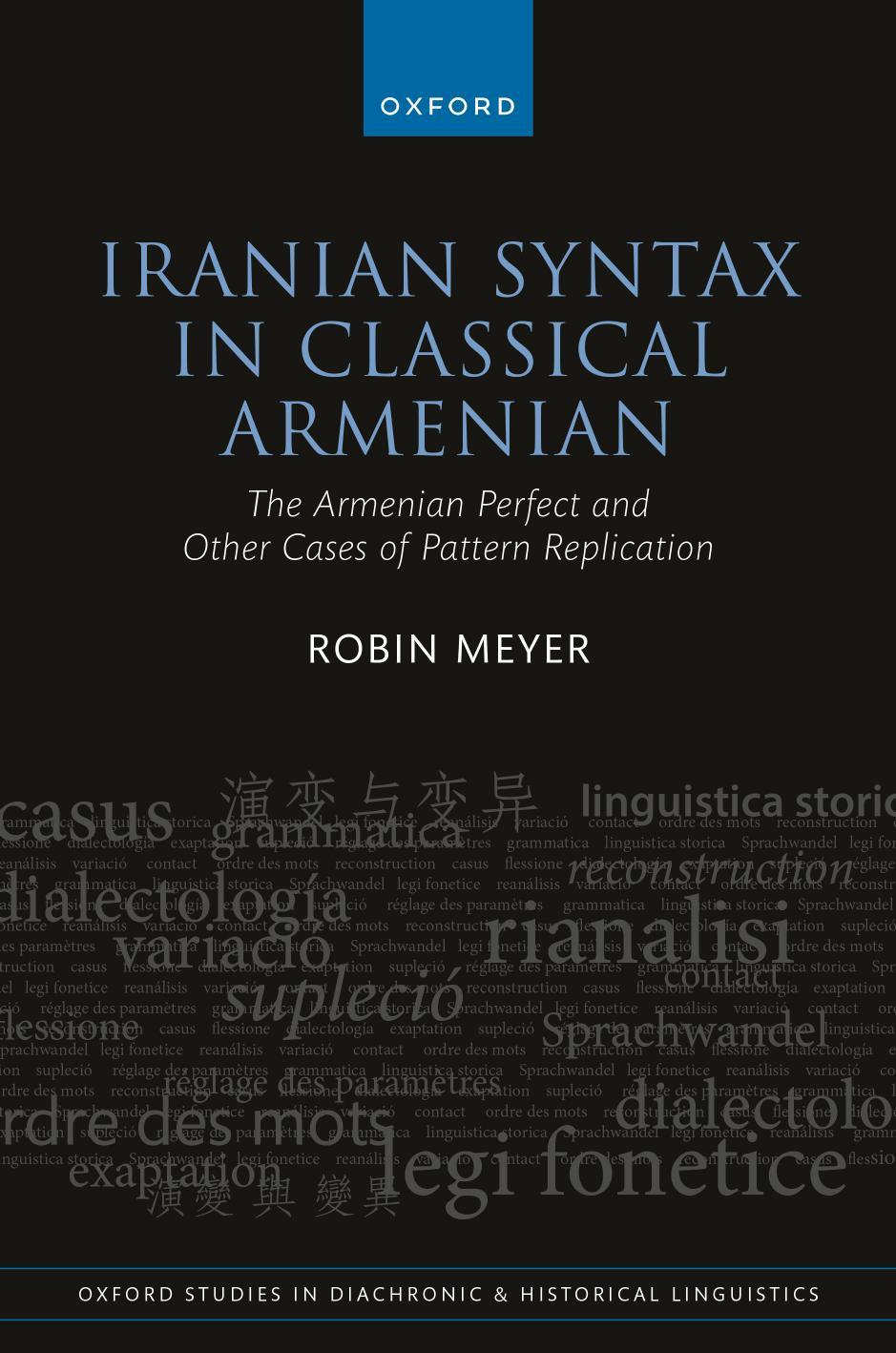
IranianSyntaxinClassicalArmenian TheArmenianPerfectandOtherCasesofPatternReplication RobinMeyer
Foracompletelistoftitlespublishedandinpreparationfortheseries,seepp.311–15
IranianSyntaxin ClassicalArmenian TheArmenianPerfectandOtherCases ofPatternReplication ROBINMEYER GreatClarendonStreet,Oxford,OX26DP, UnitedKingdom
OxfordUniversityPressisadepartmentoftheUniversityofOxford. ItfurtherstheUniversity’sobjectiveofexcellenceinresearch,scholarship, andeducationbypublishingworldwide.Oxfordisaregisteredtrademarkof OxfordUniversityPressintheUKandincertainothercountries ©RobinMeyer2023
Themoralrightsoftheauthorhavebeenasserted Somerightsreserved.Nopartofthispublicationmaybereproduced,storedin aretrievalsystem,ortransmitted,inanyformorbyanymeans,forcommercialpurposes, withoutthepriorpermissioninwritingofOxfordUniversityPress,orasexpressly permittedbylaw,bylicenceorundertermsagreedwiththeappropriate reprographicsrightsorganization.
Thisisanopenaccesspublication,availableonlineanddistributedunderthetermsofa CreativeCommonsAttribution–NonCommercial–NoDerivatives4.0 Internationallicence(CCBY-NC-ND4.0),acopyofwhichisavailableat http://creativecommons.org/licenses/by-nc-nd/4.0/.
Enquiriesconcerningreproductionoutsidethescopeofthislicence shouldbesenttotheRightsDepartment,OxfordUniversityPress,attheaddressabove
PublishedintheUnitedStatesofAmericabyOxfordUniversityPress 198MadisonAvenue,NewYork,NY10016,UnitedStatesofAmerica
BritishLibraryCataloguinginPublicationData
Dataavailable
LibraryofCongressControlNumber:2023908025
ISBN9780198851097
DOI:10.1093/oso/9780198851097.001.0001
Printedandboundby CPIGroup(UK)Ltd,Croydon,CR04YY
Theopenaccesspublicationofthisbookhasbeenmadepossiblebythesupport oftheSwissNationalScienceFoundation.
LinkstothirdpartywebsitesareprovidedbyOxfordingoodfaithand forinformationonly.Oxforddisclaimsanyresponsibilityforthematerials containedinanythirdpartywebsitereferencedinthiswork.
MeinerFamiliegewidmet InErinnerunganmeineGroßeltern
HorstMeyer(1923–1970)
GerdaMeyergeb.Sebastian(1922–2016)
GeorgBurkhardt(1929–2020)
IlseBurkhardtgeb.Arlt(1928–2020)
3.3Graeco-Romansources
4.1.1Definitionofmorphosyntacticalignment
4.1.2Typesofmorphosyntacticalignment
4.1.2.1Neutralalignment:S=A=O
4.1.2.2Nominative–accusativealignment:S=A≠O
4.1.2.3Ergative–absolutivealignment:S=O≠A
4.1.2.4Tripartitealignment:S≠A≠O
4.1.2.5Double-obliquealignment:S≠A=O
4.1.2.6Otheralignmentpatterns
4.1.3Typologyofalignment
4.1.3.1Tense-sensitivealignment(TSA)
4.1.3.2Hierarchy-splitalignment
4.1.3.3Changeinalignmentpatterns
4.1.3.4AlignmentinProto-Indo-European
4.1.4Observationsandquestions
4.2MorphosyntacticalignmentoftheClassicalArmenian periphrasticperfect
4.2.1Alignmentpatternsintheperiphrasticperfect
4.2.1.1Typeα:intransitive
4.2.1.2Typeβ:passive
4.2.1.3Typeγ:transitive
4.2.1.4Typeδ:impersonal
4.2.2Previousexplanations
4.2.2.1 Nomenactionis and genitivusauctoris
4.2.2.2‘Have’-perfectsand genitivuspossessivus
4.2.2.3Genitiveasaprototypicalagentivecase
4.2.2.4EvidencefromTokharianandVedicverbaladjectives
4.2.2.5Caucasianinfluenceandergativity
4.2.2.6Analogicalshift
4.2.2.7Attributiveadjectives
4.2.2.8BorrowingfromHurro-Urartian
4.2.2.9Summary
4.2.3Theperiphrasticperfect:atripartiteanalysis
4.2.3.1Hypothesizedhistoricalorigins
4.3MorphosyntacticalignmentinOldandMiddleIranian
4.3.1OldIranianandthe tayamanākrtam construction
4.3.1.1Passivevspossessiveanalysis
4.3.1.2Theexternalpossessoranalysis
4.3.1.3Summary
4.3.2AlignmentinWestMiddleIranian
4.3.2.1DecayoftheWestMiddleIraniannominalsystem
4.3.2.2TheWestMiddleIranianpasttense
4.3.2.3Prepositionalargument-marking
4.3.2.4LaterdevelopmentswithinthehistoryofWest MiddleIranian
4.3.3ComparisonofWestMiddleIranianandClassical Armenianalignment
4.4Hypothesesandquestions
5.ThesyntaxoftheArmenianperfect:Acorpusanalysis
5.1.1Relativechronologyoftexts
5.2Methodology
5.2.1Dataretrieval
5.2.2Datacategorizationandprinciplesofanalysis
5.3Dataanalysis
5.3.1Adjectivalandnominalparticiples
5.3.2Participlesinthe‘true’periphrasticperfect
5.3.2.1Subject-andagent-marking
5.3.2.2Copulauseandagreement
5.3.2.3Summary
5.3.3Converbialparticiples
5.3.3.1Converbs
5.3.3.2Usesofanddifficultieswithconverbialparticiples
5.3.3.3Statisticalevaluation
5.3.3.4Summary
5.3.4Otherconsiderations
5.3.4.1Polarity
5.3.4.2Constituentorder
5.3.4.3Summary
5.4Caveats
5.5Summary
5.6Excursus:thequestionofMovsēsXorenac‘i
5.6.1Backgroundtothecontroversy
5.6.2Spot-check
5.6.3Summary
6.OthercasesofIranian–Armenianpatternreplication
6.1 Ezāfe
6.1.1StandardArmenianrelativeclauses
6.1.2Armenian ezāfe?
6.1.3WestMiddleIranian ezāfe
6.1.4Replicationorinheritance?
6.1.5Synthesis
6.2Intensifier,anaphora,andreflexive
6.2.1WestMiddleIranian: xwd/wxd
6.2.1.1Etymology
6.2.1.2Briefexcursus:expressionsofreflexivity
6.2.1.3Intensifier
6.2.1.4Anaphorandswitch-functionmarking
6.2.1.5Anaphorandsubjectresumption
6.2.1.6Summary
6.2.2ClassicalArmenian: ink‘n
6.2.2.1Etymology
6.2.2.2Anotherbriefexcursus:expressionsofreflexivity
6.2.2.3Intensifier
6.2.2.4Anaphorandsubjectresumption
6.2.2.5Anaphorandswitch-function 193
6.2.2.6DifferencesbetweenArmenianandWest MiddleIranian
6.2.2.7Summary
6.2.3Synthesis
6.3Quotativeandcomplementizer
6.3.1Armenian (e)t‘ē
6.3.1.1Etymology
6.3.1.2 (e)t‘ē marksdirectspeech,questions
6.3.1.3 (e)t‘ē marksindirectspeech,questions
6.3.1.4 (e)t‘ē ascomplementizerandinotherfunctions
6.3.2WestMiddleIranian kw /kū/
6.3.2.1Etymology
6.3.2.2 kw /kū/marksdirectspeech,questions
6.3.2.3 kw /kū/marksindirectspeech,questions
6.3.2.4 kw /kū/ascomplementizerandinotherfunctions
6.3.3Synthesis
7.Parthian–Armenianlanguagecontactanditshistoricalcontext
7.1Languagecontactandlanguagechange
7.1.1Theoreticalconsiderationsinlanguagecontactstudies
7.1.1.1Relevanceoflanguagecontactforhistoricallinguistics 216
7.1.1.2Prerequisitesforlanguagecontactand contact-inducedchange 218
7.1.1.3Issuesandlimitationsoflanguagecontactstudies
7.1.2Typesandoutcomesoflanguagecontact
7.1.2.1Languagemaintenanceorborrowing
7.1.2.2Languageshift
7.1.2.3Mechanismsofstructuralinterference
7.1.2.4PatternreplicationinArmenian
7.1.3Intrinsicmotivationofcontact-inducedchange
7.1.4Asocial-primacyapproachtolanguagecontact
7.2AnewperspectiveonArsacidParthianandArmenian
7.2.1AnArsacidsuperstrateshift
7.2.2Advantagesanddisadvantagesofalanguage-shift approach
7.2.3ApolyphasicmodelofIranian–Armeniancontact
7.3Comparanda
7.3.1CaseI:FrenchandEnglishinpost-ConquestBritain
7.3.2CaseII:OldAramaicandOldPersian
7.3.3CaseIII:NENAandKurdish
Seriespreface Moderndiachroniclinguisticshasimportantcontactswithothersubdisciplines, notablyfirst-languageacquisition,learnabilitytheory,computationallinguistics, sociolinguistics,andthetraditionalphilologicalstudyoftexts.Itisnowrecognizedinthewiderfieldthatdiachroniclinguisticscanmakeanovelcontribution tolinguistictheory,tohistoricallinguistics,andarguablytocognitivesciencemore widely.
Thisseriesprovidesaforumforworkinbothdiachronicandhistoricallinguistics,includingworkonchangeingrammar,sound,andmeaningwithinandacross languages;synchronicstudiesoflanguagesinthepast;anddescriptivehistoriesof oneormorelanguages.Itisintendedtoreflectandencouragethelinksbetween thesesubjectsandfieldssuchasthosementionedabove.
Thegoaloftheseriesistopublishhigh-qualitymonographsandcollections ofpapersindiachroniclinguisticsgenerally,i.e.studiesfocussingonchange inlinguisticstructure,and/orchangeingrammars,whicharealsointendedto makeacontributiontolinguistictheory,bydevelopingandadoptingacurrent theoreticalmodel,byraisingwiderquestionsconcerningthenatureoflanguage changeorbydevelopingtheoreticalconnectionswithotherareasoflinguistics andcognitivescienceaslistedabove.Thereisnobiastowardsaparticular languageorlanguagefamily,ortowardsaparticulartheoreticalframework;work inalltheoreticalframeworks,andworkbasedonthedescriptivetraditionof languagetypology,aswellasquantitativelybasedworkusingtheoreticalideas, alsofeatureintheseries.
AdamLedgewayandIanRoberts UniversityofCambridge
Preface Forbetterorworse,manyprojects,ideas,andplansatOxfordandelsewherehave theirbeginninginconversationsheldoveracupofteaorcoffee,oralternatively overaglassofwineorbeer.Itwillnotsurpriseanyone,then,thatthisbook,too, wasinitiallyconceivedatsuchanoccasion.SomewherebetweentheOrientalInstituteandLittleClarendonStreet,thefirstwordsabouttheelementsofIranian syntaxinArmenianpresentedinthesepagestickledtheearsofoneofmyfuture supervisors.
Thesparkthatkindledthisidea,however,sprangfromadifferentsource,emanatingfromthepersonwhofirstintroducedmetotheIranianlanguages.Without theinstructioninOldandMiddleIranianlanguagesthatIlyaYakubovichprovided duringmyyearsasanMPhilstudent,andwithouthiscontinuousencouragement towriteaboutvariousmattersArmenianandIranian,theideaformydoctoralthesis,andsubsequentlyforthisbook,wouldlikelyneverhavetakenshape.Thusit istohim,astheprimemover,towhommyinitialthanksaredue.
DuringmyyearsasadoctoralstudentatWolfsonCollege,itwaschieflymytwo stellarsupervisors,ElizabethTuckerandTheoMaartenvanLint,whoprovided muchfoodforthoughtwiththeircommentsonmywritingandpointedquestions concerningmyfindings;addtothattheirsheerinexhaustiblepatienceinwaiting forthesubmissionofnewchapters,andtheirspeedatconsideringmyoutpourings,andyouwillknowwhyIshallforeverbeindebtedtothemfortheirsupport andkindness.
Equally,however,thanksareduenotonlytothosewhohelpedfeedtheproverbialflame,butalsotothosewhokeptitincheck:PeterBarber,WolfgangdeMelo, JohnPenney,PhilomenProbert,andAndreasWilli—or,inshort,alltheOxford philologists—haveatsomepointhelpedmeseeflawsinmyargumentsorerrors inmyways,andhaveprovidedinvaluableinsightsinoneformoranother.Iam particularlygratefultoJohnPenneyandPhilomenProbert,asitwastheywho introducedmetocomparativephilologyduringmyundergraduatedays.
Finally,atleastfromapurelyacademicperspective,mythanksareduetoJames Clackson,whotogetherwithWolfgangdeMeloexaminedmythesisand,underthe conditionthatItalkmoreabouttigers(seep. 54),letitpass,thusconfirmingthat thisflamewasworththefuelithadusedup.BothJamesandWolfganghavebeen verykindinlendingmetheirsupportevenaftertheendofmydoctoralstudies.
Asformanyyoungresearchers,aprojectlikethisrarelytakesshapeinisolation,butisusuallyaccompaniedbysmallerprojects,whichhelpbothtodivertthe
researcherfromtheoccasionalmonotonyandtoprovidenewinsights—academic andotherwise—experiences,andincome.Ihadthegreatpleasureofworkingin theSpecialCollectionsDepartmentoftheBodleianLibraryfortwoyears,during whichIhelpedorganizetheexhibitionArmenia:MasterpiecesofanEnduringCulture;duringthistime,Ilearntmuchaboutthemattersof(time)managementand Armenianmanuscripts.Mythanksforthisopportunity,andformanypiecesof wisdom,gototheinimitableGillianEvison.Atthesametime,Ihavetakengreat joyinteachingLatinandAncientGreekduringtheentiretyofmydegree,and mustthankJulianeKerkheckerforallowingmetodoso,andforherkindnessand understandingwhenIhadtopostponeclasseswhenawayforconferencesorthe like.
Yet,despiteideas,willingness,andverysupportivementors,thesparkofthis projectwouldnothavebeenabletokindleaflamewithoutconsiderablesupport fromtheArtsandHumanitiesResearchCouncil,fromwhosedoctoralscholarship Ihavebenefited.
Quitesometimehaspassedbetweenthebeginningofmydoctoralstudies (2013),thesubmissionandapprovalofthethesis(2017),andthepublicationof thisbook(2023).Ihavenoonetoblamebutmyself,ofcourse,butsufficeittosay thatfullteachingschedules,thearrivalofourtwochildren,aglobalpandemic,a newjob,andnumerousnewprojectshavesignificantlycontributedtothisdelay. Givenallthat,IamofcourseextremelygratefultoJuliaSteerandVickiSunterat OxfordUniversityPress,whohavebeenverypatientwithmeandhavehelped ensurethebestpossibleoutcomeforthisbook.Likewise,Iamgratefultothe anonymousreviewers,whoseconstructivesuggestionsandeagleeyeshavemost certainlymadethisbookbetterthanitmightotherwisehavebeen,andforthefinancialsupportoftheSwissNationalScienceFoundationwhichhasalloweditto bepublishedinOpenAccess.
Itisnotleastbecauseoftheabove-mentionedcircumstancesthatmyfinalwords ofthanksmustgotomylovedones,whohaveenduredmeandmyramblings throughoutthisprojectandhavestood(orlain,crawled,andwaddled)besideme atalltimes.They,Iamsure,areashappytoseeitcometofruitionasIam,though perhapsfordifferentreasons,anditistheytowhomthisbookisdedicated.My darlingwife,Sheera,deservesthelion’sshareofmythanks,asitwasshewhokept remindingmetogetonwithfinishingthisbook.
Asis,perhaps,inevitable,muchoftheresearchpresentedinwhatfollows restsonimperfectdata:weeitherdon’thaveenough,orsomething,butnotin enoughdetail,orsomething,butfromanunsatisfactorilysmallsetofsources. Such,itwouldappear,istheworkofthehistoricallinguist.Recallingsome memorablelinesfromPercyByssheShelley’s Ozymandias,wefindourselves linguistictravellersinanantiqueland,leftwithlittlemorethanShelleydescribes below,andwishingtherewasmore.
‘MynameisOzymandias,kingofkings: Lookonmyworks,yeMighty,anddespair!’ Nothingbesideremains.Roundthedecay Ofthatcolossalwreck,boundlessandbare Theloneandlevelsandsstretchfaraway.
RM Lausanne,March2023
Listoffigures 2.1.SimplifiedmapofArmeniaandsurroundingarea c.70BCE,atitslargest extentunderTigranII,theGreat 9
2.2.SimplifiedmapofArmeniaandsurroundingareain c.379CE,atthedeathof theSasanianKingŠāhpuhrII 11
5.1.Incidenceandtrendofnon-standardargument-markingintheperfect 145
5.2.Incidenceandtrendofthecopulaintheperfect 150
5.3.Incidenceandtrendofnon-standardargument-markinginconverbs
7.1.Simplifiedsuperstratelanguageshiftschema
7.2.Pivot-matchinginArmenianandParthian
7.3.Contact-inducedgrammaticalization
Listoftables 2.1.PhonologicalcorrespondencesbetweenArmenianandParthianconsonants
2.2.PhonologicalcorrespondencesbetweenArmenianandParthianvowels
2.3.StrataldifferentiationofloansfromParthian
2.4.Phonology:ParthianandMiddlePersianloans
2.5.ArmenianaffixesderivedfromIranianaffixes
2.6.ArmenianaffixesderivedfromIraniancompounds
4.1.SurfacemarkingandalignmentpatternsinClassicalArmenian
4.2.ReconstructionofWMIr.nominalendings
5.1.Wordcountofthecorpustextandnumberofoccurrencesoftheparticiples therein
5.2.Distributionofvoiceandvalencyinadjectivalparticiples
5.3.DistributionofS-andA-markinginperfect-tensemainverbs
5.4.Distributionofcopulaagreementinperfect-tensemainverbs
5.5.DistributionofS-andA-markinginconverbs
5.6.Distributionofargument-markingandpolarityinperfect-tensemainverbs
5.7.Distributionofconstituentordertypesinperfect-tensemainverbs
5.8.DistributionofS-andA-markinginperfect-tensemainverbsinMX
7.1.AlignmentpatternofSulaymaniyahKurdish
7.2.AlignmentpatternofSulaymaniyahJudaeo-Aramaic
Abbreviations Belowaresetouttheglossesandabbreviationsusedinthisstudy.ThetransliterationoftheArmenianscriptusedhereisthatofHübschmann–Meillet–Benveniste withthemodificationscommonlyappliedin,forexample,the RevuedesÉtudes Arméniennes.Wheretransliterationsforotherlanguageshavebeenused,theyare quotedinthestandardformatorintheformusedinthesecondaryliterature fromwhichexampleshavebeentaken.ReferencestoArmeniantextsfollowthe Matenagirk‘Hayoc‘.
Glosses
ABL ablative IOBJ indirectobject-marker
ABS absolutive IPFV imperfective
ACC accusative ITR intransitive
AGR agreement JUSS jussive
ANA anaphor LOC locative
AOR aorist M masculine
COMP complementizer MID middle
CON connective N neuter
CONJ conjunction NEG negative
CVB converb NFUT non-future
DAT dative NOM nominative
DECL declarative OBJ objectmarker
DEM demonstrative OPT optative
DET determiner PASS passive
DIR directcase PATR patronymic
DU dual PF perfect
ERG ergative PFV perfective
EZ ezāfe marker PL plural
F feminine PN propernoun
GEN genitive POSS possessive
IMP imperfect PRS present
IMPRS impersonal PST past
IMV imperative PTC particle
INF infinitive PTCP participle
INJ injunctive QUOT quotative
INS instrumental REFL reflexive
INT intensifier REL relativizer
SBJV subjunctive
Pth.Parthian
SG singular Skt.Sanskrit
SUF Suffixaufnahme-marker Slav.Slavonic
TR transitive Sogd.Sogdian
VBADJ verbaladjective Syr.Syriac TA/TBTokharianA/B
Languages TTurk.TurkeyTurkish
Alb.Albanian Ved.Vedic
Arab.Arabic WMIr.WestMiddleIranian
Aram.Aramaic YAv.YoungAvestan
Arm.Armenian
Av.Avestan
Texts
Az.Azeri A2ScArtaxerxesII(Susa)
Chin.Chinese Ag.Agat‘angełos
CIr.CommonIranian AR Boyce (1954)
Cymr.Welsh AVAtharvaveda
Geo.Georgian BBB Henning (1937)
Gk.Greek DBDarius(Behistun)
Goth.Gothic DNaDarius(Naqš-eRustam)
IIr.Indo-Iranian Eł.Ełišē
It. Italian EKEznikKołbac‘i
Kurm.Kurmanci GW Sundermann (1997)
Lat.Latin KAP Grenet (2003)
Lith.Lithuanian Kaw Henning (1943)
MArm.MiddleArmenian Kor.Koriwn
MEAModernEasternArmenianKPT Sundermann (1973)
MPMiddlePersian LN Sundermann (1992)
MWAModernWesternArmenianŁP‘ŁazarP‘arpec‘i
NEModernEnglish MfragmentintheTurfan
NHGModernHighGerman Collection,Berlin
NPModernPersian MKG Sundermann (1981)
OAv.OldAvestan MMi AndreasandHenning (1932)
OCSOldChurchSlavonic MMii AndreasandHenning (1933)
OEOldEnglish MMiii AndreasandHenning (1934)
OHGOldHighGerman MXMovsēsXorenac‘i
OIc.OldIcelandic P‘BP‘awstosBuzand
OIr.OldIrish RVṚgveda
OPOldPersian Šbrg MacKenzie (1979)
PArm.Proto-Armenian ŠKZ Huyse (1999)
PIEProto-Indo-European XPbXerxes(Persepolis)
PTProto-Tokharian Y. Yasna
Other
A agent
C consonant
K palatalconsonant
L1/2 first/secondlanguage
ML modellanguage
NP nounphrase
object
subject
dentalconsonant
targetlanguage
vowel
Introduction ItisnosecretamonghistoricallinguistsandIndo-EuropeaniststhatArmenianis oneofthelessstereotypicallanguagesoftheIndo-Europeanlanguagefamily.As aresultofcontactwithagreatnumberofotherlanguages—Hurro-Urartianand OldandMiddleIranianinantiquity,TurkicandArabicfromtheMiddleAges onward,Russianinmorerecenthistory—Armenianisinsomerespectsameltingpotoflinguisticmaterialandstructures.Togetherwithitscomplexhistorical phonology,describedby Olsen asa‘horrorchamber’(1999:v),itshistoryofexternallinguisticinfluencemeantthatitwasrecognizedasanindependentbranch ofIndo-Europeanonlyattheendofthe19thcentury.
Overthecourseofthelate19th,20th,andearly21stcentury,Armenian,particularlyinitsclassicalformdatingtothe5thcentury CE,hasbeenexploredas thoroughlyastimeanddatapermitted.Inthedensefieldoftopicsthatscholarshiphasexploredoverthisperiod,onestandsoutinparticular:thecontact relationshipArmenianhadwithParthian,theWestMiddleIranianlanguageof theArsacidelitewhoforcenturiesruledovertheArmenians.Thisrelationship, whichgrewstrongeroverthecourseoftime,lednotonlytotheeventualintegrationoftheParthianrulingclassintoArmeniansociety,but—moreimportantly forthepresentpurpose—toahostofParthianlinguisticinfluencesonArmenian. Phonological,lexical,morphological,andphraseologicalborrowingsaremyriad, andfeatureheavilyintheresearchofthepastcenturyandahalf.Thefactthat notonlyperipheral,culturaltermswereborrowed,butcorevocabularyandclosed classeswereequallyaffectedbysuchborrowingsspeakstotheextentandintensity ofParthian–Armeniancontact.
Twoaspectsofthisrelationshiphavebeensomewhatneglectedintheextantliterature,however,namelythespecificcontactdynamicbetweenthetwolanguage communitiesandtheinfluenceofParthianonArmeniansyntax.Asthetitleofthis booksuggests,itispreciselytheseaspectsthatformthecoreinterestoftheensuinginvestigation.Approachingthesubjectfromatheory-andframework-agnostic perspective,onemajorandthreeminorArmeniansyntagmataarepresented,analysed,andshowntobeheavilyinfluencedby,ifnotentirelybasedon,WestMiddle Iranianmodels.Thesefourstructures—theperiphrasticperfect,nominalrelative clauses,intensifiers,andquotatives—werecopiedintoandadaptedforArmenian byaprocesstermed‘patternreplication’:inabilingualsetting,thesimilarityin usageofonelinguisticelement(thepivot)inthetwolanguagesconcernedis usedtoextendusagepatternsordinarilyassociatedonlywithonelanguagetothe
other.Theresultingconstructioninthecopyinglanguageisnotaperfectcopy,but usuallyadaptedtofittheneedsofthatlanguage.
Inorderforsuchprocessestotakeplace,thecontactrelationshipbetweenthe twolanguagesinvolvedmustnormallyinvolvewell-developedbilingualism.BetweentheArmeniansandParthians,thisiswithoutdoubtthecase.Whilethereis littledirectextralinguisticevidencethatcanattestthepreciseextentofthisbilingualism,historiographicaldetailsprovidestrongindirectevidence.Atthelatest afterthefalloftheArsacidEmpirein224 CE andtheestablishmentofahereditaryArsaciddynastyinArmeniaattheendofthe3rdcentury CE,theintegration ofParthiansandArmeniansinonesocietyisundeniable.Together,theyconverttoChristianityatthebeginningofthe4thcentury,engageinintermarriage, andexchangeyoungerfamilymembersaswardsandtutees;togethertheyfight againsttheSasanianEmpireanditsforcefulreimpositionofZoroastrianism.The literaturetestifyingtothesejointexperiences,dedicatedtoorcommissionedby theArsacidrulers,iswritteninArmenian,whereascontemporaneousParthian documentsareconspicuouslyabsent.
Takentogether,theextralinguisticdataandtheresultsofcontactbetweenthe twolanguagesfirmlysuggestoneparticularscenariofortheinteractionbetween ParthianandArmenian:languageshift.Overthecourseoftheirrelationship, theParthian-speakingrulingclasshadreasontoassociatemorecloselyandfinallyidentifywiththeirArmenian-speakingsubjectsand,makingArmeniantheir mainmeansofcommunication,shiftedfromspeakingParthiantospeakingArmenian.Apartfromthemotivatingfactorslistedalready,aclearlinguisticseparation fromtheirMiddlePersian-speakingSasanianneighbourswaslikelyacontributingfactorleadingtothisshift.Suchasuperstrateshift,inwhichthesociopolitically dominantcommunityadoptsthelanguageofthelessdominantcommunity,does nothappenovernight,butoverthecourseofmultiplegenerations.Whilstdata doesnotallowforanyprecisionindating,thewindowbetweentheestablishment oftheabove-mentioneddynastyandtheintegrationoftheArmenianKingdom intotheSasanianEmpirein428 CE isalikelycontender.
Whilequestionsoflanguagecontactformtheoutercoreofthisstudy,itsinner coreisadata-drivencorpusstudyofoneubiquitousandunusualconstructionof ClassicalArmenian:itsperiphrasticperfect.Thehistoryandprovenanceofthis constructionhasbeenrepeatedlyandvariouslydebatedoverthecourseofthelast 150years,andnumerousplausiblebutimperfectsolutionshavebeenofferedfor thequestionofwhytheperfect—consistingofaparticipleandanoptionalcopulativeverb—takesanominativesubject(forintransitiveverbs),agenitiveagent (fortransitiveverbs),andanaccusativeobject,whilethecopula,ifpresent,agrees withthesubject,butneverwithobjectoragent,forwhichafossilized3SG formis used.
Thiscorpusstudyof5th-centuryhistoriographicaltextsrevealsthatthetripartitealignmentpatternpresentedbytheperiphrasticperfectshowsunequivocal
signsofanalignmentchangeinprogress.Thetripartitestructure,alreadyan adaptationofanearlierergative–absolutivepattern,isslowlybutsurelymakingwayfornominative–accusativealignment,asattestedafewcenturieslater. Thecopula,optionaltobeginwith,becomesmoreorlessobligatoryoverthe courseoftheperiodstudied.Itsdevelopmentinconjunctionwithchanging morphosyntacticalignment,theclearmorphologicalparallelsbetweentheArmenianperfectandtheParthianpasttense,andparalleldevelopmentsinother languagesspeakinfavourofanoriginofthisperfectinlanguagecontactwith Parthian.
Armeniandidnotjustcopyoneconstruction,however.Atleastthreeothersyntagmata,tooneextentoranother,showconvincingstructuralparallelsbetween ArmenianandWestMiddleIranianthat,judgingbywhatotherlanguagesdo,are unlikelytobecoincidental.OnetypeofverblessrelativeclauseinArmenianbears resemblancetothenascent ezāfe-constructioninWestMiddleIranian;theusageoftheArmenianintensifier ink‘n asananaphorandreflexiveshowsevident similaritieswithitsIraniancounterparts,Parthian wxd andMiddlePersian xwd; andtheArmeniancomplementizer (e)t‘ē isusedasaquotativemarkerinapatternthatfindsexactparallelsintheusageofIraniankw.Togetherwiththeperfect, theconstructionsillustratethat,asfarasstructuralborrowingsfromIranianinto Armenianareconcerned,researchisstillatitsverybeginning.
Altogether,thisinvestigationoflanguagecontact,multilingualism,andstructuralborrowingsbymeansofpatternreplicationdemonstratesthatevenafter considerabletime,thereisroomfornewapproachestooldproblems—likethe perfect—andthateven(orparticularly!)intherealmofthewell-documentedand well-studiedIndo-Europeanlanguages,languagecontactmustbetakenseriously andstudiedinthecontextofthesocietiesandspeakercommunitiesinvolved.
Evenexcludingformaltheoreticalframeworks,theinvolvementofdatafrom twobranchesoftheIndo-Europeanlanguages,ArmenianandIranian,aswellas methodsfromcontactlinguistics,corpuslinguistics,andlinguistictypology,requireagradualapproachtothequestionsandproblemsathand.Accordingly,this studyhasbeenstructuredinsuchawayastopermitthereadertoeaseintothe fieldbyprovidingthenecessarybackgroundinformationinthefirsttwochapters, beforegoingintodetailinthefollowingthreeandunitingallthedata,concepts, andhypothesesinthechapterprecedingtheconclusions.Still,eachchapterbeginswithabriefrésuméofwhathasbeendealtwithandproposedsofar,andends withasummaryofthenewdetailsdiscussed.Throughout,theguidingquestions andhypothesesthatrequiretestingarespelledoutexplicitlyandreferredbackto oncedealtwith.Foreaseofreading,inthediscussionitself,allhypothesesand conclusionsarepresentedwithoutanyundueequivocationorhedging;where,for whateverreason,certaindoubtsremainorconclusionsneedtobesetagainstother problems,theyarediscussedinthesummariesattheendofeachchapterorinthe conclusionstothisstudy.
Togettheproverbialballrolling,Chapter 2 presentsthe statusquaestionis of theIranian–Armeniancontactsituation.Afteraverybriefsketchofthesociohistoricalcontactsituationandageographicalorientation,thehistoryofscholarship ispresented,followedbyspecificexemplarydetailsofIranianinfluenceonthe Armenianlexicon,morphology,andphraseology.Afterdiscussingthediachronic stratificationoftheseinfluences,thechapteralsooutlinesremaininglacunaein thesestudiesanddefinesinmoreconcretetermsthereasonsforlookingintothe periphrasticperfectandcontactdynamics.
ThequestionofthesedynamicsisaddressedinChapter3,whichpresentsallthe availableextralinguistic,viz.sociohistoricalandcultural,datathatcanbegleaned fromcontemporaryhistoriographicalliterature.WhileIranian,Graeco-Roman, andevenChinesesourcesprovidesomelimitedevidenceconcerningthecontactdynamicsormultilingualismbetweenArmeniansandParthians,orregarding themutualintelligibilityofParthianandMiddlePersian,thestudyofArmenian sourcesprovesfarmorefruitful.TheArmenianhistoriographersclearlyoutline theintegrationoftheParthian-speakingArsacidrulingclasswiththeArmenian clans;throughtheircommonreligion,intermarriage,tutelagesystem,andtheconsiderationoftheArsacidParthiansasthe‘naturalrulers’overArmenia,acommon identityisreadilyestablishedandspeaksinfavourofbilingualism,atleastinthe upperstrataofsociety.Atthesametime,theabsenceofParthiandocumentsfrom thetimeandregionraisesthequestionofitsfateintheArmenianKingdom. Withthecircumstancesanddetailsoflanguagecontacthavingbeenestablished, Chapter 4 setsthesceneforthecoreofthestudy.Afterareviewofthebasicsof morphosyntacticalignmentandalignmentchange,itpresentstheArmenianperiphrasticperfectinitssynchronicvarietyanddiscusses—andrefutes—previously advancedexplanationsofitsaetiology.TheArmenianconstructionisthencomparedtoasimilarpatterninWestMiddleIranian.Basedonthisandother comparisons,itemergesthatArmeniantripartitealignmentintheperiphrastic perfectistheresultoftransitioningbetweenergative–absolutiveandnominative–accusativealignment.Forthisreason,andowingtothevalencyandhistorical morphologyoftheparticipleandtheproblemsarisingfrompreviousexplanations, thesyntaxoftheArmenianperiphrasticperfectmustbeanadaptedreplicaofan Iranianmodel.Thechapterendsbyoutlininghypothesesfortestingconcerning theusageanddistributionoftheparticipleandtheperfectconstruction,aswellas theirdevelopmentovertime.
Thetestingofthesehypothesesformsthecoreofthisstudy,presentedin Chapter 5.ThedatagleanedfromacorpusstudyoffivemajorworksofClassical Armenianhistoriographicliteraturefromthe5thandearly6thcenturies CE are discussedandevaluatedindetail.Nexttoastatisticalanalysisoftheoccurrence ofdifferentpatterns,andthedescriptionofsmall-scalediachronictrendsintheir usage,thischapterprovidesanin-depth,non-framework-specificdiscussionofall grammaticalvariantsoftheperiphrasticperfectconstructionandanexplanation
oflesscommonor‘divergent’patterns,whichareshowntobesignsofalignment changeinprogress.Thediscussiongoesontoshowthatthegeneraldescription oftheperfectingrammarsandtextbooksneedstodifferentiatemoreclearlythe usageofparticiplesintheperfectproperfromitsconverbialuse.Thestatistical dataandusagepatternsoutlinedconfirmtheexpectationslistedattheendofthe previouschapter,andthusspeakinfavourofanoriginoftheperfectincontact withIranian.
TobringhomethepointthatIraniansyntacticinterferenceinArmenianrequiresmoreattention,Chapter 6 offersbroaderdiscussionsofthreefurther syntacticpatternsthatarebased,tooneextentoranother,onIranianmodels. Theseare:nominalrelativeclauses,whicharemodelledontheWestMiddleIranian ezāfe-construction;theusageoftheArmenianpronoun ink‘n asintensifier, anaphor,andreflexiveinparalleltoasimilarfunctionaldistributionofPth. wxd /wxad/,MP xwd /xwad/;andtheoccurrenceoftheArmeniancomplementizer (e)t‘ē asaquotativemarker,includingbefore wh-questions,asisthecaseinWest MiddleIranianwiththeparticle kw /kū/.Owingtothelesscomplexnatureof thesepatterns,theanalysisisnotbasedonalarge-scalecorpusstudy,buton adiscussionofnumerousexamplesillustratingcommonusepatterns.Thediscussionconcludesthat,whileitisdifficulttodetermineunequivocallywhether thesethreepatternshavetheirsoleorigininlanguagecontactwithIranian,there arestrikingfunctionalparallelsinIranianthatpointtoIranianinfluenceatthe veryleast.
Afterthesethreecorechaptersofdata-baseddiscussion,Chapter 7 takestheinsightsgainedthereandputstheminthecontextofmoregeneralandtheoretical languagecontactdiscourse,aswellasoutliningwhatallthismeansfortheunderstandingofClassicalArmenianasalanguageandspeakercommunity.Based onthelinguisticandextralinguisticdataavailable,asuperstrateshiftofParthianspeakerstoArmenianastheirmainlanguageofcommunicationmusthavebeen theoriginofatleastIraniansyntacticinterferenceinArmenian.Thisexplanation,aswellastheproposedcontact-originoftheperiphrasticperfect,arethen corroboratedbythreediscussionsofcomparativeevidence:anotheroft-citedinstanceofsuperstrateshift,namelythatofNormanFrench-speakerstoEnglishin post-ConquestBritain;andtwoinstancesofcontact-inducedalignmentshiftafter contactwithIranianlanguages.
Chapter 8 summarizestheoutcomesofthisstudybyprovidingaclearchronologyofchangesanddevelopments,anddiscussespotentialissuesrelatedtothe data,itsanalysis,andinterpretation.Itoutlineswhatdirectionfutureresearchinto Iranian–Armeniancontact,specificallyitssyntacticmanifestations,mighttake, andwhichtoolsmightbedevelopedtobenefitsuchfuturestudies.
An Appendix providessomeadditionaldetailsconcerningthemorphologyof theArmenian -eal participleonwhichtheperiphrasticperfectisbased.Previousexplanationshavenottakenintoaccountallthenecessaryandavailabledata,