https://ebookmass.com/product/invitation-to-worldreligions-3rd-edition-jeffrey-brodd/
Instant digital products (PDF, ePub, MOBI) ready for you
Download now and discover formats that fit your needs...
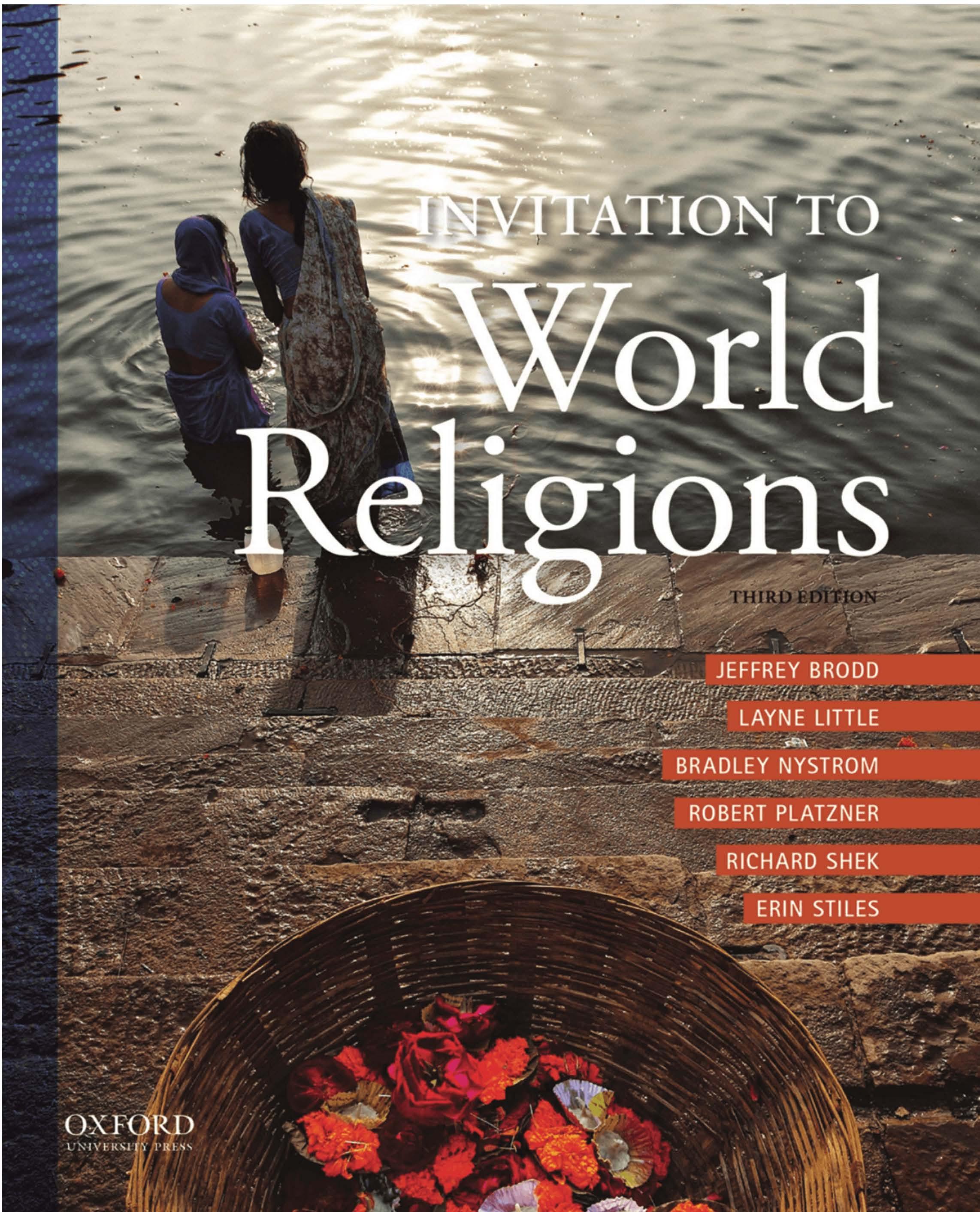
Invitation
to World Religions 4th Edition Jeffrey Brodd
https://ebookmass.com/product/invitation-to-world-religions-4thedition-jeffrey-brodd/
ebookmass.com
Neighboring Faiths: A Christian Introduction to World Religions 2nd Edition, (Ebook PDF)
https://ebookmass.com/product/neighboring-faiths-a-christianintroduction-to-world-religions-2nd-edition-ebook-pdf/
ebookmass.com
RELG 4: Introduction to World Religions 4th Edition Robert E. Van Voorst
https://ebookmass.com/product/relg-4-introduction-to-worldreligions-4th-edition-robert-e-van-voorst/
ebookmass.com
Long-term effects of psychedelic drugs: A systematic review Jacob S. Aday
https://ebookmass.com/product/long-term-effects-of-psychedelic-drugsa-systematic-review-jacob-s-aday/
ebookmass.com
Introduction to Graph Theory 2, 2002 reprint Edition
Douglas B. West
https://ebookmass.com/product/introduction-to-graphtheory-2-2002-reprint-edition-douglas-b-west/
ebookmass.com
Revisiting Searle on Deriving "Ought" from "Is" 1st Edition Paolo Di Lucia (Editor)
https://ebookmass.com/product/revisiting-searle-on-deriving-oughtfrom-is-1st-edition-paolo-di-lucia-editor/
ebookmass.com
Neuroanesthesia: A Problem-Based Learning Approach David E Traul
https://ebookmass.com/product/neuroanesthesia-a-problem-basedlearning-approach-david-e-traul/
ebookmass.com
Choral Music: Methods and Materials 2nd Edition, (Ebook PDF)
https://ebookmass.com/product/choral-music-methods-and-materials-2ndedition-ebook-pdf/
ebookmass.com
Aukl■ Gilly Macmillan
https://ebookmass.com/product/aukle-gilly-macmillan/
ebookmass.com
Engineering Economics of Life Cycle Cost Analysis: 2nd Edition John Vail Farr
https://ebookmass.com/product/engineering-economics-of-life-cyclecost-analysis-2nd-edition-john-vail-farr/
ebookmass.com
THIRD EDITION
JEFFREY BROOD
CaliforniaStateUniversity, Sacramento
LAYNE LITTLE
University ofCalifornia, Davis
BRADLEY NYSTROM
CaliforniaState University, Sacramento
ROBERT PLATZNER
CaliforniaState University,Sacramento
RICHARD SHEK
CaliforniaState University, Sacramento
ERIN STILES
University ofNevada, Reno
Oxford New York
Oxford University Press
Oxford University Press is adepartmentofthe University of Oxford. ltfurthers the University's objectiveofexcdlencein research, scholarship, andeducation bypublishingworldwide.
Oxford is aregistered trademarkofOxford Universicy Press in the UK and certain othercountries.
Publishedinthe UnitedScates ofAmericaby Oxford University Press 198 MadisonAvenue,NewYork, NY l0016, UnitedScates ofAmerica.
© 2019, 2016, 2013by Oxford University Press
Forcities covered by Section 112 ofthe US Higher Education OpportunityAct, please visitwww.oup.com/us/hefor the latest informationabout pricingand alternateformats.
Allrightsreserved. No partofchis publication may bereproduced, storedin aretrieval system, or transmitted, in anyformor by any means, withouttheprior permission in writingofOxford University Press, or asexpressly permittedbylaw,bylicense,or under terms agreed with the appropriate reproduction rights organization. Inquiries concerningreproductionoutsidethe scopeoftheabove shouldbe sentco the Rights Department, Oxford University Press, attheaddress above.
Youmustnot circulatethis work in anyother form andyoumuseimposechis sameconditiononany acquirer.
LibraryofCongressCataloging-in-Publication Data
Names:Brodd,Jeffrey,author.
Tide: Invitationcoworld religions /Jeffrey Brodd, CaliforniaState University, Sacramento [and 5 others].
Description: Third Edition. I NewYork :Oxford University Press, 2018.
Identifiers: LCCN 2017060154I ISBN9780190690816 (pbk.)
Subjects: LCSH: Religions.
Classification: LCC BL80.3.B7542018 I DOC200-dc23
LCrecord availableat hccps://lccn.loc.gov/2017060154
987 6 5432 1
Printed by LSC Communications, UnitedScares ofAmerica
1 • An Invitation to the Study of World Religions 3
APPROACHINGTHE STUDY OF WORLD RELIGIONS 4
Religion asa Subject of Academic Inquiry 5
WHAT RELIGIONS DO 10
Religious Questionsand Challenges 11
Religion and Violence 18
Dimensions of Religions 19
Teachings 20
Historical Development 20
Wayof Life 21
RELIGIONS IN THE MODERN WORLD 21
Modernization and Related Phenomena 22
The Changing Roles of Women in Religions 23
The Encounter of Religion and Science 24
AN ACADEMIC APPROACH TO THE STUDY OF RELIGIONS 25
Balance and Empathy 25
Comparative and MultidisciplinaryApproaches 25
CONCLUSION 27
2 • Indigenous Religions of North America 31
THE TEACHINGS OF INDIGENOUS NORTH AMERICAN RELIGIONS 34
Creation and Origins 35
Life Lessons in Myths 38
The Importance of Balance: Humanityand the Natural World 39
Sacred Language and Sacred Time 41
VOICES: An Interview with Brian Melendez 43
THE HISTORYOF INDIGENOUS NORTH AMERICAN RELIGIONS 45
Conquest, Colonization, and Christianity 45
Resistance Movements 46
GLOBALSNAPSHOT: TheWorld Turns toStanding Rock 49
Indigenous North American Religions and Non-Native Practitioners 50
INDIGENOUS NORTH AMERICAN RELIGIONS AS A WAY OF LIFE 50
Healing 50
Women and Gender in Indigenous North American Religions 51
Rites of Passage 52
Rites of Renewal and Rites of Purification 54
CONCLUSION 56
3 • Indigenous Religions of Africa 61
THE TEACHINGS OF INDIGENOUS AFRICAN RELIGIONS 65
Myths 65
Supernatural Beings: Gods and Spirits 66
VOICES: Interviews withSammyLetoole and Festus Ogunbitan 67
Humanityandthe Human Condition 71
THE HISTORYOF INDIGENOUS AFRICAN RELIGIONS 73
TheSpread of Islam 73 Christianity and Colonialism 74
Reform and Resistance 74
GLOBALSNAPSHOT: African Religions in theAmericas 76
INDIGENOUS AFRICAN RELIGIONS AS A WAY OF LIFE 77
Communicating with theSpirit World 77
Using Supernatural Powers 80
Women in Indigenous African Religions 81
Life-Cycle Rituals 82
CONCLUSION 86
4 • Hinduism 91
THE TEACHINGS OF HINDUISM 93
Hindu Beliefs about Divine Reality 93
The Individual and the Quest for Liberation 98
Three Paths to Liberation 100
Vedanta: The PredominantSchool of Hindu Philosophy 102
Yoga 104
The Individual andSociety 104
VOICES: An Interview with Jayashree Venkatesan 108
HinduSacredTexts 108
TheSects of Hinduism 113
THE HISTORY OF HINDUISM 116
The Indus ValleyCivilization 116
Who Are the Aryans? 118
The Vedic Period 119
The Age of the Guptas 119
The Development of Bhakti 120
Tantra 121
Hindus and Muslims During the Mughal Dynasty 121
Colonial Critique and the Hindu Reformers 122
GandhiandtheStruggle for Indian Independence 125
Hindutva and Hindu Nationalism 126
Hindu Nationalism and Violence 127
GLOBALSNAPSHOT: From India to Iowa: Hinduism in the Heartland 128
The Future of Hinduism 128
HINDUISM AS AWAYOF LIFE 129
Temples and Icons 129
Forms of Worship 130
Rites of Passage 132
Pilgrimage 134
Women inHinduism 135
Festivals and Holidays 136
Performance Traditions 138
CONCLUSION 139
5 e Buddhism 145
THE TEACHINGS OF BUDDHISM 147
The Life of the Buddha 147
What Did the Buddha Teach? 150
VOICES: An Interview with KatherineSei 155
THE HISTORY OF BUDDHISM 156
The Period of the BuddhistCouncils 157
Theravada Buddhism 159
Mahayana Buddhism 160
Vajrayana Buddhism 166
Buddhism in India 169
Buddhism Beyond India 170
x Contents
TheWesternTransmission 174
Buddhism andSectarianViolence: MyanmarandSriLanka 175
Buddhists intheWorldToday 176
BUDDHISM AS A WAYOF LIFE 177
WhoIsa Buddhist? 177
GLOBALSNAPSHOT:TheEmergenceofWestern Buddhism 178
The Buddha'sTeachingson Ethics and "SkillfulMeans" 179
Meditation and theCultivationof Mind 180
Mantra, LiturgicalRitual, andChanting 182
ConversionandOrdination 182
WomeninBuddhism 182
SacredPlacesandObjectsofVeneration 183
Holidays and Festivals 185
Funerary Rites 186
CONCLUSION 187
6 • Jainism 193
THETEACHINGSOF JAINISM 196
Mahavira, theTwenty-Fourth andLastTirthankaraofThis WorldCycle 196
An EternalSuccessionofTirthankaras 197
Jainism and Hinduism 198
AhimsaandAsceticism: Jainism'sIdeals 199
TheoryoftheUniverse 200
LiberationandSalvation 203
THEHISTORYOF JAINISM 205
TheIndian HistoricalContext 205
The Legacyof theTirthankaras:Jainism through theCenturies 206
Jainism inToday's World 207
GLOBALSNAPSHOT:JainsBeyondIndia 208
JAINISM ASA WAY OF LIFE 209
Digambaras andShvetambaras 209
VOICES:AnInterviewwithGirishShah 210
TheAsceticLife 212
Jainism andWomen 215
The ReligiousLifeof theJainLaity 215
CONCLUSION 218
7 • Sikhism 223
THETEACHINGSOF SIKHISM 225
TheLifeofGuruNanak 226
8
9
SikhScripture 229
On God, the Human Condition, and SpiritualLiberation 230
Teachings of Guru Gobind Singh andthe Khalsa 233
THE HISTORY OF SIKHISM 234
Guru Nanak's Successors 234
Guru GobindSingh and the Khalsa 235
Sikhs in Conflictand in Search of Nationhood 237
Sikhs in the Diaspora 237
GLOBALSNAPSHOT: A Century ofSikhs in America 239
SIKHISM AS A WAY OF LIFE 240
VOICES: An Interview with Onkar Singh 240
Daily Devotional Practices 242
Sikh Worship intheGurdwara 242
Life-Cycle Rituals 243
Worship, Work, and Charity 245
Women andSikhism 245
Sikh Identity 246
CONCLUSION 247
• Chinese Religions: Confucianism and Daoism
THE TEACHINGS OF CONFUCIANISM AND DAOISM 254
Ancient Chinese Religious Views 254
The Teachings of Confucianism 258
Confucianism and Women 267
The Teachings of Daoism 268
Daoism and Women 274
THE HISTORY OF CONFUCIANISM AND DAOISM 275
The History of Confucianism 275
GLOBALSNAPSHOT: Confucianism in Korea 279
The History of Daoism 282
GLOBALSNAPSHOT: Daoism in Feng Shui and Martial Arts 287
CONFUCIANISM AND DAOISM AS WAYS OF LIFE 288
Confucian Rituals 289
VOICES: An Interview with Jason Ch'ui-hsiaoTseng 290
Daoist Practices 292
CONCLUSION 296
• Shinto 303
THE TEACHINGS OF SHINTO 305
The Meaning of Kami 306
Creation Myth in the Kojiki 306
VOICES: AnInterview with Watanabe Minoru 310
THE HISTORY OF SHINTO 311
Ancient Shinto 311
Medieval Shinto 312
The Modern Period 313
Ultranationalism, Imperialism, and Conflict 314
GLOBALSNAPSHOT: Anime and Shinto 316
SHINTO AS A WAY OF LIFE 317
Fertility Rites 317
Women inShinto 318
Rites of Purification, Presentation, Petition, and Participation 319
Religious Observances throughout the Year 323
Shinto in JapanToday 325
CONCLUSION 326
10 • Zoroastrianism 331
THE TEACHINGS OF ZOROASTRIANISM 333
Monotheism and Dualism 333
The Divine Realm 335
Creation and the Nature of the World 336
Human Nature and Human Destiny 338
THE HISTORY OF ZOROASTRIANISM 339
The Background ofZoroastrianism 339
Zarathushtra 340
ZoroastrianScriptures 341
Zoroastrianism through theCenturies 342
Zoroastrianism in the Modern World 346
ZOROASTRIANISM AS A WAY OF LIFE 348
GLOBALSNAPSHOT: Zoroastrianism in New York 349
Ritual Practices 350
VOICES: AnInterview with Rustom Ghadiali 350
Women andZoroastrianism 353
Holy Days and Rites of Passage 354
The ZoroastrianCommunity: Social and Ethical Responsibilities 356
CONCLUSION 357
11 • Judaism 361
THETEACHINGS OFJUDAISM 363
God 363
Torah 364
Covenant and Election 366
Israel 368
The Messiah and the Messianic Age 369
The Afterlife 369
Jewish Mysticism 370
THE HISTORY OF JUDAISM 372
Dispersion, Assimilation, and Collective Identity 373
The Biblical Period 373
The Second Temple Period 375
The Formative Age 377
The Conflict betweenJudaism and Christianity 379
The Age of Philosophy and Mysticism 380
The Modern Era 385
Reform Movements in Europe and the United States 386
The Shoah and the State of Israel 390
ReligiousViolence and the Future of Zionism 393
The Future of Judaism in the Contemporary World 394
Women andJudaism 395
GLOBAL SNAPSHOT:Judaism in India 396
Judaism as a Way of Life 397
The Major Festivals 397
VOICES: An Interview with Rabbi Brad Bloom 399
The Minor Festivals 402
The Sabbath 404
Life-Cycle Events 405
Other Sacred Practices 409
Prayer 410
CONCLUSION 412
12 • Christianity 419
THETEACHINGS OF CHRISTIANITY 421
The Life of Jesus 422
The Teachings of Jesus 424
Paul and the Mission to the Gentiles 426
God, Creation, and Original Humanity 427
God as Trinity 429
The Consequences of Sin 430
Grace and Salvation 431
The Church 432
VOICES: An Interview with Terrie M. and Father Art 432
Scripture 433
Tradition 435
"Last Things" 436
The Afterlife 436
Christianity and Other Religions: Points of Conflict 440
THE HISTORY OF CHRISTIANITY 441
Christianity in the Roman World 441
The Church in the Middle Ages 446
The Reformation: Protestant Challenge and Roman Catholic Response 450
Christianity in the Modern World 454
Women in Christianity 459
Christianity Today and Tomorrow: Trends and Prospects 459
GLOBALSNAPSHOT: The Kimbanguist Church in Africa 461
CHRISTIANITYASA WAY OF LIFE 462
Worship 463
Sacraments 464
Church Interiors:SacredSpace 466
Prayer 468
The Liturgical Year 469
Veneration ofSaints 470
Social and Political Activism 471
CONCLUSION 472
13 • Islam 479
THE TEACHINGS OF ISLAM 482
Muhammad and the Revelations 483
The Holy Our'an 484
The Teachings of the Our'an 485
Commentary on the Our'an 489
TheSunnah: The Example of the Prophet 489
The Five Pillars 490
THE HISTORY OF ISLAM 498
The Hijra and the Growth of the Muslim Community 499
The Crisis ofSuccession and the Rightly Guided Caliphs 502
The Umayyads and the Abbasids 503
Later IslamicEmpires: The Ottomans, the Mughals, and theSafavids 505
Islam and Nationalism 506
Islamic Reform Movements 508
Varieties ofIslam:Sunni andShi'a 511
Islam andPolitical Conflict Today 513
Muslims in North America 514
GLOBALSNAPSHOT: Muslims in the West 516
!SLAM AS A WAY OFLIFE 517
VOICES: An Interviewwith Dola K. and Taslima S. 517
The Qur'an in Daily life 519
What IsJihad? 520
The Islamic Year and Holidays 521
The Shari'a: Islamic Law 522
Sufism 523
Marriage and Family 526
Women and Islam 528
CONCLUSION 532
14 • New Religious Movements 537
WHATIS"NEW" ABOUT NEW RELIGIOUS MOVEMENTS? 538
Modernization, Globalization, and Secularization 539
Theoretical Models and Social Typologies 541
ALTERNATIVE CHRISTIANITIES AND THEIR OFFSHOOTS 544
The Church of Jesus Christ of Latter-day Saints 545
GLOBALSNAPSHOT: TheChurchof Jesus Christ of Latter-day Saints in Africa 547
Christian Science and NewThought 548
Adventism 550
Jehovah's Witnesses 551
The Family (Children of God) 552
The Unification Church 553
Rastafarianism 554
THE REDISCOVERYOFEASTERN RELIGIOUS THOUGHT 556
The Theosophical Society 556
ISKCON: The International Societyfor Krishna Consciousness 557
The Osho Rajneesh Movement 558
Transcendental Meditation 560
Falun Gong 561
VOICES: An Interviewwith Dr. Xinyu David Zhang 562
Aum Shinrikyo: A Cult of Violence 563
THE REVIVAL OF ESOTERIC AND NEOPAGAN THOUGHT 564
Eckankar 564
The Raelian Movement 565
The Church of Scientology 567
Wicca 569
THEEMERGENCEOFUNIVERSALIST RELIGIOUSTHOUGHT 571
The Baha'i Faith 572
Unitarian Universalism 574
xvi Contents
THE NEW ATHEISM 575 CONCLUSION 577
Notes N-1
Glossary G-1
Credits C-1
Index 1-1
PREFACE
THE WORLD'S RELIGIOUS TRADITIONS have offered answers co the weightiest questions ofhuman existence, contributed to the formation ofpolitical and social institutions, inspired masterpieces ofart and literature, and provided many ofthe cultural values and ideals on which entirecivilizations have been based. Today, religions continue to play a powerful role in shaping the ways in which people understand themselves, the world they livein, and how they should live.
Invitation to WorldReligionswelcomes students to the study ofreligion. In these pages, weopen the doorsandinvite thereader toexplorewith wonder and respect. We describe the essential features ofthe world's great religions and show how they have responded co basichuman needs and to theculturalsettingsin which they developed. Wealso compare theanswersreligions haveoffered us regarding some ofthe most essential human questions: Why are we here? What is the nature ofthe universe? How should we live? Our aim has been co balance concision and substancein an introductory text thatis accessible, as well as challenging.
A team ofauthors cooperated in writing thisbook, each one ofus bringing a particular scholarly expertise-as well as years ofteachingexperience-to the respective chapters. We wrote with important learning goals in mind. We want students to gain an objective understanding ofthe beliefs and practices associated with the world's religions, but we also encourage an empathetic appreciation ofwhat their beliefs and actionsactually meanto adherents. By emphasizing the connections betweenreligious traditions and their cultural contexts, we seek to heighten awareness ofthe extent to which religions have influenced, and been influenced by, politics and society, literature, thearts, and philosophy. Wealso examinetherole ofreligionsin our contemporary world, particularly thefrequentlyuneasyboundariesbetweenreligionandscience, urbanization, and globalization. A thoughtful readingofthis book will provideaclear w1derstandingofthe characteristics that are unique to individual religions and highlight many oftheir shared qualities and concerns. Finally, we trust that every reader will find here a means ofmaking sense ofother ways ofbelieving and living and of finding a solid basis for the tolerance and respect that are so criticaUy important in timeslike ours.

Religions are multidimensional. Accordingly, all but the first and lase chapters examine three primary aspects of each religion: teachings, historical development, and way of life (practices and experiences). These three aspects are presented in the same order in every chapter in which they appear. Although they appear in the same order, we do not devote equalattentionco each category. To do so would be co ignore the varying nature of the religious traditions. Judaism, for example, naturally calls for extensive attention to historical development; Jainism, for which an early historical record bardy exists, does not. In each case, we shape our coverage in the way that seems mostnaturalgiven the characteristics ofthe tradition under discussion.
Teachings. Commonly found in scriptures, myths, creeds, and ethical codes, the basic teachings of a religious tradition convey its answers to fundamental questions, such as: What is the humancondition?How canthehuman conditionbe improved or transcended? What is the nature of the world? What is ultimate reality, and how is it revealed? The authority on which a rdigion answers questions such as these is also important. Are its truths revealed? Are they the products of intellectual effort? Are they insights gained in moments of profound psychological experience? Or are they simply traditional ways of looking at reality and our place within it that have been passed down from generation to generation?
Historical Development. Every religious tradition has a history that reveals how and why itdeveloped its distinctive features, including its system of bdiefs, leadership and governance structures, social institutions, and forms of artistic expression. Sometimes the forces that generate change arise largely from within a tradition, as in the case of conflict between opposing sects or schools of thought. At other times they operate from the outside, aswith the influence exerted by Western powers on foreign colonies and spheres of influence or through the expansion of a tradition into a new cultural milieu. A religion's history also functions co unite the individualwith others in a shared memory of the past thathelps to explain the present.
Way of Life. By way of life we mean practices-the things people do in making practical application of their beliefs, such as engagingin prayer, meditation, communalworship, or various other forms of ritual. Closely rdated co practices are modes of experience, the ways in which a religion's adherents actually experience the consequences ofapplyingits teachings. These might include a sense of inner peace, a more acute sense of community with ochers, a greater awareness ofthe divine, or a state of profound enlightenment.
ORGANIZATION
Our survey begins in Chapter l with an introductory essay on the academic study of religions. After considering what religion is, the chapter identifies some of the ocher
important questions scholars ask: What do rdigions do? What issues of universal concern do they address? What do scholars mean when theyspeak ofmystical experience or of transcendence? What are the constituent parts of rdigious traditions? How are rdigionstodaybeingaffectedby the forces of modernization, urbanization, globalization, and science? Finally, the chapter explains why a multidisciplinary approach is necessary in any serious attempt to understand the world'srdigions.
Chapter 1 is followed by two chapters on indigenous traditions. The book concludes with a chapter on new religions. The ten chapters in the middle are organized according to geographical and (roughly) chronological order, asfollows: first, the rdigions of South Asian origin (Hinduism, Buddhism, Jainism, Sikhism); next, those of East Asian origin (Chinese religions, Japanese religions); and, finally, those of West Asian (or Middle Eastern) origin (Zoroastrianism, Judaism, Christianity, Islam). By studyingthe indigenoustraditionsfirst, studentswillgain an appreciationnot onlyfor the many living traditions that continue to thrive but also for certain ways of being rdigious (such as emphasis on oral transference of myths and other sacred lore) that at one timewerepredominantin most oftoday's majorworldrdigions. Bystudyingnew rdigions last, students will likewise gain an appreciation for living traditions, along with glimpsing the sorts of innovations that occur within the old traditions, too, as rdigionsrespond to thecultural,technological,social, and culturalchangesandchallenges of the world around them.
NEW TO THETHIRDEDITION
• Global Snapshot boxes We've created a new illustrated feature (called "Global Snapshot") highlighting how rdigions are reflected in a globalized world or as they arelived in diasporic communities. Examples includetherichandsurprising relationship between Shinto and anime; the use of social media by indigenous Pacific Islanders to support Sioux peoples protesting at Standing Rock; Jain involvement in contemporary environmentalist movements in the United States; and the marvelouslydiverseJewish communities oflndia.
• Enhanced coverage ofreligionandconAict Inresponseto reviewersuggestions, the third edition features clear andbalanced explorations of thewaysinwhichreligion has sometimesbeen used to justify oppression and conflict. For example, the intertwining ofrdigionand increased nationalism in contemporary politics across the globe is exploredin contexts as diverse as Shinto, Buddhism, andJudaism.
• Vibrant, diverse new "Voices" Several new interviews in the popular "Voices" feature provide further evidence of the diversity of contemporary religious practices. For example, inChapter 13, "Islam,"two youngMuslimwomendiscusstheir faith, their families, andtheirambitions. AndinChapter2, "IndigenousReligionsof NorthAmerica," a youngman of Northern-Southern Paiutc and Western Shoshone descent movinglydescribes his participation in"cry ceremonies" and how Indians of hisgeneration arc restoringtraditional beliefs and practices.
Preface XIX
• A more uniform writing style We have worked throughout co streamline and clarify the text, particularly in response to many helpful reviewer suggestions. The use of italics as well as the spelling of non-English terms has been regularized, and information in the "Notes" chat may be of immediate interest co students has been incorporated into the main text.
• A more inviting lookThe overall design of this third edition has been refreshed for readability as well as beauty. In addition, abundant new photographs were selected co emphasize the diversity of how religions are lived today.
Alongwith the general features described above, chapter-specific revisions of particular note include:
• Chapter l, "An Invitation to the Study of World Religions," features more extensive consideration of contemporary trendsin religious studiesscholarship; expanded coverage of atheism, agnosticism, and thegrowingprevalence ofreligious "nones"; and a new section on the "downside" of religion, includingviolence and terrorism perpetrated in itsname.
• Chapter 2, "Indigenous Religions of North America," includes a new "Voices" interview with supporting coverage of the Southern Paiuce. Anew section on the 2016-2017 protests against the Dakota AccessPipeline atStanding RockIndian Reservation demonstratesthe alignment of political, culcural, andspiritual interests among indigenous peoples in North America and globally.
• Chapter 4, "Hinduism," features a new opening vignette sec during the annual festival Ganesh Chaturthi; an improved organizationalscheme chat situates Yoga along with the major philosophical systems as significant components of Jnana Marga; enhanced treatment of gurus and saints; and expanded coverage of the role of British colonialism in shaping and challenging the practice of Hinduism.
• Chapter 10, "Zoroastrianism," includes a new opening vignette set in Mumbai, the city with the largest Zoroastrian population, as well as a revised "Teachings" section thatrepresentsZoroastrianism as a livedreligion in today'sworld.
• Chapter 14, "New Religious Movements," features a new section on Falun Gong.
FEATURES AND PEDAGOGY
Because the concepts and contexts of the world'sreligions are immeasurably complex, we have worked co present a clear and accessible introductory text. Our cone throughout, while deeply informed by scholarship, is both accessible and appropriate for a widerange of undergraduate students.Consistentchapter structure also helpsstudents co focus on content inasmuch as they do not have co renavigace each chapter anew. With the exception ofChapters land 14, every chapter in thebookincludesthree core modules: the teachings of thereligion, the historyof thereligion, and the religion as a way of life. This modular and predictable structure is also highly flexible, allowing
instructorsto easily create a syllabusthat best reflects their own scholarly interests, as well as their students' learning needs.
The study of religionscan be daunting to newcomers, who must plunge into a sea of unfamiliarwords, concepts, and cultures. For thisreason, we have provided a variety of ways for students to engage with important ideas, personaljties, and visuals, suchas:
Voices: In personal, candid interviews, a diverse array of people share the ways they live their faith.
Visual Guide: Akey to important religioussymbols, provided inaneasy-to-read table for quick reference and comparison, is included in each "Way of Life" section.
Maps and Timelines: Each chapter beginswith amap to provide geographical context for a religion's development. Key features and places mentioned in the chapter are called out on the map. A timeline at the beginning of each chapter provides social and political context to help students situate each religion and trace its development. Finally, a comprehensive timelineof all the main religions covered in the book appearson the inside frontand back covers.
Seeking Answers: After each chapter's Conclusion, we revisit three essential questions that religionsstrive to answer. Thisfeature helps students to review the chapter's key concepts and informs their ability to compare constructively the ways in which different religions address the same fundamental human questions:
What is ultimate reality?
How should welivein this world?
What isour ultimate purpose?
Other elements that facilitate teaching and learning include:
Glossary: Important termsare printed in bold type at their first occurrence and are explained in the Glossary that follows each chapter. In addition, a glossaryat the back of the book includesall of the key termsfrom the entire text. End-of-Chapter Questions: Each chapter concludes with two sets of questions to help students review, retain, and reAect upon chapter content. For Review questions prompt studentsto recall andrehearse key chapter concepts; For Further Reflection questions require students to think critically about the chapter's nuancesandencourage both discussionand personal response byinvitingstudents to engage in a more penetrating analysis of a tradition or taking a comparative approach.
Suggestions for Further Reading: Theseannotated listsof someof thebest and most recent works on each tradition, as well as online resources, encourage students to pursue their exploration of the world's religions.
Preface
Rich, robust, and relevant visuals: Finally, wehavefilledthe pagesof Invitation to WorldReligionswith an abundance of color photographs and illustrationsthat addvisual experience to our verbaldescriptions of sacredobjects, buildings, art, and othermaterialaspectsof religiouslife.
SUPPLEMENTS
A rich set of supplemental resources is available to support teaching andlearning in this course. These supplements include an Instructor's Manual, Computerized Test Bank, PowerPoint lecture outlines, and Student Resources on the OxfordUniversity PressAncillary Resource Center (ARC) and LearningManagement System Cartridges with Instructor andStudent Resources.
The Oxford University Press Ancillary Resource Center (ARC) at oup-arc.com housesthe following Instructor'sResources:
• A Computerized Test Bank, including multiple-choice, true/false, fill-in-theblank, and essay questions
• An Instructor's Manual, including
• A "penciland paper" version ofthe ComputerizedTest Bank
• Chapter Summaries
• Chapter Learning Objectives
• SuggestedWeb Linksandocher Media Resources
• Web Links to Sacred Texts, accompanied by brief descriptions of their content
• Listsof KeyTermsand their definitionsfrom the text
• PowerPoint lecture outlines
• PowerPoint art database
• CNNvideo clips on significant beliefs, practices, and placesrelatedto a variety of traditions covered in Invitation to WorldReligions. Eachclip is approximately five to tenminutes inlengthandaccompaniedby a summary and seriesof discussion andmultiple-choice questions.
TheStudentResourceson the ARCcontain the following:
• Level oneandlevd two Student Quizzes taken from the Test Bank
• Chapter Learning Objectives
• SuggestedWeb Links and other Media Resources
• Web Links to SacredTexts
• Flashcards of Key Termsfrom the text
LearningManagement System Cartridges are also available for Invitation to World Religions. For more information on this, please contact your OUP representative or call 1-800-280-0280.
Preface xxiii
ACKNOWLEDGMENTS
This book has been a long time in the making. Along the way, family members, friends, and colleagues have supported us with love, patience, insights, and suggestions. We also are graceful to the people who kindly granted us interviews. Although thereis nowaywe can adequacdy thankthem here, we can at least acknowledge chem: Edward Allen, Dr. Onkar Bindra, Rabbi Brad Bloom, Jill Brodd, Jon Bradd, Mary Chapman, TunayDurmaz, Lin Estes, Rev. Dr. Christopher Flesoras, Rustom Ghadiali, Dola Haque, George and Kausalya Hart, Kathleen Kelly, Hari Krishnan, Sammy Letoole, Rayand Marilyn Little,Terrie McGraw, Brian Melendez, WatanabeMinoru, Annie Nr5trom, Festus Ogunbican, MiaSasaki, Katherine Sei, Girish Shah, Taslima Shams, Kitty Shek, Davesh Soneji, Jason Ch'ui-hsiao Tseng, Archana Venkatesan, Krishna and Jayashree Venkatesan, Father Arc Wehr, S.J., Dr. David Zhang, Susan Orr, Linda Dekker, and members ofthe Sacramento DharmaCenter.
We have also beneficed immensely from the hard work and good suggestions of colleagues across thecountry. ln particular, we would like to thank:
KennethBass,Central Texas College
Stephanie Curran, Hagerstown CommunityCollege
Alison Downie, Indiana University of Pennsylvania
Jonathan Ebel, University ofIllinois
Karen Hornsby, NorthCarolinaA& T State University
Emily Hocho, St. PetersburgCollege
JeffreyKaplan, University ofWisconsin
Samantha Langsdale, University of NorthTexas
Ann Stegner, Northern Virginia CommunityCollege
Laura Stevens, Northwest Florida ScaceCollege
Hugh Urban, Ohio Scace University
Kelly Yan Andel, University of New Mexico
We extend ourspecial thanks to RaviGupta ofUtah State University, who responded so very helpfully co our request for expert advice.
We would also like co acknowledge the suggestions of reviewers for the first and second editions, which continued to inform our work on this new edition:
Asad Q Ahmed, Washington Universityin St. Louis
KennethAtkinson, University of Northern Iowa
John Baumann, University ofOregon
Todd M. Brenneman, University of Central Florida
Robert E. Brown, James Madison University
David Bush, ShastaCollege
Dexter E.Callender,Jr., University of Miami
John L. Crow, FloridaState University
Philip R. Drey, KirkwoodCommunityCollege-Cedar Rapids
James Ford, Rogers State University
Matthew Hallgarch, Tarleton Scace University
XXIV Preface
Kathleen Hladky, FloridaState University
Jon lnglett, Oklahoma City Community College
MariaJaoudi, CaliforniaState University-Sacramento
Jeffrey Kaplan, University of Wisconsin-Oshkosh
Brad Karelius, Saddleback College
Kate S. Kelley, UniversityofMissouriColumbia
Erik Larson, Florida International University
Mirna Lactouf,ArizonaState University
Peter David Lee, Columbia College
lainS. Maclean, James Madison University
Wade Maki, University ofToledo
Isabel Mukonyora, Western Kentucky University
Benjamin Murphy, FloridaSeate University-Panama City
SamuelMurrell, University of North Carolina, Wilmington
Tom Norris, Florida International University
Robert Y. Owusu, ClarkAtlanta University
ArlettePoland, College of the Desert Marialuce Ronconi, MaristCollege
JohnSanders, Hendrix College
ClaudiaSchippert, University of Central Florida
Paul G. Schneider, University of South Florida
JoshuaShelly, University of Illinois-Urbana-Champaign
TheresaS. Smith, Indiana University ofPennsylvania
GlennSnyder, Indiana UniversityPurdue University Indianapolis
PhillipSpivey, University ofCentral Arkansas
Dennis P. Tishken, Eastern Florida State College
Hugh B. Urban,OhioState University
James W. Ward,James Madison University
KeithWelsh, Webster University
Mien-Too Wesley, PennsylvaniaState University-AJtoona
DavidWisdo, ColumbusState UniversityJamesA. Zdler, San Joaquin Delta College
Finally,we owe adebtofgratitude co the editorialstaffatOxford UniversityPress. Our thanksgo co Executive Editor Robert Miller, who originallyinvitedus to publish with Oxford and continues co oversee the project. Robert has put us in the excellent care ofSenior Development Editor Meg Bocceon,whose professionalismandskillhave been an essential guiding force. Associate Editor Alyssa Palazzo helpfully managed reviews and other editorial tasks, including work with art and images and with the development and production of supplements for the book. Our thanks also go co Senior Production Editor William Murray for managing the final stages of the book's production.