https://ebookmass.com/product/introduction-to-modern-
Instant digital products (PDF, ePub, MOBI) ready for you
Download now and discover formats that fit your needs...
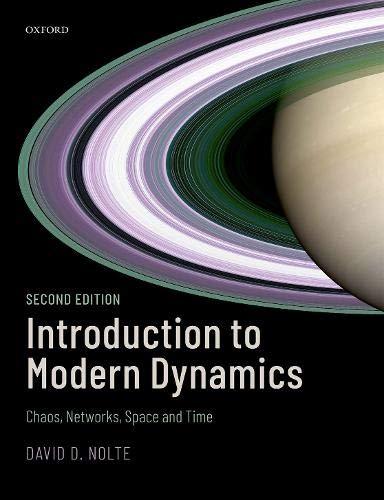
Introduction to Modern Dynamics: Chaos, Networks, Space, and Time 2nd Edition David D. Nolte
https://ebookmass.com/product/introduction-to-modern-dynamics-chaosnetworks-space-and-time-2nd-edition-david-d-nolte/
ebookmass.com
Introduction to Modern Analysis, 2nd Edition Kantorovitz
https://ebookmass.com/product/introduction-to-modern-analysis-2ndedition-kantorovitz/
ebookmass.com
Introduction to Chaos, Fractals and Dynamical Systems Phil Laplante
https://ebookmass.com/product/introduction-to-chaos-fractals-anddynamical-systems-phil-laplante/
ebookmass.com
Oracle (Cerberus MC Book 30) Marie James
https://ebookmass.com/product/oracle-cerberus-mc-book-30-marie-james/
ebookmass.com
Quality Control and Evaluation of Herbal Drugs: Evaluating Natural Products and Traditional Medicine Pulok K. Mukherjee Dr.
https://ebookmass.com/product/quality-control-and-evaluation-ofherbal-drugs-evaluating-natural-products-and-traditional-medicinepulok-k-mukherjee-dr/
ebookmass.com
The Migration of Chinese Women to Mexico City Ximena Alba Villalever
https://ebookmass.com/product/the-migration-of-chinese-women-tomexico-city-ximena-alba-villalever/
ebookmass.com
The Politics of German Idealism Christopher Yeomans
https://ebookmass.com/product/the-politics-of-german-idealismchristopher-yeomans/
ebookmass.com
Xi Jinping. Political Career, Governance, and Leadership, 1953-2018 1st Edition Alfred L. Chan
https://ebookmass.com/product/xi-jinping-political-career-governanceand-leadership-1953-2018-1st-edition-alfred-l-chan/
ebookmass.com
Explorations in Diversity: Examining the Complexities of Privilege, Discrimination, and Oppression Sharon K Anderson
https://ebookmass.com/product/explorations-in-diversity-examining-thecomplexities-of-privilege-discrimination-and-oppression-sharon-kanderson/
ebookmass.com
Cities and Urban Life 7th Edition, (Ebook PDF)
https://ebookmass.com/product/cities-and-urban-life-7th-edition-ebookpdf/
ebookmass.com
INTRODUCTIONTOMODERNDYNAMICS DavidD.Nolte PurdueUniversity
GreatClarendonStreet,Oxford,OX26DP, UnitedKingdom
OxfordUniversityPressisadepartmentoftheUniversityofOxford. ItfurtherstheUniversity’sobjectiveofexcellenceinresearch,scholarship, andeducationbypublishingworldwide.Oxfordisaregisteredtrademarkof OxfordUniversityPressintheUKandincertainothercountries
©DavidD.Nolte2019
Themoralrightsoftheauthorhavebeenasserted
FirstEditionpublishedin2015
SecondEditionpublishedin2019
Impression:1
Allrightsreserved.Nopartofthispublicationmaybereproduced,storedin aretrievalsystem,ortransmitted,inanyformorbyanymeans,withoutthe priorpermissioninwritingofOxfordUniversityPress,orasexpresslypermitted bylaw,bylicenceorundertermsagreedwiththeappropriatereprographics rightsorganization.Enquiriesconcerningreproductionoutsidethescopeofthe aboveshouldbesenttotheRightsDepartment,OxfordUniversityPress,atthe addressabove
Youmustnotcirculatethisworkinanyotherform andyoumustimposethissameconditiononanyacquirer
PublishedintheUnitedStatesofAmericabyOxfordUniversityPress 198MadisonAvenue,NewYork,NY10016,UnitedStatesofAmerica
BritishLibraryCataloguinginPublicationData Dataavailable
LibraryofCongressControlNumber:2019945041
ISBN978–0–19–884462–4(hbk.) ISBN978–0–19–884463–1(pbk.)
DOI:10.1093/oso/9780198844624.001.0001
Printedandboundby CPIGroup(UK)Ltd,Croydon,CR04YY
LinkstothirdpartywebsitesareprovidedbyOxfordingoodfaithand forinformationonly.Oxforddisclaimsanyresponsibilityforthematerials containedinanythirdpartywebsitereferencedinthiswork.
PrefacetotheSecondEdition IntroductiontoModernDynamics:Chaos,Networks,SpaceandTime (2015)ispart ofanemergingeffortinphysicseducationtoupdatetheundergraduatephysics curriculum.Conventionaljunior-levelmechanicscourseshaveoverlookedmany moderndynamicstopicsthatphysicsmajorswilluseintheircareers:nonlinearity, chaos,networktheory,econophysics,gametheory,neuralnets,geodesicgeometry, amongothers.Thesearethetopicsattheforefrontofphysicsthatdrive high-techbusinessesandstart-upswheremorethanhalfofphysicistsare employed.Thefirsteditionof IntroductiontoModernDynamics contributed tothiseffortbyintroducingthesetopicsinacoherentprogramthatemphasized commongeometricpropertiesacrossawiderangeofdynamicalsystems.
Thesecondeditionof IntroductiontoModernDynamics continuesthattrend byexpandingchapterstoincludingadditionalmaterialandtopics.Itrearranges severaloftheintroductorychaptersforimprovedlogicalflowandexpandsthem toaddnewsubjectmatter.Thesecondeditionalsohasadditionalhomework problems.
Neworexpandedtopicsinthesecondeditioninclude
• Lagrangianapplications
• Lagrange’sundeterminedmultipliers
• Action-anglevariablesandconservedquantities
• Thevirialtheorem
• Non-autonomousflows
• AnewchapteronHamiltonianchaos
• Rationalresonances
• Synchronizationofchaos
• Diffusionandepidemicsonnetworks
• Replicatordynamics
• Gametheory
• Anextensivelyexpandedchapteroneconomicdynamics
Thegoalofthesecondeditionof IntroductiontoModernDynamics isto strengthenthesectionsonconventionaltopics(whichstudentsneedfortheGRE physicssubjecttest),makingitanidealtextbookforbroaderadoptionatthejunior
level,whilecontinuingtheprogramofupdatingtopicsandapproachesthatare relevantfortherolesthatphysicistswillplayinthetwenty-firstcentury.
Thehistoricaldevelopmentofmoderndynamicsisdescribedin Galileo Unbound:APathAcrossLife,theUniverseandEverything,byD.D.Nolte,published byOxfordUniversityPress(2018).
Preface:TheBestPartsofPhysics Thebestpartsofphysicsarethelasttopicsthatourstudentseversee.These aretheexcitingnewfrontiersofnonlinearandcomplexsystemsthatareat theforefrontofuniversityresearchandarethebasisofmanyofourhightechbusinesses.TopicssuchastrafficontheWorldWideWeb,thespreadof epidemicsthroughgloballymobilepopulations,orthesynchronizationofglobal economiesaregovernedbyuniversalprinciplesjustasprofoundasNewton’s Laws.Nonetheless,theconventionaluniversityphysicscurriculumreservesmost ofthesetopicsforadvancedgraduatestudy.Twojustificationsaregivenforthis situation:first,thatthemathematicaltoolsneededtounderstandthesetopicsare beyondtheskillsetofundergraduatestudents,andsecond,thatthesearespecialty topicswithnocommonthemeandlittleoverlap.
IntroductiontoModernDynamics:Chaos,Networks,SpaceandTime dispelsthese myths.Thestructureofthisbookcombinesthethreemaintopicsofmodern dynamics—chaostheory,dynamicsoncomplexnetworksandthegeometryof dynamicalspaces—intoacoherentframework.Bytakingageometricviewof physics,concentratingonthetimeevolutionofphysicalsystemsastrajectories throughabstractspaces,thesetopicsshareacommonandsimplemathematical languagewithwhichanystudentcangainaunifiedphysicalintuition.Giventhe growingimportanceofcomplexdynamicalsystemsinmanyareasofscienceand technology,thistextprovidesstudentswithanup-to-datefoundationfortheir futurecareers.
Whilepursuingthisaim, IntroductiontoModernDynamics embedsthetopics ofmoderndynamics—chaos,synchronization,networktheory,neuralnetworks, evolutionarychange,econophysics,andrelativity—withinthecontextoftraditionalapproachestophysicsfoundedonthestationarityprinciplesofvariational calculusandLagrangianandHamiltonianphysics.Asthephysicsstudentexplores thewiderangeofmoderndynamicsinthistext,thefundamentaltoolsthatare neededforaphysicist’scareerinquantitativescienceareprovided,including topicsthestudentneedstoknowfortheGraduateRecordExamination(GRE). Thegoalofthistextbookistomodernizetheteachingofjunior-leveldynamics, responsivetoachangingemploymentlandscape,whileretainingthecoretraditionsandcommonlanguageofdynamicstexts.
Aunifyingconcept:geometryanddynamics Instructorsorstudentsmaywonderhowanintroductorytextbookcancontain topics,underthesamebookcover,oneconophysicsandevolutionaswellasthe physicsofblackholes.However,itisnotthephysicsofblackholesthatmatters, ratheritisthedescriptionofgeneraldynamicalspacesthatisimportantandthe understandingthatcanbegainedofthegeometricaspectsoftrajectoriesgoverned bythepropertiesofthesespaces.Allchangingsystems,whetherinbiologyor economicsorcomputerscienceorphotonsinorbitaroundablackhole,are understoodastrajectoriesinabstractdynamicalspaces.
Newtontakesabackseatinthistext.Hewillalwaysbeattheheartofdynamics, butthemodernemphasishasshiftedawayfrom F = ma toanewerperspective whereNewton’sLawsarespecialcasesofbroaderconcepts.Thereareeconomic forcesandforcesofnaturalselectionthatarejustasrealastheforceofgravity onpointparticles.Forthatmatter,eventheforceofgravityrecedesintothe backgroundasforce-freemotionincurvedspace-timetakesthefore.
UnlikeNewton,HamiltonandLagrangeretaintheirpositionshere.Thevariationalprincipleandtheminimizationofdynamicalquantitiesarecoreconcepts indynamics.Minimizationoftheactionintegralprovidestrajectoriesinreal space,andminimizationofmetricdistancesprovidestrajectories—geodesics— indynamicalspaces.ConservationlawsarisenaturallyfromLagrangians,and energyconservationenablessimplificationsusingHamiltoniandynamics.Space andgeometryarealmostsynonymousinthiscontext.Definingthespaceofa dynamicalsystemtakesfirstimportance,andthegeometryofthedynamicalspace thendeterminesthesetofalltrajectoriesthatcanexistinit.
Acommontool:dynamicalflowsandthe ODEsolver Amathematicalflowisasetoffirst-orderdifferentialequationsthataresolved usingasmanyinitialvaluesastherearevariables,whichdefinesthedimensionality ofthedynamicalspace.Mathematicalflowsareoneofthefoundationstonesthat appearscontinuallythroughoutthistextbook.Nearlyallofthesubjectsexplored here—fromevolvingvirusestoorbitaldynamics—canbecapturedasaflow. Therefore,acommontoolusedthroughoutthistextisthenumericalsolution oftheordinarydifferentialequation(ODE).Computerscanbebothaboonand abanetothemodernphysicsstudent.Ontheonehand,theeasyavailabilityof ODEsolversmakeseventhemostobscureequationseasytosimulatenumerically, enablinganystudenttoplotaphaseplaneportraitthatcontainsallmannerof behavior.Ontheotherhand,physicalinsightandanalyticalunderstandingof complexbehaviortendtosufferfromthecomputer-gamenatureofsimulators. Therefore,thistextbookplacesastrongemphasisonanalysis,andonbehavior
underlimitingconditions,withthegoaltoreduceaproblemtoafewsimple principles,whilemakinguseofcomputersimulationstocaptureboththewhole pictureaswellasthedetailsofsystembehavior.
Traditionaljunior-levelphysics:howtouse thisbook Allthetraditionaltopicsofjunior-levelphysicsarehere.Fromthesimplest descriptionoftheharmonicoscillator,throughLagrangianandHamiltonian physics,torigidbodymotionandorbitaldynamics—thecoretopicsofadvanced undergraduatephysicsareretainedandareinterspersedthroughoutthistextbook.
What’ssimpleincomplexsystems? Thetraditionaltopicsofmechanicsareintegratedintothebroaderviewofmodern dynamicsthatdrawsfromthetheoryofcomplexsystems.Therangeofsubject matterencompassedbycomplexsystemsisimmense,andacomprehensive coverageofthistopicisoutsidethescopeofthisbook.However,thereisstill asurprisinglywiderangeofcomplexbehaviorthatcanbecapturedusingthe simpleconceptthatthegeometryofadynamicspacedictatesthesetofall possibletrajectoriesinthatspace.Therefore,simpleanalysisoftheassociated flowsprovidesmanyintuitiveinsightsintotheoriginsofcomplexbehavior.The specialtopicscoveredinthistextbookare:
• Chaostheory(Chapter4)
Muchofnonlineardynamicscanbeunderstoodthrough linearization ofthe flow equations(equationsofmotion)aroundspecial fixedpoints.Visualizingthe dynamicsofmulti-parametersystemswithinmultidimensionalspacesismade simplerbyconceptssuchasthe Poincarésection, strangeattractors thathave fractal geometry,and iterativemaps
• Synchronization(Chapter6)
Thenonlinear synchronization oftwoormoreoscillatorsisastartingpointfor understandingmorecomplexsystems.Asthewholecanbegreaterthanthesum oftheparts,globalpropertiesoftenemergefromlocalinteractionsamongthe parts.Synchronizationofoscillatorsissurprisinglycommonandrobust,leading to frequency-entrainment, phase-locking,and fractionalresonance thatallowsmall perturbationstocontrollargenetworksofinteractingsystems.
Preface:TheBestPartsofPhysics
Preface:TheBestPartsofPhysics
• Networktheory(Chapter7)
Everywherewelooktoday,weseenetworks.Theonesweinteractwithdaily aresocialnetworksandrelatednetworksontheWorldWideWeb.Inthis chapter,individualnodesarejoinedintonetworksofvariousgeometries,suchas small-worldnetworks and scale-freenetworks.The diffusion ofdiseaseacrossthese networksisexplored,andthesynchronizationof Poincaréphaseoscillators can inducea Kuramototransition tocompletesynchronicity.
• Evolutionarydynamics(Chapter8)
Someoftheearliestexplorationsofnonlineardynamicscamefromstudiesof populationdynamics.Inamoderncontext,populationsaregovernedbyevolutionary pressuresandbygenetics.Topicssuchasviralmutationandspread,aswellasthe evolutionofspecieswithina fitnesslandscape,areunderstoodassimplebalances within quasispecies equations.
• Neuralnetworks(Chapter9)
Perhapsthemostcomplexofallnetworksisthebrain.Thischapterstartswiththe singleneuron,whichisa limit-cycleoscillator thatcanshowinteresting bistability and bifurcations.Whenneuronsareplacedintosimpleneuralnetworks,suchas perceptrons or feedforwardnetworks,theycandosimpletasksaftertrainingby error back-propagation.Thecomplexityofthetasksincreaseswiththecomplexityof thenetworks,and recurrentnetworks,likethe Hopfieldneuralnet,canperform associatedmemoryoperationsthatchallengeeventhehumanmind.
• Econophysics(Chapter10)
Amostbafflingcomplexsystemthatinfluencesourdailyactivities,aswellas thetrajectoryofourcareers,istheeconomyinthelargeandthesmall.The dynamicsof microeconomics determineswhatandwhywebuy,whilethedynamics of macroeconomics drivesentirenationsupanddowneconomicswings.These forcescanbe(partially)understoodintermsofnonlineardynamicsandflows ineconomicspaces. Businesscycles andthediffusionofpricesonthe stockmarket arenolessunderstandablethanevolutionarydynamics(Chapter8)ornetwork dynamics(Chapter7),andindeeddrawcloselyfromthosetopics.
• Geodesicmotion(Chapter11)
Thischapteristhebridgebetweentheprecedingchaptersoncomplexsystems andthesucceedingchaptersonrelativitytheory(bothspecialandgeneral).This iswherethegeometryofspaceisfirstfullydefinedintermsofa metrictensor,and wheretrajectoriesthrougha dynamicalspace arediscoveredtobepathsof force-
freemotion.The geodesicequation (ageodesicflow)supersedesNewton’sSecond Lawasthefundamentalequationofmotionthatcanbeusedtodefinethepathof massesthroughpotentiallandscapesandthepathoflightthroughspace-time.
• Specialrelativity(Chapter12)
Inadditiontotraditionaltopicsof Lorentztransformations and mass-energy equivalence,thischapterpresentsthebroaderviewoftrajectoriesthroughMinkowski space-time whosegeometricpropertiesaredefinedbythe Minkowskimetric. Relativisticforcesandnoninertial(accelerating)framesconnecttothenext chapterthatgeneralizesallrelativisticbehavior.
• Generalrelativity(Chapter13)
Thephysicsof gravitation,morethananyothertopic,benefitsfromtheoverarchingthemedevelopedthroughoutthisbook—thatthegeometryofaspace definesthepropertiesofalltrajectorieswithinthatspace.Indeed,inthisgeometric viewofphysics,Newton’sforceofgravitydisappearsandisreplacedbyforcefreegeodesicsthrough warped space-time.Mercury’sorbitaroundtheSun, andtrajectoriesoflightpast blackholes,areelementsofgeodesicflowswhose propertiesareeasilyunderstoodusingthetoolsdevelopedinChapter4and expandeduponthroughoutthistextbook.
Preface:TheBestPartsofPhysics
Acknowledgments Igratefullyacknowledgethemanyhelpfuldiscussionswithmycolleagues EphraimFischbach,AndrewHirsch,SherwinLove,andHisaoNakanishiduring thepreparationofthisbook.Specialthankstomyfamily,LauraandNicholas,for puttingupwithmy“hobby”forsomanyyears,andalsofortheirencouragement andmoralsupport.IalsothanktheeditorsatOxfordUniversityPressforhelpin preparingthemanuscriptandespeciallySonkeAdlungforhelpingmerealizemy vision.
PartI GeometricMechanics Traditionalapproachestothemechanicsofparticlestendtofocusonindividual trajectories.Incontrast,moderndynamicstakesaglobalviewofdynamical behaviorbystudyingthesetofallpossibletrajectoriesofasystem.Modern dynamicsfurthermorestudiespropertiesindynamicalspacesthatcarrynames like statespace, phasespace, and space–time.Dynamicalspacescanbehighlyabstract andcanhavehighdimensionality.Thisinitialpartofthebookintroducesthe mathematicaltoolsnecessarytostudythegeometryofdynamicalspacesandthe resultingdynamicalbehaviorwithinthosespaces.Centraltomoderndynamics isHamilton’sPrincipleofStationaryActionastheprototypicalminimization principlethatunderliesmuchofdynamics.Thisapproachwillleadultimately (inPartIII)tothegeodesicequationofgeneralrelativity,inwhichmatter warpsMinkowskispace(space–time),andtrajectoriesexecuteforce-freemotion throughthatspace.
PhysicsandGeometry Moderndynamics,likeclassicaldynamics,isconcernedwithtrajectoriesthrough space—thedescriptionsoftrajectories(kinematics)andthecausesoftrajectories (dynamics).However,unlikeclassicalmechanics,whichemphasizesmotionsof physicalmassesandtheforcesactingonthem,moderndynamicsgeneralizesthe notionoftrajectoriestoencompassabroadrangeoftime-varyingbehaviorthat goesbeyondmaterialparticlestoincludeanimalspeciesinecosystems,market pricesineconomies,andvirusspreadonconnectednetworks.Thespacesthat thesetrajectoriesinhabitareabstract,andcanhaveahighnumberofdimensions. ThesegeneralizedspacesmaynothaveEuclideangeometry,andmaybecurved likethesurfaceofasphereorspace–timewarpedbygravity.Thecentralobject ofinterestindynamicsistheevolvingstateofasystem.Thestatedescriptionof asystemmustbeunambiguous,meaningthatthenextstatetodevelopintimeis
1 1.1Statespaceanddynamical flows4
1.2Coordinaterepresentationof dynamicalsystems10
1.3Coordinatetransformations15
1.4Uniformlyrotatingframes25
1.5Rigid-bodymotion32
1.6Summary48
1.7Bibliography48
1.8Homeworkproblems49
Foucault’sPenduluminthePantheoninParis
1 SeeA.E.Jackson, PerspectivesofNonlinearDynamics (CambridgeUniversity Press,1989).
uniquelydeterminedbythecurrentstate.Thisiscalleddeterministicdynamics, whichincludesdeterministicnonlineardynamicsforwhichchaotictrajectories mayhaveanapparentrandomnesstotheircharacter.
Thischapterlaysthefoundationforthedescriptionofdynamicalsystemsthat movecontinuouslyfromstatetostate.Familiesoftrajectories,calleddynamical flows,arethefundamentalelementsofinterest;theyarethefieldlinesofdynamics. Thesefieldlinesaretodeterministicdynamicswhatelectricandmagneticfield linesaretoelectromagnetism.Onekeydifferenceisthatthereisonlyonesetof Maxwell’sequations,whileeverynonlineardynamicalsystemhasitsownsetof equations,providinganearlylimitlessnumberofpossibilitiesforustostudy.
Thischapterbeginsbyintroducinggeneralideasoftrajectoriesasthesetofall possiblecurvesdefinedbydynamicalflowsinstatespace.Todefinetrajectories, wewillestablishnotationtohelpusdescribehigh-dimensional,abstract,and possiblycurvedspaces.Thisisaccomplishedthroughtheuseofmatrix(actually tensor)indicesthatlookstrangeatfirsttoastudentfamiliaronlywithvectors, butwhichareconvenientdevicesforkeepingtrackofmultiplecoordinates.The nextstepconstructscoordinatetransformationsfromonecoordinatesystem toanother.Forinstance,acentralquestioninmoderndynamicsishowtwo observers,oneineachsystem,describethecommonphenomenathatthey observe.The physics mustbeinvarianttothechoiceofcoordinateframe,butthe descriptionscandifferwidely.
1.1Statespaceanddynamicalflows Configurationspaceisdefinedbythespatialcoordinatesneededtodescribea dynamicalsystem.Thepaththesystemtakesthroughconfigurationspaceisits trajectory.Eachpointonthetrajectorycapturesthesuccessiveconfigurationsof thesystemasitevolvesintime.However,knowingthecurrentconfigurationof thesystemdoesnotguaranteethatthenextconfigurationcanbedefined.For instance,thetrajectorycanloopbackandcrossitself.Thevelocityvectorthat pointedonedirectionattheearliertimecanpointinadifferentdirectionatalater time.Therefore,avelocityvectormustbeattachedtoeachconfigurationtodefine howitwillevolvenext.
1.1.1Statespace Byaddingvelocities,associatedwitheachofthecoordinates,totheconfiguration space,anewexpandedspace,called statespace,iscreated.Foragiveninitial condition,thereisonlyasinglesystemtrajectorythroughthismultidimensional space,andeachpointonthetrajectoryuniquelydefinesthenextstateofthe system.1 Thistrajectoryinstatespacecancrossitselfonlyatpointswhereallthe velocitiesvanish,otherwisethefuturestateofthesystemwouldnotbeunique.
Example1.1 Statespaceofthedampedone-dimensionalharmonicoscillator
Thedampedharmonicoscillatorinonecoordinatehasthesinglesecond-orderordinarydifferentialequation2
where m isthemassoftheparticle, γ isthedragcoefficient,and k isthespringconstant.Anysetofsecond-order time-dependentordinarydifferentialequations(e.g.,Newton’ssecondlaw)canbewrittenasalargersetoffirst-order equations.Forinstance,thesinglesecond-orderequation(1.1)canberewrittenastwofirst-orderequations
Itisconventionaltowritethesewithasingletimederivativeontheleftas
inthetwovariables (x, v) with
and
. Statespace forthissystemofequationsconsistsoftwo coordinateaxesinthetwovariables (x, v),andtheright-handsideoftheequationsareexpressedusingonlythesame twovariables.
Tosolvethisequation,assumeasolutionintheformofacomplexexponentialevolvingintimewithanangular frequency ω as(seeAppendixA.1)
InsertthisexpressionintoEq.(1.1)toyield
withthecharacteristicequation
wherethedampingparameteris β = γ/2m,andtheresonantangularfrequencyisgivenby ω 2 0 = k/m.Thesolution ofthequadraticequation(1.6)is
Usingthisexpressionfortheangularfrequencyintheassumedsolution(1.4)gives
Considertheinitialvalues x(0) = A and ˙ x(0) = 0;thenthetwoinitialconditionsimposethevalues
2 The“dot”notationstandsforatimederivative: ˙ x = dx/dt and ¨ x = d 2 x/dt 2 .Itisa modernremnantofNewton’sfluxionnotation.
Example1.1 continued
Thefinalsolutionis
whichisplottedinFig.1.1(a)forthecasewheretheinitialdisplacementisamaximumandtheinitialspeediszero. Theoscillator“ringsdown”withtheexponentialdecayconstant β Theangularfrequencyofthering-downisnot equalto ω0 ,butisreducedtothevalue ω 2 0 β 2 .Hence,thedampingdecreasesthefrequencyoftheoscillatorfrom itsnaturalresonantfrequency.Asystemtrajectoryinstatespacestartsataninitialcondition (x0 , v0 ),anduniquely tracesthetimeevolutionofthesystemasacurveinthestatespace.InFig.1.1(b),onlyonetrajectory(streamline)is drawn,butstreamlinesfillthestatespace,althoughtheynevercross,exceptatsingularpointswhereallvelocitiesvanish. Streamlinesarethefieldlinesofthevectorfield.Muchofthestudyofmoderndynamicsisthestudyofthegeometric propertiesofthevectorfield(tangentstothestreamlines)andfieldlinesassociatedwithadefinedsetofflowequations.
Figure1.1 Trajectoriesofthedampedharmonicoscillator.(a)Configurationpositionversustime.(b)Statespace,everypoint ofwhichhasatangentvectorassociatedwithit.Streamlinesarethefieldlinesofthevectorfieldandaredense.Onlyasingle streamlineisshown.
1.1.2Dynamicalflows Thisbookworkswithageneralformofsetsofdynamicalequationscalleda dynamicalflow.Theflowforasystemof N variablesisdefinedas
or,moresuccinctly,
whichisasystemof N simultaneousequations,wherethevectorfunction Fa is afunctionofthetime-varyingcoordinatesofthepositionvector.If Fa isnotan explicitfunctionoftime,thenthesystemis autonomous,withan N -dimensional statespace.Ontheotherhand,if Fa isanexplicitfunctionoftime,thenthesystem is non-autonomous,withan(N + 1)-dimensionalstatespace(spaceplustime)The solutionofthesystemofequations(1.12)isasetoftrajectories qa (t ) throughthe statespace.
Inthisbook,thephrase configurationspace isreservedforthedynamicsof systemsofmassiveparticles(withsecond-ordertimederivativesasinExamples 1.1and1.2).Thedimensionofthestatespaceforparticlesystemsisevendimensionalbecausethereisavelocityforeachcoordinate.However,forgeneral dynamicalflows,thedimensionofthestatespacecanbeevenorodd.For dynamicalflows,statespaceandconfigurationspacearethesamething,andthe phrase statespace willbeused.
Example1.2 Anautonomousoscillator Systemsthatexhibitself-sustainedoscillation,knownasautonomousoscillators,arecentraltomanyofthetopics ofnonlineardynamics.Forinstance,anordinarypendulumclock,drivenbymechanicalweights,isanautonomous oscillatorwithanaturaloscillationfrequencythatissustainedbygravity.Onepossibledescriptionofanautonomous oscillatorisgivenbythedynamicalflowequations
Example1.2 continued
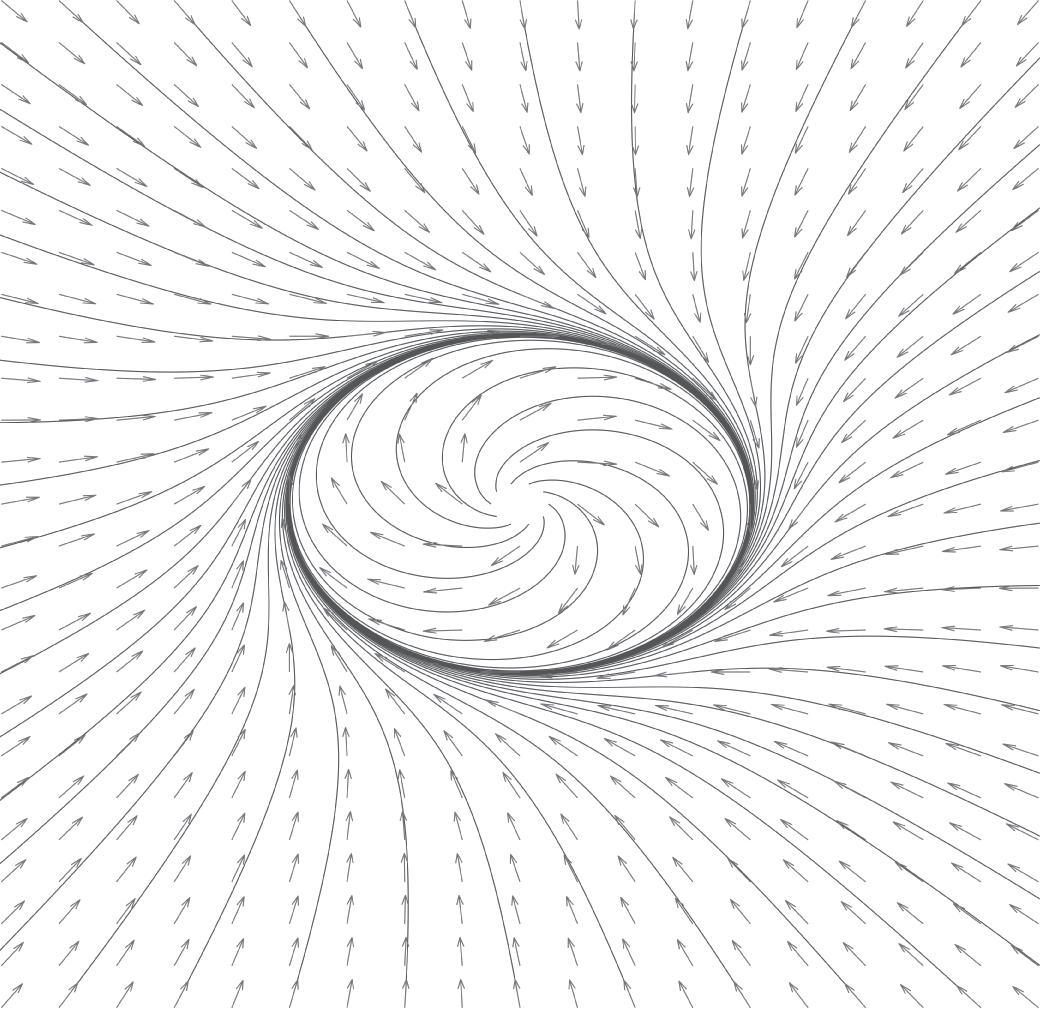
where ω isanangularfrequency.The(x, y)state-spacetrajectoriesofthissystemarespiralsthatrelaxtotheunitcircleas theyapproachadynamicequilibrium,showninFig.1.2.Withoutthesecondtermsontheright-handside,thisissimply anundampedharmonicoscillator.Examplesandproblemsinvolvingautonomousoscillatorswillrecurthroughoutthis bookinChapters4(Chaos),6(Synchronization),7(Networks),8(EvolutionaryDynamics),9(Neurodynamics)and 10(EconomicDynamics).
Figure1.2 Flowlinesofanautonomousoscillatorwithalimitcycle.Alltrajectoriesconvergeonthelimitcycle.
Example1.3 Undampedpoint-masspendulum Theundampedpoint-masspendulumiscomposedofapointmass m onamasslessrigidrodoflength L.Ithasa two-dimensionalstate-spacedynamicsinthespace(
, ω )describedby
Thestate-spacetrajectoriescanbeobtainedbyintegratingtheseequationsusinganonlinearODEsolver.Alternatively, thestate-spacetrajectoriescanbeobtainedanalyticallyifthereareconstantsofthemotion.Forinstance,becausethe pendulumisundampedandconservative,thetotalenergyofthesystemisaconstantforagiveninitialcondition,
referencedtothebottomofthemotioninconfigurationspace.Ifthemaximumangleofthependulumforagiven trajectoryis θ0 ,then
Example1.3 continued and
whichissolvedfortheinstantaneousangularvelocity ω as
Theseareoscillatorymotionsfor θ0 <π .Forlargerenergies,themotionisrotational(alsoknownaslibration).The solutionsinthiscaseare
wherecos θ 0 isnotaphysicalangle,butisaneffectiveparameterdescribingthetotalenergyas
The(θ , ω )state-spacetrajectoriesoftheundampedpoint-masspendulumareshowninFig.1.3.Whenthestatespace pertainstoaconservativesystem,itisalsocalled phasespace.ConservativesystemsareHamiltoniansystemsandare describedinChapter3.
Figure1.3 Statespaceoftheundampedpoint-masspendulum.Theconfigurationspaceisone-dimensionalalongtheangle θ .Closedorbits(oscillation)areseparatedfromopenorbits(rotation)byacurveknownasaseparatrix.
Example1.4 Athree-variableharmonicoscillator Asanexampleofanodd-dimensionalstatespace,considerthethree-dimensionalflow
Thismathematicalmodelisequivalenttoathree-variablelinearoscillatorwithnodissipation.Tosolvethisflow,assume asolutionintheformofacomplexexponentialintimeevolvingwithanangularfrequency ω as x(t ) = Xei ω t .Insert thisexpressionintoEq.(1.21)toyield
Solvetheseculardeterminantfortheangularfrequency ω :
Thesolutions,foranyinitialcondition,arethreesinusoidswithidenticalamplitudesandfrequencies,butwithrelative phasesthatdifferby ±2π/3.Adynamicalsystemlikethisis not equivalenttomodelingaparticlewithinertia.Itisa dynamicalflowwithastate-spacedimensionequaltothreethatmightmodelthebehaviorofaneconomicsystem,or anecologicalbalanceamongthreespecies,oracoupledsetofneurons.Inthestudyofmoderndynamicalsystems, theemphasismovesawayfromparticlesactedonbyforcesandbecomesmoreabstract,butalsomoregeneraland versatile.
Thisexamplehaswhatiscalled“neutralstability.”Thismeansthatevenaslightperturbationofthissystemmay causetheoscillationstoeitherdecaytozeroortogrowwithoutbound.InChapter4,astabilityanalysiswillidentify thissystemasa“center.”Thisoscillatorysystemisnotarobustsystem,becauseasmallchangeinparametercan causeamajorchangeinitsqualitativebehavior.However,therearetypesofself-sustainedoscillationsthat are robust, maintainingsteadyoscillatorybehaviorevenasparameters,andevendissipation,change.Theseareautonomous oscillatorsandareinvariablynonlinearoscillators.
1.2Coordinaterepresentationofdynamical systems
Although physics mustbeindependentofanycoordinateframe,thedescription ofwhatwesee does dependonwhichframeweareviewingitfrom.Therefore,it oftenwillbeconvenienttoviewthesamephysicsfromdifferentperspectives.For
thisreason,weneedtofindtransformationlawsthatconvertthedescriptionfrom oneframetoanother.
1.2.1Coordinatenotationandconfigurationspace Thepositionofafreeparticleinthree-dimensional(3D)spaceisspecifiedby threevaluesthatconventionallycanbeassignedtheCartesiancoordinatevalues x(t ), y(t ),and z(t ).Thesecoordinatesdefinetheinstantaneousconfiguration ofthesystem.Ifasecondparticleisadded,thentherearethreeadditional coordinates,andthe configurationspace ofthesystemisnowsix-dimensional. Ratherthanspecifyingthreenewcoordinatenames,suchas u(t ), v(t ),or w(t ), itismoreconvenienttouseanotationthatisextendedeasilytoanynumberof dimensions.Indexnotionaccomplishesthisbyhavingtheindexspanacrossall thecoordinatevalues.
Vectorcomponentsthroughoutthistextwillbedenotedwithasuperscript.For instance,thepositionvectorofafreeparticlein3DEuclideanspaceisa3-tuple ofvalues
Vectorsarerepresentedbycolumnmatrices(whichisthemeaningofthesuperscriptshere3 ).Itisimportanttorememberthatthesesuperscriptsarenot “powers.”Acoordinatecomponentraisedtoan nthpowerwillbeexpressed as (xa )n .For N freeparticles,asingle3N -dimensionalpositionvectordefines theinstantaneousconfigurationofthesystem.Toabbreviatethecoordinate description,onecanusethenotation
x = xa a = 1, ,3N
(1.26)
wherethecurlybracketsdenotethefullsetofcoordinates.Anevenshorter,and morecommon,notationforavectorissimply
xa (1.27)
wherethefullset a = 1, ,3N isimplied.Caseswhereonlyasinglecoordinate isintendedwillbeclearfromthecontext.Thepositioncoordinatesdevelopin timeas
xa (t )
(1.28)
whichdescribesatrajectoryofthesysteminits3N -dimensionalconfiguration space.
3 Thesuperscriptisapartofthenotationfortensorsandmanifoldsinwhich vectorsdifferfromanothertypeofcomponentcalledacovectorthatisdenoted byasubscript.InCartesiancoordinates, asuperscriptdenotesacolumnvector andasubscriptdenotesarowvector(see AppendixA.3).
1.2.2Trajectoriesin3Dconfigurationspace Atrajectoryisasetofpositioncoordinatevaluesthatvarycontinuouslywith asingleparameteranddefineasmoothcurveintheconfigurationspace.For instance,
where t isthetimeand s isthepathlengthalongthetrajectory.Oncethetrajectory ofapointhasbeendefinedwithinitsconfigurationspace,itishelpfultodefine propertiesofthetrajectory,likethetangenttothecurveandthenormal.The velocityvectoristangenttothepath.Forasingleparticlein3D,thiswouldbe
wherethe ds/dt termissimplythespeedoftheparticle.Inthesimplifiedindex notation,thisis
where T a isaunittangentvectorinthedirectionofthevelocity:
Eachpointonthetrajectoryhasanassociatedtangentvector.Inadditiontothe tangentvector,anotherimportantvectorpropertyofatrajectoryisthenormalto thetrajectory,definedby
where N a istheunitvectornormaltothecurve,andthecurvatureofthe trajectoryis
where R istheradiusofcurvatureatthespecifiedpointonthetrajectory. Theparameterizationofatrajectoryintermsofitspathlength s isoften amore“natural”wayofdescribingthetrajectory,especiallyundercoordinate transformations.Forinstance,inspecialrelativity,timeisnolongeranabsolute parameter,becauseitistransformedinamannersimilartoposition.Thenitis