Every efforthasbeenmadetodetermineandcontactcopyrightholders Inthecaseofany omissions,thepublisherwillbepleased tomakesuitableacknowledgementinfutureeditions.
Library andArchivesCanadaCataloguinginPublication
Title:Introductiontointernationaldevelopment:approaches,actors,issues,andpractice/ PaulA Haslam,JessicaSchafer,Pierre Beaudet.
9 3 Proportionof TotalODA by Region,DACMembers,2016–2017
9 4 TenLargest ODA Recipients,2016–2017
9 5 TenMost ODA-Dependent Countries,2017
12.1 Top MultinationalCorporations by ForeignAssets from Developing and TransitionEconomies,2019
12.2 Spending inBillions of US$,Selected Foundations,Countries,and InternationalOrganizations,2018
14.1 Historicaland Projected AnnualGrowth Rates of GNP Per Capita (2005 US$PPP)
17 1 The Freedom House Classificationof PoliticalRegimes
27 1 Measures of Inequality and Views onRedistributionina Sample of Countries
27.2 VariationinGovernment,Health,and EducationSpending inSample of Countries
28.1 AnnualStatement of Costs and Benefits (D$’000 Constant Market Prices)
28.2 Cash Flow (D$’000)
283 Distributionof Costs and Benefits (Market Prices)
30 1 Vocabularies ofthe Overview Chapters inthe HumanDevelopment Report 2007/8and World Development Report 2010 onGlobalClimate Change
FromthePublisher
Editedby PaulA.Haslam
JessicaSchafer
PierreBeaudet
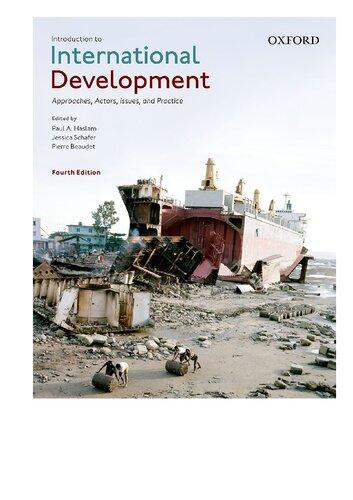
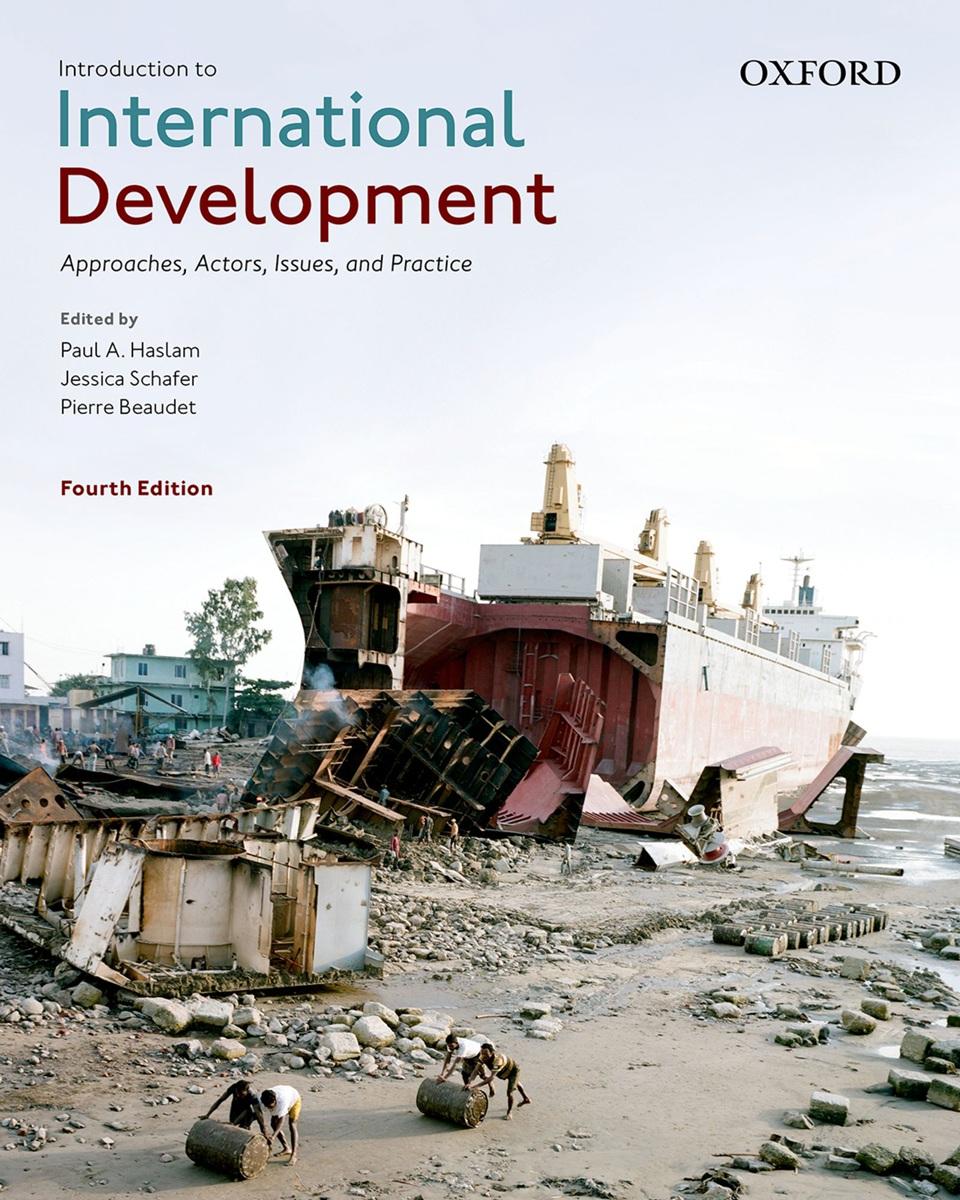
Oxford University Press is pleased topresent the fourtheditionof Introductionto InternationalDevelopment, whichcontinues tooffer comprehensive coverage ofcore theories and topics ininternationaldevelopment studies ina sophisticated yet clear manner,proventoengage students from various backgrounds at the first- and secondyear levels
Whereas most internationaldevelopment textbooks are anchored ina single discipline,suchas politicalscience or economics,Introductionto InternationalDevelopment represents the fullspectrum ofsubject areas that contribute tothe field,withcontributions from internationally acclaimed experts inanthropology,economics, geography,history,internationalaffairs,politics,populationstudies,sociology,urbanplanning,and women ’ s studies
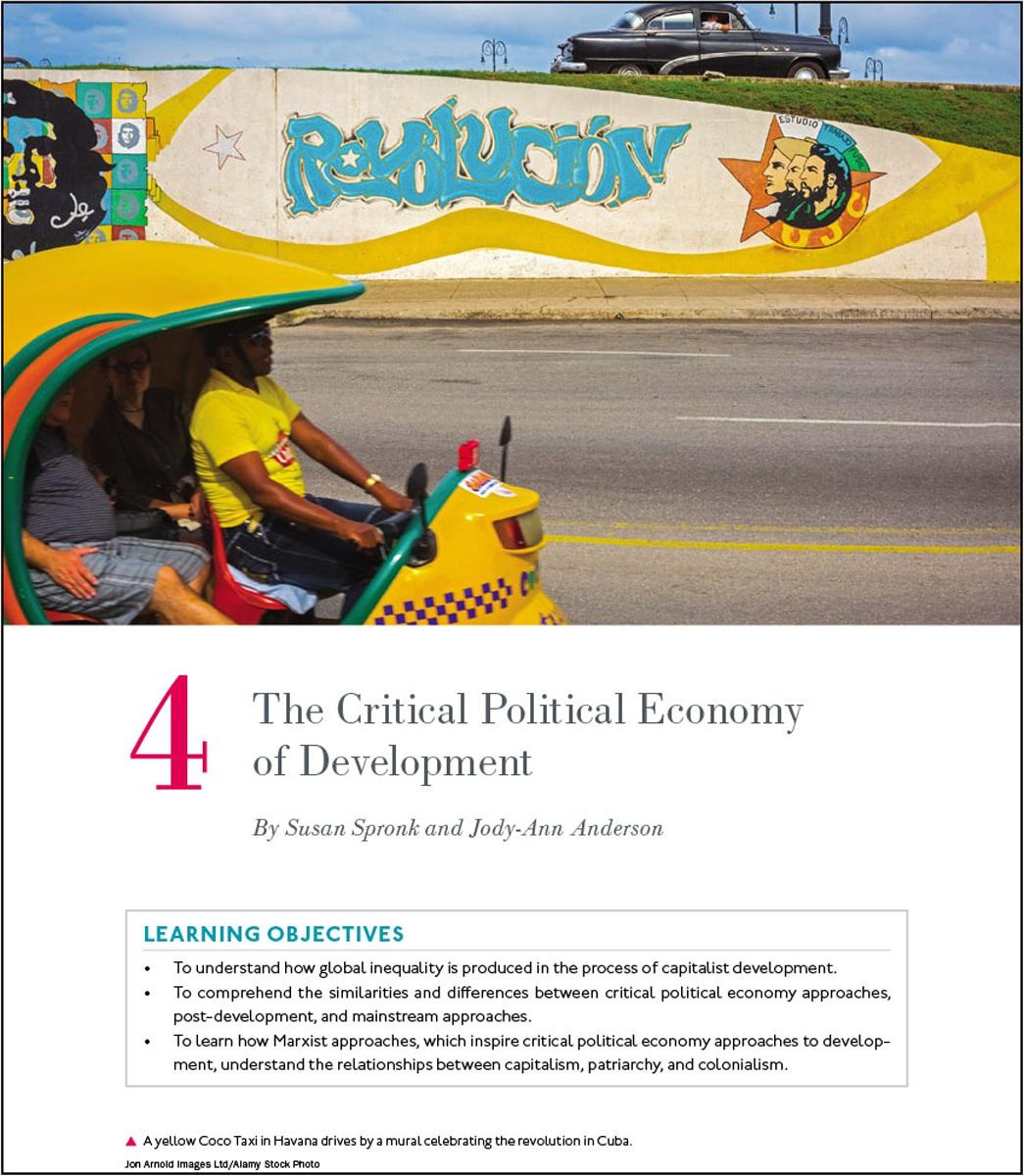
Organized intofour parts examining the theories,actors,issues,and practices ofinternationaldevelopment,this fourtheditionhas beenfully updated and includes coverage ofthe un ’ s Sustainable Development Goals (sdgs) and the impacts ofthe covid-19 pandemic.It alsoincludes twonew chapters oneconomicdevelopment theories (Chapters 3 and 4),a new chapter onrefugees (Chapter 23),and a new chapter oneconomicresilience in Indigenous communities (Chapter 24) The text’s four parts now have introductions that explaintheir goals and the points ofconnectionand overlap betweentheir respective chapters This editionoffers a new full-colour, student-friendly designthat includes updated photos,figures,tables,and maps
IntroductiontoInternationalDevelopmentisaccompaniedbyarangeofonlineresourcesdesignedtoenhancethelearningandteachingexperiences These resourcesareavailableat: wwwoupcom/he/Haslam4e
ForInstructors
AnInstructor’s Manualprovides chapter overviews,learning objectives,key concepts,discussionand debate ideas, and lists ofrecommended videos and further readings
PowerPoint slides summarize key points from eachchapter and may be edited tosuit instructors’ needs.
AnImage Bank provides allimages from the text (photos,figures,tables)
A Test Bank provides multiple-choice,true-or-false,short-answer,and essay questions for eachchapter.
ForStudents
A Student Study Guide provides chapter overviews,learning objectives,key concepts,videoresources,review questions withanswers,and self-grading quizzes
Flashcards ofallkey terms and definitions from the text help students tolearnthese terms and concepts.
AnOnline Appendix provides more discussiononparticular topics from Chapter 28,“Planning and Appraising Development Projects,” including shadow pricing,cost effectiveness analysis,and sensitivity and risk analysis.
Three additionalchapters from the last editionofthe book provide further topics ofstudy: “Theories of Development” by Radhika Desai; “Information,Technologies and Development” by ErwinA Alampay; and “Understanding GlobalPoverty Reduction: Ideas,Actors,and Institutions” by David Hulme and Sophie King
www.oup.com/he/Haslam4e
AWordfromtheEditors
Editedby PaulA.Haslam JessicaSchafer
PierreBeaudet
This is the fourth,revised,and updated editionof Introductionto InternationalDevelopment:Approaches, Actors,Issues,andPractice The world ofdevelopment has changed significantly since the launchofthe first editionin2008 Tomentiononly a few ofthese changes,globalpoverty rates have continued tofall; the globalfight against poverty is now coordinated throughthe Sustainable Development Goals; a more active state has returned tomanage development; China and emerging economies provide lessons that have yet tobe fully understood; Indigenous peoples have emerged as important actors across the developed and developing world; a rising tide of insular nationalism onthe right ofthe politicalspectrum is undermining globalization,while climate change threatens many ofthe advances that have beenmade.This tumultuous decade was capped by the covid-19 pandemicthat swept the world in2020 and exposed the fault lines ofexclusionand inequality inbothdeveloped and developing countries.This new editionaddresses these changes head-on.Chapters from the earlier editions have beenrewritten,and new chapters have beenadded.
Introductionto InternationalDevelopment sets out torespond tothe particular needs ofundergraduate internationaldevelopment programs.Giventhat many programs ofstudy are multidisciplinary innature,there is a clear need for a text that is explicitly multidisciplinary inits approachtothe key issues.Multidisciplinarity has beenat the heart ofthis project from the beginning; it has guided our selectionofauthors,whowere drawnfrom disciplines as varied as politicalscience,economics,sociology,anthropology,history,women’s studies,and geography Many ofthese authors alsohave beeninvolved inworking for and advising development agencies,are grounded by their solid experience oflocalrealities,and represent the ideals ofpraxis towhichour students aspire
TheChallengeofMultidisciplinarity
Introductiontointernationaldevelopment courses are oftenhighly popular electives inthe first and second years of Bachelor of Arts programs This means that textbooks ininternationaldevelopment need toserve a population withdiverse disciplinary experiences and without a commontheoreticalor conceptualbackground.Typically, students donot come just from the diverse fields ofthe socialsciences but alsofrom the faculties of“hard” or applied science and from other multidisciplinary programs withnocommon-core theoreticalapparatus.The challenge ofteaching development studies tosuchanundergraduate audience is not simply one ofproviding multiple views onparticular issues or exposing students tothe diversity ofissues indevelopment studies; it is also more fundamentally about grounding students witha commontheoreticaland conceptualintellectualtoolkit applicable tothe multidisciplinary nature ofdevelopment problems Toour knowledge,noother textbook currently available has the explicit objective ofgrounding a multidisciplinary audience ina way that permits the sophisticated understanding ofdevelopment issues
Inthis respect,the core missionofthis book is tobuild a conceptualtoolkit for first- and second-year undergraduate students withnoprior knowledge ofdevelopment and withdiverse disciplinary backgrounds.For this reason,the book is structured intofour sections: Approaches; Actors; Issues; and Practice The sevenchapters inPart I,Theories and Approaches inInternationalDevelopment,introduce the student tokey concepts,historical contexts ofdevelopment thinking and action,and theoreticalapproaches A noteworthy feature ofthis sectionis the accessible account ofpostmodernand post-colonialapproaches,whichare rarely taught at this levelbut constitute a fundamentalepistemology for muchrecent work indevelopment.Part II,InternationalDevelopment Actors (Chapters 8–14),explains various key externaland internalforces that shape developmentaloutcomes. Chapters 15–25,whichcomprise Part III,Issues inInternationalDevelopment,apply the toolkit learned inthe first twosections toa wide variety ofissue-areas.InPart IV,Practice inInternationalDevelopment,Chapters 26–30 explore practicaland policy issues inmore detail,bringing together the student’s knowledge ofdevelopment approaches,actors,and issues
The book is designed toteachthe student by establishing a series oflayers that progressively deepenthe student’s knowledge ofinternationaldevelopment theory and practice.At the end ofa course,the student has not just accumulated knowledge about development issues but,muchmore fundamentally,has learned how toapproach and study development.
FlexibilityforTeaching
Inadditiontothe need toground a multidisciplinary audience witha commontheoreticaltoolkit,anintroductory textbook alsoneeds tobe pedagogically flexible Some programs minimize exposure totheory infavour of problem-solving and case studies,while others introduce students todevelopment theory early on.Tocover these diverse situations found across undergraduate development programs,the four distinct sections ofthis book (Approaches,Actors,Issues,and Practice) offer the instructor considerable flexibility.He or she may follow the logicofthe book,whichprogressively builds toward a more sophisticated integrationofconcepts,actors,and issues, and their applicationtopolicy and practice,or may pick and choose,perhaps preferring totwinonly approaches and actors,or actors and issues,or eventofocus simply onissues and practice Eachchapter has beenwrittento stand alone without requiring the assignment ofprevious chapters,althoughthe collectionis organized insucha way as topermit the instructor todraw connections betweentheory,actors,issues,and practice whenthe student moves sequentially from the first chapters tothe last At the same time,the range ofchapters makes it possible for aninstructor topick and choose the elements ofthe text that correspond withthe issues covered inhis or her course design.
The chapters follow a commonstructure tofacilitate the book’s use inundergraduate teaching Teaching tools are provided ineachchapter,including learning objectives,questions for discussion,and sources for further reading Text boxes draw onexamples from a wide range ofregionaland historicalexperiences toillustrate the maintext
This textbook has beena collective endeavour since its first edition,originally drawing onencouragement from Cécile Coderre at the University of Ottawa and Kate Skene at Oxford University Press.We are gratefultothe many scholars whohave agreed toshare their knowledge and insights onanincredibly diverse range oftopics in internationaldevelopment withinthese pages We alsoacknowledge the instructors ofintroductory courses in internationaldevelopment whohave bent our ears withsuggestions for improvements over the years and the many anonymous reviewers ofthe manuscript whose thoughtfulcommentary has alsocontributed tothe rethinking ofthis project over four editions ofthis textbook
We hope that this new fourtheditionof Introductionto InternationalDevelopment willplay animportant role in providing students from multidisciplinary backgrounds withthe conceptualtoolkit necessary tounderstand a wide range ofdevelopment issue-areas and help tolaunchthem intothis challenging and rewarding discipline that combines values,reflection,and action