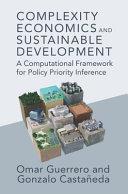
https://ebookmass.com/product/complexity-economics-andsustainable-development-a-computational-framework-forpolicy-priority-inference-omar-a-guerrero/
Instant digital products (PDF, ePub, MOBI) ready for you
Download now and discover formats that fit your needs...
Fiscal Policy for Sustainable Development in Asia-Pacific Lekha S. Chakraborty
https://ebookmass.com/product/fiscal-policy-for-sustainabledevelopment-in-asia-pacific-lekha-s-chakraborty/
ebookmass.com
Visions and Strategies for a Sustainable Economy: Theoretical and Policy Alternatives Nikolaos Karagiannis
https://ebookmass.com/product/visions-and-strategies-for-asustainable-economy-theoretical-and-policy-alternatives-nikolaoskaragiannis/
ebookmass.com
Complexity Economics: Building a New Approach to Ancient Economic History Koenraad Verboven
https://ebookmass.com/product/complexity-economics-building-a-newapproach-to-ancient-economic-history-koenraad-verboven/
ebookmass.com
Contemporary Management, 10th ed. 10th Edition Gareth R. Jones
https://ebookmass.com/product/contemporary-management-10th-ed-10thedition-gareth-r-jones/
ebookmass.com
The Ancient Greek Hero in 24 Hours: Sourcebook
https://ebookmass.com/product/the-ancient-greek-hero-in-24-hourssourcebook/
ebookmass.com
Hunted Celia Kyle
https://ebookmass.com/product/hunted-celia-kyle/
ebookmass.com
Assessing Progress Towards Sustainability: Frameworks, Tools and Case Studies 1st Edition Carmen Teodosiu https://ebookmass.com/product/assessing-progress-towardssustainability-frameworks-tools-and-case-studies-1st-edition-carmenteodosiu/
ebookmass.com
Biomass, Biofuels, Biochemicals : Microbial Fermentation of Biowastes Le Zhang
https://ebookmass.com/product/biomass-biofuels-biochemicals-microbialfermentation-of-biowastes-le-zhang/
ebookmass.com
The Technology of Wafers
and Waffles II: Recipes, Product Development and Knowhow Karl F. Tiefenbacher https://ebookmass.com/product/the-technology-of-wafers-and-waffles-iirecipes-product-development-and-knowhow-karl-f-tiefenbacher/
ebookmass.com
Jesus e John Wayne: Como os evangelho foi cooptado por movimentos culturais e políticos Kristin Kobes Du Mez
https://ebookmass.com/product/jesus-e-john-wayne-como-os-evangelhofoi-cooptado-por-movimentos-culturais-e-politicos-kristin-kobes-dumez/
ebookmass.com
ComplexityEconomicsandSustainableDevelopment TheSustainableDevelopmentGoalsareglobalobjectivessetbytheUN. Theycoverfundamentalissuesindevelopmentsuchaspoverty, education,economicgrowth,andclimate.Despitegrowingdataacross policydimensions,popularstatisticalapproachesofferlimitedsolutions asthesedatasetsarenotbigordetailedenoughtomeettheirtechnical requirements. ComplexityEconomicsandSustainableDevelopment providesanovelframeworktohandlethesechallengingfeatures, suggestingthatcomplexityscience,agent-basedmodelling,and computationalsocialsciencecanovercometheselimitations.Building oninterdisciplinarysocioeconomictheory,itprovidesanewframework toquantifythelinkbetweenpublicexpenditureanddevelopmentwhile accountingforcomplexinterdependenciesandpublicgovernance. Accompaniedbycomprehensivedataofworldwidedevelopment indicatorsandopen-sourcecode,itprovidesadetailedconstructionof theanalytictoolkit,familiarisingreaderswithadiversesetofempirical applicationsanddrawingpolicyimplicationsthatareinsightfultoa diversereadership.
omara.guerreroistheHeadofComputationalSocialScience ResearchatTheAlanTuringInstitute,London.HewasanOxford MartinFellowattheUniversityofOxfordandaseniorresearch fellowattheUniversityCollegeLondon,aswellasconsultedfor governmentalbodiesandinternationalorganisations.
gonzalocastañedaisProfessorinEconomicsatCIDE,Mexico City.Hehasbeenavisitingscholarinvariousuniversitiesand researchcentresintheUSandEurope.Hispreviousresearch includesthebook: TheParadigmofSocialComplexity,which coversdiverseapproachestoeconomicthinkingandmodelling.
ComplexityEconomics andSustainable Development AComputationalFrameworkfor PolicyPriorityInference
omara.guerrero
TheAlanTuringInstitute
gonzalocastañeda
CentrodeInvestigaciónyDocenciaEconómicas
ShaftesburyRoad,CambridgeCB28EA,UnitedKingdom OneLibertyPlaza,20thFloor,NewYork,NY10006,USA 477WilliamstownRoad,PortMelbourne,VIC3207,Australia
314–321,3rdFloor,Plot3,SplendorForum,JasolaDistrictCentre, NewDelhi–110025,India
103PenangRoad,#05–06/07,VisioncrestCommercial,Singapore238467
CambridgeUniversityPressispartofCambridgeUniversityPress&Assessment, adepartmentoftheUniversityofCambridge.
WesharetheUniversity’smissiontocontributetosocietythroughthepursuitof education,learningandresearchatthehighestinternationallevelsofexcellence.
www.cambridge.org
Informationonthistitle: www.cambridge.org/9781316516980
DOI: 10.1017/9781009022910
© OmarA.GuerreroandGonzaloCastañeda2024
Thispublicationisincopyright.Subjecttostatutoryexceptionandtothe provisionsofrelevantcollectivelicensingagreements,noreproductionofany partmaytakeplacewithoutthewrittenpermissionofCambridgeUniversity Press&Assessment.
Firstpublished2024
AcataloguerecordforthispublicationisavailablefromtheBritishLibrary.
ACataloging-in-Publicationdatarecordforthisbookisavailablefromthe LibraryofCongress
ISBN978-1-316-51698-0Hardback
ISBN978-1-009-01654-4Paperback
CambridgeUniversityPress&Assessmenthasnoresponsibilityforthe persistenceoraccuracyofURLsforexternalorthird-partyinternetwebsites referredtointhispublicationanddoesnotguaranteethatanycontentonsuch websitesis,orwillremain,accurateorappropriate.
Omar’sdedication:ToSanna,Rita,andOmar Gonzalo’sdedication:ToVerónica,Almudena,andValeria Fortheirunconditionalandlovingsupportandthelossofjoyful familytimetheyhadtoendure.
5.4.1ConfidenceIntervals
5.6.1TestingforSyntheticCounterfactuals
5.6.2ParameterRecovery
7.3.3NotAllBottlenecksAreCreatedEqual:A
2.1Factorsaffectingtheinferenceofpolicyprioritisation.
3.1The17SustainableDevelopmentGoals.
6.4Changeinconvergencetimetothegoalsbycountry groupandSDG 186
7.1Illustrationofidiosyncraticbottlenecksasaresult ofstructuralconstraints 191
7.2Reductionsinexpectedgapsunderthebudgetaryfrontier 194
7.3Distributionofindicatorsaccordingtohistorical performanceandpotentialgapreductions 197
7.4DistributionofstructuralbottlenecksacrossSDGs bycountrygroups 199
7.5BottleneckflagsbycountryandSDG 202
8.1Associationbetweencorruptionandpublicgovernance 215
8.2Sixcasesofwithin-countrysensitivityto expenditureintheruleoflaw 220
8.3Policysurfacesofsixcountries 224
8.4Roughnessscoresofthepolicysurfacesandtheir associationwithdevelopment 227
9.1CountriesrecipientsofSDG-classifiedaidbetween 2000and2013 236
9.2Totalaidreceivedasafractionofgovernment expenditureduring2000to2013 241
9.3Hypotheticalscenariostoillustratetheworkingsof theimpactmetric 246
9.4Country-levelimpactofinternationalaid 252
9.5SDG-levelimpactofinternationalaidbygroup 253
9.6Indicator-levelimpactofinternationalaid 255
9.7Disaggregatedimpactofaidrelatedtoaccessto basicsanitationservices 259
10.1Statebudgets
10.2SDG-levelimpactmetricoffederalcontributionsby statecluster
10.3Resultsfromoptimisingthedistributionoffederal contributionsacrossstates
10.4Optimaldistributionsoffederalcontributions
11.1BudgetarylinksbetweenSDGtargetsandindicators 308
potentialanddataonbudgetsandcentrality
12.3Expenditurepatternsandremittancesamong lower-incomehouseholds
12.4Bipartitenetworkstructureofexpenditureand developmentindicators
12.5Impactsbyspendingsourcewithdifferent aggregationlevels
12.6Governmentexpenditureincrementsneededto mitigateincomeshocks
13.1WorkflowtospecifypolicyguidelineswithPPI
3.1IndicatorssampledfromtheSustainable DevelopmentReport
3.2CountriessampledfromtheSustainable DevelopmentReport
4.1Variablesofthemodel
9.1AverageindicatorlevelbySDGandcountrygroup (2000–2013)
9.2Totalpercapitaaidflowsandgovernment expenditurepercountrygroup(2000–2013) 239
9.3Percentageofcountrieswithstatisticallysignificant aidimpactinwaterandsanitation
10.1IndicatorsforthesubnationalanalysisofMexico
11.1SDGtargetsthathavecorrespondingindicatorsand budgetarydata
12.2Topprolongedprogrammesbydirectimpactafteran expenditurereductionof20%
12.3Topprolongedprogrammesbysystem-wideimpact afteranexpenditurereductionof20%
Foreword Recentglobaleventshaveemphasisedtheuncertainandintricate natureofourworld.Variousunexpectedshockshavedisruptedour developmentpathways,andeachofthemrequiresattentionand resourcesfrompolicymakers.Determiningwheretoallocatescarce resourcesisnotstraightforward.Thetraditionalepistemologicaland methodologicalapproaches,whichrelyonalinearandmechanistic understandingofcausesandeffects,areinsufficientforcomprehendingsocialchallengesandofferingeffectivepolicyadvicetoachieve desirablesocietaloutcomes.Inlightofthesechallenges,theauthors ofthisbookhavesteppeduptoaddressthisgapbyprovidingabroad understandingofthemultiplicity,interdependency,andambiguityof forcesinvolvedindevelopmentpractice.
Ofparticularnoteistheirfocusontheintertwiningnatureof developmentobjectives.Policiesaimedataddressingoneobjective canhaveanimpactonotherobjectives,creatingfeedbackeffects, eithercomplementaritiesortrade-offs.Thisinterconnectedreality, alongwiththefiscalconstraintsthatmostgovernmentsface,underscorestheimportanceofpolicyprioritisation.Howcangovernments identifythosepolicyactionsthatwillhavethemostimpactacross developmentgoals,therebyacceleratingsystemicprogressorlifting systemicbottlenecks?Inthisbook,theauthorsprovideapowerfulframework,drawnfromyearsofresearchatthePolicyPriority Inference(PPI)programme,tohelpdecision-makersnavigatethis effort.
SincetheFallof2018,whenIstartedmytenureasRegional DirectorattheUnitedNationsDevelopmentProgramme(UNDP),I aimedtobringnewanddiversifiedapproachestoenhancetheeffectivenessofthedevelopmentworkwesupport,asthemostimportant developmentagencyoftheUnitedNations,inthepursuitofthe xvii
achievementoftheSustainableDevelopmentGoalsby2030.Having hadthechancetoseetheagent-basedmodellingandcomplexitywork donebyOmarA.GuerreroandGonzaloCastañeda,Iimmediately thoughtofhowmuchthatapproachcouldcontributetotheUNDP’s integratorroleattheUN.WethussupportedthelaunchofthePolicy PriorityInferenceresearchprogramme,coordinatedbyAlmudena Fernandez.Theevolutionofthisresearchprogrammeovertime demonstratestheimportanceofeffortsthatintentionallyseekto bridgethegapbetweenacademicworkandpolicyengagement.By workingtogetherwithlocalandnationalgovernmentstoapplythe PPItospecificpolicyquestions,theauthorswereabletostrengthen thetoolbyensuringthatitscutting-edgemethodologieswerealso groundedinreal-worldassumptions–fromfiscalrigiditiestolimited information.Itwasnotsurprisingthatassoonaswordbegantospread abouttheframeworkandpotentialresultspresentedbytheauthors inpreviouspapers,colleaguesandpublicofficialsbegantotakenotice andseekoutitsinsights.Thedemandforthiskindofknowledgewas immediateandorganic,reflectingthehungerofpolicymakersfor reliableandrigorousguidanceonhowtoprioritisepublicspending toachievebetteroutcomes.
Whatsetsthisworkapartisthatitsanalyticalframework isnotonlytheoreticallyrichbutempiricallyfeasibleandrigorous. Thisisachievedthroughaninterdisciplinaryapproach,whichdraws uponinsightsmainlyfromeconomics,politicalscience,computer science,andcomplexityscience.Importantly,however,thisbookis morethanjustanacademicexercise.Ithasthepotentialtoinfluence policybyprovidingevidenceandempiricallydrivenknowledgeofthe interactionsinthecomplexSDGspace.Thiscanbeusefultoinform theprioritisationofpublicspendingtoachievebetteroutcomes,given real-worldbudgetarychallenges.Beyondofferingguidanceonhowto reallocateexpendituretoclosedevelopmentgapsinspecificpolicy contexts,thecomputationaltooldescribedinthebookalsoprompts abroaderreimaginingofhowwecanthinkaboutachievingthe2030 Agenda(withits17SustainableDevelopmentGoalssupportedby169
targetsandover200indicators)fromamoreintegratedandholistic perspective.
Inshort,thisbookisamust-readforanyoneinterestedinunderstandingdevelopmentasacomplexprocessandthechallengesof policyprioritisationinanuncertainworld.Itrepresentsanexcellent contributiontothefield.Ihavenodoubtthatitsinsightswillbeof immensevaluetoscholars,practitioners,andpolicymakersalike.
—LuisF.LópezCalva GlobalDirectorforPovertyandEquityPractice
ThisbookbyProfessorsGuerreroandCastañedaisanimportantcontributiontothesocialscienceofeconomicdevelopment,generally, andtosustainabledevelopment,specifically.Theirgoal,asdescribed inthefirstchapter,istoprovideaframeworkforformulatingsustainabledevelopmentpoliciesinamultidimensionalsettingandfrom acomplexsystemsperspective.Theauthorshavebackgroundsin economicsandcomputationalsocialscienceandinterestsindevelopmenteconomics,andeachhasexperienceworkingwithinthe largeecosystemassociatedwithinternationaldevelopmentactivities, consistingofgovernmentagencies,NGOs,foundations,andinternationalorganizationsliketheWorldBankandtheUnitedNations. Theirbroadexposuretobothacademicandpracticalaspectsofeconomicdevelopmentisonereasonthisworkissoexciting,forittakes onreal-worldchallengeswithnewideasandtoolsfromtheresearch frontiertofirstunderstandextantdevelopmentstrategiesandthen createnewandbetterapproaches.
Thesetoftoolstheybuildonaregroundedintheemerging scienceof complexityeconomics.Awell-knowneconomistonce quippedofthefieldofenvironmentaleconomicsthatitsrelationto theoverallprofessionofeconomicswasliketherelationofmilitary musictomusicingeneral:itsrepertoirelimited,itsinstrumentsa subsetofallinstruments.Incertainways,developmenteconomics
issimilar:themethodologiesusedbydevelopmenteconomistsmay beyearsorevendecadesbehindcurrentpracticeattheforefrontof theprofession,suchasheavyrelianceonregressionmodelsinthe desiretobeempiricallyrelevant.Butwearelivingthroughthegreat floweringofdatainthesocialsciences,fromsmall-scalelaboratory experimentswithhumansubjectstolarger-scalefieldstudiesand internet-enabledexperimentation,toadministrativedatathatconstitutecompleteuniverses–everyrelevantpersonrepresented–in awidevarietyoffieldswithineconomicsandbeyond,forexample, finance.Thereexiststodayafar-rangingandrapidlygrowingsetof toolsandtechniquesforworkingwithandanalysingsuchdata,from machinelearning(ML)toartificialintelligence(AI)approaches.The focusofGuerreroandCastañedaon‘agentcomputing’isoneofthese, withso-calledmulti-agentsystemsusuallyconsideredabranchofAI. Itisfromtheserichandhopefuladvancesthatthefieldof complexity economics hasarisen,focusingonsocialnetworks,directagent–agent interactions,out-of-equilibriumdynamics,andrealisticbehavioural rules,amongotherthings.Whiletodaythisnewapproachhasbeen usedtomodelmarkets,firms,trade,andmanyothersub-fieldswithin economics,itsapplicationtodevelopmentquestionsisreallyinits infancy,whichbringsustothefocusofthisbook–PolicyPriority Inference(PPI).
Whiletherootsofthisidealieintheabstractideasofcomplexityeconomics,itsgoalistodealwithreal-worlddevelopment challenges,totakecapabilitiesfromthe‘know-how’stagetoactual knowledgeaboutspecificcountriesandtheirdevelopmenttrajectories.Asdescribedinthisbook,particularly Chapters2–4, PPIisaway touseallthedatathatareavailableforpurposesoffirstunderstanding whatisgoingoninacountry,fromthedevelopmentperspective, assessingtheperformanceofexistingpoliciesandprogrammes,and onlythenmovingontowardsthecreationofmoreeffectivepolicies.
Iamnotanexpertoneconomicdevelopment.However,I havespentmuchofmycareertryingtoapplythenewtoolsand techniquesfromcomplexityeconomicstoreal-worldproblems,from
firmstofisheries,housingtoHayek,theformationofeconomic classesandretirementeconomics.ItseemstomethatGuerreroand Castañedahaveleveragedtheparticularstrengthsofthenewapproach inordertoadvancedevelopmentthinking,andforthattheyareto becommended.Specifically,economicsgraduatestudentstodayare immersedinahighlyidealisedtheoreticalworldinwhichassumptionsabouttheattainmentofequilibrium,therationalityofeconomic actors,theutilityofrepresentativeagents,andmyriadothersare takenasgiven,despitethefactthatmostofthesespecifications arevitiatedbythefacts,especiallyindevelopingcountrieswhere marketsareoftenmorevolatilethaninthedevelopedworld,people facehighertransactioncosts,productionmaybelessefficient,and soon.Therefore,totheextentthattherelaxationofsuchheroic assumptionsisthemaingoalofcomplexityeconomics,tobuildmore realisticmodels,andifthiscanbeaccomplishedwithagent-based modelling,forexample,itmustbeevenmoretruethatproblemsof sustainabledevelopmentcanbenefitfromsuchanapproachrelatively more.Ifcomplexityeconomicscanhelpusunderstandeconomies fromthebottomup,aslargelyself-organised,spontaneousecologies ofpeopleandgroups,partiallyguidedandregulatedfromthetop down,surelyitcanaidinourunderstandingofwhysomepartsof theworldarestymiedfromcomparableachievements.
Crucially,GuerreroandCastañedaalsohavespecific,deep domainknowledgeoftheMexicandevelopmentsituation.Thishelps themframePPIinarealisticway,focusingonthekindsofpolicies thathavesomechanceofsuccess,fortheyhaveseengoodintentions losttobadpoliciesintheirhomecountry.Butanydevelopingcountry isvulnerabletoineffectivedevelopmentattempts,stemmingfrom partiallyorlargelyincorrectdiagnosesoftheproblemsinthefirst place.ThenoveltyofPPIisthatitdoesnotseparateitsdiagnosis ofextantproblemsfromitsrecommendationsaboutwhatshouldbe done.Itisanintegratedperspectiveandawelcomebreathoffresh airoverthecrudestatisticalandeconometricanalysesthatdominate conventionaldevelopmentdiscussionsandpolicyrecommendations.
Thisbookservesasthebest,mostcomprehensiveintroduction toPPI.Ithinkitisfairtosurmisethattheauthorsdonotthinkof itasthe‘lastword’onthesubject,butperhapssomethingcloserto the‘firstword’.Assuch,itrepresentsanewapproachtosustainable development,onewithgreatpromise,amodernapproachforthe computationalageinwhichwelive.Thisisnotabookthatcouldhave beenwritten10or15yearsago.Backthenwesimplydidnoteither havesufficientdataorcomputingforthisapproachtobefeasible.
Butnowweareenteringawholenewworld,inwhichincreasing amountsofbothintra-andinter-countrydataarebecomingavailable andreshapingourempiricalunderstandingofourworld.Whatisin shortsupplynowisnewthinkingabouthoweconomicdevelopment works,howitchangeslives,andhowcraftingcountry-specificpoliciescanleadtosustainabledevelopment.Thisbookoffersushope thatsuchnewideas,fueledbynewdata,canbebroughttobear ondevelopmenteconomicquestions,undertherubricofcomplexity economics.
Thisbookoffersusakindof‘chemical’mixtureofnewdata andnewcomputationaltools–thedatahavinglittleusewithoutthe models,thecomputingvacuouswithoutthedata–outofwhich,in truecomplexitystyle,thewholeismorethanthesumoftheparts. Andforthiswecanbeverygratefultotheauthors.
—RobertAxtell
ProfessorofComputationalSocialScience
GeorgeMasonUniversityandSantaFeInstitute McLean,Virginia
Acknowledgements DevelopingthePolicyPriorityInference(PPI)researchprogramme hasbeentheresultofvariousyearsofwork,collaborations,and engagementwithdifferentstakeholders.Wearegratefulforthe insightsandsupportofthepeopleandinstitutionsinvolvedin PPIthroughoutthisprocess.WewouldliketothankTheAlan TuringInstituteforitsunconditionalsupportand,inparticular, HelenMargettsandCosminaDorobantufromthePublicPolicy ProgrammeforembeddingPPIasacornerstoneinitiativeinthe Institute;PaulineKinniburghandBethWoodforthemanagement andcommunicationsstrategysupport;andDanieleGuarisoforhis workinrecentcollaborationsthataresettingthestageforthefuture generationofPPIstudiesusinglargelanguagemodels.Wearethankful totheCentrodeInvestigaciónyDocenciaEconómicas(CIDE)and itsNationalLaboratoryofPublicPoliciesforcollaboratinginvarious researchandpolicy-orientedprojects,especiallytoFlorianJuárezChávez,GeorginaTrujillo,LucyHackett,CristinaGalindez,and EduardoSojo.AlsofromCIDE,wewouldliketothankGuillermo Cejudo,IvánBautista,andSofiaHuidobrofortheircollaborations inassemblingthedataonexpenditureforsocialpolicies.From theSaïdBusinessSchoolattheUniversityofOxford,wethank FelixReed-Tsochasforhisadviceduringtheveryinitialstagesof thisresearch.WewouldalsoliketothankUCLPublicPolicyfor facilitatingexternalengagementandcommunicationstrategies.
WearealsogratefultotheUnitedNationsDevelopmentProgramme(UNDP)anditsvariousregionaloffices.FromtheUNDP forLatinAmericaandtheCaribbean,wewouldliketothankthe supportofLuisFelipeLópezCalva,AlejandroPacheco,Almudena Fernandez,andallthosewhoparticipatedintheearlyworkshopsof PPI.Wearealsogratefultothecountry-levelUNDPswithwhomwe
workedduringtheseyears:MauricioRuizVega,OscarSánchez,and LuisAlbertoPalaciosfromUNDP-Colombia;AnnabelleSulmont, StephanusVisser,andMaiteGarcíafromUNDP-Mexico;Gabriela Elgegren,GabrielaSalinas,andMirianPiscoyafromUNDP-Peru;and StefanLillerandVirginiaVarelafromUNDP-Uruguay.
FromtheGlobalInitiativeforFiscalTransparency,wewould liketothankJuanPabloGuerreroandAuraMartínezforintroducing ustoavibrantandrelevantcommunityofpublicfinancemanagers andhelpingusunderstandbettertheintricaciesofhowpublicadministrationslinklarge-scalebudgetarydatatotheSDGs.TheCentro deEstudiosEspinosaYglesiashasalsobeenanenthusiasticpromoter ofourresearchprogramme,sowearegratefultoRobertoVélezand MarcelodelaJara.WearealsogratefultoLorenaRiverodelPasofrom theInternationalMonetaryFundforopeningnewdoorsinthePublic FinancialManagementcommunity.WethankMichaelWeberfrom theWorldBankforintroducingourresearchtotheHumanCapital Projectworkinggroup.
Wewouldliketothankallthescholars,officials,analysts, andconsultantsfromthevariousuniversities,journalsreviewer pools,researchcentres,governments(nationalandsubnational), andinternationalorganisationswithwhomwehaveengagedduring thisprocess.Lastbutnotleast,wearegratefulforthesponsorship fromtheUnitedKingdom’sEconomicandSocialResearchCouncil (throughgrantES/T005319/1)andtheEngineeringandPhysical SciencesResearchCouncil(throughgrantEP/N510129/1);aswell astheNationalCouncilforScienceandTechnologyfromMexico. Withoutthecontributionsandhardworkofallthesepeopleand institutions,thePPIresearchprogrammewouldnothavereachedthe maturityandreal-worldrelevanceandimpactthatithastoday.
Abbreviations ABMagent-basedmodel
AIartificialintelligence
BanxicoBancodeMéxico(Mexico’sCentralBank)
CGEcomputablegeneralequilibrium
CIDECentrodeInvestigaciónyDocenciaEconómicas(Centerfor ResearchandTeachinginEconomics)
CONEVALConsejoNacionaldeEvaluacióndelaPolíticadeDesarrolloSocial(NationalCouncilfortheEvaluationofSocialDevelopmentPolicy)
CSScomputationalsocialscience
DiDdifference-in-differences
ENIGHEncuestaNacionaldeIngresosyGastosdelosHogares (NationalSurveyonHouseholdIncomeandExpenditure)
EPSRCEngineeringandPhysicalSciencesResearchCouncil
ESRCEconomicandSocialResearchCouncil
GDPgrossdomesticproduct
HDIHumanDevelopmentIndex
INEGIInstitutoNacionaldeEstadísticayGeografía(NationalInstituteofStatisticsandGeography)
LACLatinAmericaandtheCaribbean
LPIlineofpovertyduetoinsufficientincome
MENAMiddleEastandNorthAfrica
ODAOfficialDevelopmentAssistance
OECDOrganisationforEconomicCo-operationandDevelopment
PPIPolicyPriorityInference
RCTrandomisedcontrolledtrial
RoLruleoflaw
SCGsubnationalcentralgovernment
SDGSustainableDevelopmentGoal