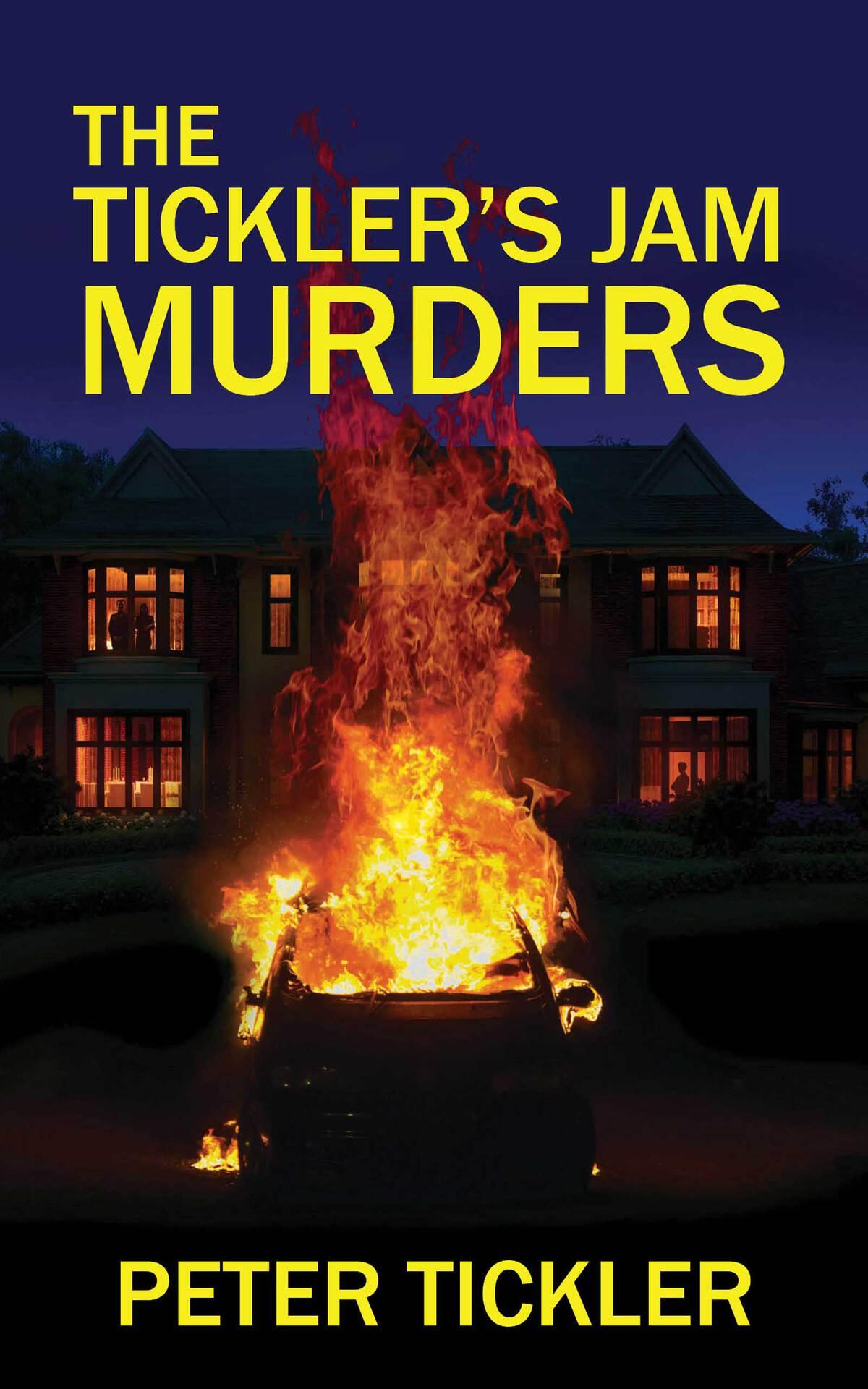
https://ebookmass.com/product/the-ticklers-jam-murders-1stebook-ed-edition-peter-tickler/
Instant digital products (PDF, ePub, MOBI) ready for you
Download now and discover formats that fit your needs...
The Language of Surrealism 1st ed. Edition Peter Stockwell
https://ebookmass.com/product/the-language-of-surrealism-1st-ededition-peter-stockwell/
ebookmass.com
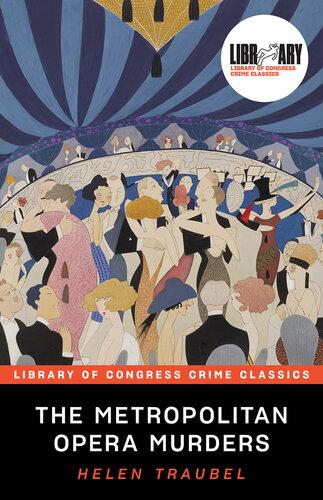
The Metropolitan Opera Murders Helen Traubel
https://ebookmass.com/product/the-metropolitan-opera-murders-helentraubel/
ebookmass.com
The Bad Faith in the Free Market 1st ed. Edition Peter Bloom
https://ebookmass.com/product/the-bad-faith-in-the-free-market-1st-ededition-peter-bloom/
ebookmass.com
The Metaphysics of Light in the Hexaemeral Literature: From Philo of Alexandria to Gregory of Nyssa Isidoros C. Katsos
https://ebookmass.com/product/the-metaphysics-of-light-in-thehexaemeral-literature-from-philo-of-alexandria-to-gregory-of-nyssaisidoros-c-katsos/
ebookmass.com
5 Steps to a 5: 500 AP European History Questions to Know by Test Day 3rd Edition Sergei Alschen
https://ebookmass.com/product/5-steps-to-a-5-500-ap-european-historyquestions-to-know-by-test-day-3rd-edition-sergei-alschen/
ebookmass.com
Radiation Therapy Study Guide: A Radiation Therapistu2019s Review
https://ebookmass.com/product/radiation-therapy-study-guide-aradiation-therapists-review/
ebookmass.com
5 Steps to a 5: AP English Literature 2021 Elite Student edition Estelle M. Rankin
https://ebookmass.com/product/5-steps-to-a-5-ap-englishliterature-2021-elite-student-edition-estelle-m-rankin/
ebookmass.com
An Endangered History: Indigeneity, Religion, and Politics on the Borders of India, Burma, and Bangladesh 1st Edition Angma Dey Jhala
https://ebookmass.com/product/an-endangered-history-indigeneityreligion-and-politics-on-the-borders-of-india-burma-andbangladesh-1st-edition-angma-dey-jhala/
ebookmass.com
The Heart of the Deal: A Novel Lindsay Macmillan
https://ebookmass.com/product/the-heart-of-the-deal-a-novel-lindsaymacmillan/
ebookmass.com
https://ebookmass.com/product/etextbook-978-1305120594-stressmanagement-for-life-a-research-based-experiential-approach/
ebookmass.com
‘ Asuperbbook,relentlesslyhonestandfilledwithmountingtension’ – Mystery People
‘Deliciouslythrillingandwildlyunpredictable’
– Oxford Today
‘Anauthoritativestyle,ageneroussprinklingofrecurringimagesand clues,andplentyoftwists… Icouldn’tputthebookdownuntiltheend’
– Daily Information
‘He has a wonderful gift of creating geographically factual settings forhisfictionalcharacters’ – Oxford Times
OceanofPDF.com
OceanofPDF.com
The Tickler’s Jam Murders © Peter Tickler 2024
www.petertickler.co.uk @ptickler
This book is sold subject to the condition that it shall not, by way of trade or otherwise, be lent, resold, hired out, converted to another format or otherwise circulated without the publishers’ prior conjunction in any other format other than that in which it is published.
The right of the author to be identified as the author of this work has been asserted in accordance with the Copyright, Designs and Patents Act 1988.
eBook production by Oxford eBooks Ltd. www.oxford-ebooks.com
The characters in this book are fictional and any resemblance to real persons is coincidental.
OceanofPDF.com
AUTHOR’S NOTE
This is a work of fiction.
The Crowthorpe Jam Company never existed.
Tickler’s Jam (or, more correctly, Tickler’s Fruit Growers and Preservers) did exist. It was active through much of the first half of the twentieth century, but became best known after winning a contract with the Ministry of Defence to supply jam to the British army during the First World War. (They had also done so to the troops in the Boer War.)
As boys, my twin brother and I were sent away to a preparatory school (Winchester House in Brackley) where we encountered Mr Bates, a teacher with a formidable reputation. When he read out the register in the first lesson and got to us – ‘Tickler H, Tickler P’ – he burst out with delight: ‘Plum and Apple’. The jam meant so much to him. I think that as a consequence we received a much easier ride than the rest of the class!
That was the first hint to me of the emotional connection that Tickler’s Jam had for those many, many men who served on the Western Front and elsewhere. It was a connection to their homeland and homes which they clung onto through dreadful circumstances.
Later, I was to discover that:
The British troops sang songs about Tickler’s Jam They made home-made bombs/grenades out of the empty jam tins
The poet Robert Graves, who was nearly killed in 1917, wrote a poem ‘Escape’ in which he attributed his survival to Tickler’s jam Tickler’s jam even appears in a George Formby song
Finally, T G Tickler ran the company during its most successful period, but any reference to him made in this story is entirely derived from my imagination.
ARRIVAL
DETECTIVE SERGEANT THOMAS Kite felt as if he had been banished to the ends of the earth. Lincolnshire in the winter is a county where the wind whips relentlessly in from over an inhospitable North Sea, chilling the bone and numbing the spirit. He was already missing London more than he could have imagined – the familiarity of the streets, the cosiness of the lodgings he shared with his sister and her family, even the dank smell of the Thames and the choking smoke of innumerable coal fires, not to mention the sound of humanity from before dawn to long after sunset.
‘Not far now, sir,’ shouted Constable Sparrow. Sparrow was an incorrigibly cheerful young man. He had served three years in the trenches, seen several ‘good friends’ die, had witnessed one of his officers blow his own brains out rather than lead his men over the top, and yet he had emerged from the hell of what they were already calling the Great War with his sparky spirit and zest for life apparently undiminished. Apparently. Kite was suspicious of men like Sparrow, and already in their very short acquaintance he had found himself resenting him. He knew he wasn’t being reasonable. Maybe living life to the full was the only sane reaction to surviving what Sparrow had been through over the last few years, but Kite couldn’t help his feelings. In these times, sailing through life without a care in the world seemed to him to be somehow morally reprehensible.
‘Ahh!’ Kite bit back his cry of pain as the bike bounced into and out of a deep rut. He was stuck on the back of Sparrow’s pride and joy –a Lincoln Elk 6 hp Twin Model A. Not that it belonged to Sparrow. It belonged to the Lincoln police force, who had purchased two of them only a few weeks previously. And Sparrow, who knew how to blow his own trumpet, had been quick to put himself forward as an experienced rider based on his time as a despatch rider for the British Expeditionary Force on the Western Front. So when there was
suddenly a murder to be investigated, and it was some thirty miles from Lincoln, Sparrow and his motorbike had been assigned to Kite.
‘He’ll get you there,’ Chief Constable Bostock had insisted. ‘He had a very good war, and he grew up in the area, so he should be a great help to you.’ The bike lurched again, wheels spinning in the mud, and Kite hung on even more grimly.
‘This is my first murder.’ It was Sparrow again, bellowing his way into Kite’s musings. ‘It’ll be a feather in both our caps if we can catch the bastard who did it.’
‘It will,’ Kite shouted back. Ifwegetthere inonepiece, he might have added. Because Sparrow, apart from being a very chirpy man, was also a man who drove his motorcycle as if he was being pursued by a squadron of demons from hell. In the pub the night before, he had regaled Kite with stories of his time on the Western Front. ‘There were even nurses riding around on bikes. I met two of them, Elsie Knocker and Mairi Chisholm. Helped them repair their carburettor. Elsie drove and Mairi whooped and hollered from the sidecar.’ At that point in the conversation Sparrow had raised his glass as if toasting them and then knocked back the remainder of his pint in a single gulping gurgle. Then he belched and laughed. ‘What a madcap pair they were!’
Madcap summed up Sparrow too at this precise moment, skidding around and through the mud and puddles, squealing like a kid on ice-skates. But if Sparrow had survived the blasted landscape of France, surely (Kite reassured himself) he wouldn’t come to grief here on the agricultural outback of Lincolnshire. Kite huddled down a bit further behind his constable and wished he believed in the power of prayer.
‘Not too far now, sir.’
The welcome words broke Kite out of his reverie. He sat up a bit and looked around.
‘Over there, that’s Crowthorpe village, sir, where the jam factory is, and where I grew up. Crowthorpe Manor is another two or three miles, but Sir Wilfred owns all the land in between and more.’
Sparrow waved his right arm carelessly to indicate the extent of the man’s domain.
A man of considerable wealth then, Kite surmised, and a man on whom a lot of locals must rely for their livelihoods.
‘Hell’s teeth!’ The bike skidded viciously, and Sparrow hurled himself to the left to try and stop them crashing over. Somehow, he managed it and seconds later they were on firmer ground – bumpier but safer – and Sparrow bellowed out his delight. ‘That was a close one, sir. The road is worse that I remember it. They need to bloody well repair it.’
‘I’d like to get there in one piece, Constable!’ he yelled back.
‘Don’t you worry, sir,’ was the reply. ‘I ain’t ever lost a sergeant.’
‘Here we are, sir,’ Sparrow announced proudly as he skidded to a halt on the gravel drive.
‘Thank you, Constable.’ Kite groaned in relief.
Sparrow swung his leg over and was off the bike in a moment, but for several seconds Kite couldn’t move.
‘You all right, sir? Need a hand?’
Kite shook his head. His back was rigid with pain, and he couldn’t feel his right leg. Both sensations were familiar to him, the legacy of a struggle two floors up on a scaffolded house and the subsequent fall. He had been lucky, much more so that the thug who had tried to clobber him with an axe and had ended up breaking his own spine instead. With a determined effort, he eased himself off the bike, conscious of Sparrow’s gaze and hoping against hope that the back pain would recede and some sensation return to his leg. His shoulder, which under his layers of clothing sported an impressive scar where the thug’s axe had dug into him, by contrast betrayed only a slight stiffness.
He limped forwards a few steps, trying to straighten himself up fully while eyeing up the stone edifice which was Crowthorpe Manor. It was an unevenly structured house. The central block was symmetrical: a main entrance – two dark red doors framed by a pair of plain classical columns – was flanked on either side by two pairs of bay windows, and these were matched on the floor above by
slightly smaller windows. And above them two small windows indicated the presence of further bedrooms under the roof. To the right of this was tacked on a single-storeyed room with two smaller windows. A later addition Kite surmised. A billiard room perhaps. Didn’t every knight of the realm aspire to a billiard room in his house?
By contrast on the left-hand side of the manor, there stood a much more impressive three-storeyed structure topped by a square turret which exceeded the height of the main house by three or four feet. It also sported a clock. Five minutes to two. Kite pulled his own watch out of his jacket pocket and checked it for the time. They had taken nearly three hours to cover the thirty miles from Lincoln to Crowthorpe Manor. Given the state of the roads, this was impressive, and a tribute to Sparrow’s skill. Kite slowly turned around, scanning the area and trying to familiarise himself with where they were.
The village of Crowthorpe, which they had driven past without pausing, was some three miles away, and yet would have been invisible were it not for the tip of a church spire. That was where they were due to stay that night, in the Red Lion pub. Otherwise the land all around was grey and almost featureless under the heavy clouds. God, he hated the place. He had only been stationed in Lincolnshire a month, but it felt like half a lifetime. ‘Put out to grass,’ his sister had said, and she had been right. All because he had said the wrong thing, ruffled feathers and made one mistake which they could fasten upon.
‘Good morning.’
The greeting came from behind him, clipped and upper class. Kite turned to see who it was. A man had emerged from the house and was striding across the gravel. ‘I am Sir Wilfred’s son, Captain Alec Walker. I have met the constable before, so I presume you must be Inspector Kite?’
Kite took the proffered hand. ‘Sergeant, sir. Detective Sergeant Kite, sir. And I am only sorry that I have had to meet you in such sad circumstances.’
‘Quite.’ Walker released Kite’s hand. His eyes went from Kite to Sparrow and back to Kite. ‘It has been, it is… awful. Bloody awful.’
‘I’m sure it is. But let me assure you that Constable Sparrow and I will make every effort to spare you further distress. It is, of course, our duty to investigate the killing of your father and bring the killer to justice, so we will need to ask questions of the family.’
‘Not too many, I hope. I don’t believe any of us witnessed anything,’ Walker said again, ‘so I cannot see that we can be a lot of help. It must have been a burglar or someone with a grudge against my father, jealous of his success and his lovely car. In my opinion, you would be better off starting your investigations in the village.’
‘I understand your distress, Captain, but I have my methods, and I would like to start with everyone living in the house and also of course I would like to examine the scene of the crime.’
Walker frowned. ‘If you must ask questions, you must. But let me warn you that the ladies are very distressed, in particular my mother of course. In addition her health is somewhat delicate.
‘I fully understand,’ Kite said.
‘I do hope so.’ Captain Walker turned away and stalked back towards the house. Kite followed.
‘Before you do anything, you will need to meet my mother,’ he said over his shoulder as he entered the manor. He turned sharply to his right, swivelling on his heels, and with boots clacking on the stained oak floorboards he marched into a sombre sitting room. Despite the large windows, Kite didn’t immediately see the figure who was submerged in the deep armchair until Captain Walker came to a halt right next it.
‘Mother, this is Inspector Kite. Inspector, this is Lady Beatrice Walker.’
‘Detective Sergeant Kite,’ he said, suppressing his irritation. Was the captain deliberately making a point? That a family of their standing should be dealing with someone of a higher rank.
Kite hovered in front of the tiny figure, uncertain if he should say anything more. Maybe it was better to wait for her to respond. Despite his own ambivalent feelings about the upper classes, he knew the importance of gaining Lady Beatrice’s co-operation and thereby the co-operation of her household. He might have been
exiled to Lincolnshire, but this was an opportunity, not just to solve a case, but also to win back some favour, which he badly needed.
‘You are far too tall,’ she said with a wave of her hand. ‘I shall get a terrible crick in the neck if I have to stare up at you.’
Kite looked around and located a matching armchair several feet away and immediately opposite her. He sat down heavily into its comforting shape, sensing the tell-tale sweat on his forehead and a feeling of light-headedness. God knew, it had been a long time since he had eaten. The family would no doubt have eaten a hearty breakfast, whereas he had eaten nothing since his rushed and meagre meal in his digs. He tried to focus his attention on Lady Beatrice. She was clothed in black, a full-length dress, a shawl round her shoulders and a lace veil over her face. He could sense rather than see her eyes, peering birdlike at him through the fine material.
‘As I have already informed Captain Walker, I would first like to express my sincere commiserations for your very sad loss.’
‘Pah! I do not want your commiserations. It is not as if my husband or I have ever met you before. I merely want you to do your job and arrest the thug who murdered him.’
‘Of course. I understand.’
‘And how do you intend to achieve this?’ Behind the veil was a sharp and commanding tongue. She was a woman used to issuing orders and expecting them to be carried out.
‘I would like to start by interviewing everyone who was in the house at the time of Sir Wilfred’s death.’
‘He was killed outside, sitting in his car, which he kept in the old stable block. Perhaps you should concentrate your efforts on outsiders. A house like this is bound to attract the attention of ne’erdo-wells, envious of our good fortune. The last thing they would have expected was to find my husband sitting in his car…’
‘I can assure you, Lady Beatrice, that my constable and I will leave no stone unturned outside or inside.’
She raised her hand suddenly. ‘I really need to go and lie down. I have delayed my afternoon rest sufficiently. If you have any questions for me, I suggest you ask them at four o’clock, before I have my cup of tea.’
Kite nodded. He had been dismissed like a servant, but saw no point in resisting. As he stood up a wave of light-headedness swept through him, more intense this time. He tried to steady himself, stretching his right arm out towards the arm of the chair, but his left leg buckled beneath him and he felt himself falling. Somewhere in the far distance he heard the sound of Sparrow’s alarm: ‘Sir, sir!’
‘I think he’s stirring.’
It was a woman’s voice, earthy and firm. ‘You alright, my dear?’
Kite opened his eyes and found a round face framed by dark curly hair staring down at him.
‘I’m Rose. I think you’ve had a bit of a turn.’
‘Lady Beatrice has offered to send for her doctor, sir.’ It was Sparrow, also looking down with concern on his face.
‘No.’ Kite forced himself to sit up. ‘I just need to eat something. This happens sometimes. A cup of sweet tea and something to eat and I will be fine.’
‘Don’t you worry. The constable has just told me that neither of you have eaten since breakfast. We can soon put that right.’
Sparrow helped him to his feet and escorted him along the corridor until they reached the kitchen. They sat him at the end of the long table which was oak, old and worn smooth from many years of service. Kite let his hands caress its surface and shut his eyes. When he opened them again, there was a platter of food in front of him. Sparrow ate alongside him, meat pie and potato, washed down with deep mugs of strong sweet tea. Gradually he began to feel more like his normal self, although what had just happened to him – not eating for a long time and then collapsing –was for him not entirely abnormal.
‘What now, sir?’ Sparrow was full of energy.
‘I think we should go and view the scene of the crime.’
‘Let me show you, sir.’ Rose gave the impression of someone who was rather enjoying having a role in the drama which had enveloped the house. ‘This way.’ And she led the two men down a corridor, then left and right until they emerged outside in the gloomy December light.
‘There,’ she said with a flourish of her hand, pointing rather unnecessarily to the blackened remains of what had once been a building. Grouped round them were four men.
Kite advanced towards them, barely able to control his anger. ‘What on earth is going on?’
Four pairs of eyes turned to towards him.
‘Are you recovered, Sergeant?’ It was Captain Walker, as calm as Kite was not.
‘I am fully so. But what are you doing?’
‘Isn’t it obvious? We are having the remains of my father gathered up. I couldn’t bear to leave them there in all the fire debris. They need to be gathered up respectfully, so that we can lay them to rest as is only right and proper.’
‘Don’t you worry, sir.’ A short man in dark clothing and a bowler hat on his head stepped forward. ‘Mr John Lamyman of Lamyman and Son, undertakers. We are very used to dealing with dead persons, in all sorts of conditions. Let me assure you that we will take great care to collect only the bones and other body parts. We will leave everything else in position for you to inspect at your leisure. However the afternoon is already well under way and I would like to complete the task before night falls.’ He bowed his head in what was no doubt a well-rehearsed routine. ‘Lamyman and Son are most expert in such matters.’
Kite nodded agreement, though in truth he would rather the undertakers had never been summoned by Captain Walker. He looked around. Any tracks which the killer might have made the previous evening had already been well and truly obliterated by the boots of these three men and of Captain Walker himself and presumably also by the various inhabitants of Crowthorpe Manor who had tumbled out of the house when the alarm had been raised.
‘I have some tarpaulins,’ Mr Lamyman said. ‘I like to be prepared for all situations. We could lay them over the ash and fire-debris when we have finished if you so wished?’
‘No. Just let me know when you have finished,’ Kite said, wishing he had got a better control of the situation, as well as his own temper. ‘But perhaps you would leave your tarpaulins for my
constable and myself, to make use of when we have completed an initial examination of the site.’
‘Thank you, sir. That seems a very sensible plan.’ He gave another bow and issued another obsequious smile as he backed away. ‘In that case, we will continue.’
‘And might I suggest,’ Captain Walker said in a tone he probably used with his junior officers, ‘that you come inside and start your interviews, until such time as Mr Lamyman has finished.’
‘Thank you, but my constable and I will be making a full survey of the grounds while there is still daylight.’ Kite looked up at the sky, conscious of the lowering clouds approaching ominously from the east. ‘And before it starts to rain.’
‘Very well,’ he said, though his tone suggested he didn’t think it was very well at all. He turned towards Lamyman, who was holding his hands together like a priest about to offer a prayer. ‘Carry on then, man.’ And he marched off back to the house, invisible steam pouring out of his ears.
Sparrow chuckled as he and Kite headed off towards the main gateway. ‘Plenty of officers like him in the trenches. He’d have had you on fatigues, sir.’
But Kite’s mind was elsewhere. ‘Did you notice what the captain said? Told me to concentrate my efforts on the village, that I should be looking for a burglar. And Lady Beatrice called the killer a thug, a ne’er-do-well.’
‘She has a point, doesn’t she?’
‘It could be one of the family.’
‘What makes you think that?’
‘Because it often is.’
‘Is it?’
Sparrow’s doubt was obvious, but Kite wasn’t interested in continuing the conversation. When they reached the main entrance, there were plenty of signs of people and horses who had come in and out of it, and the fresh tracks of Sparrow’s motorbike. But none of that proved or disproved anything as far as Kite was concerned.
‘So, let’s suppose you’re a burglar, Constable. What would you be hoping to steal, and would you come on foot or by horse?’
‘Whatever you could find, I guess. Food, drink. I expect they shoot game here in the winter. Maybe there’s pheasants hanging in one of the outbuildings. Or stuff you can sell. Saddles and bridles for example from the stable area. Cans of petrol for the car. I expect there’s a black market for that if you know the right people.’
‘So heavy stuff to carry. You’d want something like a horse and cart to take it away, and to get away quickly if you were discovered. And you wouldn’t come charging in by the main gate if you could avoid it because anyone looking out their bedroom window might spot you. So let’s walk round the outskirts of the grounds and see what we can see.’
Walking the outskirts initially meant walking along the top of a haha, designed to keep any animals in the grass field at the front from entering the garden. Currently there was only one horse, a big hunter wearing a thick rug. There were no signs of attempted entry there or of a horse and cart being left out of sight in the dip to await stolen goods. Kite pressed on, alongside the outside of a tall garden wall which looped round to the back of the house before it gave way to a series of buildings – a large wooden barn, various brick structures, stables and sheds – before they found themselves back at the main entrance.
‘So what do you make of that, Constable?’ Kite stopped and leaned against the gate post, glad of a rest.
‘Well no evidence of an intruder, though I guess someone on their own who knew the property wouldn’t leave many traces. Sneak in by the front gate, keep to the shadows.’
‘By intruder you mean a thief? Or someone intent on killing Sir Wilfred?’
Sparrow scratched the side of his face while he considered this. ‘I suppose I’m thinking of a thief. He comes in hoping to steal something he can eat – a couple of pheasants maybe – or something he could sell. He sees the garage door open and slips inside not realising that Sir Wilfred is sitting in his car. He is startled, panics and hits him with something, sploshes petrol around and sets fire to the car before escaping.’
‘But why do that when it was bound to alert the household?’
Sparrow frowned and scratched his cheek again. ‘To make sure he was dead, I guess.’
‘Hmm.’ Kite took another sweep of the area. As theories go, it was pretty good. And if that was the case, then identifying that intruder would be difficult. And yet there was something that was bothering him. He nodded. He didn’t want to discourage Sparrow by sharing his doubts. It was too soon for that. He glanced up at the darkening sky. ‘Well, the truth is we need evidence. You go and check the inside of the gardens for traces before those rain clouds let rip. I’ll go and see how Mr Lamyman and his men are getting on.’
But they weren’t rain clouds. By the time he had limped his way to the remains of the burnt out car, large flakes of snow were drifting down through the fading winter light.
‘We’ve just finished.’ Lamyman was watching his two men strap down a coffin which, Kite assumed, contained the remains of Sir Wilfred Walker. Lamyman looked up pointedly at the sky. ‘I reckon we’re in for a fair old blanket of the white stuff. What shall I do with the tarpaulins?’
‘Please, it would be very helpful if you could just lay them out across the site. And weigh them down.’
‘Of course. As you say, sir.’ By which he meant, as I originally suggested. There was a self-satisfied edge to his voice. A man of the country putting a big city policeman right. Kite tried not to care, but the fact was that there was already a thin white covering forming on top of the ashes and the snow in the air was intensifying.
‘One more thing,’ Kite said firmly, ‘I’d like to look inside the coffin.’
Lamyman started. ‘Why on earth…?’
‘Just do it.’
‘But we’ve just sealed it.’
‘So unseal it. It’s evidence.’
The tension was palpable. Lamyman’s two men had stopped strapping the coffin onto the cart and were watching this stand-off with undisguised fascination. Kite turned towards them. ‘Now, gentlemen, if you don’t mind. The sooner I take a look, the sooner you all get home.’
Lamyman made a grunting sound and the two men undid the strapping and levered the lid up and removed it. Kite stood on the spokes of one of the wheels, using it as a step to clamber up. The bones were laid out in no real of order, though the skull – still attached to part of the spinal column – was positioned at the front end of the coffin. He levered himself up onto the cart and stretched out his arm to pick it up.
‘I don’t think the captain would like that.’ It was obvious where Lamyman’s loyalties lay. Kite glanced across at him and smiled.
‘In that case, make sure you don’t tell him. Then you won’t upset him.’
‘It’s about showing respect.’
‘It’s about investigating a brutal murder in a methodical manner in order to find the truth.’ Kite’s gaze was fixed on the skull as he examined it. There was a crack in the back of it; a fine one admittedly, but distinct enough. He rubbed at it, clearing some of the ash away from it. In the midst of the crack was a slight indentation where a small piece of bone had been dislodged. He had studied skeletons during his time in London. He had talked to a sawbones or two as well. He had never seen a dead man reduced so spectacularly to a pile of bones and sinew, but he reckoned he knew how this had begun, with a blow to the back of the head. The killer must have set him alight after killing or knocking him out with that blow. That much was clear.
‘Well, have you investigated enough?’ Lamyman was growing more impatient by the second. ‘I want to get home, not end up stuck in a snow drift.’
‘All done, Mr Lamyman. Thank you. That’s all I need to see for now.’
There was nothing to be done until the morning – at best. Kite trudged off, walking anticlockwise until he met up with Sparrow coming the other way.
‘Nothing, sir. I thought maybe that gate in the wall, but it’s securely bolted from the inside and there’s no sign of it having been forced, or even used recently.’
‘I didn’t think so.’ Kite liked it that his own theory had been – if not proved – then at least half proved. In his own mind it was almost certainly an inside family job. But it seemed tactful to keep that thought to himself – for the time being at least. They had barely entered the house before they were intercepted by Captain Walker. Kite had already taken a dislike to him, so he was surprised by what he had to say. ‘Inspector, I mean Sergeant, my mother says that you would both be most welcome to stay the night. Looking at the weather, getting to the village might be a bit tricky, and by the morning who knows how thick the snow will lie. There are two small rooms at the top of the west wing for guests. Mary and David Graves inhabit the lower floors, but I am sure they will not object. In the meantime my mother will happily receive you in the study.’
OceanofPDF.com