From Socratic Insights To Platonic Wits: Your Complete Guide To Socratic Virtue And Platonic Wisdom For A Sharper, Smarter, And Strategic You Wisdom University
Princeton University Press is committed to the protection of copyright and the intellectual property our authors entrust to us. Copyright promotes the progress and integrity of knowledge. Thank you for supporting free speech and the global exchange of ideas by purchasing an authorized edition of this book. If you wish to reproduce or distribute any part of it in any form, please obtain permission.
Requests for permission to reproduce material from this work should be sent to permissions@press.princeton.edu
Published by Princeton University Press 41 William Street, Princeton, New Jersey 08540 99 Banbury Road, Oxford OX2 6JX press.princeton.edu
All Rights Reserved
Library of Congress Cataloging-in-Publication Data
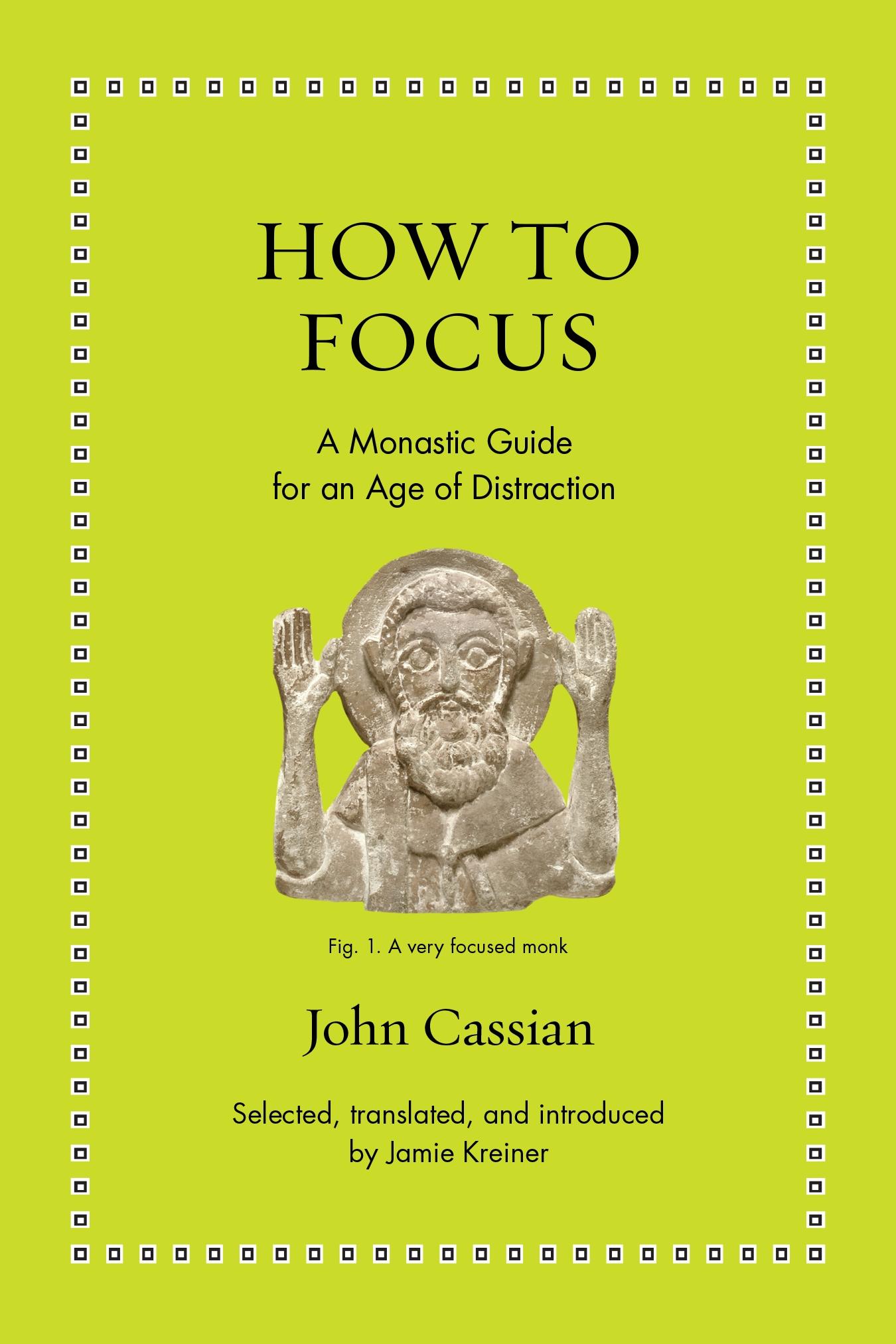
Distraction is not a new problem tied to our technology. It’s something that people have struggled with for centuries, even at a time when books counted as newish devices and the main way to glance at the “clock” was to look outside at the sun. We’re not the first to complain about how hard it is to concentrate, or even to moralize the issue. Christian monks in the late Roman Empire beat us to it. Their work required intense concentration, which made them all the more aware of how hard it was to master.1
Like many of their contemporaries, monks saw cognition as an activity that both expressed who they were and made them what they were. 2 Thinking about how to focus therefore amounted to thinking about how to live, as the person one wanted to be. And what
HOW TO FOCUS
monks wanted, in late antiquity, was to dedicate their lives and attention to God and to their ethical obligations within a divinely ordered universe.
The problem was that the mind (like the self) is an inherently slippery thing. John Cassian, whose thoughts about thinking influenced centuries of monks, wrote in the 420s that the mind “gets pushed around by random distractions.” It rifles through the past rather than staying fixed on the present. It thinks about dinner when it’s supposed to be concentrating on a psalm. It careens haphazardly between stimuli. It falls asleep during the night prayers. It wonders what time it is when it’s supposed to be buried in a book.
Many monks in Cassian’s day blamed demons for their lapses.3 These demons lurked all around them, shooting distracting thoughts at them that could cause serious harm if monks weren’t quick to react. Cassian agreed that demons were part of the prob lem, but he was also sure that
I NTRODUCTION
distractedness was a human condition that could be mitigated by disciplining the mind, which involved examining and restructuring the conceptual, emotional, somatic, and social forces that were interlaced with monks’ mental activities. A large portion of his Collationes—that is, Consultations, or Conversations, or (as it’s usually translated) The Conferences—is dedicated to helping monks take up that training. As the historian and monk Columba Stewart has noted, “The question of focus is the single most important practical problem Cassian addresses in his monastic theology.”4 Although many elements of Cassian’s late antique anthropology and cosmology are far from our own concepts of cognition, we share with him an interest in combatting distraction and focusing on the things that matter to us. And what Cassian can offer, as an expert who has both succeeded and failed to focus, is advice that is at once more sympathetic and more sophisticated than what we’re used to.
HOW TO FOCUS
Cassian and His Work
John Cassian was a monk who lived in the Roman Empire in the fourth and early fifth centuries CE.5 These were still relatively early days in the history of Christian monasticism: Cassian was born in the 360s, as part of the generation that sought out the monastic pioneers in Egypt and the Levant who were old enough to be their parents and grandparents, to learn from them personally. The accounts that Cassian and others wrote about these encounters brought their role models international renown as the fathers and mothers of Christian monasticism. Cassian himself actually made it into that canon, too, alongside his personal heroes: he makes a cameo appearance in the immensely popular Apophthegmata patrum or Sayings of the Desert Elders, stories that circulated for centuries throughout Mesopotamia, the Mediterranean, and Europe.6
It’s not certain where in the empire Cassian was born, but we do know that
he joined his first
I NTRODUCTION
monastery in Bethlehem when he was in his twenties, with a close friend named Germanus. From there the two struck out to Scetis and other monastic communities in the Nile delta, where they spent around fifteen years interviewing and learning from monastic elders in the hopes of becoming better practitioners themselves. When Egyptian monasticism became roiled by debates about the teachings of Evagrius—a monk who deeply influenced Cassian’s work, though Cassian never speaks of him directly— Cassian and Germanus fled to Constantinople and served in the ecclesiastical entourage of the imperial capital’s archbishop, John Chrysostom. But Chrysostom was a divisive figure, too, and when he was deposed and exiled only a few years later, Cassian and Germanus traveled to Rome in an effort to defend him.
Historians don’t know what became of Germanus after that, but Cassian eventually moved to southern Gaul, by the 410s at the latest, when he would have been in his fifties. This was no
HOW TO FOCUS
quiet provincial getaway. By the time Cassian arrived in Gaul, political authority at both the imperial and the local levels had been sharply contested in this region for a few decades. Cassian found that the Christians he met there, rich and influential Christians in par tic u lar, were hungry for stories of what he’d learned in Egypt, searching as they were for moral exemplars and authoritative models of leadership. So in the 420s he narrativized the most memorable conversations he’d had with Germanus and their Egyptian mentors and sculpted them into an argument for living ethically, day by day, while coming to terms with one’s error-prone, ever-moving mind: this was the Collationes.
Given the sheer diversity of monastic models and forms of spiritual authority in late antiquity, it’s all the more remarkable that the Collationes, together with Cassian’s De institutis coenobiorum (The Foundations of Monastic Communities, better known as The Institutes), became such influential texts. One hagiographer tells us that Cassian’s
I NTRODUCTION
writings inspired a young North African abbot named Fulgentius to set sail for Egypt in the later fifth century, to meet the holy monks whom he already saw as his “parents.” But he never made it there, his hagiographer tells us: Fulgentius got so excited talking about Cassian’s work at a dinner with the bishop of Syracuse that the bishop persuaded him to stay in Sicily. Another hagiographer noted that by the late sixth century the abbot John of Réomé had earned the respect of the most powerful people in Gaul, not least because he meditated on the Instituta and the Collationes especially the books featuring Abba Isaac—and in the process kept his mind from getting distracted. And the Rule of Benedict, a Latin text that eventually became the most popular reference point for monastic discipline in Europe, presented Cassian’s work as recommended reading and advised monks to listen to the Collationes after dinner and on fast days: these were times when the mind needed something energizing but not arousing.7
HOW TO FOCUS
These are just a few of many examples. Cassian had many admiring readers, though his work, too, was controversial in some circles. His emphasis on lifelong disciplinary practices (behavioral, social, cognitive) as constitutive of an ethical life left its mark not only on monasticism but on Christianity more generally. That said, certain elements of Cassian’s work never quite entered mainstream medieval psychology, and they might seem as surprising today as they did in the fifth century.8
Attention in the Collationes
One of the central preoccupations of the Collationes is the art of concentration. This art required many interlocking practices, and the diverse metaphors that Cassian and his interlocutors deploy reflect their sense of monastic practice as a multifaceted system of training. Distraction did not have a single solution. So like soldiers, monks disciplined themselves to re spect chains of
I NTRODUCTION
command and group norms that could sustain them in combat. Like athletes, monks conditioned their bodies. Like artisans, monks honed skills that were essential to their craft—in their case, reading, memorizing, and above all monitoring the mind and heart. All these forms of training were necessary because a monk’s spiritual growth depended on maintaining functional relationships between self and collective, mind and body, technique and reflection. Concentration on the divine wasn’t going to happen simply by resolving to think harder, because a monk’s mind was affected by the world in which it was embedded, by the fluctuating constraints of social networks, obligations, physical capacities, emotional states, knowledge, perceptions, and habits. Training across many domains was both ethically and psychologically necessary.
Practices that we recognize as the signature elements of Christian monasticism were, for Cassian, essential parts of that complex cognitive system. Renouncing property and family, joining
HOW TO FOCUS
a community of likeminded practitioners, avoiding sex, eating sparingly: these were all strategies to minimize the things that didn’t matter in order to stretch the mind out to God. But he also recommended forms of mental discipline that are accessible even to the nonmonks among us— think metacognitive habits, rather than major life changes—and this translation focuses on those. But for Cassian, they were only one part of the art of concentration.
He also insisted that attentiveness was not so much an achievement as a perpetual practice. Even the most expert monks got discouraged by distraction sometimes; the work was never over. But the highs could be exquisite—none more so, as far as Cassian was concerned, than what he called “fiery prayer.” This was for him the consummate form of attention. A monk experiencing fiery prayer was not only locked on God. He was so absorbed in the experience, so overcome by spiritual sensation that the mind was incapable of dissecting the moment into something more
I NTRODUCTION
comprehensible and reductive. It was as close to an undistracted self as a monk could get.
But before diving into that deep form of attention, Cassian starts more straightforwardly. His guidebook (and this translation) begins with an orientation courtesy of the great Abba Moses, who tells Germanus and Cassian that, like everyone else who wants to acquire a skill, they will need short- and long-term goals. It’s too easy to get distracted otherwise: without a destination to guide its movements, the mind will take endless detours without even realizing it’s off course.
Cassian and Germanus know exactly what their ultimate goal is: the kingdom of God— both in the sense of salvation and also in the sense of an inner alignment with spiritual values in the present. But Moses has to help the friends identify the proximate goal that will help them get there, and that is clarity of heart, a state of being unmoved by disruptive tendencies within the self. With these goals, monks can map out
HOW TO FOCUS
their way and refer to those plans to reorient themselves when they get lost.
After all, the mind can never completely avoid interruptions and distractions. What it can do is be selective with the thoughts it encounters or generates along the way—to go along with the ones that make sense for its goals, and to leave behind the ones that don’t. We can’t stop our minds from moving around, but we can give them better or worse things to think about.
But even with a map in mind, monks still struggled. The selection from book 7 of the Collationes speaks to their frustrations. Cassian and Germanus vent to Abba Serenus: after all the time they’ve spent as monks in the desert, the only thing they seem to have acquired is a deeper awareness of their own inability to concentrate. When they feel themselves advancing toward their destinations, their minds are led off course by innumerable daily distractions—only to suddenly return to what they were supposed to be thinking about, then wander away again. Serenus
I NTRODUCTION
cuts off their complaining when Germanus suggests that concentration has nothing to do with self-control. It’s natural for the mind to move around, Serenus grants, but where it goes and what it thinks about is up to us. Germanus and Cassian need more training.
In books 9 and 10, which are sometimes considered to be the culmination of the Collationes, Germanus and Cassian learn from Abba Isaac how to reach a state of total concentration—and more specifically, concentration in prayer, because as Isaac points out, sometimes we concentrate on things we shouldn’t.9
Although there are infinite permutations of prayer, depending on who is praying and what their mind is like in the moment, the monks are especially keen to experience fiery prayer, that state of losing touch with the outside world while the mind becomes illuminated and pours out thoughts in a power ful flow. (Although the modern concept of flow was coined by the psychologist Mihaly Csikszentmihalyi, the
xix
HOW TO FOCUS
metaphor of flow to describe attentive and absorptive thinking recurs throughout Cassian’s book.)10 According to Isaac, what makes this state of mind possible is a sense of genuine feeling for the subject at hand, rather than a superficial commitment to it. Almost anything can catalyze this feeling, but it can’t be faked, and in all cases the necessary precondition is a calm and clear heart.
But Germanus and Cassian aren’t satisfied with this general advice. They want a particular method that they can reliably follow, to experience that absorptive concentration instead of constantly getting waylaid by distraction and struggling to refocus. Isaac suggests that they memorize a single line of text, a psalm verse that asks for God’s help, and to intone it as a kind of mantra or mnemonic throughout the day—not only as they settle down to meditate but all the time. The mantra would serve as a regular dosage of sage advice, to remind them of their priorities and goals. It would also be a constant companion,
I NTRODUCTION
something to turn to in monks’ many moments of weakness. But for Germanus this advice is still not enough. The problem is getting circular. “How do we hold onto that verse?”
Abba Nesteros takes a different tack. He tells the pair to read and recite their sacred texts all the time, which should not only keep their minds busy but also saturate and transform them with images that will flush out unwanted thoughts and useless memories, even the stories and songs they learned as kids. You can’t just clean out your mind and leave it blank, Nesteros says. You’ve got to replace all those vivid images and ideas with other things to work with. Imagine your mind as a cool, calm sanctuary that will give you access to God. Store that vault with things you treasure, and eventually it will overflow with thoughts you actually want to be thinking.
In the last two books of the Collationes the abbas Theonas and Abraham offer some final words of encouragement and warning to
HOW TO FOCUS
Germanus and Cassian, who are still fighting to stay focused. Nobody can experience the divine all the time, Theonas assures them. The mind is bound to slip and fall. But you need to take the challenge seriously. Think of yourself as a tightrope walker, with the line stretched tight between yourselves and God. You need to be afraid of falling: this will help you take your concentration seriously!
Germanus suggests to Abraham that maybe the best way to concentrate is to move back home. It would be easier to avoid distractions if he didn’t have to think about supporting himself and if he weren’t always getting so many visitors. Not a chance, says Abraham. The idea that you can escape to somewhere even more remote, or even more peaceful, is an empty fantasy. There will always be people to distract us, responsibilities to keep us busy, and opportunities to make us second- guess the choices we already made. Rather than give up on a life that generations of monks had already engineered to
help themselves concentrate, they should treat small interruptions or challenges as beneficial breaks. Otherwise even the most focused minds will falter.
There is a great gulf between our age and the world of late antiquity. But Cassian was part of an enthusiastic and analytical subculture that speaks to struggles we share in common. Like early Christian monks, we are still easily distracted—and we keep wishing we weren’t. Sixteen hundred years later, their conversations still have things to teach us. And when Cassian and his interlocutors speak, they are simultaneously stern and empathetic, out of a conviction that it’s possible to make the mind stronger, but impossible to control it completely.
NOTES ON THE TRANSLATION
In its full form, the Collationes consists of twenty-four consultations and around 150,000 words. The excerpts here are drawn from seven consultations and represent less than 10 percent of the whole—so this translation conveys only a fraction of what Cassian shared with his readers.11 But it operates in an undeniably premodern mode: compiling excerpts of treasured texts into abridgements or anthologies was common practice in late antique and medieval book culture. It was a way of drawing on the knowledge and traditions of prior generations while shifting it, like the twist of a kaleidoscope, into something different. Through curation and recombination, the old became new, offering insights that spoke to the questions and preoccupations of different audiences. Cassian’s work certainly