Foreword
By Jeffrey D. Sachs, University Professor at Columbia University
The challenge of inclusive growth took on increased urgency during the Covid-19 pandemic, which exacerbated almost every division in the world economy. Stock markets soared while the poor lost their livelihoods. The digital haves went online—for work, schooling, healthcare, and personal connections—while the digital have-nots suffered isolation and the loss of access to crucial services. Jobs for skilled workers rebounded quickly from the 2020 Covid-19 contraction, while jobs for lower-skilled workers remained depressed, or disappeared altogether, even with the post-2020 rebound. Rich countries and individuals were able to borrow at exceptionally low interest rates, while poor countries and individuals had to tighten their belts, if they had belts at all.
In short, economic inequality that was already achingly high before the pandemic became a global emergency in the course of the pandemic. For that reason alone, this important collection of chapters is remarkably timely for policy makers, scholars, and the interested public. Yet the importance of these chapters goes beyond their undoubted timeliness. The chapters are extremely well written, cogent, and comprehensive in the important and varied topics that they cover, and presented in a manner that is accessible to specialists and non-specialists alike.
The world has been grappling for decades—alas, with limited success—with the challenge of economic and social inclusion. In 1948, the member states of the newly-formed United Nations adopted a moral charter of social inclusion: the Universal Declaration of Human Rights (UDHR). The Universal Declaration boldly and powerfully recognized that all people are “born free in dignity and rights” (Article I), including:
the right to a standard of living adequate for the health and well-being of himself and of his family, including food, clothing, housing and medical care and necessary social services, and the right to security in the event of unemployment, sickness, disability, widowhood, old age or other lack of livelihood in circumstances beyond his control. (Article 25)
Yet these economic rights have not yet been realized. The world economy today is obviously rich enough to ensure such basic economic rights. The Gross World Product is roughly $100 trillion in 2021, or roughly $12,500 per person. Yet
despite this great income, billions of people worldwide still lack access to one or more of their basic economic needs.
In 2015, the 193 UN member states unanimously adopted the 17 Sustainable Development Goals, which can be considered our generation’s attempt to make good on the economic rights recognized long ago by the Universal Declaration. Of course, the 17 SDGs also added a crucial new dimension of need that was not recognized in 1948: the need to combine economic wellbeing and social inclusion with environmental sustainability.
The chapters in this important book deal with many of the key policy challenges in achieving the SDGs. There are important chapters on combining the climate-change imperatives with economic inclusion; on promoting gender equality in the economy (as called for by SDG 5); and on constructing a fiscal framework of taxes, outlays, and overall budget management, to underpin inclusive growth. These are vital topics for achieving the 17 SDGs.
In order to ensure a world of inclusive growth and sustainable development, the national budget will play an essential role, or more accurately perhaps, the leading role. As one excellent chapter in this volume states succinctly: “Public expenditure is the most powerful instrument at hands of governments to achieve their objectives of economic development and social welfare” (Chapter 13). The importance of bold and inclusive fiscal outlays is echoed throughout the volume. Governments need to invest boldly and amply to ensure universal access to healthcare, quality education, and vital infrastructure such as digital connectivity. Government investments will play an indispensable role in the transition to zero-carbon energy systems. And government outlays are vital for R&D and for regional development policies to help laggard regions within the country.
Of course, inclusive development requires not only more public outlays in most countries, but also properly directed outlays, meaning public investments and services that aim for gender equality (SDG 6) and that aim to end long-standing patterns of social, ethnic, and racial discrimination. As noted in several chapters, such far-sighted public policies are best promoted through policy transparency, rule of law, citizens’ participation, public ethics, a well-trained public administration, and the recognition of the norms of fairness. In my view, the Universal Declaration and the SDGs provide a powerful framework to promote such good governance.
The IMF is to be highly commended for its powerful focus on inclusive growth, and for mobilizing the best evidence and best practices. The chapters in this volume complement another set of important IMF studies in recent years, which have examined the fiscal framework to achieve the SDGs.1 That complementary work has emphasized the need for low-income developing countries (LIDCs) to increase
1 For the most recent overview, see “A Post-Pandemic Assessment of the Sustainable Development Goals,” Dora Benedekt, et al., IMF Discussion Note, SDN/2021/003, April 2021.
markedly the overall level of public outlays and to finance those increased outlays with higher taxes as a share of GDP and with greatly increased development financing from the world community, for example to help finance the energy transition. In fact, the IMF has shown that there is a global SDG financing gap of several hundred billion dollars a year facing the LIDCs. If those countries are to achieve inclusive development, they will need much greater financial flows from the rich countries,for example through the expanded financing by the multilateral development banks.
In the end, this may be the main practical conclusion of the IMF’s pathbreaking work: social inclusion requires fiscal solidarity both within and between countries.We need a global fiscal system that raises and directs sufficient revenues to enable all governments,both rich and poor alike,to provide the public outlays needed for inclusive and sustainable development for all.
Preface
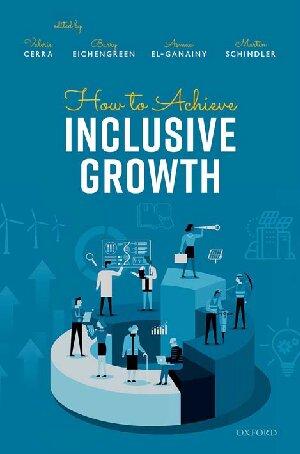
Achieving inclusive growth—that is, strong and sustainable economic growth whose benefits are widely shared—is the paramount policy challenge of our day. Inequality has been rising in many countries, and large income disparities persist across regions, genders, ethnicities, and generations. The Covid-19 pandemic has been raging, and inequality, poverty, and exclusion are all but certain to intensify in its wake. Climate change, economic and financial crises, and job-displacing technological change all pose challenges to equitably sharing the fruits of economic growth.
The four of us are educators committed to disseminating practical knowledge, distilled from technical research, to policy makers, practitioners, students, and the public. Collectively, we have been providing practical training to government officials through the IMF’s capacity development activities in Washington and around the world, as well as through academic teaching and research. Our interest in editing this volume grew out of our experiences, including delivering courses on inclusive growth, out of our devotion to these educational goals, and out of our desire to contribute to practical approaches to achieving inclusive growth.
How to Achieve Inclusive Growth is designed to fill three gaps in the literature:
• First, while there are an increasing number of works describing rising inequality, especially in the United States, less attention has been paid to the design of practical policies to reverse the trend. This book provides policymakers and practitioners with information on the state of inclusive growth, both in the United States and globally. But it goes beyond this description of trends. It focuses on the “how to.” The book provides guidance for designing policies that foster inclusiveness, taking a comprehensive view of the issues, and considering the full range of policies on each topic. Thus, each chapter succinctly summarizes key issues, debates and questions around a specific issue area, and describes the policy tools available for addressing it. It synthesizes the relevant academic literature, as well as drawing on examples and case studies from country experiences.
• Second, the book takes a global perspective, while also carefully distinguishing the policy options that are most appropriate for advanced versus developing countries.
• Third, inclusive growth has often been considered in piecemeal fashion, with most earlier work focusing on a single theme or issue, and only rarely
bringing together the various strands. In reality, of course, the different dimensions of inclusive growth are interlinked. Climate change affects growth and poverty while also prompting migration, all of which affect the extent to which growth is shared. Technological advancement and globalization generate regional disparities within countries as well as across countries at different stages of economic development. Trade can empower women and reduce informality, although it doesn’t always have these effects. Regional disparities can impact intergenerational equity. Likewise, the policies needed to achieve inclusive, sustained, and green growth are multidimensional. They range from the regulation of labor markets, technology, and market concentration to the design and operation of government institutions, services, and redistributive instruments. Understanding, much less achieving, inclusive growth thus requires a comprehensive approach to both problems and policies.
How to Achieve Inclusive Growth draws on the knowledge of a diverse group of experts, including academic economists, IMF economists with experience in building capacity and providing advice on economic and financial policies, and experts from other institutions, such as the World Bank, the World Trade Organization, the European Bank for Reconstruction and Development, and the International Labor Organization, which collectively possess expertise on the entire range of labor, social, and economic issues related to inclusive growth.
We hope the book provides you with at least some useful answers to the question of How to Achieve Inclusive Growth.
Valerie, Barry, Asmaa, and Martin Washington, DC, and Berkeley, California
Foreword by Kristalina Georgieva v Foreword by Jeffrey D. Sachs vii
List of Figures and Diagrams
List of Tables
List of Contributors xxiii
1. An Inclusive Growth Framework 1
Valerie Cerra
2. Links Between Growth, Inequality, and Poverty 32
Valerie Cerra, Ruy Lama, and Norman Loayza
3. Labor Markets 74
Asmaa El-Ganainy, Ekkehard Ernst, Rossana Merola, Richard Rogerson, and Martin Schindler
4. Financial Inclusion 121
Adolfo Barajas, Thorsten Beck, Mohamed Belhaj, and Sami Ben Naceur
5. Technological Progress and Artificial Intelligence 163
Anton Korinek, Martin Schindler, and Joseph E. Stiglitz
6. Competition and Innovation 212
Philippe Aghion, Reda Cherif, and Fuad Hasanov
7. Trade 238
Marc Bacchetta, Valerie Cerra, Roberta Piermartini, and Maarten Smeets
8. Financial Globalization 287
Barry Eichengreen, Balazs Csonto, and Asmaa El-Ganainy
9. Migration 319
Zsoka Koczan, Giovanni Peri, Magali Pinat, and Dmitriy Rozhkov
10. Governance 353
Maksym Ivanyna and Andrea Salerno
11. Macroeconomic Stability, Adjustment, and Debt 391
Hamid R. Davoodi, Peter Montiel, and Anna Ter-Martirosyan
12. Tax Policy 424
Khaled Abdel-Kader and Ruud De Mooij
13. Public Expenditure 457
Younes Zouhar, Jon Jellema, Nora Lustig, and Mohamed Trabelsi
14. Education and Health 497
Deon Filmer, Roberta Gatti, Halsey Rogers, Nikola Spatafora, and Drilona Emrullahu
15. The Political Economy of Inclusive Growth 539
Barbara Dutzler, Simon Johnson, and Priscilla Muthoora
16. Gender Equality 575
Raquel Fernández, Asel Isakova, Francesco Luna, and Barbara Rambousek
17. Regional Disparities 613
Holger Floerkemeier, Nikola Spatafora, and Anthony Venables
18. Generational Aspects of Inclusive Growth 645
Benedicte Baduel, Asel Isakova, and Anna Ter-Martirosyan
19. Sharing Resource Wealth and Addressing Fragility 674
Nathalie Pouokam
20. Climate Change 705
Amar Bhattacharya, Maksym Ivanyna, William Oman, and Nicholas Stern
21. Country Case Studies 760
Sriram Balasubramanian, Lahcen Bounader, Jana Bricco, and Dmitry Vasilyev
22. Conclusions and Resources for Next Steps
Valerie Cerra
List of Figures and Diagrams
3.9. Procedural Requirements for Individual Dismissals of Regular Workers (Indicator Score, 2019)
3.10.
3.11.
3.12.
3.13.
3.14.
3.15.
4.1.
4.2. Nearly Half of All Unbanked Live in Just Seven Countries: Adults without an Account by the Economy (in %)
4.3. Reported Reasons for Not Having a Bank Account
4.4. Mobile Money and Accounts in Financial Institutions (2017, percentage of adults)
4.5.
4.6.
4.7.
5.1.
5.2.
5.3.
5.4.
5.5.
5.6.
5.7.
6.1.
6.2.
7.1. Change in Net Gini, 1990s–2010s
7.2.
7.3.
7.4.
7.5.
7.6.
7.7.
7.11.
8.8.
8.9.
13.1.
13.2.
13.3.
13.4.
13.5.
13.10.
14.1.
14.2.
14.3.
14.5. In Several Countries, the 75th percentile of Test-Takers Performs Below the 25th percentile of the OECD Average
14.6. Children from Poor Households in Africa Typically Learn Much Less
14.7. Relationship Between Childhood Stunting and Health Expenditure
15.1.
15.2.
15.3.
15.4.
15.5.
15.6.
15.7. Evolution of Democracies and Autocracies since 1800
16.1. Gender Inequality Index
16.2. Labor Force Participation Rate (in percent)
16.3. Age-employment Profiles for Women (in percent)
16.4. Parental Leave According to Women Business and the Law Database
16.5. Contraceptive Prevalence (percent)
16.6. Gender Quotas in Parliaments
17.1.
17.2.
17.3.
18.6.
18.7.
20.2.
21.4. Social Services: Public Spending on Health and Education, 2019
21.5. Tax Wedge, 2019
21.6. Public Spending on Active Labor Market Policies
21.7. Employment Rates, 2019
21.8. Poverty Headcount Ratio at $1.90 a day (2011 PPP) (% of population)
21.9. GDP and GDP per capita (1990–2020)
21.10. Ratio of External Debt to GDP (Percentage to GDP, 2001–2020)
21.11. Comparative Consumption Gini Coefficients: China, India, and Indonesia
21.12. Growth Incidence Curve (1983–2011)
21.13. DBT Overall Progress vs Year 2013–2020/21
21.14. Growth Dynamics
21.15. Inequality, Poverty, and Informality
21.16. Average Growth and GDP per capita from 2010–2019
21.17. Gini Index for 75 Countries from Around the World in 2015
21.18. Public Perception of Inequality (as % of Respondents)
Diagrams
9.1. Wage Effect of Migration
9.2. The Net Fiscal Impact of Immigrants
List of Tables
List of Contributors
Editors
Valerie Cerra is an Assistant Director and the Division Chief of the Inclusive Growth and Structural Policies Division at the International Monetary Fund. She has been involved in policy advice, lending, and capacity development in the IMF’s Western Hemisphere, African, European, and Asia and Pacific departments, and the IMF Institute. She obtained undergraduate degrees in finance and engineering from the University of Pennsylvania, a PhD in Economics from the University of Washington, and is a CFA. She has published widely in leading economics journals on topics related to international macroeconomics, financial crises, economic scarring, and inclusive growth.
Barry Eichengreen is George C. Pardee and Helen N. Pardee Professor of Economics and Political Science, University of California, Berkeley; Research Associate of the National Bureau of Economic Research; and Research Fellow of the Centre for Economic Policy Research.
Asmaa El-Ganainy is a Deputy Division Chief at the IMF. Previously, she worked in the European and Fiscal Affairs Departments, contributing to IMF’s surveillance, lending, research, and capacity development work across a range of countries. Her research interests are in the fields of public finance, sovereign debt, inequality, labor economics, and capital flows.
Martin Schindler is a Deputy Division Chief at the IMF. He has contributed to the IMF’s surveillance, lending, and analytical work, covering low-income, emerging and advanced economies on four continents, as well as to capacity development, including as deputy director of the Joint Vienna Institute. He is the lead editor of the IMF book Jobs and Growth: Supporting the European Recovery and has published in leading economic journals, including the Journal of Monetary Economics, the Journal of International Economics, and the European Economic Review, among others. He holds a PhD in Economics from the University of Pennsylvania.
Authors
Khaled Abdel-Kader is a staff member of the IMF. He is currently serving as the Deputy Director of the IMF-Middle East Center for Economics and Finance. Most recently, he was a Senior Economist in the IMF’s Institute for Capacity Development. Previously, he worked in the IMF’s European Department, Communications Department, and, briefly, the Asia and Pacific Department and the Research Department. Before joining the IMF, he was
an Economist at the Arab Monetary Fund in the United Arab Emirates, an advisor to the Minister of Planning in Egypt, and an Assistant Professor at the University of Minnesota-Duluth.
Philippe Aghion is a Professor at the College de France and at the London School of Economics, and a fellow of the Econometric Society and of the American Academy of Arts and Sciences. His research focuses on the economics of growth. With Peter Howitt, he pioneered the so-called Schumpeterian Growth paradigm. His books include The Power of Creative Destruction (2021, with C. Antonin and S. Bunel), The Economics of Growth (2009, with P. Howitt), and Competition and Growth (2006, with R. Griffith). He is a recipient of numerous honors and awards. Philippe holds a PhD in Economics from Harvard University.
Marc Bacchetta is Chief of Section in the Economic Research and Statistics Division of the World Trade Organization. He holds a PhD from the University of Geneva where he taught economics for six years before joining the WTO in 1996. Between 2002 and 2004, he worked on trade-related issues at the World Bank. He has contributed to a number of publications on trade and labor including the chapter on “Trade, Value Chains and Labor Markets in Advanced Economies” in the Global Value Chain Development Report 2019 and has recently co-edited two volumes on Making Globalization More Inclusive (World Trade Organization (WTO), 2019) and Trade Adjustment in Asia (WTO and the Asian Development Bank Institute, 2020).
Bénédicte Baduel is a Senior Economist at the World Bank in the South Africa Country Office. She is on leave from the International Monetary Fund where she was a Senior Economist in the Middle East and Central Asia Department. She has worked on several emerging and developing economies in Africa, Latin America, and the Middle East. Her analytical work focuses on the connection between macroeconomic and structural policies, especially inclusive growth and governance. Bénédicte holds a PhD in Economics from Sorbonne Nouvelle University.
Sriram Balasubramanian is a Senior Research Officer at the Independent Evaluation Office of the International Monetary Fund. He is an Economist who is an alumnus of both Columbia University and the University of Southern California. Besides prior experience in the private sector and the WBG, his keen interests include macroeconomic policy research, inequality, new growth models, and capital flows management, among others. He is also an author of two published books and is working on a forthcoming third book on economic history.
Adolfo Barajas is a Senior Economist in the IMF’s Monetary and Capital Markets Department, leading analytical work for the Fund’s Global Financial Stability Report since 2017. He has worked in other departments of the Fund: Institute for Capacity Development, Research Department, and regional area departments. His early career was as a researcher in Colombia’s central bank and at Fedesarrollo in Bogotá. He conducts research on financial stability, development and inclusion, macroeconomic effects of remittances, exchange rate policy, and dollarization. He received his Doctorate in Economics from Stanford University, and his undergraduate degree in Economics from the Universidad de los Andes.
Thorsten Beck is currently Professor of Banking and Finance at The Business School (formerly Cass) in London. He is also Director of the Florence School of Banking and Finance and will take up a Chair of Financial Stability at the European University Institute in September 2021. He worked at Tilburg University from 2008 to 2014 and previously worked in the research department of the World Bank from 1997 to 2008. He holds a PhD from the University of Virginia and an MA from the University of Tübingen in Germany.
Mohamed Belhaj is Senior Economist at the IMF Center for Economics and Finance in Kuwait. He was previously Professor of Economics at Ecole Centrale Marseille. He graduated from Tunisia Polytechnic School and holds a PhD in Economics from Toulouse School of Economics. His research interests are finance and network theory. His work has been published in several prestigious academic journals, including Mathematical Finance, American Economic Journal, Theoretical Economics, and Journal of Development Economics.
Amar Bhattacharya is a Senior Fellow in the Center for Sustainable Development at Brookings. His focus areas are the global economy, development finance, global governance, and the links between climate and development. From 2007–2014 he was Director of the Group of 24, an intergovernmental group of developing country Finance Ministers and Central Bank Governors. Before that, he had a long-standing career in the World Bank, most recently as Senior Advisor and Head of the International Policy and Partnership Group. He completed his undergraduate studies at the University of Delhi and Brandeis University and his graduate education at Princeton University.
Jana Bricco is currently working on structural, fiscal, and external sector issues as the desk Economist for Sweden and Denmark in the European Department of the IMF. Before that she worked on macrofinancial risk assessments, stress testing, and financial stability frameworks in the Financial Sector Assessments and Policy (FSAP) Division. Before joining the IMF eight years ago, she worked at the European Central Bank, Deutsche Bundesbank, and BaFin. Jana holds a Master’s and PhD in Economics from the Goethe University in Frankfurt where her research focused on bank supervision, unconventional monetary policies, and contagion in global asset markets.
Sami Ben Naceur earned a PhD in Finance from the University of Paris Sorbonne. He has published extensively on finance and macroeconomics. He is currently the Acting Division Chief of the African Division at the IMF’s Institute for Capacity Development (ICD), leading a team of Economists in delivering technical assistance and training in Sub-Saharan Africa. He was Deputy Director of the IMF-Middle East Center for Economics and Finance, and the Chief of the Internal Economic Training Unit in ICD. He was also Senior Economist in the IMF’s Middle East and Central Asia Department where he contributed to the Regional Economic Outlook.
Lahcen Bounader is an Economist at the International Monetary Fund. He received his engineering degree from National Institute of Statistics and Applied Economics and obtained his PhD in Economics from Mohamed V University (Rabat). His research focuses on macroeconomics, behavioral and monetary economics.
Reda Cherif is a Senior Economist at the International Monetary Fund. He joined the IMF in 2008. His research covers development economics, natural resources, industrial policy,