Mastering Digitally Controlled Machines: Laser Cutters, 3D Printers, CNC Mills, and Vinyl Cutters to Make Almost Anything (Maker Innovations Series) 1st Edition JeanMichel Molenaar https://ebookmass.com/product/mastering-digitally-controlled-machineslaser-cutters-3d-printers-cnc-mills-and-vinyl-cutters-to-make-almostanything-maker-innovations-series-1st-edition-jean-michel-molenaar/ ebookmass.com
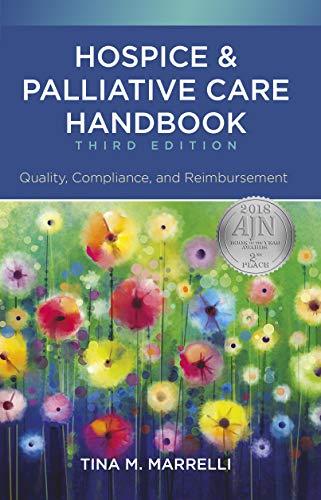
Praise for Hospice & Palliative Care Handbook, Third Edition
“While the core mission of hospice and palliative care remains to minimize suffering and optimize quality of life, the field has undergone sweeping changes in recent years. Today’s hospice and palliative care practitioners are truly fortunate to be able to tap into Tina Marrelli’s unparalleled clinical and operational expertise—as well as her rich historical perspectives on our nation’s unique approach to end-of-life care. With the assistance of nationally recognized experts, Marrelli has expertly revised Hospice & Palliative Care Handbook , Third Edition. This book should be mandatory reading (and reference!) for hospice personnel.”
–Theresa M. Forster Vice President for Hospice Policy & Programs National Association for Home Care & Hospice
“ There has never been a more important time in hospice and palliative care for Tina Marrelli’s invaluable manual. This book will guide both those new to this specialty field and those more veteran to meet the ever-increasing requirements for accurate, timely, and comprehensive documentation. The hospice and palliative care field is growing, and Marrelli’s work provides an important resource to assist clinicians in meeting regulations while providing incredible care. This book is truly a must-have for all hospice and palliative caregivers.”
–Soozi Flannigan, DNP, APRN Vice President of Hospice & Home Care The Connecticut Hospice Inc.
“I recommend this new edition as an excellent resource for professionals who are new to hospice and palliative care as well as a refresher for those who currently work in this specialty. Specific tips for success related to quality, safety, eligibility, and reimbursement are relevant to achieve quality patient care, comply with multiple federal and state regulations, and meet the educational needs of patients and caregivers.”
–Marilyn D. Harris, MSN, RN, NEA-BC, FAAN Former Executive Director of Hospice and Home Care (Abington Hospital/Jefferson Health, Abington, Pennsylvania) Author and Editor
“ This book is easy to read and can be used as a reference for field clinicians. Tina Marrelli provides an outline for care and succeeds in explaining the unique healthcare niche that is hospice and the special skill set required to aptly deliver it.”
–Katie
Wehri,
CHPC Director of Operations Consulting Healthcare Provider Solutions Inc.
“It’s easy to see why this book has become the go-to resource for both seasoned hospice workers and those new to the field. A skillful melding of regulatory and clinical information, it provides an excellent base on which to build deep hospice competence.”
–Susan Balfour, RN Partner, Hospice Fundamentals
“I am delighted that this very relevant and updated third edition is now available! Tina Marrelli’s handbook has long been a wonderfully useful tool for hospice nurses in direct clinical practice as well as nurses in management and leadership. This handbook is especially perfect for clinical orientation to the role of hospice nurse. As a guide for documentation, it provides extensive information for what is necessary to paint a quality hospice picture. And, all of this is done in a paradigm of what is necessary for compliance. This tool is most timely!”
–Maureen Williams, MEd, BSN, RN, CHPCA Regional Director of Care Navigation Four Seasons Compassion for Life Flat Rock, North Carolina
“ The third edition of this very helpful Hospice & Palliative Care Handbook is welcomed. Administrators, managers, and clinicians will find it to be a quick reference resource. Especially helpful are the sections on Medicare coverage, terminal prognosis-based documentation, and the common symptoms at end of life. All can be used for orientation of the hospice interdisciplinary team and for ongoing reference as care plans are developed and modified.”
–Barbara Piskor, MPH, BSN, RN, NEA-BC President, CEO, BKP HealthCare Resources President, International Home Care Nurses Organization
All rights reserved. This book is protected by copyright. No part of it may be reproduced, stored in a retrieval system, or transmitted in any form or by any means, electronic, mechanical, photocopying, recording, or otherwise, without written permission from the publisher. Any trademarks, service marks, design rights, or similar rights that are mentioned, used, or cited in this book are the property of their respective owners. Their use here does not imply that you may use them for similar or any other purpose.
This book is not intended to be a substitute for the medical advice of a licensed medical professional. The author and publisher have made every effort to ensure the accuracy of the information contained within at the time of its publication and shall have no liability or responsibility to any person or entity regarding any loss or damage incurred, or alleged to have incurred, directly or indirectly, by the information contained in this book. The author and publisher make no warranties, express or implied, with respect to its content, and no warranties may be created or extended by sales representatives or written sales materials. The author and publisher have no responsibility for the consistency or accuracy of URLs and content of third-party websites referenced in this book.
The Honor Society of Nursing, Sigma Theta Tau International (STTI) is a nonprofit organization founded in 1922 whose mission is to support the learning, knowledge, and professional development of nurses committed to making a difference in health worldwide. Members include practicing nurses, instructors, researchers, policymakers, entrepreneurs, and others. STTI has more than 500 chapters located at more than 700 institutions of higher education throughout Armenia, Australia, Botswana, Brazil, Canada, Colombia, England, Ghana, Hong Kong, Japan, Kenya, Lebanon, Malawi, Mexico, the Netherlands, Pakistan, Portugal, Singapore, South Africa, South Korea, Swaziland, Sweden, Taiwan, Tanzania, Thailand, the United Kingdom, and the United States of America. More information about STTI can be found online at www.nursingsociety.org.
Sigma Theta Tau International 550 West North Street Indianapolis, IN, USA 46202
To order additional books, buy in bulk, or order for corporate use, contact Nursing Knowledge International at 888.NKI.4YOU (888.654.4968/US and Canada) or +1.317.634.8171 (outside US and Canada).
To request a review copy for course adoption, email solutions@nursingknowledge.org or call 888.NKI.4YOU (888.654.4968/US and Canada) or +1.317.634.8171 (outside US and Canada).
To request author information, or for speaker or other media requests, contact Marketing, Honor Society of Nursing, Sigma Theta Tau International at 888.634.7575 (US and Canada) or +1.317.634.8171 (outside US and Canada).
ISBN: 9781945157455
EPUB ISBN: 9781945157462
PDF ISBN: 9781945157479
MOBI ISBN: 9781945157486
Library of Congress Cataloging-in-Publication Data
Names: Marrelli, T. M., author. | Sigma Theta Tau International, issuing body. Title: Hospice & palliative care handbook : quality, compliance, and reimbursement / Tina M. Marrelli.
Description: Third edition. | Indianapolis, IN, USA: Sigma Theta Tau International, [2018] | Includes bibliographical references and index.
Identifiers: LCCN 2017051743 (print) | LCCN 2017052072 (ebook) | ISBN 9781945157462 (Epub) | ISBN 9781945157479 (Pdf) | ISBN 9781945157486 (Mobi) | ISBN 9781945157455 (print : alk. paper) | ISBN 9781945157486 (mobi)
Subjects: | MESH: Hospice Care--standards | Palliative Care--standards | Documentation--standards | Quality Assurance, Health Care | Handbooks | Practice Guideline
LC record available at https://lccn.loc.gov/2017051743
First Printing, 2018
Publisher: Dustin Sullivan
Acquisitions Editor: Emily Hatch
Editorial Coordinator: Paula Jeffers
Cover Designer: Rebecca Batchelor
Interior Design/Page Layout: Bumpy Design
Principal Book Editor: Carla Hall
Development and Project Editor: Rebecca Senninger
Copy Editor: Gill Editorial Services
Proofreader: Todd Lothery
Indexer: Joy Dean Lee
ACKNOWLEDGMENTS
I would like to acknowledge and thank all the hospice nurses, therapists, pharmacists, physicians, aides, and many others whom I have known and worked with across decades. This is a thank-you to the many hospice (and home care) leaders and clinicians across many years who asked me great and interesting questions. As hospice has grown in its complexity, so too has the size of this third edition in pages!
A few people must be acknowledged.
Jennifer Kennedy for her contributions of time and lots of effort for this book to be updated, totally revised, and generally re-created. I have known Jennifer Kennedy, MA, BSN, RN, CHC, Senior Director, Regulatory and Quality, National Hospice and Palliative Care Organization (NHCPO) for more than 10 years. At that time, I had a hospice-specific question and met Jennifer. We have remained friends and colleagues ever since. Thank you so much, Jennifer!
I would also like to acknowledge Cat Armato, RN, CHPN, CHC, CHPC, Health Care Consultant, Armato & Associates, LLC for her kind sense of humor, formatting skills, clarity in writing, enhancement of content, meeting of deadlines, and more. Thank you, Cat!
Reviewers of a manuscript always strengthen and enhance the substance of a book, so I also thank the reviewers listed in the following “Reviewer” pages. Some of you have reviewed other editions, which speaks to the relationships forged in homecare and hospice organizations. “New eyes” are always a good thing, as there comes a time when one cannot “see” what was written.
I am heartened that, in hospice, we know and retain the fundamentals of the best care. This book is also dedicated to you—those mentoring, leading, and otherwise managing in hospice wherever it is provided— inspiring, mentoring, and otherwise helping clinicians be able to provide the best care for hospice patients and families.
ABOUT THE AUTHOR
Tina M. Marrelli, MSN, MA, RN, FAAN
Tina Marrelli is the author of numerous books, including Home Care Nursing: Surviving in an Ever-Changing Care Environment, her book directed toward caregivers, a sometimes undervalued person on the healthcare team; A Guide for Caregiving: What’s Next? Planning for Safety, Quality, and Compassionate Care for Your Loved One and Yourself!; Handbook of Home Health Standards: Quality, Documentation and Reimbursement (2018); and The Nurse Manager’s Survival Guide.
Tina has a long-term relationship with hospice and hospice colleagues. Medicare did not recognize hospices or pay for hospice care until 1982. In the early years of hospice, both the staff at CMS and the leaders of the early hospices worked to make sense of the law and the population it served, working together to develop the kind of hospice care that is now identified with the name. She was an early participant and remembers those heady days. For the more “experienced” readers, you might recall Tom Hoyer of HCFA (now CMS) fame. Tom was termed the “hospice czar” and was a driving force for positive change. This means that at that time, hospice was primarily volunteer. It was pretty much grassroots and mission-driven to try to change and improve end-of-life care for patients and to support their loved ones. This all sounds common sense now, but looking back, it was not. At that time, Tina was the Director of a systems-based nonprofit Home Care and Hospice in Annapolis, Maryland (USA), and it was the first hospice to receive TJC accreditation. So she has always embraced the hospice philosophy and model and (still) wonders why the rest of the healthcare system does not also embrace family and friend caregivers.
Tina attended Duke University School of Nursing, where she received her undergraduate degree in nursing. She also has a master’s degree in health administration and in nursing. Tina has worked in hospitals, nursing homes, and public health. She has practiced as a visiting nurse and managed in-home care and hospice for many years.
Tina is the Chief Clinical Officer for Innovative Caregiving Solutions, LLC, an innovative e-caregiving technology (www.e-caregiving.com). Finally, caregiving and caregivers (loved ones, friends, partners, and others) are being recognized for their important contributions, knowledge, and roles. Tina can be contacted at info@e-caregiving.com.
Tina is an international healthcare consultant, specializing in home care, hospice, and community-based models of care. Tina and her team of specialized consultants have been practicing in the home care and hospice environments for more than 20 years.
Tina is a founding member of the International Home Care Nurses Organization (www.IHCNO.org), which was developed “to support a vibrant worldwide network of nurses to promote excellence in providing optimal care to patients living at home wherever they live in the world.” The IHCNO was started with a small but “mighty” group of nursing leaders.
Tina has been the editor of three peer-reviewed publications—most recently for Home Healthcare Nurse (now Home Healthcare Now), and she is an Editor Emeritus. Tina also serves on the editorial boards of the Journal of Community Health Nursing and The American Nurse.
Tina has been married to her “Hubby,” Bill, for 25 years and hopes for another 25!
Tina is a cat person, but their last one, Limpy Buttercup, went to kitty heaven. Stay tuned for the next kitty! Tina and Bill have walked the beaches on Sea Turtle Patrol for more than 20 years on the west coast of Florida. There is almost nothing as exciting as seeing these vestiges of the dinosaur era come ashore to lay their eggs and then see and watch their hatchlings, all species of which are either threatened or endangered.
REVIEWERS
Cathleen “Cat” Armato, RN, CHPN, CHC, CHPC
Principal Consultant
Armato & Associates, LLC
Blairsville, Georgia
Thomas Bradford, MSW
Social Worker
Christiana Care
Visiting Nurse Association
New Castle, Delaware
Dedee Cully, RN, LNC, COS-S
CaseLNC Consulting
Republic, Missouri
Warren Hebert, DNP, RN, CAE
RWJF Executive Fellow
Chief Executive Officer
Homecare Association of Louisiana
Baton Rouge, Louisiana
Jennifer Kennedy, MA, BSN, RN, CHC
Senior Director, Regulatory and Quality
National Hospice and Palliative Care Organization
Alexandria, Virginia
Daniel Maison, MD, FAAHPM, HMDC
Lead Physician
Aspire Health
Grand Rapids, Michigan
About
Reviewers
Foreword
Preface
Foreword
I started my hospice career when pagers and a pocketful of quarters were “high-tech” communications. We knew where there were safe pay phones and a good place to get a cold bottle of Pepsi. Back in 1986, hospice had just become a permanent benefit under Medicare, and the foundation for the (then) Hospice Nurses Association (now known as the Hospice and Palliative Nurses Association) had not yet been laid.
I sometimes felt I was flying by the seat of my pants, and solid, comprehensive resource manuals weren’t readily available. I often didn’t know what I didn’t know, but I had wonderful mentors and leaders to guide me as my career took root.
Fast forward 31 years, and I serve as a mentor to several professionals. One friend is ready to launch forward to that next step in leadership and is acutely aware of her knowledge gaps. Full of passion and a drive to succeed, she too is faced with sometimes not knowing what she doesn’t know.
That’s why I am glad to see that Tina Marrelli has once again updated her work in the third edition of Hospice & Palliative Care Handbook. Everyone who has been in hospice since 2013 has certainly felt the pain sometimes associated with the fast-paced regulatory changes. Perhaps it is fitting that this book was updated in 2017, which was a relatively quiet year for regulatory changes—a catch-up year for all of us!
So once again, a new generation of hospice professionals is learning the trade. New nurses are making sure they can document eligibility. New social workers or chaplains are reminded that their work (and the
supporting documentation) is just as important—or sometimes more important—to the family. New hospice leaders who have worked in only one part of an organization are now ready to take the big leap to the chief executive role. All hospice professionals share the need to have an accurate understanding of hospice care at their fingertips.
To those colleagues of mine: Keep this manual handy as you create the future of hospice. It is your turn to care for us.
Thanks, Tina, for doing it again!
–Kenneth Zeri, RN, MS President & Chief
Professional
Officer,
Hospice Hawaii
Past President, Hospice and Palliative Nurses Association (HPNA) Board of Directors, National Hospice and Palliative Care Association (NHPCO)
Preface
This book is in its third edition. The second, last edition, was published in 2005. So much has happened to hospice from regulatory, growth, and other perspectives. This newest edition is dedicated to all the clinicians and managers who make hospice the special way of caring for people and their families that it is. Hospice operations demand a commitment and attention to detail rarely found in other businesses or work settings.
This book is for the nurses, physicians, aides, pharmacists, chaplains, and others providing spiritual care, and other team members who provide important care while meeting often difficult and multilevel regulations.
This also acknowledges everyone in the office who support daily operations: the schedulers, on-call teams, administrative staff, quality improvement team members, human resource team members, educators, billers, sales people, CEOs, COOs, CFOs, executive directors, business/ corporate strategists, and customer service representatives—those who strive for “business as usual” whether there is an ice storm, a hurricane pending, a power outage, or any of numerous other events that affect patients and families and home care and hospice operations.
Thanks to all of you for what you contribute to the hospice profession every day!
The author can be contacted directly at info@e-caregiving.com.
Introduction
The goal of this book is to help hospice clinicians, team members, and managers meet quality, coverage, and reimbursement standards and requirements in daily practice and operations and in documentation activities. The Hospice Care Guidelines or problem-specific topics are organized alphabetically for easy identification and retrieval of needed information. This information can then be individualized for your hospice patient/family and used throughout the clinical record. It can even serve as a basis for a common glossary in interdisciplinary (IDG) discussions and meetings. It is formatted and designed for easy review for care and care planning–related activities. The following information refers to the specifically numbered entries in each of the eight Hospice Care Guidelines.
1. General Considerations. This area contains general information about the health system problem and designated topic in relation to hospice care. There may also be symptoms listed as the basis for hospice care and care planning.
2. Eligibility Considerations. This section provides information to help support medical necessity from a quality and payer perspective. Hospice team members should stay apprised of changing regulatory information and should look to their specific Medicare Administrative Contractors (MACs) and their supervisors for more information.
3. Potential Diagnoses ICD-10-CM Diagnostic Coding. The International Statistical Classification of Diseases and Related Health Problems 10th Revision (ICD-10-CM) is a coding of diseases and signs, symptoms,
abnormal findings, complaints, social circumstances, and external causes of injury or diseases, as classified by the World Health Organization (WHO). There are specific coding rules and conventions in the official coding manual that must be followed, and these rules may not be included in online websites or EMR software. Consult with a credentialed coder for any questions related to accurate coding. In this section, there are code ranges listed for that specific body system.
4. Safety Considerations. This section lists the general kinds of safety concerns that may impact hospice care, based on diagnoses, or the care guidelines listed. The information listed in safety considerations is to be used upon assessment and throughout the care and care planning–related processes.
5. Skills and Services Identified. This section lists and identifies the hospice team members and some of their specialized functions and interventions based on the patient’s/family’s diagnoses or problems and their unique circumstances. This section assists with the individualization of care, care planning, and documentation. These services include registered nurse, hospice aide, social worker, volunteer(s), spiritual counselor, and other services. This information is provided as a list to assist in the identification of needed hospice care and services and assists team members by identifying possible interventions and care based on the team member’s education and professional scope of practice.
6. Patient, Family, and Caregiver Educational Needs. This section identifies care regimens that contribute to safe and effective care at home between the hospice team member’s visits. This is a list of possible educational needs. This information is not all-inclusive and must be based on the patient’s and family’s unique circumstances and needs.
7. Specific Tips for Quality, Safety, Eligibility, and Reimbursement. These tips contribute to clear, specific documentation of care and care planning–related processes. These are oftentimes practical tips related to supporting medical necessity and individualizing documentation of hospice care.
8. Quality Metrics. The questions listed in this section were created to help clinicians and managers identify possible areas for coverage and improvement of care and related processes. Some of the questions help support medical necessity, while others are specific to assessment and other components of care. These questions could be incorporated into educational sessions or in other venues or opportunities to improve care, operations, and practice.
Exploring the Variety of Random Documents with Different Content