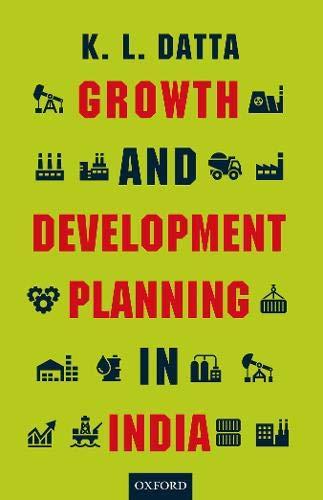
Oxford University Press is a department of the University of Oxford. It furthers the University’s objective of excellence in research, scholarship, and education by publishing worldwide. Oxford is a registered trademark of Oxford University Press in the UK and in certain other countries.
Published in India by Oxford University Press 22 Workspace, 2nd Floor, 1/22 Asaf Ali Road, New Delhi 110 002, India
The moral rights of the author have been asserted.
First Edition published in 2021
All rights reserved. No part of this publication may be reproduced, stored in a retrieval system, or transmitted, in any form or by any means, without the prior permission in writing of Oxford University Press, or as expressly permitted by law, by licence, or under terms agreed with the appropriate reprographics rights organization. Enquiries concerning reproduction outside the scope of the above should be sent to the Rights Department, Oxford University Press, at the address above.
You must not circulate this work in any other form and you must impose this same condition on any acquirer.
ISBN-13 (print edition): 978-0-19-012502-8
ISBN-10 (print edition): 0-19-012502-0
ISBN-13 (eBook): 978-0-19-099156-2
ISBN-10 (eBook): 0-19-099156-9
Typeset in ScalaPro 10/13
by Tranistics Data Technologies, Kolkata 700 091 Printed in India by Rakmo Press, New Delhi 110 020
3.1
4.1
6.1
7.1
7.2
7.3
7.4
7.5
7.6
7.7
7.8
8.1
8.3
Preface
Those who were born immediately after India’s Independence have been both fortunate and unfortunate: unfortunate as they could not participate in the freedom movement, and fortunate as they could see the development of independent India unfolding before them. I was born in independent India in 1949 and hence my participation in the freedom movement was a mathematical impossibility. I had to learn about some of the early developmental efforts as part of history. So was the case with learning about the making of India as a republic, the first general elections to the Parliament and the state legislative assemblies, and the initiation of planned economic development. Some of these events entered into my memory from the animated discussions that were a routine affair in our household, where both like-minded people and people with conflicting ideas would be present. Among these, I vividly remember the discussions in the late 1950s that were centred on three issues: food crisis, price inflation, and corruption. There were mixed feelings about the application of planning to turn India into an industrially developed nation. It was a time when expectations were not very high and ideas about development remained strictly within the confines of food, clothing, and housing—the roti–kapda–makaan trilogy. It does not matter if the food consisted of coarse cereals, if cloth was coarse or hand-spun, or if the house was kutcha (not made of stones, tiles, and so on). But the ideas were rigid that these should be made available to all, and with the exception of none.
That is how my association with India’s economic growth and development issues began. Though I missed the entire debate on whether planning should be used as a development strategy, and then the Mahalanobis model as a stepping stone for India’s foray into the
comity of developed nations, these were compensated many times in the course of my student days, when we were taught these subjects in great detail. In due course, I as a teacher passed on some of this knowledge to my students. The developments in the Indian economy began to unfold before my eyes from the late 1950s, as I witnessed food riots in Calcutta in 1959, became familiar with the border conflict with China in 1962, the war with Pakistan in 1965, and the unprecedented drought in the mid-1960s leading to a near-famine situation in large parts of the country. While this shock and horror was least expected, there was light at the end of the tunnel. In the late 1960s, India transformed from a food-deficit to a food-surplus nation, and in 1971 it earned a decisive military victory against Pakistan, heralding the birth of the new country Bangladesh in the Indian subcontinent. Though I do not find that military victory for anyone brings joy to me, that time was different, perhaps seeing the delight with which my parents embraced the news. They had reasons, emotions too, because Bangladesh was their place of birth, and they had spent their childhood days there.
In 1975, I entered the Indian Economic Service. It brought mixed feelings for me as it would mean leaving Calcutta, the city where I was born, educated, and began my professional career with sufficient contentment. It was a place where I learnt many things and made innumerable friends; and yet, there were hostilities too, in the field of history, literature, economics, and most of all, politics. During my student life, most of us were active politicians; there was no dearth of political parties or groups and their self-acclaimed leaders in Calcutta in those days. Then, there was the charm of teaching in a college in Calcutta. All these I had to forego for the sake of joining the government, whose office buildings I had detested for long—among them the Writers’ Building, then the seat of the West Bengal administration, and also Lalbazar, the headquarters of the Calcutta Police. I wondered how people spent eight hours every day inside these buildings.
My first two years in the Indian Economic Service, in many ways, were a novel experience. Until then, my longest journey had been to the Visva-Bharati University, located in Santiniketan, West Bengal, for an interview that did not take place. I was paid the train fare and given free accommodation at their International Guest House. Frankly, that had been the motivation for the journey. My first two years working
in the government, which was a probation period, involved structured training and travel across the length and breadth of the country. At the end of the probation, it was time to take a call about the place of my posting. I gave some thought to this issue, and requested for a placement with the Perspective Planning Division (PPD) of the then Planning Commission because I knew many of the mathematical models that they used. This work interested me. But, it was not an easy affair to get into the Planning Commission, and that too in the PPD. One of my seniors suggested that I should meet Division Head Y. K. Alagh. Alagh, a person with considerable knowledge in the area of mathematical modelling, told me straightaway that he would have to interview me to assess if I could fulfil the requirements of the posting. I had no reason not to agree.
The interview took place in Alagh’s office at Yojana Bhawan and lasted for three hours. I cannot say that I was grilled, as the answers to the questions he asked were known to me, thanks to my teachers at Calcutta University. Nikhilesh Bhattacharya, my teacher in econometrics, and Asim Dasgupta, who taught me mathematical statistics, distribution functions, and growth models, helped me tide through Alagh’s test; so much so that at the end of the session he threw his hands in the air saying I had wasted three hours of his time, and that I should have told him at the beginning that I was a student of Nikhilesh Bhattacharya. With this, my tryst with the Planning Commission began.
In the Planning Commission, I remained occupied with the work on multi-sectoral consistency models, which were being used at that time to formulate the Sixth Five Year Plan. For the most part of the next three decades I was engaged in this subject.
Over five spells I have spent seventeen years of my career in the civil services at the Planning Commission. And I have served this organization in different positions, including as adviser and head of the PPD, which I joined first in 1977. I consider such a long stay in the Commission a matter of luck and privilege. It gave me the opportunity to work on the application of mathematical models of growth and investment in the formulation of medium- and long-term plans, and understand the nuances of planning in determining the rate of economic growth and improving the levels of living and quality of life of people. This book, in some ways, is a culmination of
my administrative and academic experience in the civil services in the past four decades on issues related to growth, equity, poverty, and deprivation. Writing this book has indeed been a task of tall order.
My friends and colleagues have been a source of inspiration in this endeavour. As always, I remain grateful to Y. K. Alagh, who inducted me into this complex and challenging area of research. In the Planning Commission, interactions with Arjun Sengupta and S. R. Hashim have been full of excitement and challenge. They reposed faith in me by entrusting me, among many other things, with the responsibility of leading a team of officers in the Planning Commission to prepare the ‘Technical Note to the Eighth Five Year Plan’—a document which contains the mathematical models used to arrive at the macro-parameters for growth, its sectoral pattern, and allocation of resources for different sectoral activities of the Plan. My interactions with Montek Singh Ahluwalia and Saumitra Chaudhuri in the Planning Commission have been a rewarding experience. Others who have helped me in several ways include C. Rangarajan, Pronab Sen, Abhijit Sen, Arvind Virmani, Bibek Debroy, Kirit Parikh, B. N. Yugandhar, Mahesh Vyas, Sunil Khatri, Savita Sharma, K. Sundaram, Sabina Alkire, James Foster, Jugal Kishore Mohapatra, P. K. Padhy, Manjula Krishnan, Parthapratim Mitra, Himanshu, Rinku Murgai, and S. V. Ramana Murthy.
On the personal front, Amrita Datta and Sumeet Popli assisted me in a wide range of areas, which included hardware and software support. Embarking on such a project inevitably leads to a disruption of daily routine. My wife, Indu, tolerated my busy and irregular schedule that accompanied this research. For this, I am grateful to her. The errors and omissions, however, rest with me.
K. L. Datta
Introduction
India, after seven decades of independence, found itself in the position of the fifth-largest economy in the world, with nominal gross domestic product (GDP) of USD 2.94 trillion in 2019. It is also the fastest-growing trillion-dollar economy in the world. India’s rank would have been third if GDP across the countries was compared in terms of purchasing power parity. But, in per capita terms, India falls way behind most of the member countries of the World Bank. However, this should not negate the expansion of the Indian economy that has taken place since Independence.
India adopted planning as an instrument of policy with rigid state control and regulation in economic activities after Independence. The degree of control may have varied within the first four decades of planning, 1951–90, but remained firmly in place. In 1991, when the policies of economic reforms and liberalization were initiated, state controls were either relaxed or dismantled, and planning became market-based. Finally, in 2014, planning was abolished, and along with it the Planning Commission, which was created in 1950 to formulate medium- and long-term plans for economic growth and development.
that the growth rate of the Indian economy in the first three decades, 1951–80, was low (3.5 per cent per year). The experts believed that such low growth rate was below the country’s potential. State control and regulation associated with planning was at its peak in this threedecade period, and this was considered to be the reason behind the growth rate being below the potential. In the 1980s, certain controls were relaxed, opening space for the private sector; and the growth rate picked up, for the first time, to a level of 5 per cent per year in a Five Year Plan period. Even after the initial few years of the economic reforms, the economic growth rate remained around the same level and there was not much change in the 1990s, which was the first decade of economic reforms. It was only in the twenty-first century that India’s rate of economic growth attained a higher trajectory and reached the rate of 8 per cent per year. In view of the low rate of economic growth in the pre-reform period (1951–90) and the relatively high growth rate in the period of economic reforms (1991–2011), there has been a kind of convergence of opinion that planning and the associated state control on economic activities were responsible for the low growth rate in the pre-reform years.
It is in this context that a range of issues related to India’s economic growth and development have been dealt with in this book. It focuses on the circumstances that led to the adoption of developmental planning after Independence. It begins by tracing the course of planning in India and analysing the manner in which planning was built into the strategy of growth and development. In the process, it discusses the rationality of application of planning in furtherance of economic growth, mentions some of the trials and tribulations encountered in the formulation of Five Year Plans, and the nitty-gritties of their implementation. It unveils the contours of the Plan by tracing the changing nature of planning over time from rigid state control on economic activities to reliance on the market and the private sector. Focusing on the growth debate, it presents a comprehensive analysis of the economic scenario that unfolded in India after Independence, documenting the shifts in growth and development strategy in the six decades of planning, 1951–2011, covering 11 Five Year Plans formulated and implemented during this period. In the end, an assessment of the Indian economy after the Eleventh Plan, that is, after 2010, has been made. The central theme of the book is to appraise the role of
planning to maximize the rate of economic growth and improve the levels of living and quality of life of the people. There are four core areas, described in the following sections, that have been addressed in this book.
India’s Planning Strategy
First, this book delves into the circumstances which led the political leaders to adopt a planning strategy and use it as a major instrument of policymaking in economic and social reconstruction after Independence. They looked for ways and means to maximize the country’s overall rate of economic growth, and at the same time ensure that the benefits of growth percolated to all sections of the society. The issue before them basically was: how to maximize the rate of economic growth in a low-income capital-starved country so that the income of the people could be increased with minimum use of resources and within the shortest possible time? Economists and statisticians suggested that it could be possible through planning. The political leaders concurred.
The form of planning adopted in India in the 1950s entailed regulation of economic activities based on state control of the means of production and distribution. It was rooted in the concern that private ownership is concomitant with the prosperity of a few, notably the capitalists, and exploitation of the vast majority of the population— an idea that dates back to the days of the freedom struggle. It was favoured in independent India since the political leadership (among whom Jawaharlal Nehru figured prominently) was convinced that economic power should not be concentrated in the hands of capitalists, and especially in the private sector, because they operate exclusively for profit. This induced them to prefer the public sector.
There is no doubt that Jawaharlal Nehru was at the centre of the decision-making authority in the 1950s, when planning was initiated, and it was decided that the mixed economy approach within the framework of planning would be adopted. Planning may not have been the brainchild of Nehru but the mixed economy approach that was embedded into it certainly was. Taking recourse to history, the idea to use the instrument of planning to improve the economic fundamentals of a low-income, poor, and underdeveloped country such as India
came from Netaji Subhas Chandra Bose. It dated back a decade before Independence, to be specific in February 1938, when Netaji Bose, the then president of the Indian National Congress, decided to constitute a National Planning Committee (NPC) under the chairmanship of Jawaharlal Nehru. At that time Nehru was in Europe, campaigning for Indian independence. Netaji Bose waited for about one year for Nehru to take up the job of chairman of the NPC, because he thought Nehru was the person most capable of understanding the nuances of planning in the context of India’s economic development. This way, Nehru figured prominently in the endeavour of planning. The introduction of planning for India’s growth and development in the 1950s was, without doubt, the handiwork of Nehru, but it may be a logical extension of the ideas originally conceived by Netaji Bose. This book makes an effort to first unearth why and then how planning came to be institutionalized in India in the 1950s, and, in this context, Nehru’s role in devising the mixed economy approach within the framework of planning, instead of placing exclusive reliance on the public or private sector. Specifically, it makes an assessment of the role of Jawaharlal Nehru and identifies the events that may have shaped his decision to rely on planning.
Two events that may have shaped Nehru’s decision to rely on planning and the antecedent role it gave to the state and the public sector can be identified. First, the pattern of growth and development in Europe and especially in England during the period of Industrial Revolution may have crystallized Nehru’s ideas on capitalism and the private sector. Second, he was impressed by the economic development that unfolded from planning in the Soviet Union in the 1930s and 1940s as it filled certain critical gaps in the development of seventeenth- and eighteenth-century European society. However, it must be admitted that in the end, the idea of planning was not Nehru’s alone, as it also came from contemporary political leaders.
Describing the circumstances under which planning was dovetailed with the mixed economy approach, this book dispels the notion that Nehru was influenced by the Soviet Union to adopt planning in India. The model of growth and development employed by the Soviet Union or the Soviet planning superstructure (Gosplan) was not implemented straightforwardly in India. The Soviet Union
was dismayed with India adopting the mixed economy approach in the planning framework because they wanted India to adopt the ‘public sector only’ approach, which they were following. Yet, whether state control in areas of production and distribution associated with planning proved to be detrimental for India’s economic growth is open to questioning.
This book analyses the features of the planning process in India, its form and content, and turns and twists in a bid to maximize the rate of economic growth and improve the standard of living of the people. It chronicles the change in the methodology of planning over time to contextualize it with regard to India’s changing development strategy. It discusses the manner and method of formulation of the Five Year Plans, specifically underlining the roles of the central government and the state governments, and dwells on the high degree of centralization and administrative regulation in the first four decades of planning, 1951–90. Then, it discusses the planning process in the two-decade period of economic reforms, 1991–2011, which was grounded on a market-economy framework, traditionally known as the centrepiece of development strategy of the developed capitalist world.
This book does not support or make a case for continuance of planning in a rigid form that was a primary feature of the first four decades of planning, 1951–90, but argues that state intervention in the market may be a necessity so long as poverty and deprivation remain major economic concerns, and a section of the population is unable to afford market prices for essential goods and services. Such an idea, though it does not find favour with many, may only be effective in a democratic society when the state and the people have a socialist mindset.
The preparation of a Five Year Plan is a complex process. The analytical details of the planning process in this book give novel insights into the role of planning in India’s economic growth and development. In the formulation of Five Year Plans, mathematical models were used to spell out development priorities and determine sectoral growth profiles. The features of the mathematical models are discussed to understand how intuitively the targets in different areas and sectors of the economy are fixed. The technicalities of the models are expressed in simple terms to expand the outreach of the study to a wider readership.
Planning and Economic Growth
The second core area of the book explores the rate and pattern of economic growth since the beginning of the planning era. A quantitative assessment of the growth performance of the Indian economy has been made and the reasons behind the shortfall in growth rate from the targets fixed in the Five Year Plans have been assessed. The issues that are specifically addressed here are whether planning has been able to raise the overall rate of economic growth to a certain level and in a manner that is necessary to improve the economic fundamentals, and has the increase in income enabled people to acquire the capacity to make a decisive impact on their levels of living and quality of life.
Pointing out the uneven nature of growth over time, it focuses first on the likely factors responsible for the low growth rate in the initial three decades, 1951–80, when planning was watertight in form and content, and its acceleration to a higher growth path afterwards, especially in the period of economic reforms, 1991–2011, when planning operated in a market-economy framework.
Citing the relatively lower rate of growth until the 1970s, it has often been argued that planning did not yield the desired rate of economic growth. This book takes a different route to deal with this issue and shows that despite the low growth rate, India gained certain solid ground in this period. It argues that the realized growth rate in the 1950s (First and Second Plans), which was 4 per cent per year on average, is by no means a mean achievement for a newly independent nation emerging from two centuries of colonial rule and decaying socio-economic condition. The consequent increase in per capita income was considerable by the standards prevailing then and particularly in view of the stagnancy in per capita income during the previous half a century, or even a century. Besides, the foundation of a strong industrial base initiated in the Second Plan was able to improve the fundamentals of the economy. These may be considered as major achievements of the planning era.
From the mid-1960s to the late 1970s, the government announced that in pursuance of the socialist policies, it was determined to capture the commanding heights of the economy. This suo moto meant that a larger proportion of the country’s investment and income would accrue from the public sector. The reality is that even in the heyday
of planning and state control, the share of the public sector rarely crossed half of the total investment. It shows that the socialist policies were there only in name.
The state control on economic activities was strengthened in the 1960s and 1970s, and the growth rate was low. Despite the low rate of economic growth, the Indian economy was placed on a sound footing. The book provides a perspective on planning and the food crisis in the context of the Green Revolution when India transitioned from a food-deficit to a food-surplus country. It is argued that throughout the 1960s and 1970s, the government pursued contrasting strategies in the areas of agriculture and industry; a potentially iniquitous policy was adopted in agriculture whereas promotion of equity was given a prime place in case of industrial development. It is believed that these policies contributed to the success of agriculture but retardation of the rate of industrial growth.
By the 1970s, the planners realized the limited effectiveness of a growth-centric strategy and, in the face of it, were not inclined to wait for the percolation of the fruits of economic growth for reduction in poverty. This led to a change in the development strategy, contemplating special measures to raise the income of the poor and the marginalized section of the population. By crafting a cohesive policy to tackle the menace of poverty through these measures, the issue of poverty was brought to the forefront of the development debate. These snowballed into a major policy shift in the development strategy in the 1980s with special measures to increase the income of the poor and the marginalized, and it was dovetailed into the growth process. Such growth-cum-redistribution policies have become the order of the day. However, in the 1980s, it was a bold step in view of the stringent financial condition faced by the government.
Analysing the features of planning in this four-decade period, 1951–90, the book makes an effort to find out how far the reliance on planning is responsible for the low growth rate. It can be observed that more than the planning itself, it is the state control and regulation associated with planning that seemed to be responsible for retarding the growth rate. The policies in this four-decade period traversed from forceful attempts by the state to capture the commanding heights of the economy and nationalize private enterprises in industry and financial sectors in the 1960s and 1970s, to measures
to widen the scope of the private sector and extend its area of operation in economic activities in the 1980s. It marked a visible shift in the growth and development strategy. Chronicling the circumstances which led to such a shift, it has been concluded that the 1980s marked the process of rolling back the frontiers of state intervention and reformulating the planning and development strategy. These changes in the 1980s have often been treated as the precursor of the economic reforms initiated in 1991.
Planning and Economic Reforms
Third, this book concentrates on the economic reforms and liberalization measures initiated in 1991, marking a paradigm shift in the approach to planning for growth maximization in which market mechanism replaced the different agents of the state as dominant decision-makers. State control and regulation on economic activities giving way to market mechanism, the hallmark of reform measures, proved to be a seismic change in economic policies with the opening up of the Indian economy to the world and heralding in of a new strategy of growth and development.
This book contextualizes the backdrop in which economic reform measures were introduced to understand how different areas and sectors of the economy were integrated with the reform process. Then, from the lens of economics and politics associated with the reform process, it outlines how India charted the course of economic reform. The process of institutionalizing the policies of economic reform shows that reforms did not move at a similar pace in all the areas and sectors of the economy. Together, their impact was not uniform, either at the level of sectors of the economy or for the income classes of the population. The transition from state control to an open market economy, which is central to the reform process, is effected by the government, in which the major actors are: (a) the Planning Commission, (b) the finance ministry, (c) the Reserve Bank of India (RBI), and (d) the state governments. Analysing the speed and intensity of the implementation of reform measures as well as the roadblocks these institutions faced, this book gives a graphic description of the dismantling of the planning apparatus and adoption of a market-based economic structure in its place.
It argues that in contrast to most developing countries, which pursued economic reform programmes at one go, the reform programmes in India were initially applied in selected areas. Based upon the result these were extended gradually to wider areas. There is a considerable gradualist element in implementing the reform measures.
In its critique of planning, this book points out that the acceleration of growth rate in the period of economic reform is driven by domestic investment, notably private sector investment, which, in turn, is the outcome of the increase in private sector savings. It shows how under economic reform, the space of production and trade relinquished by the state was filled by the private sector, and the major responsibility of growth was transferred from the state to the private sector. It identifies the factors that drove the growth rate to a higher level and, in the process, evaluates the impact of reform measures on the rate and pattern of economic growth and income distribution. Analysing the features of the growth process during the reform period, it pinpoints that the high growth rate in the first decade of the 2000s was inclusive, leading to considerable reduction in poverty.
After the economic reforms were initiated, the Indian economy by the first decade of the twenty-first century was sufficiently integrated with the global economy. Against this backdrop, the global economic and financial crisis that erupted in September 2008 was feared to have impacted the growth rate of the Indian economy in a major way. There are no studies which make an assessment of the impact of the global economic crisis on the different areas and sectors of the Indian economy. This book shows how the real and financial sectors were affected as a result of the global crisis. It makes a quantitative assessment of the impact of the global economic crisis on the rate of growth of the Indian economy. This book points out that the Indian economy was able to withstand the fallout of the global economic crisis quickly but soon after entered into a low growth phase. The factors responsible for retarding the growth rate of the economy after successfully withstanding the onslaught of the global crisis have been identified here. Tracing the cobwebs of economic policy and the decision-making process, this book shows that the slowdown of the growth rate of the Indian economy at this time was predominantly on account of the factors emanating from the domestic economy rather than the global economy.
There has been a denunciation of the economic policies in the pre-reform period, sometimes vehement. The denunciation, of late, has come by comparing the economic growth rate during the first four decades of planning, 1951–90, with the two decades of economic reforms, 1991–2011. This has been the dominant trend, ignoring the well-known dictum that it is not wise to judge the past by the standards of the present. This book focuses on the inappropriateness of judging the policies of the pre-reform era through the prism of contemporary market-led economic development. The suitability and appropriateness of planning in the Indian economy has to be judged based on the circumstances prevailing in the late 1940s and the early 1950s.
Planning and Poverty
The change in magnitude and structure of the growth rate is associated with the policy measures born out of the philosophy and ideological bent of the political party in power. How economic growth resulted in the increase in income of the cross section of the population, specifically those in the lower deciles, and altered the socio-economic scenario is the essence of the analysis presented in this book. It focuses on the strategic measures that resulted in increase in income and improvement in levels of living of the poor and the marginalized section of the population in periods of both low and high growth.
Describing the manner in which poverty was incorporated as a parameter in planning, this book delineates the use of poverty estimates in policymaking. It comments on the methodology of measurement of poverty, summarizing the debates surrounding it. It shows how (a) theoreticians and academicians, (b) administrators and civil servants, and (c) civil society and non-governmental organizations engage with the measurement-related issues on poverty and identification of poor households at the grassroots level. It goes on to show how poverty estimates have been used to formulate an effective plan for poverty alleviation and then to track the progress of development over time and space.
While analysing the features of poverty reduction, the book deals with the pertinent issues associated with planning in the Indian context—whether planning has been able to reduce poverty and
improve the standards of living of the people, especially the marginalized groups. It analyses the levels and changes in officially measured poverty since the 1970s, and views poverty at the level of states and by socio-economic groups of the population. Further, it goes on to show the sensitivity of poverty to growth in income and equity in its class distribution.
Terming poverty reduction as an acid test of planning, the book demonstrates that the level of poverty reduced in the two-decade period of economic reforms, 1991–2011, and especially in the later part of the reform period, 2004–11, when the growth rate accelerated to a new high. A clinical examination of specific strategies to remove poverty, and the outcomes of these strategies, supported by a quantitative assessment of growth and income redistributive anti-poverty programmes reveals that poverty reduction in this period took place almost exclusively due to increase in income and consumption as a result of economic growth rather than redistribution of income.
A feature of poverty reduction in the period of economic reform was that the interstate disparity in the level of poverty that existed earlier, when the growth rate was low to moderate, remained unchanged even when the growth rate became high. Poverty reduction was found to be associated with the change in the pattern of consumption, eventuated by rapid economic growth and growth-induced change in the socio-economic condition. Still, it is a situation where one in every five people is counted as poor, and pockets of poverty exist, affecting specific regions and classes of people who are unable to participate fully in the growth process. The analysis cautions that poverty remains a major economic and political concern.
Analysing the nature and pattern of growth at the regional level, it is concluded that the high growth rate in the period of economic reform has not been able to alter the pattern of development, if the state of poverty and the rate of its reduction is considered a guide. The pattern of consumption changed as a result of economic growth, but the structure of poverty remained unaltered. The per capita consumption in the poorer states increased, but this is a part of the global process as it increased in other states too, leaving their relative position completely unaffected. The gap between the poor and less poor states did not reduce. The level of poverty in the states reduced but their relative position did not change.
The latest officially measured estimate of the number of poor relates to the year 2011–12. It shows that 269.8 million people, or 21.9 per cent of the total population, are poor. Besides, a large number of people are subjected to transient poverty—a slight drop in their income or consumption is liable to raise the level of poverty. This can happen when the growth rate becomes low, as has been the case since 2017–18, and especially in 2019–20, when the growth rate dipped to less than 5 per cent. The analysis cautions that poverty remains a major economic and political concern in view of the large number of poor and also as they have been counted against a poverty line, which is viewed as a bare subsistence level of living, a level below which they are under severe stress and their survival is threatened.
Growth Scenario in the 2010s
The Eleventh Plan ended in 2011. The Twelfth Plan was formulated and set into motion before the Planning Commission was disbanded. In actuality, with the disbanding of the Planning Commission, the Twelfth Plan went into oblivion. This way, the economic growth in the 2010s became devoid of planning. The National Institution for Transforming India Aayog (NITI Aayog) prepared a vision document for the economy, but how this was integrated with the plans and programmes of the states is not sufficiently clear.
This book makes an asessment of the economic situation of the 2010s. Since there are no targets to be achieved, the state of the major macro-variables of the economy have been examined here. It finds that the growth scenario in the 2010s began with a promising note but ended in a bleak situation. The average growth rates in the two halves of the decade were close, but the yearly growth rates depict a U-shaped curve in the first half, 2010–11 to 2014–15, while sloping downward in the second half, 2015–16 to 2019–20. The two halves characterized contrasting features of the economy. In the first half, the price inflation was high and there was a kind of ‘policy paralysis’ affecting the decisions of the government on major economic issues whereas in the second half, the price inflation was low and there was plenty of ‘policy activism’, which impeded economic growth. It concludes that the retardation of growth rate in the second half
was a part of the cyclical process that has been experienced at regular intervals since the initiation of economic reforms. This time, it may take more time to recover as the decline in the growth rate was eventuated by certain policies of the government in the second half, which had adverse impacts on the capabilities of specific sectors of the economy. Over and above this strategy to lift the growth rate to the trend level lacked consistency. Emphasizing on the fact that under similar circumstances, India had always used the monetary and the fiscal policies in tandem, this book points out that despite low price levels, the government waited for an unusually long time to set in motion the monetary policy, and there is still no sign of fiscal policy being put to action as the growth rate continues to dip to a level below 5 per cent. The government is also unable to take recourse to demand-side measures to restore the growth rate to the trend level, and that is likely to make the process of recovery more painful as well as lengthy for the people. It is necessary to prepare a concrete road map to lift the growth rate to the medium-term trend, taking the state governments on board, as they are the implementing agencies of the government policies to kick-start growth. The institutions that are associated with economic policymaking have either been abolished or weakened. In this respect, the government is certain to feel the absence of the Planning Commission, as its replacement, the NITI Aayog, has not been armed with sufficient power to deal with the situation. Some of the decisions of the government that are akin to throwing spanners in to economic growth have been identified here. Also identified are several opportunities that the government could not avail to raise the growth rate. Then, there was misplaced emphasis in areas that took the focus away from growth. Finally, the book brings out that lack of confidence among entrepreneurs and the business class that is impeding investment and growth. The latest poverty estimates are available for the year 2011–12. These were estimated by the erstwhile Planning Commission using the National Sample Survey (NSS) consumer expenditure data. The next estimates of poverty were due in 2017–18. The National Statistics Office (NSO) has withheld the publication of the consumer expenditure data of 2017–18 citing technical issues related to data collection, preventing an assessment of the change in poverty situation in the 2010s. Several studies have brought out convincing evidence of
decline in per capita consumption expenditure in real terms, in both rural and urban areas after 2015–16, and also stagnation and decline of real wages and salaries after 2011–12. The unemployment rate estimated by the NSO for the year 2017–18 was unusually high. These are reflections of the decline in growth rate and bring out symptoms of a deeper economic malaise.
Planning for Growth and Development
Planning and the Five Year Plans have been integral in the implementation of the growth and development strategy of India for a pretty long period of six decades, 1951–2011. In this period, India formulated and implemented 11 Five Year Plans.
for maximizing the rate of economic growth and, in this context, the ‘industrial regeneration of the country’.
Bose and Nehru had very similar ideas about planning and its usefulness to improve the economic fundamentals of a low-income, poor, and underdeveloped country such as India. The first meeting of the NPC was held on 17 December 1938 in Mumbai, where Bose delivered the inaugural address. Drawing upon the possibilities of industrial development, Bose emphasized the need for industrial regeneration, specifically of basic and key industries. While endorsing the use of planning for increasing production as well as improving the standard of living of the people, the committee emphasized that attainment of Independence is indispensable for taking necessary steps for carrying out the plans and programmes for growth and development.3
The NPC defined planning in a democratic system as the technical co-ordination, by disinterested experts, of consumption, production, investment, trade, and income distribution in accordance with the social objectives set by bodies, representative of the nation. Such planning is not only to be considered from the point of view of economics and the raising of the standard of living, but must include cultural and spiritual values and human side of life.4
This brings two prominent issues to the surface. First, the freedom fighters and national leaders decided that after Independence, India would be governed by democracy. Second, the deliberation on the use of planning for economic development began a decade before Independence.
In the process of transfer of power (from the British to independent India), an interim government was installed in September 1946, with the power of the prime minister effectively bestowed on Nehru.5 Within a month, the Advisory Planning Board was created.6 The All India Congress Committee (AICC) had set up an Economic Programme Committee (EPC) in November 1947 under Nehru’s chairmanship.7 A report of the EPC released in January 1948 mentioned that in order to establish a society based on social justice and equality, every man and woman should be provided with equal opportunity and freedom to work for the unfettered development of his or her personality; and to extend democracy from the political to the social and economic spheres, it was essential to espouse planned central direction as well as decentralization of political and economic power so that
an economic structure is evolved which can yield maximum production without the operation of private monopolies and concentration of wealth. The EPC maintained that such a structure could provide an alternative to the acquisitive economy of private capitalism and, at the same time, the regimentation concomitant with a totalitarian state. The idea to set up the Planning Commission and the perception that planning can be the best and the most efficient means to raise income of the people within a short span of time, and with minimum use of resources, is rooted in this contention of the EPC.
The government constituted the Planning Commission in March 1950 and tasked it with the responsibility to formulate medium- and long-term plans for economic growth and development.8 The functions assigned to the Planning Commission included the following: (a) assessment of material, capital, and human resources, and investigating the possibilities of augmenting the resources; (b) formulation of Plan for effective and balanced utilization of the resources; (c) determination of priorities, defining the stages in which the Plan should be carried out and proposing allocation of resources for its implementation; (d) indicating the factors which tend to retard economic development, and laying down the conditions for successful execution of the Plan; (e) determining the nature of the machinery necessary to implement each stage of the Plan; ( f ) appraising the progress achieved in the execution of each stage of the Plan and recommending necessary adjustment of policy and measures. The functions of the Planning Commission also covered examination of issues specifically referred to it for advice by the central government or state governments.
Over and above, the Planning Commission was made a part of the decision-making process on how to distribute income among the different groups and deciles of the population. The entire process of income generation and its distribution among different sections of the population took place through planning. The intention was to ensure a process of income generation with equity in its class distribution at the core. It was considered indispensable to cope with the abject poverty and widespread hunger that afflicted India in 1950.
What exactly is expected from planning? The first and foremost is maximization of the rate of economic growth, and then, as far as possible, distribution of the fruits of growth equally among the cross section of the population. This is just the tip of the iceberg. The expectation is much more. The task of planning is to raise the standards of