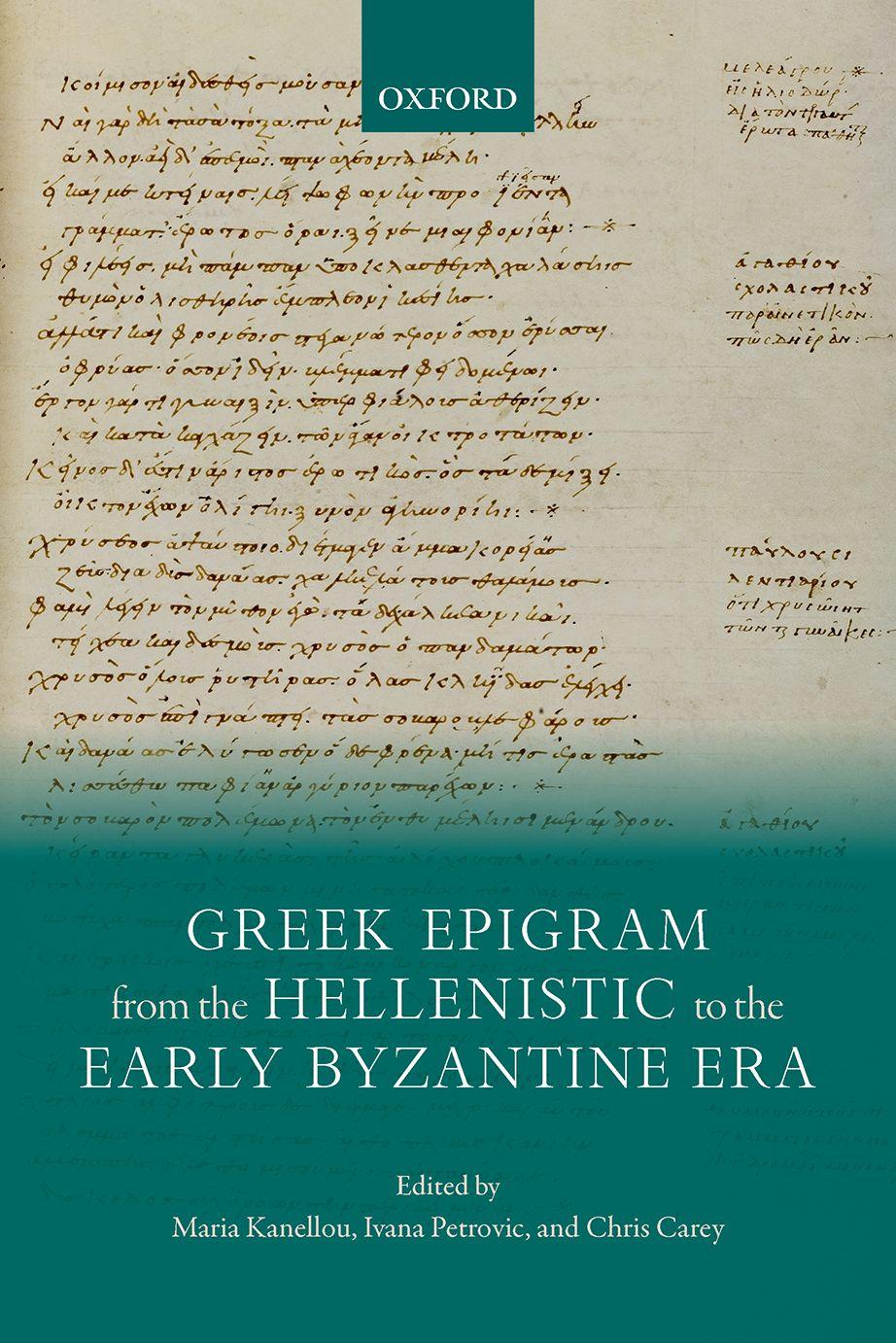
GreekEpigramfromtheHellenistictotheEarly ByzantineEraMariaKanellou
https://ebookmass.com/product/greek-epigram-from-thehellenistic-to-the-early-byzantine-era-maria-kanellou/
Instant digital products (PDF, ePub, MOBI) ready for you
Download now and discover formats that fit your needs...
Coptic Interference in the Syntax of Greek Letters from Egypt Victoria Beatrix Maria Fendel
https://ebookmass.com/product/coptic-interference-in-the-syntax-ofgreek-letters-from-egypt-victoria-beatrix-maria-fendel/ ebookmass.com
The History of Scottish Theology, Volume II: From the Early Enlightenment to the Late Victorian Era David Fergusson
https://ebookmass.com/product/the-history-of-scottish-theology-volumeii-from-the-early-enlightenment-to-the-late-victorian-era-davidfergusson/ ebookmass.com
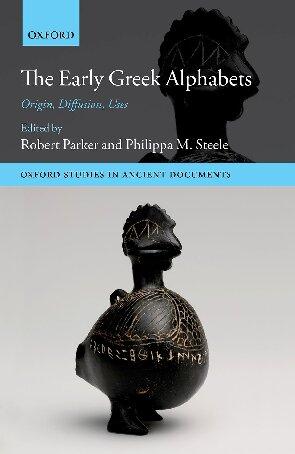
The Early Greek Alphabets: Origin, Diffusion, Uses Robert Parker
https://ebookmass.com/product/the-early-greek-alphabets-origindiffusion-uses-robert-parker/ ebookmass.com
Vengeful (Brutal Academy Book 3) Maggie Alabaster & Jo Bradley
https://ebookmass.com/product/vengeful-brutal-academy-book-3-maggiealabaster-jo-bradley/ ebookmass.com
School Counselor Consultation: Skills for Working
Effectively with Parents, Teachers, and Other School Personnel https://ebookmass.com/product/school-counselor-consultation-skillsfor-working-effectively-with-parents-teachers-and-other-schoolpersonnel/
ebookmass.com
The Embodied Philosopher: Living in Pursuit of Boundary Questions 1st Edition Konrad Werner
https://ebookmass.com/product/the-embodied-philosopher-living-inpursuit-of-boundary-questions-1st-edition-konrad-werner/
ebookmass.com
Understanding Normal and Clinical Nutrition Sharon Rady Rolfes
https://ebookmass.com/product/understanding-normal-and-clinicalnutrition-sharon-rady-rolfes/
ebookmass.com
Being for Beauty: Aesthetic Agency and Value Dominic Mciver Lopes
https://ebookmass.com/product/being-for-beauty-aesthetic-agency-andvalue-dominic-mciver-lopes/
ebookmass.com
DYNAMICS OF THE STANDARD MODEL John F. Donoghue https://ebookmass.com/product/dynamics-of-the-standard-model-john-fdonoghue/
ebookmass.com
Bayard Rustin: A Legacy of Protest and Politics 1st
Edition Michael G. Long
https://ebookmass.com/product/bayard-rustin-a-legacy-of-protest-andpolitics-1st-edition-michael-g-long/
ebookmass.com
GREEKEPIGRAMFROMTHEHELLENISTIC TOTHEEARLYBYZANTINEERA GreekEpigramfromthe HellenistictotheEarly ByzantineEra Editedby MARIAKANELLOU,IVANAPETROVIC,
ANDCHRISCAREY GreatClarendonStreet,Oxford,OX26DP, UnitedKingdom
OxfordUniversityPressisadepartmentoftheUniversityofOxford. ItfurtherstheUniversity’sobjectiveofexcellenceinresearch,scholarship, andeducationbypublishingworldwide.Oxfordisaregisteredtrademarkof OxfordUniversityPressintheUKandincertainothercountries
©OxfordUniversityPress2019
Themoralrightsoftheauthorshavebeenasserted
FirstEditionpublishedin2019
Impression:1
Allrightsreserved.Nopartofthispublicationmaybereproduced,storedin aretrievalsystem,ortransmitted,inanyformorbyanymeans,withoutthe priorpermissioninwritingofOxfordUniversityPress,orasexpresslypermitted bylaw,bylicenceorundertermsagreedwiththeappropriatereprographics rightsorganization.Enquiriesconcerningreproductionoutsidethescopeofthe aboveshouldbesenttotheRightsDepartment,OxfordUniversityPress,atthe addressabove
Youmustnotcirculatethisworkinanyotherform andyoumustimposethissameconditiononanyacquirer
PublishedintheUnitedStatesofAmericabyOxfordUniversityPress 198MadisonAvenue,NewYork,NY10016,UnitedStatesofAmerica
BritishLibraryCataloguinginPublicationData
Dataavailable
LibraryofCongressControlNumber:2018955535
ISBN978–0–19–883682–7
Printedandboundby CPIGroup(UK)Ltd,Croydon,CR04YY
LinkstothirdpartywebsitesareprovidedbyOxfordingoodfaithand forinformationonly.Oxforddisclaimsanyresponsibilityforthematerials containedinanythirdpartywebsitereferencedinthiswork.
Acknowledgements Wewouldliketothankthefollowinginstitutesfortheirgeneroussupportof theinternationalconferencefromwhichthisprojectoriginates:UCL(FIGS FundingandA.G.LeventisFund),theSPHS,andtheICS.Ourwarmthanks goalsotoOxfordUniversityPressandthetwoanonymousreaderswho supportedthisprojectand,lastbutnotleast,toDrDimitriosStamatisfor hisassistancewiththebibliographyandtoMrAdamGross,graduatestudent attheUniversityofVirginia,forhiseditorialassistanceandtheindexingofthe volume.
Contents ListofFigures ix
ListofAbbreviations xi
ListofContributors xix
1.Introduction1
MariaKanellou,IvanaPetrovic,andChrisCarey
Part1:EncounteringEpigram
2.ReadingInscriptionsinLiteraryEpigram19 JosephDay
3.LessonsinReadingandIdeology:OnGreekEpigramsin PrivateCompilationsoftheHellenisticAge35 AndrejPetrovic
4.AGarlandofFreshlyGrownFlowers:ThePoeticsof EditinginPhilip’ s Stephanos 51 ReginaHöschele
5.EpigramsonAuthorsandBooksasTextandParatext66 KristoffelDemoen
Part2:Imitation,Variation,Interaction
6.MiniaturizationofEarlierPoetryinGreekEpigrams85 AnnetteHarder
7.VariationsonSimplicity:CallimachusandLeonidasof TarentuminPhilip’ s Garland 102 CharlesS.Campbell
8.TheRiddlesoftheFourteenthBookofthe Palatine Anthology:Hellenistic,LaterImperial,EarlyByzantine, orSomethingMore?119 SimoneBeta
Part3:WritingDeath
9.DeathofaChild:GriefBeyondtheLiterary?137 RichardHunter
10.HellenisticandRomanMilitaryEpitaphsonStoneand onPapyrus:QuestionsofAuthorshipandLiterariness154 SilviaBarbantani
11.TearsandEmotionsinGreekLiteraryEpitaphs176 DorisMeyer
12.SeaandLand:DividingSepulchralEpigram192 MichaelA.Tueller
Part4:Gods,Religion,andCult
13.EpigrammaticVariations/DebateontheThemeof Cybele’sMusic213 MarcoFantuzzi
14.DreadfulEros,beforeandafterMeleager233 KathrynGutzwiller
Part5:PraiseandBlame
15.MythologicalBurlesqueandSatireinGreekEpigram ACase Study:Zeus’ SeductionofDanae249 MariaKanellou
16.EpigramsonthePersianWars:AnExampleofPoetic Propaganda272 FedericaGiommoni
17. ‘Fromatopaloftywall... ’:PhilosophersandPhilosophy inGreekLiteraryEpigram288 JosephM.Romero
Part6:WordsandImages
18.GreekSkopticEpigram,Ecphrasis,andtheVisualArts307 LuciaFloridi
19.EcphrasisandIconoclasm:Palladas’ EpigramsonStatues324 PeterBing
20.Art,Nature,Power:GardenEpigramsfromNerotoHeraclius339 StevenD.Smith
ListofFigures 18.1 TheThorn-Puller(SpinarioCapitolino),Inv.MC1186/S Musei Capitolini,PalazzodeiConservatori,SaladeiTrionfi.Archivio FotograficodeiMuseiCapitolini,Rome/photographbyZenoColantoni. 313 ©Roma,SovrintendenzaCapitolinaaiBeniCulturali MuseiCapitolini.
18.2GrotesqueastheThorn-Puller,Louvre,Paris,fourth/thirdcentury . 315 Photo©RMN-GrandPalais(MuséeduLouvre)/photograph byHervéLewandowski.
18.3Terracotta,Priene,secondcentury .Antikensammlung,Staatliche MuseenzuBerlin PreussischerKulturbesitz.
316 TC8626©JohannesLaurentius/SMBAntikensammlung.
18.4The ColonnaVenus intheMuseoPio-Clementinobelongstothe collectionsoftheVaticanMuseums.Itisprobablythemostfaithful replicaofthelostCnidianAphrodite.
321 Photo©MuseiVaticani.
18.5 AphroditeAnadyomene,PompeianmuralfromtheHouseofVenus intheShell. 322 ©ArchiviofotograficoPompei,courtesyoftheMinisterodeiBeniedelle AttivitàCulturaliedelTurismo SoprintendenzaPompei.Thispicturecannot bereproducedorcopiedinanyform.
ListofAbbreviations Thefollowinglistcontainstheabbreviationsusedinthisvolume,includingthoseof editionsoforiginaltexts.TheprincipaleditionsofepigramsareabbreviatedA–B, FGE, GPh,and HE inreferencestoepigrams,butfollowtheHarvardsystem(author–date) inregularcitations(usuallyinnotes).TheabbreviationsofGreektitlesfollowthe Greek-EnglishLexicon editedbyLiddell,Scott,andJones(LSJ)and,whereverthisis notpossible,the OxfordClassicalDictionary (OCD).Inthefewcaseswhereanauthor’ s namefeaturesinthe LSJ abbreviationsbutatitleofhisisabbreviatedonlyinthe OCD, wecombinetheabbreviationsfromthesetwosources.Latintitlesfollowthe OCD.The abbreviationsforthenamesofthejournalsthatappearintheBibliographyfollow L’Annéephilologique.
A–BAustin,C.andBastianini,G.(eds)(2002), PosidippiPellaeiquae supersuntomnia,Milan
AdlerAdler,A.(ed.)(1967–71), SuidaeLexicon,5vols,Stuttgart (1stedn1928–38,Leipzig)
AEL’Annéeépigraphique (1888–),Paris
APAnthologiaPalatina
APlAnthologiaPlanudea
ArrighettiArrighetti,G.(ed.)(1960), Epicuro:Opere (ClassicidellaFilosofia4), Turin(2ndedn1973)
AstburyAstbury,R.(ed.)(1985), M.TerentiiVarronisSaturarum Menippearumfragmenta,Leipzig
BarrettBarrett,W.S.(ed.)(1964), Euripides:Hippolitos,Oxford BeckbyBeckby,H.(ed.)(1957–8), AnthologiaGraeca,4vols,Munich (2ndedn1965(vols1–2)and1968(vols3–4)
BergerBerger,A.(ed.,trans.)(2013), AccountsofMedieval Constantinople: The Patria(DumbartonOaksMedievalLibrary 24),Cambridge,MA
B–GBastianini,G.andGallazzi,C.,incollaborationwithAustin,C. (eds)(2001), PosidippodiPella:Epigrammi(P.Mil.Vogl.VIII 309) (Papiridell’UniversitàdegliStudidiMilano8),Milan
BidezBidez,J.(ed.)(1960), L’EmpereurJulien:Oeuvrescomplètes, vol.1.2,Paris(1stedn1924)
BillerbeckBillerbeck,M.(ed.)(2006), StephaniByzantiiEthnicaI:A–Γ (Corpusfontiumhistoriaebyzantinae43.1),Berlin
BKTBerlinerKlassikertexte (1904–),Berlin(availablewithupdated bibliographyathttp://ww2.smb.museum/berlpap/index.php/bkt–i)
ListofAbbreviations BoissonadeBoissonade,J.F.(ed.)(1831), Ἀνέκδοτα:AnecdotaGraecae codicibusregiis,vol.3,Paris,429–55
BrunckBrunck,R.F.P.(ed.)(1772–6), Analectaveterumpoetarum Graecorum,3vols,Strasbourg BudéWaltz,P.etal.(eds)(1928–), Anthologiegrecque,Paris BusseBusse,A.(ed.)(1900), EliaeinPorphyriiIsagogenetAristotelis Categoriascommentaria (CommentariainAristotelemGraeca 18.1),Berlin
CA Powell,J.U.(ed.)(1925), CollectaneaAlexandrina:Reliquiae minorespoetarumGraecorumaetatisPtolemaicae,323–146 ..: Epicorum,elegiacorum,lyricorum,ethicorum,Oxford(repr.1981, Chicago)
Cameron/HerrinCameron,A.M.andHerrin,J.,inconjunctionwithCameron,A., Cormack,R.,andRoueché,C.(eds)(1984), Constantinopleinthe EarlyEighthCentury:The Parastaseissyntomoichronikai (ColumbiaStudiesintheClassicalTradition10),Leiden
CEG Hansen,P.A.(ed.)(1983–9), CarminaepigraphicaGraeca,2vols (TexteundKommentare12and15),Berlin
CGFP
CIG
Austin,C.(ed.)(1973), ComicorumGraecorumfragmentain papyrisreperta,Berlin
Boeckh,A.(ed.)(1828–77), CorpusinscriptionumGraecarum, 4vols,Berlin
CILCorpusinscriptionumLatinarum:Consilioetauctoritate Academiaelitterarumregiaeborussicaeeditum (1863–),Berlin
CougnyCougny,E.(ed.)(1890), EpigrammatumAnthologiaPalatinacum Planudeisetappendicenovaepigrammatumveterumexlibriset marmoribusductorum,3vols,Paris
CPPCatalogueofParaliteraryPapyri,compiledbyM.Huysetal., availableonlineathttp://cpp.arts.kuleuven.be
DiehlDiehl,E.(ed.)(1925), AnthologialyricaGraeca,2vols,Leipzig (2ndedn1942;3rdedn1949–52)
D–KDiels,H.andKranz,W.(eds)(1952), DieFragmenteder Vorsokratiker,3vols,6thedn,Berlin(1stedn1903)
DindorfDindorf,L.(ed.)(1832), Chroniconpaschale,2vols,Bonn
EG Kaibel,G.,(ed.)(1878), EpigrammataGraecaexlapidibus conlecta,Berlin
FDFouillesdeDelphes:
III3.2=Daux,G.(ed.)(1943), Inscriptionsdepuisletrésordes Athéniensjusqu’auxbasesdeGélon,Paris
III4=Colin,G.(ed.)(1930), Inscriptionsdelaterrassedutemple etdelarégionnorddusanctuaire,Paris;2ndednFlacelière, R.(ed.)(1954),nos87–275,Paris
Fernández-GalianoFernández-Galiano,E.(ed.)(1987), PosidipodePela (Manualesy anejosde ‘Emerita’ 36),Madrid
FGE Page,D.L.(ed.)(1981), FurtherGreekEpigrams:Epigramsbefore 50fromtheGreekAnthologyandOtherSources,NotIncluded in HellenisticEpigrams or TheGarlandofPhilip,Cambridge
FGrHist Jacoby,F.(ed.)(1923–58), DieFragmentedergriechischen Historiker,Berlin
Fla Floridi,L.(ed.)(2007), StratonediSardi: Epigrammi:Testocritico, traduzioneecommento (Hellenica24),Alessandria
Flb Floridi,L.(ed.)(2014), Lucillio:Epigrammi:Introduzione,testo critico,traduzioneecommento (TexteundKommentare47), Berlin
Foerster/RichtsteigFoerster,R.andRichtsteig,E.(eds)(1972), ChoriciiGazaeiopera, Stuttgart(repr.of1929edn,Leipzig)
FörsterFörster,R.(ed.)(1903–27), Libaniiopera,12vols,Leipzig
GE Geffcken,J.(ed.)(1916), GriechischeEpigramme (Kommentierte griechischeundlateinischeTexte3),Heidelberg
GG Peek,W.(ed.)(1960), GriechischeGrabgedichte (Schriftenund QuellenderAltenWelt7),Berlin
GLP Page,D.L.(ed.,trans.)(1941–2), GreekLiteraryPapyri (Loeb ClassicalLibrary),Cambridge,MA
GPh Gow,A.S.F.andPage,D.L.(eds)(1968), TheGreekAnthology: TheGarlandofPhilipandSomeContemporaryEpigrams,2vols, Cambridge
GreenGreen,R.P.H.(ed.)(1991), TheWorksofAusonius,Oxford
Guéraud/JouguetGuéraud,O.andJouguet,P.(eds)(1938), Unlivred’écolierduIIIe siècleavantJ.-C. (Publicationsdelasociétéroyaleégyptiennede papyrologie:Textesetdocuments2),Cairo
GV Peek,W.(ed.)(1955), GriechischeVers-InschriftenI:GrabEpigramme,Berlin
HarderHarder,M.A.(ed.)(2012), Callimachus: Aetia,2vols,Oxford
HauryHaury,J.(ed.)(1962–4), ProcopiiCaesariensisoperaomnia, 4vols,Leipzig
HE Gow,A.S.F.andPage,D.L.(eds)(1965), TheGreekAnthology: HellenisticEpigrams,2vols,Cambridge HollisHollis,A.S.(ed.)(2009), Callimachus: Hecale,Oxford (1stedn1990)
I.DélosInscriptionsdeDélos (1926–),Paris
IGInscriptionesGraecae (1873–),Berlin
IGLS Sartre-Fauriat,A.andSartreM.(eds)(2014), Inscriptions grecquesetlatinesdelaSyrieXV:LeplateauduTrachônetses
IGUR
ListofAbbreviations bordures,2vols(Bibliothèquearchéologiqueethistorique204), Beyrouth
Moretti,L.(ed.)(1968–90), InscriptionesGraecaeurbisRomae, 4vols,Rome
IKInschriftengriechischerStädteausKleinasien (1972–),Bonn
IKEstremooriente
IKKlaudiupolis
ILS
CanalideRossi,F.(ed.)(2004), Iscrizionidelloestremooriente greco:Unrepertorio (InschriftengriechischerStädteaus Kleinasien65),Bonn
Becker-Bertau,F.(ed.)(1986), DieInschriftenvonKlaudiupolis, (InschriftengriechischerStädteausKleinasien31),Bonn
Dessau,H.(ed.)(1892–1916), InscriptionesLatinaeselectae, 3vols,Berlin
IrigoinIrigoin,J.,Duchemin,J.,andBardollet,L.(eds)(1993), Bacchylide:Dithyrambes,épinicies,fragments,Paris
ISE
Moretti,L.(ed.)(1967), IscrizionistoricheellenisticheI:Attica, Peloponneso,Beozia (Bibliotecadistudisuperiori:Storiaanticaed epigrafia53),Florence
JacobsJacobs,F.(ed.)(1794–1814), AnthologiaGraecasivepoetarum GraecorumlususexrecensioneBrunckii:Indiceset commentarium,13vols,Leipzig
JaeckelJaeckel,S.(ed.)(1964), MenandriSententiae:Comparatio MenandrietPhilistionis,Leipzig
K–A(PCG)Kassel,R.andAustin,C.(eds)(1983–2001), PoetaecomiciGraeci, 8vols,Berlin
KILyk.Laminger-Pascher,G.(ed.)(1992), DiekaiserzeitlichenInschriften LykaoniensI:DerSüden (DAW232:Ergänzungsbändezuden TituliAsiaeMinoris15),Vienna
KühnKühn,C.G.(ed.)(1821–33), ClaudiiGalenioperaomnia,20vols (MedicorumGraecorumoperaquaeexstant),Leipzig(repr. 1964–5,Hidelsheim;vol.18.1orig.published1829)
LGPN FraserP.M.,Matthews,E.,OsborneM.J.,ByrneS.G.,and CorstenT.(eds)(1988–2010), ALexiconofGreekPersonal Names,6vols,Oxford
LightfootLightfoot,J.L.(ed.,trans.)(2009), HellenisticCollection:Philitas, AlexanderofAetolia,Hermesianax,Euphorion,Parthenius (Loeb ClassicalLibrary508),Cambridge,MA
LIMC Boardman,J.etal.(eds)(1981–99), Lexiconiconographicum mythologiaeclassicae,8volsand2indices,Zurich
LivreaLivrea,E.(ed.)(1979), PamprepiiPanopolitanicarmina (P.Gr.Vindob.29788A–C),Leipzig
L–PLobel,E.andPage,D.(eds)(1955), PoetarumLesbiorum fragmenta,Oxford
Liddell,H.G.andScott,R.,rev.Jones,H.S.etal.(eds)(1996), A Greek-EnglishLexicon,repr.ofthe9thedn,Oxford(1stedn1843)
MaddenMadden,J.A.(ed.)(1995), MacedoniusConsul:TheEpigrams (Spudasmata60),Hildesheim MassimillaMassimilla,G.(ed.)(1996), Callimaco:Aitia:Libriprimoe secondo (Bibliotecadistudiantichi77),Pisa
M
–WMerkelbach,R.andWest,M.L.(eds)(1967), Fragmenta Hesiodea,Oxford
MetteMette,H.J.(1980), ‘NeoptolemusvonParion’ , RhM 123,1–24
Milovanović Milovanović, Č.(ed.)(1986), Bυζαντινὰ αἰ νίγματα:Vizantijske zagonetke,Belgrade
NauckNauck,A.(ed.)(1889), TragicorumGraecorumfragmenta,Leipzig Nauck²Nauck,A.(ed.)(1964),2ndednofhis TragicorumGraecorum fragmenta,withasupplementbyB.Snell,Hildesheim NewPalladas Wilkinson,K.W.(ed.)(2012), NewEpigramsofPalladas: A FragmentaryPapyrusCodex(P.CtYBRinv.4000) (American StudiesinPapyrology52),Durham,NC
ObbinkObbink,D.(ed.)(1996), Philodemus: OnPiety,Part1:Critical TextwithCommentary,Oxford
OCD Hornblower,S.,Spawforth,A.,andEidinow,E.(eds)(2012), OxfordClassicalDictionary,4thedn,Oxford(1stedn1949)
OGIS Dittenberger,W.(ed.)(1903–5), OrientisGraeciinscriptiones selectae:SupplementumsyllogesinscriptionumGraecarum,2vols, Leipzig(repr.1960,Hildesheim)
P CodexPalatinus:Heidelberg, Cod.Gr.23 andParisBibliothèque Nationale, Cod.Gr.Suppl.384
PatonPaton,W.R.(ed.,trans.)(1916–18), TheGreekAnthology,5vols (LoebClassicalLibrary67,68,84–6),London(severalreprints)
PertusiPertusi,A.(ed.)(1959), GiorgiodiPisidia:PoemiI:Panegirici epici,Ettal
Pf.Pfeiffer,R.(ed.)(1949–53), Callimachus,vol.1: Fragmenta,vol.2: Hymnietepigrammata,Oxford
PG Migne,J.-P.(ed.)(1857–66), Patrologiaecursuscompletus:Series Graeca,161vols,Paris
Pl Cod.Ven.Marc.481
PMG Page,D.L.(ed.)(1962), PoetimeliciGraeci:Alcmanis,Stesichori, Ibyci,Anacreontis,Simonidis,Corinnae,poetarumminorum reliquias,carminapopulariaetconvivialiaquaequeadespota feruntur,Oxford(repr.1967)
PMGF Davies,M.(ed.)(1991), PoetarummelicorumGraecorum fragmentaI:Alcman,Stesichorus,Ibycus,Oxford
PordomingoPordomingo,F.(ed.)(2013), Antologíasdeépocahelenísticaen papiro (PapyrologicaFlorentina43),Florence P.Oxy.TheOxyrhynchusPapyri (1898–),London
Rabea
Rabeb
RE
Rabe,H.(ed.)(1913), Hermogenisopera (RhetoresGraeciVI), Leipzig
Rabe,H.(ed.)(1926), Aphthoniiprogymnasmata (Rhetores GraeciX),Leipzig
Pauly,A.,Wissowa,G.,andKroll,W.(eds)(1893–1980), RealencyclopädiederklassischenAltertumswissenschaft,Stuttgart (vol.18.3orig.published1949)
RobertRobert,L.(ed.)(1949), Hellenica:Recueild’épigraphie,de numismatiqueetd’antiquitésgrecques,vol.7,Paris
RoseRose,V.(ed.)(1886), Aristotelisquiferebanturlibrorum fragmenta,Leipzig
Russell/WilsonRussell,D.A.andWilson,N.G.(eds)(1981), MenanderRhetor, Oxford
SchampSchamp,J.(ed.)(2006), JeanleLydien:Desmagistraturesdel’état romain,vol.1.1–2(CollectiondesuniversitésdeFrance:Série grecque450),Paris
SEGSupplementumepigraphicumGraecum (1923–)
SGDI IIBauer,A.andCollitz,H.(eds)(1885–99), Sammlungder griechischenDialekt-InschriftenII:Epirus,Akarnanien,Aetolien, Aenianen,Phthiotis,Lokris,Phokis,Dodona,Achaiaundseine Colonien,Delphi,Göttingen
SGO Merkelbach,R.andStauber,J.(eds)(1998–2004), SteinepigrammeausdemgriechischenOsten,5vols,Stuttgart
SH Lloyd-Jones,H.andParsons,P.(eds)(1983), Supplementum Hellenisticum (TexteundKommentare11),Berlin SpengelSpengel,L.(ed.)(1854), RhetoresGraeci II,Leipzig
SSH Lloyd-Jones,H.(ed.)(2005), SupplementumSupplementi Hellenistici (TexteundKommentare26),Berlin Stephens/WinklerStephens,S.A.andWinkler,J.J.(eds)(1995), AncientGreek Novels:TheFragments,Princeton,NJ SternbachSternbach,L.(ed.)(1900), ‘Analectaavarica’ , RozprawyAkademii Umiejętności:Wydział filologiczny 2.15,297–365
SVF VonArmin,H.F.A.(ed.)(1903–24), Stoicorumveterum fragmenta,4vols,Leipzig(repr.1964,Stuttgart)
TrGF Snell,B.,Kannicht,R.,andRadt,S.(eds)(1977–2004), TragicorumGraecorumfragmenta,5vols,Göttingen
UPZ Wilcken,U.(ed.)(1927), UrkundenderPtolemäerzeit(ältere Funde)I:PapyriausUnterägypten,Berlin
VVoigt,E.-M.(ed.)(1971), SapphoetAlcaeus:Fragmenta, Amsterdam
WWest,M.L.(ed.)(1971–2), IambietelegiGraecianteAlexandrum cantati,2vols,Oxford(2ndedn1989–92)
WehrliWehrli,F.(ed.)(1967–9), DieSchuledesAristoteles:Texteund Kommentare,10volsand2supplements,2ndedn,Basel(1stedn 1944–59)
WeilWeil,H.W.(ed.)(1879), Unpapyrusinéditdelabibliothèquede M.AmbroiseFirmin-Didot:Nouveauxfragmentsd’Euripideet d’autrespoètesgrecs (Monumentsgrecspubliésparl’association pourl’encouragementdesétudesgrecquesenFrance8),Paris WestWest,M.L.(ed.,trans.)(2003), GreekEpicFragmentsfromthe SeventhtotheFifthCenturies (LoebClassicalLibrary497), Cambridge,MA
WesterinkWesterink,L.G.(ed.)(1992), MichaelisPsellipoemata,Stuttgart WimmerWimmer,F.(ed.)(1854–62), TheophrastiEresiioperaquae supersuntomnia,3vols,Leipzig
ListofContributors SilviaBarbantani isassociateprofessorofclassicalphilologyandpapyrology attheUniversitàCattolicadelSacroCuoreinMilan,Italy.
SimoneBeta isassociateprofessorofclassicalphilologyattheUniversityof Siena,Italy.
PeterBing isprofessorofclassicsattheUniversityofToronto,Canada.
CharlesS.Campbell isvisitingassistantprofessorintheDepartmentof ClassicsatMiamiUniversityinOhio,USA.
ChrisCarey isemeritusprofessorofGreekatUniversityCollegeLondon,UK.
JosephDay isemeritusprofessorofclassicsatWabashCollege,USA.
KristoffelDemoen isprofessorofGreekliteratureatGhentUniversity, Belgium.
MarcoFantuzzi isprofessorofclassicsattheUniversityofRoehampton,UK.
LuciaFloridi isseniorassistantprofessorofclassicalphilologyinthe DepartmentofClassicalPhilologyandItalianStudiesattheUniversityof Bologna,Italy.
FedericaGiommoni ishighschoolteacherinArezzo,Italyandan independentresearcher.
KathrynGutzwiller isprofessorofclassicsattheUniversityofCincinnati, USA.
AnnetteHarder isemeritaprofessorofancientGreeklanguageandliterature attheUniversityofGroningen,theNetherlands.
ReginaHöschele isassociateprofessorofclassicsattheUniversityofToronto, Canada.
RichardHunter isRegiusProfessorofGreekattheUniversityofCambridge andFellowofTrinityCollege,Cambridge,UK.
MariaKanellou isresearchfellowattheAcademyofAthens,Greece.
DorisMeyer isresearchfellowinthejointresearchunitoftheFrenchNational CentreforScientificResearch(CNRS)andtheUniversityofStrasbourg, France(UMR7044, ‘ArcheologyandAncientHistory:Mediterranean Europe’ (Archimède)).
AndrejPetrovic isprofessorofclassicsattheUniversityofVirginia,USA.
IvanaPetrovic isHughH.ObearProfessorofClassicsattheUniversityof Virginia,USA.
JosephM.Romero isprofessorofclassicsattheUniversityofMary Washington,USA.
StevenD.Smith isprofessorofcomparativeliterature,languages,and linguisticsatHofstraUniversity,USA.
MichaelA.Tueller isprofessorofclassicsatArizonaStateUniversity,USA.
Introduction MariaKanellou,IvanaPetrovic,andChrisCarey
1.INSCRIBEDANDLITERARYEPIGRAM Greekepigramisnotonlythebriefestbutalsooneofthemostenduring andversatilepoeticforms.Theearliestextantinscribedepigramsdatefrom theeighthcentury BCE,verseinscriptionsformingasmallsectionofthe largerinscriptionalcanvasofthearchaicandclassicalperiods.¹Epigrams, intheoriginalsenseoftexts(inproseorverse)writtenorcarvedonastone oranotherphysicalobject,²arefoundongravemonuments,dedications, vases,andherms.Theywereusedforavarietyofpublicandsemi-public purposesandcouldbefoundinallsortsofcontexts,frommajorpublic memorials,suchasthecelebratedepigramfortheSpartanswhofellinthe BattleofThermopylaein480 BCE,³andfamilyfunerealinscriptions,whichcould beseenontombsstrungoutalongthehighroadleadingoutofanyGreekcityof note,throughnumerousdedicationsonstatues,downtohumbledomestic objectsvisibleinsanctuariesandpublicspacesacrosstheGreekworld.When epigram,duringtheHellenisticera,ceasedtobeexclusivelyaninscribedtext,its inscriptionalformcontinuedtoperformallthetasksthatithadalwaysdone:it accompanieddedications,statues,andotherimages,adornedpublicbuildings andspaces,and figuredongravemonuments,bothpublicandprivate.
Theearliestsurvivinginscribedepigramswerecomposedmainlyindactylic hexametersandlessfrequentlyintheiambicmetre.⁴ Fromthelatterpartof thesixthcentury BCE onwards,however,theelegiacdistichwaswidelyusedfor
¹SeeBingandBruss(2007b),2–4.
²Theword epigramma (as ‘inscription’)is firstattestedatHdt.5.59and7.228.Herodotus usesittorefertothededicatoryinscriptionfromthetempleofApolloatThebes,inhexameter, andthe epitymbia atThermopylae,inelegiacs.Onthetermandtheprogressiveexpansionofits semantic field,seeBruss(2005),1–18;cf.A.Petrovic(2007a),50–1.
³Hdt.7.228: ‘Sim.’ AP 7.248= FGE 22(a), AP 7.249= FGE 22b,and AP 7.677= FGE 6.
⁴ Onthe ‘riseandfall’ ofiambicsinverseinscriptions,seeKantzios(2005),132–42.
2 MariaKanellou,IvanaPetrovic,andChrisCarey verseinscriptions,andbythefourthcentury BCE itwasestablishedasthemost popularepigrammaticmetre.⁵ Inscribedepigramsofthearchaicandclassical periodsrarelyexceededtwocouplets naturallyenough,sincetheywere constrainedbyphysicalspace.Brevityremainedadominantfeatureofliterary epigram,⁶ andthechallengeitpresentedtotheskilledcomposerwastocharge thewordswiththemaximumamountofmeaning.
Theinterpretationofinscribedepigramsongraves,monuments,ordedicatoryobjectsisoftenaidedbytheobjectsthemselvesandtheircollocation. Theconnectionbetweenaninscribedepigramandtheobjectonwhichitwas writtenorincisednotonlygaveepigramitsnamebutalsoinfluencedits receptioninbothantiquityandthemodernage.⁷ Fordecades,inscriptional epigramswereperceivedbyscholarsasuninspiredandoflesservaluein comparisonwiththosecomposedbyfamouspoetsoftheHellenisticera. Theirbrevity,roleasconveyorsofbasicinformation,andusuallackof indicationofauthor⁸ relegatedthemtothestatusofcraftratherthanart, andtheywerestudiedmainlyasprecursorstotheliteraryepigram.Scholarly consensuswasthatonlyafterepigramwas ‘emancipated’ fromitsobjectand founditswayintobooksdiditbecomea ‘literary’ genre.⁹ Recently,though, aseriesofpublicationshavequestionedandsubvertedtheseassumptions, revealingtheartistryofinscribedepigram,discussingitasapoeticform worthyofstudyinitsownright,andbroadeningourknowledgeofthe cross-fertilizationbetweeninscribedepigramanditsbookishcounterpart. ItgoeswithoutsayingthatHansen’stwo-volumeedition(CEG 1983–9)of archaicandclassicalinscriptionalepigramsfromtheeighthtothefourth century BCE,aswellasMerkelbachandStäuber’smultivolumeedition(SGO 1998–2004)ofinscriptionalepigramsfromtheGreekEastdatingfromthe fourthcentury BCE totheseventhcentury CE propelledthisrenewedand intensestudyofthegenre.¹⁰
⁵ Bowie(2010),322suggeststhattheriseandsubsequentdominanceoftheelegiaccoupletas theperformativemetreatsymposiaandfestivalsmighthaveplayedaroleintheestablishmentof elegiacsasthetypicalmetrefortheinscribed(andsubsequentlyliterary)epigram.
⁶ Forthepraiseof oligostichia,seePhil. AP 4.2.6= GPh 1.6;Parmen. AP 9.342.1–2= GPh 11.1–2(
, ‘Isaythatanepigramofmany linesdoesnotagreewiththeMuses’);Cyrill. AP 9.369= FGE p.115.Martial(9.50and10.1) congratulateshimselfonthebrevityofhisepigrams.For epigrammalongum,seeMorelli(2008).
⁷ Seee.g.Svenbro(1993),62and164,whodescribedtheepigramasamachinedesignedto produce kleos
⁸ Theearliestverseinscriptionswithpoeticsignaturesdatefromthefourthcentury BCE,by SymmachusofPellana(CEG 888.18–19)andIonofSamos(CEG 819.5–6,13).SeeGutzwiller (1998),48;FantuzziandHunter(2004),289–91.
⁹ Seee.g.Raubitschek(1968),1–26.
¹⁰ Usefulmaterialisalsoincludedinearliereditionsofinscribedepigrams:e.g.Kaibel(1878); FriedländerandHoffleit(1948);Peek(1955;1960).Ondedicatoryepigrams,seeKaczko(2016). Forausefullistofearliereditionsandspecializedcollectionsofepigrams,seeBingandBruss (2007b),19.
Forinstance,JosephDayelucidatedthesophisticatedwaysinwhichdedicatoryepigramfunctionsinunisonwithitsobject,attractingandguidingthe passer-by’sattention,¹¹andarguedthatfuneraryinscriptionsandgravemarkersalludetofuneraryritualsbyemployingthelanguageofpraisefamiliarfrom epic,elegiac,andencomiasticpoetry.¹²AndrejPetroviccontributedtoour appreciationofearlyinscribedepigramas ‘highpoetry’ byshowingthat Simonideswasperceivedasthefoundational figureofthegenre,probably becausehewasoneoftheprominentpoetsentrustedwithcomposingepigramsforpublicmonuments;PetrovicfurtherarguedthatGreekcitiesorganizedpoeticcompetitionsinordertodecidetowhomtheywouldassignthis prestigioustask.¹³ChristosTsagalisanalysedthepoetictechniquesoffourthcenturyAtticfuneraryepigrams,pushingforwardthestudyoftheliterary aspectsofinscribedepitaphs;¹⁴ EleonoraSantinstudiedthecorpusofverse inscriptionssignedbypoets,whichissignificantlylargerthanoriginally assumed;¹⁵ ValentinaGarulliexploredthewaysinwhichthepresentationof textsinpapyrusrollsinfluencedthelayoutofinscriptions;¹⁶ TimoChristian, focusingonthe ‘speaker’ ofthemonument,investigatedthewaysinwhich Hellenisticandlaterinscribedepigramsreactedtodevelopmentsintheir literarycounterparts;¹⁷ JonBrussexaminedthecreativereuseandrefashioningofmotifsandconventionsdrawnfrominscribedsepulchralepigramsby theHellenisticepigrammatists.¹⁸ Inaddition,acollectivevolumededicatedto thearchaicandclassicalepigramandeditedbyManuelBaumbach,Andrej Petrovic,andIvanaPetrovic(2010)discussedthesubgenresofepigram,¹⁹ the epigrammaticvoice,²⁰ earlycollectionsofepigrams,²¹therelationshipbetween inscriptionalepigramanditsobject,²²andepigrammaticdevicesandfeatures subsequentlydevelopedinHellenisticbookepigram.²³Anotherrecentlypublishedmulticontributorvolume,editedbyEvinaSistakouandAntonios Rengakos(2016),exploredtheinterrelatedissuesofthedialect,diction,and styleofbothliteraryandinscribedepigram.²⁴
¹¹Day(1994;2010).
¹²Day(1989;2007)alsoarguedthatarchaicandearlierclassicalinscriptionalepigrams preserve ‘afossilofperformance’ (2007,46).Ontheissueofwhetherornotinscriptionswere readaloud,seealsoBing(2002);LivingstoneandNisbet(2010),26–30;andcompareDay’ s chapterinthisvolume.
¹³A.Petrovic(2007b;2009).¹⁴ Tsagalis(2008).
¹⁵ Santin(2009).Cf.SantinandTziafalias(2013).¹⁶ Garulli(2012).
¹⁷ Christian(2015).¹⁸ Bruss(2005).
¹⁹ Furley(2010);Trümpy(2010);Wachter(2010);Schmitz(2010b).
²⁰ Schmitz(2010b);Tueller(2010);Vestrheim(2010);Wachter(2010).
²¹Gutzwiller(2010a).²²Borg(2010);Lorenz(2010).
²³Bowie(2010);Bruss(2010a);Fantuzzi(2010);Hunter(2010).
²⁴ Onthemutualinfluencebetweeninscribedandliteraryepigram,seealsothechaptersby Barbantani,Day,andHunterinthisvolume.ForJuliaBalbillaandherfourGreekepigrams inAeolicGreekinscribedonthefamousColossusofMemnon,seeCirio(2011);foran
4 MariaKanellou,IvanaPetrovic,andChrisCarey
Thesurgeofinterestintheliteraryaspectsofinscribedepigramwas initiallysparkedbythestudyofHellenisticepigramanditsearlyroots.²⁵ Earlyepigrammaticcollectionsandthepracticeofquotinginscriptions andinscribedepigramsinliterarytextsprovidepreciousinsightintothe wayepigramdevelopedasaliterarygenre.Theso-called SyllogeSimonidea offersatantalizingglimpseintoearlycompilationpractices:ithasbeenargued thatitsoriginscanbedatedbacktothe fifthcentury BCE.²⁶ Inaddition, KathrynGutzwillerproposedthatanearlyformofthepseudo-Aristotelian Peplos,whichincludedmini-epitaphsonepicheroes,prosegenealogies,and otherinformation,wasaperipateticassemblagefromthelaterfourthcentury BCE.²⁷ Theincorporationofinscribedepigramsinliterarytextsofthe fifthand fourthcenturies BCE forexample,inHerodotus’ andThucydides’ Histories, whichincludeeightandthreeinscribedepigramsrespectively enabledtheir widedisseminationand,mostlikely,playedanimportantroleinthecreation ofcollectionsofinscribedepigramsinthefourthcentury BCE .²⁸ Philochorus ’ AtticEpigrams wasprobablysuchacollection,althoughnothingisknown aboutitapartfromitsmentioninthe Suda lexicon(s.v. Φιλόχορος , φ 441 Adler).Thetitleshowsthatgeographicallocationwastheprimaryfactorin theselectionofepigramsbythehistorian;butwedonotknowanything abouttheirarrangementandtheirtheme(s),orinfactwhethertheinscriptionswereinprose,inverse,orinablendofthetwoforms.² ⁹ Moreover,as hasplausiblybeenargued, fi fth-centurycollectionsofmetricalepitaphs circulatingamongengraverstoprovidethemwithmodelsforinscriptions couldhavecontributedtothecompilationofcollectionsofinscribedepigramsfortheentertainmentofareadingpublic.³⁰
Oncedetachedfromitsbondtoplaceorobject nolongerwrittenor carvedonatomb,monument,orobject epigramrapidlybecameandremainedamajormainstreampoeticform.Itquickly flourishedduringthe Hellenisticeraandattractedsomeofthe finestpoetictalentstheancientworld interdisciplinaryapproachtoGreekandLatinepigram,seeSantinandFoschia(2016);for inscriptionsandtheirreceptioninGreekandLatinliterature,seeLiddelandLow(2013).
²⁵ Seee.g.Walsh(1990;1991);FantuzziandHunter(2004),219–33(dedicatoryandfunerary epigram),338–49(eroticepigram);Meyer(1993;2005;2007);Bettenworth(2007),69–93; Tueller(2008).
²
⁶ SeeSider(2007),113–30.Fortheformationofthe Sylloge andtheepigramsattributedto Simonides,cf.Bravi(2006);A.Petrovic(2007b).
²
²
⁷ Gutzwiller(2010a),219–49.
⁸ SeeLivingstoneandNisbet(2010),30–45.Forinscribedepigraminpre-Hellenisticliterary sources,seeA.Petrovic(2007a,49–68;2007b,52–89).
²
⁹ Cf.FantuzziandHunter(2004),297withn.45,whoremindusthat,apartfromhistorical inscriptionsinprose,Philochoruswas ‘creditedwithapassionforcollecting “oraclesinverse” (FGrHist 328T6)’ .
³⁰ SeeBingandBruss(2007b),6–7.Cf.Reitzenstein(1907);Tsagalis(2008),53–6.Onearly epigramcollections,seeA.Cameron(1993),1–18;Pordomingo(1994);Argentieri(1998); Gutzwiller(1998),20–36;Parsons(2002),115–22;A.Petrovic(2007b),92–101.
produced.Whilesomepoetscomposedepigramsalongsideotherpoetic genres,othersspecializedinepigram,aswecanjudgebytheproxenydecree oftheAetolianLeagueatThermon(IG IX1²1.17.24,263/2 BCE),where Posidippusiscalledan epigrammatopoios.Whatsurvivestodayrepresents onlyaminuteproportionofthevastoutputofthisartisticactivity.The Greek Anthology,ourchiefsourceforepigrams,isitselfaselectivecompilationfrom aseriesofselectiveancientcompilations.³¹Thesteadystreamofmodern publicationsofepigramspreservedonpapyri,butnotinthe GreekAnthology, orinotherliterarysourcessuchasAthenaeus’ Deipnosophistae,atteststothe popularityofthegenreintheancientworldand,moreimportantly,continues todeepenourunderstandingofitsfeaturesanddevelopmentinantiquity.³² Toofferthreechiefexamplesofsuchrecentdiscoveriesinthe field:the MilanPapyrus(P.Mil.Vogl.VIII309)preserves112epigramsattributedto Posidippus,ofwhichonlytwowerepreviouslyknown(APl 119= HE 18=65 A–Band HE 20=15A–B).Thepapyruscodex P.CtYBRinv.4000 contains aroundsixtyfragmentaryepigramsattributedtoPalladasofAlexandriaby KevinWilkinson,³³whileweknewofjusttwoofthembeforeitspublication (ep.37Wp.21,ll.4–8=Pall. AP 9.379andpartofep.28Wp.12,ll.28–31 =Pall. AP 9.127).TherecentlypublishedViennaEpigramsPapyrus(G40611), datingfromthelatethirdcentury BCE,includes226incipitsofepigrams selectedfromatleastfourbooksofanunspecified,possiblymulti-authored collection.Onlytheincipitincolumni.14canbeattributedtoapoetalready knownfromthe Anthology,Asclepiades,sinceitsurvivesastheopening lineof AP 12.46= HE 15.³⁴ EpigramalsoinspiredLatinpoets,notably Martial,Catullus,andAusonius,andsurvivedtheriseofChristianityasthe dominantstatereligion.³⁵ Likeothergenres,itvirtuallydisappearedduring theculturalandpoliticalupheavalsthattheByzantineworldexperienced inthemid-seventhandeighthcenturies CE,butexperiencedarevivalin ninth-centuryByzantium³⁶ andyetanotheroneintheformoftheneo-Latin
³¹ForthehistoryofanthologiesofGreekepigrams,seeA.Cameron(1993).
³²Forpapyriincludingepigrams,seeGutzwiller(1998),20–36andp.12inthischapter.
³³SeeWilkinson(2012),whodatesPalladas’ poetrytotheageofConstantine.Benelli(2015) suggestedthatthisisamulti-authoredanthology,possiblyincludingpoemsofPalladas.Fora discussionofPalladas’ dateandotherinterrelatedissues,seee.g.Ast(2014);Dijkstra(2014); Kanellou(2014);Floridi(2014b;2016);Benelli(2016);A.Cameron(2016).OnPalladasand ecphrasis,seeBing’schapterinthisvolume.
³⁴ Theincipitincol.ii.10partiallyoverlapswiththebeginningoftheanon. AP 14.106.The editionofthepapyrusisbyParsons,Maehler,andMaltomini(2015);forthepapyrusbeforeits publication,seee.g.A.Cameron(1993),9–10;Argentieri(1998),12–13.
³⁵ ForHellenisticepigramandLatinelegy,seeKeith(2011);seealsothechaptersby GutzwillerandFantuzziinthisvolume,andcomparethoseofBetaandKanellou.Forthe epigrammataBobiensia,seeNocchi(2016);fortheepigramsattributedtoLucian,seee.g.Setti (1892)andBaldwin(1975);forintratextualityinMartial’sepigram,seee.g.Fitzgerald(2007).
³⁶ SeeLauxtermann(2003),131–48.Forepigram,art,andpersonalpietyinlaterByzantium, seeDrpić (2016).