https://ebookmass.com/product/music-and-musicians-in-latemughal-india-histories-of-the-ephemeral-1748-1858-1stedition-schofield/
Instant digital products (PDF, ePub, MOBI) ready for you
Download now and discover formats that fit your needs...
Climate of Conquest: War, Environment, and Empire in Mughal North India Pratyay Nath
https://ebookmass.com/product/climate-of-conquest-war-environment-andempire-in-mughal-north-india-pratyay-nath/
ebookmass.com
The Vocation of Sara Coleridge: Authorship and Religion 1st Edition Robin Schofield
https://ebookmass.com/product/the-vocation-of-sara-coleridgeauthorship-and-religion-1st-edition-robin-schofield/
ebookmass.com
Law and Muslim Political Thought in Late Colonial North India Adeel Hussain
https://ebookmass.com/product/law-and-muslim-political-thought-inlate-colonial-north-india-adeel-hussain/
ebookmass.com
Enthralled (Prince of the Doomed City Book 5) Sylvia Mercedes
https://ebookmass.com/product/enthralled-prince-of-the-doomed-citybook-5-sylvia-mercedes/
ebookmass.com
The McGraw-Hill Guide: Writing for College, Writing For Life Duane Roen
https://ebookmass.com/product/the-mcgraw-hill-guide-writing-forcollege-writing-for-life-duane-roen/
ebookmass.com
Microsoft Specialist Guide to Microsoft Windows 10 (Exam 70 697, Configuring Windows Devices) 1st Edition, (Ebook PDF)
https://ebookmass.com/product/microsoft-specialist-guide-to-microsoftwindows-10-exam-70-697-configuring-windows-devices-1st-edition-ebookpdf/
ebookmass.com
The Geopolitics of Iran 1st Edition Francisco José B. S. Leandro
https://ebookmass.com/product/the-geopolitics-of-iran-1st-editionfrancisco-jose-b-s-leandro/
ebookmass.com
Race and Racism in Britain John Solomos
https://ebookmass.com/product/race-and-racism-in-britain-john-solomos/
ebookmass.com
Revolutionize Teamwork: How to Create and Lead Accountable Teams Eric Coryell
https://ebookmass.com/product/revolutionize-teamwork-how-to-createand-lead-accountable-teams-eric-coryell/
ebookmass.com
Why a Daughter Needs a Dad Gregory E. Lang
https://ebookmass.com/product/why-a-daughter-needs-a-dad-gregory-elang/
ebookmass.com
MusicandMusiciansinLateMughalIndia
Basedonavast,virtuallyunstudiedarchiveofIndianwritings alongsidevisualsources,thisbookpresentsthe firsthistoryofmusic andmusiciansinlateMughalIndiac.1748–1858,andtakesthelivesof ninemusiciansasentrypointsintosixprominenttypesofwritingon musicinPersian,Brajbhasha,UrduandEnglish,movingfromDelhi toLucknow,Hyderabad,JaipurandamongtheBritish.Itshowshow akeyMughalcultural fieldrespondedtothepolitical,economicand socialupheavalofthetransitiontoBritishrule,whileaddressing acentralphilosophicalquestion:canweeverrecapturetheephemeral experienceofmusiconcetheperformanceisover?Theserich,diverse sourcesshinenewlightonthewiderhistoricalprocessesofthispivotal transitionalperiod,andprovideanewhistoryofmusic,musiciansand theiraudiencesduringthepreciseperiodinwhichNorthIndian classicalmusiccoalescedinitsmodernform.
katherinebutlerschofield isFellowoftheRoyalAsiatic Society,andrecipientofaEuropeanResearchCouncilGrantand aBritishAcademyMid-CareerFellowship.Sheisco-editorof Tellings andTexts:Music,LiteratureandPerformanceinNorthIndia (2015) and MonsoonFeelings:AHistoryofEmotionsintheRain (2018).
MusicandMusiciansinLateMughal
India
HistoriesoftheEphemeral,1748–1858
katherinebutlerschofield
King’sCollegeLondon
ShaftesburyRoad,CambridgeCB28EA,UnitedKingdom
OneLibertyPlaza,20thFloor,NewYork,NY10006,USA
477WilliamstownRoad,PortMelbourne,VIC3207,Australia
314–321,3rdFloor,Plot3,SplendorForum,JasolaDistrictCentre, NewDelhi – 110025,India
103PenangRoad,#05–06/07,VisioncrestCommercial,Singapore238467
CambridgeUniversityPressispartofCambridgeUniversityPress&Assessment, adepartmentoftheUniversityofCambridge.
WesharetheUniversity’smissiontocontributetosocietythroughthepursuitof education,learningandresearchatthehighestinternationallevelsofexcellence.
www.cambridge.org
Informationonthistitle:www.cambridge.org/9781316517857
DOI:10.1017/9781009047685
©KatherineSchofield2024
Thispublicationisincopyright.Subjecttostatutoryexceptionandtotheprovisions ofrelevantcollectivelicensingagreements,noreproductionofanypartmaytake placewithoutthewrittenpermissionofCambridgeUniversityPress&Assessment. Firstpublished2024
AcataloguerecordforthispublicationisavailablefromtheBritishLibrary.
LibraryofCongressCataloging-in-PublicationData
Names:Schofield,KatherineButler,author.
Title:MusicandmusiciansinlateMughalIndia:historiesoftheephemeral,1748-1858/ KatherineButlerSchofield.
Description:[1.]|NewYork:CambridgeUniversityPress,2023.|Includesbibliographical referencesandindex.
Identifiers:LCCN2023018212|ISBN9781316517857(hardback)|ISBN9781009048521 (paperback)|ISBN9781009047685(ebook)
Subjects:LCSH:Hindustanimusic – India – 18thcentury – Historyandcriticism.| Hindustanimusic – India – 19thcentury – Historyandcriticism.|Hinustanimusic – Iranian influences.|Musicians – India.|Hindustanimusic – Socialaspects – India – History – 18th century.|Hindustanimusic – Socialaspects – India – History – 19thcentury.|Mogul Empire – Courtandcourtiers – History – 18thcentury.|MogulEmpire – Courtand courtiers – History – 19thcentury.|EastIndiaCompany – History – 18thcentury.|East IndiaCompany – History – 19thcentury.
Classification:LCCML338.4.S362023|DDC780.954–dc23/eng/20230510 LCrecordavailableathttps://lccn.loc.gov/2023018212 ISBN978-1-316-51785-7Hardback
CambridgeUniversityPress&Assessmenthasnoresponsibilityforthepersistence oraccuracyofURLsforexternalorthird-partyinternetwebsitesreferredtointhis publicationanddoesnotguaranteethatanycontentonsuchwebsitesis,orwill remain,accurateorappropriate.
InmemoryofBruceWannellandAllisonBusch.
ToMirwaissSidiqi,WaheedullahSaghar,MohsenSaifi, FerishtaFarrukhi,NajebaArian,HomiraSabawoonand allmyotherAfghansistersandbrothersinmusic:mayyou findyourwayhome.
Contents
ListofFigures [page viii]
ListofTables [xi]
ListofBoxes [xii]
ListofExamples [xiii]
Acknowledgements [xiv]
NotesontheText [xviii]
RulingDynasties [xxii]
GenealogiesofPrincipalMusiciansandMusicTreatises [xxv]
1ChasingEurydice:WritingonMusicintheLateMughalWorld[1]
2TheMughalOrpheus:RememberingKhushhalKhan GunasamudrainEighteenth-CenturyDelhi[20]
3TheRivals:AnjhaBaras,AdarangandtheScatteringof Shahjahanabad[49]
4TheCourtesanandtheMemsahib:KhanumJanandSophia PlowdenattheCourtofLucknow[79]
5EclipsedbytheMoon:MahlaqaBaiandKhushhalKhanAnupin NizamiHyderabad[117]
6FaithfultotheSalt:MayaleeDancingGirlversustheEastIndia CompanyinRajasthan[147]
7KeeperoftheFlame:MiyanHimmatKhanandtheLastofthe MughalEmperors[180]
8OrphansoftheUprising:LateMughalEchoesand1857[219]
Glossary [248]
Bibliography [257]
Tazkira:ListofNames [285]
Index [296]
Figures
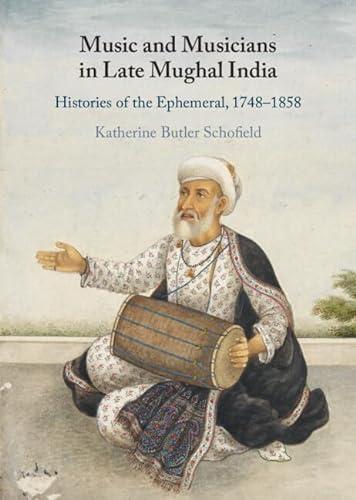
Frontcover: PortraitofaDelhi qawwāl.IllustrationforJamesSkinner’ s Tashrīhal-Aqwām.Hansi,1825.Add.27,255,f.457v. ©TheBritishLibrary Board.
1.1Paintingofthe pietradura inlayofOrpheusintheHallofPublic Audience,Shahjahanabad.1845.292D-1871. ©Victoria&Albert Museum,London. [page 18]
2.1KhushhalKhanGunasamudraperformingatDaraShukoh’swedding (detail).c.1700.RCIN1005068,f.26v. RoyalCollectionTrust ©HerMajestyQueenElizabethII2015. [33]
2.2RaginiTodi.c.1755.CatherineandRalphBenkaimCollection, 2013.340. TheClevelandMuseumofArt. PublicDomain.[34]
2.3Theconnectionsbetweencelestialbodies,musicalnotes,elementsand effects.[43]
2.4 Dhrupad inRaginiTodi.18C.1939.552,verso. YaleUniversityArt Gallery.PublicDomain.[47]
3.1Anup’smusicalgenealogyasafantasy majlis.Anup, RāgDarshan.1800, illustratedbyHajiMirGhulamHasan1804.LawrenceJSchoenberg Collection,LJS63,f.3v. UniversityofPennsylvaniaSpecial CollectionsLibrary. CC–BY.[52]
4.1ProbablySirDavidOchterlony,watchinga nāch.c.1820.Add.Or.2. ©TheBritishLibraryBoard. [80]
4.2MrsSophiaElizabethPlowden.JohnRussell,1797. ©TheBirla Museum,Pilani. [90]
4.3AandB.Persian rubācī, ‘Sāqī-ā!Fasl-ibahārast!’ Plowden, Album, f.8and Tunebook,f.14v.1787–8.MS380. ©FitzwilliamMuseum, UniversityofCambridge.[93]
4.4CourtesanperformingforColonelAntoinePolierinLucknow. 1786–88.2005.83.BequestBalthasarReinhart. MuseumRietberg, Zürich©RainerWulfsberger. [101]
4.5AandB.Urdu khayāl, ‘Sunremacshūqā be-wafā!’ Plowden, Album,f.21 and Tunebook,f.39v.MS380. ©FitzwilliamMuseum,Universityof Cambridge.[109]
4.6 ‘Tāzabatāzanobano’.Plowden, Album,f.1.MS380. ©Fitzwilliam Museum,UniversityofCambridge.[111]
4.7AandB.Persian ghazal, ‘Surwiruwān-ikīstī’ byKhaqani(1122–90). Plowden, Album,f.11and Tunebook,f.19v.MS380. ©Fitzwilliam Museum,UniversityofCambridge.[115]
5.1MahlaqaBaiChandasingingforRajaRaoRanbha,byHajiMirGhulam Hasan.KhushhalKhanAnup, RāgDarshan.LJS63,f.2v. Universityof PennsylvaniaSpecialCollectionsLibrary. CC–BY.[119]
5.2 Horī, khayāl and tappa compositionsinRaginiKhamaj.KhushhalKhan Anup, Rāg-Rāginī RozoShab.1833–6.UrduMus2,f.123v–4r. ©SalarJungMuseumLibrary,Hyderabad.[122]
5.3RaginiKhambhavati,KhushhalKhanAnup, RāgDarshan. LJS63,f.9v. UniversityofPennsylvaniaSpecialCollections Library. CC–BY.[125]
5.4RaginiKhambhavati.c.1675.2000.321.GiftofDorisWiener,inhonour ofStephenKossak,2000. MetropolitanMuseumofArt.Public Domain.[128]
5.5RaginiKhambhavati.KhushhalKhanAnup, RāgDarshan.Late18C. ©PhotocourtesyofSotheby’s,2019. [129]
5.6Detail,RajaRaohunting,byHajiMirGhulamHasan.KhushhalKhan Anup, RāgDarshan.LJS63,f.18r. UniversityofPennsylvaniaSpecial CollectionsLibrary. CC–BY.[139]
5.7ChandBibiofAhmadnagarhunting.c.1700.1999.403.LouisE.and TheresaS.SeeleyPurchaseFundforIslamicArt,1999. Metropolitan MuseumofArt.PublicDomain.[140]
6.1MeasuringsaltpilesatSambharLake,JaipurState,1870s.Photo355/ 1(59). TheBritishLibrary.PublicDomain.[148]
6.2MapofSambharLake.[156]
6.3 Bhagtan performingtheroleofKrishnainRaslila,attr.Sahib Ram,c.1800. ©ThePrivateCollectionoftheRoyalFamily ofJaipur.[164]
6.4PensionspaidfromSambharTreasuryonaccountofJaipurState, 1Januaryto30June1839,Section2. TheBritishLibrary.Public Domain.[168]
6.5Asteamboatrideonalake.Mid19C. ©Christie’sImagesLimited, 2022. [176]
7.1PortraitofMiyanHimmatKhan,fromJamesSkinner, Tashrīhal-Aqwām.1825.Add.27,255,f.134v. ©TheBritishLibraryBoard. [181]
7.2 ‘ANautchatColonelSkinner’sGiventoMeByHimself1838’.Add.Or. 2598. ©TheBritishLibraryBoard. [189]
7.3Illustrationofthe bāzīgār (conjuror)forSkinner’ s Tashrīhal-Aqwām Add.27,255,f.120v(detail). TheBritishLibrary. PublicDomain.[190]
7.4 QawwālsattheshrineofHazratNizam-ud-dinChishti,afterMazhar cAliKhan.1836.IM.41–1923. ©Victoria&AlbertMuseum, London. [192]
7.5AandB.KhwajaMoin-ud-dinChishtiandagatheringofmysticsand musicians;anddetail.c.1650–55.IS.94–1965. ©Victoria&Albert Museum,London. [193]
7.6PerformingcommunitiesintheGentilAlbum.1774.IS.25:26–1980. ©Victoria&AlbertMuseum,London. [198]
7.7NorthIndian kanchanīs.Tanjore,c.1828.Add.Or.62. ©TheBritish LibraryBoard. [200]
7.8TheMughal tawā’if Malageer,byLalljiorHulasLal.1815. ©Collection ofPrinceandPrincessSadruddinAgaKhan.[202]
7.9ShahamatJangandIkram-ud-daulagivinganeveningofmusical entertainment(detail).1748–50. ©NationalMuseumsofScotland. AcceptedinlieuofinheritancetaxbyHMGovernmentandallocated totheNationalMuseumsofScotland. [203]
8.1TheNawabofAwadh,Wajid cAliShah,accompanyingcourtesan SarafrazMahalonthe tabla.Wajid cAliShah, cIshqnāma.1849–50. RCIN1005035,f.242r. RoyalCollectionTrust©HerMajestyQueen ElizabethII2015. [222]
3.1Comparisonofmusical tazkirasandgenealogiesthatuseRasikh’ s Risāla.[page 60]
4.1CorrelationofPlowden’stextswiththeirtunes.[86]
7.1TheHanuman mat vs.GhulamRaza’ s rāga-rāginī system.[210]
7.2The tāla systemsofRasBarasKhan,HakimHasanMaududiChishti andGhulamRaza,cf.Ranj/Himmat.[212]
2.1ThecanonicalMughalPersiantreatisesonHindustani music.[page 39]
3.1Listofkeywritingsc.1740–1850thatincludemusicians’ tazkirasand/or genealogies.[59]
7.1Theten ‘vedicandshastric’ textscitedinSkinner’sentriesonperformers foundinTod’smanuscriptcollectionintheRoyalAsiaticSociety.[204]
Examples
4.1 ‘I.TheGhut’ (gat)fromWilliamHamiltonBird, OrientalMiscellany (Calcutta,1789),p.1.PublicDomain.[page 82]
4.2BandCmelodiesof ‘Sāqī-ā!’ compared.Plowden, Tunebook, f.13v,f.20v.MS380. ©FitzwilliamMuseum,Universityof Cambridge.[95]
4.3Notationofmediumspeed jaldtītāla.1788.Or.MS585,f.64v. EdinburghUniversityLibrary.[106]
4.4Persianghazal ‘Tāzabatāzanobano’ byHafiz.BirdNo.IVwiththe firstPersianlineunderlaid[112]
4.5Persian ghazal, ‘Tāzabatāzanobano’ byHafiz.SophiaPlowden, Tunebook,f.11rwiththe firstlineunderlaid.Lucknow,1787–8.MS380. © FitzwilliamMuseum,UniversityofCambridge [113]
4.6 ‘Tāzabatāzanobano’ setinRagBhairavitoacycleof sevenbeats.[114]
7.1GhulamRaza’snotationofthe sthyā’ī tān ofRaginiBhairavi.[208]
7.2 Dhīmā titālakalāwantī,the first tāla intheeleven tāla systemofthe Aslal-Usūl.[215]
Acknowledgements
Twenty-fiveyearssinceIstartedamaster’sdegreeatSOAS,Universityof Londonthatwouldleadtoalife-longloveaffairwithHindustanimusicand Mughalhistory,Ihave finally finishedmy firstsingle-authoredbook.Were Itothankeveryonewhohasmadeanimpactonmyjourneythispastquarter ofacentury,Iwouldhavetowriteasecondone,andwouldundoubtedlystill forgettomentionsomeone’sname!Withthatinmind,Ihavedecidedto nameintheseacknowledgementsonlythoseindividualsandinstitutions thathavemadeadirectcontributiontothewritingofthisbook.Butknow this:ifyou findthatyournameisnothere,andyouhaveatanypoint interactedwithmeaboutmyworkorsupportedmewithacuppaorachat –Ididnoticeandappreciateit;youdidmakeanimpact;andIthankyoufor yourimmeasurableinsightsandactsofkindnessovertheyears.
Theresearchandwritingofthisbookweregenerouslyfundedbya fiveyearStartingGrantfromtheEuropeanResearchCouncil(no.263643 MUSTECIO,PI:KatherineButlerSchofield);aone-yearBritishAcademy Mid-CareerFellowshipinconjunctionwiththeBritishLibrary(no. MD160059);andapublicationsubventionfromKing’sCollegeLondon. Iwasfortunatetowritemuchofthe firstdraftattheCentreforSouthAsian StudiesattheUniversityofCambridge,andthe finaldraftwaspulledinto shapethankstoavisitingprofessorshipattheDepartmentofSouthAsia Studies,UniversityofPennsylvania;Iamhugelygratefultoeveryonein bothplaces.Thefollowingkindlyinvitedmetosharemyresearchwith audiences:DrAshokdaRanadeMemorialLecture,Mumbai;Australian HistoricalAssociation;ReinhardStrohm’sBalzanProgrammein Musicology;ChhatrapatiShivajiMaharajVastuSanghralaya,Mumbai; ÉHÉSSParis;JaipurLiteratureFestival;LahoreLiteraryFestival;Max PlanckInstitutefortheHistoryoftheEmotions,Berlin;ProfSAHAbidi MemorialLecture,Delhi;SerbianAcademyofSciencesandArts,Belgrade; UniversityofCambridge;UCBerkeley;UCDavis;UCLA;andUniversity ofOxford.Thankyou.
Thefollowinggenerouslyprovidedaccesstotheircollections,andIhope thatthisbookwillgivesomethingbacktothem:AndhraPradesh GovernmentOrientalManuscriptsLibrary,Hyderabad;AndhraPradesh
StateArchives,Hyderabad;AsiaticSocietyofBengal,Kolkata;Ashmolean Museum,Oxford;BibliothèqueNationaledeFrance,Paris;BirlaMuseum, Pilani;BodleianLibrary,Oxford;BritishLibrary,London;Cambridge UniversityLibrary;Christie’s;CollectionofPrinceandPrincess SadruddinAgaKhan;EdinburghUniversityLibrary;Fitzwilliam Museum,Cambridge;GovernmentOrientalManuscriptsLibrary, UniversityofMadras;JohnRylandsLibrary,Manchester;KhudaBakhsh OrientalPublicLibrary,Patna;MaharajaSawaiManSinghIIMuseum, Jaipur;MuseefürIslamischeKunstundAsiatischeKunst,Berlin;National ArchivesofIndia;NationalMuseumsofScotland;RietbergMuseum, Zürich;NorfolkRecordsOffice;RoyalAsiaticSociety,London;Royal Collection,Windsor;RoyalGreenJackets(Rifles)Museum,Winchester; SalarJungMuseumLibrary,Hyderabad;Sotheby’s;Universityof PennsylvaniaRareBookandManuscriptLibrary;UKNationalArchives; Victoria&AlbertMuseum;YaleUniversityArtGallery;RoyalFamilyof Jaipur,GeoffreyPlowden,KathyandMalcolmFraser,NicolasSursockand UstadIrfanMuhammadKhan-sahib.
Thanksforscholarlyassistanceandfriendshiparedueinalphabeticalorder toDaudAli,JonBarlow,NickBarnard,PriyankaBasu,AmyBlierCarruthers,OliviaBloechl,RobinBunce,EstherCavett,TSRanaChhina, AdilRanaChhina,NicholasCook,AmlanDasGupta,JohnDeathridge,Katie DeLaMatter,ChrisDuckett,ArthurDudney,MunisFaruqui,Darren Fergusson,RoyFischel,AndyFry,ElizabethGow,BendorGrosvenor, VivekGupta,EmilyHannam,MatthewHead,TomHodgson,LiamRees Hofmann,RanjitHoskoté,DanishHusain,TomHyde,ICFAMily,David RMIrving,RadhaKapuria,MaxKatz,PashaMKhan,RazakKhan,Ustad WajahatKhan-sahib,ShailajaKhanna,ManaKia,TanujaKothiyal,Daniel Leech-Wilkinson,SaifMahmood,YusufMahmoud,NicolasMagriel,Peter Marshall,MAtharMasood,NickMcBurney,PhalguniMitra,Mohsen Mohammedi,AnnaMorcom,DanielNeuman,LaudanNooshin,Jenny Norton-Wright,RosalindO’Hanlon,RogerParker,HeidiPauwels,Norbert Peabody,CayennaPonchione-Bailey,RegulaQureshi,YaelRice,MaliniRoy, VikramRooprai,ZahraSabri,RanaSafvi,KevinSchwartz,SunilSharma, YuthikaSharma,ChanderShekhar,AyeshaSheth,GianniSievers,Nur Sobers-Khan,GabrielSolis,MartinStokes,MirwaissSidiqi,SueStronge, LakshmiSubramanian,JimSykes,NathanTabor,GilesTilletson,Mrinalini Venkateswaran,GuyWalters,FriederikeWeiss,RichardWolf,PeteYelding, ZehraZaidi,myamazingPhDstudentsandallmybeloved#Twitterstorians. ThankyouparticularlytoChrisBrookeforlendingmehisnearby flatwhen Ineededaquietspacetoworkin.
Ihavetravelledonthisjourneyforthepastdecadewiththemost wonderfulcompanionsontheAwadhCaseStudyofmyERCproject:to JimKippen,AllynMiner,MegWalkerandRichardDavidWilliams,Iowe youadebtofintellectualenrichmentIcanneverrepay.Thankyou,too,to myparacolonialpartners-in-crime,JuliaBylandespeciallyDavidLunn, whohasnotonlybeenmymainandwisestsoundingboardforaslongas Icanrememberbutwhoalsodidtheindexandmapforthisbook.Itwas myenormousprivilegetoworkwithharpsichordistJaneChapmanand podcastproducerChrisElcombeinbringingsomeofthisresearchtolife throughsound.Manythanks,too,toUrsulaSims-Williamsforhershared enthusiasmoverthedecadesfortheextraordinarySouthAsianmusical materialsintheBritishLibrary.Iamindebtedforhelpwithtranslationsat variousstagestoParmisMozafariandthelateBruceWannellespecially, butalsoKashshafGhani,RichardDavidWilliams,DavidLunnandZahra Sabri.
Overtheyearsofthisbook’sgestation,Ihavebeennourishedbythedeep friendship,kindmentorship,brilliantconversationsandgentlecritiqueof MollyAitken,MichaelBywater,WilliamDalrymple,EmmaDillon, FrancescaOrsini,MargritPernau,DaveshSoneji,MegWalkerandthe late,much-missedAllisonBuschandBruceWannell.Thankyou,too,toall thosewhoreadthedraft,especiallymytwoanonymousreviewers,William Dalrymple,AneeshPradhan,mymotherRuthButlerandmyhusband Paul.I finallywishtopaytributetotheacademicforebearsuponwhose shouldersIstand:NajmaPerveenAhmad,ShahabSarmadee,Madhu Trivedi,Françoise ‘Nalini’ DelvoyeandespeciallyRichardWiddess,who manyyearsagonowwasmyPhDsupervisor.Thereisone finalperson Iwouldliketothankinthisvein:myauntElizabethWiedemann,local historianoftheInverelldistrictinNewSouthWalesandauthorof Worldof ItsOwn:Inverell’sEarlyYears,1827–1920 and HoldingItsOwn:The InverellDistrictSince1919. FromthetimeIwasatinychild,itwasher inspiringexamplethattaughtmethat ‘historian’ wassomethingyoucould be – andthatsmallstoriesofordinarystrivingmattertothebiggerpicture. Thisbookwaswrittenandcompletedpainfullyslowlyduringtheyears oftheCovid-19pandemic,anddelayedfurtherduetomyinvolvementin theinternationalefforttohelpAfghanistan’smusiciansgetthemselvesto safetyafterthefallofKabultoTalibaninAugust2021;neverhasthe ‘scattering’ ofShahjahanabad260yearsagofeltsoclose.Iamforever gratefultohavefoundsuchapatientandgenerouseditorinKateBrett andherteamatCambridgeUniversityPress(especiallyAbiSears)tosteer thisverystatelyshiptoshore.Buttheirpatienceisnothingincomparison
Acknowledgements
tothatofmysonAlex,whowassevenwhenthisbook’sjourneybeganand isnowateenager.Everysooftenheasksmepolitely, ‘Howisyourbook going?’ FinallyIcantellhim, ‘Itis finished! tamāmshod!’ ThebestideasinherewereinspiredbyconversationswithPaul Schofield,abroadintellectualandculturalenthusiastbeyondcompare. Thisbookisforhim,myowndear rasika.
NotesontheText
OnTransliteration
ThisbookisbasedlargelyonsourcesinthePersianlanguagethatcontain agreatdealofIndicvocabulary,andmoreselectivelyfromtextsinearly formsofUrdu(rekhta)andHindi(Brajbhās ˙ ā)writteninthe nastcalīq script.Iuseasimplifiedsystemoftransliterationwhichonlymarkslong vowels(āīū);retroflexconsonants(d dhn r s t th)andnasalisation(n ˙ )in wordsofIndicorigin; cain (superscript c)and hamza (’);anddistinguishes kh ﮫﮐ fromkh ﺥ andgh ﮫﮔ fromgh ﻍ.Theglossaryandtitlesofuntranslated sourcesinthebibliographyincludefulldiacriticalmarkingsfollowing FSteingass’ ComprehensivePersian–EnglishDictionary andJohnTPlatts’ DictionaryofUrdū,ClassicalHindī andEnglish. 1 Inaccordancewith SteingassIuse -i forthe izafat construction(e.g. majlis-isamāc),and alintitlesofworks(e.g. Usūlal-Naghmāt).
Spellings(exceptforpropernouns)areperSteingassandPlatts,deferring toSteingassforwordsofPersianandArabicorigins(e.g.z,notdh,for ﺫ).The keyexceptionistheimportantterm mehfil (not mahfil)asitisusedtodayfor privatemusicalassemblies.Titlesofpublishedworksinthebibliographyare spelledinaccordancewiththeirpublishers’ preferencesforromanisation.
Inatextthiscomplex,therewillinevitablybemistakesandinconsistencies;whenyou findone,feelfreetoshout ‘bingo’!
OnDatesandCalendars
Ihavetranslateddatesfromtheal-Hijrilunarcalendar(AH)into Christian/CommonEra(CE)datesthroughout,usingtheusefultoolavailableat www.muslimphilosophy.com/ip/hijri.htm.TheAHlunaryearand CEsolaryearareofdifferentlengths,sothereisnosystematicdate correspondencebetweenthem.WherethesourcegivestheAHmonth
1 FSteingass, AComprehensivePersian–EnglishDictionary (London:RoutledgeandKeganPaul, 1963[orig.1892]);JohnTPlatts, DictionaryofUrdū,ClassicalHindī andEnglish (NewDelhi: MunshiramManoharlal,1997[orig.1884]).
(andsometimesday)alongwiththeyear,IgivetheexactCEyear(e.g. 1800);wherejusttheAHyearisprovided,Igiveaforward-slashedyear range(e.g.1862/3).Ifonlytheregnalyearisgiven,thisispresentedas adashedyearrange(e.g.1752–3).
TheVikramSamvat(VS)solaryearoftheHinducalendaristhesame lengthasCE,althoughthemonthsarelunar.Ithasgenerallynotbeen necessarytocalculatetheVS–CEconversion,asforthechapteron RajasthanIammainlyusingBritishdocuments.Butfortherecord,the Vikramritualyear(samvat)inuseinJaipurandJodhpurbeganon1 Chaitra(March),therevenueyearbeganon2Bhadrapada(August)2 and theyearconversionisgenerallycalculatedbytaking fifty-sevenyearsfrom theVSyeartoarriveattheCEyear.
OnProperNouns
FornamesofplacesIhavegenerallyusedtheAnglicisednamesprevalent duringtheperiodcoveredinthisbook(e.g.Calcutta,Tanjoreratherthan Kolkata,Thanjavur).Withfestivals,Ihavechosentousecommonspellings withoutdiacriticalmarkings;forexample,DiwaliratherthanDīwālī,Eid not cĪd.
Manyofthepeopleinthisbookhavelongnames,pseudonymsand/or multipletitles,someofthemeasilyconfused(therearetwoKhushhal KhansandtwoGhulamRazas,forinstance).Iusethelongformof individuals’ namesinthe firstinstance,withoutanydiacriticalmarkings, spelledtoreflecttheirusualpronunciationinIndianlanguagestoday(e.g. Moin-ud-dinratherthanMucīnal-Dīn).Thereafter,Ihaveusedavarietyof strategies:
• Wherethepersonwasapoet,authorormusician,Irefertothemwhen possibleusingtheir takhallus or nomdeplume/stagename;so cInayat KhanRasikhandNicmatKhanSadarangbecomeRasikhandSadarang. Thereareafewexceptions,suchaswhereindividualsareonlyever referredtobyonename(e.g.Tansen).ToavoidconfusionIreferto KhushhalKhanGunasamudraof Chapter2 asKhushhal,ashisfather wasalsoGunasamudra,andKhushhalKhanAnupof Chapter5 asAnup.
2 MonikaHorstmann, InFavourofGovinddevjī:HistoricalDocumentsRelatingtoaDeityof VrindabanandEasternRajasthan (NewDelhi:IndiraGandhiNationalCentrefortheArtsand Manohar,1999),pp.69–70.
• WhereIuseanindividual’snameratherthantheir takhallus,Iusethe shortestformthatmakesmeaningfulsenseandwon’teasilybeconfused withanotherindividual,forexampleHimmatforMiyanHimmatKhan, Raushan-ud-daula(notRaushan)forRaushan-ud-daulaZafarKhan BahadurRustamJang.ToavoidconfusionwiththeMughalEmperor AhmadShah(r.1748–54),IrefertotheAfghanwarlordAhmadShah AbdaliDurraniasAbdali.Icallthe sitār playerGhulamRazaofthe 1840s–50sbyhistitle,Razi-ud-daula,todistinguishhimfromthe importanttreatisewriterofthe1790sGhulamRaza qawwāl.
• Emperors,queens,royalprincesandindependentrulersarereferredto usingtheircommonrulingtitles:soMuhammadShah;LalKanvar; MuhammadAczamShah;(Nawab)Asaf-ud-daula;(Maharaja)Ram Singh;andsoon.Shah cAlaminthisbookalwaysreferstoShah cAlam II(r.1759–1806).
• IusethehonorifictitlesHazrat,Khwaja,Shaikh,Hakim,Miyanandso onwheretheyarepresentintheoriginaltexts.
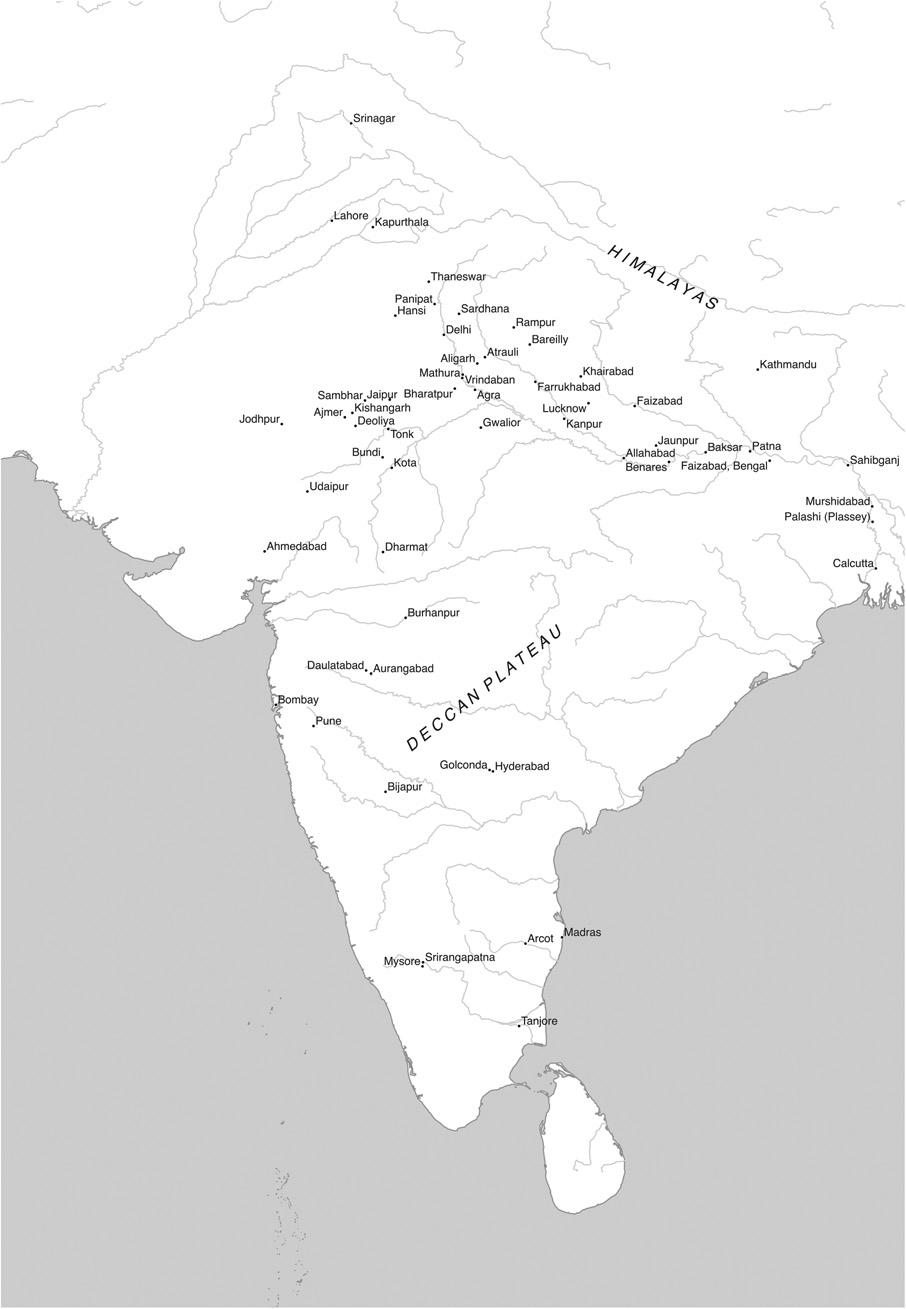
©DavidLunn
NotesontheText
OnTransliteration
ThisbookisbasedlargelyonsourcesinthePersianlanguagethatcontain agreatdealofIndicvocabulary,andmoreselectivelyfromtextsinearly formsofUrdu(rekhta)andHindi(Brajbhās ˙ ā)writteninthe nastcalīq script.Iuseasimplifiedsystemoftransliterationwhichonlymarkslong vowels(āīū);retroflexconsonants(d dhn r s t th)andnasalisation(n ˙ )in wordsofIndicorigin; cain (superscript c)and hamza (’);anddistinguishes kh ﮫﮐ fromkh ﺥ andgh ﮫﮔ fromgh ﻍ.Theglossaryandtitlesofuntranslated sourcesinthebibliographyincludefulldiacriticalmarkingsfollowing FSteingass’ ComprehensivePersian–EnglishDictionary andJohnTPlatts’ DictionaryofUrdū,ClassicalHindī andEnglish. 1 Inaccordancewith SteingassIuse -i forthe izafat construction(e.g. majlis-isamāc),and alintitlesofworks(e.g. Usūlal-Naghmāt).
Spellings(exceptforpropernouns)areperSteingassandPlatts,deferring toSteingassforwordsofPersianandArabicorigins(e.g.z,notdh,for ﺫ).The keyexceptionistheimportantterm mehfil (not mahfil)asitisusedtodayfor privatemusicalassemblies.Titlesofpublishedworksinthebibliographyare spelledinaccordancewiththeirpublishers’ preferencesforromanisation.
Inatextthiscomplex,therewillinevitablybemistakesandinconsistencies;whenyou findone,feelfreetoshout ‘bingo’!
OnDatesandCalendars
Ihavetranslateddatesfromtheal-Hijrilunarcalendar(AH)into Christian/CommonEra(CE)datesthroughout,usingtheusefultoolavailableat www.muslimphilosophy.com/ip/hijri.htm.TheAHlunaryearand CEsolaryearareofdifferentlengths,sothereisnosystematicdate correspondencebetweenthem.WherethesourcegivestheAHmonth
1 FSteingass, AComprehensivePersian–EnglishDictionary (London:RoutledgeandKeganPaul, 1963[orig.1892]);JohnTPlatts, DictionaryofUrdū,ClassicalHindī andEnglish (NewDelhi: MunshiramManoharlal,1997[orig.1884]).
(andsometimesday)alongwiththeyear,IgivetheexactCEyear(e.g. 1800);wherejusttheAHyearisprovided,Igiveaforward-slashedyear range(e.g.1862/3).Ifonlytheregnalyearisgiven,thisispresentedas adashedyearrange(e.g.1752–3).
TheVikramSamvat(VS)solaryearoftheHinducalendaristhesame lengthasCE,althoughthemonthsarelunar.Ithasgenerallynotbeen necessarytocalculatetheVS–CEconversion,asforthechapteron RajasthanIammainlyusingBritishdocuments.Butfortherecord,the Vikramritualyear(samvat)inuseinJaipurandJodhpurbeganon1 Chaitra(March),therevenueyearbeganon2Bhadrapada(August)2 and theyearconversionisgenerallycalculatedbytaking fifty-sevenyearsfrom theVSyeartoarriveattheCEyear.
OnProperNouns
FornamesofplacesIhavegenerallyusedtheAnglicisednamesprevalent duringtheperiodcoveredinthisbook(e.g.Calcutta,Tanjoreratherthan Kolkata,Thanjavur).Withfestivals,Ihavechosentousecommonspellings withoutdiacriticalmarkings;forexample,DiwaliratherthanDīwālī,Eid not cĪd.
Manyofthepeopleinthisbookhavelongnames,pseudonymsand/or multipletitles,someofthemeasilyconfused(therearetwoKhushhal KhansandtwoGhulamRazas,forinstance).Iusethelongformof individuals’ namesinthe firstinstance,withoutanydiacriticalmarkings, spelledtoreflecttheirusualpronunciationinIndianlanguagestoday(e.g. Moin-ud-dinratherthanMucīnal-Dīn).Thereafter,Ihaveusedavarietyof strategies:
• Wherethepersonwasapoet,authorormusician,Irefertothemwhen possibleusingtheir takhallus or nomdeplume/stagename;so cInayat KhanRasikhandNicmatKhanSadarangbecomeRasikhandSadarang. Thereareafewexceptions,suchaswhereindividualsareonlyever referredtobyonename(e.g.Tansen).ToavoidconfusionIreferto KhushhalKhanGunasamudraof Chapter2 asKhushhal,ashisfather wasalsoGunasamudra,andKhushhalKhanAnupof Chapter5 asAnup.
2 MonikaHorstmann, InFavourofGovinddevjī:HistoricalDocumentsRelatingtoaDeityof VrindabanandEasternRajasthan (NewDelhi:IndiraGandhiNationalCentrefortheArtsand Manohar,1999),pp.69–70.
• WhereIuseanindividual’snameratherthantheir takhallus,Iusethe shortestformthatmakesmeaningfulsenseandwon’teasilybeconfused withanotherindividual,forexampleHimmatforMiyanHimmatKhan, Raushan-ud-daula(notRaushan)forRaushan-ud-daulaZafarKhan BahadurRustamJang.ToavoidconfusionwiththeMughalEmperor AhmadShah(r.1748–54),IrefertotheAfghanwarlordAhmadShah AbdaliDurraniasAbdali.Icallthe sitār playerGhulamRazaofthe 1840s–50sbyhistitle,Razi-ud-daula,todistinguishhimfromthe importanttreatisewriterofthe1790sGhulamRaza qawwāl.
• Emperors,queens,royalprincesandindependentrulersarereferredto usingtheircommonrulingtitles:soMuhammadShah;LalKanvar; MuhammadAczamShah;(Nawab)Asaf-ud-daula;(Maharaja)Ram Singh;andsoon.Shah cAlaminthisbookalwaysreferstoShah cAlam II(r.1759–1806).
• IusethehonorifictitlesHazrat,Khwaja,Shaikh,Hakim,Miyanandso onwheretheyarepresentintheoriginaltexts.
©DavidLunn
xxii
RulingDynasties*
*Onlyindividualswithatenureofayearorlongerarelisted
TheMughalDynasty(Agra/Delhi)
Babur(1526–30)
Humayun(1530–40,1555–6)
Akbar(1556–1605)
Jahangir(1605–27)
ShahJahan(1628–58)
Aurangzeb cAlamgirI(1658–1707)
Shah cAlamIBahadurShah(1707–12)
JahandarShah(1712)
Farrukhsiyar(1713–19)
MuhammadShah(1719–48)
AhmadShah(1748–54)
cAlamgirII(1754–9)
Shah cAlamII(1759–1806)
AkbarShahII(1806–37)
BahadurShahIIZafar(1837–58)
TheNawabsofAwadh(Lucknow)
Burhanul-Mulk(1722–39)
SafdarJang(1739–54)
Shujac-ud-daula(1754–75)
Asaf-ud-daula(1775–97)
Sacadat cAliKhan(1798–1814)
Ghazi-ud-dinHaider(1814–27)
Nasir-ud-dinHaider(1827–37)
Muhammad cAliShah(1837–42)
Amjad cAliShah(1842–7)
Wajid cAliShah(1847–56)