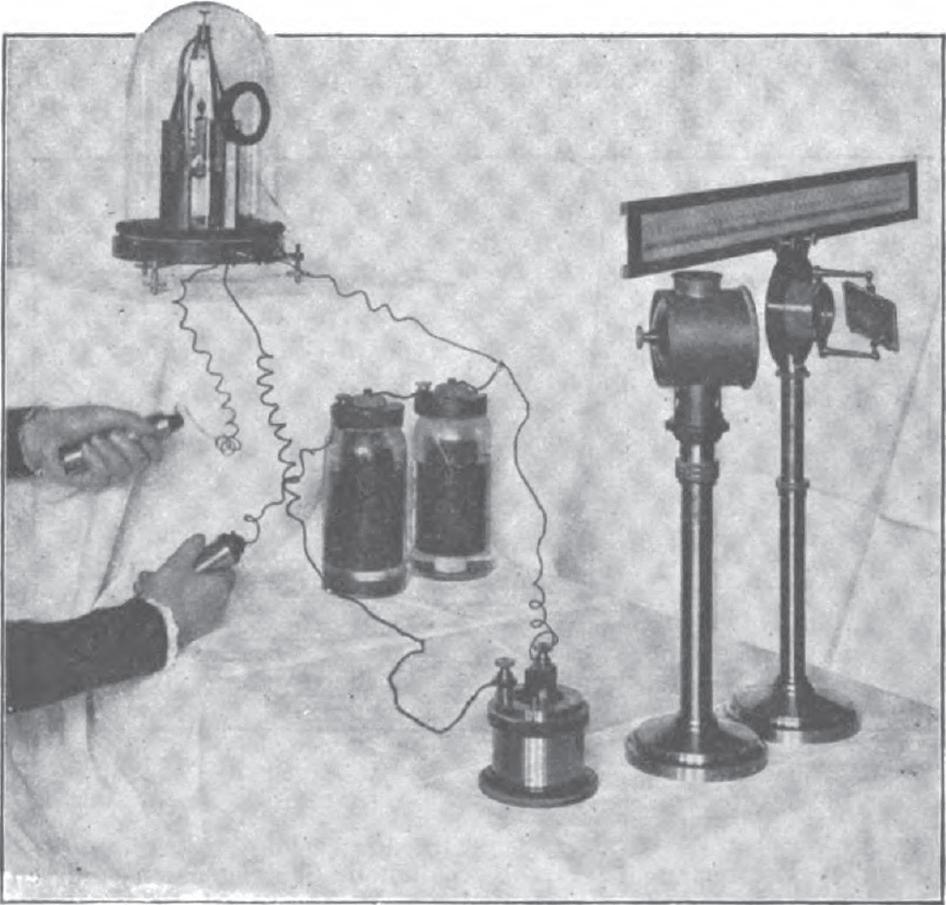
No part of this publication may be reproduced or transmitted in any form or by any means, electronic or mechanical, including photocopying, recording, or any information storage and retrieval system, without permission in writing from the publisher. Details on how to seek permission, further information about the Publisher’s permissions policies and our arrangements with organizations such as the Copyright Clearance Center and the Copyright Licensing Agency, can be found at our website: www.elsevier.com/permissions.
This book and the individual contributions contained in it are protected under copyright by the Publisher (other than as may be noted herein).
Notices
Knowledge and best practice in this field are constantly changing. As new research and experience broaden our understanding, changes in research methods, professional practices, or medical treatment may become necessary.
Practitioners and researchers must always rely on their own experience and knowledge in evaluating and using any information, methods, compounds, or experiments described herein. In using such information or methods they should be mindful of their own safety and the safety of others, including parties for whom they have a professional responsibility.
To the fullest extent of the law, neither the Publisher nor the authors, contributors, or editors, assume any liability for any injury and/or damage to persons or property as a matter of products liability, negligence or otherwise, or from any use or operation of any methods, products, instructions, or ideas contained in the material herein.
British Library Cataloguing in Publication Data
A catalogue record for this book is available from the British Library
Library of Congress Cataloging-in-Publication Data
A catalog record for this book is available from the Library of Congress
ISBN: 978-0-12-802924-4
For information on all Academic Press publications visit our website at http://store.elsevier.com/
Disclaimer:
All contents of this book were developed and written by Donald Krapohl and Pamela Shaw, except those sections listing other authors. All statements of fact, opinion, or analysis expressed are those of the authors and do not reflect the official positions or views of any U.S. Government agency. Nothing in the contents should be construed as asserting or implying U.S. Government authentication of information or endorsement of the authors' views. The material authored by Donald Krapohl has been reviewed by the Central Intelligence Agency and the Defense Intelligence Agency to prevent the disclosure of classified information.
Some years ago, we were camped at the base of a glacier on Mt. Adams in southwestern Washington State, preparing for early morning bid for the summit. While I melted snow to make instant mashed potatoes for dinner, Don Krapohl regaled us with stories of fantastic new German-Chinese restaurant that had opened near his home. The food was great. There was only one problem—an hour after dinner, you were hungry for power.
I have heard Don speak on a number of occasions, often about topics covered in this book, and he always started his talk with a joke. You can imagine my disappointment when his book did not start that way. To remedy the situation, I started the Foreword with one of Don's better jokes.
Now, Fundamentals of Polygraph Practice is a great book. It covers a lot of ground and should be of interest to any student of the polygraph. The book was written by Don Krapohl and Pam Shaw with a few invited chapters by other authorities. I met Pam Shaw a few years ago at a meeting of the New Jersey Polygraph Association. Pam was President of the American Polygraph Association at that time. Everyone appreciated that she agreed to do most of the instruction at those meetings, especially I.
I met Don Krapohl at David Raskin's workshops on the polygraph at the University of Utah in the late 1970s. I was a new graduate student in David's lab at the time, and during the workshop, David had me teach a unit on psychophysiology. I thought that was fitting because I was a student of psychophysiology, not the polygraph. I was interested in the polygraph only because it produced many channels of physiological data that could be related to psychological processes. Whereas most psychophysiologists spend many years investigating a single physiological measure, Raskin had set up his Beckman Dynograph to record eight channels of physiological activity. It was a gold mine of data for someone interested in the relationship between physiological activity and psychological processes. As far as I was concerned, the observed changes in physiology could be associated with almost any emotion or any form of cognitive activity. It just happened to be deception. I came to learn, as most of you already know, that deception during polygraph tests is tightly linked to changes in electrodermal, cardiovascular, electrophysiological, respiratory, and oculomotor activity. In psychology, it is extremely rare to see correlations between two variables as large as those obtained between deception and physiology. We benefited greatly from the strong and stable relationships between deception and physiology in our efforts to develop computer programs to measure physiological changes that discriminate well between truthful and deceptive people. In a report to the Air Force in 1962, Joseph Kubis, a psychologist at Fordham University, concluded that it was not feasible to develop computer programs to extract diagnostic information from polygraph charts. By 1980, we had demonstrated not only that it could be done but also that any idiot can do it.
Thirty-five years ago, Don attended Raskin's workshops because he was, and continues to be, a dedicated student of polygraph technology. Technology is the study of
the practical use of scientific discoveries. Fundamentals of Polygraph Practice seeks to apply the results of scientific research to the practice of psychophysiological detection of deception. It describes evidence-based, best practices for polygraph professionals. Best practices are not based on proclamations by polygraph gurus, however clever and charismatic they might be. They are not built on opinions expressed by uninformed and arrogant members of the scientific community with antipolygraph biases and no apparent interest in data that conflict with their prejudices. They are not well served by selective and misleading reviews of the existing scientific literature by other scientists who find value in only their own preferred polygraph technique. Best practices are not shaped by political interests, bureaucratic expediency, or compromise. Best practices are those for which there is good empirical support. They are data-based methods that have consistently produced results superior to those achieved by other approaches. Best practice also implies a commitment to be open to change and adapt as new findings show a conceptual or practical advantage of one method over another.
Over the years, advocates for various polygraph techniques have come and gone. Critics of the polygraph have come and gone. Program managers and directors have come and gone. Alternatives to the polygraph have been proposed and found lacking (see Chapter 12). Funding for research on the polygraph has come and gone. One thing that has not changed is the need for valid credibility assessments. Another thing that has not changed has been the unwavering commitment of these authors to the advancement of validated polygraph techniques. The authors have acquired funding to support research on polygraph techniques. Under their leadership, the quality of research published in the journal Polygraph has improved significantly. The primary author developed the OSS-2 scoring system, which outperformed all other scoring methods in recent comparisons of manual and automated polygraph scoring techniques, and he has published numerous other research reports, reviews, and book chapters related to the polygraph. Fundamentals of Polygraph Practice is just the latest in a long line of substantive contributions to the field.
No one in the polygraph community is better qualified to write a book on evidencebased practice than these authors. Don and Pam are poster children for evidence-based practice, and their book falls squarely at the interface between science and practice. The writing is clear and contains many good examples of best practice. I highly recommend this lucid and authoritative practitioner-oriented text on polygraph techniques.
Douglas Adams once said, “Solutions nearly always come from the direction you least expect, which means there's no point trying to look in that direction because it won't be coming from there.” Hoping Adams is wrong, I will be looking in my mailbox for a copy of this book.
John C. Kircher, Ph.D. Professor of Educational Psychology and Adjunct Professor of Psychology
Author of the Computerized Polygraph System and the Ocular-motor Deception Test
Recipient of the John E. Reid Memorial Award for Distinguished Achievement in Polygraph Research, Teaching or Writing
Preface
For those with an interest in the fields of psychology and criminal justice, there are few careers more fascinating, or more consequential, than that of a polygraph examiner. On any given day, professional examiners can be found resolving highprofile crimes, helping assess candidates for jobs, supporting treatment providers in offender management, working to protect national secrets, validating intelligence information, and assisting attorneys, judges, government leaders, and the average citizen. Each case presents a unique opportunity to resolve problems in a way that no other method can.
Because polygraph results always have consequences for someone, and often profound consequences, those who choose to practice in this field must be properly prepared. That preparation entails a good educational foundation, a commitment to excellence, and uncompromising integrity. This book strives to capture and organize best practices for students of polygraphy. We believe that they will find it to be a beneficial supplement to a formal and accredited polygraph education program.
It was not our goal merely to provide a learning text for polygraph students, however. There are many more who are curious about polygraphy. With so much public over- and underestimation about what polygraphy really is and what it can do, we thought it important to make the content accessible to nonpractitioner communities as well. It is our hope to resolve some of the general misconceptions of the polygraph, with the twin goals of managing public expectations and improving the services polygraph examiners provide. Consumers of polygraph services, such as law enforcement agencies, courts, sex offender treatment providers, government screening programs, and the general public can come to learn what the limits and possibilities of the polygraph are, what conditions are necessary for accurate polygraph results, and to expect examiners to perform according to professional standards. In ways that legislation and professional associations cannot accomplish alone, the raising of consumer awareness can create an even greater professional orientation to the use of best practices.
Undertaking this project has been a revelation to us in that we discovered how much assistance we would need from our many professional friends and colleagues to help us get our facts right. We owe a debt of gratitude to the best and brightest examiners we know. We sincerely appreciate the technical suggestions from Donnie Dutton, Bill Norris, and Mark Handler. We owe a special thanks to Ben Blalock, who spent countless hours correcting our drafts. Without their comments, criticisms, and suggestions, this volume would have suffered. We are very grateful to Skip Webb and Ray Nelson for their contribution of the very informative appendices, and for the admin and library support from Louane Powers and Katie Baldwin. Thanks also go to Cholan V. for permission to reprint many of the illuminating images appearing in the book.
Early on, we recognized the wisdom of using specialized experts in two essential topic areas for a well-rounded polygraph instruction book. Those topic areas were Law, and Anatomy and Physiology, and fortunately, two of our profession's best experts stepped up to help us: Professor Joel Reicherter who produced perhaps the best anatomy and physiology chapter for polygraph examiners to be found, and Gordon Vaughan, Esq., General Counsel for the American Polygraph Association and easily one of the best-known experts in polygraph law. Polygraph students will benefit immensely from their chapters, and we are indebted to these gentlemen for contributing them.
We also received unhesitant support from the manufacturers of polygraphs in providing images for the Data Collection chapter. We would like to express our sincere appreciation to our friends Jamie Brown of Limestone Technologies, Chris Fausett and Sue Luttrell from Lafayette Instruments, and Ben Blalock of Stoelting Instruments.
We also thank Joslyn Chaiprasert-Paguio of Elsevier Publishing for deftly handling the uncountable details that allowed our ideas to come to print.
We would be remiss if we did not give credit to the thought leaders of science who, over the many years, have helped illuminate the practitioner's path, and in doing so help establish a specialized new field, polygraphy: Drs. Hugo Munsterberg, John Larson, John Kircher, David Raskin, Charles Honts, John Podlesny, Joseph Kubis, Frank Horvath, Gordon Barland, Lou Rovner, Stuart Senter, Avital Ginton, David Lykken, Akihiro Suzuki, Eitan Elaad, Stanley Abrams, Gershon Ben-Shakhar, Michael Bradley, Vance MacLaren, Ronald Craig, and our recently departed good friend Andrew Dollins. Through data and debate they have forced us to reconcile our practices with empirical evidence, and in doing so, have moved polygraphy toward more defensible methods. In addition, the polygraph field has benefited from the work of researcher/practitioners who expanded our practical knowledge: Leonarde Keeler, Clarence D. Lee, John Reid, Norman Ansley, Mark Handler, Raymond Nelson, James Matte, and Nathan Gordon. These, and others we may have missed, have been immensely impactful to the practice of polygraphy in its various forms, and each has left a mark on the daily work of the many thousands of polygraph examiners around the world.
And as a final thought, we offer a wish to our fellow practitioners. To polygraph examiners everywhere, whatever the mission, who remain steadfast unbiased seekers of the truth, who fight the good fight every day, we wish you Godspeed.
The material authored by Donald Krapohl has been reviewed by the U.S. Defense Intelligence Agency and the Central Intelligence Agency to prevent the disclosure of classified information. All statements of fact, opinion, or analysis expressed are those of the authors and do not reflect the official positions or views of the U.S. Government. Nothing in the contents should be construed as asserting or implying U.S. Government authentication of information or US Government endorsement of the author's views.
A portion of royalties from this book are donated to the Andrew Dollins Memorial fund at the University of Utah College of Education to honor the memory of our good friend and an exceptional polygraph researcher.
A history of lie detection
1And then shall he tremble, and shall look pale, even as if death had come upon him. And then shall ye say: Because of this fear and this paleness which has come upon your face, behold, we know that thou art guilty. Helaman 9: 33–34, Book of Mormon
It may come as a surprise to some that deception is a universal quality of this world. It is not new, it is not isolated, and there is no reason to conclude that there is more or less of it than there has been in the past. Deception is neither an aberration nor a departure from law of nature. Rather, it is intricately woven into the fabric of life on earth. It surrounds us, is part of us, and has been here before there was an “us.” One powerful reason for deception’s ubiquity is that it can have immense survival value to living things: it can improve the chances of avoiding predators, of winning a mate, in securing a meal, and of confounding a competitor. It appears throughout the spectrum of biology. Insects do it all the time, and well. So do fish and birds. Deceptive strategies are found among crustaceans, lizards, mammals, snakes, invertebrates, many plants, and even bacteria. One might be tempted to conclude that where there is life, there is deception.
Humans deceive perhaps more often, more nuanced, and for more reasons than any other species. It seems to be part of a collective psychology, or perhaps it is simply more available to that species with the biggest relative brain size. Nonetheless, deception is very much a part of us, so much so that the English language offers no fewer than 20 synonyms for it. And while lying among humans can be socially accepted occasionally, expected at times, and even demanded in others, there are conditions where it is destructive to the legitimate interests of individuals and society. Here lies the critical importance of lie detection, as a defense against those who would use deception to do harm.
From the historical perspective, the use of a polygraph for lie detection is quite new; however, the quest for a method for verifying statements is very old. Virtually every culture across history with a system of writing has given comment to it, offering various and sundry methods to ferret out the deceiver. Given the many obvious advantages, it might afford the person who knows when others are lying, it is not unreasonable to suspect that human interest in lie detection emerged right along with the human capacity for telling lies, which most certainly predates written history.
In this chapter, we cover historical antecedents to the modern field of “lie detection” leading up to the polygraph. It is divided into sections that generally correspond with significant trends and milestones over the course of history leading to the polygraph. It begins first with ancient traditions in lie detection.
ANCIENT TRADITIONS
Frequently in early societies, it was believed that goodness could be differentiated from evil simply because goodness was stronger, or that divine intervention would protect the truth speaker (Larson, 1932). Tests were devised based on the assumption that a magical force would come into play to identify or rescue the truth speaker. For example, one such test was an ordeal involving bread and cheese (Trovillo, 1939).
The practice, called “Corsnaed,” was used by Roman Catholic priests during the Inquisition to detect the guilt of a member of the priesthood. First, bread and cheese were placed on the altar. The priests would then offer prayers to Gabriel, asking him to make it impossible for a suspected priest to swallow the bread and cheese if he were guilty of the offense in question. After the prayers were completed, they would require the suspected priest to eat the bread and cheese in their presence. If the priest could not swallow these items, it was a sign of guilt. However, reports of a priest unable to do so are difficult to find.
In India a similar notion of divine intervention in the ordeal prevailed. A’li Ibra’hi’m Kha’n (1806)1 describes nine ways in which the ordeal may be conducted. They include the balance, fire, water, poison, Cófha (or water in which an idol has been washed), rice, boiling oil, red-hot iron, and images. They are briefly described here:
The balance: The accused fasts the entire day and is then bathed in sacred water. After worshipping the deities, the accused is placed on a balance and weighed. There is more prayer, and the accusation is written on a piece of paper and bound to the head of the accused. Six minutes later he is reweighed. If he weighs more, he is pronounced guilty. If he lost weight, he is judged innocent. If his weight is unchanged, he is weighed again. It is expected that his weight will change in this third weighing. Finally, if the balance device on which he is weighed was to break, this is a sign of guilt.
The fire: A hole “nine hands long, two hands broad, and one hand deep is made in the ground, and filled with a fire of pippal wood.” The accused is compelled to walk barefoot across the flames. If he is unhurt, he is innocent: if burned he is guilty.
The water: The accused is placed in water up to his navel. Hindu instructions take care to say of the water that “no ravenous animal be in it.” A Bráhman enters the water holding a staff. A soldier shoots three arrows into the air, and
1 Similar reports were made by the French missionary Dubois (1817).
another man is sent to pick up the arrow that has traveled the farthest. A second man near the water is also sent to this arrow. At that moment the accused must submerge under the water holding to the Bráhman’s foot or staff, and remain under the water until the two men return with the arrow. Failure to remain completely under water until the arrow is retrieved is an evidence of guilt.
The poison: Here there are two versions. One involves a mixture of barley-corn, butter, and poison eaten from the hand of the Bráhman. A lack of effect of the poison signifies innocence, but illness indicates guilt. In the second, the accused must reach his hand into a deep pot which contains a poisonous snake in addition to a ring, seal, or coin. He must take out the object without getting bitten by the snake. If he is successful, he is deemed innocent. A snake bite indicates guilt.
The Cófha: The accused drinks three draughts of water in which images of deities have been washed. Illness within 2 weeks is a sign of guilt.
The rice: This ordeal is used when there are several suspects in a theft. Dry rice is brought forth. Sometimes it is weighed with a sacred stone, other times special incantations are read. The suspects are then made to chew a portion of the dry rice, and then place it on leaves of the pippal or the bark of certain trees. Rice that has remained dry, or has blood in it, is an indication that it came from the guilty person.
The hot oil: Oil is heated, and the accused places his hand into it. Burns on the hands show guilt, whereas the lack of burns is expected from the innocent.
The red-hot iron: Metal, in the form of an iron ball or the head of a lance, is heated red hot and placed on the hands of the accused. As with the ordeal of the hot oil, burns indicate guilt, and a lack of burns signifies innocence.
The images: The image of one of the deities (Dharma) is made of silver and another image is made of clay or iron of a second deity (Adharma). The images are placed in a large jar, and the accused is compelled to place his hand in the jar and draw out one of them. If he draws the silver image, he is considered innocent, but he is guilty if he draws out the other image. In an alternate form, images of the deities are rendered on two pieces of cloth, one white and one black. Both pieces of cloth are “rolled up in cow-dung, and thrown into a jar, without having ever been shown to the accused.” Again, the accused draws one of the pieces of cloth from the jar, with white representing Dharma and innocence.
In the first modern scholarly book on deception detection, Larson (1932) examined the history of this field. He listed the major approaches as trial by combat, ordeal, torture, benefit of clergy, sanctuary, and compurgation (i.e., multiple sworn endorsements of innocence). Larson draws heavily from Lea’s (1892) expansive exploration of these categories, three of the most popular of which are briefly discussed below:
Trials by combat: This method had several forms, most commonly the duel wherein two adversaries faced off in physical combat. Variations were
introduced in many countries, including the hiring of surrogates to do the fighting. Special consideration was given in some countries for women, children, and the handicapped who were to contest against able-bodied men. In those cases, instead of the weaker contestant hiring a surrogate, the rules of the combat were adjusted to offset the inequality in physical strength. Lea’s (1892) extensive coverage of the subject reveals a very wide range of trials by combat across cultures.
Ordeals: This category of truth test abounds with examples, with the most frequent among them involving water and heat/fire (Lea, 1892; Matthews, 1791). Water has been used for guilt detection through processes such as immersion of the suspect (e.g., witch hunts in the United States in the seventeenth century), sanctification of icons that the suspect must touch, adding of objects or impurities to water that the suspect must drink, or suspects plunging an arm into water to retrieve an unseen object that would signify their innocence or guilt. The ordeals by heat/fire could include walking across hot coals, placing hot metal against the tongue, carrying a hot metal objects, or placing the suspect’s arm in boiling oil or water. Typically, the suspect who survived these ordeals uninjured was judged innocent.
Torture: This method of guilt detection is found in virtually all cultures and throughout most of history. It has been used to force confessions to crimes and to antireligious beliefs. Torturers have shown a peculiarly innovative streak and have been successful in extracting admissions to whatever matter they wished. However, pervasive torture has proven over the centuries, the earliest as well as the most recent writers of this approach have observed that it is highly flawed in that it develops confessions from both the innocent and the guilty. Moreover, the growth of the concept of human rights, especially in the second half of the twentieth century, has moved many nations away from torture and toward more discriminative methods of truth verification, including forensic science and the polygraph.
OBSERVATIONS OF BEHAVIOR
One of the prominent methods of olden times was based on observations of the behavior of truth tellers and liars. In the well-known account, King Solomon displayed a remarkable grasp of human behavior when he wisely determined which of two women was the mother of a disputed baby. As one may recall, Solomon declared that the child should be cut into two pieces in order to satisfy the claims of both women, whereupon the true mother expressed her willingness to give up the child rather than to see it killed. The act of giving up the baby, the king noted, was to be expected of the child’s actual mother, and Solomon awarded the child to her. The king determined that truthful persons respond in ways that may be useful in distinguishing them from untruthful people.
A similar story arises from early India (Dunn, 1750). A wealthy man had two wives, one who bore him a son, and another, more fair and attractive, who was barren. The man had come to favor the second wife for her beauty at the expense of the one who had given him an heir. The first wife was driven to extreme measures in an attempt to garner her husband’s affection, and concocted a radical plan. She began by making a dramatic show of affection on her son before all of the neighbors, telling them that this boy is her only comfort inasmuch as her husband has denied her any affection. Having convinced all of her love for her child, one night she killed the boy and placed it beside the second wife as she lay sleeping. The following morning she “discovered” the child dead next to the favored wife, and initiated boisterous histrionics that brought in the neighborhood. All who witness the scene are convinced of the guilt of the second wife, for they could not conceive of a loving mother killing her own child.
The case was brought before their Mariadiramen, wise king and judge, who listened to the testimony of both women and was unable to decide. Dunn (1750) tells what Mariadiramen said next:
Let the woman who is innocent, and who pretends that her rival is culpable, take a turn thro’ the assembly in the posture which he should shew her. This posture was such as did not become a modest woman. Upon this the mother of the child said, In order to convince you that my rival is culpable I not only consent to take one turn before this assembly, in the manner you have ordered, but also a hundred, if requir’d. As for me, said the second, tho’ innocent, yet I ought to be condemn’d to the most cruel death, if I did what is now requir’d of me. The first wife wanted to make a reply, but the judge ordering silence, declared that she was guilty, and her antagonist innocent; for, added he, a woman, who at the prospect of certain death will not do an indecent action, could never have committed so great a crime; on the contrary, a woman, who having lost all sense of modesty, without trouble commits the most indecent actions, sufficiently declares that she is capable of perpetrating the blackest crimes. The first wife, confounded to see herself thus discover’d, was forc’d publickly to acknowledge her crime. (p. 112).
Another behaviorally based approach was purportedly practiced in ancient Asia. According to Schafer (2008) “…around 500 b.c.e., priests in India tested people accused of thievery by placing them in darkened tents with donkeys whose tails were coated in soot. The priests would tell the suspected thieves to tug the animals’ tails because the donkeys would bray when touched by thieves. Suspects who left the tents with their hands unsoiled by soot, and therefore presumed to have feared following the priests’ instructions, were considered guilty.” A virtually identical version is provided by Evans (2004) Keeler (1933) similarly claimed this practice was by Hindus in India, but he said that it took place in recent times. Keeler’s story has been retold by many polygraph writers since. However, none of the accounts cite original sources, and the later references may be relying on polygraph articles that can be traced to Keeler’s original 1933 paper. For this reason the story may be apocryphal.
There is an account reported by Shurreef (1832), however, which had many of the same elements of the donkey tail test, including taking place in India. A “thiefcatcher” (person with magical abilities) would place in the center of a room a handmill, a device which had an upper and a lower grinding stone. The upper stone was suspended over the lower stone at a distance of one or two fingers by way of an inconspicuous arrangement. Between the two stones he rubbed a substance called asafetida, which had a strong unpleasant smell. About the room, on the floor and around the grinding stones were figures and objects of religious significance. The thief-catcher sends each suspect into the room alone with this admonition: “Behold, by the power of my science the stone is suspended. Whoever is the thief, his hand will be caught between the stones, and it will be no easy matter for him to extricate it. Nay, the chances are, the upper stone will fall and crush his hand to atoms.” As each of the suspects exits the room, the thief-catcher smells his hands and then sends the person to a different room. Once a person presents himself to the thiefcatcher without the aroma of asafetida on his hands, he is offered the opportunity to confess and return the stolen object (pp. 390–391).
Finally, practice among the native peoples of the Hawaiian Islands prior to the mid-1800s was based on the manifestation of hand tremors during a special ritual. According to Ellis (1842), it was called the “wai haruru” (shaking water) and began with a native priest offering a prayer over a water-filled wooden dish. Accused individuals were then singly required to place both hands over the bowl, fingers spread, while the priest concentrated on the water’s surface. According to tradition, the water trembles when the guilty party holds his hands over it. Ellis suspected that fear of detection would compel the hands of the guilty party to shake, imparting the quivering to the bowl and water, thereby reveal his deception to the priest.
OBSERVATIONS OF PHYSIOLOGY
One physician, Erasistratus, in the second century BC made use of the pulse to uncover hidden information (Plutarch, cited in Trovillo, 1939). Erasistratus, who had earned a wide reputation for his lectures on the brain, had been called by Nicator, a general of Alexander the Great, to diagnose Nicator’s son Antiochus. Antiochus had been suffering from an unknown disease. In the course of examining Antiochus, Erasistratus had occasion to feel the young man’s pulse. He then began discussing, among other things, the new and beautiful young wife just taken by Nicator. Antiochus’ pulse began to intensify during the discussion of his new step-mother, Stratonice. The surging pulse supported Erasistratus's suspicion that the youth was deeply enamored with the woman, and that his physical distress was the result of her marriage to Antiochus’ father. Stratonice was later given to Antiochus by his father, and Antiochus reportedly rallied to a full recovery.
The following is a similar tale from the eleventh century by an Islamic writer, as translated by Browne (1921). Again, changes in pulse were used to detect the source of mysterious illness that had befallen the son of a prominent person. Interestingly,
in this account the technique is a foreshadowing of the twentieth century polygraph method called the Searching Peak of Tension.
So they sought out Abú Alí2 and brought him to the patient, whom he beheld to be a youth of comely countenance, whereon the hair had scarcely begun to shew itself, and of symmetrical proportions, but now laid low. He sat down, felt his pulse, asked to see his urine, inspected it, and said, "I want a man who knows all the houses and districts of Gurgan." So they brought one, saying, "Here you are"; and Abú Alí placed his hand on the patient's pulse, and bade the other mention the names of the different districts of Gurgan. So the man began, and continued to name the districts until he reached one at the mention of which the patient's pulse gave a strange flutter. Then Abú Alí said, "Now give the streets in this quarter." The man gave them, until he arrived at the name of a street whereat that strange flutter recurred. Then Abú Alí said, "We need someone who knows all the houses in this street." They brought such an one, who proceeded to give out the houses till he reached a house at the mention of which the patient's pulse gave the same flutter. "Now," said Abú Alí, "I want someone who knows the names of all the households and can repeat them." They brought such an one, and he began to repeat them until he reached a name at the mention of which that same flutter was apparent. Then said Abú Alí, "It is finished." Thereupon he turned to the confidential advisers of Qabus, and said, "This lad is in love with such-and-such a girl, so-and-so by name, in such-and-such a house, in such-and-such street, in such-and-such a quarter: union with that girl is his remedy, and the sight of her is his cure.” The patient, who was listening, and heard all that Abú Alí said, hid his face in shame beneath the bed-clothes. When they made enquiries, it was even as Abú Alí had said.
In a more salacious tale, Macrobius, a fifth century Roman writer, relates the narrative of a knight who comes to believe his wife has fallen in love with another man (Swan, 1905). He confronted his wife, but she remained firm in her denials. Unconvinced, the knight sought the aid of a “cunning clerk” who set about to test the woman. The knight invited the clerk to dinner so that he can observe his wife and determine her faithfulness. At the conclusion of dinner the clerk engaged the woman in conversation on several topics. Then he casually took the woman’s hand so that he could press his finger against her pulse and nonchalantly began to talk about the man whom the knight suspected was the real owner of his wife’s heart. According to Macrobius “her pulse immediately quickened to a surprising degree, and acquired a feverish heat.” When the clerk then discussed the husband, her pulse slowed once more and the heat dissipated. From this, the clerk surmised that the woman no longer loved the knight, and that the knight’s suspicions regarding the true lover were correct.
2 Famous eleventh century Islamic physician, philosopher, prolific writer and author of The Canon of Medicine, a highly influential book on medical treatment and diagnosis. His full name was Abū Alī al-usayn ibn Abd Allāh ibn Sīnā, but was Latinized to “Avicenna” in most Western texts, and shortened to Abú Alí in this translation by Browne (1921)
MODERN DEVELOPMENTS
INSTRUMENTATION
The use of a mechanical apparatus in the application of deception tests had to wait until the nineteenth century. Multiple physiological recordings for deception tests went through an evolutionary process whereby single parameters were employed first, and later added together to bring about the device used today.
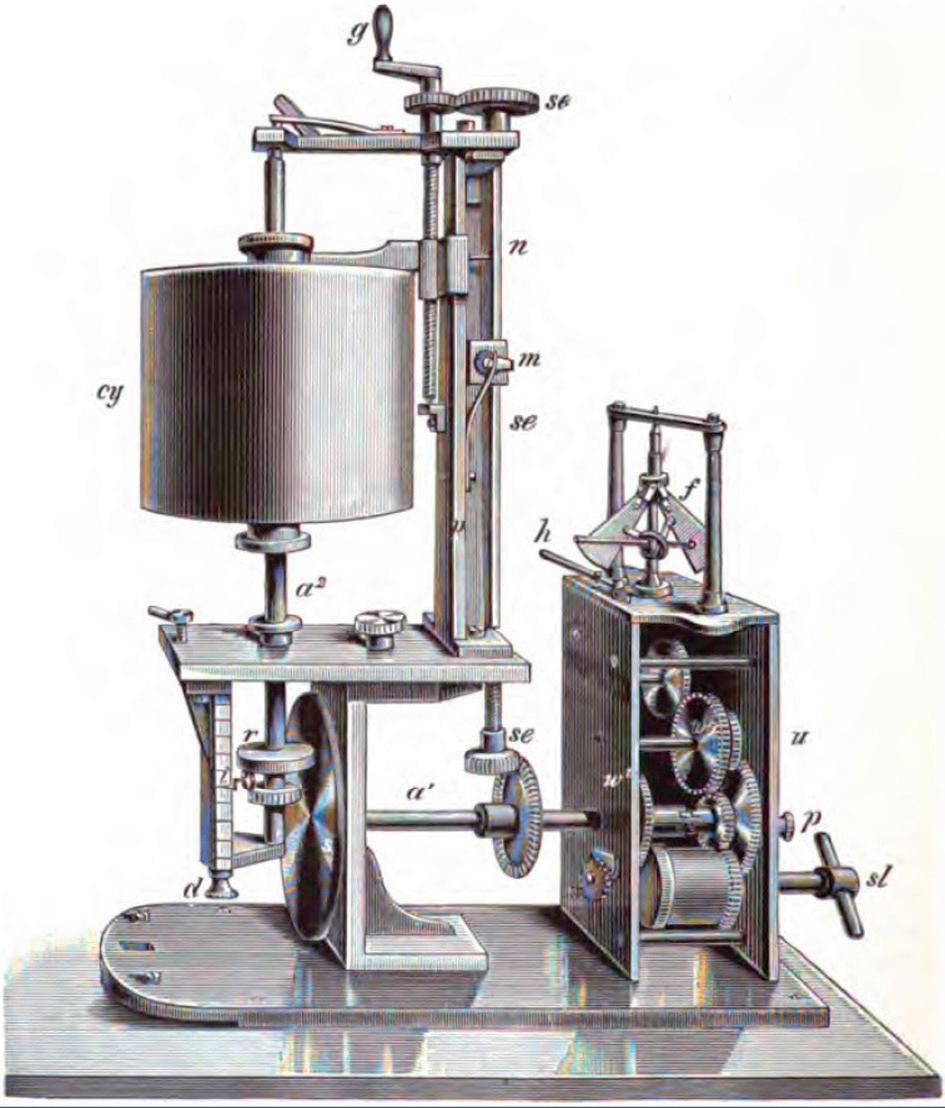
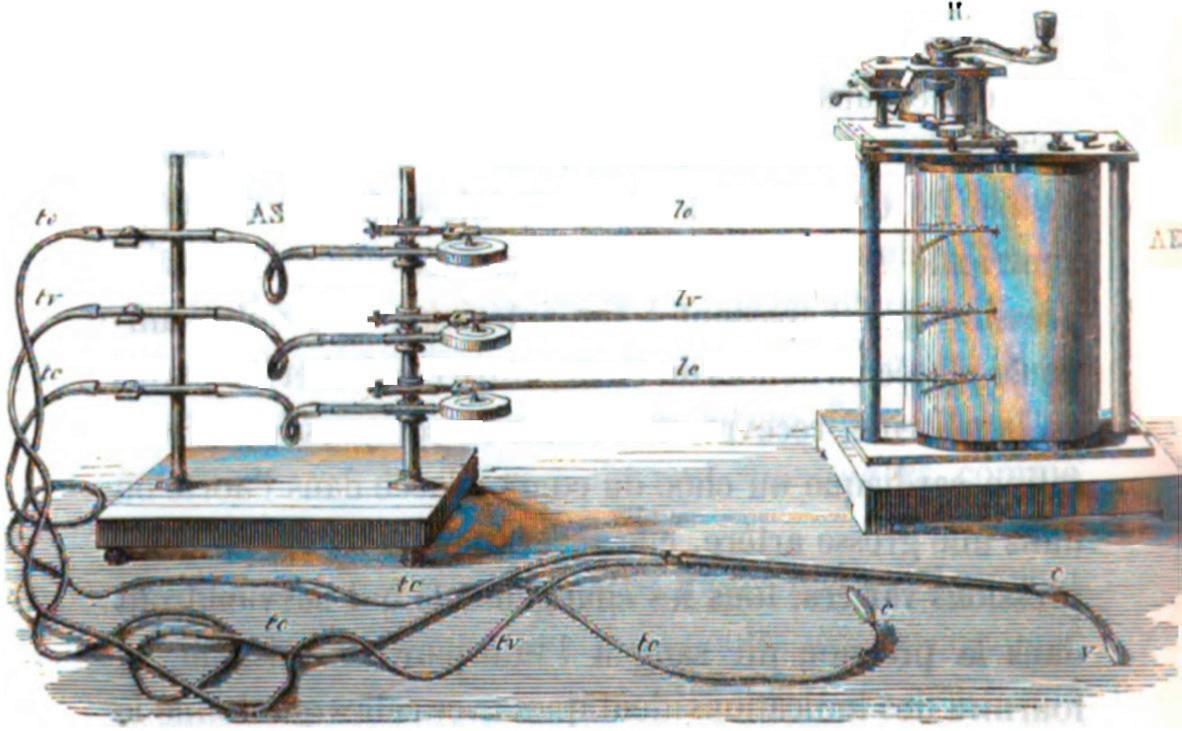
All forms of physiological recording depend on tracing the data on a medium at an even pace over time. Consequently, all of the earliest polygraphs used a mechanism that moved the medium at a reliable and prescribed speed. The first of these was the “kymographion,” a clockwork mechanism for recording data at a uniform speed (Figure 1.1), and was the basis for the electric kymograph used on analog polygraphs until the advent of computer polygraphs in the 1980s.3 A similar method was concurrently devised by Marey (1863) and used in medical research until at least 1900 (Figure 1.2).
Ludwig’s final design allowed different recording speeds, horizontal or vertical orientation of the drum, and either clockwise or counterclockwise rotation of the drum.
CARDIOVASCULAR MEASURES
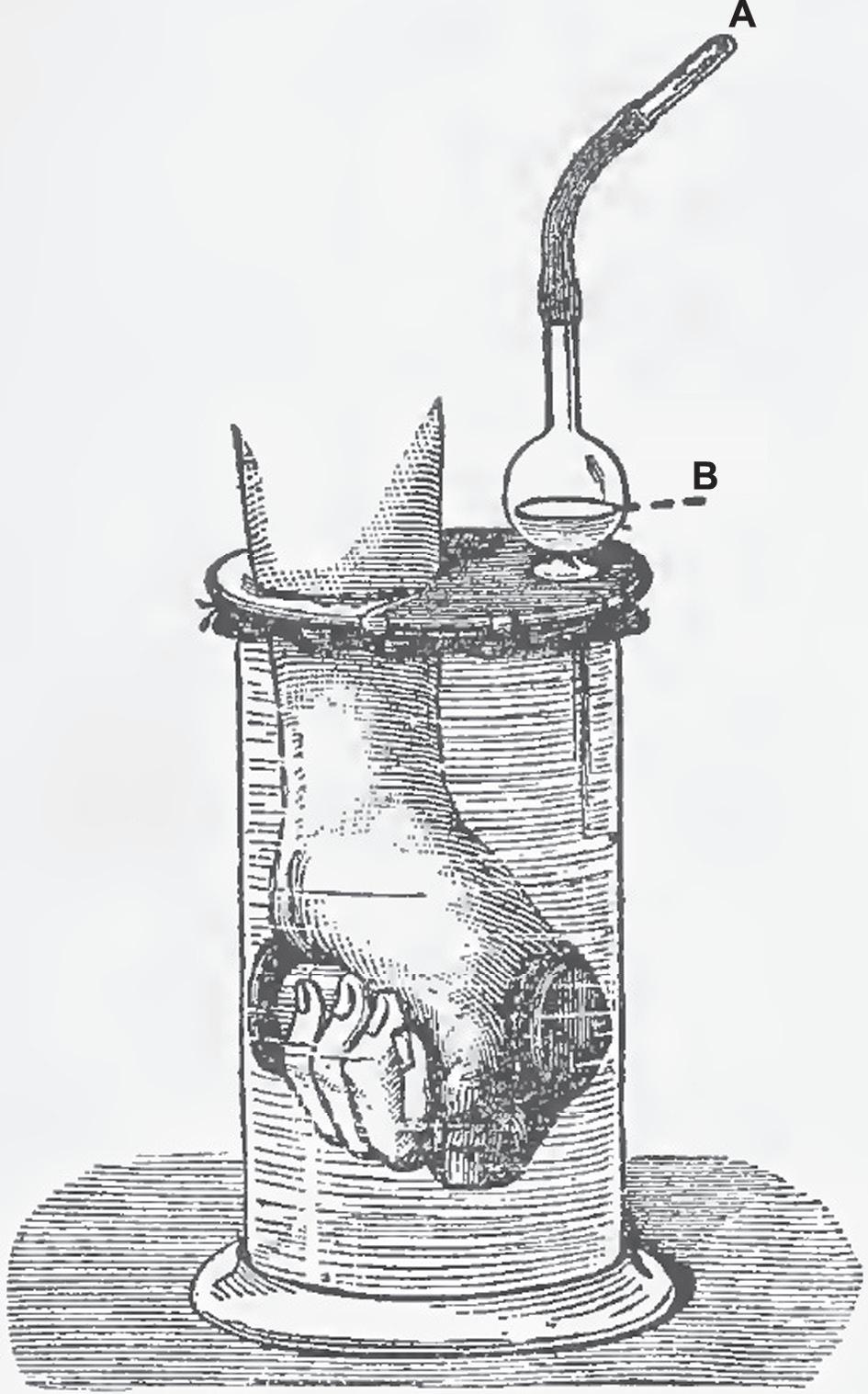
The first phenomenon to find application in deception tests was the change in relative blood volume which accompanies certain emotional states. The Italian criminologist Cesare Lombroso (Lombroso Ferrero, 1911) had observed in the 1880s, along with other researchers, that deception was often detectible by such physiological responses as blushing, perspiring, and changes in respiration. Lombroso used two types of devices in an attempt to detect the act of lying, the hydrosphygmograph and the volumetric glove (Figure 1.3). Changes in pressure were brought about by variations in blood volume in the subject’s hand, an imprecise but serviceable method of
3 Readers might note that the distinction between a kymographion (wave writing) and a polygraph (many writings) is ambiguous. Both recorded multiple channels of physiological data on a moving writing surface. Kymographions were used extensively in medical and psychological research labs for much of the nineteenth century. For example, the research of Angelo Mosso, taken up later, used a kymographion to record respiration and a cardiovascular measure in his research on the physiology of fear in the 1880s. In his survey of experimental devices MacDonald (1899) states that “[t]he term polygraph is in general a French name for an instrument used for a purpose similar to that of the kymographion or kymograph.” Both terms, and devices, were used contemporaneously, and the kymographion is referenced in research well into the 1920s (Lagercrantz, 1927). Polygraph pioneer John Larson occasionally used “polygraph” in his publications as early as 1927, however in his book titled Lying and Its Detection (1932) he makes scant reference to polygraph, and none to the kymographion. In Leonarde Keeler’s 1925 US Patent application he used neither of these terms, though he referred to the “kymograph” as the mechanism for moving chart paper. Neither did Keeler use either term in his first paper on lie detection (Keeler, 1930a). However, later that year Keeler (1930b) introduces the word “Polygraph” in his published account of a series of tests he conducted on police officers. By this time references to kymographion had all but disappeared from the scientific literature.
A later version of the Ludwig kymographion, developed by Carl Leipzig beginning in 1840s. Frank (1911)
FIGURE 1.1
FIGURE 1.2
Marey multichannel recorder for cardiovascular data.
Marey (1863)
Volumetric glove used by Lombroso in his studies on deception detection in the 1880s.
Lombroso Ferrero (1911)
detecting relative blood pressure changes and a forerunner of one of the measures used in modern polygraphs. Lombroso reported success in testing actual criminal suspects, though the method did not enjoy widespread use.
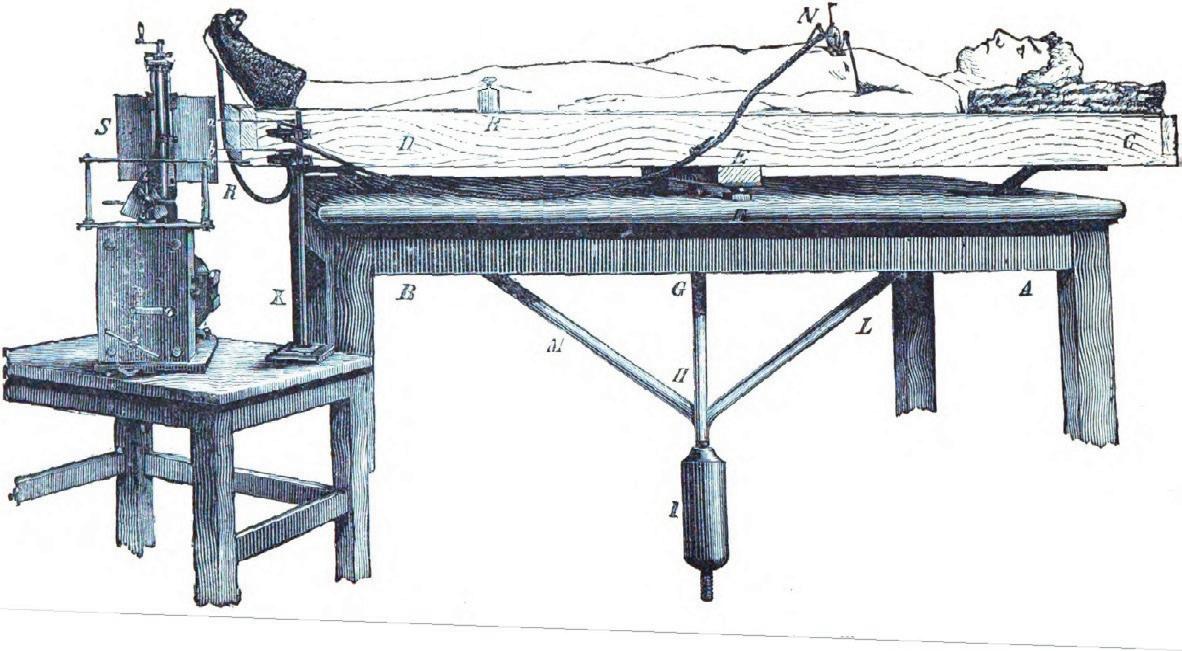
A student of Lombroso, Angelo Mosso (1886) built upon the work of his mentor and demonstrated an interest in respiratory and cardiovascular responses to fear. In the course of his research, he devised a mechanism he called the “scientific cradle.” It was a platform placed on a fulcrum on which a subject would lie. Counterweights could be adjusted until the platform was in perfect balance (see Figure 1.4). Using a kymographion, changes in the balance of the platform were recorded on the rotating smoked drum. With it Mosso was able to detect changes that occurred when he experimentally induced fear in his subjects.
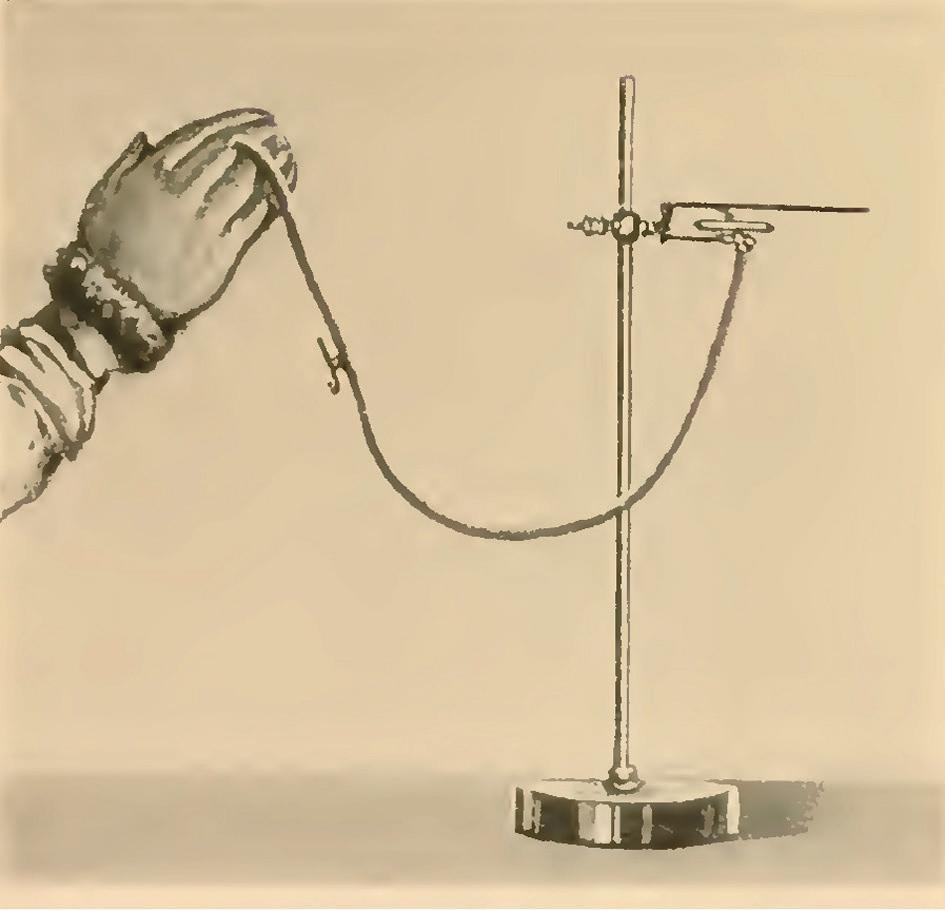
Mosso also experimented with the plethysmograph, and used one of his own design before 1900 (MacDonald, 1899). A more generally available plethysmograph, called the Franck plethysmograph, was manufactured by Verdin in Paris (Figure 1.5).
Psychologist William Marston took a special interest in deception tests and developed one of his own while working at the Harvard Laboratory under the famed Professor Hugo Munsterberg. Using a standard blood pressure cuff, Marston used pressure changes for detecting deception. By 1915 he was applying his technique to criminal suspects (Marston, 1921). The method involved four phases: quiet period, free narrative period where the examinee tells his/her own story uninterrupted, cross examination by the tester in a friendly approach, and a final quiet period. Marston
FIGURE 1.3
FIGURE 1.4
Mosso’s (1886) “berceau scientifique” or scientific cradle. Mosso used this device in his studies of fear. Note the kymographion on the left and a Marey pneumograph (Figure 1.6) on the subject’s chest. The counterweight is depicted to the side of the subject’s left knee.
FIGURE 1.5
Franck plethysmograph manufactured by Verdin. MacDonald (1899)
1 A history of
took a blood pressure measurement intermittently during the four periods, and plotted the readings over time, along with notations as to which of the four periods they were taken. Trends in the plotted data across the four periods were interpreted as indicating truthfulness and deception. It was called the discontinuous blood pressure method.
In his book, The Lie Detector Test (1938), Marston reported a series of cases where he had successfully used his blood pressure method to solve crimes. Much of the text contains sensational claims of accuracy for the method, ranging from 95% to 100% and no inconclusive outcomes, but there was no independent research reported, nor was any to be found in the psychology literature. While on active military duty Marston taught his method to the US Army (Marston, 1921) and wrote that his students had instant success, producing an average accuracy rate of 74.3% on their first try. The then-Lieutenant Marston was called upon to use his amazing technique to resolve a number of espionage cases during World War I, and Marston likewise reported them as successes (Abrams and Ansley, 1980). Marston offered his services to help resolve the guilt or innocence of Bruno Hauptmann, the man convicted and executed for kidnapping the baby of famed aviator Charles Lindbergh, though, as Marston details in his book, political forces ultimately prevented his involvement in the case.4
BREATHING
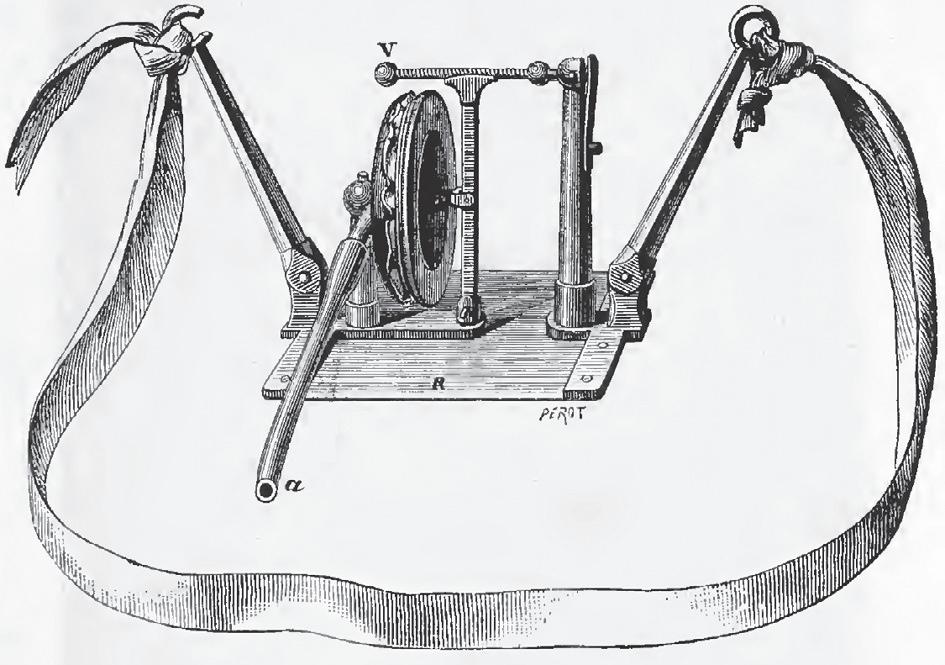
The movement of the chest that accompanies ventilation was investigated first by medical scientists who devised their own instrumentation. One of the earliest among them was Étienne-Jules Marey, a French physiologist in the 1800s. His was a device that used levers and tambours, and was held in place with a strip of silk (Figure 1.6). The device, though serviceable, was replaced by a newer design (Figure 1.7) that was similar to the one found on most modern polygraphs. It had a metal spring encased in rubber tubing, connected to a small rubber hose leading to the recording device. It was held in place around the torso with a small chain. Originally dubbed the Fitz pneumograph (Fitz, 1896), it was also called the Harvard or the Sumner pneumograph (Whitney, 1911).
The first published report of the use of pneumographic recording for the purpose of deception detection was by Benussi (1914). Benussi used changes in the time for inhalation divided by the time for exhalation (I/E ratio) to diagnose deceptive statements from truthful ones. This idea had reportedly been suggested 8 years earlier by German psychologist Gustav Störring (Levitt, 1955). Benussi’s work with I/E ratios were applied more widely to various emotions by Antoinette Feleky (1916), who confirmed that changes in ratios corresponded with emotional responses. Benussi’s seminal work with deception was later extended by Burtt (1918, 1921)
4 Marston is also noted for his creation of the comic strip character Wonder Woman in 1941 under the pseudonym Charles Moulton. Working with illustrator Harry G. Peter, Marston wrote the story scripts until his death in 1947. The comic strip was immensely popular during World War II, and is well known in popular culture even today (Alder, 2007).
pneumograph sensor from the late 1800s.
ELECTRODERMAL
Electrodermal activity (EDA), previously known as the psychogalvanic reflex and the galvanic skin response, has been shown to be associated with emotions since the late 1800s (Féré, 1888). The connection between Luigi Galvani (1737–1798) with historical terms for EDA is an accident of history, as Galvani’s most cited work focused on understanding the relationship between electricity and muscular contractions. Neither Galvani nor his students turned their attention to conductance changes of the skin. Nevertheless, the field of electrophysiology traces its roots to Galvani’s discoveries.
The first recorded suggestion that it may have application to the field of lie detection was made by Dr. Georg Sticker (1897) in his article later translated into English by Binswanger for Carl Jung’s book Studies in Word Association (1919). Indeed, it
FIGURE 1.6
Marey’s
Marey (1876)
FIGURE 1.7
Fitz pneumograph sensor.
Fitz (1896)
would seem that Sticker had anticipated the Concealed Information Test (CIT), one of the modern methods in polygraphy, when he wrote:
In a word—which will be listened to by many without any reaction—whoever takes the meaning of something to heart will react with a strong galvanic skin phenomenon. Whoever is from any cause emotionally roused on looking at a picture will react with a definite increase of the current whilst whoever is unmoved by the picture, in whom it rouses no memory, will have no skin excitation.
Sticker, quoted by Binswanger (1919)
Binswanger also cited the work of Otto Veraguth (1909)5 who used the electrodermal response in his work with word associations. Veraguth’s apparatus was the Deprez-d’Arsonval “deadbeat reflecting galvanometer” (Figure 1.8). Veraguth observed that salient words evoked larger phasic electrodermal responses than did neutral words. He also was the first to make note of the effect of habituation in the electrodermal data, wherein the first neutral words were evoking larger responses than subsequent neutral words. Veraguth did not investigate the use of the electrodermal
1.8
The electrodermal apparatus used by Veraguth (1909)
5 A typographical error in Binswanger’s chapter mistakenly identified Otto Veraguth as “S. Veraguth,” an error that is often repeated in writings about polygraph history.
FIGURE
response for the purpose of deception detection, though his breakthrough discoveries did find direct bearing on psychophysiological principles that were foundational to polygraphy.
Carl Jung (1919) took to using EDA as an indicator of emotional complexes along with his word-association tests. However, the EDA was slow to be adapted to polygraph applications largely due to problems in devising a method of producing a permanent recording, and the difficulty in the interpretation of the recordings once they were available. It was not a channel recorded with either the Larson apparatus or the initial versions of the Keeler or Lee polygraphs. Marston (1938) reportedly tested the potential of EDA in deception tests for the Army in 1917 in support of the war effort. His writings show that he was unimpressed because “the instrument registers nearly every emotion experienced during the testimony of the subject, and so renders it nearly impossible to distinguish those emotions caused by deception” (Marston, 1921).
As the technology improved, the application of the electrodermal channel in criminal tests found an enthusiastic advocate in the Reverend Walter Summers (1936, 1939). Summers reported a success rate of more than 98% using his “Pathometer,” an electrodermal recorder, though the vast majority of his tests with the device were on students in a laboratory setting. His method entailed constructing a series of test questions and then recording electrodermal response amplitudes during the presentation of the questions. In his 1939 article he referred to relevant questions as “significant questions” and irrelevant questions were “nonsignificant questions.”
Summers used his device and technique on about 50 criminal suspects and he claimed tremendous success, though his criterion for verification of some of them would not stand up to current standards of proof. Unfortunately Father Summers died prematurely in the late 1930s, and interest in his work waned.
FIRST PRECEDENT IN LAW
The most famous case Marston conducted, and perhaps the most significant one involving any kind of lie detection method, was that of James Alphonso Frye. Stern and Krapohl (2003) expanded upon a rather sympathetic portrayal of events Marston reported (1938) in which Marston concluded he was correct in calling Frye truthful. The evidence, however, made quite a different case.
It began with the murder of Dr. Robert Brown, a well-respected physician in Washington DC, on November 27th, 1920. Brown was struck by two bullets shot during a robbery, one of them into Brown’s head, and he died instantly. A suspect matching Frye’s description was seen running from the scene and was not immediately apprehended.
Frye was no stranger to law enforcement. During the time of the shooting of Dr. Brown, the Washington DC police were already looking for Frye for a different robbery, and simultaneously he was being sought by the US Secret Service for a Treasury check fraud. When the police captured Frye, they notified the Secret
Service. Comparison of samples found that the handwriting on the Treasury check matched Frye’s, and he ultimately confessed to a Secret Service agent to forging the signature.
After Frye’s confession to forgery, a Washington DC police inspector told the Secret Service agent that a source had identified Frye for the murder of Dr. Brown. The agent returned to questioning Frye and told him that he would let the forgery case pass if Frye would talk about the murder of Dr. Brown and the other robbery of which they suspected him. Frye acknowledged the robbery but denied the murder. He was incarcerated and questioned over the course of a few more days, and finally admitted to killing Dr. Brown and provided details about the crime. However, he later recanted his confession. Nonetheless, a witness to the crime had positively identified Frye.
Frye’s court-appointed attorneys approached Marston to conduct his lie detection method on Frye, not to exculpate him, but to get him to abandon his claim of innocence in hopes of a better defense against the death penalty. After the test Marston declared Frye truthful to his denials of killing Dr. Brown. The surprised attorneys’ next move was to qualify Dr. Marston an expert so the lie detection results could be introduced at trial. The proffer of the Marston test was witnessed by the jury though the testimony was excluded. Frye was convicted of second degree murder on July 20, 1922. Marston contended that the maneuver in front of the jury, even without Marston’s actual testimony, had saved Frye from a conviction of first degree murder and the death penalty.
Frye’s attorneys filed appeals, most of them based on what they considered a trial court error in excluding Dr. Marston’s deception test. They were not successful, and the case was ultimately taken up to the US Supreme Court. On December 21, 1923, the Supreme Court rendered what became known as the Frye Decision (or General Acceptance Standard), denying Frye’s appeal and setting a standard for the admissibility of scientific evidence that would remain well into the 1990s. Frye served out the rest of his prison sentence in Lorton, Virginia, and was released on parole in 1939. He died in 1953, and owing to his military service in World War I, was interred in Arlington National Cemetery.
Based on an erroneous understanding of the Frye case, some writers have characterized it as being about the polygraph. Marston is frequently cited as a polygraph pioneer, but this is inaccurate. Marston’s deception testing method was quite different from polygraphy. Though he used a cardiovascular measure in the detection of deception, neither Marston’s instrumentation, testing protocol, or method of analysis bear resemblance to polygraphy at any stage of its historical development. It would be more accurate to regard Marston as the developer of an approach competing with the polygraph, a method which like many others was ultimately abandoned. Marston, who for a time was “the best-known psychologist in America” (Alder, 2007), did not contribute meaningfully to the field of polygraphy. Nonetheless, Marston can genuinely be credited with helping capture the public imagination in instrumental lie detection, and paving the way for popular interest in this field.
THE ADVENT OF MULTIPLE RECORDINGS
The use of several psychophysiological indices for deception detection was suggested by the famous Harvard psychologist Hugo Munsterberg (1908), including those that would become the polygraph.6 The real-world use of multiple simultaneous channels of physiological data in deception testing was reported for the first time by Larson (1921). Under the guidance and support of August Vollmer, then-Chief of Police in Berkeley, California, Larson constructed an instrument that simultaneously recorded on a smoked drum chart the respiration wave forms and a second tracing for relative blood pressure and pulse. The recording of respiration patterns was accomplished with a bellows pneumograph, the cardiograph employed an Erlanger sphygmograph, and time was also annotated to allow Larson to engage in response-time investigations. Larson used this device with a relevant-irrelevant test question sequence on actual criminal cases and reportedly solved several crimes.
Perhaps Larson’s earliest and best-known case was reported in his seminal 1921 polygraph article titled Modification of the Marston Deception Test. In this article, Larson advocated for practices quite different from Marston’s, very modern, such as continuous recording of multiple physiological channels, restricting examinee answers to yes and no, question spacing, and asking questions in a monotonic voice.
In the 1921 article Dr. Larson, then a police officer with the Berkeley Police Department, had set about to demonstrate the utility of his approach with the solving of a real crime. In a large hall in which 100 young women lived there had been a series of thefts. Hearsay given to the police investigator pointed to three or four possible suspects, all of whom lived in the building. Larson decided to use his “apparatus” (not yet given a name) to determine if he could find the thief. His testing procedure for that case involved 18 questions, and introductory instructions during which he recorded their physiological reactions.7 He had decided to begin testing
6 Two years later a fictional story appeared by Balmer and MacHarg (1910) called The Man Higher Up. The story’s hero, a detective who was also a psychologist, prevailed upon a research professor to bring a laboratory device to the office of a corporate president who was suspected of a conspiracy of murder and smuggling. The device used a Marey pneumograph and a plethysmograph to record bodily changes on a smoked drum. With the device the hero was able to demonstrate that the suspect recognized objects only the criminal would have associated with the crimes. Physiological tracings printed in the article appeared authentic, suggesting they may have been taken from genuine recordings.
7 Larson (1921) writes “… a control question, or one not concerning the subject under investigation, and yet calculated to stimulate various emotions, was alternated with one pertinent to the investigation.” It is not clear whether Larson’s use of “control question” could be similar to the “control question” introduced by Reid in the 1940s because Larson did not annotate which questions in the list they were. Larson had questions such as: How much is 30 × 40?; Did you at any time lie to shield yourself or others?; and During the past few nights do you remember having dreamed when you might have talked in your sleep? However, Larson’s approach involved comparing the charts of nervous innocent examinees against the suspect’s charts so that he could control for the influences of anxiety, anger, indignation or other emotions unrelated to deception when he interpreted the charts. In contrast, Reid and those who followed used examinees as their own controls, that is, he compared the various chart reactions among the test questions for each examinee by him- or herself.
Exploring the Variety of Random Documents with Different Content