https://ebookmass.com/product/fundamentals-of-computationalneuroscience-3rd-edition-thomas-trappenberg/
Instant digital products (PDF, ePub, MOBI) ready for you
Download now and discover formats that fit your needs...
Neuroscience For Dummies, 3rd 3rd Edition Frank Amthor
https://ebookmass.com/product/neuroscience-for-dummies-3rd-3rdedition-frank-amthor/
ebookmass.com
Fundamentals of Musculoskeletal
Ultrasound
(Fundamentals Radiology) 3rd Edition
https://ebookmass.com/product/fundamentals-of-musculoskeletalultrasound-fundamentals-radiology-3rd-edition/
ebookmass.com
Neuroscience For Dummies 3rd Edition Amthor
https://ebookmass.com/product/neuroscience-for-dummies-3rd-editionamthor/
ebookmass.com
Spiritual Alchemy: From Jacob Boehme to Mary Anne Atwood
Mike A. Zuber
https://ebookmass.com/product/spiritual-alchemy-from-jacob-boehme-tomary-anne-atwood-mike-a-zuber/
ebookmass.com
Synthetic Organic Chemistry and the Nobel Prize, Volume 2
John G. D’Angelo
https://ebookmass.com/product/synthetic-organic-chemistry-and-thenobel-prize-volume-2-john-g-dangelo/
ebookmass.com
The Bubble Universe: Psychological Perspectives on Reality 1st ed. Edition Eugene Subbotsky
https://ebookmass.com/product/the-bubble-universe-psychologicalperspectives-on-reality-1st-ed-edition-eugene-subbotsky/
ebookmass.com
Glaube an dich und werde reich: Die Fortsetzung des Bestsellers "Denke nach und werde reich" (German Edition)
Napoleon Hill
https://ebookmass.com/product/glaube-an-dich-und-werde-reich-diefortsetzung-des-bestsellers-denke-nach-und-werde-reich-german-editionnapoleon-hill/ ebookmass.com
El Duque reacio de Sarah Fiona Miers
https://ebookmass.com/product/el-duque-reacio-de-sarah-fiona-miers/
ebookmass.com
Art Through the Ages - A Concise Global History 4th Edition Fred S. Kleiner
https://ebookmass.com/product/art-through-the-ages-a-concise-globalhistory-4th-edition-fred-s-kleiner/
ebookmass.com
https://ebookmass.com/product/finanzas-corporativas-enfoquecentral-1st-edition-eugene-f-brigham/
ebookmass.com
FundamentalsofComputational Neuroscience
FundamentalsofComputational Neuroscience
ThirdEdition
ThomasP.Trappenberg DalhousieUniversity
GreatClarendonStreet,Oxford,OX26DP, UnitedKingdom
OxfordUniversityPressisadepartmentoftheUniversityofOxford. ItfurtherstheUniversity’sobjectiveofexcellenceinresearch,scholarship, andeducationbypublishingworldwide.Oxfordisaregisteredtrademarkof OxfordUniversityPressintheUKandincertainothercountries
c OxfordUniversityPress2023
Themoralrightsoftheauthorhavebeenasserted
FirstEditionpublishedin2002
SecondEditionpublishedin2010
ThirdEditionpublishedin2023
Impression:1
Allrightsreserved.Nopartofthispublicationmaybereproduced,storedin aretrievalsystem,ortransmitted,inanyformorbyanymeans,withoutthe priorpermissioninwritingofOxfordUniversityPress,orasexpresslypermitted bylaw,bylicenceorundertermsagreedwiththeappropriatereprographics rightsorganization.Enquiriesconcerningreproductionoutsidethescopeofthe aboveshouldbesenttotheRightsDepartment,OxfordUniversityPress,atthe addressabove
Youmustnotcirculatethisworkinanyotherform andyoumustimposethissameconditiononanyacquirer
PublishedintheUnitedStatesofAmericabyOxfordUniversityPress 198MadisonAvenue,NewYork,NY100106,UnitedStatesofAmerica
BritishLibraryCataloguinginPublicationData Dataavailable
LibraryofCongressControlNumber:2022943170
ISBN978–0–19–286936–4
DOI:10.1093/oso/9780192869364.001.0001
PrintedintheUKby
AshfordColourPressLtd,Gosport,Hampshire LinkstothirdpartywebsitesareprovidedbyOxfordingoodfaithand forinformationonly.Oxforddisclaimsanyresponsibilityforthematerials containedinanythirdpartywebsitereferencedinthiswork.
Preface
Computationalneuroscienceisstillayounganddynamicallydevelopingdiscipline, andsomechoiceoftopicsandpresentationstylehadtobemade.Thistextintroduces somefundamentalconcepts,withanemphasisonbasicneuronalmodelsandnetwork properties.Incontrasttothecommonresearchliterature,thisbookistryingtopaint thelargerpictureandtriestoemphasizesomeoftheconceptsandassumptionsfor simplificationsusedinthescientifictechniqueofmodelling.
ComputationalneuroscienceandArtificialIntelligence(AI)areclosecousins. ThetermAIissaidtobeinventedattheDartmouthworkshopin1956withmany famousparticipantsincludingpsychiatristRossAshby,theneurophysiologistWarren McCullochwhocreatedoneofthefirstmathematicalneuronmodels,andArthur Samuel,oneofthepioneersinreinforcementlearning.Computationalmodelsof neuralsystemssuchasmodelsofneuronsaremucholder,butconnectinglearningand cognitivesystemscreatedexcitementoverthepossibilitytobetterunderstandmind. Theinventionoflearningmachineshasrevolutionizedmanyapplicationsasrecently seeninthedramaticprogressofmachinevisionandnaturallanguageprocessing throughdeeplearning.
Whiletherehasbeenmuchrecentprogressinmachinelearning,researchersinthis areaoftenwonderhowthebrainworks.Itsometimesseemsthatscientificprogress oscillatesbetweencomputationalneuroscienceandmachinelearning.Forexample, theprogressofneuralnetworksandstatisticallearningtheoryinthelater1980sand early1990swasfollowedbyenormousactivitiesincomputationalneuroscienceinthe 1990sandearly2000s.Forthelastdecade,deeplearninghasoccupiedanexplosive growthinmachinelearninganddatascience,andnowthetimeseemsripeformore renewedinterestinlookingmorecloselyatthebrainforinspirationstogodeeper.This isfuelledbytheincreasingrealizationoflimitationsofdeeplearning,inparticular withthechallengeoflearningsemanticknowledgewithlimiteddataandtheabilityto transferknowledgetosituationsthatarenotdirectlyrepresentedinthelearningset.
Inthisneweditionofmybook,Itriedtoincorporatemanyoftherecentlessons fromdeeplearning.Whilethereareexcellentbooksondeeplearning,ouremphasishereistheirconnectiontobrainprocessing.Animportantaspectistherebythe conceptsofrepresentationallearningandcomputationwithuncertainties.Also,Inow includedgatedrecurrentneuralnetworksthatarebecominganimportantfundamental mechanismswhenthinkingaboutbrainprocessing.Whilewewillnotbeabletodive intoalltherecentprogress,Ihopethatthetextwillguidefurtherspecificstudiesand research.Furthermore,itwasimportantformetostreamlinetheexistingtext.Ihope thatIimprovedthereadabilityofsomeofthetextandevenremovedpartsthatseem lessrelevanttostudythemostbasicfundamentals.
Thethemesincludedinthisbookarechosentoprovidesomepaththroughthe differentlevelsofdescriptionofthebrain.Chapter1providesahigh-leveloverview andsomefundamentalquestionsaboutbraintheories,abriefdiscussionaboutthe
roleofmodelling,andsomebasicneurosciencefactsthatareusefultokeepinmind forlateruse.WealsoreviewtheessentialscientificprogramminginPythonandthe basicmathematicalandstatisticalconceptusedinthebook.Chapters2–4focuson basicmechanismsandmodellingofsingleneuronsorpopulationaverages.Thisstarts fromafairlydetaileddiscussionofchangesinthemembranepotentialsthroughion channels,spikegenerations,andsynapticplasticity,withincreasinglyabstractionsin thefollowingchapters.Chapters5–7describetheinformation-processingcapabilities ofbasicnetworks,includingfeedforwardandcompetitiverecurrentnetworks.Thelast partofthebookdescribessomeexamplesofcombiningsuchelementarynetworksas wellassomeexamplesofmoresystem-levelmodelsofthebrain.
Mostmodelsinthebookarequitegeneralandareaimedatillustratingbasic mechanismsofinformationprocessinginthebrain.Intheresearchliterature,thebasic elementsreviewedinthisbookareoftencombinedinspecificwaystomodelspecific brainareas.Ourhopeisthatthestudyofthebasicmodelsinthisbookwillenablethe readertofollowsomeoftherecentresearchliteratureincomputationalneuroscience.
Whilewetriedtoemphasizesomeimportantconcepts,wedidnotwanttogivethe impressionthatthechosenpathistheonlydirectionincomputationalneuroscience. Therefore,wesometimesmentionconceptswithoutextensivediscussion.Thesecommentsareintendedtoincreasethereader’sawarenessofsomeissuesandtoprovide somekeywordstofacilitatefurtherliteraturesearches.Also,whilesomeexamplesof specificbrainareasarementionedinthisbook,acomprehensivereviewofmodelsin computationalneuroscienceisbeyondthescopeofthistext.Wedonotclaimthatthis bookcoversallaspectsofcomputationalneurosciencenordoweclaimittobethe onlyapproachtothisarea,butwehopethatitwillcontributetothediscussion.
Mathematicalformulas
Thisbookincludesmathematicalformulasandconcepts.Weusemathematicallanguageandconceptsstrictlyaspracticaltoolsandtocommunicateideasincontrastto usingsuchformalismformathematicalproofs.Wetherebytriedtobalancedetailed mathematicalnotationswithreadabilityandcommunicatingthebasicconcepts.From readerswithlessextensivetraininginsuchformalsystemsIaskforpatience.Wedid nottrytoavoidmathematicalformulationssincesuchnotationsallowabrevityin communicationthatwouldbelengthywithplainwrittenlanguage.Thechosenlevelof mathematicaldescriptionsaremainlyintendedtobetranslateddirectlyintoprograms andotherquantitativeevaluations.
Thereisnoreasontobeafraidofformulas,anditisimportanttoseebeyondthe symbolsandtounderstandtheirmeaning.Manymathematicsnotationsareinvented tosimplifydescriptions.Thisincludestheuseofvectorsandmatrices,whichwill drasticallyshortenthespecificationofnetworkmodels.Weprovidereviewchaptersin thefirstpartofthebooktoreviewsuchnotations.Werecommendsometutorialson suchmaterialstoallowstudentstomovebeyondthesetechnicalitiesinthemaintext.
Mostmodelsinthisbookdescribethechangeofaquantitywithtime,suchas thechangeofamembranepotentialaftersynapticinputorsynapticstrengthvalues overtimeduringlearning.Equationsthatdescribesuchchangesarecalleddifferential equations.Acomprehensiveknowledgeofthetheoryofdifferentialequationsisnot requiredforunderstandingthisbook.However,discussingtheconsequencesofspecific
differentialequationsandsimulatingthemwithcomputerprogramsisattheheartof thisbook.Ihopeourtreatmentwillencourageanewlookintoatopicthatsometimes seemsoverwhelmingwhentreatedinspecializedclasses.Wewillspecificallybecome familiarwithasimpleyettellingexampleofadifferentialequation,thatofaleaky integrator.Abasicknowledgeofthenumericalapproachestosolvingdifferential equationsisessentialforthisbookandmanyotherdynamicmodellingapproaches. Thus,wealsoincludeareviewofdifferentialequationsandtheirnumericalintegration.
Anothermathematicaltheory,thatofrandomnumbers,isalsoreviewedinthe thirdchapter.Thelanguageofprobabilitytheoryisveryusefulincomputational neuroscienceandshouldbetaughtinsuchacourse.Inneuroscience(asinother disciplines),weoftengetdifferentvalueseachtimeweperformameasurement,and randomnumbersdescribesuchsituations.Weoftenthinkofthesecircumstancesas noise,butitisalsousefultothinkaboutrandomvariablesandstatisticsinterms ofdescribinguncertainties.Indeed,itcanbearguedthatlearningandreasoningin uncertaincircumstancesisafundamentalrequirementofthebrain.Wewillarguethat mentalfunctionscanbeviewedasprobabilisticreasoning.
Programmingexamples
Whilethisbookincludesafewexamplesofpowerfulanalyticaltechniquestogive thereaderaflavourofsomeofthemoreelaboratetheoreticalstudies,notevery neuroscientisthastoperformsuchcalculationsthemselves.However,studyingsome ofthegeneralideasbehindthesetechniquesisessentialtobeabletogetsupportfrom thosewhospecializeinsuchtechniques.Inparticular,itisinstructivewhenstudying thisbooktoperformsomenumericalexperimentsyourself.Wethereforeincluded anintroductiontoamodernprogrammingenvironmentthatisverymuchsuitedfor manyofthemodelsinneuroscience.Writingprogramsandcreatingadvancedgraphics canbelearnedeasilywithinashorttime,evenwithoutextensivepriorprogramming knowledge.
TheprogramsinthisbookarenowprovidedinPythontoimproveaccessibility andduetoPython’sincreasingimportanceinmachinelearninganddatascience. Whileitwaschallengingtobalanceascientist’sapproachofmakingminimalistand cleanexampleswithcommonprogrammingapproaches,IhopethatIfoundsome balance.Commentsinprogramsareoftenagoodideaincomplexsoftwarepackages. However,thesituationisdifferenthere.Theprogramsarepurposefullykeptshortand theexpectationisthateachlineshouldbereadandunderstoodentirely.Forexample, wethinkthatcommentslike #assigningvaluebtovariablea todescribe thecode a=b shouldnotbenecessary.Instead,thereadershouldstrivetobeableto readthecodedirectly.Commentsintheprogramwerethereforedeliberatelyavoided excepttoexplainsomevariablenamestokeepthevariablenamesshort,andsome commentstostructurethecode.Manypeoplehavedifferentstylesofcoding,andthe styleheretrieddeliberatelytostriveforcompactnessandsimplicity.Whileitmight beanewlanguageforsome,tryingtounderstandeachlineinaprogramwillhelpto masterprogramminginashorttime.
References
Thisbookdoesnotprovideahistoricalaccountofthedevelopmentofideasincomputationalneuroscience.Indeed,extensivereferenceshavebeenavoidedwherepossible toconcentrateondescribingfundamentalideas.Thisishencemoreconsistentwith coursetextbooks.Referencestotheoriginalresearchliteratureareonlyprovidedwhen followingcorrespondingexamplesclosely.Thetextisverymuchaimedatproviding astartingplaceforfurtherstudies,andsearchengineswillnoweasilyprovidefurther directions.
Acknowledgements
ManyfriendsandcolleagueshavecontributedovertheyearstothisbookIamspecificallythankfultoFarzanehSheikhnezhadFard,AlanFine,SteveGrossberg,Alexander Hanuschkin,GeoffreyHinton,AbrahamNunez,KaiTrappenberg,NamiTrappenberg, JasonSatel,MichaelSchmitt,DominicStandage,FumioYamazaki,andSiWu.
5.6Networkswithnon-classicalsynapses
6Associatorsandsynapticplasticity
6.1AssociativememoryandHebbianlearning
6.2Thephysiologyandbiophysicsofsynapticplasticity
6.3MathematicalformulationofHebbianplasticity
6.4Synapticscalingandweightdistributions
6.5Plasticitywithpre-andpostsynapticdynamics 163
IIINETWORKS
7Feed-forwardmappingnetworks
7.1Deeprepresentationallearning
7.3Convolutionalneuralnetworks(CNNs)
8Featuremapsandcompetitivepopulationcoding
8.1Competitivefeaturerepresentationsincorticaltissue
8.2Self-organizingmaps
8.3Dynamicneuralfieldtheory
8.4‘Path’integrationandtheHebbiantracerule ⋄
8.5Distributedrepresentationandpopulationcoding
9Recurrentassociativenetworksandepisodicmemory
9.1Theauto-associativenetworkandthehippocampus
9.2Point-attractorneuralnetworks(ANN)
9.3Sparseattractornetworksandcorrelatedpatterns
9.4Chaoticnetworks:adynamicsystemsview ⋄ 273
9.5TheBoltzmannMachine
9.6Re-entryandgatedrecurrentnetworks 289
IVSYSTEM-LEVELMODELS
10Modularnetworksandcomplementarysystems
10.4Complementarymemorysystems
11MotorControlandReinforcementLearning
11.2Classicalconditioningandreinforcementlearning
I Background
1Introductionandoutlook
Thisintroductorychapterisoutliningthebigpicture.Wedefinethescopeofthe computationalneurosciencediscussedinthisbookandoutlinesomebasicfactsof brainorganizationandprinciplesthatweencounterinlaterchapters.Thischapter includesadiscussionontheroleofscientificmodellingingeneralandinneuroscience specifically.Inaddition,weoutlineahigh-leveltheoryofthebrainasapredictivemodel oftheworld,andweoutlinesomeprinciplesthatwillguidemuchofthediscussions inthisbook.
1.1Whatiscomputationalneuroscience?
Computationalortheoreticalneuroscienceusesdistincttechniquesandasksspecific questionsaimedatadvancingourunderstandingofthenervoussystem.Abriefdefinitionmightbe:
Computationalneuroscienceisthetheoreticalstudyofthebrainusedtouncovertheprinciplesandmechanismsthatguidethedevelopment,organization, informationprocessingandmentalabilitiesofthenervoussystem.
Mostpapersincomputationalneurosciencejournalsfollowoneoftwoquitedifferentprincipledirections.Onedirectionistheuseofcomputationalmethodstoanalyses datasuchassortingspikesortoquantitativelytesthypothesis.Inthiscontext,methods fromAI(ArtificialIntelligence)suchasmachinelearningtechniquesarenowoften includedastoolsfordataanalytics.Wewillencountersuchtechniques,specifically thatofneuralnetworksanddeeplearning.However,ourfocushereislessondescribingdataanalyticsmethodsbutrathertobuildmodelsofbrainfunctionstounderstand itsprocessingcapabilities.Thetypeofcomputationalneurosciencedescribedinthis bookishencemostlysynonymouswiththeoreticalneuroscienceinthatwedevelop andtesthypothesesofthefunctionalmechanismsofthebrain.
Weoftenusecomputersimulationsinourstudies,though‘computational’highlightsmorebroadlyourinterestedinthecomputationalandinformation-processing aspectsofbrainfunctions.Amainfocusinthisbookishencethedevelopmentand evaluationofbrainmodels,ormodelsofspecificfunctionsofthebrain.Theseare importanttosummarizeknowledge,toquantifytheories,andtotestcomputationalhypotheses.Wefocustherebyonfundamentalmechanismsandmechanisticfoundations whichseemtobeunderlyingbrainprocesses.Wealsotrytohighlightsomeemerging principlesofbrain-styleinformationprocessing.Thisbookdoesclaimacomprehensivetheoryofthemind.However,wehopethatlearningthesefundamentalswillbean importantpartoffurtherdevelopments.
1.1.1Embeddingwithinneuroscience
Computationalneuroscienceisaspecializationwithinneuroscience.Neuroscience itselfisascientificareawithmanydifferentaspects.Itsaimistounderstandthenervous system,inparticularthe centralnervoussystem andthespinethatwecallthebrain. Thebrainisstudiedindiversedisciplinessuchasphysiology,psychology,medicine, computerscience,andmathematics.Neuroscienceemergedfromtherealizationthat interdisciplinarystudiesarevitaltofurtherourunderstandingofthebrain.While considerableprogresshasbeenmadeinourunderstandingofbrainfunctions,there aremanyopenquestionsthatwewanttoanswer.Whatisthefunctionofthebrain andhowdoesitachieveitstask?Whatarethebiologicalmechanismsinvolved? Howisitorganized?Whataretheinformation-processingprinciplesusedtosolve complextaskssuchasperception?Howdidthebrainevolve?Howdoesitchange duringthelifetimeoforganisms?Whatistheeffectofdamagetoparticularareasand thepossibilitiesofrehabilitation?Whataretheoriginsofdegenerativediseasesand possibletreatments?Thesearequestionsaskedbyneuroscientistsinmanydifferent subfields,usingamultitudeofdifferentresearchtechniques.
Manytechniquesareemployedinneurosciencetostudythebrain.Thosetechniquesincludegeneticmanipulations,recordingofcellactivitiesinculturedcells, brainslices,opticalimaging;non-invasivefunctionalimaging,psychophysicalmeasurements;andcomputationalsimulations,tonamebutafew.Eachofthesetechniques iscomplicatedandlaboriousenoughtojustifyaspecializationofneuroscientistsinparticulartechniques.Therefore,wespeakofneurophysiologists,cognitivescientists,and anatomists.Itis,however,vitalforanyneuroscientisttodevelopabasicunderstanding ofallmajortechniques,soheorshecancomprehendandutilizethecontributions madewithinthesespecializations.Computationalneuroscienceisarelativenewarea ofneurosciencewithincreasingimportance.Itfillsanimportantroleinquantifying theoriesbasedontheincreasingamountofexperimentaldiscoveries.Abasiccomprehensionofthecontributionthatcomputationalneurosciencecanmakeisbecoming increasinglyimportantforallneuroscientists.
Withincomputationalneuroscienceweoftenusecomputers,althoughotherareas ofneuroscienceusecomputers.Ourmainreasonforusingcomputersisthatthe complexityofmodelsinthisareaisoftenbeyondanalyticaltractability.Forsuch modelswehavetoemploycarefullydesignednumericalexperimentstobeableto comparethemodelstoexperimentaldata.However,wedonotneedtorestrictour studiestothistool.Somemodelsareanalyticallytractableormightbedeliberately simplifiedtobeanalyticallytractable.Suchmodelsoftenprovideadeepandmore controlledinsightintothefeaturesofcertainmechanismsandthereasonsbehind numericalfindings.
Althoughcomputationalneuroscienceistheoreticalbyitsverynature,itisimportanttobearinmindthatmodelsmustbegaugedonexperimentaldata;theyare otherwiseuselessforunderstandingthebrain.Onlyexperimentalmeasurementsofthe realbraincanverify‘what’thebrainactuallydoes.Incontrasttotheexperimental domain,computationalneurosciencetriestospeculate‘how’thebrainoperates.Such speculationsaredevelopedintohypotheses,realizedintomodels,evaluatedanalyticallyornumerically,andtestedagainstexperimentaldata.Also,modelscanoftenbe usedtomakefurtherpredictionsabouttheunderlyingphenomena.
1.2Organizationinthebrain
Mentalfunctionssuchasperceptionandlearningmotorskillsarenotaccomplished bysingleneuronsalone.Thesefunctionsareanemergingpropertyofspecialized networkswithmanyneuronsthatformthenervoussystem.Thenumberofneuronsin thecentralnervoussystemisestimatedtobeontheorderof 1012,anditisdemanding toexploresuchvastsystemsofneurons.Therefore,ratherthantryingtorebuildthe braininallitsdetailonacomputer,weaimtounderstandtheprincipalorganization ofbrainsandhownetworksofneuron-likeelementscansupportandenableparticular mentalprocesses.Integrationofneuronsintonetworkswithspecificarchitecturesseem tobeessentialforsuchskills.Wewillexplorethecomputationalabilitiesofseveral principalarchitecturesofneuralnetworksinthisbook.
Athoroughknowledgeoftheanatomyofthebrainareaswewanttomodelisessentialforanyresearchthatattemptstounderstandbrainfunctions.However,although recentresearchhasrevealedmanyimportantfactsaboutneuralorganization,itisstill oftendifficulttospecifyallthecomponentsofamodelonthebasisofanatomical andphysiologicaldataalone,andplausibleassumptionshavetobemadetobridge gapsintheknowledge.Evenifwecandrawonknowndetails,itisoftenusefulto makesimplifyingassumptionsthatenablecomputationaltractabilityorthetracingof principalorganizationssufficientforcertainfunctionalities.Itisbeyondthescopeof thisbooktodescribeallthedetailsofneuronalorganization,andmorespecialized booksandresearcharticleshavetobeconsultedforspecificbrainareas.Theaimof thefollowingsectionistooutlinealargevarietyoffactsmainlytoraiseawarenessof themanyfactorsofstructuresandorganizationsinthebrain.Incomputationalneurosciencewehaveaconstantstrugglebetweenincorporatingasmanydetailsaspossible whilekeepingmodelssimpletoilluminatetheprinciplesbehindbrainfunctions.We hopethatthissectionwillencouragemorespecificstudiesofbrainanatomy.
1.2.1Levelsoforganizationinthebrain
Modelsincomputationalneurosciencecantargetmanydifferentlevelsofdescriptions. Thisinitselfisaconsequenceofthefactthatthenervoussystemhasmanylevelsof organizationonspatialscalesrangingfromthemolecularlevelofafewAngstrom (1 ˚ A=10 10m),tothewholenervoussystemonthescaleofoverametre.Biological mechanismsonalltheselevelsareimportantforthebraintofunction.
DifferentlevelsoforganizationinthenervoussystemareillustratedinFig.1.1. Animportantstructureinthenervoussystemistheneuron,whichisacellthat isspecializedforsignalprocessing.Dependingonexternalconditions,neuronsare abletogenerateelectricpotentialsthatareusedtotransmitinformationtoother cellstowhichtheyareconnected.Mechanismsonasubcellularlevelareimportant forsuchinformationprocessingcapabilities.Neuronsusecascadesofbiochemical reactionsthathavetobeunderstoodonamolecularlevel.Theseinclude,forexample, thetranscriptionofgeneticinformationwhichinfluencesinformation-processingin thenervoussystem.Manystructureswithinneuronscanbeidentifiedwithspecific functions.Forexample,mitochondriaarestructuresimportantfortheenergysupplyin thecell,andsynapsesmediateinformationtransmissionbetweencells.Thecomplexity ofasingleneuron,andevenisolatedsubcellularmechanisms,makescomputational
Levels of Organization
studiesessentialforthedevelopmentandverificationofhypotheses.Itispossibletoday tosimulatemorphologicallyreconstructedneuronsingreatdetail,andtherehasbeen muchprogressinunderstandingimportantmechanismsonthislevel. CNS System Maps
map
Compartmental model
Fig.1.1 Somelevelsoforganizationinthecentralnervoussystemondifferentscales[adapted fromChurchlandandSejnowski, Thecomputationalbrain,MITPress(1992)].
However,singleneuronscertainlydonottellthewholestory.Neuronscontacteach otherandtherebycomposenetworks.Asmallnumberofinterconnectedneuronscan exhibitcomplexbehaviourandenableinformation-processingcapabilitiesnotpresent inasingleneuron.Understandingnetworksofinteractingneuronsisamajordomainin computationalneuroscience.Networkshaveadditionalinformation-processingcapabilitiesbeyondthatofsingleneurons,suchasrepresentinginformationinadistributed way.Anexampleofabasicnetworkistheedgedetectorformedfromacentre-surround neuronasproposedbyHubbleandWiesel.Theillustratedlevelsabovethelevellabelled‘Networks’inFig.1.1arealsocomposedofnetworks,yetwithincreasingsize andcomplexity.Anexampleontheleveltermed‘Maps’inFig.1.1isaself-oganizing topographicmap,whichispartofanimportantdiscussioninthisbook.
Theorganizationdoesnotstopatthemaplevel.Networkswithaspecificarchitectureandspecializedinformation-processingcapabilitiesarecomposedintolarger structuresthatareabletoperformevenmorecomplexinformation-processingtasks. System-levelmodelsareimportantinunderstandinghigher-orderbrainfunctions.The centralnervoussystemdependsstronglyonthedynamicinteractionofmanyspecializedsubsystems,andtheinteractionofthebrainwiththeenvironment.Indeed,wewill seelaterthatactiveenvironmentalinteractionsareessentialforbraindevelopmentand
function.
Althoughanindividualresearchertypicallyspecializesinmechanismsofacertainscale,itisimportantforallneuroscientiststodevelopabasicunderstandingand appreciationofthefunctionalitiesofdifferentscalesinthebrain.Computationalneurosciencecanhelptheinvestigationsatalllevelsofdescription,anditisnotsurprising thatcomputationalneuroscientistsinvestigatedifferenttypesofmodelsatdifferent levelsofdescription.Computationalmethodshavelongcontributedtocellularneuroscience,andcomputationalcognitiveneuroscienceisnowarapidlyemergingfield.The contributionsofcomputationalneuroscienceare,inparticular,importanttounderstand non-linearinteractionsofsubprocesses.Furthermore,itisimportanttocomprehend theinteractionsbetweendifferentlevelsofdescription,andcomputationalmethods haveprovenveryusefulinbridgingthegapbetweenphysiologicalmeasurementsand behaviouralcorrelates.
1.2.2Large-scalebrainanatomy
Thenervoussystemisdistributedthroughoutthewholebody.Someoftheperipheral nervoussystemincludesensorssuchastouchsensorsorsensorsforauditorysignals. Someofthosesensorsliketheeyesareinthemselvesalreadyhighlysophisticated neuralsystems,andthebrainstemalreadyprocessessensorysignalstoproducefast responsessuchasreflexes.Ofcourse,itisclearthatmorecomplexinformationprocessingcanbeachievedwiththeaddedcomplexityofthecentralnervoussystemthat weusuallycallthebrain(Fig.1.2).Thebrainitselfhasalotofstructureinitself, suchassubcorticalmidbrainareasthatincludestructuresthatwewillmentionlikethe basalgangliaorthethalamus.Evenwithinthecortexwecaneasilydistinguishareas ofthepaleocortexandarchicortex,whichincludestructuresliketheamygdala,the secondaryolfactorycortex,andthehippocampalformation.Thesecorticalstructures havemostlythreeorfourlayersofcortexcomparedtothesixlayersoftheneocortex thatcoversetheoutsideofthemammalianbrain.Asthenameindicates,theneocortex seemsphylogeneticallynewerthanthearchicortexandthepaleocortex,meaningthat theneocorrtexdevelopedlaterduringevolution.
Whiletheneocortexlooksmorehomogeneous,regionsoftheneocortexarecommonlydividedintofourlobesasillustratedinFig.1.2B,theoccipitallobeattherearof thehead,theadjacentparietallobe,thefrontallobe,andthetemporallobesattheflanks ofthebrain.Furthersubdivisionscanbemade,basedonvariouscriteria.Forexample, atthebeginningofthetwentiethcenturytheGermananatomistKorbinianBrodmann identified52corticalareasbasedontheircytoarchitecture,thedistinctiveoccurrence ofcelltypesandarrangements,whichcanbevisualizedwithvariousstainingtechniques.Brodmannlabelledtheareashefoundwithnumbers,asshowninFig.1.2B. Someofthesesubdivisionshavesincebeenrefined,andlettersfollowingthenumber arecommonlyusedtofurtherspecifysomepartofanareadefinedbyBrodmann. Brodmann’scorticalmapis,however,nottheonlyreferencetocorticalareasusedin neuroscience.Othersubdivisionsandlabelsofcorticalareasarebased,forexample, onfunctionalcorrelatesofbrainareas.Theseincludebehaviouralcorrelatesofcortical areasasrevealedbybrainlesionsorfunctionalbrainimaging,aswellasneuronal responsecharacteristicsidentifiedbyelectrophysiologicalrecordings.
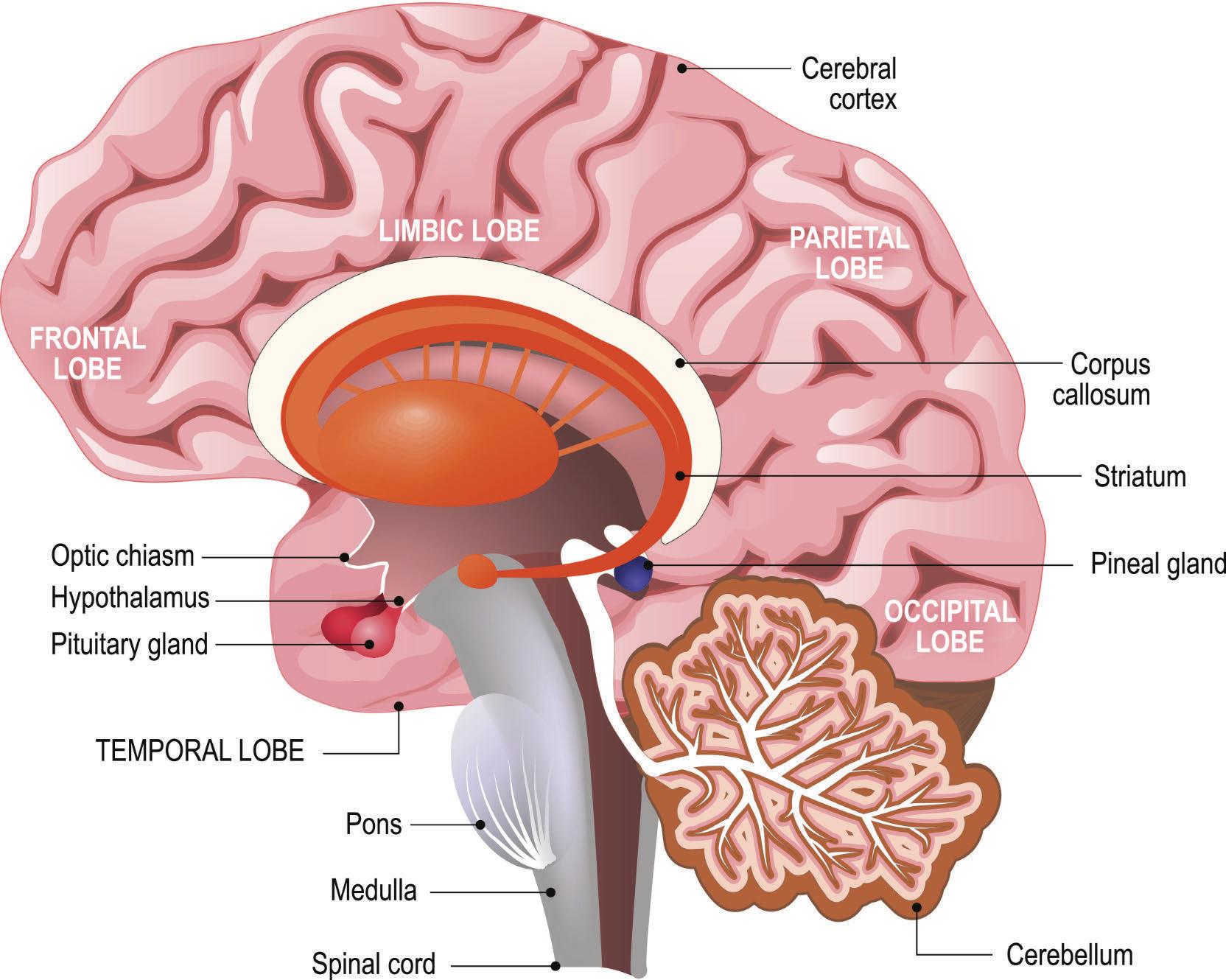
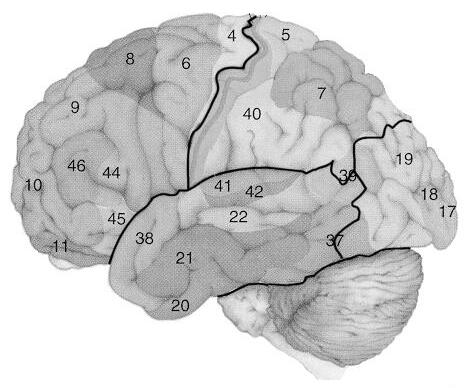
Fig.1.2 Outlineofthelateralviewofthehumanbrainincludingtheneocortex,cerebellum,and brainstem.Theneocortexisdividedintofourlobes.ThenumberscorrespondtoBrodmann’s classificationofcorticalareas.Directionsarecommonlystatedasindicatedin1.2B.
Itis,ofcourse,ofmajorinteresttoestablishfunctionalcorrelatesofdifferentcorticalareas,achallengethatdrivesmanyphysiologicalstudies.Wemightspeculatethat thediversefunctionalspecializationwithintheneocortexfoundwithelectrophysiologicalmeasurementsisreflectedinmajorstructuraldifferencesamongthedifferent corticalareastosupportspecializedmentalfunctions.Itisthereforeremarkableto realizethatthisisnotthecase.Instead,itisfoundthatdifferentareasoftheneocortex havearemarkablycommonneuronalorganization.Allneocorticalareashaveanatomicallydistinguishablelayersasdiscussedbelow.Thedifferencesinthecytoarchitecture, whichhavebeenusedbyBrodmanntomapthecortex,areoftenonlyminorcompared totheprincipalarchitecturewithintheneocortex,andthesevariationscannotaccount solelyforthedifferentfunctionalitiesassociatedwiththedifferentcorticalareas. Theneocortexisdifferentinthisrespecttoolderpartsofthebrain,suchasthe brainstem,wherestructuraldifferencesaremuchmorepronounced.Thisisreflected inavarietyofmoreeasilydistinguishablenuclei.Wecanoftenattributespecificlowlevelfunctionstoeachnucleusinthebrainstem.Incontrasttothis,itseemsthatthe cortexisaninformation-processingstructurewithmoreuniversalprocessingabilities thatwespeculateenablemoreflexiblementalabilities.Itisthereforemostinteresting toinvestigatetheinformation-processingcapabilitiesofneuronalnetworkswitha neocorticalarchitecture.
1.2.3Hierarchicalorganizationofcortex
Acommonfeatureofneocortexisthatthereareprimarysensoryareasinwhich basicfeaturesofsensorysignalsarerepresented,whileotherareasseemtosupport morecomplexrepresentationsormentaltasks.Letushighlightthiscommonviewof neocortexwiththeexampleofvision.Theprimaryvisualareathatreceivesmayorinput fromtheeyesliesinthecaudalendoftheoccipitallobeandiscalledV1.Information isthentransmittedtoothervisualareasintheoccipitallobebeforesplittingintotwo majorprocessingstreams,thedorsalstreamalongaparietaltofrontalpathway,and theventralstreamalongthetemporallobe.Ithasbeenarguedthatthedorsalstreamis specificallyadaptedtospatialprocessing,whereastheventralstreamiswellequipped forobjectrecognition.Wewillinvestigateamodelofsuchwhat-and-whereprocessing
Temporallobe Brainstem Cerebellum
laterinthebook.Themainpointhereisthatbrainscientiststrytoidentifyfunctional specificareasandconnectionsbetweentheseareas.
Inordertounderstandhowdifferentbrainareasworktogetheritisimportantto establishtheanatomicalandfunctionalconnectivitybetweenbrainareasinmoredetail. Anatomicalconnectionsarenoteasytoestablishasitisextremelydifficulttofollow thepathofstainedaxonsthroughthebraininbrainslices(includingthebranches thatcanoftenhavedifferentpathways).Thisisadauntingtask,thoughithasbeen doneinisolatedcases.Thereareothermethodsofestablishingconnectivitiesinthe brain.Theseincludetheuseofchemicalsubstancesthataretransportedbytheneurons totargetareasorfromtargetareastotheorigin.Functionalconnectivitypatterns,in whichweareparticularlyinterestedwhenstudyinghowbrainareasworktogether,can alsobeestablishedwithsimultaneousstimulationsandrecordingsindifferentbrain areas.Suchexperimentsshowcorrelationsinthefiringpatternsofneuronsindifferent brainareasiftheyarefunctionallyconnected.Also,somelarge-scalefunctionalbrain organizationscanberevealedbybrain-imagingtechniquessuchasfunctionalmagnetic resonanceimaging(fMRI),whichcanhighlighttheareasinvolvedincertainmental tasks.Suchstudiesestablishedclearlythatdifferentbrainareasdonotworkinisolation. Onthecontrary,manyspecializedbrainareashavetoworktogethertosolvecomplex mentaltasks.
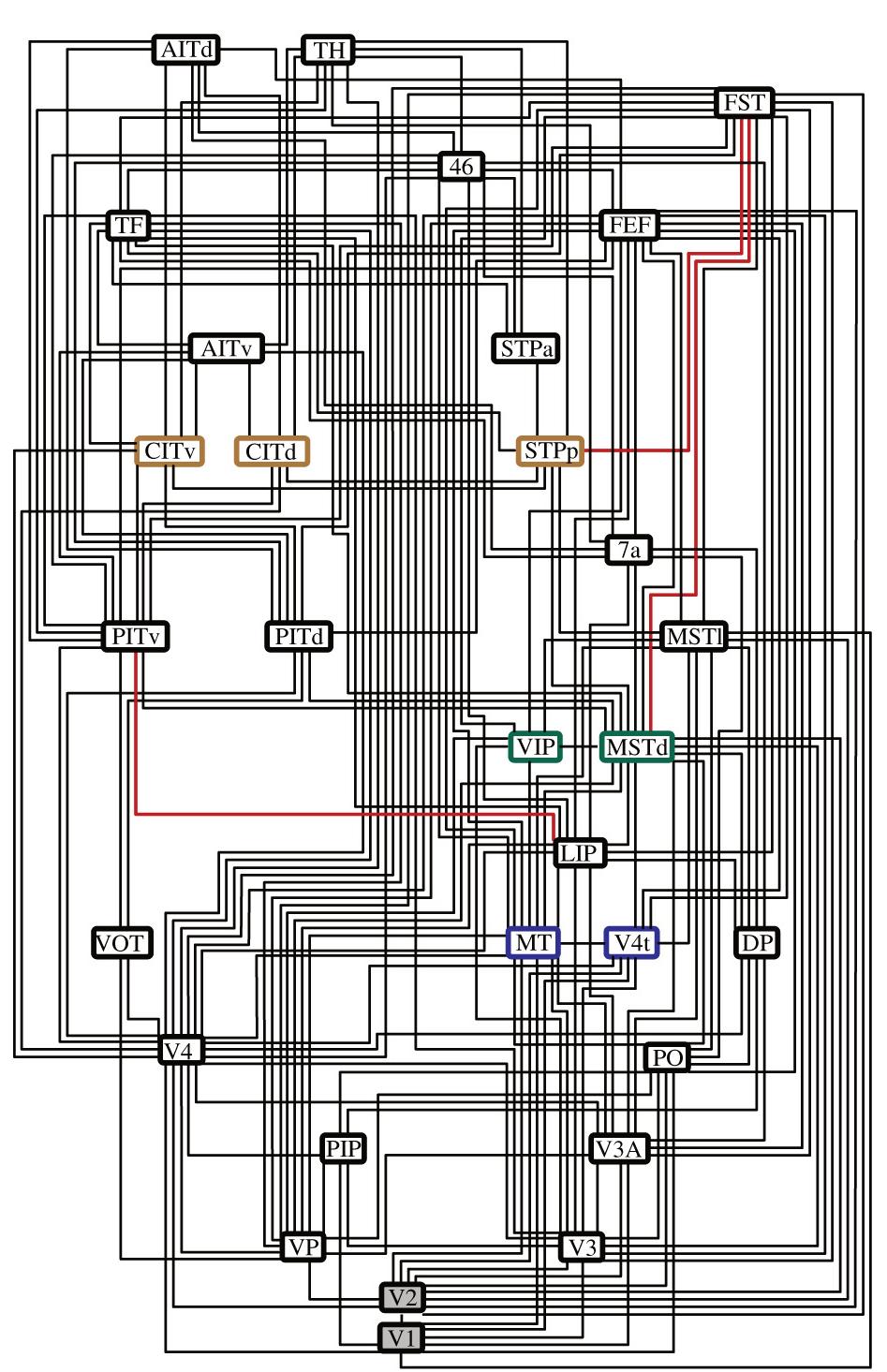
Somescientists,suchasVanEssenandcolleagues,havelongtriedtocompile experimentaldataintoconnectivitymapssimilartotheoneshowninFig.1.3.The specificexamplewasproducedbyClausC.Hilgetag,MarkA.O’Neill,andMalcolmP.Young.Theresearchersusedaneuroinformaticsapproach.Neuroinformatics isspecificallyconcernedwiththecollectionandrepresentationofexperimentaldata inlargedatabasestowhichmoderndataminingmethodscanbeapplied.Hilgetagand colleaguesconsideredanalgorithmthatwouldevaluatemanypossibleconfigurations, andtheyfoundalargesetofpossibleconnectivitypatternsinthevisualcortexsatisfyingmostoftheexperimentalconstraints.EachboxinFig.1.3representsacorticalarea thathasbeendistinguishedfromotherareasondifferentgrounds,typicallyanatomical andfunctional.Thesolidpathwaysbetweentheseboxesrepresentknownanatomical orfunctionalconnections.Theorderfrombottomtothetopindicatesroughlythehierarchicalorderinwhichthesebrainareasarecontactedintheinformation-processing stream,fromprimaryvisualareasestablishingsomebasicrepresentationsinthebrain tohighercorticalareasthatareinvolvedinobjectrecognitionandtheplanningand executionofmotoractions.Theauthorsalsotookthetwobasicvisualprocessingpathwaysintheirrepresentationintoaccount,plottingbrainareasofthedorsalstreamon theleftsideandtheventralstreamontherightside.Notethattherearealsointeractions withinthesepathways.
Interestingly,mostsolutionsofthenumericaloptimizationproblemhavedisplayed someconsistenthierarchicalstructures.Allsolutionsfoundviolatedsomeoftheexperimentalconstraints(dashedlineinFig.1.3),whichisprobablybasedontheinaccuracy ofsomeoftheexperimentalresults.Also,theconnectionsindicatedarenotunidirectional.Itiswellestablishedthatabrainareathatsendsanaxontoanotherbrainarea alsoreceivesback-projectionsfromthestructuresitsendsto.Suchback-projections areofteninthesameorderofmagnitudeastheforwardprojections.Interestingexamples,notincludedinFig.1.3,areso-calledcorticothalamicloops.Thesubcortical
Fig.1.3 Exampleofamapofconnectivitybetweencorticalareasinvolvedinvisualprocessing [reprintedwithpermissionfromC.Hilgetag,M.O’Neill,andM.Young, PhilosophicalTransactionsoftheRoyalSocietyofLondonB 355:71–89(2000)].
structurecalledthethalamuswasinitiallyviewedasthemajorrelaystationthrough whichsensoryinformationprojectstothecortex.However,itisbecomingincreasinglyclearthatthenotionofapurerelaystationistoosimpleastherearegenerally manymoreback-projectionsfromthecortextothethalamuscomparedtotheforwardprojectionsbetweenthethalamusandthecortex.Someestimatesevenindicatea numberofback-projectionsthatexceedtheforwardprojectionstenfold.Thespecific functionalconsequencesofback-projectionsbetweenthethalamusandthecortexas wellaswithinthecortexitselfarestillnotwellunderstood.However,suchstructural featuresareconsistentwithreportsoftheinfluenceofhighercorticalareasoncell activitiesinprimarysensoryareas,forexample,attentionaleffectsinV1.
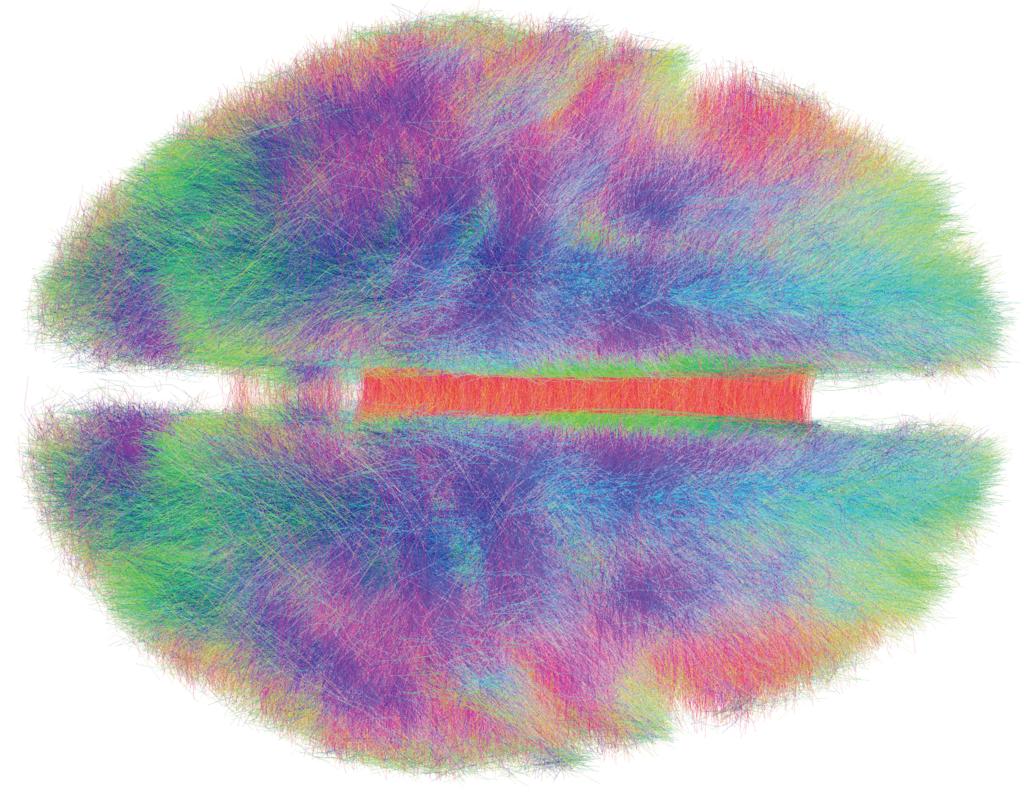
Inthelastdecadetherehavebeenincreasinglyelaborateattemptstoproducea moredetailedwiringdiagramofthebrain,assocalledconnectome.Oneofthefirst fullmappingofallneuronsandconnectionhasbeendoneforaroundwormcalled Caenorhabditiselegans.Thisanimalhadthereforebecomeoneofthebest-studied
modelsystemsinneuroscience.TheEuropeanBlueBrainProjectattemptstomapthe mousebrain,andtherearealsoattemptstomapthehumanbrain.Avisualizationof whitematterconnectionsfrom20subjectsisshowninFig.1.4
Fig.1.4 Exampleofagroup-levelconnectomeofhumanwhitematter.[A.Horn,D.Ostwald,M. Reisert,F.Blankenburg(November2014).‘Thestructural-functionalconnectomeandthe defaultmodenetworkofthehumanbrain’. NeuroImage 102(1):142-{51].
1.2.4Rapiddatatransmissioninthebrain
Fromthesystemlevelviewofthebrainitseemsthattherearemanystagesofprocessing inthebrainsothatachievingevenbasictaskslikeobjectrecognitioncouldtakea considerabletime.Angoodillustrationofhowquicklyinformationcanbetransmitted throughthebrainisprovidedbytheresearchofSimonThorpeandcolleagues.They showedthathumansubjectsareabletodiscriminatethepresenceorabsenceofspecific objectcategories,suchasanimalsorcars,invisualscenesthatarepresentedforvery shorttimes,asshortas20ms.Thepercentageofcorrectmanualresponses,which consistedofreleasingabuttononlywhenananimalwaspresentinacompleximage thatwaspresentedfor20ms,isshownfor15subjectsinFig.1.5Aplottedagainstthe meanreactiontimeforeachsubject.Theexperimentshowssometrade-offbetween reactiontimeandrecognitionaccuracy,buttheimportantpointtonotehereisthehigh levelofperformanceforsuchshortpresentationsoftheimages.
Theabilitytorecognizeobjectswiththeseshortpresentationtimesisnottheonly astonishingresultintheseexperiments.TheauthorsalsorecordedskullEEGsduring theexperiments.Theevent-relatedpotential,averagedoverfrontalelectrodes,isshown inFig.1.5B,separatedforimagepresentationswithandwithoutanimals.Theaverage responseisnotdifferentforthefirst150ms,butbecomesmarkedlydifferentthereafter. Theresponseofthefrontalcortexthereforealreadyindicatesacorrectanswerafter 150ms.Thisisremarkablebecauseforsuchcategorizationtasksweknowthatneural activityhastopassthroughseverallayersofbrainareas.Eachneuronintheprocessing streamnecessaryforthecategorizationpathmustthusbeabletoprocessandpasson informationintimeintervalsoftheorderofonly10–20msorso.