Goodman and Gilman’s The Pharmacological Basis of Therapeutics, 13th Edition (Goodman and Gilman’S the Pharmacological Basis of Therapeutics) 13th Edition, (Ebook PDF)
This book may not be reproduced, in whole or in part, including illustrations, in any form (beyond that copying permitted by Sections 107 and 108 of the U.S. Copyright Law and except by reviewers for the public press), without written permission from the publishers.
Yale University Press books may be purchased in quantity for educational, business, or promotional use. For information, please e-mail sales.press@yale.edu (U.S. office) or sales@yaleup.co.uk (U.K. office).
Set in Janson Oldstyle type by Integrated Publishing Solutions.
Library of Congress Control Number: 2023941995
ISBN 978-0-300-22841-0 (hardcover : alk. paper)
A catalogue record for this book is available from the British Library.
This paper meets the requirements of ANSI/NISO Z39.48-1992 (Permanence of Paper).
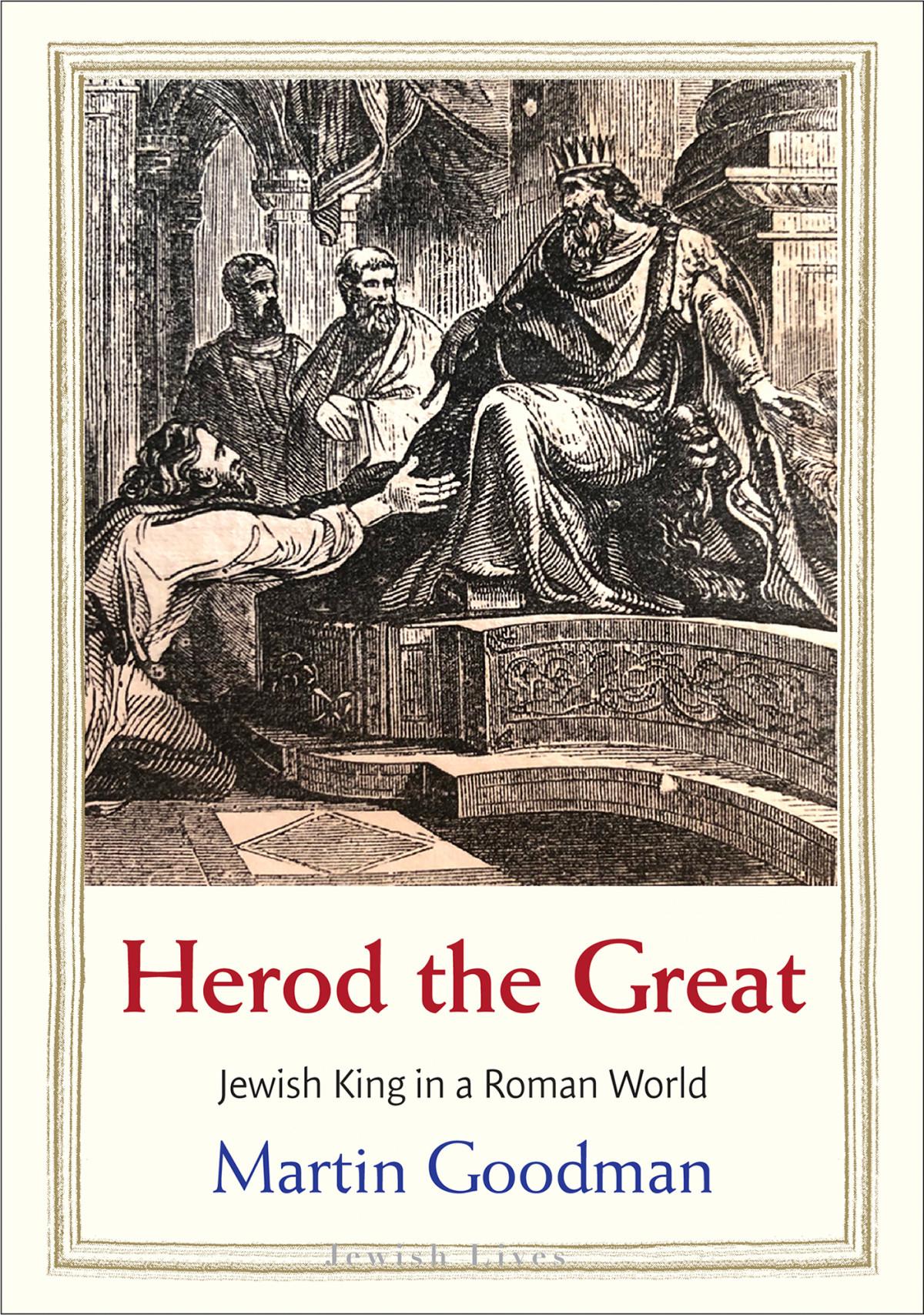
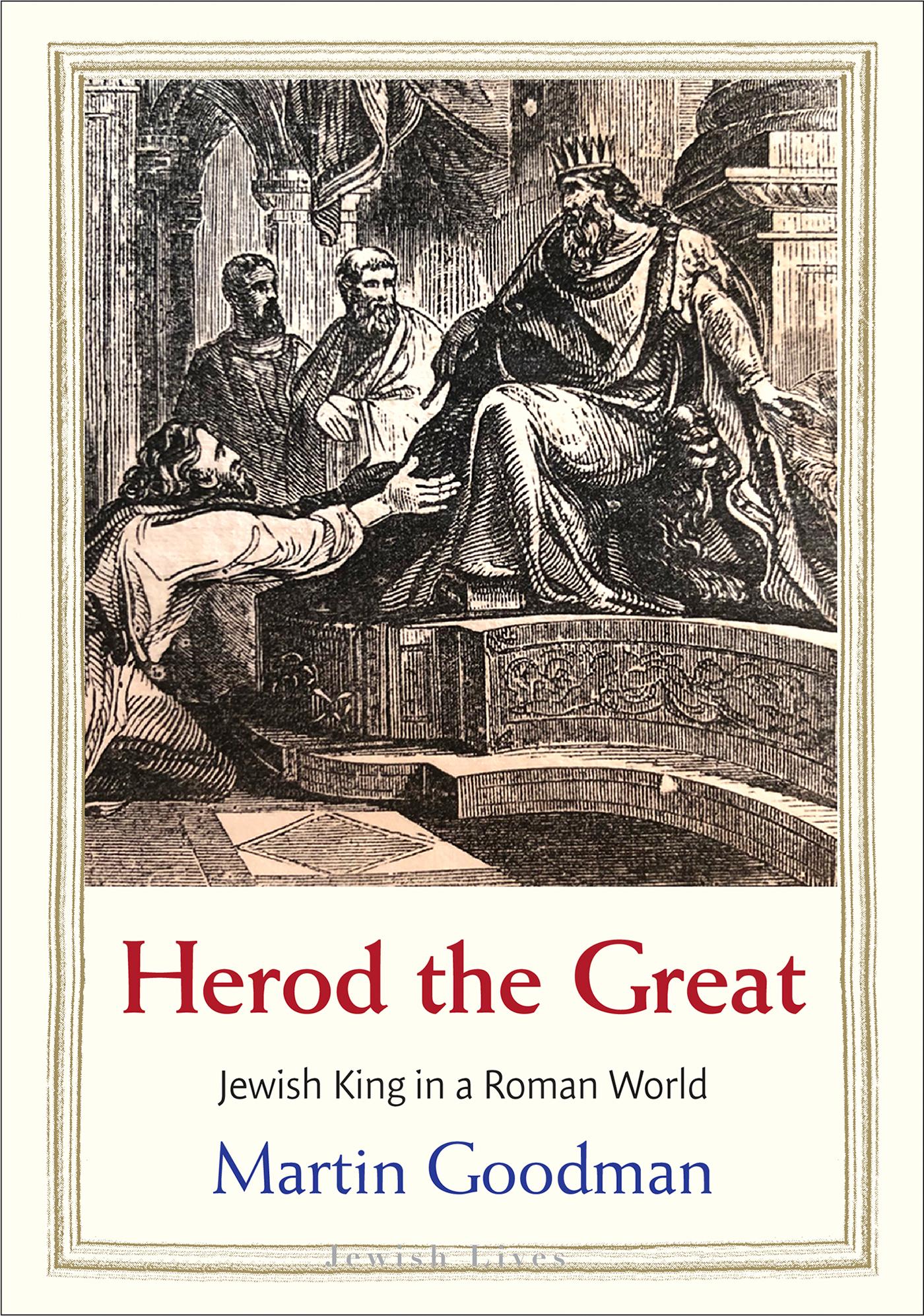
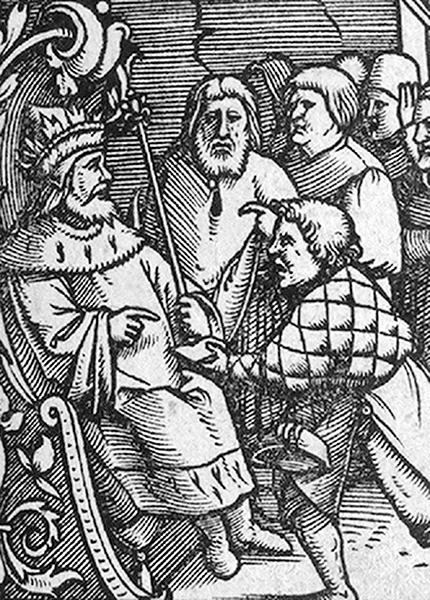
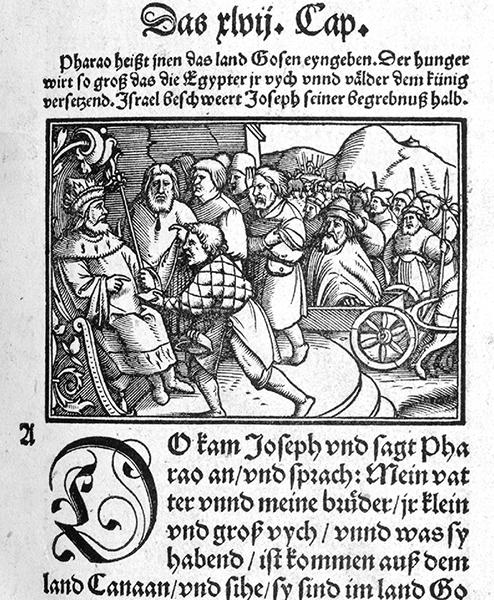
Frontispiece: Herod as pharaoh. The image of pharaoh in a woodblock created by Hans Holbein for the Froschauer Bible, first printed in 1531, used in 1546 to depict Herod. (Zurich, Zentralbibliothek, AW 14, p. xxv [detail])
ALSO BY MARTIN GOODMAN
AHistory ofJudaism
Rome andJerusalem: The ClashofAncientCivilizations
Josephus’s The JewishWar: ABiography
The Ruling Class ofJudaea: The Origins ofthe JewishRevolt Against Rome, A.D. 66–70
The Roman World, 44B.C.–A.D. 180
Judaism in the Roman World: CollectedEssays
Mission andConversion: Proselytizing in the Religious History ofthe Roman Empire State andSociety in Roman Galilee, A.D. 132–212
Jews in a Graeco-Roman World(editor)
The OxfordHandbookofJewishStudies (editor)
CONTENTS
Maps
Prologue: A Jewish Life?
1. A World in Turmoil
2. Overcoming Obstacles
3. A Roman Kingdom
4. Ruling as a Jew
5. A Family Tragedy
Epilogue: From History to Myth
Appendix: Josephus’s Two Narratives
Chronology
Genealogies
Notes
Further Reading
Acknowledgments
Index
MAPS
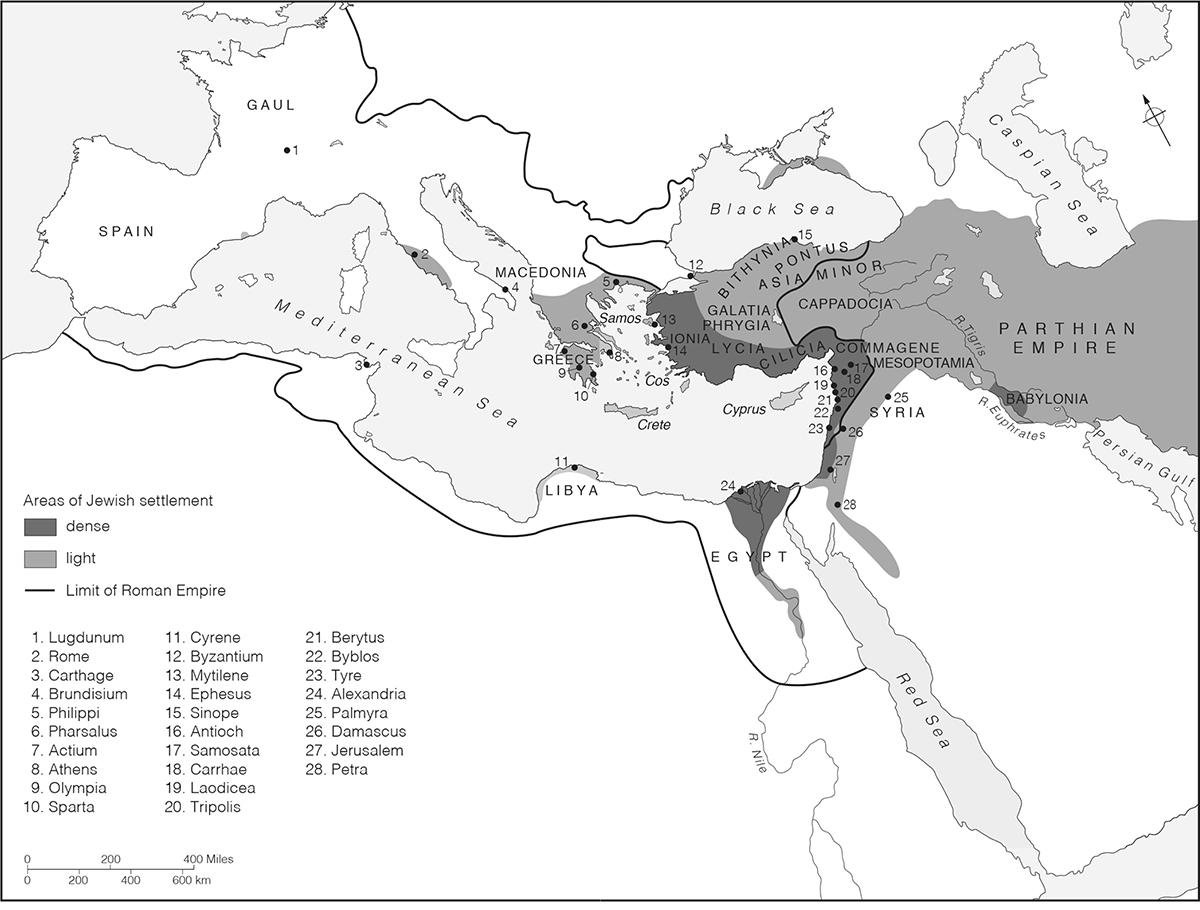
The Jewish world in the time of Herod. (Map drawn by Alison Wilkins)
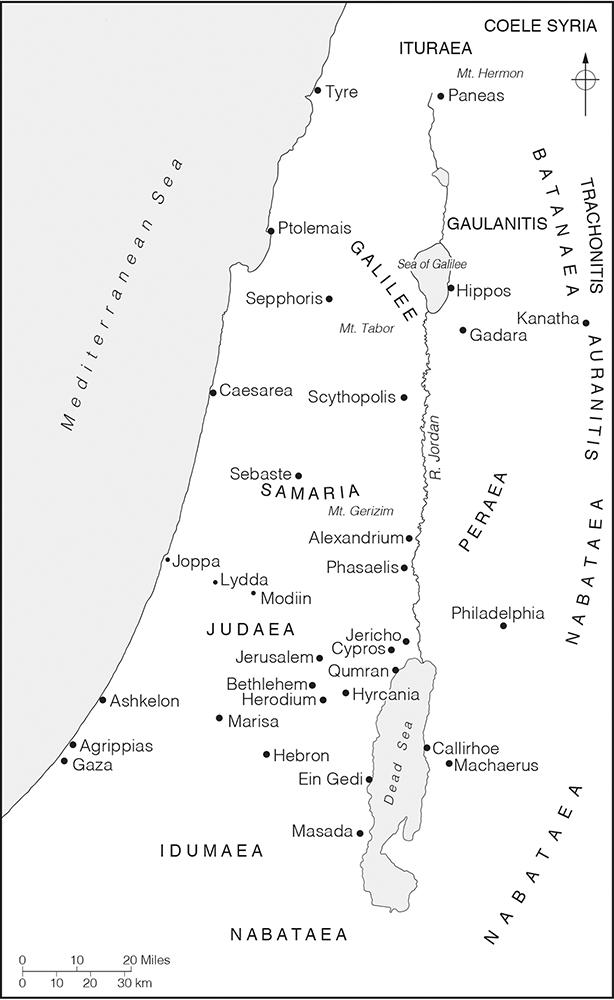
The kingdom of Herod in 4 BCE. (Map drawn by Alison Wilkins)
HEROD THE GREAT
PROLOGUE
AJewishLife?
IN DECEMBER OF 40 BCE Herod stood in the midst of the Senate in Rome—an exotic stranger examined with curiosity by a crowd of Roman aristocrats who debated his future in a language he did not understand. He had come as a suppliant, seeking aid in rescuing his country from the Parthian invaders who had occupied Jerusalem. His family had been left behind in desperate circumstances in a distant region of the world about which the senators knew and cared little. He had brought with him no troops, only a small coterie of companions, and no money. He had been in Rome for less than a week, and he had few acquaintances in the city and even fewer friends. But by the end of the day he had been proclaimed king of Judaea.1
The journey from Jerusalem to Rome had been perilous and exhausting. Herod had escaped his enemies by luck as he fled Jerusalem on horseback, accompanied only by a disorganized rabble. He had been forced to leave his womenfolk behind in the fortress of Masada, and he had been pursued by the dreadful news of the gruesome death of his beloved elder brother. Friends and allies in Nabataean Arabia on whose support he had thought he could rely had deserted him on the way. Only with difficulty had he made his way to the border with Egypt. He had nearly been stymied on arrival in the gleaming city of Alexandria by the great queen Cleopatra, who had expected him to stay with her at least until the safe sailing season in the spring. The voyage north from Egypt toward the southern coast of Asia Minor had indeed been beset by winter
storms, and the ship reached the Aegean only after jettisoning cargo. Herod had acquired on credit a trireme on the island of Rhodes which enabled him to sail more rapidly to Brundisium (modern Brindisi), from which he followed the land route to Rome. At the age of thirty-three, he was making his first visit to Italy. He had no idea what would greet him on his arrival in the city which controlled the Mediterranean world, but he knew that he had to ingratiate himself with those few Roman leaders he had met during their tours of duty in the East if he were ever to return to his homeland.
On first sight the sprawl of brick buildings packed tight on the hills of Rome failed to impress him as he approached the city, passing between the elaborate family tombs that lined the Appian Way. Rome was to be transformed in Herod’s lifetime, but for someone who had seen Alexandria and Antioch, with their regular street plans and magnificent monuments, Rome when Herod first visited did not look like the capital of an empire, despite the city’s wealth and a rash of new public buildings. Yet all the world knew that Rome was where power lay. The serried ranks of hundreds of senators in their broad-striped white togas meeting in the somber surroundings of the Temple of Concord at the west end of the Forum presented an image of dignified entitlement by which strangers were expected to feel intimidated.
At least the senator who ushered him into the assembly was a friend; he had struck up an acquaintance with the man in Antioch a few years previously. Herod listened, only half comprehending, while this friend, Messalla Corvinus, praised him in eloquent Latin as a reliable ally of the Romans. Messalla reminded all present of the loyalty to Rome which had previously characterized Herod’s father, Antipater. He called on the senators to recognize the contrast between Antipater’s reliability and the double-dealing of the Hasmonaean high priest Antigonus, the king installed in Jerusalem by the Parthians, Rome’s most powerful enemy. It was not difficult to arouse indignation against Antigonus. Many in Rome recalled the time in his youth when Antigonus was held captive in the city
precisely to prevent him from interfering in the government of Judaea. Antigonus had more than once absconded to wreak mischief in his homeland, and the senators were incensed that he had spurned Roman authority so blatantly. Now he was declared an enemy of the Roman people.
Rejection of the legitimacy of Antigonus’s rule was simple, but no amount of rhetoric would make a practical difference to his position in Judaea while he had the committed support of the Parthian forces which had brought him to power. The solution put before the Senate was bold. The Senate, assured that “it would be an advantage in their war with the Parthians that Herod should be king,” endorsed unanimously a proposal by Mark Antony to offer Herod the throne.2
Enthusiasm for the proposal had been guaranteed by the status of the proposer. Mark Antony was the most powerful man in the Roman state. No one raised the obvious objection that it was a contravention of Roman custom to recognize a commoner as king over an allied nation rather than a scion of the current royal family. Unanimity was aided by the visible support of the young Octavian Caesar, the only politician in Rome in 40 BCE with the capacity to rival Antony. Only a few months earlier, war had threatened between the two men, but in October they had agreed on an accommodation which satisfied the immediate ambitions of each, and in November they had sealed their pact through the marriage of Antony to Octavian’s sister. Now, as the Senate broke up after its meeting, Antony and Octavian flanked Herod as the new king, a powerful, athletic figure, distinctive in his Greek tunic among the crowd of robed senators, walked in formal procession behind the consuls and other magistrates from the Forum up to the Capitol to place there a copy of the decree which had just been passed and to attend a sacrifice to Jupiter Capitolinus. This dazzling first day of Herod’s reign was rounded off with a feast provided in his honor by Mark Antony.
Everything had happened at extraordinary speed. Within a week Herod had left Italy and set off to take control of the kingdom so unexpectedly granted to him. Three years of arduous military
operations followed before Herod was able to oust Antigonus and gain control of his capital, Jerusalem, but his reign was to last thirtysix years, until his death in 4 BCE. His rule brought him into close contact with many of the most powerful figures in the Roman world. It also transformed the landscape of the land of Israel.
Herod cared greatly about his reputation to posterity, so it is ironic that he is generally remembered not as a great monarch but as a murderous tyrant. With colossal ambition and vast expenditure he created a legacy which has survived up to the present day, including spectacular building projects on the grand scale, among them the monumental reconstruction of the Temple in Jerusalem with the vastly extended platform that still dominates the ancient city. Much is known about his achievements and travails, but posterity has found it harder to judge their significance. Should we marvel at his ability to establish himself as a great king despite his origins as an outsider? Should we admire the powerful personality which enabled him to impose his will on the world around him? Or should we sympathize with Herod as a victim—despite his bravado—of the political storms that overwhelmed the wider world during his reign and the intrigues of his dysfunctional family? How is it possible to empathize with a man who was so prone to the human frailties of jealousy and suspicion that later generations have portrayed him as a monster?
Above all, is it right to consider Herod’s life a Jewish life? Modern visitors to Israel view the extant remains of his building program, from Caesarea to Masada and Herodium, as visible evidence of Jewish rule over the land two thousand years ago, but the buildings themselves lack any distinctively Jewish markers, and none, apart from the Temple and the patriarchal and matriarchal tombs in Hebron, has any obviously Jewish purpose. We have seen that the origins of Herod’s rule lay not in Judaea but in Rome, where he celebrated his appointment to the throne by attending a sacrifice to Jupiter. How did the cities, palaces, pagan temples, and fortresses on which Herod expended so much of his wealth reflect his life as a Jewish king?3
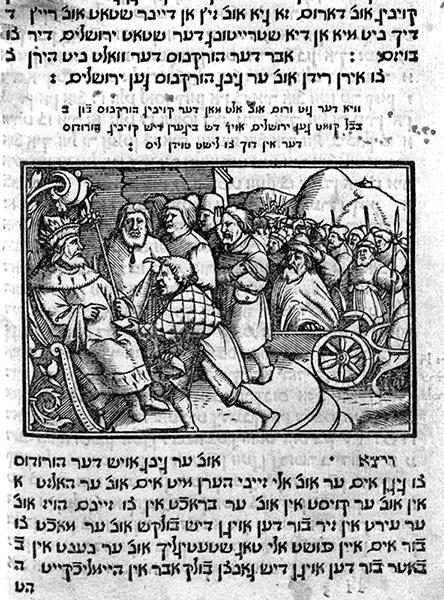
Was he even Jewish? The Jewishness of Herod was questioned by some both in his lifetime and for centuries afterward. When in 1546 a printer in Zurich sought an illustration for an encounter between Herod and the aged Hasmonaean Hyrcanus to enhance a new translation from Hebrew into Yiddish of the standard history of Herod read by Jews in his time, the image he chose to copy from the Froschauer Bible portrayed Herod not as a Jewish king but as a pharaoh.
If, despite these later depictions, we can be certain (as we can) that Herod thought of himself as a Jew, we shall have to ask what sort of a Jew he considered himself to be, and how his Jewish identity shaped his tumultuous life close to the center of events during a revolution which reshaped not just Judaea but the whole Roman world.
Pharaoh greeting Joseph in the Froschauer Bible. (Zurich, Zentralbibliothek, AW 14, p. xxv [detail])
The same image used in a Yiddish translation of Sefer Yosippon printed in 1546 to depict Herod greeting the former high priest Hyrcanus. (National Library of Israel, 8-91 A 549, p. 492 [detail])
Herod's non-Jewish contemporaries often displayed their busts on their coins, but Herod avoided public display of his image in Judaea, and no portrait of him survives from antiquity. Jews in later generations had to use their imaginations to depict the king in light of the literary tradition.
For most Jews in antiquity, the best a modern biographer can provide is an analysis of myths and legends, but in tracking the vicissitudes of Herod’s Jewish life, we have the huge advantage that
his long and tumultuous career is far better documented than that of any other Jew (Jesus apart) before the high Middle Ages. Much of this documentation is ultimately derived from the observations of a close adviser who was also a professional historian and biographer, Nicolaus of Damascus.4
Nicolaus was a Greek intellectual from a distinguished family in Damascus, in Syria. His own successful career as teacher, orator, and diplomat was recorded in a self-glorifying autobiography of which substantial fragments can still be read in excerpts preserved in Byzantium many centuries later by the scholar-emperor Constantine Porphyrogenitus. Nicolaus was a polymath. He composed philosophical and ethnographic works as well as tragedies and comedies. His greatest achievement was a universal history which covered all of world history in 144 books. Already sufficiently distinguished in his youth to be appointed tutor to the children of Antony and Cleopatra in Alexandria in the thirties BCE, in old age Nicolaus settled in Rome and became a friend of the emperor Augustus. Many of the years between his time in Alexandria and Rome were spent in Judaea at the court of Herod.
Nicolaus’s origins in Damascus were probably what led him to focus the early part of his universal history on the empires of the ancient East. But Nicolaus was not himself a Jew, and it was his time in Herod’s court that best explains his interest in the history of the Jews. No manuscripts of his great work survive, but we know that in at least two of the books (books 123 and 124) he presented a narrative of the reign of Herod, down to the king’s death, full of circumstantial detail about events in court. As Herod’s counselor and spokesman for at least the last ten years of the ruler’s life, Nicolaus knew Herod very well. He had access to Herod’s memoirs and he wrote as an insider within Herod’s inner circle, with the raw immediacy of a contemporary observer and the passion of a participant in the destructive intrigues which marred Herod’s last years.5
It is reasonable to wonder how objective such an account is likely to have been. Doubts were raised in antiquity by the Jewish historian
Josephus, through whose own writings Nicolaus’s history is preserved. Josephus, who was born four decades after the death of Herod, relied heavily on Nicolaus’s UniversalHistoryfor his narrative of Herod’s rule, both in the first book of his account of the Jewish war against Rome, composed in the seventies CE, and in the much more extensive narrative he included in his monumental Jewish Antiquities,finished some two decades later, in 93. The Antiquities, which was intended primarily for a gentile Greek-speaking readership, covered in twenty books the history of the Jewish nation from the creation of the world down to his own time. That Josephus was able to devote no less than two and a half of these twenty books to the career of Herod, with numerous stories about his private life and political vicissitudes, was a direct result of the availability of the account composed by Nicolaus almost a century earlier.
For Josephus to rely on material lifted from previous writers was entirely legitimate according to the conventions of Greek historiography within which he wrote. Accusations of a lack of originality were not a concern, and no one expected the historian to indicate his source. But it was common to let loose occasional barbs about the deficiencies of earlier accounts, and Josephus asserted explicitly that Nicolaus produced a partisan picture: Josephus claimed that, since Nicolaus “lived in Herod’s realm and was one of his associates, he wrote to please him and to be of service to him,” and that he was “consistent in exclusively praising the king for his just acts, and zealously apologizing for his unlawful ones.”6
The criticism was plausible, but it clearly did not prevent Josephus from relying heavily on Nicolaus’s narrative of Herod’s career, whatever he thought of his predecessor’s judgment on Herod’s morality. In any case, at least some of Nicolaus’s account of Herod’s life must have been written after the king’s death, when Nicolaus was in Rome with the emperor Augustus as his new patron. No longer beholden to Herod or his family, he was free to write what he knew about the faults as well as the achievements of his former employer.7
Nicolaus could take for granted that his readers would be interested in Herod’s travails because, by the time of his death, the king was a well-known personality both in Rome and across the Greek world. No one could have predicted such fame when he was born in an obscure corner of the southern Levant.
1
AWorldin Turmoil
HEROD WAS BORN around 73 BCE, either in Idumaea or, more probably, in Jerusalem. He died in Jericho almost seventy years later. Born into a world already in turmoil, he witnessed and participated in its wholesale transformation.1
Herod’s life began in the court of the Hasmonaean queen Shelomzion (in Greek, Salome), who ruled what was then an independent Jewish state. From infancy, he lived near the center of power: his father, Antipater, was one of Shelomzion’s trusted ministers. But he was only ten years old when Jerusalem was besieged and captured by Roman forces, and it was in Rome that he was proclaimed king in 40 BCE. The last sixty years of his life were dominated by the power of Rome and the ambitions of individual Roman aristocrats. Thus, although his ability to navigate the rivalry of competing Hasmonaean descendants of Shelomzion provided the basis of Herod’s rise to prominence as a young man, many of the most significant names which will crop up as his story unfolds will be Roman: Pompey and his rivals, Crassus and Julius Caesar; Cassius, one of Caesar’s assassins; Mark Antony and Octavian. Of these, the most influential was to be Octavian, who in 27 BCE adopted the name Augustus and ruled supreme in the Roman world as emperor for the last quarter-century of Herod’s life.
The profound impact of the political imbroglios of Roman senators from faraway Italy on the life of this Jewish youngster living on the eastern edge of the Mediterranean was the result of tectonic shifts in
power during the century before Herod was born. The great Hellenistic empires established across the Near East by the successors of the Macedonian king Alexander the Great at the end of the fourth century BCE had by the time of Herod’s birth almost crumbled away, under pressure from Parthia in the East and Rome in the West. By the start of the first century BCE the Seleucid kingdom, which had once governed from Anatolia (in modern Turkey) to Iran, was largely confined to warring rivals in Syria and Phoenicia (modern Lebanon). The Ptolemaic dynasty in Egypt had been so weakened by internal rivalries that Ptolemy XII Auletes, who succeeded to the throne in 80 BCE after the assassination of his predecessor by an uprising of his subjects in Alexandria, ruled only as a puppet of the Roman state.
There had been nothing accidental about the process of continual territorial acquisition by Rome. Roman imperialism was a product of the constitution of the Roman Republic, under which power was shared by competing aristocrats who were granted limited periods to make a name for themselves after election to a magistracy. In a society which granted prestige above all for victory in war, it was inevitable that opportunities for glory by foreign conquest would be pursued by ambitious politicians during their terms of office. As a result Rome, a small city-state on the plain of Latium near the west coast of Italy, had by 100 BCE conquered Greece and all of Asia Minor, and it was only a matter of time before Judaea also came under Roman control.2
When that moment came, around the time of Herod’s birth, the success of Roman imperialism had begun to put unbearable strain on Rome itself. The political structures of the state, which had proved so effective in stimulating conquest in earlier centuries, would not suffice to keep in subjection a large part of the Mediterranean world. Armies needed to stay in the field for more than an annual campaign. Generals appointed in theory as temporary commanders could win prestige on these extended campaigns and accumulate wealth far exceeding that of the annual magistrates who presided over affairs at Rome. It had become clear
in the decades before Herod’s birth that it would be possible through ruthless determination for one of these generals to achieve total domination of the whole political system of Rome.3
In far-flung regions which had come under Roman sway by the early first century BCE, these Roman governors were already behaving like kings, holding the power of life and death over the inhabitants of the regions they conquered. In other regions Roman control was imposed at one remove by native rulers characterized as friends of Rome. The friendship was of course unequal: in Roman eyes, these allied kings depended for their authority on the approval of the Roman Senate just as much as did provincial governors sent out from Rome. In their search for influential political patrons, client kings were thus drawn inexorably into the maelstrom of fierce competition between senatorial factions which bedeviled Rome in the late republic.4
It was a tricky world for an outsider to navigate, and no one in Judaea at the time of Herod’s birth would have had any idea of its complexity. It is thus unlikely that in the late 70s Shelomzion and her minister Antipater had even heard of the two ambitious generals, Pompey and Crassus, who had just recently come to the forefront of Roman politics through military campaigns in distant lands at the other end of the Mediterranean. Roman forces had yet to be seen in the southern Levant. Shelomzion ruled in Judaea over an independent Jewish state, which in the preceding decades had reached the height of its glory, benefiting from the collapse of Seleucid power to conquer neighboring territories. At the time of Herod’s birth, Judaea was a regional superpower.
Shelomzion had inherited her realm from her husband, Alexander Jannaeus, a scion of the priestly Hasmonaean family which had come to power in Jerusalem through the revolt of the Maccabees in the 160s. The founding myth of the Hasmonaean dynasty portrayed the heroic struggle of Judas Maccabee as a rejection of the Hellenization to which previous high priests in Jerusalem had succumbed, yet by the end of the second century BCE, Hasmonaean rulers had embraced not only the Greek language and Greek
customs but also a characteristically Hellenistic concern for military conquest as justification of royal rule. Thus Alexander Jannaeus styled himself king as well as high priest on his coins and behaved openly as a Hellenistic monarch, devoting almost his entire reign of twenty-seven years to continuous campaigns. By the time of his death in 76 BCE, the hill country west of the Jordan, all the adjoining territory along the Mediterranean coast (apart from Ashkelon, which remained independent), and the whole of Peraea (Transjordan) from north of the Sea of Galilee to the Dead Sea, lay in Hasmonaean hands.5
It was into the service of Alexander Jannaeus that Antipas, the grandfather of Herod, was recruited sometime in the early first century. Designated governor of Idumaea, his ancestral homeland, which had been incorporated into the Hasmonaean realm only a few decades earlier, Antipas avoided the dangerous court politics of Jerusalem by focusing on the administration of a region whose loyalty to the Jewish state could not be taken wholly for granted. There is no evidence that he was drawn into the family intrigues that surrounded his royal master, who, rumor had it, had become king only with the aid of Shelomzion: in 103 Shelomzion was said to have chosen Jannaeus as her spouse after the premature death of her first husband, Aristobulus, who was Jannaeus’s brother. The extent of Shelomzion’s power was demonstrated openly a quarter of a century later by her own accession to the throne after the death of Jannaeus himself.6
The reign of Shelomzion laid bare the extent to which the Jewish state was now administered on Hellenistic lines, despite the role of the Jerusalem Temple as its central institution. Wielding of political power in public by a queen was not a practice found in earlier Jewish tradition, which had excluded women from open display of political authority, but warrior queens had long been found in the Hellenistic world. The great Cleopatra VII, with whom Herod was compelled to negotiate in the early years of his reign, was only the last of a number of powerful women from the Ptolemaic dynasty who ruled