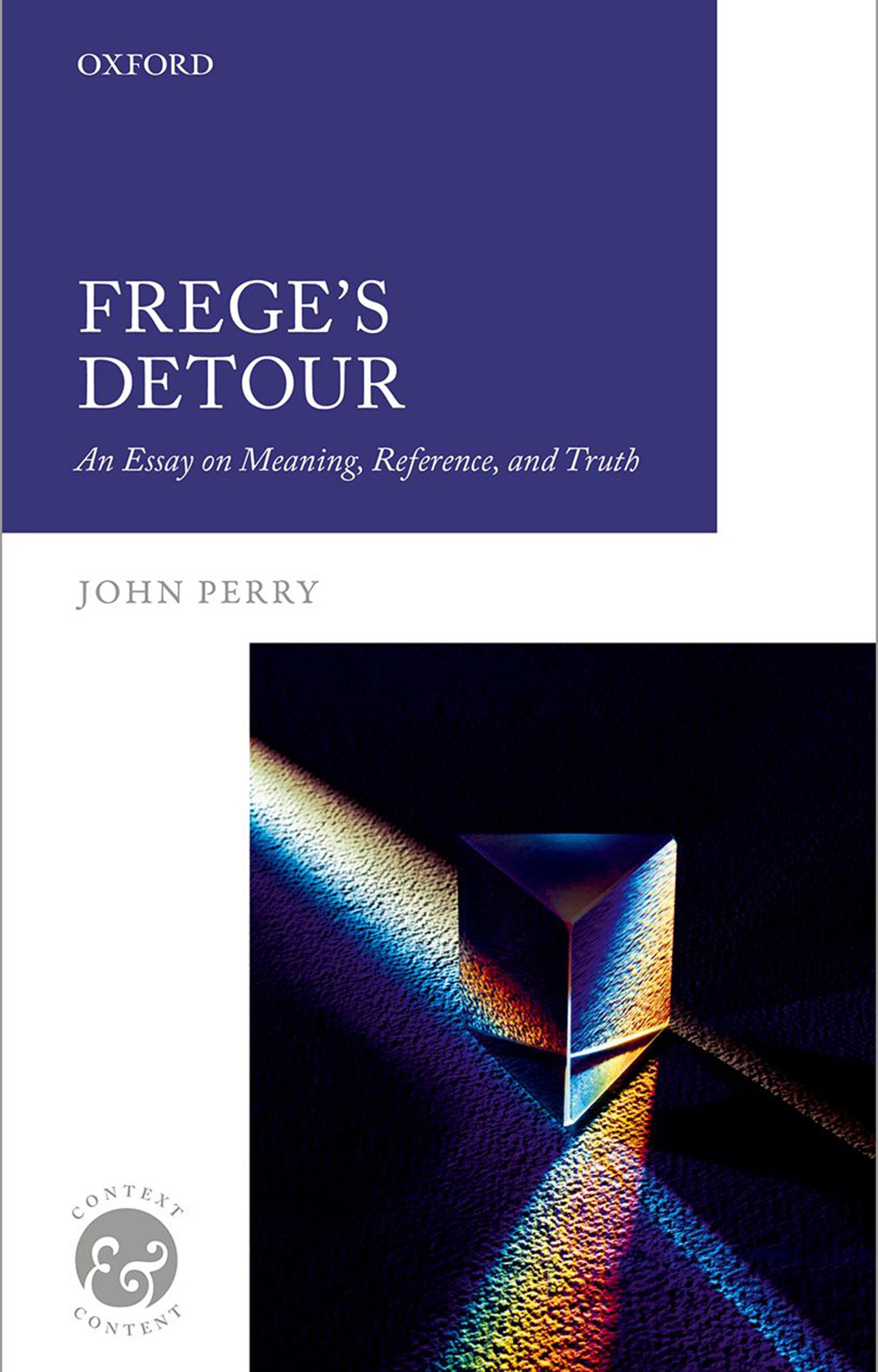
Frege’sDetour
AnEssayonMeaning,Reference, andTruth
JOHNPERRY
PhilosophyDepartments
StanfordUniversity
UniversityofCalifornia,Riverside
GreatClarendonStreet,Oxford,OX26DP, UnitedKingdom
OxfordUniversityPressisadepartmentoftheUniversityofOxford. ItfurtherstheUniversity’sobjectiveofexcellenceinresearch,scholarship, andeducationbypublishingworldwide.Oxfordisaregisteredtrademarkof OxfordUniversityPressintheUKandincertainothercountries
©JohnPerry2019
Themoralrightsoftheauthorhavebeenasserted
FirstEditionpublishedin2019
Impression:1
Allrightsreserved.Nopartofthispublicationmaybereproduced,storedin aretrievalsystem,ortransmitted,inanyformorbyanymeans,withoutthe priorpermissioninwritingofOxfordUniversityPress,orasexpresslypermitted bylaw,bylicenceorundertermsagreedwiththeappropriatereprographics rightsorganization.Enquiriesconcerningreproductionoutsidethescopeofthe aboveshouldbesenttotheRightsDepartment,OxfordUniversityPress,atthe addressabove
Youmustnotcirculatethisworkinanyotherform andyoumustimposethissameconditiononanyacquirer
PublishedintheUnitedStatesofAmericabyOxfordUniversityPress 198MadisonAvenue,NewYork,NY10016,UnitedStatesofAmerica
BritishLibraryCataloguinginPublicationData Dataavailable
LibraryofCongressControlNumber:2019944139
ISBN978–0–19–881282–1
DOI:10.1093/oso/9780198812821.001.0001
PrintedandboundinGreatBritainby ClaysLtd,ElcografS.p.A.
LinkstothirdpartywebsitesareprovidedbyOxfordingoodfaithand forinformationonly.Oxforddisclaimsanyresponsibilityforthematerials containedinanythirdpartywebsitereferencedinthiswork.
Tothememoryof
JonBarwise
Hector-NeriCastañeda
GarethEvans
MontgomeryFurth
DavidLewis
FellowadmirersofFrege,wholeftustoosoon.
Preface
Thethinkingforthisbookbeganin1975.Iwastryingtowriteabookon personalidentityduringmysabbatical.Ididnotfinishthebook,andstill havenot.Ispentmysabbaticalstuckontheproblemofself-knowledge.
AtfirstIwasprettyconfidentIcoulddealwithit.Onmydeskwasa mimeographeddraftofwhateventuallybecameDavidKaplan’s“Onthe LogicofDemonstratives.”IwassurethatwhatIneededtounderstand aboutthelogicandsemanticsof“I”wascontainedtherein.Alsoonthe deskwasacopyofShoemaker’s Self-KnowledgeandSelf-Identity (1968) plusmoresomeofhismorerecentwork,inparticular“Self-Reference andSelf-Awareness”(1968).IhadstudiedwithShoemakeratCornell. VirtuallyeverythingShoemakersaidseemedrighttome,butIthought itneededtobeconnectedmorefirmlywithissuesinthephilosophyof language.AndtherewasacopyofGeachandBlack’s TranslationsFrom thePhilosophicalWritingsofGottlobFrege.AlthoughIwenttoCornell withtheintentionofstudyingWittgenstein,intheendIwrotemy dissertationonFrege,Geach,andidentity.Therewasasheafofarticles andchaptersfromHector-NeriCastañeda,whoseimportantideasHarry Deutschhadbroughttomyattentionandexplainedtome.
Ihadnodoubtthatmanyphilosophersunderstoodeachofthe philosophersonmydeskmuchbetterthanIdid.ButIsuspectedthat veryfewunderstoodallofthemallaswellasIdid.AndIwassurethat theirworks,takentogether,providedwhatwasneededtoforanaccount self-knowledgeanditsexpressioninlanguage.Itwasjustuptometodig itout.ButIcouldnot.Frege’stheoryofsenseandreferenceseemedright. Kaplan’stheoryofindexicalsseemedright.Castañeda’sinsightsandhis wonderfulexampleshadtobedealtwith.Shoemaker’sconceptofcriteria ofidentityandfirst-personimmunitytoerrorthroughmisidentification hadtofindaplaceinmymoresemanticalapproach.Buttheyjustdidnot fittogether.Ihadsetasidecoupleofmonthstowritetheself-knowledge chapter.Bytheendofthattime,Iwasmoreconfusedthanever.
Ineverfinishedthechapter,muchlesstherestofthebook.Butat onepoint,prettylateinthesabbatical,Ihadwhatfeltlikearevelation. PerhapsFregewasnotquiterightaboutcognitivesignificance.Perhaps Kaplan’s“characters”couldprovidewhatwasmissinginhisaccount, eventhoughtheyseemedtopresentaproblem.BytheendofthesabbaticalIhadcomeupwithalongpaperexplainingwhatIfeltIhadcometo understandabouttheproblem.OntheadviceofJuliusMoravcsik,Isplit ittotwoshorterarticles,publishedas“FregeonDemonstratives”(Perry, 1977)and“TheProblemoftheEssentialIndexical”(Perry,1979).
SincethenIhavebeenonmyownlongdetour.Personalidentityand self-knowledgehaveprettymuchhadtowait,untilIdigestalltheinsights gatheredonmydesk43yearsago,oratleastcomecloserthanIdidthen. ThishasledtoworkwithJonBarwiseonsituationsemantics,wherewe triedtogeneralizeKaplan’sinsightsintoarelationaltheoryofmeaning; breathesomenewlifeintosituations,circumstances,andstatesofaffairs, prettymuchpushedoffstagebyFregeandChurch;takeaccountofwhat MichaelTurveytaughtusaboutecologicalpsychology;and,unshackled bytheextensionalisttendencieswesawinDavidson,developwhathe calledfor,aninnocentaccountoftheattitudes.ItledtoworkwithDavid Israel,wherewedevelopedtheconceptsofreflexive,referential,and incrementalcontent,andwithhimandSyunTutiyaoninformationand action.ItledtoMarkCrimminsexplainingtomewhyIneededepisodes inmyaccount,andhowtheconceptofunarticulatedconstituentscould behelpfulinunderstandingattitudereports,andwhatwentwrongwith theaccountinthebookIwrotewithBarwise, SituationsandAttitudes.It ledtoalotofworkwithKepaKortaandothersonhowpragmaticscan putthereflexive/referentialdistinctiontogooduse.
Itwastraumatic,in1975,tocometotheconclusionthatFregewas wrongaboutsomething.IhadwrittenadissertationthatdefendedFrege onidentityagainstPeterGeach,abrilliantphilosopherwhosework Igreatlyadmired.Itwashardformetoacceptthathedidnothave cognitivesignificancequiteright.
Sincethen,anumberofeminentphilosophershavearguedthatI waswrongaboutFregein“FregeonDemonstratives,”butIstillthink Iwasbasicallyright.Acoupleofyearsago,Ireturnedtoworkingpretty seriouslyonFrege.ForthefirsttimeIstudiedhis Begriffsschrift insome detail.Thisledtothecurrentbook,whichprobablywillnotconvincethe
eminentcriticswhostilllive,andwouldnotconvinceGarethEvansor MichaelDummettweretheystillaliveandmotivatedtoreadit.
Iamstillonmydetour.ButIhopetogetstraightaboutpersonal identitybeforeIdie.If,contrarytomyexpectation,thereisanafterlife,I donotwanttohaveanidentitycrisiswhenIgetthere.
Manypeoplehavehelpedmewiththisbook,especiallythemembers ofaweeklyseminarheldviaZoom:KepaKorta,MariaPonte,Richard Vallee,ChrisGenovesi,ErosCorazza,ArmandoLavalle,KennethOlson, GenovevaMartiandonoccasionDanFlickinger,PrashantParikh,Carl Hoefer,andDarrenBradley,andJennyHungwhodiscussedtheideas withme,andsomeofwhomhavecommentedonmanymanydrafts.I amindebtedtomycolleaguesatStanfordandUCRiverside,andmany students,graduateandundergraduate,whohavesharedmanyideasand helpedmekeepmythinkingstraightovertheyears.Amonggraduate students,IamespeciallyindebtedtoMarkCrimmins,nowacolleague, LisaHall,whoexplainedtomewhatfolkpsychologywasallabout(Hall, 1993),andLeoraWeitzman,whosedissertationonindividuatingcontentsandFrege’sideaofcarvingupcontenttaughtmealot(Weitzman, 1989).
InthecourseofwritingthebookIhavebeenfortunatetohavemany conversationswiththebrilliantcomputerscientistCarlHewett,particularlyabouthigher-orderlogic.Hehasexplainedalotofthingstome, someofwhichImanagedtounderstand.Hethinkstheimportantdetour relevanttoFregeistheonelogictookawayfromFrege’spath,which leadstohigherorderlogic,veeringoffinsteadtowardsfirst-logicandset theory.See(Hewitt,2015).WewereoftenjoinedbyDanFlickinger;a greatproportionofthelittleIunderstandaboutmodernlinguisticsis duetoFlickinger.
IhavelearnedalotaboutFregefromEdwardZalta,bothinconversationandfromhisarticles.Zaltahasusedhisimpressivetheoryofabstract objectstointerpretFrege’sThoughts;hismaybethebestaccountwehave thatisbasedonathoroughlyworkedoutaxiomatictheory(Zalta,1983, 1988).
Therearemany,manyotherswhodeservemention,butifItryto mentionall,Iwillleaveoutsome.MywifeFrenchie,mythreechildren andmytengrandchildrenhaveallbeenverysupportiveasIspendhours onthisbookthatcouldhavebeenspentonotherthingsthatwould
havebeenmorefunforthem,andnodoubtformetoo.Finally,over thepastdozenyearsorso,KenTaylorhasbeenaconstantsourceof goodconversationanddeepideas,asweco-hostedtheradioprogram “PhilosophyTalk.”Kenwasveryunderstandingwhen,inthethroesof tryingtofinishthisbook,Ihadtoleavetheprogram,andI’mgratefulto DeborahSatzandJoshLandyfortakingovermyduties.GototheKALW website(KALW.org)andcatchtheprogram.
ThisbookgrewoutoflecturesIgaveinParisattheinvitationof FrançoisRecanati.IoweagreatdebttoRecanati,forhisideas,forhis sympathetictreatmentofmyideas,andmanymorepracticalfavors hehasextendedtomeovermanyyears.PeterMomtchiloffatOxford UniversityPresshasbeenhelpfulandencouragingand,lastbutnotleast, twoanonymousrefereesforthePressprovidedhelpfulandinsightful comments.
October2018
JohnPerry
1 Introduction
Identitygivesrisetochallengingquestionswhicharenotaltogethereasytoanswer.Isitarelation?Arelationbetweenobjects, orbetweennamesorsignsofobjects?Inmy Begriffsschrift I assumedthelatter.
(GottlobFrege,“OnSenseandDenotation”)1
ThusbeginsGottlobFrege’s1892aEssay,“ÜberSinnundBedeutung”, “OnSenseandDenotation.”2Noessaywasmoreinfluentialinanalytic philosophyoflanguageinthetwentiethcentury.Itwas,andstillis, requiredreadinginvirtuallyeveryanalyticallyorientedphilosophyof languageclass.ThequestionsFregeasksaboutmeaning,reference,and truthremaincentralconcernsofthephilosophyoflanguage.Those whoprovidedifferentanswerstothesequestionscommonlytakeFrege’s answersastheirstartingpoint,asIshallinthisbook.Asindebted asphilosophyandlogicaretoFrege,however,Ithinkthisessayput philosophyonadetour.Theaimofthisbookisexploringhowwecan appreciateFrege’sinsights,butavoidthedetour.
1.1TheDetour
Fregebegins“OnSenseandDenotation”byreturningtoproblems withidentitythathefirstencounteredinhisearlierwork,the1879
1AstranslatedbyMaxBlack,(Frege,1960a).
2Blackuses“reference”asatranslationfor“Bedeutung.”Ihavechangedthisto“denotation” forreasonsexplainedbelow.
Frege’sDetour:AnEssayonMeaning,Reference,andTruth.JohnPerry,OxfordUniversityPress(2019).
©JohnPerryDOI:10.1093/oso/9780198812821.001.0001
Begriffsschrift,andcriticizingthetreatmentoftheproblemshegavethere. ThebookBegriffsschrift isnamedforthelanguagehedevelopsinit,which (followingJ.LAustininhistranslationofFrege’s Grundlagen (Frege, 1950))Iwillcall“Concept-Writing.”IntheBegriffsschrift Frege’sinvented quantificationtheoryandfirstandsecondorderlogic.
IntheBegriffsschrift,Fregeusestheterm“circumstance”(Umstand)for whatsentencesreferto(bedeuten).Itseemsthatthisisthetermhefound intuitiveforwhathehadinmind.Hedoesnottreatitasatechnicalterm, orgiveusanyspecialexplanation.Itisnaturaltotakecircumstancesto bestructuresmadeupofobjects,properties,andrelations.Iftheobjects havetheproperties,orstandintherelations,wehavefactsortruths.Frege uses“fallingunder”forthisstructure.Objects fallunder propertiesand relations.
ButFregealsoseesthefalling-understructureathigherlevels,where propertiesandrelationsfallunderappropriatepropertiesandrelations.I willcallthesehigherlevelpossibilities“property-structures.”PropertystructuresarethekeytomanyofFrege’senduringcontributions.We shouldnotsee“Caesarexists”assayingthatCaesarfallsunderthepropertyofexistence.Itrathertellsusthatthepropertyofbeingidenticalwith Caesarfallsunderthepropertyofbeinginstantiated;thereissomeone whoisCaesar.“Birdshavefeathers”doesnottellusthatsomeobject named“birds”isfeathered;ittellsusthatarelationholdsbetweenthe propertyofbeingabirdandthepropertyofhavingfeathers;objectsthat havethefirstpropertyhavethesecond.
Takingcircumstancestobethecontentsofsentencesaboutobjects seemedtogiverisetoproblemswithidentitysentences.Fregeproposed asolutioninthe Begriffsschrift.Intheopeningof“OnSenseandDenotation”herejectsthatsolution,beforeexplaininghisnewtheoryofsense anddenotation;circumstanceshavenoroleinthistheory.Whatwasthe problemwiththem?
Ifweread“=”asidentity,asFregedoesandIwilldo,then,if“A=B” istrue,then“A=A”and“A=B”standforthesamecircumstance.The sameobjectisdenotedtwiceineachsentence,andtherelationpredicated isthesame,identity.Butsomehowwecanlearnsomethingfromthe secondsentencethatwecannotlearnfromthefirst,thatthetwonames co-denote.OnFrege’sconceptionoflogicandcontent,sentenceswith thesamecontentshouldsupportthesameinferences.From“A=B”
and“��(A)”wecaninfer“��(B)”.Butwecannotinferthisfrom“A=A”. Somethinghasgonewrong.
Inthe Begriffsschrift Frege’ssolutionistoprovideuswithanewsign, “ ≡”fortherelationhecalls identityofcontent whichholdsbetween nameswhentheircontents,thatistheobjectstheyreferto,areidentical. Thenewsign:
...expressesthecircumstancethattwonameshavethesamecontent ((Frege,1967),Section20).
Fregeuses“=”twiceinthe Begriffsschrift,inSection1andSection5, beforeheintroduces“≡”.Hereinstates“=”afterthe Begriffsschrift.But there,hissolutiontohisidentityproblemsistoretire“=”infavorof“≡.”
In“OnSenseandDenotation,”aftercriticizinghis Begriffsschrift account,Fregeintroduceshisnewtheory:
Itisnatural,now,tothinkoftherebeingconnectedwithasign(name, combinationofwords,letter),besidesthattowhichthesigndenotes, whichmaybecalledthedenotationofthesign,alsowhatIwouldliketo callthesenseofthesign,whereinthemodeofpresentationiscontained ((Frege,1960a),p.59).
Onthistheorythe“information-value”ofasentence(atafirstpass, whetheritisanalyticorsynthetic)andits“cognitivevalue”(basically, thebeliefasincereandsemanticallycompetentspeakerexpresseswith it)dependonthesensesofthenamesitcontains,nottheirdenotations.3 ThesenseofthesentenceasawholeFregecallsa“Thought.”Sentences express Thoughts.So“A=A”and“A=B”expressdifferentThoughts,and theproblemissolved,orsoitseems.Thesenseofanexpressionseemsto bebasicallythepropertiesanobjectmusthave,andtherelationsitmust havetootherthings,tobethedenotationoftheexpression,according tothedefinitionsandotherconventionsandpracticesofthelanguage. Inthecaseof“perfect”languages,asConcept-Writingwasintended
3WhileFregesometimesseemstoequatetheissueofwhetherasentenceisinformativeor notwithwhetheritissyntheticoranalytic,Hortyshowstheissueismorecomplicated,forboth interpretiveandphilosophicalreasons(Horty,2007).
tobe,speakersshouldassignthesamesensestoexpressions.Inthe caseof“imperfect”languages,acategorytowhichallnaturallanguages belong,thesensesassociatedwithexpressionsmaydifferfromspeaker tospeaker.SoThoughtsdonotinvolveobjects,ascircumstancesdo, butratherthesensesassociatedwiththenamesthatdenotetheobjects. ThisbasiccharacterizationisnotanexhaustiveaccountofhowFrege thoughtofhissenses,butIthinkitisthecore;itfitsalloftheexamples andexplanationsthatFregeprovidesin“OnSenseandDenotation”and otheressaysandwritingsfromthesameperiod—whatIwillcallthe “1890Essays.”⁴
FregeemphasizesthatThoughtsarenotepisodesofthinking,but abstractobjectsthatare“grasped”inthinking,thatprovidethecontents ortruth-conditionsofsuchepisodes,andthesentencesweusetoexpress them.⁵Onemightexpectcircumstancestobethedenotationsofsentences.ButFregeinsteadmaintainsthatthatweare“driven”toaccept truth-valuesasthedenotationsofsentences.Allofthistakesupnomore thanathirdoftheessay.
Thenthebulkoftheessayisspentdefendingthislastdoctrine,that sentencesdenotetruth-values,fromanobjection.OnFrege’sprinciples, thedenotationofanexpressionwithsignificantpartsmustbeafunction ofthedenotationsofthoseparts.Thismeansthatsubstitutionofcodenotingexpressionsinalargerexpressionpreservesthedenotationof thelargerexpression.Butthenthedoctrinethatsentencesdenotetruthvaluesseemstohavemanycounter-examples.Thesentences“Berkeleyis westofSantaCruz”and“MogadishuisthecapitalofSomalia”areboth true.ButnoteveryonewhobelievesthatBerkeleyiswestofSantaCruz believesthatMogadishuisthecapitalofSomalia,andvice-versa.IfSmith isapersonofthefirstsort,thenthefirstreportbelowistruewhilethe secondisfalse.
⁴Afterthe Begriffsschrift,Frege’snextbookwas TheFoundationsofArithmetic (Frege,1884). Hedevelopedakeyideaforhismagnumopus, Grundgesetze,(Frege,1893/1903)thatnumbers aretheextensionsofconcepts((Frege,1950),Section68).Then,beforewritingtheGrundgesetze hedevelopedhistheoryofsenseanddenotationinaseriesofessayswrittenintheearly1890s, “FunctionAndConcept,”“ConceptandObject,”and“OnSenseandDenotation“(Frege,1960a). These,togetherwithanimportantlettertoHusserlandanunpublishedmanuscriptfromthe sameperiodcomprisewhatIcallthe“1890Essays.”[Frege,1967a,1967b,1960a,1891b,1891b, 1891c.]Thetheorybecomesmorenuancedwhenhereturnstotheissueofsenseafterthe Grundgesetze
⁵Icapitalize“Thought”whenusingitforFrege’sThoughts.
(1)SmithbelievesthatBerkeleyiswestofSantaCruz
(2)SmithbelievesthatMogidishuisthecapitalofSomalia
But(2)resultsfrom(1)bysubstitutionofonetruesentenceforanother. Wecouldgeneratethesameproblemfor
(3)SmithsaysthatBerkeleyiswestofSantaCruz.
Somethinghasgonewrong.Frege’sDetourbeginswithhissolution. Hissolutionisthedoctrineof indirectdenotation.Sentencesdonot alwaysdenotetruth-values.Sometimestheydenotethemselves,aswhen theyareenclosedinquotationmarks.And,Fregesays,theysometimes denotetheirordinarysenses,theThoughtstheyordinarilyexpress.This iswhathappensinindirectdiscourseandattitudereports.In(1),(2),and (3).theembeddedsentencesdenotetheirusualsenses,Thoughtswhich arenotthesame.Sothesubstitutionisnotpermitted.Problemsolved. Orsoitseems.
Idonotthinkthedoctrineofindirectdenotationsolvedanyproblems; itcreatedmany,however.Thedoctrinereinforcesandreflectsanumber ofviewsabouttruthandcognitionwhicharewrong:
(A)Thecontentofasentence,basicallyitstruth-conditions,canbe capturedbyauniqueproposition;
(B)Thispropositionisthe cognitivesignificance ofthesentencefor semanticallycompetentspeakersandhearers,inparticular:
(i)Thispropositionis whatissaid bysomeonewhousesthe sentence
(ii)Thispropositionis whatisbelieved byasincereandsemanticallycompetentspeaker;
(C)Suchpropositionsarethedenotationsorreferentsofthat-clauses inindirectdiscourseandattitudereports;
(D)Beliefs(andotherattitudes)arerelationstopropositions.
Thisdetourstartswiththechallengingquestionsposedbyidentity. Already,Frege’sconceptionofwhatlogicisallaboutcommittedhimto
somethingakinto(A)and(B).Butheeventuallyrealizedthissimply doesnotsquarewithcircumstancesasconceptualcontents.If“A= B”istrue,itreferstothesamecircumstanceasdoes“A=A”.But thetwosentencesdonothavethesamecognitivevalue;onecould sincerelydenythefirstwhilesincerelyassertingthesecond.Fregecame tothinkofhis Begriffsschrift solutionasunsatisfactory,andabandoned thetheoryofconceptualcontentinfavorofthetheoryofsenseand denotation.
Iwillarguethatcircumstancesandthetheoryofconceptualcontent providesomethingneededforsemanticsnotprovidedbythetheoryof senseanddenotation.Circumstancesshouldnothavebeenthrownout ofthetheory.Thetheoryofsenseandreferencecontainssomeimportant additionalinsights,buttheycanbeincorporatedintothetheoryof conceptualcontent.So,atleastaccordingtome,whatFregeshouldhave doneisabandon(A)andallofitsconsequences.Without(A),andwith alittlecommonsense,his Begriffsschrift theorycandealwithallofthe challengesidentitygivesriseto,incorporatetheinsightsofthetheoryof senseanddenotation,andkeepusoffthedetour.And,withalittlemore commonsense,wecanadaptthetheorytoanepisodebasedaccount, thatdoesnottaketheattitudestoconsistofrelationstopropositions, andabandon(D).
1.2Disclaimer
ThisbookincludesafairamountofFregeinterpretation.But,evenon topicscentraltotheargument,theinterpretationisnotcomprehensive. ThisismostclearinmyinterpretationofFrege’sThoughts.Fregedevelopedtheconceptbetweenthe Begriffsschrift andhis1980Essays.Ithink theinterpretationIofferhelpsusunderstandthefunctionsofThoughts, andtoevaluatehisargumentsforindirectreference.ButFregefaced problemswithThoughtsthat,asfarasIcansee,hecouldn’tresolve. Fregesaysthatinthedenotationofasentence,allthatisspecificislost. “LincolnwasaRepublican”and“Theseaissalty”areaboutdifferent thingshavingdifferentproperties,buttheybothdenotetheTrue.But allthatisspecificisnotlostinThoughts.Thetwosentencesexpress quitedifferentThoughts;thatisthejobofofThoughts,tocapturesubtle
differencesintruth-conditions,andthusprovideanaccountofcognitive significance.
ButthedemandsofFrege’sanalysisofnumberandarithmeticseems torequirethatThoughtnotbeindividuatedcompletelyintermsofthe entitiestheyareintuitivelyabout.Considerthisexample,basedonthe Grundlagen,fromLeoraWeitzman((Weitzman,1989)p.16).
ThedirectionofSeventhStreetisthesameasthedirectionofOcean Avenue.
SeventhStreetisparalleltoOceanAvenue.
InFrege’smetaphor,thetwosentencescarveupthesamecontentin differentways.Thefirstinvolvestwodirectionsandidentity,thesecond twostreetsandbeingparallel.Theideathatthesamecontentcanbe carvedupindifferentwaysispresentinthe Begriffsschrift,asweshall see.ItiscrucialtothestrategyFregedevelopedinthe Grundlagen forhis treatmentofnumber.Butitispuzzlingandsomewhatproblematicfor Thoughts,givenoneoftheirjobs,toaccountfordifferencesincognitive significance.Itseemsthat,evensettingobjectsaside,asnotinvolved inThoughts,adifferenceinthepropertiesandrelationsdenotedby differentsentenceswillalmostalwaysproducesomepossibilitythat areasonablycompetentspeakercouldbelieveoneandatleasthave momentarydoubtsabouttheother.ThisisallrelatedtotheissuesHorty discussesin FregeonDefinitions (2007).
Weitzmanarguesquitepersuasivelythatthereisnosinglesolution totheproblemofindividuatingThoughtsthatsatisfiesallthevarious criteriaFregesuggestsandthatthevariousproposalsforthenature ofpropositionsonofferincontemporaryphilosophyareresponsive tovariousstrandsinFrege’sthinking.Atoneextreme,ifwethinkof propositionsassetsofpossibleworlds,subjectmatterseemstobelost. Thereisonlyonenecessaryproposition,nomatterwhetherthenecessary truthisamatterofpropertiesconsideredbyarithmetic,orgeometry, orchemistryoranythingelse.⁶Therearemanyproposalstowardthe otherendofthespectrum,nonewhichdoeseverythingFregewouldhave wanted.
⁶See(Perry,1989).
Fregedemandedalotfromthecontentsofsentences.Heexpected hisThoughtstoprovidetruth-conditionsforsentences,andalsotheir cognitivesignificance.Whenoneaddstothispairofdutiestheidea ofcarvingupcontent,whichseemstoimplythatpropositionshaveno ultimatestructure,onehasgivencontentatriadofdutiesthataredifficult toreconcile.AsWeitzmanconcludes,“Fregeprovidesnocriterionthatis bothnoncircularandcompatiblewithaproposition’shavingmorethan oneultimatestructure.”((Weitzman,1989)p.iv).
Idonotattempttoprovidesuchacriterion.Itrytoprovideanaccount ofThoughtsthatfitswithwhatItaketobethoseofFrege’sinsightsmost relevanttothephilosophyoflanguage,andshowthattheydonotleadto theDetour.Eventually,Iwillarguethatthedoctrineofuniquecontent ledFregeandmanyotherphilosophersasktoomuchofThoughtsand propositions.Contemporaryphilosophyprovidesaplethoraofabstract objectsascandidatesforcapturingthetruth-conditionsofsentences. Thisisnotsuchabadthing,ifwegiveuptheideathattherehastobe onewinningcandidate.
1.3ThePlan
InChapters2and3IdiscusstheBegriffsschrift.InChapter2Ifocusonthe theoryofconceptualcontentthatsupportedthewonderfulinnovations ofthatwork.InChapter3Idiscusstheproblemsthatvariousexamples involvingidentityposedforhisaccount,andtheconclusionthatFrege eventuallydrew,thatledtohisreplacingthetheoryofconceptualcontent withhistheoryofsenseanddenotation.
InChapter4IdiscussFrege’stheoryofsenseanddenotationas presentedinthe1890Essays,andinChapter5aspresentedinthemost famousofthem,“OnSenseandDenotation,”wheretheargumentfor indirectdenotationoccurs.
Afterthe Begriffsschrift Fregewrote TheFoundationsofArithmetic, wherehedevelopedkeyideasinhisprojectofreducingarithmeticto logic.Hedevelopsanaccountofconceptsandextensions,whichplayed akeyroleinhisstrategy.Frege’sextensionsarenottheextensionsof modernsettheory,butfunctionsrelatedtothem.
Inthe1890EssaysFregedevelopshistheoryofsenseanddenotation,andhebuildshistheoryofconceptsandextensionintothe newtheory.However,hedoesnotdiscussthesedevelopmentsin“On SenseandDenotation,”whichconsidersthesenseanddenotationof namesandsentences,butnotofconceptwords.(Fregeuses“names”for bothordinarynames,simplenounsthatdenoteobjects,andfordefinite descriptions.Sohiscategoryofnamesbasicallycoincideswithwhat wenowcall“singularterms.”)Herefersreaderselsewhereiftheyare interestedinhistreatmentofconcept-words.Thus,inhismostfamous andinfluentialessay,atleastforphilosophersoflanguage,wegetonly apartofhistheory.Itisthispartialtheory,combinedwithasimple treatmentofconceptwordssuggestedbywhathesaysaboutnames,that hasprovensoinfluentialinthatfield.Anditisintermsofthepartial theorythathejustifiesthedoctrineofindirectdenotation.Mystrategy istoexplain,asbestIcan,thetreatmentofconceptwordswefindother 1890Essays,butto(mostly)bracketthesecomplicationsindiscussing “OnSenseandDenotation,”wheretheyplayno(explicit)role.
InChapter6IprovidemyownsolutiontoFrege’sproblemswith identityandcircumstances,withinwhatIcallthe“reflexive-referential” theory.ThissolutionwasavailabletoFregewithinthe Begriffsschrift theory,hadhenotbeenweddedtothedoctrineofuniquecontent.On myaccountneither“=”orcircumstancesaretheproblem,theproblem isthedoctrineofuniquecontent.
InChapter7Isaymoreaboutcircumstances.Iarguethattheargument in“OnSenseandDenotation”fortheconclusionthattruth-valuesshould bethedenotationsofsentenceshavenoforceagainstcircumstancesasa candidateforthatrole.IalsoconsiderAlonzoChurch’sargumentinfavor oftruth-values,nowusuallycalled“theslingshot.”
InChapter8IdevelopavarianttoFrege’stheoryofsenseand reference,basedonreplacingtruth-valueswithcircumstancesasthe denotationsofsentences.Thetheoryofthe Begriffsschrift isintegrated withthetheoryofsenseanddenotation.IarguethatwhileThoughtsare suitableforencodingthetruth-conditionsofsentences,circumstances aresuitableforcapturingwhatIcallthe“informationsignificance” ofsentences,whichwemustdotounderstandimperfectlanguages. Idevelopaninnocenttheoryofattitudereportsanddirectdiscourse
withinthisaccount,adoptingapragmaticaccountof“opacity,”in thespiritofmuchworkinthephilosophyoflanguagesincethe 1970s.Butthisaccountstillbasicallytreatstheattitudesasrelationsto propositions.
InChapter9Iarguethatweneedtotakeafurthersteptohaveasuitableframeworkforunderstandingtheattitudesandindirectdiscourse. Weneedtobringepisodes—thoughtsandutterances—directlyintothe theory.Iarguethattounderstandhowthecausalrolesandcontents ofsuchepisodesfittogether,weneedtounderstandwhatIcallthe reflexiveandhybridtruth-conditionsoftheseepisodes.Oncewehave donethat,Iargue,wecandealwithcertaincasesofopacitywhichthe pragmaticstrategybyitselfcannothandle.Iendthechapter,andthe book,byadaptingtheaccounttodealwith“today,”“tomorrow,”and otherindexicals.IarguethatweneedtoseeFrege’ssensesasaspecial caseofwhatIcall“roles,”whicharemyversionofKaplan’scharacters,tounderstandthecausalrolesofbeliefsthatweuseindexicalsto express.
1.4Terminology
ThetranslationofFrege’simportantterm“Bedeutung”hasbeenamatter ofsomecontroversy,helpfullyexplainedbyMichaelBeaneyintheintroductiontohisexcellentcollectionofFregetranslations(Beaney,1997). Russell,inhisappendixonFregein ThePrinciplesofMathematics,translates“Sinn”as“meaning”and“Bedeutung”as“indication”(Russell,1903: p.510).Later,in“OnDenoting,”heuses“meaning”and“denotation.” MaxBlackandPeterGeach,intheoriginaleditionoftheirinfluential translations(1952),used“sense”for“Sinn”and“reference”for“Bedeutung.”Inlatereditions,theyused“meaning”for“‘Bedeutung.”Inthefirst Englishtranslationof“ÜberSinnundBedeutung”(Frege,1949).Herbert Feiglused“nominatum”for“Bedeutung.”EdwardZalta,inhisimportant articlesonFregeinthe StanfordEncyclopediaofPhilosophy,translates “Bedeutung”as“denotation.”
Iuse“reference”asatranslationfor“‘Bedeutung”whenitoccursin the Begriffsschrift,itsoriginalhome.Iuse“denotation”whenitoccursin
thetheoryof SinnundBedeutung.⁷Iuse“reference”inmoreorlessits standarduseincontemporaryphilosophyoflanguagewhenexplaining myownview.Thesechoicesarenotbasedonanyparticularinsights abouttranslation.Frege’sconceptof Bedeutung changesinimportant wayswhenhemovesfromconceptualcontenttothetheoryofsenseand denotation,ashehimselfemphasized.Itisusefultohavetwotermsto markthedifference.MypracticemaysuggestthatFregeusesdifferent Germanterms;Iherebycancelthatsuggestion.
Linguistically,“meaning”isprobablythemoststraightforwardtranslationof“Bedeutung,”especiallyintheBegriffsschrift,wherethedistinction betweensenseanddenotationhasnotbeenmade.Itisthetranslation Austinusesin TheFoundationsofArithmetic,histranslationof Die GrundlagenderArithmetik (Frege,1950).But,confusingly,ithasalso beenusedasatranslationfor“Sinn.”TylerBurgehasdocumentedhow misleadingthetermcanbeintranslatingFrege(Burge,1979).Idonot useitasatranslationofeitherterm.
Theterm“reference”hasbecomeubiquitousinthephilosophyof language,dueinparttoFrege’shugeinfluenceanditsuseasatranslation for Bedeutung intheoriginalMaxBlacktranslationof“ÜberSinnund Bedeutung.”Theuseofthetermincontemporaryphilosophyoflanguage isheavilyinfluencedbydiscussionsofissuesthatemergedinthe1970s, whenphilosophersbegantostruggletoleavetheDetour,aphilosophical movementHowardWettsteinhascalled“TheNewTheoryofReference” (Wettstein,1986).CriticismsanddefensesofFrege’sviewswerecentralto thismovement,Atleastinthebeginning,especiallyinKripke’sseminal work(Kripke,1980).“reference”wasusedasatranslationfor“Bedeutung,”andthenbecamethestandardtermfordiscussionoftherelation nameshavetothethingstheyname,independentlyofFrege’sviews.⁸ IwillsayabitmoreabouthowIusetheexpression“cognitivesignificance.”Fregesometimesusestheterm“informationvalue”fora differencebetween“A=B”and“A=A”,thatthefirstissynthetic
⁷Imakethesesubstitutionsintranslations,whichareotherwiseleftintactunlessnoted. ⁸Feigl’s“nominatum”for“Bedeutung”hasthevirtueofemphasizingthecloseconnection betweennamingand Bedeutungen inFrege’sthinking,butitdidnotcatchon.Zalta’suseof “denotation”inhisarticleonthe Grundgesetze inthe StanfordEncyclopediaofPhilosophy gives meconfidenceitisagoodchoiceforFrege’stheoryfrom1890on.
andthesecondanalytic.In“FunctionandConcept”herecognizesthat theproblemsidentityposesarenotconfinedtoidentitysentencesand differencesininformation-valueinthissense:
Ifwesay“TheEveningStarisaplanetwithashorterperiodofrevolutionthantheEarth”,thethoughtweexpressisotherthaninthesentence“TheMorningStarisaplanetwithashorterperiodofrevolution thantheEarth”;forsomebodywhodoesnotknowthattheMorning StaristheEveningStarmightregardoneastrueandtheotherasfalse ((Frege,1960a),p.138).
Iuse“cognitivesignificance”forthedifferenceinsuchcases.Frege sometimesuses“cognitivevalue.”Fregetakesthecognitivevaluetobe theThoughtexpressedbyasentence,ortherelevantpartofit.Ioffera somewhatdifferentaccount,soitissometimesusefultohaveasimilar butdifferentterm.
Thecognitivesignificanceofanutteranceiswhatasincereandsemanticallycompetentspeakermustbelievetomaketheutterance,andwhat asemanticallycompetentandcreduloushearercanlearnfromtheutterance.
Itmightbebettertousethephrase“semanticcognitivesignificance,” althoughIwillnot.Considerthisexample.Wearehavingdinner,andyou say,“Mysteakneedssalt.”Ifyouaresincereandsemanticallycompetent, youwillbelievethatyoursteakneedssalt.AndifItrustyouandam semanticallycompetent,Iwilllearnthatyoursteakneedssalt.
IfIamnotonlysemanticallycompetent,buthaverudimentarysocial skills,Iwillalsolearnthatyouwouldlikemetopassyouthesalt.Andyou probablybelievedthatsaying“Mysteakneedssalt”waslikelytoinduce metohavesuchabelief,andpassyouthesalt.Butthosebeliefsarenot partofthesemanticcognitivesignificance,or,asIshallusethetermin thisbook,the“cognitivesignificance.”Theyarenotpartofthetruthconditionsofyourremark.Theyarebeliefsthatasociallyaptpersonwill inferfromotherbeliefsgainedinvirtueofsemanticcompetence.