

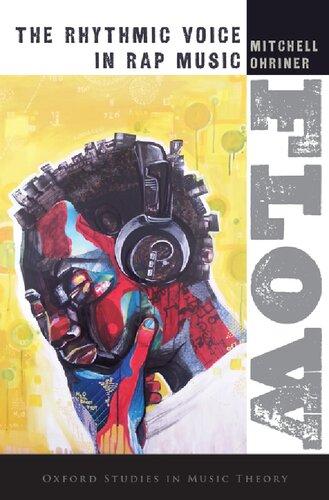
https://ebookmass.com/product/flow-the-rhythmic-voice-in-
Instant digital products (PDF, ePub, MOBI) ready for you
Download now and discover formats that fit your needs...
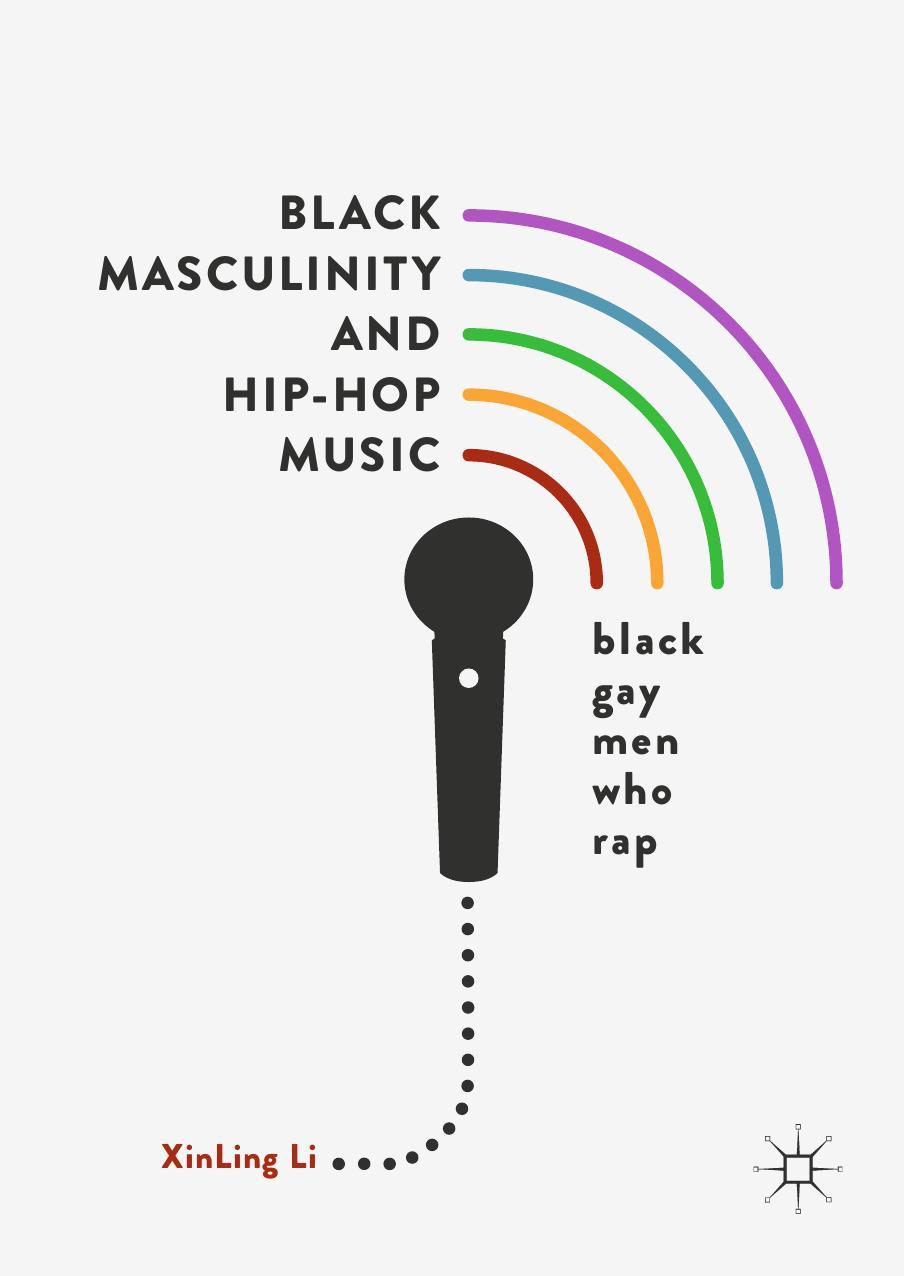
Black Masculinity and Hip-Hop Music: Black Gay Men Who Rap 1st ed. 2019 Edition Li
https://ebookmass.com/product/black-masculinity-and-hip-hop-musicblack-gay-men-who-rap-1st-ed-2019-edition-li/
ebookmass.com
Why Delegate? Neil J. Mitchell [Neil J. Mitchell]
https://ebookmass.com/product/why-delegate-neil-j-mitchell-neil-jmitchell/
ebookmass.com
The Donkey in Human History: An Archaeological Perspective
Peter Mitchell
https://ebookmass.com/product/the-donkey-in-human-history-anarchaeological-perspective-peter-mitchell/
ebookmass.com
The Evolution of EU Law 3rd Edition Paul Craig (Editor)


https://ebookmass.com/product/the-evolution-of-eu-law-3rd-editionpaul-craig-editor/
ebookmass.com

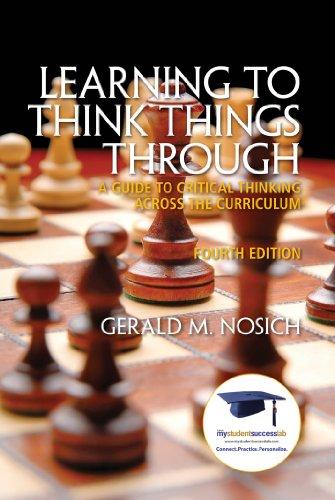
Learning to Think Things Through: A Guide to Critical Thinking Across the Curriculum – Ebook PDF Version
https://ebookmass.com/product/learning-to-think-things-through-aguide-to-critical-thinking-across-the-curriculum-ebook-pdf-version/
ebookmass.com
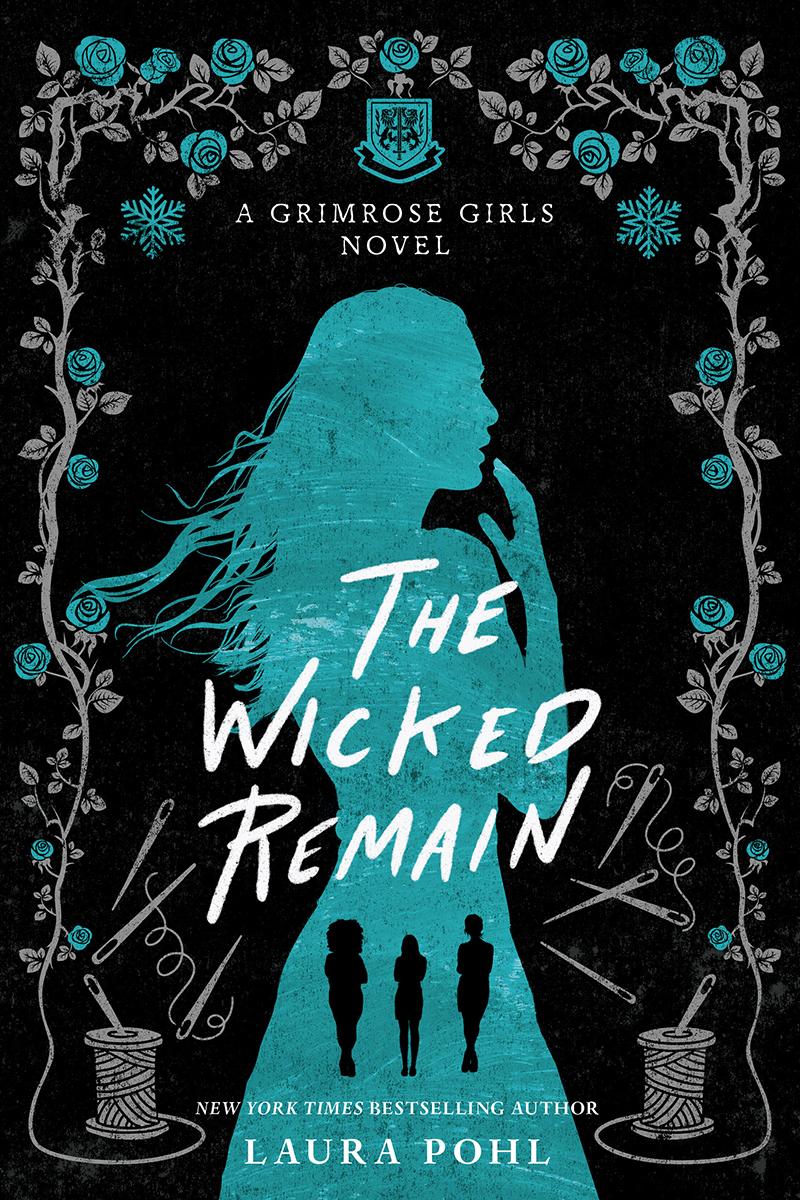
The Wicked Remain Laura Pohl
https://ebookmass.com/product/the-wicked-remain-laura-pohl/
ebookmass.com
Puppy
Kisses (Forever Home #3) 1st Edition Lucy Gilmore
https://ebookmass.com/product/puppy-kisses-forever-home-3-1st-editionlucy-gilmore/
ebookmass.com
Statistics: Informed Decisions Using Data 4th Edition, (Ebook PDF)
https://ebookmass.com/product/statistics-informed-decisions-usingdata-4th-edition-ebook-pdf/
ebookmass.com
Pediatric
Endocrinology and Inborn Errors of Metabolism
2nd Edition Kyriakie Sarafoglou
https://ebookmass.com/product/pediatric-endocrinology-and-inbornerrors-of-metabolism-2nd-edition-kyriakie-sarafoglou/
ebookmass.com


When a Cowboy Loves a Woman Jennie Marts
https://ebookmass.com/product/when-a-cowboy-loves-a-woman-jenniemarts/
ebookmass.com

OXFORD STUDIES IN MUSIC THEORY
Series Editor Steven Rings
Studies in Music with Text, David Lewin
Music as Discourse: Semiotic Adventures in Romantic Music, Kofi Agawu
Metric Manipulations in Haydn and Mozart: Chamber Music for Strings, 1787–1791, Danuta Mirka
Songs in Motion: Rhythm and Meter in the German Lied, Yonatan Malin
A Geometry of Music: Harmony and Counterpoint in the Extended Common Practice, Dmitri Tymoczko
In the Process of Becoming: Analytic and Philosophical Perspectives on Form in Early Nineteenth-Century Music, Janet Schmalfeldt
Tonality and Transformation, Steven Rings
Audacious Euphony: Chromaticism and the Triad’s Second Nature, Richard Cohn
Mahler’s Symphonic Sonatas, Seth Monahan
Beating Time and Measuring Music in the Early Modern Era, Roger Mathew Grant
Pieces of Tradition: An Analysis of Contemporary Tonal Music, Daniel Harrison
Music at Hand: Instruments, Bodies, and Cognition, Jonathan De Souza
Foundations of Musical Grammar, Lawrence M. Zbikowski
Organized Time: Rhythm, Tonality, and Form, Jason Yust
Flow: The Rhythmic Voice in Rap Music, Mitchell Ohriner
The Rhythmic Voice in Rap Music
Oxford University Press is a department of the University of Oxford. It furthers the University’s objective of excellence in research, scholarship, and education by publishing worldwide. Oxford is a registered trade mark of Oxford University Press in the UK and certain other countries.
Published in the United States of America by Oxford University Press 198 Madison Avenue, New York, NY 10016, United States of America.
© Oxford University Press 2019
All rights reserved. No part of this publication may be reproduced, stored in a retrieval system, or transmitted, in any form or by any means, without the prior permission in writing of Oxford University Press, or as expressly permitted by law, by license, or under terms agreed with the appropriate reproduction rights organization. Inquiries concerning reproduction outside the scope of the above should be sent to the Rights Department, Oxford University Press, at the address above.
You must not circulate this work in any other form and you must impose this same condition on any acquirer.
CIP data is on file at the Library of Congress
ISBN 978–0–19–067041–2
1 3 5 7 9 8 6 4 2
Printed by Sheridan Books, Inc., United States of America
4.
5.
5.2 Critical Analysis: Situating Black Thought of The Roots within the Genre as a Whole
Part II Three Flows
6. Flow, Metric Complexity, and Text in Eminem
6.1 Vocal Groove: A Refresher
6.2 Groove and Metric Complexity in Eminem’s Flow
6.3 The Complexity–Competency
6.4
7.
7.1
7.2
7.3
7.4
Groove, and Beat
7.5 Cycles
8. Flow and Free Rhythm in Talib Kweli
8.1
8.2
8.3
8.4
8.5
LIST OF EXAMPLES
Example A. The positions within the measure (indicated as “|”) and within the beat (numbered from 1) under moduli 16, 4, and 2. xxxviii
Example B. Salt ‘N’ Pepa, “Whatta Man” (1993, 0:36–055). xxxix
Example C. Groove segmentation of “Go to Sleep” at two rates of effort. xxxix
Example 1.1. Classified, “Still Got It” (2009, 0:40–0:52). Boldfaced numbers refer to metric positions (i.e., “sixteenth-notes”), indexed from 0. Italicized numbers refer to measure numbers, indexed from 1. Circles represent syllables of rap delivery in my own interpretive quantization. 7
Example 1.2. Ice-T, “I Ain’t New Ta This” (1993, 1:14–1:20).
12
Example 1.3. “I Ain’t New Ta This,” recomposed to align copy and sloppy. 13
Example 1.4. Eminem, “Business” (2002, 0:42–0:52). Shading of circles indicates rhyme. 14
Example 1.5. OutKast featuring Jay-Z and Killer Mike, “Flip Flop Rock” (2003, 1:42–2:02). 17
Example 1.6. A$AP Rocky featuring ASAP Nast and Spaceghost Purrp, “Purple Swag: Chapter 2” (2011, 0:54–1:03).
Example 1.7. Eminem, “Take from Me” (2011, 2:03–2:16).
Example 1.8. Lil’ Wayne featuring Nikki, “Weezy Baby” (2005, 0:37–0:50).
Example 1.9. Twista, “Say What?” (1992, 1:16–1:21).
Example 1.10. Fat Joe featuring The Game, “Breathe and Stop” (2006, 2:18–2:30).
Example 1.11a. Flobots, “Airplane Mode” (2010, 3:14–3:40).
18
18
19
20
20
21
Example 1.11b. Flobots, “Airplane Mode,” inter-rhyme intervals (IRIs). 22
Example 1.12a. T.I. featuring André 3000, “Sorry” (2012, 2:11–2:26). 22
Example 1.12b. T.I., “Sorry,” inter-rhyme intervals (IRIs). 22
Example 1.13a. KRS-One, “Don’t Get So High” (2008, 1:05–1:17). 23
Example 1.13b. KRS-One, “Don’t Get So High,” inter-rhyme intervals (IRIs). 23
Example 1.14. KRS-One, “Don’t Get So High,” recomposed to maintain a consistent three-beat duration between rhymes.
24
Example 1.15. Krizz Kaliko featuring Tech N9ne, “Strange” (2012, 4:08–4:31), mm. 9–14. 25
Example 1.16. Krizz Kaliko featuring Tech N9ne, “Strange,” mm. 9–14, re-quantized to unified C32 metric space (i.e., without swing).
Example 1.17. Krizz Kaliko featuring Tech N9ne, “Strange,” mm. 9–14, with larger circles representing accented syllables.
Example 1.18. Krizz Kaliko featuring Tech N9ne, “Strange,” mm. 9–14, schematic outline of inter-accent intervals (IAIs).
Example 1.19. The derivation of flow from primary and derived constituents.
Example 2.1. Six lists of “the best emcees” used in the construction of the corpus.
Example 2.2. Histogram of chronological and geographical distribution of the corpus sample (n = 225) and subsample (n = 75).
Example 2.3. Lil’ Wayne, “Weezy Baby” (2005, 0:37–0:44), with representation of syllable duration (below).
Example 2.4. Lil’ Wayne, “Weezy Baby,” beginning, wave form (top) with four levels of annotations, marking (1) the onsets of vowels, (2) the onsets of syllables implied by my quantization, (3) the onsets of C16 positions implied by the boombap, and (4) the onsets of the boom-bap (i.e., bass drum and snare).
Example 2.5. Bubba Sparxxx, “Deliverance” (2003, 1:05–1:15).
Example 2.6. The Roots featuring Erykah Badu, “You Got Me” (1999, 0:29–0:39), emceed by Black Thought.
Example 3.1a. Jean Grae, “My Crew” (2003, 0:45–0:50).
Example 3.1b. Logic, “Under Pressure” (2014, 0:36–0:43).
Example 3.2. Transcriptions of m. 10 of Eminem’s second verse on JayZ’s “Renegade”: (a) studio version at left (2001, 1:32–1:36) and (b) live performance at right (2010, 1:43–1:47), in conventional Western music notation. Notated pitches indicate the closest equal-tempered pitch to the highest frequency within a syllable. In syllables without note heads, the accompanying parts obscure the pitch of the voice.
Example 3.3a. Distribution of event durations less than four beats in Beethoven, Opus 18, no. 1 (n = 4,467).
Example 3.3b. Distribution of event durations less than four beats in the genre-wide corpus (n = 13,973).
Example 3.4. The phonological hierarchy of the spoken sentence “The music theory course was entertaining,” as spoken by the author. Boldface indicates a primary accent beginning at Level 3 (feet). Italics indicates a secondary accent beginning at Level 4 (words).
Example 3.5. Distribution of primary accents, secondary accents, nonaccents, and monosyllabic words among the four metric positions of the beat in the rap corpus. Syllables not on
26
27
27
29
38
40
42
43
44
45
48
48
49
50
50
52
a sixteenth-note position (6.6 percent of the corpus) are discarded.
Example 3.6. The Roots, “I Remember” (2011, 0:22–0:34). Numbers in circles indicate rhyme class; horizontal lines connect syllables of a rhyme class.
Example 3.7. The Roots featuring Dice Raw, P.O.R.N., and Truck North, “Walk Alone” (2010, 1:43–1:58), verse 3, emceed by Black Thought.
Example 3.8. The Roots featuring Dice Raw and Phonte, “Now or Never” (2010, 1:14–1:20), verse 1, emceed by Black Thought.
Example 3.9a. Jean Grae, “My Crew” (2003, 0:45–0:50), with accent discovery algorithm applied.
Example 3.9b. Logic, “Under Pressure” (2014, 0:36–0:43), with accent discovery algorithm applied.
Example 3.10a. Logic, “Under Pressure,” pruned of adjacent syllables.
Example 3.10b. Logic, “Under Pressure,” without spans with no accents (note new accent on position 13 of m. 5).
Example 3.11. Logic, “Under Pressure,” with manually corrected accents indicated by triangles.
Example 3.12a. Esham, “Sunshine” (1993, 0:12–0:19), with accent discovery algorithm applied.
Example 3.12b. Esham, “Sunshine,” with manually corrected accents.
Example 3.13. Kurtis Blow, “Basketball” (1984, 0:20–0:39). Large dots indicate syllables accented by both the algorithm described here and Condit-Schultz (2016). “>” indicates further annotation of accent in Adams (2009). Triangles show the author’s corrections to the algorithm.
Example 3.14a. The Roots featuring John Legend, “The Fire” (2010, 1:56–2:01), emceed by Black Thought.
Example 3.14b. The Roots featuring Dice Raw, “Lighthouse” (2011, 2:20–2:27), emceed by Black Thought.
Example 3.15a. The Treacherous Three, “Feel the Heartbeat” (1981, 0:34–0:43).
Example 3.15b. Salt ‘N’ Pepa, “Whatta Man” (1993, 0:36–055).
Example 4.1. (a) Eminem, “Lose Yourself” (2002, 0:54–1:40), lyrics of the first verse in released version. (b) Eminem, “Lose Yourself” [demo] (2014, 0:21–1:04), lyrics of the first verse in the demo version.
Example 4.2. Eminem, “Lose Yourself” [demo] (2014, 0:21–1:04).
53
54
55
56
58
58
60
60
60
61
61
62
63
63
69
69
72
Example 4.3. Eminem, “Lose Yourself,” first verse, demo version (2014 [2002]). (a) Instances of accent on each position. (b) Tabulation of instances of accent on each position. Note that “0” accents occur in three positions, i.e., 3, 9, and 13. 73
Example 4.4. Eminem, “Lose Yourself” (2002, 0:54–1:40).
Example 4.5. Eminem, “Lose Yourself,” first verse, released version (2002). Compare to Example 4.3.
74
Example 4.6. The Beatles, “Here Comes the Sun,” melodic transcription highlighting syncopation as displacement. Reprinted from Temperley (1999, p. 28), Example 5. 81
Example 4.7. Eminem, “8 Mile” (2002, 4:05–4:13).
Example 4.8. The grooves of Eminem’s “Lose Yourself,” released version, first verse, mm. 10–13 (from Example 4.4, left), and “8 Mile,” third verse, mm. 22–24 (from Example 4.7, right). Sixteen positions on the clock face represent 16 positions of the measure; filled dots represent accented positions; lines represent inter-accent durations.
Example 4.9. Durations between all pairs of accent onsets in the groove class <333322>.
Example 4.10. Interval content histogram of groove class <333322>.
Example 4.11. Schematic outline of the grooves of “Lose Yourself” and “8 Mile.” 1 indicates accent; 0 indicates non-accent or silence.
Example 4.12. Pressing’s cognitive complexity of onset patterns within the beat.
Example 4.13. Complexity of different rotations of the seven groove classes. Each point represents four rotations in the case of classes without internal repetition. The number below each point refers to the onset of the rotation, mod 4.
Example 4.14. Three quatrains exemplifying groove class <332_2222> in different rotations: (a) Rick Ross, “Aston Martin Music” (2010, 1:20–1:33); (b) Eminem, “Go to Sleep” (2013, 0:14–0:26); (c) Eminem, “The Way I Am” (2000, 2:43–2:54).
Example 4.15. Eminem, “Drug Ballad” (2000, 0:32–0:41).
Example 4.16. Jay-Z featuring Eminem, “Renegade” (2001, 1:18–1:31).
Example 4.17. Some plausible grooves beginning at m. 5 of the “Renegade” verse. The longer gray lines show the length of the groove; the black segment of that line shows the length adjusted for the rate of effort in hearing the groove. The line type indicates groove classes. The numbers in parentheses indicate length in position and number of swaps necessary to hear the full extent of the groove.
Example 4.18. Jay-Z featuring Eminem, “Renegade,” 2001, second verse groove segmentation. Diagonal text indicates groove class and rotation following the hyphen. Darker lines indicate grooves that are operative at the next level of persistent listening. Some brief grooves are unlabeled to prevent labels from overlapping.
84
84
87
88
90
90
92
93
95
96
97
99
Example 4.19. Eminem, “Lose Yourself,” groove segmentation of the first verse of the demo version (left) and the released version (right) for adaptive (top) and persistent (below) listener.
Example 5.1. Visual demonstration of the t-test of equal means. Samples b and c each have means greater than a, but the difference between the means c and a might have arisen by chance.
Example 5.2. Plot of kernel density estimate of syllable speed in rap music. The area under the curve is equal to 1.
Example 5.3. Non-correlation between syllable speed and region (left) and delivery rate and year (right).
Example 5.4. (a) Tempo of rap tracks in the corpus over time; (b) metric saturation of rap verses over time.
Example 5.5. Density plot of change in measure-to-measure saturation in the corpus.
Example 5.6a. Kurtis Blow, “The Breaks” (1980, 0:46–0:56).
Example 5.6b. Wiz Khalifa, “Black and Yellow” (2011, 0:48–1:00).
Example 5.7. Density of phrase beginnings (dashed line) and phrase endings (solid line) by metric position.
Example 5.8. Kanye West, “Stronger” (2007, 0:50–0:61).
Example 5.9. (a) The Treacherous Three, “Feel the Heartbeat” (1981, 0:34–0:43); (b) Slaughterhouse, “Y’all Ready Know” (2015, 0:30–0:41).
Example 5.10. Two flows with differing patterning of IRIs: (a) Kanye West, “Stronger” (2007, 0:30–0:42); (b) Jean Grae, “My Crew” (2003, 1:09–1:20).
Example 5.11. Inter-rhyme intervals in “Stronger” and “My Crew”: (a) IRIs among successive instances of rhyme classes; (b) IRIs among all pairs of instances within a rhyme class.
Example 5.12. Density of IRI entropy in the genre-wide corpus.
Example 5.13. Lil’ Kim, “Lighters Up” (2005, 0:06–0:28).
Example 5.14. IRIs (among all pairs of instances) in “Lighters Up” (entire verse).
Example 5.15. Density of mod 4 IRI entropy in the genre-wide corpus.
Example 5.16. Groove segmentation for a persistent listener in two verses: (a) Rick Ross, “Aston Martin Music” (2010, 1:18–1:40); (b) Wiz Khalifa, “Black and Yellow” (2011, 0:36–1:00).
Example 5.17. Density of grooviness in the corpus, with two verses highlighted.
Example 5.18. Two verses with similar grooves and different levels of adherence: (a) The Coup, “The Magic Clap” (2012, 0:37–1:06); (b) The Treacherous Three, “Feel the Heartbeat” (1981, 0:34–0:52).
100
105
106
106
107
108
109
109
109
110
112
113
114
114
115
115
116
117
118
Example 5.19. Density of groove adherence in the corpus, with two verses highlighted.
119
Example 5.20. (a) Big Daddy Kane, “Ain’t No Half Steppin’ ” (1988, 0:21–1:28); (b) Kurtis Blow, “The Breaks” (1980, 0:47–1:26). 119
Example 5.21. Visual demonstration of principal component analysis (PCA).
Example 5.22. Correlation between the seven groove classes and the first two dimensions of the correspondence analysis (CA) of groove class distribution.
Example 6.1. Distribution of groove classes in Eminem and the genre as a whole.
Example 6.2. Complexity of different rotations of the seven groove classes. Each point represents four rotations in the case of classes without internal repetition. The number below each point refers to the onset of the rotation, mod 4.
Example 6.3. Distribution of rotations of the groove class <323_2222> in Eminem vs. the genre as a whole.
Example 6.4. Groove <323_2222> in rotation 2 (preferred by Eminem) and rotation 4 (preferred by the genre as a whole).
Example 6.5. Grooves of class <323_2222> in rotations 4 and 2: (a) Phonte, “The Good Fight” (2011, 0:43–0:52) and (b) Eminem, “Till I Collapse” (1:24–1:42).
Example 6.6. Median pitch of syllables, by line, in Eminem, “Go to Sleep.”
Example 6.7. Groove segmentation of “Go to Sleep” at two rates of effort.
Example 6.8. Position-class set plots of successive grooves in “Go to Sleep.” Duple groove of m. 1 not shown. Groove <323_ 222> starting on position 8 returns to end the verse.
Example 6.9. Eminem, “The Re-Up” (2006, mm. 1–8, 0:21–0:44).
Example 6.10. Groove segmentation of “The Re-Up” at two rates of effort.
Example 6.11. Eminem, “The Re-Up” (2006, mm. 19–24,1:11–1:28).
Example 6.12. Verse openings in Eminem’s “Soldier” (a–c).
Example 6.13. Groove segmentation of the three verses of “Soldier” at two rates of effort.
Example 6.14. Groove segmentation of the first verse of “Till I Collapse” at two rates of effort.
Example 6.15. Representative measures of flow in “Till I Collapse,” Verse 1: (a) mm. 3–4 and (b) mm. 15–16.
Example 6.16. “Till I Collapse,” first verse, mm. 5–8.
Example 6.17. Groove segmentation of “Till I Collapse,” second verse, for a persistent listener.
Example 6.18. Groove segmentation of “Till I Collapse,” third verse, for a persistent listener.
Example 6.19. Narrative themes in the lyrics of “8 Mile.”
121
122
138
139
139
140
141
143
143
144
146
146
148
149
150
150
150
151
153
Example 6.20. Eminem, “8 Mile,” first verse, mm. 7–11.
Example 6.21. Groove segmentation of “8 Mile,” second verse, for a persistent listener.
154
155
Example 6.22. Groove segmentation of “8 Mile,” third verse, for a persistent listener. 155
Example 7.1a. The Roots, “The OtherSide” (2011, first verse, 0:14–0:27), instrumental streams of verses. From top to bottom, keyboards, bass, drum set. Within drum set staff, from top to bottom, hi-hat, snare, and bass drum. Metric position (0–15) given above note head. “%” indicates a repeated measure.
Example 7.1b. The Roots, “The OtherSide” (2011, first verse, mm. 1–8, 0:14–0:38), flow transcription.
Example 7.2a. The Roots, “Kool On” (2011, second verse, mm. 1–8, 1:39–2:01), instrumental streams. From top to bottom, vocals (Aaron Earl Livingston), keyboards (Kamal Gray), guitar (Kirk Douglas), bass (Mark Kelley), and drums (?uestlove). Metric position (0–15) given above note head.
Example 7.2b. The Roots, “Kool On” (2011, second verse, mm. 1–8, 1:39–2:01), flow transcription.
Example 7.2c. The Roots, “Kool On” (2011, second verse, mm. 1–8, 1:39–2:01), tabulation of the frequency of accent by metric position in the first two measures of the beat (left) and the first eight measures of the flow (right).
Example 7.3. The Roots, “Now or Never” (2010, first verse, mm. 1–8, 0:48–1:10): (a) instrumental streams and (b) flow transcription.
Example 7.4. The Roots, “Now or Never,” first verse, mm. 1–2, percentage of accents aligned with bass drum given displacement of flow.
Example 7.5. The Roots, “I Remember” (2011, first verse, mm. 1–4, 0:22–0:34): (a) instrumental streams and (b) flow transcription.
Example 7.6. The Roots, “I Remember” (2011, first verse, mm. 5–8, 0:34–0:45): (a) instrumental streams with new synthesizer part and (b) flow transcription.
Example 7.7a. The Roots, “Lighthouse” (2011, second verse, 1:54–2:37), instrumental streams of verse. From top to bottom: keyboards, bass, drum set. Soprano line of keyboard begins at m. 9.
Example 7.7b. The Roots, “Lighthouse” (2011, second verse, 1:54–2:37), flow transcription, mm. 1–8.
Example 7.7c. The Roots, “Lighthouse” (2011, second verse, 1:54–2:37), flow transcription, mm. 9–16.
167
168
169
Example 7.8. The Roots, “How I Got Over” (2010, first verse, 1:09–1:43): (a) groove segmentation of the flow; (b) instrumental streams, from top to bottom: organ, congas, drum set; (c) new guitar heard in mm. 9–13; (d) more active organ part, heard in mm. 15–16. 170
Example 7.9a. The Roots, “False Media” (2006, 0:39–1:23), flow transcription of mm. 1–8, plus brass. Hairpins (<) show brass crescendos, ◦ indicates brass attacks.
Example 7.9b. The Roots, “False Media” (2006, 0:39–1:23), flow transcription of mm. 9–16, plus brass. ◦ indicates brass attacks.
Example 7.10. The Roots, “Bread and Butter” (2006, second verse, 2:03–3:07): (a) groove segmentation of the verse; (b) flow transcription, mm. 1–8; (c) instrumental streams. From top to bottom, first guitar part (heard throughout), second guitar part (heard in intro at 0:22 and 0:31), bass of intro and hook, bass of verses, and drums throughout.
Example 7.11. The Roots, “Long Time” (2006, 2:40–3:00): (a) flow transcription with percussion. □ = bass drum; × = snare drum; ◦ = tom; • = crash symbol. (b) Instrumental streams (minus percussion) in “Long Time,” third verse. Upper line transcribes guitar in mm. 5–15 and strings in mm. 12–16. Lower line transcribes synth throughout and bass in mm. 5–16.
174
176
Example 7.12. Tempo in seven live performances of The Roots, “You Got Me.” Numbers refer to “Index” column of Table 7.1. 179
Example 7.13. The Roots, “You Got Me,” first verse, mm. 13–15: (a) studio version (1999a, 81 bpm) and (b) live version on VH1’s Soul Stage (2008, 85 bpm).
179
Example 7.14. Percentage of accents on 1mod2 positions vs. tempo in seven performances of “You Got Me,” verse 1. 180
Example 7.15. The Roots, “You Got Me,” first verse, mm. 4–5: (a) studio version featuring Erykah Badu (1999, 81 bpm); (b) VH1’s Soul Stage featuring Kirk Douglas (2008, 85 bpm); (c) AMEX Unstaged featuring John Legend and Estelle (2010, 83 bpm); (d) Brooklyn Bowl featuring Soul Rebels (2015, 88 bpm).
Example 7.16. The Roots, “You Got Me,” first verse, mm. 11–12: (a) studio version featuring Erykah Badu (1999, 81 bpm): (b) VH1’s Soul Stage featuring Kirk Douglas (2008, 85 bpm); (c) AMEX Unstaged featuring John Legend and Estelle (2010, 83 bpm); (d) Brooklyn Bowl featuring Soul Rebels (2015, 88 bpm).
Example 8.1. Talib Kweli, “Get By” (2002, 0:10–1:06), lyrics of first verse, segmented into two-measure groups. 184
Example 8.2. “Get By” (2002, 0:21–0:27), Hook 1, combined transcription of continuous onsets (upper row of circles) and quantized onset (lower row of circles).
Example 8.3. “Get By” (2002, 0:21–0:27), Hook 1, spiral transformation of continuous transcription. Each clockwise rotation out from the center is one beat. The beat is divided into 60 “minutes,” as in a clock face with the beginning of the beat at :00. A syllable’s mod 4 position in the quantized transcription is given by the shape of its point.
Example 8.4. “Get By” (2002, 0:21–0:27), Hook 1, spiral transformation of quantized transcription. By definition, each point lies at :0, :15, :30, or :45.
Example 8.5. Four pairs of waves, with points at zero-crossings. From left to right, the pairs have: (a) the same tempo and same phase, (b) the same tempo and different phase, (c) different tempo and same phase, and (d) different tempo and different phase.
Example 8.6. Visual appearance of four processes of non-alignment in a combined transcription: (a) complete alignment with the beat; (b) phase shift: each syllable is displaced from the beat by the same amount; (c) swing shift: strong-beat syllables (i.e., 0mod2 positions) are aligned, weak-beat syllables (i.e., 1mod2 positions) are displaced; (d) tempo shift: syllables are equidistant, but at a different tempo (i.e., frequency); (e) deceleration: syllables toward the end of a phrase are progressively longer.
Example 8.7. “Get By” (2002, 0:21–0:27), Hook 1, spiral transformation of continuous transcription, with average non-alignment of 6.65 minutes.
Example 8.8. “Get By” (2002, 0:21–0:27), Hook 1, spiral transformation. At left, hook without adjustment. At right, hook with phase adjustment of –6.5 minutes.
Example 8.9. Density plots of optimal phase adjustment in twelve verses from the genre-wide corpus and thirty verses of Talib Kweli’s.
Example 8.10a. “Get By” (2002, 0:11–0:22), released instrumental. Spiral transformations of onsets of bass drum, bass guitar, piano, snare, and rapping. Last plot reprints Example 8.3, the rapping of Hook 1, for comparison.
Example 8.10b. “Get By” (2002, 0:11–0:22), released instrumental. Instrumental streams transcribed in conventional music notation. From top to bottom, piano (Nina Simone), bass, and drumset.
Example 8.11. “Get By” (2002, 0:21–0:27), Hook 1, spiral transformation. Upper row: (left) hook without adjustment and (right)
185
186
187
189
189
190
191
193
with phase adjustment of –6.5 minutes. Lower row: (left) hook without adjustment and (right) with phase adjustment of –6 minutes and swing ratio of 1.34:1.
Example 8.12. “Get By” (2002, 0:21–0:27), Hook 1, spiral transformation. Upper row: (left) hook without adjustment and (right) with phase adjustment of –6.5 minutes. Middle row: (left) hook without adjustment and (right) with phase adjustment of –6 minutes and swing ratio of 1.34:1. Lower row: (left) hook without adjustment and (right) with phase adjustment of –5.5 minutes, swing ratio of 1.48:1, and tempo adjustment of 1 percent.
Example 8.13. “Get By” (2002, 0:44–0:54), Flow 3c, combined transcription of continuous and quantized onsets.
Example 8.14. “Get By” (2002, 0:44–0:54), Flow 3c, spiral transformation without adjustment (left) and with phase shift of –14.5 minutes, swing of 1:1, and tempo shift of 5 percent (right).
Example 8.15. “Get By” (2002, 0:44–0:54), Flow 3c, syllable durations plotted against onset, with linear regression by phrase.
197
198
198
Example 8.16a. “Get By” (2002, 0:58–1:06), Flow 4. Combined transcription of continuous and quantized onsets. 201
Example 8.16b. “Get By” (2002, 0:58–1:06), Flow 4. Syllable durations plotted against onset. 201
Example 8.17. Density of unadjusted non-alignment in thirty verses by Talib Kweli and thirteen verses from the genre-wide corpus. 202
Example 8.18. Unadjusted non-alignment vs. percent of non-alignment explained by optimal adjustments in Talib Kweli (left) and the genre at large (right).
202
Example A2.1. Visual illustration of calculating the (non-quantized) beat index of a syllable in an a cappella audio signal, given an aligned mixed audio signal. 210
LIST OF TABLES
Table 1.1. Global features of delivery. 30
Table 3.1. Line-ending rhyme classes in “The OtherSide,” mm. 5–16. 66
Table 4.1. Interval content of the seven vocal groove classes and the entropy of their IAIs. 88
Table 4.2. Prevalence of beat-accent types in the genre-wide corpus. 91
Table 4.3. Distribution of groove classes by rate of effort. 101
Table 5.1. The most atypical and typical verses in the corpus, determined by the contribution made to the first four dimensions of the correspondence analysis. 123
Table 5.2. Difference in means among features of flow, Black Thought compared with the genre-wide corpus (“rap music”).
130
Table 6.1. Count of accents by metric position, mod 2 and mod 4, as well as metric complexity, for grooves in Eminem’s “Go to Sleep.” 145
Table 6.2. Metric complexity in grooves of Eminem’s “8 Mile,” first verse. 154
Table 7.1. Live performances of The Roots, “You Got Me,” 1999–2015. 178
Table 8.1. Talib Kweli’s “Get By,” first verse, optimal adjustments, unadjusted and adjusted alignment, and percentage of non-alignment explained by adjustment in two-measure segments. 203
Table A1.1. Artists transcribed in the genre-wide corpus. 206
LIST OF ACRONYMS
API Application Programming Interface, a means of accessing the data of a web service
AAVE African-American Vernacular English, also termed African American Language
BUR Beat-upbeat ratio, coined by Fernando Benadon to describe swung durations
CA Correspondence analysis, a statistical analysis similar to PCA for categorical data
CMA Computational music analysis
CMUPD Carnegie Mellon University Pronouncing Dictionary
COCA Corpus of Contemporary American English
GTTM A Generative Theory of Tonal Music, a book by Fred Lerdahl and Ray Jackendoff
IAI Inter-accent interval, a duration of time
IRI Inter-rhyme interval, a duration of time
MIDI Musical Instrument Digital Interface
MST Metrical Stress Theory, a branch of phonology pioneered by Bruce Hayes and Elisabeth Selkirk
OHHLA The Online Hip-Hop Lyrics Archive
PCA Principal component analysis, a statistical analysis of variance in continuous data
TUBS Time-Unit Box Series, an ethnomusicological notation system
ACKNOWLEDGMENTS
Without the work of countless artists, producers, and instrumentalists in hip hop’s first forty years, there would be nothing to write about in this book. Their work appeared prior to and enables my own.
I have been fortunate to be able to address rap music in the college classroom, and I am grateful for the discussions I have had with students at Shenandoah University and the University of Denver. Whatever I know about rap music post2005 is thanks to them, and their recommendations and enthusiasm keep me engaged in teaching.
My colleagues Keith Salley, Kristin Taavola, Laurie McManus, and Jack Sheinbaum provided much needed guidance at various stages of this work. Kyle Adams showed me that music analysis of hip hop was viable and generously read early versions of the book proposal. Chris Brody told me to let the scope of the idea shape the scope of the work, which was the permission I needed to write a book in the first place. Christopher William White wrote a very helpful signed review of that proposal. I am also grateful for two anonymous reviews written for Oxford University Press. The team at OUP, including Suzanne Ryan, Steven Rings, Dorian Mueller, Andrew Maillet, Jamie Kim, Patti Brecht, and Emma Clements has been unfailingly helpful and responsive throughout this process.
The ideas in Chapter 8 were presented at the 2016 meeting of the Society for Music Theory’s Popular Music Interest Group, the 2017 meeting of the Rocky Mountain Society for Music Theory, and the 2017 annual meeting of the Society for Music Theory. At all these events, I received invaluable feedback and am especially grateful to Noriko Manabe, Jim Bungert, Robin Attas, and John Mattesich for their input on that work. Nathaniel Condit-Schultz reviewed a related article of mine in Empirical Musicology Review and provided commentary that I have incorporated here. I have also had the privilege of presenting this work outside of my “home discipline” of music theory, especially at the 2015 annual meeting of the United States Chapter of the International Association for the Study of Popular Music and at the 2016 Dagstuhl Seminar on Computational Music Structure Analysis. Participants at both these events provided generous and understanding perspectives of non-specialists in music theory.
Though I’ve not met most of them, many authors, journalists, and podcasters have been indispensable in my education in rap music and hip-hop studies, especially H. Samy Alim, Adam Bradley, Jon Caramanica, Jeff Chang, Martin Connor, Zach Diaz, Michael Eric Dyson, Paul Edwards, Kyra Gaunt, Steven Gilbers, Mickey
Hess, Byron Hurt, Cheryl Keyes, Bakari Kitwana, KRS-One, Serge Lacasse, Felicia Miyakawa, Chris Molanphy, Ali Shaheed Muhammad, Halifu Osumare, Imani Perry, James Braxton Peterson, Tricia Rose, Kelefa Sanneh, stic.man, and Justin Williams.
Since 2017, I have spent time at Youth On Record, a Denver-based nonprofit that provides music education and access to recording studios to young Coloradans. I am grateful for the many discussions I’ve had on making hip-hop music with Brent Adams, Devin Urioste (Mace), and Jesus Rodriguez, an extraordinary multitasker. I am in awe of what the young artists do there.
Lastly, my son Nadav’s birth was a wonderful reason to set this work aside for a time, and my son Zev’s birth was a wonderful and motivating reason to finish it. My wife Taliah Weber made possible them, this book, and everything else good in my world.
INTRODUCTION
This book addresses the rhythm of the rapping voice, a phenomenon widely termed “flow” by emcees and fans alike. As such, it extends and converses with work by Adam Krims (2000); Felicia Miyakawa (2005); Serge Lacasse (2006); Noriko Manabe (2006); Kyle Adams (2008, 2009, 2015a, 2015b); Martin Connor (2011–2017); myself (Ohriner 2013, 2016); Paul Edwards (2015); Oliver Kautny (2015); and Nathaniel Condit-Schultz (2016). Flow presents challenges to understanding rhythm not encountered anywhere else. On the one hand, flow is rhythmic in the same way other music is rhythmic, including other music on a rap track. But on the other hand, rapping differs from singing: the rhythm of flow is related to the rhythm of speech. Listeners engage perceptual systems related to both these rhythmic systems in understanding and interpreting the rhythm of the rapping voice. While flow exists in a rhythmic space between music and speech, existing theories of rhythm in these two domains, as well as the domain of lyric poetry, are framed quite differently, addressing different features and making different assumptions. Key rhythmic concepts such as meter, periodicity, patterning, and accent are treated independently in scholarship of music- and speech-rhythm, and an analysis of flow must reconcile these theories. While examining flow through these different lenses enhances our understanding of what emcees do, the particularities of flow-as-rhythm also offer the promise of refining our understanding of rhythm more generally in popular music, speech, and the singing voice. Moving that understanding forward is a primary aim of this book.
A second aim of this book is to bring the full force of the tools of computational music analysis (CMA) to bear on questions of flow. CMA begins by representing a large collection of music—rap flows, in this case—in a digital format called a corpus. As I practice it, CMA then seeks to ground the assertions of humanistic analysis and close reading in formal characterizations of the data. I view this sort of analysis as an extension of Leonard B. Meyer’s distinction between style analysis and critical analysis (1973, p. 6). The former seeks to identify the “rules of the game” operating in a style; the latter seeks to explain the individual choices of an artist by identifying the range of possibilities available to her and speculating on the reasoning that led her to one possibility over the others. The corpus approach formally identifies this field of possibilities and can characterize the exceptionality of artists’ choices given the tendencies of the style. Not only does the computational approach greatly expand the range of music that characterizes the style, but it avoids a host of implicit biases and praxes in human analysis by forcing the
analyst to define methods of analysis in machine-readable code (Marsden 2016, p. 25).
I remain surprised at the slow adoption of computational methods in music theory specifically and in the humanities more broadly. Following Patrik Svensson (2016), I distinguish here between “humanities computing” and “the digital humanities.” While the digital humanities enjoy widespread attention, their use of computers emphasizes the storage and retrieval of large amounts of information (e.g., images, concert programs, etc.). As such, they are more apt to analyze the metadata of that information—its origin, chronology, etc.—than the information’s content. Why does computational analysis remain a rather small segment of humanities scholarship and the digital humanities? In a comment to the Humanist Discussion Group in 1992, Mark Olsen argues that practitioners of computational methods in the humanities have consistently failed “to produce results of sufficient interest, rigor, and appeal to attract a following among scholars who *do not* make extensive use of computers.”1 This statement, though provocative, still rings true in 2019. In my own discipline of music theory, those who engage in CMA continue to struggle in generating interest from those who employ more conventional methods. Part of the challenge is undoubtedly the learning curve necessary to critique CMA at the professional level, but more so is the reticence of computational analysts to engage in data-supported close reading of texts or other kinds of scholarship essential to humanists. Emblematic of this issue are computational analyses that, while making valuable data available, deliver little more than descriptive statistics. While I hope scholars will extend this work by drawing on the datasets I publish here, my primary aim is to enable and ground close readings of the rhythms of rap delivery.
The questions regarding flow that I subject to CMA include the following: What musical features do artists refer to when they flow “about flow”? What are the most typical and least typical ways of flowing? What is accent in flow, and how is it patterned? Can rap flows have a structure that transcends the individual verse? In what ways can an emcee interact with the surrounding instrumental beat? What is the meaning of the rhythm of speech in the context of rap music? I address these questions in this book in two parts. The first part begins in Chapter 1 by sketching what rhythmic features emcees seem to refer to by the word “flow.” The discourse around flow, both in interviews with artists and in existing scholarship, construes flow in a wide variety of ways. Rather than align myself with only one of these, I turn to the artists themselves. Since few of them are asked what flow is, I instead observe what they do when they flow, specifically, what they do when they announce within a verse that the flow has changed or “flipped.” By examining flipped flows, I hone in on a set of features that one ought to represent in an analysis of flow.
The second chapter represents those features within the genre as a whole by defining and building a corpus of rap verses. Representative corpus construction requires careful sampling, and much of the chapter details how the sampling was
1. See http://dhhumanist.org/Archives/Virginia/v06/0365.html, cited in Svensson (2016, p. 181).
undertaken and how the features are represented. Of particular importance is the concept of “accent” in rap music and how it is patterned in and between verses. (I use “accent” as a synonym for prominence or emphasis, not regional differences in speech.) Chapter 3 details my conception of accent and how I automatically annotate it in verses, drawing from independent and somewhat contradictory theories of accent found in scholarship on the rhythm of speech and the rhythm of music. The latter part of the chapter addresses my model of rhyme in similar terms. Chapter 4 defines what I consider the most essential feature of flow: what I term vocal groove, reiterated patterns of durations between accents. To direct this concept of vocal groove at analyses of verses and tracks, I introduce a model of “groovy listening” that segments a verse into a succession of grooves heard by listeners with varying tolerance for inexactitude in patterning.
The second part of the book consists of three case studies that, drawing on the model of Part I, address pressing questions in the theories of rhythm, meter, and interaction through the work of three artists. Specifically, I explore how vocal grooves relate to narratives in the lyrics of Eminem, how the rhythm of Black Thought of the group The Roots interacts with the other instrumental streams he flows over, and how the rhythm of speech and the rhythm of music are reconciled (or not reconciled) in performances by Talib Kweli. Throughout, I argue that the methods most appropriate to the analysis of these artists offer new avenues of understanding to artists in related genres, or perhaps anyone who flows or sings against a steady beat.
Music Analysis, Advocacy, Fieldwork, and Identity
As may already be clear, the choice to use a computational approach means that for some readers this work will be stridently formalist and culturally detached. These critiques of music theory have been made for some time, though the stakes may be higher for music-theoretical work on hip hop. In discussing the recent flourishing of hip-hop scholarship, the self-described “journalist, activist, and political analyst” Bakari Kitwana (2017) aligns hip-hop scholarship with political advocacy:
Hip-hop studies should build on this tradition of Black Studies, which was rooted in [making] a commitment, in the study, to advance the lifestyle of the people that created the music and the culture. So returning back to those black and brown communities, how can the study uplift the lifestyles of those people? That has to be central in any study of hip hop, rather than simply folks writing dissertations and advancing their own personal careers.2
2. This quote can be heard seven minutes into the broadcast. “Hip-hop” and “hip hop” are both standard in the literature. I use the hyphen only with the adjectival form, for example, “hip-hop scholarship.”