oxford studies in gender and international relations
Series editors: J. Ann Tickner, American University, and Laura Sjoberg, University of Florida
Gender and Private Security in Global Politics
Maya Eichler
This American Moment: A Feminist
Christian Realist Intervention
Caron E. Gentry
Troubling Motherhood: Maternality in Global Politics
Lucy B. Hall, Anna L. Weissman, and Laura J. Shepherd
Breaking the Binaries in Security Studies: A Gendered Analysis of Women in Combat
Ayelet Harel-Shalev and Shir
Daphna-Tekoah
Scandalous Economics: Gender and the Politics of Financial Crises
Aida A. Hozić and Jacqui True
Rewriting the Victim: Dramatization as Research in Thailand’s Anti-Trafficking Movement
Erin M. Kamler
Equal Opportunity Peacekeeping: Women, Peace, and Security in Post-Conflict States
Sabrina Karim and Kyle Beardsley
Gender, Sex, and the Postnational Defense: Militarism and Peacekeeping
Annica Kronsell
The Beauty Trade: Youth, Gender, and Fashion Globalization
Angela B. V. McCracken
Global Norms and Local Action: The Campaigns against Gender-Based Violence in Africa
Peace A. Medie
Rape Loot Pillage: The Political Economy of Sexual Violence in Armed Conflict
Sara Meger
From Global to Grassroots: The European Union, Transnational Advocacy, and Combating Violence against Women
Celeste Montoya
Who Is Worthy of Protection? GenderBased Asylum and US Immigration Politics
Meghana Nayak
Revisiting Gendered States: Feminist Imaginings of the State in International Relations
Swati Parashar, J. Ann Tickner, and Jacqui True
Out of Time: The Queer Politics of Postcoloniality
Rahul Rao
Narrating the Women, Peace and Security
Agenda: Logics of Global Governance
Laura J. Shepherd
Gender, UN Peacebuilding, and the Politics of Space: Locating Legitimacy
Laura J. Shepherd
Capitalism’s Sexual History
Nicola J. Smith
A Feminist Voyage through International Relations
J. Ann Tickner
The Political Economy of Violence against Women
Jacqui True
Queer International Relations: Sovereignty, Sexuality and the Will to Knowledge
Cynthia Weber
Bodies of Violence: Theorizing Embodied Subjects in International Relations
Lauren B. Wilcox
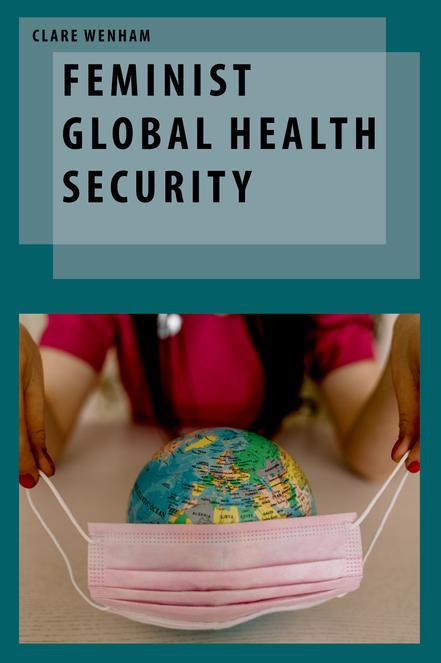
Feminist Global Health Security
CLARE WENHAM
3
Oxford University Press is a department of the University of Oxford. It furthers the University’s objective of excellence in research, scholarship, and education by publishing worldwide. Oxford is a registered trade mark of Oxford University Press in the UK and certain other countries.
Published in the United States of America by Oxford University Press 198 Madison Avenue, New York, NY 10016, United States of America.
All rights reserved. No part of this publication may be reproduced, stored in a retrieval system, or transmitted, in any form or by any means, without the prior permission in writing of Oxford University Press, or as expressly permitted by law, by license, or under terms agreed with the appropriate reproduction rights organization. Inquiries concerning reproduction outside the scope of the above should be sent to the Rights Department, Oxford University Press, at the address above.
You must not circulate this work in any other form and you must impose this same condition on any acquirer.
Library of Congress Cataloging-in-Publication Data
Names: Wenham, Clare, author.
Title: Feminist global health security / Clare Wenham.
Description: New York, NY : Oxford University Press, [2021] | Series: Oxford studies in gender and international relations | Includes bibliographical references and index.
Identifiers: LCCN 2020048717 (print) | LCCN 2020048718 (ebook) | ISBN 9780197556931 (hardback) | ISBN 9780197556955 (epub)
Subjects: LCSH: World health. | Women—Health. | Health policy. | Women—Diseases—Prevention. | Equality—Health aspects.
Classification: LCC R A441 .W398 2021 (print) | LCC R A441 (ebook) | DDC 613/.04244—dc23
LC record available at https://lccn.loc.gov/2020048717
LC ebook record available at https://lccn.loc.gov/2020048718
DOI: 10.1093/oso/9780197556931.001.0001
1 3 5 7 9 8 6 4 2
Printed by Integrated Books International, United States of America
For Scarlett
Acknowledgements
This book has been through several iterations. It started whilst I was pregnant in 2016 and recognising my good fortune to be pregnant in the UK, safe from the “threat” of Zika. Due to unforeseen stressors, and a second pregnancy of my own, this became a larger theoretical, and considerably longer, project, with a better result. Taking three years to write a book and reflect on the issues raised by Zika has allowed me time to consider the outbreak and feminist knowledge in the context of global health security more broadly. As I simultaneously become more disillusioned with global health security as a concept, and in particular as a policy space for women, Zika has offered the “perfect” viewpoint to assess these concerns, notably those of representation, the failure to serve those who are most at risk, and the lack of sustainability in securitized activity. Whilst I don’t assume to have the complete picture, my only request for this book is that whoever reads it questions the inherent assumptions of global health security and what is missed when this frame is applied to a global health issue.
The first thanks must go to all those people who agreed to talk to me as part of the process, whether formally or informally. It is these conversations that inspired me, challenged me, and made me reflect over the years. I hope I have represented our conversations fairly, and any errors are exclusively mine. This book is the product of several conversations with colleagues, without which it would have been infinitely inferior. The second big thank you goes to Sophie Harman and Sara Davies; they allowed me to brainstorm ideas with them over lunches, drinks, Whatsapps and emails off and on for three years which has significantly improved this book and kept me motivated to see it through to the end. Sophie Harman read an earlier iteration of the first chapters of this book and suggested a significant restructure that made so much sense. For having friends willing to support and provide such sage advice, I shall forever be grateful.
A Wellcome Trust funded project “Zika and the Regulation of Health Emergencies: Medical Abortion in Brazil, Colombia and El Salvador” (210308/Z/18/Z) facilitated much of the learning for this book. My colleagues in this work, Sonia Corrêa, Sandra Valongueiro, Camila Abagaro,
Amaral Arévalo, Katherine Cuéllar, Ernestina Coast and Tiziana Leone were vital to the development of my thinking, particularly in chapter five, and I hope that I have done our conversations and advocacy justice. Katherine sadly died whilst I was finalising this book, and her support in analysing Colombian health politics, as well as the fun we had in Bogota, Barranquilla and Cartagena will stay with me and in this book in her memory. I am grateful for participants at a workshop we hosted as part of this project on the intersection between health emergencies and reproductive health in Rio de Janeiro in September 2018.
Moreover, the broader Zika and Social Science network hosted at Oswaldo Cruz Foundation (Fiocruz) has provided thought provoking discussions in Brazil and the UK for the last three years. Particular thanks go to Denise Nacif Pimenta, Gustavo Matta, Carol Nogueira, Juliana Correa and Camila Pimentel. Further thanks go to other Zika and health security experts Joao Nunes and Deisy Ventura for discussions on this project during the process and for a Santander travel grant, which funded an additional visit to Brazil in 2019.
When I pressed send to submit this manuscript for review in December 2019, I never imagined I would be writing a COVID-19 epilogue. This is only a small flavour of the important work that I and many others are doing to understand the gendered effects of coronavirus, and governments’ ensuing response as part of the Gender & COVID-19 project, with the most fabulous of colleagues: Julia Smith, Rosemary Morgan, Karen Grépin, Sara Davies, Sophie Harman, Huiyun Feng, Asha Herten-Crabb, Ingrid Lui, Alice Murage, Connie Gan and Ahmed Al-Rawi, funded by the Canadian Institute of Health Research, and we have recently embarked on a much bigger project across multiple locations with a host of new colleagues including Naila Kabeer, Sabina Faiz Rashid, Selima Sara Kabir, Antonu Rabbani, Germaine Furaha, Valerie Mueller, Anne Ngunjiri, Amy Okekunle, Kelley Lee, Denise Nacif Pimenta, Brunah Schall, Mariela Rocha and Kate Hawkins, funded by the Bill and Melinda Gates Foundation. The Gender and COVID-19 working group, which we set up as part of this, has also been a source of thoughtprovoking discussion.
My knowledge and critiques of global health security have benefited from the considerable wisdom of colleagues from the broader global health and politics field—particularly the first two chapters of this book—and I want to thank Sonja Kittelsen, Simon Rushton, Colin McInnes, Jeremy Youde, Owain Williams, Emma-Louise Anderson, Christian Enemark, Adam
Kamradt-Scott, Rebecca Katz, Alexandra Phelan, Mark Eccleston-Turner, Stephen Roberts, Steven Hoffman, Gorik Ooms and many, many others for the numerous conversations over the years, which have all given me food for thought.
At LSE, Kate Millar gauged the way through my introduction to feminist security studies, and in Aberystwyth Jenny Mathers provided similar guidance. I also extend my deepest thanks to the Department of Health Policy at LSE which has facilitated my work on this book; to Gareth Jones and the LSE Latin America and Caribbean Centre for continued support; and to the colleagues who have kept me sane through the process, Mylene Lagarde, Irini Papanicolas, Beth Kreling, Liana Rosenkrantz-Woskie, Justin Parkhurst, Cat Jones, Andrew Street. Keri Rowsell and Farnaz Ayrom-Walsh helped with administrative nightmares during the fieldwork processes, including stolen grant money!
Importantly, I am so grateful to Angela Chnapko at Oxford University Press for seeing potential in this book when it was still incoherent and Alexcee Bechthold for managing the process. I also want to thank, and visibilise, the unpaid and paid labour of Philippa Russell, Rosie Wenham, Liz Evans and Jean-Louis Evans who provided much needed childcare whilst I was on fieldwork trips. Parts of this book have benefited from presentations and feedback in a range of forums. This has included departmental presentations in the Department of Health Policy, LSE; Department of International Relations, LSE; WPS Working Group, LSE; Escola Nacional de Saúde Pública, Fiocruz, Rio de Janeiro; Universidade de São Paulo; Universidad de La Habana; and York University. It has also significantly benefitted from two anonymous reviewers who pushed me to nuance and finalise my analysis, and from the research assistance support from Daniela Meneses-Sala and Corina Rueda Borrero.
Finally, this book would not have not been possible without the continued love and support of my best pal and husband, Philip. For not being phased by the early morning tapping away in the bed next to you to hash out paragraphs before the kids wake up, for my continued accusations of your role in patriarchy, and for all the additional parenting you’ve done whilst I was in Latin America and in the final stages of the project; you are the person who kept me sane. I dedicate this book to our daughter, Scarlett, born during the peak of the Zika outbreak, albeit thousands of miles away from Brazil where I never had to worry about the risks to her health posed by a mosquito. I continue to push for gender equality for you.
Acronyms
ABRASCO Associação Brasileira de Saûde Coletiva (Brazilian Public Health Association)
ARVs Antiretroviral Drugs
ASEAN Association of Southeast Asian Nations
BPC Benefício de Prestação Continuada (Continuous Cash Benefit Programme, Brazil)
BRICS Brazil, Russia, India, China, South Africa
BWC Biological Weapons Convention
CDC Centers for Disease Control Prevention (USA)
CZS Congenital Zika Syndrome
DALY Disability Adjusted Life Year
DDT Dichlorodiphenyltrichloroethane (Insecticide)
DG Director General
DRC Democratic Republic of Congo
ESPIN Emergência em Saúde Pública de Importância Nacional (Public Health Emergency of National Concern, Brazil)
ETU Ebola Treatment Unit
EU European Union
FCTC Framework Convention on Tobacco Control
FIFA Fédération Internationale de Football Association
FSS Feminist Security Studies
GBS Guillain Barre Syndrome
GBV Gender Based Violence
GDP Gross Domestic Product
GHS Global Health Security
GHS2019 First Global Health Security Conference
GHSA Global Health Security Agenda
GPMB Global Preparedness Monitoring Board
HEP Health Emergencies Programme (WHO)
HICs High Income Countries
HIV/AIDS Human Immunodeficiency Virus/Acquired Immune Deficiency Syndrome
HRW Human Rights Watch
IFRC International Federation of Red Cross and Red Crescent Societies
IHR International Health Regulations
ILO International Labour Organization
IMF International Monetary Fund
IPCC Intergovernmental Panel on Climate Change
IPE International Political Economy
IR International Relations
IUD Intrauterine Device
JEE Joint External Evaluation
LMICs Low and Middle Income Countries
LSHTM London School of Hygiene and Tropical Medicine
NCD Non-Communicable Disease
NERC National Ebola Response Centre (Sierra Leone)
PHEIC Public Health Emergency of International Concern
PPE Personal Protective Equipment
R&D Research and Development
SARS Severe Acute Respiratory Syndrome
SARS-CoV-2 Severe Acute Respiratory Syndrome Coronavirus—2 (COVID-19)
SGBV Sexual and Gender-Based Violence
SICA Sistema Integración de Centro-América (Central American Integration System)
SRH Sexual and Reproductive Health
SUS Sistema Único de Saúde (National Health System, Brazil)
TPP Target Product Profile
TRIPS Agreement on Trade-Related Aspects of Intellectual Property Rights
UHC Universal Health Coverage
UK United Kingdom
UN United Nations
UNAIDS Joint United Nations Programme on HIV/AIDS
UNASUR Union of South American Nations
UNDP United Nations Development Programme
UNFCCC United Nations Framework Convention on Climate Change
UNSC United Nations Security Council
USA United States of America
USD United States Dollars
WASH Water, Sanitation and Hygiene
WEF World Economic Forum
WHA World Health Assembly
WHO World Health Organization
WIGH Women in Global Health
WIGHS Women in Global Health Security
WPRO Western Pacific Regional Office (WHO)
WPS Women, Peace and Security
WPSA Women, Peace and Security Agenda
1 Introduction
Where are the women?
In June 2019, the First Global Health Security Conference (GHS2019) took place in Sydney, Australia. This was the first major event dedicated purely to this area of health policy with over 800 policymakers, practitioners and academics from across the globe meeting to discuss research developments, practice and future agendas within the field. At this event, there was a “Women in Global Health Security Breakfast”. A panel had been set up comprising senior women who have forged careers as epidemiologists, medical doctors or in development to offer reflections on being a woman working in the global health security space. We heard about the challenges of “having a seat at the table” and the tensions of balancing a career in global health security with managing personal care responsibilities. The elephant in the room, for me, was the complete lack of recognition of how our collective work in global health security policy impacts women worldwide beyond the self-reflexive corridors of global health security influence. At this event, in which I participated as a woman working in global health security, I asked the question “but what about the women affected by global health security policy?” and no one seemed to understand this discrepancy. Representation of women within the practice of global health security is not the same as addressing the impact of global health security on women*, yet it has almost become synonymous within global health, headed by movements such as Women in Global Health and Global Health 50/50 advocating for more diverse and inclusive global health organisations. I do not suggest that representation within global health security is not important, it undeniably is, as it is in all fields, but to be in this room, we were by default privileged to be the “doers, funders or analysts” of global health security and thus unlikely to suffer the differential impacts of the implementation of global health security policy as a consequence of our gender.
* In this book I use “woman” and “women” broadly, understanding and acknowledging that women, non-binary, and trans individuals, as well as adolescents below the age of legal recognition are impacted.
I contrasted this with my experiences the previous month in Barranquilla, Colombia, where I had been interviewing women’s groups who had been affected by the Zika outbreak (2015–7), reflecting on the response to the health emergency and whether policies had supported their needs. The overwhelming feeling was that it hadn’t and that activities deployed to respond to the outbreak showed no real awareness of these women’s everyday lives and the hurdles they may have to overcome; including vector control activities within their own houses and trying to avoid pregnancy in a context where access to contraception and abortion is limited. This resulted in policies which they believed failed to protect them from the spread of disease and, by extension, global health security as a normative agenda had failed to protect them, those most at risk of disease and its sequelae. What’s more these policies instead placed responsibility on women to carry a greater domestic burden in the name of state-centric health security.
Comparing these discussions of women in health security in Sydney with those in Barranquilla suggested a vast disconnect in how we understand women in global health security. Those working within the global health security policy space have failed to recognise the significant impact that the securitisation of a disease has on women. Even when asked to consider gender, this had become a self-referential exercise of gender representation in the workplace. I argue securitisation of disease produces particular policy pathways centred on “prevent, detect, respond”, but in each of these areas, there has been a failure to recognise the gendered nature of pathogen preventative efforts, surveillance limitations and response realities. Moreover, the secondary or downstream effects of interventions to improve health security are not part of the mainstream discussion. Where they are, they appear to be gender neutral securitised policies, but this neutrality masks the unequal impact on women. This book aims to understand this disjuncture, by offering a feminist critique of global health security, through analysis of the Zika outbreak in Latin America (2015–7). This is a particularly pertinent case study for feminist analysis: the outbreak was gendered in who was affected: pregnant women. Yet, even despite this central positioning of women, women’s reality was broadly ignored by global and national health security policymakers.
Even when women were not ignored, these global discussions fell into the trap of equating gendered experiences of health with reproductive health and access to abortion. Whilst this is undeniably important (and discussed at length in chapter five of this book), the focus on reproductive health as
“the” gender concern reproduces paternalistic assumptions about women, reducing them to their biological function, and fundamentally obscures a much more alarming trend: the unequal effect of health emergencies (and indeed other health issues) on women biologically and due to their socially prescribed roles. This needs to be exposed and recognised and policy change implemented in global health security preparedness, detection and response activities to ensure a more inclusive global health security that mitigates risk for all.
I argue that global health security, designed to protect states from infectious disease threats, neglects women’s reality, which is exposed by unpacking feminist concepts within the Zika crisis. I will make such a claim in the following three ways: Firstly, the Zika outbreak had an in/visibility problem: only certain women were visible in the crisis—those mothers with children affected by Congenital Zika Syndrome (CZS). This reproduces gendered stereotypes of women in society solely based on their reproductive function and their role as a mother. These women were further instrumentalised to promote the global health security narrative, with their pictures splashed across media outlets to promote global and national resource generation and rapid action, rather than receiving a response to the outbreak which met their or their children’s needs, or which protected other women from becoming mothers to children with CZS. Secondly, the “clean your house and not get pregnant” policies witnessed across Latin America placed undue responsibility and burden of additional labour on women. Unpacking both social reproduction and stratified reproduction highlights the disproportionate impact that such policies have: Women were instrumentalised by the state, which objectified them to manage the Zika crisis both through their role in prevention and treatment activities and chastising them for their failures to adhere to government advice. As it a result, it would be a woman’s own fault if she had a child born with CZS. In doing this, governments placed responsibility onto women to perform and enact global health security, and the state was able to absolve itself of responsibility for its own civic failures to reduce vector transmission. Thirdly, Zika exposes a disjuncture between global health security’s narrative, constructing the virus as a global threat, and the reality of the threat to the population at risk: poor women of colour living in northeast Brazil. These women faced a series of competing daily insecurities; acknowledging the structural and gender-based violence across Latin America, widely ignored by global and national policymakers, allows us to understand potential limitations of global health security in these settings.
Davies and Bennett (2016) and Smith (2019) have argued that during health emergencies, the “tyranny of the urgent” can take over whilst broader structural underlays are overlooked. Yet during Zika it was indeed because of the structure that women were at greater risk of infection than others, and yet this disproportionate systemic risk has not been recognised nor re-addressed through mainstreaming policy and response efforts.
The result of this disjuncture was a wholly inadequate response to the Zika crisis, which failed to protect those women who were most at risk from contracting the disease. All the Zika related hype in Geneva and Washington, DC, failed to trickle down to reduce transmission of Zika amongst the most vulnerable during the peak of the crisis; nor has it supported them in raising their children, who are living with complex needs. I argue that this failure to connect global policy to local reality was exactly because of who was affected: women, and in particular poor, non-Western, non-white women with little political or social capital. This failure exposes a broader trend of neglect within global health security policy (Nunes 2016) and mirror findings from Seckinelgin (2007) concerning contradictory realities of HIV/AIDS at global and local levels, and thus this trend must be explored and addressed within global health security policymaking. This is the central argument of this book: that global health security fails to recognise that policy designed to protect states from infectious disease outbreaks has a significant secondary effect on women. Whilst remaining invisible, women absorb additional cost of labour to implement health security activity, and this needs to be recognised and addressed in how policies are designed to prevent, detect and respond to outbreaks. One way to do this would be to engage feminist perspectives of security and include gender advisors in the process of decision making, as these are currently absent.
The “prepare, detect and respond” mantra central to global health security has been built on an assumption that outbreaks are gender neutral; that a pathogen and the ensuing response affects a man and a woman equally, and in the same way. Because of a number of biological and socially constructed factors, women are not only more susceptible to infectious disease, but are also more likely to bear the burden of its socio-economic impact. We know that a pathogen’s spread is not indiscriminate and that certain factors intersect, including age, race, poverty and importantly gender, to determine who is most likely to be affected by Zika. However, gender is not simply a determinant of infection; but also determines the secondary effects of disease response efforts, given that preparedness and response efforts have not
recognised the downstream effects of health security policies on women. This book shines a light on this lacuna and in doing so contributes to a nascent literature on gender in global health security. Beyond exposing the gendered differences in how women experience outbreaks, I question the validity of the state-centric concepts of global health security and reflect on how outbreak response would look if the referent object of global health security was relocated to be those most affected by global health emergencies: women.
In doing this, I do not wish to solely paint women as “victims” of health emergencies, negating individual agency in responding to infectious disease and its response, but to expose the biased and exclusionary institutions and structures which systematically disempower women (True 2003) within the framework of global health security at national and global levels. I argue state structures, defined as the Westphalian state system and institutions within states, have been partially the cause of this failure within health security, whereby paternalistic states and national policymaking to respond to outbreaks fail to recognise the role that women play in health and society more broadly. As Bradshaw (2013) highlights, the study of gender is not simply the study of women, but rather the study of unequal relationships between men and women, including why and how they are produced and reproduced at multiple levels of governance, and how they can be changed. Whilst disempowered by the state, the differential experience of women during Zika (and in outbreaks more generally) was further overlooked within the global health security response, amid global actors and policy formulation within global disease control, to the detriment of a progressive gender mainstreamed policy agenda which is evident in other global policy spheres, including climate change, humanitarianism and disaster response. Instead the onus was put onto women to avoid disease, in a masculinised regulatory and normative environment at global and national levels, which didn’t permit or facilitate this. Importantly, what is less apparent is whether the disproportionate effect on women is a normative motivation to exclude and disempower or simply an unintended outcome of policy transfer and norm internalisation of the global health security doctrine. Because global health security policy is gender blind, then maybe governments don’t think to question the impact on women; or if the policy area is dominated by epidemiological priorities, then the social effects may be missed. There is responsibility both at global and national levels to consider these effects, to ensure that women’s differential experiences are recognised and mitigated. For example, the Brazilian state is both an accomplice to global health security policy (and policy failures) for
women, as a stakeholder in global health security, and responsible for creating an environment within its state infrastructure where an outbreak could flourish and women experience the associated downstream effects. We must hold both the state, and the global health security regime (Davies, KamradtScott, and Rushton 2015) (the multi-stakeholder framework which governs pandemic preparedness and response, including states and non-state actors) accountable for such policy failures.
Ironically, the Zika outbreak occurred the year before global health “got gender”. Spurred on by the #MeToo movement, the discipline woke up to the vital importance of including women in multiple facets of health policy and planning (Dhatt, Kickbusch, and Thompson 2017; Hawkes, Buse, and Kapilashrami 2017; Lancet 2019). A considerable flurry of policy energy has emerged in recent years to ensure gender equality, representation and provision in global health more broadly; such as the Women in Global Health movement (Women in Global Health 2019) and accompanying Women Leaders in Global Health conferences (Women Leaders in Global Health 2019); awareness of pay gap reporting and lack of gender parity in leadership positions (Mathad et al. 2019; Global Health 50/50 2019); commitment to no “manels” (The Editors of the Lancet Group 2019), highprofile sexual misconduct cases in global health institutions (UNAIDS 2018; Ridde, Dagenais, and Daigneault 2019); and the championing of gender sensitive policies across several areas of health policy. Richard Horton, editor of the Lancet, even suggested that until now “the entire global health community has abdicated its responsibility for achieving gender justice in health” (Horton 2019). Yet, just as with the Women in Health Security Breakfast in Sydney, this focus on gender in global health has remained predominantly on women’s representation and participation within the global health space and has failed to recognise the impact of global health policies on everyday women and gender equality more broadly. Within the global health community, gender has been insidiously relegated to discussion of labour and recognition internally, not as a determinant or downstream effect of policy. This is not to suggest that representation isn’t important, of course it is, but that representation doesn’t necessarily equate to a more gender inclusive policy (Buckingham and Le Masson 2017). The focus on representation also mirrors the critiques of gender mainstreaming more broadly—that institutional focus on gender mainstreaming has been too inward looking, centres on gender equity within organisations, and this tunnel vision has failed to recognise and
address the broader impact of policy externally in the real world (Meier and Celis 2011; Brouwers 2013).
Taking gender seriously not only adds to analysis, but produces different analysis too (Enloe 2014). This book not only challenges the current path dependency at national and global levels for emerging pathogens due to its gender neutrality, which I argue inherently ostracises women, but also considers what might have happened had the Zika outbreak have been responded to with a more gender mainstreamed or feminist-centric policy response, putting women’s reality at the centre. Whether this be within a feminist security studies (FSS) framework, or whether the pathogen should not have been securitised in the first place, I suggest that had the global health security regime and states which implemented response efforts really wanted to limit the impact of this virus on women, the policy pathways which were deployed would have looked markedly different. Instead the global health security regime prioritised Western, patriarchal audiences over those most at risk. In doing so, I argue that global health security remains gender blind and add to a growing literature critiquing the lack of gender sensitivities within global health (Harman 2016; Davies and Bennett 2016; Smith 2019; O’Manique 2005; O’Manique and Fourie 2018). The global health security regime must confront this inconvenient truth and ensure women’s needs are systematically mainstreamed into global health security policy going forward. As Booth argues in broader security critiques, “To talk about security without thinking about gender is simply to account for surface reflections without examining deep down below the surface” (Booth 1997, 101). As such, by ignoring the unequal impact of outbreaks on women, the world remains vulnerable to the downstream effects of disease outbreaks in the long-term.
Women in global health security
Whilst this book focuses on the downstream effects of global health security policy on women, it is important to contextualise that gender remains a key determinant of risks posed by emerging infectious disease and health inequity: Firstly, due to reproductive life cycles, women are more likely to interact with healthcare providers and system than men for antenatal, postnatal or contraceptive services. Secondly, gender influences health knowledge, activity and behaviour (Hawkes and Buse 2013), and gender can affect how and if women access health services and the financial impact this may have
on households (Sen, Iyer, and George 2007; Xu et al. 2003). This can lead to gendered delays in health concern detection and treatment and ultimately produce a gendered impact on health outcomes (Cooper et al. 2016; Thorson and Diwan 2001). Thirdly, gender can affect the pathways chosen for responding to healthcare needs (Jüni et al. 2010; Russo 1990); both on the user side through differences in interactions between male and female patients with healthcare providers (Govender and Penn-Kekana 2008) and on the provider side through evidenced gender biases towards patients (Franks and Bertakis 2003; FitzGerald and Hurst 2017). These gendered biases have also been articulated amongst healthcare worker recruitment (Liang, Dornan, and Nestel 2019) and within policymaking institutions (Hawkes, Buse, and Kapilashrami 2017). Thus, as Hawkes and Buse argue “Gender norms, whether perpetuated by individuals, communities, commercial interests or underpinned by legislation and policy contribute to disparities in the burden of ill health on men and women (Hawkes and Buse 2013). Moreover, beyond gender inequalities in the health system, gender has been widely acknowledged as a determinant to susceptibility for infectious disease infection and outcomes, including for HIV/AIDS (Gruskin and Tarantola 2008; Mann and Tarantola 1996); Tuberculosis (Balasubramanian et al. 2004; Uplekar et al. 2001) and Cholera (Rancourt 2013; Farmer and Ivers 2012). Given that this gendered disparity has been increasingly evidenced in other areas of health and infectious disease it is surprising that this has yet to be substantially included within global health security policy and epidemic control.
Health emergencies are framed as global problems, assuming mutual vulnerabilities and homogeneous effects of pathogens across societies. Yet risks are not equally distributed across the globe, or indeed societies. At a global level, infectious diseases should pose less of a threat to high income settings with rigorous infection control protocols than they might to low income settings with weak health systems unable to cope with any surge demand within the structure. Within health systems, social determinants of health, including employment, race, culture, ethnicity, location, social status, childhood development, urbanisation and trade liberalisation and indeed gender, can affect individual vulnerability (Marmot 2005; Denton, Prus, and Walters 2004; Baylies 2004, 71; Seckinelgin 2007, 147; Anderson 2015). Such variables are, ultimately, the effects of government prioritisation across social and civic policy to promote certain areas of public development, certain communities, certain interests—and through this analysis it is possible to see the contrary; what is not included. This can affect who can access health
services, how these are paid for, their quality and how easy they are to get to. It can also affect broader developments such as housing, education, water and sanitation facilities. Ultimately when we consider neglect (of women) in health security, we cannot do this without recognition of the role of the state in the systemic determinants of ill-health. Yet, not recognising the gendered effects of disease is counter-productive to the goal of global health security. I justify this assumption in four ways.
Firstly, women are at greater risk of contracting many infectious diseases for both biological and social reasons, referred to as the feminisation of disease (Lee and Frayn 2008; Doyal, Naidoo, and Wilton 1994; Harman 2011). Women are more biologically susceptible to some infectious diseases, including HIV/AIDS (Türmen 2003), Chagas disease, schistosomiasis, hookworm (Hotez 2013), measles (Garenne 1994), malaria (Rogerson et al. 2007), tuberculosis (Thorson and Diwan 2001) and Zika (Coelho et al. 2016). This is compounded by socially constructed factors which expose women to infection through greater contact with those infected or greater proximity to other risk factors (Arabasadi 2017). During the Ebola outbreak in West Africa, whilst there is no biological evidence suggesting that women are at greater risk of infection (Nkangu, Olatunde, and Yaya 2017), women were disproportionately infected (Menéndez et al. 2015) owing to caregiving roles that exposed them to physical contact with infected family members or neighbours and thus put them at greater risk of contracting the disease (Cohan and Atwood 1994; Santow 1995).
Women are more susceptible to contracting Zika than men (Coelho et al. 2016; Cepeda et al. 2017). Ironically, pregnant women are at particular biological risk of Zika: pregnant women are more likely to get bitten by mosquitoes as they exhale more carbon dioxide and are 0.7 degrees hotter than non-pregnant women, both of which attract mosquitoes (Lindsay et al. 2000). Although some have flagged a reporting bias as women, scared of the effects of Zika on their pregnancy, or as the target of government-led testing programmes, would have been more likely to go for testing. Yet, a Colombian study validated this disproportionate incidence amongst women, demonstrating that women between the ages of 45 and 64 (i.e. supposedly after their reproductive life-span) reported higher incidence of Zika than men of the same age (Pacheco et al. 2016). Similarly, research on Zika during the outbreak on Yap in 2009 (Duffy et al. 2009), reported higher infection rates amongst women than men, before the association with CZS was established. It cannot be concluded whether this susceptibility is due to biological