Oxford University Press is a department of the University of Oxford. It furthers the University’s objective of excellence in research, scholarship, and education by publishing worldwide. Oxford is a registered trade mark of Oxford University Press in the UK and certain other countries.
Published in the United States of America by Oxford University Press 198 Madison Avenue, New York, NY 10016, United States of America.
All rights reserved. No part of this publication may be reproduced, stored in a retrieval system, or transmitted, in any form or by any means, without the prior permission in writing of Oxford University Press, or as expressly permitted by law, by license, or under terms agreed with the appropriate reproduction rights organization. Inquiries concerning reproduction outside the scope of the above should be sent to the Rights Department, Oxford University Press, at the address above.
You must not circulate this work in any other form and you must impose this same condition on any acquirer.
Library of Congress Cataloging-in-Publication Data
Names: Ross, Melanie C., author.
Title: Evangelical worship : an American mosaic / Melanie C. Ross. Description: New York, NY, United States of America : Oxford University Press, [2021] | Includes bibliographical references and index. Identifiers: LCCN 2021015577 | ISBN 9780197530757 (hb) | ISBN 9780197530771 (epub)
Subjects: LCSH: Public worship—United States—Case studies. | Evangelicalism—United States—Case studies.
Classification: LCC BV15 .R67 2021 | DDC 264.00973—dc23 LC record available at https://lccn.loc.gov/2021015577
Printed by Sheridan Books, Inc., United States of America
To John Frye, a musician after God’s own heart
Acknowledgments
Introduction: The Significance of Evangelical Worship 1
PART I: CONSTANCY VERSUS CHANGE
1. “My Worship Has Been Hijacked”: Forty Years of Worship Wars 11
2. “Stately and Set Apart”: Upholding Tradition in Boston 39
3. “Suddenly We’re in a Different Era”: Navigating Transition in Chicago 66
4. “Something Better Has Come Along”: Championing Innovation in Atlanta 90
PART II: CONSENSUS VERSUS CONTESTATION
5. “How Can We Catch Fire?”: Prophecy and Activism in the Vineyard 119
6. “You Can’t Make Me Sing”: Resisting Authority in Portland 144
7. “Not to Sing Is to Disobey”: Submitting to Paradox in Nashville 168
PART III: SAMENESS VERSUS DIFFERENCE
8. “One Voice in Many Languages”: Pentecostal Praises in the American Southwest 199
9. “Navigating the Beautiful Tension”: Evangelical Worship as Eschatological Culture
Acknowledgments
A mosaic is only as good as the glue that binds it together. The following individuals and institutions held this project (and its author) together over a long course of research and writing, and it is a joy to acknowledge my debts.
I have no idea what makes churches respond affirmatively to a cold call from an unknown researcher hoping to study their worship. The risks to participating in this kind of project are great; the rewards relatively few. There is no financial incentive, no way of censoring what interviewees disclose, no guarantee that the worship service won’t go spectacularly awry in some unforeseen way. Yet the seven congregations in this study welcomed me unreservedly: an instinct rooted, no doubt, in their commitment to following Jesus’s example of unconditional love and lavish hospitality. To Park Street Church, Moody Church, North Point Community Church, The Village Chapel, and the three congregations I do not directly name: I owe you more than I can repay. The evangelicalism of headline news is an unrecognizable caricature of the real thing I found when I stepped through your doors.
I am grateful to Yale Divinity School Dean Gregory Sterling and Yale Institute of Sacred Music Director Martin Jean for their many encouragements and for funding the sabbatical leave that enabled me to complete the manuscript. My travel was made possible through generous support from the Henry Luce Foundation, which granted me a year as a Henry Luce III Fellow in Theology, and from the Louisville Institute, through its Sabbatical Grant for Researchers. Michael McGregor and my colleagues at the Writing Beyond the Academy program at the Collegeville Institute restored my confidence and enthusiasm for writing at a time when both were flagging.
Paul, Sally, and John Zink provided a home away from home during the Chicago leg of my research. Marti and Bob showed me every corner of their beautiful part of the Pacific Northwest. Chris, Martha, Miriam, and Fiona were my extended family in Atlanta. Lexi and her mom kept me well fueled with pie and vanilla chai during my sojourn in the Southwest.
Halfway through this project, I was diagnosed with cancer. It is no exaggeration to say that I owe my life—and my remission—to my Smilow Cancer Center team, through whose skillful hands God worked. If you ever receive a devastating diagnosis, I pray that the person delivering it is as kind and compassionate as Liane Philpotts. Brigid Killelea and Alexander Au cut the cancer out and stitched me back together with a combination of science and artistry that, years later, still leaves me
in awe. Maysa Abu-Khalaf and Suzanne Evans oversaw my chemotherapy and radiation treatments. The weekly encouragement they provided was as strong and bracing as the medicines they prescribed. An army of people carried me and my family through this time, but Nora Tubbs Tisdale, Jan Holton, Tisa Wenger, and Micah and Katharine Luce deserve special mention. Jen Anderson taught me to “Do Today Well.” Appreciative head scratches go to Findus (on gracious loan from Teresa) and Marilla for their therapeutic feline companionship.
Theo Calderara and the team at Oxford University Press waited patiently for this book, graciously accommodating all the extensions I requested in the face of a personal medical crisis and a global health pandemic. Thank you, Theo, for your wise counsel, your cheerful persistence, and your confidence that this was a subject worth writing about. Rona Johnston, book whisperer extraordinaire, brought her insatiable curiosity, keen historian’s eye, and impeccable editorial instincts to bear on every sentence of this project, transforming both the writer and the writing in the process. I didn’t know I had this book in me until Rona helped me find it.
John Witvliet kindly allowed me to try my ideas out at the Calvin Symposium on Worship in Grand Rapids. Thanks are due to him and to the following individuals who read the manuscript in part or in its entirety: Mark Noll (my Luce Fellow respondent, and the scholarly giant upon whose shoulders all of us who study evangelicalism stand), departmental colleagues Teresa Berger and Bryan Spinks, Catherine Brekus, Jessi Hott, Todd Johnson, Tommy Kidd, Joyce Mercer, Johnny Miller, Nathan Mitchell, Mary Moschella, Lester Ruth, Don Saliers, and Carolyn Sharp. These wise conversation partners sharpened my arguments and saved me from many mistakes. The faults that remain are mine alone.
So many wonderful graduate students have improved this book through their enthusiasm, intelligent questions, and research assistance. In particular, I thank Emily Dolan Grier, John Hodges, Drew Konow, Justin Kosec, Adam Perez, Betsy Shirley, and Emily Wing for transcribing interviews, compiling annotated bibliographies, tracking down footnotes, and commenting on drafts. Special appreciation goes to EmmaRae Carroll, who went beyond the call of duty to get the manuscript across the finish line.
Other friends, colleagues, and loved ones have contributed to the project in less overt, but no less meaningful ways. Bill and Gloria Gaither gifted me their time, a beautiful Bible, and a rich conversation about worship that I will always cherish. Many of the theological seeds that came to fruition in these chapters were planted during my undergraduate years in the Music Department at Messiah College. William Higgins, Larry Landis, Ronald Miller, Richard Roberson, William Stowman, and Linda Tedford have influenced the trajectory of my life and scholarship in more ways than they will ever know. My beloved college piano professor, Carol Anderson (d. 2019) did not live to see the completion of this book, but I hope
it would have made her proud. Lawrie Merz and John McGuire, Evie Telfer, and the Ostrander, Curry, Morgan, and Twigg clans all came into my life during those formative years in Grantham and have since become extended family.
I owe thanks to Siobhán Garrigan and Martha Moore-Keish, who regularly inspire me with their scholarship, their cooking, and their lives lived well. Writing buddies Tisa Wenger and Almeda Wright hold me accountable, but also help me not to take myself too seriously. Bruce Gordon, Chloe Starr, and Gabby Thomas have provided meals, consolation, and invaluable advice. Callista Isabelle and Jen Statler are the best friends a girl could ask for: time melts away every time we talk on the phone or meet up for crepes. College roomies Gretchen Bisbort, Stefanie Campbell, and Debra Close are as dear to me today as they were when we graduated; their love and text messages have been a sustaining lifeline. My sister, Heather, regularly reminds me that there is more to life than work, and that an evening spent binging cupcakes and The Great British Baking Show usually puts problems back into proper perspective.
I have saved my most important thanks for last. Many parents of academics give their offspring’s books pride of place on the coffee table but never read a word of their contents. Bill and Janet Ross are an exception to the second half of this rule. They devoured chapter drafts as quickly as I could write them, awaiting each new installment with the eager impatience of a Harry Potter fan at a midnight bookstore launch. My constant supporters and biggest cheerleaders, their feedback has shaped this book in ways both great and small. Being their daughter is my greatest blessing.
Evangelical Worship is dedicated to John Frye, Pastor of Worship and Care at Calvary Church (Lancaster, PA) in gratitude for his thirty years of love and ministry to the congregation. As you will read in Chapter 1, John was my high school piano teacher. However, the lessons I’ve learned from him go far beyond how to play notes on a page. In recent years, concepts like “building a brand,” “personality-driven worship,” and “growing a platform” have worked their way into church lexicons. John is the antithesis of all these things. In a commercialized worship world that is fast and loud, he is gentle and quiet. In a musical culture that constantly demands new highs, he is grounded and steadfast. Every time he sits behind a keyboard or picks up a baton, John does the impossible: he makes the congregation forget they are witnessing a musician at the top of his craft by ushering them into the presence of God. John, I thought of you during every service I describe in the pages ahead. I pray this book unites you in encouragement with others who know the joys and challenges of your calling firsthand. May you and your counterparts across the country always know this: your grateful congregations appreciate you more than words can express.
Soli Deo Gloria MCR
New Haven, CT
Introduction
The Significance of Evangelical Worship
“Next year in church,” tweeted popular American evangelist, author, and Bible teacher Beth Moore on Easter Sunday 2020, expressing the hopes of Christians around the world.1 Moore’s four-word message came as America was beginning to reckon with the immensity of the Covid-19 pandemic. By the end of March, coronavirus cases had been confirmed in all fifty states. Residents in many parts of the country had been ordered to stay home; schools and businesses had closed their doors to slow the virus’s spread. Churches around the world, including the Vatican, canceled all in-person services.
Impatient with the economic slowdown and stock market plunges, President Donald Trump emphasized his eagerness to see the nation return to normal. At a Fox News town hall on March 24, he broadcast his hope that the country would be “opened up, and rarin’ to go by Easter”—a date that was then a little more than two weeks away. “Wouldn’t it be great to have all the churches full?” he mused. “You’ll have packed churches all over our country,” he predicted. “I think it’ll be a beautiful time.”2
Medical experts and religious leaders alike condemned the president’s aspirational timeline. Shortly after Trump’s remarks, an editorial in the evangelical magazine Christianity Today warned that congregating during a pandemic would damage the church’s witness. “Rather than looking courageous and faithful, we come off looking callous and even foolish, not unlike the snake handlers who insisted on playing with poison as a proof of true faith,” the magazine cautioned.3 Moore’s Easter Sunday tweet could similarly be interpreted as a mild rebuke. Believers would not come together, even for the most joyous, significant celebration in the Christian calendar, until conditions were once again safe. “Next year in church.”
But we can also read Moore’s tweet with a different emphasis. In Judaism, the Passover Seder ends with the invocation L’Shana Haba’ah B’Yerushalayim next year in Jerusalem. Before the creation of the State of Israel in 1948, this saying expressed the desire for all Jews to be able to return to the homeland, just as they did after leaving Egypt. At Passover 2020, many Seder meals were small and subdued: grandparents, siblings, cousins, neighbors, and friends could not crowd around a shared table. Under the circumstances of
the pandemic, Washington Post editor Ruth Marcus observed, “Next year in Jerusalem” was still a statement about geography, but it also expressed a longing for a better world.”4 Moore’s tweet can be heard as a similar expression of yearning. “Next year in church.” Suddenly without the religious practice they had experienced as a self-evident Sunday fact, Christians were hungering for corporate worship: that is, the experience of singing, praying, reciting creeds and confessions, reading scripture, and partaking in communion while gathered in the same physical space.
As I completed the text of this book during the pandemic, I heard Christians exploring the very question that had launched me into this study: why is worship so central to Christian identity?
The Significance of Corporate Worship
Before the pandemic, evangelical pastors routinely reminded their congregations that spiritual formation involved much more than showing up at a particular building once a week. However, as houses of worship remained shuttered and Zoom fatigue set in, faith communities discovered that being in the same physical space at the same time each week mattered profoundly. Digital platforms could not reproduce the touch of a hand extended in peace, the musical vibrations of singing side by side, or the felt presence of other worshippers sharing the same creaky pew. In 1997, decades before the pandemic, professor of biblical spirituality Donald Whitney argued that something unique happens in live corporate gatherings that cannot be replicated in private devotions or by watching worship. “There are some graces and blessings that God gives only in the ‘meeting together’ with other believers,” he insisted.5 With the arrival of Covid-19, pastors broadcasting their sermons from living rooms and believers celebrating Eucharist in their kitchens suddenly understood this truth in a new and visceral way.
My interest in evangelical worship has also proven fortuitous for another unexpected reason. When I began my research in 2014, the chances that Donald Trump would ascend to the presidency two years later seemed more than remote. In their analysis of the election results, pollsters and pundits fixated on the overwhelming support Trump received from a constituency often called “white evangelicals.” Traditionally, the term evangelical has referred to a group of self-identified Protestants who hold a high view of biblical authority, have a cross-centered theology that affirms the idea that Jesus suffered and died to atone for humans’ sins, and stress the importance of individual conversion and evangelism—a definition this book also assumes.6 Scrambling to understand how a people known for their public piety and strict personal morality had
helped elect a philandering, church-avoiding businessman to the presidency, scholars began seeking out new methods for studying this faith tradition.7
For example, Molly Worthen, journalist and historian at the University of North Carolina, has posited that white evangelicals’ loyalties are more deeply formed by the nightly consumption of conservative cable news than they are by the practices of Sunday morning. Specifically, she proposes, Fox News, a “repetitive, almost ritualistic thing that people do every night,” shapes viewers’ fears, desires, and ideals of America in a way that the church simply cannot match. Worthen wrote in a 2017 New York Times article of seeking answers from conservative and progressive critics of white evangelical politics for why the election had gone the way it did. Their answer: “Pay attention to worship, both inside and outside of church, because the church is not doing its job.”8
Historian Kristin Kobes Du Mez makes a similar point about the inadequacy of corporate worship in her book Jesus and John Wayne: How White Evangelicals Corrupted a Faith and Fractured a Nation. Du Mez posits that the reason pastors wielded little influence over the actions of their parishioners during the Trump campaign was because books, magazines, music, films, ministry conferences, blogs, T-shirts, and home decor do more to shape the evangelical movement than any of its official theologies. “A few words preached on Sunday” could not compete against the steady diet of religious products that evangelicals consumed day in, day out.9
But as this book explains—and as the creative, reflective, and engaged communities I visited for its research make so evident—corporate worship cannot be summarily dismissed.
To understand why, consider theologian Kevin Irwin’s illustration of Christian identity as three concentric circles, arranged from smallest to largest like an archery target. Writing from his own Roman Catholic tradition, Irwin defines the innermost circle as liturgy: the rites, prayers, and ceremonies that are held in common by all Catholics throughout the world. The second concentric circle— wider than liturgy—is prayer, which includes devotional aids such as lectio divina, centering prayer, and meditation. The third and largest circle is spirituality: the way one’s daily life in the world is shaped by the revelation enacted in the celebration of the liturgy. The three circles of liturgy, prayer, and spirituality are interrelated. Genuine Christian spirituality requires liturgy as its anchor and mainstay, just as corporate worship returns participants back to daily living with their vision of the Christian life sharpened.10
These three concentric circles are equally useful in the study of American evangelicalism.
I am using the word worship in this book as a synonym for what Irwin describes as liturgy. The subject of the ensuing chapters is the the “bullseye” of the target: that which happens when evangelicals gather together in the name
of Jesus Christ, by the power of the Holy Spirit, to meet God through scripture, song, prayer, proclamation, and the celebration of baptism and the Lord’s Supper. This “bullseye” is no indicator of political uniformity: evangelicals who worship in the same congregation may disagree sharply over which candidate to support for public office. Furthermore, evangelical devotional practices and spirituality are mediated by a variety of factors, including geography, socioeconomic class, gender, and so on. These secondary and tertiary aspects of the tradition—the ways evangelicals vote, consume media, share their faith, raise children, and so on—are deserving of study, but without the anchor of corporate worship, the concept of evangelicalism loses much of its explanatory value and meaning. Evangelicalism may be more than what happens when congregations gather for corporate worship, but it is never anything less
Scope and Parameters of the Study
Evangelical Worship is the first book to examine how a multiplicity of evangelical congregations use worship to unite with, and differentiate themselves from, one another. I embarked on a four-year course of fieldwork between Boston, Chicago, Atlanta, Nashville, the Pacific Northwest, and the American Southwest. Four of the churches I write about are identified by name and location: these congregations are well established within the evangelical world and are capable of bearing the burden of academic inquiry.11 I have assigned pseudonyms to all the pastors and individuals interviewed in the remaining three congregations; in some cases, I have also tinkered with identifying details.12 This anonymity was necessary because of the small size of the congregation and/or the sensitive nature of the topics disclosed: internal church conflicts, experiences of racial discrimination, the presence of undocumented immigrants in the assembly. In all seven fieldwork sites, church leaders gave me advanced permission to attend services and meetings, and the congregation was aware of my presence as a researcher. Without their support, generosity, and candor, this book would not have been possible. Since no work can be comprehensive, I have chosen to limit the scope of my inquiry in four ways. First, all of the churches in my study are selfgoverning. They are either nondenominational or part of a network that supports and strongly encourages local autonomy (i.e., the Vineyard Association, the Conservative Congregational Christian Conference). Another fascinating book could be written about evangelical congregations that operate under different ecclesial polities— particularly within denominations like Presbyterianism or Methodism, which produce their own liturgical resources.
Second, although the churches I studied range in size (from fewer than fifty to more than thirty thousand members) and geographic region, all of them are located in cities or suburbs. The Rural Matters Institute at Wheaton College’s Billy Graham Center rightly points out that “as more people and resources move to urban settings, the rural heartland has gradually become under-resourced, overlooked, and often forgotten.”13 There is a movement afoot to plant evangelical churches in rural areas, an effort that requires strategies and resources markedly different from those used in any other context. I regret that practical and professional restraints prohibited research in one such community.
Third, all congregations in this book happily, or in one instance more hesitantly, self-identify as evangelical.14 There are other stories still waiting to be told by congregations that have a more complicated relationship to this word— theologically conservative African Americans, for example, or worshippers in Holiness, Wesleyan, Nazarene, and Anabaptist traditions. This study makes no claim of comprehensiveness. I have chosen to prioritize depth over breadth, in the hope that evangelicals of all stripes might recognize something of themselves in the chapters that follow. (For a detailed explanation of and justification for my research methodology, see Appendix A.)
An American Mosaic
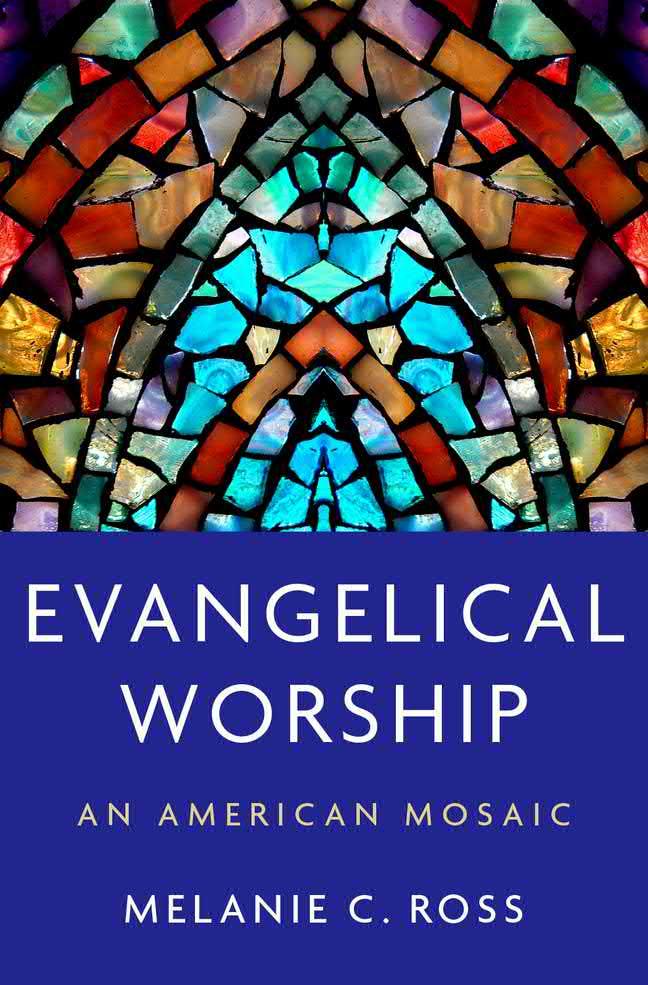
The seven case studies at the heart of the book constitute what I am calling an “American mosaic.” A mosaicist creates an image by juxtaposing a series of blocks of pure color next to one another, employing strategic tensions to give the composition an overarching unity. Similarly, I have chosen seven church “tiles” that each represent a key type of evangelical worship and arranged them in a deliberately ordered tension.
The story then begins at Park Street Church in Boston, where Harold John Ockenga served as pastor from 1936 to 1969. In 1947, Ockenga coined the term “neo-evangelicalism” (later shortened to “evangelicalism”) to describe a new movement of conservative Protestantism that accepted the doctrinal premises of fundamentalism but rejected its cultural isolationism. The evangelicalism Ockenga imagined was a “big tent” coalition. It encompassed a wide spectrum of believers—Calvinists, Arminians, Baptists, Presbyterians, and more— who were united by their shared commitment to the centrality of scripture, an atonement-based gospel, the necessity of conversion, and the expectation that Christians would be active in their churches and communities. The members of those congregations sang music from a hymnal every Sunday, followed a few national teaching programs on Christian radio, and subscribed to one or two magazines produced by trustworthy evangelical publishers. Park Street Church
(Chapter 2) and Moody Church (Chapter 3) are historic examples of this branch of evangelicalism.
The explosive growth of megachurches in the 1980s and 1990s began to change the character of evangelicalism. Megachurches catered to the needs of religious “seekers” and bore little resemblance to traditional congregations. Pastors ran these churches like corporations, measuring success in terms of customer satisfaction. Since crosses, liturgies, offering plates, and hymns were thought to make “unchurched” people uncomfortable, megachurches replaced them with drama, video presentations, and easy-to-sing songs performed by a band. Sermons became less expositional and more topical, tending toward subjects like money management, marriage and parenting, and sexual purity. North Point Community Church (Chapter 4) is representative of this shift. The worship innovations of megachurches divided evangelicals: some supported the new experiments, hoping that they would attract more nonbelievers to the church, while others objected to what they perceived as a therapeutic gospel and “church-lite” stylings.
At the turn of the century, two new worship developments frayed the unity of the original big-tent coalition even further. A younger generation of Christians rejected not only the theological superficiality of megachurch evangelicalism, but also the epistemological certainty of classical evangelicalism. Emphasizing that God revealed a storied narrative in scripture rather than a systematic theology, these “post-evangelicals” formed a network of “emerging churches” that elevated dialogue over propositions and mystery over certainty. Many of these new ecclesial communities looked to Catholic, Orthodox, and Anglican traditions to recover liturgical practices that had long been missing from other expressions of evangelicalism. Wayfarers Collective (Chapter 6) serves as an example of a congregation that has been shaped by the emerging church movement.
Around the same time, a second group of evangelicals reacted to the megachurch movement by calling for a recovery of precisely the Reformed doctrines that emerging churches found most problematic: for example, the depravity of fallen humanity, the sovereignty of God, and the necessity of substitutionary atonement. These neo-Reformed evangelicals are responsible for the rise of a “modern hymn movement,” which has produced new texts with doctrinal depth and singable melodies. The Village Chapel (Chapter 7) stands in this tradition.
As the twenty-first century continues to unfold, new emphases and movements have introduced additional complexity to the evangelical mosaic. Churches like Koinonia Vineyard (Chapter 5) have become a key point of contact between traditional evangelicalism and Pentecostalism, introducing elements like supernatural healing, extraordinary “words of prophecy,” and speaking in tongues into corporate worship. Intentionally multiethnic congregations like
Holy Inheritance (Chapter 8) are raising neglected questions about how racial prejudices impact a congregation’s ability to worship together in unity. The deliberately ordered tension of tiles in Evangelical Worship can be understood in a second way. In each of these examples of evangelicalism—classical, megachurch, emerging, neo-Reformed, charismatic, and multiethnic—worship is the vehicle through which congregations negotiate and express their theological identities. International relations experts Bahar Rumelili and Jennifer Todd suggest that there are three key paradoxes of identity negotiation, each of which we see at work in a section of this book.15
The first tension is between constancy and change. The biblical storyline itself is an example of this paradox: Christians believe that the church is both a continuation of the people God called in Genesis and that the work of Christ and the coming of the Holy Spirit birthed a genuinely new community. Relatedly, when congregations tell the story of their identity in the twenty-first century, they must locate themselves somewhere between stagnation and chaos. Choosing a position means confronting a complicated knot of questions: How can we account for development while still claiming to be who we have always been? Conversely, how can we claim to be the same when so much has changed over time? Exactly what degree of continuity with the past is necessary to maintain a unified identity?
Part I explores the strikingly different ways three of the most storied congregations in American evangelicalism have negotiated these questions in their worship. Park Street Church and Moody Church wrestle with how to maintain a historic identity without becoming a museum, placing them closer to the “constancy” end of the continuum. North Point Community Church gravitates toward “change,” emphasizing that the service patterns and musical repertoire that worked in previous decades must be replaced if a church hopes to be relevant to a new generation.
The second paradox is between consensus and contestation. On one hand, identity requires consensus: the group publicly endorses certain beliefs, practices, and norms while rejecting others. On the other hand, and at the same time, individuals in the group may feel tension between their ascribed identity (what the organizational gatekeepers expect them to be) and their assumed identity (the way they see themselves). Individuals and subgroups—in this case, congregations—sometimes subvert their ascribed identity when they feel that “consensus” is being imposed upon them from on high.
Part II examine this bottom-up/top-down tension. At Koinonia Vineyard, one African American member wrestles with the contradiction between her vision of activism (assumed) and her Caucasian pastor’s desire for the congregation to remain politically neutral (ascribed) during a time of national racial unrest. The next two chapters shift to the subject of music. The Village Chapel emphasizes
that the Bible commands Christians to sing and is closer to the “consensus” end of the continuum. Churchgoers at Wayfarers Collective in Portland are less likely to submit to authority by singing when directed, placing their community nearer to the pole of “contestation.”
Part III highlights the final paradox of identity negotiation: sameness and difference. An identity does not change across diverse circumstances and contexts (sameness). At the same time, identity is dependent upon difference, a fact that is rooted in humanity’s tendency to represent reality in binary terms. Individually and collectively, we define our “ingroup” identity in relationship to the “outgroup” of which we are not a part: Caucasians are not African Americans, Methodists are not Roman Catholics, and so on. Holy Inheritance, a multiracial congregation, works to integrate its Christian identity (which all worshippers share) with a variety of ethnic identities (which some, but perhaps not all, or even most, worshippers share). Chapter 9 concludes the book, drawing together all seven case studies and probing questions of sameness and difference from an ecumenical angle.
The chapters that follow offer a close reading of several evangelical congregations, but this book is not, in the end, about the liturgy of any particular subgroup. Instead, by focusing on a number of colorful fragments, I argue that we can conceive of an interconnected whole: that fascinating, complex, and vibrant mosaic known as American evangelical worship.
PART I CONSTANCY VERSUS CHANGE
1 “My Worship Has Been Hijacked”
Forty Years of Worship Wars
A few months into my research, I received an email from an acquaintance with whom I had discussed this project: a man I am calling “Warren.”1 Warren, an affable curmudgeon in his retirement years, is a committed evangelical Christian. He and his wife have attended the same local church for half a century, and many of their friends are similarly long-term members. Their children have grown up in this church, physically as well as spiritually. When the kids were very young, Warren racked up volunteer hours rocking babies in the nursery and reading Bible stories to toddlers. As they grew into teens, Warren chauffeured his brood to a cornucopia of church-sponsored events: Awana clubs, Pinewood Derby races, drama rehearsals, youth group meetings, service projects, summer campouts, and more. The church has experienced many changes over the course of Warren’s tenure. Warren has watched senior pastors come and go. He has been regularly cajoled to support new expansion projects, fundraising campaigns, and church initiatives. Some generational shifts—reading scripture on personal electronic devices with enlargeable font—have met with his approval. Others—coffee in the sanctuary, blue jeans in the pulpit—decidedly have not. But for fifty years, Warren has supported the church through its ups and downs with his loyal attendance, tithing, and prayers.
When Warren learned that I was writing about worship, he decided to undertake a reflective journaling project of his own. Although he is not the type to wear his heart on his sleeve, Warren felt strongly enough about recent changes in his church’s worship to write the following words:
A musical loop is running over the sound system. It sounds “churchy” in some vague way. The music is up-tempo, familiar feeling, but not specifically identifiable. A few minutes pass and the worship team begins to gather on the stage with their travel mugs and water bottles. For the most part, they are younger, good looking. For the past half hour, they have been running a soundcheck. I am not entirely sure what that entails. I am uncertain as to exactly why we need a worship team, what their function really is, or what they contribute to the worship experience. (They do seem to know the words to all the new songs that keep coming at us.)
As they begin to set up, taking their mics and assuming their positions, it comes to me again—that annoying knot in my stomach. I am uncomfortable with what is coming. I can’t help it. I don’t want to feel this way. I don’t want to come to church on Sunday morning dreading what’s going to happen.
Our smiling worship leader makes his entrance, casually dressed, guitar hanging from his shoulder. He’s flapping his arms with his palms up, motioning us all to stand, or perhaps to join him on his higher spiritual plane. I always have the same reaction: it just doesn’t feel right. It almost never feels right.
“Lord Jesus, we love you so much this morning. We need you. We want you. We are here to worship you.” We, we, we. What they sing are largely praises— songs praising God, songs praising us for gathering to praise God, songs praising us for wanting to praise God, songs praising the depth of our desire to praise God. I wonder what happened to the respectful, prayerful, reverent entrance to God’s holy presence; quieting our hearts, asking Him to meet with and speak to us? Familiar resentment builds in me. I shouldn’t have to come to church afraid of what the worship team is going to come up with next. I shouldn’t have to feel each Sunday that my worship has been hijacked.
I feel tears start to well up in my eyes. I can’t sing. I don’t care about the music or the antics. I would really like to sit down but that would call attention. Does my disappointment matter? Does God feel my pain, or does worship “of the people, by the people, for the people” trump my spiritual needs?
This is my dilemma.
“Timothy,” a proud grandfather of two and a classically trained musician, works at a place I am calling Hillcrest Community Church. (“Hillcrest” is a midsize evangelical church located in the same town as—but not directly connected to— one of the congregations featured in this book.) Timothy, who spoke on the condition of anonymity, has outlasted five senior pastors. “There’s been a lot to figure out,” Timothy admits. “How do you work with this person? What’s their personality and style? How am I going to adapt what I’m doing?”
For Timothy, the most recent leadership transition has been the most challenging. The church’s new leader, Pastor Matthew, a freshly minted seminary graduate, models his vision for corporate worship after the practices of megachurches like North Point (see Chapter 4). Timothy makes it clear that he harbors no ill will toward his new boss: “It’s not a hostile environment. Pastor Matthew is truly appreciative of my ministry here.” But one of Timothy’s new challenges has been learning to share his kitchen with many untrained cooks. Whereas Timothy used to plan weekly worship alone, in conversation with the senior pastor and with input from the church organist, there are now at least three non-musicians who, as Timothy puts it, “speak into” the process: “We have Pastor Matthew, who is the main teaching pastor. Then there’s Mark, who is head
of the tech department, and Luke, who is responsible for the creative elements of the service. Mark now leads the worship-planning meetings, and for a while, I really struggled with that,” Timothy reveals. “Everybody in that room speaks into song choice, into transitions, into the ambiance in the sanctuary. We would have fifteen-minute discussions on microphone glitches. Every week I would go in and feel like, ‘Well, I used to do that [part of worship] and now I don’t. And I used to do that, and now I don’t. Every week I was in there, my responsibilities were kind of being stripped from me. I’ve been in church work my entire adult life, and now all of a sudden, there’s not really a role of minister of music.”
The more I talked with Timothy, the more it became clear that the issue at stake was not simply the question of authority: who gets to have the final say over what happens any given Sunday. Timothy’s pain was theological, not managerial. The model of corporate worship that he had spent a lifetime building and nurturing at Hillcrest was rapidly shifting in ways he could neither understand nor control. “I’ve always thought of myself first as a minister and then as a musician,” Timothy reflects. “When I think about the music ministry team at Hillcrest, I see us first as a family of believers. When there are joys or challenges—someone has a baby, or someone has surgery, or someone’s kid has just turned away from the Lord—whatever happens, we’re praying for one another and trying to support one another.” Timothy’s affection for the vocalists and instrumentalists under his leadership is evident. “We sing together, we make music together, and we have a role in the church, which is to lead others into a worship experience with the Lord.” However, current trends in church music worry him. “It seems like it’s more about video and lighting and projection and transitions,” he muses. “It’s so much more about getting a polished end product and about the experience while you’re doing it.”
Timothy thinks for a long minute, choosing his next words carefully. “We’re still in the middle of all this. I don’t know if I can say that it’s wrong, but it’s certainly different, and my role is different. I’ve had to do some soul searching. I’ve said to God, ‘If you have work for me to do, I’m willing to do it—even if it’s outside my comfort zone or it means I have to learn new skills.’ ” He pauses. “I just wasn’t expecting that the obstacle may be the very thing that I’m trying to serve: namely, the church.”
Corporate worship includes many elements: prayers, preaching, responsive readings, and more. However, evangelical arguments over the most appropriate songs to sing in church have been so intense in recent history that the subject of music warrants its own chapter. A reductionistic treatment of the topic might proceed something like this: Explain that some evangelicals like “traditional” music, others like “contemporary” music, and still others have forged a middle path with a “blended” approach. Insert technical definitions for each of the adjectives in quotes. Conclude that none of the approaches is inherently right
or wrong; point out that musical taste is highly subjective. Suggest the time has come for all the evangelical “worship tribes” to dwell together in unity.
However, it is not possible for me to write about evangelical worship music with this kind of detached objectivity. I have a bachelor’s degree in music education, advanced degrees in liturgical studies, and a lifetime of musical experiences in the evangelical church. Because of my expertise and biases, this chapter is a momentary methodological departure from the congregational studies that follow it. Instead, I turn to a mode of study called autoethnography: “an approach to research and writing that seeks to describe and systematically analyze (graphy) personal experience (auto) in order to understand cultural experience (ethno).”2
The concept of autoethnography emerged out of anthropology in the mid1970s in response to a “crisis of representation,” as scholars became increasingly troubled by social science’s supposedly objectivist limitations. In particular, they began to notice how frequently the “facts” and “truths” that scientists “found” were “inextricably tied to the vocabularies and paradigms the scientists used to represent them.”3 A previous generation of anthropologists believed that through discipline and the practice of detached observation, they could keep their findings free of bias. By the end of the twentieth century, however, these scholars began to doubt their capacity (and their right) to represent the lives of others in research and writing.4
The example of Martin Stringer, professor of liturgical and congregational studies at the University of Birmingham, UK, is illustrative. In the 1990s, there was little scholarship situated at the intersection of theology, worship, and ethnography. Stringer’s 1999 book, On the Perception of Worship, was a notable exception. In one chapter, Stringer describes a methodological dilemma. After conducting interviews and attending services in a Baptist church community for several months, Stringer was invited to present his findings to the congregation. The conversation did not unfold as Stringer had anticipated:
“This,” I told them, “is what worship means to you.” The only problem was, it wasn’t! In the discussion that followed, individual members of the congregation rejected most of what I had just been saying. [My academic formulations] were not wrong, but they were not right either, and between “not wrong” and “not right” there lies a gaping chasm.5
Autoethnography tries to bridge the gaping chasm between “not wrong” and “not right,” recognizing that research is never done from a neutral or objectivist stance. Ellis and Bochner explain,
Autoethnography is an autobiographical genre of writing and research that displays multiple layers of consciousness, connecting the personal to the
cultural. Back and forth autoethnographers gaze, first through an ethnographic wide-angle lens, focusing outward on social and cultural aspects of their personal experience; then, they look inward, exposing a vulnerable self that is moved by and may move through, refract, and resist cultural interpretations.6
This back-and-forth process results in a particular kind of narrative: one that prioritizes evocative over analytical writing, refuses the impulse to abstract and explain, and stresses the journey over the destination.7 The following autoethnography—one part historical analysis, one part autobiography—brings the seismic shifts in church music that Warren, Pastor Timothy, and I have experienced into better view.
Beginnings
My parents both grew up in Christian churches. My father, a self-described “Methodical Baptistic Presbyterian,” attended all three of the Protestant churches in his small town at various points during his childhood: a rotation determined by how well my grandmother liked the preacher and the content of his messages on any given week. In the mid-1950s, his family put down more settled roots in the Christian and Missionary Alliance Church. My mother remained in the same small, loving congregation—a nondenominational church founded by her Swedish immigrant ancestors—from birth through her high school graduation. Shortly after their marriage in 1973, my parents moved to Lancaster County, Pennsylvania, and made Calvary Church—a large, conservative, nondenominational congregation—their new spiritual home.
My parents were starting their lives together at a time of exciting new developments in Christian music. During the 1970s, Calvary Chapel in Costa Mesa, California, had become the epicenter of the Southern California Jesus movement.8 Chuck Smith became the pastor of Calvary Chapel in 1965, when the church had only twenty-five members. Smith grew the church to a few hundred members by the late 1960s and was eventually convinced by his wife and teenage children to open the church to members of the hippie counterculture. Some of these young people began writing songs to and about Jesus in their own rock musical style. Four recently converted young men created a band called Love Song and approached Smith about playing their music in church. The group sang a song for him in the church parking lot, and Smith, excited by what he had heard, invited them to sing it at a Bible study that evening. A new musical movement was born. By 1971, Calvary Chapel had a cadre of musicians who played at worship services, Bible studies, and Jesus music concerts on Saturday nights.9