The substantial revision and expansion to turn my 1995 thesis into a book was in the main finished in early 1998. Later literature has only been taken into account in instances where it affected my argument. As it happened, 1998 was a golden year in the field of Roman religion, with the appearance of two truly substantial works in the area: Religions of Rome I–II by S. Price, M. Beard, and J. North, a treasure trove for anybody interested in the subject; and a superb re-publication, by John Scheid, of the Arval Acta (see Bibliography). Though Scheid’s splendid tome has superseded the earlier publications of Henzen and others, I have refrained from revising my references to the Arval corpus for two reasons: the high cost of the volume may prevent it from being accessible everywhere; and readers with access to Scheid’s book will have no difficulty in converting my references by use of its excellent indices and concordances.
A practical note on my use of parentheses in quotes should clarify matters for non-initiates in epigraphical conventions. In source quotes, Greek or Latin, parenthetical text in the same type (roman or italic) as the surrounding text marks either: (...): expansion of abbreviated text in the original; or: [...]: restoration of text which has not been preserved in the original; or: <...>: letters inadvertently left out by the ancient scribe or stonecutter in the original. Parenthetical text in different type (roman or italic) from the surrounding text is my explanatory interjection.
In English translations of sources in Greek or Latin, however, abbreviations in, or restorations of, the original text are not noted, and [...] marks my explanatory interjection or paraphrase. The sole exception is the Mamia inscription (p. 80), where the translated restoration of a lacuna has similarly been marked with [...]. Translations are my own unless otherwise noted.
I owe great debts to more people than I can possibly enumerate here. My supervisor Simon Price, whose book Rituals and Power was the main reason I wanted to go to Oxford in the first place, gave constant support and encouragement far beyond the call of duty. Barbara Levick aided me tremendously with her critical acumen, great kindness and infectious energy. In the revision stage, I was also most fortunate in having the learned and downright enjoyable assistance of John North. Warm thanks are also due to Greg Rowe for inspiring criticism and steadfast friendship throughout, and to Peter Brown of Trinity College for much-appreciated help with Plautus and my Chapter 2. I also benefited much and pleasurably from the learning of the friendly staff at the Heberden Coin Room, in particular Chris Howgego. My editors at OUP have kindly guided me through the tortuous path of publication with diligence and professionalism.
My teachers in archaeology at Aarhus, Niels Hannestad (to whom I originally owe my interest in divine emperors) and Lise Hannestad, have generously aided me throughout my studies, professionally as well as personally. Per Bilde and his wife, Pia Guldager Bilde, gave me kind encouragement at various stages. I also owe a debt of gratitude to Kristian Jeppesen, who first showed me how to use my eyes.
My work was made possible by financial assistance from Aarhus University, who gave me a scholarship, by Forskerakademiet, who paid my Oxford fees, and by Statens Humanistiske Forskningsråd, who enabled me to undertake the substantial expansion of the thesis, which I judged necessary for book publication to make sense. The Faculty of Literae Humaniores kindly supplied a grant to cover the cost of the illustrations.
I also extend my warm thanks to my parents for solid encouragement and occasional peptalks. And lastly, my debt to my wife Hanne is more than words can express: as a small token of my appreciation I dedicate this book to her.
Ittai Gradel Department of History
University of Copenhagen April 2002
LIST OF FIGURES
1.1.A standard state sacrifice in front of the temple of Jupiter Optimus Maximum on the Capitol
2.1.Lararium from Pompeii, House of the Vettii
2.2.Another lararium painting from Pompeii, now in the Museo Nazionale, Naples
4.1.A–B.The altar in the imperial temple in the Forum of Pompeii
4.2.A–H.Marble altar from Abellinum, now in the Museo Irpino, Avellino
4.3.The Forum of Pompeii (after Mau)
5.1.Two Augustan compital altars
5.2.Fresco relating to the pre-Augustan compital cult of the Italic colony on Delos
5.3.The Sorrento base
5.4.As of Nero, 64–66; reverse: the Genius Augusti (i.e. of Nero) sacrificing to himself
7.1.1.The ‘Frieze of the Vicomagistri’, arranged according to Anderson’s reconstruction
7.1.2.The ‘Frieze of the Vicomagistri’, detail of left part with a group of togate figures; the presumed emperor is the headless figure fourth from left
7.1.3.The ‘Frieze of the Vicomagistri’, detail with young Lar-carriers
7.1.4.The ‘Frieze of the Vicomagistri’, central part with sacrificial victims (heifer, ox, hind part of bull)
7.1.5.The ‘Frieze of the Vicomagistri’, right end part with victim (bull) and two togate figures heading the procession
7.1.6.The ‘Frieze of the Vicomagistri’, left-hand corner with fragment of sacrificial attendant
7.1.7.The ‘Frieze of the Vicomagistri’, right-hand corner with relief fragment (leg and foot of a throne?)
7.2.Sestertius of Caligula
7.3.A: Sestertius of Tiberius, 22–23, showing the
x List of Figures
statueofDivusAugustusbythetheatreofMarcellus, altar in front; B: As, c. 42, reverse: Diva Augusta
9.1.Altar from Nola
10.1.The Fasti Praenestini
11.1.The altar of C. Manlius
12.1.Tiberian coinage in honour of Divus Augustus
12.2.Relief panel depicting the apotheosis of the empress Sabina (d. 136)
12.3.Examples of coins in honour of Divi
12.4.Relief on the base of a column erected in honour of Antoninus Pius (d. 161)
12.5.Cameo cut in sardonyx showing the emperor Claudius riding an eagle and being crowned by a winged victory
12.6.Private funerary relief, second century
.. Le Grand Camée de France, cut in sardonyx between 14 and 29
12.8.Silver beaker from Herculaneum
12.9.Temple of Divus Antoninus and Diva Faustina
12.10.Map of the centre of Rome c. 300, showing temples and other monuments of the Divi
LIST OF ABBREVIATIONS
AAArchäologischer Anzeiger Abb.Abbildung/Figure
AEL’Année Épigraphique
AEHEAnnuaire de l’École pratique des Hautes Études
AJAAmerican Journal of Archaeology
AJPAmerican Journal of Philology
ANRWAufstieg und Niedergang der Römischen Welt
Anth. Graec.Anthologia Graeca
App. BC Appius, Bella civilia
ARIDAnalecta Romana Instituti Danici
Aristoph. Av. Aristophanes, Aves
Aristoph. Eq. Aristophanes, Equites
Arnob. Adv. Nat. Arnobius, Adversus Nationes Artemidorus, On. Artemidorus Daldianus, Onirocriticus
Ascon.Asconius(ed.A.C.Clark(1907):C)
Aur. Victor, Caes. Aurelius Victor, Caesares
BCARBollettino della Commissione
Archeologica Communale in Roma
BdABollettino d’arte del Ministero per i beni culturali ed ambientali
BICSBulletin of the Institute of Classical Studies of the University of London
BJbBonner Jahrbücher
BMCMattingly and Carson, British Museum Catalogue of Coins of the Roman Empire (1923–)
BMC Grueber British Museum Catalogue of Republican Coins (1910)
BMGPBolletino dei monumenti, musei e gallerie pontificie
Csee Ascon.
xii List of Abbreviations
CAHThe Cambridge Ancient History (1st edn., 1923–39, 2nd edn. 1961–)
Censorinus, De Die Nat. Censorinus, De Die Natali
Cic. Ad Att. Cicero, Epistulae ad Atticum
Cic. Caec. Cicero, Pro Caecina
Cic. Inv. Rhet. Cicero, De Inventione Rhetorica
Cic. Leg. Cicero, De legibus
Cic. Nat. Deor. Cicero, De natura deorum
Cic. Off. Cicero, De officiis
Cic. Phil. Cicero, Orationes Philippicae
Cic. Planc. Cicero, Pro Plancio
Cic. Rep. Cicero, De Republica
CILCorpus Inscriptionum Latinarum
Cod. lust.Codex lustinianus
Cons. ad Liviam see Ps.-Ov.
cos.consul
CQClassical Quarterly
CRClassical Review
CRAIComptes rendus de l’Académie des Inscriptions et Belles-Lettres
Dig.Digesta
Dio (Exc. Val.)The Excerpta Valesiana of Dio Cassius
Dio (Xiph.)Xiphilinus’ epitome of Dio Cassius
Dion. Hal. Ant. Dionysius of Halicarnassus, Antiquitates Romanae
MEFRMélanges d’archéologie et d’histoire de l’École française de Rome
Min. Fel.Minucius Felix
NCThe Numismatic Chronicle
NScNotizie degli scavi di antichità
Ov. Ex Ponto Ovid, Epistulae ex Ponto
Ov. Fast. Ovid, Fasti
Ov. Met. Ovid, Metamorphoses
Ov. Trist. Ovid, Tristia
PBSRPapers of the British School at Rome
Pers.Persius
Phaed.Phaedrus
Philo, Leg. Philo Judaeus, Legatio ad Gaium
PIRProsopographia Imperii Romani
Plaut. Asin. Plautus, Asinaria
Plaut. Capt. Plautus, Captivi
Plaut. Pers. Plautus, Persa
Plaut. Pseud. Plautus, Pseudolus
Plaut. Rud. Plautus, Rudens
Plin. Ep. Pliny, Epistulae
Plin. Nat. Hist. Pliny, Naturalis Historia
Plin. Pan. Pliny, Panegyricus
Plut. Ant.
Plut. Mar.
Plut. Quaest. Rom.
Plut. Rom.
Plut. Sulla
Plutarch, Vitae Parallellae: Antonius
Plutarch, Vitae Parallellae: Marius
Plutarch, Quaestiones Romanae
Plutarch, Vitae Parallellae: Romulus
Plutarch, Vitae Parallellae: Sulla
Polyb.Polybius
p. R.populus Romana
P. Red. Quir.post reditum Quiritibus ad populum
Ps.-Ov. Cons. ad Liviam Pseudo-Ovid, Consolatio ad Liviam or Epicedium Drusi
Quint.Quintilian
RALRendiconti della Classe di Scienze
List of Abbreviations
morali, storiche e filologiche dell’Academia dei Lincei
RE Pauly, Wissowa, and Kroll, RealEncyclopedie der klassischen
Altertumswissenschaft (1893–)
REARevue des études anciennes
reg.region/regio
RELRevue des Études Latines
Rhein. Mus.Rheinisches Museum
RICMattingley, Sydenham et al., Roman Imperial Coinage (1923–67)
RG Augustus, Res Gestae
RMMitteilungen des deutschen archäologischen Instituts: Römische Abteilung
SC de Cn. Pisone patreSenatusconsultum de Gnaeo Pisone Patre
Schol. Pers.Scholia ad Persium
Schweiz. Münzbl.Schweizische Münzblätter
SEGSupplementum epigraphicum Graecum (1923–)
Sen. Ap. Seneca, Apocolocyntosis
Sen. Clem. Seneca, De Clementia
Sen. De Const. Sap. Seneca, De Constantia Sapientis
Sen. De Ira Seneca, De Ira
Sen. Tranq. Seneca, De Tranquillitate Animi
Serv. Ad Aen. Servius, Ad Aeneidem
Serv. Ad Buc. Servius, Ad Bucolica/Eclogas
Stat. Silv. Statius, Silvae
Suet. Aug. Suetonius, Augustus
Suet. Caes. Suetonius, Caesar
Suet. Cal. Suetonius, Caligula
Suet. Claud. Suetonius, Claudius
Suet. Dom. Suetonius, Domitianus
Suet. Galb. Suetonius, Galba
Suet. Gramm. Suetonius, De Grammaticis
Suet. Ner. Suetonius, Nero
Suet. Tib.
Suetonius, Tiberius
Suet. Vesp. Suetonius, Vespasianus
Suet Vit.Seutonius, Vitellius
xvi List of Abbreviations
Tab. Heb.Tabula Hebana
Tab. Siar.Tabula Siarensis
Tac. Ann. Tacitus, Annales
Tac. Hist. Tacitus, Historiae
TAPATransactions of the American Philological Association
Tert. Ap. Tertullian, Apologeticus
Val. Max.Valerius Maximus
Varro ARD
Varro, Antiquitates Rerum Divinarum (fragments, ed. B. Cardauns (1976))
Varro, Ling. Lat. Varro, De Lingua Latina
Varro, Rust. Varro, De Re Rustica
Vell.Velleius Paterculus
Villa dei Mist.Villa dei Misteri
Vitr.Vitruvius
YCSYale Classical Studies
ZPEZeitschrift für Papyrologie und Epigraphik
ACKNOWLEDGEMENTS
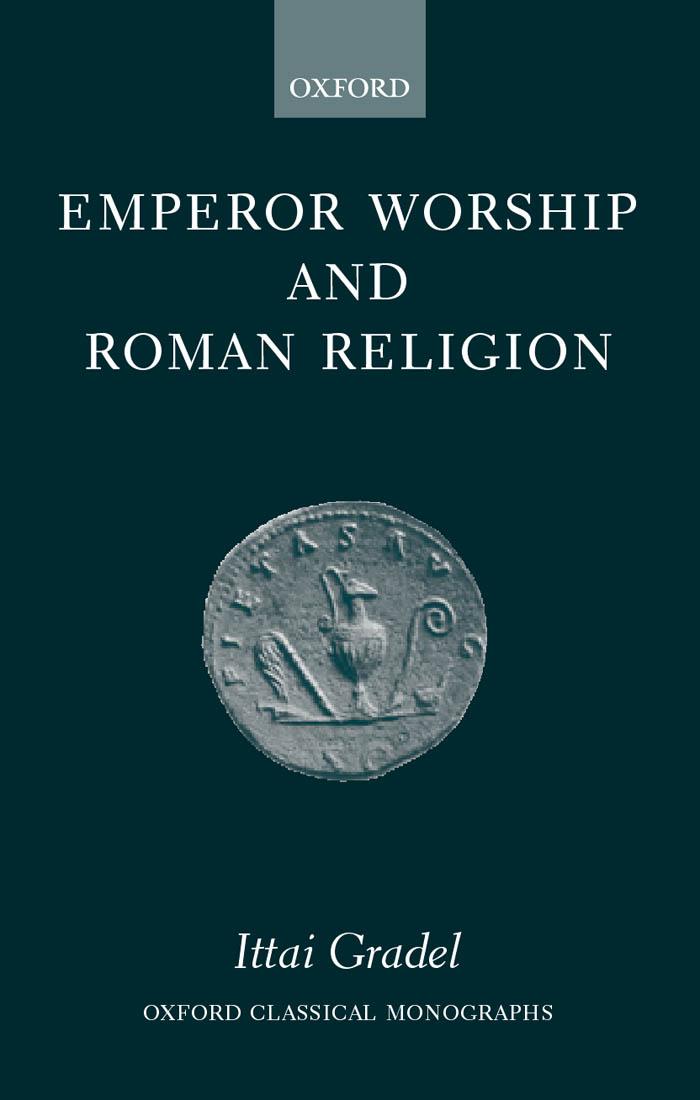
Illustration sources (unless noted in captions): Cover, 5.4: Royal Coin Collection, National Museum, Copenhagen; 1.1, 12.2, 12.5, 12.7: Dept. of Classical Archaeology, University of Aarhus; 2.1, 2.2: Dept. of History, University of Copenhagen; 4.1–2, 5.1, 5.3, 7.1.2–7, 11.1: DAI, Rome; 7.1.1: drawing by Anders J. B. Jørgensen; 7.2–3, 12.1, 12.3: Heberden Coin Room, Ashmolean Museum; 12.4: photographer Niels Hannestad; 12.6: Dept. of Classical Antiquities, National Museum, Copenhagen.
Introduction
The proconsul [Quintilian] said: ‘Offer sacrifice.’ ‘No’, [Pionius] answered. ‘My prayers only must be offered to God.’ But [Quintilian] said: ‘We reverence all the gods, we reverence the heavens and all the gods that are in heaven. What then, do you attend to the air? Then sacrifice to the air!’ ‘I do not attend to the air’, answered Pionius, ‘but to him who made the air, the heavens, and all that is in them.’ The proconsul said: ‘Tell me, who did make them?’ Pionius answered: ‘I cannot tell you.’ The proconsul said: ‘Surely it was the god, that is Zeus, who is in heaven; for he is the king of all the gods.’1
The owl of Minerva flies only at dusk: basic mental notions will typically find explicit expression only when challenged or under pressure from outside. The early Acts of the Christian Martyrs present several fascinating illustrations of this: in their dialogues with Christian defendants presenting fundamentally different views on God and theology, Roman officials could be called on to verbalize and rationalize customs and values so basic, so much taken for granted, that they were hardly ever stated without such provocative prompting. The governor who heard the case of Pionius in Smyrna in the days of the Decian persecution, 250, furnishes an example. What he and other governors trying Christian defendants demanded of them was not any specific belief, cosmology, reasoning, or philosophy, but simply an action: sacrifice. Dragged, however, into a dogmatic discussion in the context of the traditional pagan rite, sacrifice of wine and incense to the gods, the governor comes out with his own ad hoc cosmology: Zeus had made the world, for he was king of the gods.
Where did he get this answer? No school of philosophy had
1 Mart. Pion. 19.9–13, Musurillo (1972, 160 ff .), id. tr. (adapted); Robert et al. (1994); Lane Fox (1986, 460 ff .).
presented such a cosmology, and none of the stories of mythology told this tale. Apparently the governor himself made up this answer on the spot. What is revealing in the story is that he did not employ any of the readily available answers from philosophy or mythology to legitimize the rite demanded of Pionius. That rite, sacrifice, in this case a bloodless one, did not need to be pinned onto a dogmatic or philosophical system to be defended.With impressive tradition behind it, it had always, or so it must have seemed, been the natural way to honour the vastly superior powers of the gods: sacrifice was the core element in divine worship.
The account of Pionius before the governor was penned by a Christian writer, and the governor’s dialogue was put in his mouth for the benefit of a Christian audience. It is not to be taken literally as a faithful transcript of the exchange. But its imagery of pagan arguments should not be summarily dismissed for that reason. The didactic message of the text is obvious: each member of the Christian audience savouring Pionius’ cruel martyrdom had to be prepared for the same situation. The text was meant to encourage them to display the same nerve, the same unflinching resolve as that of Pionius, a presbyter whose constancy was not even shaken by the fact that his own bishop had lapsed and performed the sacrifice. Recent examinations have upheld the text of Pionius’ martyrdom as contemporary and faithful in its details, whenever these can be subjected to control. But whether factual, elaborated, or simply invented, the dialogue is not a mere mythical construct, nor is the pagan adversary portrayed as a madman or a raving disciple of Satan: Christians knew their opponents, knew what to expect from a governor attempting to make them forsake their principles; they had to know in order to prepare for their moment of glory. The governor’s insistence on demanding the rite itself without any dogmatic underpinning was indeed telling and typical. It faithfully reflected the edict of Decius where the emperor demanded of his non-Jewish subjects that they should sacrifice, plain and simple, without requesting from them any specific beliefs or theology or recognition of any named gods.
The story of Pionius and Quintilian the governor is one of many that could be quoted to illustrate the fallacies of inter-
preting traditional religious practice in the light of philosophical or mythological texts or arguments. It illustrates the extent to which this traditional worship lived its own life, independently of philosophical speculation or elaborate mythology. If we were to look for a parallel in our own mental makeup, it would be our ingrained distinction between religion and politics. This dichotomy was unknown to, or at least irrelevant to, traditional Graeco-Roman worship and other honours to benefactors. For divine cult was an honour, differing in degree but not in kind from ‘secular’ honours;2 and this by itself implies that there is something wrong with our usual and ingrained oppositions, of religion versus politics, of man versus god, when applied to pagan practice.
Even when avoiding philosophy and mythology it is all too easy to go searching for the mental hinterland behind the pomp and circumstance of cultic practice. When trying to reconstruct a detailed theology from religious rites, we must be on guard: we are then pursuing our own game, not that of the ancients; and we then easily fall into the trap of ‘philosophizing’ or ‘christianizing’ Graeco-Roman religion. For Christianity of course combined philosophy, in the shape of detailed systems of dogma, with rituals of divine worship; these rituals acted out the word of God and the sacrifice of His son as contained in Holy Scripture. The rituals in themselves, without this dogmatic underpinning, were nothing. The core and basis of traditional Graeco-Roman religion were precisely the contrary: the rituals, not any verbalized and authoritative texts or dogmas or philosophical reasoning. Only with extreme caution should philosophical treatises, such as Cicero’s De Natura Deorum or De Divinatione be employed in the study of Roman religion; and as for its interpretation, they are best left out of account altogether. It will perhaps be noticed that these and similar treatises, usually seen as core sources for Roman religion, are almost completely ignored in this book. Instead, as I attempt here, interpretation should be based on study of ritual, not merely as a reflection of an underlying theology, but in its own
2 Nock (1934, 481f.): emperor worship was ‘of the nature of homage and not of worship in the full sense’; contra Price (1984a, passim, esp. 15 ff.) (fundamental for religion vs. politics); yet, unlike most modern scholars, Nock recognized that the distinction is a modern one (1972, 241; written in 1930).
4 Introduction
right, as what traditional Roman religion was in fact all about: rituals constructing, and not merely reflecting, the theology, the world, and its social order.
RELIGION
By demarcating ‘emperor worship’ and studying it as a subject in isolation from ancient religion and politics—since it is not clear to which of these categories it belongs—this book may in itself further cement our own distinctions, and submerge those of the ancients. Unlike its usage in modern scholarship, ‘the imperial cult’ had no category of its own in the ancient world. Both our concepts of religion and politics, and thus the dichotomy between them, are in fact modern inventions. Neither Greek nor Latin had any pre-Christian term for ‘religion’ or ‘politics’ in our sense of the word. Religio meant reverence, conscientiousness, and diligence towards superiors, commonly but not exclusively the gods: ‘To be religiosus is not merely to hold the sanctity of the gods in great respect, but also to be dutifully obliging (officiosus) towards men’, as a Roman grammarian stated. In another, narrower sense, the word could be used collectively of the rites and ceremonies of divine worship, and of everything connected with such worship (synonymous with res divinae as opposed to res humanae).3 Pre-Christian religio was not concerned with inward, personal virtues, such as belief, but with outward behaviour and attitude; in other words,with observance rather than faith, and with action rather than feeling. This does not, of course, amount to saying that pagan worshippers did not experience personal emotions in connection with their worship, merely that this aspect was only marginally relevant, if at all, to the concept and meaning of religio. The meaning of this word in the modern sense as a religious system encompassing both action—rituals—and philosophy—theology, dogmas, cosmology, mythology—belongs to late antiquity and was developed specifically in connection with religio Christiana, Christianity. The concept of ‘religion’ is actually very problematical to
3 Fest. p. 348L: ‘religiosus est non modo deorum sanctitatem magni aestimans, sed etiam officiosus adversus homines’;narrower: e.g. Cic. Nat. Deor. 2. 3. 8: ‘religione id est cultu deorum’; 2. 28. 72.
Introduction 5
employ; even today, historians of religion do not generally agree on a definition.4 Most such definitions are either too broad and all-inclusive, which renders them less useful for practical purposes, or else christianizing, as in stressing individual faith, sincerity, or perceived experience, and hence too narrow. The most useful definition, in my view, interprets the concept of ‘religion’ as defined by action of dialogue—sacrifice, prayer, or other forms of establishing and constructing dialogue—between humans and what they perceive as ‘another world’, opposed to and different from the everyday sphere in which men function. Typically, this ‘other world’ is a realm of gods or God (but not necessarily so: academic Buddhism, which most scholars are loath to exclude from the concept, does not operate with gods). Such a view of ‘religion’ recommends itself, I believe, to the study of pagan practice: it stresses action as the constituting factor, and avoids christianizing concepts such as ‘belief’ or ‘emotion’ as determinants.5
The problem with this as with any other definition of ‘religion’ (except such as simply reject pagan practice as devoid of religious aspects) lies not in the factor of dialogue, clearly definable, but in the notion of the ‘two worlds’. On the face of it no problem is apparent: the ‘other world’ is simply the realm of the gods, with which dialogue is established by ritual action (primarily sacrifices). Yet the fact that such ritual was also employed in connection with humans puts fundamentally in question our whole construction of dichotomies: this world versus that of the gods, man versus god, religion versus politics. The phenomenon of ruler cults has received so much attention because it does not fit into these basic dichotomies, but transgresses them. Was the emperor, when worshipped in divine rites, seen as a man or as a god? Was he a political or a religious figure?
Our distinction between the ‘two worlds’, between religion and politics, is the fundamental one. The distinction or strong dichotomy between the two spheres goes back to the Age of Enlightenment, and was not directly theologically inspired. Yet the roots of the distinction are clearly founded in Christian theology, and it is a relevant question whether it could at all have
4 For discussion of definitions see refs. in Liebeschuetz (1979, 72 n. 6); Pfenner and Yonan (1972); Whaling (1983).
5 For a fine discussion of such christianizing notions see Price (1984a, 1 ff.).
Introduction
been thought of without these antecedents. They are originally represented in the saying of Jesus to ‘give unto Caesar what is Caesar’s, and unto God what is God’s’;6 and later continued in a Christian tradition with St Augustine as the best-known exponent. In his De Civitate Dei he unequivocally set up this demarcation line between the realm of God (civitas Dei) and this world. Later still, medieval theologians spent much ink and effort defining and arguing about the distinction between temporal and spiritual power and their respective preserves. The two forms of authority were expressed in the institutions of kingship and church, as ultimately personified in the figures of the holy Roman emperor and the pope. These Christian theological categories do not correspond to our categories of religion versus politics. But they certainly represent a precursor and probably a necessary prerequisite for these modern concepts.
So even our view of religion as a dimension, or aspect of the human spirit, separable from other spheres of human experience and common to all mankind, is ultimately christianizing and directly relevant only to a Christian cultural sphere, or such as are influenced by it. Other cultures, including pagan Greece and Rome, lack the religious dimension: it is absent in the sense that ‘the divine’ or the ‘other world’ forms a whole with other aspects of human experience, including politics, and can be separated and dissected on its own only at the peril of understanding. The very concept of ‘religion’ is inherently christianizing—which is not an argument against its use, as long as we are aware of it. But it is all too easy to fall into the trap of treating our own categories as absolute and god-given.7
6 Matthew 22: 19 ff.; cf. John 8: 23.
7 The ‘otherness’ of Graeco-Roman religion is now commonly recognized in classical scholarship, thus for Roman religio Scheid (1985, 7 ff.); the realization that the problem of ‘religion’ is of a general nature, and not only confined to pagan Graeco-Roman cults, seems rarer: Liebeschuetz (1979, 72) raises the problem of defining ‘religion’, but does not fundamentally tackle it; also Beard (1994, 729 ff.), who, however, tends to see the problems of definition as characteristic of Roman state religion in particular; I would rather see them as generally typical of studies of religions outside a Christian cultural sphere. Price (1984a, passim, esp. 15 ff.) is fundamental for the ‘otherness’ of pagan religiosity, exhibiting strong and sophisticated awareness of methodological and anthropological discussions on the subject, though curiously avoiding direct discussion of the concept of ‘religion’.
To avoid, as far as possible, these pitfalls of method, terminology, and language I shall therefore attempt to base my investigation primarily on the ancient standards and distinctions. The definition of emperor worship or ‘the imperial cult’ (a more flawed term, because more specific, giving the impression of a neat and independent category) will follow the ancient term of divini or summi or caelestes honores, the highest form of honours, with which gods were cultivated (but probably never gods only): sacrificial rites, whether blood sacrifice or bloodless (wine and incense) to the emperor, dead or alive. To identify such cults, the presence of temples and altars is taken as direct evidence (the arguments for doing so will emerge from my treatment). Cults of imperial virtues or circumstances, such as Salus (‘Welfare’), Virtus (‘Prowess’) or Providentia (‘Foresight’), with or without the qualification ‘of the emperor’— Augusti—or, more commonly, as an adjective, Augusta, ‘august’ or ‘imperial’, will largely be ignored, since these concepts existed as goddesses in their own right.8
Two concepts, however, could not stand alone, but always ‘belonged’ to someone: Genius and numen (the term ‘numen’, divine power, can also simply be synonymous with deus). These two terms have played an enormous role in scholarship on the subject, and they will also be included here. Worship of the Genius of a man denoted cult on a ‘human’ level, since all living men (and gods, for that matter) possessed a Genius, and its cultivation did therefore not impute divinity, or rather divine status, to its ‘owner’, as did the ‘heavenly honours’ (caelestes honores). Inclusion of the Genius in this treatment does receive some contemporary support; at least to one Christian apologist, writing probably in the early third century, worship of the Genius was placed in the same despicable category as direct worship:9
Pitiable indeed the man whose hope is stayed upon a mortal man, with whose death all that he builds on comes to an end! True indeed that Egyptians choose a man for their worship; that they propitiate him and him alone; that they consult him on all matters and kill victims to him. But though to others he is a god, to himself at least he is a man,
8 See, however, further p. 103–6 below.
9 Min. Fel. 29. 3 ff., tr. Rendall, Loeb edn. (adapted).
whether he like it or no; for he does not impose upon his own consciousness, even if he deludes others. Princes and kings may rightly be hailed as great and elect among men, but homage to them as gods is base and lying flattery; honour [honor] is the truer tribute to distinction, affection the more acceptable reward to worth. Yet that is the way men invoke their deity [Sic eorum numen vocant], make supplications to their images, pray to their Genius, that is their daemon [daemonem]; and think it safer to swear falsely by the Genius of Jupiter than by that of their king.
The passage neatly applies the monotheistic distinction between worship and honours, which has continued to problematize the interpretation of ruler cult ever since. Implicitly the apologist criticizes contemporary practice in Italy, though it is a typical feature of the genre that the specific example singled out for attack is not Roman religion, but the beastly practice of the Egyptians, contempt of which was generally shared by Christians and Roman pagans alike (I shall return to these aspects at the end of this book). Modern scholars have generally continued in this didactic and polemical track by denying or down-playing emperor worship as a Roman phenomenon, and instead consistently seeing it as a feature characteristic of the Greek parts of the empire, or of barbarians newly brought under the sway of Rome. In fact, Roman pagan writers for didactic or moralizing reasons employed the same distinction between Roman and Greek or barbarian. Thus Tacitus’ term Graeca adulatio, ‘Greek flattery’, has often recurred in modern scholarship on the subject. However, though little acknowledged by scholars, the Roman historian with these words does not criticize the phenomenon as such, but only the granting of divine honours to the ridiculously unworthy (in casu Pompey’s friend Theophanes of Mytilene).10
PUBLIC RITES, PRIVATE RITES
To make sense of a large and seemingly confusing body of material, I shall attempt to divide it into categories that were meaningful by contemporary standards. Thus status consciousness and its implication for the cult forms chosen by wor8 Introduction
10 Tac. Ann. 6. 18; for a different view of Theophanes’ worth see Robert (1969).
shippers in honouring the emperor will play a large part; I shall attempt to distinguish between the status of worshippers in such cults, whether freeborn of high rank and (claimed) social independence, or freedmen and slaves. The obvious advantage of this criterion is that it is objective, and in most cases simple to apply; as to its meaningfulness in contemporary terms, that can hardly be controversial. In close connection with this I shall strictly distinguish between public cults, which were always carried out and controlled by freeborn of high rank, and private worship, where the status of worshippers was more variable. Our own notions of public and private are notoriously ill-suited and difficult to apply to the Graeco-Roman world; and in the field of Roman religion, the terms are too often employed in senses so vague as to be practically meaningless. I shall therefore here follow the Roman legal definitions.11 The explicit definitions are preserved only by Festus in his secondcentury epitome of the gigantic dictionary De Verborum Significatu of the Augustan scholar Verrius Flaccus. Sacral law was an important branch of Roman jurisprudence, which for obvious reasons had little appeal to Christian posterity, and whose texts have therefore not been preserved. Festus’ shorthand definitions in the field raise problems of their own, but are in the main clear enough; thus the basic definition of public versus private sacra (Fest. p. 284L):
Publica sacra quae publico sumptu pro populo fiunt, quaeque pro montibus, pagis, curis sacellis: at privata, quae pro singulis hominibus, familiis, gentibus fiunt.
Public rites are those which are performed at public expense on behalf of the [whole] people, and also those which are performed for the hills [montes], villages [pagi ], ‘clans’ [curiae] and chapels [sacella], in contrast to private rites which are performed on behalf of individual persons, households, or family lineages.
Publica sacra fall, then, in two distinct groups, of which the first and main one is fairly straightforward. It covers cults performed on behalf of the whole individual city—or ‘city state’— and all its citizens (populus), by city magistrates, at public expense. These cults, which I will here term public cults, or
11 Wissowa (1912, 398 ff.); Geiger (1914).
Introduction
outside Rome municipal or civic cults, were then the exclusive privilege of the magistrates (including priests) of the individual ‘city state’. The magistrates invariably belonged to the local élites—in Rome the Senate, outside Rome the corresponding city council (ordo decurionum)—of their townships.In the case of Rome, such cults may be termed ‘state cults’ or collectively the ‘state cult’ (a term often employed in a very imprecise manner).
The second group of the publica sacra comprised a small group of archaic Roman state cults which, unlike the main group, were not performed on behalf of the whole people, but only on behalf of parts of the city territory and the citizens who dwelled there. This variation is explicable in historical terms as local cults incorporated into the Roman state cult as a result of synoecism, or cults so early that Rome and its citizens had long ago outgrown the geographical areas they traditionally covered. Thus the rites pro montibus, the festival called Septimontium, took place on the original seven hills of Rome—not to be confused with the more widespread later seven hills of the city— which covered only a small part of Rome’s centre. So did the Paganalia, the festival for the villages—pagi—of archaic Rome; and the obscure rites for the curiae, subdivisions or ‘clans’ within the old Roman tribes; and the ceremonies of the sacella, a rite more commonly known as the rite of the Argei. 12 The Argei were straw dolls kept in twenty-seven or thirty chapels
12 Usually sacellum in the passage has been taken as synonymous with compitum (Geiger (1914, 1662 with lit.)), but this must be wrong; the word sacellum, ‘small shrine’, is generic, and otherwise not specifically used of compita: contra Wissowa (1904, 237 with n. 4 and cf. ibid. 219f.); but the instances quoted by him seem rather to be, again, the Argeian shrines, or simply ‘shrines’ in general; or, whatever the precise term referred to, used in poetry where the word is then employed for metrical reasons. However, Varro, Ling. Lat. 5. 48 unequivocally terms an Argeian chapel a sacellum (though elsewhere, 5. 45 and 47, calling them sacraria, for which sacellum indeed seems the obvious synonym). Note further that both sacrarium and sacellum are vague terms, certainly interchangeable in Varro, whereas compitum is an equally short term and quite specific to one type of sanctuary only; it therefore seems inexplicable why the specific and suitable term should have been exchanged for the vaguer one, if the compita had indeed been meant in Festus and his source Verrius Flaccus; in prose metrical reasons are out of the question. Lastly, the cults at the compita were clearly privately funded (see p. 128–30 below), unlike the rites of the Argeian sacraria (see n. 13 below).
scattered over Rome’s archaic centre, and annually collected to be thrown into the Tiber from the Sublician Bridge. The survival into historic times of these localized state cults is fascinating evidence of the strong Roman conservatism in religion, but they did not really play any important role in historical times, and represent only a rare and curious variation on the main group of state rites. In any case, such cults were also funded with public money, and performed or presided over by state magistrates.13
What is important is not to mix up these localized state cults with other cults in subdivisions of Rome, such as the compital cults. Each of the city quarters, vici, of Rome had from archaic times a cult centre, compitum, where the inhabitants of the individual vicus worshipped its tutelary gods, the Lares compitales. The priests in these local cults were, however, mainly freedmen or slaves, and the worship was not publicly funded, but financed by the priests themselves, that is, with private money; state priests or state finances had no role to play in these cults. They were then clearly private, probably within a subcategory encompassing the cults of private, but non-familial groupings, collegia. 14 Such private worship is not mentioned by Festus at all, but that is not a great problem, for his shorthand characterization of sacra privata is clearly not complete. The only instances he gives are those of individuals and families, and private cults certainly covered much more than such household rites. The category thus also included cults of private clubs, collegia, which were ubiquitous during the empire.
13 Festus’ shorthand wording is ambiguous as to the financing, but public funding must be decisive to the inclusion of these cults within the publica sacra, and at least for the sacra pro curis there is clear evidence of public funding (Dion. Hal. Ant. 2. 31. 1; Varro, Ling. Lat. 6. 46; generally Hülsen, 1901, 1815 ff.); the rites were presided over by the obscure officials, the curiones, under a general curio maximus. Equally obscure, minor public officials, local magistri and flamines, presided over the Septimontium. For this and the Sacra pro Argeis, see Wissowa (1904, 230 ff. and 211 ff., as well as id. (1912), passim).
Note that the praetors, pontifices, Vestal Virgins, and the flaminica Dialis took part in the sacra pro Argeis
14 Thus apparently Ascon. p. 7C on the compital cults and their games in the late republic: ‘Solebant autem magistri collegiorum ludos facere, sicut magistri vicorum faciebant, Compitalicios praetextati, qui ludi sublatis collegiis discussi sunt ’; Lintott (1968, 77 ff.) Fraschetti (1990).
The distinction between public and private cults seems clear enough, and was in fact based on objective determinants, even if they may be imperfectly known to us in the case of this or that individual cult.15 All this may so far seem mere legalistic pedantry, but will, I trust, be shown to make sense when applied in practice. It was decisive in one particular respect. Religion and politics formed a whole in the public sphere of Rome, or indeed of any other city state in antiquity. State religion, the city cult of Rome, was therefore an integral part of the Roman ‘constitution’ and indeed continually defined it. On a local level the same goes for municipal or civic cults, the public cults in the self-governing city states under Rome’s control which were scattered all over the empire: they too defined the ‘constitution’ of each little city state.
The state cult in Rome functioned on behalf of the whole Roman people, which in the early empire basically meant all the free inhabitants of Italy (i.e. the peninsula as defined by the eleven Augustan regions: without Sicily and Sardinia, but including Histria, now part of Croatia). Roman state gods were simply and exclusively those which received worship in such state cult. Municipal or private cults, on the other hand, had no bearing whatsoever on the Roman ‘constitution’. Municipal worship only covered the inhabitants and area of the individual township; and private cults merely affected the private persons
15 Note the subcategory of popularia sacra given by Festus elsewhere (p. 298L): ‘Popularia sacra sunt, ut ait [M. Antistius] Labeo, quae omnes cives faciunt, nec certis familiis adtributa sunt [i.e. ‘and not confined only to some households’]: Fornacalia, Parilia, Laralia, porca praecidanea ’(Harmon (1978, 1594); further comments by Scheid (1990, 255 and 259); Wissowa (1912, passim for the items mentioned)). This appears to comprise rites and festivals which were celebrated both in state cult and simultaneously in all Roman private households, an interpretation supported by Varro (Schol. Pers. 1. 72=Varro, ARD ed. Cardauns, p. 56): ‘Palilia [= Parilia] tam privata quam publica sunt’. The term Laralia has usually been taken as = Compitalia, a festival celebrated both in the households and at the compita in the vici (Wissowa, 1912, 399 n. 2; Geiger, 1914, col. 1662). But Laralia is otherwise never used as a synonym for this festival, and there is no evidence that the Compitalia were ever celebrated in the state cult. The term Laralia should rather be understood as covering both the ubiquitous private cult of the Lares of each house and the corresponding public worship of the state Lares. This would certainly fit the implications of the category as both public and private more neatly.
involved. That means, for instance, that the Roman emperor could in principle be worshipped as a god in all the municipal cults of Italy and in private cults everywhere in Italy, including in Rome itself, without such worship in the least affecting his formal place in the ‘constitution’ of Rome. Only the public, constitutional sphere of Rome itself mattered in this connection. In the same way a god could be worshipped anywhere in Rome and Italy and still be completely outside the Roman state system, such as the god Silvanus who was extremely popular in private cults everywhere in Italy, but never became a state god.16 The distinction between public and private cult does not, it should be noted, correspond to our ideas of public versus private. Private cults regularly took place in public, even at public temples, and could be under tight control and scrutiny from the public authorities.
In geographical terms, my investigation will cover Roman Italy, the Roman heartland in the early empire. The state cult in Rome, an integral part of the ‘constitution’ of the Roman state, will receive the most thorough treatment; the state cult presents complicated problems peculiar to this ‘constitutional’ sphere, and my investigation will, I hope, add some new dimensions to the history of the development of the principate. For the same reason my main emphasis will be on the early empire, the formative phase of the principate. Conditions in the Greek world, or indeed the world outside Italy, will be almost totally ignored in this book. This is not owing to any disdain for Graeca adulatio, but only reflects the fact that the author feels uncomfortable with the Greek versus Roman dichotomy, which has traditionally played such a prominent role in work on ancient ruler cult. By dealing with Italy in isolation, artificial as this may seem, I hope to avoid presupposing either differences or similarities between the Roman heartland and the world outside it, thus also avoiding any temptation to fill in missing bits from other areas of the Roman empire. Informed readers may make their own comparisons and form their own judgement on this, though I trust that Italy will emerge as less deviant from the rest of the empire than most handbooks suggest today.