Sheet 3 of 10 South (Front) Elevation; Window Schedule, Door Schedule
Sheet 4 of 10 East (Right) Elevation; Interior Elevations
Sheet 5 of 10 North (Rear) Elevation; Plot Plan
Sheet 6 of 10 West (Left) Elevation; Schedule of SpecialPurpose Outlets
Sheet 7 of 10
Section A-A
Sheet 8 of 10 Electrical Basement Plan
Sheet 9 of 10
Sheet 10 of 10
Electrical First Floor Plan
NEC Requirements for Swimming Pool Wiring
Blank Floor Plan First Floor
Blank Floor Plan Basement
Foreword
The Importance of Proper Training
Now that I have retired after 48 years in the electrical industry, it has become even more evident that a good solid education about the world of electricity is of utmost importance . Accurate materials and training are the two sides of the electrical safety coin . This coin is spent every day by various persons intrinsically involved in the electrical construction industry Unfortunately, some spend it less wisely than others Usually, the unwise spenders are those who rush to career, having neglected to acquire accurate materials and to focus on training themselves to a high level of proficiency .
Ray Mullin, coauthor of this book, Electrical Wiring—Residential , has often stated, “The cost of education is small when compared to the price paid for ignorance .” All too often, we, the citizens, pay the price for others’ ignorance—ignorance of the codes, ignorance of proper wiring methods, ignorance of proper installation procedures, ignorance of design requirements, ignorance of product evaluations This price becomes dear when our friends and family lose health or life or when our homes are destroyed
It is exciting to see that Phil Simmons has joined with Ray as coauthor of Electrical Wiring—Residential . Phil has served the electrical industry with distinction for many years . His ability to express complex electrical issues clearly and to illustrate them accurately is unparalleled among his peers .
Fortunately, accurate materials are so easy to obtain . Ray Mullin and Phil Simmons are both technical writers who have paid their dues in the electrical industry . Each has put in many years as an apprentice, a journeyman, and then as a master electrician before beginning to write about his trade Phil was additionally a professional in the electrical inspection arena and managed the International Association of Electrical Inspectors (IAEI) for several years . Both have served or are serving on NEC® Code Making Panels Electrical Wiring—Residential contains accurate, up-to-date information about all aspects of residential wiring .
When installers and inspectors don’t keep abreast of installation procedures and code requirements, things like cables across scuttle access to attics; improper spacing of receptacle outlets; improper short-circuit and ground-fault protection; and improper grounding of electrical systems, phone system, and CATV systems can lead to hazardous situations causing electrical shocks and fire Not just anybody can install or inspect safe electrical systems Trained professionals can, but even they must be constantly improving their knowledge and skills .
Because Ray Mullin and Phil Simmons care about the electrical safety coin, they have striven to provide the most accurate information possible . It is up to each of us, however, to focus on the training . Some training can be acquired simply by reading the best books in our trade; some training can come through the online programs available; and other training, through participation in classes and seminars . In each instance, though, motivation and desire come from within—to know everything involved in our trade, to be totally proficient, to focus continually on improvement . As we seek both accurate information and training, we learn to
spend the coin of safety to benefit others as well as ourselves . I commend you for acquiring Electrical Wiring—Residential ; now I challenge you to make it part of yourself . I challenge you to spend the electrical safety coin wisely
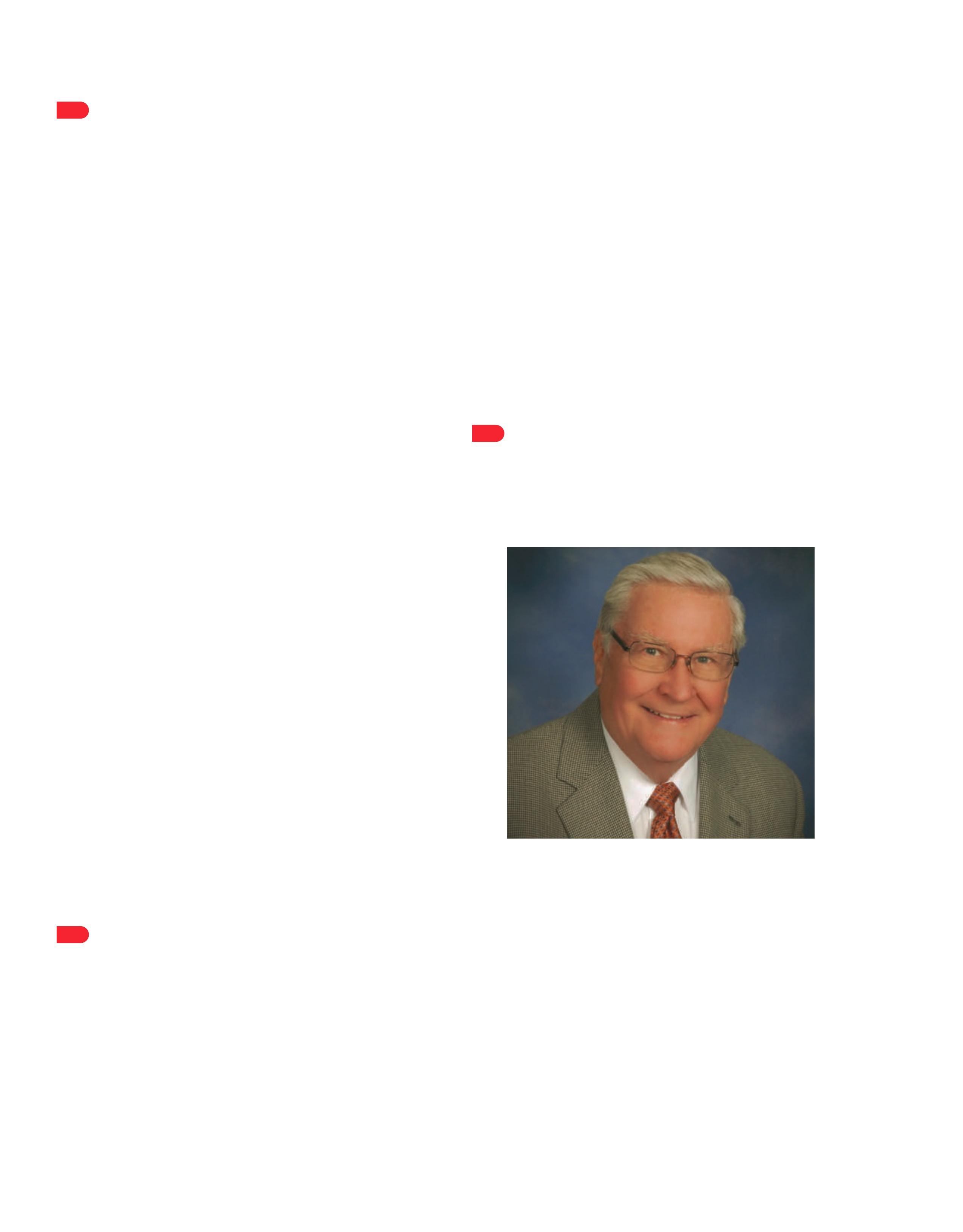
James W. Carpenter Former CEO and Executive Director, International Association of Electrical Inspectors
Past
Chair
of the NEC Technical Correlating Committee
Preface
Intended Use and Level
STOP . . . Don’t read any further . . . yet . Take a moment to familiarize yourself with how to use this text to get the most benefit from it . Think of it as a three-legged stool . One leg is this text, the second leg is the 2017 edition of the National Electrical Code ® , and the third leg is the set of Plans that are in the packet in the inside back cover . If any one of the legs is missing, the stool will collapse Stated another way, you will not get as much out of this course When you have completed all of the chapters in Electrical Wiring—Residential, you will have virtually wired a typical house according to the requirements of the 2017 National Electrical Code, an accomplishment you can be proud of!
The NEC® defines a “qualified person” as One who has skills and knowledge related to the construction and operation of the electrical equipment and installations and has received safety training to recognize and avoid the hazards involved.*
Electrical Wiring—Residential is intended for use in residential wiring courses at high schools, two-year and four-year colleges, and apprenticeship training programs This comprehensive book guides readers, room by room, through the wiring of a typical residence and builds a foundation of knowledge by starting with the basic requirements of the National Electrical Code (NEC), then continuing on to the more advanced wiring methods . Each Code rule is presented through text, illustrations, examples, and wiring diagrams . In addition, an accompanying set of Plans at the back of the book guides the reader through the wiring process by applying concepts learned in each chapter to an actual residential building in order to understand and meet the requirements set forth by the NEC .
An Important Note about Safety
In the educational field, it is pretty much a given that “Society will pay for education one way or another ” Proper training of a skilled trade is much better than hit-or-miss learning . Having to do the job over, having a house burn down, or having someone get electrocuted because of improper wiring is costly!
It really doesn’t take any longer to do it right the first time than to have to do it over . You probably have heard the phrase “Measure twice . . . cut once . Measure once . . . cut twice .” How true!
Electrical wiring is a skilled trade Wiring should not be done by anyone not familiar with the hazards involved It is a highly technical skill that requires much training This text
*National Electrical Code ® and NEC® are registered trademarks of the National Fire Protection Association, Inc , Quincy, MA 02169
*Source: NFPA 70-2017
provides all of the electrical codes and standards information needed to approach house wiring in a safe manner . In fact, Electrical Wiring—Residential has been adopted as the core text by the major electrical apprenticeship programs across the country Their residential curriculum program directors and committee members made this text their top choice for their residential wiring training .
Electrical Wiring—Residential will provide you with the know-how so you can wire houses that “Meet Code . ”
Electrical Wiring—Residential has become an integral part of approved (accredited) training programs by an increasing number of states that require residential electricians to have a residential license if they are going to wire homes and small apartments .
The NEC has one thing in mind—safety! There is too much at stake to do less than what the NEC requires . Anything less is unacceptable! The NEC in 90 .1(A) makes it pretty clear . It states that The purpose of this Code is The practical safeguarding of persons and property from hazards arising from the use of electricity.*
Do not work on live circuits! Always deenergize the system before working on it! There is no compromise when it comes to safety! Many injuries and deaths have occurred when individuals worked on live equipment . The question is always: “Would the injury or death have occurred had the power been shut off?” The answer is “No!”
All mandatory safety-related work practices are found in the Federal Regulation Occupational Safety and Health Administration (OSHA), Title 29, Subpart S—Electrical, Sections 1910 .331 through 1910 .360 .
Subject and Approach
The 19th edition of Electrical Wiring—Residential is based on the 2017 National Electrical Code ( NEC ) The NEC is used as the basic standard for the layout and construction of residential electrical systems In this text, thorough explanations are provided of Code requirements as they relate to residential wiring . To gain the greatest benefit from
this edition, the student must use the NEC on a continuing basis . It is extremely difficult to learn the NEC by merely reading it . This text brings together the rules of the NEC and the wiring of an actual house You will study the rules from the NEC and apply those rules to a true-to-life house wiring installation
Take a moment to look at the Table of Contents . It is immediately apparent that you will not learn such things as how to drill a hole, tape a splice, fish a cable through a wall, use tools, or repair broken plaster around a box . These things you already know or are learning on the job The emphasis of this text is to teach you how to wire a house that “Meets Code ” Doing it right the first time is far better than having to do it over because the electrical inspector turned down your job .
The first seven chapters in this book concentrate on basic electrical code requirements that apply to house wiring . This includes safety when working with electricity; construction symbols, plans, and specifications; wiring methods; conductor sizing; circuit layout; wiring diagrams; numerous ways to connect switches and receptacles; how to wire recessed luminaires; ground-fault circuit interrupters (GFCIs); arc-fault circuit interrupters (AFCIs); and surge suppressors .
The remaining chapters are devoted to the wiring of an actual house—room by room, circuit by circuit All of these circuits are taken into account when calculating the size of the main service Because proper grounding is a key safety issue, the subject is covered in detail .
You will also learn about security systems, fire and smoke alarms, low-voltage remote-control wiring, swimming pools, and standby generators, and you will be introduced to structured wiring for home automation
*Source: NFPA 70-2017
You will find this text unique in that you will use the text, an actual set of Plans and specifications, and the NEC—all at the same time . The text is perfect for learning house wiring and makes an excellent reference source for looking up specific topics relating to house wiring . The blueprints serve as the basis for the wiring schematics, cable layouts, and discussions provided in the text Each chapter dealing with a specific type of wiring is referenced to the appropriate plan sheet . All wiring systems are
described in detail—lighting, appliance, heating, service entrance, and so on .
The house selected for this edition is scaled for current construction practices and costs Note, however, that the wiring, luminaires, appliances, number of outlets, number of circuits, and track lighting are not all commonly found in a home of this size . The wiring may incorporate more features than are absolutely necessary . This was done to present as many features and Code issues as possible, to give the student more experience in wiring a residence Also included are many recommendations that are above and beyond the basic NEC requirements .
Note: The NEC (NFPA 70) becomes mandatory only after it has been adopted by a city, county, state, or other governing body . Until officially adopted, the NEC is merely advisory in nature . State and local electrical codes may contain modifications of the NEC to meet local requirements In some cases, local codes will adopt certain more stringent regulations than those found in the NEC . For example, the NEC recognizes nonmetallic-sheathed cable as an acceptable wiring method for house wiring . Yet, the city of Chicago and surrounding counties do not permit nonmetallic-sheathed cable for house wiring . In these areas, all house wiring is done with electrical metallic tubing (thinwall)
There are also instances where a governing body has legislated action that waives specific NEC requirements, feeling that the NEC was too restrictive on that particular issue . Such instances are very rare . The instructor is encouraged to furnish students with any local variations from the NEC that would affect this residential installation in a specific locality
The Electrical Trade—Training Programs
As you study Electrical Wiring—Residential, study with a purpose—to become the best residential wireman possible .
There will always be a need for skilled electricians! Qualified electricians almost always have work . It takes many hours of classroom and on-thejob training to become a skilled electrician . The best way to learn the electrical trade is through a training program approved by the U S Department of
Labor (http://www .dol .gov) . Many times an apprenticeship program is called “Earn while You Learn .” These programs offer the related classroom training and the advantage of working on the job with skilled journeymen electricians Completion of a registered apprenticeship program generally leads to higher pay, job security, higher quality of life, recognition across the country, and the opportunity for college credit and future degrees .
As a rule, these training programs require 144 to 180 hours of classroom-related technical training and 2000 hours of on-the-job training per year . Some programs have day classes and some have night classes An electrical apprenticeship training program might run four to five years The end result— becoming a full-fledged licensed journeyman electrician capable of doing residential, commercial, and industrial electrical work . A residential electrician training program might run two to three years, with the training limited to the wiring of single- and multifamily dwellings The end result—receiving a license limited to residential wiring
To get into an apprenticeship program, the individual usually must have a high school education, with at least 1 year of high school algebra; be at least 18 years old; must be physically able to perform the work electricians are called upon to do (e .g ., climbing, lifting, work in inclement weather); and, most importantly, be drug free There generally is a qualifying aptitude test to make sure the applicant has the ability to take on the responsibility of a rigid apprenticeship training program . In some areas, passing the high school equivalency General Education Development (GED) test is acceptable in place of a high school diploma . What does it take to make a good apprentice and journeyman electrician? In no particular order: commitment to master the electrical field, willingness to study and understand the training material, strong math skills, ability to think clearly and logically to analyze and solve problems, ability to work indoors and outdoors, comfortable working with your head and hands, good mechanical skills, ability to communicate and work with others, good verbal skills, ability to follow directions, strong work and personal ethics, and being a self-starter
Following completion of an apprenticeship program, continuing education courses are available to
keep the journeyman up to date on codes and other related topics and skills .
Journeymen electricians who have an interest in teaching apprentices will usually have to take instructor training courses In certain programs, satisfactory completion of the required courses can lead to an associate degree Others will go on to become crew leaders, supervisors, and contractors .
There are some areas where a “pre-apprenticeship” program is offered . To learn more about the careers possible in the electrical field, chat with your instructor; your local high school’s guidance counselor; your vocational, technical, and adult education schools; and electricians and electrical contractors Go online and search for electrical apprenticeship programs .
Your future is in your hands .
Some very important two-letter words that you should remember are
If It Is to be, It Is up to me!
Job Titles
Most building codes and standards contain definitions for the various levels of competency of workers in the electrical industry . Here are some examples of typical definitions:
Apprentice shall mean a person who is required to be registered, who is in compliance with the provisions of this article, and who is working at the trade in the employment of a registered electrical contractor and is under the direct supervision of a licensed master electrician, journeyman electrician, or residential wireman .
Residential Wireman shall mean a person having the necessary qualifications, training, experience, and technical knowledge to wire for and install electrical apparatus and equipment for wiring one-, two-, three-, and four-family dwellings A residential wireman is sometimes referred to as a Class B Electrician .
Journeyman Electrician shall mean a person having the necessary qualifications, training, experience, and technical knowledge to wire for, install, and repair electrical apparatus and equipment for light, heat, power, and other purposes, in accordance with standard rules and regulations governing such work .
Master Electrician means a person having the necessary qualifications, training, experience, and technical knowledge to properly plan, lay out, and supervise the installation and repair of wiring apparatus and equipment for electric light, heat, power, and other purposes, in accordance with standard codes and regulations governing such work, such as the NEC .
Electrical Contractor means any person, firm, partnership, corporation, association, or combination thereof who undertakes or offers to undertake for another the planning, laying out, supervising and installing, or the making of additions, alterations, and repairs in the installation of wiring apparatus and equipment for electrical light, heat, and power
Many electrical inspectors across the country are members of the International Association of Electrical Inspectors (IAEI) . This organization publishes one of the finest technical bimonthly magazines devoted entirely to the NEC and related topics, and it is open to individuals who are not electrical inspectors Electrical instructors, vo-tech students, apprentices, electricians, consulting engineers, contractors, and distributors are encouraged to join the IAEI so they can stay up to date on all NEC issues, changes, and interpretations . An application form that explains the benefits of membership in the IAEI can be found in the Appendix of this text .
New to this Edition
Continuing in the tradition of previous editions, this edition thoroughly explains how Code changes affect house wiring installations New and revised full-color illustrations supplement the explanations to ensure that electricians understand the new Code requirements . New photos reflect the latest wiring materials and components available on the market . Revised review questions test student understanding of the new content . New tables that summarize Code requirements offer a quick reference tool for students Other reference aids are the tables reprinted directly from the 2017 edition of the NEC The extensive revisions for the ninteenth edition make Electrical Wiring—Residential the most up-to-date and well-organized guide to house wiring . Coverage
of the NEC has been expanded to well over 1000 Code references .
This text focuses on the technical skills required to perform electrical installations It covers such topics as calculating conductor sizes, calculating voltage drop, determining appliance circuit requirements, sizing service, connecting electric appliances, grounding service and equipment, installing recessed luminaires (fixtures), and much more . These are critical skills that can make the difference between an installation that “Meets Code” and one that does not The electrician must understand the reasons for following Code regulations to achieve an installation that is essentially free from hazard to life and property .
Note: Symbols have been added to indicate changes in the 2017 National Electrical Code from the 2014 National Electrical Code .▶◀
This text might be called “Work in Progress ” The authors stay in touch with the latest residential wiring trends and the National Electrical Code Because the NEC is revised every three years, this text follows the same cycle . Electrical Wiring— Residential has been carefully reviewed to editorially simplify, streamline, and improve its readability . Many diagrams have been simplified . Some units were reorganized so the Code requirements for the various applications are more uniform
Much rewriting was done The 2017 NEC contains many editorial changes as well as renumbering and relocation of numerous Code references . All of these have been addressed in this edition of Electrical Wiring—Residential . Some text has been condensed and reformatted for ease in reading . Many diagrams have been simplified for clarity
The Objectives have been fine-tuned for easier readability
• Thousands of proposals or comments are submitted each cycle 3-year to update the NEC . Additional comments are submitted to revise the action taken by the Code Panels on the proposals . The end result is the publishing of a new edition of the National Electrical Code .
• In Electrical Wiring—Residential , all Code requirements have been updated to the 2017 edition of the NEC These have been revised
throughout the text, wiring diagrams, and illustrations .
• Illustrations have been enhanced for improving clarity and ease in understanding .
• Emphasis was given to making the wiring of the residence conform to energy saving standards In other words, the residence in Electrical Wiring—Residential is “green .”
• A most significant new rule in the 2011 NEC that a grounded conductor be taken to every switch location has been revised again for the 2017 edition . This revision has been addressed in Electrical Wiring— Residential , with all wiring diagrams revised accordingly . In some locations 3-wire and 4-wire switch loops, and possibly larger boxes, will be required The manner in which the wiring is routed often determines the number of conductors required .
• The method of measuring for the distance from a sink has been specified, resulting in eliminating the requirement for GFCI protection in some instances .
• The connecting edge of peninsula cabinets in kitchens has been moved, which may reduce the requirement of a receptacle outlet on the peninsula .
• Wiring for receptacle outlets in an attached garage or detached garage with electric power is now permitted to supply outlets outside the garage in a limited way . See NEC 210 .52(G)(1) .
• At least one receptacle outlet is required for each car space in the garage . The location relative to the car space is not specified . See NEC 210 .52(G)(1) .
• All of the wiring diagrams have been updated to show the latest system of electrical symbols . The symbols are based on the National Electrical Contractors Association’s National Electrical Installation Standard
• Major revisions of many diagrams and figures have been made to improve the clarity and ease of understanding the Code requirements
• Several new full-color illustrations and photographs have been added .
Features of this Text
This text may be used as a classroom text, as a learning resource for an individual student, or as a reference text for technicians on the job .
Objectives Objectives are listed at the beginning of each unit The objective statements have been stated clearly and simply to give students direction
General Information for Electrical Installations
OBJECTIVES
2 CHAPTER 1 General Information for Electrical Installations
SafetyintheWorkplaceElectricity is great when it is doing what it is in-andtendedtodo,andthatistostayinitsintendedpath do the work intended. But electricity out of its intended path can be dangerous, often resulting in fire,seriousinjury,ordeath. Before getting into residential wiring and the National Electrical Code (NEC®), we need to dis-cianscusson-the-jobsafety.Safetyisnotajoke!Electriworking on new construction, remodel work, maintenance, and repair work find that electricity is part of the work environment. Electricity is all around us, just waiting for the opportunity to get outofcontrol.Repeatthesewords:SafetyFirst . . . SafetyLast . . . SafetyAlways! Thevoltagelevelinahomeis120 voltsbetween one “hot” conductor and the “neutral” conductor, or grounded surface. Between the two “hot” conduc- tors(line-to-line),thevoltageis240 volts.
An electrical shock is received when electrical current passes through the body. From basic electrical theory, you learned that line voltage appears across an open in a series circuit. Getting caught “in series” with a 120-volt circuit will give you a 120-volt shock. For example, open-circuit voltage between the two terminals of a single-pole
SAFETY
ALERT Working on switches, receptacles, luminaires, or appliances with theoffpowerturnedonisdangerous.Turn the power! In addition, check with a voltmeter to be sure the power is off.Safety procedures re-terquirethatyoutestthevoltageteson a known live source, then test for absence of voltage,and finally test the voltage tester again on a live source to make certain it isoperational.
switch on a lighting circuit is 120 volts when the switch is in the OFF position and the lamp(s) are in place. See Figure 1-1. Likewise, getting caught “in series” with a 240-volt circuit will give you a 240-voltWorkingshock.onequipmentwiththepowerturnedon resultcanresultindeathorseriousinjury,eitherasadirect indirectofelectricity(electrocutionorburns)orfroman secondaryreaction,suchasfallingoffaladder
CHAPTER 7 Luminaires, Ballasts, and Lamps
Read the Label
What Is a Luminaire?
The NEC® defines a luminaire as A complete lighting unit consisting of a light source such as lamp or lamps, together with the parts designed to position the light source and connect it to the power supply.* Luminaire is the international term for “lighting fixture” and is used throughout the NEC
Types of Luminaires
NEC 110.3(B) states that Listed or labeled equipment shall be installed and used in accordance with any instructions included in the listing or labeling.* It is important to carefully read the label and any instructions furnished with a luminaire by the manufacturer. Most Code requirements can be met by simply following this information. Here are a few examples of label and instruction information:
There are literally thousands of different types of luminaries from which to choose to satisfy certain needs, wants, desires, space requirements, and, last but not least, price considerations. Whether the luminaire contains incandescent, fluorescent, or LED lamps, the basic categories are surface mounted, recessed mounted, and suspended ceiling mounted. Other common mountings are pendant and pole.
The Code Requirements
• Maximum lamp wattage
• Type of lamp
• For supply connections, use wire rated for at least 8C
• Type-IC
• Type Non-IC
• Suitable for damp, dry, or wet locations
• Thermally protected
Installing and Connecting Luminaires
After studying this chapter, you should be able to
• understand the basic safety rules for working on electrical systems.
• access the Internet to obtain a virtual unlimited source of safety and technical related information.
• become familiar with important electrical codes, safety codes, and building codes such as NFPA 70, 70A, 70B, 70E, 73, OSHA, NIOSH, ADA, NRTL, and the ICC.
• learn about licensing, permits, plans, specifications, symbols, and notations.
• understand the role of the electrical inspector and the International Association of Electrical Inspectors.
• understand the metric system of measurement.
• understand the role of nationally recognized testing laboratories (NRTLs) and the necessity for listed equipment.
Safety Alert Safety is emphasized throughout the book and is fully covered in the first chapter Special considerations in working with electricity provide readers with an overview of what dangers are to be expected on the job .
1
Direct Quotes from the NEC Direct quotes from the National Electrical Code are set in roman type with shaded background, enabling the reader to clearly distinguish direct NEC content .
Article 410 sets forth the requirements for installing luminaires. The electrician must “Meet Code” with regard to mounting, supporting, grounding, live-parts exposure, insulation clearances, supply conductor types, maximum lamp wattages, and so forth.Probably the two biggest contributing factors to fires caused by luminaries are installing lamp wattages that exceed that for which the luminaire has been designed, and burying recessed luminaires under thermal insulation if the luminaire has not been designed for such an installation. Nationally Recognized
The circuit conductors in a wall or ceiling box where luminaires are to be installed are usually
• white—the “identified” grounded conductor, and
• black—the ungrounded “hot” conductor. A “hot” switch leg might also be red or another color, but never white or green. Most surface-mounted luminaires will have a black and a white conductor in the canopy, making it easy to match these conductors to the circuit conductors in the box—white to white, black to black.
SAFETY ALERT
Laboratories
Be certain that the grounded (neutral) conductor is connected to the screw shell of lampholders. This protects persons from a shock hazard when installing or removing
CHAPTER 16 Branch Circuits for the Garage and Outdoors
outlet shall be installed in each vehicle bay and not more than 5½ ft (1.7 m) above the floor.◀* Additional restrictions are placed on the installation of branch circuits for receptacle outlets in garages. Section 210.11(C)(4) was revised in the 2017 NEC to read, (4) ▶Garage Branch Circuits. In addition to the number of branch circuits required by other parts of this section, at least one 120-volt, 20-ampere branch circuit shall be installed to supply receptacle outlets in attached garages and in detached garages with electric power. This circuit shall have no other outlets. Exception: This circuit shall be permitted to supply readily accessible outdoor receptacle outlets ◀ This change in the NEC has little effect on the installation of the branch circuit for the receptacle outlets in the garage because the layout does not show an outdoor receptacle being applied on this branch circuit. Note that the exception to 210.11(C)(4) permits the garage branch circuit to supply outdoor receptacle outlets that are readily accessible. The term readily accessible is defined in NEC Article 100. Review this definition if you contemplate supplying an outdoor receptacle outlet from the garage receptacle branch circuit. All receptacles and switches in the garage are to be mounted 46 in. (1.15 m) to center according to the Notation on the First Floor Electrical Plan.
One is to install a GFCI circuit breaker for Circuit B23. Another is to install a GFCI feed-through receptacle at the first receptacle where Circuit B23 feeds the garage receptacles. See Figure 16-1. GFCI devices are required to be readily accessible, 210.8. This rule is intended to allow these safety devices to be tested at least monthly, as required in manufacturers’ instructions. GFCI devices are not permitted behind appliances such as refrigerators or freezers or on the ceiling. If a detached garage has no electricity provided, then obviously no rules are applicable; but just as soon as a detached garage is wired, then all pertinent Code rules become effective and must be followed. These would include rules relating to grounding, lighting outlets, receptacle outlets, GFCI protection, and so on.
ElectricVehicle Charging
Systems
SAFETY ALERT
NEC
210.8(A)(2) requires that all 125-volt, single-phase, 15- or 20- ampere receptacles installed in garages shall have ground-fault circuit-interrupter protection. GFCI requirements are discussed in detail in Chapter 6.
To provide GFCI protection for the receptacles in the garage, there are a couple of possibilities.
*Source: NFPA 70-2017
Electric vehicle charging systems are becoming more and more popular. Many people have become aware of the environmental impact of using fossil fuels, such as gasoline for combustion engines of automobiles. Electric vehicle charging systems require electrical power that is generated at power plants and then transmitted to the end user. Getting the electricity to the end user requires the generation, transmission, transformers and the service conductors. Many power plants are coal or nuclear powered. There are line losses, transformer losses, conductor losses, and so on. One must be aware that energy is being consumed somewhere in order to provide electrical power to the end use. Figure 16-1 and Plan Sheet 9 for the residence associated with this text shows on the front wall of the garage a symbol marked EV. This is for an optional electrical outlet for a future electric vehicle charging system. If the branch circuit and receptacle are installed for the electric vehicle charging system, additional capacity must be provided in the feeder or service where the branch circuit originates. NEC 220.14(A) requires that the ampere rating of the appliance or load served be added to the load calculation. The rating of our optional outlet for an electric
Review Questions Review questions at the end of each chapter can help to measure the student’s knowledge of the chapter There are a variety of question types including short answer, matching, true/false, and multiple choice
Changes to the NEC Sections that denote revisions to the NEC are set in roman type with opening and closing red triangles .
CHAPTER 12 Lighting Branch Circuit and Small-Appliance Circuits for the Kitchen
REVIEW
Note: Refer to the NEC or the plans in the back of this text if desired.
1. If everything on Circuit B7 were turned on, what would be the total current draw?
2. From what panelboard does the kitchen lighting circuit originate? What size conductors are used?
3. How many luminaires are connected to the kitchen lighting circuit?
4. What color fluorescent lamps are recommended for residential installations?
5. a. What is the minimum number of 20-ampere small-appliance circuits required for a kitchen according to the Code?
b. How many are there in this kitchen?
6. How many receptacle outlets are provided in the kitchen?
7. What is meant by the term split-wired receptacles?
8. Duplex receptacles connected to the 20-ampere small-appliance branch circuits in kitchens and dining rooms (Circle the correct answer):
a. may be rated 15 amperes. (True) (False)
b. must be rated 15 amperes. (True) (False)
c. may be rated 20 amperes. (True) (False)
d. must be rated 20 amperes. (True) (False)
9. In kitchens, a receptacle must be installed at each counter space in. or wider.
10. A fundamental rule regarding the grounding of metal boxes, luminaires, and so on, is that they must be grounded when “in reach of .”
11. How many circuit conductors enter the box
a. where the range hood will be installed?
b. in the ceiling box over which the track will be installed?
door?
c. at the switch location to the right of
Supplement Package
Instructor Companion Website
The Instructor Companion Website , found on cengagebrain .com, offers the following components to help minimize instructor preparation time and engage students:
• power point® lecture slides outline the important concepts covered in each chapter Extensively illustrated with photos, tables, and diagrams from the book, the presentations enhance classroom instruction . The slides allow instructors to tailor the course to meet the needs of the individual class .
• An Image Gallery that offers a database of hundreds of images in the text . These can easily be imported into the PowerPoint® presentation .
• Instructor’s Guide in Microsoft Word enables instructors to view and print answers to review questions contained in the book
• blueprints from the back of the book are available in PDF format
Cengage Learning testing powered by Cognero is a flexible, online system that allows you to:
• Author, edit, and manage test bank content .
• Create multiple test versions in an instant .
• Deliver tests from your LMS, your classroom, or wherever you want .
Instructor’s Resource CD
The Instructor Resource CD provides instructors with valuable classroom materials on CD-ROM .
Mindtap for Electrical Wiring
MindTap is a personalized teaching experience with relevant assignments that guide students to analyze, apply, and improve thinking, allowing you to measure skills and outcomes with ease .
• Personalized Teaching: Becomes your own with a Learning Path that is built with key student
objectives . Control what students see and when they see it; match your syllabus exactly by hiding, rearranging, or adding your own content .
• Guide Students : Goes beyond the traditional “lift and shift” model by creating a unique learning path of relevant readings, multimedia, and activities that move students up the learning taxonomy from basic knowledge and comprehension to analysis and application .
• Measure Skills and Outcomes : Analytics and reports provide a snapshot of class progress, time on task, engagement, and completion rates .
About the Authors
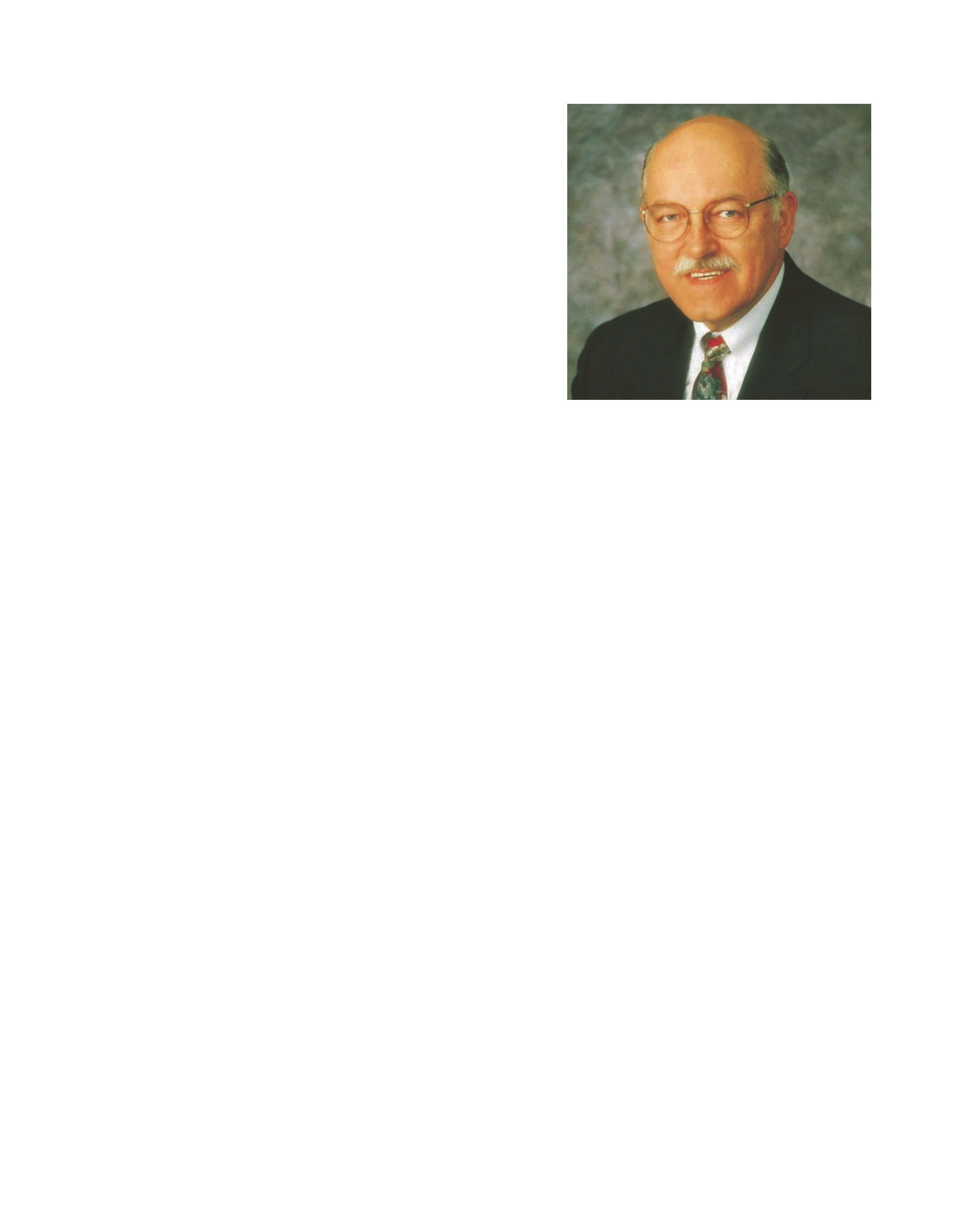
This text was coauthored by Ray C . Mullin and Phil Simmons .
mr. mullin is a former electrical instructor for the Wisconsin Schools of Vocational, Technical, and Adult Education . He is a former member of the International Brotherhood of Electrical Workers . He is a member of the International Association of Electrical Inspectors, the Institute of Electrical and Electronic Engineers, and the National Fire Protection Association, Electrical Section, and has served on CodeMaking Panel 4 of the National Electrical Code .
Mr . Mullin completed his apprenticeship training and worked as a journeyman and supervisor
for residential, commercial, and industrial installations . He has taught both day and night electrical apprentice and journeyman courses, has conducted engineering seminars, and has conducted many technical Code workshops and seminars at International Association of Electrical Inspectors Chapter and Section meetings, and has served on their code panels .
He has written many technical articles that have appeared in electrical trade publications . He has served as a consultant to electrical equipment manufacturers regarding conformance of their products to industry standards, and on legal issues relative to personal injury lawsuits resulting from the misuse of electricity and electrical equipment . He has served as an expert witness .
Mr . Mullin presents his knowledge and experience in this text in a clear-cut manner that is easy to understand . This presentation will help students to fully understand the essentials required to pass the residential licensing examinations and to perform residential wiring that “Meets Code ”
Mr . Mullin is the author of House Wiring with the NEC—a text that focuses entirely on the National Electrical Code requirements for house wiring . He is coauthor of Electrical Wiring—Commercial, Illustrated Electrical Calculations, and The Smart House He contributed technical material for Cengage Learning’s Electrical Grounding and Bonding and to the International Association of Electrical Inspectors’ texts Soares’ Book On Grounding and Ferm’s Fast Finder .
He served on the Executive Board of the Western Section of the International Association of Electrical Inspectors and on their Code Clearing Committee, and, in the past, served as Secretary/Treasurer of the Indiana Chapter of the IAEI
Mr Mullin is past Chairman of the Electrical Commission in his hometown .
Mr . Mullin is past Director, Technical Liaison for a major electrical manufacturer . In this position, he was deeply involved in electrical codes and standards as well as contributing and developing technical training material for use by this company’s field engineering personnel
Mr Mullin attended the University of Wisconsin, Colorado State University, and the Milwaukee School of Engineering .
phil simmons is self-employed as Simmons Electrical Services . Services provided include consulting on the National Electrical Code and other codes; writing, editing, illustrating, and producing technical publications; and inspection of complex electrical installations . He develops training programs related to electrical codes and safety and has been a presenter on these subjects at numerous seminars and conferences for universities, the NFPA, IAEI, Department of Defense, and private clients . Phil also provides plan review of electrical construction documents . He has consulted on several lawsuits concerning electrical shocks, burn injuries, and electrocutions . Mr Simmons is coauthor and illustrator of Electrical Wiring—Residential (17th through the 19th editions), coauthor and illustrator of Electrical Wiring—Commercial (14th through the 16th editions), and author and illustrator of Electrical Grounding and Bonding, all published by Cengage Learning . While at IAEI, Phil was author and illustrator of several books, including the Soares’ Book on Grounding of Electrical Systems (five editions), Analysis of the NEC (three editions), and Electrical Systems in One- and Two-Family Dwellings (three editions) . Phil wrote and illustrated the National Electrical Installation Standard (NEIS) on Types AC and MC Cables for the National Electrical Contractors Association . Phil presently serves NFPA on Code-Making Panel 5 of the National Electrical Code Committee (grounding and bonding) He previously served
on the NEC CMP-1 (Articles 90, 100, and 110), as Chair of CMP-19 (articles on agricultural buildings and mobile and manufactured buildings), and member of CMP-17 (health care facilities) . He served six years on the NFPA Standards Council, as NFPA Electrical Section President, and on the NEC Technical Correlating Committee
Phil began his electrical career in a lightindustrial plant . He is also a master electrician in the state of Washington and was owner and manager of Simmons Electric Inc ., an electrical contracting company . He is also a licensed journeyman electrician in Montana Phil passed the certification examinations for Electrical Inspector General, Electrical Plan Review, and Electrical Inspector One- and Two-Family .
He previously served as Chief Electrical Inspector for the State of Washington from 1984 to 1990 as well as an Electrical Inspector Supervisor, Electrical Plans Examiner, and field Electrical Inspector While employed with the State, Phil performed plan review and inspection of health care facilities, including hospitals, nursing homes, and boarding homes as well as educational and institutional facilities .
Phil served the International Association of Electrical Inspectors as Executive Director from
1990 to 1995 and as Education, Codes, and Standards Coordinator from 1995 through June 1999 . He was International President in 1987 and has served on local and regional committees
He served Underwriters Laboratories as a Corporate Member and on the Electrical Council from 1985 to 2000 . He served on the UL Board of Directors from 1991 to 1995 and is a retired member of the International Brotherhood of Electrical Workers .
Important Note
Every effort has been made to be technically correct, but there is always the possibility of typographical errors . If changes in the NEC do occur after the printing of this text, these changes will be incorporated in the next printing .
The National Fire Protection Association has a standard procedure to introduce changes between Code cycles after the actual NEC is printed These are called “Tentative Interim Amendments,” or TIAs NFPA also publishes errata or changes of an editorial nature to each edition of the NEC . TIAs and errata documents can be downloaded from the NFPA website, http:// www .nfpa .org, to make your copy of the Code current .
Acknowledgments
Ray Mullin wishes to again thank his wife, Helen, for her understanding and support while he devoted unlimited time attending meetings and working many hours on revising this and previous editions of Electrical Wiring—Residential Major revisions such as this take somewhere between 1000 and 1500 hours! Patience is a virtue!
Phil Simmons once again wants to express his appreciation to his wife, Della, for her generosity in allowing him to devote so much time and effort to updating this book as well as Electrical Wiring Commercial and Electrical Grounding and Bonding to the new NEC during the year . Time after time she picked up the ball and ran with it on projects Phil would customarily attend to
As always, the team at Cengage Learning has done an outstanding job in bringing this edition to press Their drive, dedication, and attention to minute details ensure that this text, without question, is the country’s leading text on house wiring . They sure know how to keep the pressure on!
Special thanks to our good friend Jimmy Carpenter, former Executive Director of the International Association of Electrical Inspectors, for his inspiring Foreword to this text regarding the “Importance of Proper Training . ”
We are so appreciative of our friends and colleagues in the electrical industry who have provided assistance and information Several are respected as Code experts These include Madeline Borthick, David Dini, Joe Ellwanger, David Hittinger, Mike Johnston, Robert Kosky, Richard Loyd, Bill Neitzel, Cliff Rediger, Gordon Stewart, Clarence Tibbs, Charlie Trout, and David Williams . Over the years, technical reviewers have provided invaluable suggestions to make Electrical Wiring Residential the best it can be! Special thanks again to Robert Boiko for his technical input on water heaters and their safety related controls .
We wish we could name all our friends in the electrical industry, but there are so many, it would take many pages to include all of their names Thanks to all of you for your input We apologize if we missed anyone
The authors gratefully acknowledge the contribution of the chapter on Residential Utility Interactive Photovoltaic Systems by Pete Jackson, electrical inspector for the City of Bakersfield, CA .
The coauthors and publisher would like to thank the following reviewers for their contributions:
William Dunakin Independent Electrical Contractors
West Hartford,
Connecticut
Chad Kurdi
Dunwoody College of Technology
Minneapolis, Minnesota
Orville Lake
Augusta Technical College
Augusta, Georgia
Marvin Moak
Hinds Community College Raymond, Mississippi
Richard Moore
Wake Tech Community College Raleigh, North Carolina
Bill F Neitzel
Madison, Wisconson
Michael Ross San Jacinto College Pasadena, Texas
Alan W . Stanfield Southern Crescent Technical College Griffin, Georgia