The moral rights of the author have been asserted Impression: 1
All rights reserved. No part of this publication may be reproduced, stored in a retrieval system, or transmitted, in any form or by any means, without the prior permission in writing of Oxford University Press, or as expressly permitted by law, by licence or under terms agreed with the appropriate reprographics rights organization. Enquiries concerning reproduction outside the scope of the above should be sent to the Rights Department, Oxford University Press, at the address above
You must not circulate this work in any other form and you must impose this same condition on any acquirer
Published in the United States of America by Oxford University Press 198 Madison Avenue, New York, NY 10016, United States of America
British Library Cataloguing in Publication Data
Data available
Library of Congress Control Number: 2018954271
ISBN 978–0–19–108916–9
Printed in Great Britain by Bell & Bain Ltd., Glasgow
Links to third party websites are provided by Oxford in good faith and for information only. Oxford disclaims any responsibility for the materials contained in any third party website referenced in this work.
Every effort has been made to trace and contact copyright holders, but this has not been possible in every case. If notified, the publisher will undertake to rectify any errors or omissions at the earliest opportunity.
Preface
Welcome to what is essentially the third edition of Business Economics. We were delighted with the response to the first two editions, but rather than simply refresh the case studies for this edition we decided to look again at what you really needed. We talked extensively to lecturers about their courses and what students wanted, and it was clear that what was needed was an even greater focus on how economic theory is of value to people in business. Rather than having an economics book adapted for business, you wanted a book written about business using relevant economic concepts and theory. The result is that we decided not just to update the second edition but to develop the book significantly so that it can meet your needs more effectively. We have looked at economics through the eyes of someone in business and considered how economic thought might affect business decisions. We have restructured the book and rewritten it significantly so that it is fully tailored to your needs. We think you will find it even more relevant and engaging than the earlier editions.
Two key aims of this book have always been to show why understanding economics is important in business, and to make studying economics accessible. We have continued with this approach and hope that when reading this book you will see why economics is relevant to you, even if you don’t want to be an economist, and how economic theory would be important to managers.
A variety of learning features, many of them new to this edition, are supplied in each chapter to help you master the material.
• Why do I need to know about . . .?: at the start of every chapter we have created a scenario to help you appreciate why this topic is important in business.
• Business case: these cases are real-life business situations that raise a number of issues related to the topic in the chapter. We put the case at the start of the chapter, with some questions so that you can appreciate what it is you are trying to understand in this chapter. As the chapter progresses you gain the knowledge and skills to answer the questions given at the start. We also have extension questions at the end of the chapter to take your understanding of this issue even further, now you have studied it.
• Management task: in this feature we give you examples of the decisions that managers might have to make using the theory we have covered, and we ask for your view of what should be done in the given situation. This feature helps you to relate what you are studying to the types of decision you might make in business.
• Business insight: this feature includes insights into real business situations and gives you the opportunity to analyse this using the theory you have been learning.
• Analysing the business data: provides you with economic data in a variety of forms, such as tables and charts, and allows you to analyse these with the skills you have developed.
• Key concepts: the key issues covered in the chapter are clearly defined and flagged for you throughout the chapter.
• Doing the business maths: allows you to apply your quantitative skills. Answers to the problems are supplied at the end of the book.
• Quick check: questions allow you to review what you have been reading and quickly test your understanding—for example, through multiple choice or true/ false questions. The answers are supplied at the end of the book.
• Read more: gives you details of sources you might find interesting to take your learning further.
• Key learning points: at the end of the chapter summarize what you have learned.
• Quick questions: give you an opportunity to review the whole chapter through some short questions.
How to use this book
WHY DO I NEED TO KNOW WHAT A BUSINESS IS?
You have been asked to invest in a business. You would become rent share price is £2.50. You are not sure whether to invest at a how much to spend. Can you take the risk? Is it worth getting in Will you able to influence anything anyway?
BY THE END OF THIS CHAPTER YOU WILL BE ABLE
explain the role of a manager distinguish between different business legal forms distinguish between a private limited company (ltd) and a publi
BUSINESS CASE
The priorities and targets of a business, and the way that things a is its culture), can depend on who owns it. Changes in ownership decisions are made and what managers and employees value. Bri to a business may raise finance, but the objectives and values of
KEY CONCEPTS
The primary sector refers to extractive industries, the secondary rials into finished products, and the tertiary sector refers to serv
2.6 BUSINESS INSIGHT: SMARTPHONES AND YOUN
Some of Apple’s biggest investors have asked the company to de how long children can use its smartphones. The demands have ment groups that hold $2bn (£1.48bn) of Apple shares betwee represents the pensions of Canadian teachers. These investor
MANAGEMENT TASK
You have become the manager of a company that produces co tors appointed you to improve profits within the next year. Wh you can take to boost short-term profits?
You are the chief executive of a large but still relatively young
Why do I need to know about…?
Each chapter opens with a typical scenario you might face in the world of work which demonstrates why this topic is important and relevant to your future career.
Learning objectives
A bulleted list of the learning outcomes contextualises the chapter’s main objectives. This feature can help you plan your revision to ensure you identify and cover all of the key concepts.
Business case
A topical, real-life business situation which raises a number of key issues relevant to the chapter is included at the beginning of each chapter, with accompanying questions so that you can identify what it is you are trying to understand in the chapter, and see how it applies in practice.
Key concepts
Are flagged and clearly defined where they first appear in the text, providing a practical way for you to check your understanding.
Business insight
Frequent insights into real business situations are included throughout the book to illustrate how theory works in practice. Accompanying questions encourage you to develop your analytical skills.
Management task
In this feature we give you examples of the decisions that managers might have to make using the theory we have covered, and we ask for your view of what should be done in the given situation. This feature helps you to relate what you are studying to the types of decisions you might make in business.
BUSINESS CASE QUESTIONS: CAN YOU NOW ANSW
1. Why do you think Amazon has set an objective of growth?
2. How might this objective affect its decisions within the busine
Business case questions:
can you now answer…
As the chapter progresses, you gain the knowledge and skills you need to confidently answer the business case questions included throughout the chapter. These questions refer back to the opening case to consistently reinforce the main concepts.
Analysing the business data
We provide you with the type of data you will come across in your business career, and this supports you in analysing this information with the skills you have developed.
2.2 DOING THE BUSINESS MATHS
To an accountant, the ‘costs’ incurred by a business means the va up in a given period. Often this requires assumptions to be made have been used. These assumptions are stated in the company ac assumptions will affect the profits declared for any given period.
READ MORE
Milton Friedman was a very well known writer about the benefits famously wrote that ‘the business of business is business’. You c benefits of the free market here:
6.4 QUICK CHECK
For each of the following statements, say whether it is true or fals
a. If men get paid more than women this means there must be d
b. Labour productivity will affect the demand for labour.
KEY LEARNING POINTS
Competitive markets can lead to efficiency and innovation. Markets can lead to many failures and imperfections. Some products may be over- or under-produced in a free mar Governments may intervene in several ways, such as legis
BUSINESS CASE EXTENSION QUESTIONS
1. Visit the Amazon website, find Amazon’s annual report and rea the company’s activities by the chief executive. What does she issues in the business environment that have influenced Ama
QUICK QUESTIONS
1. What is meant by a public good?
2. How does a negative production externality affect a market?
3. How does information asymmetry distort a market?
4. How might monopoly power distort a market?
5 Hd tb ff tk tt bili i?
Doing the business maths
Each chapter provides opportunities for you to practice and apply your quantitative skills to common business situations. Answers to the problems are supplied at the end of the book.
Read more
This feature points you to sources of further information which allow you to take your learning further.
Quick check
These multiple choice and true / false questions allow you to review what you have been reading and quickly test your understanding as you go along.
Key learning points
A bulleted list at the end of each chapter enables you to check your progress against the learning outcomes for each chapter.
Business case extension questions
Each chapter ends with extension questions to the opening business case; allowing you to take your understanding of the topic even further, now you have studied it.
Quick questions
Give you an opportunity to review and quickly assess your understanding of the whole chapter
Online Resources
This book is accompanied by a wealth of online resources, providing students and registered lecturers with ready-to-use teaching and learning resources. www.oup.com/uk/gillespie-busecon/
For students
Additional short cases
Extra case studies help highlight how economic concepts can be applied to real business situations.
Sample essays
Essay questions and suggested answers provide you with guidance on how to tackle essay-writing.
Self-test questions
Provide a quick and easy way to test your understanding, with instant feedback.
Library of video and podcast links
A curated list of links to topical videos and podcasts from key academics and practitioners.
Visual walkthroughs
Mini tutorials by Andrew Gillespie on some of the trickier concepts discussed in the book.
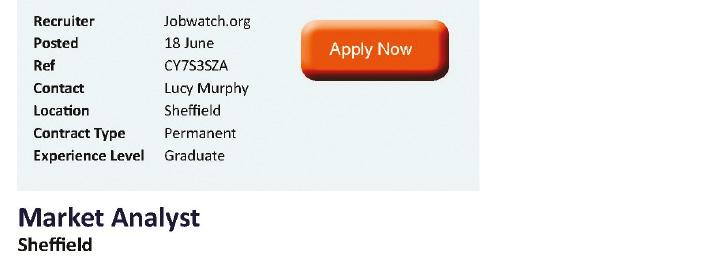
Jobwatch
Annotated job adverts which identify the key skills you will require for a particular job, and how to demonstrate them.
For registered lecturers
PowerPoint slides
A suite of customizable PowerPoint slides which can be used in lectures or printed as handouts, and can be easily adapted to suit your teaching style.
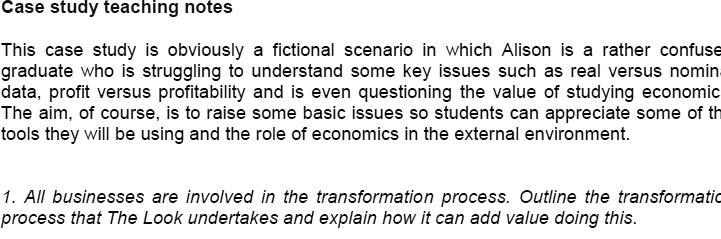
Case study teaching notes
Notes and guide answers for each chapter’s opening case.
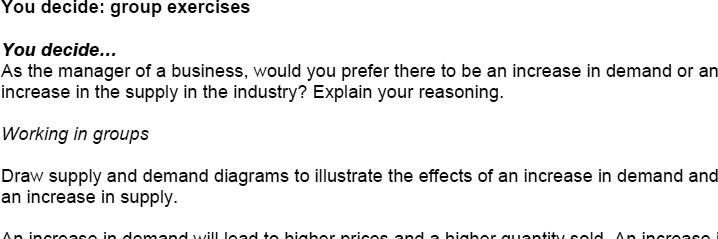
Group exercises
A range of more detailed, workshop-based activities that students can complete prior to and during tutorials.
Test bank
A wealth of additional multiple choice questions that can be customised to meet your teaching needs.
Acknowledgements
Many thanks to everyone at OUP, especially Kat Rylance and Joe Matthews, and to Lucy Metzger (copy-editor) for all their support, tolerance, and help in developing this latest edition.
Seth, Romily, Clemency. You shine.
Business insight features
3.2
3.3
5.1
6.9
6.10
7.4
7.5
7.6
7.7
8.1
8.2
8.3
8.4
8.5
What is a business?
WHY DO I NEED TO KNOW WHAT A BUSINESS IS?
You have been asked to invest in a business. You would become a shareholder. The current share price is £2.50. You are not sure whether to invest at all or, if you do go ahead, how much to spend. Can you take the risk? Is it worth getting involved in the first place? Will you able to influence anything anyway?
The company is a social media business. It is only a few years old and is already going public and opening up to outside investors. It has been very high-profile, and some have called it the new Snapchat. This is what caught your eye, plus the fact one of your friends’ relations is a manager in the business, although you have no idea what she actually does. You are not quite sure why the company has gone public or what differences it might make—is it a good sign or a bad one?
There are several different forms of business, including public limited companies. These have different forms of legal structure and ownership. In this chapter we examine these different forms and also consider the role of managers within these organizations.
BY THE END OF THIS CHAPTER YOU WILL BE ABLE TO . . .
• explain the role of a manager
• distinguish between different business legal forms
• distinguish between a private limited company (ltd) and a public limited company (plc)
BUSINESS CASE
The priorities and targets of a business, and the way that things are done within it (which is its culture), can depend on who owns it. Changes in ownership can affect the way that decisions are made and what managers and employees value. Bringing outside investors to a business may raise finance, but the objectives and values of these investors may be different from those of the original owners of the business. Facebook, the social media company, is known for its ‘hacker’ culture; build things, try them, and if they don’t work just start again. One of the company’s favourite sayings is ‘If you’re not breaking things, you’re probably not moving fast enough.’
The founder, Mark Zuckerberg, created the company ‘to make the world more open and connected’. Its headquarters in Menlo Park, California, looks and feels like a large university campus. On site there you will find small team-based projects, frequent hackathons,